Tag Archives: woman in white

The Prisoner of Château de Puymartin

Advertisements

After a husband caught his cheating wife, the punishment for her lasted into the afterlife. After she was discovered, the husband imprisoned her in the tower of Château de Puymartin, and according to legends, the wife is still haunting this French Château as a Dame Blanche, or the Lady in White.

The honey colored towers of this elegant castle in France called Château de Puymartin is like taken out of a fairytale romance. But the tales about this castle in Southwestern France, is by no means fairytale-like, but more of a horror story without a nice ending.

The Château de Puymartin was constructed in the early 1200s and the castle went through a lot of hands throughout history. In 1357, the castle was taken by the british before being bought back by the council of Sarlat. They didn’t stay though and the castle was left abandoned.

Read also: Check out all of our ghost stories from France

The castle was abandoned for a while and it wasn’t until the 1450s Radulphe de Saint-Clar rebuilt the Château de Puymartin and making it bigger that people started living in it. But can anyone really say they lived peacefully in it?

The Prison in the castle: The castle that used to be the Lady in White’s home at Château de Puymartin turned into her prison were she lived her remaining years in the tower and the rest of eternity walled up in the walls of her former prison.
Photo: Manfred Heyde source

Dame Blanches in French Folklore

All French Château’s must have its own legend of a Dame Blanche or the ghost of a Lady in White roaming around the castle halls at night. The Château de Puymartin is no exception from this and has it’s own twisted tale of the Lady in White. But really what is this types of ghosts that we always hear of wandering the castle halls?

One of the most pervasive supernatural mythologies associated with haunted castles and Château’s is the Dames blanches, or White Ladies. These mysterious figures are said to wander through fields and forests near the city, bringing with them both luck and misfortune to those who encounter them. 

They are known way back from myths and folklore as well and quite well spread in European ghost stories. Tales of these enigmatic creatures have been told for centuries, inspiring many artistic interpretations and offering a glimpse into a fantastic world beyond our own.

Read Also: Check out more ghost stories about the Lady in White or la Dame Blanches in France like The Buried Alive Ghosts of Château de Trécesson in the Enchanted Forest or The Hitchhiking Woman in White in Palavas-les-Flots

There’s also a long-standing local legend involving the castle’s ‘Dames Blanches’, or ‘White Ladies’. According to folklore, these female ghosts are said to inhabit the castle and torment its inhabitants with misfortune, calamity, and sometimes even death in many stories in French folklore.

Lady in White Ghost: The most common ghost you hear about is the ghost of a lady, often described as wearing white. The legends is different from every culture, often described as a sorrowful ghost in European ghost stories and taking a more vengeful spirit take in Asian ghost stories. What they all have in common though is they experienced something unfair in their life and in their death they can’t see past in their afterlife.

What used to be vague figures from old mythology and legends, now tells the tragic ghost stories about real women who died in horrible ways and have unfinished business in their afterlife. Such is the tale of the Dame Blance in Château de Puymartin.

The Legend of the Dame Blanche in the Castle

The legend of la Dame Blanche, or the woman in white that is said to reside inside of Château de Puymartin is said to be the spirit of a woman called Thérèse de Saint-Clar. She was married to Jean de Saint-Clar, the man of the Château de Puymartin in the 1500s. Her name is not set in stone, as the legends most often specify her name at all.

The husband could also have been Raymond de Saint-Clar who fought in the French Wars of Religion, a war between the Catholics and Protestants. He is well known to be the one who managed to get rid of the Huguenots from Sarlat. The timeline with the names in this legend can get a bit messy as we can neither confirm or deny all of the details.

But either way, the story goes that the man of Château de Puymartin was away at war and while he was away, the wife stayed home and took a lover. 

Read more: Interested in haunted castles? Check out all of our ghost stories set in haunted castles around the world. What about readling about more haunted French Châteaus like The Haunted Château de Commarque, Haunted Nights in the Château des Fougeret, The Time Travelling Ghost Haunting Château de Versailles or Ghost Stories from Greoux-les-Bains and the Château des Templiers?

But the affair would not stay secret for long at the Château de Puymartin. After distinguishing himself in the battles, the husband was allowed to return home to his home and wife for what he thought would be a happy reunion and he would be recieved by his wife as a war hero.

The homecoming was anything but thought and when he went to her, his wife was found in her lover’s arm.

The husband went mad and ended up killing her lover out of jealousy in a fit of rage. His wife was also punished but in a much slower and torturous death. He ended up imprisoning his cheating wife in a tower in their Château as he no longer could trust her on her own and their marriage was in all sense of the matter over. 

Imprisoned at the Tower of Château de Puymartin

For years the wife was trapped in the northern tower of Château de Puymartin, never allowed to leave or go outside, not even after her death. One could almost argue that she is still not allowed out in her afterlife.

Immured: Throughout the years, there have been plenty of stories about women sealed inside of walls for punishments or for religious purposes. Who knows just how many old walls are hiding a secret?

The wife lived trapped inside of the tower until she died in what was called a ‘fifteen long years of repentance’. 15 whole years she stayed in the same little room never allowed to leave.

The door leading into her tower was supposedly walled up to keep her from escaping, only leaving a small trap door for the servants to bring her food while she was alive. She was stripped away from the fine living she was used to being the mistress of this grand castle and they only left a bad mattress for her to sleep on in a corner.

The only view she had was to look out from the window through the barrs they put up for her to prevent her from escaping. There she could see just how close freedom was, past the garden, over the hill and into the forests. This almost seems more cruel than shutting the window off completely.

It doesn’t say if she had any visitors, but over the years it looks like the husband never pitied her and let go of her anger. And if she spent 15 years inside the tower without anyone to talk to, she most likely went mad after the first few years.

According to legend her body was sealed inside the walls of the room when she died, trapping her there, even in her afterlife and she never got a proper burial in the ground, and was laid on the cold stones of the castle walls. Since then, she comes back to haunt the castle at night. At least now she can move outside the tower. She wanders the stairs, her room and on the pathways around the grounds. 

Read More: Check out all of our ghost stories concerning women that were supposedly walled up inside of a building like The Evil Bishop Against the Maiden in Love – The Ghost of Haapsalu Castle, Dracula and Ghost Nuns in Whitby Abbey and O-shizu, Hitobashira — The Human Sacrifice of Maruoka Castle

The Château de Puymartin Today

Today you can visit the Château de Puymartin for a fee to try to get a glimpse of the sorrowful ghost that have been spotted by its owners and visitors over the centuries.

The Château de Puymartin have in its later years embraced their Dame Blanche legend and it’s a part of the experience when visiting the castle. They have even made the story into an escape room play during Halloween season. Would you like to play?

More like this

Newest Posts

References

Château de Puymartin – Wikipedia 

La légende de la Dame Blanche – Puymartin un château hanté en Périgord The castle of Puymartin and the shadow of the White Lady… – Sarlat-la-Canéda – Dordogne –

Evènements au château de Puymartin 

The Mausoleum of Rufina Cambacérès at Recoleta Cemetery — Buried Alive

Advertisements

Marble mausoleums, famous people and haunted graves with excellent architecture. The city of Buenos Aires got more to offer than tango and good food. And in the old Recoleta Cemetery there are stories that those buried there is haunting the place. One of them is the grave of Rufina Cambacérès who were buried alive.

In the wonderful cemetery of Recoleta Cemetery in Buenos Aires, the most prominent of Argentina’s dead is laid to rest. Graves of famous people like Eva Peron, Nobel Prize winners, grandchildren of Naloleón Bonaparte and those who served as presidents have graves you can visit.

Walking through Recoleta Cemetery is an architectural wandering among the marble mausoleums with art-deco, neo-classical and neo-gothic architecture in the tombs to enjoy looking at and wondering the story of those inside.

The Recoleta Cemetery is more like a city of graves with narrow streets and cobbled ground, almost like the most quiet neighbourhood in Buenos Aires. Although the inhabitants of this city is no longer alive and the only ones roaming here are their ghosts.

Read Also: Check out all of our ghost stories around haunted cemeteries from around the world.

There are also those graves found in the Recoleta Cemetery that people got to know of the person resting there, only after the death. 

Rufina Cambacérès: The Girl who Died Twice

Buried Alive: Portrait of Rufina Cambacérès that is now buried in the Recoleta Cemetery in Buenos Aires. Photo: Source

This is the case of Rufina Cambacérès, a girl that barely reached the age of nineteen before she tragically died, twice. Although she was a well known socialite in Buenos Aires at the turn of the 1900s when she was alive, it is her death she is remembered for today and is one of the buried in The Recoleta Cemetery. Although her burial was anything but peaceful.

Rufina Cambacérès’ family rose to the upper class of society in Buenos Aires from the money they made from cattle farming in Argentina. Her father, Eugenio Cambacérès was originally from France and a sort of famous writer in the country at the time.

Her father died of tuberculosis however when Rufina was only four, giving a precedent of premature deaths in the family, like the one Rufina herself would soon suffer from. 

A Temporary Death

In 1902 Rufina died for the first time in her life. Her death happened on her birthday no less. On her 19th birthday to be exact on May 31st. Her mother threw a party at their lavish house in Buenos Aires and they were all supposed to go to Teatro Colón to see a show or the opera.

Rufina Cambacérès retreated to her bedroom before they went out. She was getting ready in her bedroom for the night when something felt off. Perhaps she didn’t even get a chance to realize what was happening. She suddenly collapsed on the floor and was deemed to be dead for everyone around, even her doctors.

The reason of death the doctors gave was by catalepsy, a classical diagnosis that they have given those who were buried alive in history, especially the dramatic temporarily deaths from literature. This is the same death that Juliet was given temporarily by the poison, and in Edgar Allen Poe’s writing: ‘A Premature Burial’, also beginning with a false death that ends in a true death in the coffin.

Catalepsy: Is a strange disorder from from Ancient Greek meaning “seizing, grasping”. It really is a nervous condition characterized by muscular rigidity and fixity of posture regardless of external stimuli, as well as decreased sensitivity to pain. It has been today linked to epilepsy, parkinson or drug related.

Being declared dead before your time was not unheard of during those time at all and there are many examples of it throughout time. Sadly, Rufina became a part of this tragic statistic and before anyone could prove any different, she was buried, and first after her burial, she died. 

Read Also: For more ghost stories of those buried alive, check out The Buried Alive Ghosts of Château de Trécesson in the Enchanted Forest, O-shizu, Hitobashira — The Human Sacrifice of Maruoka Castle, The Mistletoe Bough – The Bride in the Chest, The Finnish Maiden of Olavinlinna Castle and The Evil Bishop Against the Maiden in Love – The Ghost of Haapsalu Castle.

Buried in Recoleta Cemetery

No less than three doctors pronounced her dead before she was put in a coffin and preparation for her birthday changed into preparing for her funeral. She was placed in her extravagant final resting place in the mausoleum already the next day in la Recoleta Cemetery. This seems extremely quick as there usually is held a wake to prevent people from being buried alive, and they really should have kept to the old customs before rushing her funeral.

Read also: The Poltergeist of Greyfriars Kirkyard or The Joelma Building and the Ghosts of the 13 Souls for more cemeteries that are supposedly haunted.

According to legend, she woke up in the coffin, dark and she was all alone far from her bedroom she was getting ready to go party. No one could hear her screams from outside the huge mausoleum that now was her prison. She tried to break free from her tomb she suddenly found herself in, trying to scratch herself out with her bare hands. The luxurious and sturdy coffin was sealed shut though and she had no chance of breaking free from it with her bear hands.

She was stuck inside as the air was slowly fading away. She must have lasted for a couple of days perhaps before eventually suffocating to death. For real this time. 

Recoleta Cemetery: a massive cemetery that houses many famous people like Eva Peron. The supposed haunted cemetery in Buenos Aires has also been hailed as the best cemetery by BBC in 2011, whatever that entails. It is known for looking almost like a little city within the city with streets and doors to the many mausoleums.

A cemetery worker allegedly noticed the lid of her casket was broken a few days later when he was around checking the many graves. The fact her grave was disturbed could also be attributed to robbers, since she was very likely to have been buried with her expensive jewelry because of her high status and riches.

But not according to those subscribing to the more macabre version, it was worse, it was the signs of her trying to escape from the coffin when she awoke from her shallow death and took one last shot at living. 

The Final Death of Rufina Cambacérès

Another legend tells that Rufina even managed to get out of the casket and ran through the cemetery at night. She managed to get to the gates, but there she died of a heart attack from the fright and had to be put back inside the coffin. 

More rumors about why she collapsed in the first place have been told throughout the years, creating more drama leading up to her collapsing. Among other things, her friend supposedly told her a secret so gruesome that it knocked her out so hard that they thought she was dead. According to her friend, the boyfriend Rufina was seeing was also together with Rufinas mother, or even worse, his own. A true scandal for a Tela Novela and would certainly send everyone into a shock. 

No matter the origin of the story and what really happened that day before going to the opera, the statue outside the mausoleum is solemn enough to create a number of haunted rumours as the statue really looks like she is trying to escape.

The Haunted Mausoleum: The mausoleum of the young girl Rufina Cambacérès, completed with a statue, representing her, with her hand on the door, her eyes looking, almost with a longing look, away from her tomb in Recoleta Cemetery.
Photo: Source: Tim Adams

Her family spared no expense on her mausoleum and Rufina Cambacérès final resting place is the only mausoleum made of marble from Milan and is decorated with beautiful ornaments. The young girl, supposed to be the young girl with one of her hands on the door, almost escaping, never able to see her 20th birthday or the exit of la Recoleta Cemetery.

According to some, the ghost of Rufina Cambacérès can still be seen roaming in the Recoleta Cemetery, still trying to get out of her shallow death.

Read Also: Another haunted cemetery with a strange Mausoleum is found in the story of Paris’ Haunted Père Lachaise Cemetery

So many legends surround the cemetery to this day like we find in Recoleta Cemetery. Among some of the ghosts supposed to haunt the place, is a cemetery worker, destined to linger in this place forever, as well as a woman in white, roaming the place. Perhaps trying to get out? 

More like this

Newest Posts

References

008. rufina cambacérès ◊ – AfterLife 

The Tomb of Rufina Cambacérès – Buenos Aires, Argentina 

Catalepsy

The girl who died twice and other secrets of Argentina’s La Recoleta cemetery

The Haunting of The House of Hohenzollern

Advertisements

Thes old and noble family House of Hohenzollern in Germany seems to forever be haunted by a Lady in White. Both the ancient family homes of the family, and also the family members, however far they go away, the curse of the house will follow.

In December 1628, the Palace in Berlin can’t keep the cold out, not completely. A hereditary haunting of the ruling family of Prussia sits in the walls of their castles — a bad omen. Most often the bad omen of the curse is seen as a woman dressed in white. You can hear her sometimes, the clanking of the large keys around her waist. A young prince is next this time. She appears to a him and says: – ‘Veni, judica vivos et mortuos’ which means ‘Come, I judge the living and the dead’. The day after, he dies of an illness.

But who is it that haunts this old and noble family? Even the young princes? Years before the young person died, she was also spotted by three young pages in 1619. In one of Hohenzollern Castle halls, it doesn’t need to be the one in Berlin. As long as it is one of the ruling Hohenzollerns. The young pages thought she was a living human being, and approached her. When he asked what she was doing here she turned to him and hit him with her keys, killing him. The two pages ran away, terrified.

The House of Hohenzollerns was growing restless when they heard about the sighting of the woman. She had been spotted again, it was a bad omen. Something was about to happen. Three weeks later, John Sigismund Prince-Elector of the Margraviate of Brandenburg from the House of Hohenzollern, died.

House of Hohenzollern in Germany

The family is an old one. The House of Hohenzollern once ruled what is now known as Germany as a dynasty being princes, electors, kings and emperors. They ruled the lands of Brandenburg, Prussia, The German Empire and as far as to Romania.

Read More: Check out all of our ghost stories from Germany

They began their ruling dynasty in Swabia, in a town called Hechingen during the 11th century and took their name from their ancestral Hohenzollern Castle. The first ancestors of the House of Hohenzollerns were mentioned in 1061.

Burg Hohenzollern on the Hill: The ancestral home in Swabia, Germany, constructed in the early 11th century to the House of Hohenzollern. The haunting may have started here, but the sightings of the White Lady Haunting the family has been spotted everywhere were a member of the family has been residing.

They were the rulers of the lands, growing in power until 18 71 with the unification of the German Empire with the Hohenzollerns as hereditary German Emperors and Kings of Prussia. This title they held until Germany’s defeat in World War I in 1918 led to the German Revolution. The House of Hohenzollerns were overthrown and the Weimar Republic was established, thus bringing an end to the German monarchy.

Sure, they were powerful, and powerful families makes powerful enemies. Blue blood attracts bad blood. But who was so intent on following the family, haunting them for centuries? There have been many claims as to who exactly is the woman behind the hauntings. And this here, is one of the more famed ones.

The Noble Killer Nun Haunting the House of Hohenzollern

Kunigunde von Orlamünde is a ghostly reminder of the ancient past. She was born in 1303 as the first child of Ulrich I, Landgrave of Leuchtenberg, and part of their Bavarian dynasty in the middle-ages.

According to legend, Kunigunde von Orlamünde fell in love in a man called Albrecht the fair, the fourth son of Frederick IV, Burgrave of Nuremberg. A man of the House of Hohenzollern.

The Abbess: Tombstone of Kunigunde von Orlamünde at Himmelskron, is rumored to be behind the curse of the House of Hohenzollern.

Albrecht had expressed that he would marry Kunigunde von Orlamünde, hadn’t it been for that “four eyes did not stand in the way”. Kunigunde thought he meant her son and daughter. Therefore, she stabbed their eyes out with a needle, and they died, freeing her to marry the man she loved.

Johann Löer made a verse about this in 1559:

And thought, those small children I wanted
Will certainly be the eyes that
Robs me of my love!
And if the woman even did
That murdered her own children
That misery robbed their life
That stabbed them with pins
Tender and soft all over

This is not what Albrecht meant though, as he was talking about his parents as they disapproved of their match. He refused to marry her after her actions. He married a woman named Sophie von Henneberg and got two daughters on his own.

Kunigunde von Orlamünde was devastated and full of regret. She had murdered her own children for a man that didn’t even want her. Therefore she started on a pilgrimage to the Vatican to get absolution for her sins from the Pope himself. He ordered her to build a monastery and become a nun. She joined the Kloster Himmelkron.

Read Also: Dracula and Ghost Nuns in Whitby Abbey

In some version she she was sentenced to life in prison for the murders, other tell of how she died on the way to the Vatican, not being able to beg of forgiveness. She is one of the origin stories of the curse over the House of Hohenzollern and she has been haunting the family ever since.

Weiße Frauen Haunting the House of Hohenzollern

Could Kunigunde von Orlamünde be the lady following the haunted House of Hohenzollern? Lurking along the walls with her keys, paying close attention on every male descendant in the family that she never got to be a part of? A family growing bigger by every generation while she cut down her own? In any case, the legend of the Lady in White is old. Perhaps so old that even not history keeps it in its records?

Read More: Check out these German ghost stories based on a Lady in white like The White Lady In Freihung and The Lady in White in Zitadelle Spandau

Basking in the sunlight, hiding in the shadows, her dress is always white. In German legends and folklore the stories of the Weiße Frauen, meaning White Women used to be a name meant to the elven-spirits and the stories of the light elves from pagan times. Many of the ghost stories seems to be based on these old folklore types of myths and legends, even to this day.

The White Lady Haunting Germany: Illustration from the opera, The White Lady. The White women or the Weiße Frauen has been a part of the German mythology for ages. It has know been a part of German ghost stories as well for centuries.

The legend of the Weiße Frauen or white woman has, as everything does, evolved from its elven origins. Now the name is also used on women dying in grief, of sorrow or with a urge of revenge. It has spread throughout Europe and is an image with strong connotations, even today.

The Family Curse Over the House of Hohenzollern

Some call her the White Lady, some call her ‘The Harbinger’. She brings bad luck to those seeing her, and reports of her sightings has been going on for centuries.

In 1667, Louise Henrietta of Orange, the wife of Elector Friedrich Wilhelm of Brandenburg, was lying ill. A few days before she passed away, she saw the White Lady, sitting by her desk almost as an omen that warned the family that death was approaching.

Read More: Check out more ghost stories about curses and cursed people like The Cursed Merchants at Campo dei Mori, Baron Falkenberg that were Cursed to Sail the Sea for 600 Years or The Accursed Mountains of Albania.

The family members started to learn to spot the signs, but was unable to do anything after her sightings. In 1678, the Margrave Erdmann Philip of Brandenburg saw the White Lady in his armchair as he entered his chamber in Baireuth. He left the room, shocked and terrified. The next day he rode his horse out in the court and there was something weird going on. The horse was uneasy, as if seeing something that scared it and he threw the prince off. The Prince stood up, seemingly fine and he retired to his chamber. But after two hours, he was dead.

Weiße Frauen Curse of the House of Hohenzollern: The White lady, also known as the Harbinger, has been haunting the family for centuries, acting as an omen when someone is about to day, and even as a warning. Is it really a curse, or actually someone watching over them, trying to warn them when danger is afoot?

Even the dead ones seems to warn about the White Lady that haunts the House of Hohenzollern. The White Lady was supposedly absent during Frederick the Great’s reign, but in his death, he came back to warn them about her. In 1792 in Paris, his nephew Frederick William the Second was camped outside the city with his troops, ready to attack the next day. That night his dead uncle appeared before him, warning him about the seeing the White Lady if he didn’t call off the attack. His nephew listened and left France, avoiding the harbinger and according to the legend, a certain death.

Even Napoleon tried to spend a night in one of Hohenzollern castles but left bothered by the ghost haunting the place. In 1806 he had defeated Prussia and claimed some of its land as a French province. He left the next day, never to returned, calling it le maudit chateau, ‘the cursed castle’.

But today? Were is she? Just before World War I in 1914, she was last reported. Just before the Archduke Franz Ferdinand was assassinated. After they lost the war Kaiser Wilhelm the Second was the last ruling Hohenzollern, and he later abdicated the throne.

And it is said as long as there is no Hohenzollern that rules, the White Lady will stay in the shadows, and hopefully, outside of the Hohenzollern castles.

What is the Truth Behind the Curse?

Such a dramatic story, but does it ring any truth? What is true is that Kunigunde married Otto VI, Count of Weimar-Orlamünde. Historians refute the legend as according to record, their marriage produced no children. It is true that she and her husband adopted a daughter, Podika von Schaumburg, but she grew up and married Poske Ritter von Schweritz in 1341.

There are also records of her dying in 29th of April in 1382. And if she really was born in 1303 she would have been close to 80 and most likely in a comfortable home, not on the road to Rome or in prison.

Read More: Check out more curses placed on objects like Tomino’s Hell — The Cursed Poem, Cursed Books and Manuscripts and Cursed and Haunted Paintings

Kinigunde’s husband died in 1340, leaving her with a vast inheritance. She spent it on the monastery she herself would join as a nun. Funnily enough, sources tells he actually bought the monastery from Albrecht.

The Harbinger of Death

For a story as old as this one, there is now difficult to separate facts from fiction and the story of the curse that allegedly looms over the House of Hohenzollern seems to still be there, even if no one has reported about the White Lady for a while.

But what about The House of Hohenzollern and their sightings of the White Lady over the centuries? All of their stories? Were they just that? Stories? Or is it that some details of the past is not for us to know. Not the living.

Could it be something else than a woman with a flare for eternal vengeance? Perhaps something even older like the German myths and legends have been telling for ages?

More like this

Newest Posts

source: http://www.historicalblindness.com/blogandpodcast//the-white-ladies-of-german-lore
https://castles.today/linnoja/saksa/hohenzollern/legends/
https://archive.macleans.ca/article/1919/4/1/is-the-ex-kaiser-haunted

The University Magazine: A Literary and Philosophic Review: https://books.google.no/books?id=gDMzAQAAMAAJ&pg=RA4-PA702&lpg=RA4-PA702&dq=House+of+Hohenzollern+haunted&source=bl&ots=vM1XBLfNjb&sig=ACfU3U2mzSiLwgsqT8tF8rD0D9I1JBHgSw&hl=no&sa=X&ved=2ahUKEwi0gZ7v9bbqAhUZ5KYKHfBPAaY4ChDoATABegQICRAB#v=onepage&q=House%20of%20Hohenzollern%20haunted&f=false

Lady of the Lake in Durand Eastman Park in Rochester

Advertisements

The legend of the Lady of the Lake in Rochester has been around the Durand Eastman Park in the state of New York for centuries, haunting the lakes and park, in search for her daughter – and possible revenge.

Between the cities of Rochester and Irondequoit in the state of New York, the Durand Eastman Park has been a place for a nice park and a cozy picnic since the turn of the century. According to the legend though, the park is not always sunny sundays as the Durand Eastman Park is allegedly haunted by the ghost of a woman named The Woman of the Lake.

This type of ghosts takes on numerous names: The Lady in White, The White Lady, Lady of the Lake. She becomes a different entity with those names, one of many, a ghostly transparent figure of folklore. She loses her humanity and such, gains her legacy that lasts longer than a human lifetime. But who were this lady down by the lake when she was alive? Does she have a name?

Read Also: Check out the rest of our ghost stories from the USA

According The Rochester Candlelight ghost walk, the legend of the Lady of the Lake in Rochester have been told as far back as when the Durand Eastman Park was used as a vacation destination. And when a Boy Scout Camp was set up in the park, the legend grew around the campfire when they started to whisper about who the one in the deep lake could be and what she was after.

The Legend of Lady of the Lake in Rochester

Before the 1900’s, the area surrounding the Durand Eastman Park was a swampy place and not the nice and curated park we see today. It was farmland and small farms was around the lake with a few families living in the area. The lady that has been roaming the place since the early 1800’s is said to have been the wife of one of those farmers, farming this swampy land.

A walk in the park: During the day, the Durand Eastman Park is a pleasant place for a walk. But at night though remember there is a ghost story about Lady of the Lake in Rochester// Photo: DanielPenfield

Lady of the Lake in Rochester’s name, according to written accounts and oral storytelling, her name was Eelissa. She appeared in different shapes and forms. Sometimes she was told to be an old and ugly woman. In other variants of the legend, she is a youthful spirit of the lake, almost more like the mythical fairy from the stories than a real woman.

Through the generations the story has been passed down through the locals, the story about this Lady in White or Lady of the Lake that has been haunting the park since the early 1800s has taken some different roads along the way. But the main overview remains the same.

Read Also: The Enchanted Forest of Brocéliande for more about the myths about the Lady of the Lake from the Arthurian Legends.

In one of the variations of this ghost story, Eelissa had an abusive husband that left her for another woman when he got tired from her. In her jealous rage, she killed them both when she realised she would be alone. It is said that this is why she is haunting the Durand Eastman Park, mistaking young couples for her husband and mistress.

Legend has it that she is a dangerous ghosts, still blinding by rage and keeps slaying them, again and again for revenge. This variant of the legend about the scorned woman turned deadly is a classic take on a ghost story to tell around the campfire, but it is certainly not the most famous take on this legend.

The variation retold the most about the Lady of the Lake in Rochester, is that the Lady of the Lake is a grieving mother more than a scorned woman. The ghost of her is seen around the beach of the park, looking for her daughter she lost. In some variation, the daughter ran away with a lover and away from her overprotective mother to live their life in peace. Left all alone she haunts the place waiting for the return of her daughter.

In other versions the daughter was brutally raped and murdered close to the lake. The mother was unable to go on after this when the culprits got away without punishment. The grieving mother looks for remains of her daughter to this day, as well as those who did her harm. In some variations of the story, she is accompanied by two ghost dogs, helping her in the search.

Read Also: Lady of the Lake at Gotts Point in Lake Lowell

No matter how the story is told, one thing is a binding link: She still have an enormous mistrust in men, even in the afterlife. Perhaps because of the abusive husband, perhaps because of the man stealing her daughter away or because of the rapist and murderers that took the life of her daughter. Who knows really, perhaps it could be all of them?

She is therefore rumored to attack men that in some ways are: ‘hindering’ her mission and interrupting her search. So if you are a man taking a stroll in the Durand Eastman Park, beware so to not be hindering anyone.

The Castle Housing the Lady of the Lake in Durand Eastman Park

In the Durand Eastman Park, the ruins of a stone wall is hidden among the trees. It is called, the castle. The Castle is a common place to gather for parties and retelling of the legend of Lady of the Lake in Rochester. It has over the years also become a part of it. Whispers that it is actually a part of the Lady of the Lake’s house when she was alive, or that it used to be an insane asylum or even a cannon wall.

Read Also: Check out all of our ghost stories about Haunted Castles.

But in reality the castle is just the remains of a dining hall that used to be there. Before the Great Depression this was a place people in the Durand Eastman Park could get some refreshments while strolling among the trees after it was built in 1911. But over the years after vandalism, even arson and the passing of time, this wall is all there remains of the building.

The Castle in the Park: In Durand eastman park, there is something that look like a castle that has become a part of the woman in white in Rochester.

Investigation The Lady of the Lake in Rochester

The blogger for The Rochester Subway, spoke to a Jenni Lynn that owns the Rochester Candlelight Ghost Walks that includes the ghost story about the Lady of the Lake in Rochester. She told that they had teamed up with local physic, Shelly Phillips to investigate the Lady of the Lake in Rochester once to get to the bottom of the matter. Could they possible find out anything about the ghost supposedly haunting Durand Eastman Park?

They had used several different equipment, including divining rods, EMF-detectors, temperature readers as well as noise monitors. According to Lynn, Phillips was able to stand behind the legend that Eelissa’s daughter ran away together with a local farm boy and that this was the true origin story of the legend.

Lynn also says she spoke with the local police, The Irondequoit Police Department to try to get some hard facts that could perhaps shed some light on the matter. According to her, there have been many reports to the police regarding the Lady of the Lake in Rochester and that people claimed to have seen her. These reports is maybe including even the police officers themselves when they have been patrolling the Durand Eastman Park.

Lady of the Lake: In Durand Eastman Park there are rumours about the ghost of a lady in white walking around the lake in search of her lost daughter.

It is worth noting though, the police department themselves have not confirmed this, and the stories about the Lady of the Lake in Rochester is for now just that, stories.

But then, there must be some historical records of this, right? Eelissa is such an uncommon name, and the place is well documented. But according to town historian Patricia Wayne, there are no such records, documents or proof that can verify the story. Even so, every year, reports of sightings every year comes in of people claiming to have seen the Lady of the Lake in Rochester.

The Lady in the Tree in Rochester

Telling of these ghost stories varies throughout the time, and sometimes there’s things that happens that gives new life into old stories. One thing that literary blew some new life into the story of The Lady of the Lake in Rochester though, happened in 2017. A forceful wind was storming around the Rochester area, awakening the ghost once more.

Read Also: The Haunting in Pasir Ris Park 

According to Democrat and Chronicle this storm seems to be the first that broke the story online when the wind ripped apart a chunk of wood from a tree in the Durand Eastman Park. It left in splintered in the form of a skull like female, that many believed to be the ghost of the Lady of the Lake in Rochester, centuries after the legend was born, reminding everyone that she was still here.

More like this

Newest Posts

References:

RochesterSubway.com : Durand Eastman Park and the Lady In White

Lady In White – Rochester Wiki 

Ghost sighting: White Lady emerges from tree

Rochester Candlelight Ghost Walks – Legend of the Lady in White

The Running Lady of Beeford

Advertisements

Along the road in the English town, the ghost of a lady on the run haunts the area, allegedly causing accidents, and even deaths. This is the legend of the running lady of Beeford.

Beeford, East Yorkshire in England doesn’t sound like the most haunted place on earth. With the red bricked houses it looks like a classical quaint English town, never changing, dormant. Perhaps like the set of Midsummer Murders or the location of an Agatha Christie novel. Perhaps it indeed look a bit haunted, after all. Truth is, this place has been there even before England came to be. Mention in the Domesday Book, it has been there for a thousand years. Perhaps it will last a thousand more?

Read More: Check out all of our ghost stories from England and the UK like Ghost of Nan Tuck Haunting the English Countryside or The Ghost on the Moor.

And everyone knows that old towns must have their own local ghosts. And here, they have the legend of the running lady of Beeford that is haunting the roads leading in and out of the town.

Causing Accidents and Deaths

This particular ghost is a ghost on the road. On a stretch of road between Beeford and Brandenburton, a ghost of a lady has been seen roaming around late at night. The ghost lady is also called the Running Lady as she is seen running across the Beeford Straight toward the North Frodingham junction.

Tales of her ghost causing accidents have been told over the years in the more modern area, as it’s usually involves cars. Not only is the ghost reported on being seen, but the running lady of Beeford has also been the one to blame for several accidents on this particular road.

The Running Lady of Beeford: There is a local legend that people have seen the Runnin Lady of Beeford, haunting the road. Some of the stories about her, even hints that she was the cause of a deadly car crash.

One of these stories details the curse she has supposedly put on this place made a car crash into a three, killing six people. What made the crash? An accident caused by witnessing the running lady of Beeford, or something more sinister as some of the version of the legend hints at?

Read more: Have a look at all of our ghost stories about Haunted Roads from all over the world like The Highwayman Robbed of his Life or The Hitchhiking Woman in White in Palavas-les-Flots

There is also an anecdote about a motorcyclist picking up a female on the stretch on that road, only to find her gone when he turned around after a few miles. This story collides a bit with her habit of being on the run, but falls in line of the urban legend of a hitchhiker wanting a lift, but disappearing.

Read the urban legend of the vanishing hitchiker:

The Vanishing Hitchhiker

The Vanishing Hitchhiker is a well known urban legend throughout the world. Here is a Moonmausoleum original writings based on the Urban Legend – The Vanishing Hitchhiker

Keep reading

What’s the Truth Behind the Running Lady of Beeford?

This ghost story falls right into the White Lady legend from Europe we can read about in so many of the classic ghost stories. Also, stories about ghosts along the road is also a well documented phenomenon across the world by now. But what about this particular legend of the running lady of Beeford? How much does it ring true?

Considering that Beeford is such a small place there would be more documented that six people actually died in a car crash around that area. But as per now, we have found no such proof.

And the description of her appearance is so vague and non existing that it’s hard to make out what type of lady we are seeing. Well that is, if we see anything at all.

More like this

Newest Posts

Hvítárnes — The Haunted Hut on Iceland

Advertisements

One of the more well known Icelandic ghost stories that are told over the cold and desolate island, is the haunted hut in the middle of nowhere. Here the ghost of a lady in gray is haunting the place. This is the story of Hvítárnes hut, one of the most haunted places in Iceland.

South on the Island of Iceland a small hut is placed on a field in the middle of nowhere. From it you can look far into the distance in every direction, nature, beautiful nature, lonesome nature that in the winter turns pitch black. And the legends surrounding the Hvítárnes hut, is of the paranormal sort.

The Icelandic Touring Association built the lodge in 1930 for a place off the road were one could be in peace in the southern highlands of Iceland. The turf roofed hut is protected by Icelandic law because of its old age and uniqueness. The hut is the oldest mountain hut owned and operated by the Ferðafélag Íslands, The Iceland Touring Association.

Read Also: Check out all of the ghost stories from Iceland like Apollonia Schwartzkopf the Ghost at Bessastadir or The Viking Ghost at Stokksnes Beach.

The hut, the name of it meaning white is far from everything else and the closest neighbour to the hut is some old farm ruins in the distance. Farming was a way of living here in the old days, although, no one lives there all year today, and the only true neighbours are the echos from the surrounding mountains.

The Haunted Hut In solitude: Hvítárnes hut in the wild is one of the most well known icelandic ghost stories. There are stories about a woman haunting the little hut in the wilderness and many of the guests have felt her presence.

To the north towers Iceland’s second largest glacier, Langjökull over the horizon, always reminding the passing summer there is a cold winter after it that will take over the landscape. In the winter, storms can havock the highlands for days, making the area harsh in the winter, and green in the brief summer.

The Most Haunted Place in Iceland

Today it’s those fond of nature and solitude that are drawn to this place, to Hvítárnes hut. The hut has two floors and room to 30 persons in bunk beds with a warden watching the place during the summer months. The kitchen is narrow, but has running cold water and a gas oven and the toilet is outside. In other words, the Hvítárnes hut is a place for people seeking something simpler. Although, perhaps the rumours and legends of ghosts are not really a part of that simple life.

Hvítárnes hut is said to be one of the most haunted places in Iceland, and that is saying something for a country so steeped in the supernatural ways and legends. Since Hvítárnes hut was built, the hut has had complaints about something lurking, howling as the winter storms outside, although no one can really pinpoint exactly where or from who the howling is coming from.

Read Also: Check out all of our ghost stories in haunted houses from all over the world

Story goes that when guests arrive late at night, maybe coming down from hiking the ancient Kjölur hiking trail, they have vividly seen the face of a woman inside the hut through the window, expecting to meet her when entering. But once inside, there is no one but the gathering dust and coldness of solitude. However, as the short days and long nights in Hvítárnes hut passes, the ghost of this female present won’t leave the guests alone.

The Ghost of the Woman in the Window

According to the stories, the ghost of this mysterious woman you can see through the window, is refusing the guests to get a good night sleep after a long day in the wilderness and she is persistent in making her presence become known for the guests.

What she does varies, but it is often during their sleep they can feel her presence. She is been known to almost sit on top of people chests, pressing them down so that they are unable to breathe as well as being haunted by horrible nightmares.

Sometimes she even kicks them out of the many bunk beds they were assigned to. There are particular male guests that have been tormented, some even driven out from the warm hut out in the freezing cold because of the fear of what the ghost of the woman are capable of.

Read Also: Check out ghost stories from haunted hotels from all over the world you can check in to.

There is especially this one bed in the hut that are rumoured to be the most haunted one, and if you are so unlucky to be placed on it, try to move or accept that you might not get a good nights sleep. According to the stories no one are able to get a good rest on the bed and it’s nicknamed the ‘ghost bunk’ or ‘her bed’. The bed is placed on the opposite way than the rest of the beds by the door, so it’s easy to see if you got the short end of the stick.

The Ghost in the Window: According to many of the guests staying at the hut, they claim to have seen a woman in the window. Many also reports of having their sleep disturbed by something paranormal. Who can she be, is there really a ghost haunting this place?

In all lodges with a long history as this and as many guests passing by, there must be a guest book. Guest Books are meant to leave nice messages about your stay, how the weather was, and how the days went by in the little hut. And in this one, countless of frightened visitors have scribble down how they slept in their car instead, or didn’t get a single minute of sleep because of the hauntings. Someone just scribbling down the word: Ghost. This is a very old entry as well, and it shows that the hut has been deemed haunted for a very long time.

Who is the Ghost Haunting Hvítárnes Hut

There are several theories of who this girl can be. The building was built for travellers, and no one ever lived in the hut. Perhaps it is a lost traveller that disappeared a long time ago, trying to seek shelter. Perhaps there is something about the ruins of the farm that can shed some light of this?

Just a stone throw away from the hut there have been discovered traces of the ruins of a village, at least settlements called Tjarnarkot. Could the ghost be from this time? It is said to have been inhabited as soon as Iceland was discovered, but after Hekla, the volcano erupted around 1104, the place was deserted. Was it before this? Was it after? Was it ever?

There are many theories of who she could be, and they are almost all linked to the farm ruins nearby. Some claim that there was a girl working for the farmer and his wife once upon a time. The farmer tried to sleep with the girl once, but she refused him. Angered by her refusal, he locked her outside in a snowstorm, which around these parts can rage for days. She died in the snowstorm. But the farmer didn’t live long after as his wife killed him to avenge the poor girl that was under their care.

A Country of Fairy Tales: Iceland is a highly superstitious country. Here is a little cottage made for the fairies they believe lives on the island. There are plenty of places were they think these supernatural creatures lives, and they even have the modern infrastructure like making roads go around so not to disturb them.

Another theory of what happened is that she was the farmers wife, and her husband cut of her arm and drowned her in a lake nearby. Another is that she died after being left by him while pregnant. Classic tales of female ghosts in these icelandic ghost stories. All trying to explain why she mostly goes after male guests.

Whoever she is, she refuses to leave. In 1996, there was a priest named Björn H. Jónsson that blessed the hut, but to no avail, she won’t leave Hvítárnes hut. Books, podcasts, the news and paranormal researchers of icelandic ghost stories have tried and failed to find her identity or proof of her existence for years. And she is not likely to be leaving anytime soon. She has been her long before the guests started arriving at the hut, and she will be staying long after they have gone.

More like this

Newest Posts

References:

Hvítárvatn lake, the haunted hut and a bed that includes a young female ghost

Hvítárnes highlands lodge: Haunted by the girl in grey

Skáli: Hvítárnes

Reimleikinn í Hvítárnesi: Sparkað úr rúminu og greinilegt kvenmannsandlit í eldhúsglugganum

Hvítárnes á Kili – Áfangar.com

Haunted Hvítárnes – Perspective Magazine

The Evil Bishop Against the Maiden in Love – The Ghost of Haapsalu Castle

Advertisements

There is a ghost story that a Lady in White is haunting Haapsalu Castle in Estonia. According to the legend, she was walled up alive inside of the walls when the Bishop discovered her true identity. Her crime? She fell in love.

The ghost of the Lady in White is a wide spread thing in Europe. Every country and even region have their own local version on it. Many are haunting the old castles, cathedrals and mansions scattered across the universe. Some are haunting the waterfalls, some haunts whole families. Estonia is no exception and according to legend, their White Lady is found in Haapsalu Castle.

Sitting in the midst at the cusp of the eastern Europe Baltic heritage as well as so far north, the culture of Estonia is somewhat of a mix of the two. Many consider themselves more Nordic than Baltic, being so influenced by both Sweden and Finland, they have a rich and varied lore still alive and well today.

The Haunted Haapsalu Castle

On the western shore, the sleepy seaside town of Haapsalu is best known for its warm seawater, curative mud and peaceful atmosphere facing the Vaiinameri Sea. Salt mud spas frequented by the Russian Romanov family still operate. Everything is made for a relaxing weekend and a nice holiday for sunny days. Just don’t go to the Haapsalu Castle, it’s haunted.

Read More: Check out all of our ghost stories from Haunted Castles around the world

In the 13th century in the coastal city of Haapsalu, a castle and a cathedral was built from 1279 and it’s the only one of its kind preserved today. It was also known as Haapsalu piiskopilinnus, or more simply Bishop’s Castle. It was to be the new seat of the Bishopric of Ösel-Wiek, were God’s law was the lands law. So it was a sort of royal as well as godly position, and the design of the castle was as well.

The Haapsalu Castle by night: The castle in Haapsalu is said to be haunted by a lady in white that still lingers long after her death. She is perhaps the most well known ghost in Estonia. Here is a picture from Haapsalu Castle in the dark, or, at least what is left, is still there. Photo:Sergei Gussev/

It was not a particular popular way of ruling as the last seat they had ruled from in Perona, where the Lithuanians burned his home down to the ground. Although he needed the place quick as his previous residence had been burned down, the whole castle took around 300 years to complete with the attached cathedral and monastery to it.

The position of Bishopric of Ösel-Wiek changed hands all up to the 1500s, and in 1279, the Bishopric of Ösel-Wiek was Hermann of Buxhoeveden. It was also then he founded the castle and probably the bishop who is talked about in the legend of the Lady in White in Haapsalu Castle.

The life there, especially in the episcopal castle, was a strict one. Every canon working and living there in the monasteries were meant to live a chaste and virtuous life according to the monastery rules.

Read Also: Check out our ghost stories from all of the churches and monasteries from around the world.

Meeting women in the Haapsalu Castle was therefore strictly forbidden and punishable by death. The castle forbade all access for women and the monks rarely ventured outside to test their vows. But all of these rules is useless, love will always find a way.

The Maiden and the Canon in Love

The Forbidden Love inside of the Castle Walls: One of the monks was on a walk outside of the castle walls when he fell in love with a woman he brought back to the castle with him.

As legend of the White Lady Haapsalu Castle tells, one of the canon working there fell in love with a girl when he was outside of the castle walls. When it was clear they had to be together no matter what, he brought her with him to the Haapsalu Castle.

As there was a strict no women allowed policy, they had to disguise her so that no one would now her true identity. She went undercover and was working as a choirboy for a while to be able to meet and have a relationship with him.

They were then able to meet and talk and be in each others lives as long as they were able to pass her off as a boy to the rest of the men living there. They had no other choice if they wanted to be together. He had taken a vow to god that couldn’t be broken, and she had no way of following him with being herself.

Read Also: Check out more ghost stories about love that goes wrong with The Lady Nak of Phra Khanong — Thailand’s Famous Ghost Mae Nak, The Hauntings of the Chute de la Dame Blanche or Botan Dōrō – Tales of the Peony Lantern.

Their little scheme worked for a while. That is, until the bishop came back to the castle and their whole world came crashing down.

The bishop had been away for some time while this was going on and when he returned, a young choirboy caught his eye. Something was off, and even though they had been able to fool the rest he caught on to the deceit.

Perhaps he wasn’t the only one who knew, but everyone else had left them in peace as long as it was discreet. These details we’ll never know for sure. The bishop however couldn’t be fooled and he ordered an investigation, finding out the singer’s gender and found her to be a woman.

Starving to Death inside of Haapsalu Castle Walls

Sightings of the White Lady: The ghost of the Lady in White in Haapsalu Castle has been spotted in the chapel for a long time. Photo: Sander Säde

When the girl was found out, the bishop summoned his council to decide on their punishment. The boy was sentenced to prison were he was going to starve to death. But the girl got the worst end of the deal according to some.

She was to be put immured inside of the walls of Haapsalu Castle. The chapel was under construction at the time and they made a space where they could wall her up. They gave her a single piece of bread and mug of water before they closed up the wall with her inside and left her to die.

Read Also: This was a crime that happened from time to time. To hear more ghost stories about women being buried alive inside the walls, have a look at The Finnish Maiden of Olavinlinna Castle or Dracula and Ghost Nuns in Whitby Abbey

For several days her cries for help, her banging on the walls rung throughout the castle. No one came to her aid and everyone just passed the wall in silence, ignoring the screams that grew fainter and fainter.

Who know what she must have been thinking. She probably didn’t know she would die the way that she had been living since she arrived at Haapsalu castle, hidden inside of the castle walls.

Eventually, she died. But her soul, according to legend, remained and came back as a ghost.

Haunting the Chapel During Full Moon

Now the White Lady can move through the walls. In Haapsalu Castle there was built a chapel still standing today, and this girl is always seen at the inner wall of it, or standing by the Baptistery window around the place she is said to have been walled up.

Read Also: Check out the ghost story of the old Japanese practice of walling people up inside of walls of buildings in O-shizu, Hitobashira — The Human Sacrifice of Maruoka Castle

Whether some have actually done some digging and looked if there actually is a walled up skeleton inside of the chapel wall, is unknown.

The sightseeing of this Lady in White are always around full moons, particularly in August, when it is said is when the Bishop returned to Haapsalu Castle and she was walled up inside of the walls. Why full moon? Did it all happen during a full moon? Perhaps because of the legends that strange things happen during full moons? Or perhaps it was the imagination of the writer Carl Russwurn who popularized the legend, or perhaps even made it up?

Full Moon Haunting: It is said that the ghost of the Lady in White comes out and shows herself during the hot August full moons. Photo by Ben Mack on Pexels.com

The Lady in White is not said to do anything in particular other than to mourn her lost love and life that were taken from her because of the verdic of one man.

Coincidentally, the sightings of her in Haapsalu Castle happens during full moon in the hot August nights. This sightings is also said to happen when a music festival is held in her honor, called: The White Lady Days.

More like this

Newest Posts

La Llorona the Mexican Weeping Woman Ghost

Advertisements

Along the rivers in Mexico a wailing woman wearing white can be seen and heard as she comes up drenched from the waters. She is desperately looking for her children she herself drowned. And according to the legends of La Llorona or the wailing woman, you are next.

“The scariest part was not that La Llorona was a monster, or that she came when you called her name three times in the dark, or that she could come into your room at night and take you from your bed like she’d done with her own babies. It was that once she’d been a person, a woman, a mother. And then a moment, an instant, a split second later, she was a monster.
– Jaquira Díaz’s 2019 memoir, Ordinary Girls

This Mexican legend is one of the more well known, international as well now, as the movie came out a while back. But she has been around for centuries, a legend so well known it is now more or less an important part of the Mexican heritage and culture as well as in the Chicano Mexican community of the US.

Read Also: Check out all of our ghost stories from Mexico

La Llorona is Spanish meaning the weeping woman, or the wailer. She is perhaps a bit older than most think as well. The origin of the legend can have roots as far back in the Aztec legends and being one of ten omens foretelling the Conquest of Mexico and has also been linked to Aztec goddesses like Cihuacōātl.

Cihuacōātl was one of a number of motherhood and fertility goddesses. She was also the mother of the hunting God Mixcoatl, whom she abandoned at a crossroads. Tradition says that she often returns there to weep for her lost son, only to find a sacrificial knife. This story can help us understand why sometimes the story of La Llorona sometimes is set on a crossroad, not a long a river or some form of water.

The most common lore about La Llorona is about how she was being an Indigenous woman who murdered her own children, which she bore from a wealthy Spaniard. The villainous qualities of La Llorona have also been connected to the stories about Doña Marina, also known as La Malinche, or Maltinzin. She has been portrayed as a scheming woman who betrayed her people when she assisted the conquistadors and bore their children.

The Dangerous Wailing Woman in White

As well as finding similarities to the old Aztec mythology as well as working as an allegory about “betraying her own people”, the legend of La LLorona is something we can find similarities to all across the world. The story has also the ring of ‘White Woman’ often found in European legends as well as Greek mythology stories like with Jason and Medea, a scorned woman, killing her children when her man betrays her.

The weeping woman: A wooden cutout in the shape of La llorona. She has a white veil over her and is placed on the island la llorona in the channels of Xochimilco in Mexico.

Read Also: The Lady in White in Zitadelle Spandau or The Haunting of The House of Hohenzollern are all ghost stories featuring the trope of the lady in white haunting a place.

The difference between the European trope of the Woman in White ghost is that La Llorona are often described as being more dangerous to those encountering her than her European counterpart. This makes her more like the vengeful spirits we often read about in Asian ghost stories as with the Japanese Onryo or the Korean Virgin Ghost for instance.

The story of La Llorona takes many turns and has today many variations. The ghost of La Llorona, the wailing ghost woman appears in crossroads, by lakes or rivers, on the road and has many variations. Even if she is most well known as a Mexican folktales there are other variation of the stoghost story in other South American countries as well like in Guatemala and Venezuela.

Read Also: The Legend of La Sayona or La Descarnada of the Highway for more stories about dangerous female ghosts found in Latin American folklore.

And as the history of Mexico, with its changes and social unrest, the story of La Llorona has followed closely behind, reshaped to fit the narrative of the time. Therefore, we will relate one of these variations and one of the common one told in the modern era.

The Story of La Llorona

The most told version of the story of La Llorona is set in a small village in Mexico, were a young woman lived. As mentioned she is often portrayed as an indigenous woman. Her name was Maria and came from a poor family. She was known in the village for her beauty, but will be remembered as La Llorona, the weeping woman. A tragic club to be in.

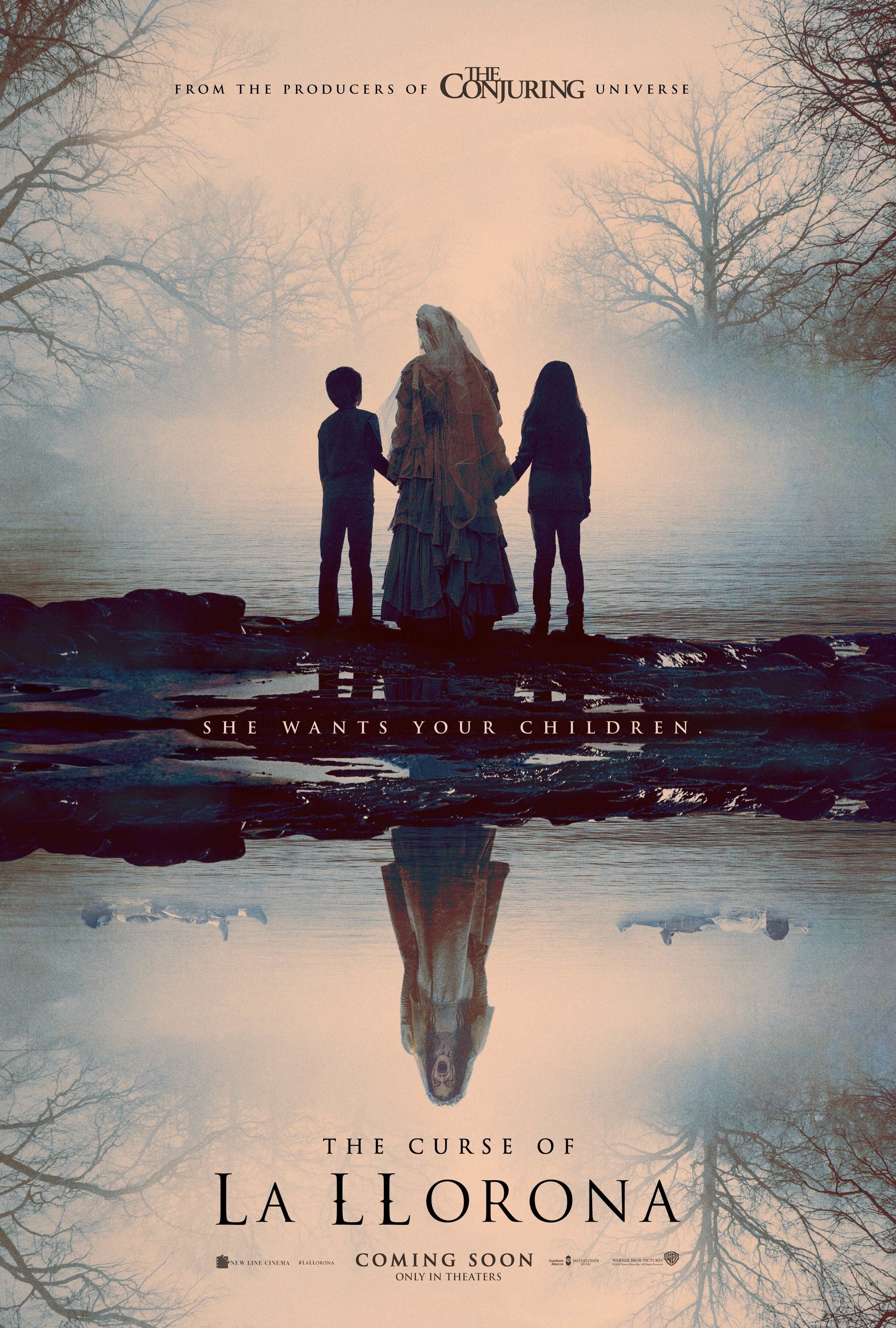
The Curse of La Llorona: The Tragic tale of the woman who drowns her children because her man abandoned her has been made into a movie many times. Here from the 2019 movie, the Curse of La Llorona//Source IMDB

One day, a very wealthy man came passing through town. DEpending to when the story is set, he was a Spanish conquistador or a wealthy rancher. He stopped when he saw the beautiful Maria and approached her. She was charmed by the wealthy man and when he proposed, she accepted at once. Maria’s family was overjoyed that their daughter would marry into a rich family and have a chance at a better life. But the father of this wealthy man however, was deeply disappointed at his sons choice of bride and didn’t approve of their marriage.

They chose to ignore the disapproving father and Maria and her now husband built a house in her town to get away from his judgmental father. Time went by and Maria gave birth to two twin boys. A seemingly happy marriage and life from the outside.

But not everything was rosy colored as it seemed. Her husband was always travelling and almost never spent any time with the family. When he was home, he only spent time with the boys, and Maria knew he no longer loved her and she started to fear that he would leave them.

Read Also: There are many ghost stories about women being left by their lover. Like The Ghost on Emily’s Bridge, The Grey Lady of Stavern at Hotel Wassilioff or the ghost of Chaonei No. 81 — Beijing Horror House

One day the husband went away and never returned. Many years went by but they didn’t hear from him and they didn’t even know if he were living or dead. Still, there seemed to linger a faint hope in Maria, that he someday would return to them and they would once again be a happy family.

Maria and her boys was out walking along a river one day when the faint hope she had been carrying came crashing down. A carriage was pulled by and to her greatest shock she saw her once husband sitting in it. By his side a much younger and beautiful woman sat and it was clear that he had abandoned them for good.

Maria was furious and desperate as her world fell apart and she could no longer fool herself. Without thinking she picked up her two boys and threw them in the river, drowning them in a fit of rage, of desperation and perhaps even a horrible psychosis. Only after she saw the floating bodies of her now dead sons she realized what she had done. She jumped out after them to die with them. Now she spends rest of eternity on the hunt after her children along that river.

The Haunted Rivers and Dangers of her Ghost

Doomed to linger in purgatory for her sins, she haunts the place were she committed her crime. Exactly where this place is differs as the legend about her ghost now has gone into the cultural sphere and is more like an entity in itself than just a singular ghost.

It is said that is you hear the crying of La Llorona close to rivers or other forms of water, you must run the opposite way as she is known for being a dangerous ghost to encounter, still mad and filled with rage that will harm you.

In some variation of the legend the children were illegitimate children, and she murdered them so that they wouldn’t get taken away from her and be brought up by another woman the father was legally wed to. In any versions though, the legend about La Llorona invokes pity for her fate as well as fear for her actions.

The Danger of La Llorona: The story of La Llorona tells about a woman who murdered her children when her husband abandoned her. Now she haunts the rivers and are a danger to those encountering her.

According to the legends, she still calls after her children “ay, mis hijos” and is said to be on a hunt for her children like she doesn’t remember what happened to them, still unable to accept what she did. It can bring bad luck, even death if you hear her cries.

If you are pregnant, you must be extra careful of her because La Llorona is attracted to children and wants them to join her. Therefore children should not walk alone along rivers and she has become some sort of cautionary tale to keep them away from the dangerous waters.

It is said that in some versions of the story, she kidnaps kids that are reminding her of her own and asks for their forgiveness. Then she murders them to take the place of her own.

La Llorona in Popular Culture

Although the legend about La Llorona is an old one, it is still an iconic figure to feature in books, movies and songs. There she differs from being a misunderstood female ghost to a full on evil spirit that are out to harm people.

In movies there have been made stories about her since the 1930s, mostly horror movies, and it even got its own spin off in James Wan’s The Conjuring Universe in 2019.

The popular folk song called La Llorona that were popularised in 1941, was also included in the Pixar movie Coco in 2017. So it’s safe to say that the legend about the wailing woman still lingers in the Mexican and US cultural sphere and fears of her ghost doesn’t seem to fade away anytime soon.

More like this

Newest Posts

References:

La Llorona – Wikipedia 

Cihuacōātl – Wikipedia

The Wailing Woman | History Today

The Grey Lady of Stavern at Hotel Wassilioff

Advertisements

On the fortess island outside of Stavern in Norway as well as one of the rooms at the historic Hotel Wassilioff, it is said that the ghost of The Grey Lady of Stavern is haunting, calling the name of her former lover that left her.

 “Peter!

……..Peeeeter!”

The wailing screams echoes through the corridors of hotel Wassilioff in Stavern, Norway in the dead of night. But when people peek their head out to look, there is no one there. The same can be heard at the coastal fortress on the Citadell island were a shadowy figure has been spotted. The same echo of a voice calling after the same person. Peter.

Stavern is a quaint and picturesque summer town in east of Norway by the coast. Several make it their vacation place during the summer times with the cute medieval architecture and history and the white beaches. But during the night, the old and not so pretty side of the seaside town start to appear through the cracks.

The Quiet Seaside City: Stavern is a popular summer destination as it is right by the beautiful coast of Eastern Norway. View on Skagerrak from Stavern, Norway//Source: wikimedia

The old seaside city is filled with ghost stories about drowned sailors and lost shipwrecks next to happy summer days by the shore, picking seashells and taking a swim.The most famous ghost story is the tragic tale of the Grey Lady of Stavern or Den Grå Damen in Norwegian.

The haunting allegedly happens at the historic Hotel Wassilioff right by the seaside just around the corner from the stature of Tordenskiold. The hotel today was founded in 1844, around a century after this tragic event is said to have happened. If it used to operate as a hotel before this though, is unclear.

Read More: All of the ghost stories from Haunted Hotels across the world

But who was the Grey Lady of Stavern when she was alive, and who was this Peter, that she keeps calling for, even in the afterlife?

The Maid Elise and Tordenskiold the National Hero

The Grey Lady of Stavern was supposedly a maid named Elise fell in love with the sea hero Peter Wessel (1690-1720), he is better known in Scandinavian circles as Tordenskiold, a very well known figure in Norwegian history, although the myths about him sometimes overshadowed the truth.

Tordenskiold: A Norwegian war hero at sea, it is believed that the ghost is calling out his name after he left the Grey Lady of Stavern.

A true patriot and a war hero that fought many battles for Denmark-Norway against Sweden. Tordenskiold is even mentioned in the national anthem they still sing today and his monument is standing in Stavern. However this is not the whole story as he was grealy showed in a much better light than reality. For one, he had economic interests in the slave trade and worked on a slave ship when he was a teenager. He was also a notorious womanizer that left many women in a deep predicament.

Elise on the other hand was only eighteen years old when she met Tordenskiold and fell for his charm. When people started calling her Elise is unclear though, as there is no last name and there are many variations to the legend. In some version of the story she was already engaged with a lieutenant named Heber, making her relationship with Tordenskiold even more dramatic.

As the story of the Grey Lady of Stavern goes, he seduced the young maid and brought her to room 216 on the coastal hotel, now called Hotel Wassilioff, or at least whatever establishment there was there at the time in the early 1700s.

Tordenskiold didn’t really come from Stavern, but lived there for a period when he worked for the navy. They were stationed in a commander’s building that are still standing today, and the ships used in the sea battles often passed by the Stavern and the fortress there was an important base.

Their romance was however short lived and superficial. When Elise became pregnant, he abandoned her in Stavern and sailed his way to glory. He died however shortly after, only 30 years old in a duel.

The Well at Citadell Island

As said, the Hotel Wassilioff didn’t open until 1844, long after this story takes place, and the narrative that they spent any time there is slim, as what the building was used to before that is unclear. But the original legend about the Grey Lady of Stavern doesn’t even mention the hotel, but it does mention the fortress on the small island just outside of the city.

Read Also: Does the concept of haunted islands seem intriguing to you? Read our ghost stories set on Haunted Islands from all over the world.

Right across the harbour of Stavern city there is a military fort built to protect from the Swedes during the Scanian War. You can see it from the windows of Hotel Wassilioff. It leads over to the small island, connected to the mainland. Today it’s only a tourist attraction, as well as Elise’s final resting place.

Citadell Island: The place Elise is said to have gone to drown herself and haunts, roaming the old fortress.//Photo credit: Jørn Tore Røed / visitvestfold.com/flickr

According to the legend, Elise was desperate, despaired and abandoned and went out to this island. Full of grief and with no hope she was driven to suicide and drowned herself out on Citadell island in a well there and rose from the dead as Grey Lady of Stavern.

Elise probably did what she did to escape the place she was trapped in. But perhaps she didn’t intend to be roaming along the fortress and in the hotel corridors, looking for the man leaving her for the rest of eternity.

Read Also: Banchō Sarayashiki — the Ghost of Okiku who also was drowned in a well.

Whether this was true is unclear, but the drowning in the well is also connected to Heber, who had many tragic legends around himself, even outside the legend of Grey Lady of Stavern. One was that he killed his fiance because he suspected a relationship with Tordenskiold another about his widow who drowned herself in the well because she had too many kids and no pension on October 11th in 1746.

The Grey Lady of Stavern at the Haunted Hotel

Back to Hotel Wassilioff, the place most people claim to have seen the Grey Lady of Stavern, even though the historic reasoning for this is weak. How do they know that it is the Grey Lady of Stavern haunting the rooms and corridors of the hotel?

Guests at the hotel can wake up to nightly callings from the maid, screaming the name of the lover who left her in a situation so dire she couldn’t live with it. As mention, it is especially outside or inside the room 216 her desperate wailing has been heard.

In addition to the nightly terror of a woman screaming there are reports of something moving over the floor inside of the room, like there is furniture that being moved around even if there is no one checked into it.

When the hotel management were asked about the alleged haunting, they confirmed that there was something going on and had this to say about it:

“One guest asked in the end to be given another room, that is how creepy it was with all the sounds,” hotel management tells to a national newspaper when they interviewed about the legend of the Grey Lady of Stavern.

The Woman in Grey in the Realm of Fables

The legend of the Grey Lady of Stavern has today many variants and it is difficult to differentiate the original legend from the many plays and writings about it. Perhaps the best known version of it from a summer play Klar til å Vende (Ready to Turn) by Herman Wildenvey from 1938. He explained the ghost haunting the place like this:

“She still lives in the realms of fables, sometimes seen by the naked eye here, a woman clad in grey.”

Read Also: There are many stories about ghost dressed in grey. Some of the ghost stories featuring these Ladies in Grey are: Hvítárnes — The Haunted Hut on Iceland, Janet Douglas in Edinburgh Castle Ghosts and Legends or the Lady in Grey at The Haunted Vicarage — Sweden’s most ghostly crowded house.

If her name really was Elise, if she really were jilted by the war hero or drowned herself, the ghost story about the Grey Lady of Stavern continues to cast a shadow on the bright summer nights. Gliding along the fortress on the island, calling out and looking for the one who tricked her, tourist thinking they will enjoy the blue sea can observe Grey Lady of Stavern as a slim grey figure that never found rest. A weeping woman in a grey dress.

More like this

Newest Posts

References:

Historien | Hotel Wassilioff

Den grå dame i Stavern – Wikipedia 

Citadellet

Jakten på Den grå dame – VG 

The Vanishing Hitchhiker

Advertisements

A Moonmausoleum original writings based on the Urban Legend – The Vanishing Hitchhiker

I was driving back home after a work seminar out of town. It was a long stretch, and I thought I would just drive through the night to get back. It was a narrow road, hardly any lights along the road. It was still a couple of hours until I would reach home, and I was listening to the weird night radio at the local radio station. It was mostly static.

Suddenly, I almost had to weer off the road. Right there, right by the side of the road, a girl was standing, her hands out, hitchhiking. I didn’t see her before my headlights shone right at her, making her appear out of nowhere.

Advertisements

I floored the breaks. When the car stopped, my pulse was going off the charts, my breathing uneven, Shaken, but unharmed, I looked back to the girl. She was still standing there, unharmed as well. I exhaled, happy I hadn’t run her over. She was standing so still, just looking at me, her thumb, still held high in the air, waiting on a lift. I opened the door and stepped out.

“H-hello? Excuse me, but do you need a lift?”

Photo by Riccardo Mion on Unsplash

She turned her head and meet my eyes. She was wearing a white summer dress in the chilly night. Only a rugged denim jacket, filled with patches of bands and slogans shielded her from the unforgiving autumn wind.

“Are you ok?” I asked, now beginning to fear I had scared her with the car. She was still standing at the side of the road, not moving.

“Can you give me a ride?” she asked then, her voice was just a weak shiver. I looked around. There was nothing here. I had hours left before I reached home and was going to work tomorrow. But I couldn’t leave her here. Not when I also almost ran her over.

“S-sure. Jump in. Where to?”

She started to move, she came towards me, not making a sound as she walked over the road. She got in the backseat. I thought that was a bit weird, but didn’t say anything. Perhaps she felt safer at a distance. I got back behind the wheel and started the car.

Advertisements

“Where do you live?” I asked. She didn’t answer at once. She was looking out the window, the moon hitting only half her face.

“Take me home,” she said, just a breathing. I wondered if I should call the police then. Clearly, something had happened. I had chills, and looked around. There was nothing coming out from the surrounding trees but the wind’s whisper.

“Where is home?” I asked, just driving, looking in the mirror, trying to figure out what to do. She sighed.

“The blue house. The blue house at the right turn after the old bridge,” she said.

I had no idea where we were, but just continued forward, hoping to reach the bridge soon. I looked back again. She was beautiful, pretty in this sad way. Her face was pale though, and she looked out the window, staring at something in the distance.

“Did something happen? Tonight I mean?”

She turned her head and met my eyes in the reflections in the mirror. She nodded.

“Yes,” she said.

“Do you need to call someone?”

“Just drive me home.”

We continued in silence a couple of minutes. Every other time I checked in the mirror, she was staring out the window in a daze, other times, she was staring right back at me, her gaze direct.

Advertisements

After driving for a while we reached a bridge.

“Hey, is this it? Is this the bridge?” I asked and turned. It was like she woke from a slumber, she sat up and got sight of the bridge.

“Yes, that is it, that is where it happened,” she said, her voice low, getting closer to me as she leaned forward to the drivers seat to get a better look. I could sense a smell, something sweet, something familiar. We were approaching the bridge.

“Where what happened?” I asked, the smell getting stronger, that familiar smell. That sweet smell. The smell of rot and decay.

“This is were I died,” she said, and I jumped. Her mouth right next to my ear, her low voice loud because of it. Again, I floored the breaks. The wheels spun, leaving a black mark on the road right by the bridge.

When I got control of the car again, I turned around. But she was gone. Only her denim jacket was left. I got out of the car, but saw nothing of her. The forest around was dark, the water under the bridge darker. The night grew colder. I got in my car and hurdled out of there, not stopping before I reached home.

Days went by, by I couldn’t get that lonely, pretty girl out of my head. I drove back and reached the bridge. In daylight I was able to find the turn she talked about and made it. When I saw the blue house, I sighed with relief. I wasn’t going crazy, she had really been there.

The garden was overgrown, the blue paint weathered and needed another coat. I rang the bell and waited with the denim jacket in hand, hoping to return it to the strange girl I had met.

Advertisements

But it was an old woman that opened. She peered out at me, looking at me suspicious.

“Yes?”

“Ah, yeah, hallo, so… I met a girl a couple of nights ago, she said she lived here.”

“No girl lives here, it’s only me,” the old lady said. I was left standing there, confused and lost. The woman was about to close the door again when she stopped dead in her tracks. She opened her mouth, her eyes shocked.

“Why do you have that?” the lady asked, looking straight at the jacket I was holding in my hand.

“Oh this? It’s the girl’s, she forgot it in my car when I gave her a lift.”

The woman before me turned white. She had to support herself to stand upright. The door creaked and opened as she leaned on it. And when it did, I saw the picture. A faded picture of the pretty girl, smiling.

In a whisper the old lady said:

“No, no, that is my daughter’s. She died in a car accident on the old bridge over ten years ago.

Advertisements

More like this

Newest posts