In an old nazi soldier camp in Germany called Conn Barracks there are still those thinking they never left. Several American soldiers tell about the ghost of them still haunting the place.
One of the most freakiest types of barracks are the ones that were used as a Nazi psych ward during world war two. The Conn Barracks is just outside of the Schweinfurth city limits in Germany.
The Conn Barracks was before the war, known as Flugplatz Schweinfurt, constructed as a Luftwaffe airfield particularly for Stuka pilots built in 1936. During the war it was a bomber base mainly, and according to legend, also used as a sort of hospital or a psych ward of some sort.
Although not likely to be the main thing for the barracks, it makes sense there was some sort of hospital-like place during this type of place during the war. Especially considering this particular barrack went through seventeen bombing attacks from the allied.
After the war the Americans took control and renamed the whole place Schweinfurt Air Base which Conn Barracks is a part of. Like many former Nazi camps, barracks and other military places it was in the hands of the American Military and it was used by them until 2014 when most American forces pulled out of Germany. At its peak Schweinfurt Air Base housed around 11 000 people, soldiers as well as their families.
The Nazi Soldier and Bloody Nurse
When Conn Barracks was used as living quarters by the Americans, they occupied the space above a former drainage room where the Nazis stored their bodies before embalming them, according to the stories. Whether true or not is a bit tricky to confirm or deny, but in any case it is from these particular rooms many of the paranormal reports about Conn Barracks come from.
At least two American soldiers on two separate occasions in the same room. In the middle of the night they woke from their sleep and saw a Nazi soldier together with a nurse covered in blood, standing by their beds.
The soldiers are unable to move at all as the visitations from the ghosts are there. The Nazi soldier kept saying something to the nurse in German, almost as if he was giving orders. The nurse leans over the bed with a sad face and chokes the soldier until they go back to sleep.
More Than One Ghost
But it is not only bloody nurses and nazi soldiers that have been whispered about in Conn Barracks.
Another ghost that allegedly haunts the old barracks is that of a young woman carrying a fetus as she floats down the hallways. Who and what happened there will probably remain a mystery.
Ghosts of nazi soldiers and witches haunt this old barracks in Hesse Germany. In the Babenhausen Kaserne there are stories about everything from soldier clad uniforms floating around as well as phone calls from a woman talking backwards.
In Hesse Germany there is a medieval town called Babenhausen at the mountain range of the Odenwald where a lot of the old buildings and parts of the old city wall still remain. The old city has seen most of human tragedies, everything from world wars and tragedies like the witch hunts.
Today Babenhausen Kaserne serves as a museum, but earlier, the Babenhausen Kaserne otherwise called DP-Lager Babenhausen was home to both German and American soldiers over the years. It was first used to house soldiers all the way back in the early 1900s throughout the both world wars. After the Americans took over as they did with many of the former German military bases after World War 2, it was the American soldiers that got to experience the hauntings said to happen at Babenhausen Kaserne.
The Ghost Phone: According to the legends, there is a phone that keeps ringing in the dead of night. It is a woman that sounds like she is talking backwards.
Read more: Check out all of the ghost stories from Germany
It is said that ghosts from the second world war are still haunting the barracks of Babenhausen Kaserne and according to reports they have been seen still wearing their uniforms. Wars were raging across Europe at the time, and soldiers from both World War 1 and World War 2 were stationed at these barracks.
There are many things that happens after dark at the barracks that makes ghost stories circulate about it. Lights at the old barracks turn on and off when no one is suppose to be inside of it, and if you listen, you can hear the sound of footsteps and voices shouting commands in the middle of the night coming from the basement.
There is also a strange rumor about strange phone calls the soldiers got during their stay from the time of landlines. What is extra strange is that the voice on the other side of the line is not the ghosts of male soldiers of the past. According to them, they only heard the voice of a woman, sounding as if she was talking backwards.
Who is this female voice in a place mainly haunted by men? What could she possible be saying? It turns out that the grounds the barracks is built upon has a much older history, and goes back all the way to the witch hunts in Germany many centuries ago.
The Witch Tower by the Barracks
In the old town of Babenhausen, there is a Witch Tower which is the landmark of the town. A witch tower, or Hexenturrn as it is in German, is a term used for a tower that was part of a town fort or castle that served as a prison in the past. The name was given from the time of the witch hunts, were they put up the suspected witches and kept them prisoners as they went through torture before being burned at the stake.
The Witch Tower: In the town by the barracks there is an old witch tower they used a prison back in the day. It is here they supposedly imprisoned over 50 women before burning them at the stake. Who knows, maybe it was more?//Source: wikimedia/Lumpeseggl
This witch tower in Babenhausen can have a connection to the other strange paranormal rumor that goes around in the old barracks. According to legend, there was in the 17th century over 50 women imprisoned in this witch tower suspected of being witches, all being burned alive on the marketplace in the city.
One of these witches burned at the stake were according to the stories, a certain Mrs. Mueller who was thought to be behind the death of 3 men that she supposedly killed with sorcery.
Fast forward to 1843, there was another woman related to Mrs. Mueller who were stoned to death on the account of them believing she was a witch.
This particular Mrs. Mueller allegedly seduced and killed at least 5 German soldiers when the barracks first were built. According to this legend their bodies were found in the Babenhausen Kaserne attic and their death remained a mystery.
The Ghost of Mrs. Mueller in Babenhausen Kaserne
Or could it be the other version of the legend, where there is also a Mrs. Mueller, who is said to be haunting the HQ building in Babenhausen Kaserne? She was a young woman engaged to one of the soldiers at Babenhausen Kaserne. This was in the early days of world war 1 when people thought it would be over in a matter of months.
Mrs. Mueller’s fiance and 3 of his friends didn’t want to be sent to war in France and hid in the attic with her help. They stayed there for a couple of days, but were found when Mrs. Mueller tried to sneak some food and drink up to them. They were arrested and shot by a firing squad all 4 deserters and it was too much for Mrs. Mueller.
The very same day they were shot, Mrs Mueller jumped from the HQ building and the fall killed her instantly. And according to the legend, just at that moment, the clocks to the officers clock tower stopped the very moment she died. It is said that she is one of those that is haunting the barracks.
The Haunted Barracks of Babenhausen Kaserne
In conclusion, the Babenhausen Kaserne in Hesse, Germany holds a fascinating mix of history and paranormal legends. From the ghosts of Nazi soldiers to the haunting calls of a woman speaking backwards, this old barracks is steeped in eerie tales.
Whether it’s the sightings of soldiers adorned in their uniform, lights flickering on and off, or the echoes of distant footsteps and commanding voices, the presence of the past lingers within the walls of Babenhausen Kaserne. These ghostly apparitions serve as a reminder of the turbulent times and the sacrifices made during World War II.
The Ghosts of War: Some of the hauntings going on in the Barracks of Babenhausen Kaserne is thought to be the ghosts of the soldiers that were stationed there during the wars.
Additionally, the connection between the Witch Tower in the town and the strange phenomena reported in the barracks adds another layer of intrigue. The imprisonment and tragic fate of over 50 women accused of witchcraft in the Witch Tower fuels speculation about their involvement in the paranormal occurrences. Could their restless spirits be seeking justice or revenge?
As the years pass, these ghostly tales continue to captivate the imaginations of visitors and locals alike, ensuring that the legacy of the barracks and the spirits that call it home will be remembered for generations. Whether one believes in the supernatural or not, the stories of the Babenhausen Kaserne serve as a chilling reminder of the tumultuous history that unfolded within its walls.
An old fortress of protection turned into a prison of a mistress who died and started haunting Zitadelle Spandau where she met her end. And the ghost of the mistress Anna Sydow are said to haunt both the place and the family who caused her death.
One of the best preserved Renaissance military structures in Europe is the citadel in today’s Berlin, in German called Zitadelle Spandau. It was built in 1559 on top of another fort and designed to protect the Spandau town which is now a part of modern day Berlin.
Many castles in Germany have stories about a certain Lady in White haunting it, and in Spandau Citadel there is the ghost of Anna Sydow.
Anna Sydow was the mistress of the Brandenburg Elector Joachim II. Joachim II was a part of the Hohenzollern who has been rumored to be plagued by the ghosts of a Lady in White. Anna Sydow is just one of the many rumored to be at least one of them.
Read more about the curse of the House of Hohenzollern: Here
Anna Sydow: Portrait of the mistress Anna Sydow who are believed to be the Lady in White that haunts Zitadelle Spandau after she was imprisoned by the son of her lover.
In 1549, the wife of Elector Joachim II suffered an accident which left her walking on crutches. She fell down the floor and impaled herself on a couple of antlers that hung in the room below. Something that the elector thought ruined the marriage and the enjoyment of hunting. He chose then to take a mistress and he chose Anna Sydow.
During her life as his mistress, Anna Sydow bore him two children and lived in the Grunewald Hunting Lodge for two decades and is also said to haunt the grounds of that place. This was also the place where the wife of Joachim II got impaled and ended up on crutches.
Imprisoned in Zitadelle Spandau
Johann Georg was the heir and son to Joachim II, and had explicitly promised his father on numerous occasions that he would spare and protect Anna Sydow after he died. But when the elector died in 1571, she was imprisoned in the Zitadelle Spandau until her death in 1575.
The Zitadelle Spandau was often used to house prisoners of the state for a long time, and Anna Sydow was one of the first. She was arrested under false pretenses though and saw no trial. Although the arrest was unjust, she at least didn’t end up being executed like many others of his fathers old court did. Or according to some of the legends, she was actually murdered.
In any case, Johann Georg felt haunted by her after her death. On January 1st in 1598, Johann Georg saw the specter of a Lady in White that he thought had to be Anna Sydow and died eight days later.
In 1709, there was a skeleton of a woman found buried inside of the Zitadelle Spandau during renovation, and everyone thought it had to belong to the Lady in White that was plaguing the fortress as well as the Hohenzollern family. They gave her a proper burial in hopes of ending the hauntings, but according to reports, there is still something haunting within the Zitadelle Spandau walls.
Immured in the Hunting Lodge
There is also this rumor that it wasn’t in the fortress Anna Sydow met her end but in the Grunewald Hunting Lodge. So she is thought to haunt both places as well as members of the Hohenzollern family.
It is a legend that she was immured alive in the small spiral staircase in the western corner wing. Since then she has been haunting the castle around midnight.
No place is free from a haunting on Iceland, not even the official house for the president known as Bessastadir were the ghost of a woman named Apollonia Schwartzkopf haunts the house after maybe have been the victim of poison.
Believing in ghost is nothing special or weird in Iceland. In fact, surveys shows that at least ten percent believes in the hidden people, otherwise known as elfs or Huldufólk. And no one is immune, not even the president of the country.
In the official residence of the president of Iceland at Bessastadir in Álftanes not long from Reykjavík, there is allegedly a ghost of a woman called Apollonia Schwartzkopf haunting the house, even to this day.
Apollonia Schwartzkopf was a powerful and rich Norwegian woman who came to Iceland in 1722 after suing the governour of Iceland at the time called Niels Furhman for fraud after he tried to break his promise to marry her after being engaged for 14 years. At the time Iceland was a colony under the Danish crown.
The Danish man working as the governor on Iceland was condemned and had to have Apollonia Schwartzkopf staying with him at Bessastadir until she died under mysterious circumstances.
Apollonia Schwartzkopf then came to Iceland and the wonderful house of Bessastadir to have Niels Furhman fulfill his promises as her husband as well as making him pay huge expenses for her as she was now lawfully his wife. But was it worth it though?
Poisoned by her Mother In Law?
Many sources of this story states that Apollonia died of a broken heart, although when looking at the details doesn’t seem very likely. The marriage with Niels Furhman at Bessastadir was not a happy one though, and according to all accounts they weren’t a good match in the long run. Sources say they didn’t sleep in the same bed or even dine at the same table together. She started to think that the mother in law was planning to poison her, something she confided in a man named Cornelius Wulff.
Apollonia Schwartzkopf died not long after though under strange circumstances of an unknown disease after she ate some porridge she herself claimed to be poisonous on Pentecost day, or on 20. June in 1725 in some sources. Her Danish mother in law Karen Holm also lived with them, and it was believed that she had killed Apollonia Schwartzkopf with poison, although nothing was proven during the trial.
Haunting the President at Bessastadir
The ghost at Bessastadir started to gain some attention when the influential people living in the house started speaking about her.
“I hear her at night, pacing the halls and going from room to room. Sometimes she comes up the stairs and walks in the corridors outside my room. And I say to her: ‘Please, Apollonia dear, be very welcome,’ ” the former president of Iceland and the world’s first elected female president, Vigdis Finnbogadottir, regularly told her visitors when they came to Bessastadir.
In the dimly lit alleys in urban Japan, a woman wearing a mask is terrorizing the children walking home from late school. When she reveals her carved up mouth, it’s over. Kuchisake-onna, or The Slit-Mouthed Woman will get her revenge.
In Japan, the concept of cram school has been a thing for many decades now. Children stay out until late in the evening in these cram schools before going home in the dark. Is it really so safe? Not according to the urban legend that has been around for decades now.
When going home in these urban and suburban areas, there is this woman that walks up to children walking alone in the evening. She is wearing a mask over her face and looks beautiful with her long black hair and pale skin.
Kuchisake-onna: An old urban legend in Japan were a woman with her mouth carved up approaches children and asks them if they find her beautiful.
When she closes in on the children she asks them “Am I beautiful?”. Polite children will most likely say yes. It is then the true horror begins as she removes her mask, revealing her scars. Her mouth is carved up. She repeats the question:
“Am I beautiful even now?”
There is really no way of answering her right when you encounter the Slit-Mouthed Woman. If you say no, she will kill you with her knife she is carrying. If you say yes, she will slit your mouth so that they look like her.
Who was the Kuchisake-onna ?
Kuchisake-onna (口裂け女, “Slit-Mouthed Woman”) is a malevolent figure in Japanese urban legends and folklore. The Slit-Mouthed Woman has been described as a contemporary yōkai as well as a classic example of an Onryō or a vengeful spirit.
In many cultures, ghosts are put in different categories. Such is the case with Onryō (怨霊 onryō,) It basically means “vengeful spirit” or “wrathful spirit” in Japanese and is a mythological spirit of vengeance from Japanese folklore. They also have ghosts, called yurei, but these differ in the will of the ghost. As opposed to…
There are many variations as to who Kuchisake-onna was. Was she a crazy person running around with a knife? Was she really a ghost as the urban legend suggests?
Her origin story points to more than one thing. In many variations she is a ghost, possibly from the Heian period (794 -1185). According to this version of the legend she was a wife of a samurai, but was cheating on him with another man. When her husband found out, he mutilated her and slit her mouth as punishment.
Read More: Check out all of our urban legends and ghost stories from Japan
In the 90s with the rise of medical procedures and online urban legend, the legend about the cheating wife changed to be a botched plastic surgery with the woman seeking perfection, or done by a jealous woman that mutilated her because of her beauty.
The Manic Panic in the 70s
The story of a woman with her mouth slit can be traced back to the Edo period (1603-1867), perhaps even further. But the modern version of the legend started with a rumor from an old woman allegedly that claimed she had seen her.
Urbanization: Post War Japan saw a rapid change of urbanization. This was a perfect place for new urban legend like the one of Kuchisake-onna to be born.
The lady in question was from a farming family in the town of Yaotsu in Gifu Prefecture in Japan. According to this rumor, she once saw a woman standing in the corner of her garden. This woman had a slit mouth.
The local newspaper printed an article about the story and the legend spread. It especially resonated with the children in the area. Six months later the legend was now a national phenomenon. When the children went to or home from cram school, they told the story about the mouth slithed woman and the legend spread.
Children were terrified to go out alone at night and it wasn’t only the children that were worried about the legend of the Slit-Mouthed Woman. Teachers and parents arranged for patrols for their children’s safety, and in Ibaraki Prefecture, children were actually warned to stay away from people wearing masks.
In Fukushima and Kanagawa Prefectures they took a step further with police cars being out on patrol to appease the hysteria. In June that year a 25-year old woman in Himeji City got arrested for dressing up as her as a joke, but with a kitchen knife in her hand to scare people.
Although the hysteria around the urban legend died down the following year by the summer, possibly because the children started their summer holiday and didn’t talk about the legend on their way home from school anymore.
But the legend of the mouth slit woman had just started to snowball and in the age of the internet, the story spread not only between children at cram schools, and is today one of Japan’s most well known urban legends.
How to survive the Encounter with the Slit-Mouth Woman
An individual can survive an encounter with Kuchisake-onna by using one of several methods. In some versions of the legend, Kuchisake-onna will leave you alone if you answer “yes” to both of her questions. However, in other versions, she will haunt you down in your home later that night and murder you in your sleep.
There are ways of distracting her by giving or throwing money or hard candies (particularly the kind of candy known as bekko ame, made of caramelized sugar) in her direction, as Kuchisake-onna will stop to pick them up. or by saying the word “pomade” three times.
Buried alive inside the castle walls, the Finnish Maiden immured still haunts this medieval building of Olavinlinna Castle.
This is the castle built in the northernmost place in the world in the 15th century. In the heart of the Finnish lake region in the south east, it used to be on the frontline of the unstable border of Sweden and Russia. The Olavinlinna castle is built on a small island overlooking the dark waters surrounding it.
The Castle of Knights and War
Since it was built in 1475, the Olavinlinna castle was in the frontline of the territorial dispute between Sweden and Russia as Finland for many years was fought over. It was placed strategically to protect the important Savo region and saw many sieges, battles and wars over the years. It held up the defenses for a long time, all up until 1714 when the Russians took over the castle at last and held it until 1917.
A castle designed for war, it was named after St Olaf, the Norwegian king and saint for all knights. And throughout the years, the castle saw enough bloodshed and death for eternity.
High on a rock, whose castled shade Darken’d the lake below, In ancient strength majestic stood The towers of Arlinkow.
Donica – A Ballad Poem by Robert Southey (were Olavinlinna castle was the inspiration)
The stories of the castle are plentiful with legends of Finnish water spirits Vetehinen living in the black water surrounding the castle. Although not malicious by nature, dangerous as they are said to drown people when bored. There are also tales of the ghost of a black ram that escaped being dinner at a feast roams the castle. But most famously, there is the story of the Finnish Maiden that was immured inside the Olavinlinna castle walls.
The Finnish Maiden
The Finnish Maiden is not only a local legend from the castle. The image of the Finnish Maiden is also used as a personification of the country itself. Often a barefoot young woman in her mid twenties with braided blonde hair, blue eyes and wearing a white or blue national costume. And in paintings she is either depicted as victorious with her fist raised, or as in the painting Attack, where she is attacked by an Russian eagle. And this image is quite fitting for this local legend.
The Finnish Maiden: In the painting, the Russian doubleheaded eagle is attacking the maiden symbolizing Finland, tearing a law book. Immediately after the painting was finalized, it became the symbol of protest against russification, spreading throughout Finland in thousands of prints. (Painted around 1899) Photo: Edvard Isto (1856-1905)
Buried Alive Inside the Walls
The most famous story about the Olavinlinna castle is the tragic story about the Finnish maiden that is said to be buried inside the castle walls. She was, according to legend, the daughter of the Lord of the castle at a time when the threat from Russia was ever present and the castle was at the line of defense from the Russian forces.
Advertisements
Amidst all of this, she had fallen in love with a Russian soldier and trusted that he would do her no harm. But she should never have done so, as she was betrayed. When opening the castle gate for him, he brought more soldiers with him to attack the castle from the inside. They managed to beat the Russian soldiers and the treacherous lover was killed in the attack. But the tragedy didn’t end there. The maiden was also punished for her foolishness.
She was condemned to death for treason and buried alive in a wall in the courtyard. Immurement or live entombment was a form of capital punishment, especially in legends and folklore. When used as a method of execution, the condemned dies from starvation or dehydration and it is often a slow and excruciating process.
The Rowan Tree
Soon after, a Rowan tree sprung in the yard with white flowers blooming from the branches, a symbol of the maiden’s innocence. The tree also had red berries growing from it, red as her blood.
There is no longer a tree in the Olavinlinna courtyard,and its existence is no way to prove. Neither is the story. What is true is the story of the maiden is not so deeply engraved in the local folklore and the Olavinlinna castle legend it has become one.
A paranormal investigator’s dream, the South Bridge Vaults in Edinburgh have been investigated for its hauntings on many occasions and many have left with a feeling of having experienced something paranormal and ghostly in the dark.
In the late 18th century Edinburgh was a growing community with a limited space in the Old Town nicknamed Old Reeky because of the bad smell and old buildings. The city is built around seven different hills and there are five main bridges connecting the slopes and hills of the town. That is also the reason for the high rise buildings of Edinburgh were they chose to build on top of the old to utilize the uneven location of the city.
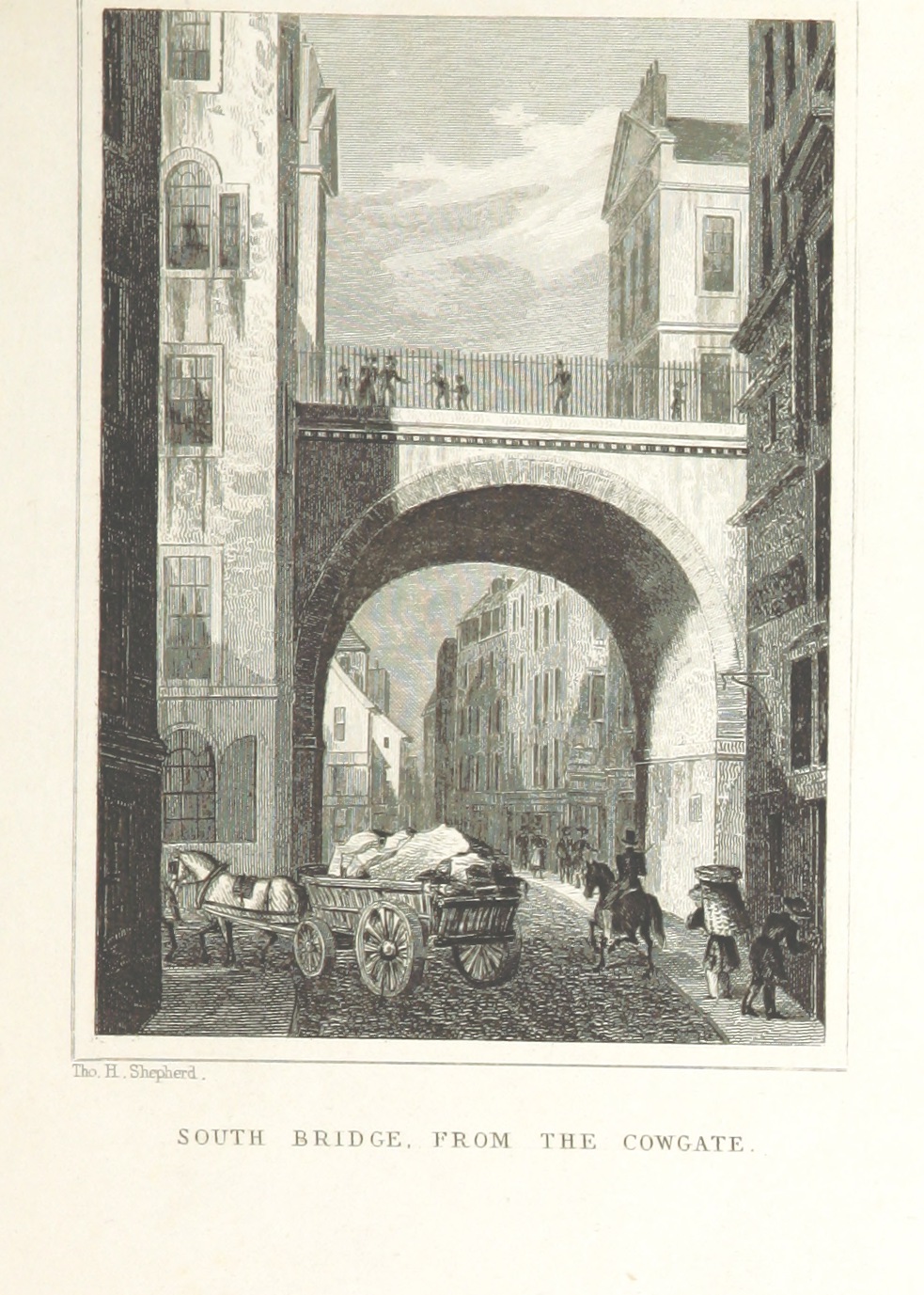
The people of Edinburgh started to utilize the spaces under the South Bridge in the Old Town to make more room for business. The spaces within the archers under the bridge are also known as the Edinburgh Vaults or Niddry Street Vaults as well as just the South Bridge Vaults.
Advertisements
They look like a series of chambers next to each other and are actually of the 19 archers underneath the South Bridge. It was supposed to be a place with respectable businesses, but ended up becoming some of the more haunted corners of the very haunted city.
The Cursed South Bridge
According to legend, the place was cursed already from the start. The South Bridge that was built to connect the old town with the new town was completed in 1788, and already at the opening of it the locals deemed it as cursed.
The South Bridge: The largest arch of the bridge, seen from the Cowgate.
It was seen as a grand opening and one of the respected Judge’s wives had been selected to be the first resident to cross the bridge as she was the city’s oldest resident. However, she died before the opening. To keep their promise to the elderly woman though, they decided she after all would be the first person to cross the bridge, although it was in her coffin.
The locals in Edinburgh were scared, now thinking that the bridge was cursed because of the unusual opening of the bridge. And looking back at all that happened on the bridge and in the vaults beneath it, perhaps it indeed was.
In the start, the South Bridge Vaults underneath the bridge were mostly used as taverns, workshops and as storage space for merchants. However it wasn’t long before the well respected businesses started leaving the area because of the poor facilities. The building of the bridge and the vaults underneath had been constructed on a low budget and even the construction itself had been rushed. Therefore they had taken no precaution to seal the surface against water and built it with porous limestone and the place became a damp and dark place which constantly flooded.
The Damp and Dark Underworld of the Vaults
No later than 10 years after the bridge and the vaults opened, respectable businesses like shoemakers, goldsmiths started leaving the area and those that could afford it relocated elsewhere as the murky vaults flooded and the sunlight never shone inside the South Bridge Vaults. It was a place no one wanted to be, and only those that had no other choice remained.
Advertisements
There was also a slum where the poorer people in town started to take over as the surrounding Cowgate area had developed into a slum during the industrial revolution. Crime, filth, poverty and murders were key words to explain the place as no sunlight came through.
More illicit businesses started to pop up in the area like brothels, shady pubs, gambling dents and illegal whiskey distilleries, turning the place into the red light district of the town.
The Legends of the Serial Killers Burke and Hare
A lot of horrible things happened inside these vaults during this time. Most of it, we will never know for sure. Legends however will be told. The South Bridge Vaults were where the body snatchers Burke and Hare were supposedly finding their bodies as well as killing them to sell them off to medical schools.
The Burke and Hare murders: The serial killings were sixteen murders committed over a period of about ten months in 1828 in Edinburgh, Scotland. They were undertaken by William Burke and William Hare, who sold the corpses to Robert Knox for dissection at his anatomy lectures. Here depicted in an etching of Burke murdering Margaret Docherty (also known as Margery Campbell) by Robert Seymour.
Although this legend is often passed down as fact, there is no actual evidence that the South Bridge Vaults was the exact place they got their bodies from, although very likely. The place to find poverty struck people and those that no one would miss if they suddenly ‘disappeared’ was inside the dark and damp vaults.
The Rediscovery of the South Bridge Vaults
At one point during the 1800s, exactly when is unsure, they emptied the vaults for people and started to dump tons of rubble in the vaults, sealing them completely off and making them inaccessible for the public and were kind of forgotten for a long time.
Advertisements
It wasn’t until the 1980s the tunnels to the vaults were rediscovered by a former Scottish rugby player named Norrie Rowan when he found one of the tunnels while he was renovating his flat. He spent the rest of his days excavating the vaults and rediscovering its history to make it accessible for the public once again.
The Ghosts of the South Bridge Vaults
There are many stories about who haunts the place today as the vaults have reopened and daily groups of tourists and paranormal investigators are taken down to the vaults to uncover the dark history.
Many people met their tragic fate on a daily basis down there in the vaults as well as suffered from horrible tragedies that affected the entire town. Like the Great Fire of Edinburgh that lasted for five days after it started in 1824 and took the lives of at least 13 people. There are many stories about victims that were trapped inside the chambers and suffered horrible consequences from then. Although there is no paper trail on this tale though.
There are many tourists that claim to have captured evidence of something paranormal going on, and they even make the newspapers from time to time. The same reports comes from the paranormal investigators that go down into the vaults and come back with what they see as proof of hauntings going on.
Advertisements
Here are some of the ghosts that are said to haunt the vaults until this date and have gathered enough reports to be a part of the haunted ghost tour in Edinburgh:
The Aristocrat
One of the first ghosts that people have reportedly seen over the years is that of the Aristocrat. He is said to be a rich gentleman with a tall black hat and a beard. He is not seen as the most angry spirit as he is known for grinning at visitors while leaning against the wall. People do have a tendency to feel uneasy in his presence though, according to those who claimed to have seen him.
The Happy Shoemaker
There is also a room that is believed to belong to a shoemaker from that time that is said to still practice his profession as a shoemaker.
He is described as a man in his 50s and is one of the ghosts that are said to be friendly and are often seen smiling and laughing by visitors while he happily carries on with his shoemaking while wearing an apron.
The Veiled Woman
In the room with the shoemaker known as The Room of the Cobbler, there is a meaner spirit though and is known as the veiled woman. She is believed to throw small stones at visitors as well. She is seen as a young woman dressed in black while wearing a veil in the north west corner of the Cobbler’s Room.
Women have also reported about feeling an intense rush of grief, anger and a sudden and unexplained abdominal pain, which has left many to believe it is a woman that lost her child in a horrible way and she is still grieving.
The Caretakers Room
In one of the chambers there are reports of a man sitting by the fireplace. He apparently looks like one of the more chill spirits in the place as well with a drink in his hand and legs stretched out. By his side he has a dog that is reported to brush up against people’s legs or sniff them.
Little Jack
Then there is the small boy named Jack or James that are often spotted in the Wine Vault. He is mostly seen as a blonde curly boy around 6 or 8 years old, wearing a blue suit with the classic knickerbocker trousers. Some sources want to connect him to a missing child case from 1810.
He is often playing with a red ball at times and is known to try to hold the hands of female visitors and likes to play around if there are children around. Allegedly, if he spots a person he doesn’t want to enter the South Bridge Vaults he will tuck their sleeves or coat when entering the Blair Street Corridor.
According to the guides down in the vaults, he is afraid of one of the more well known ghosts wandering the narrow alleys and small chambers. And that is that of Mr. Boots or also known as The Watcher.
Advertisements
The Watcher
Perhaps the most well known ghost in the South Bridge Vaults is that of The Watcher. There is a theory that he was a watchman and that is the reason he is known as The Watcher. Or maybe it’s because he always looks as if watching over something.
There are also alternative legends over the years that have tried to explain his presence, and many are also claiming him to be one of the slum landlords or even one of the body snatchers that hid his stolen bodies in the chamber known as The White Room. Today we can only speculate.
He is also called Mr Boots because of how many people in the vaults have experienced him. They can hear loud footsteps in The White Room or in the Niddry Street Corridor which is known as the most active place in all of the vaults.
His face has never been seen as it is hidden, blacked out or he is showing himself to the public with his back. He is supposedly this tall, slim and dark figure with a long flowing coat with his long hair in a ponytail. Sometimes he wears a hat and long boots. Sometimes he carries rattling keys and his breath smells disgusting of rotten teeth and whiskey.
People experiencing stuff within the vaults often get the feeling that he is trying to get them out from the narrow and claustrophobic spaces. Batteries on cameras die or malfunction when he’s present and he is known to push or pull people towards the exit as well as the phrase ‘Get Out’ has been heard on several occasions.
The Stone Circle
There are also rumors about an evil demon trapped inside one of the stone circles in one of the chambers. This is were the late Wiccan High Priest, George Cameron known as The Hermit set up his temple in the 90’s. It was in one of the vaults that have historic connection to the torturing of witches somehow.
According to him, he was trying to rid it from evil and built the stone circle which still stands today. He failed, however, to remove the evil that were supposed to be in the vaults and Cameron abandoned the room after he recommended to seal up the room to protect people from the evil within it. It is not sealed though as it is one of the stops on the tour through the vaults.
The Experience of the Hauntings
No matter the real story of the ghosts in the South Bridge Vaults and the true horror the people living there went through, the vaults itself are an interesting walk through time and history. And perhaps if you choose to go down into the dark chambers you too will hear the same that many claim to have on recordings and etched into their memories. The eerie sound of what can sound like children yelling and crying along with hushed voices and shuffling footsteps.
On a road known as the Devil’s Curve in Colombia, the ghost of a bride has been reported on the road since the 70’s, asking passing cars for a ride.
On the road can be a dangerous place to be, especially at night, during bad weather and at high speed. Especially when there are rumors about a ghost roaming the road that are asking you to take them with you.
Since the 1970s, there have been reports about something that looks like the ghost all dressed in white on what is known as The Devil’s Curve or La Curva del Diablo in Puerto Colombia, a coastal town and municipality in Colombia.
There are many tales about ghosts that asks for a ride, disoriented and alone alongside the roads.
The Ghost Bride at La Curva del Diablo has later been dubbed as the ghost bride as many have thought it looks like she is wearing a white wedding dress.
She is said to be asking for a ride of the cars passing by this dangerous road. If they refused, they would later see her sitting in the back of the vehicle, even if they didn’t let her in.
If they did let her into the car, several reports of her sitting in the backseat crying are told, but when the driver turned to check on her, she disappeared, leaving the seat wet. In some versions she smiled and left a sickening smell of rotting flowers in the air before disappearing.
The buses passing by also report a woman that is signaling them to stop. One taxi driver named Hugo Rangel told a story of meeting her in 1993. He was scared as he knew of the ghost bride. She was covered in dirt and looked terrible.
This tale of a female hitchhiking is a very common ghost story throughout the world. The urban legend of The Vanishing Hitchhiker comes in many variations. Considering just how many die a sudden and tragic death on the roads, there might be some truth to some of them?
The Vanishing Hitchhiker is a well known urban legend throughout the world. Here is a Moonmausoleum original writings based on the Urban Legend – The Vanishing Hitchhiker
Once a heartbroken girl that didn’t know how to go on to a vengeful ghost. Emily who haunts Emily’s Bridge in Vermont still got claws.
The Gold Brook Covered Bridge as it is named officially usually goes under the name Stowe Hollow Bridge or simply Emily’s Bridge.
It is a small and single lane bridge made out of wood in the small town of Stowe in Vermont. It is a covered bridge that you can see around New England especially.
Emily’s Bridge as it was nicknamed after a local legend was built in 1844 and the old and weathered wood of the bridge holds a heart wrenching ghost story.
Advertisements
The Legend of Emily
The Haunted Bridge: Gold Brook, Stowe Hollow or Emily’s Bridge, Stowe, Vermont// Source
According to legend there is a girl named Emily who haunts the bridge since her death in the 1850s.
She was only a teenager when she died and had a hard life as she was from a poor family. She fell in love with a boy from a richer family who promised to marry her. However, his parents refused and they decided to elope.
The boy told her to wait for him on that bridge at midnight and she did as she had instructed her.
But when the time went into the late night and early mornings she realized he would never come for her. She had been abandoned and had nowhere to go. In her distress she jumped from the bridge into the small brook that ran under it and died.
The Voices in the Tunnel
According to locals, they still claim to see her ghost around midnight as she makes an appearance on Emily’s Bridge. There is no real papertrail or tangible evidence of who Emily could be or that she existed at all.
But even so, the legend preserverce and have perhaps only grown. She is no longer the tragic girl that jumped to her death, but more of a vengeful ghost according to some of the stories. Strange voices are heard in the short tunnel that covers Emily’s Bridge and some have even said the cars have come out scratched by something that looks like claws.
In what is now a place of religious worship there once stood a house plagued by demonic and haunted activity. And the legend from The Wizard of West Bow and his horror house in Edinburgh.
‘It is certain that no story of witchcraft or necromancy, so many of which occurred near and in Edinburgh, made such a lasting impression on the public as that of Major Weir. – Sir Walter Scott ‘Letters on Demonology and Witchcraft’, 1830
The West Bow House of horror is one of the houses that was known as one of Edinburgh’s most haunted. For a long time everyone thought the house was demolished, but traces of it can still be found on the jolly streets in Edinburgh’s Victoria Terrace.
Advertisements
It used to be the home of Major Thomas Weir, also known as the Wizard of West Bow after his death. He lived with his unmarried sister, Jean, mostly known by Grizel, in their house in Old Town. Originally from Lanarkshire, their mother had a reputation for having The Second Sight, but they were mostly known as devoted Christians.
He used to be seen as an upstanding citizen as a Covenanter soldier with a good career in the army behind him. He was also a very strict presbyterian who would lead big groups of christians in prayer. In 1650 he was even appointed commander of the Edinburgh Town Guard. To everyone else, he was nicknamed as one of the Bowhead Saints. But look can be deceiving, and he hid some dark secret underneath the polished exterior. He has even been seen as someone that could have inspired the character of Dr. Jekyll and Mr. Hyde.
Demonic Confessions
Around 1670 people started to notice a shift in Weir’s behavior. At one of their prayer meetings, he stood up and started to speak. He was then around 70 and people noticed that he seemed ill. He didn’t pray that day though, but started confessing to heinous acts instead. This included everything from bestiality, incest, witchcraft and communicating with the dead.
House of Horror: The house of the Weir siblings at number 10 at West Bow.
In some versions however it was after Weir’s retirement after he fell sick these confessions started. And according to this version it was from the sickbed, not during a prayer meeting he confessed to his crimes.
They called a doctor, but his confessions kept coming, insisting that it was all true. Even the Lord Provost would not believe in the confessions at first as they all came as a big surprise. They wanted to dismiss it all as him being mentally disturbed instead, but he kept repeating his sins, refusing to back down.
Even his sister, Grizel, known as a quiet spinster, confirmed it all when they went to question her. Not even did she confirm what he had already said, but continued to confess more demonic activities giving testimonies of even more vile and exaggerating things.
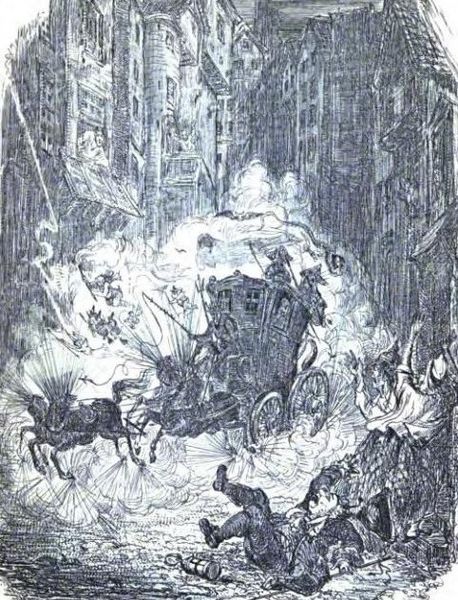
According to her he had once been taken away by a demonic stranger in a coach on fire and taken to Dalkeith, a town bordering Edinburgh. Exactly why Dalkeith would be a place a satanic coach would drive were never really explained. She even showed a mark on her forehead that looked like the shape of a horseshoe. She apparently proudly said it was a gift from the Devil himself.
There he supposedly was given supernatural intelligence in the form of a walking stick by a servant of Satan. This walking stick had a carved human head on the top and was supposedly a gift from Satan himself and was the one he usually used when leading their prayers.
Advertisements
Most cases of witches and wizards happened after someone else accused someone of sorcery. This case is a very different matter as they accused themselves. Why on earth would they further worsen the case for them, even Jean to the point of implicating herself in that manner?
They were then taken away to the Edinburgh Tolbooth by the baileys where they were interrogated and found guilty. They both received death sentences.
Executed for their crimes
Scotland was not a good place to be if you were condemned for witchcraft. Only Germany had more witch trials in Scotland during this time. Estimates reckon around 4400 witches were executed. And unlike England who hanged the witches, Scotland followed a more barbaric and continental law of burning them all.
Taken by Satan: Depiction of Thomas Weir in his fiery coach.
While they both were waiting for their execution they were held in a former leper colony below Calton Hill. Major Thomas Weir was executed in 1670 at the Gallowlee that literally means gallows field. He was garrotted and burned together with his demonic walking stick. It was said that both took an exceptionally long time to burn. He was asked for his last words, but chose to not beg for forgiveness. He reportedly said:
“Let me alone—I will not—I have lived as a beast, and I must die as a beast”
Grizel also died, but was hanged in the Grassmarket. According to reports her hanging was also dramatic and unrepentant. She supposedly tried to take off all her clothes in front of the crowd and refused to beg for mercy for her crimes.
Their bodies were buried at the base of the gallows at Shrubhill according to custom of that time. But their death apparently wasn’t enough to cleanse their house for paranormal activity.
Today we can only speculate about why he made those confessions. And even if some of them were actually true, why would he speak them out loud, and why would his sister also get implicated in it?
Was it to clear their conscience? Or perhaps a fit of madness or some sort of illness? Did it have anything to do with their mother, Lady Jean Somerville, who was a reputed clairvoyant? Or did the two actually dabble in the occult?
The Haunted House at West Bow
After their execution the house became abandoned and known as a haunted place where the locals reported seeing light in the windows although no one lived there as well as shadows moving around. There are also tales about music coming from the abandoned house. It stayed like that for over a century and legends surrounding the house continued to grow.
For example they told a story about a ghostly coach that was pulled by 6 horses spotted outside the abandoned building.
Advertisements
A couple bought and tried to move into the house in 1780 by an ex-soldier named William Patullo and his wife, but according to stories, they never stayed there for more than one night. They claimed to have seen ghostly apparition of demonic entities in the appearance of a calf staring at them in their bed.
The house as it was was demolished in 1878 and the locals thought for a long time that they were done with the hauntings from the cursed Major.
The Rediscovering of the Haunted House
However, it was discovered that a new house was built on top of it, today used as the Quaker Meeting House on Victoria Terrace. This wasn’t known before 2014. Apparently, the part of the house that still remains is now the toilet area of the Quaker Meeting House area.
Today it is one of the more colorful streets of Edinburgh, with picturesque boutiques and cafes along the cobbled street. But the haunted rumors have still not died down. One of the staff working there claims to have seen the Major walking right through the walls.
An online magazine about the paranormal, haunted and macabre. We collect the ghost stories from all around the world as well as review horror and gothic media.