An online magazine about the paranormal, haunted and macabre. We collect the ghost stories from all around the world as well as review horror and gothic media.
Deep in the farmland of Norway, Toten has a lot of ghost stories lingering on the old farms and buildings. Who were the priests said to haunt the Hoff Church and rectory, and who are the ghosts said to linger at the old Stenberg Manor?
Deep in the farmland of Norway, Toten has a lot of ghost stories lingering on the old farms and buildings. Who were the priests said to haunt the Hoff Church and rectory, and who are the ghosts said to linger at the old Stenberg Manor?
The district of Toten is rich in farmland landlocked east in Norway with old churches, and quiet waterways, and a few ghost stories lurking beneath its peaceful surface that have unsettled locals for generations.
Read More: Check out all ghost stories from Norway
Among these tales are three locations bound together by whispers of the supernatural: Stenberg gård, the brook at Bøverbru, and Hoff Church. Each is said to be touched by a presence that refuses to fade.
Haunted Toten: Toten was part of a small kingdom in the early Viking Age and Halvdan Kvitbein was the most famous king who ruled there. The origin of the name is linked to the Old Norse Þótn , which supposedly means “something one likes”.Toten has traditionally been one of Norway’s largest agricultural areas, and the industrial park at Raufoss is one of the largest industrial centers in the inland.
The Ghost of Stenberg Gård
Stenberg (or Steinberg) is a large open-air museum that shows the cultural landscape, building practices and social conditions in Toten in the 19th century. The museum is built around the county manor Stenberg.
County magistrate Lauritz Weidemann (1775-1856) developed Steinberg into a county magistrate’s residence. He took over the farm in 1802 and laid out today’s yard and an almost 30-acre park in the English landscape style. Weidemann was also known as one of the men at Eidsvoll when Norway received its constitution in 1814.
Stenberg Manor, or Gård (farm) is widely believed to be home to Toten’s most famous ghost. The historic farm, known for its cultural significance and well preserved buildings, has long been surrounded by rumors of unexplained activity. people claim to this day that they have experienced a number of unpleasant incidents on the farm. It has been said that the Weidemann family is going again.
Visitors and staff alike have reported strange sounds after dark, shifting shadows in empty rooms, and the unsettling feeling of being observed. Though the identity of the spirit is never clearly agreed upon, local lore insists that something still walks the halls of the old estate, guarding its past or reliving a tragedy long forgotten.
Blind Ola of Bøverbru
Near the brook at Bøverbru, another chilling legend is often told. According to reports shared in Oppland Arbeiderblad, a blind man known as Blind Ola is said to have drowned in the water long ago.
Since then, swimmers and passersby have described eerie experiences near the stream. Some claim to feel unseen hands pulling at them beneath the surface, while others speak of sudden cold currents and strange sounds rising from the water. The story has made the area a place of caution, especially after dusk.
Whispers Around Hoff Church
Hoff Church in Lena, east Toten is also the subject of debate among those who believe the past never truly rests. Parishioners and visitors have spoken of unexplained noises, shadowy figures, and an uneasy atmosphere within the church grounds. For believers, these phenomena are signs that the dead still linger close to the sacred site, bound by unfinished business or ancient traditions.
In 2009, the legends stirred when the church bells started ringing and the police were called. The priest stopped the bells, but they found no sign that anyone had been there. The bells are controlled by a remote, and when they checked it out, there was no sign of technical faults, although they could never completely rule out that someone had put on an elaborate prank.
Haunted Church: Hoff church at Østre Toten by Lena, Oppland, Norway. Hoff kirke ved Lena på Østre Toten. //Source: Øyvind Holmstad
But who is haunting the church? Could it have something to do with the old ghost story? At a Christmas party at the widow Bolette Cathrine in Kristiania (Oslo) in the late 1870s in the presence of several witnesses.
The event is said to have taken place at Hoff rectory “some time ago”. Author and the storyteller, Marie Wexel came to Hoff rectory one Christmas Eve with a lady from Kristiania. At the dinner table, the priest said a few words about a haunted room on the second floor, but the priest reproached her for mentioning it; it could only frighten the guests unnecessarily. The two ladies got up early to go to bed.
Marie sat down in the armchair instead to read before going to bed as her companion had done. When she had finished, she put the book in her lap to think about what she had read. “As she looked up, she caught sight of a priest in old-fashioned vestments standing just in front of her with a pleading look and pointing in the direction of the cake oven. Then the vision immediately disappeared. She wiped her eyes and thought it was a figment of her imagination, perhaps brought on by what the priest had said. She went to bed, however; but as she extinguished the last candle she saw the same figure standing before the table and bending over it towards her, as he now pointed with the same pleading look towards the cake oven”.
The Haunted Hoff Rectory on a sunny summers day
The next morning she took a lighted candle with her to get a better look at the attic and the stairs. But as she was about to go out the door, it went out. To get it burning again she took a match from a container on the wall and struck it against the firewall. At the same moment as the light was lit, the priest stood before her for the third time, but this time next to the tiled stove and pointing towards the firewall. Terrified, she rushed downstairs and told her host what she had seen. He told her to keep quiet about it.
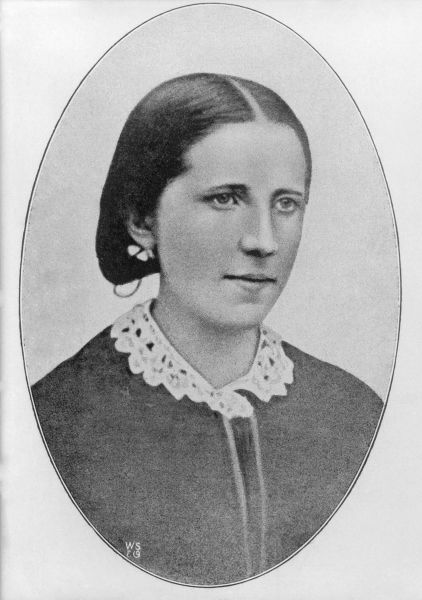
Marie Wexelsen: (born 20 September 1832 at Sukkestad in Østre Toten, was a hymn writer and author. Her full name was Inger Marie Lycke Wexelsen. She is best known for the Christmas hymn Jeg er så glad hver julekveld.
But after the service, he and Miss Wexelsen stayed back in the church, where there were painted portraits of a number of Toten priests. He told her to look at them carefully and point out the one who resembled the ghost. After looking at all the pictures carefully, she went back to one of them and said: “If I haven’t seen a fantasy fetus, then he’s there.”
This was the portrait of a priest (“the name should not be mentioned”) who, according to legend, was supposed to have killed a small child he had with his maid; the child’s body was never found. “Late in the Christmas period, the parish priest quietly made an agreement with a bricklayer and another person – probably the churchwarden – to punch a hole in the firewall in the room upstairs in the rectory. And here they found a child’s skeleton, which was buried in complete silence by the priest. And later there was never a “ghost” at the East Toten rectory. Source
The Ghost of The Yellow Hall
One of the rooms in Hoff vicarage was called “The Yellow Hall” and also have a story of the ghost of a former priest lingering. There is a legend connected to this room, which can be read about both in Totenmål and Anna Mål 12 and in The Great Book of Ghosts (Espeland).
The legend goes that there was a priest who was once a resident of the manor. One evening, as the parish priest was busy with his Sunday sermon, he was said to have seen a figure in a bluish tinge, and he got the feeling that this was someone in deep spiritual distress. The figure led the priest to the yellow hall, where the ghost knelt by a fireplace and appeared to be praying. After the service the next day, the priest recognized the figure in one of the priest pictures in the church. He had the fireplace examined, and there they found the skeleton of a woman. After the skeleton was buried in consecrated ground, the ghost is said to have been seen no more.
Could the Connolly Station in Dublin be haunted? Some claim that the ghosts of the victims from the Dublin Bombing in world war two could still be lingering near the tracks.
Once a place for executions, the place the Ruffinihaus in Munich, Germany is built upon is said to be haunted. It is said that in the dead of night, the undead rises from their graves, still carrying their heads the executioners took.
Where the former country estate Campagne Mon Repos in Bern once was, the ghostly council of the military leader from General Robert Scipio von Lentulus was given in times of unrest. Is he still haunting the Könizwald woods, even after his estate is gone?
One of the old cemeteries in Munich said to be haunted is the Alter Südfriedhof, or the old south cemetery. According to lore, the ghostly voices of the so-called Eskimo Tragedy are still heard at night.
In the darkness of night and under the foliage cover of the forest, the demonic spirit of Uhaml is said to roam. The only way to escape it is getting out of the forest faster.
In the shadows between ghost, creature and witch, the Welsh Gwarch y Rhibyn has been given many names. Like a Banshee she has been said to be a deadly omen, often called The Hag of the Mist because of her presence in wet areas, or the Hag of the Dribble because of the versions where her mouth is dripping with blood.
Unhappy with the lack of beer in heaven, the Bavarian angel never returned when sent on a mission back on earth. To this day, he sits at The Hofbräuhaus bar in Munich, enjoying his brew.
Sometimes called the Devil’s Stone, the ruins of the former Mödling Castle is said to be haunted by a demonic bird-like entity, screeching at night as an omen of death and disaster.
Could a beer festival be haunted? Many have spoken about the ghost of an old brewer at Nockherberg haunting the beer festival, creating havoc to retaliate to what his descendants did to his brew.
After her public death in the tower of the Munich Frauenkirche, many have claimed to have seen the ghost of Fanny appearing at her death anniversary wearing white.
What really happened around the Pollingsried Chapel, and its supposed plague cemetery? Is there really a curse around the area? As far as the ringing of the bells can be heard?
Searching for its name, the utburd ghost from Norwegian folklore haunts the forests, waters and houses its parents left them to die. For the most part, they remained in folk tales, but sometimes, the stories about the dead children got real life consequences.