Haunting the battlements of the historic Charles Fort in Ireland, a ghost after a tragic killing is said to haunt the ground. The White Lady of Kinsale is a ghost that remained after her father killed her husband on their wedding night.
On the misty coast of Ireland lies a place steeped in mystery and tales of the supernatural. Charles Fort, or Dún Chathail in Irish, is a historic fortification south in the country that has gained notoriety as one of Ireland’s most haunted locations.
Read More: Check out all of the ghost stories from Ireland
Legend has it that Charles Fort is home to a number of ghostly apparitions, from the Lady in White who wanders the ramparts to the phantom soldiers who still march within its walls, the fort is said to be teeming with otherworldly activity.
The History of Charles Fort
Built in the late 17th century, Charles Fort played a crucial role in defending the coastline against invasions. It was strategically positioned at the entrance to Kinsale Harbour, making it an important stronghold for the British Army. Its star-shaped design, a common feature in military architecture at the time, allowed for increased protection and better sightlines.
Charles Fort: Dún Chathail is a bastion fort with one section of the outer wall built in star fashion. It is located on the water’s edge, at the southern end of the village of Summer Cove, on Kinsale harbour, County Cork, Ireland.//Source: Jonjobaker/Wikimedia
The fort was named after King Charles II of England, who commissioned its construction. Over the years, Charles Fort witnessed numerous conflicts and sieges, including the Williamite War in the late 17th century and the Irish War of Independence in the early 20th century.
The White Lady of Kinsale is said to stalk the battlements of Charles Fort, where her father, commander Colonel Warrender, killed her husband on their wedding night. The White Lady’s haunting origins can be traced back to the 17th century. Wilful Warrander fell in love with an officer named Sir Trevor Ashurt and decided to get married.
The Star Shaped Fort: Charles Fort was built on the site of the ruins of an earlier stronghold known as Barry Óg Castle, at Rincurran. The Ringcurran defences had featured prominently during the Siege of Kinsale in 1601. Now the fort is in ruins and only ghost story remains. //Source: Dieglop/Wikimedia
According to the story, Wilful saw some flowers she liked on the battlement and Sir Trevor wanted to climb down to pick some for her. A guard on duty volunteered to go in his place, and Sir Trevor stepped in as a guard and waited, but fell asleep.
Her father did a nightly inspection and saw a guard asleep on his job. He was known for enforcing a strict military code and shot the guard through the heart, only realizing afterwards that it was his son-in-law he had shot.
Wilful was so full of grief and threw herself from the ramparts and into the ice cold water. It is said that when her father lost his daughter he was filled with despair and shot himself the very same night.
Haunting in her Wedding Dress
Legend has it that she now seeks revenge on any unsuspecting souls who cross her path. Since then, witnesses have reported seeing a ghostly woman in a wedding dress wreaking havoc around the fortress.
Soldiers stationed at the fort have even claimed to have seen her walking through walls, her ethereal figure disappearing into thin air. Parents stationed at Charles Fort have also shared chilling accounts of the White Lady watching their children as they slept, her presence filling the room with an eerie sense of unease.
The Lady in White: The Ghost of the White Lady haunting Charles Fort in Ireland, is seen still wearing her wedding dress. She is also said to have been dangerous on some occasions.
She is also said to be haunting the streets of Kinsale where she grew up and in a hotel called The White Lady, her ghost appears a couple of times a month.
The Danger of the Lady in White
One of the most terrifying accounts of the White Lady’s wrath dates back to 1922. A medical officer stationed at Charles Fort was staying in one of the rooms when he was suddenly awoken by a chilling presence.
Before he realized what was happening he found himself being dragged from his room and thrown down a flight of stairs by a young robed woman.
The officer sustained injuries from the fall, but what shook him to his core was the knowledge that he had come face to face with the vengeful spirit of the White Lady herself.
Visitors to Charles Fort are now warned to tread carefully and be mindful of their surroundings, for the White Lady may still roam the halls, seeking justice for her tragic fate.
Exploring the mysteries of Charles Fort
In conclusion, Charles Fort is a place where history and the supernatural intertwine. Its haunted reputation, fueled by tales of the White Lady and other ghostly apparitions, has made it a must-visit destination for thrill-seekers and history enthusiasts alike.
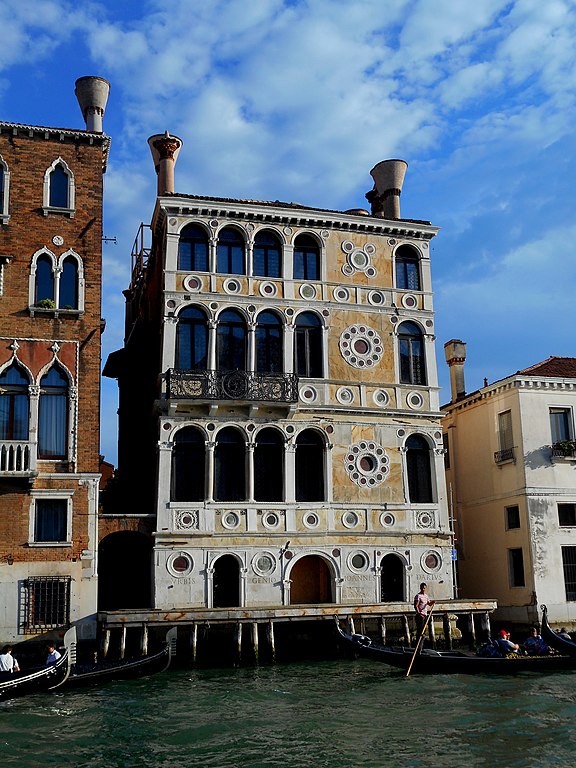
Along the Grand Canal in Venice there is this gothic palace called Palazzo Ca’Dario. For centuries the owners have met an unfortunate end and today it is most known as the most cursed palace in Venice.
Taking a walk in Venice’s narrow streets or from a boat on the shallow canals, there are many spectacular buildings towering over the shallow canals. Each with its long and sometimes dark history.
One of these wonderful buildings is the small, but exquizit palace in Venetian gothic style named Ca’Dario on the Canal Grande. It has a marvelous facade of Istrian stone and is decorated with marbles and medallions.
Read More: Check out all of the ghost stories from Italy
Palazzo Ca’Dario is often for sale, it is said though, as the owners don’t seem to linger for too long in this place, something that doesn’t happen very often in Venice. But for this particular palace, there is a very particular reason for its vacancy. According to local venetians, the place is cursed and has been for centuries.
The Palazzo Ca’Dario is often called the house that kills and is today, perhaps one of the most famous cursed houses to this day. The owner that takes up residence in the palace will soon after meet a violent death or at least live to be ruined.
The Dario Family
For evidence for this legend, or perhaps more accurately, the reason for this legend behind Palazzo Ca’Dario, is the track record of owners that died in horrific ways or lost all of their fortune, tracing back to the 16th century to modern day.
According to legend, it all started with the daughter of Giovanni Dario. Giovanni Dario was the Secretary of the Senate of the Republic of Venice and built Palazzo Ca’Dario in the 15th century. On the facade of the palace there is an inscription that reads Urbis Genio Joannes Darius, meaning Giovanni Dario to the Genius of the City.
His daughter Marietta Dario was the first person to have died in a horrible way. After her husband Vincenzo went bankrupt and in some variation of the story, stabbed to death, she fell into a darkness she didn’t manage to climb out from. She committed suicide it that very palace her father built. Not long after their son followed after being murdered in Crete by assassins.
The Curse Continues to this Day
Since then there have been over 10 dramatic deaths connected to the owners of Palazzo Ca’Dario, and even people like Woody Allen, who considered buying the house, refused after he heard about the curse of the house. The owners don’t necessarily have to live in the palace to be struck by the curse, they simply have to buy it.
The Barbaro family was one of the families that lost all of their fortune shortly after they bought the place.
In 1842, an Englishman named Radon Brown lost all of his money as well and committed suicide together with his male lover after their romantic relationship were revealed. A very similar fate fell upon the American Charles Briggs who were accused of being gay living their. Together with his lover, they fled to Mexico, but his lover died by suicide.
The Cursed Palace: Palazzo Ca’Dario as it is today along the Grand Canal in Venice. For so many centuries it has been considered to be one of the most cursed places in the entire city of Venice as the owners have often met an unfortunate end.
The French poet Henri de Régnier lived there until he was so seriously ill he had to return back to France. The manager of The Who, Christopher Lambert was also one of the owners that seemed to get ill after purchasing the house in the early 1970s.
In 1979, Fillippo Giordano delle Lanze, a count from Turin was killed by his lover inside the palace. His lover, a Croatian sailor fled to London were he in turn was murdered.
In the 1980’s a financier named Raul Gardini bought the place. He was later found guiltu of being implicated in the Tangentopoli government corruption scandal and committed suicide in 1993.
The Reason Behind the Curse of Palazzo Ca’Dario
Why is Palazzo Ca’Dario so cursed you asked? There are several legends to it. Some claim it is from the original death of the daughter of Dario that is still echoing as a curse in the building, some say it is a building built on top of an old Templar cemetery or built on a crossroad.
Perhaps, there is more to say about who can afford to live in a palace in the first place, and how far they fall when they lose everything.
There is noted however by people that the inscription on the facade praising the builder of Palazzo Ca’Dario to mean something completely different as an anagram. Sub ruina insidiosa genero, meaning I bring treacherous ruins to those who live under this roof.
The Palazzo Ca’Dario on the Canal
As the sun sets over the shimmering waters of the Grand Canal, a sense of foreboding surrounds Palazzo Ca’Dario. The legacy of tragedy and misfortune that has plagued its owners for centuries continues to cast its dark shadow upon the palace. The curse, intertwined with the very fabric of the building, has become an indelible part of Venice’s history.
Despite the tales of doom and the cautionary whispers of locals, there are always those who are drawn to the enigmatic allure of Palazzo Ca’Dario. Through the years, the curse has claimed its victims with ruthless precision. Lives lost, fortunes squandered, and dreams shattered. The hallways echo with the silent cries of the past, a testament to the insidious nature of the curse that has plagued this cursed palace.
Legends and theories abound, attempting to unravel the origins of the curse. Is it the tortured spirit of Marietta Dario, unable to find peace after her tragic demise? Or does the curse stem from a darker force, buried deep within the ancient foundations, waiting to consume those who dare to call it home?
Perhaps one day, the curse will be broken, the darkness lifted from this ill-fated palace. But until then, Palazzo Ca’Dario remains a testament to the fragility of human existence, a haunting reminder that some places are best left to the whispers of legends and the pages of history.
Haunted by ghosts and other supernatural creatures, Corfe Castle has been the source of many spine-tingling tales and in the night the light of the Will-o’-the-wisp flicker as the ghost roams the ruins.
Step into Corfe Castle and explore its notorious history of hauntings, ghastly apparitions, and spine-tingling folklore in the Isle of Purbeck in Dorset, England.
With tales of mysterious spirits walking the halls, eerie sightings on misty mornings, and other supernatural phenomena, this castle is considered to be among the most haunted places in Britain.
The History of The Corfe Castle
Corfe Castle has been both a Saxon stronghold and a Norman fortress before it became a royal castle and was established by William the Conqueror on the steep hill way back between 1066 and 1087 and saw the wars, coronation and the ebb and flow of British history take form over the years.
Read More: Check out all of the Haunted Castles from around the world
The castle was partially destroyed in the English Civil War in 1646 when the Parliamentarians laid siege on it. They toppled the once great castle and laid it to the ruins you see today on top of the hill. Corfe castle remains now a majestic ruin and an image of how medieval castle used to be.
The Strange Lights from the Ruins
When people have walked through the abandoned ruins stripped for its royal glory, they have also encountered strange things some claim have been of the paranormal sort.
More than once there have been reports of strange flickering lights moving like pixie light or Will-o’-the-wisparound the grounds at night. Some speculate that it is the soldiers from the English civil war, some say it is something more ancient.
Will-o’-the-wisp: In Welsh folklore, it is said that the light is “fairy fire” held in the hand of a púca, or pwca, a small goblin-like fairy that leads lone travellers off the beaten path at night. As the traveller follows the púca through the marsh or bog, the fire is extinguished, leaving them lost. The púca is said to be one of the Tylwyth Teg, or fairy family. In Wales the light predicts a funeral that will take place soon in the locality.
The Starved Child Ghost in the Cottage
There have also been said that they have heard a child’s cry from inside a small cottage that is located next to the castle ruins and on the castle grounds. When checking both the cottage and the grounds, there have been no children to be found.
People speculate that it is the child of the 4th Lord of Bramber, William de Braose who fell out of favor with the king and is most known for carrying out the Abergavenny Massacre where he lured three Welsh Princes and other Welsh leaders to their death. It is said that his wife and child starved to death at Corfe Castle.
The young son William and his wife Maud de Clare were starved or possibly killed by King John in 1210 when they were held in prison in Corfe Castle because of the crimes of his father as he fled the country and died in exile.
The Lady in White of Corfe Castle
One of the most famous legends about Corfe Castle is that of the Lady in White. It is said that she wanders the castle grounds, clad in a long white dress. It is said to be the ghost of Lady Mary Bankes who fought through two sieges during the Civil War before being betrayed by her own in 1646 when the Parliamentary soldiers took the castle.
The most frightening thing about seeing her specter though is that she is said to be headless as she is drifting through the ruins.
The Lady in White In Wales: Y Ladi Wen or Dynes Mewn Gwyn (Woman in white) is dressed in white, her presence most notable during Calan Gaeaf, the Welsh Halloween. Known for being a ghostly figure, sometimes terrifying, and is often invoked to caution children against misbehavior. She is characterized in various ways and may even seek help if spoken to. Y Ladi Wen is also associated with restless spirits guarding hidden treasures. Throughout Wales, places inspired by sightings and tales of Y Ladi Wen can be found. For example, Ewenny has White Lady’s Meadow and White Lady’s Lane, while St Athan also has a tradition associated with Y Ladi Wen.
Brave Dame Mary and her Defence of the Castle
Mary Bankes earned the title Brave Dame Mary and was a Royalist and defended the castle for three years under a siege during the English Civil War from 1643 to 1645 when she took control over the castle as her husband was sent to fight in London and Oxford.
Brave Dame Mary: holding the keys with Corfe Castle in the distance.
She defended the castle with her daughters, her servants and five soldiers against 600 troops as the Corfe Castle was the last garrison on the Dorsetshire coast belonging to the Royalists still standing.
She survived the siege after being betrayed by one of her officers who led the Parliamentarians into the castle via a sally gate and she was forced to surrender. But she never gave up reclaiming the castle, and when she died in 1661, the ruins of the castle was bought on her behalf and went to her daughter, Joanna, who in turn passed it to her own daughters and the Bankes family held the castle for centuries before giving it back to the Dorset community.
Not even in her death she gave up on the castle and still roams the ground. Sightings of her have been reported by visitors and employees alike on coronation days and other special occasions. People swear they have seen her walking through walls and walking up staircases leading to nowhere, mostly by the castle gate before fading into thin air.
In the Leap Castle in Ireland, the ruthless clan O’Carroll left a trail of blood. Many of their victims came back as ghosts, haunting the halls of the castle. As well as a mysterious spirit known as The Elemental, that might have been there since druid times.
Leap Castle, or Caisleán Léim Uí Bhánáin in Irish, is a place steeped in mystery and dark history in the heart of the emerald island. It is known as one of the most haunted places in the world, with tales of murder, betrayal, and torture dating back centuries.
The castle’s dark past has earned it the title of “The Most Haunted Castle in Ireland,” and it is not hard to see why. From the notorious O’Carroll family who ruled the castle to the terrifying tales of the Elemental that haunts its halls, Leap Castle is a place that sends shivers down the spine of even the bravest of souls.
History of the Leap Castle
The very history of the castle is steeped in bloody red, and even how it got its name is a history of death and insanity.
Originally, Leap Castle was called ‘Leim Ui Bhanain’. This means Leap of the O’Bannons. According to this legend there were two brothers that were having a contest of who was to lead the clan. To decide this they had a contest of bravery. Whoever survived after jumping from the rocks where Leap Castle was built was to be the next leader.
When Leap Castle was built is up for debate, some citing everything from the 1200s to 1500s. Some think it was a sacred place for druids before a castle was built on the site. It is also said to be the castle in Ireland that has been inhabited the longest.
The Leap Castle was used as the stronghold for the O’Carroll clan and said to be the most fortified castle in the country. The O’Carroll were a Gaelic Irish clan and they were known for being ruthless and bloody, something the supposed hauntings going on in the castle echoes.
Read More: Check out all of the Haunted Castles in the world
It stayed with the O’Carroll clan until it was conquered by an English soldier called John Darby of the Cromwellian forces. The Darbys kept the castle from 1642 to 1922. Then it was looted in an uprising and burnt to the ground in the Irish Civil War.
It was abandoned until 1974 when it was bought by an Australian that started the restoration work that continues to this day.
Ghost Sightings at Leap Castle
There have been countless reports of ghost sightings at Leap Castle over the years. Many visitors claim to have seen the Elemental, while others have reported hearing strange noises and feeling a sense of unease when they enter the castle’s haunted halls.
There is said to be a woman said to haunt the place wearing only a red cloth covering her face. She is always seen screaming loudly. An old man has been seen numerous times sitting peacefully by the fire in the main hall.
In the remains of what is called the Priest’s house there is a burly man, in rough clothes, like a peasant; he always pushes a heavy barrel up the backstairs of the wing, near the servant’s bedrooms, and when just at the top, the barrel rolls down and all disappears. Here there is also a monk, with a tonsure and cowl, walking in at one window and out another.
The Elemental of Leap Castle
The Elemental is perhaps the most famous ghost associated with Leap Castle. It is said to be a malevolent spirit that haunts the castle’s halls, wreaking havoc on anyone who crosses its path. The Elemental is said to be a manifestation of the anger and pain that was inflicted on the castle’s former inhabitants.
The Elemental is described as a tall, dark figure with a foul stench. It is said to have no face and no discernible features, but it radiates a sense of pure malevolence. The spirit is said to be particularly active in the Bloody Chapel, where it has been known to attack visitors.
The Elemental: The most known spirit residing at Leap Castle is that of the Elemental. It is a mysterious spirit that no one really knows where comes from. Some say it is from the O’Carroll family, some say it is from the druid’s that lived there long before the castle was built. It is said to be a malevolent spirit and have been reported to be potentially dangerous for the living.
There are many theories about the origins of the Elemental. Some believe that it was summoned by the O’Carroll family as a means of protection, while others believe that it is the result of the castle’s violent history.
Some think it could be the spirit of Gerald Fitzgerald Earl of Kildare. According to the legend he was a practitioner of magic and tried to take over the castle many times in the early to mid 1500s. Or it could perhaps be a spirit of one of the O’Carrol clan that died in the castle from Leprosy.
Another theory is older than the castle itself, and thought to be a spirit put there by druids that used to live there before the castle was built to protect the sacred site they used for rituals and magic.
Invoking the Spirit of Leap Castle
Since when the spirit came to the castle is uncertain as it was abandoned for so many years. Some claim it was a woman called Mildred Darby that invoked the spirit when she dabbled in the occult and wrote down a lot of her experiences in Leap Castle.
Mildred Darby lived in the castle in the early 1900s and is the person that made many of the legends and ghost stories surrounding the castle known to the world when she published her experiences living in the castle.
Read More: Check out all ghost stories from Ireland
This was at the same time when they found over 100 skeletons in the Oubliette in the Red Chapel we will discuss later in the article.
Whatever its origins, the Elemental remains one of the most terrifying ghosts in the castle, although it is said it only comes when provoked. The Ryans that have lived in Leap Castle since 1991 claim that they haven’t had any hauntings from this spirit since they moved in.
The Ghosts of Emily and Charlotte
There are two little girls said to be haunting the castle. The little girls aged 11 and 6 respectively are seen mostly playing in the main hall and running in the stairs. People think they might have been one of the last of the O’Carrolls residing in the castle or perhaps even the first of the Darbys as they look like they came from the 1600s.
Emily is said to have died from a fall from the battlements on the south-east side of the castle. People claim to have seen a girl falling from the roof but disappearing before hitting the ground.
According to the Ryans, they have on more than one occasion heard a child scream as if reliving the final moments from falling. Charlotte on the other hand is seen with a deformed right leg. She drags it backwards, trying to keep up with the older ghost. Accompanying the little girls is often the ghost of a Governess of a Nanny.
A lot of the information about the two girls, comes from Mildred Darby’s seances and she had this to see about her encounter with the girls:
Another night I was sleeping with my little girl. I awoke, and saw a girl with long, fair hair standing at the fireplace, one hand at her side, the other on the chimney-piece. Thinking at first it was my little girl, I felt on the pillow to see if she were gone, but she was fast asleep. There was no fire or light of any kind in the room.
The Red Lady
One of the more prominent figures haunting the Leap Castle is the Red Lady. According to the legends she was a woman that was kidnapped by the O’Carroll clan and kept as a prisoner in the castle.
While imprisoned she was raped by more than one member of the O’Carroll clan and got pregnant. This was not welcomed by the O’Carroll that didn’t want to be responsible for feeding another mouth.
When she gave birth to the child, one of the clan members killed the baby with a dagger. This was the final drop for the mother who grabbed the very same dagger and killed herself with it.
The Red Lady: In one of the old nursery rooms of Leap Castle it is said that the spirit of the Red Lady is haunting. She is believed to be a kidnapped woman from another clan that was held captive in the castle.
After her horrible death, many have claimed to have seen the Red Lady in the castle. According to them, she is a tall woman dressed in red. She is said to walk through the castle, still holding the dagger they used to kill her child.
Mildred Daryb described her like this in her article Kilman Castle: The House of Horror:
There is a tall, dark woman, in the historic scarlet silk dress that rustles. She haunts the blue room, which always used to be the nursery, and sobs at the foot of the children’s beds.
The legends of The Red Lady are plentiful in Ireland, especially in the old castles and mansions. They often work in the ghost stories like the Lady in White of mainland Europe or the Grey Lady in Scandinavia. In many of the stories about the Lady in Red, she met a bloody and violent end.
The Red Chapel
Another one of the horrible stories from Leap Castle comes from within what is known as the Bloody Chapel were people have seen bright light coming from the upper windows at night when passing the castle, even though no one is inside.
Once one of the priests of the O’Carroll was murdered by his brother in a power struggle within the family after the ruling chieftain Mulrooney O’Carroll died in 1532.
The Ghost of the Priest: In the Red Chapel there is said to be more than one ghost lingering. One of them is the ghost of a priest that are said to have been murdered inside of the chapel. This spirit has also been seen lurking on the stairway below and also leaving the chapel via the western door to the bartizan and down the northern stairs.
The priest had just began mass when his brother stormed into the chapel and murdered him there. Because the priest started the mass before the arrival of the brother, it was considered a huge insult by him and it ended in bloodshed.
After this, it is said that the priest have been haunting the chapel, especially as he has been seen standing in the stairway.
The Oubliette
Inside of this is a chamber called The Oubliette. It used to be a place where they stored valuable things as well as working as a hiding place if the castle was under a siege.
The O’Carrolls had another purpose for this place though. They used the place as a small dungeon where they kept prisoners. The very word Oubliette is French meaning to forget. And one time the O’Carroll’s threw one of their prisoners inside of the chambers, they simply forgot about it entirely.
They also used it to dispose of the bodies that they killed within the castle walls. They used to invite people over to a feast, but poison the food and cut their throat before being thrown into the Oubliette. It is said that 39 of the O’Neill clan were killed this way.
One of the most famous ghost sightings at Leap Castle occurred in the 1900s when they rediscovered the chambers again. A group of workmen were repairing the castle when they discovered a secret room hidden behind a wall in the Red Chapel. Inside the room, they found hundreds of skeletons according to the stories.
Since the discovery of the secret room, there have been countless reports of ghostly activity in and around the castle. Visitors have reported seeing apparitions, hearing strange noises, and feeling a sense of dread when they enter certain parts of the castle. Despite the many ghost sightings, however, the castle remains a popular tourist attraction, drawing visitors from all over the world who are intrigued by its haunted reputation.
A Visit to the Haunted Leap Castle
Its haunted reputation has earned it a place in the hearts of ghost hunters and paranormal enthusiasts from all over the world. From the horrors of the Bloody Chapel to the malevolent spirit of the Elemental, Leap Castle is a place that sends shivers down the spine of even the bravest of souls.
Despite its dark past, Leap Castle has become a place of beauty and wonder, a testament to Ireland’s rich cultural heritage. It has inspired countless books, movies, and TV shows, and it continues to capture the imaginations of people from all over the world.
At the University of Castile-La Mancha, a chilling secret lies hidden. Brace yourself for a hair-raising encounter with the ghostly nun that has been haunting the halls of this historic institution for centuries.
From sightings by students and faculty to spine-tingling encounters in the dead of night, the ghost of the nun at the University of Castile-La Mancha has become a legend that continues to send shivers down the spines of all who dare to walk its haunted corridors.
The University of Castile–La Mancha (UCLM)
Located in the heart of Spain, the University of Castile–La Mancha (UCLM) is a renowned educational institution with a rich history dating back centuries. Situated in the picturesque city of Ciudad Real, the university is known for its stunning architecture and vibrant academic community. However, beneath its serene facade lies a sinister secret that has fascinated students, faculty, and locals alike for generations.
Read more: Check out all of our ghost stories from Spain
There are several places people claim to have seen ghosts on the campus. One location is at the office of the president of the university, which is the building where the convent was and is, according to rumors, haunted by nuns.
A Former Nun Convent
One of the most intriguing aspects of the University of Castile-La Mancha is its historical connection to a former convent. The building that now houses the university was once a sanctuary for nuns, providing a sheltered haven for devout women in search of spiritual enlightenment.
As the years passed, the convent transformed into an educational institution, retaining remnants of its religious past. It is within the walls of this converted convent that the ghostly nun is said to wander, her ethereal presence haunting those who cross her path.
Over the years, countless individuals have reported eerie sightings and unexplainable encounters with the ghostly nun. Students have spoken of hearing soft footsteps echoing through the empty corridors, accompanied by an overwhelming feeling of unease.
Others claim to have seen a shadowy figure dressed in religious garb, her face hidden beneath a ghostly veil. These chilling accounts have only served to deepen the mystery surrounding the ghost of the nun, leaving many to question the boundaries between the living and the dead.
People claim to see strange figures walking through the building hallways. There are also reports on the doors that seem to open and close by themselves.
The enduring mystery of the ghost of the Nun
Despite the countless stories and accounts surrounding the ghost of the nun at the University of Castile-La Mancha, the truth behind her haunting remains elusive. Is she merely a figment of the imagination, a product of collective fear and superstition? Or is there something more sinister at play within the walls of the university? Perhaps we will never know the true origins of this ghostly presence, but one thing is certain: her legacy continues to captivate and terrify all who encounter her.
The ghost of the nun stands as a testament to the enduring power of folklore and the human fascination with the unknown. As long as the University of Castile-La Mancha exists, her spectral presence will continue to haunt its halls, forever reminding us of the thin veil that separates the living from the dead.
Built on top of pagan settlement, the areas surrounding Die Karlsteine close to the city of Osnabrück in Germany, the spirit of the slaughtered pagans still linger.
Osnabrück is a city in west Germany of Lower Saxony, founded in 780 by Charlamagne, king of the franks. But before this christian king founded this city, the place used to belong to the pagan Saxons, and it is those who are said to haunt the surrounding area near their once holy places.
Outside of Osnabrück you will find a big heap of rock that once used to be an important pagan monument known as Die Karlsteine.
Read More: Check out all of our ghost stories from Germany
Die Karlsteine, also called Schluppstein, is a Neolithic passage grave near Osnabrück, often used as a tomb for entire families. Karlsteine means The Stones of Charlemagne and comes after a legend about the place.
The Massacre of the Pagans
The place around the city has been settled since the 9th century. First it was the pagan Saxon Engern, that were christened by the Franks in the 800s by Charlemagne. There was a battle between the two camps with Charlamagne on one side and the Saxon lord Widukind on the other.
According to legend, Charlamagne carried out a massacre at this place where they slaughtered the pagan priests and destroyed their holy graves and altars.
Charlemagne is said to have smashed Die Karlsteine with a whip after Widukind demanded a divine sign, showing how the pagan style of life was dying and how the Saxons were losing.
Die Karlsteine: A pagan monument from ancient times that were destroyed by the invasion of Charlemagne and the Christians and the source of the legend. //Source: Sail over/wikimedia
They say that the horror of the massacre of the pagans still lingers around the place, especially around Die Karlsteine. During the important dates for the pagans like during winter solstice they say you can see ors of light floating in the air.
In addition to the strange lights in the dark forest, they are accompanied by the screams of the slaughtered and see their bloodstain on the stones.
The German Will-O-The-Wisp: Strange floating lights or orbs have been told about in the whole world. In Europe they are deeply connected with pagan roots and old folklore. In Germany they are called Irrlicht or Irrwisch (where Wisch translates to ‘wisp’.) The lights means many thing, everything from a guiding light from a dead soul, to something showing were a treasure is buried or even something more supernatural like a fairy or something else taken from the fairytales.
Kirchlengern Forest
Germany is well known for its thick forests that hide darkness, and Kirchlengern Forest is just the same. The Kirchlengern Forest is not far from Osnabrück and Die Karlsteine and many try to connect the strange things happening to the places.
There is an area of the forest where the local forester, the police and the locals can’t explain. Since the 12th century, when Germany first started recording in writing, there have been mysterious things happening in the forest.
Kirchlengern Forest: There is said to be strange things happening in Kirchlengern Forest, and most connects it with its pagan roots. Here from the River Else.// Source: Christian Kortum/Flickr
According to the legends about this place, People visiting the place tell of a feeling of panic gripping them. After you spend some time in the forest you get a sense of being watched by something darker.
Read More: Check out all of our ghost stories from Haunted Forests around the world
The most scary thing though is the missing animals in the forest that are found bloody, and only the remains of them are left around the forest.
However, when looking around for sources, there are not really many of them despite being on many topp haunted places in Germany lists online. What looks like one of the first mentions of the Horror Forest of Kirchlengern is a short story post from 2005 with no more sources added, leading to believe that the strange occurrences is a thing of fiction.
The Pagan Legends Haunting the Stones and Forest
The legends and mysteries surrounding Die Karlsteine and Kirchlengern Forest continue to captivate the imaginations of locals and visitors alike. Whether rooted in historical events or embellished by folklore, these stories remind us of the complex tapestry of history and the lingering spirits that may still inhabit these ancient places.
While skeptics may dismiss these tales as mere superstition or fiction, there is no denying the eerie atmosphere and unexplained phenomena that some have experienced in these locations. Whether it’s the chilling sensation of being watched in Kirchlengern Forest or the spectral lights and echoing screams near Die Karlsteine, there is an undeniable presence that lingers.
As modern society moves forward, these stories serve as a reminder of the ancient traditions and beliefs that once held sway in these lands. They remind us that beneath the surface of our sanitized and predictable world, there are still mysteries waiting to be uncovered.
So, whether you are a believer in the supernatural or a skeptic in search of a good ghost story, the haunted legacy of Die Karlsteine and Kirchlengern Forest invites you to explore the dark corners of history and delve into the depths of the unknown. Just be prepared for what you might encounter as you step into the realm of mystery and embark on your own paranormal adventure.
Safe travels and may you find both answers and questions in your quest to uncover the enigmatic tales of Die Karlsteine and Kirchlengern Forest.
What used to be an old maternity hospital in Spain turned into a faculty of Cordoba University. Both staff working there as well as their students talk about it being haunted by the grieving mothers that lost their life in childbirth.
Have you ever heard of the mysterious and dark stories of a haunted school in Spain known as University of Córdoba or as it is in Spanish, Universidad de Córdoba? It has become one of the most talked-about topics in recent years due to its eerie atmosphere and paranormal activities.
Universidad de Córdoba is a university in Córdoba, in Andalusia, Spain, that started in 1972, but dates back to the Andalusian region’s Moorish roots.
Read more: Check out all of our ghost stories from Spain
The Cordoba University offers both undergraduate and postgraduate studies in everything from humanities, social sciences, and engineering.
It used to be a lot of things before education and we can trace the building back to the 16th century when it was a convent, an anti tuberculosis sanatorium, a military hospital during the civil war as well as a maternity hospice.
The Old Maternity Hospital
At the faculty of Law, Business and Economics on Puerta Nueva street the students and staff alike claim it is haunted by ghosts. The building the faculty is in used to be a hospital from the 1700s.
During the late 80s there was a renovation that brought up the building’s old past and in the 90s there was a lot of talk about the hauntings the story of the building brought with it. And when the building was transformed into a college in the 70s, they found corpses and small bones belonging to babies in the ground.
The University of Córdoba building used to be a maternity hospital. The ghosts that roam the halls are often said to be women that died in childbirth, and they are seen crying of the loss of their children as well as their own.
The Haunted Cordoba University: The building that used to be an old maternity hospital is now believed to be haunted by the former patients//Source: Rafael Jiménez/Wikimedia
One particular ghost most seen is a long-haired woman in a white hospital gown. Apparently she had blood on her nightgown no one knows for sure what is from, but most speculate it was from the difficult birth she experienced. She is thought to be one of the women that lost her baby in childbirth and threw herself from the bell tower because she couldn’t bear the pain.
It is also said the University of Córdoba is haunted by a soldier from the time it functioned as a soldier hospital during the civil war, angry in his afterlife and threatening to kill everyone that encounters him.
A lot of poltergeist-like activity like breaking windows and moving objects to scare people have been attributed to this ghost.
The Staff at Cordoba University Experiencing Paranormal Phenomena
The supposed ghosts are most often witnessed inside the faculty of University of Córdoba by the poor staff that has to remain there when everyone else is gone and darkness falls over the old building.
The cleaning staff have gotten the most of the paranormal experience and people that have worked there claimed to have been locked inside of the room, objects flying through the room.
According to one story a cleaner once got a child’s voice calling her name when she was listening to music with headphones.
Haunting at other Faculties of the Cordoba University
Other faculties under the Cordoba University are the philosophy faculty or Facultad de Filosofía y Letras. It is housed in the baroque building from 1703 that used to be a general hospital called Hospital del Cardenal Salazar in the old Jewish quarter of the city.
One cleaner in this faculty used to talk with a teacher during his shifts. One day he found out the teacher had been dead for many days, even though they spoke in the school after the teacher passed away.
People have also talked about seeing lights in the darkened windows, a ghost holding a light while floating past, and children wearing old fashioned clothes running around in the hallways.
A school and orphanage housing children in need called Complejo de la Misericordia is deemed to be haunted. This school in Spain is said to be haunted by the ghost of the children that lived there and had their life ending too soon inside of the school building.
There are some buildings that are said to be more haunted than others. Especially a big building that gathered a lot of people with a miserable backstory has a potential to be more haunted than most.
This is the case with The Complejo de la Misericordia in Valencia on the Spanish east coast that is said to be haunted by the children that ended their life tragically in the building.
The Complejo de la Misericordia Orphanage and School for Children in Need
It was once an orphanage called Casa de los Pobres de Nuestra Señora de Misericordia in postwar Spain that housed thousands of children in need. The Complejo de la Misericordia was dubbed El Paradis in the 1960s, but only as an ironic name as the place was far from a paradise for those living there.
Read more: Check out all of our ghost stories from Spain
According to those that grew up in the Casa de los Pobres de Nuestra Señora de Misericordia, or simply the center, in those years, both children that lived there permanently because they had nowhere else to go or temporarily because the parents lacked the means to take care of them at the time.
Although the place was meant to take care of the children most in need, the orphanage was a place with harsh punishments and a string of strange deaths. And even though the children were better off than at home, is it really ok to treat children badly just because they don’t have any other choice?
The Harsh Days at El Paradis
It is said that the food at the Complejo de la Misericordia was scarce, the flu epidemics went around the children that were put into cramped spaces and worst of all, some of the priests at the center were said to have abused the children.
The Complejo de la Misericordia Orphanage: The old building that used to be an orphanage is thought to be haunted.
There were also cases where a child died under tragic and sometimes even strange circumstances. Some children drowned in the pool and another died after falling down from the third floor window.
“I saw him fall, hitting his head on the iron railing. In the place where there should have been a bronze ball, there was now a four-inch threaded stud that shattered his brain instantly, as it bounced I turned and tried to catch him, but only managed to brush his arm before he slammed into the floor. Cement on the ground in front of the football field, like a limp puppet”
This was written in a blog by a former child that lived there named Ismael Sanchez and it is not really known if this is what really happened, but the child did die.
It is said that the child’s name was Campos, and it is said that he is still haunting the Complejo de la Misericordia.
The Complejo de la Misericordia Today
Today the Complejo de la Misericordia, or the House of Mercy as the meaning suggests in Valencia is used by the local university, Universidad Nacional de Educación a Distancia. The building is from the 1600s and was used as a hospice for years.
Today the old orphanage is an educational center and school and has around 4000 students and 200 teachers plus staff attending it on a daily basis and mostly the days just go by as days do. People are minding their own business and there is perhaps not much time and quiet to notice the strange things the people working the early morning or night shifts do?
The Hauntings at the School
The cleaning staff refuse to work alone at the The Complejo de la Misericordia building because of the haunted rumors that go around the place and more than one of the staff has some unexplainable story about the place.
In the night they kept hearing strange sounds and voices like children crying and it is said that the light inside turned on and off by itself.
Paintings on the walls suddenly fall down and the after hours staff are said to be the ones experiencing it all the most and some downright refuse to work the night shifts because of all the paranormal experiences they have had on their job making the rounds.
The Ghost of the Orphanage: In the old orphanage it is said that it is haunted by the unfortunate souls that died in there.
One time a security guard named Nicolas lost his car keys and asked his wife to pick him up and bring the spare keys after the building was turned into an educational building. This was around 2009 when a lot of the people came forward to tell about their experiences and there was a lot of buzz going around.
When the wife arrived at the scene to give him his keys she saw a child waving at her from the window. Right by the third story window the child fell from all those years ago. She told her husband about the child, and he told her that there was no way that a child was inside. At least not a living child.
The Haunted Orphanage
The hauntings at the Complejo de la Misericordia continue to intrigue and mystify those who work and study within its historic walls. Despite the passage of time and the transformation of the building into an educational center, the echoes of its tragic past still resonate.
The stories of strange sounds, flickering lights, and unexplained sightings persist, captivating the imaginations of both students and staff. The cleaning staff may refuse to work alone, and some after-hours employees avoid the night shifts altogether, fearing encounters with the paranormal. The painting’s sudden falls and the ghostly cries of children only add to the chilling atmosphere that envelops the school.
Despite the haunted reputation, the school carries on its mission of education and growth. Thousands of students and hundreds of teachers pass through its doors daily, unaware or unconcerned with the paranormal happenings. The bustle of everyday life masks the eerie occurrences that occur during the early hours or late evenings.
As time moves forward, the Complejo de la Misericordia remains a historic landmark, embracing its somber past while striving towards a brighter future. The stories of the children who suffered within its walls serve as a haunting reminder of the importance of compassion and care for those in need.
While the haunted tales of the Complejo de la Misericordia may continue to intrigue and send shivers down the spines of those who hear them, the school remains a place of education and growth, a testament to the power of resilience and human spirit. As the days turn into nights, and the years pass by, the echoes of the past continue to haunt the halls, forever reminding us of the importance of empathy and kindness towards those in need.
Lady Janet Douglas is said to haunt the Glamis Castle in Scotland after being burned at the stake after being entangled in court politics and being an enemy of the King.
Glamis Castle is said to have inspired one of Shakespeare’s most famous plays, Macbeth, a play so haunted you are not supposed to say the title out loud inside of a theater. The old castle is located in Angus, Scotland, not far from Edinburgh and is considered one of Scotland’s most haunted castles.
There are many mysteries surrounding this place, from the monster of Glamis, the ghost playing cards for the rest of the eternity and many more apparitions and legends. One of the ghosts residing in Glamis Castle is that of Lady Janet Douglas, also called Lady Glamis.
Lady of the Castle
The story behind Lady Janet Douglas and her death is rooted in the bloody battle for power and revenge in 1500s Scotland. King James V was remembered as the vindictive king and of his paranoid fear of his nobility, leading to the death of many of them, Lady Glamis being one of them.
King James V had Lady Janet Douglas accused of treason against him, although it was clear that the accusations were false. Her only crime was that she was the sister to the King’s stepfather, Archibal Douglas, Earl of Angus, which the king hated after having been imprisoned by him for years before escaping.
Lady Janet Douglas: A portrait of the Lady Glamis as she was seen as a great beauty when she lived.
The Douglas and Stewart families had been battling for power in Scotland for generations. When King James V’s mother, Margaret Tudor became a widow, Archibald Douglas married her and took control over the kingdom as King James was just a child.
Living as Archibald’s prisoner for years and having taken the power away from him, the hatred King James V had for the Douglases grew. His hatred for Angus extended to the whole family and he wanted them gone when he finally escaped.
Charged for Murder and Treason
In 1528, upon the death of Lady Glamis first husband, John Lyon, 6th Lord of Glamis, Lady Janet Douglas was immediately summoned for treason, accused of supporting the civil war against the King and of poisoning Lyon who died on 17th of September 1528.
Her being unwed left her vulnerable and a target for the King’s vengeance against her brother. Lady Glamis brother, the king’s stepfather was already exiled and King James had seized all his land and property he was once a prisoner in. Now he sought revenge on the one he could get his hands in.
Charges were eventually dropped, and Lady Glamis were free to go back to Glamis Castle. She went on to marry Archibald Campbell in 1532, having ceased all communication with her brother and the rest of the Douglas clan to prove her innocence in any plot against the King.
Her Final Arrest
Lady Janet Douglas’ reprieve was short-lived, however, as in 1537, she was once again summoned away from Glamis Castle for treason, and this time the King was going to have her punished. There were several reasons as to why she was picked out, one of the reasons was because of her beauty. She was seen as a unique and one of a kind beauty among the nobles and when her first husband died, she had several suitors.
One of them was William Lyon, a close friend of her first husband. His obsession for her only grew and when she married Campbell, it turned sour. He started whispering in the king’s ear about her plans to poison him, and the king, looking for any excuse to get back at the Douglases, listened intently.
Lady Janet Douglas was imprisoned with her husband and her son John in a dungeon of Edinburgh Castle, a castle riddled with rumored ghosts as well. Her husband managed to escape from prison, but was later killed when he was found.
This time, the charges brought against Lady Glamis included being in secret talks with the Douglas clan, attempting to poison the King. To capture Lady Janet Douglas was easy enough, but to convict her for being a witch was more difficult as Lady Glamis reputation was impeccable and a loved character.
The Lady Burnt at the Stake
To gather enough evidence for a conviction, King James had Lady Janet Douglas family members and servants imprisoned and tortured until they gave answers that he wanted.
In later years she has been remembered as being an accused witch, but nowhere in her files does it say she was ever accused of witchcraft as well. Perhaps it would have been better for her, as those accused of witchcraft were often strangled before being burned. Traitors didn’t have that luxury.
In the end they all talked and Lady Janet Douglas was convicted. When they led her out from the dungeon, she was nearly blind after being kept behind bars in the dark for so long. Lady Glamis was burned at the stake on 17 July 1537 by Edinburgh Castle and It is said King James forced her young son, John from her first marriage to watch her agonizing death before letting him go.
Lady Glamis’ son was also sentenced to death, but because of his young age, he was not to be executed until he reached eighteen. Luckily for John, the king died before then and was pardoned, reclaiming his property of Glamis Castle and becoming the seventh Lord Glamis.
The Haunted Glamis Castle
Not many years after Lady Glamis’ execution, reports about a gray lady started to appear around the Glamis Castle grounds and people kept seeing this ghost, believing it to be her. The castle is not the only place her ghost is said to have been seen though. In Edinburgh Castle, were she was held captive and at last burned alive, there have been reports about a ghost reminding them about the Lady Glamis as well.
The Haunted Castle: There are many mysteries if you delve into the legends surrounding Glamis Castle, from the monster of Glamis, the ghost playing cards for the rest of the eternity and many more apparitions and legends.
Back at Glamis Castle, she has been reported around the Clock Tower as well as in the chapel of the castle. People report an atmosphere of great sadness when they have seen her kneeling at the altar. For a long time one seat in the chapel was reserved for her and no one was allowed to sit in that seat.
Once, The James the old pretender, during the Jacobite Rising in 1716, a direct descendant of her killer saw her sitting there, still haunted by his forefathers actions.
In the narrow street of Carrer de la Neu de Sant Cugat in Barcelona it is said that there was once a renowned school of witchcraft. Its existence is disputed, but the legends of the strange things that still linger in the street are still talked about today.
Barcelona has long been a city steeped in mysticism and folklore. Throughout its rich history, tales of witches and sorcery have woven their way into the fabric of the city’s narrative. From ancient rituals to clandestine gatherings, the city has served as a hub for those seeking to harness the powers of the supernatural.
Read more: Check out all of our ghost stories from Spain
One of the most infamous periods in Barcelona’s history was the era of the Spanish Inquisition. During this time, the Catholic Church sought to eliminate any perceived threats to its authority, including those accused of practicing witchcraft. The Inquisition was known for its brutal methods of interrogation and punishment, leading to the persecution and execution of countless individuals.
Carrer de la Neu de Sant Cugat in La Ribera
Nestled in the heart of the vibrant La Ribera neighborhood, Carrer de la Neu de Sant Cugat is a seemingly unassuming street that holds a dark secret. According to local legends, this narrow cobblestone pathway was once home to the most renowned school of witchcraft in Barcelona.
Read more: Check out all of our ghost stories about: Witches
Carrer de la Neu de Sant Cugat: In a street in Barcelona, it is believed that a school of witchcraft was for years for powerful witches.
It is said that aspiring witches from all corners of the city flocked to this clandestine institution to learn the ancient arts of spellcasting and divination.
The School Supposedly Run by a Famous Disciple Named Seca
Central to the legends surrounding the school is the figure of Seca, a notorious disciple of the Devil himself. According to popular belief, Seca was not only a master of the dark arts but also a charismatic leader who attracted a devoted following. It is said that he possessed an uncanny ability to manipulate the forces of nature and harness their powers for his own nefarious purposes.
One particularly chilling rumor that surrounded the School of Witchcraft was its alleged practice of obtaining bones from individuals condemned to the gallows. It was believed that these macabre relics were used in the school’s rituals and spells, imbuing them with a sinister potency.
Whether this was simply a tale born out of fear and speculation or if there was indeed a grain of truth to it remains a subject of debate among historians and occult enthusiasts.
The Tragic End of the School’s Students
Unfortunately, the tale of the school of witchcraft in Barcelona does not have a happy ending. As the Inquisition tightened its grip on the city, suspicion and paranoia ran rampant. The authorities became increasingly vigilant in their hunt for suspected witches, and it wasn’t long before they set their sights on the students of the infamous school. Many were captured, subjected to brutal interrogations, and ultimately sentenced to death by burning at the stake as many of those condemned for witchcraft were on the continent at this time.
The Spanish Inquisition: It was a judicial institution that lasted between 1478 and 1834. Its ostensible purpose was to combat heresy in Spain, but, in practice, it resulted in consolidating power in the monarchy of the newly unified Spanish kingdom. Its brutal methods led to widespread death and suffering. It was a dominant force for more than 200 years, resulting in some 32,000 executions
Was There Really a School of Witchcraft in Barcelona?
The legends and stories surrounding the school of witchcraft in Barcelona continue to fascinate and intrigue to this day. While it is difficult to separate fact from fiction, there is no denying the impact that these tales have had on the city’s cultural identity. Whether the school truly existed or not, its legacy lives on in the hearts and minds of those who are drawn to the mystical allure of Barcelona.
In conclusion, the school of witchcraft in Barcelona remains an enigma, shrouded in legends and rumors. Its existence may forever be a subject of speculation, but its impact on the city’s history and folklore is undeniable. Whether you believe in magic or not, there is no denying the allure and enchantment that continues to surround this captivating tale from Barcelona’s past.
An online magazine about the paranormal, haunted and macabre. We collect the ghost stories from all around the world as well as review horror and gothic media.