Tag Archives: beijing

10 Most Haunted Places in Beijing

Advertisements

The ghost of executed prisoners, concubines in old palaces and poltergeists in modern buildings, let’s have a look at some of the Most Haunted Places in Beijing.

The capital of China, Beijing is today a city of contrasts with some of the oldest and historic buildings right next to the newest and most modern one. The bustling streets and ancient alleyways of Beijing holds tales of ghostly encounters and spectral sightings from mysterious things lurking in the old palaces and horror stories from the modern apartment buildings.

For a more extensive list of haunted ghost stories from Beijing and China as a whole, head over to the archive filled with them here. But in this article, let’s have a closer look of some of the most haunted places in Beijing.

Chaonei No. 81 |  朝内81号 | Beijing — The horror house in the former church

Most Haunted Places in Beijing

Amidst the bustling streets and ancient alleyways of Beijing, looms Chaonei No. 81, a place whispered in hushed tones as the “Beijing Horror House.” Within its walls, shadowy figures are said to dance behind curtained windows, their ghostly forms flickering in and out of view like phantoms in the night.

According to the most commonly told legend, it is to a woman that once resided in Chaonei No. 81. The woman is said to have been a wife or maybe a lover of an officer of the Kuomintang (KMT, or the nationalist party of China) that fought against the communist party during the Chinese civil war in the 1940s. The nationalist lost, and fled to Taiwan as the communists came into power. The woman was allegedly left behind by her officer man who fled with the army to Taiwan, and she is said to have hung herself from the rafters of the house. 

Even on the hottest summer days, an icy chill hangs heavy in the air, sending shivers down the spines of all who dare to approach one of the most haunted places in Beijing.

Read the whole story here: Chaonei No. 81 — Beijing Horror House

The Beijing Subway | 北京地铁 | — Perhaps the Most Haunted Places in Beijing throughout the city?

Most Haunted Places in Beijing

Beneath the bustling streets of Beijing lies a shadowy realm steeped in mystery and dread: the haunted subway. From spirits to ghosts, tales of strange encounters abound in this underground labyrinth – with many passengers claiming to have experienced something extraordinary while riding along Metro Line No. 1. According to legends, people have disappeared into the tunnels and simply vanished into thin air, never to be seen again, and some people claimed that something sinister had pushed passengers onto the rails.

But what bones exactly were disturbed during the construction as has been told according to the legends? There is more than one story about what graves they encountered when building the metro line, perhaps making it one of the most haunted places in Beijing. On Line 1 there is a subway station called Gongzhufen Station, or The Princess Tombs that have several local legends connected to the place. line one was made right through their tomb, a ghost story centered around this subway station started, when the passengers and staff started seeing a female ghost on the station platform, wearing a traditional Qing dress and sometimes being carried in a sedan chair. 

From phantom footsteps echoing through deserted corridors to ghostly apparitions glimpsed in the flickering lights, the subway’s spectral inhabitants cast a chilling pall over the underground labyrinth.

Read the whole story here: Take the Haunted Subway in Beijing

Prince Gong’s Mansion | 恭王府 | Beijing — The ghost of a grieving mother in white

Most Haunted Places in Beijing

The mansion is considered one of the most exquisite Chinese imperial mansions, representing the elegant lifestyle of Qing Dynasty royalty as well as being one of the most haunted places in Beijing. 

One of the most haunting phenomena reported is the apparition of a woman cloaked in white, her ethereal presence lingering in the corridors and shadowy corners of the mansion. Legend has it that she is the ghost of a grieving mother, Feng Jiwen , forever trapped in a state of sorrow and anguish after the untimely loss of her beloved son when he died in a battle fighting rebels.

It is said she died of a broken heart soon after. She and several former escorts have been seen around the palace, and the guards working there have claimed to have seen a woman in white walking the premises. Her mournful wails are said to echo through the halls, sending shivers down the spines of all who dare to venture within.

Read the whole story here: The Haunted History of Prince Gong’s Mansion in Beijing

The Bell Tower Goddess of Beijing | 鐘樓 |  Di’anmen Outer Street, Dongcheng District —

Most Haunted Places in Beijing

Perched majestically at the heart of Beijing stands the Bell Tower, a silent sentinel guarding ancient secrets and spectral tales. Among its whispered legends is that of the Bell Tower Goddess, a spectral figure said to inhabit the tower’s hallowed halls. According to legend it was a man named Deng, an official with the mission to create this new bronze bell. They tried so hard for over a year to get the perfect bell that sounded as clear and loud as they needed for the emperor.

With the date coming up they grew more and more desperate. The whole family felt it, especially Deng’s daughter as she was afraid it would bring shame on her family, her father in particular. In a desperate last attempt, the daughter flung herself into the fire, sacrificing herself to get the heat needed to make the bell. The father tried to stop her and reached out to save her. The only thing he managed to get a hold of, was one of her embroidered slippers, the only thing left of her after being consumed in the furnace. 

On particularly stormy nights the bell doesn’t chime as clear as it usually does, but emits a sound, sounding distinctly as the words ‘xie’, meaning shoes in Chinese. The haunted spirit of the girl who sacrificed herself still echoes through the bell. And the mothers that lived were the bell was heard would tuck their children in, telling them ‘Go to sleep, the Bell Tower is ringing, the Goddess wants her slipper back’.

Read the whole story here: The Bell Tower Goddess of Beijing

The Great Wall of China | 萬里長城/万里长城 | Northern China — Sounds of ghostly battle cries seeping through the mist

Most Haunted Places in Beijing

Shrouded in mist and mystery, the Great Wall of China reveals its darker secrets to those who dare to listen. The Great Wall of China is the longest man-made structure in the world and stretches for 8,850 km and it is said that it is also a haunted place, perhaps one of the most haunted places in Beijing area even?

Tourists and visitors claim to have seen soldiers patrolling the wall as well as hearing the sound of marching footsteps belonging to no one. The worst stories are those claiming to be overcome with a sudden nausea and dizziness that must have been something else than the steep steps of the wall. Many who traverse its ancient pathways speak of spectral apparitions, phantom warriors condemned to eternal vigilance along the rugged terrain.

Read the whole story here: Hidden Haunted Wonders of the Great Wall of China 

Caishikou Execution Grounds | 菜市口法场 | Chaoyang District — Haunted by the ghosts of executed prisoners

Most Haunted Places in Beijing

The legends of Caishikou Execution Grounds, shrouded in a veil of darkness and dread with execution methods like Death by a Thousand Cuts. The exact location of the execution grounds in modern day urban Beijing has been a matter of debate for some time as it was definitely not the only place in Beijing they held executions. While most people agree that it is located in what is now the Chaoyang District of Beijing, there is disagreement about exactly which area it was located in and its size. What is definitely said though is that the area is one of the most haunted places in Beijing.

This macabre site bears witness to a chilling chapter in history, where countless souls met their untimely demise. Because of its dark history and the blood that was shed on the spot, many claim that this is one of the more haunted places in the city and there have been many reports about people seeing the ghost of the executed convicts in the old vegetable market. 

The most talked about ghosts haunting this site must be The Six Gentlemen of the Hundred Days Reform (戊戌六君子) or the Six Gentlemen of Wuxu who were executed by the Empress Dowager Cixi in 1898 by beheading. These executed men are said to be haunting the place as well as Chinese history and the what if of what would have happened to the course of the country if the reforms had been successful. 

Read the whole story here: The Dark History of the Caishikou Execution Grounds

The Forbidden City | 紫禁城 | Beijing — Ghost of Concubines and curses at one of the most haunted places in Beijing

Most Haunted Places in Beijing

Built in the early 1400s, Beijing’s Forbidden City, or Zijin Cheng in Chinese (紫禁城), literally means the purple forbidden city and is a complex of majestic buildings and grounds that bears witness to the rise and fall of China’s powerful emperors and countless of people that lived and worked inside of the imperial walls. It is also perhaps one of the most haunted places in Beijing.

Legends speak of curses woven into the very fabric of these Imperial Palaces, warning those who dare to tread where mortals are forbidden. It is not just a singular haunted spot, but a plethora of them? There were also said to be a well outside Jinghe Gate where a group of female ghosts live. Fortunately there was an iron plate on Jinghe Gate to suppress them, otherwise they would come out every day. In the middle of Sanhai On the Jin’ao Jade Bridge it was said that every three years a person walking over it would be pulled down by a ghost under the bridge.”

One story that keeps being repeated is that of the crying women, and in the Forbidden City, there were plenty of them throughout the years. Many speculate it is the ghost of one or more concubines as the crying woman is often seen in or around the quarter for the imperial concubines. 

Read the whole story here: The Secrets of Beijing’s Haunted Forbidden City

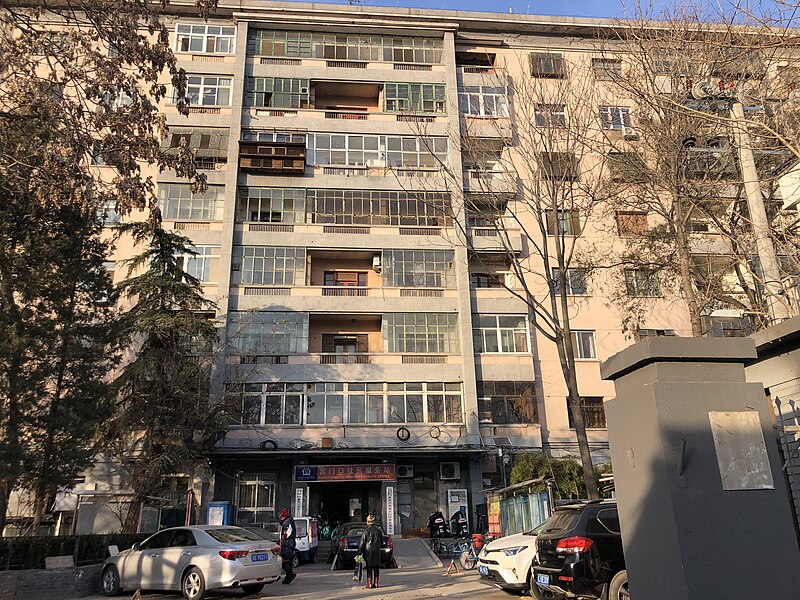
The Haunted Apartment Building | 劲松街道 | Jinsong — A mass haunting making people flee their homes

Most Haunted Places in Beijing – Illustration Photo by 尾 賀

In 1984, a wave of terror gripped the residents of a residential building around Jinsong in Beijing, as rumors of haunting spread like wildfire. In the dark when they came home from work or peeked outside in the corridors, the people living there could hear miserable crying as soon as you stepped inside the building. There were also ghostly shadows that roamed around on the walls as the lights flickered on and off. 

People didn’t want to live in this haunted building in Jinsong, even though the building itself was brand new. And after a while of experiencing all the paranormal stuff going on, the residents moved out, one by one and the building was left empty. Or was it?

One chilling encounter involved an old lady who encountered a mysterious figure standing outside her door, a harrowing sight that left her trembling and traumatized. As news of the haunting spread, even making it to the newspapers, scientists and authorities were called in to investigate, but the truth behind the supernatural occurrences remained elusive. While some attributed the disturbances to teenage mischief, others speculated darker forces at play, leaving the mystery of Jinsong’s haunting unsolved and shrouded in uncertainty.

Read the whole story here: The Ghost House in Jinsong Terrorizing the Residents

Last Bus to Fragrant Hill | Beijing — The cities most haunting urban legend

Most Haunted Places in Beijing

As dusk descends upon the bustling streets of Beijing, an eerie tale whispers through the city’s alleys and avenues, shrouded in mystery and dread. There are many public transportation systems with haunted lore attached to them like, the Haunted Subway in Beijing or The Haunted Metro Stations on Hong Kong MTR’s Island Line that could have made the list of Most Haunted Places in Beijing. But the most told ghost story though, comes from the buses.

The legend of the Last Bus to Fragrant Hill, also known as Bus 330, haunts the minds of those who dare to venture into the realm of urban folklore. On a fateful November night in 1995, passengers board the No. 330 (many different numbers in different variations of the legend) bus departing from Yuanmingyuan main station bound for Fragrant Hill in Beijing. Among them are a young couple, an old woman, and the bus driver and conductor.

As the bus traverses the darkened streets, it encounters two peculiar passengers dressed in Qing Dynasty attire, accompanied by a seemingly unconscious man. Despite the oddity of their appearance, the passengers pay little attention, assuming them to be part of a film crew. However, the atmosphere takes a sinister twist when the old woman accuses one of the Qing Dynasty-clad men of theft, claiming he stole her wallet.

Sensing danger, the old woman persuades another passenger to get off with her, revealing that the strange men are legless ghosts from the Qing Dynasty. The bus mysteriously vanishes without a trace. Days later, the bus is discovered submerged in Miyun Reservoir, its interior bearing signs of a grisly demise: three bloodied corpses in advanced stages of decomposition.

Read the whole story here: The Disappearance of the Last Bus to Fragrant Hill in Beijing

The Tomb of General Yuan | 袁崇煥 | Chongwen District — The ever watching guardian in one of Most Haunted Places in Beijing

Most Haunted Places in Beijing

The Tomb of General Yuan, is found amidst the bustling streets of Beijing and holds an old tale of heroism, betrayal, and lingering unrest. General Yuan Chonghuan, a revered military leader of the Ming Dynasty, met a tragic fate at the hands of his own court, accused unjustly of treason and sentenced to a gruesome death by lingchi, the infamous “death by a thousand cuts.”

Despite his valiant efforts in defending China’s borders and repelling invading forces, General Yuan’s reputation was tarnished, and his demise marked by indignity and cruelty. Legend has it that his spirit, bound by duty and unfulfilled justice, haunts his final resting place, guarded faithfully by the She family for generations.

The tomb, hidden amidst modernity, has since gotten a haunted reputation and it is said that General Yuan is still guarding his post, even in his afterlife.

Read the whole story here: The Haunted Tomb of General Yuan

Most Haunted Places in Beijing

So these were some of the Most Haunted Places in Beijing, but far from everyone. For more ghost stories from Chine, head over to the archive with more haunted places, urban legends and ghosts from China.

More like this

Newest Posts

References:

The Disappearance of the Last Bus to Fragrant Hill in Beijing

Advertisements

In China they tell about an urban legend about the disappearance of Bus 330 or the last bus to Fragrant Hills that involves both a ghost story as well as a murder mystery. 

One of the most famed urban legends from China is the mysterious story about the Bus 330 that disappeared and the close call one of the passengers had to become one of the victims of something supernatural if we are to believe the legend. 

Read More: Check out all our collection of ghost stories from China

So what really happened inside of the mysterious Bus 330 to Fragrant Hill on this cold November night in 1995 on the roads in Beijing, and how much of the retold story is true?

The Last Bus to Fragrant Hills

In 1995 the last bus of No. 330, or 375 in some variations, departed from the main station of Yuanmingyuan at 10 o’clock on November 14th to Fragrant Hill in Beijing. In this legend and ghost story there was a young couple, a young man and an old woman in addition to the driver and the conductor involved.

At first it was just another late night bus in the dark, but it soon started to take a dark turn. After a few stops the bus picked up two passengers on the way back to the terminal and this is when it all changed. 

The men were running after the bus, trying to wave it down in the cold November night. Although some passengers protested as they just wanted to get home, the bus driver stopped and opened the doors for the two men with a person between them, propped up that looked passed out drunk. 

The passed out man was not the strangest thing about them as the two men were wearing Qing Dynasty costumes and although a little peculiar attire, no one gave them too much attention as they thought they might have been filming something and the bus ride continued in peace through the dark night with only a few dimly lit street lights on the close to empty road. 

The Legless Ghosts

The driver and the conductor were laughing and talking together and the young couple got off the bus three or four stops later on their way to Fragrant Hill in this smoggy Beijing Night. 

Only the old woman watched the two men closely and suddenly got up and claimed that the young man had stolen her wallet, yelling at him and telling him they needed to head to the nearest police station to settle the matter. 

Two passengers, a young man and an old woman disagreed about the wallet, and the old lady insisted they get off the bus that was making its way through Beijing. When they were safely off the bus, she told the young man, annoyed for getting off at the wrong bus stop, that the two strange passengers on the bus actually turned out to be ghosts from the Qing Dynasty. 

She had noticed that the two men had no legs at all and she had made the story about the wallet up to get him to get off the bus with her. Who knows, the ghosts could very well be dangerous.

The Death and Disappearance of the Bus

The Last Bus to Fragrant Hill never made it back to the terminal, and when questioned by the police, the young man and old lady told them about the ghost passengers. It seemed to have simply disappeared. No one believed them, but the ending of the story seemed to be the most mysterious about it all. 

The Last Bus to Fragrant Hill: Did this ghost story start to be told in the 90s because of a trend or did it actually happen in the 90s. Did it happen at all?

The Last Bus to Fragrant Hill was found three days later in the Miyun Reservoir, over 100 kilometers from Xiangshan and its original route. According to the legend the bus was already rusted like it had been there for years, not just a couple of days and then there were three bloody murdered bodies found inside of it, already starting to decompose. 

The Truth of the Last Bus to Fragrant Hill Disappearance

Was this story really a sensation in 1995 as the legend of the Last Bus to Fragrant Hill wanted it to be, and do the details really hold up ?

The case of the the Last Bus to Fragrant Hill that went missing has today been solved according to many people, and there were no ghosts, the bus wasn’t rusted and the bodies were decomposed as it time had moved quicker than the rest of the world. But they were indeed dead according to this version as this was a straight up murder case, not a ghost story. 

The two passengers boarded the bus with the person between them already dead and covered up the blood with wine and pretended to be drunk rather than dead. They killed both the driver as well as the conductor and drove the bus to a remote place to hide it and got away with the crime. 

So could this be it? Could the incident of the Last Bus to Fragrant Hill be a murder case more than a ghost story? There are however no found written records about a crime case like this either from this time and place and the story lives on as an urban legend, even without the supernatural elements to it. 

The Urban Legend Evolves to Modern Times

There has also been a shift in the bus number in recent years, and it looks like the newer generation often credit the bus number as 375, not 330 anymore. Recent retellings of the Last Bus to Fragrant Hill also add on newer technology like that it was a phone that was stolen, and puts more focus on surveillance cameras that were not as widespread in the 90s. 

The fact it has such a specific date, makes the story much more believable at once, but when looking closer it is also easier to see there really wasn’t a mystery in any papers at the time.

There were however several stories similar to the Last Bus to Fragrant Hill circulating even before 1995, and some sources put the event at 1992, and perhaps even earlier. However, as the legend stands today, there are several things that can debunk the story. Online the earliest entry found of this story so far dates back to 2015. 

More like this

Newest Posts

References:

北京330公交车事件真相?来看看真正北京人的讲述 

北京公交车失踪事件,轰动北京的灵异案件(谣言解密) 

北京的330路公交车,司机死相诡异(实际上是捏造出的故事) 

https://kknews.cc/society/q2bzqkr.html

The Princess Tomb under the Summer Palace

Advertisements

In the imperial Summer palace there is supposedly an ancient princess tomb under the Longevity Mountain. When they tried to disturb the grave there, it came with a warning that those who disturbed the peace would read the repercussions for it as well. 

The Summer Palace (颐和园) is more of an ensemble of both lakes, gardens and palaces in Beijing and covers almost 3 square kilometers, mostly water. It dates back to the Jurchen-led Jin dynasty in 1153 when an imperial palace was constructed here. It is perhaps known for being the residence of the infamous Empress Dowager Cixi. 

The Summer Palace is perhaps less known for having some buildings that may or may not hide a soul that may not rest for ever after. 

Read More: Check out all of our ghost stories from China

The Tower of Buddhist Incense (佛香阁; 佛香閣;) or the Fóxiānggé Pavilion is found right in the center of Longevity Mountain. This was a place the Empress Dowager Cixi visited to offer incense and pray when she stayed at the Summer Palace. Originally the Buddhist tower was meant to be a pagoda like the Yellow Crane Tower ub Wuhan ordered by the Qianlong Emperor. 

The plans change however because of fear of supernatural retribution. 

The Legend of the Princess Tomb

There was once an emperor that wanted to build the most beautiful garden in Haidan. According to folklore though, there was already an ancient tomb under Longevity Mountain of a Ming Dynasty Princess. 

It was therefore unwise to move or disturb it, but Emperor Qianglong ignored the warnings against building a garden there, commanding the people to follow his orders. He was not afraid of heaven and earth and certainly not of the ancient princess tomb under the mountain. 

So they dug on the imperial decree, and they found the Princess Tomb with a stone gate to it. Emperor Qianlong heard about it and came to the place to see for himself. Over the gate of the tomb they had found, there were engraved: You don’t move me, I don’t move you! 

When the emperor saw this he was immediately frightened and ordered to cover the Princess Tomb as it had been by refilling the soil and not to disturb anything ever again. 

Instead he built a large temple on the mountain to suppress the ghost that could come back to the afterlife to haunt the one disturbing her peace. 

More like this

Newest Posts

References:

https://kknews.cc/story/mmrnkgp.html

颐和园灵异事件:佛香阁竟是为了镇鬼而建?

Summer Palace – Wikipedia 

颐和园灵异事件:佛香阁竟是为了镇鬼而建? 

The Ghost on the Eighth Floor of the Fusuijing Building

Advertisements

In one of the old communist high rises in Beijing, it is said that the ghost on the eighth floor is still haunting the Fusuijing Building after being wrongly accused. 

As a product of the Great Leap Forward period in China, they built the Fusuijing Building in 1958. The leap was an economic and social campaign by the Chinese Communist Party to reconstruct the country to a communist society with the commune life as the goal. 

Read More: Check out all our collection of ghost stories from China

Through the Great Leap Forward  from 1958 to 1962, the country saw an economic and agricultural disaster leading to the one of the largest famines in human history that ended with the death of millions of people. 

The Home for Communism in the Fusuijing Building

It was not only the agricultural and farming aspects of the country that was turned into a commune based and not privately owned thing, but also the cities were affected. One of the things they decided was to build high rise buildings designed for commune living, also in the big cities. This was the idea when they built the huge Z shaped Fusuijing Building (福綏境公寓) in Beijing. 

“The building is equipped with gas, heating and elevators; residents don’t have to cook at all – they can go to the canteen and eat whatever they want; there will be a club where people can play board games or do sports, a movie room where they can watch movies any time, and a library, public bathroom, a medical center and a grocery store… The building is like society itself, a miniature version of an ideal society, where people live like a big family. It will basically be communism,” 

This was written by the celebrated Chinese writer Shi Tiesheng who had his teacher talking about the building that rose high above the traditional hutong area surrounding it. 

The building is on No. 1 Santiao in Xicheng District, eight storey high and was the first residential building to install elevators in the city. But even if the dream of the building was designed for the perfect communist life with a collective dining hall, activity rooms and kindergartens, the commune living boom came to an end pretty quickly. 

The cafeteria was only open for a few days as there was food shortage and people started cooking in the hallways and the walls of the building were blackened with soot after a few years. After decades of decline in people living there, the building itself started to deteriorate and the place has in many places become a hazardous place to be. 

The Ghost on the Eighth Floor

This has now become one of the  four major ghost houses in Beijing and is well known among Beijingers. The famous legend about the Ghost on the Eighth Floor started circulating as the residents of the building moved out and now the building mostly attracts those interested in ghost hunting.  

According to one version of the legends there was a woman who was framed by her husbands’ lover as a rightist and enemy of the state. She was then imprisoned on the eighth floor in the building where she died. For how long and from what is not often mentioned.

Every year on her death anniversary, although not really specified when, the whole building seems to darken almost and the lights are difficult to keep on and only gives off a dim light. You can also hear the sound of a woman crying. 

The Mysterious Fusuijing Building

There have been more than one movie about this particular legend, which according to the stories, scared people to death in the theaters. There have also been several horror movie adaptations that tanked in the box office, but nevertheless draws people to the building from time to time to explore these haunted rumors. 

The fame of the Ghost on the Eighth Floor has attracted many curious individuals and thrill-seekers over the years. Urban legends and tales of paranormal encounters continue to circulate, adding to the mystique surrounding the haunted Fusuijing Building.

Visitors who dare to venture into the building often claim to feel an eerie presence as they ascend to the eighth floor. The atmosphere becomes palpably colder, and whispers echo throughout the dimly lit hallways. Some have reported seeing a shadowy figure lurking in the corners, while others have experienced inexplicable phenomena, such as doors slamming shut or objects moving on their own.

Fusuijing Building: The facade of the Fusuijing Building were it it said that the 8th floor is haunted by a woman that were held captured there. //Source: Wikimedia

Whether one believes in the paranormal or dismisses it as mere folklore, the Ghost on the Eighth Floor of the Fusuijing Building continues to captivate the imaginations of those intrigued by tales of the supernatural. The building stands as a testament to an era defined by lofty ideals and the tumultuous consequences of societal experiments.

As the legend endures and each passing year marks the anniversary of the ghostly apparition’s existence, the Fusuijing Building remains a destination for those who seek an encounter with the inexplicable. Although the truth behind the legend may forever remain a mystery, the ghost on the eighth floor continues to haunt both the building and the collective imagination of those drawn to its haunted history.

More like this

Newest Posts

References:

Why did the once glorious “Communist Building” become one of the “Four Haunted Houses in Beijing”? 

https://kknews.cc/story/mmrnkgp.html

NewsChina Magazine – Print Article

https://en.wikipedia.org/wiki/Great_Leap_Forward

The Poetic Haunting in No. 33 Xiaoshihu Hutong

Advertisements

One of the four most well known haunted houses in Beijing is No. 33 Xiaoshihu Hutong. People have talked about the sound of a woman reciting poetry in the night for centuries, and used to be the home of one of the most important authors in Chinese Literature. 

The Chinese writer, Cao Xueqin (曹雪芹) who lived from 1710-1765 was a famous novelist and poet from the Qing Dynasty and used to live in the house that is now known as one of the four most haunted houses in Beijing. He is best known as the author of Dream of the Red Chamber, a family saga about the rise and fall of the family and about the social relations in 18th century China. 

The book, Dream of the Red Chamber is considered one of the Great Classical Novels of Chinese literature together with Romance of the Three Kingdoms, Water Margin, Journey to the West, The Plum in the Golden Vase and The Scholars.

Read More: Check out all our collection of ghost stories from China

Like the situation of the family in the novel Dream of the Red Chamber, Cao Xueqin’s family was once important but later purged after the death of the Kangxi Emperor and the ascension of Yongzheng Emperor to the throne. His family’s once affluent family’s assets were confiscated and his family fell into poverty.

Moving into a Haunted House to Write

Cao Xueqin moved into No. 33 Xiaoshihu Hutong, Xidan in Beijing where he started to write and rewrite his novel for over ten years that would once be one of the country’s cornerstones of literature. Back then the housed used to be No. 7 and No. 8 before being renumbered in the 1960s. 

The No. 33 Xiaoshihu Hutong is known as one of the four haunted houses in Beijing, the other being Songpo Library, Hufang Bridge Huguang Guild Hall, Chaonei No. 81 and Xi’an Menli Palace. But exactly who is said to be haunting the place?

Many have lived and passed in this house, and the only thing that has seen it all is the Jujube Tree in the courtyard which is said to be more than 600 years old. It even used to be the residence of the Kangxi Princess Jianning, before her family were destroyed and according to legend, left an ominous omen in the place. 

The Jujube Tree: In the courtyard of the No. 33 Xiaoshihu Hutong, it is said that an ancient Jujube Tree stands that used to stand there even before the house got the haunted reputation.

Cao Xueqin didn’t have a peaceful ending though, and was one of the residents in the house that had a tragic death. The writer died suddenly after a time being confined to the bed of what was considered grief after the death of one of his sons or poverty. 

The Ghost Reciting Poetry at Night at No. 33 Xiaoshihu Hutong

Although No. 33 Xiaoshihu Hutong is now a wedding photography studio, believing locals all over the city claim to hear the ghostly sound of traditional instruments at night being played, accompanied by a woman reciting poetry. 

Who is this woman that recites poetry in the night, long after the writers of the house moved out and died? Could it be someone from his family, or perhaps one of his lovers? There is a legend that Cao Xueqin once had a lover that he was separated from by the Yongzheng Emperor that also was the cause of his family’s downfall. Could they have reunited in their afterlife, reciting poems and playing music? 

Perhaps the poetic ghost said to haunt No. 33 Xiaoshihu Hutong is someone completely else not linked to Cao Xueqin at all. Perhaps the ghosts are much older than so. Could it have something to do with the Kanxi princess that lived in grief after all of her family was slaughtered? Today, only the  Jujube Tree in the courtyard knows.

The house on No. 33 Xiaoshihu Hutong had haunted rumors from way back, perhaps even from before Cao Xueqin’s lifetime. However, many attribute this ghost of being someone close to him. A man called Ji Xiaolan once said of the house: “This mansion has been in existence for a long time, so it will inevitably become strange sometimes, but it is not harmful to people.”

More like this

Newest Posts

References:

Dream of the Red Chamber – Wikipedia

Classic Chinese Novels – Wikipedia

Cao Xueqin – Wikipedia

北京四大凶宅

北京四大凶宅之一:小石虎胡同33号院,地处西单究竟有何玄机 

Princess Jianning in history, her life will make you sigh

京城4大鬼宅/小石虎胡同33號死全家 夜半驚傳女人吟詩| 國際 

The Beheaded Soldiers Haunting Dongmianhua Hutong

Advertisements

In the midst of the old one of the old hutong neighborhoods in Beijing it is a house that is said to be more haunted than others. In the Ming Dynasty a famous female military general used the courtyard of the Dongmianhua Hutong to behead soldiers not following her commands. 

An army of ghosts are believed to haunt one of the old hutong alleys in Beijing  because of the order of their commander, Qin Liangyu (秦良玉), a female general in the Ming Dynasty. 

Read More: Check out all our collection of ghost stories from China

Qin Liangyu was from Sichuan and is best known for defending the Ming dynasty from the Manchurian army, late in the 17th century. Unlike Mulan who went into battle instead of her father, Qin Liangyu went in place for her husband who died in prison of an illness after being falsely accused.

The Cotton Spinning Soldiers

Hutong: A traditional narrow alleyway in older neighborhoods of Beijing, and other cities in northern China. These alleyways are typically lined with courtyard houses, known as siheyuan. Over the years, many hutongs have been demolished to make way for modern developments, but efforts to preserve and restore these historic neighborhoods have gained momentum in recent years due to their cultural significance.

According to legend of Qin Liangyu, she is said to have stationed her troops in the Dongmianhua Hutong (东棉花胡同) when she came to Beijing at least three times to aid the capital.

The national treasury was empty however and she had to make her own money to go to war. By military standards her army belonged to the lord, not the national army, and therefore the emperor didn’t pay the soldiers. So she had to figure out a way herself and the answer was cotton. 

It is said that she ordered her lieutenant soldiers to spin cotton clothes all night to earn money for the military and to pay her soldiers. This is allegedly why the Dongmianhua Hutong was named Cotton Alley after her and is to this day. 

Dongmianhua Hutong is now a historical area found south of Jiaodaokouin in the Dongcheng District, Beijing. The Hutong has preserved the brick arches of the late Qing Dynasty. There is however more than one Cotton Alley named after both a cotton market that used to exist. 

The Haunted Execution Courtyard in Dongmianhua Hutong

Qin Liangyu

The exact house that are supposedly haunted in Dongmianhua Hutong is the courtyard of No.1 (棉花胡同头条1号). It was known as a haunted house because of the ghosts of the soldiers that haunted the place. The story goes that this was the place where Qin Liangyu beheaded soldiers who violated her discipline, although there really aren’t many historical records of this, it probably wasn’t that uncommon for a commander to give these orders. 

The terror of the haunted Dongmianhua Hutong doesn’t stop with the ghost from the headless stories though, as more have died over the years in this house. This was where the writer Lin Baishui was arrested and shot to death after he published writings that criticized the warlords that governed the territory in his time. Perhaps he as well has something to do with the haunted rumors of this place?

Or perhaps the ghost stories from Dongmianhua Hutong come from newer times? There is also a story about one of the last occupants of this particular house that says he burned himself after killing a young girl. Allegedly that is.

The Ghost of Old Beijing Haunting Today

Either way, the house now bears a stigma painted in blood that is hard to wash out. Now the cotton alley and old hutongs like Dongmianhua Hutong in Beijing are slowly swallowed by high rise buildings creeping closer on all corners, and soon, there might not be much left of it. Perhaps except for the ghosts. 

More like this

Newest Posts

References:

Qin Liangyu – Wikipedia

棉花胡同:演绎浪漫“知音”

https://news.ifeng.com/history/zhongguogudaishi/200612/1204_7181_43303_1.shtml

棉花胡同名字的来由 – 北京 

Take the Haunted Subway in Beijing

Advertisements

Discover the spine-tingling secrets of the Haunted Subway in Beijing. It is said that the Metro Line No. 1 was haunted by ghosts and had to have an exorcism when they started building it. But did it work?

From tales of ghosts to reported sightings of supernatural entities, the Beijing subway has a hidden side that will leave you feeling spooked. If you’re looking for a thrilling adventure, take a ride on Metro Line No. 1 that runs underneath Chang’an Avenue and to the heart of Beijing, Tiananmen Square. 

Read More: Check out all our collection of ghost stories from China

Line 1 is the oldest and most used train line in the city since it opened in 1971. The Red colored metro line has some stories to it though – some say it was so haunted that an exorcism was required when they started building it. 

The Beijing Subway System

The Beijing Subway system is not just an efficient way of transporting commuters around the city – it also comes with some mysterious stories that will have you on the edge of your seat. From spirits to ghosts, tales of strange encounters abound in this underground labyrinth – with many passengers claiming to have experienced something extraordinary while riding along Metro Line No. 1. 

According to legends, people have disappeared into the tunnels and simply vanished into thin air, never to be seen again, and some people claimed that something sinister had pushed passengers onto the rails. Whether true or not, these spine-tingling stories have given Beijing’s subway a supernatural twist.

Metro Line No. 1 was mired in mystery from the very beginning when construction workers encountered strange events that seemed to be of supernatural origin. Some workers reported seeing apparitions and hearing eerie sounds coming from deep within the tunnels as they were working and it looks like the passengers are still experiencing some form of paranormal stuff when commuting. 

Others even alleged that ghosts had instigated mysterious accidents which led to costly delays in the building process. Despite this, the exorcism seemed to have worked as the subway lines have only expanded over the years. Or perhaps it has expanded only despite the paranormal stuff happening in the underground labyrinth? 

History of the Haunted Subway in Beijing

Beijing’s subway system has quite a long and mysterious history of haunting since they started construction back in 1965. Legend has it that when Line No.1 was being built, construction workers encountered multiple strange occurrences and dangerous accidents, broken equipment that halted the project. Some even claimed that it was because of something supernatural. 

There were multiple explanations as to why this was happening and one of them was the theory that during the construction, several bones of dead humans were disturbed and destroyed, angering the spirits.

Due to this fear of angering the spirits, they brought in monks to perform some sort of ceremony, a sort of exorcism before being able to complete the work on what would be known as Line 1. 

The Blessings and Rituals Performed by Monks

To get rid of the spirits on the Haunted Subway in Beijing, local monks were brought in to perform traditional rituals, blessings and prayers in and around the ground where subway construction was underway. The ceremonies were meant to purify the area to prevent any further hauntings and accidents. Whether or not it worked remains a mystery but one thing is certain – a ride down Line No. 1 may be an experience that will leave you with a shiver!

The ceremony went on for days supposedly and the monks advised that the last train would be at 11 pm as they thought that between 11 and 1 am was the time when the souls needed rest. They also said that the train would take a last tour without any living passenger, only to deliver the souls back to where they belonged. 

Since then, rumors have spread about encounters with ghosts throughout the subway system. Whether these rumors are true or not remains a mystery – but they certainly add some excitement to your daily commute!

The Princess Tombs at Gongzhufen Station

But what bones exactly were disturbed during the construction? There are more than one story about what graves they encountered when building the metro line. On Line 1 there is a subway station called Gongzhufen Station, or The Princess Tombs that have several local legends connected to the place. 

It is named after the tomb of two princesses from the Qing Dynasty, and when they started building in 1965, it was verified that the two princesses were Princess Zhuang Jing Heshuo and Princess Zhuang Jing Gulun, the third and fourth daughter of Emperor Jiaqing. 

The two princesses died only two months apart aged 30 and 28 in 1811, so they decided to bury them together. 

The tombs were not left alone over the years though and they had to go through tomb robbing in 1937, and finally in 1965 when the subway line was built straight through it and the tombs had to be relocated.

After this, a ghost story centered around this subway station started, when the passengers and staff started seeing a female ghost on the station platform, wearing a traditional Qing dress and sometimes being carried in a sedan chair. 

One story about the sighting of the ghost of the princesses was that a boy working in the station encountered the ghost in the middle of the night and ran off, refusing to come back and quit his job at once. This story is however also connected to the urban legend of the Yonghegong Lama Temple Station. 

The Last Train Still Leaves at 11 PM

Whether they took the monks’ advice into consideration when making the train schedule, the last train on Line 1 leaves Pingguoyuan stop at 10:55 pm. The last west-bound train leaves Sihui East at 11:15 pm. 

With the darkened passages and deserted stations, many avoid traveling on Line No. 1 after dark. The last train departs at 11 PM – any later than that and you’ll find yourself alone with only a few brave souls wandering the tunnels. The lit lights flicker and dim, surrounding you with an eerie darkness. 

Stories abound of apparitions on the Haunted Subway in Beijing, some even say they’ve seen a ghost train run empty through the long lifeless corridors. So hurry back home before the last train takes off, or else there will only be the ghost ride left with no living passengers. 

More like this

Newest Posts

References:

Beijing horror story – Global Times

https://kknews.cc/story/kb2q43p.html

公主坟- 维基百科,自由的百科全书 

https://m.tanling.com/archives/1487.html

公主坟闹鬼事件,抬轿子的地铁站-灵异事件

https://kknews.cc/emotion/y88bbn.html

北京公主坟闹鬼事件真相,地铁一号线竟是坟场改建 

The Haunted Liuyin Street in Beijing

Advertisements

There is not only one ghost story haunting the old Liuyin Street in Beijing. Everything from ghosts in the old imperial mansions along the street, a mysterious force in the toilets, the ghost of a hero soldier and a mysterious girl dressed in red are said to haunt this street. 

Some streets are more haunted than others. Some only have one ghost that is well known, others have countless. The Liuyin Street in Xicheng (柳荫街) district in Beijing is one of those streets that have more than one ghost story attached to it. 

Read More: Check out all of our ghost stories from China

The place was known for military generals that lived there and also went under the name of Marshal Street. Today it has some of the old Beijing courtyards preserved. 

The Ghost of Prince Go’s Mansion

Firstly, it is the place you will find the Haunted Prince Go’s Mansion that is adjacent to the street in the east. Inside of the mansion it is said that a woman wearing white has been seen in the courtyard, still mourning her son. 

The mansion is known as one of the more haunted places in the country, but also out on the street there are more than one ghost still roaming about. 

The Little Girl in the Red Dress

One of the stories is that a little girl is haunting the street and the area of the city. According to the legend, she is wearing a full-length red dress. 

The story has evolved into more of an urban legend, and it is said that if you see her, you must just walk past her. She is said to not move at all, only turn as you walk past her 180 degrees. 

The Girl in the Red Dress: The story of a little girl haunting the The Liuyin Street in Xicheng (柳荫街) district in Beijing. The story of a little ghost girl wearing red is not an unknown one, especially in Taiwan.

It is said that the woman who first saw this ghost was so disturbed by the sight that she collapsed and was sent to an institution when she woke up. 

Where this legend comes from is unclear as it is only mentioned in a couple of online English sources with no further source work. The image of a little ghost girl in red is not completely unfamiliar though. There are urban legends from Taiwan especially that deal with the trope of “The Little Girl in Red”.

The Heroic Ghost of Yuan Mantun

The Heroic Ghost of Yuan Mantun: A bust is erected in his honor after sacrificing his life. Source

Down the road of Liuyin Street you’ll find a white bust memorial to a heroic soldier named Yuan Mantun that served in the People’s Liberation Army. According to the legends of the street, he is one of the ghosts said to haunt it.

The young soldier sacrificed his own life by diving into a freezing cold lake to rescue two workers who fell into the water in 1982 when he was on duty.

On February 24th in 1982, he jumped into the water twice to rescue two people and was in the water for over 40 minutes, battling the ice cold temperature as he managed to get both of the people safely to land.

When he finally got help and was rescued up from the icy waters himself, he was already unconscious. He died of hypothermia after his rescue, only 21 years old.  

Today his ghost is said to wander nearby but it’s also said that he’s a friendly sort and not out to scare those passing through. As he himself is said to have written in his diary:

“Only those who bring happiness to most people are the happiest people themselves.”

The Toilet Ghost in No. 2 on Liuyin Street

The last haunted rumor in the streets are from the old toilets in No. 2 in Liuyin Street. The story has made its way around the forum and is supposedly told from a former resident who grew up there in the 90s. 

In the old courtyard there was a toilet the residents all used, with poor sanitary conditions and was a place no one wanted to spend more time in than needed. The grandmother of the original poster said that an old woman went to the toilet and saw something of a specter that looked like something with half-male and half-female face  on the wall of the toilet and a burst of energy hit her. She was so afraid that she didn’t even have time to put on her pants and ran home. A couple of days later the old lady became ill and died in a matter of days. 

According to the poster’s grandmother, this was something that had also happened in the 70s, when a young man passed away after seeing something sinister after using the bathroom. 

Today the toilets on Liuyin Street are locked up and no longer in use. 

A Walk Down the Haunted Street

In conclusion, the old Liuyin Street in Beijing holds a fascinating array of ghost stories that continue to captivate locals and visitors alike. Although these ghostly encounters may send shivers down your spine, there is also a sense of intrigue and wonder that lingers in the air. The rich history and cultural significance of Liuyin Street add an extra layer of fascination to these supernatural tales.

As you wander through the winding streets and ancient courtyards of Liuyin Street, be prepared for the possibility of encountering the unexpected. Whether it’s a glimpse of a grieving mother in the Haunted Prince Go’s Mansion, a girl dressed in red who turns as you pass by, or the friendly presence of Yuan Mantun, the heroic ghost who continues to watch over the street.

More like this

Newest Posts

References:

The Toilet Ghost: 柳荫街2号发生过怎样的灵异事件?

The Girl in the Red Dress: Supernatural Events in Beijing, Ghosts and Hauntings Places in Beijing 

Yuan Mantun’s Memorial: 袁满囤_百度百科 

The Courtesan Haunting the Songpo Library

Advertisements

A beautiful courtesan became mixed up in the politics that ended and started a dynasty in China. Today it is said she is haunting the Songpo Library in Beijing where she took her own life.

In that time when the emperor abandoned the human world,
Wu crushed the enemy and captured the capital, bearing down from Jade Pass.
The six armies, wailing and grieving, were uniformly clad in the white of mourning,
One wave of headgear-lifting anger propelled him, all for the sake of the fair-faced one.
The fair-faced one, drifting, and fallen, was not what I longed for.
The offending bandits, smote by heaven, wallowed in wanton pleasures.
Lightning swept the Yellow Turbans, the Black Mountain troops were quelled.
Having wailed for ruler and kin, I met her again.

Wu Weiye, excerpt from Song of Yuanyuan

Once upon a time, a girl followed the love of her life to be with him, but it ended in tragedy. He gave up his country to save her, but also gave up on her in the end. A tale as old as time of a love turned cold and sour and the perfect setup for a ghost story in the former Songpo Library

Read More: Check out all our collection of ghost stories from China

In the former library known as Songpo Library in the Xicheng district in Beijing, China, it is said that a woman haunted the book aisles in the old Hutong. And according to reports, perhaps she is not the only ghost that are haunting the place. 

The General’s Mistress

Wu Sangui: (吳三桂). 8 June 1612 – 2 October 1678), a  Ming dynasty military officer who played a key role in the fall of the Ming dynasty and the founding of the Qing dynasty in China and thought to be haunting the former Songpo Library..

The story in Songpo Library starts out with a famous general known as Wu Sangui (吳三桂) that lived from 1612-1678. He was originally a Ming Dynasty military officer that played a key part in bringing the Dynasty down and giving rise to the Qing Dynasty. In contemporary China, Wu Sangui has often been regarded as a traitor and an opportunist, due to his betrayal of both the Ming and Qing dynasties. Wu’s name is synonymous with betrayal.

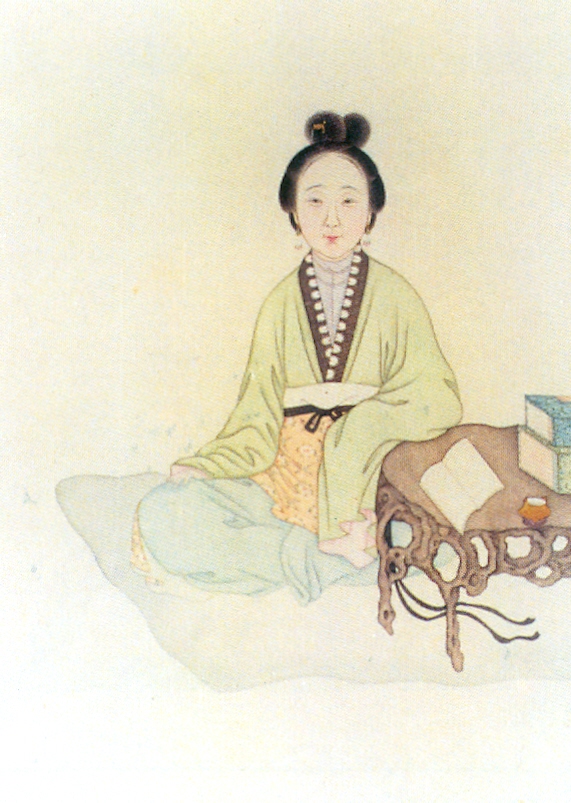
When the great general Wu made this place his home he brought his lover with him, a courtesan named Chen Yuanyuan. Different accounts gives different tales about if Chen Yuanyuan really did live in this place, as it is also said it was to Kunming General Wu brought her, not Beijing. 

General Wu Sangui is today known as a big traitor and is said to have betrayed the Ming Dynasty by allowing the Manchu army through the Great Wall he was put to guard, for a position in the Qing Dynasty.

It is also said that he betrayed the country for the love of his life, Chen Yuanyuan. Wu’s romance with and love for his concubine, Chen Yuanyuan, remains one of the classic love stories in Chinese history. A story tells that the Bandit King Li Zicheng kidnapped Chen Yuanyuan and for her freedom, General Wu had to betray his country.

The Eight Beauties of Qinhuai : (秦淮八艳), also called the Eight Beauties of Jinling were eight famous Yiji or Geji during the Ming-Qing transition period who resided along the Qinhuai River in Nankin. As well as possessing great beauty, they were all skilled in literature, poetry, fine arts, dancing and music.

Love Turned Sour in the Songpo Library

Perhaps the demands of the court Chen Yuanyuan (陳圓圓) suddenly became a part of were too much or perhaps the price of their love turned too heavy. Perhaps it even was as simple as he got tired of her, but their love soon started to dwindle. 

Chen Yuanyuan (陳圓圓) was born to a peasant family in Jiangsu province, and on the death of her father, she became a Yiji. Chen became a leading figure in the Suzhou opera scene and thought to be haunting the former Songpo Library.

It is also said that Chen Yuanyuan had troubles with General Wu’s other wives, especially the one named Lady Zheng who was jealous of her. Terrible rumors tells that Chen Yuanyuan was raped and killed in the fall of Beijing. What happened to her is up for debate, many say that they lived in Kunming and she ran off to become a nun in a temple there. Another side of the story gave rise to the haunted rumors. 

 In 1642, she became the lover of the scholar and poet Mao Xiang. Subsequently, Chen was bought by the family of Tian Hongyu, father of one of the Chongzhen Emperor’s concubines. She was then either purchased for Wu Sangui by his father, or given to Wu as a gift by Tian.

In April 1644, the rebel army of Li Zicheng captured the Ming capital of Beijing, and the Chongzhen Emperor committed suicide. Knowing that Wu Sangui’s formidable army at Ningyuan posed a serious threat, Li immediately made overtures to gain Wu’s allegiance. Li sent two letters to Wu, including one in the name of Wu’s father, then held captive in Beijing. Before Wu Sangui could respond, he received word that his entire household had been slaughtered. Wu then wrote to the Qing regent, Dorgon, indicating his willingness to combine forces to oust the rebels from Beijing, thus setting the stage for the Qing conquest of China.

She is said to have hanged herself in shame and because of her misfortune of being his concubine and not his wife. This is according to popular legend though. The heartbreak of losing her love caused her to take her life by hanging in their home. It is said that the girl still haunts the Songpo Library in the Shihu Hutong, where Wu once resided.

The Haunting of the Hutong

Today the Songpo Library grounds are open to tourists but the building no longer functions as a library. Observers swear they can feel her presence as she moves among the aisles of books today. Local residents have also reported hearing sounds of music and the unmistakable sound of a woman chanting. Could it be the ghost of Chen Yuanyuan, chanting scripture or something she sang on stage once upon a time? 

Songpo Library: An old photo of Songpo Library.[Photo/Cri.cn]

There is also a story about a rickshaw driver that once brought a group of passengers to the  Songpo Library on Shihu Hutong, or the Stone Tiger Hutong in the Western City. They paid their driver and suddenly vanished, leaving only a single peacock feather floating in the air. Like those that Qing officials wore in their hats. And the money he had gotten was not the Yuan Shikai coin, but an old copper coin with the name of the Shunzhi Emperor from the 17th century.

Perhaps it’s not only the ghost of Chen Yuanyuan that haunts the former Songpo Library, but the General himself as well? Late Ming dynasty historians left behind records describing Wu Sangui as a valiant and handsome general of medium height, with pale skin, a straight nose, and big ears. However, there was an obvious scar on his nose. He was neither muscular nor particularly strong-looking. However, he demonstrated great courage and physical strength from an early age and possessed excellent skills in horse-riding and archery.

Is this a person you have seen roaming the former Songpo Library lately? Perhaps it is a ghost?

More like this

Newest Posts

References:

Haunted Beijing: Songpo Library

Wu Sangui – Wikipedia 

Haunted Beijing: Songpo Library 

The Dark History of the Caishikou Execution Grounds

Advertisements

Explore the grim history of the Caishikou Execution Grounds in Beijing where countless executions took place, and some say that is haunted by the people that met their end there.

Caishikou Execution Grounds (菜市口法场), located in Beijing, held a dark and important place in the city’s history. The place was also called the Vegetable Market Execution Ground and was established during the late Ming dynasty when China entered into the Qing Dynasty and continued for centuries.

During the Qing dynasty, execution procedures changed significantly. Executions took on a more formal character, with punishments being imposed according to the severity of the offense and the status of the victim and many well known victims from Chinese history were executed right there. 

Read Also: Check out all of the ghost stories from China

Corpses of the beheaded convicts were often placed outside of Caishikou as an example to discourage others from committing similar crimes, and later, it was even turned into a macabre tourist attraction with the spectacle of death as well as selling postcards with photos of the dead bodies well into the 1900s. 

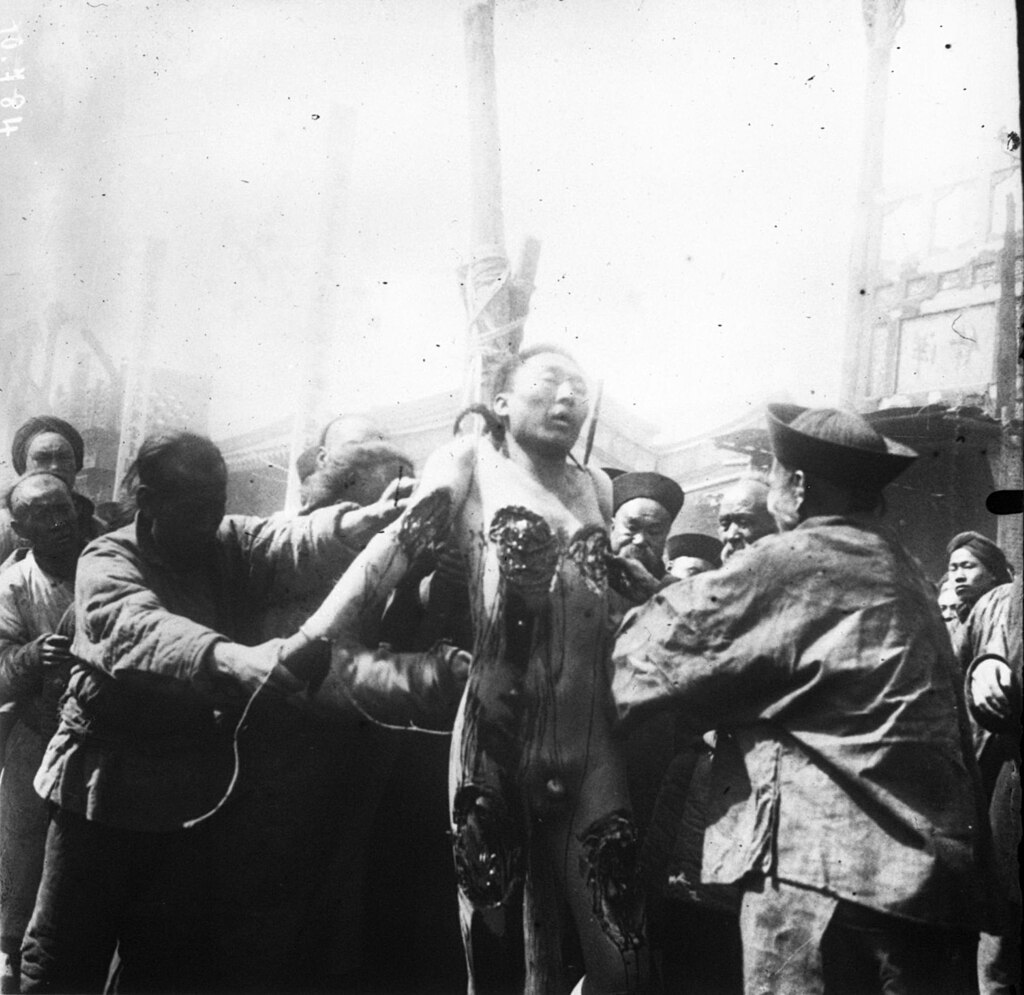
Caishikou Execution Grounds: A famous photograph, taken at Caishikou crossroad, during the execution of Boxers’ leaders in 1900. It has been later turned into a postcard, colorized, published in books, etc. On the back, pencil, ill-written: “26e year of Koang-hsu” (1900)

Because of its dark history and the blood that was shed on the spot, many claim that this is one of the more haunted places in the city and there have been many reports about people seeing the ghost of the executed convicts in the old vegetable market. 

The History of Caishikou Execution Grounds

Caishikou Execution Grounds were an important part of the Chinese legal system for centurie and served as a centralized execution site and symbolized the ultimate power of justice in the hands of the dynasty. Executions were conducted publicly with little mercy, punishing those found guilty of capital crimes such as treason, theft, counterfeiting, murder, and other offenses, and if it was a famous convict, large crowds would gather to watch. 

The Caishikou Execution Grounds is also known for the many famous people that died here. The House of Zhu that ruled in the Ming Dynasty was purged and executed here when the Manchu led dynasty came into power for example. There were also many people that were a part of the Boxer Rebellion who met their end here. 

The Exact Location of the Caishikou Execution Grounds

The exact location of the execution grounds in modern day urban Beijing has been a matter for debate for some time as it was definitely not the only place in Beijing they held executions. While most people agree that it is located in what is now the Chaoyang District of Beijing, there is disagreement about exactly which area it was located in and its size. 

It was located at the crossroad of Xuanwumen Outer Street and Luomashi Street, but today when looking at photos, it is most likely across from the Heniantang Pharmacy.

The Executions

When a convict was scheduled for an execution it was at 11:30 AM and the convict was escorted in a cart to the Caishikou Execution Grounds from the jail. Before reaching the final stop, the cart stopped at a wine shop called Broken Bowl Tea House on the east side of Xuanwu Gate that was called The Gate of Death. 

This was the last stop before the final stop and  the convict would be offered a last bowl of rice wine. After it was drunk the bowl of rice wine would be smashed and the convict sent to their deaths. It was also the place where the executioners retired after a day’s work to have a drink after. 

If they were sentenced to death by beheading they were lined up east to west in the autumn before winter solstice when most executions took place. But if you had done a particular horrible crime, you could also be sentenced to Linchi, or slow death where they slice you up, piece by piece. 

Death by a Thousand Cuts

One of the more gruesome methods of execution during the Qing dynasty was death by a thousand cuts or Lingchi (凌遲) as it was known in China. This method typically involved a series of deep cuts being inflicted on the criminal’s body and then left to bleed until the person died from extreme blood loss. 

This form of torture was considered especially cruel and often took over an hour for the prisoner to expire, making it one of the most agonizing executions employed at Caishikou until the method was outlawed by the government of the Qing dynasty in 1905.

Lingchi Penalty in China: Torture victim in China (lingchi torture in Beijing around 1910] otherwise known as Caishikou Execution Grounds : [press photograph] / [Agence Rol]

It was not only because of the torture aspect of the death it was considered particular cruel, but also what it did for the afterlife. The body was important to have whole in Chinese tradition and eunuchs even kept their severed parts in glass jars to have them buried with them so that it wouldn’t affect their afterlife or next life. 

Lingchi was an execution method only given to crimes that were especially bad, like treason. Several well known Chinese figures in history died by this way, like General Yuan Chonghuan, one of the people executed at the place on September the 22nd, 1630. It is said he has his own ghost story where he is haunting his tomb, but the execution ground itself is said to be haunted as well.

The Ghost of the Six Gentlemen of the Hundred Days Reform

The Six Gentlemen of the Hundred Days Reform (戊戌六君子) or the Six Gentlemen of Wuxu was young officials who put forward a preposition to the Guanxu Emperor of reform in the empire after it was met with pushback from the conservatives at court. 

They were arrested by the Empress Dowager Cixi and executed in Caishikou Execution Grounds in 1898 by beheading without having gotten a trial by the Ministry of Justice. 

These executed men are said to be haunting the place as well as Chinese history and the what if of what would have happened to the course of the country if the reforms had been successful. 

More like this

Newest Posts

References:

https://en.wikipedia.org/wiki/Lingchi

https://en.wikipedia.org/wiki/Caishikou_Execution_Grounds

https://www.thebeijinger.com/blog/2022/10/21/horrifying-history-behind-beijings-most-notorious-execution-grounds

City of Heavenly Tranquility – The Globalist