In Beijing there was an apartment building so haunted that in 1984 several of the residents moved out from the building because the hauntings became so bad. What really happened that year? Was it really a haunted house, or just an elaborate prank?
In 1984, there was a collective panic of the locals living in a residential building near Jinsong in Beijing as they claimed that the building they lived in was haunted by ghosts. The haunting got so bad that it even made the news and made more than one resident move out.
Jinsong: Apartment building found in Jinsong subdistrict in Beijing. One of these buildings was the location of a mass haunting in the 80s if we are to believe the rumors.
Jinsong (劲松街道) is a subdistrict, pretty much in the central of the city, and part of the larger district known for its foreign embassies as well as the urban business districts.
In the dark when they came home from work or peeked outside in the corridors, the people living there could hear miserable crying as soon as you stepped inside the building. There were also ghostly shadows that roamed around on the walls as the lights flickered on and off.
Read More: Check out all of the ghost stories from China
In the middle of the night there would be so loud noises in the corridors it was impossible to get a good night’s sleep. There were voices talking as well as fighting or what sounded like scolding children. There were also loud noises of things moving inside of certain rooms and in the hallways.
When people walked in though, the sound stopped and there was no one roaming the corridors and the neighbors in the hallway just stared at each other, having all heard the same thing.
Fleeing from the Ghosts
People didn’t want to live in this haunted building in Jinsong, even though the building itself was brand new. And after a while of experiencing all the paranormal stuff going on, the residents moved out, one by one and the building was left empty. Or was it?
There are stories of the hauntings the residents experienced that the ghost moved with them to their new place and for a while it seemed like that building was quiet.
Then, some of the residents that didn’t really have anywhere else to go moved back into the haunted building in Jinsong, thinking that maybe it was all over now. And for a few days there was nothing paranormal happening that they could pinpoint.
A Ghost in front of the Door
Then one day an old lady was coming back from a walk and went up the stairs towards her apartment. The old lady saw a long haired woman standing in front of her house and she asked the lady who she was looking for as she didn’t know who this woman was. There was no answer and no reaction from the stranger outside of her door.
After asking two times without a response, the old lady called for her spouse and son as she tried to push through the woman to get into her house. The woman turned around slowly after being shoved and the old lady yelled before collapsing on the floor, passing out by the sight of her.
Her family finally opened the door and saw the woman on the floor and she was sent to the hospital. When she woke up she was trembling and scared as she told them about the frightful woman.
The poor woman was so out of it, babbled about how the woman outside of her door didn’t seem alive at all, became paranoid and couldn’t get out of bed for days. She was eventually sent to her hometown in the country to get well again.
After this, the haunting just seemed to get worse and it got so famous that it ended in the news, and scientists came to investigate the reasons behind it all and published papers on the matter in order to encourage residents to move back.
But just for safety, they dispatched the police to guard the building.
The Truth Behind the Haunting in Jinsong
So what really happened that year in 1984 in Jinsong that spooked so many of the people that they took the extra step of fleeing the building? Why haven’t we heard about hauntings from the building later than 1984? And how did it really all come to an end? According to some living in Jinsong at the time, the background for it all was not a paranormal reason at all.
According to them there really was crying and talking that kept the residents up at night, but they went to the police to get help. When the police did a search they allegedly caught a group of teenagers that used some of the empty rooms as their own personal party place.
However, is that enough explanation to give when so many residents felt the haunting moved with them, even when they tried to find a new place to live? And how about the woman outside of the old woman’s door? Just a rude high school girl there to party? A figment of the old ladies imagination? Or perhaps there really was something strange going on in Jinsong in 1984.
The Forbidden City in Beijing still has some parts that are off limits for tourists, but they can never block the path to the alleged ghosts that are said to linger. These Imperial Palaces are said to be haunted by former concubines, and according to legend, possibly cursed as well.
Built in the early 1400s, Beijing’s Forbidden City, or Zijin Cheng in Chinese (紫禁城), literally means the purple forbidden city and is a complex of majestic buildings and grounds that bears witness to the rise and fall of China’s powerful emperors and countless of people that lived and worked inside of the imperial walls.
Chock-full of ancient secrets, cultural treasures, and hidden stories, this UNESCO World Heritage Site is one of Beijing’s most iconic attractions where almost 20 millions visit each year and according to the legends, it is supposedly haunted, although in 2015, the Forbidden City publicly went out to deny these rumours.
Read More: Check out all of the ghost stories from China
The Forbidden City is only open in the daytime and closes its door at 5 usually except from a few special occasions. This fact has gotten people to speculate that the reason for it is the paranormal activity that happens during the night inside of the Imperial Palace.
Beijing’s Forbidden City
The Imperial Palace, known as the Forbidden City, dates all the way back to 1406 and was the former imperial palace and a winter residence of the Emperor of China from the Ming Dynasty to the Qing Dynasty when Yongle Emperor moved the capital from Nanjing to Beijing.
Filled with over 980 buildings including centuries-old palaces, gardens, and monuments, this site can tell us a lot about the grandeur of China’s dynastic rulers enclosed by a 10 meter high wall.
Members of the ruling family, aristocrats, and high-ranking officials would live in one of the nine inner court halls at the Palace. Each hall was responsible for holding different types of ceremonial gatherings or major events arranged by the Emperor himself.
There is no one living i the Forbidden City anymore. China’s last emperor, Puyi, was evicted after a coup in 1924, and the palace complex was turned into one massive museum you can visit today.
Ghosts of the Forbidden City
Confucius once said: “Respect the ghosts and gods, but keep away from them.” This can seem to be a bit tricky at this location however, as it is said to be plentiful of ghosts around the Forbidden City.
Rumors of mysterious phenomena have swirled around the Forbidden City for centuries, especially in the western parts of the place at it is said to have a strong Yin energy. As the palace was once reserved for China’s imperial family, it’s believed to be haunted by their ghosts and other supernatural occurrences.
Given its immense history and cultural significance, it’s only natural for the Imperial Palace to be filled with tales of ghosts and spirits. When the palace was due for renovation in the 1940s, the guards that were placed outside of it had tales to tell when they returned about strange animals running around as well as the ghosts of people that had died in the palace.
According to stories told by the eunuchs that used to work in the palaces, the haunted places in the Forbidden City included a passage behind Yonghe Palace where ghosts strangle their necks. There were also said to be a well outside Jinghe Gate where a group of female ghosts live. Fortunately there was an iron plate on Jinghe Gate to suppress them, otherwise they would come out every day. In the middle of Sanhai On the Jin’ao Jade Bridge it was said that every three years a person walking over it would be pulled down by a ghost under the bridge.”
There are tales about hearing a strange flute music heard in the dark hours in the empty city, but perhaps it’s the story about the weeping women that are most told.
But why is the Forbidden City said to have been haunted? Surely 600 years of deaths would warrant a place perfect for ghosts, but it is also speculated that the place was cursed to begin with.
The Forbidden City is Cursed?
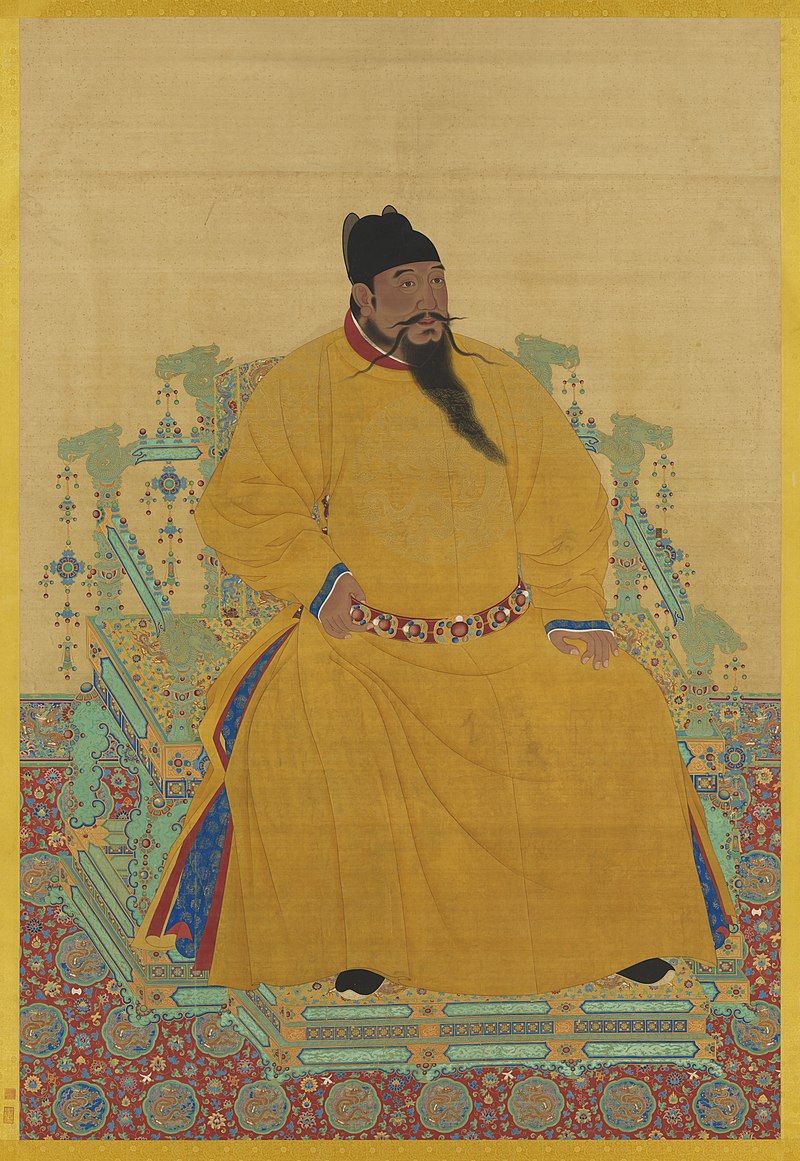
The Yongle Emperor, also known as Zhu Di, was the third emperor of the Ming dynasty. He reigned from 1402 to 1424.
Emperor Yongle did a lot of great things during his reign, including making Beijing the capital, building the Forbidden City for over 15 years, surrounding himself with global masters of philosophy, religion and did long strides in making peace and war with neighboring countries. He is however remembered as an emperor that always sought out power and for his cruelty to his subjects.
He spent most of his reign asserting his claim to the throne, as he was for many seen as a usurper as his nephew Jianwen was really in line for the throne.
After he took the throne from him he killed the palace’s servants and loyalists that could bear any doubt about his position as emperor. The nephew he burned to death.
When he was opening the Forbidden City he invited nobles from all around to show them he was the true emperor and cement his claim to the throne in the splendor of the newly founded Imperial Palaces. But his grandeur was built in top of a huge scandal that are said to have left a haunted imprint on it ever since.
The Massacre of his own People
Over 2 800 concubines, servant girls and eunuchs belonging to his harem were executed to suppress a sex scandal that would humiliate Emperor Yongle when he was going to show the banquet in the newly built imperial city in 1421 when the opening ceremonies were being held on New Years Eve.
One of his favorite concubines had been found after taking her life. She had an affair with one of the eunuchs, and the shame for the Emperor was that he didn’t have his subjects in order and didn’t have control.
Chinese Imperial Concubines: Chosen for their beauty, grace, and other qualities, concubines lived within the imperial palace and were often selected from noble families to serve the emperor. These women could attain various ranks within the hierarchyand played a vital role in the continuity of the imperial lineage. While they enjoyed privileges and luxuries, they also faced intense competition, intrigues, and strict rules within the palace. Their lives were marked by both opulence and limitations, reflecting the intricate dynamics of the imperial court in ancient China.
A few years later a fire took down over 250 buildings after the lightning struck it and killed numerous men and women as well. It was speculated that this was damnation and a punishment for his evil acts that no lucky charms could prevent.
Emperor Yongle fell into a depression, og this or something else is not for certain. He died a few years later in 1424. A clause for the concubines was that they would never take another man, and the only way to ensure it was that they would die along with the emperor. So when he died, he collected 15 of his favorite concubines and their servants and hung from a silk noose in the Forbidden City.
It would be another 15 years before the new Emperor rebuilt the destroyed halls, but would reside there until 1911 when the imperial rule was ended by revolutionaries.
The Yin Yang Alley
Inside of the Forbidden City, there is one particular place that are said to host more paranormal activity than other. The Yin Yang Alley was originally called East Tongzi Alley and is today sealed off to visitors. It is said that the sound of footsteps walking down the alley is heard at night.
There is one picture a visitor manage to take of the place, showing that the alley now is mostly covered in weeds and dust.
The Yin Yang Alley: This is a picture someone manage to take through the crack of the door, showing the Yin Yang Alley.
There is one story about the ghosts walking the lane from the 1960s. This was a time the nation aimed to eradicate religion and discouraged belief in the supernatural. A young man was stationed within Beijing’s Forbidden City as a soldier, dismissing ghosts and deities, decided to challenge these notions.
He learned of the infamous Yin-Yang Alley within the Forbidden City, a place teeming with ghostly legends, and determined to venture through it at night to defy the old, feudal beliefs. The man embarked on a daring journey to the most haunted spot in the Forbidden City and decided to take a walk there at night.
When his comrades asked him the next day how his walk through the haunted lane had been, he turned pale. He asked them never to speak of it again.
The young man’s experience soon became a topic of discussion, as he recounted his eerie encounter with an unseen entity that led to a deterioration in his health, a loss of appetite, and a series of inexplicable afflictions.
The Concubine Ghosts
One story that keeps being repeated is that of the crying women, and in the Forbidden City, there were plenty of them throughout the years. Many speculate it is the ghost of one or more concubines as the crying woman is often seen in or around the quarter for the imperial concubines.
This story spread like wildfire in 1992, when some tourists insisted that they had gotten the concubines on camera close to the Zhenfell Well. News media got hold of the story and there was even a special investigation, even though they concluded with that there was something in the paint creating this phenomenon, the story continued.
The Concubine Ghosts: The story is often illustrated with this picture of four seemingly looking ghostly figures walking in front of the red wall. But what is the truth behind these pictures?
The investigation claimed that the iron tetroxide in the red paint acted like a camera when the light ionizes the air. So that if a palace maid was walking past at one time, her figure would be preserved until next time light, like a camera flash would reflect this. It is also said that it was a thunderstorm that day that could also activate this.
However, it is most likely just an edited version of this photo under. It is also said that the story bears a striking resemblance to the 1981 ghost movie Qian Ying or Shadows of a Ghost by Baochang Guo. The movie is about an old mansion that has been sealed off for years, re-opens as a museum. A ghost is sighted by the museum’s guide and a quest to get to the bottom of the mystery starts.
The Palace Maids: This picture taken by a foreigner in 1910 of Qing Dynasty Palace Maids going shopping have also been connected to the ghosts of The Forbidden City and is most likely the origin photo of the viral ghost photo.
Although the viral story of the ghosts in the pictures were inspired by 80s movies and books, there have always been talk about seeing ghosts of women in the Forbidden City. One young man once insisted that he had seen one of these crying women, dressed in all white , walking the grounds. He approached her and tried to speak to her from behind, but she didn’t hear, and didn’t even turn around.
There are also some that claim that the weeping women, or perhaps something else entirely. The story is that one night in 1995 there was a woman, this one reportedly dressed in all black with long black hair. One night a guards were watching TV when two of his colleagues burst in, their face white of fear. The guards all thought the woman they had seen was a thief and chased her around within the Forbidden City. When they cornered her, she turned around and revealed that she had no face before disappearing.
When they together tried to find her, there was no trace of a woman ever having stepped into the Imperial Palace.
The ghost of the Concubines Haunting the Forbidden City: One of the most common told story is the sightings of women haunting the place, or the sound of them weeping. It is believed that it could be the ghosts of the many concubines that met a tragic end at the Imperial Palace.
But who could it be that is haunting the Imperial Palace? One famous story is about a ghost concubine from the Ming dynasty. Consort Zhen was also known as the Pearl Concubine and was believed to be the most beautiful woman in the palace born in 1876. The emperor fell in love with her, but their relationship was forbidden by the strict rules of the imperial court.
They used to meet secretly in a hidden garden inside the palace, but one day the empress discovered them. Legend has it that she was drowned in a well on the orders of Empress Dowager Cixi. Out of jealousy, the empress ordered the concubine to be executed and her body was thrown into a well in the palace grounds when she was only 24 years old. It is said that the ghost of the concubine still haunts the Forbidden City. She seeks revenge against the empress who betrayed her.
The Hidden Room in the Imperial Palace
Another legend that are told is about a supposed hidden room within the palace. A group of construction workers found a hidden room in a palace they were renovating. Inside, they discovered a pile of bones and a note saying it was the body of a traitor who plotted against the emperor.
After that, strange things started happening. The workers heard eerie whispers and footsteps, and some even saw the ghostly figure of a man in imperial robes. They refused to work in the haunted building, so it was left abandoned.
The Ghosts of Beijing’s Forbidden City
In conclusion, Beijing’s Forbidden City stands as a magnificent testament to China’s imperial past, with its grandeur, secrets, and hidden stories. As millions of visitors flock to this UNESCO World Heritage Site each year, they are captivated by its architectural beauty and cultural significance. However, beyond the ornate palaces, gardens, and monuments lies a realm of mystery and intrigue.
Amidst the eerie silence of the Forbidden City, stories abound of strange flute music resonating through the night and the lamenting cries of weeping women. The souls of these concubines, trapped in a realm between the living and the dead, evoke a sense of both sorrow and intrigue. Some have even spoken of encounters with spectral figures, dressed in white or black, their presence leaving a chilling impact that defies explanation.
While the Forbidden City remains a daytime attraction for tourists, one cannot help but wonder about the secrets concealed within its walls during the night. It is a realm where the past intertwines with the present, where the ethereal and the earthly coexist. The tales of ghosts and curses serve as a reminder that even the most majestic and revered places can hold hidden dimensions beyond our comprehension.
The Great Wall of China is one of the most well known wonders of the world and also has some haunted rumors wandering the wall about the souls of dead soldiers still patrolling the walls.
The Great Wall of China, also known as 萬里長城/万里长城 (Wànlǐ Chángchéng), stands as a monumental symbol of Chinese civilization and power, stretching majestically across the ancient landscapes of China. For centuries, it has stood as a testament to human ingenuity and perseverance, embodying both the triumphs and challenges of China’s rich history.
This architectural marvel, with its winding path along the undulating terrain, not only showcases the remarkable craftsmanship of its builders but also serves as a poignant reminder of the remarkable achievements of ancient Chinese civilizations.
There are many myths about The Great Wall of China that turn out to be not so true. It is said you can see it from the moon, that Mao climbed the walls when he was six and said you could not be seen as a man without doing it.
Read More: Check out all our collection of ghost stories from China
It is also said to be haunted and an ancient Chinese ballad says the wall is stacked with the bones of the dead soldiers. Can this also be one of those myths?
A Brief History of the Great Wall of China
The Great Wall of China, spans centuries and civilizations. It has its roots in the 7th century BC, when small walls were first built to safeguard against the relentless invasions of nomadic tribes from the north. As time passed, these defensive structures evolved and expanded, eventually culminating in the awe-inspiring wonder that encompasses the modern concept of the Great Wall.
The Great Wall of China: Is this one of the most famous haunted places? According to those that have visited the more secluded parts of the wall it is. // Source: Photo by Paulo Marcelo Martins on Pexels.com
These protections were built upon by various dynasties throughout the centuries, with construction reaching its peak in the Ming dynasty at around 1368-1644 C.E when they built the walls we know of today.
It is estimated that more than 1 million people ended their life on the wall to protect their homeland, and many are claiming it is these people that are haunting the wall today, patrolling the walls, watching for enemies and marching for their country. Could it be that one of the most well known human structures is also haunted?
Exploring The Remnants of Yesteryear
The Great Wall of China is the longest man-made structure in the world and stretches for 8,850 km. It is over 6,000 km long when it takes into account all branches and spurs of the wall, making it far longer than originally thought. It follows a rugged terrain along mountain ridges stretching across northern China, with an average height of 8 meters and reaching up to 15-20 meters as it climbs mountains.
Embarking on a journey through the Great Wall of China is truly like stepping back in time. As you meander along its brick-laid wonders, you can experience the past and present coming together to create an unforgettable adventure.
Not only does it boast stunning architecture, but also it’s full of tales from a bygone era – from the brave warriors who fought against Mongol invaders, to those who built the Wall under various dynasties. From grand gates to watchtowers, each stone or brick tells a story that can be revisited time and time again.
The Wild Wall: Just how many ghosts are haunting the Great Wall of China, the parts also known as the Wild Wall of China. // Source: Photo by Diana on Pexels.com
The Ghosts of The Wild Wall
Many of the stories about the Great Wall of China being haunted, are told about a part of the wall known as the Wild Wall that is a bit further away from Beijing and the tourists, that were more covered with bushes and more desolate than other parts. Could it be that this part is more haunted than the more touristy places?
Tourists and visitors claim to have seen soldiers patrolling the wall as well as hearing the sound of marching footsteps belonging to no one. The worst stories are those claiming to be overcome with a sudden nausea and dizziness that must have been something else than the steep steps of the wall.
Mysterious deaths of travelers have also been said to have occurred, so step with caution on these parts of this old and stoned wall taking you up to what sometimes seems like the end of the world.
Behind the colorful masks at the Peking Opera stage at the Huguang Huiguan Opera House in Beijing, there are some ghostly visitors that were there long before the opera house was built and may be there long after.
Step back in time to the haunting world of the Huguang Huiguan Opera House (湖广会馆) that are the most renowned Peking Opera theaters by the Hufang Bridge in Beijing, China. For decades, this legendary venue was home to macabre performances and mysterious stories that have remained alive even today.
Read More: Check out all our collection of ghost stories from China
Peking Opera has an easily recognizable and distinct style and with the plot being ingrained in the movement of the actors, colorful masks and were the color of the robe show what rank the character are the high pitched singing and traditional musical instruments like the jinghu being used.
History of the Huguang Huiguan Opera House
Huguang Guild Hall in Xicheng District, Beijing//Source
The Huguang Huiguan Opera House was first established in 1807 during the Qing Dynasty made mainly for Hunan and Hubei people in Beijing and the building itself was mainly made for living and gathering people at first.
Over the years it transitioned until it became the famous opera house it is today and it has held magnificent performances of traditional opera and other theatrical shows and at its height, Huguang Huiguan Opera House was known as one of the four great opera houses in Beijing.
Mysterious Tales Surrounding the Opera House
Rumors and stories of a supernatural presence at the old opera house have indulged the imaginations of guides, visitors and locals alike for a long time. Tales have been spread about strange occurrences involving ghostly apparitions, eerie noises, and unexplained events that occur within its walls.
Other legends say it is even rumored that wandering souls can be seen drifting in and out of the building at night. Who are these specters, and how did they come about?
Ghost of the Opera House
But who is it that is haunting this old opera house? According to the legends, the opera house was actually built as a place for poor people that had lost their home in a war. Not all talk about it being built for poor people as it did turn out to be a pretty exclusive and popular place among the celebrities and powerful people in society.
They made one crucial mistake when they built the building though. They managed to build it upon an ancient burial site and it is said that it angered the spirit and awoke them from the dead and came back to haunt the building.
Apparently they can hear screaming as well and a local legend say that if you throw a stone into the courtyard, you can hear voices screaming at you. This is said to be of the old groundskeeper, an old man with leprosy that had a face so disfigured that no person wanted to come up to him and have a conversation. It is said that after he died he joined the ancient ghosts and stayed on to keep an eye on the opera house.
The ghost of a woman i white has been spotted in the haunted Prince Gong’s Mansion in Beijing. It is said it is the ghost of a grieving mother that never recovered after the death of her son.
Prince Gong’s Mansion (恭王府) is today a tourist attraction in Beijing, but it used to be a grand mansion for some of the most powerful people in China, and also the home to one of the richest ghost.
The mansion is considered one of the most exquisite Chinese imperial mansions, representing the elegant lifestyle of Qing Dynasty royalty.
Read More: Check out all of the ghost stories from China
The mansion is also known to be one of the more haunted places in the country, and there are several reports going on for centuries about a woman in white walking the grounds as a ghost, still crying and mourning the loss of her lost son.
Prince Gong’s Mansion
Prince Gong’s Mansion is a true testament to the siheyuan-style that characterized this period in history and named after a Manchu prince, Yixin or better known as Prince Gong that was an important statesman during the 1800s.
The Manchus are a Tungusic East Asian ethnic group from Manchuria in Northeast Asia and led the Qing Dynasty from the 1600s until the imperial rule ended in 1912.
But the haunted rumors started long before Prince Gong moved into it.
The Richest and most Corrupt Man in China
Before the mansion was given to Prince Gong it belonged to another. Prince Gong’s Mansion was originally built in 1777 during the reign of the Qianlong Emperor for his favorite adviser, Heshen (和珅).
As one of the most powerful court officials during the Qing Dynasty, Heshen was remembered for his lavish lifestyle and incredible influence over imperial politics. He was also remembered to be one of the most corrupt officials in Chinese history and one of the richest as well.
The Death of Feng Jiwen
He lived together with his family and loved his wife, Feng Jiwen who he loved more than anything and they had a loving relationship even before he got into all the money. It is worth noting he had around 80 concubines as well in the house, but historical writings actually say his wife even encouraged it.
No matter how much money and gold a person has though, it isn’t enough and Feng Jiwen didn’t get to live out her loving family life until the very end though and got her heart broken to bits when her youngest son died in a battle fighting rebels.
Heshen, who was prepared to do anything for his beloved wife, hired monks to care for his wife and was hoping to pray for her to come back to her senses and health. His efforts were in vain though and it’s said she died of a broken heart.
She certainly fell ill and Heshen even offered 500 000 silver to the one able to cure her illness. After her death he was distraught, didn’t show up to work for months and wrote 6 poems about her to mourn her.
The Fall of Heshen
And even Heshen ended in tragedy as he was eventually apprehended when the throne got a new emperor that didn’t look at him as favorably when the Qianlong Emperor abdicated in 1796. They made him hang himself and had all of his belongings, as well as the mansion confiscated.
After her death she stayed on in her afterlife unable to move on. She and several of former escorts for Heshen have been seen around the palace, and the guards working there have claimed to have seen a woman in white walking the premises. You can hear the cries of a mother echo through the old mansion.
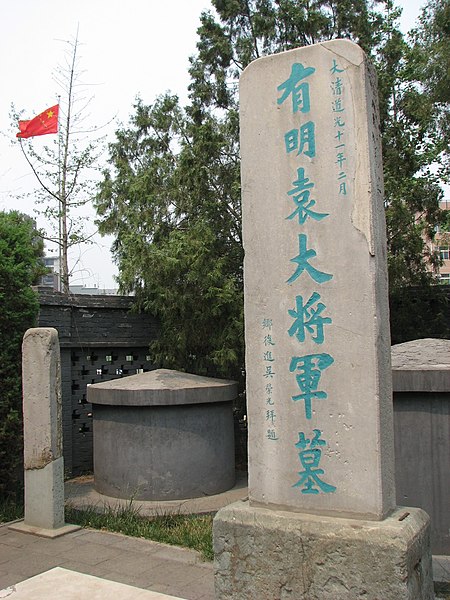
In the middle of the busy and modern city of Beijing is an old tomb of a Chinese hero hidden away. And the Tomb of General Yuan is said to be haunted by the military leader who were framed and sentenced by the death of a thousand cuts.
The Tomb of General Yuan is shrouded in mystery and legend as it is said to be haunted by the one that resides in it. It is the tomb of a famed General of China who died in 1630 after he was framed by his own court and sentenced as a traitor to the country he gave his life to protect.
Read More: Check out all our collection of ghost stories from China
The final resting place of General Yuan Chonghuan is hard to find as it is smacked in the middle of the busy city of Beijing. In a small park behind apartment buildings and offices there is a small memorial house and museum for him that a certain family has been protecting since he died.
Who Was General Yuan?
General Yuan Chonghuan (袁崇煥) was one of the most important figures in Chinese history and is remembered as a national hero today. He lived from 1584 to 1630 during the Ming Dynasty and is best known for his defense against the Jurchen tribes coming from the north and regarded as a great patriot of the country.
General Yuan Chonghuan was a well traveled man and is said to have taken a particular interest in European cannons to use in the military as his speciality. He quickly rose through the ranks after passing his imperial examination, even though he didn’t really have any formal military training prior to working his way up.
The History of the Ming Dynasty
General Yuan Chonghuan is perhaps best known for protecting China’s southwestern borders and Liaoning from attacks from Jurchen and Mongolian forces under the rule of the Tianqi Emperor.
His greatest military achievement was defeating the Later Jin ruler, Nurhaci in the first Battle of Ningyuan in 1626. General Yuan managed to hold back 130 000 of Nurhaci’s soldiers with just 9000 of his own.
In the last years before his arrest and execution he served as the governor in Liaodong, a place of great importance to him in life, and if we are to believe the legend, also in death.
Death by a Thousand Cuts
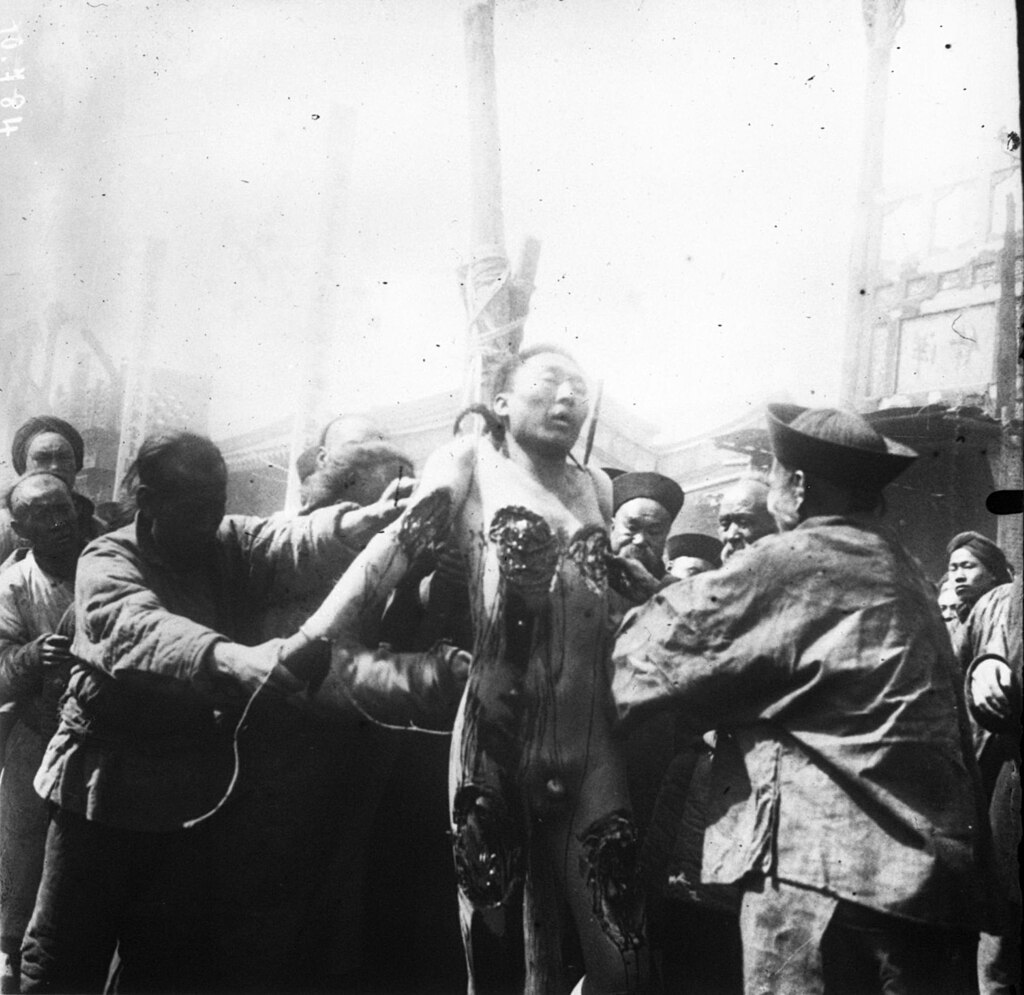
Death by a Thousand Cuts: One of the more gruesome methods of execution during the Qing dynasty was death by a thousand cuts or Lingchi (凌遲) as it was known in China. This method typically involved a series of deep cuts being inflicted on the criminal’s body and then left to bleed until the person died from extreme blood loss.
Although he is remembered as a hero today, he died a traitor. His fame also gave him a lot of enemies and he was accused of treason and collaborating with the enemy he was a part of defeating.
The Chongzhen Emperor had General Yuan arrested in 1630 and despite lack of evidence he was sentenced to death by lingchi, or death by a thousand cuts, a punishment meant for the most severe crimes and heinous criminals.
Apparently, General Yuan last words before his execution was a poems he produced that went like:
“A life’s work always ends up in vain; half of my career seems to be in dreams. I do not worry about lacking brave warriors after my death, for my loyal spirit will continue to guard Liaodong.”
According to the imperial records it took half a day to day and according to legend people were so enraged thinking that he had betrayed his country that they lined up to buy and eat his remains as soon as they were sliced off his body.
His Reputation Restored After a Century
After the execution, there was only his head that remained, which a guard named She brought outside the walls of Beijing to bury. He and his family were assigned to guard his tomb, which they did for generations to come, and the last caretaker is said to have died in 2021 in her 80s after a lifetime of caretaking of the Yuan Chonghuan Memorial and tomb.
After the fall of the Ming Dynasty nearly a century later it was replaced by the Qing Dynasty and the Emperor Qianlong. He was the one finding the evidence in the imperial archives that General Yuan had been framed and ordered to restore his reputation and find his descendants to be compensated. They were never found.
The Haunted Tomb of General Yuan
Over the years the tomb has gotten a haunted reputation and it is said that it is General Yuan that is haunting his final resting place that the She family has been guarding since his death.
He vowed that his soul would guard the Liaodong Peninsula forever. Who is to say his exact reasons to haunt the place? To revenge those who wronged him? Or perhaps he did as he said and will forever guard the land?
The sound of the bell echoes in the city like a faint reminder of once it dictated time itself in China. And according to legend, one bell also carries the voices of the dead with the The Bell Tower Goddess of Beijing.
Once, the great city of Beijing all followed the beat from the drums in the drum tower and the chiming of the bell in the bell tower. It told the time for centuries, telling people when it was the right time to work, to eat, to sleep, and also, it told when it was too late. It was the thing that announced when the gates of the city were to open and close, and the sound of the bell could be heard every fifteen minutes, chiming across the city.
Read More: Check out all our collection of ghost stories from China
For centuries it towered as the tallest building to be seen by everyone as a landmark of the skyline. To this day and age, even between the massive skyscrapers in the modern city landscape, it still stands the test of time, although no longer the one that tells it.
The Bronze Bell
During the Ming dynasty around 1420, the new bell tower was erected in the northern end of the inner city. The Bell Tower first came into use during the reign of the Ming Emperor Yongle. The bell kept getting bigger and bigger. Originally it was a huge cast iron bell, but was replaced by a larger bronze bell that chimed even loader. The sound and size of the bell was important, and that is the foundation of the tragic story they still tell tourists visiting the place to have a look.
The Bell Tower: The building that once dominated the Imperial city’s skyline.// source
According to legend it was a man named Deng, an official with the mission to create this new bronze bell. They tried so hard for over a year to get the perfect bell that sounded as clear and loud as they needed for the emperor. But no matter how much they tried, they never managed to get it perfect and the deadline for the new bell was closing in.
With the date coming up they grew more and more desperate. The whole family felt it, especially Deng’s daughter as she was afraid it would bring shame on her family, her father in particular. But no matter what they tried to do, the fire of the furnace the bell was made in, would not get hot enough.
In a desperate last attempt, the daughter flung herself into the fire, sacrificing herself to get the heat needed to make the bell. The father tried to stop her and reached out to save her. The only thing he managed to get a hold of, was one of her embroidered slippers, the only thing left of her after being consumed in the furnace.
The Bell Tower Goddess of the Golden Furnace
Apparently, however gruesome, this was what the project needed and the bell was ready in time and the sound as clear as ordered. The bronze bell is over 10 inches thick, seven metres tall and weighs almost 46 ton. All around the bell, it has over 230 000 words of Buddhist mantras inscribed to it. And to this day as perfect as it was when first formed.
The Bronze Bell: Still as clear today as when it was first made.// Source
The emperor himself is said to be so moved by the daughter’s action that he gave her the title ‘Goddess of the Golden Furnace’. A temple was erected in her honor near the foundry where she had sacrificed herself.
But the temple for her is now gone, and the goddess is mostly forgotten in the glory of the bronze bell. But listen carefully. To this day, the bell can still be heard on special occasions. The sound of the bronze bell can be heard at a great distance, at least some twenty kilometers away.
On particularly stormy nights the bell doesn’t chime as clear as it usually does, but emits a sound, sounding distinctly as the words ‘xie’, meaning shoes in Chinese. The haunted spirit of the girl who sacrificed herself still echoes through the bell. And the mothers that lived were the bell was heard would tuck their children in, telling them ‘Go to sleep, the Bell Tower is ringing, the Goddess wants her slipper back’.
Shadowy figures in the window, chilling entrance during the summer, the old and haunted church in Beijing called Chaonei No. 81, keeps its secrets close to the chest. The famous haunted house is believed to be haunted by a woman said to have taken her life inside.
Chaonei No. 81 ( 朝内81号), also called Chaonei Church as it was built with that in mind, perhaps, the records aren’t clear. The French reimagined baroque architecture from the 20th century stands out amongst the modern Beijing skyscrapers and the Ming dynasty buddhist temples.
Read Also: Check out all of our ghost stories from China
Out of place it has passed from a French manager of the railway or Christian missionaries, different governmental members of the Chinese Republic as well as the Catholic Church. But one thing remains the same, the rumours about a restless spirit that lingers, no matter who lives there.
The Mystery of the Chaonei Church Building
The story behind the supposed haunted house at Chaonei No. 81 is hard to get straight. As with a lot of buildings before the formation of the People’s Republic of China was formed, because of missing paperwork. Who built the Chaonei Church? Was it the French manager of the railway? Or it might even have been the Qing imperial family building it for the British to use as a church? However it is believed to have been built around 1910, although some claim it is even older.
Read Also: Check out the rest of MoonMausoleums Haunted Houses
Chaonei Church Building: How Chaonei No. 81 ( 朝内81号) looked from across the street in 2014, looming dark in the otherwise bright and busy street. //Photo: Daniel Case/Wikimedia.
By the neighbouring hutong, the traditional streets in Beijing, the house has always been remembered as haunted. And even during the 1970s, during the cultural revolution, the neighbours remember the Red Guard that lived in the Chaonei Church, got so frightened after staying inside of the haunted house, they had to leave after a few days.
The Woman Hanging from the Rafters
But who frightened its inhabitants, that even the red guard couldn’t handle? According to the most commonly told legend, it is to a woman that once resided in Chaonei No. 81. Or rather, a scorned woman that used to live there, as most haunted histories start with.
The woman that used to live in the Chaonei Church is said to have been a wife or maybe a lover of an officer of the Kuomintang (KMT, or the nationalist party of China) that fought against the communist party during the Chinese civil war in the 1940s. The nationalist lost, and fled to Taiwan as the communist came into power.
The woman was allegedly left behind by her officer man who fled with the army to Taiwan, and she is said to have hung herself from the rafters of the house.
The Ghost Inside of Chaonei No. 81: According to legend, the ghost haunting Chaonei No. 81 is the spirit of a woman left alone in the house by an officer who fled the country.
Whether the outcome of the war had anything to do with her death is debatable, as some suggest it was more that the officer was never at home, not paying her the attention she needed than the victory of the communists that led her to her decision of taking her life in the Chaonei Church.
Her existence at all is debatable as a lot of things during the civil war are lost, forgotten or even hidden away and a lot of documentation to confirm or deny the story is not there. What we can go by is the word of mouth however, and many that have stayed in Chaonei No. 81 knowing its history say there was never a KMT officer living there, and no woman hung herself in the rafters.
The history behind Chaonei No. 81 is clouded in mystery, and there seems that no one can really agree on one account. But ghost stories have their own way of ignoring this, and sneaking their way into the mind of those around anyway. And according to the locals, this place has always been haunted. The locals persist in their own lore that she can indeed be heard, especially on those stormy nights, screaming from the empty house during thunder.
The Vanishing Workers From the Chaonei Church
Even the construction of the house has been up for dispute with strange tales from the Chaonei Church. Like the story of a British priest who supposedly built on the property disappeared before being able to build the church. When a search party was sent, they supposedly found a secret tunnel leading all the way northeast of the premise to the Dashanzi neighborhood.
There have also been three people, working on construction down in the basement in the building next to Chaonei No. 81 that supposedly vanished into thin air. They got drunk on the job and decided to break into the house by breaking the thin wall that separated the two houses. They were never seen again according to the reports.
The House that Never Dies
A message to the entrance is put up, telling the visitors that there are no ghosts residing there, contrary to local beliefs, urging the paranormal seekers to stay away from the Chaonei Church.
Warning off people: Chalked notice on Chaonei No. 81 in Chinese, warning of ghosts in the house. Original text: “请勿相信谎言 无鬼” (Please do not believe lies, there are no ghosts)//Photo by Daniel Case//wikimedia
Especially after the horror movie, The House that Never Dies, inspired by the the haunted legends of Chaonei No. 81 and its story, the interest of it came back. And after its release in 2014, up to five hundred people crowded outside the house, causing the catholic church to close the gates, only letting a few in at the time.
The same thing happened with Gonjiam Psychiatric Hospital when a movie was made about the legend and they eventually demolished the entire building because the paranormal seekers were too much and the construction of the building not safe enough.
Keeping the legend alive: The movie trailer from the 2014 movie ‘The House that Never Die’, inspired about the legends surrounding Chaonei 81.
In 2016 however, Chaonei No. 81. interior and outside was renovated and rented out. Perhaps that is what it took to get rid of the spirit and the lore seeping from the old bricks of the Chaonei Church. But there are also those claiming they have an uneasy feeling of dread when walking by the house. And even in the hot summer, with the sun scorching right at the door, the doorway of the mansion somehow always feels cooler than in the shade.
An online magazine about the paranormal, haunted and macabre. We collect the ghost stories from all around the world as well as review horror and gothic media.