Category Archives: article

The Greenbrier Ghost that Went to Court

Advertisements

The Greenbrier Ghost the supposed ghost of Zona that returned from the dead to testify that she was in fact killed by her husband and wanted to see him jail.

How do we explain unnatural occurrences that actually makes sense? This is a debate the people of Greenbrier dealt with in Victorian times when the story of The Greenbrier Ghost came about. There is something of a dissonance in the universe as well as in our minds when something like the appearance as a ghost, finds the truth no living people knew.

This is the case of the Greenbrier ghost, the ghost that went to court to testify to get her murderer behind bars. The woman behind The Greenbrier Ghost is now resting in a cemetery near Lewisburg in West Virginia, USA. And she is known as the only ghost that have testified in her own murder trial in the American judicial system.

Read More: Check out all of our ghost stories from USA.

Background of The Greenbrier Ghost

In the small and dull village of Livesay’s Mill in Greenbrier County, nothing much happened. Surrounded by lush green scenery of West Virginia landscape, the lives of the people living there, moved slowly along and there were not much talk about ghosts and murders.

The Greenbrier Ghost: Elva Zona Heaster was only twenty three years old when she was killed./source

Then a stranger arrived. The man was a young man, strong and muscular. The new and handsome worker at the blacksmith’s shop usually introduced himself as Edwards, but was called Trout by the rest for some reason. He was a mysterious figure in the new town, but a pretty face can hide dark secrets very well.

It was there he met a farmer’s daughter called Elva Zona Heaster, commonly known as just Zona. She was a popular girl in the Greenbriar County. Not much of her life before marriage is known, but there have been reported she had a child out of wedlock.

Normally a pretty stoic guy, Trout caught the eye of Zona and started courting her. They fell in love and married the same year as he arrived in 1896.

There marriage happened despite her mother’s disapproval. Zona’s mother really hated Trout from the get go he arrived. But from the outside, it was seemingly a happy marriage.

The Death of Zona

The marriage didn’t last long though. Three months after the wedding, it all was about to change. On that late January day in 1897, Trout was at the house of a Martha Jones for a visit. Zona was supposedly feeling sick and had stayed back home. Trout asked if Martha’s son, Anderson Jones could go and look to Zona if she needed anything.

Just a boy of 11 years, he followed his orders and went over to check on Zona. Once there, a horrific sight awaited him as he opened the door. The lifeless body of Zona was found at the foot of the stairs. Dead. She was only twenty three years old.

The local doctor and coroner was called for and when he arrived at their home, Zona was already prepared for the funeral, by Trout. He had quickly carried her upstairs and she was laid out on the bed. This was odd as according to Victorian custom it was the female family and friends who did the washing and dressing of the dead, not the husband.

Zona was dressed in a long gown with a high collar and he had wrapped a scarf around it that her husband said was her favorite, and was the reason behind her attire.

Place of the murder: The home of Zona and where she was killed and supposedly came back as The Greenbrier Ghost, near Rainelle, West Virginia/source

Dr. Knapp, as the doctor was called, did a quick post mortem exam just to have it done. He concluded the cause of death was because of ‘everlasting faint’, more known today as a heart attack. He later changed the cause of death to something completely different. Then it was said she died of childbirth, even if Zona hadn’t said to anyone that she was pregnant, although the doctor had treated her of ‘female troubles’ before her death.

No matter what the reasoning behind Dr.Knapp post mortem exam, it wasn’t a thoroughly one, and it ended up to be completely wrong.

The Grieving Husband by her side

At the wake of Zona held at their home, Trout was unconscionable, cried and cursed the world for taking his wife from him too soon. Mourners, friends and family gathered at their home to pay their respect and to send her off. But Trout didn’t want anyone near Zona’s head and watched over her, making everyone stand back. He added a veil to her and propped her up on pillows, saying he wanted her to be comfortable.

He was weeping and pacing in front of her open casket until she was buried at the cemetery before he finally calmed down. The body of Zona was brought to a hilltop near her childhood home were she was supposed to rest forever. No one that attended the wake and funeral thought it was strange of his intense display of grief, he was after all playing the part as a grieving husband that had loved his wife dearly.

Although it was a bit uncharacteristic for the stoic man the people of Greenbriar had all come to know. So no one thought it strange, except Zona’s mother, she had thoughts on her own.

The Greenbrier Ghost Appears for her Mother

Mary Jane Heaster, the mother of the deceased did not like her new son in law as mentioned before. Zona was her only daughter, and first, she had been taken away from the place she was from to move in with him all the way across the county. And now she was gone for good.

The Mother: Mary Jane Heaster never gave up on the daughter and according to her the ghost of her daughter appeared to her and told the truth about her death./source/ Wonderful West Virginia magazine

The mother knew that her daughters husband had something to do with her death and didn’t believe that she had died of the everlasting faint or that Zona had been with child. She was certain her daughter was murdered and was certain of the culprit. When she was told of the death of her daughter, she reportedly said:

“The devil has killed her!”

In desperation Mary Jane prayed for nights on end non stop, as the bible told her to find answer and guidance to what to do. She prayed that her daughter should come back to her, somehow. Either to tell things as they were, or even just to come and say goodbye.

Restless and in prayer, she stayed this way for several nights. And just as Mary Jane was going to bed one night after intense prayer, a strange light flowed into her bedroom. The light took shape into a human and just for a few moments, Zona was back as The Greenbrier Ghost. And not only did she appear before her mother, she also spoke according to her story.

For 4 nights The Greenbrier Ghost appeared again and again to explain to her mother how it all went down. According to the ghost the night before Anderson found her, she was preparing dinner for her husband.

When Trout came home he was livid. She had made apple butter, a spread and bread. But no meat. In a rage because of the lack of meat for his meal he attacked her and dislocated her neck.

Zona told this wasn’t the first time her husband had attacked and abused her. She told about a sad pattern of Trout’s terrible temper and how she was unable to reason with him when he got into these fit of anger.

On the second night The Greenbrier Ghost visited, she told her mother again how Trout had squeezed her neck and how he snapped it at the first joint and it killed her. The last night the ghost of Zona twisted her head 180 degrees to show her mother. She died, not of natural causes as Trout as well as the Doctor had claimed, she had been murdered.

Digging up the body

The towns gossip traveled about The Greenbrier Ghost. Mary Jane told the neighbors about the vision and that she was on a mission to set things straight. This was the time that the gossip about the handsome blacksmith came to light as well. Firstly it came out that he lied about his name, calling himself Edward and his shady past as a thief, and his troubling past with other women all came back to haunt him just when he thought he had gotten away with murder.

After Zona as The Greenbrier Ghost had related the tale, Mary Jane hurried to Prosecuting Attorney John Preson in Lewisburg. She told him of her paranormal visions, but he didn’t believe them, perhaps of natural reasons. But what did interest him though, was the poor post mortem exam by Dr. Knapp that didn’t make any sense. Could it be that the mother was right apart from raving about a ghost? On that grounds of the poorly exam by the doctor they exhumed her body for a second examination.

The Grave of The Greenbrier Ghost: Although they thought the mother’s visions were nonsense, they decided to dig up her body and examine the body properly. The cause of death seemed to align almost perfect with what the mother claimed that The Greenbrier Ghost had told her in her visions.

This time, Dr Knapp teamed up with Dr Rupert and McClung for a second post mortem that lasted three hours. Dr Knapp claimed it was because of the widowers distress that had made him just do a shallow examination of Zona. Also present at this post mortem was Trout, but it seemed that he had pulled himself together and he was no longer the grieving husband that he had been at the wake. He was calm a they checked her stomach for poison and her vital organs.

Then they started examining the head and neck. Perhaps as medical men they also thought the mothers talk about The Greenbrier Ghost was all nonsense. But when they saw the truth themselves, they whispered among themselves:

“Well, Shue, we have found your wife’s neck to have been broken.”

On the neck of the body of Zona, they found finger-shaped bruises and that her windpipe was crushed. And, just as the spirit of Zona herself told, the first and second vertebrae was fractured. According to their examination she had indeed been murdered and Trout was arrested.

The Greenbrier Ghost takes the Stand

Trout accepted no responsibility of his wife’s murder, and pleaded ‘not guilty’. He was nonetheless charged of the circumstantial evidence that they had found and rounded up after the exhumation. Prison didn’t sit well with Trout and the Pocahontas Times reported that:

“Trout Shue É now in jail awaiting trial for the murder of his wife, has threatened to kill himself.”

During the trial, Trout said the chargers was nonsense, nothing more than the tales of a spiteful mother in law and that he was innocent and didn’t kill his wife. During the trial, they found out that Zona wasn’t his first wife. She was his third, and the first one left him because of his beatings. Her name was Allie Estelline Cutlip.

Trout beat his wife so bad that a group dragged him out of bed one winter night and threw him in the icy water of Greenbrier River as revenge. She gave birth to a child, Girta Lucretia in 1887. She got out though on grounds of divorce four years later. But the second one was not as lucky.

In 1894, Trout married once again. Lucy Ann Tritt died eight months later. But at this death, there was no investigation, and the Pocahontas Times only stated she died ‘suddenly’. But after the death of Zona, the rumors about what really happened to Lucy Ann started circulating again.

When Mary Jane took the stand, she stood her ground, firmly believing it was the presence Zona as The Greenbrier Ghost that solved the case. She also knew stuff no one else did, like what she had been wearing and about all of her injuries. This is not the only time however the supernatural visitation has gotten a headliner in the courtroom, like with the case of the Red Barn Murder in England.

Read also

The Red Barn Murder and the Ghost in the Dreams

The murder of Maria Marten, a case called The Red Barn Murder got a lot of media coverage in England because of the strange circumstances. The murder was allegedly solved by the appearance of the ghost of the victim, haunting people’s dreams.

But it was on the circumstantial evidence he was convicted and he was found guilty of more than the testimony of The Greenbrier Ghost perhaps. He was sentenced to life imprisonment at the West Virginia State Penitentiary where he died a few years later at the age of 39 in 1900. He know rests in an unmarked grave.

The Greenbrier Ghost after the Trial

It wasn’t that the testimony of The Greenbrier Ghost was the thing that got Trout convicted. If anything, it was brought by the defense to discredit Mary Jane. Was she really seeing her dead daughter? Did she lie? She lived until 1916, and never recanted her original story about the visitations, but she did never appear again.

Read Also: The Greenbrier Ghost got killed by a partner, we have multiple stories telling the same. How about checking out The Ghost of La Faraona Haunting the Agua Caliente Hotel or The Prisoner of Château de Puymartin

Now the state remember her as a marker along the highway to The Greenbrier Ghost. The sign reads:

“Interred in nearby cemetery is Zona Heaster Shue. Her death in 1897 was presumed natural until her spirit appeared to her mother to describe how she was killed by her husband Edward. Autopsy on the exhumed body verified the apparition’s account. Edward, found guilty of murder, was sentenced to the state prison. Only known case in which testimony from a ghost helped convict a murderer.”

More like this

Newest Posts

References:

https://web.archive.org/web/20150111222113/http://www.prairieghosts.com/shue.html

https://medium.com/@hlemonroe/the-curious-murder-of-zona-shue-the-greenbrier-ghost-33a4058f9d13

https://wvpentours.com/about/history/articles/the-greenbrier-ghost/

The Malcanis Guarding the Fortress

Advertisements

In Akershus Fortress in Oslo, Norway, there are rumours about something strange haunting the former castle. There is a legend of a ghost of a dog haunting the place, called the Malcanis, or Evil Dog as it means.

In medieval times it was a king’s castle were Akershus fortress in Oslo is today, looking out over the fjords. Under the building of the castle the workers bricked in a living dog. It was a relative normal custom in those days. According to them, they meant that it would bring good luck. Coincidentally, the custom was also meant to warn about accidents.

But when the castle was done around 1299 the “Malacanis” as they called it, “the evil dog” haunts the place, and seemed to be something else than an omen.

Read also: There are many ghost stories about dogs and cats haunting places. Check out The Story that Inspired The Hound of the Baskervilles, The Poltergeist of Greyfriars Kirkyard and The Black Cat of War.

The Dark Hallway

Among its first victims that would feel the wrath of the Malcanis was the commander at the fortress at the time. Around the year 1550 the hallway were the dog was bricked in collapsed.

Unrest crept into the guards at the fortress. “What about the Malcanis? It was right there the collapse happened”, they whispered among themselves when they were standing guard. Everyone knew about the legend about the poor dog that had been bricked up. And reports about people spotting the ghost there was plenty of.

The Ghost Under Jomrutårnet: The ghost of the Malcanis is said to be put to rest in the walls around the Virgin tower when it was bricked up there for good luck. Allegedly a tower difficult to penetrate and many thought it was because of the ghost dog.

A sound was heard in the hallway under the fortress and everyone feared that the castle was under attack. No one was brave enough to investigate the cause of the ruckus. Not even if the intruders was Swedish forces. The Malcanis put fear in the soldiers.

Read Also: This is not the only ghost thought to haunt Akershus Fortress. There is also rumours about the ghost of a former maid that are still lingering inside. Check out The Mantelgeist of the Fortress for the full ghost story.

In the end, commander Peder Hanssøn Litle walked down Mørkegangen (The dark hallway) himself, as the rest of the guards refused because of fear from the ghost dog. With a single torch he closed in on the fallen stones and started investigating the dark hallway and tried to get a sense of what had happened.

From the shadows he saw a dog, red-glowing eyes appeared with fangs and a chain around its neck. He got into a bloody fight with the ghost dog, that didn’t disappeared until Peder threw a torch right at it and it retreated back into the darkness. The commander came crawling out on all four, more dead than alive, stuttering only one word: The Malcanis!

The Bad Omen

The hero commander survived – but around a month later he died after being thrown off the horse. Unrelated perhaps, but rumours about his death started to circulate among the guards. Others that have seen the Malcanisen in the eyes suffered a similar fate, according to legends. Could it be that it was because of this the commander died? And if so, was seeing the dog then the warning or the curse?

Read Also: Check out all of the ghost stories from Norway

It was also spotted a ghost hound in 1550, then called Malcanisten in the same hallway under the Virgin Tower that was built at that time. After a soldier was killed by a horse in 1567 it is said it was observed several times under the same tower, and those who observe it, won’t live the year.

More like this

Newest Posts

References:

«Spøkelseshunden er også blitt filmet nå» 

La Llorona the Mexican Weeping Woman Ghost

Advertisements

Along the rivers in Mexico a wailing woman wearing white can be seen and heard as she comes up drenched from the waters. She is desperately looking for her children she herself drowned. And according to the legends of La Llorona or the wailing woman, you are next.

“The scariest part was not that La Llorona was a monster, or that she came when you called her name three times in the dark, or that she could come into your room at night and take you from your bed like she’d done with her own babies. It was that once she’d been a person, a woman, a mother. And then a moment, an instant, a split second later, she was a monster.
– Jaquira Díaz’s 2019 memoir, Ordinary Girls

This Mexican legend is one of the more well known, international as well now, as the movie came out a while back. But she has been around for centuries, a legend so well known it is now more or less an important part of the Mexican heritage and culture as well as in the Chicano Mexican community of the US.

Read Also: Check out all of our ghost stories from Mexico

La Llorona is Spanish meaning the weeping woman, or the wailer. She is perhaps a bit older than most think as well. The origin of the legend can have roots as far back in the Aztec legends and being one of ten omens foretelling the Conquest of Mexico and has also been linked to Aztec goddesses like Cihuacōātl.

Cihuacōātl was one of a number of motherhood and fertility goddesses. She was also the mother of the hunting God Mixcoatl, whom she abandoned at a crossroads. Tradition says that she often returns there to weep for her lost son, only to find a sacrificial knife. This story can help us understand why sometimes the story of La Llorona sometimes is set on a crossroad, not a long a river or some form of water.

The most common lore about La Llorona is about how she was being an Indigenous woman who murdered her own children, which she bore from a wealthy Spaniard. The villainous qualities of La Llorona have also been connected to the stories about Doña Marina, also known as La Malinche, or Maltinzin. She has been portrayed as a scheming woman who betrayed her people when she assisted the conquistadors and bore their children.

The Dangerous Wailing Woman in White

As well as finding similarities to the old Aztec mythology as well as working as an allegory about “betraying her own people”, the legend of La LLorona is something we can find similarities to all across the world. The story has also the ring of ‘White Woman’ often found in European legends as well as Greek mythology stories like with Jason and Medea, a scorned woman, killing her children when her man betrays her.

The weeping woman: A wooden cutout in the shape of La llorona. She has a white veil over her and is placed on the island la llorona in the channels of Xochimilco in Mexico.

Read Also: The Lady in White in Zitadelle Spandau or The Haunting of The House of Hohenzollern are all ghost stories featuring the trope of the lady in white haunting a place.

The difference between the European trope of the Woman in White ghost is that La Llorona are often described as being more dangerous to those encountering her than her European counterpart. This makes her more like the vengeful spirits we often read about in Asian ghost stories as with the Japanese Onryo or the Korean Virgin Ghost for instance.

The story of La Llorona takes many turns and has today many variations. The ghost of La Llorona, the wailing ghost woman appears in crossroads, by lakes or rivers, on the road and has many variations. Even if she is most well known as a Mexican folktales there are other variation of the stoghost story in other South American countries as well like in Guatemala and Venezuela.

Read Also: The Legend of La Sayona or La Descarnada of the Highway for more stories about dangerous female ghosts found in Latin American folklore.

And as the history of Mexico, with its changes and social unrest, the story of La Llorona has followed closely behind, reshaped to fit the narrative of the time. Therefore, we will relate one of these variations and one of the common one told in the modern era.

The Story of La Llorona

The most told version of the story of La Llorona is set in a small village in Mexico, were a young woman lived. As mentioned she is often portrayed as an indigenous woman. Her name was Maria and came from a poor family. She was known in the village for her beauty, but will be remembered as La Llorona, the weeping woman. A tragic club to be in.

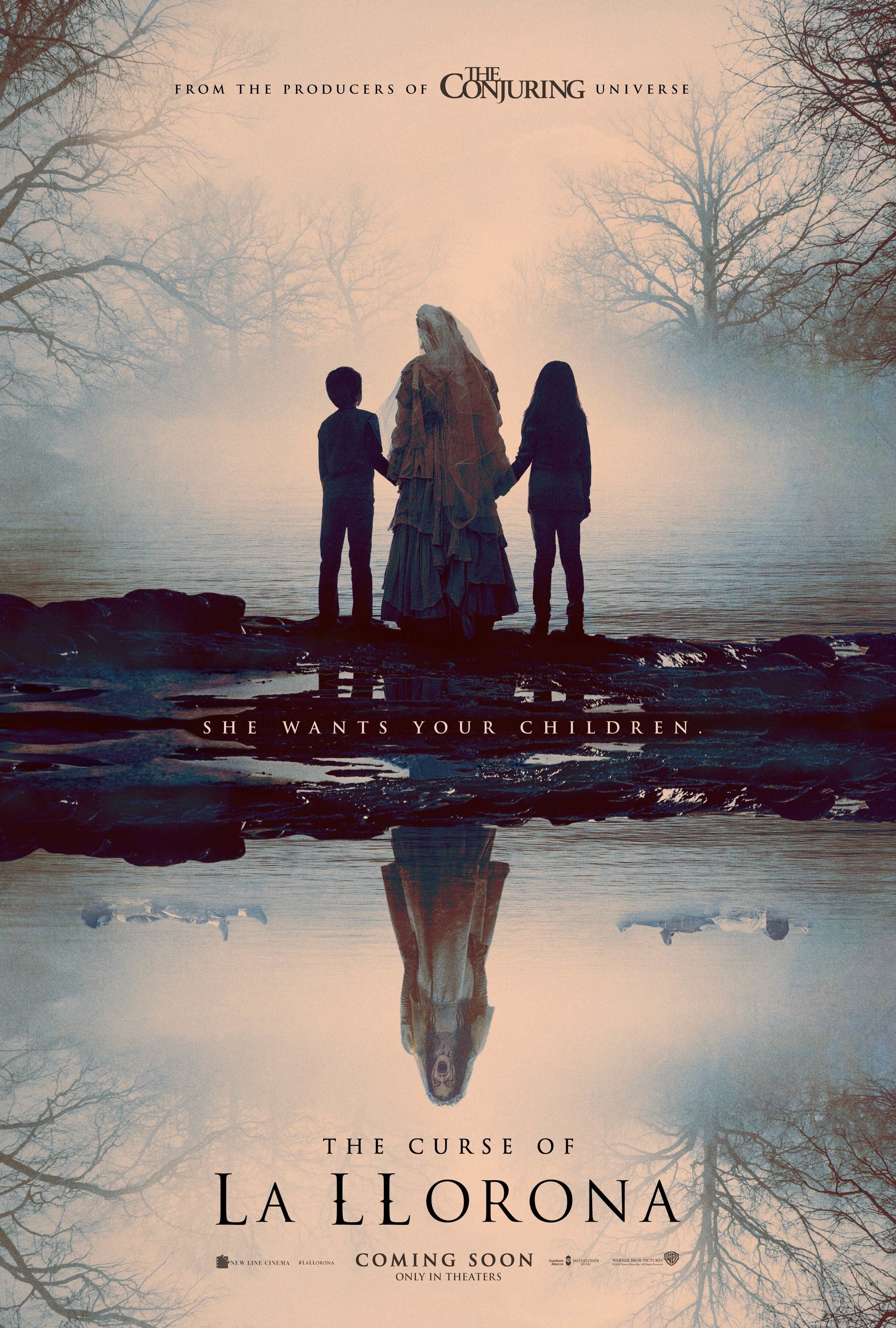
The Curse of La Llorona: The Tragic tale of the woman who drowns her children because her man abandoned her has been made into a movie many times. Here from the 2019 movie, the Curse of La Llorona//Source IMDB

One day, a very wealthy man came passing through town. DEpending to when the story is set, he was a Spanish conquistador or a wealthy rancher. He stopped when he saw the beautiful Maria and approached her. She was charmed by the wealthy man and when he proposed, she accepted at once. Maria’s family was overjoyed that their daughter would marry into a rich family and have a chance at a better life. But the father of this wealthy man however, was deeply disappointed at his sons choice of bride and didn’t approve of their marriage.

They chose to ignore the disapproving father and Maria and her now husband built a house in her town to get away from his judgmental father. Time went by and Maria gave birth to two twin boys. A seemingly happy marriage and life from the outside.

But not everything was rosy colored as it seemed. Her husband was always travelling and almost never spent any time with the family. When he was home, he only spent time with the boys, and Maria knew he no longer loved her and she started to fear that he would leave them.

Read Also: There are many ghost stories about women being left by their lover. Like The Ghost on Emily’s Bridge, The Grey Lady of Stavern at Hotel Wassilioff or the ghost of Chaonei No. 81 — Beijing Horror House

One day the husband went away and never returned. Many years went by but they didn’t hear from him and they didn’t even know if he were living or dead. Still, there seemed to linger a faint hope in Maria, that he someday would return to them and they would once again be a happy family.

Maria and her boys was out walking along a river one day when the faint hope she had been carrying came crashing down. A carriage was pulled by and to her greatest shock she saw her once husband sitting in it. By his side a much younger and beautiful woman sat and it was clear that he had abandoned them for good.

Maria was furious and desperate as her world fell apart and she could no longer fool herself. Without thinking she picked up her two boys and threw them in the river, drowning them in a fit of rage, of desperation and perhaps even a horrible psychosis. Only after she saw the floating bodies of her now dead sons she realized what she had done. She jumped out after them to die with them. Now she spends rest of eternity on the hunt after her children along that river.

The Haunted Rivers and Dangers of her Ghost

Doomed to linger in purgatory for her sins, she haunts the place were she committed her crime. Exactly where this place is differs as the legend about her ghost now has gone into the cultural sphere and is more like an entity in itself than just a singular ghost.

It is said that is you hear the crying of La Llorona close to rivers or other forms of water, you must run the opposite way as she is known for being a dangerous ghost to encounter, still mad and filled with rage that will harm you.

In some variation of the legend the children were illegitimate children, and she murdered them so that they wouldn’t get taken away from her and be brought up by another woman the father was legally wed to. In any versions though, the legend about La Llorona invokes pity for her fate as well as fear for her actions.

The Danger of La Llorona: The story of La Llorona tells about a woman who murdered her children when her husband abandoned her. Now she haunts the rivers and are a danger to those encountering her.

According to the legends, she still calls after her children “ay, mis hijos” and is said to be on a hunt for her children like she doesn’t remember what happened to them, still unable to accept what she did. It can bring bad luck, even death if you hear her cries.

If you are pregnant, you must be extra careful of her because La Llorona is attracted to children and wants them to join her. Therefore children should not walk alone along rivers and she has become some sort of cautionary tale to keep them away from the dangerous waters.

It is said that in some versions of the story, she kidnaps kids that are reminding her of her own and asks for their forgiveness. Then she murders them to take the place of her own.

La Llorona in Popular Culture

Although the legend about La Llorona is an old one, it is still an iconic figure to feature in books, movies and songs. There she differs from being a misunderstood female ghost to a full on evil spirit that are out to harm people.

In movies there have been made stories about her since the 1930s, mostly horror movies, and it even got its own spin off in James Wan’s The Conjuring Universe in 2019.

The popular folk song called La Llorona that were popularised in 1941, was also included in the Pixar movie Coco in 2017. So it’s safe to say that the legend about the wailing woman still lingers in the Mexican and US cultural sphere and fears of her ghost doesn’t seem to fade away anytime soon.

More like this

Newest Posts

References:

La Llorona – Wikipedia 

Cihuacōātl – Wikipedia

The Wailing Woman | History Today

Bunyip in the Billabongs

Advertisements

G’day mates! The Bunyip in the Billabongs of the wild from Australia is a mythical creature rumored to be living in the lakes and swamps in the untamed Australian wilderness. What was the swamp creature that scared them all? Or rather, what is it?

As the white settlers started to take land in the 1840 and 1850 in Australia, they started to observe something they didn’t think they would. Particularly near the southeast colonies like Victoria, New South Wales they heard unknown cries in the night, found strange bones and started taking notes of the new surroundings. But what was this newly discovered animal? This is something modern day cryptozoologists still debates, even to this day and age.’

Read Also: Check out all of the ghost stories from Australia on the Moonmausoleum.

Most written down sightings we know of from the creature comes from 1840 and 1850, when there were a collective hysteria almost and hunt for this strange creature in this strange country. Perhaps this strange creature that the white settlers saw wasn’t as “newly discovered” as the settlers claimed it to be as there were many local stories from the native Aboriginal Australians.

Proof of the Monster: The much debated skull from the alleged Bunyip that is said to roam in the Australian swamps or Billabongs. Back in the early days of European settlement, the creature was thought of a native animal of Australia. Photo: Henry Dowling, John Murray January 1847 /wikimedia

As the European settlers found skulls they didn’t know the origin off and displayed them in museums for people to behold the strange creatures of the new world, writing sensationalist news articles about the animal and the dangers it posed for humans wandering in the wild, the native aboriginals had a different story to tell about the Bunyip that had haunted the Billabongs long before any Europeans set foot on the ground.

The Evil Spirit in Aboriginal Mythology

The creature is part of traditional Aboriginal beliefs and stories throughout Australia, while its name varies according to tribal nomenclature, it sometimes comes up in their mythology and stories.

The mere word, Bunyip, is today most often translated as devil or evil spirit in the “Down Under”. The stories of the Bunyip varies widely from region to region. The tales of this strange and mythical swamp creature was told before the white settlers came, but what happened to the mythology and folklore of the native aboriginals is an atrocity, and they got their whole culture and way of life wiped away for centuries, at some times, forever.

So who really knows the true origins of the Bunyip today? When the white settlers came they mixed their own folklore into the mix, especially of the Irish mythological monster, Púca. Still, the ones keeping the tales of the Bunyip alive today is the local legends that have been passed down for a long time.

A monster from the lakes: Drawing of the Australian Bunyip coming up from the swamps, rivers and lakes in hunt for food. The creature has been a part of the aboriginal mythology long before the European settlers arrived in the country. The illustration is from 1935/Wikimedia.

One of the origin stories of the legend claims that the monster was once a man whose name was Bunyip. He was banished by the good spirit Biami. This is what drove the man to become an evil spirit that lured his fellow tribesmen into the waters to eat them.

Other stories of the creatures think that it is the remembrance of some sort of extinct animal that used to live on the land, but now only exists in myths and legends. Perhaps it could even be seals that lost their way and ended up in the inland rivers. There are many theories today, but no one has really managed to claimed to have cracked the code.

The Roaring Screams of the Bunyip from the Billabongs

Most of the accounts describes the creature like a sea spirit, river monster or something of a dog or a seal. However, descriptions varies and it also described with feathers, or like a starfish.

What most agree on though is its amphibious traits, swimming in lakes, billabongs, rivers and other forms of inland waters. The creature it is described as highly dangerous if a human gets in its way. While most aboriginal myths claims they are a nocturnal being, feeding on crayfish, there are also so many legends, claiming it to pray on humans as well, especially small children and women.

Read Also: check out the story about The Jersey Devil in the Pine Barrens New Jersey or The Legend of the Mothman for more haunting stories about monsters in the wild.

Although sightings of the creature are said to be rare, the sound of the monster is the most told about legend and how many have claimed to recognize its existence. The Bunyip supposedly makes a booming and roaring scream from the billabongs and swamps, sending shivers to everyone that are unfortunate enough to hear it. Children was told to never go swimming so not to be taken by the Bunyip and the creature has now become a part of the cautionary tale for them.

The Case of the Burrawang Bunyip

It is not like the tales of the Bunyip disappeared as the aboriginal myths were silenced and the white settlers got a better understanding for the wild and foreign country they found themselves in. So far up to modern times, accounts of the Bunyip has been reported across the country. Even in the 1960s, there was tales about the swamp monster, lurking in the deep south murky swamps.

A Hunger for Humans: In many on the reconts of the creature, the monster can be dangerous for humans. Macfarlane, J. 1 October 1890/wikimedia

This is the case of Burrawang, a highland village south-west from Sydney in the southern highland in New South Wales. With a permanent population of around 300 today, Burrawang is truly a quaint Aussie village from an older time. A number of the cottages and churches in the area date back to colonial times and hints at how it would had been back when the European settlers first arrived.

Below the village of Burrawang there is a large swamp that is the home of many rare creatures, and locals claim they’ve heard the sounds from the Bunyip.

There are also a tale of railway workers running away from the monstrous sounds coming from the swamps when they were working there in the 1930s, breathing new life into the legend.

The Burrawang locals heard the roaring sounds from their local Bunyip, all up until they built a dam in 1974, and the sounds disappeared. Why? Did they push the wildlife away and in that, the Bunyip as well? Perhaps it was only something else making the sounds. But what? That is something the modern world perhaps is too late to figure out.

Even today, the monster enthusiast comes to Burrawang in search for the strange creature no one really know exists, but many claims to have heard, bellowing from the depths of the swamps.

More like this

Latest posts

References:

– https://www.britannica.com/topic/bunyip,

– https://www.australiangeographic.com.au/blogs/tim-the-yowie-man/2020/03/the-case-of-the-roaring-bunyip/

Bunyips: Australia’s Folklore of Fear by Robert Holden, Nicholas Holden

The Hauntings of Eastern State Penitentiary

Advertisements

If there is one place a haunting is taking place, it is prisons. So much regret, vengeance and the hunt for justice and despair is echoing through the walls. And the ghost of Eastern State Penitentiary is said to haunt the place, even after it closed down as a prison.

The Eastern State Penitentiary is a massive building. All stone, rising from the ground like an old fortress in Philadelphia, built to keep people inside.

The Eastern State Penitentiary has housed some of the most scary criminals, like Al Capone for example. Hard boiled criminals shut away for a long time. The people outside these walls will never know. Perhaps they are happy about it. As long as they are locked away, they say. They deserve it all, they say.

Read Also: Check out all of our ghost stories from Haunted Prisons from all over the world.

In the court system it is said that the punishment is suppose to fit the crime. One can wonder if the criminals got a punishment worse than the crime itself. This is Eastern State Penitentiary, Philadelphia.

The Eastern State Penitentiary is reportedly a haunted prison and the location has made an appearance of many of the paranormal ghost hunting shows like Ghost Hunters, Ghost Adventures and BuzzFeed Unsolved.

Haunted Isolation in the Early Days of Eastern State Penitentiary

When the Eastern State Penitentiary was built it was the most expensive building in the USA. opened in 1829 they brought isolation to new heights. Not only were they to be separated from people from the outside. In this prison, the idea was that they would be separated from everything.

The Prison of Isolation: the Eastern State Penitentiary practice isolation for the prisoners because they thought it would help reform them and help them spiritually.

The prisoners that were sent there, really did everything in isolation. They lived alone, worked out alone and ate alone. Even when they were transported from place to place they were doing it all alone.

When a prisoner left his cell, an accompanying guard would wrap a hood over his head to prevent him from being recognized by other prisoners. Everything was done in isolation.

Read Also: Another haunted prison known for its horrible conditions is the The Ghosts From Security Prison 21 in Tuol Sleng Genocide Museum

It was all done it good faith at the start as the though of reformation instead of punishment was strong in the initial prison design. The idea was that silent contemplation was meant to be helpful in the prisoners rehabilitation and road to a crime free life. Instead, it ended up as a particular form of torture. The cells were made of concrete with a single glass skylight, representing the “Eye of God”, suggesting to the prisoners that God was always watching them.

But this was a long time ago, right? It was to people in a different time. They wouldn’t do this to people today, right? Well, the prison didn’t close its doors until the seventies. They had to do something with the isolation because of overpopulation from 1913. Too many prisoners to keep them separate. But is wasn’t necessarily to the better and the prison operated all uptil 1971.

Eastern State Penitentiary Famous Inmates

Although it in the earlier days of the prison, it housed mainly petty criminals incarcerated for various robbery and theft charges like muggers and purse-snatchers. first-time offenders often served two years.

But as the prison operated for a long time, the Eastern State Penitentiary housed many of the well known prisoners that had done serious crimes and served long sentences like the bank robber Willie Sutton that served 11 years in the prison and was one of the prisoners that tried to escape after digging an underground tunnel in 1945. or the American gangster Al Capone, also known as Scarface who was known for being Public Enemy No. 1 in his time. They served her after the isolation concept of the prison stopped.

Read Also: Check out perhaps the most famous haunted prison with the most famous ghost prisoners: Unveiling the Dark History of the Tower of London and its Ghosts 

In Al Capone’s case, it can seem like the prison was a haunting experience for him as well. He spent 8 months in the prison from 1929 and had many benefits and even his cell was decorated with luxury of fine furniture, oriental rugs and a personal radio, making it a cozy room almost. Even with all of his privileges, he had trouble sleeping and was heard at night, screaming that the ghost of someone named Jimmy had to leave him alone. The guards also claimed to her him have full conversation with this Jimmy as well.

Scarface in Eastern State Penitentiary: Alphonse “Scarface” Capone got his first taste of prison life in Philadelphia. When he was arrested outside a movie theater for carrying a concealed, unlicensed .38 caliber revolver. Capone’s arrest came at a time of escalating mob violence in Chicago, and he was often accused of hiding in prison intentionally.

Even after he got out from prison he saw this Jimmy and even hired a medium to get rid of it, but according to the story and the rest of his story, it didn’t look like it worked.

It is believed that the Jimmy, Al Capone though he was haunted by was Jimmy Clark, one of the people that Al Capone had killed during the Valentine’s Day Massacre.

In the end he was even committed to a mental hospital because of his visions and mental health. Whether it was because he was really haunted, or rather because of his syphilis is hard to tell.

Place of Torture at Eastern State Penitentiary

One should think that when you get your judgement, that is it. This is your punishment. But no, once inside the prison walls, the punishment for minor offences can get you in a lot of problems, and in a lot of pain. One example of the punishments that were around was to chain the tongue of a prisoners to his wrist.

As well as their habit of isolating the prisoners, a form of torture in itself, the prisoners were also subject of being subdued in freezing water, being strapped to a chair for days and and putting the worst behaved prisoners into a pit called “The Hole”, an underground cellblock dug under cellblock 14 where they would have no light, no human contact, and little food for as long as two weeks.

Torture in the Prison: Although the initial thought of the punishments was to help the prisoners reform and grow spiritually, the fact was that many of the prisoners serving time for petty theft were subjected to harsh torture.

All of these past history and ways of life have helped to form the narrative that some of the former prisoners must surely haunt the place that put them through all of this.

Haunted Places in the Eastern State Penitentiary

There are many location inside of the prison who is said to be more haunted than others and the people that used to serve time there as prisoners or worked there as prisoners have all stories to tell. Even those working there now as staff or visitors claim to have experienced paranormal activity, everything from hearing footsteps, whispers, seeing visions or even hearing wailing from the painful past of the prison. .

On Cellblock 12 it is reported on echoing voices and cackling coming from the walls. Another common story heard from the Eastern State Penitentiary is like the ones from Cellblock 6, a place that is known for reports of people seeing the apparition of shadowy figures that flutters across the halls.

The Hauntings of Eastern State Penitentiary: Many of the locations of the prison is haunted according to old as well as new staff, visitors and prisoners alike. They talk about seeing strange apparitions in the halls and the cells and hearing strange voices and noises coming from places were no one is.

Cellblock 4 has a reputation of being haunted by the apparition of ghostly faces appearing. The most famous story about this haunting comes from the maintenance man, Gary Johnson who worked there in the 1990s. He had just opened an old lock in the block when he felt some sort of force took hold of him, making him unable to move. A horrible negative energy filled the cell and the visions of these tormented ghost faces appeared on the cell walls.

As well as the cell blocks were there were held countless of prisoners over the years, there are also reports of what look like former guards haunting the place. In the towers there have been reports about people have seen something that look like the ghost of a guard. What is strange about seeing a figure here however is that there are no physical way of getting up to those towers for a living person.

On the second floor there used to be a cellblock for women when the prison was in operation. Today there is a sighting of a woman wearing white sitting in the last cell that have been seen so often that she has gotten the name: The Soap Lady.

Eastern State Penitentiary’s History in the Museum of Ghosts

Today it’s more like a museum, were we can walk over the faith of these people on ghost trips to a few coins, capitalism at its best. The museum now also caters to the paranormal atmosphere of Eastern State Penitentiary and offers a haunted house attraction during halloween season. And although many of the prisons like Eastern State Penitentiary have started to rethink prison tourism, this is the sort that sells the tickets.

Read Also: Another haunted prison you can visit is Ghost Stories of The Haunted Prison Alcatraz.

The hauntings however, is said to be there for free as well as Hollywood made and what is an actor and what is an actual ghost is said to have hazy line.

Al Capone’s Cell: Not every prisoners got to have a luxurious cell as the one Al Capone had when he stayed in Eastern State Penitentiary. According to legend though, there was something that seemed to haunt Al Capone when he stayed in his cell at night.

The most normal things we can hear at the Eastern State Penitentiary when the darkness falls is the laughter of some that isn’t there, shadowy figures sneaking over the walls. You can also hear the footsteps that never reaches you. Because even in death, the prisoners in kept in isolation. They are not to see, and not to be seen, ever again.

More like this

Newest Posts

References:

Al Capone – Wikipedia

Eastern State Penitentiary – Wikipedia 

History behind the walls: How Philadelphia’s most famous haunted house began

https://omgfacts.com/article/1202

The Haunted Eastern State Penitentiary 

Dracula and Ghost Nuns in Whitby Abbey

Advertisements

The gothic haunting of the small town of Whitby is said to be by the old Whitby Abbey were the ghost of a nun is haunting the ruins. Whitby was also a place Bram Stoker used for a setting for Dracula’s arrival to England.

Whitby is cute little English town on the Yorkshire Coast, like taken out from any period drama movie. By the sea on nice days, the people are out in the streets, walking up the piers, sitting in the small cute boat and walking past the picturesque houses. But that is until the weather turns and the clouds are gathering in the sky, making the once blue sea foam. And the weather always turns for the worse in these seaside towns facing the North Sea.

Steeped in history, one need only to spin around to touch ruins, memories and ghosts of the past. And Whitby town is indeed haunted, at least if you believe Bram Stoker, the father of modern horror.

The Legends of Whitby Abbey

But before talking about Dracula, let’s have a look at some of the older legends the place is haunted by.

Much of the settlements back in the day was attributed to Whitby Abbey that was built in the mid 600 and founded by Hilda of Whitby, the abbess of several monasteries and an important figure in the Christianisation of Anglo-Saxon England. At that time the Whitby Abbey was a center for the medieval Northumbrian kingdom.

Hilda of Whitby was renowned for her wisdom and counseled Kings, princes and nuns alike. Whitby Abbey was known as Streoneshalh, and she remained there for the rest of her years as an abbess. Hilda of Whitby was was also the one inspiring one of the first British poets, Cædmon, to start out in his endeavor.

Saint Hilda of Whitby: The Abbess of Whitby Abbey was a well known woman and known for her wisdom and good counselling. She is also one of the ghost reported to haunt the ruins of the abbey.//Source: Detail from St. Hilda at Hartlepool by James Clark James (artist) (oil painting)

The last seven years of her life was a struggle for Hilda as she suffered from a fever. But nevertheless she continued her work until her death on 17th of November in 680 AD. She was then 66 years old, and that was pretty impressive in those days. According to a nun who lived there called Begu, she saw Hilda’s soul being carried to heaven by angels and she became a Saint.

The Ghost of Hilda of Whitby

Many strange legends arose after her death, like how a local legend says that when sea birds fly over the abbey they dip their wings in honour of Saint Hilda.

Read Also: The Haunting of The House of Hohenzollern, a ghost story about the hauntings by a nun.

And it was not the last time someone would claim to see her after her death. On dark nights in Whitby there have been reports of Hilda in the highest window on the northern side of Whitby Abbey when the winds comes blowing in from the sea. She is only seen for a few moments, looking out the window before she again disappears.

According to lore there are also two faiths that can befall you if you look into the well at the abbey at midnight. Those with a pure heart will see Hilda of Whitby, those without a pure will be taken by the devil. So perhaps seeing a ghost here is just a good omen?

Read More: Have a look at all of our ghost stories from churches and monasteries: Haunted Monasteries and Churches

We know little of what happened to Whitby Abbey after the death of Hilda, as Danish Vikings invaded it in 867, leaving it desolate for more than 200 years. It was first then the name Whitby was being used, meaning White City in old Norse.

The Picturesque Scenery: The ruins of Whitby Abbey in the sunset. There have been many legends about this abbey being haunted by the founding abbess, seen in the dark nights in one of the windows, the bells that used to hang in the abbey are sometimes heard ringing under the water where they sank./Wikimedia

After the invaders of the Norman, they made the Whitby Abbey to a Benedictine house for men that lasted to the Dissolution of Monasteries in 1539. A process that was often painted with the blood of the Catholics and where they stripped the churches, abbeys and other holy catholic places for its riches. In any case they stole the bells in Whitby Abbey and tried to take them to London, but on the way there, the ship sank together with the bells.

It is said that the ghost of St Hilda of Whitby appears in the ruins sometime as the bells can be heard ringing under the water were they sank. Now the ruins of the abbey stands at the top of East Cliff, looking out to the sea, missing its bells, its walls and its roof that are now only a story.

The Ghost of the Walled up Nun Haunting Whitby Abbey

But Hilda isn’t alone in the ruins of Whitby Abbey according to the local legend. The legend tells of another nun, a Constance De Beverley, who is haunting the walls of the ruined abbey.

Constance De Beverley was a young girl, but had already taken her vow to become a nun and devote herself to God and take no man for the rest of her life. But she broke them when she fell in love with a young knight and thereby breaking her celibacy. She was found out and the sisters in Whitby Abbey walled her inside the walls when she was still alive in the dungeon.

Haunted by the Ghost of its Nuns: Ruins of Whitby Abbey filled of history, myths and secrets. One of them is the story about the nun who according to legend became walled up inside the walls of the abbey because of her sins. Photo by Pixabay on Pexels.com

Could it be St. Hilda of Whitby who did it? A confirmed Saint that could have done something like burying one of her sisters inside of the walls? These were, as they’re called: The Dark Ages. The abbey had many abbesses over the years though, and who and when it was suppose to happen, is a bit unclear.

It is said that according to legend, if you walk around the ruins one can perhaps hear the screams of a woman in the wind and a plea for forgiveness and mercy. Perhaps it is coming from the walls? There has also reported a fleeting image of the ghost of a young girl, fleeing the abbey, trying to free herself for her eternal tomb in the walls.

Whether the story is true or not, it has certainly left an impression on those who heard it. The story of Constance De Beverley being condemned to be walled up in the abbey might have been the inspiration of Sir Walter Scott’s poem ‘Marmion‘ . It is about a nun of the same name that meets the same fate. Or perhaps the poem gave birth to a legend? Who’s to say?

Read More: This is not the only ghost story about people being buried inside of the walls. Also check out: The Finnish Maiden of Olavinlinna Castle, The Evil Bishop Against the Maiden in Love – A Ghost Story and O-shizu, Hitobashira — The Human Sacrifice of Maruoka Castle

Dracula Arrives In Demeter at Whitby

But perhaps today, Whitby is more known for its fiction than for its history. Today, every summer there is a performance of the story of Dracula at Whitby Abbey. Wonder what Hilda thinks of that.

But many things found in Dracula is drawn on the experience of the Whitby history, even the legend about a nun haunting hte abbey. In the book, Mina writes in her diary:

“Right over the town is the ruin of Whitby Abbey, which was sacked by the Danes … It is a most noble ruin, of immense size, and full of beautiful and romantic bits; there is a legend that a white lady is seen in one of the windows.”

Read Also: 5 Works With Vampires Before Dracula and An Introduction to the Horror Classics

In the book, Dracula arrives with a ship that beaches on the shores of Whitby. This actually happened with the Russian ship Dmitri: “The sequel to the strange arrival of the derelict in the storm last night is almost more startling than the thing itself. It turns out that the schooner is a Russian from Varna, and is called the Demeter. She is almost entirely in ballast of silver sand . . . “ (Bram Stoker, Dracula, 1897). Even the name, Dracula, Stoker found in the old library there.

Dracula in Whitby Town: The arrival of Dracula arriving on the ship Demeter has become a pretty iconic part of the lore. Bram Stoker became inspired to write his story when he visited Whitby Town and and saw the gothic ruins of Whitby Abbey and the grey shores on the English countryside.

Bram Stoker arrived and stayed at Mrs Vewazey’s Guesthouse in the summer of 1890. He was supposed to work on a new story, set in Styria, Austria with a character called Count Wampyr (thank you old public library of Whitby for giving the character another name than that). The Gothic literature drew on landscapes like this, and maybe not surprisingly, the ruins of Whitby Abbey, the desolated shores and the ghostly tales by the locals made it a perfect setting for what would become Dracula’s first encounter with England.

The Last Voyage of the Demeter

The interest for Dracula related movies and books continues to this day, and is based on the single chapter, the Captain’s Log, from Bram Stoker’s classic 1897 novel Dracula, the story is set aboard the Russian schooner Demeter and what happens before they arrive at Whitby Harbour.

The Last Voyage of the Demeter is scheduled to be released theatrically in the United States on August 11, 2023 and will help keep the legends of the Whitby haunting alive as well as creating its own vampiric lore there.

More like this

Newest Posts

References:

Whitby Abbey, An Essential Guide To Its Hauntings | Spooky Isles

Spooky Sunday; the ghost of Constance de Beverley | Whitby Uncovered

The Ghost Girl in the Pond at the Manor House in Larvik

Advertisements

There is more than one ghost at the old manor house in Norway. In addition to a classical Lady in Grey, there are stories about an orphan girl is forever confined to a strange country without her family, trying to lure other children to the same pond she died in at the Manor House in Larvik.

Far back in 1671, a ship came over from Denmark across the Nordic sea. In a time when Norway didn’t have its own king, the Lord High Steward of Norway, Gyldenløve, ruled the country in the danish crown service. He was also the founder of the city this story takes place in, Larvik, still a city today. And with it, he built the Manor House in Larvik that is today rumored to be haunted by more than one ghost.

Read More: Check out all of our ghost stories from Norway

The late 1600s was a time of living large. The wigs were tall, the makeup overdone and the dresses were huge. The french fashion was the only fashion and the kings and nobility had never been stronger.

The Haunted Mansion: The Manor House in Larvik was built to be finished to Gyldenløve’s third wedding in 1677. The Baroque mansion is today rumored to be haunted.

This lifestyle was however only reserved for the rich, like the people owning The Manor House in Larvik. But it was also a more modest soul crossing the ocean to work for these people.

The Young Seamstress with Half of a Medallion

When Gyldenløve came to Norway to found the Countship of Larvik and build the Manor House in Larvik he brought his Danish tailor as well. A young girl followed the tailor because of her skills as a seamstress to work for the High Steward of Norway. The young Danish girl was an orphan and the only relative was a brother, working as a blacksmith in Denmark and had no way of following her.

Before the two orphan’s mother died, she had given her daughter a medallion split in two. The children got each one of the half. They promised they would reunite the medallion when they met again after working. All alone she traveled to work at the Manor House in Larvik, hoping she would one time be back with her brother and see her country again.

Read also: Banchō Sarayashiki — the Ghost of Okiku or The Mantelgeist of the Fortress about the ghosts of servants haunting the mansions they used to work in like the ghosts of the Manor House in Larvik.

It had only been a few years since she got to Norway and the year was 1677. It was just after Gyldenløves wedding with his third wife, 17 year old Antoinette Augusta Komtesse Aldenburg. The city of Larvik was still in a wedding frenzy as it wasn’t everyday the Count himself got married.

For the young girl however, the festive wedding days got an abrupt end and she died at the Manor House of Larvik. She never would see the white beaches of Denmark again, never the open flat fields. The last she would see was the bottom of a carp pond.

The Ghost of the Girl from the Koi Pond

The girl was found dead, floating in the koi pond in the garden at the Manor House in Larvik. She liked to sit there, feeding the carps, watching them swim under the surface. What happened that fateful day only she and the depth of the pond knows. People figured it was an accident as she didn’t know how to swim. Most think that the girl fell into the koi pond when she was feeding the fishes and no one heard her cries of help.

Read Also: The Child Coffin in the Venetian Lagoon, another ghost story about a child that drowned.

The 1600s and 1700s was a restless one for the ghost of the little girl. The locals in Larvik reported on observing her, haunting the mansion in this strange country she had found herself in and named her Piken fra Karpedammen (Girl from the Koi Pond). Young children seemed to see the ghost of her the most. Her ghost lingered for years, trying to lure children down to the pond. For what reason is uncertain. To help her in some way? Something more ominous like make them suffer the same faith she did?

The Girl from the Koi Pond: The Manor House of Larvik was said to be haunted by the ghost of a young girl that used to work in the mansion. She was said to appear close to the koi pond were she was found drowned.

In any case, the legend has it one can only make her find rest with reuniting her medallions she and her brother shared and thereby giving them peace in the afterlife. The fact that people have reported about seeing her ghost less and less in the later years, gives hope that she somehow found peace.

This is what is told in the legend of Comtesse Juliane Sophie, the daughter of the Count a hundred years later. The young Comtesse came from Denmark when she was 9 years old in 1766. She was said to have seen the ghost of the girl and somehow reunited the medallion the girl was rumored to carry and therefore giving the siblings spirits the rest and peace they were looking for.

The Grey Lady of the Manor House in Larvik

But the ghost of the girl in the koi pond isn’t the only one walking the Manor House in Larvik after her death. There is also suppose to be a grey lady haunting inside the mansion that have been called the Grey Lady in Larvik, or Den Grå Damen i Larvik as she is known as in Norwegian.

The Grey Lady of Larvik: The Manor House in Larvik is also haunted by a woman wearing grey that moves around the furnitures in the mansion.

Old castles and mansions have often legends about women haunting the place wearing a particular color. Most often we talk about women wearing white, like in the legends of La Llorona in Mexico or The Korean Virgin Ghost for example. In Norway together with the other Nordic countries they are often described as the Grey Lady like The Grey Lady of Stavern at Hotel Wassilioff or the Woman in Grey like in Hvítárnes — The Haunted Hut on Iceland.

But of her ghost and who she is, we know less of. We know the Grey Lady in Larvik is supposedly the woman in a painting hanging in the hall called the knight hall. It is the only picture were the people isn’t identified hanging in the Manor House in Larvik.

Read Also: Check out Cursed and Haunted Paintings and The Friendly Ghost Octavia at Den Nationale Scene for more haunted paintings.

People that have visited the Manor House in Larvik claim that the picture itself is creepy and perhaps the thing that ties the ghost to the house. When visitors walk around the room it hangs in, they claim the woman in the painting watches and her eyes are following them.

In the addition of the eerie painting and appearing in the corner of the eyes for the staff and visitors, the Grey Lady of Larvik also reported to be somewhat of a classical poltergeist according to the legends. It is said that her ghost is moving around the chairs and other furniture in the mansion.

According to people that have visited the mansion, the ghost of the Grey Lady seems to be active even to this day. Unlike the ghost of the girl in the koi pond, it seems that this ghost still has some unfinished business and haunts the halls of the Manor House in Larvik until further notice.

More like this

Newest Posts

References:

Den grå dame i Larvik – Wikipedia

Her møter du spøkelser – Underholdning 

Piken i dammen – Skyggeverdenen 

Piken fra karpedammen – Wikipedia 

Dead Men Walking in Old Provost in Grahamstown

Advertisements

In Grahamstown, South Africa there is a ghost story about a convict haunting the place where he was hanged by the Old Provost. His ghost can forever seen walking the last walk he ever did on the way to the gallows, still bitter about receiving the death penalty.

Today Grahamstown or Makhanda wich it is now officially known as in South-Africa is a city with a well known university town, housing Rhodes University, one of South Africa’s oldest as being a popular place for backpackers. The town on the Eastern Cape also have a big Art festival, the biggest one in the country, and is otherwise for those people that wish to live a quiet life.

The Town Under Military Law

But this wasn’t always the case however as it was founded as a frontier military outpost built after the Fourth Xhosa War in 1812. and has an old prison known as the Old Provost. A long time ago Grahamstown was better known as a place under militant law, public punishments and public hangings, watched by a lot of people. The legend is that the ghost of one of these hanged people are still haunting the place next to the botanical gardens.

Read Also: More ghost stories from Africa like Madam Koi Koi and The School Hauntings in Nigeria

Built in Grahamstown in 1838, the Old Gaol or Old Provost was a military prison when martial law ruled in the old town during colonial times. The fortress was designed as a Panopticon prison, meaning a design that allowed for constant surveillance of the prisoners.

Grahamstown: The Town, officially renamed to Makhanda in 2018 was built as a military frontier, and is today a university city. The town has many haunted ghost stories, like the ghost of the dead man walking from the military prison old provost. Pictured is the view of the city from an old fort.// Source: Wikimedia

During this time the town was seen as rather uncivilized and it was said of it in 1833:  “two or three English merchants of considerable wealth, but scarcely any society in the ordinary sense of the word. The Public Library is a wretched affair”

A few decades after this was said about the town however, Grahamstown was the second biggest town after Cape Town in the English colony.

The Haunted University in Grahamstown

The Old Provost is not the only ghost haunting the university town, as most of the faculty buildings have some sort of history and its local ghosts roaming around on the campus.

There are according to campus rumours, witnessed a young boy and girl in the journalism department haunting the halls. There is also whispers of ghosts that used to live in the small cottages the Institute of Biodiversity is now built on top over.

Read Also: Have a look at our ghost stories from the most Haunted Schools in the world like The Kong Kong Ghost

Even the botanical garden close to Old Provost has a ghost wandering in the green garden, smelling like perfume and feeling like a cold wind passing by. This is the ghost of Lady Jana Maria de los Dolores de Leon Smith.

But who was this ghost from the Old Provost, and why is he still haunting the place?

Dead Men Walking by Old Provost

The Old Provost prison was built for military offenders, and although a small building, ruthless punishments were put in place. Those who were convicted and served their time were put in these cells completely designed that you would never have a private moment inside the walls.

Those even more unfortunate and convicted to death were chained on their feet and hands, humiliated as they were lead from the fortress of the Old Provost to the plaza they were going to be punished in front of the entire population of Grahamstown. “Dead men walking”, as they were called.

The last person we know of that was publicly hung was in these parts were Henry Nicholls and is also known as the ghost that walks this final walk forever as a ghost. He pleaded guilty and was convicted for a rape happening in 1862.

The Old Provost: The military prison in Grahamstown was design for constant surveillance and is now a place were ghosts roams according to local legends.

He had already confessed to the crime, but didn’t really think it was a crime he had to pay with his life. Nicholls spent four months in the Old Provost, hoping to get of with his life as rape was not a capital punishment under English law but only prison time.

Read More: Have a look at all our ghost stories from Haunted Prisons like Ghost Stories of The Haunted Prison Alcatraz or The Ghosts From Security Prison 21 in Tuol Sleng Genocide Museum

But since he was a military man, he was under military law. And according to that, the punishment for his crime was death by hanging.

The Last Hanging on the Eastern Cape

Watching a hanging like this was great entertainment for the people of Grahamstown and the rest of the surrounding areas. According to the stories, people rode for as long as seven days to behold the execution of Henry Nicholls by Old Provost. This hanging was the last execution in the Eastern Cape.

On 19 February 1862 was the last day for the convict and it was also his last walk. He was led out from the Old Provost and had to walk past the gathering crowd towards the gallows. He never got a chance for last words or prayers. He was simply strung up and hanged to his death in front of a blood thirsty crowd.

Read More: The ghost of Henry Nicholls is not the only ghosts haunting after being executed. Have a look at The Wizard of West Bow and His House of Horrors or The Pirate Haunting Burgh Island

But why is he still haunting the place? It’s perhaps difficult to answer for a ghost, but one of the theories was that Nicholls was unhappy and bitter about receiving a death punishment some only served prison time for.

The Bitter Ghost Haunting

Rape rarely got the death sentence, even back in that time and you mostly got sent away or served prison time, although being actually convicted for it was a lot harder than today.

A lot retelling the story of the ghost wandering from the Old Provos think that because of this, Nicholls meant that the punishment he received was too hard and the humiliating Nicholls ended his life, his soul can never be free.

Instead of going forward in his afterlife he is convicted of a life sentence, lasting for eternity, and must wander in all the remaining days between the Old Provost, now turned into a cute cafe, and the gallow, passing through the entrance to the now so modern university.

More like this

Newest Posts

References:

https://www.grocotts.co.za/2010/05/13/walking-the-dead-mans-walk/

Fengdu Ghost City

Advertisements

The Fengdu Ghost City in China is steeped with the paranormal and cultural afterlife as well as being a big tourist attraction. Check out how the afterlife could end up after your death for the cost of a ticked.

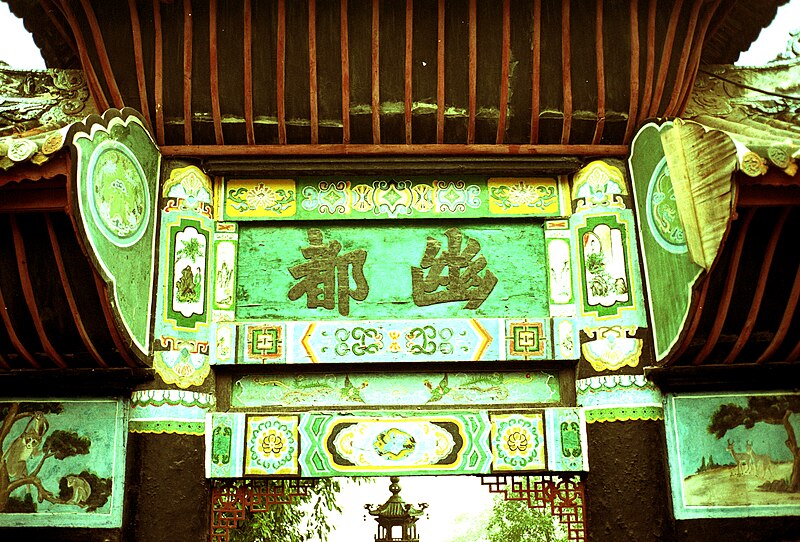
In the Chongqing region in China, at the lean for the Tibetan Plateau and along the Yangtze river. Far from the sea, at the heart of the country, the city for the dead is built: Fengdu Ghost City 丰都鬼城, is a sort of Chinese type of Necropolis and its said this is the place where the devil lives according to local folklore. This city dedicated to its demons and ghosts also works as an amusement park for curious tourist wanting a trip to commercialized hell as well.

Read More: Check out all our collection of ghost stories from China

The strange and peculiar nature of Fengdu Ghost City really leaves the question of: How do you really combine the experience of the eternal afterlife at the price of a ticket? Is it more of a philosophical learning experience or more like a warning of what could happen if you don’t lead your mortal life right?

The King of the Underworld: This statue leading into Fengdu Ghost City is in the Guinness world records for being the largest sculpture carved into a mountain, depicting the King of the Underworld and welcomes those visiting the city./source

People in China follows a lot of different religion, even though religion is officially banned in the country. To Chinese folk religion, Confucianism Taoism and Buddhism, the place is steeped in religious practices and perhaps this is why the way to the afterlife is so important.

Read More: Another haunted town in China is The Ghost of Khar Khot, The Black City in the Gobi Desert

The Gates of Hell to Fengdu Ghost City

On the north bank of the Yangtze river, shrouded in smog and clouds, the Ming Mountain peaks out on clear days. At the Ming Mountain, shrines, monasteries and temples have been built in honor of the underworld over centuries with cute names like “Last Glance at Home Tower,” “Nothing-to-be-Done Bridge,” “Ghost Torturing Pass”.

The place were the Fengdu Ghost city is built on today used to be an ancient burial site with its shrines and temples and an ancient town. It had to be rebuilt further and further uphill in the mountains as the water from the Three Gorges Lake kept rising. So what is this place in all its honesty?

Fengdu Ghost City is the Gate of the Hell in traditional Chinese literature and culture. The city itself is mention in the great folk tales of Chinese tradition such as in Journey to the West, Apotheosis of Heroes and Strange Tales of a Lonely Studio, all three works is a big part of Chinese literature and cultural heritage and have a direct reference to the place.

Read More: Take a look at all our ghost stories on Haunted Towns and Cities

To call the Fengdu Ghost city a proper city is perhaps a bit misleading as it mainly function as an amusement park and there is no one living there anymore. Well, except from the ghosts and the demons it is built for of course. When you are entering the city, you are passing statues of the Heibai Wuchang (黑白无常), which are two Chinese mythological deities in charge of escorting the dead to the underworld. Then you are at the mercy of the demons that exists in the underworld and your own effort on getting out of there.

To get into the city you have to get a ticket at the counter ahead and it tended to be around a 100 RMB per ticket. They used to have customers put money into a water-filled basket as they believed that the paper money would float if they were human and sink if they were ghosts.

How Old is the Fengdu Ghost City

To be called a ghost city, the place, the statues and the temples must be pretty old, right? Well, according to legend the location where the city is built certainly has an old story. Today, some of the building have been rebuilt or added on in modern times, and some of the oldest have been there since previous dynasties.

The story of Fengdu Ghost City goes back for nearly 2000 years according to the legend. It is said that the city got its reputation as a place for dead people and the king of hell during the Tang Dynasty (618-907 AD).

The Fengdu Ghost City got it name in the Eastern Han Dynasty period  (206 BC to 220 BC), when two men came to the Ming Mountain to practice Taoism and to live as recluses away from the big society. The two men, Yin Changsheng and Wang Fangping ran away because they were bored of the political life and lived their life practicing taoism at their own accord in the alleged haunted mountains. According to legend they became immortal and the legend of the strange things happening there kept piling up.

Temples of the Ghost City of Fengdu: A classical Chinese building you will find at most historic sites, here are they all built in honor of the dead though. Many of the temples and shrines are built and dedicated to deities, demons and lords of the underworld and afterlife. They are open to visitors and tourists every day.//Source: Flickr

Word soon spread of this no small feat that two men had reach the stage of immortality and people came to seek what they had found. Their two names, Wang and Yin combined means King of hell or King of the Underworld. And this was the beginning of the focus of the underworld, and the building of Fengdu Ghost City started and continues to grow today.

Read More: Another alleged haunted mountain is the story of The Accursed Mountains of Albania

The city we can see and visit today though wasn’t really built into the mountain before the Three Gorges Dam project was started in the early 1900s and built slowly over the course of the century. Because of this massive project they had to build Fengdu Ghost city higher up because of the flooding the dam caused to the area around.

The Ghosts and Demon of Fengdu Ghost City

So what do you do in a city built for ghosts? This particular place could perhaps work for just its vibrant green scenery. Perhaps the main purpose of the park is helping people learn of the old belief system of what comes next after death. One thing at the park at least is testing your living self of the trials the dead spirits can come face to face with in hell.

Ghost Statues: Examples of the ghosts statues one can see in the Fengdu Ghost City. This is the statue of the “wreath-eating ghost” (食蔓鬼). In legend, this ghost was a girl who adorned herself with flower wreaths she stole from statues of the Buddha. After she died, as punishment, she was not allowed to feast on food offerings from living people and could only feed on flower wreaths/source

Walking in the Fengdu Ghost City there are all reference to the afterlife in terms of architecture and decorations in the city. The statues all depicts ghosts and devils, representing what happens to people not leading good lives, and how Chinese people saw, and at times, still picture the afterlife. It also showcases what is considered a good moral.

Women being thrown in boiling cauldrons for their sins, children being spanked after being naughty and people being poked, stabbed, tortured and judged for their crimes is some of the attractions you can observe when visiting. Perhaps you will even be condemned yourself. In many ways, just as fun as Disney World, bring the whole family.

Pictures of punishments are big in this city, and the way the Gods tortures the wicked. The pictures hang side by side of paintings of scary demons and bureaucrats passing judgement over the sinners. The eerie pictures fills the walls, the roofs and the gardens across the whole city of ghosts.

Read More: Check out the story about the Chinese hungry ghost in the story of Ghost of Tu-Po — The Hungry Ghost

Side by side with these ancient traditions and buildings is a rather tacky theme park of a standard haunted house with people in masks, just doing their best to entertain their guests. Can it be something more in this day and age were the idea of the afterlife has become rather vague and in the long unforeseeable future? Because it didn’t start out as an amusement park. It started out as a cultural exploration of what hell is and what the afterlife will look like. In many ways, it still is.

The Three Tests to an Afterlife

In Chinese traditions Diyu is some sort of purgatory that punishes and renews spirits to prepare them for reincarnation to a new life. A similar thing is Naraka, a Buddhist concept of hell similar to Diyu. All dead must pass three tests before crossing over to the next life. And at Fengdu Ghost City you can put yourself to the test of how you would do ass you can reach Youdu from here, which is the capital of the underworld.

The first test the visitors have to overcome is crossing the “Bridge of Helplessness”. The object is a stone bridge testing good and evil people. There are demons blocking the passage, letting only the worthy pass. Those who fail are pushed to the water below. The object of the test is to cross the test in fewest steps, and of course, not to fall into the water below. In the Fengdu Ghost City it is now a fun test to do, but it actually stems from an old taoist practice to have a good fortune. This particular bridge was actually built in the Ming Dynasty between the 1300s and 1600s.

After the “Bridge of Helplessness” the dead must continue to the Ghost-Torturing Pass were they meet Yama or Yanluo Wang who is the King of Hell. He is the one passing judgement. In this area there are a lot of sculptures with demons.

The third and final test takes place at Tianzi Palace on top of the mountain where the dead stands on a special stone on one foot for three minutes. Only virtuous people will manage this while evil people will fail and go to hell. Tianzi Palace is the largest and oldest building and it is about 300 years old.

Tourists in Hell and the Ghost City Sinking

In recent years the Fengdu Ghost City has become a big tourist attraction with boats carrying tourists up the river and taken to the mountain where they can walk among the statutes relating to Diyu and Naraka that symbolizes the underworld or Hell in Chinese mythology and Buddhism. It attracts many tourist, curious foreigners as well as Chinese visitors wanting to learn about ghost culture and the afterlife.

Read More: For more Chinese culture concerning ghost and the paranormal, check out the story of Ghost Marriage — The Chinese Way to Marry the Dead

The Capital of Hell: The gate to the capital of the underworld, Youdu (right to left: 幽都). The whole underworld is called Diyu that is displayed in Fengdu Ghost City./source

After the building of Three Gorges Dam is built the Fengdu Ghost City will be an Island of itself, but parts of the city will be submerged in the water. They have also made some recent addition to the city.

In 1985 they built the Last Glance Home Tower, and according to legend, this is where the dead can have one last look back at their home and families before crossing over. Maybe one day, the Fengdu Ghost City itself will be something more of a legend than an actual place.

More like this

Newest Posts

https://www.atlasobscura.com/places/fengdhu-ghost-city

The Lingering Presence of a Nazi Ghost at Skaugum

Advertisements

In the bunkers at one of the Norwegian Royal Family’s residents, Skaugum, there is a rumor of the place being haunted. One of the ghost that haunts the place, is the former Nazi Reichskommissar from the war, Terboven.

Skaugum, Asker, Norway: 1945.

No one has flagged with the Norwegian flag in a long time since the German occupation five years earlier and only the nazi flag with the black swastika on the white disk was allowed. But it is all about to change as the allies are closing in on Berlin and the second world war is coming to an end.

High Ranking Nazi’s: Terboven (seated 2nd from right) with minister president Quisling, SS boss Himmler and von Falkenhorst in 1941. Foto: Deutsches Bundesarchiv

8th of May is approaching, the liberation day and the freeing of the nation are a couple of minutes from being announced. People are gathering in the the streets, ready to celebrate and start anew in a peace.

Read Also: Check out our entire collection of ghost stories from Norway.

But there are some the freedom is nearing its end however. The German Reichskommissar for the occupied Norwegian areas, Josef Terboven have an arrest order on his name and is one of the number one nazi officials the Norwegians are after.

Read More: Check out more ghost stories from the Second World War like The Black Cat of War

Terboven knows the war is over and that it will be showed no mercy from the allied forces, not from the people he spent five years at oppressing. He decided to end his life to avoid capture, but according to the rumours, his spirit never managed to escape.

The Reichskommissar in the Bunker

As Reichskommissar, Terboven was the one giving the orders that would send the people of the nation to the working and death camps. He was responsible for the imprisonment, executions- everything.

The Reichskommissar: Josef Terboven. Source: Riksarkivet (National Archives of Norway) @ Flickr Commons

When he took office in Norway it was he who brought death penalty back to a country that had made it unlawful. You could end up dead by leaving the country without permission, listen to illegal radio, taken with illegal newspapers and help war prisoners and refugees. He was by the end of the war, one of the most hated men in Norway.

Read Also: Check out more ghost stories involving nazis like Conn Barracks Ghosts of Nazi Soldiers and Bloody Nurses

All of this is hanging over his shoulders that day in May when people are celebrating. He sits in his bunker at Skaugum, a farm originally owned by the Royal Family outside of Oslo. He once barged in, chased the royal family away and started living there. Now, he himself is the one that is about to be chased away.

The bunker at Skaugum is only 200 meter from the main house the crown prince of Norway owns of and stays in today. There the next King and Queen of Norway lives together with their children.

On that day in 1945 Terboven realized that all hope for a German victory was out of question and hid in the bunker together with the last of the German officials left.

Wilhelm Redieß, the SS boss in the country had already killed himself by gun. “That was early, he beat me to it”, he commented on the suicide.

But Terboven would follow shortly and he had brought 50 kg of dynamite to his bunker at Skaugum and that is how he ended his days. He blew himself up to avoid being prosecuted for his crimes. At 23:30, he detonated the bomb exploded along with the body of Redieß.

The remaining crew of SS spent the rest of the dynamite the next day when Norwegian police came to burn it all down.

The Ghost in the Bunker

According to the legend, the bunker at Skaugum is also were Terboven will spend his eternity. For a long time after the war, it has been reports about activities that no one has been able to explain close to the bunker where nazi officers ended their days.

Early days of the Nazi Party: Josef Terboven rose quickly in the ranks, here with the national party: NSDAPs paramilitary street troops in 1926 in Germany. Foto: Deutsches Bundesarchiv

His Majesty The King’s Guard; the Royal Guards, a battalion of the Norwegian army are the ones guarding the Royal property and residents, including Skaugum today. And there is also from the soldiers the stories comes from.

They tell they have experience many strange things they believe to have a paranormal origin walking the empty places near the bunker at Skaugum. Strange tracks from or to the bunker is spotted for example by the forest surrounding the estate close to the fence. The soldiers have to patrol there and comes back with stories about strange sounds and apparitions, even during the day. Late at night close to the bunkers, the keep hearing the sound of voices and when they go to check it out, they find that they are alone. At least the only living thing there.

Skaugum Farm: The big farm has been the Norwegian residency for decades and even today the place is the home of the crown prince and princess. Right by the big house there is a bunker that is said to be haunted by the former Nazi officials that took over the place during the war.//Source: wikimedia

There are also placed calls from the outer guard post when no one is placed there to make them.

A common factor for all of this is that it is all happening right by the bunker Terboven blew himself up in. The royal guards working at Skaugum are of the opinion of that it is all contributed to Terboven and his ghost lingering in the bunker forever. He never got peace after his death and roams the property were the next royal heir of Norway resides.

More like this

Newest Posts