Category Archives: article

The Red Barn Murder and the Ghost in the Dreams

Advertisements

The murder of Maria Marten, a case called The Red Barn Murder got a lot of media coverage in England because of the strange circumstances. The murder was allegedly solved by the appearance of the ghost of the victim, haunting people’s dreams.

‘”If you’ll meet me at the Red Barn as sure as I have life
I will take you to Ipswich Town and there make you my wife.”
This lad went home and fetched his gun, his pick-axe and his spade.
He went unto the Red Barn and there he dug her grave.With her heart so light she thought no harm, to meet her love did go
He murdered her all in the barn and he laid her body low
– The Folksong The Murder of Maria Marten

The year of 2004. The Place? at the Royal College of Surgeons of England. A skeleton, reassembled so many times and exhibited, used as a teaching aid in the West Suffolk Hospital. It is almost possible to forget that the people hanging there, next to the teacher, used to be a living human. What cruel fate it is, to always be on display. But then we can wonder, why? Why do you hang there? Is this your punishment? Did you do something? And who hangs beside you? The question is always asked.

“Who is that skeleton?”

Beside you is someone infamous. Jonathan Wild, the notorious gang leader in Britain, known as the great corrupter. The students might know his name, his crime. But who are you? Does anyone remember your name?

The Skeleton of the Murderer William Corder

The skeleton sitting in the classroom actually belongs to William Corder, a man that would end up in the infamous case of The Red Barn Murder.

Read Also: Another infamous murder trial involving ghosts is The Infamous Haunted Lizzie Borden House 

He was a boy like any other, born in 1804 to a prosperous tenant farmer in Suffolk, England. He was nicknamed Foxey at school and was a bright kid. He had his whole life in front of him and he had some dreams of becoming a journalist or a teacher as he had some talent for writing. But there was a darkness in Corder that eventually would devour him.

Corder’s father liked his brothers much better according to the rumours around town, and he was sent to London to find work, not wanting to fund his sons dreams. He was said to be a liar and a cheater, thereof the name Foxey most likely. He was also known for petty theft, like when he sold his father’s pig. Yes, his father’s pig.

In London, he fell into bad company and spent all of the money his father gave him. He was a well known ladies man and all around an untrusty fellow. But Corder’s biggest crime was the Red Barn Murder and being found out by the ghost of Maria Marten, the woman he murdered.

Maria Martens Life and Death

After a while, William was called back to the farm from his wild time in London. There he met Maria, daughter of a mole catcher in the same small village, two years older than him and the likes of William Corder didn’t immediately catch her interest.

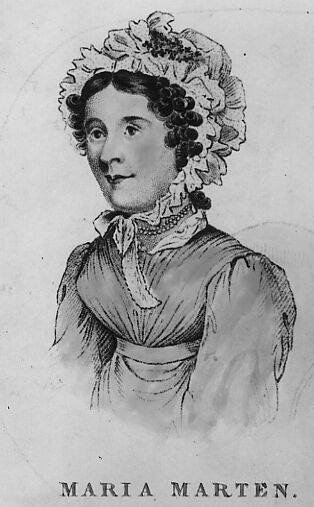
Maria Marten: The young girl ended up being the victim in the Red Barn Murder/Wikimedia

Maria Marten was 17 years old with a taste for finer things with a curse on her head and would end up as the victim in The Red Barn Murder. There is the story about her that a fortune teller once said that she wouldn’t reach old age, but would have many lovers and riches.

Before getting involved with William Corder she was actually seeing Williams older brother, Thomas. He was the oldest and also the fathers favorite and the two got into a relationship that was doomed from the start.

Thomas Corder wanted to keep the relationship secret as she wasn’t regarded of the same status as himself, being poorer and of a family with a “low” status. The Corders were after all, prosperous farmers.

That didn’t stop him from getting involved with her though and Maria Marten fell pregnant with Thomas child. Thomas left her when she told him about her pregnancy, perhaps hoping it would convince him to go for her after all.

It did not, and she gave birth to his child alone, but the child died a couple of weeks later. Maria then got into a relationship with a Peter Mathews, a middle age man who also dropped her after giving him a son called, Thomas Henry in 1824.

Indeed she had some lovers, perhaps some riches. And indeed she wouldn’t be alive for long.

William Corder and Maria Marten’s Relationship

When William Corder came home from London, bad luck struck his family. His father died and his brothers got very ill, leaving him to manage the farm together with his mother. And this is were he got to know Maria and they got involved in a relationship. But it wasn’t a happy match from either of their families stands. She on her side was already left with a ruined reputation by a Corder. And from the Corder’s perspective, she was a fallen woman and not from a prosperous family like theirs.

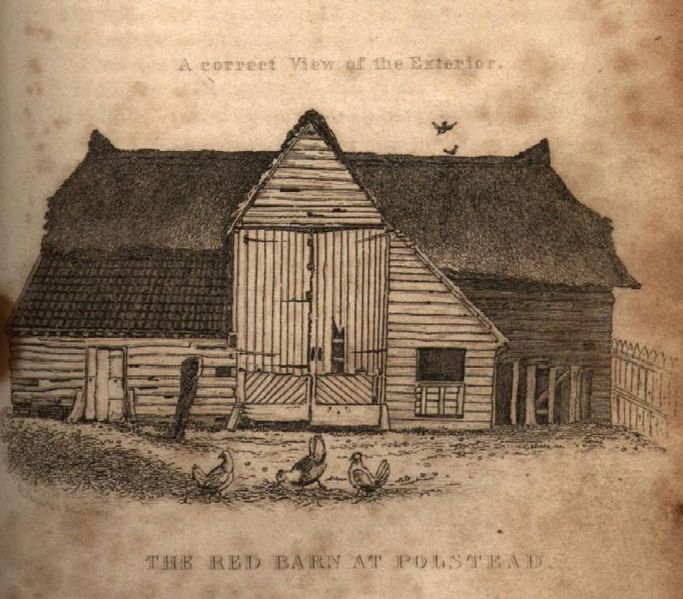
The Red Barn Murder: The old barn close to their houses was the scene of the Red Barn Murder and later a tourist attraction. It is now burned down./Wikimedia

This didn’t stop them meeting, although they met in secret. Often at a red barn right by Marias house. It was called that because of the red tiles on the roof and would later be a tourist place as the location of where The Red Barn Murder happened. But the secret of their relationship was not to last for long, as Maria became pregnant again. Maria wanted William to marry her, and according to him, he said yes.

At the same time that winter, William’s brother and Maria’s ex-lover, Thomas was walking over a frozen lake. The ice cracked and Thomas went under, drowning. William was now the owner of the farm as the only son.

Between Maria being pregnant, the farm being in financial troubles and his brother dying, it seems that it put a toll on him. He put Maria in a lodging at Sudbury, a couple of miles away from home to have their baby. But this too should not live and died soon after. William buried the child in a field and there have been speculations that this was not a natural death and that he might have killed their love child as well. And these day, who could really tell?

The Red Barn Murder

Maria and William started to argue about some money that may have been stolen, they argued about the burial of the child and how it looked like William would not marrying Maria after all. At one point the pair made a plan, when William said they should elope to Ipswich. She would come dressed as a boy and they would meet in the Red Barn were they had met countless of times before.

Read Also: Maria Marten got killed by a partner, we have multiple stories telling the same. How about checking out The Ghost of La Faraona Haunting the Agua Caliente Hotel or The Prisoner of Château de Puymartin

Why would William Corder elope now? Now that he didn’t have a father or older brother to interfere? One of the problems the couple had was with Maria and her crimes. It wasn’t necessarily unlikely or weird that they would like to run away, as Maria had several charges on her for bearing illegitimate children. Criminal at that point in time.

The days before their plan was set into motion was the last time Maria Marten was seen alive. William began acting odd and a lot of questions were asked about her. Where was Maria? Wasn’t he going to Ipswich with her?

He told the people asking she had gone ahead to Ipswich, but then he changed the story, and told she had gone to Great Yarmouth and wouldn’t be able to return yet. Then he changed the story again, and he said he was meeting Maria and that they were going to marry. He said he felt unwell and traveled to Isle of Wight, writing back home that they were married and happy there. He said he was sorry that Maria couldn’t write herself as she had hurt her hand and wondered why some of her letters hadn’t made its way back home.

The Ghost of Maria Marten Haunting the Dreams

This vague and strange story didn’t sit well with her family though. The Marten family did not believe William and his excuses as to why they hadn’t seen or heard from her. But in a strange twist of fate, she would find other means to contact her family.

Maria had a young stepmother back in Polstead, Ann Marten. She was troubled by strange and scary dreams about her stepdaughter. Twice Ann Marten had woken from a terrible dream that she herself knew to be true. When she shared them with her husband they looked for Maria in their town and found her.

Read Also: Another ghost story about a ghost that allegedly help solve her own murder case, read about The Greenbrier ghost in The Ghost that Went to Court

The dreams to her stepmother told that Maria had been murdered in the Red Barn buried under the floor and not gone to Isle of Wight at all. Her husband, Maria’s father was sent to the barn and looked for his daughter, prodding the ground with a mole-spike. There he discovered the remains of his daughter, brutally murdered and discarded under the floor for a long time.

Maria was shot as well as stabbed multiple times to death. They brought her to The Cock Inn and, decomposed as she was, her sister Nancy identified her from the clothes, the hair and a gap in her teeth. Around Maria’s neck they found a green handkerchief. According to the witnesses it belonged to William Corder. Was she also strangled? Was she even dead before he buried her in the grain storage bin her father found her in?

The Trial of The Red Barn Murder

Back in Ealing were William had fled, he knew nothing of the mysterious dreams and the discovery of Maria under the barn. Time went by and William needed a wife. He put an ad in The Times and asked for a wife. He picked Mary Moore and they set up a young ladies school in Ealing, West London. He was moving forward in his life. But Maria wasn’t forgotten yet.

Boiling some eggs at home the police came knocking at his door and apprehended him. First he denied that he knew of this Maria Marten, but the evidence was there and he was brought back to Suffolk.

And the press was on this, coming from all across the country to behold the spectacle of his trial and the strange circumstances around it. The case of The Red Barn Murder even got a play on stage before Corder even came to trial, which they actually sold tickets to.

The Red Barn Murder Frenzie: The execution of William Corder, the Red Barn Murderer was a popular event and thousands of people attended/Wikimedia

Forensic pathology was not as advanced yet and it was impossible to determined what of the things that killed Maria. That is why he was charged with nine different murder charges, where shooting, strangling, stabbing and burying alive was a couple of them.

“By that powerful engine of the press,” he said, “I have been described…as the most depraved of human monsters,” he said of the media coverage.

Corder’s defense was articulate, but improbable, claiming Maria herself had taken her own life, but he was found guilty on the circumstantial and medical evidence, and sentenced to hang.

It was the Chief Baron Alexander that was the judged, and he added that his dead body was to be dissected and anatomized, almost like a second punishment.

The Execution of William Corder

The execution was a great play and melodrama itself, and several thousands of spectators had tickets to the show of William Corder’s last moments. During his last days the prison chaplain had tried to get a confession from William who had denied all of the charges against him. Finally, William Cordery admitted to killing MAria by accident during one of their many quarrels. What he denied was stabbing her. Perhaps it was the mole-spike her father looked for her with that made those wounds?

Hanged: The Execution of The Red Barn Murder/Wellcome Library no. 43542i

In any case, he took the punishment for all of her injuries. His last words were:  “I am guilty; my sentence is just; I deserve my fate; and, may God have mercy on my soul.” He was left hanging for an hour, most likely in agony before he died.

After his death he was transported to Shire Hall were he was left for science as the sentence was. But many of the things done to his body after death was highly unscientific. For one,his skin was removed, tanned and used as a book cover that described his crimes and live. Like the most bizarre biography.

What happened that day? Was Maria’s mother psychic? She was only around a year older than Maria, and had not exhibited similar dreams before. Perhaps it’s a bit odd that her dreams started just after news of Williams marriage to Mary Moore. And there were also some rumors that linked her as a lover with William.

What happened skeleton hanging in the lecture hall? Truth be told, it isn’t even William. At least, not all of it. After his hanging, he was chopped up, his body dissected in front of anatomy students, perhaps even used as an experiment with galvanism.

The Red Barn Murder Frenzie

Perhaps the most gruesome thing was that none of the people involved were left in peace after their death, as the story about the Red Barn Murder was a sensational tale and people flocked to the location as well as tried to get a hold of some sort of suveniers from the case.

After the execution, William Corden’s ear was sold, his skull was taken by Dr John Kilner who collected The Red Barn Murder memorabilia. Even pieces of the rope he was hanged in was cut up and sold for a guinea. Perhaps the disturbance of the dead came back to haunt the living that looked at their death as some sort of amusing spectacle?

After many strange and tragic events that happened after The Red Barn Murder enthusiast Dr John Kilner took the skull for himself to his collection, he believed that the skull was cursed and gave it to ta friend. But bad fortune kept plaguing the two men and in the end they decided to pay for a Christian burial to lift the curse of the skull of the murderer William Corder.

Maria also kept being disturbed after The Red Barn Murder. A lock of her hair was sold at two guineas and Polstead with her cottage, the Red Barn and her grave became a tourist attraction and people started chipping away at it so it completely disappeared. The grave as well as the Barn, planks, roof tiles and all sold as macabre souvenirs.

After 2004, the skeleton of William Corder, or at leas what was left of him was removed from the classroom and finally put to rest six feet under.

But the rumors still lingers about the ghost of Maria haunting her stepmother’s dreams, about what really happened that night of The Red Barn Murder. But maybe it is time William got some peace, having served over 200 years for his crimes.

More like this

Newest Posts

References

What really happened with the notorious murder at the Red Barn in Polstead? | Great British Life

Murder in the Red Barn—Maria Marten’s Tragic Love Story – Owlcation
William Corder, the Red Barn Killer – HeadStuff
The Red Barn Murder Revisited! – Norfolk Tales, Myths & More!

The Obon Celebration – The Ghost Festival

Advertisements

Light your lanterns, put on your Yukata and get ready for The Ghost festival in Japan called The Obon Celebration. The festival, also known as Bon festival is a three day long festival each year in the late and hot summer to honor the dead.

Why is every Japanese ghost story set during the hot and humid summer nights? It’s not really, but a staggering amount is and there is a reason for it!

Beautiful lanterns: Bon-odori festval at Higashiyama Onsen (Fukushima) 17 August 2009. Photo by: Yoichiro Akiyama/source

In mid July you can hear the sound of wind chimes and there is shaved ice on every corner in the summer heat with people wearing their traditional Yukata. Perhaps coming from or going to one of the big parades? The cicadas sings and the Japanese takes the time to tell their many ghost stories in the hot summer nights.

Fun fact, some says that telling a chilling ghost story in the hot humid summers in Japan, will help cool you down, because of the goose bumps you get from being scared. And because of that, a trend in the Edo period started with telling ghost stories in the theaters in the summer times, called Kaidan.

Read Also: Some of the most famous Kaidan ghost stories is: The Myth of Oiwa — The Paper Lantern Ghost, Botan Dōrō – Tales of the Peony Lantern and Banchō Sarayashiki — the Ghost of Okiku. Check out the full story here.

The Obon Celebration is not only an ancestral celebration from the old days they keep alive. Horror movies takes over the cinema, Kabuki theaters put on their traditional ghost plays and teenagers dares each other to visit the cemeteries at night, making the whole festival seem very similar to the modern Halloween celebration in the west.

The paranormal hunters are also about, visiting well known haunted locations around the country and the belief in spirits reach an all time high. But there are also less sinister traditions that comes with the festival.

The Buddhist Obon Celebration

So what really is the The Obon Celebration other than watching horror movies, telling ghost stories and ghost hunting? Obon (お盆) or just Bon (盆) is a Japanese Buddhist custom to honor the spirits of one’s ancestors that incorporated the Japanese native folk religion Shinto, differentiating it a bit from the other Buddhist Ghost Festivals from other countries.

The Obon Celebration originated from the Indian and Chinese Ghost Festival during ghost month. There are many variant of this ghost festivals across the Asian continent coming from the same buddhist story.

Read Also: Interested in more haunted Japanese tales? Have a look at all our ghost stories from Japan

The Obon Celebration is one of the few events on the Japanese calendar that focuses on the importance of family and is there to give the families in Japan time together. It is not a public holiday, but customary to be given leave to travel to your hometown, back to your family. Both the living, as well as the dead.

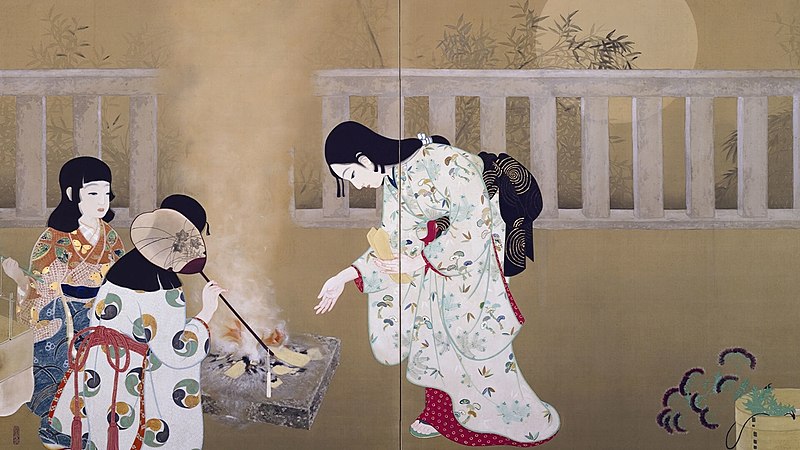
Welcoming the Dead: “Bonfire for the Spirits of the Dead (Okuribi)”, two-panel screen, Color painting on silk from 1916. Showing how the Japanese light fires to welcome the spirits of the dead during Obon in a ritual known as Mukaebi.

When is Obon Celebrated?

The Obon Celebration has been going on every summer for over 500 years. The exact dates changes according to where you live though because the lunar calendar was changed in favor to the Gregorian calendar instead. During these days the employers often grant their workers and the trains, planes and busses are filled with people out in the countryside to celebrate it with their family or into the cities to join the big parades and happenings throughout all big cities.

Read Also: More articles on Paranormal Festivals and Happenings found in the MoonMausoleum.

In eastern Japan, it is held 15th of July, but in the western part it’s held on August 15. However, in Okinawa and the Amami Islands it’s different again and follow the Chinese way to celebrate on the 15th day of the 7th lunar month like their ghost festival. In common though, the festival lasts for three days and the official Obon holiday is from 13-15 July.

Visiting the Grave: A huge part of The Obon Celebration is going home and visiting the graves of your ancestors, clean them and make offerings to them throughout the festival before sending them back to the afterlife.

It is believed that during these three days the ancestors spirits return to the world to visit their relatives. In this time the veil between the spirit world and the world of the living is at its thinnest and therefore the spirit can pass through.

How do the Japanese Celebrate Obon?

To prepare for the return of the ancestors during the The Obon Celebration, the Japanese clean the grave sites in a ritual called Haka Mari. From the newly cleaned graves it gives a path to them back to the house in a ritual called mukae-bon. A spirit altar is put up back at the home and offerings like fruit, flowers and incense is given.

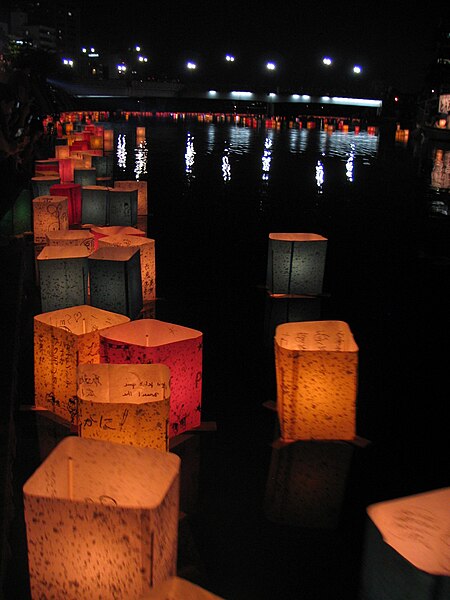
Floating lanterns: Tōrō nagashi float in the river in Hiroshima, as part of the Hiroshima Peace Memorial Ceremony in 2009. Photo: 藤谷良秀(Yoshihide Fujitani) /source

The Obon Celebration begins with Mukaebi, which is a ritual of lightning fires to guide spirits home for the duration of the festival. Often in the form of lanterns hung in front of the houses.

In this way the Obon Celebration reminds much of the western All Saints Days or Halloween celebration as it is believed the veil separating the living and the dead world is thinner and it’s a time for hauntings and ghost roaming the world.

Read Also: Halloween Traditions Across the World

The lanterns most often used is the traditional paper chochin lanterns, but how you use these lanterns and were is very different from region to region.

In some regions of Japan they light up huge fires outside the houses instead of lanterns. Like they do in The Daimonji Festival in Kyoto were they light up series of , 200m-long, character-shaped bonfires built on mountainsides.

When the Obon Celebration ends, the chochin lanterns is often used to guide them back to the spirit world, a ritual called okuri-bon.

On the final evening of the Obon festival it is thought that placing floating lanterns down the rivers will help guide the spirits back to the spirit world if you live close to a river or some sort of water. This tradition has gained a lot of popularity in modern time.

This ceremony is called Tōrō nagashi 灯籠流し, but the custom of sending floating lanterns during the Obon Celebration differs from place to place. The largest floating lanterns event though is in Hiroshima and Nagasaki to commemorate the victims of the atomic bombs during the second world war.

Welcoming and Feeding the Hungry Ghosts

One of the things The Obon Celebration is for, is to ease the suffering of spirits. To do this they have to perform the ritual of segaki 施餓鬼, meaning feeding the hungry ghosts, otherwise known as a vengeful spirit, or in the western tradition: a poltergeist. It is a ritual of Japanese Buddhist tradition.

Read Also: Interested in more ghost stories about the Hungry ghosts? How about reading about the chinese ghost story of: The Story of Tu-Po – The Hungry Ghost or about the Japanese vengeful ghost: Onryo – The Japanese Vengeful Spirit

During the festival, the ritual is performed at Buddhist temples and more offerings are given to the hungry ghosts: Rice and water. This is for the muenbotoke, or the ghosts with no living relatives that have no one to welcome them.

The food served is often vegetarian and a thing eaten much of is sticky rice balls called ohagi and odango.

Another significant ritual people do during the Obon festival is to craft a cucumber horse and eggplant cow, known as shōryō uma (精霊馬, “spirit horse”) or ushi uma (牛馬, “cow horse”). This type of carved food works almost as a vessel for the ancestors to come back home when the festival starts and return when it’s over.

Food Offerings at the Alter: Cucumber and Eggplant crafted as a vessel so the spirits can come and go during the Obon Festival //Source: Wikimedia

The Buddhist Dance from the Spirit Realm Bon Odori

But exactly why do the Buddhists and buddhism influenced places celebrate the dead during this time? It is best seen through one of the ways the Japanese celebrate.

The Bon Dori Dance 盆踊りis a dancing style performed during The Obon Celebration. It comes from the story of Maha Maudgalyayana, or simply Mokuren which was the incident that made people celebrate the ghost festival in the first place. He was a disciple of Buddha and used his powers to look into the spirit realm. There he saw his mother, and saw she had become a hungry ghost.

He asked Buddha what to do and Buddha said to give offerings to the monks that completed their summer retreat on the 15th day of the 7th month. Mokuren did it and it worked. His mother was freed from the suffering of being a hungry ghost. He burst out dancing from pure joy.

Bon Odori Dance: This is a scene from one of the dance festival at the Hanazono Shrine, Shinjuku, Tokyo city. They are celebrating The Obon Celebration. Yukata-clad people dance in circles around the yagura as the music plays just as Maha Maudgalyayana did when he saved his mother from the afterlife as a hungry ghost.

The dance has so many variations and each region perform their local dance with their own music, however, the Japanese taiko drum is often used to the melodies of old folk songs.

There are several big parades showcasing the Bon Odori dance during the Obon Celebrations. The Tokushima Awa Festival (阿波踊り) is perhaps the most well known bon odori dance that draws millions of visitors to Tokushima to watch and join the huge parades in the city. There are the also Gujo Odori Festival in Gifu (郡上おどり) and the Akita Bon Odori Nishimonai Festival (西馬音内盆踊り). These are all well known for their Bon Dori during the ghost festival, but it is held smaller Bon Odori dances as well everywhere.

Since the celebration and all its customs is so different from region to region, the dance will look so different as well. But very often it is people lining up in a circle around a wooden scaffold made for the festival called Yagura. The dance can also include the history of the region as well. Like mimicking fishing in fishing areas, dance moves reminding of digging in coal mining areas and the likes. What they have in common though is their intent is to honor their ancestors and those that came before us.

Things to Watch out for During the Ghost Festival

Although mostly a family holiday and a time to spend with your family and religious days of remembrance and folk festivities, there are also several superstition that are said to be remembered during the days.

The first rule during Obon to beware of is to not take pictures during the night so not to capture a ghost. Perhaps a bit difficult because of all the festivities people take a photo of to remember.

It is also said not to swim as it is more likely to be drowned by a ghost. Do not steal the food offering to the hungry ghost of obvious reasons. Do not hang your clothes out to dry in the night as iit believed that the dead will wear them and don’t put the slipper heals towards your bed. Ghost will find your bed and climb into it, causing sleep paralysis.

All in all, do not do anything but being respectful to the dead during the Obon Celebration.

More like this

Newest Posts

References:

https://www.newworldencyclopedia.org/entry/Bon_Festival
https://www.jrailpass.com/blog/obon-festival-in-japan
https://www.tokyocreative.com/articles/18387-chilling-tales-for-hot-nights-ghosts-in-japan
Season of Ghosts: The Japanese Tradition of Scary Summer Stories | Work in Japan for engineers
What is Obon? Japan’s festival for the dead.

The Grey Lady of Stavern at Hotel Wassilioff

Advertisements

On the fortess island outside of Stavern in Norway as well as one of the rooms at the historic Hotel Wassilioff, it is said that the ghost of The Grey Lady of Stavern is haunting, calling the name of her former lover that left her.

 “Peter!

……..Peeeeter!”

The wailing screams echoes through the corridors of hotel Wassilioff in Stavern, Norway in the dead of night. But when people peek their head out to look, there is no one there. The same can be heard at the coastal fortress on the Citadell island were a shadowy figure has been spotted. The same echo of a voice calling after the same person. Peter.

Stavern is a quaint and picturesque summer town in east of Norway by the coast. Several make it their vacation place during the summer times with the cute medieval architecture and history and the white beaches. But during the night, the old and not so pretty side of the seaside town start to appear through the cracks.

The Quiet Seaside City: Stavern is a popular summer destination as it is right by the beautiful coast of Eastern Norway. View on Skagerrak from Stavern, Norway//Source: wikimedia

The old seaside city is filled with ghost stories about drowned sailors and lost shipwrecks next to happy summer days by the shore, picking seashells and taking a swim.The most famous ghost story is the tragic tale of the Grey Lady of Stavern or Den Grå Damen in Norwegian.

The haunting allegedly happens at the historic Hotel Wassilioff right by the seaside just around the corner from the stature of Tordenskiold. The hotel today was founded in 1844, around a century after this tragic event is said to have happened. If it used to operate as a hotel before this though, is unclear.

Read More: All of the ghost stories from Haunted Hotels across the world

But who was the Grey Lady of Stavern when she was alive, and who was this Peter, that she keeps calling for, even in the afterlife?

The Maid Elise and Tordenskiold the National Hero

The Grey Lady of Stavern was supposedly a maid named Elise fell in love with the sea hero Peter Wessel (1690-1720), he is better known in Scandinavian circles as Tordenskiold, a very well known figure in Norwegian history, although the myths about him sometimes overshadowed the truth.

Tordenskiold: A Norwegian war hero at sea, it is believed that the ghost is calling out his name after he left the Grey Lady of Stavern.

A true patriot and a war hero that fought many battles for Denmark-Norway against Sweden. Tordenskiold is even mentioned in the national anthem they still sing today and his monument is standing in Stavern. However this is not the whole story as he was grealy showed in a much better light than reality. For one, he had economic interests in the slave trade and worked on a slave ship when he was a teenager. He was also a notorious womanizer that left many women in a deep predicament.

Elise on the other hand was only eighteen years old when she met Tordenskiold and fell for his charm. When people started calling her Elise is unclear though, as there is no last name and there are many variations to the legend. In some version of the story she was already engaged with a lieutenant named Heber, making her relationship with Tordenskiold even more dramatic.

As the story of the Grey Lady of Stavern goes, he seduced the young maid and brought her to room 216 on the coastal hotel, now called Hotel Wassilioff, or at least whatever establishment there was there at the time in the early 1700s.

Tordenskiold didn’t really come from Stavern, but lived there for a period when he worked for the navy. They were stationed in a commander’s building that are still standing today, and the ships used in the sea battles often passed by the Stavern and the fortress there was an important base.

Their romance was however short lived and superficial. When Elise became pregnant, he abandoned her in Stavern and sailed his way to glory. He died however shortly after, only 30 years old in a duel.

The Well at Citadell Island

As said, the Hotel Wassilioff didn’t open until 1844, long after this story takes place, and the narrative that they spent any time there is slim, as what the building was used to before that is unclear. But the original legend about the Grey Lady of Stavern doesn’t even mention the hotel, but it does mention the fortress on the small island just outside of the city.

Read Also: Does the concept of haunted islands seem intriguing to you? Read our ghost stories set on Haunted Islands from all over the world.

Right across the harbour of Stavern city there is a military fort built to protect from the Swedes during the Scanian War. You can see it from the windows of Hotel Wassilioff. It leads over to the small island, connected to the mainland. Today it’s only a tourist attraction, as well as Elise’s final resting place.

Citadell Island: The place Elise is said to have gone to drown herself and haunts, roaming the old fortress.//Photo credit: Jørn Tore Røed / visitvestfold.com/flickr

According to the legend, Elise was desperate, despaired and abandoned and went out to this island. Full of grief and with no hope she was driven to suicide and drowned herself out on Citadell island in a well there and rose from the dead as Grey Lady of Stavern.

Elise probably did what she did to escape the place she was trapped in. But perhaps she didn’t intend to be roaming along the fortress and in the hotel corridors, looking for the man leaving her for the rest of eternity.

Read Also: Banchō Sarayashiki — the Ghost of Okiku who also was drowned in a well.

Whether this was true is unclear, but the drowning in the well is also connected to Heber, who had many tragic legends around himself, even outside the legend of Grey Lady of Stavern. One was that he killed his fiance because he suspected a relationship with Tordenskiold another about his widow who drowned herself in the well because she had too many kids and no pension on October 11th in 1746.

The Grey Lady of Stavern at the Haunted Hotel

Back to Hotel Wassilioff, the place most people claim to have seen the Grey Lady of Stavern, even though the historic reasoning for this is weak. How do they know that it is the Grey Lady of Stavern haunting the rooms and corridors of the hotel?

Guests at the hotel can wake up to nightly callings from the maid, screaming the name of the lover who left her in a situation so dire she couldn’t live with it. As mention, it is especially outside or inside the room 216 her desperate wailing has been heard.

In addition to the nightly terror of a woman screaming there are reports of something moving over the floor inside of the room, like there is furniture that being moved around even if there is no one checked into it.

When the hotel management were asked about the alleged haunting, they confirmed that there was something going on and had this to say about it:

“One guest asked in the end to be given another room, that is how creepy it was with all the sounds,” hotel management tells to a national newspaper when they interviewed about the legend of the Grey Lady of Stavern.

The Woman in Grey in the Realm of Fables

The legend of the Grey Lady of Stavern has today many variants and it is difficult to differentiate the original legend from the many plays and writings about it. Perhaps the best known version of it from a summer play Klar til å Vende (Ready to Turn) by Herman Wildenvey from 1938. He explained the ghost haunting the place like this:

“She still lives in the realms of fables, sometimes seen by the naked eye here, a woman clad in grey.”

Read Also: There are many stories about ghost dressed in grey. Some of the ghost stories featuring these Ladies in Grey are: Hvítárnes — The Haunted Hut on Iceland, Janet Douglas in Edinburgh Castle Ghosts and Legends or the Lady in Grey at The Haunted Vicarage — Sweden’s most ghostly crowded house.

If her name really was Elise, if she really were jilted by the war hero or drowned herself, the ghost story about the Grey Lady of Stavern continues to cast a shadow on the bright summer nights. Gliding along the fortress on the island, calling out and looking for the one who tricked her, tourist thinking they will enjoy the blue sea can observe Grey Lady of Stavern as a slim grey figure that never found rest. A weeping woman in a grey dress.

More like this

Newest Posts

References:

Historien | Hotel Wassilioff

Den grå dame i Stavern – Wikipedia 

Citadellet

Jakten på Den grå dame – VG 

The Ghost of Leirubakki – An Icelandic Ghost Story

Advertisements

The Ghost of Leirubakki is an Icelandic ghost story about the ghosts of some shipwrecked sailors from Denmark haunting the coast of Iceland.

Nothing darker than the depth of the sea, nothing more cold than the north. The northern shores, the coldest, the darkest. This coldness is something so many ships, so many sailors must have experienced as the bottom of the ocean is now littered with the remains of the drowned ones. There is always the fear, even today of the depth of the ocean, especially on these treacherous waters.

Read More: Ghost stories from Haunted Ships

The story begins with a sinking ship near the coast of Iceland, but the haunting travelled with the unfortunate people that disturbed their graves. While the legend of the ghosts and the supernatural are treated just like that, a legend, a myth, the events surrounding it all true.

The Shipwreck on the Shore

A Danish ship named Gothenborg, sank in the 1700s. Luckily all the 170 people from the shipwreck survived and was rescued by the local people of Iceland. Remember that at this time, Iceland was a colony of Denmark, and there was often bad blood between the people.

And sadly, the problems of the survivors were far from done. Their ship was sunk and their supplies gone. The survivors had no possible way of getting home anytime soon as a whole cold ocean parted them from their home country. They had to rely on the kindness of the local farmers that lived there to keep them alive until they found a way to get back.

However, there was not enough food for them all as the country is weathered and not always so kind to its people. Some of the shipwrecked sailors ended with dying of starvation, among them the cook of the ship. A suffering that takes time.

The Ghosts Travels to Leirubakki

Here the legend mixes with the factual events. Almost a century later, two men came over the grave to the cook. Something must have happened, because the story goes, they rose him from the dead. The men ran over the cemetery, followed by the ghost. He started to haunt the one man and did so until his death. Even then the man moved to the place called Leirubakki the ghost wouldn’t leave him alone, further in to the country, further from his home, away from the coast. That is why today the ghost is called The Ghost of Leirubakki.

Read More: All our ghost stories from Iceland

It wasn’t as the ghost hurt the man or his family. But it stalked them wherever they went. This wasn’t a friendly ghost either as he acted out with some poltergeist activity as well. Some of the stories tells that the ghost ripped the roof of a barn one time. It is well known that he scared the horses all the time and claims of the ghost roaming the bare hills of Iceland still stands.

One thing is sure, the ghost never saw his home in Denmark ever again.

More like this

Newest Posts

Huaka’i Pō – The Night Marchers of Hawaii

Advertisements

When the moon peak out after the long and sunny days in Hawaii, there are things to beware in the dark like the Huaka’i Pō. The Hawaiian Night Marchers is legend told for a long time, and will continue to be so.

In sunny Hawaii, the island of Oahu is hot, palms swaying in the wind soaking up the sun during the day. Along the streets, people from all over the streets are walking side by side and no one thinks of these modern marches of the modern people. But there are other types of marches that are still held in high esteem by the locals.

The day time Hawaii is a light place, a sunny place. That is during the day. Then the night comes and darkness prevails. You know, the nights are long, even though they are hot and the ghost walks among us, just as any other place.

A majority of Hawaii residents can tell about a supernatural or at least creepy encounter in their life. But these encounters are not only creepy, they are holy. One of the most popular legend to tell is of the Hawaiian Night Marchers, or the Huaka’i Pō.

Huaka’i Pō The Warriors of the Afterlife

The Hawaiian Night Marchers come in groups as they mark their presence by blowing a conch shell, beating their pahu drums, pounding out a rhythm, keeping everyone in the march in line as they chant an oli, giving everyone around a heads up. Make way, a march is on the way.

Pahu Drum: The Night Marchers comes to the sound of drums.

The locals on the Hawaiian islands claim they are the spirit of warriors coming home from, or more ominous, to a battle. Why are they doing this? What war are they still fighting?

Some claim the Night Marchers are the ancestors reclaiming of lost territory, spirits of warriors from a battle gone wrong or spirits avenging their death. And considering the Hawaiian history, the Hawaiian Night Marchers might consider the battle still ongoing.

The spirits of the Huaka’i Pō are the proud Hawaiian warriors, bound to protect their ali’i in life, and the afterlife. They are also said to be spirits, either going somewhere or welcoming new warriors to their beating band.

More than mere ghosts, the Huaka’i Pō reminds more of the wild hunt from European pagan mythology and folklore.

Marching Through the Night

Although some accounts of the the Hawaiian Night Marchers legend have been reported during the day, most Huaka’i Pō is marching through the night. They are recognized with their torches held high and chanting the same olis over and over again.

Perhaps they at first glance just looks like a group of living human beings are doing a traditional march, but when one looks more closely, one can see their feet are a couple of inches above ground. Local accounts tell that the only remains that the Hawaiian Night Marchers ever marched there, is the mysterious footprints in the soil or sand just after passing.

Pathways for the Huaka’i Pō: Along the highway, deep in the jungle, it doesn’t matter, the the Hawaiian Night Marchers will find their way// Photo by Kehn Hermano on Pexels.com

The Night Marches has been documented by white settlers as far back in 1883 by Captain Cook’s arrival on the islands. Hawaiian language was only a spoken one, so this is one of the first written account. But of course, the marches have been going on, long before any white settler put their foot on the islands. And the stories the locals know about, is the ones that have been passed down for generations.

The reports from Captain Cook though, tells of a mighty phantom army, led by spirit of King Kamehameha, marching angrily over the Big Island of Hawaii. In these account, the night marchers were written down as ‘oi’o.

The Hawaiian Night Marchers to Honor the Ancestors

Over the years the marchers have become somewhat of a boogeyman tale for children. But this is not the origin story of them. The Huaka’i Pō are originally holy processions, a manifestation of Hawaiian gods. The Hawaiian also had a strict caste system were the ali’i (chief) passed, commoners was not to look at them. Consequence of disobeying this rule was death.

Hawaiian storyteller and author that has taken a deep dive into the Hawaiian ghost lore as well as the legends of the Night Marchers, Lopaka Kapanui had this to say to OluKai:

“The night marchers’ job wasn’t to terrorize people. It was simply to protect the most sacred, high-ranking chiefs (depending on kapu status, the Chiefs marched in front or behind the procession). The night marchers showed mercy by traveling at night to spare people from harm.”

Warriors of Hawaii: Night Marchers of Hawaiian legend is not only ghosts and lingering people of people that have died, but have said to also be ancient warriors or manifestations of the Hawaiian gods. /Flickr/Jai Mansson

It is not all cozy history though, as the Hawaiian Night Marchers have been blamed for many accidents of the road. Especially along he Oahu’s Pali Highway after dark, an established pathway for the marches, and there have been reports about car accidents elsewhere as well. Perhaps a note city planners should keep in mind. Listen to the old lores of the land. In any case, just to be safe: Do not travel alone on these paths at night.

Read Also: More ghost stories about Haunted Roads across the world

How to Show the Huaka’i Pō Respect

But what to do when you are out and about and suddenly the drums and chanting of the marchers are heard. How to act when you are in presence of warrior souls?

According to the warnings you must never interrupt these marchers, they have been going on long before your time, and will continue to do so, long after you’re gone. This is a custom that have been in place, even when the Hawaiian Night Marchers was done by the ancient living warriors. It was so sacred, their mission that they could not be interrupted. This is also a theory as to why the Huaka’i Pō are known to travel at night as well, because they disturb less people then.

If you can’t get out in the way before the marchers are right by you, there are some things to keep in mind: You can’t meet anyone’s eye or look at them. Unless some of your relatives are one of the spirits and acknowledged you, you are most likely dead. It is considered a bad omen and bad luck for you, your friends or family.

A foul scent of decay comes before anything else, before anything is seen. the Hawaiian Night Marchers blow their conch shells and beat their drum to announce their arrival. So what to do? Especially if there is a marching path, right through your house?

To ward off the Huaka’i Pō, Hawaiian people plants Ti plants around their home, to keep them away. But if you don’t have time to cultivate plants? It is advised that the best thing is to run and get the hell out of there. But if it’s too late it is advised to crouch down and play dead. Remember, don’t look at anyone. The Night Marchers already have their destination, don’t let it be to you.

Protection from the Night Marchers: The Ti plant of Hawaii is said to have protective abilities on the Hawaiian Night Marchers. Among a lot of ethnic groups in Austronesia it is regarded as sacred and they believe they can hold souls and thus are useful in healing “soul loss” illnesses and in exorcising against malevolent spirits, their use in ritual attire and ornamentation, and their use as boundary markers. Red and green cultivars also commonly represented dualistic aspects of culture and religion and are used differently in rituals. Red ti plants commonly symbolize blood, war, and the ties between the living and the dead; while green ti plants commonly symbolize peace and healing. / source

Where the Hawaiian Night Marchers have been Observed

There are stories about the Huaka’i Pō marching on most Hawaiian islands, but reports tell mostly about places on Oahu. These are some specific locations were it is said that the Night Marchers have a pathway:

La Perouse Bay (Maui) – The Hawaiian name for this bay is Keoneʻōʻio. It has a a lava landscape that according to legends are and have been visited by night marchers.

Kamehameha Schools Campus (Oahu) – In Kapalama on Oahu. This school is over a hundred years and is said to have been visited by the Huaka’i Pō many times.

Kualoa Ranch (Oahu)– It is said to be housing the remains of hundreds of Hawaiian chiefs and the night marchers have been spotted here several times. This is also a place that the car accidents happening have been because of the Huaka’i Pō.

La’ie (Oahu) – Historically this was a city of refuge. A place where criminals were held were they didn’t get harmed and could get out free after a certain time of service.

Oahu’s Highway (Oahu)– once there was a site for a famous Kamehameha battle. Now there are many road accidents attributed to the Huaka’i Pō that are marching through this area.

Kaunakakai town (Molokai) – a sacred temple site of the Ili’ili’opae Heiau is nearby on this small and tranquil island.

When to see the marching of Huaka’i Pō

Although there are no specific days set that limits the night marchers, there are some days of the calendar that seems more important than other for the Huaka’i Pō. That includes:

Po Kane – Nights of the Hawaiian God Kane, the first of the Gods that created the universe. This day falls on the 27th day of the moon cycle of Kaulana Mahina or the Hawaiian Moon Calendar. This is the main day were they say the Huaka’i Pō is about.

Po Akua – 14th night of the new moon has also been a date were they say the Huaka’i Pō is especially active. This is a night were the spirits of chiefs, warriors and aumakua (guardian spirits) march between sunset and sunrise.

More like this

Newest Posts

Sources

  1. https://www.to-hawaii.com/legends/night-marchers.php
  2. https://www.hawaiinewsnow.com/story/27171113/exploring-the-legend-of-the-night-marchers/
  3. https://olukai.com/blogs/news/legends-hawaiis-night-marchers
  4. https://theculturetrip.com/north-america/usa/hawaii/articles/huakai-po-the-legend-of-the-hawaiian-night-marchers/

Bærums Verk — Most Haunted Village in Norway

Advertisements

In a former foundry village at Bærums Verk in Norway, they have experienced strange hauntings since the the founder of the place died there. Phones calls in the dead of the night and ghostly figures have been spotted for a long time.

Norway is perhaps remembered as two things. Either as the savage Vikings, plundering Europe and beyond, or they are perhaps remembered as this rich oil country of today. Most often, perhaps not remembered at all, were it sits at the edge of the world. But few people know of the dark times in between.

It was only in the 50’s and 60’s that the country grew in wealth, and before that, it was one of Europe poorest countries. So centuries with coldness, starvation and ghosts. The folk lore is still thriving and the ghosts of the past, lurking around the corners, in between the walls, and inside the houses and homes.

Bærums Verk: The little village of Bærums Verk in Norway still stands as an old foundry settlement, and is an active place, both as a place to work, and as a place to live. It is also said it’s an active place for ghost visitations./Wikimedia

On a very un-scary place like Bærums Verk, a village east in Norway, the quaint streets and not the most busy city life in Oslo not far from it, we find one of the country’s most haunted place along the river and mountains were it is built. Between the old wooden walls of the ancient houses creeks the history from the many lives that walked through this place since it was first built in the 1600s when it was found iron ore there.

The ghostly tales of the Bærums Verk are many and it’s supposedly haunted by more than one ghost. According to the stories, dogs refuse to go into certain rooms in the old buildings. There are steps and doors creaking when no one is using them. Doors that never wants to open, even when you have the key.

Read More: All our ghost stories about Haunted Towns from around the world.

The Times Were Changing

Norway is perhaps not very known for their factory and mining, but at the birth of the industrial revolution, the tall mountains were hacked into and the gushing waterfalls harvested to use as energy. The grouping of people changes from being a small farming country to taking its first steps into the modern world.

Conrad Clausen: The former owner of the foundry Bærums Verk and the one that expanded it and made it as big as it became. /Wikimedia

Going from being a country spread out on small farms and along the coast, they grouped together inland to work the land, hack into the mountains and train the water to make their bidding.

Read More: More ghost stories from Norway

Some of these communities from the start of the industrial revolution are alive and thriving today, like at Bærums Verk were people still live and work, long after the iron foundry the settlement was founded on closed. And so does the ghosts of the past as well if we are to believe the rumors.

So who is the one said to haunt the entire place? One of the supposed ghosts said to still roam the place has been there from the very beginning.

The legend wants to tell of the former owner of Bærums Verk, Conrad Clausen haunts the street called Verksgata. At least he is one of the ghosts, and according to the workers and people living there, there are a lot of them.

But back to Conrad. He was only a young guy when the whole place fell on his shoulders. He took over the iron foundry in 1773 at 18 years old. In those time, small villages for the workers was often built around foundry like what happened at Bærums Verk, a lot of the little villages still standing to this day.

Clausen gave all of his life and his energy to the place were he lived and worked. Even if his life was going to be a very short one. Only at the age of 31 he died in his bedroom. The same bedroom now operating as a meeting room for people working there today, now that the foundry is turned into a shopping mall.

Ghosts on the Phones at Bærums Verk

Typical, isn’t it? A young man dies too soon, steps in the night, creaking of the doors and sceptical dogs to watch over his life work. But perhaps the strangest with the haunting must be the phones acting up at Bærums Verk.

It is the middle of the night, a very dark and desolate nordic night. No one is at work at Bærums Verk yet, no one is there to answer the phones. No one is up to make a call to them. But still, the phones are ringing. The people employed in the offices of the shopping mall, where Clausen lived, claims that phones calls constantly during the night. To the same time, quarter past twelve or quarter past one. Depending if it is summer- or winter saving time.

It’s rumored that if you try to take the ghostly phone call it will only answer with a strange beeping sound. Straight after the phone in the room next to will start calling. And then in the room next again. That is how it continues through the whole building during the nights.

Read also: Another place that are haunted by phones ringing is: The Haunted Babenhausen Kaserne

Why haven’t the people working at Bærums Verk just called the telephone company to have it fixed? Answer is, they have, several times but no one seems to be able to figure it out. Who is making the calls and how is it possible to not trace them? The leader of the shopping mall, Gry Skådinn told the local newspaper that it was exactly what the workers at the mall tried to and they have tried to get to the bottom of this mystery for ages.

“When we get into work in the morning, the whole switchboard is blinking away.”

But when the telephone company comes to fix the whole thing and explain it all, only more questions rose.

“Before I started here, we found that the phone signals came from the lunch rooms. That was back in the day the bedroom of Conrad Clausen, and were he died,” Skådinn says as if that is the final answer to this mystery and the only explanation.

The Woman in Green at the Tavern

The ghost of Conrad Carlsen is not the only reported ghost, haunting this settlement of iron workers. On the oldest tavern in the country found at Bærums Verk, there are also been reported many cases of unusual happenings. Bærums verk has become somewhat of a cultural place to preserve olden times that used to be. That is what the people planned for at least when working at the tavern as they served recipes based on old ones and classical Norwegian food.

The Woman in Green: The imagery in filled with supernatural connotations to folklore of the huldra and Norwegian literature./wikimedia

Perhaps this nostalgic sentiment and keeping the place frozen in time is contributing keeping the ghosts alive here. The buildings at Bærums Verk are protected and will remain as part of the cultural heritage, the smell of the food coming from the tavern, perhaps similar the one the ghosts used to eat when they themselves were alive. In any case, the strange occurrences, like the with the phones to the malls is happening all over the settlement.

So many instances of these strange occurrences have happened in fact that several journalists, ghost tourists, paranormal investigators, mediums and the ghost hunter tv-show in Norway stopped by at Bærums Verk to get a glimpse of it. Most comes back with claims they did.

At the old tavern for instance at Bærums Verk, the staff as well as the owners have had trouble dealing with a green clothed woman, a very loaded imagery in Norwegian culture that keep popping up in folklore and fairy-tales.

“It’s just not practical working in the oldest tavern when a ghost in green clothes just walks around,” the owner, Ulla Laycock told the local newspaper.

Laycock and her husband found a way for this impractical haunting work for their advantage though, as they published their book on the persistent hauntings of the place.

The local history team have identified the woman in green as a woman called Anna Paulsdatter Vogt Krefting that died in 1766 after running the foundry for more than 50 years. Perhaps she as well put too much energy into the place to let it go after her death.

The Lady in Green: The ghost that have been called the woman dressed in green is said to be Anna Paulsdatter Vogt Krefting (born 23. mars 1683 in Christiania, død 25. mars 1766 i Bærum)//Source: wikimedia

According to the legend about the ghost of the woman in green though, the people working in the tavern claim that the ghost of Anna Krefting still walks among the guests of the tavern as it fits with her period clothes she’s been observed in.

Living With the Ghosts

“There is a lot in the walls in this place, and it is important to take care of,” the writer of the book, Caroline Paulsberg says about the supposed haunting at Bærums Verk.

It is however interesting how the locals and workers feel about living in the country’s most haunted place, or rather, haunted village. On their own facebook group, they claim that, yes, it is haunted, but they would like to keep them around at Bærums Verk as if they ear a sense of pride of the ghosts still lingering in the small and old buildings. Here, everything is going to be preserved, even the ghosts.

Most of people around haunted places would perhaps not feel the same way at those at Bærums Verk. But according to them, the ghosts are only nice, and they have the same right to be their as the living, having once themselves lived and worked there.

More like this

Newest Posts

The Ghosts of Japan

Advertisements

In Japan, the ghosts are called Yūrei (幽霊). The word means faint or dim and soul or spirit. And as well as language and cultures divides different types of ghost in different categories, so does the Japanese. Here are some of the ghosts of Japan.

There are a lot of creatures, entities that haunts in Japanese culture. But yūrei is probably one of the more classic Ghosts of Japan and its legends and differs slightly from the others entities. They are for example the only ones haunting at a specific time, with the hour of the ox as a preference, which is from 2 to 2:30 am. This is when the veil between the dead and the living, the different worlds is at is thinnest.

The yūrei is also more geographical bound than other entities, and with a specific purpose for the hauntings. Unfinished business or vengeance, being the most common perhaps. The real tragedy is when a spirit can never find peace, because their unfinished business can never be fulfilled.

Onryō

怨霊

The Vengeful Ghost of Japan

The Vengeful Ghost of Japan

The Onryō is probably the most well known type of ghosts in Japanese culture there is. Onryō (怨霊), basically means “vengeful spirit” or “wrathful spirit” in Japanese and is a very iconic image with her white kimono and long black hair in modern ghost stories.

This particular ghost of Japan is driven by rage and consumed by revenge. This Yūrei will do anything to punish those who wronged them in life. Mostly, the spirit never starts out as evil, and wasn’t an evil person when alive. But the circumstances around their life and particularly around their death made them bit by bit as time went on and anger built up.

This type of vengeful spirit are sometimes created from the basis of love, but the jealousy perverted the love so much, it turned to hatred. In both cases, their soul are unable to pass on to be reborn and lingers in the realm of between the living and dead.

Read more about the Onryō at the Moonmausoleum

Onryō — the Vengeful Japanese Spirit

In many cultures, ghosts are put in different categories. Such is the case with Onryō (怨霊 onryō,) It basically means “vengeful spirit” or “wrathful spirit” in Japanese and is a mythological spirit of vengeance from Japanese folklore. They also have ghosts, called yurei, but these differ in the will of the ghost. As opposed to…

Banchō Sarayashiki — the Ghost of Okiku

The tale of Banchō Sarayashiki (番町皿屋敷, The Dish Mansion at Banchō) is a well known Japanese ghost story (kaidan). It was popularized in the kabuki theater tradition, and lives on in popular culture and folklore alike.

Goryō

御霊

The Noble Ghost of Japan

The Noble Ghost of Japan

Is sort of the same av an Onryō and often a Goryō ghost story follows the same pattern. It is vengeful spirits and ghosts in Japanese legends, capable of so much destruction and with a single goal in mind. The main difference from the Onryō, is that the Goryō is mostly a noble man, not a female, and the main goal is often to restore his honour he lost in real life than revenge on those who wronged him.

This Japanese ghost known as Goryō was most often from the aristocratic or royal class when in life. The Kanji 御 (go) actually means honorable while 霊 (ryō) means some sort of soul or spirit. And it is especially the case when those people were martyred or wronged, loosing their honor etc.

Funayūrei

船幽霊

The Sea Ghost of Japan

The Sea Ghost of Japan

The Funayūrei: Boatman and Funayūrei by Kawanabe Kyōsai (河鍋暁斎.

This is the Japanese ghost of those dying at sea. It literally means boat spirit and is the same as an Onryō, only out at sea. Often fishermen, sailors and the likes, people dying in shipwreck and want other to join them in the deep sea.

These types of ghosts in Japanese legends are described as being surrounded by an atmospheric light, so you can see them, even when they turn up on dark, foggy nights, rainy days and under the full or new moon. They can be described as ghost haunting the rivers and lake as well. At times, these ghost are shown as scaly fish-like, and pictures of them might be confused with mermaids or mermen.

UBUME

産女

The Mother Ghost of Japan

The Mother Ghost of Japan

Ubume: うふめ from Bakemono no e (化物之繪, c. 1700), Harry F. Bruning Collection of Japanese Books and Manuscripts, L. Tom Perry Special Collections, Harold B. Lee Library, Brigham Young University. source Date: circa 1700

This is the Japanese ghost of a mother who died in childbirth. It could also come if she died leaving very young children. This ghost differs a lot from the Onryō for example, for its purpose. It is not after revenge, but stays out of compassion, giving sweets and looking after her children she left behind. 

Those seeing her will see what looks like a pregnant woman pass by. Or she will approach you, telling you to hold her child, only for you to realize there isn’t a child, just a bundle of rocks or leaves.

Zashiki-warashi

座敷童子

The Child Ghost of Japan

The Child Ghost of Japan

This is what happens when children becomes ghosts in Japanese legends. They are not really depicted as dangerous, but at times mischievous. They would do pranks, leaving prints in the kitchen and the likes, but it also meant good fortune for them who saw them. But what are these Japanese ghosts? Strange otherworldly child-like creatures, or spirits of children?

It has been theories that they are the spirit of children that were killed when there were too many mouths to feed. It was back in the day a rather gruesome tradition to be killed by a stone and buried in the dirt floor room called doma or in the kitchen.

Fuyūrei and Jibakurei

浮遊霊

The Wandering Ghost of Japan

The Wandering Ghost of Japan

These two Japanese ghosts are very similar to each other. They are both spirit with no purpose, wandering aimlessly around, earthbound, often just going in circle and in a loop. Unable to find peace.

Ikiryō

生き霊

The Living Ghost of Japan

The Living Ghost of Japan

This is a very peculiar one and a bit on the side from the other ghosts in Japanese culture. It is when a part of the living soul or spirit leaves the body to haunt people or a specific place. Often across distances as well.

More like this

Newest Posts

Banchō Sarayashiki — the Ghost of Okiku

Advertisements

One of the more well known ghost stories in Japan is of the poor servant Okiku in the ghost story Banchō Sarayashiki has become the very image of a Japanese ghost story. The girl that died in the well and comes back, forever counting the plates of her master, hoping that one time, she won’t be missing any.

Okiku Well: by Katsushika Hokusai, most known for making the The Great Wave off Kanagawa, painting. From the one hundred ghost tales series. depicting the Banchō Sarayashiki

The tale of Banchō Sarayashiki (番町皿屋敷, The Dish Mansion at Banchō) is a well known Japanese ghost story (kaidan). It was popularized in the kabuki theater tradition, and lives on in popular culture and folklore alike.

Banchō Sarayashiki is a tale of dying unjustly and the haunting of righting a wrong. The story always revolves around Okiku, a servant, who was killed by her master. Not to be confused with Okiku, the haunted doll which is equally terrifying, but a different tale altogether.

It has had many adaptations and different variations of the legends exists. Here in this article, we are trying to focus mostly on the folktale the stage plays and books are based on.

This old Japanese ghost stories called Kaidan (怪談,) meaning “strange, mysterious, rare, or bewitching apparition” and “talk” or “recited narrative“. In its broadest sense, kaidan refers to any ghost story or horror story, but it has an old-fashioned ring to it that carries the connotation of Edo period Japanese folktales.

The type of storytelling was especially popular in the Edo period with parlor games like Hyakumonogatari Kaidankai that focused in telling ghost stories.

Read Also: This game and many more in Games to play in the dark

The Banchō Sarayashiki tale is one of Japan’s three most famous ghost stories, known as Nihon san dai kaidan. The other two being:

Japan’s Three Biggest Ghost Stories:

Botan Dōrō – Tales of the Peony Lantern

The Botan Dōrō or Tales of the Peony Lantern is a ghost story told since the Ming dynasty in China to today. Most popular through the Kaidan theater plays, it is now one of Japan’s most well known ghost stories.

Okiku and the Nine Plates

So what happened to the poor Okiku in the story of Banchō Sarayashiki that was so tragic and terrifying that it is still talked about today?

Banchō Sarayashiki: The print depicts the ghost of Okiku appearing by the well in which her master, Aoyama Tessan, murdered her.
From the Thirty-six Ghosts series by Tsukioka Yoshitoshi 1890.

There once was a servant Okiku working for a samurai named Aoyama Tessan in his mansion in Japan. Okiku was a beautiful girl and Aoyama, her master fell in love in her, and told her he wanted to marry her. However she did not feel the same and had to refuse his advances again and again. Her master started to grow tired and angry at her refusals. To make her follow his will he made a plan to trick her.

The family had at that time, ten precious Delft plates, a type of glazed porcelain. Very valuable and pretty. Losing one of them would be a crime punished by death. As a servant, Okiku was in charge of taking care of these plates and she knew very well the consequences if she messed up.

The master of the house knew this as well and used this and he tricked her, thinking she had lost one of them by hiding it.

Okiku counted, and recounted the nine plates, over and over again. But it was never enough. She could’t find the tenth plate and she went to her master, pleading for forgiveness. He said he would overlook the mistake she thought she had done, if she only became his lover. But to his surprise she refused, again. And Aoyama couldn’t take no for an answer.

Enraged, he threw her down a well were she died. In some version, she threw herself down the well to escape the torment from her master. In either cases, she died in that well. Perhaps quickly, hitting the stone walls, perhaps slowly, drowning in the dark water.

It is said she became an onryō, a vengeful spirit, back for revenge of those who wronged her. The ghost of Okiku tormented her murderer, every night, rising from the well and coming up to the mansion again, making him go insane in the end. Okiku was still counting the nine plates, one by one. Only reaching nine everytime, then making a terrible shriek when she again missed the tenth plate.

Read Also: The Ghosts of Japan

According to legends, an onryō is very difficult to get rid of. In this case, no one built a shrine in her honor to appease the spirit, however, some say that a Buddhist monk or a neighbor appeased the ghost by shouting ten to her, making her believe all of the plates were finally there, but then again— Some says she still haunts the castle she used to work in, unable to ever move on.

Read more about the Onryō

Onryō — the Vengeful Japanese Spirit

In many cultures, ghosts are put in different categories. Such is the case with Onryō (怨霊 onryō,) It basically means “vengeful spirit” or “wrathful spirit” in Japanese and is a mythological spirit of vengeance from Japanese folklore. They also have ghosts, called yurei, but these differ in the will of the ghost. As opposed to…

Banchō Sarayashiki Stage Play Adaptation

In some versions of the tale it is the mistress of the manor that breaks one of the dishes making Okiku commits suicide because of the mistress torment because she is jealous of Okiku. Similar to the other versions, Okiku is heard counting the nine plates, but in this version it is the mistress who goes insane and dies.

The Banchō Sarayashiki story was first seen as a bunraku, a type of puppet show, way back in 1741, based on the legend of the Manor of the Dishes and the poor servant. It was then turned into a kabuki play. But perhaps the most popular adaption of the legend is a play written in 1916 by Okamoto Kido, a modern version were the horror elements of the tale was turned into a psychological drama between the two characters.

Read More: All our ghost stories from Japan

Today the most famous adaption of this legend though is The Ring franchise with the vengeful spirit Sadako climbing out from the well to haunt the living and get her revenge.

The Okiku Insect Haunting the Wells in Japan

The haunting of Okiku’s ghost told in the Banchō Sarayashiki story, have been widely reported on for centuries, so exactly when it started to circulate as a ghost story before getting on the stage is unclear. Today the image of the young girl haunting and ascending from a well is such an iconic image.

Haunting the Wells: Illustration of the “Okiku insect” from Ehon Hyaku Monogatari.

But her haunting the wells in Japan was a well known motief long before the rise of J-Horror, and much of it was actually because of actual events in the 1700s.

A thing about these types of vengeful spirits like the onryō in Asia is their supposed forces to affect more than the ones who hurt them.

Vengeful ghosts often got blamed when there were peculiar natural disasters, accidents or even illnesses that could be linked to the ghost stories in some way. This was the case with the haunting of Okiku in the Banchō Sarayashiki.

All back in 1795 the old wells in Japan got a larvae infestation that were blamed on the ghost of Okiku. It was later known as the “Okiku insect” (お菊虫, okiku mushi).

This larva that was actually a type of butterfly larva called Chinese Windmill, covered with thin threads making it look as though it had been bound, was widely believed to be a reincarnation of Okiku when it covered the old wells and became a part of the legend of the Banchō Sarayashiki.

People in Japan that had heard and believed in the ghost story thought for a long time that the infestation was a reincarnation of Okiku and the cause of the infestation.

Haunting The Himeji Castle

Most of the legends claim that the hauntings of the Banchō Sarayashiki legend are in Edo (Tokyo). But there is a claim that the location of where it happened, is at the beautiful Himeji Castle, one of the biggest sightseeing places in Japan. It is claimed as the location in the Banchō Sarayashiki retelling in Ningyo Joruri’s version of the play. According to the legends, she is not th only ghost that are supposed to haunt the place.

The location: One of the stage adaption places the legend of Banchō Sarayashiki is at the wonderful Himeji Castle and the well on the castle ground known as Okiku Well attracts tourists as well as the beautiful white castle and cherry blossoms does. Photo by Nien Tran Dinh on Pexels.com

One the spots to see at Himeji Castle is the Okiku-Ido, or the Okiku Well were her ghost still lingers. There is also a well in the garden of the Canadian embassy in Tokyo, supposedly built on land bought from the Aoyama family, that claims this is the well she died in. In both versions though, the story is the same:

At night, Okiku comes out from the well to count the nine plates. One plate, two plate …’ ‘Nine plate, … one is missing …’ she goes. According to the some variations to the ghost story, you will die if you stay to the end with her reaching the tenth plate. If you manage to flee before her reaching the seventh, you may live, although you may lose your mind.

Read More: The story of Okiku and more in: The Ghosts Of the Haunted Himeji Castle In Japan

What is even more creepy is that this exact well fount at Himeji Castle to this day has bars all over it as some type of security measurement. Keeping the tourist out. Or.. perhaps keeping something in?

More like this

Newest Posts

References:

Ghost Story of Okiku – artelino

https://www.japanese-wiki-corpus.org/culture/Sarayashiki%20(The%20Haunted%20Plate%20House).html

Bancho Sarayashiki: Okiku And The Nine Plates (Ep. 25)

Onryō — the Vengeful Japanese Spirit

Advertisements

From a classical folklore motif to the black haired lady dressed in white in Kabuki Theatre and Japanese horror movies, this ghost called Onryō is still haunting Japan. Clad in her distinct white kimono and long black hair, she will stop at nothing to get her revenge.

In many cultures, ghosts are put in different categories such as the case with Onryō (怨霊), basically means “vengeful spirit” or “wrathful spirit” in Japanese. It is a mythological spirit of vengeance from Japanese folklore. The Onryō is a type of yūrei, meaning ghosts. But these are ghosts with a purpose and as opposed to the yūrei, these ghosts doesn’t just get over their revenge thoughts.

Read More: The Ghosts of Japan

Even though the modern world reject things like ghosts i most cases, Japanese reverence for onryō spirits endures, notably illustrated by the case of Taira no Masakado’s head mound, Masakado-zuka. Even though urban redevelopment projects relocated it several times, each move resulted in accidents and a construction worker’s death. The mound, situated amidst Tokyo’s skyscrapers, remains intact while surrounding buildings have undergone frequent reconstruction. It continues to be meticulously maintained in respect for onryō spirits.

Let us have a closer look to the famous ghost that has a long and varied history from being the main antagonist in movies to women with a tragic fate.

The Origins Of The Onryō

The origins of the Onryō is a bit unclear but can be traced back in written records since the 7th or 8th century in Japan in the late Yamato period when Buddhism were introduced to Japan and the vengeful spirit of an Onryō reminds quite a bit about the hungry ghosts from Buddhism or Preta as it was known as in Sanskrit.

The Ghost: The Onryō has long roots in Japanese ghost mythology. // Photo: Sawaki Suushi (佐脇嵩之,)

The vengeful spirit manifests when someone is either killed or driven to their death. The person died so filled of rage over the ones that either killed or betrayed them in some way, they will stop at nothing to avenge themselves.

Read also: More ghost stories from Japan

Mostly, the spirit never starts out as evil, and wasn’t an evil person when alive. But the circumstances around their life and particularly around their death made them bit by bit as time went on and anger built up. This type of vengeful spirit are sometimes created from the basis of love, but the jealousy perverted the love so much, it turned to hatred. In both cases, their soul are unable to pass on to be reborn and lingers in the realm of between the living and dead.

In traditional beliefs and literature in Japan and similar spirits across Asia, they causes harm to the living, killing its enemies or in some cases, been blamed for causing natural disaster to get revenge. It feels it was wronged in life and now they have a change to correct that in their afterlife.

Usually it was a victim when alive, but in death, it doesn’t discriminate passing judgment to others, making them their victims.

It is said that the Onryō don’t know how to differentiate between the guilty and the innocent victims, making them dangerous for the living. They also have a tendency to make their victims suffer for as long as possible before murdering them as the torture itself seems to be the goal.

The Female Onryō and the Male Goryō

The term Onryō is almost exclusively a title that refers to a female ghost today although some of the first example of this type of vengeful spirits were male. There are also cases of the male Onryō told today, but they mainly focus on the topic of restoring their honor after death than the revenge the female spirit often are after.

The term Onryō overlaps somewhat with Goryō (御霊), another type of yūrei, except that goryō is not necessarily a wrathful spirit and is often an upper-class nobleman. The Kanji 御 (go) actually means honorable while 霊 (ryō) means some sort of soul or spirit.

In broad strokes we can generalize the female spirit is an Onryō in most ghost stories and literature, and is after revenge because of a betrayal, while the male spirit, the Goryō, is after revenge because of his honor and he wants to restore it.

Similar Spirits Around the World

As mentioned, the Onryō is similar to many vengeful spirits, especially from Buddhism, but this type of ghost is filtered through Japan’s indigenous nature religion, Shinto. It is not only in Asia we can find ghost stories about a woman dressed in white that comes back after death to haunt the place she died or the people that wronged her.

This type of vengeful ghost is also similar to the Poltergeist in the English and Germanic language that are highly dangerous and can cause physical harm to the living people according to some ghost stories. It is also somewhat similar to the Lady in White we can hear stories from all across Europe and also South America (See La Llorona).

In Asia as a whole the vengeful spirit like the Japanese Onryō is found in many lores, both Chinese, Korean and Thai for example. Most notably perhaps is the Asian Hungry Ghost particular from Chinese folklore and the Korean Virgin Ghost that over the years seems to be merging more and more towards the Onryō.

Read more about vengeful ghosts in Asia:

Ghost of Tu-Po — The Hungry Ghost

After the Chinese nobleman Tu Po was betrayed by his own king and fellow nobles, he became a vengeful ghost, or Hungry Ghost as it is known as in Buddhism. Even in his afterlife he sought revenge on those who betrayed him and fought to restore his honor.

Keep reading

The Korean Virgin Ghost

The Korean virgin ghost may be based on the ideals that all a woman needs is a husband, but the anger of these spirits tells of a woman with another purpose. And that is mostly vengeance. 

Keep reading

Hungry Ghosts Causing Disasters

The Onryō is not only dangerous to individuals, but are also believed to be capable of causing extreme havoc. Many plagues, earthquakes, famins, fires, storms and the likes have been connected to the vengeful ghosts. This type of revenge with natural forces are called tatari (祟り) Something that we see in the story of Nagaya’s curse.

The Well of Okiku: Did an Onryō put a curse on the wells? Here an illustration from the play Banchō Sarayashiki — the Ghost of Okiku

Nagaya was a prince that died wrongfully. A ghost most called a Goryō, because of his stature and gender. He died in 729, and is one of the earliest records of this type of vengeful spirit.

This was also the earliest case were a cult was formed to show respect and reverence to the dead and to help appease the vengeful spirits. And also, perhaps a bit out of fear that they would feel the wrath of the vengeful spirit. There are several instances were cults for the Onryō were made.

This is not to be confused with the ghosts that comes after a big natural disaster though, as with the case of the Ghosts of the Tsunami for instance, where the ghosts are mostly just trying to get home.

You also have the case of Okiku that died in the well on the property and was said to haunt it and her vengeful spirit was the cause of some natural disasters that affected the wells.

The haunting of Okiku’s ghost told in the Banchō Sarayashiki story, have been widely reported on for centuries. All back in 1795 the old wells in Japan got a larvae infestation that were blamed on the ghost of Okiku.

The larvae infestation on the wells was later known as the “Okiku insect” (お菊虫, okiku mushi). They long thought that the infestation was a reincarnation of Okiku and the cause of the infestation. It is not uncommon that disasters and accidents were the works of vengeful ghosts throughout Asia.

The Kabuki Onryō from the Japanese Theatre

Many of the Japanese ghost stories are built upon the legend of the onryō. From the early ghost stories to pop culture movies and books. What most people today think of when thinking of the Onryō is the scorned woman, much like the Lady in White type of ghost in western lore. This is very prominent in the Myth of Oiwa, who was left by her husband or in the case with Banchō Sarayashiki — the Ghost of Okiku who were wronged by her master she was working for.

Today, the image of the onryō is a quite specific one, clad in all white with loose black hair. This image came with the rise of the dance theater Kabuki in the Edo period in the 1600s, and a specific costume was developed for the onryō to make it recognizable on the stage. Before this time, the ghosts had no particular look. After however, it is a well known sight:

  • A white burial kimono known as shiroshōzoku (白装束),
  • Long, loose and messy hair.
  • Powdered white face with dark eyes
The Onryō look: The Kabuki theatre formed the visual we know today with the long black hair and the long white dress. Here from the movie The Ring that shows the iconic Onryō Sadako from The Ring (リング) (1998), that reinvented the vengeful ghost on TV for the modern audience.

The Modern J-Horror Onryō

Today the Onryō is mostly known from the modern Japanese horror films as a next step from the Kabuki theatre from the edo period. Perhaps in today’s society the Onryō is mostly known for its appearance in Japanese horror films and books that built upon the lore that was already there.

Most known is the Onryō spirit of Sadako and Kayako from the Ring and The Grudge franchises. So populare are they in fact that they even have their Hollywood remakes from the source material. This goes to show that the story of the scorned woman dressed in white works globally.

And although based on centuries old legends, the fear of this special vengeful spirit still goes on. And with the visuals from the Kabuki make-up department, they also incorporated the specific jarring movement of the crawling out from the TV and twisting inside the cracks of a house.

Ringu Japanese Horror Movie: One of the more famous Onryō today is found in iconic horror movies like in Ringu from 1998.

How To Exorcise an Onryō

So how do you get rid of an Onryō when one is created according to traditional belief? After all, not all ghost stories can end with the ghost just lingering in the living world forever.

Many theories about how you get rid of a vengeful ghost exists. Since it is such a prominent figure in the Shinto religion, the native spiritual religion of Japan, much of the rituals comes from there. Unlike Buddhism’s thoughts that deceased will be reincarnated within 49 days, the Japanese mix of both Buddhism and Shinto, is slightly different. Often certain measures is needed to get rid of an Onryō.

Can you get rid of an Onryō: According to legend it is very difficult to appease the vengeful spirit and most ghost stories need some religious intervention to get rid of the spirit. //Source: Anela/flickr

They are said to be very hard to get rid of though. While most yūrei only haunt a person or place until they are exorcised or placated, an Onryō’s grudge-curse continues to infect a location long after the ghost itself is gone. So can one ever get rid of them according to folklore?

Mostly though the trick is just about to find a way to please the spirit. Such was the case with Sugawara no Michizane. He was a vengeful spirit that didn’t leave the capital alone before they built a shrine in his honor. But like the case with Okiku, most measurements are taken to just get out of the Onryōs way alive rather than get rid of the ghost for good.

The Vengeful Spirit of the Onryō

The Onryō continues to haunt Japan’s folklore, literature, and pop culture, captivating audiences with its vengeful spirit and chilling presence. From its mysterious origins in ancient Japanese records to its portrayal in Kabuki theater and modern J-horror films, the Onryō has become an iconic figure in the realm of ghosts.

Although categorized as a specific type of yūrei, the Onryō stands out due to its relentless pursuit of revenge. Born from a tragic fate and consumed by rage, these spirits stop at nothing to avenge themselves against those who wronged them in life. Their vengeful nature transcends boundaries, making them dangerous to both the guilty and the innocent.

The Onryō’s legacy continues to fascinate and frighten, serving as a reminder of the power and intensity of human emotions and the lingering impact they can have beyond the grave. As long as there are tales to be told and fear to be felt, the Onryō will forever haunt the imagination of those who dare to delve into the realm of the vengeful spirits.

So, tread carefully in the darkness, for you never know when the vengeful spirit of the Onryō might appear, driven by an insatiable thirst for revenge that transcends time and space.

Articles on Moon Mausoleum about the Onryō and some similar ghosts:

The Haunting in Pasir Ris Park

On the foundation of old land with a lot of history, a new park was built called Pasir Ris Park. But the legends surrounding the mangrove forest followed into the modern day busy Singapore. 

Keep reading

The Ghosts of Japan

In Japan, the ghosts are called Yūrei (幽霊). The word means faint or dim and soul or spirit. And as well as language and cultures divides different types of ghost in different categories, so does the Japanese. Here are some of the ghosts of Japan.

Keep reading

More like this

Newest Posts

References:

www.yokai.com/onryou/

Onryō | Yokai Wiki | Fandom

Onryō – Japanese Ghost of Vengeance

Japan’s Onryō Spirits Inhabit a Purgatory of Revenge and Cosmic Rage

Onryo (Revengeful Ghost)

Iwasaka, Michiko and Toelken, Barre. Ghosts and the Japanese: Cultural Experiences in Japanese Death Legends, Utah State University Press, 1994. ISBN 0-87421-179-4

The Haunted Bathhouse in Ancient Greece

Advertisements

From the ancient writings of Plutarch, we can find a greek ghost story of the ghost of a young orphaned boy named Damon haunted a bathhouse in Chaeronea in Greece. According to the legend, the ghost haunted the place for centuries, perhaps even to this day?

Many of the oldest ghost stories sounds eerily alike to those of today, showing that the concept of ghost have been fairly consistent across time and place. Although most ghost stories from the ancient world is found in mythology and fairy tales, there are those ghost stories that comes from more historical records. Like this greek ghost story about a haunted bathhouse from the writings of Plutarch.

Read also: There are many ghost stories from ancient times, like Khonsuemheb and the Ghost of Theban Necropolis and Ghost of Tu-Po — The Hungry Ghost

Plutarch (AD 46–after 119), was a Greek Middle Platonist philosopher, biographer, essayist, and priest at the Temple of Apollo. He also served his last thirty years a priest in Delphi. He also was a part of The Eleusinian Mysteries for the cult of Demeter and Persephone based at Eleusis in ancient Greece. They are the “most famous of the secret religious rites of ancient Greece“. So a man of the spirits, to say the least.

Temple of Delphi: This area of Greece have always been steeped in mystery and this greek ghost story happened not far from the mystical temple of Delphi.

Plutarch is known primarily for his Parallel Lives, a series of biographies of famous men from that time. Although the writings is mostly about vices and virtues and about philosophy about moral, he managed to put in a couple of ghost stories here and there as well.

Ghosts in Ancient Greece

So how did the typical ghost in ancient Greece look like? Back then it was closely linked to Greek mythology as it was the go to for explaining the unexplainable.

In ancient Greece there was two underworld goddesses the restless spirits belonged to: Melinoe and Hecate. Both were associated by wandering at night, with a trail of ghosts behind them, striking fear in anyone who saw them and their train of restless spirits following them to the underworld as their hounds barked with them. The two goddesses were also the ones that oversaw the burial rituals, something that was very important for the Greek and their ghost stories.

The Spirits of the Underworld: This greek ghost story and most other stories was deep rooted in the Greek mythology. Here depicted in: Souls on the Banks of the Acheron by Adolf Hirémy-Hirschl in 1898.

There were three main categories of ghosts in ancient Greece that restless spirits could be divided into: the ataphoi, the aoroi and the biaiothanatoi.

The ataphoi was the spirit of those who had not had a proper burial and their mission haunting was to get the living to bury them properly so they would be able to move on. This was mostly an easy fix as long as you could find the body, and after they had a properly burial they would mostly just disappear to the afterlife.

The aoroi was ghost of those that died too young and had led an incomplete life and was a bit more tricky to deal with. This type of ghost could possible become vengeful after death because of the regret of dying before its time.

The biaiothanatos however was the ghost that died a violent death, either murdered or in war. Like the two other categories it was highly important with the proper funeral rites for the dead so they would not awake as ghosts and haunt the place and possible harm the living.

A Greek Ghost Story

One of the ghost stories we find in the biography is about Cimon (510-450 BC). The ghost story is set in Chaeronea in Boeotia in Central Greece, just east of Delphi. It was also the birth town of Plutarch and it is said this was a ghost story he personally knew off as the ghost was still about in his day and age.

This greek ghost story tells the story about Damon Peripoltas, an orphan boy, living in Chaeronea. At this time, the city was ravaged by war and poverty, making it a breeding ground for violence like this story turned out to be.

Damon was said to be a beautiful boy, more so than the rest. He was a descendant of Peripoltas, the ancient seer that led his people to Boeotia. The descendants of the seer were held in high esteem, but it all changed after Damon though.

Although he was deemed to be a beautiful boy, he was also regarded as a dangerous one. He was poor, untrained and filled with rage and had no problems with violence. Something the whole city was about to know the hard way.

The Roman Commander’s Advances

A Roman commander was wintering in Chaeronea with his unit. One day, the young Damon, just past his childhood, caught the commander’s eyes and the commander decided he wanted him. The Roman commander claimed he fell in love with the beautiful orphan boy and made a pass on him. He tried to shower Damon in presents and gifts to woo him over, but Damon refused and was offended by the grown man’s advances.

This made the commander angry and his approach towards Damon changed. He threatened the boy with violence and said he would send Damon into obscurity and poverty if he did not give into him.

Damon got afraid of the repercussions he would suffer at the hands of the Roman commander and fearing exactly this, as he had seen what poverty could do to a man, Damon plotted against the man before he was the one suffering. But he had no intention of giving into the commander.

Smeared With Soot and Drunk on Wine

Damon had grown up in the rough city on the streets and a violent end was all he knew off. He gathered sixteen of his friends to help him see the plot towards the Roman through. They smeared their face with soot one night and got drunk on wine to gather the courage to get on with it.

Just before the break of dawn they attacked the Roman commander as he was sacrificing to his gods in the marketplace. The crew of youngsters killed the Roman then and there, and together they left the city before getting caught.

A Tragic Greek Ghost Story: This story ended in blood as almost everyone in the story ended up murdered. Here a depiction of the assassination of the Roman emperor, Julius Caesar who also were murdered by a group in a public place.

According to Roman law presiding in the city, this was punished by death, and this was the sentence the counsel of Chaeronea gave them. So, as the council sat to supper in the evening, Damon and his men broke into the town-hall were they were dining and slew them all. And yet again, they flew the city.

Hunted by the Romans

An investigation was done and they asked Damon to return, noticing the city also had been wrong. Damon was ravaging and pillaging the countryside with his accomplices, having fallen to poverty as he desperately didn’t want to. He was even making threats to the city that had cast him out. They lured him back by appointing him gymnasiarch, a high honor as an official, that would lead to respect and riches. He couldn’t refuse.

But when he came, he was having a vapor bath in the bathhouse and was slain. But they would never silence him as it was said that the ghost of Damon haunted the bathhouse.

His ghost roamed the bathhouse and the phantom of him appeared in it, sighing and groaning of his life that was cut short and from the betrayal.

The Haunted Bathhouse

Because of the ruckus from the ghost in the bathhouse, the citizens walled the bathhouse shut, trying to keep him inside, trying to put a lid on the past and their deeds. And it was said that still in Plutarch’s time, neighbors could still hear him inside, trying to get out again, to flew the city once more and finally be free.

Haunted Bathhouse: The greek were famous of their advanced public bathhouses. In this greek ghost story, the locals had to close up the bathhouse as the ghost of the murdered Damon kept crying and trying to escape.

Descendants of Damon’s family still lived at that time, near Stiris in Phocis. They are called Asbolomeni, or Besooted because of how Damon smeared himself with soot before committing his crimes.

What happened with the bathhouse and this greek ghost story if the place ever got quiet is uncertain, as ghost that met a violent end had a habit of holding a grudge for a long time.


More like this

Newest Posts

References:

Plutarch • Life of Cimon 

Ancient Ghost Stories from Around the World

https://books.google.no/books?id=TCFLl6fJDI8C&pg=PT208&lpg=PT208&dq=Peripoltas+the+seer&source=bl&ots=LePWgeDZ8N&sig=ACfU3U1J75_YztO03ZfddmP8WOiYCeym_g&hl=no&sa=X&ved=2ahUKEwjbwcbosOboAhWCxMQBHQm-A7kQ6AEwAXoECAsQNA#v=onepage&q=damon&f=false