Tag Archives: female ghost

The Japanese Faceless Ghost Noppera-bō

Advertisements

Walking on a dark and lonely road at night, you encounter a person turned away. When the person turns, they reveal that they have no face. This is the faceless ghost from Japan out to scare their victims known as Noppera-bō.

Noppera-bō (野箆坊) are a type of yūrei, or Japanese ghost. Noppera-bō have been around in folklore and legends for centuries and have been depicted in many different ways, from the scary to the cute.

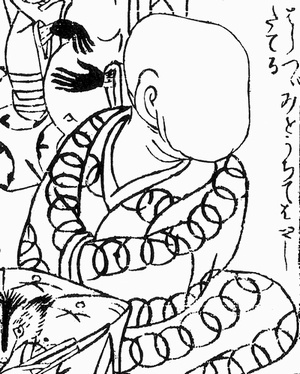
They appear as ordinary humans, except they have no face, and where the features were supposed to be, there is just a blank slate instead of a face. They are called faceless ghosts but actually, they are shapeshifters that take on the appearance of humans. Therefore they are considered more like a Yokai (Japanese monster/demon) rather than a classical Yurei (Ghost).

They will mostly be seen with their back to lure the human closer to them, often in disguise as a young woman. But when she turns she reveals that she has no face, and is just a blank canvas. No eyes, no mouth and no nose.

The Mythology Behind the Noppera-bō

In most cases, the Noppera-bō is not really a ghost, but a shapeshifter like Kitsune that looks like a fox or the Mujina that looks like a badger. They are mostly encountered on a lonely road, late at night where no one is there to help you. But are they dangerous? In most stories they work more as a prankster than something that would cause you actual harm.

They also have a habit of wearing a face they suddenly wipe away right in front of the humans they encounter. They also often work in teams to double scare their victims. Why do they do this? According to most legends, it is just to scare them for no reason. Or is there one?

Famous Legends of the Noppera-bō

There have been several encounters with the Noppera-bō passed down in legends and folklore, creating stories that were eventually written down.

The most famous story of a noppera-bō is “Mujina” in Lafcadio Hearn’s book Kwaidan: Stories and Studies of Strange Things. Hearn usually just used the animals in the stories he wrote down and is one of the reasons why there are so many that mistake the Mujina for the Noppera-bō.

There are other tales about Noppera-bō, from one about a young woman rescued from bandits by a mounted samurai whose face disappears, to the story of a noble heading out for a tryst with a courtesan, only to discover that she is being impersonated by a Noppera-bō .

The Noppera-bō and the Koi Pond

One day a lazy fisherman decides to fish in the imperial koi pond near the Heian-kyō palace, even though he was warned by his wife. She said that the pound was sacred, near a graveyard and therefore haunted.

The fisherman ignored her warnings and went to the pound. On the way he encounters another fisherman that also warns him about fishing at that exact spot. He ignores the warnings again and eventually reaches the pound, There he sees a beautiful young woman standing by the pound.

She also pleads with him, begging him not to fish at this place. When he ignores her however, she turns right in front of him. She wipes her face off, revealing nothing but a blank canvas.

He runs back home and is confronted by his wife. She tells him that he should have listened before she wipes her face off as well.

The Mujina of the Akasaka Road

A man is traveling alone through Akasaka on his way to Edo. There he encounters a young woman near Kunizaka hill. It is a remote place and she is crying with her head in her hands, all by herself. He tries to comfort the woman and asks if there is anything he can do for her.

When she turns to face him, she has no face.

The man runs away, terrified and comes across a man selling soba noodles. Relieved to see another human he stops to relax and calm down. As he tells his story to the soba vendor though, he strokes his face, and with it, his features. He was a Noppera-bō.

Modern Sightings of the Noppera-bō

Today the tales of the Noppera-bō are mostly just read about in old legends. But there are some reports that are from the more recent centuries as well.

Noppera-bō: faceless ghost) from the Bakemono Shiuchi Hyōbanki (妖怪仕内評判記) Date 1777.

Interestingly enough, there have been reports of sightings of this no face ghost. In modern time there is also sighted outside of Japan. Especially in Hawaii there have been cases were some have claimed to see the Noppera-bō. This is perhaps explained by the big population of Japanese that immigrated to Hawaii.

In May 19, 1959, a daily newspaper called Honolulu Advertiser published a rather strange report about a Noppera-bō. Reporter Bob Krauss wrote about a sighting of a mujina at the Waialae Drive-In Theater in Kahala.

According to the news article, a woman was seen combing her hair in the women’s restroom. When the witness came close enough, the mujina turned, revealing her blank face with no features. The witness was reported to have been admitted to the hospital for a nervous breakdown.

A Hawaiian historian, folklorist, and author named Glen Grant, dismissed this whole encounter in a radio interview he did 1981. After the interview though, someone called in claiming to be the witness, who gave more details on the event, including the previously unreported detail that the mujina in question had red hair. 

More like this

Newest Posts

References

The Warrior Countess Ghost of Eltz Castle

Advertisements

Few castles capture the European medieval feeling as Eltz Castle does. The long lasting Eltz family has always watched over the place, and even in death, there is an ax wielding countess in full armor, haunting the place. 

Steeped in history and mystery, Germany’s old castles are some of the most fascinating pieces of architecture in existence. These majestic fortresses are stories in themselves, filled with centuries-old legends and ghost stories. From dark fairy tales about princesses and knights to hidden passages and hidden rooms – these castles have something to captivate even the most jaded spirit! Every stone tells a tale of intrigue, from ancient battles to wicked plots. Without a doubt, a tour through Germany’s haunted old castles will leave you with an experience unlike any other.

The Eltz castle is definitely on that type of list and is a medieval castle on the top above the Moselle river in the Rhineland, west in Germany. The castle has belonged to the House of Eltz who have lived there since the 1100s and is one of the few castles that have never been destroyed and rebuilt. 

The armory and treasury in the Eltz Castle is considered to be one of the most important collections of its kind in Europe, and holds so much history. The castle is also said to hold more than one ghost, but the most well known of them is that of Countess Agnes of Eltz. 

The Countess Agnes

Agnes was the daughter of the 15th count of the Eltz Castle at the time. She was said to have been a beautiful girl and was promised to be the wife to the knight of Braunsberg. They had been engaged since they were children, and the time for a proper wedding and marriage were approaching. However, the Countess didn’t like her betrothed at all as he was a ruthless and mean man and far from a chivalry knight as they are often painted to be in fairytales. 

On the day of their engagement, they held an engagement party for the two families to come together. The knight of Braunsberg turned out to be even more despicable now as the marriage was more than just a distant future and Agnes refused to kiss him when he went for it as she was known to have a will of her own and out of a fight if she had to. 

According to some testaments, she usually hung out with her warrior brother more than her female companions. In some reports, it is said she only refused his advances, in others, she outright slapped him back when he forced himself onto her. This threw him into a rage and he declared a war on the entire family to repay for him being embarrassed in that manner. 

The Revenge of the Eltz

A few months passed, some say a whole year as the knight of Braunsberg waited, planned and came back for his revenge. And he returned to Eltz Castle with an army. He managed to lure the count and his knights out of the castle into an open battle, and some say he waited until the Count of Eltz went out hunting. 

Agnes remained in the castle together with only some servants, just as the knight of Braunsberg had planned. Alone in the castle the single Countess would be an easy target for the knight and his men. 

As he advanced with his soldiers to the Eltz Castle, he was one step closer to Agnes. The knight of Braunsberg had planned to take Agnes back with force, but had never anticipated that she would fight back the way she did. Just as she had done at the engagement party, she chose to hold her ground, but this time with an battle ax.  

She put on her brother’s armor and picked up weapons together with her servants. Together they fought side by side against the attackers. She is said to have had a battle-axe she wielded against her enemies. 

An arrow from the knight hit her and she died from the wound almost immediately. The servants who had loyally fought by her side were enraged and defeated the knight, killing him and ending the attack. 

The Ghost of the Countess

The bravery and steadfastness of the Countess is said to represent the Eltz family and their 800 years of history in the Eltz Castle. The ghost of Agnes is said to still linger inside of the castle. In her former room , the breastplate still hangs on the wall, with the hole from the arrow still visible. Her battle-axe also remained, protecting herself from the horrible knight to this day. 

She can be seen by the entrance of the Eltz Castle to this day, still wearing her suit of armor. It is also said that a phantom horseman is also riding outside of the gates, and the knight of Braunsberg is still seeking forgiveness for what he did. 

More like this

Newest Posts

References

Eltz Castle: A Fairy Tale in Stone – Discover Germany

The Haunted Halls of Paris’ Notre Dame Cathedral

Advertisements

Notre Dame Cathedral in Paris has been a site of intrigue and mystery for centuries— its haunted halls filled with stories that spark the imagination with ghosts on the roof and an ironworker that sold his soul to the Devil.

The Notre Dame Cathedral in Paris has captivated visitors for centuries with its stunning architecture, stirring religious artifacts, and gripping tales of mystery. People come to hear the bells ring to remind us about the hunchback of Notre Dame and see the frightening gargoyles along the roof.

Rumors of hauntings have further cemented the cathedral’s reputation as a supernatural hot-spot, leaving its visitors to ponder whether these rumors are just urban legends or based on fact.

History of the Notre Dame Cathedral

Noted by visitors from all across the world, the Notre Dame Cathedral’s captivating architecture has inspired many throughout the ages. Built of limestone and characterized by its two towers flanking its main entrance, it has stood tall for centuries as a testament to Gothic style. Its intricate carvings, majestic details, and mesmerizing sculptures carve a path for learning about the history that lies within its walls and contributes more to the speculation of paranormal activity.

From its construction in 1163 to its destruction by fire in 2019, the iconic cathedral has served as a beacon of faith for thousands of years and amassed tales that might never be fully unraveled. 

The Devil and the Ironworker

One of the most enduring tales of hauntings in Notre Dame is that of a mysterious ironworker who sold his soul to the devil in exchange for mastery over his craft. According to legend, the best ironworker, Biscornet was commissioned by the church to create the metal for the cathedrals door at the inauguration in 1345. 

The work was too much and he was in danger of not being done in time. But at the inauguration the metal work was done, there was only one problem. No matter how hard they tried, they were unable to open the door. 

Read also: The Bell Tower Goddess of Beijing

When they went to Biscornet to ask him about it, they found him hanged with a note warning them to spay holy water on the door to make them open. 

It was then believed that the ironworker had made a pact with the devil and sold his soul to get the work done in time for the opening day. 

The Women on the Notre Dame Roof

The creepy story about the demonic front door is not the only legend about the old cathedral. According to legend, there are also spotted some ghosts as well.

Two female ghosts haunt the roof of Notre-Dame cathedral were they can be seen between the grey gargoyles and gothic carved stone. Apparently you can see them walking on the cathedrals roof before either jumping off the roof or disappearing as soon as you see them. 

More like this

Newest Posts

References

Wessobrunn Abbey’s Ghosts

Advertisements

This I found, from men, as the foremost wisdom,
That neither earth there was, nor sky above;
Nor tree, nor hill there was.
Nor stars there were; nor shone the sun.
Nor moon-light there was, nor the salty sea.
Nothing there was: neither end, nor limit.
And there was the One Almighty God,
The mildest of men; and many were with them,
Godly Ghosts: and God the Holy.
From the Wessobrunn Prayer, the earliest known poetic works in Old High German from the 8th century.

The Benedictine Wessobrunn Abbey is steeped in history and legends. According to stories, the monastery has been haunted for centuries. From martyred monks to a disobedient nun, their ghosts still haunt the holy place. 

In 955, the Hungarians invaded part of today’s Germany and wanted to draw the German army out in the open and destroy it. 

On their way they came across the Wessobrunn Abbey and burned it all down to the ground. Three of the monks managed to flee to Andechs with their sacred relics they had kept in the Abbey. Abbot Thiente and six of his monks never got out alive though and suffered martyrdom, dying for their faith. 

After the defeat of the Hungarians on the Lechfeld, the spiritual life in Wessobrunn Abbey goes into a shadow period. Not much is known about when the first monks started coming back to the place after the sacking. 

Today there is a cross commemorating the martyrs just above Wessobrunn. Legend has it that the six dead monks have haunted the place ever since. 

The New Wessobrunn Abbey

It was not the last time the abbey was burnt down, and it was not the last time they decided to rebuild it either. Close to the site where the former Wessobrunn Abbey once stood, they built a new one, continuing the tradition of a monastery at the place. 

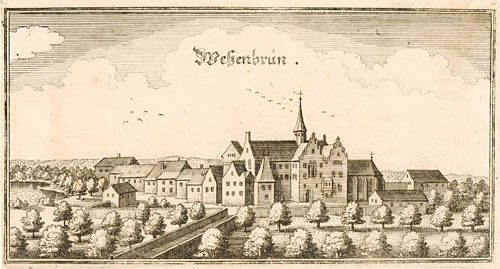
Wessobrunn Abbey: There have been a monastery at this place for a long time. Here a depiction of how it looked like in 1640, centuries after the ghosts started haunting the place.

The monastery of Wessobrunn, near Weilheim in Bavaria had been founded in the 8th century. From 1100 the community of male monks was joined by a sisterhood as well and it included both a community of nuns and monks. There are also legends about one of the nuns in the abbey haunting the place as a ghost. 

The Ghost of the Nun

According to this legend there was a nun in the 13th century who might have been a sister of Knight Joseph Diethalm von Wileyhin, the last Count of Weilheim. It is said she entered Wessobrunn Abbey after her brother’s death in 1211. 

But the way of the sisters is not for everyone and according to the stories, she broke one of her vows of the order. Nuns had to live by strict rules of Chastity, Poverty and Obedience. Exactly what type of vows she broke are unclear, but it scared her so that she ran off. She hid in an underground passage back at her family’s home in Göterlberg. 

Without seeing the sun ever again, she died shortly after and her remains were not found until many years had come and passed. From then on it is reported of sightseeings of a nun around the castle as well as her old abbey, crying in the hallways, still in her nuns’ habit. 

Up until the 1800s it was said that locals threw spruce cones into a hollow said to be the former corridor where the nun hid on her escape from the Wessobrunn Abbey to scare away the ghost. 

Today there are still a cluster of Benedictine nuns living after God’s words within the walls of the abbey, still seeing their long dead sister walking the halls. 

More like this

Newest Posts

References

Die spukende Nonne (Kloster… – Der Märchenonkel | Facebook

The Mystery of the Haunted House on Avenue Frochot

Advertisements

Something strange is lurking in the shadows at Avenue Frochot’s notorious Haunted House in Paris. After a Chambermaid was supposedly killed inside of the house, there have been strange things going on according to the neighbors as well as some of the owners.

Enter at your own risk, as the mysterious Haunted House on Avenue Frochot in Paris is filled with secrets and dark forces just waiting to be discovered. Prepare yourself for a spine-tingling adventure that could lead you to discover a hidden world of terror or uncover the truth about what lies deep within the walls of this haunted abode.

Avenue Frochot, Home to Paris’ rich and famous

Avenue Frochot is home to some of Paris’ most affluent and powerful citizens where they live behind the iron fences. It’s also the home of a centuries old mystery – the Haunted House on Avenue Frochot. 

Famous writers and artists of Paris’ bustling art scene have a history of passing through this beautiful avenue. The writers Alexandre Dumas and Victor Hugo lived here at one time and so did the painter Toulouse-Lautrec who had a studio at no. 15 . 

People like Théodore Chassériau was neighbors to Gustave Moreau and movie director Jean Renoir and jazz guitarist Django Reinhardt also spent time in the avenue. There were also people like the composer Victor Masse, who died inside number 1, and this place are now remembered to be very haunted. 

The Murdered Chambermaid

Although the whole avenue can look a little haunted with their glass stained windows, gargoyles on the front, there is one that is remembered as the most haunted mansion in Paris. 

But it isn’t one of the powerful, rich and famous men that owned the houses that are said to be haunting it. The ghost is said to be the ghost of a chambermaid who was brutally murdered inside of the house at the beginning of the 1900s. While she was working for the director of the Folies Bergère. One day, she was walking up the stairs when she was stabbed with a poker. Her killer was never caught, and she is haunting the place now even after death. 

It’s rumored that in the dead of night, eerie footsteps can be heard echoing off the walls of the Haunted House, even when it’s supposed to stand vacant. Some claim to have seen shadowy figures moving through the windows or even heard disembodied voices coming from within the walls. 

The Curse of Number 1

From then on, there is said to be a curse of the house that was built in 1839. Mathieu Galey was a theater critic that died in the house, paralyzed on his bed, the same place and same position that the composer Victor Massé was a hundred years before. 

Sylvie Vartan bought it in the 1970s, but fled from the house only a few days after moving in. Why? Well, many say it was because of the ghost haunting it. 

Today, there is a professor of medicine living there, refusing any paranormal claims the house has. So perhaps, the curse somehow got broken, and the chambermaid finally moved on. 

More like this

Newest Posts

References

La maison maléfique de Paris – Paris ZigZag | Insolite & Secret

The Lady in Green Haunting Château de Brissac

Advertisements

The tragic story of Château de Brissac and the murder of Charlotte de Brézé is a haunting one, but not a rare one as it houses the ghost of a woman murdered by her own husband and is forced to remain as a ghost.

It’s no secret that the Château de Brissac holds centuries of ghostly secrets in the Loire Valley. As one of the highest, grandest and oldest castles in France, it has been home to some of the most mysterious occurrences in all of Europe, including that of the Lady in Green. Unearth the tales about its ghosts, spirits and supernatural activity inside!

Discover the History of Château de Brissac

Château de Brissac has a long, colorful history that provides a backdrop for its resident spirits. Built in the 11th century by the Counts of Anjou but renovated in the 16th century, it stands as an impressive monument to France’s past. Its past inhabitants have left behind a tale of murder and misfortune – one that still haunts the castle today.

Rebuilt in 1611 after the French Wars of Religion, the architecture of the Château de Brissac is unlike any other in France. It features a unique combination of early Renaissance and classic Renaissance styles. It’s surrounded by seven towers and many turrets, windows, and balconies. 

Its main reception hall is one of the largest in Europe, measuring an impressive 80 feet long by 30 feet wide. The walls are actually double-walled to prevent fires and its design includes a mezzanine for extra storage space. Even its natural environment acts as a defensive wall against intruders since it’s located deep in dark forests!

The Ghost of the Green Lady or La Dame Verte

Many ghosts in French ghost story lore are said to be Dame Blanches or Ladies in White. And although the ghost of the Château de Brissac follows in the same pattern, the ghost is remembered and rumored to be a Lady in Green or La Dame Verte. 

The spirits of Château de Brissac are said to still linger in its walls, though sightings of them have become rarer over the years. 

Legends of La Dame Verte, the Green Lady, are some of the most popular tales told about the Château de Brissac. It is said that she was murdered by her own husband and now wanders the halls in search of vengeance. Some believe these stories are real, while others think they’re far-fetched. 

The Murder of Charlotte de Brézé

One of the reasons why Château de Brissac is so famously haunted is due to a tragic event that took place there. Charlotte de Brézé, the wife of Jacques de Breze and mistress of the castle, was mysteriously murdered inside one of its rooms. 

She was the illegitimate daughter of King Charles VII and his mistress, Agnes Sorel. She married Jacques de Breze, the lord of Château de Brissac in 1462 and had 5 children with him. The match was not a success however and Charlotte found the boring country life too much. 

Jacques de Breze suspected her of having an affair with another man, one of his huntsmen, Pierre de Lavergne. On the night of May 31 in 1477 she was murdered by her husband when he ran his sword through her as well as her lover because of his jealousy. 

She is said to haunt the tower room of the chapel of Château de Brissac, wearing her green dress and it is said that Jacques de Breze had to move out from the castle as he was tormented by her ghost. Years later, visitors still report hearing cries in the night at Château de Brissac, perhaps forever labeling it as one of France’s most haunted places!

More like this

Newest Posts

References

Charlotte de Brézé – Wikipedia

Château de Brissac – Wikipedia

The Ghost of the Green Lady Haunts this Spectacular French Chateau

The Lost Castle of Hollerwiese

Advertisements

The story of the lost castle of Hollerwiese on Mariahilfberg Hill is still a mystery to this day. It is said that the ghosts of those living in the castle are still seen on the meadow where the castle once stood. 

East of the city of Amberg in Bavarian Germany, there is a forest-covered ridge, reaching the top called Mariahilfberg Hill and has many mysterious legends surrounding it. The hilltop is crowned with a beautiful church, surrounded by a vast forest. Behind the church is a meadow known as the Hollerwiese or Hollow Meadow. 

It used to be an unwooded area up until the 1800s but is now covered with trees like the rest of the hill, hiding away the name and the legend. But according to legend, the ground sounds strangely hollow when you throw stones on it. 

Read Also: This is not the only mysterious forest in the world. Read about the haunted Romanian forest Hoia Baciu as well.

The Two Sisters

There is a legend that once there was a castle standing where two very wealthy sisters lived. They had also inherited the monastery in Amberg and the towns of Raigering and Neumühle from their father and had more than enough for both of them. 

Their wealth was stored in huge barrels and chests in the basement of the castle of Hollerwiese. The two sisters decided to share their wealth with each other and together they promised to help each other and live in harmony. 

One of the sisters was blind and the seeing sister was the one counting the money and keeping track of their fortune. In the beginning the blind sister trusted her sister without questions. 

The Church on the hill: Here you see Wallfahrtskirche Maria Hilf in Amberg. The lost castle and the meadow are supposed to be right behind it. //Source: Campiana/wikimedia

The seeing sister got greedy however and started to keep more and more to herself, giving her sister less. This was something the blind sister started to suspect. 

One day, the blind sister felt with her hand on the uneven stacks of gold and realized how her sister had deceived her. She cursed the castle, making it sink into the earth, still with both of them inside where none of them would have the opportunity to spend their fortune. 

In some versions of the legend, the blind one got out of Hollerwiese and spent the rest of her life in Neumühle. 

It is said that during holy celebrations many see the two sisters, sitting in the meadow, waving at those passing, reminding them about the barrels of gold that sits just underneath the surface. 

The Robber Baron

Another version of the story of the lost castle of Hollerwiese is about the thief that supposedly lived in the castle on the mountain. He stole goods from merchants and harvests from farmers. His daughter was grieved by their fathers criminal acts and tried to undo everything he did wrong by giving back to those he robbed. 

Often did she beg her father to stop, but he only laughed at her. And when she warned him about the Heavens vengeance, he only ignored her. But in the end, his greed was punished. 

Under a terrible thunderstorm the entire castle was washed away with all the residents. According to legend, there can still be sound remains of it under the meadow. 

Ever since that fateful night, a maiden in a white robe is seen sitting on a stone near the Hollerwiese on the evening of the solstice. Next to her is a black dog with a golden key in his mouth. This key is said to be able to open the treasure chambers of the sunken castle. 

More like this

Newest Posts

References

Downloads

Ghostly encounters transpire close to Grafenwoehr | Article | The United States Army

Die gruseligsten Orte in der Oberpfalz | Galaxy Amberg-Weiden

Ein seltsames Geschichtsbuch

The White Lady In Freihung

Advertisements

Stories about white ladies are plentiful in Europe, especially in Germany, and this particular The White Lady In Freihung ended up winning against the U.S Army. 

The main town in Freihung has a long history of Bavarian culture and the industry of mining lead. There is also a ghost said to be haunting the quaint little Bavarian town. 

This The White Lady In Freihung who is supposedly haunting the city center is said to be a middle aged woman who used the old mining tunnels to glide through, scaring people so much that in the end they destroyed the tunnels altogether. One hotel was greatly bothered by it and ended up taking matters into their own hands to rid themselves of the ghost. 

The Noble White Lady In Freihung

Who The White Lady In Freihung was is not certain, but there are tales that there used to be a castle at this place were it now was a hotel, although there are no direct historical proof of it. 

According to the legend, there lived a noble woman in this mysterious castle who died tragically, although her name and manner of death is not known as with the rest of the facts of the legend. 

According to reports, there are tales about seeing The White Lady In Freihung since 1625. Ghosts that are reported on wearing white are very common in ghost stories from Germany, especially if the ghost is linked to a noble house. This is the case with the haunting of the house of Hohenzollern as well as an example.

Read More:

She is said to haunt the grounds where the castle once stood. Archaeological findings of a castle named Freihung Castle, exist, but in another place than where the hotel is today, and it is unclear whether that has any connection at all.  

Today, most reports come from The Gasthaus Alte Post Hotel that they built over the underground mining tunnels. 

Weiße Frauen in Germanic Folklore

Why exactley is germanic ghost stories riddled with stories about the lady in white or as they are called in german, Weiße Frauen

In German legends and folklore the stories of the Weiße Frauen or White Women used to be a name meant to the elven-spirits and the stories of the light elves from pagan times and has probably evolved to refer to the female ghosts said to haunt castles, forests, homes and everywhere women have met a deadly end.

The Missing Castle: could the ghost of the Lady in White come from the remains of a supposed castle that used to stand in Freihung? Did the castle even exist?

Now the name is also used on women dying in grief, of sorrow or with an urge of revenge. It has spread throughout Europe and is an image with strong connotations, even today.

Even outside of Europe, there are tales about female ghosts clad in all white, from the Korean Virgin Ghosts to the vengeful spirit on the Onryo in Japan. 

The U.S Army on Ghost Hunt

The terror of The White Lady In Freihung got so bad that the local owners of the hotel called in the U.S troops to the The Gasthaus Alte Post Hotel where most sightseeings of her were reported. 

From 1945, the American army had a training center in Grafenwoehr, not far from Freihung. Elvis Presley was once stationed there. It is still used today as a training area by the army. 

The hotel owners were desperate by the 1970s and asked for their help and help they received. The army from the base came and used explosives to seal off all the tunnels under the hotel, hoping it would silence the ghost that supposedly walked underneath inside of the tunnels. 

The Haunting Continues

This was not enough to stop The White Lady In Freihung however, as she just finds new ways to move among the locals to scare them. And if we are to believe the stories, she is still wandering the streets in the city center of Freihung and showing herself in the rearview mirror of passing cars. 

More like this

Newest Posts

References

Featured image: Andrew McFarlane/Flickr

Ghostly encounters transpire close to Grafenwoehr | Article | The United States Army

The Ghost Monks at Lyseklosteret

Advertisements

In the ruins of Lyse Abbey there are rumors about the ghost monks haunting the ruins as well as a white lady roaming the roads around it. 

Lyse Abbey or Lyseklosteret is a former cistercian monastery that was built in Os, right outside of Bergen in Norway. There are only ruins of it today, as many of the monasteries were destroyed during the reformation from catholicism to protestantism in 1536. 

In 1578 stones were removed from the monastery and shipped to Denmark and used in Kronborg Castle, as Norway at the time was a colony in Denmark. The stones were also used to build the Rosenkrantz tower in Bergen.  

Ghost Monks

The monastery called  Coenobium Vallis Lucidae ( The Monastery in the Valley of Light) in Latin and named after the fjord, Lysefjorden (The Light Fjord) was founded by English monks in  From Fountain Abbey in North Yorkshire 1146 and the building was built over the next hundreds of years. They also brought fruits like apples to Hardanger, a place now renowned for its tasty apples. 

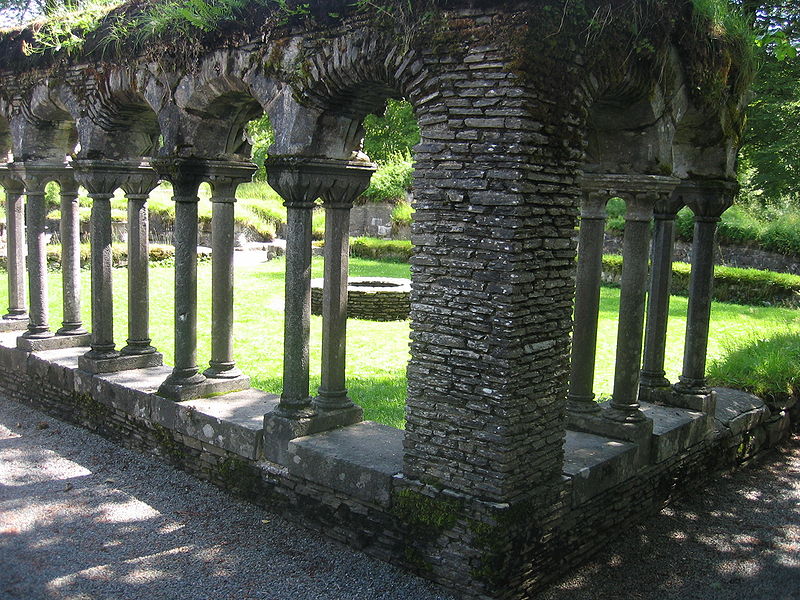
Lyse Abbey: The ruins of the old monastary is said to be haunted by ghost monks// source

It is said that the monks that first built the monastery never left and haunts the location even to this day. Many have reported about seeing cloaked silhouettes walking about as if they are working on the building. 

There have also been heard moans from the ruins of the once great monastery, especially on foggy nights, making people believe that the old ruins are haunted by Ghost Monks. 

Lyse Abbey is not the only place supposedly haunted by a monk in Norway. Read also about the ghost monk haunting Nidarosdommen. 

The White Lady In the Ruins

The ghost monks are however not the only ones that are rumored to haunt the place. Apparently there are stories about a “white lady” that walks around in the ruins of the monastery at night time and in the evening. According to legend there was a terrible accident involving a tractor in 1960 when she was bicycling along the road nearby and a tractor ran her over. 

It is unclear if it actually was an accident since it was her neighbor driving the tractor. Anyway, since then, there have been multiple reports about a woman in white around the weeks leading up to Christmas, often described as a white morning robe, wandering restless around the monastery, just looking straight ahead. 

More like this

Newest Posts

References

Her finner du spøkelser i Bergen – Let’s get lost

Lysekloster – Wikipedia

Kven er den skumle dama som skremmer vatnet av folk ved Lysekloster-ruinane?

The Hitchhiking Woman in White in Palavas-les-Flots

Advertisements

Explore Palavas-les-Flots, the haunted coastal city of France and learn about its mysterious supernatural phenomena of the ghost of a hitchhiking woman in white.

Palavas-les-Flots is a coastal city in France with a mysterious history. It has been the site of many supernatural experiences, including ghost sightings and numerous unexplained phenomena. Discover the spooky secrets behind this haunted city today!

Palavas-les-Flots is located within the historic Camargue region of France. A walk through the narrow, cobblestoned streets of Palavas-les-Flots will bring you past some of the city’s most mysterious and supernatural sites. 

Dame Blanches in French Folklore

One of the most pervasive supernatural mythologies associated with Palavas-les-Flots is that of the Dames blanches, or White Ladies. These mysterious figures are said to wander through fields and forests near the city, bringing with them both luck and misfortune to those who encounter them. 

They are known way back from myths and folklore as well and quite well spread in European ghost stories. Tales of these enigmatic creatures have been told for centuries, inspiring many artistic interpretations and offering a glimpse into a fantastic world beyond our own.

Today however they are most often told about in the deepest and oldest castles as ghost of ladies that died gruesome deaths, or along the road as women who died in a road accident of some sort. Very often they are mixed in with the urban legend of the hitchhiker. 

Dame Blanches in Palavas-les-Flots in 1981

Many people from the town claimed to have seen one of these mysterious White Ladies late at night near the water. They described the figure as incredibly tall, with flowing white robes and an otherworldly presence. 

There was one occurrence that became more famous than others. One night on May 20th, 1981 a group of four people aged 17 to 25 were taking their car for a trip to the sea. After a couple of drinks and a walk in the city they were headed back home around midnight. 

The people picked up a female hitchhiker in Palavas-les-Flots right before the Pont des Quatre Canals. 

She was dressed in a white raincoat and a scarf and looked to be in her fifties. She refused to speak and sat in the back of the car. Suddenly she would scream: Mind the turn, mind the turn , and the driver slows down and drives safely past the bend. 

Suddenly, the two passengers in the back scream out as the hitchhiker disappears into thin air. What exactly happened that night on the road in Palavas-les-Flots remains a mystery.

All the Woman in White Ghosts

While the White Ladies like the one told about from Palavas-les-Flots remain some of France’s most famous supernatural figures, and are hardly the only ones. Across the country, similar legends exist about white women in traditional northern French clothing lurking near places like cemeteries and abandoned houses at night. Whether or not these sightings actually occur is up to debate, but one thing remains certain: The mysterious stories will continue to captivate people for years to come.

More like this

Newest Posts

References

Le mystère de la Dame blanche – Palavas-les-Flots – Hérault – Midi-Pyrénées – Grand Sud Insolite et Secret