Tag Archives: cursed

The Bailiff of Brunegg: A Ghostly Hunt Through Swiss Snow and Sin

Advertisements

After taking his regime of terror too far on a stormy winter night, the Bailiff of Brunegg committed a sin so huge on a hunt that would send him into a haunted afterlife. 

High in the canton of Aargau, where the shadow of Brunegg Castle falls across the land, a legend as cold as the alpine wind lingers through generations. The castle was built on a hill at the edge of the Jura mountains in the 13th century, probably as part of the Habsburg border defences.

When dark clouds gather and the holy season approaches, those living near the castle in Brunegg village at the foot of Chäschtebärg mountain swear they hear a distant thundering, like hooves pounding across frozen earth, echoing from above. This is no storm. It is the Bailiff of Brunegg, rising once again for his eternal, damned hunt.

Read more: Check out all ghost stories from Switzerland

This grim tale, recorded in the 19th century by folklorist Ernst L. Rochholz in Swiss Legends from Aargau, paints a chilling portrait of cruelty, hubris, and supernatural justice. And even today, locals will tell you: when winter bites and silence settles heavy over the land, listen for the call of “Hop-Hop!” may come riding down the slopes.

The Tyrant of Brunegg Castle

The story begins in Brunegg Castle, an imposing stronghold nestled in the rural Swiss countryside. The castle, though quiet now, once housed a bailiff, or Landvogt as it is in German. During the medieval period in Switzerland, a bailiff, known in German as a “Vogt,” played a significant administrative and judicial role. The bailiff was typically a nobleman appointed by a higher authority, such as a king, duke, or lord.

Read More: Check out all haunted castles around the world

He was a man of power, authority, and, according to legend, unrepentant cruelty. One fateful winter, as snow blanketed the land and bitter cold pierced even the stone walls of his keep, the bailiff resolved to go hunting.

Schloss Brunegg: The Brunegg Castle on the hill overlooking the village below. This is where the ghost hunt is said to start on stormy winter nights. // Source

With a black horse, a pack of snarling hounds, and a retinue of servants, he charged into the deepening snowdrifts. The cold was so fierce, the breath of man and beast froze in the air. As the storm worsened, their feet froze, their limbs stiffening with frostbite.

But the bailiff, obsessed with his hunt and blinded by ego, would not turn back.

Murder for Warmth

As his followers collapsed around him, the bailiff stumbled upon a lone woodcutter working in the forest, perhaps hoping to survive the winter with what little firewood he could gather. Rather than ask for aid or offer mercy, the bailiff murdered the man outright, slicing him open and warming his frozen feet in the steaming belly of the corpse.

This gruesome act was the last straw.

As if in divine retribution, the sky darkened and a furious snowstorm erupted over Brunegg. Blinding winds swept through the forest and fields. The bailiff, his dogs, and his remaining attendants were never seen again. All were buried in snow, swallowed whole by the wrath of the mountain. The castle, high on its hill, stood silent. 

Each winter, the people at the foot of Brunegg Castle claim they hear phantom hooves galloping above. The hounds bark. The bailiff’s voice rings out with a sinister “Hop-Hop!” — urging his invisible dogs onward. But always, at the spot where the woodcutter died, the sound ceases.

It is said that the bailiff’s ghost is cursed to hunt eternally, never able to pass that spot, doomed to repeat the sins of his final ride through blizzard and blood.

A Tyrant Reborn: Gessler or Ghost?

Interestingly, well-read Swiss citizens have long drawn parallels between the Bailiff of Brunegg and another infamous tyrant of legend, Albrecht Gessler, the ruthless official from the tale of William Tell, the hero of Swiss independence. Albrecht Gessler, also known as Hermann, was a legendary 14th-century Habsburg bailiff at Altdorf, whose brutal rule led to the William Tell rebellion and the eventual independence of the Old Swiss Confederacy.

Gessler is the man who famously forced Tell to shoot an apple off his own son’s head — a story of oppression, defiance, and eventual retribution.

No sources that predate the earliest references to the Tell legend of the late 15th century refer to a bailiff Gessler in central Switzerland, and it is presumed that no such person existed. Some believe the Bailiff of Brunegg is Gessler, or at least a folkloric echo is another example of how abuse of power and cruelty earn not only rebellion but eternal punishment in Swiss legend. 

Newest Posts

References:

Brunegg Castle – Wikipedia

The Bailiff of Brunnegg: A Swiss Legend

Albrecht Gessler – Wikipedia

The Cursed Butcher Apprentice Haunting Rathausgasse in Bern

Advertisements

Said to be cursed after torturing a calf, the butcher apprentice is now cursed to haunt the old butcher street for eternity. For centuries now, people claim to have heard the horrid sound of hooves clattering on the ground as he was transformed into the very thing he tortured for fun.

The medieval streets of Bern’s Old Town have always held their share of mysteries, but few places are said to be as restless after dark as Rathausgasse, the street leading to the city’s historic town hall. As the sun sets behind the sandstone facades, something unseen seems to stir in the narrow alleys.

Read More: Check out all ghost stories from Switzerland

At night, residents and late-night wanderers report hearing the clatter of hooves on cobblestones, and the sharp crash of objects falling in empty rooms. Yet when they investigate, there are no horses, no wagons, and nothing disturbed. The streets remain eerily quiet. Perhaps it was the cursed butcher apprentice said to haunt the streets of Bern?

Rathausgasse: Die Berner Rathausgasse im Regen, 1992, Hotel Glocke. //Source: Christian Boss 1965/Wikimedia

Ghostly Encounters at Rathausgasse and the old Butcher’s Alley

From 1619 the upper section (now Rathausgasse) was known as Metzgergasse (Butcher’s Lane), while the lower section was first called Postgasse in 1798. The area was also a well known red light district. Throughout the 19th century, residents complained about the waste, smell and noise associated with the Schaal, an open hall of butcher’s stalls vis-à-vis the Simsonbrunnen in Kramgasse. The former slaughterhouse (No. 22) is a cultural asset of regional importance.

They claim the restless spirit of a cruel butcher’s apprentice roams these alleys in the dead of night known as the ghost of Rathausgasse or the Schaal Ghost. 

Centuries ago, this heartless apprentice is said to have brutally slaughtered a calf, not out of necessity, but for his own amusement.

As punishment for his senseless cruelty, his spirit was cursed to live on as a ghostly calf, forever roaming the alleys of the old town. It is said that the clatter of hooves heard in Rathausgasse belongs to him — a spectral animal seeking peace he can never find.

Hauntings at the Schlachthaus-Theater

The eerie activity in Bern isn’t confined to the streets, but also at the old slaughterhouse in Rathausgasse, now used as a theater and called the Schlachthaus-Theater. The theater is reportedly no stranger to the paranormal and staff and spectators claim to have heard the unmistakable sound of hooves clattering. 

But it is certainly not the only ghost said to haunt the halls of the theater. Actors and stagehands alike have whispered of unexplained noises, mysterious cold drafts, and fleeting shadows moving behind the curtains. Props fall for no reason, doors creak open, and some claim to hear faint, mournful voices when the house is empty.

One actress claims to have heard the sound of pearls clattering, like a pearl necklace ripping and falling to the floor. This went on all night, but she was unable to find any of them. 

Though no single spirit has been identified, many believe these hauntings are tied to the rich and often tumultuous history of the building and its past performers, some of whom perhaps never quite left the stage.

A City of Stories and Ghosts

In Bern, where every corner seems to guard a story from the past, such legends aren’t easily dismissed. Whether it’s the ghostly calf of Rathausgasse or the spirits lingering in the theater, these stories continue to be woven into the living fabric of the old city, kept alive by the ghost tours around the city and those looking for something haunted

Source: Nikolai Karaneschev/Wikimedia

And so, when the night falls and the streets of Bern grow quiet, some say it’s wise to listen for the faint sound of hooves… and remember that in this ancient city, the past never truly rests.

Newest Posts

References:

Hier spukt es: Unheimliche Orte in der Schweiz | WEB.DE

Die Geister, die sie riefen | Berner Zeitung

The Haunted Dark Entry Forest and the Cursed Dudleytown

Advertisements

You are not allowed to enter the Dark Entry Forest any longer. Inside there is the ghost town of Dudleytown, a town said to be so cursed it didn’t end well for any of the settlers. They turned mad, dead or even taken by the ‘creature of the forest’. 

Once this area was sacred ground for the Mohawk Nation, but this all changed after colonization and today it is known as a cursed place. The Dark Entry Forest in northwestern Connecticut, with its ominous sounding name, has an even worse reputation of being cursed and haunted, a forest of complete silence and darkness. 

Read More: Check out all ghost stories from USA

The Dark Entry Forest got its name because of how little sun that gets through the trees when the settlers first came here. Records claim that some parts were dark already around noon. The nearby mountains also cast long shadows, making the land look a little darker and scarier than it perhaps was. 

The Ghost of Dudleytown in Dark Entry Forest

Not only is the Dark Entry Forest itself creepy, but the remains of a now abandoned ghost town is also the source of many of the rumors. Dudleytown stands as a ghostly testament to a bygone era. 

Tucked away a few miles south of Cornwall Bridge, Dudleytown found its home in the Dark Entry Forest. The very name evokes images of shadowy paths and hidden secrets. Back then it was known as Owlsbury. It was never really a town, and at most, the settlement reached around 26 people living there. 

Read More: Check out all supposed Haunted Towns

Dudleytown, though never officially a town, etched its place in history in the early 1740s when settlers like Thomas Griffis and the Dudley family took root in this desolate corner of Cornwall. Barzillai Dudley and Abiel Dudley, among others, built a community that would soon become synonymous with tales of misfortune and spectral encounters. However, the town’s decline wasn’t a result of curses but rather practical challenges — distant water sources and unsuitable soil for cultivation. Or was it really?

As the town succumbed to abandonment sometime after the Civil War, its remnants, like cellar holes, became the silent witnesses to a past that refuses to be forgotten. Since 1924, Dark Entry Forest, Incorporated, has guarded the land, preserving it from the encroachment of curious onlookers and seekers of the supernatural.

Rumors and Curses of the Dudley Line

Legend has it that Dudleytown carries a curse, stemming from the supposed lineage of its founders, who were said to be descendants of the beheaded English nobleman, Edmund Dudley under the reign of Henry VII from 1485 to 1509. So what is the background for his curse?

Edmund Dudley: Edmund Dudley (c. 1462 – August 17, 1510) was an English figure during King Henry VII and thought to be the originator of the curse. Dudley’s involvement in a plot against the crown led to his arrest. In 1510, he was charged with treason and beheaded.

Edmund Dudley served in the council for King Henry VII, but when Henry VIII took over, he was imprisoned in the Tower of London and executed in 1510 charged with treason. His son John Dudley was the one trying to put his daughter in law, Lady Jane Grey on the throne but was also convicted of high treason and executed. 

According to this rumor on the internet, his family curse followed his descendant when they crossed the Atlantic and settled in Dudleytown. This was Edmund Dudley’s grandchild, Robert, Earl of Leicester, a favorite of Elizabeth I.

This is not the only ghost story this man is involved in though, most notably that he was haunted by his wife, Amy Robsart, who died under suspicious circumstances. Read more about it in The Hauntings of Amy Robsart in Wychwood Forest

There are also those that claim that a Dudley ancestor who was a judge, sentenced people to death for witchcraft. Apparently one of them was in fact a witch and cursed him and his entire family line to misfortune. This is actually a theory put forward by ghosthunter and demonologist, Ed Warren. 

This curse, whispered through generations, is blamed for everything from crop failures to tragic deaths within the village. This could also be because it was located on top of a hill, unsuitable for farming. 

However, historical scrutiny reveals no genealogical link to the English nobleman, and factual inconsistencies abound. Especially the legend about it being Robert, Earl of Leicester, that settled in America, as he never did. The true story lies hidden in the annals of time, obscured by the mists of myth and rumor. Although, there truly are many Dudley’s and historical records does not necessarily mean blood.

Vandalism and the Blair Witch Effect on Dark Entry Forest

Tales of the Dark Entry Forest being haunted can be traced back to the 80s, at least, perhaps even further back as some say people talked about it, even in the 1940s. 

What we know is that in 1926, Edward C. Starr published two pages about Dudleytown residents in his History of Cornwall. Fictitious most of it it seems. It didn’t garner much attention at the time, but in the early 1970s, the story got picked up by Ed and Lorraine Warren, a couple from Connecticut and self declared demonologists, most famous for investigating the Amityville house. 

They used the story in a videotaped Halloween special where they said the town was demonically possessed and controlled by something terrifying. 

As the 1999 film, The Blair Witch Project, brought haunted forests into the spotlight, Dudleytown found itself thrust into the public eye once more together with Dark Entry Forest. A surge of interest, fueled by rumors of curses and ghostly apparitions, led to a rise in vandalism. Despite the best efforts of local authorities and the closure of the village site, Dudleytown became a magnet for those seeking a brush with the supernatural.

Blair Witch Project: A horror film released in 1999. Directed by Daniel Myrick and Eduardo Sánchez, the movie employs the found-footage style to tell the story of three student filmmakers who venture into the Black Hills near Burkittsville, Maryland, to document the legend of the Blair Witch. The film gained immense popularity for its innovative approach, creating a sense of realism and fear through shaky camera work and minimalist effects. Despite its modest budget, “The Blair Witch Project” became a massive success and left a lasting impact on the horror genre. It in turn was said to have been inspired by: The Legend of the Witch Moll Dyer

Haunting and Cursed Going on

The legend is that, in addition to the family curse, was plagued by ghosts as well as demonic forces. Even before The Blair Witch Project was released, the New York Times dubbed the town Connecticut favorite ghost town and the village of the damned

Strange Creatures of the Dark Entry Forest

One of the legends coming from the Dark Forest, is about the mysterious and strange creatures coming to the settlers from time to time. What is it, and if the villagers really feared this has never really been clear.

Read More: Check out all ghost stories from Haunted Forests

One of those that talked about this was William Tanner who was said to have gone insane and talked about that there were these strange creatures that came out from the woods at night. This especially happened when a Gershon Hollister was murdered in his barn in 1792. Or was it that he fell from the rafters? It is also worth mentioning that he was said to have been slightly demented in his old age, said to have died at 104. 

It is said though the ghost of Gershon Hollister is haunting the settlement, appearing as a shadow, calling out for help. 

Insanity Plaguing the Villagers

There are many cases where insanity was sort of a confirmation that Dudleytown was cursed. Like with the Revolutionary War General, Herman Swift that lived close to Dudleytown. His wife, Sarah Faye was killed when she was struck by lightning standing on her porch. It is said he went insane and died soon after. 

Even after the original Dudleytown had died out, cases of insanity continued to haunt the Dark Entry Forest. In 1900 a Dr. William Clarke came to the Dark Entry Forest and purchased land that included Dudleytown. There he built a summer home where he and his wife Harriet Bank Clark visited on weekends and summers. 

In 1918 however, Dr. Clark had to go to New York for a medical emergency and left his wife in the house. He didn’t stay long, and after 36 hours, he was back, but it was already too late. According to the stories he came home and found his wife being insane, talking about strange creatures coming out of the Dark Entry Forest. 

Not long after she committed suicide. Although it is known that she suffered from a chronic illness, most likely a mental illness that is, or perhaps such a painful one that she couldn’t take it anymore.. 

The Plague and Curse

Although we know today that different plagues and illnesses were common in these times, it was also speculated that they were under some sort of curse. In Dudleytown there was a house built by Abiel Dudley who had died after he went insane, or perhaps old and demented. Some claim to have seen his ghost, sitting on the porch of the ruins of his former house. 

In 1759, Nathaniel Carter moved into the house in Dark Entry Forest. A plague took most of his family and they moved from Dark Entry Forest to the Delaware wilderness in the natives territory and they were attacked where they killed Nathaniel, his wife and their infant child. Their three other children were kidnapped and brought to Canada. Some say that they took the Dudley curse with them just as it had followed from England. Some say you can see and hear their ghosts in their former house today. 

The three other children did fine though as the two daughters were ransomed. The son, David Carted stayed with the natives, married one of them and returned to the States to get his education. He ended up as an editor of a newspaper as well as a justice on the Supreme Court. 

The Vanished Residents of Dudleytown

There were also tales that residents vanished under mysterious circumstances into Dark Entry Forest. Some of these were the Brophy family that still lived in Dudleytown in 1901 when most had already left. 

His wife had died of consumption and he was left with their two children. One day they suddenly went missing, and went into the Dark Entry Forest just after their mothers funeral. Could they have ran off? Yes, as they had been accused of theft. They were however never found again. Shortly after their house burnt to the ground and after this, Brophy himself vanished into the forest just as his children had. He was also never seen again. 

What happened, we don’t know. Did he search for his children? Was he taken by the creature of the forest just like his kids? Perhaps he went on the lamb after burning his house down?

Screams and The Devil’s Breath

There are also more vague and general things that are deemed as strange by many. It is said that dogs refuse to enter the woods around these parts, or become aggressive. Strange animal injuries and going missing, only to never return or return completely traumatized. 

People claim to have heard screams coming from the woods as well as whispers in the night. They also heard heavy footsteps, but when turning around, there was no one there. 

The Devil’s breath is also a thing said to happen in the Dark Entry Forest, where a mystic mist comes from the forest, perhaps even poisonous. This could be from the time in the early 1800s though, when Dudleytown was a mining community.

If not because of a family curse, could it be because they disturbed the natives sacred land, thought to be a burial ground? No one can say for sure, but the legends surrounding Dudleytown and Dark Entry Forest certainly persists.

The Forbidden Dark Entry Forest

Dudleytown, veiled in the shadows of the Dark Entry Forest, remains a spectral enigma that captivates the imagination. The locals talk about it all being nonsense, as well as there are locals that claim there is something going on in the woods.  

Today the woods are closed off and you can suffer a huge fine of around 100 dollars if you enter it and police claim they find trespassers many times every month, mostly people in search of ghosts. So because of this, we have to fear the rumors of it from a distance. Perhaps just as well. 

More like this

Newest Posts

References:

THE VIEW FROM: DUDLEYTOWN; A Hamlet That Can’t Get Rid of Its Ghosts – The New York Times 

Dudleytown, Connecticut – Wikipedia 

“curse” on Dudleytown 

The Dudleytown Curse, Connecticut’s Village of the Damned – New England Historical Society 

10 Creepy Secrets about the Town That Never Existed – Listverse 

The Drummer of Tedworth

Advertisements

The story of the Drummer of Tedworth has often been called the first poltergeist in England that has been reported on in writing and the mystery surrounding it stands to this day. 

In March 1661 a man named John Mompesson sued a drummer called William Drury whom he meant made money under false pretenses. Drury was a traveling showman, drumming, juggling, dancing and other forms of “hocus pocus” up and down the entire country. 

Mompesson visited Ludgershall in Wiltshire when he met Drury who banged his drums and begged for money, annoying the people in the town so much that Mompesson took the case into his own hands and turned him in.  

He accused Drury for having false documents that allowed him to drum for cash and decided to sue him. Mompesson won the trial and Drury got his drum confiscated, something that Mompesson would regret dearly after. 

Drury was believed to be a sketchy type of man according to the finer folks in town. He was thought to be hanging out with a group of gypsies and there were rumors that he was involved in witchcraft. Something he would be forever remembered as, long after the drumming ended. 

The Haunted Drumming

Mompesson traveled back home and something strange awaited him there. The drum that were confiscated from Drury, ended up at his doorsteps the following April that year. It was then the strange banging noise started to haunt him. During the night he kept hearing the sound of drums and Mompesson was certain it was witchcraft from Drury. 

The drumming came from everywhere, from the walls, the ground, even from the roof. One night, Mompesson drew his pistol, chasing the sound like a madman, sleep deprived and scared of the haunting of his house. 

“The noise of thumping and drumming was very frequent, usually five nights together, and then it would intermit three. It was on the outside of the house, which is most of it board. It constantly came as they were going to sleep, whether early or late. After a month’s disturbance without, it came into the room where the drum lay, four or five nights in seven, within half an hour after they were in bed, continuing almost two. The sign of it, just before it came was … an hurling in the air above the house, and at its going off, the beating of a drum like that at the breaking up of a guard….”

A month passed and the sound of drums seemed to move from the room where the drum was placed into the childrens bedroom. The bedframes of the childrens bed were beaten, and they kept hearing a scratching sound from under their beds, leaving them shaken and frightened in their beds. 

The Drummer of Tedworth: The devil and the drum, from the frontispiece to the third edition of Saducismus Triumphatus (1700).

The only break the family got from the alleged poltergeist was when Monpessons wife was in labor and the house stopped its drumming beat as she gave birth. But afterwards it came back, even more than before. 

It wasn’t just the drumming sound that haunted the house. Lights kept moving around without anybody touching them, staff and family members alike were lifted from their beds, and weird smells of sulfur came from everywhere and nowhere. And it wasn’t even only at nighttime the hauntings occurred either, but even in broad daylight. 

One time a servant claimed to have seen a moving board in the room. He asked the spirit to pass it to him, and the spirit listened. Then, they continued to throw it between them, back and forward around 20 times until the servant stopped after his master ordered him to. 

This continued for the next two years and the sound of drumming grew louder, not only confined to the house, but nearby villagers were woken from the spectacle from the house as well. And even visits from a priest didn’t help with the hauntings in the long run. 

The Drummer William Drury

So what happened to the original drummer, William Drury? He was arrested and sentenced to deportation in 1662. He confessed to the crimes of tormenting Mompesson and his family and being behind the paranormal stuff happening. But before he was deported and could be charged for any more, he escaped deportation and fled. 

But in 1604, he was brought back to court, this time because of witchcraft were he would once again be trialed as The Drummer of Tedworth. He was acquitted because of the lack of evidence, but because of a prior pig stealing debacle he was sentenced for theft and sent to the American colonies, never to be heard of again. 

The Book of Witchcraft

It was not only Mompesson himself that heard these drumming noises, but also his visitors claimed to have been bothered by the sounds. 

Joseph Glanvil published in 1681 a book of witchcraft after his death called Saducismus Triumphatus where the story of the Drummer of Tedworth is detailed. This was a book where he affirmed the existence of witches and dark magic and looked at any skepticism of this like blasphemy. It is also said that this particular book was a big inspiration and influenced the people during the Salem witch trials. 

In 1661 he visited Mompesson’s house in Tedworth in Wiltshire, England and heard the sounds himself. He also claimed to have heard additional scratching noises under a bed in the children’s room. 

Speculations of Fraud

There have been countless people that have tried to debunk the story of The Drummer of Tedworth since it was first heard of. Charles Mackay wrote about it all being a trick of the mind in Extraordinary Popular Delusions and the Madness of Crowds in 1841. Instead of it being a poltergeist at work it was simply Mompesson who was easily deceived by someone holding a grudge, something Drury himself confessed to. 

 In 1881 the American skeptic Amos Norton Craft said this about The Drummer of Tedworth: 

We are to remember also, that the house of Mr. Mompesson contained several servants who doubtless possessed a good degree of human nature; Mr. Mompesson had caused the arrest and imprisonment of a member of a band of gypsies, who were intensely enraged at him

Even Mompesson’s own children were believed to be behind the drumming noises and the culprit of The Drummer of Tedworth, especially his ten year old daughter as much of the mysterious sound came from her bedroom. 

“Mr. Mompesson perceiving that it so much persecuted the little children, he lodged them at a neighbor’s house, taking his eldest daughter, who was about ten years of age, into his own chamber, where it had not been a month before. As soon as she was in bed, the disturbance began there again, continuing three weeks drumming, and making other noises, and it was observed that it would exactly answer in drumming anything that was beaten or called for. After this, the house where the children were lodged out, happening to be full of strangers, they were taken home, and no disturbance having been known in the parlor, they were lodged there, where also their persecutor found them, but then only plucked them by the hair and night clothes without any other disturbance….

The Last Drumming Sound

So how did it all end for the family? Apparently it ended after Drury was sent away to the colonies and the drum burnt to a crisp. And the house, after two years of intense drumming by whoever the The Drummer of Tedworth was, go quiet again. 

More like this

Newest Posts

References

Drummer of Tedworth – Wikipedia 

The Drummer of Tedworth: Britain’s First Poltergeist – Burials & Beyond

The Drummer of Tedworth: a Halloween tale of witchcraft, demons and an extremely noisy ghost | Special Collections and Archives / Casgliadau Arbennig ac Archifau

https://www.jstor.org/stable/1917046?seq=1#page_scan_tab_contents

Drummer of Tedworth | Encyclopedia.com

Curse Of The Demon Drummer Of Tedworth | Spooky Isles

The Mystery of the Haunted House on Avenue Frochot

Advertisements

Something strange is lurking in the shadows at Avenue Frochot’s notorious Haunted House in Paris. After a Chambermaid was supposedly killed inside of the house, there have been strange things going on according to the neighbors as well as some of the owners.

Enter at your own risk, as the mysterious Haunted House on Avenue Frochot in Paris is filled with secrets and dark forces just waiting to be discovered. Prepare yourself for a spine-tingling adventure that could lead you to discover a hidden world of terror or uncover the truth about what lies deep within the walls of this haunted abode.

Avenue Frochot, Home to Paris’ rich and famous

Avenue Frochot is home to some of Paris’ most affluent and powerful citizens where they live behind the iron fences. It’s also the home of a centuries old mystery – the Haunted House on Avenue Frochot. 

Famous writers and artists of Paris’ bustling art scene have a history of passing through this beautiful avenue. The writers Alexandre Dumas and Victor Hugo lived here at one time and so did the painter Toulouse-Lautrec who had a studio at no. 15 . 

People like Théodore Chassériau was neighbors to Gustave Moreau and movie director Jean Renoir and jazz guitarist Django Reinhardt also spent time in the avenue. There were also people like the composer Victor Masse, who died inside number 1, and this place are now remembered to be very haunted. 

The Murdered Chambermaid

Although the whole avenue can look a little haunted with their glass stained windows, gargoyles on the front, there is one that is remembered as the most haunted mansion in Paris. 

But it isn’t one of the powerful, rich and famous men that owned the houses that are said to be haunting it. The ghost is said to be the ghost of a chambermaid who was brutally murdered inside of the house at the beginning of the 1900s. While she was working for the director of the Folies Bergère. One day, she was walking up the stairs when she was stabbed with a poker. Her killer was never caught, and she is haunting the place now even after death. 

It’s rumored that in the dead of night, eerie footsteps can be heard echoing off the walls of the Haunted House, even when it’s supposed to stand vacant. Some claim to have seen shadowy figures moving through the windows or even heard disembodied voices coming from within the walls. 

The Curse of Number 1

From then on, there is said to be a curse of the house that was built in 1839. Mathieu Galey was a theater critic that died in the house, paralyzed on his bed, the same place and same position that the composer Victor Massé was a hundred years before. 

Sylvie Vartan bought it in the 1970s, but fled from the house only a few days after moving in. Why? Well, many say it was because of the ghost haunting it. 

Today, there is a professor of medicine living there, refusing any paranormal claims the house has. So perhaps, the curse somehow got broken, and the chambermaid finally moved on. 

More like this

Newest Posts

References

La maison maléfique de Paris – Paris ZigZag | Insolite & Secret

Tomino’s Hell — The Cursed Poem

Advertisements

The supposedly cursed poem known as Tomino’s Hell has been a famous creepypasta for a long time and an urban legend before that. But what is the truth behind the dark and twisted poem?

A popular Japanese urban legend is about Tomino’s Hell,トミノの地獄. It is a poem that is said you should only read in your mind, never out loud. It follows the tradition of Bloody Mary and Candyman that words hold power, and sometimes it can hurt like hell. 

It is said that if you dare read Tomino’s Hell out loud, a certain and agonizing death will follow the reader as the poem is said to have a curse lingering between the lines.

The Legend Passed Around About the Cursed Poem

But who created this supposedly cursed poem that are said to have even killed people?

The legend is that Tomino, often thought to be a boy, lived in Japan and wrote the poem. He was a sickly child and sat in a wheelchair. The supposedly cursed poem is pretty gruesome at some parts and his parents didn’t approve of it at all when they found it. Because of the hellish content of the poem, they locked Tomino in the cellar, not feeding him and he eventually died of bronchitis. 

The poem was from then on cursed with Tomino’s spirit and anger imprinted in every word, ready to come to life when reading it out loud. 

The Origin of the Tomino’s Hell Poem

This is obviously just the legend that is created of the legend of the legend. In fact we do know quite a bit about the actual writer of the poem, and he wasn’t thrown in a cellar to die because his parents thought the poem was too grim. 

The Writer: Yaso Saijō, 西條 八十 is the original writer of Tomino’s Hell that he wrote in 1919.

The poem is originally written by Yaso Saijō, 西條 八十, when he was 26 years old in a  collection of poems in 1919 called Sakin or Gold Dust. He was a university professor that studied at Sorbonne in France and had a long literary career.

Although most of his work was really geared towards children, making nursery rhymes and was recognised as one of the three great nursery rhymes of the Taisho period. He was for example the one introducing Alice in Wonderland in Japan, making Tomino’s Hell a work not like anything else from Yaso Saijō. Because this particular poem stands out as much darker and twisted than the average poem you read out loud. 

Read More: Check out all of our ghost stories and urban legends from Japan

There are many theories about the poem and why it was created in the first place. Many say that Yaso Saijō wrote the poem after the death of a family member as a way to express the feeling of sorrow and despair. His original intent is now lost though, and we are only left with his written words and the legend they created.

How could this poem from the turn of the century ended up being seen as a cursed poem many decades later? There is not a specific thing that is said to happen, but most often comes with a warning that ‘bad things will happen’. Most commonly, you are supposedly dragged to hell. 

What is the Cursed Poem about?

If you are curious about the whole poem of Tomino’s Hell, a translation into English is included at the end. but in summary it seems to tell the story of a little boy and his journey into hell. There are also many references to war and a descent into darkness and loneliness. 

Tomino’s Hell: The painting commonly associated with the poem ‘Tomino’s Hell’ was not created with this specific poem in mind. It has been attributed to an artist named Yuko Tatsushima and was supposedly designed to represent death or suicide but not as they relate to the poem. The painting is called ‘I don’t want to be a bride anymore.’

The Deadly Poem

The effects of the cursed poem are many, but alas, not well documented, but it is often accidents, loss of their voice, illness and in the worst scenarios, death. A young girl supposedly died a few moments after reading the poem out loud, but when, who she was, is never discussed. This also goes for the rumors of the university students dying after reading it also. The question is, did anything happen to those reading the poem?

Read Also: Check out more Japanese Urban Legends like Kuchisake-onna – The Urban Legend of the Slit-Mouthed Woman or The Haunted Inunaki Village in Japan

What we do know is that a man made a movie called To Die in the Countryside ( 田園に死す, Den-en ni shisu) in 1974, it was much based on the poem of Tomino’s Hell. The movie itself is an eerie and confusing experience of adolescence much like the poem. The writer and director Terayama Shuji ( 寺山 修司) died in 1983 and people have since speculated that it was because of the coursed poem.

Pastoral: To Die in the Countryside: Poster from the movie. Also known as Pastoral Hide and Seek, is a 1974 Japanese drama movie with a film-within-film structure, about a young man battling with the film he is trying to finish like a reimagination of his adolescence.

Although we know that Terayama died early at 47, nine years after the movie came out, he died of a liver complication of a liver disease that he had been battling since he was a teenager. And he didn’t even quote the poem in his movie, but was only influenced. Is that enough to invoke the curse? 

When we got to the 80s, there was a trend of filming when friends read the poem out loud. This also became a trend in the early 2000s across forums of users writing that they were going to read the poem out loud, but then never came back to post how it went. 

The poem was read out loud many times throughout the writer’s lifetime without it doing anything to the writer who lived a long life. So according to the legend lore, the writer himself can read Tomino’s Hell out loud without the backlash of the curse?

It wasn’t until by Yomata Inuhiko, 四方田 犬彦, in his book of poem The Heart is Like A Rolling Stone, 心は転がる石のように, he called out the poem in 2004. Yomota claimed that the reader would suffer a terrible fate, but rumors about the dead director and the students were already whispered about under the surface. And at the dawn of the internet, the poem got resurrected and was sent frequently in forums with the curse attached to it. 

Tomino’s Hell Translated to English

Perhaps the feeling of sickness from reading Tomino’s Hell is something we can attribute more to the poem itself and the eerily feeling it leaves you with. And it perhaps isn’t the power of a curse people feel the sickness off, but the power of word. 

The English translation of the poem has been mostly done by people just trying to get the point across. However, when translated and spread on a global scale, it often shows up in a vacuum without any history of both the real writer and the history from the previous decades before the internet. But a writer and translator David Bowles did a good translation of the disturbing poem that weren’t just a simple google translate. Read the entirety with his more in depth notes here.

Tomino’s Hell

Elder sister vomits blood
younger sister’s breathing fire
while sweet little Tomino
just spits up the jewels.

All alone does Tomino
go falling into that hell,
a hell of utter darkness,
without even flowers.

Is Tomino’s big sister
the one who whips him?
The purpose of the scourging
hangs dark in his mind.

Lashing and thrashing him, ah!
But never quite shattering.
One sure path to Avici,
the eternal hell.

Into that blackest of hells
guide him now, I pray—
to the golden sheep,
to the nightingale.

How much did he put
in that leather pouch
to prepare for his trek to
the eternal hell?

Spring is coming
to the valley, to the wood,
to the spiraling chasms
of the blackest hell.

The nightingale in her cage,
the sheep aboard the wagon,
and tears well up in the eyes
of sweet little Tomino.

Sing, o nightingale,
in the vast, misty forest—
he screams he only misses
his little sister.

His wailing desperation
echoes throughout hell—
a fox peony
opens its golden petals.

Down past the seven mountains
and seven rivers of hell—
the solitary journey
of sweet little Tomino.

If in this hell they be found,
may they then come to me, please,
those sharp spikes of punishment
from Needle Mountain.

Not just on some empty whim
Is flesh pierced with blood-red pins:
they serve as hellish signposts
for sweet little Tomino.

—translated by David Bowles
June 29, 2014

The Enduring Legend of Tomino’s Hell

In conclusion, the legend of Tomino’s Hell is a captivating tale that has captured the imaginations of many. While the origins of the curse surrounding the poem are unclear, it’s evident that the eerie and dark nature of the verses has contributed to its status as a famous creepypasta and urban legend.

Whether the curse is real or simply a product of superstition, one thing is certain: Tomino’s Hell continues to intrigue and haunt those who come across it. The power of words and their ability to evoke intense emotions and even fear is a theme that resonates throughout this chilling cursed poem.

So, if you dare, immerse yourself in the dread of Tomino’s Hell, but remember to tread cautiously, for you never know what secrets and curses may be unleashed when the words are spoken aloud.

More like this

Newest Posts

References

トミノの地獄 – アニヲタWiki(仮) – atwiki(アットウィキ) 

https://indie88.com/tominos-hell-the-cursed-japanese-poem-you-shouldnt-read-out-loud/

“Tomino’s Hell” by Saijō Yaso – Japanese

Japanese Urban Legends: Tomino’s Hell | Kowabana 

Tomino’s Hell by Saijō Yaso – Poem Analysis

The Joelma Building and the Ghosts of the 13 Souls

Advertisements

In the 70s, a deadly fire broke out at the Joelma Building in São Paulo, Brasil, killing many people. Later, the building is reported haunted, and the ghosts of the victims are crying for help from beyond the grave.

In downtown São Paulo in the southeast region in Brazil, a building stands that were the site of one of the most horrific fires that the world ever saw. Today the building has been renamed and is called Edifício Praça da Bandeira, but it is probably most known by its former name, the Joelma Building. 

The 25-story Joelma Building is famous because of a fire that started in the building in 1974 that took the life of at least 179 people, and is the world’s worst skyscraper fire in history besides the World Trade Center fire by death toll. 

The Death Fire of the Joelma Building

On a Friday the 1. February at Avenida 9 de Julho, 225, an air conditioning overheated on the twelfth floor in the morning. The building was used as an office building so at this particular time, the working day had started. The banking company Banco Crefisul S/A that worked in the building had 756 employees present.

The Fire: Although the Joelma Building didn’t collapse, the whole building was swallowed by the flames.

The Joelma Building was a brand new building and completed in 1971 and it shouldn’t have any old or rusty things that would malfunction like this. The reason why the air conditioning overheated was that it used the wrong plug that it needed. Also, the materials that had been used to build the interior of wood, the fabrics and such were very flammable, and in no less than 20 minutes, the entire building was engulfed in flames that trapped the people inside. 

There were no emergency lights, fire exits or fire sprinkler systems that would help the people trapped by the fire and smoke inside, and after the tragedy, it put a new focus of how important standard things like this was in a building. But for those trapped inside of the fiery hell, it was all too late.

There was a chain of events that led to the big catastrophe the death fire turned out to be. The firefighters came only 20 minutes after the fire started, but didn’t have proper equipment with them to put out the flames in the tall building. The ladders they had could only reach up to 14 floors of the building with 25 floors, and those above were left to their own devices.

The fire in the Joelma Building turned into a battle of survival. They tried to rescue the people on the upper floors by helicopter as well, but didn’t manage to get close enough to get them safely out.

By the time the fire was extinguished, over 300 people were injured, and they estimate that between 179 to 189 people had lost their lives. 

The 13 Souls in the Elevator

40 people tried to jump out of the Joelma Building when they realized they wouldn’t manage to get down on the lower floors. Of these jumper there were none survivors because of the height of the building. The only way to escape was by getting down to the lower floors, but with no emergency exits, the people inside found themselves trapped. 

13 people tried to escape by using the elevators of the building that was at the time still working. Although not recommended to use under fire, they were desperate enough to try to escape. The plan didn’t work though and the elevator stopped on its way down and trapped them inside where they died of suffocation as the flames were closing in on them.

The bodies were badly hurt by the fire and it even took time to make the carnage of huddled corpses into 13 individuals. They never managed to identify the 13 souls and today they are buried in anonymous graves at the Vila Alpina Cemetery. 

Haunting the Cemetery

These 13 souls have since been suspected of still lingering in this world as ghosts. At the site of the mass grave of the 13 unidentified bodies there were reports of moaning and cries for help for those that in their dying moment, never got rescued. 

The Thirteen Unknown Graves: The graves of the 13 souls that were never identified in the Joelma Building fire. Visitors comes and puts glasses of water for them. // Photo: Wikimedia

The cemetery caretaker at the time, Luiz Nunez was so bothered by this and became desperate to stop the noise of their cries and poured water over the graves. This act of extinguishing an eternal fire he meant helped to quiet them, at least for one day. 

From that day, visitors started leaving a glass of water on the grave instead of the usual flowers. 

The Haunting at the Joelma Building

Back at the building where this tragedy happened, the reports of the paranormal continue to this day as well. People experienced strange phenomena where the cars in the parking lot outside of the Joelma Building would suddenly start blinking with their lights without anyone turning them on, and the inside of the building was also haunted. 

It is said that every floor above the 15th floor is haunted, where the firefighters ladders didn’t reach. People keep seeing shadows in the stairways and experience malfunctioning elevators. Fire alarms going off with no fire is also some of the activity that is apparently going on there. 

Curiously enough It is not the only tragedy that happened on the site of where the building stands either. And the place where the building was built has been called cursed land because of its history.

Cursed Land

In 1948, a chemistry professor named Paulo Camargo lived in a house at the same place where the Joelma Building would be built with his mother and two sisters. They had a lot of illness in their family that took a lot of energy for Camargo that had to take care of them by himself. It didn’t get better when Camargo found a girlfriend named Isaltina dos Amaros that his mother didn’t approve of. 

It all ended with Camargo killing his entire family by shooting them and throwing them down a well. They never really found a clear motive as to why he ended up doing what he did. And they never got a chance to dig further either. When the police came and discovered the well, Camargo killed himself with the very gun he had used on his family.  

When they built the Joelma building it is said they changed the entrance so the address wouldn’t be the same as the murderers. But the place was still the same and some even called it cursed land because of the place.

Even before the gruesome murders in 1948, the place was believed to be a ‘pelourinho’, a public place were they would take slaves and criminals. They would tie them up and torture them, and at times, also kill them for the public up to the abolition of slavery in 1888.  

Purified by a Buddhist Monk

Today the Joelma Building is once again renamed and something stands on the top of a past buried tragedy. After the fire the Joelma Building closed for 4 years for reconstruction. It was renamed Edifício Praça da Bandeira after it opened again to rid itself of its past. But there are some things you just can’t bury. 

In 2004, they were doing work on the building, but the owners was met with hesitant workers, not wanting to be there at all because of its haunted history. Many wouldn’t step into the new building until it was blessed by a Buddhist monk. The monk that did the blessing said in interviews that she had purified the place and deemed it safe for the living. The Buddhist monk also said that she could do nothing about the ghosts on the upper floors, and that they still lingered.

But is it enough to ward off another tragedy to have a monk purify the place? Is the supposedly cursed land clean and cured? Or was it just a coincidence that they happened on the same land as the past atrocities? 

More like this

Newest Posts

References

Joelma Building – Wikipedia

The Killer Doctor, the Swirling Fire, and the World’s Most Haunted Building

13 Haunted Locations Across 7 Continents

Cursed and Haunted Paintings

Advertisements

What is art is perhaps just as difficult as explaining what is a haunting. And haunted art? How can that be? Several paintings have strange occurrences, history and tragedy attached to them and many people that some of them is haunted paintings. From people dying to people feeling a certain way when looking at the paintings, these are some work of art that are claimed to be haunted paintings.

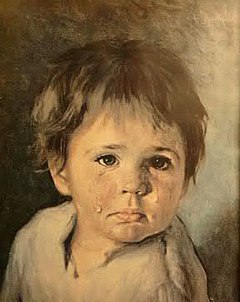
The Crying Boy by Giovanni Bragolin

In 1985, there were reports in the papers in England that the firefighter claimed they kept finding undamaged paintings in burnt down ruins. The paintings were all of the crying boy series, a mass produced scenario from the 1950s and onwards.

The original idea of the paintings was from the Italian painter Giovanni Bragolin that sold over 60 of them to tourists. So many rumours surrounded the painter. Like that he painted the crying boys at an orphanage after fleeing to Spain after the war. The orphanage burnt down.

After the reports from the firefighters printed in the news by tabloid newspaper, the Sun, they organized bonfires to burn the haunted paintings.

Advertisements

The Hands Resist Him by Bill Stoneham

In February in 2000, a new listing on ebay appeared of a strange haunted painting. An elderly couple in California tried to get rid of a painting from their brewery. But the painting had a disclaimer on it. It was said it carried some sort of curse or was haunted.

The characters in the paintings apparently had a habit of moving during the night. And occasionally, they completely left the picture as well, crossing the frame. It sold for so much more than what it was listed for.

The haunted picture was purchased by the Perception gallery that tracked down the artist, Bill Stoneham that painted the picture in 1972. It was originally purchased by John Marley, most known for his role in The Godfather. And the strange travels of the painting and the mystery surrounding it, still lingers, even so many decades after the paint dried.

Advertisements

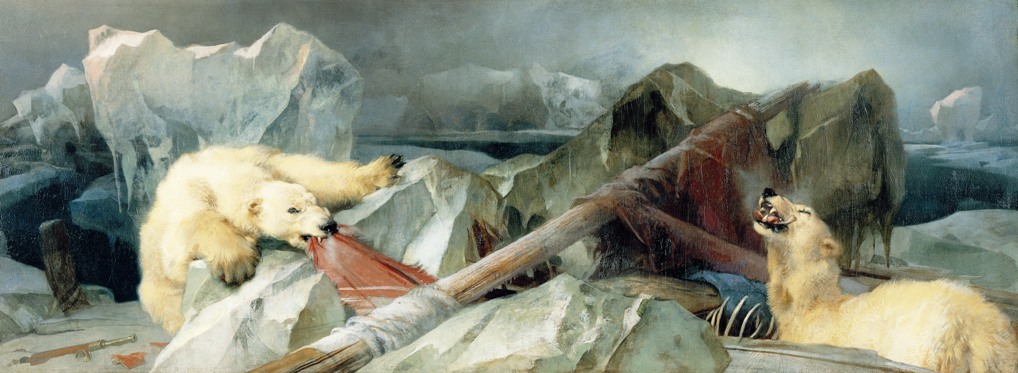
Man Proposes, God Disposes by Edwin Landseer

At Royal Holloway University, there hangs a haunted painting. The picture must be covered every year. Or else…

It is an 1864 oil-on-canvas painting by Edwin Landseer. The haunted painting was inspired by the search for Franklin’s lost expedition which disappeared in the Arctic after 1845.

According to an urban myth a student in the 1920 or 30s. He was taking his exam when he suddendly stabbed a pencil into his eye, writing “The polar bears made me do it” on to their exam paper. He then killed himself. From this alleged incident, another legend sprung out in the 60s, claiming that anyone sitting in front of the painting during an exam would fail.

That is why everytime an exam is on, there is a college tradition of covering the haunted painting with a Union Jack flag after a student refused to take the exam until the painting was covered.

Advertisements

The Rain Woman by Svetlana Telets

Ukrainian artist, Svetlana Telets painted this haunted picture in 1996, the same year she graduated from Odessa Art University. For six months after graduating art school, she always had this feeling of someone watching her.

When Svetlana Telets one day suddenly had the image of The Rain Woman in her head, she started to paint almost without thinking. She herself claimed that something or someone took over her, like drawing through her. The haunted painting was done in five hours, and the result, well… It was this strange and surreal looking woman.

The painting was bought, then returned, then sold, then resold again. The buyers didn’t want it in their homes. They complained that the painting was causing them to experience insomnia and anxiety. And there was always a feeling of being watched. One even rang to Svetlana Telets and complained to her about The Rain Woman:

“Please pick her up. I can not sleep. It seems that there is someone in the apartment besides me. I even took it off the wall and hid it behind the closet. ”

The Rain Woman used to hang in a furniture salon in Vinnitsa trying to sell it. Customers of the shop claim to be dreaming about the woman in the picture and claim to sort of know her, but are unable to place her.

Read More: Read the full story about the The Rain Woman in MoonMausoleum.

Advertisements

The Dead Mother by Edvard Munch

Edvard Munch was an artist known for his inner demons, something we can see in a lot of his paintings like Scream, The Vampire and all off his paintings depicting sickness. This is the case of The Dead Mother, depicting a little child in front of her dead mother, hands up in anguish much like in Scream.

The haunted painting that he painted is probably based on his own mother’s death. Edvard Munch’s mother died of tuberculosis when he was only 5 years old and this trauma lingered with him for all off his life together with the death of his sister as well.

The haunted painting is said to be cursed, or even haunted by some that have seen it. There are several version of the painting though, but the legend never specifies which version of the motief is the cursed one. Perhaps all of them.

The eyes of the little girl is said to follow you wherever you go, and some even go as far as to claim that she sometimes disappear from the frame altogether. There are also those that claim you can hear the sheet in the mother’s bed rustling, as if someone is moving it.

Advertisements

Untitled by Laura P.

This haunted painting was based on a photograph by James Kidd from 1994. A picture believed to have a headless figure some claiming to be a ghost. According to Laura P, she started painting the painting, not knowing why she did so, as if being under some possession.

After the painting was done, she herself told of things surrounding the painting that were, strange. Incidents happening to the artist, possessions missing, and objects falling and breaking are just some of them. This has led to some people claiming the painting is haunted by the spirit from the original photo.

Advertisements

More like this

Newest Posts

References:

Картина одержимая злым духом преследует свою хозяйку 11 лет – Новости на KP.UA

The Creepy Side of Youtube from Back in the Day

Advertisements

Before the internet became a mix of streaming platform, influencer’s paradise, music streamer, podcast heaven, news broadcaster, gossip channel and a gold mine for those wanting to live of doing crazy stunts or cry into the camera – before all this, it was this weird place of the worlds weirdest home videos and the place were urban legends were in making. This is some of them.

Sonee – The Scariest Picture on the Internet

When it hit Youtube in 2006, it was already a thriving legend in China. It told the story of Sonee, the artist of this picture which she uploaded before killing herself. Now, the picture is haunted, altering if you stare at it long enough to see the changes. This was an excellent way to spend five minutes, just sitting, staring into the screen for five minutes, waiting for something to happen. The story never really died though, as it kept popping up as creepypastas, chain mails, forum threads, and even on the New York Times as well.

In reality the picture is another example of how art is stolen, never credited, but still popular. It was originally made by Robert Chang, an artist, and the name of the character was princess Ruu, an original character of his story Tellurian Sky. And according to a blog, the fact that someone stole his character like that, kind of bugs him a lot.

Advertisements

Dining Room or There is Nothing

In 2006, a great year for weird videos, this trip of a movie hit the page. Surreal art was perhaps not that well known for being on Youtube at the time and the viewers didn’t really know how to place it. Of course, this clip had to be curse. Since then, the video has topped so many lists of creepy videos.

The video is actually made by David Earle, and on his web page he explains the bizarre concept. “When looped, there is no actual beginning or end, and no real sense of where the beginning and end actually are. This piece was inspired by a personal paradoxical desire for empirical proof that there is nothing on the ‘other’ side of life. I wanted to blur the distinction between the two states, and to state the paradox by showing someone who is coming back from life (or death), and denies its existence, thereby fulfilling the paradox.”

Advertisements

A Curva – Teresa Fidalgo

This one still pops up from time to time, either as a clip, a screenshot on Snapchat, a chain mail (which actually still goes around i suppose.) Still, no one has managed to actually debunk this found footage clip, as the first search results of Teresa Fidalgo is stuff like: Is it true that Teresa Fidalgo will sleep by your side?, How did Teresa Fidalgo Die?

In reality the idea was conceived by Portuguese film maker David Rebordão when he went around promoting another movie. Today, the world is perhaps a bit too saturated with the found footage clip, but back in the day, this was the bomb.

Advertisements

Ghost Girl

Still popping up on videos compiling: ‘unexplained videos’, the clip is up and thriving. The simple shot of an amateur shot of a silhouette of a girl in a dark hallway, is more effective than the most expensive movie set could give. It is still something that flashes before many peoples eyes every time they open a door to a dark hallway.

The user that uploaded this years ago, had some other clips along the lines of: ‘crazy ghost video’ style, but even more strangely, there has never been a big reveal like with the other videos. Nothing of the likes of: ‘this was a great prank by me and my daughter’ or anything. Makes it… Well. Scary.

Advertisements

The Swedish Rhapsody

A weird sound, a cute ice cream car music and a German girl counting. Creepy as hell. And this was found when browsing the radio. And when it hit the digital world, it became a case study of all kinds of conspiracies. A polish radio haunted by the ghost of a German girl from the war, you name it.

However, perhaps this is the one video, were the truth could be seen as more sinister or scary than a ghost haunting a radio station ever could. Because the thing with number stations, is that they are completely real, and most likely, used by intelligence agencies. The sounds are codes or messages trying to reach spies, warning them, or keeping them up to date.

Advertisements

More like this

Newest Posts