A vacation inn in Hong Kong has been called haunted after people staying there have claimed to have seen ghostly apparition of people that have ended their life in the Bela Vista Villa.
Close to the sea there is a vacation home in Cheung Chau in Hong Kong where couples visit to have a romantic time together in the little bungalows by the beach. When staying at the place though, things can according to legend become more haunted than romantic though.
Read More: Check out all of the ghost stories from China
Cheung Chau island (長洲) is just southwest of Hong Kong Island has a long history of being haunted and filled with spirits. There is even a festival that could have originated because of these evil spirits. This version tells that the island was plagued by pirates and even the plague itself in the 18th century and the local islanders wanted to get rid of them. Local fishermen then brought an image of the ancient god Pak Tai, the mysterious black God of the north to the island they paraded with throughout the island and it is said that the deity drove away the evil spirits.
But what is it about this quaint beachfront vacation home that draws so many people to end their life there in what has been known as The Haunted Bela Vista Villa, one of the most haunted place in Hong Kong?
The Resort of Charcoal Suicides
The Bela Vista Villa (東堤小築) is a collection of vacation bungalows in central Cheung Chau, close to the Tung Wan Beach and a popular vacation location that in later years changed the name to Miami Resort.
It is said that the building is the place for over 20 murders and suicide cases over the last 30 years and the Bela Vista Villa has been dubbed The Resort of Charcoal Suicide. People have come to this place from the rest of Hong Kong to end their life there for all sorts of reasons. What happened over the years was that it started to be a rumored haunted place as well though for the people that stayed there for their vacation.
The Ghost Haunting the Bela Vista Villa: It is said that people that have stayed there have seen a woman wearing red or traditional Chinese clothing as she is haunting the Bela Vista Villa as well as the beach.
The people that have stayed in the vacation home claim to have heard wailing screams in the night coming from the ghosts of the victims and seeing ghost apparitions of them, and it is said that the haunted ghost stories all started with a singular case.
The Murder Suicide and Ghosts of the Mother and Son
It is said that it all started the summer of 1989 when a woman together with her son vacated in one of the units. The 35 year old woman was having marital problems and was highly unbalanced. According to the stories, the woman was said to be the estranged wife of a Hong Kong pharmaceutical tycoon. He was cheating on her and the infidelity drove her mad.
She killed her son before herself. The mother dressed up in an all red outfit, possibly a Chinese traditional costume before hanging herself.
Read more: There are stories about jaded women haunting places wearing red all over the globe. Like with the haunting of
Read more: There are stories about jaded women haunting places wearing red all over the globe. Like with the haunting of The Lady in Red of Bang Pakong River
After this incident, it is said that the residents on the island have seen the mother and son wandering around. There have even been those who claim that they have been possessed by their ghosts as well.
Reclaiming life in the Bela Vista Villa
While the history of this place holds tales of tragedy and ghostly apparitions, the past is not destined to repeat itself forever. Over the years, efforts have been made to bring about an aura of peace and tranquility in the Bela Vista Villas, fostering a sense of harmony between the living and the departed.
The ghosts that once haunted this place fade into the annals of history, their presence becoming nothing more than whispers carried in the sea breeze. Now, the only spirits to be found are those of joy, laughter, and blissful contentment. As day turns to night, the vibrant atmosphere transforms into a serene sanctuary, where the only sounds to be heard are the distant hum of the waves caressing the shore.
In the midst of the old one of the old hutong neighborhoods in Beijing it is a house that is said to be more haunted than others. In the Ming Dynasty a famous female military general used the courtyard of the Dongmianhua Hutong to behead soldiers not following her commands.
An army of ghosts are believed to haunt one of the old hutong alleys in Beijing because of the order of their commander, Qin Liangyu (秦良玉), a female general in the Ming Dynasty.
Read More: Check out all our collection of ghost stories from China
Qin Liangyu was from Sichuan and is best known for defending the Ming dynasty from the Manchurian army, late in the 17th century. Unlike Mulan who went into battle instead of her father, Qin Liangyu went in place for her husband who died in prison of an illness after being falsely accused.
The Cotton Spinning Soldiers
Hutong: A traditional narrow alleyway in older neighborhoods of Beijing, and other cities in northern China. These alleyways are typically lined with courtyard houses, known as siheyuan. Over the years, many hutongs have been demolished to make way for modern developments, but efforts to preserve and restore these historic neighborhoods have gained momentum in recent years due to their cultural significance.
According to legend of Qin Liangyu, she is said to have stationed her troops in the Dongmianhua Hutong (东棉花胡同) when she came to Beijing at least three times to aid the capital.
The national treasury was empty however and she had to make her own money to go to war. By military standards her army belonged to the lord, not the national army, and therefore the emperor didn’t pay the soldiers. So she had to figure out a way herself and the answer was cotton.
It is said that she ordered her lieutenant soldiers to spin cotton clothes all night to earn money for the military and to pay her soldiers. This is allegedly why the Dongmianhua Hutong was named Cotton Alley after her and is to this day.
Dongmianhua Hutong is now a historical area found south of Jiaodaokouin in the Dongcheng District, Beijing. The Hutong has preserved the brick arches of the late Qing Dynasty. There is however more than one Cotton Alley named after both a cotton market that used to exist.
The Haunted Execution Courtyard in Dongmianhua Hutong
Qin Liangyu
The exact house that are supposedly haunted in Dongmianhua Hutong is the courtyard of No.1 (棉花胡同头条1号). It was known as a haunted house because of the ghosts of the soldiers that haunted the place. The story goes that this was the place where Qin Liangyu beheaded soldiers who violated her discipline, although there really aren’t many historical records of this, it probably wasn’t that uncommon for a commander to give these orders.
The terror of the haunted Dongmianhua Hutong doesn’t stop with the ghost from the headless stories though, as more have died over the years in this house. This was where the writer Lin Baishui was arrested and shot to death after he published writings that criticized the warlords that governed the territory in his time. Perhaps he as well has something to do with the haunted rumors of this place?
Or perhaps the ghost stories from Dongmianhua Hutong come from newer times? There is also a story about one of the last occupants of this particular house that says he burned himself after killing a young girl. Allegedly that is.
The Ghost of Old Beijing Haunting Today
Either way, the house now bears a stigma painted in blood that is hard to wash out. Now the cotton alley and old hutongs like Dongmianhua Hutong in Beijing are slowly swallowed by high rise buildings creeping closer on all corners, and soon, there might not be much left of it. Perhaps except for the ghosts.
Passed around on the school campuses, the story about the Ghost of the Braided Girl from the train tracks have been told for decades now and close to all students attending the Chinese University of Hong Kong have heard about the haunting urban legend.
A male student attending the Chinese University of Hong Kong (CUHK) passed by the campus and saw a girl with braids crying with her back to him, covering her face. When he asked her why she was crying the girl said that no one wanted to talk to her.
The CUHK‘ student, feeling sorry for the crying girl all alone, said that he would talk to her if she turned her head and looked at him.
“You will be afraid when you see me,” the girl said, but the student just thought she was shy and claimed that he wouldn’t be afraid. When she turned her head however, her scalp and face were horribly disfigured with one of her braid ripped of her head. He was indeed very afraid.
School Campus Ghost Story on CUHK
School campuses are a perfect place to pass around ghost stories, especially in Hong Kong at orientation in August close to the ghost month. One of the most famous haunted legends from the university campus at the Chinese University of Hong Kong, and according to some of the polls, over 90 percent of the students attending says they know the story of the Braided Girl.
The story of The Braided Girl is set around the train station close to Chinese University of Hong Kong and where the old train tracks used to run. In the 1960’s, or according to some, even before that, a girl was trying to smuggle herself into Hong Kong from mainland China to elope and be with her lover. Back then there were a number of people from mainland China who tried to hide in the trains carrying cattles and jumped off the train when reaching the destination.
The Braided Girl was wearing two plaited braids and had no ticket for the train she was on. She was caught when the conductor asked for her ticket and she knew she had to get away.
To escape she jumped from the train, but one of her long braids was caught in the train door or even the tracks as she hit the ground and she tore the braids from her scalp and destroyed her face and died a horrible death.
People have seen the braided girl weeping with her backs to them around the path where the story allegedly happened where the tracks used to run. The place is now known as Braid Road (辮子路 or 一條辮路).
When the students, mostly male students, are looking closer she turns toward them and shows her torn face.
Most tell the story about the Braided Girl as if it happened in the 1960s or 70s, and many think this is when the urban legend started. There are however sources that mean that this happened long before.
The Braided Girl: There have been a ghost story about a braided girl appearing in front of male students in the night close to the train tracks. When she turns around, it is said she has a torn face.
Former students and lecturers at CUHK tell that there used to be a much simpler version of the Braided Girl, but the plot involving the train came later.
The Elevators on CUHK Passing the Haunted Floor
The story about the Braided Girl is not the only ghost story told from this particular university. There are also stories about the Haunted Mong Man Wai Building (蒙民偉樓), home of the biochemistry department of the Chinese University of Hong Kong.
The building is built against the steep hills and makes good use of elevators for the students to get back and forth from lectures, research in the libraries and other activities.
Read Also: Check out all of the ghost stories from China
Students that have attended the school claim it is haunted, as the second floor formerly served as a morgue and gave off a haunted and creepy vibe.
There are many stories telling about the hauntings going on in the university department. One of them is about the many elevators in the building that are said to be haunted. They are not really stopping by the second floor that used to serve as a morgue.
When the elevators filled with mirrors and dim lightning are passing the second floor and people get an eerie feeling and a sense of something paranormal going on. When the elevator is passing by the floor people report a feeling like the speed of the elevator is slowing down, almost if something is holding it back.
Ghost Stories on the Campus of the Chinese University of Hong Kong
In conclusion, the legend of the Ghost of the Braided Girl from the train tracks continues to captivate the students of the Chinese University of Hong Kong. Passed around on school campuses for decades, this haunting urban legend has become deeply ingrained in the university’s culture.
These ghost stories serve as a reminder of the rich folklore and legends that permeate the university environment, adding a touch of mystery to the bustling campus life. Whether these tales are based on historical events or pure imagination, they contribute to the vibrant culture and shared experiences of the students at CUHK.
As generations of students come and go, the Ghost of the Braided Girl and other eerie legends will continue to be whispered in hushed tones between classmates. These stories create a sense of shared history and identity for the students, connecting them to the supernatural realm and fostering a bond that transcends time.
So the next time you find yourself walking the halls of the Chinese University of Hong Kong, beware of the shadows that lurk in the corners and the ghostly whispers that echo through the night. The legends may be terrifying, but they have become an integral part of the university’s fabric, reminding us that there is more to this world than what meets the eye.
Discover the spine-tingling secrets of the Haunted Subway in Beijing. It is said that the Metro Line No. 1 was haunted by ghosts and had to have an exorcism when they started building it. But did it work?
From tales of ghosts to reported sightings of supernatural entities, the Beijing subway has a hidden side that will leave you feeling spooked. If you’re looking for a thrilling adventure, take a ride on Metro Line No. 1 that runs underneath Chang’an Avenue and to the heart of Beijing, Tiananmen Square.
Read More: Check out all our collection of ghost stories from China
Line 1 is the oldest and most used train line in the city since it opened in 1971. The Red colored metro line has some stories to it though – some say it was so haunted that an exorcism was required when they started building it.
The Beijing Subway System
The Beijing Subway system is not just an efficient way of transporting commuters around the city – it also comes with some mysterious stories that will have you on the edge of your seat. From spirits to ghosts, tales of strange encounters abound in this underground labyrinth – with many passengers claiming to have experienced something extraordinary while riding along Metro Line No. 1.
According to legends, people have disappeared into the tunnels and simply vanished into thin air, never to be seen again, and some people claimed that something sinister had pushed passengers onto the rails. Whether true or not, these spine-tingling stories have given Beijing’s subway a supernatural twist.
Metro Line No. 1 was mired in mystery from the very beginning when construction workers encountered strange events that seemed to be of supernatural origin. Some workers reported seeing apparitions and hearing eerie sounds coming from deep within the tunnels as they were working and it looks like the passengers are still experiencing some form of paranormal stuff when commuting.
Others even alleged that ghosts had instigated mysterious accidents which led to costly delays in the building process. Despite this, the exorcism seemed to have worked as the subway lines have only expanded over the years. Or perhaps it has expanded only despite the paranormal stuff happening in the underground labyrinth?
History of the Haunted Subway in Beijing
Beijing’s subway system has quite a long and mysterious history of haunting since they started construction back in 1965. Legend has it that when Line No.1 was being built, construction workers encountered multiple strange occurrences and dangerous accidents, broken equipment that halted the project. Some even claimed that it was because of something supernatural.
There were multiple explanations as to why this was happening and one of them was the theory that during the construction, several bones of dead humans were disturbed and destroyed, angering the spirits.
Due to this fear of angering the spirits, they brought in monks to perform some sort of ceremony, a sort of exorcism before being able to complete the work on what would be known as Line 1.
The Blessings and Rituals Performed by Monks
To get rid of the spirits on the Haunted Subway in Beijing, local monks were brought in to perform traditional rituals, blessings and prayers in and around the ground where subway construction was underway. The ceremonies were meant to purify the area to prevent any further hauntings and accidents. Whether or not it worked remains a mystery but one thing is certain – a ride down Line No. 1 may be an experience that will leave you with a shiver!
The ceremony went on for days supposedly and the monks advised that the last train would be at 11 pm as they thought that between 11 and 1 am was the time when the souls needed rest. They also said that the train would take a last tour without any living passenger, only to deliver the souls back to where they belonged.
Since then, rumors have spread about encounters with ghosts throughout the subway system. Whether these rumors are true or not remains a mystery – but they certainly add some excitement to your daily commute!
The Princess Tombs at Gongzhufen Station
But what bones exactly were disturbed during the construction? There are more than one story about what graves they encountered when building the metro line. On Line 1 there is a subway station called Gongzhufen Station, or The Princess Tombs that have several local legends connected to the place.
It is named after the tomb of two princesses from the Qing Dynasty, and when they started building in 1965, it was verified that the two princesses were Princess Zhuang Jing Heshuo and Princess Zhuang Jing Gulun, the third and fourth daughter of Emperor Jiaqing.
The two princesses died only two months apart aged 30 and 28 in 1811, so they decided to bury them together.
The tombs were not left alone over the years though and they had to go through tomb robbing in 1937, and finally in 1965 when the subway line was built straight through it and the tombs had to be relocated.
After this, a ghost story centered around this subway station started, when the passengers and staff started seeing a female ghost on the station platform, wearing a traditional Qing dress and sometimes being carried in a sedan chair.
One story about the sighting of the ghost of the princesses was that a boy working in the station encountered the ghost in the middle of the night and ran off, refusing to come back and quit his job at once. This story is however also connected to the urban legend of the Yonghegong Lama Temple Station.
The Last Train Still Leaves at 11 PM
Whether they took the monks’ advice into consideration when making the train schedule, the last train on Line 1 leaves Pingguoyuan stop at 10:55 pm. The last west-bound train leaves Sihui East at 11:15 pm.
With the darkened passages and deserted stations, many avoid traveling on Line No. 1 after dark. The last train departs at 11 PM – any later than that and you’ll find yourself alone with only a few brave souls wandering the tunnels. The lit lights flicker and dim, surrounding you with an eerie darkness.
Stories abound of apparitions on the Haunted Subway in Beijing, some even say they’ve seen a ghost train run empty through the long lifeless corridors. So hurry back home before the last train takes off, or else there will only be the ghost ride left with no living passengers.
An urban legend about a ghost ordering takeout has been one of the most retold ghost stories in Hong Kong for a while now. And according to some of the sorcerers, we can trace the origin of the story back to a real thing that happened.
One of the more famous urban legends in Hong Kong is the story about the ghost that ordered takeout from the same restaurant, 鬼叫餐, in Chinese.
Read More: Check out all of our ghost stories from China
The story most likely started out in the 1950s in a post war Hong Kong. A young man was working in Chiu Yong Kee, a cha chaan teng, a Hong Kong styled restaurant and delivered food in Yau Ma Tei (油麻地) district.
The Ghost Money
The delivery boy went out after a food order came by phone and he headed out to a nearby condo, often said to be a place around Leighton Road. When he came to the door, he knocked, and the door opened just slightly. A hand came out and gave him the money for the food. The young man checked the money and went back to the restaurant.
When the owner counted the money for the register later that night he saw that it was ghost money, modern version of joss paper in the register. This is small sheets of paper Chinese people burn as offerings to the dead for them to keep in their afterlife. They are also called hell money and makes an appearance in more than one ghost story.
The restaurant owner thought it was the young man that had scammed him and stolen from the register and put the ghost money in. He brought it up, but his employee refused that it was him and promised he didn’t take the money, it had to be the people at the nearby condo. The owner believed or at least forgave him.
The next day the same thing happend. They got the call at the restaurant, and a hand from the door gap gave the delivery boy the money. He double checked them, and everything seemed fine. But when he returned to the restaurant they had turned to ghost money again. Something was seriously wrong.
The third day the owner decided to go by himself when they got another order from the condo. The same thing happened and the owner became sure that they had to be professional scammers, so he called the police.
The Dead Mahjong Players
The neighbors of the condo had also noticed the sound of people gathering in the apartment, and when they peeked in they saw the shapes of men playing Mahjong in the dark night. That wasn’t an uncommon sight, but what was horrifying thought, was that they all looked like they were missing their heads.
When the police came around there was no one answering, and they ended up knocking the door down. Inside they found four decomposing bodies around a Mahjong table. The food containers from the restaurant were next to them.
When they examined the bodies, they found out they had died from carbon monoxide poisoning, and had been dead for some time and wouldn’t have been alive to take the deliveries from the restaurant. After further examination though, it did really look like they had gotten their food in their bodies after their death.
The Truth Behind the Story of the Takeout Ordering Ghost
Unlike many urban legends, there seems to be a real case that happened that transformed into what is now known as the takeout ghost. Although the origin of the story was very different.
On March 6th in 1953, it was reported in the newspaper that a group of people were playing Mahjong in an apartment when one of the participants saw an extra hand join in the game that didn’t belong to anyone. They all got frightened and ran from the place.
Neighbors heard about what happened and the story spread to the rest of the city. According to the news, in the end there was a crowd of more than a thousand people who came to the area to see for themselves if the place really was haunted or not. In the end the police had to come and disperse the gathering crowd. They also launched an investigation into what happened in the apartment.
According to the police investigation, the case of the ghostly hans was all a hoax made by an evicted tenant with a grudge to his former landlord. As revenge, he spread a rumor that the apartment was haunted and the rumor grew so much that even the neighbors thought it was true.
There is not only one ghost story haunting the old Liuyin Street in Beijing. Everything from ghosts in the old imperial mansions along the street, a mysterious force in the toilets, the ghost of a hero soldier and a mysterious girl dressed in red are said to haunt this street.
Some streets are more haunted than others. Some only have one ghost that is well known, others have countless. The Liuyin Street in Xicheng (柳荫街) district in Beijing is one of those streets that have more than one ghost story attached to it.
Read More: Check out all of our ghost stories from China
The place was known for military generals that lived there and also went under the name of Marshal Street. Today it has some of the old Beijing courtyards preserved.
The Ghost of Prince Go’s Mansion
Firstly, it is the place you will find the Haunted Prince Go’s Mansion that is adjacent to the street in the east. Inside of the mansion it is said that a woman wearing white has been seen in the courtyard, still mourning her son.
The mansion is known as one of the more haunted places in the country, but also out on the street there are more than one ghost still roaming about.
The Little Girl in the Red Dress
One of the stories is that a little girl is haunting the street and the area of the city. According to the legend, she is wearing a full-length red dress.
The story has evolved into more of an urban legend, and it is said that if you see her, you must just walk past her. She is said to not move at all, only turn as you walk past her 180 degrees.
The Girl in the Red Dress: The story of a little girl haunting the The Liuyin Street in Xicheng (柳荫街) district in Beijing. The story of a little ghost girl wearing red is not an unknown one, especially in Taiwan.
It is said that the woman who first saw this ghost was so disturbed by the sight that she collapsed and was sent to an institution when she woke up.
Where this legend comes from is unclear as it is only mentioned in a couple of online English sources with no further source work. The image of a little ghost girl in red is not completely unfamiliar though. There are urban legends from Taiwan especially that deal with the trope of “The Little Girl in Red”.
The Heroic Ghost of Yuan Mantun
The Heroic Ghost of Yuan Mantun: A bust is erected in his honor after sacrificing his life. Source
Down the road of Liuyin Street you’ll find a white bust memorial to a heroic soldier named Yuan Mantun that served in the People’s Liberation Army. According to the legends of the street, he is one of the ghosts said to haunt it.
The young soldier sacrificed his own life by diving into a freezing cold lake to rescue two workers who fell into the water in 1982 when he was on duty.
On February 24th in 1982, he jumped into the water twice to rescue two people and was in the water for over 40 minutes, battling the ice cold temperature as he managed to get both of the people safely to land.
When he finally got help and was rescued up from the icy waters himself, he was already unconscious. He died of hypothermia after his rescue, only 21 years old.
Today his ghost is said to wander nearby but it’s also said that he’s a friendly sort and not out to scare those passing through. As he himself is said to have written in his diary:
“Only those who bring happiness to most people are the happiest people themselves.”
The Toilet Ghost in No. 2 on Liuyin Street
The last haunted rumor in the streets are from the old toilets in No. 2 in Liuyin Street. The story has made its way around the forum and is supposedly told from a former resident who grew up there in the 90s.
In the old courtyard there was a toilet the residents all used, with poor sanitary conditions and was a place no one wanted to spend more time in than needed. The grandmother of the original poster said that an old woman went to the toilet and saw something of a specter that looked like something with half-male and half-female face on the wall of the toilet and a burst of energy hit her. She was so afraid that she didn’t even have time to put on her pants and ran home. A couple of days later the old lady became ill and died in a matter of days.
According to the poster’s grandmother, this was something that had also happened in the 70s, when a young man passed away after seeing something sinister after using the bathroom.
Today the toilets on Liuyin Street are locked up and no longer in use.
A Walk Down the Haunted Street
In conclusion, the old Liuyin Street in Beijing holds a fascinating array of ghost stories that continue to captivate locals and visitors alike. Although these ghostly encounters may send shivers down your spine, there is also a sense of intrigue and wonder that lingers in the air. The rich history and cultural significance of Liuyin Street add an extra layer of fascination to these supernatural tales.
As you wander through the winding streets and ancient courtyards of Liuyin Street, be prepared for the possibility of encountering the unexpected. Whether it’s a glimpse of a grieving mother in the Haunted Prince Go’s Mansion, a girl dressed in red who turns as you pass by, or the friendly presence of Yuan Mantun, the heroic ghost who continues to watch over the street.
Inside of the lush green forest there is a small Waterfall Pool leading to what is called Bride’s Pool. Hikers have reported about seeing the ghost of the bride that drowned in the Waterfall Pool on the way to her wedding.
What is it about beautiful waterfalls that conjure up ghost stories about drowned brides? Is it the wispy water that spreads out like a white braid veil? Even if the white veil bride isn’t really that common in old times, the drowned bride is seemingly always lurking behind the gushing waters.
Inside the Plover Cove Country Park in the New Territories in Hong Kong, there is a shallow natural Waterfall Pool of water that comes from an idyllic waterfall. The pool the waterfall fills up looks peaceful and is called the Bride’s Pool (新娘潭). The legend behind the Brides pool is not as idyllic as it looks though.
Not only are a string if deaths, both murders, suicides and drownings connected to the area surrounding the Bride’s Pool, also the road that goes above it has seen its fair share of accidents and has been dubbed The Deadly Curve.
It is also said that underneath the trees, there have been seen left spirit tables and the remains of cremated people in the pool itself.
The legends are many surrounding the Bride’s Pool and it is said that the very place is evil and no one should go there at night in fear of being taken by the spirits. What is the origin behind the name of this rock pool and what are some of the haunted legends coming from the Bride’s Pool ?
The Drowned Bride in the Haunted Bride’s Pool
The story goes that there was a bride once being carried in a traditional sedan chair in stormy weather past the Bride’s Pool. They were going to the nearby village where her betrothed were waiting for her to hold the wedding and they would finally be married.
Read More: Check out all of the ghost stories from China
One of the porters carrying her slipped in the rain that was pouring that day and he slipped so the sedan chair tipped over and she fell into the water in the Bride’s Pool. Because of her heavy wedding clothes she sank and drowned in the pool of water. In some variations of the legend, her body was never found and she never reached her destination wedding.
After this is said to have happened, people claim that the Bride’s Pool is haunted. Those who hike through the area said to have seen a woman wearing the red cheongsam as she is brushing her hair close to the waterfalls, still getting ready for her wedding.
Walking on a dark and lonely road at night, you encounter a person turned away. When the person turns, they reveal that they have no face. This is the faceless ghost from Japan out to scare their victims known as Noppera-bō.
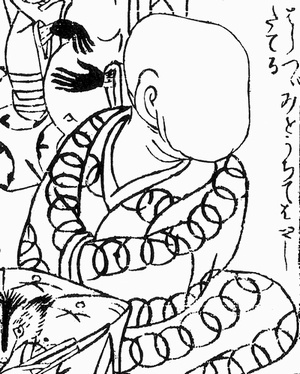
Noppera-bō (野箆坊) are a type of yūrei, or Japanese ghost. Noppera-bō have been around in folklore and legends for centuries and have been depicted in many different ways, from the scary to the cute.
They appear as ordinary humans, except they have no face, and where the features were supposed to be, there is just a blank slate instead of a face. They are called faceless ghosts but actually, they are shapeshifters that take on the appearance of humans. Therefore they are considered more like a Yokai (Japanese monster/demon) rather than a classical Yurei (Ghost).
They will mostly be seen with their back to lure the human closer to them, often in disguise as a young woman. But when she turns she reveals that she has no face, and is just a blank canvas. No eyes, no mouth and no nose.
The Mythology Behind the Noppera-bō
In most cases, the Noppera-bō is not really a ghost, but a shapeshifter like Kitsune that looks like a fox or the Mujina that looks like a badger. They are mostly encountered on a lonely road, late at night where no one is there to help you. But are they dangerous? In most stories they work more as a prankster than something that would cause you actual harm.
They also have a habit of wearing a face they suddenly wipe away right in front of the humans they encounter. They also often work in teams to double scare their victims. Why do they do this? According to most legends, it is just to scare them for no reason. Or is there one?
Famous Legends of the Noppera-bō
There have been several encounters with the Noppera-bō passed down in legends and folklore, creating stories that were eventually written down.
The most famous story of a noppera-bō is “Mujina” in Lafcadio Hearn’s book Kwaidan: Stories and Studies of Strange Things. Hearn usually just used the animals in the stories he wrote down and is one of the reasons why there are so many that mistake the Mujina for the Noppera-bō.
There are other tales about Noppera-bō, from one about a young woman rescued from bandits by a mounted samurai whose face disappears, to the story of a noble heading out for a tryst with a courtesan, only to discover that she is being impersonated by a Noppera-bō .
The Noppera-bō and the Koi Pond
One day a lazy fisherman decides to fish in the imperial koi pond near the Heian-kyō palace, even though he was warned by his wife. She said that the pound was sacred, near a graveyard and therefore haunted.
The fisherman ignored her warnings and went to the pound. On the way he encounters another fisherman that also warns him about fishing at that exact spot. He ignores the warnings again and eventually reaches the pound, There he sees a beautiful young woman standing by the pound.
She also pleads with him, begging him not to fish at this place. When he ignores her however, she turns right in front of him. She wipes her face off, revealing nothing but a blank canvas.
He runs back home and is confronted by his wife. She tells him that he should have listened before she wipes her face off as well.
The Mujina of the Akasaka Road
A man is traveling alone through Akasaka on his way to Edo. There he encounters a young woman near Kunizaka hill. It is a remote place and she is crying with her head in her hands, all by herself. He tries to comfort the woman and asks if there is anything he can do for her.
When she turns to face him, she has no face.
The man runs away, terrified and comes across a man selling soba noodles. Relieved to see another human he stops to relax and calm down. As he tells his story to the soba vendor though, he strokes his face, and with it, his features. He was a Noppera-bō.
Modern Sightings of the Noppera-bō
Today the tales of the Noppera-bō are mostly just read about in old legends. But there are some reports that are from the more recent centuries as well.
Noppera-bō: faceless ghost) from the Bakemono Shiuchi Hyōbanki (妖怪仕内評判記) Date 1777.
Interestingly enough, there have been reports of sightings of this no face ghost. In modern time there is also sighted outside of Japan. Especially in Hawaii there have been cases were some have claimed to see the Noppera-bō. This is perhaps explained by the big population of Japanese that immigrated to Hawaii.
In May 19, 1959, a daily newspaper called Honolulu Advertiser published a rather strange report about a Noppera-bō. Reporter Bob Krauss wrote about a sighting of a mujina at the Waialae Drive-In Theater in Kahala.
According to the news article, a woman was seen combing her hair in the women’s restroom. When the witness came close enough, the mujina turned, revealing her blank face with no features. The witness was reported to have been admitted to the hospital for a nervous breakdown.
A Hawaiian historian, folklorist, and author named Glen Grant, dismissed this whole encounter in a radio interview he did 1981. After the interview though, someone called in claiming to be the witness, who gave more details on the event, including the previously unreported detail that the mujina in question had red hair.
A beautiful courtesan became mixed up in the politics that ended and started a dynasty in China. Today it is said she is haunting the Songpo Library in Beijing where she took her own life.
In that time when the emperor abandoned the human world, Wu crushed the enemy and captured the capital, bearing down from Jade Pass. The six armies, wailing and grieving, were uniformly clad in the white of mourning, One wave of headgear-lifting anger propelled him, all for the sake of the fair-faced one. The fair-faced one, drifting, and fallen, was not what I longed for. The offending bandits, smote by heaven, wallowed in wanton pleasures. Lightning swept the Yellow Turbans, the Black Mountain troops were quelled. Having wailed for ruler and kin, I met her again.
Once upon a time, a girl followed the love of her life to be with him, but it ended in tragedy. He gave up his country to save her, but also gave up on her in the end. A tale as old as time of a love turned cold and sour and the perfect setup for a ghost story in the former Songpo Library.
Read More: Check out all our collection of ghost stories from China
In the former library known as Songpo Library in the Xicheng district in Beijing, China, it is said that a woman haunted the book aisles in the old Hutong. And according to reports, perhaps she is not the only ghost that are haunting the place.
The General’s Mistress
Wu Sangui: (吳三桂). 8 June 1612 – 2 October 1678), a Ming dynasty military officer who played a key role in the fall of the Ming dynasty and the founding of the Qing dynasty in China and thought to be haunting the former Songpo Library..
The story in Songpo Library starts out with a famous general known as Wu Sangui (吳三桂) that lived from 1612-1678. He was originally a Ming Dynasty military officer that played a key part in bringing the Dynasty down and giving rise to the Qing Dynasty. In contemporary China, Wu Sangui has often been regarded as a traitor and an opportunist, due to his betrayal of both the Ming and Qing dynasties. Wu’s name is synonymous with betrayal.
When the great general Wu made this place his home he brought his lover with him, a courtesan named Chen Yuanyuan. Different accounts gives different tales about if Chen Yuanyuan really did live in this place, as it is also said it was to Kunming General Wu brought her, not Beijing.
General Wu Sangui is today known as a big traitor and is said to have betrayed the Ming Dynasty by allowing the Manchu army through the Great Wall he was put to guard, for a position in the Qing Dynasty.
It is also said that he betrayed the country for the love of his life, Chen Yuanyuan. Wu’s romance with and love for his concubine, Chen Yuanyuan, remains one of the classic love stories in Chinese history. A story tells that the Bandit King Li Zicheng kidnapped Chen Yuanyuan and for her freedom, General Wu had to betray his country.
The Eight Beauties of Qinhuai : (秦淮八艳), also called the Eight Beauties of Jinling were eight famous Yiji or Geji during the Ming-Qing transition period who resided along the Qinhuai River in Nankin. As well as possessing great beauty, they were all skilled in literature, poetry, fine arts, dancing and music.
Love Turned Sour in the Songpo Library
Perhaps the demands of the court Chen Yuanyuan (陳圓圓) suddenly became a part of were too much or perhaps the price of their love turned too heavy. Perhaps it even was as simple as he got tired of her, but their love soon started to dwindle.
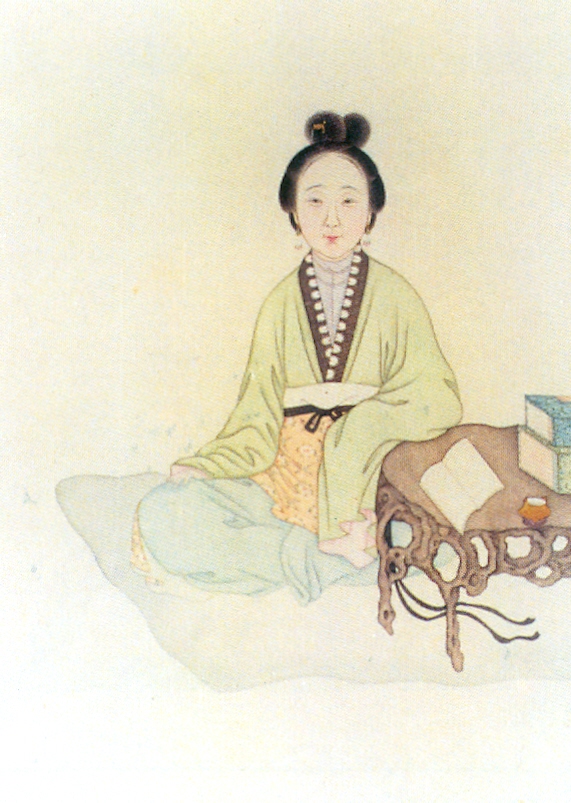
Chen Yuanyuan (陳圓圓) was born to a peasant family in Jiangsu province, and on the death of her father, she became a Yiji. Chen became a leading figure in the Suzhou opera scene and thought to be haunting the former Songpo Library.
It is also said that Chen Yuanyuan had troubles with General Wu’s other wives, especially the one named Lady Zheng who was jealous of her. Terrible rumors tells that Chen Yuanyuan was raped and killed in the fall of Beijing. What happened to her is up for debate, many say that they lived in Kunming and she ran off to become a nun in a temple there. Another side of the story gave rise to the haunted rumors.
In 1642, she became the lover of the scholar and poet Mao Xiang. Subsequently, Chen was bought by the family of Tian Hongyu, father of one of the Chongzhen Emperor’s concubines. She was then either purchased for Wu Sangui by his father, or given to Wu as a gift by Tian.
In April 1644, the rebel army of Li Zicheng captured the Ming capital of Beijing, and the Chongzhen Emperor committed suicide. Knowing that Wu Sangui’s formidable army at Ningyuan posed a serious threat, Li immediately made overtures to gain Wu’s allegiance. Li sent two letters to Wu, including one in the name of Wu’s father, then held captive in Beijing. Before Wu Sangui could respond, he received word that his entire household had been slaughtered. Wu then wrote to the Qing regent, Dorgon, indicating his willingness to combine forces to oust the rebels from Beijing, thus setting the stage for the Qing conquest of China.
She is said to have hanged herself in shame and because of her misfortune of being his concubine and not his wife. This is according to popular legend though. The heartbreak of losing her love caused her to take her life by hanging in their home. It is said that the girl still haunts the Songpo Library in the Shihu Hutong, where Wu once resided.
The Haunting of the Hutong
Today the Songpo Library grounds are open to tourists but the building no longer functions as a library. Observers swear they can feel her presence as she moves among the aisles of books today. Local residents have also reported hearing sounds of music and the unmistakable sound of a woman chanting. Could it be the ghost of Chen Yuanyuan, chanting scripture or something she sang on stage once upon a time?
Songpo Library: An old photo of Songpo Library.[Photo/Cri.cn]
There is also a story about a rickshaw driver that once brought a group of passengers to the Songpo Library on Shihu Hutong, or the Stone Tiger Hutong in the Western City. They paid their driver and suddenly vanished, leaving only a single peacock feather floating in the air. Like those that Qing officials wore in their hats. And the money he had gotten was not the Yuan Shikai coin, but an old copper coin with the name of the Shunzhi Emperor from the 17th century.
Perhaps it’s not only the ghost of Chen Yuanyuan that haunts the former Songpo Library, but the General himself as well? Late Ming dynasty historians left behind records describing Wu Sangui as a valiant and handsome general of medium height, with pale skin, a straight nose, and big ears. However, there was an obvious scar on his nose. He was neither muscular nor particularly strong-looking. However, he demonstrated great courage and physical strength from an early age and possessed excellent skills in horse-riding and archery.
Is this a person you have seen roaming the former Songpo Library lately? Perhaps it is a ghost?
In an abandoned village deep in the Chinese mountains, there are legends that people never leave the Fengmen Village, not even after death. Because of the bad Feng Shui and strange customs it has become the country’s number one ghost village, some would even say cursed.
Deep in the forested Taihang Mountains outside of Qingyang city in the Henan Province, there is a mysterious village now abandoned Fengmen Village. Dead Fengmen Village in most English sources. With its strange customs, people that have visited it, have come back with stories about something strange, and perhaps even evil. Some have not made it back from the village at all.
Read More: Check out all of our ghost stories from China
Why is the place abandoned? Legend says it was abandoned overnight and that the inhabitants were taken away by ghosts. Legend says a lot of things, but what really happened when the village became a ghost village?
The Strange Customs of a Secluded Place
The entrance to the Fengmen Village is difficult to find and when entering it a feeling of dread comes to you because of the anti Feng Shui of the place. The place is filled with a heavy sense of Yin and this is what many claim makes this place so haunted.
In Chinese lore, ghosts have a hard time getting out of places with a heavy Yin, and many claim this is why this village is said to be so haunted. In addition, the village is built like a maze, and the ghosts are trapped, unable to wander out from it and move on.
Strange customs are what seems to be worshiping mysterious two figures. Two statues that are no Gods like Buddha or the like, but rather seem to be of two normal people are found in the nearby temple. Who these two idol statues were they haven’t been able to figure out. There is a theory that it is actually that of ghosts and that the famed ghost village actually worshiped these ghosts.
There are also strange burial customs that completely differ from the surrounding area and Han people. The corpses in Fengmen Village are buried with masks and it was said that people would not leave the village, even after death as the dead would be buried close to the home of the deceased. It is said that is why the people in Fengmen Village wore masks, as it was meant to suppress ghosts.
Haunting Tales of Dead Fengmen Village from Hikers
Over the years as the Fengmen Village population dwindled and hiking became more popular, many hikers decided to make their destination this strange and remote village. Some hikers have claimed to have called out their names into the dark night as they were camped outside the now abandoned village, and to their surprise, something called their names back.
Travelers faint or feverish when they step into the village and wake up with scratches all over their body they have no idea where it came from.
People that choose to travel to this far away place come back and tell of unusual noises and shouts can be heard and there is no phone reception to call for help when needing it.
The Haunted Taishi Chair
Fengmen Village has over a hundred houses of Ming and Qing styled architecture, and are today mostly empty, covered only by cobweb and dust. There is one house however that became more talked about than others because of the mysterious chair that was placed there, said to be clean, as if someone sits on it regularly.
The chair is a Qing Dynasty Taishi chair placed in the living room in one of the houses facing north-south as the Feng Shui tradition would have it. The legend is that people that have sat in it, have died under strange circumstances or encountered something supernatural.
According to legend the grand master chair is not for the living to sit on, but for ghosts. It is also said that if a living man sits on it, he will be unable to find a wife, and if its a woman, she will not be able to have children.
The Legend of the Pillow Ghost
One of the more well known legends of the place comes from the story of three young men who visited the Fengmen Village in 1963. It is worth noting that this story started circulating on various internet forums after the village became deserted and has yet to be confirmed.
In 1963, three young people from Zhengzhou came to Fengmen Village to paint. Before entering the village they saw a pillow in the middle of the road and they kicked it aside. They were just in time for the funeral held in the village where a family of three had died of a high fever .
The three men were placed in the deceased family’s house to sleep. And although they found it a bit creepy, they didn’t want to offend the village or admit to being scared. After they moved in, strange things happened again and again. They often heard children calling out for their mom in the middle of the night, but when they went out to see, there was no one around the house.
The three med also had the same nightmare of a ghost climbing into bed in the middle of the night. One day, one of them opened the closet to look for clothes during the day, and suddenly screamed and passed out. After waking up, he said that he saw a face hidden behind the clothes in the closet, which was exactly the same as the face in his dream. When they searched the closet, they found nothing suspicious, but the following night, the one who had seen it developed a high fever.
The next day one of them dreamed of the ghost face again. When he woke up, he heard the sound of splashing water in the yard outside, so he looked out the window. Under the moonlight, he saw the back of a woman standing naked in the well in the yard. Suddenly the woman turned her head, gave him a strange smile, and jumped into the well.
When they searched the well with flashlights, the water in the well was calm with no ripples and the stone platform by the well was dry. After this, the man often dreamed of the woman who jumped into the water and also developed a high fever.
The third young man was very anxious about his friends developing high fevers, but it was far from a doctor. One night he also started dreaming about the ghost face and he could not breathe. When he woke up, he found that one of his friends was on top of him, strangling him. Fortunately, the third man came to rescue. After that, the three people finally realized the evil nature of living in this house, and hurried to find the elders in the village. The elder in the village asked the three if they had done anything against the village customs.
The young man said that he had been respectful since entering the village, not even thinking about the pillow they had kicked out of the way before entering it. The elder slaughtered a chicken and prayed in front of the enshrined stone statue and the grave of the family of three that originally had owned the house. After that, their fever gradually subsided, and the nightmare gradually disappeared.
So why was the house haunted? Many claim it was because of the burial customs, where the family were buried by the house, and therefore bound by it, returning home each night unable to find their way out from the village.
The True Story Behind Fengmen Village
Stories about the supposedly haunted ghost village of Fengmen Village have gone around the internet the last decade, and made it into the list of some of the more haunted places in China. It has been made into more than one horror movie, especially the movie from 2014 garnered much attention, further fueling the haunted rumors of the abandoned mountain village.
It is now known as the number one ghost village in the country, but what are the legends coming from this place, and how much of it is true?
What Does Fengmen Village mean?
The name Fengmen Village has been written in Chinese like 封門村, meaning Closed Door, leading to more legends than the correct spelling 風門村, meaning Wind Door. Even on military maps from 1972 it is written with the wrong spelling.
The true origin of the name of wind door was often given to places with a rather dangerous geographical location and from a military standpoint, easy to defend, but rather difficult to attack.
The name of the village when the incorrect spelling gave people association of something sealed, secretive and started speculating about something evil concealed inside of the deserted mountain village.
The Strange Worshiping of Ghosts
As for the strange idols the Fengmen Village seems to have worshiped it is unclear just what it was, but more than likely there could have been some form of ancestral worship rather than straight up a ghost as the legends would have it. The clothing of the statues seems to be of a woman and man from the Ming Dynasty though. It could also be modeled after some real people that did something significant for the village. Today it is unclear.
The Bad Feng Shui
Some of the suspicion and eeriness to the village is their complete disregard for the Feng Shui of the buildings. According to legends, most of the houses face east-west, the complete opposite of Feng Shui, leading some people to think this is the reason why the place is so off and strange stuff is happening here.
When actually looking at the almost 200 houses though, not all are facing the wrong way according to Feng Shui. Being built in the steep mountains, they had to use the natural layout of the landscape to build the houses compared to flatter terrain with more room for Feng Shui rules.
Why did People Abandon Fengmen Village?
So why is the Fengmen Village now abandoned? In contrast to the legend where the people just disappeared overnight, the abandonment from the village happened gradually. From 1981, the state arranged a collective relocation of villages like Fengmen Village and people started leaving the village and moving to the bigger cities, and by 2007, there was no one living in the old village anymore. Why?
Could it be because of the haunted rumors and the legends of bad Feng Shui? Perhaps it was due to more logical causes, like the dwindling water resources from the mountain, the inaccessible roads to schools and the rest of society.
The village had relied on traditional farm life, and with the dwindling water resources, they were no longer able to sustain their crops and had to search elsewhere for other sources of income.
During the many wars the territory faced, the accessibility of the place was seen as paradise, but it turned to its curse in modern times because of how hard it was to reach the remote place as it is a two hour hike through the mountain.
The Remains of the Ghost Village
After the village became abandoned for life, people started coming there to see the ghost town and have a look for themselves if the rumors were really true. And in the following years, live streams in the ghost village, explorers and new legends started spreading on the internet.
Today the ghost Fengmen Village is slowly receding back to nature, as the trash hikers leave behind is piling up, covering the last remains of the secluded town that used to do things in its own way.
An online magazine about the paranormal, haunted and macabre. We collect the ghost stories from all around the world as well as review horror and gothic media.