Tag Archives: 1700

The Haunting of The House of Hohenzollern

Advertisements

Thes old and noble family House of Hohenzollern in Germany seems to forever be haunted by a Lady in White. Both the ancient family homes of the family, and also the family members, however far they go away, the curse of the house will follow.

In December 1628, the Palace in Berlin can’t keep the cold out, not completely. A hereditary haunting of the ruling family of Prussia sits in the walls of their castles — a bad omen. Most often the bad omen of the curse is seen as a woman dressed in white. You can hear her sometimes, the clanking of the large keys around her waist. A young prince is next this time. She appears to a him and says: – ‘Veni, judica vivos et mortuos’ which means ‘Come, I judge the living and the dead’. The day after, he dies of an illness.

But who is it that haunts this old and noble family? Even the young princes? Years before the young person died, she was also spotted by three young pages in 1619. In one of Hohenzollern Castle halls, it doesn’t need to be the one in Berlin. As long as it is one of the ruling Hohenzollerns. The young pages thought she was a living human being, and approached her. When he asked what she was doing here she turned to him and hit him with her keys, killing him. The two pages ran away, terrified.

The House of Hohenzollerns was growing restless when they heard about the sighting of the woman. She had been spotted again, it was a bad omen. Something was about to happen. Three weeks later, John Sigismund Prince-Elector of the Margraviate of Brandenburg from the House of Hohenzollern, died.

House of Hohenzollern in Germany

The family is an old one. The House of Hohenzollern once ruled what is now known as Germany as a dynasty being princes, electors, kings and emperors. They ruled the lands of Brandenburg, Prussia, The German Empire and as far as to Romania.

Read More: Check out all of our ghost stories from Germany

They began their ruling dynasty in Swabia, in a town called Hechingen during the 11th century and took their name from their ancestral Hohenzollern Castle. The first ancestors of the House of Hohenzollerns were mentioned in 1061.

Burg Hohenzollern on the Hill: The ancestral home in Swabia, Germany, constructed in the early 11th century to the House of Hohenzollern. The haunting may have started here, but the sightings of the White Lady Haunting the family has been spotted everywhere were a member of the family has been residing.

They were the rulers of the lands, growing in power until 18 71 with the unification of the German Empire with the Hohenzollerns as hereditary German Emperors and Kings of Prussia. This title they held until Germany’s defeat in World War I in 1918 led to the German Revolution. The House of Hohenzollerns were overthrown and the Weimar Republic was established, thus bringing an end to the German monarchy.

Sure, they were powerful, and powerful families makes powerful enemies. Blue blood attracts bad blood. But who was so intent on following the family, haunting them for centuries? There have been many claims as to who exactly is the woman behind the hauntings. And this here, is one of the more famed ones.

The Noble Killer Nun Haunting the House of Hohenzollern

Kunigunde von Orlamünde is a ghostly reminder of the ancient past. She was born in 1303 as the first child of Ulrich I, Landgrave of Leuchtenberg, and part of their Bavarian dynasty in the middle-ages.

According to legend, Kunigunde von Orlamünde fell in love in a man called Albrecht the fair, the fourth son of Frederick IV, Burgrave of Nuremberg. A man of the House of Hohenzollern.

The Abbess: Tombstone of Kunigunde von Orlamünde at Himmelskron, is rumored to be behind the curse of the House of Hohenzollern.

Albrecht had expressed that he would marry Kunigunde von Orlamünde, hadn’t it been for that “four eyes did not stand in the way”. Kunigunde thought he meant her son and daughter. Therefore, she stabbed their eyes out with a needle, and they died, freeing her to marry the man she loved.

Johann Löer made a verse about this in 1559:

And thought, those small children I wanted
Will certainly be the eyes that
Robs me of my love!
And if the woman even did
That murdered her own children
That misery robbed their life
That stabbed them with pins
Tender and soft all over

This is not what Albrecht meant though, as he was talking about his parents as they disapproved of their match. He refused to marry her after her actions. He married a woman named Sophie von Henneberg and got two daughters on his own.

Kunigunde von Orlamünde was devastated and full of regret. She had murdered her own children for a man that didn’t even want her. Therefore she started on a pilgrimage to the Vatican to get absolution for her sins from the Pope himself. He ordered her to build a monastery and become a nun. She joined the Kloster Himmelkron.

Read Also: Dracula and Ghost Nuns in Whitby Abbey

In some version she she was sentenced to life in prison for the murders, other tell of how she died on the way to the Vatican, not being able to beg of forgiveness. She is one of the origin stories of the curse over the House of Hohenzollern and she has been haunting the family ever since.

Weiße Frauen Haunting the House of Hohenzollern

Could Kunigunde von Orlamünde be the lady following the haunted House of Hohenzollern? Lurking along the walls with her keys, paying close attention on every male descendant in the family that she never got to be a part of? A family growing bigger by every generation while she cut down her own? In any case, the legend of the Lady in White is old. Perhaps so old that even not history keeps it in its records?

Read More: Check out these German ghost stories based on a Lady in white like The White Lady In Freihung and The Lady in White in Zitadelle Spandau

Basking in the sunlight, hiding in the shadows, her dress is always white. In German legends and folklore the stories of the Weiße Frauen, meaning White Women used to be a name meant to the elven-spirits and the stories of the light elves from pagan times. Many of the ghost stories seems to be based on these old folklore types of myths and legends, even to this day.

The White Lady Haunting Germany: Illustration from the opera, The White Lady. The White women or the Weiße Frauen has been a part of the German mythology for ages. It has know been a part of German ghost stories as well for centuries.

The legend of the Weiße Frauen or white woman has, as everything does, evolved from its elven origins. Now the name is also used on women dying in grief, of sorrow or with a urge of revenge. It has spread throughout Europe and is an image with strong connotations, even today.

The Family Curse Over the House of Hohenzollern

Some call her the White Lady, some call her ‘The Harbinger’. She brings bad luck to those seeing her, and reports of her sightings has been going on for centuries.

In 1667, Louise Henrietta of Orange, the wife of Elector Friedrich Wilhelm of Brandenburg, was lying ill. A few days before she passed away, she saw the White Lady, sitting by her desk almost as an omen that warned the family that death was approaching.

Read More: Check out more ghost stories about curses and cursed people like The Cursed Merchants at Campo dei Mori, Baron Falkenberg that were Cursed to Sail the Sea for 600 Years or The Accursed Mountains of Albania.

The family members started to learn to spot the signs, but was unable to do anything after her sightings. In 1678, the Margrave Erdmann Philip of Brandenburg saw the White Lady in his armchair as he entered his chamber in Baireuth. He left the room, shocked and terrified. The next day he rode his horse out in the court and there was something weird going on. The horse was uneasy, as if seeing something that scared it and he threw the prince off. The Prince stood up, seemingly fine and he retired to his chamber. But after two hours, he was dead.

Weiße Frauen Curse of the House of Hohenzollern: The White lady, also known as the Harbinger, has been haunting the family for centuries, acting as an omen when someone is about to day, and even as a warning. Is it really a curse, or actually someone watching over them, trying to warn them when danger is afoot?

Even the dead ones seems to warn about the White Lady that haunts the House of Hohenzollern. The White Lady was supposedly absent during Frederick the Great’s reign, but in his death, he came back to warn them about her. In 1792 in Paris, his nephew Frederick William the Second was camped outside the city with his troops, ready to attack the next day. That night his dead uncle appeared before him, warning him about the seeing the White Lady if he didn’t call off the attack. His nephew listened and left France, avoiding the harbinger and according to the legend, a certain death.

Even Napoleon tried to spend a night in one of Hohenzollern castles but left bothered by the ghost haunting the place. In 1806 he had defeated Prussia and claimed some of its land as a French province. He left the next day, never to returned, calling it le maudit chateau, ‘the cursed castle’.

But today? Were is she? Just before World War I in 1914, she was last reported. Just before the Archduke Franz Ferdinand was assassinated. After they lost the war Kaiser Wilhelm the Second was the last ruling Hohenzollern, and he later abdicated the throne.

And it is said as long as there is no Hohenzollern that rules, the White Lady will stay in the shadows, and hopefully, outside of the Hohenzollern castles.

What is the Truth Behind the Curse?

Such a dramatic story, but does it ring any truth? What is true is that Kunigunde married Otto VI, Count of Weimar-Orlamünde. Historians refute the legend as according to record, their marriage produced no children. It is true that she and her husband adopted a daughter, Podika von Schaumburg, but she grew up and married Poske Ritter von Schweritz in 1341.

There are also records of her dying in 29th of April in 1382. And if she really was born in 1303 she would have been close to 80 and most likely in a comfortable home, not on the road to Rome or in prison.

Read More: Check out more curses placed on objects like Tomino’s Hell — The Cursed Poem, Cursed Books and Manuscripts and Cursed and Haunted Paintings

Kinigunde’s husband died in 1340, leaving her with a vast inheritance. She spent it on the monastery she herself would join as a nun. Funnily enough, sources tells he actually bought the monastery from Albrecht.

The Harbinger of Death

For a story as old as this one, there is now difficult to separate facts from fiction and the story of the curse that allegedly looms over the House of Hohenzollern seems to still be there, even if no one has reported about the White Lady for a while.

But what about The House of Hohenzollern and their sightings of the White Lady over the centuries? All of their stories? Were they just that? Stories? Or is it that some details of the past is not for us to know. Not the living.

Could it be something else than a woman with a flare for eternal vengeance? Perhaps something even older like the German myths and legends have been telling for ages?

More like this

Newest Posts

source: http://www.historicalblindness.com/blogandpodcast//the-white-ladies-of-german-lore
https://castles.today/linnoja/saksa/hohenzollern/legends/
https://archive.macleans.ca/article/1919/4/1/is-the-ex-kaiser-haunted

The University Magazine: A Literary and Philosophic Review: https://books.google.no/books?id=gDMzAQAAMAAJ&pg=RA4-PA702&lpg=RA4-PA702&dq=House+of+Hohenzollern+haunted&source=bl&ots=vM1XBLfNjb&sig=ACfU3U2mzSiLwgsqT8tF8rD0D9I1JBHgSw&hl=no&sa=X&ved=2ahUKEwi0gZ7v9bbqAhUZ5KYKHfBPAaY4ChDoATABegQICRAB#v=onepage&q=House%20of%20Hohenzollern%20haunted&f=false

The Hauntings of the Chute de la Dame Blanche

Advertisements

Chute de la Dame Blanche or the White Lady Waterfall is a legend of a grieving bride to be in the midst of the battle of Canada. She now haunts the waterfall still wearing her wedding dress were she ended her life, still grieving the loss of her lover.

Taller than the Niagara Falls, the Montmorency falls towers 83 m over the city of Québec. It flows downstream from the city and into St. Lawrence. It is a majestic sight, the veil gushing and all sound but the masses of water is heard when standing close to it. But next to it, another lesser known waterfall falls. From ground water it connects with the Montmorency River along the way as water does. When the waterfall hits the river below the water spreads out, like a wedding veil. This particular waterfall is called Chute de la Dame Blanche or the White Lady Waterfall.

Stories from waterfalls have always been connected with grief, love and death. At least in European folklore. Tales like the Banshee is steeped in water imagery and female ghost stories, and many waterfalls tells a sad tale of a bride to be that died too soon. And this one about the Chute de la Dame Blanche, is just that.

The Bride to Be of the Chute de la Dame Blanche Legend

But who is this woman in the waterfall that came to be known as The White Lady Waterfall more than her original name? A banshee? According to legend, it is the spirit of a young Canadienne woman. An ethnic group of French colonists who settled in Canada from the 17th century. Or as they were known back then, French.

The veil: The waterfall of Montmorency, 1900, just next to Chute de la Dame Blanche.

In a time when Québec was called Nouvelle-France, or, New-France, the state was in an unrest and in the middle of a war that was going to last for seven years against the British empire.

The story tells about Matilde Robin, living near either Côte-de-Beaupré or Île d’Orléans, close to Québec. At the end of the summer in 1759, she was meant to marry her beloved Louis Tessier. Through the summer, she tailored her own white wedding gown, in anticipation of her wedding.

Read more: Check out more ghost stories of brides like The Bride Missing her Ring Finger in Venice, The Ghost Bride at the Devil’s Curve and The Mistletoe Bough – The Bride in the Chest.

But the unrest in the country was creeping in and about to disrupt the romantic notion of a happily forever after. Canada, being under French government was in a state of unrest as the British wanted a piece of the land and there were whispers about them going to attack soon.

On the night of 8th or 9 July, British forces landed on the north shore, some 1.2 km (1 mi) east of the Montmorency Falls, east of where the French west-east defense line ended, at the mouth of the Montmorency River. They met no opposition from the French for the landing, but the armed forces prepared for battle.

The Bloody Battle of Beauport

The 31th of July, at the cusp of fall, the British attacked. In what was going to be known as the Battle of Beauport or the Battle of Montmorency. The British had been mostly successful in their attacks with their aggressive battle strategy, sending 40,000 soldiers to New-France. For the campaign against Québec, General James Wolfe was given command of an army of about 7,000 men.

At war over Canada: This is a map depicting the troop arrangements at the 1759 Siege of Quebec. It was after this battle that the ghost legend of the Chute de la Dame Blanche is said to have started.

The women and children took cover from the battle in the forest to hide from the bloody battle that raged on. And according to legend, so did Mathilde. The French army, as well as soldiers was volunteers in a militia as well as around 500 natives. Louis was one of the militia men and assisted the French in the following days the battle raged on.

The attack was a fail for the British. Wet air from the falls nearby and a sudden storm ruined the English gun power. The British troops were forced to retreat and admit defeat for the time being. Wolfe recorded 210-deaths in this journal. The French leader, Louis-Joseph de Montcalm, recorded 60.

The White Lady Waterfall

It was a French victory though, and they returned to their loved ones in the forest. Mathilde also waited for her Louis in anticipation. But he was one of those that were never going to return from the battlefield. He died in the battles according to the legend. The deaths of the soldiers during this battle were mostly attributed to the fire coming from the great battery of the Montmorency camp of the British. Perhaps that’s how it also happened for Louis.

In some version of the story of the Chute de la Dame Blanche, it is Mathilde that finds his dead body, floating on the shores of the river banks after the battle. Perhaps she did, perhaps it just makes a better story.

Chute de la Dame Blanche: The White Lady Waterfall has been pictured many times in both books, stamps and postcards. This shows just how much a part of the culture and history this ghost story has become.

No matter of the manner she learned about the death of Louis, it was more than Mathilde could live with, and she ran home, grieving while the rest was celebrating French victory. In some version the houses was on fire after the battles, although it seems unlikely, given of the summer rain storm that ended the attacks.

In either case, she ran to save her one beloved item, the wedding dress. She put on her gown as well as the veil even though she knew there would be no wedding. She went to the Montmorency Falls were she and Louis used to go to be alone before the war. She threw herself from the cliff into the water, her white bridal veil becoming one with the gushing waterfall, becoming Chute de la Dame Blanche or the White Lady Waterfall.

Only a couple of months later, the French were defeated on the Plains of Abraham, and the dream of a New France died as it ended under the British crown.

Today, especially during the summer and early fall, reports of seeing the young girl in her wedding dress lives on around the Montmorency Falls. And the small sister waterfall, Chute de la Dame Blanche, is all hers.

The Truth of the Legend of the Chute de la Dame Blanche

The legend of the Chute de la Dame Blanche has definitely gone through some changes over the years. It is nevertheless a persistent one, and it even made the cut to be put on Canadian post stamps, making Chute de la Dame Blanche or the White Lady Waterfall somewhat of a national treasure.

The Bride in the Waterfall: Many waterfalls like Chute de la Dame Blanche tells a sad story about a bride dying to soon.

A female ghost in the waterfalls is a common enough myth, especially with the dramatic flare of a wedding veil, fitting the aesthetic of a waterfall and across the world there are countless of brides to be’s that are supposedly haunting the waterfalls.

But looking at the timestamp of the legend, such a white veil as the foaming waterfall is unlikely as brides didn’t wear white until after Queen Victoria’s wedding in 1840. Could it just be the details of the wedding dress that were embellished over the years, or is the whole legend just that, a classic ghost story?

One thing that actually is true, is the battles, and it is definitely true that the Battle over Beauport happened, and that young men died and that women were left, longing after their lost ones. But was a man named Louis Tessier one of them?

According to a database of the French and British army soldiers in Québec in 1759 and 1760, there were no French volunteered named Lois. According to them there are no official military documents clearly identifying Canadian Militia members. And if our Louis did exist, he probably would have been one of them. However, some combat participants have been identified using historical and genealogical research. Biographical information will be posted as it becomes available.

From the French army, on the possibility he could have been one of those, there were not many Tessier. We found a Jean Tessier, born in France and part of the French army. Only 26 years old, he was Mortally wounded in the battle of the Plains of Abraham 13 September 1759, not in the Battle of Beauport.

On the account of Louis, there were a lot of them. Most of the Louis that showed on record they died in 1759, died in the battle of Plains of Abraham or the days leading up to it. The only ones dying up to French victory of Beauport were:

Louis Saint-Jean Date : 1759-07-26

Louis Billaut Date : 1759-07-22

Both of these particular people were French born and in the French army, not in the militia. And therefore unlikely of being the Louis marked up in the legend of the Chute de la Dame Blanche.

As for Mathilde Robin, no such name has come up in the research in and around the time of the battle. Considering there is no certain sources as to their names, we have to consider the research and their story, inconclusive.

Chute de la Dame Blanche Illuminating the Country

However the legend of the Chute de la Dame Blanche, be it true or not, the waterfall runs as it has always done. The water keeps flowing, the veil creates the mist everything can hide in, perhaps even ghosts. But it isn’t all doom and gloom around the waterfall of the Chute de la Dame Blanche, but rather, the first source of light.

In 1885 on the 29th of September at eight o’clock, a crowd is gathered on the Dufferin terrace in the city, 12 km away from the gushing waterfall. For the first time in Canada at that distance, electrical light is powered from the power of the waterfall, bringing light again to the country and bringing Canada into the modern world.

More like this

Newest Posts

References:

La Dame blanche | TV5MONDE Culture

La Dame blanche – La chute Montmorency et les environs

Légende de la Dame Blanche – Voyage à travers le Québec

La Dame blanche de la chute Montmorency Marie Tison La Presse (Québec) On tro…

The Legend of Quebec’s “La Dame Blanche” (Lady in White)

Chute de la Dame blanche

Dame Blanche Falls

Home | The National Battlefields Commision

The Haunting of The Blue Lady at Verdala Palace

Advertisements

The mysterious legend about the Blue Lady in Verdala Palace on Malta is shrouded in questions as she is supposedly haunting the beautiful castle. What happened to her and Who is she? Will she ever find peace?

On the height of the Buskett Gardens lies The Verdala Palace. Set in the heart of the idyllic gardens and surrounding forests it gives some breathtaking views of the island. Today it is used as a summer residence for the president of Malta and is an enormous building sitting alone at the hill.

The Verdala Palace is closed off to public except on the annual Moon Ball held every August. And perhaps, sometimes, a woman wearing her blue dress dances among the guests, not being able to escape the palace, even in her death.

The History of Malta and the Verdala Palace

For a time Malta was ruled by a religious order. The Order of Saint John, was a medieval and early modern Catholic military order and the ones that built the Verdala Palace in the 1500s as a hunting lodge. And the island of Malta was ruled by the Order of Saint John as a vassal state of the Kingdom of Sicily from 1530 to 1798 when the legend is said to have taken place. 

The Verdala Palace: Majestic as it stands from it was built by the Grandmaster Verdalle in 1586, it is now used as a summer residence for the president of Malta. Local legend has it that the Verdala Palace is supposedly haunted by The Blue Lady, a tragic story about a woman who was imprisoned in one of the towers.//Photo: ERWEH

The order thought self that they turned, “merely a rock of soft sandstone” into a flourishing island with mighty defenses and a capital city among the great powers of Europe during the 268 years they ruled the island.

The native felt otherwise though, as the Knights were French and excluded the native islanders from important positions. They were especially loathed for the way they took advantage of the native women. Perhaps The Blue Lady is an echo of these women?

The Blue Lady in Verdala Palace

The order was ruled by a so called Grand Master. And the last Grand Master of Malta was Emmanuel de Rohan-Polduc. He had a niece according to legend who is said to be The Blue Lady in the Verdala Palace. But as the legend goes, even though the order were eventually expelled by the French from the Island, she remains there as a ghost, haunting the palace she ended up trapped inside of.

The Blue Lady: The Verdala Palace is supposedly haunted by the ghost of a lady wearing a blue dress.

Walking the halls of the Renaissance palace under the intricate frescoes in the ceiling, the bold architecture, grand staircases and passing under the high, arched ceilings, The Blue Lady is unable to find any rest in her castle prison.

Read More: Check out all of our ghost stories set in haunted palaces, mansions and castles from all over the world.

The Blue Lady, sometimes referred to as Is-sinjura tal-Verdala, was supposed to marry a man she didn’t love according to legend often told about her. Who this man was varies, but it is often thought he was one of the knights.

She had no say in that matter and was forced to it but kept trying to refuse the man she would be forced to spend the rest of her life with. The man grew angry and impatient at her refusals and imprisoned her in her room in the palace to teach her a lesson and keep her in her place.

Imprisoned and forced to compliance, she had no way of getting out. Unless… the only way she saw an escape was through the windows. The palace was many floors high and it was dangerous, some might even say impossible to escape this way. She slipped and fell to her death.

In some version she just gave up completely and threw herself out from the window to take her own life instead of marrying a man she didn’t love. Today we will never know.

After her tragic death she returned as a ghost. The Blue Lady has been spotted inside of Verdala Palace, walking the halls in her blue dress. The very same dress she wore when she died.

Interested in more stories about ghosts that were trapped in a castle? Read the story about The Prisoner of Château de Puymartin

Sightings of the Ghost at the Verdala Palace

The Moon Ball: Sightings of the Blue Lady in the Verdala Palace is often during the August Moon Ball held in the palace. //Photo: Pablo Torres Flickr.

So why is she haunting the place she felt so trapped in? Many of these so called ghost ladies often found in old castles and mansions is haunting the place because of the tragic way they died. They are perhaps bitter about how it ended, but harmless according to most ghost stories about those ladies in white, grey and black from Europe.

So exactly why she is haunting the place is harder to pinpoint, however, we do have many written accounts of her haunting dating over a century back in time.

One of the written accounts of seeing The Blue Lady is from a Howard Jones in 1917. At this time, Jones worked as a staff member of Admiral Sir Arthur Gough-Calthorpe. He once visited the Verdala Palace and came back with a ghost story. I

n the diary, penned by a Capt. Robert Ingham, the aide-de-camp of the Gouverneur of Malta, he relayed Jones story of him seeing the Lady in Blue at Verdala Palace.

One time, Jones went to the Verdala Palace for a weekend in July, 1917. There, he was given a small room with a window overlooking the ditch. On the second floor there is something that are known as “Blue Lady’s Quarters”.

Today these quarters are almost empty and uninhabited and houses little to no guests. The walls are painted in dark wedgewood blue.

According to the diary, The Blue Lady appeared there before him as a ghost. When Jones was doing his tie in the mirror, a lady dressed in blue walked up behind him, but when he turned around there was no one there.

The Lost Name of the Lady in Blue

Even though the story has persisted for a very long time, little is known about the name of the Lady in Blue in Verdala Palace, even though she is a descendant of a noble family. But she has been embraced by the Malta as part of the history and even the official presidential website mentions her, writing: “This is only a legend, however many people do confirm that she does indeed appear in the palace wearing a blue dress.”

A possible link could be one of the de Rohan Polduc members seemingly being linked as siblings to Emmanuel de Rohan-Polduc, which The Blue Lady is supposedly a niece of. They are:

  • Jean-Baptiste de Rohan-Polduc (1724-1782))
  • Marie Pélagie de Rohan-Polduc (1724-1753), married (1737) François de Groesquer, Count of Groesquer
  • Jean Léonard de Rohan-Polduc (?-1748)

Another version (a very dramatic one) of the legend behind the The Blue Lady in the Verdala Palace is:

Cecile, a niece of Grand Master de Rohan, who had eloped with a commoner and found herself in her uncle’s care. It is said that after the Grand Master’s death during the French occupation of Malta, her fiancé was tortured in order to make him divulge the whereabouts of a supposed treasure hoard at Verdala Castle. Cecile took hold of the sword belonging to a French soldier, killed her fiancé to end his misery, and then jumped to her death from a castle window.

azure.com.mt

Whoever The Blue Lady is, at the annual Ball at Verdala Palace in August, when the gates to the palace opens, when it is once filled with people, with life, the guests still, again and again, insist on seeing The Lady in Blue dancing in the halls in her blue dress.

More like this

Newest Posts

Sources: https://timesofmalta.com/articles/view/The-Blue-lady.654131
https://maltaprivateguide.com/verdala-palace/
https://president.gov.mt/the-palace-verdala/
https://www.um.edu.mt/library/oar/handle/123456789/49535

Loftus Hall – Ireland’s most haunted

Advertisements

Loftus Hall is said to be one of Ireland’s most haunted mansions. It is thought that the place is haunted by one of the daughters that had an encounter with the devil himself in disguise and never recovered from the shock after she found out the truth.

A magnificent and stately manor to look at is Loftus Hall, one of Ireland’s finer ones of the Hook peninsula of County Wexford. This area is a famous site in Irish history, known as the place “where Ireland was lost and won”. The coastline offers a beach a day for a fortnight and is one of the special attractions of this area. Pretty fishing villages and bird watching on the mudflats of Bannow Estuary.

Read More: Have a look at all of our ghost stories from Ireland.

A little aside from the shore, from the village and from people, a Hall stands. Weathered, sure, but still in all its glory a moldy, ancient place inhabits. It stands alone in the austere and rather bleak landscape. But a dark legends hangs over the old house, and it has done so, for quite some time. Rumors about the devil that roams the ground as well as the ghost of a woman haunting the place.

A Windy Place: The Loftus Hall has been withstanding the test of times, even in a weathered place like it was built on the coast of Ireland.

The Loftus Hall was built in the 1350’s, also known for being the time of the Black Death Plague, taking the lives of so many in Ireland. It was built by the Redmond family to replace their castle. Back then it was known as Redmond Hall.

The Loftus Hall has always attracted the eyes of the darker and more sinister stories, especially since the legends started to cross the sea that lies so dark and rough just ahead. It even featured as the plays were they shot the horror movie, The Lodgers.

Read the movie review:

The Lodgers

The Lodgers from 2017 is an Irish Gothic horror film by David Turpin and Brian O’Malley. It stars Charlotte Vega, Bill Milner and Eugene Simon. If you like eerily dark and hauntingly beautiful movies like The Others or newer one like Crimson Peak, The Lodgers will be an obvious next escape to a haunted house…

The Legend Behind Loftus Hall

In the mid 1700s, Charles Tottenham became Lord of the manor by marrying Anne Loftus. They had six children, one of their daughters, was also called Anne and this is her story. About her and the devil himself that knocked on her door and entered her heart.

Inside Loftus Hall: The movie, The Lodgers is worth watching just to catch glimpse of the interior of the Loftus Hall inside the three-storey, 22-bedroom Palladian mansion.

According to the legend, on a dark and stormy night, a mysterious stranger came to the house on horseback. He went straight to the hall, asking for shelter, claiming that his ship ran ashore in the rough sea. The Tottenham family, who lived there at the time, invited the strange in.

The young daughter, Lady Anne Tottenham met this stranger, and instantly took a liking to him. And he to her. And soon they became very close. In some accounts, they even became lovers.

Whatever they were he stayed for a while and no one really noticed anything strange about the stranger before one fateful evening.

On one particular evening, she played cards with the mysterious visitor in one of the rooms of Loftus Hall. In the game, each player received 3 cards apart from Anne who was only dealt 2 by the mystery man. A butler serving the Tottenham family at the table was just about to question the man when Anne bent down to pick another card from the floor which she must have been dropped.

She bent over to pick them up and that is when she saw it under the table. The man had no feet of that of a man. They were cloven hooves, like a beast and she understood he had to be Beelzebub, the devil himself.

Read more: Check out more ghost stories were the devil himself made an appearance like The Jersey Devil in the Pine Barrens New Jersey or Baron Falkenberg that were Cursed to Sail the Sea for 600 Years.

Anne screamed at the sight of the man she thought she knew. As soon as the man noticed Anne’s look on her face, he knew that he’s been found out and disappeared from the mansion in most extra way possible by shooting himself through the roof of the halls, in a ball of flames.

The Ghost Haunting Loftus Hall

Anne herself never recovered after this traumatic incident and went into some sort of shock people say that she never got out of.

Haunting the Manor: It is said that Anne is still haunting the place.//Source: Loftus Hall Facebook

Some say her family was so ashamed of her and her unladylike behaviour that they locked her away in her favorite room, called the tapestry room. She didn’t want anything to eat or drink after the shock, only staring out her window, across the sea to where Dunmore east is today.

What she was thinking about differs from who you ask. Some say that she was waiting for her mysterious stranger to return, even though she knew who he was. Others say she locked herself in the room, wanting to feel safe from the devil who had invaded her safe space, her home and her heart unknowingly.

Read More: Check out more mansions and castles believed to be haunted from all over the world.

No matter what the reason was and what happened that night at Loftus Hall we will probably never know for sure. What we do know is that Anne died in the very room in 1775. She died sitting and when she died, they could not straighten her body out, and she had to be buried in the same sitting position she died in.

After her death many talked about the place becoming haunted. Some claims she stills walks the corridors in her ghostly form, still in shock after her encounter with the devil, unable to move on, or perhaps even scared for where she would end up.

The Paranormal Reports

Now, that is one hell of a story. And a pretty crazy one at that. But the reports of strange encounters and supposed evidence of the paranormal still keeps coming, even after all this time.

Loftus Hall was after the devil incident the owners of the manor had an exorcism by Father Thomas Broaders whose powers is said to have worked and the evil that lingered went away. Father Broarders went on to become Parish Priest of the parishes of the Hook and Ramsgrange for almost 50 years.

Even the original building was almost leveled to the ground, and the manor we see today is the one they rebuilt in 1865 to 1875 were it went through extensive renovations.

But even though it is said that the exorcism worked, reports about strange paranormal activity has been reported a lot. And a lot more since it was opened to the public in 2012. And this is why some say that Loftus Hall is Ireland’s most haunted place in Ireland.

There are stuff though, that are without a question just very creepy. Like when during a renovation of the house years later in recent times, the skeleton of an infant was discovered in the walls. What the story behind this could be, only the dead knows.

One of the supposed evidence of paranormal happenings in the manor comes from a nice summer of 2014, when Thomas Beavis made a trip to the scenic place to do some sightseeing. When he looked through his pictures from his holiday after he came home he was shocked.

Picture of a ghost: This is the viral photo of the alleged ghost a visitor took when visiting Loftus Hall in 2014. What do we think? Could it be the ghost of Anne who has been rumoured to haunt the place ever since her death?

In the background there is a ghostly outline, most likely of a young girl or woman, looking out the windows of the hall. Could it just be a reflection of the tourist walking outside? Or could it be something more eerie. Could it be Anne who is said to haunt Loftus Hall?

Throughout the years, the hall has been a lot. A castle, a convent, a school and under attack from foreign invaders. Today it remains as a tourist attraction. A dark one at that, embracing its history and people travelling from all over the world to take part in paranormal investigations following Ghost Adventures with Zak Bagans, Aaron Goodwin and Nick Groff. But know, in the summer of 2020, the Hall will once again close its doors for visitors. And the answers we seek will maybe never be answered.

As of 2023, Loftus Hall is still closed down and not open to the public as it is renovated.

The Haunted House filmed: A Youtube snippet about the house and the hauntings that is rumored to be going on inside of the Loftus Hall.

More like this

Newest Posts

Sources:

  1. https://www.irishpost.com/news/netflix-horror-film-the-lodgers-159185
  2. https://www.loftushall.ie/about/
  3. https://www.thetimes.co.uk/article/haunted-loftus-hall-to-be-laid-to-rest-gdtkv05mh
  4. https://allthatsinteresting.com/loftus-hall

The Grey Lady of Stavern at Hotel Wassilioff

Advertisements

On the fortess island outside of Stavern in Norway as well as one of the rooms at the historic Hotel Wassilioff, it is said that the ghost of The Grey Lady of Stavern is haunting, calling the name of her former lover that left her.

 “Peter!

……..Peeeeter!”

The wailing screams echoes through the corridors of hotel Wassilioff in Stavern, Norway in the dead of night. But when people peek their head out to look, there is no one there. The same can be heard at the coastal fortress on the Citadell island were a shadowy figure has been spotted. The same echo of a voice calling after the same person. Peter.

Stavern is a quaint and picturesque summer town in east of Norway by the coast. Several make it their vacation place during the summer times with the cute medieval architecture and history and the white beaches. But during the night, the old and not so pretty side of the seaside town start to appear through the cracks.

The Quiet Seaside City: Stavern is a popular summer destination as it is right by the beautiful coast of Eastern Norway. View on Skagerrak from Stavern, Norway//Source: wikimedia

The old seaside city is filled with ghost stories about drowned sailors and lost shipwrecks next to happy summer days by the shore, picking seashells and taking a swim.The most famous ghost story is the tragic tale of the Grey Lady of Stavern or Den Grå Damen in Norwegian.

The haunting allegedly happens at the historic Hotel Wassilioff right by the seaside just around the corner from the stature of Tordenskiold. The hotel today was founded in 1844, around a century after this tragic event is said to have happened. If it used to operate as a hotel before this though, is unclear.

Read More: All of the ghost stories from Haunted Hotels across the world

But who was the Grey Lady of Stavern when she was alive, and who was this Peter, that she keeps calling for, even in the afterlife?

The Maid Elise and Tordenskiold the National Hero

The Grey Lady of Stavern was supposedly a maid named Elise fell in love with the sea hero Peter Wessel (1690-1720), he is better known in Scandinavian circles as Tordenskiold, a very well known figure in Norwegian history, although the myths about him sometimes overshadowed the truth.

Tordenskiold: A Norwegian war hero at sea, it is believed that the ghost is calling out his name after he left the Grey Lady of Stavern.

A true patriot and a war hero that fought many battles for Denmark-Norway against Sweden. Tordenskiold is even mentioned in the national anthem they still sing today and his monument is standing in Stavern. However this is not the whole story as he was grealy showed in a much better light than reality. For one, he had economic interests in the slave trade and worked on a slave ship when he was a teenager. He was also a notorious womanizer that left many women in a deep predicament.

Elise on the other hand was only eighteen years old when she met Tordenskiold and fell for his charm. When people started calling her Elise is unclear though, as there is no last name and there are many variations to the legend. In some version of the story she was already engaged with a lieutenant named Heber, making her relationship with Tordenskiold even more dramatic.

As the story of the Grey Lady of Stavern goes, he seduced the young maid and brought her to room 216 on the coastal hotel, now called Hotel Wassilioff, or at least whatever establishment there was there at the time in the early 1700s.

Tordenskiold didn’t really come from Stavern, but lived there for a period when he worked for the navy. They were stationed in a commander’s building that are still standing today, and the ships used in the sea battles often passed by the Stavern and the fortress there was an important base.

Their romance was however short lived and superficial. When Elise became pregnant, he abandoned her in Stavern and sailed his way to glory. He died however shortly after, only 30 years old in a duel.

The Well at Citadell Island

As said, the Hotel Wassilioff didn’t open until 1844, long after this story takes place, and the narrative that they spent any time there is slim, as what the building was used to before that is unclear. But the original legend about the Grey Lady of Stavern doesn’t even mention the hotel, but it does mention the fortress on the small island just outside of the city.

Read Also: Does the concept of haunted islands seem intriguing to you? Read our ghost stories set on Haunted Islands from all over the world.

Right across the harbour of Stavern city there is a military fort built to protect from the Swedes during the Scanian War. You can see it from the windows of Hotel Wassilioff. It leads over to the small island, connected to the mainland. Today it’s only a tourist attraction, as well as Elise’s final resting place.

Citadell Island: The place Elise is said to have gone to drown herself and haunts, roaming the old fortress.//Photo credit: Jørn Tore Røed / visitvestfold.com/flickr

According to the legend, Elise was desperate, despaired and abandoned and went out to this island. Full of grief and with no hope she was driven to suicide and drowned herself out on Citadell island in a well there and rose from the dead as Grey Lady of Stavern.

Elise probably did what she did to escape the place she was trapped in. But perhaps she didn’t intend to be roaming along the fortress and in the hotel corridors, looking for the man leaving her for the rest of eternity.

Read Also: Banchō Sarayashiki — the Ghost of Okiku who also was drowned in a well.

Whether this was true is unclear, but the drowning in the well is also connected to Heber, who had many tragic legends around himself, even outside the legend of Grey Lady of Stavern. One was that he killed his fiance because he suspected a relationship with Tordenskiold another about his widow who drowned herself in the well because she had too many kids and no pension on October 11th in 1746.

The Grey Lady of Stavern at the Haunted Hotel

Back to Hotel Wassilioff, the place most people claim to have seen the Grey Lady of Stavern, even though the historic reasoning for this is weak. How do they know that it is the Grey Lady of Stavern haunting the rooms and corridors of the hotel?

Guests at the hotel can wake up to nightly callings from the maid, screaming the name of the lover who left her in a situation so dire she couldn’t live with it. As mention, it is especially outside or inside the room 216 her desperate wailing has been heard.

In addition to the nightly terror of a woman screaming there are reports of something moving over the floor inside of the room, like there is furniture that being moved around even if there is no one checked into it.

When the hotel management were asked about the alleged haunting, they confirmed that there was something going on and had this to say about it:

One guest asked in the end to be given another room, that is how creepy it was with all the sounds,” hotel management tells to a national newspaper when they interviewed about the legend of the Grey Lady of Stavern.

The Woman in Grey in the Realm of Fables

The legend of the Grey Lady of Stavern has today many variants and it is difficult to differentiate the original legend from the many plays and writings about it. Perhaps the best known version of it from a summer play Klar til å Vende (Ready to Turn) by Herman Wildenvey from 1938. He explained the ghost haunting the place like this:

“She still lives in the realms of fables, sometimes seen by the naked eye here, a woman clad in grey.”

Read Also: There are many stories about ghost dressed in grey. Some of the ghost stories featuring these Ladies in Grey are: Hvítárnes — The Haunted Hut on Iceland, Janet Douglas in Edinburgh Castle Ghosts and Legends or the Lady in Grey at The Haunted Vicarage — Sweden’s most ghostly crowded house.

If her name really was Elise, if she really were jilted by the war hero or drowned herself, the ghost story about the Grey Lady of Stavern continues to cast a shadow on the bright summer nights. Gliding along the fortress on the island, calling out and looking for the one who tricked her, tourist thinking they will enjoy the blue sea can observe Grey Lady of Stavern as a slim grey figure that never found rest. A weeping woman in a grey dress.

More like this

Newest Posts

References:

Historien | Hotel Wassilioff

Den grå dame i Stavern – Wikipedia 

Citadellet

Jakten på Den grå dame – VG 

The Ghost of Leirubakki – An Icelandic Ghost Story

Advertisements

The Ghost of Leirubakki is an Icelandic ghost story about the ghosts of some shipwrecked sailors from Denmark haunting the coast of Iceland.

Nothing darker than the depth of the sea, nothing more cold than the north. The northern shores, the coldest, the darkest. This coldness is something so many ships, so many sailors must have experienced as the bottom of the ocean is now littered with the remains of the drowned ones. There is always the fear, even today of the depth of the ocean, especially on these treacherous waters.

Read More: Ghost stories from Haunted Ships

The story begins with a sinking ship near the coast of Iceland, but the haunting travelled with the unfortunate people that disturbed their graves. While the legend of the ghosts and the supernatural are treated just like that, a legend, a myth, the events surrounding it all true.

The Shipwreck on the Shore

A Danish ship named Gothenborg, sank in the 1700s. Luckily all the 170 people from the shipwreck survived and was rescued by the local people of Iceland. Remember that at this time, Iceland was a colony of Denmark, and there was often bad blood between the people.

And sadly, the problems of the survivors were far from done. Their ship was sunk and their supplies gone. The survivors had no possible way of getting home anytime soon as a whole cold ocean parted them from their home country. They had to rely on the kindness of the local farmers that lived there to keep them alive until they found a way to get back.

However, there was not enough food for them all as the country is weathered and not always so kind to its people. Some of the shipwrecked sailors ended with dying of starvation, among them the cook of the ship. A suffering that takes time.

The Ghosts Travels to Leirubakki

Here the legend mixes with the factual events. Almost a century later, two men came over the grave to the cook. Something must have happened, because the story goes, they rose him from the dead. The men ran over the cemetery, followed by the ghost. He started to haunt the one man and did so until his death. Even then the man moved to the place called Leirubakki the ghost wouldn’t leave him alone, further in to the country, further from his home, away from the coast. That is why today the ghost is called The Ghost of Leirubakki.

Read More: All our ghost stories from Iceland

It wasn’t as the ghost hurt the man or his family. But it stalked them wherever they went. This wasn’t a friendly ghost either as he acted out with some poltergeist activity as well. Some of the stories tells that the ghost ripped the roof of a barn one time. It is well known that he scared the horses all the time and claims of the ghost roaming the bare hills of Iceland still stands.

One thing is sure, the ghost never saw his home in Denmark ever again.

More like this

Newest Posts

Bærums Verk — Most Haunted Village in Norway

Advertisements

In a former foundry village at Bærums Verk in Norway, they have experienced strange hauntings since the the founder of the place died there. Phones calls in the dead of the night and ghostly figures have been spotted for a long time.

Norway is perhaps remembered as two things. Either as the savage Vikings, plundering Europe and beyond, or they are perhaps remembered as this rich oil country of today. Most often, perhaps not remembered at all, were it sits at the edge of the world. But few people know of the dark times in between.

It was only in the 50’s and 60’s that the country grew in wealth, and before that, it was one of Europe poorest countries. So centuries with coldness, starvation and ghosts. The folk lore is still thriving and the ghosts of the past, lurking around the corners, in between the walls, and inside the houses and homes.

Bærums Verk: The little village of Bærums Verk in Norway still stands as an old foundry settlement, and is an active place, both as a place to work, and as a place to live. It is also said it’s an active place for ghost visitations./Wikimedia

On a very un-scary place like Bærums Verk, a village east in Norway, the quaint streets and not the most busy city life in Oslo not far from it, we find one of the country’s most haunted place along the river and mountains were it is built. Between the old wooden walls of the ancient houses creeks the history from the many lives that walked through this place since it was first built in the 1600s when it was found iron ore there.

The ghostly tales of the Bærums Verk are many and it’s supposedly haunted by more than one ghost. According to the stories, dogs refuse to go into certain rooms in the old buildings. There are steps and doors creaking when no one is using them. Doors that never wants to open, even when you have the key.

Read More: All our ghost stories about Haunted Towns from around the world.

The Times Were Changing

Norway is perhaps not very known for their factory and mining, but at the birth of the industrial revolution, the tall mountains were hacked into and the gushing waterfalls harvested to use as energy. The grouping of people changes from being a small farming country to taking its first steps into the modern world.

Conrad Clausen: The former owner of the foundry Bærums Verk and the one that expanded it and made it as big as it became. /Wikimedia

Going from being a country spread out on small farms and along the coast, they grouped together inland to work the land, hack into the mountains and train the water to make their bidding.

Read More: More ghost stories from Norway

Some of these communities from the start of the industrial revolution are alive and thriving today, like at Bærums Verk were people still live and work, long after the iron foundry the settlement was founded on closed. And so does the ghosts of the past as well if we are to believe the rumors.

So who is the one said to haunt the entire place? One of the supposed ghosts said to still roam the place has been there from the very beginning.

The legend wants to tell of the former owner of Bærums Verk, Conrad Clausen haunts the street called Verksgata. At least he is one of the ghosts, and according to the workers and people living there, there are a lot of them.

But back to Conrad. He was only a young guy when the whole place fell on his shoulders. He took over the iron foundry in 1773 at 18 years old. In those time, small villages for the workers was often built around foundry like what happened at Bærums Verk, a lot of the little villages still standing to this day.

Clausen gave all of his life and his energy to the place were he lived and worked. Even if his life was going to be a very short one. Only at the age of 31 he died in his bedroom. The same bedroom now operating as a meeting room for people working there today, now that the foundry is turned into a shopping mall.

Ghosts on the Phones at Bærums Verk

Typical, isn’t it? A young man dies too soon, steps in the night, creaking of the doors and sceptical dogs to watch over his life work. But perhaps the strangest with the haunting must be the phones acting up at Bærums Verk.

It is the middle of the night, a very dark and desolate nordic night. No one is at work at Bærums Verk yet, no one is there to answer the phones. No one is up to make a call to them. But still, the phones are ringing. The people employed in the offices of the shopping mall, where Clausen lived, claims that phones calls constantly during the night. To the same time, quarter past twelve or quarter past one. Depending if it is summer- or winter saving time.

It’s rumored that if you try to take the ghostly phone call it will only answer with a strange beeping sound. Straight after the phone in the room next to will start calling. And then in the room next again. That is how it continues through the whole building during the nights.

Read also: Another place that are haunted by phones ringing is: The Haunted Babenhausen Kaserne

Why haven’t the people working at Bærums Verk just called the telephone company to have it fixed? Answer is, they have, several times but no one seems to be able to figure it out. Who is making the calls and how is it possible to not trace them? The leader of the shopping mall, Gry Skådinn told the local newspaper that it was exactly what the workers at the mall tried to and they have tried to get to the bottom of this mystery for ages.

“When we get into work in the morning, the whole switchboard is blinking away.”

But when the telephone company comes to fix the whole thing and explain it all, only more questions rose.

“Before I started here, we found that the phone signals came from the lunch rooms. That was back in the day the bedroom of Conrad Clausen, and were he died,” Skådinn says as if that is the final answer to this mystery and the only explanation.

The Woman in Green at the Tavern

The ghost of Conrad Carlsen is not the only reported ghost, haunting this settlement of iron workers. On the oldest tavern in the country found at Bærums Verk, there are also been reported many cases of unusual happenings. Bærums verk has become somewhat of a cultural place to preserve olden times that used to be. That is what the people planned for at least when working at the tavern as they served recipes based on old ones and classical Norwegian food.

The Woman in Green: The imagery in filled with supernatural connotations to folklore of the huldra and Norwegian literature./wikimedia

Perhaps this nostalgic sentiment and keeping the place frozen in time is contributing keeping the ghosts alive here. The buildings at Bærums Verk are protected and will remain as part of the cultural heritage, the smell of the food coming from the tavern, perhaps similar the one the ghosts used to eat when they themselves were alive. In any case, the strange occurrences, like the with the phones to the malls is happening all over the settlement.

So many instances of these strange occurrences have happened in fact that several journalists, ghost tourists, paranormal investigators, mediums and the ghost hunter tv-show in Norway stopped by at Bærums Verk to get a glimpse of it. Most comes back with claims they did.

At the old tavern for instance at Bærums Verk, the staff as well as the owners have had trouble dealing with a green clothed woman, a very loaded imagery in Norwegian culture that keep popping up in folklore and fairy-tales.

“It’s just not practical working in the oldest tavern when a ghost in green clothes just walks around,” the owner, Ulla Laycock told the local newspaper.

Laycock and her husband found a way for this impractical haunting work for their advantage though, as they published their book on the persistent hauntings of the place.

The local history team have identified the woman in green as a woman called Anna Paulsdatter Vogt Krefting that died in 1766 after running the foundry for more than 50 years. Perhaps she as well put too much energy into the place to let it go after her death.

The Lady in Green: The ghost that have been called the woman dressed in green is said to be Anna Paulsdatter Vogt Krefting (born 23. mars 1683 in Christiania, død 25. mars 1766 i Bærum)//Source: wikimedia

According to the legend about the ghost of the woman in green though, the people working in the tavern claim that the ghost of Anna Krefting still walks among the guests of the tavern as it fits with her period clothes she’s been observed in.

Living With the Ghosts

There is a lot in the walls in this place, and it is important to take care of,” the writer of the book, Caroline Paulsberg says about the supposed haunting at Bærums Verk.

It is however interesting how the locals and workers feel about living in the country’s most haunted place, or rather, haunted village. On their own facebook group, they claim that, yes, it is haunted, but they would like to keep them around at Bærums Verk as if they ear a sense of pride of the ghosts still lingering in the small and old buildings. Here, everything is going to be preserved, even the ghosts.

Most of people around haunted places would perhaps not feel the same way at those at Bærums Verk. But according to them, the ghosts are only nice, and they have the same right to be their as the living, having once themselves lived and worked there.

More like this

Newest Posts

Banchō Sarayashiki — the Ghost of Okiku

Advertisements

One of the more well known ghost stories in Japan is of the poor servant Okiku in the ghost story Banchō Sarayashiki has become the very image of a Japanese ghost story. The girl that died in the well and comes back, forever counting the plates of her master, hoping that one time, she won’t be missing any.

Okiku Well: by Katsushika Hokusai, most known for making the The Great Wave off Kanagawa, painting. From the one hundred ghost tales series. depicting the Banchō Sarayashiki

The tale of Banchō Sarayashiki (番町皿屋敷, The Dish Mansion at Banchō) is a well known Japanese ghost story (kaidan). It was popularized in the kabuki theater tradition, and lives on in popular culture and folklore alike.

Banchō Sarayashiki is a tale of dying unjustly and the haunting of righting a wrong. The story always revolves around Okiku, a servant, who was killed by her master. Not to be confused with Okiku, the haunted doll which is equally terrifying, but a different tale altogether.

It has had many adaptations and different variations of the legends exists. Here in this article, we are trying to focus mostly on the folktale the stage plays and books are based on.

This old Japanese ghost stories called Kaidan (怪談,) meaning “strange, mysterious, rare, or bewitching apparition” and “talk” or “recited narrative“. In its broadest sense, kaidan refers to any ghost story or horror story, but it has an old-fashioned ring to it that carries the connotation of Edo period Japanese folktales.

The type of storytelling was especially popular in the Edo period with parlor games like Hyakumonogatari Kaidankai that focused in telling ghost stories.

Read Also: This game and many more in Games to play in the dark

The Banchō Sarayashiki tale is one of Japan’s three most famous ghost stories, known as Nihon san dai kaidan. The other two being:

Japan’s Three Biggest Ghost Stories:

Botan Dōrō – Tales of the Peony Lantern

The Botan Dōrō or Tales of the Peony Lantern is a ghost story told since the Ming dynasty in China to today. Most popular through the Kaidan theater plays, it is now one of Japan’s most well known ghost stories.

Banchō Sarayashiki — the Ghost of Okiku

The tale of Banchō Sarayashiki (番町皿屋敷, The Dish Mansion at Banchō) is a well known Japanese ghost story (kaidan). It was popularized in the kabuki theater tradition, and lives on in popular culture and folklore alike.

Okiku and the Nine Plates

So what happened to the poor Okiku in the story of Banchō Sarayashiki that was so tragic and terrifying that it is still talked about today?

Banchō Sarayashiki: The print depicts the ghost of Okiku appearing by the well in which her master, Aoyama Tessan, murdered her.
From the Thirty-six Ghosts series by Tsukioka Yoshitoshi 1890.

There once was a servant Okiku working for a samurai named Aoyama Tessan in his mansion in Japan. Okiku was a beautiful girl and Aoyama, her master fell in love in her, and told her he wanted to marry her. However she did not feel the same and had to refuse his advances again and again. Her master started to grow tired and angry at her refusals. To make her follow his will he made a plan to trick her.

The family had at that time, ten precious Delft plates, a type of glazed porcelain. Very valuable and pretty. Losing one of them would be a crime punished by death. As a servant, Okiku was in charge of taking care of these plates and she knew very well the consequences if she messed up.

The master of the house knew this as well and used this and he tricked her, thinking she had lost one of them by hiding it.

Okiku counted, and recounted the nine plates, over and over again. But it was never enough. She could’t find the tenth plate and she went to her master, pleading for forgiveness. He said he would overlook the mistake she thought she had done, if she only became his lover. But to his surprise she refused, again. And Aoyama couldn’t take no for an answer.

Enraged, he threw her down a well were she died. In some version, she threw herself down the well to escape the torment from her master. In either cases, she died in that well. Perhaps quickly, hitting the stone walls, perhaps slowly, drowning in the dark water.

It is said she became an onryō, a vengeful spirit, back for revenge of those who wronged her. The ghost of Okiku tormented her murderer, every night, rising from the well and coming up to the mansion again, making him go insane in the end. Okiku was still counting the nine plates, one by one. Only reaching nine everytime, then making a terrible shriek when she again missed the tenth plate.

Read Also: The Ghosts of Japan

According to legends, an onryō is very difficult to get rid of. In this case, no one built a shrine in her honor to appease the spirit, however, some say that a Buddhist monk or a neighbor appeased the ghost by shouting ten to her, making her believe all of the plates were finally there, but then again— Some says she still haunts the castle she used to work in, unable to ever move on.

Read more about the Onryō

Onryō — the Vengeful Japanese Spirit

In many cultures, ghosts are put in different categories. Such is the case with Onryō (怨霊 onryō,) It basically means “vengeful spirit” or “wrathful spirit” in Japanese and is a mythological spirit of vengeance from Japanese folklore. They also have ghosts, called yurei, but these differ in the will of the ghost. As opposed to…

Banchō Sarayashiki Stage Play Adaptation

In some versions of the tale it is the mistress of the manor that breaks one of the dishes making Okiku commits suicide because of the mistress torment because she is jealous of Okiku. Similar to the other versions, Okiku is heard counting the nine plates, but in this version it is the mistress who goes insane and dies.

The Banchō Sarayashiki story was first seen as a bunraku, a type of puppet show, way back in 1741, based on the legend of the Manor of the Dishes and the poor servant. It was then turned into a kabuki play. But perhaps the most popular adaption of the legend is a play written in 1916 by Okamoto Kido, a modern version were the horror elements of the tale was turned into a psychological drama between the two characters.

Read More: All our ghost stories from Japan

Today the most famous adaption of this legend though is The Ring franchise with the vengeful spirit Sadako climbing out from the well to haunt the living and get her revenge.

The Okiku Insect Haunting the Wells in Japan

The haunting of Okiku’s ghost told in the Banchō Sarayashiki story, have been widely reported on for centuries, so exactly when it started to circulate as a ghost story before getting on the stage is unclear. Today the image of the young girl haunting and ascending from a well is such an iconic image.

Haunting the Wells: Illustration of the “Okiku insect” from Ehon Hyaku Monogatari.

But her haunting the wells in Japan was a well known motief long before the rise of J-Horror, and much of it was actually because of actual events in the 1700s.

A thing about these types of vengeful spirits like the onryō in Asia is their supposed forces to affect more than the ones who hurt them.

Vengeful ghosts often got blamed when there were peculiar natural disasters, accidents or even illnesses that could be linked to the ghost stories in some way. This was the case with the haunting of Okiku in the Banchō Sarayashiki.

All back in 1795 the old wells in Japan got a larvae infestation that were blamed on the ghost of Okiku. It was later known as the “Okiku insect” (お菊虫, okiku mushi).

This larva that was actually a type of butterfly larva called Chinese Windmill, covered with thin threads making it look as though it had been bound, was widely believed to be a reincarnation of Okiku when it covered the old wells and became a part of the legend of the Banchō Sarayashiki.

People in Japan that had heard and believed in the ghost story thought for a long time that the infestation was a reincarnation of Okiku and the cause of the infestation.

Haunting The Himeji Castle

Most of the legends claim that the hauntings of the Banchō Sarayashiki legend are in Edo (Tokyo). But there is a claim that the location of where it happened, is at the beautiful Himeji Castle, one of the biggest sightseeing places in Japan. It is claimed as the location in the Banchō Sarayashiki retelling in Ningyo Joruri’s version of the play. According to the legends, she is not th only ghost that are supposed to haunt the place.

The location: One of the stage adaption places the legend of Banchō Sarayashiki is at the wonderful Himeji Castle and the well on the castle ground known as Okiku Well attracts tourists as well as the beautiful white castle and cherry blossoms does. Photo by Nien Tran Dinh on Pexels.com

One the spots to see at Himeji Castle is the Okiku-Ido, or the Okiku Well were her ghost still lingers. There is also a well in the garden of the Canadian embassy in Tokyo, supposedly built on land bought from the Aoyama family, that claims this is the well she died in. In both versions though, the story is the same:

At night, Okiku comes out from the well to count the nine plates. One plate, two plate …’ ‘Nine plate, … one is missing …’ she goes. According to the some variations to the ghost story, you will die if you stay to the end with her reaching the tenth plate. If you manage to flee before her reaching the seventh, you may live, although you may lose your mind.

Read More: The story of Okiku and more in: The Ghosts Of the Haunted Himeji Castle In Japan

What is even more creepy is that this exact well fount at Himeji Castle to this day has bars all over it as some type of security measurement. Keeping the tourist out. Or.. perhaps keeping something in?

More like this

Newest Posts

References:

Ghost Story of Okiku – artelino

https://www.japanese-wiki-corpus.org/culture/Sarayashiki%20(The%20Haunted%20Plate%20House).html

Bancho Sarayashiki: Okiku And The Nine Plates (Ep. 25)

The Brown Lady of Raynham Hall

Advertisements

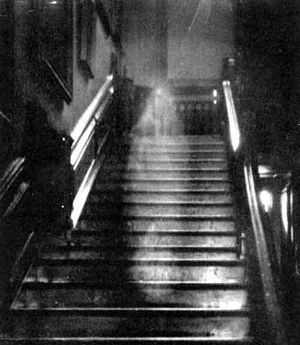
The Brown Lady of Raynham Hall is probably one of the most iconic ghost pictures out there. But what is the story behind it? And who is that ghostly figure?

Is it real? Was it just a double exposure? The picture of The Brown Lady of Raynham Hall has been viral since 1936. A photographer that year took the infamous picture, forever putting it in the mystery box for people to wonder about ever since.

It was just another day in the upper class England, with their old and haunted mansions and stories. Up in Norfolk lays the old Raynham Hall, that were about to become one of the most famous hauntings in Great Britain.

Brown Lady of Raynham Hall: This is the picture taken in the staircase that is now perhaps one of the most famous ghost photos.

Captain Hubert C. Provand, was a working in London as an photographer for the Country Life magazine. On September 19th, 1936, he and his assistant, Indre Shira were taking photographs of the Raynham Hall for an article.

Inside the 300 year old mansion, they were setting up the cameras to take another of the old Hall’s main staircase. Suddenly, Shira saw a ” vapoury form gradually assuming the appearance of a woman” The figure was “moving down the stairs towards them.” Shira directed Provand to take the cap of the lens while Shira pressed the trigger to take the picture.

After the negative was developed for the article, they saw more clear what they had gotten on camera that day. And the famous legendary photo of the Brown Lady of Raynham Hall was born. And after the photo, so was the legend.

Read More: This is not the only ghost picture that caused a stir: The Haunting in Pasir Ris Park 

Who was the Brown Lady of Raynham Hall

So who was this lady? According to legend, the Brown Lady of Raynham Hall is the lost ghost of Dorothy Walpole. She was born in 1686 and according to gossip, the prettiest sister of Robert Walpole, seen as the first prime minister of Great Britain.

Walpole was neighbour with Charles Townshend, 2nd Viscount Townsend in Norfolk. And it just so happened that his sister Dorothy married Townshend in 1713. Although they were good neighbours, and even brother-in-laws, there was bad blood between the men. Especially in politics and when Walpole built his own mansion, Houghton Hall. Did this affect poor Dorothy at all?

What we know is that it wasn’t a particularly happy marriage. Dorothy was Charles second wife. He looked upon the Hall as his pride, as a Lord Hervey said: “Lord Townshend looked upon his own seat at Raynham as the metropolis of Norfolk, and considered every stone that augmented the splendor of Houghton, as a diminution of the grandeur of Raynham.”

Lady Dorothy Walpole: The Brown Lady of Raynham Hall is believed to be the ghost of Lady Dorothy Walpole who died in 1726.

Charles was also well known for his violent temper. Dorothy Walpole was rumored to have been a mistress of a Lord Wharton, a well known womanizer, and that no woman could be twenty four hours under his roof and walk out with her reputation intact.

When Charles discovered his wife and her affair with Lord Wharton, the story says he punished her by locking her in her rooms in the family, Raynham Hall. To make matters worse, there are still rumours that she was in fact entrapped by the Countess of Warton, inviting Dorothy to stay a few days, knowing full well, her husband wouldn’t let her walk out with her reputation intact.

Read More: This is not the only ghost story involving a husband imprisoning his wife in her own home: The Prisoner of Château de Puymartin

After this, Dorothy Walpole remained at Raynham Hall until her death in 1726. She died of smallpox. But did she really leave the Halls? Is she still roaming the place, still locked up, still trying to get out and are forever trapped as The Brown Lady of Raynham Hall?

Sightings of the Brown Lady at Raynham Hall

Raynham Hall was thought to have been haunted long before the picture was taken. People that stayed in the mansion, experienced visitation and paranormal activity that most believed to be the ghost of The Brown Lady of Raynham Hall.

1835

Whatever the truth is, the legend was there to stay. And the first recorded sighting of the The Brown Lady of Raynham Hall was in 1835. One Christmas the new Lord Charles Townshend invited some guest to the Hall for celebrations. Among the guest were Colonel Loftus and another guest named Hawkins. One night night as they approached their bedrooms, they saw the Brown Lady, noticing the dated and brown dress she wore.

The following night, Loftus claimed he saw The Brown Lady of Raynham Hall again. he said he was drawn to the spectre’s empty eye-sockets, dark in the glowing face, the once so pretty Dorothy Walpole. After Loftus reported what he saw it ended with some of the staff permanently left Raynham Hall. It was all recorded by another guest, Lucia C. Stone.

Read More: Ghost Stories of Christmas Hauntings

1863

Just a year after, the The Brown Lady of Raynham Hall was seen again. This time it was Captain Frederick Marryat, a friend of Charles Dickens. He originally wanted to prove a theory of his that the hauntings was caused by local smugglers. According to him, the smugglers spread the story to keep people away from the area. That night hi requested that he spent the night in the haunted room at Raynham Hall.

Marryat’s daughter, Florence wrote about her father’s experience in 1891:

…he took possession of the room in which the portrait of the apparition hung, and in which she had been often seen, and slept each night with a loaded revolver under his pillow. For two days, however, he saw nothing, and the third was to be the limit of his stay. On the third night, however, two young men (nephews of the baronet), knocked at his door as he was undressing to go to bed, and asked him to step over to their room (which was at the other end of the corridor), and give them his opinion on a new gun just arrived from London. My father was in his shirt and trousers, but as the hour was late, and everybody had retired to rest except themselves, he prepared to accompany them as he was. As they were leaving the room, he caught up his revolver, “in case you meet the Brown Lady,” he said, laughing. When the inspection of the gun was over, the young men in the same spirit declared they would accompany my father back again, “in case you meet the Brown Lady,” they repeated, laughing also. The three gentlemen therefore returned in company.

The corridor was long and dark, for the lights had been extinguished, but as they reached the middle of it, they saw the glimmer of a lamp coming towards them from the other end. “One of the ladies going to visit the nurseries,” whispered the young Townshends to my father. Now the bedroom doors in that corridor faced each other, and each room had a double door with a space between, as is the case in many old-fashioned houses. My father, as I have said, was in shirt and trousers only, and his native modesty made him feel uncomfortable, so he slipped within one of the outer doors (his friends following his example), in order to conceal himself until the lady should have passed by.

I have heard him describe how he watched her approaching nearer and nearer, through the chink of the door, until, as she was close enough for him to distinguish the colors and style of her costume, he recognised the figure as the facsimile of the portrait of “The Brown Lady”. He had his finger on the trigger of his revolver, and was about to demand it to stop and give the reason for its presence there, when the figure halted of its own accord before the door behind which he stood, and holding the lighted lamp she carried to her features, grinned in a malicious and diabolical manner at him. This act so infuriated my father, who was anything but lamb-like in disposition, that he sprang into the corridor with a bound, and discharged the revolver right in her face. The figure instantly disappeared – the figure at which for several minutes three men had been looking together – and the bullet passed through the outer door of the room on the opposite side of the corridor, and lodged in the panel of the inner one. My father never attempted again to interfere with “The Brown Lady of Raynham”.

1926

When the son of Lady Townshend and his friend saw the ghost next, they knew who The Brown Lady of Raynham Hall was. They saw her on the staircase, and identified the ghost with the portrait, hanging on the wall in the haunted room. Of course, the portrait of Lady Dorothy Walpole.

Raynham Hall: The haunted hall is a country house in Norfolk and was for 400 years the seat of the Townshend family. The hall is reported to be haunted, providing the scene for possibly the most famous ghost photo of all time, The Brown Lady of Raynham Hall descending the staircase.//Source: Wikimedia

What is the truth?

After Provand and Shira took the picture of The Brown Lady of Raynham Hall, they published their experience in Country life magazine, December 26th, 1936. They were published again in Life magazine on January 4th, 1937. So all in all, they did profit on this. But could it be that they just took a picture?

After the picture was taken, a paranormal investigator, Harry Price interviewed both Provand and Shira. He said: “I will say at once I was impressed. I was told a perfectly simple story: Mr. Indre Shira saw the apparition descending the stairs at the precise moment when Captain Provand’s head was under the black cloth. A shout – and the cap was off and the flashbulb fired, with the results which we now see. I could not shake their story, and I had no right to disbelieve them. Only collusion between the two men would account for the ghost if it is a fake. The negative is entirely innocent of any faking.”

But there have been numerous attempts of debunking the picture of The Brown Lady of Raynham Hall and its status of “proof”. Some claim Shira faked the image by putting grease or something in the lense in shape of a lady, maybe moved down the stairs himself during an exposure? Or maybe it is as simple as an accidental double exposure or light somehow got in the camera. Some even claim that the figure looks eerily like the Virgin Mary statue, and that the image is of her in the staircase, the statue that is, not the Virgin Mary.

Among the examiners trying to debunk the validity of the picture of The Brown Lady of Raynham Hall is Joe Nickell’s detailed writings that the photograph is nothing more than double exposure. And the magician John Booth wrote that the photograph could be easily made. Booth had the magician Ron Wilson cover himself in a bed sheet and walk down the staircase at the Magic Castle in Hollywood. It apparently turned out very similar to the photograph.

More like this

Newest Posts