A ghost in a red shirt used to haunt the Biennale Gardens in Venice. The former soldier had to uphold his promise to protect his hero, Garibaldi, even in death.
In the Castello district in Venice, in the Giardini della Biennale there is a statue of a soldier of Garibaldi, a hero of the Italian Unification. If you look closely though, there is another statue to see. Right behind Garibaldi’s statue there is a bronze statue of a lesser known soldier that is still standing guard, right behind Garibaldi’s back in the garden.
Garibaldi himself was an Italian general, patriot, revolutionary and republican. He is remembered as a big contributor to the Italian unification and the creation of the Kingdom of Italy in the 19th century.
The statue of the soldier was once a man named Giuseppe Zolli. He was a local and studied at the University of Padua before joining Italy’s independence war in 1859. He joined what became known as the Camice Rosse, or the Redshirts. These were volunteering men that followed Garibaldi and fought against the Austrian Empire, The kingdom of Two Sicilies and the Papal States among others and were very famous at the time.
RedShirts: A typical redshirt worn by Garibaldi’s men
The young soldier, Giuseppe Zolli was so dedicated to this man that he swore an oath to always guard him, even in his death. Because he did die in service during the Mille Expedition or the Expedition of the Thousand, a mission to take back Southern Italy from Bourbon rule.
After he died he was buried on the island of San Michele, which is the cemetery of Venice.
The statue of Zolli wasn’t placed there until 1921, when people started to notice strange things happening around the war heroes monument. People reported of a ghostly soldier all dressed in a red shirt tripping and tugging at people passing by the monument. An elderly man living close by recognized the soldier as Zolli and told them all about his promise. The city then decided to erect a statue in his honor.
However, if you are looking for the ghostly soldier, he is probably nowhere to be found. After they placed the statue of the soldier, there were apparently no more sightings of the ghost, as he would be able to always stand guard of his hero, just as he promised.
Haunted by eerie stories and mysterious legends, the Gettysburg Battlefield is home to supernatural phenomena like the legendary Ghost of Gettysburg.
Gettysburg Battlefield has been shrouded in mystery and awed by stories of supernatural sightings. One of the most famous legends is the “Ghost of Gettysburg,” a purported spirit that haunts the historic Civil War battleground. Find out what makes this story so compelling, and explore other unusual tales related to this mysterious place.
The History of Gettysburg
Gettysburg is rich with history and tragedy. During the Battle of Gettysburg, there were approximately 50,000 casualties on both sides in the three days between July 1st and July 3rd 1863. For many it stands as the greatest battle that was during the American Civil War and was a turning point that led to the fall of the Confederacy and victory to the Union.
The Battle of Gettysburg: This is a picture after the first day of fighting on Stevens’ Knoll, Gettysburg, Pennsylvania. The battle would last for three days and be the bloodiest battle during the American Civil War.
It was fought around the town of Gettysburg in Pennsylvania when General Robert E. Lee felt victory was with the Confederates and marched north. However, the Union was awaiting their arrival and a 3 day battle began across the hills and forest as well as the entire town.
It remains the bloodiest battle fought during the American Civil War, details of which have been immortalized by many authors throughout history.
Pennsylvania Hall
Of what is now Gettysburg College and during the battle, the college was a place were the battle raged on. The place is today said to be haunted, especially the building on campus named Pennsylvania Hall. Students and teachers alike have shared stories about seeing soldiers walking on campus.
The Ghost of Jennie Wade
The most famous ghost story in Gettysburg is the Ghost of Jennie Wade. In July 1863, a woman named Mary V. “Jennie” Wade was baking bread for the Union troops when she became the only civilian killed during the 3-day battle. Legend has it that her ghost still haunts the town; reports from visitors, who claim to have encountered her, are often heard along with sightings of a female figure near Ziegler’s Grove, where Jennifer was killed.
Specters in Seminary Ridge Hospital
Seminary Ridge Hospital, once the largest hospital in Pennsylvania during the war, is rumored to be haunted by many spirits ranging from former Confederate doctors to injured patients. Reports of ghostly nurses walking through hallways with stretchers of phantom soldiers have been made, and several reports tell of figures assumed to be wounded soldiers searching buildings for aid that never comes.
Haunted Spirits in Meade’s Headquarters
George Meade’s Headquarters, which sit on the roundtop of Cemetery Hill, have been reported to be haunted by the ghost of Major General Meade himself. Witnesses describe phantom figures in the windows, soft voices coming from the direction of his old tent, and shadows that move inside Meade’s old office.
Other reports tell stories of a spectral female figure said to be wandering around in search of a lost soldier. These stories seem unbelievable but there’s no denying that something odd lurks in this historic area.
Supernatural Occurrences at Little Round Top
Little Round Top has been the setting for a number of supernatural occurrences. Many believe it’s haunted by the ghosts of fallen soldiers, both Union and Confederate. There have been reports of eerie whispers, phantom sounds, and strange glows in the air. Some visitors claim to feel an invisible presence at the top of Little Round Top or strange chills that travel down their spine when they stand on this hallowed ground.
The Devils Den
One of the most notorious places though is The Devils Den, and it is said that the place was haunted long before the Battle of Gettysburg.
It used to be a Native American hunting ground for centuries. Another battle named The Battle of the Crows was supposedly fought here and in the night you could hear war cries from the Native American according to the early settlers who told ghost stories about the place. Even by the end of the 1800s, the place was called haunted.
During the Battle of Gettysburg there was a lot of fighting around the den on the second day. After the war, there were countless people that claimed to have seen something supernatural around the bould of rocks.
Strange lights and sounds have been reported on from the war ridden Observation Post Rock. Remains of Russians, Taliban and perhaps even older groups of soldiers have been found in the ground that perhaps still are haunting the place.
In the Helmand Province in Afghanistan there are more than the living that patrol the observation point as paranormal sightings have been seen around these parts for a long time at this place called The Observation Post Rock that the American Marines took use as a base and a observation spot. What is it about this particular observation post that makes the ghost linger?
American Army in Afghanistan: The American army spent years in Afghanistan since the early 2000s, staying in bases across the country. Some of these bases like O.P Rock in Helmand Province was already there when they arrived and is reportedly a haunted one.
Before being taken over by the American troops, The Observation Post Rock or O.P Rock was a Taliban controlled fort, almost falling to pieces. The Americans also dropped a 900 kg bomb on the place before taking over the place. Situated only a few hundred meters south east of Patrol Base Hassan Abad, The Rock is a desolate place.
It was at the hands of NATO since it was captured from the Taliban in 2008 and used as a military base for soldiers stationed there. Although today, The Observation Post Rock has fallen into the hands of the Taliban once again when they took control of Afghanistan in 2021.
Who are the Taliban?
A big part of the supposed hauntings is said to be from rebel forces like the Taliban who used to control the Rock, and are today the ones using it as an observation post. The Taliban is a group of islamic fundamentalist and pashtun nationalist and a militant political movement in Afghanistan. It ruled the country from 1996 to 2001 after the Afghan Civil War (1992-1996), before being overthrown following the United States invasion.
They are deemed by most countries as a terrorist group with little regard to human rights, especially women’s right to both education and autonomy of their own lives. They enforced strict Sharia laws.
In 2021 when the US troops left Afghanistan, they came back into power again after only a few months, and by August they controlled every major city, enforcing many of the same laws they used to have last time they were in power.
The Dead Bodies of Soldiers from Ancient Wars
According to the locals living in the area, The Observation Post Rock was a place where they claim rebel fighters were buried alive during a missile strike when the Americans started bombing the place to fight the Taliban. And when the American Marines that were clearing out the place to use it as a base for the US in the early 2000s, they found more than one body, buried in a shallow trenches.
The US troops reburied the dead they found and turned the observation rock into a base for operation. But the horrifying things didn’t stop there as the soldiers working there noticed they were not alone.
When the Americans dug into the place they found human remains in the collapsed cave system that used to be under it. But there were not only victims of the war they were currently fighting as some of the bones were from previous wars, even ancient and thought to be hundreds of years old.
An Observation Rock: The Marines chose the big rock because of the vantage point of the rocky climate in Afghanistan to use as their base. This happened across the whole country. Here from another place in the country they also took use of the high ground to keep watch.
The Helmand Province is one of 34 provinces in Afghanistan and the largest in area and also said to be one of the most conservative areas. Throughout the 2001-2021 war in Afghanistan it was often considered at the time to be Afghanistan’s “most dangerous” place and it witnessed some of the heaviest fighting during the war, where at its peak hundreds of civilians were being killed monthly.
The local Afghans in the surrounding Amir Agha villages as well as the soldiers who have been stationed at the base claim that The Observation Post Rock is haunted and cursed, and has been for a long time, even before the wars in modern time.
The Observation Post Rock is not a new fort at all, and has been used for many wars over the years, and new holders keep building on top of what used to be there. The locals claim that the place has been used as a fort of some kind even back to the time of Alexander the Great when he invaded as far back in 330 BC.
Strange Lights and Static Sounds at The Observation Post Rock
Considering the danger to those living in the area and the history, there is no wonder that the place got some haunted rumors about it. But what is going on in this place that makes the hardest of soldier sure something paranormal things are going on?
Soldiers that are stationed at the military outpost are tormented by mysterious sounds and seeing things not belonging to this world. Reports about radios giving off static sounds, sudden temperature changes from hot to cold and a general feeling of uneasiness have left the soldiers with a feeling of being watched.
There are also those who claims to have seen flashes of lights when patrolling the barren landscape in the night at The Observation Post Rock. A trick of the eye perhaps of overstraining in a war ridden zone where you always have to be on guard? Perhaps, but the strange light around the place is something that more than one soldier reported on.
Soviet Remains and Ghosts that Lingers Still
One of the supposedly paranormal things we hear about from The Observation Post Rock is the foul smell filling the observation palace. A rotten smell is also some of the things that have been reported by the soldiers on random parts of the night at The Observation Post Rock, a smell eerily similar to the one of rotten flesh.
There are also talks about strange sounds coming from the dead of the night, and one of the sounds they have heard are voices of not only the victims of ongoing war, but also something that sounds like Russians are heard in the darkness. Problem is, the Russians left years ago and the only russians left were the dead soldiers from another war in another time.
Soviet Soldiers in Afghanistan: During the Soviet Afghan war from 1979-1989, many deaths were counted on both sides on The Observation Post Rock among other places in the 1980s. This is soldiers from Odintsovo in Russia, killed during the war in Afghanistan. //Photo: Valeri Pizhanski
During the Soviet occupation of the country for many years, there used to be stationed a fair amount of Russian soldiers at The Observation Post Rock as well. And many rumors say that the Russians that used to be stationed at this place ended up being executed by the Mujahidin, the guerrilla-type militant groups led by the Islamist Afghan fighters in the Soviet–Afghan War from 1979-1989.
Could the ghosts of these Russian soldiers be the one being heard in their native tongue, haunting the The Observation Post Rock, even to this day?
The Observation Post Rock Today
If the legends from the locals are correct, the The Observation Post Rock has been used as some sort of fortress and place of war since the time of Alexander the Great, living over 2000 years ago. Sadly, it looks like the place will be used for war for a long time still and the victim of the many wars seems to be piling up.
What the fate of the observation post now, is more of a bigger question. The U.S army pulled out in 2021, and the Taliban quickly regained territory over the whole province again during their weeks of fighting and heavy bombing across the whole Province. Perhaps in a few years time we will hear the ghost stories of soldiers being haunted by war again?
Hidden by sand in the Gobi desert for centuries, the abandoned city of Khar Khot is still haunted by the ghosts of the inhabitants that didn’t manage to escape.
Secluded in the Gobi desert, hidden by sand and stands the test of time, the abandoned city of Khar Khot houses no dwellers except for sandstorms, deadwood and ghosts.
Khar Khot or Khara-Khoto (ᠬᠠᠷᠠ ᠬᠣᠲᠠ) is Mongolian and means, Black City. It is located in Inner Mongolia, a region in China bordering with Mongolia. The Chinese name for it, Hēichéng (黑城) also means Black City and it certainly marks a dark spot in history considering all the bloodshed that ended the once important trading city.
Read More: Check out all our collection of ghost stories from China
There are also the legends about the city being haunted by demons and spirits. And when explorers from all over the world came to have a look at the legend of the abandoned city, the locals refused to go near it because of the ghosts still roaming the area around Khar Khot.
The City at the Silk Road
The city was founded in 1032 and used to be a busy and important trading place in the 11th century as a part of The Western Xia, also known as the Tangut Empire. In 1226, the city was taken over by Genghis Khan and many blame the Mongolian ruler that the city is now destroyed. That is not true as the city under Kublai Khan’s time, the city expanded three times and flourished.
The city was important as a trading hub along the Silk Road and even Marco Polo wrote about it in his travels along the silk road in The Travels of Marco Polo, where he called Khar Khot for Etzina.
When you leave the city of Campichu you ride for twelve days, and then reach a city called Etzina, which is towards the north on the verge of the Sandy Desert; it belongs to the Province of Tangut. The people are Idolaters, and possess plenty of camels and cattle, and the country produces a number of good falcons, both Sakers and Lanners. The inhabitants live by their cultivation and their cattle, for they have no trade. At this city you must needs lay in victuals for forty days, because when you quit Etzina, you enter on a desert which extends forty days’ journey to the north, and on which you meet with no habitation nor baiting-place.
— Marco Polo, The Travels of Marco Polo, translated by Henry Yule, 1920
The Fall of Khar Khot
In 1372, Khar Khot was under charge of the Mongol general Khara Bator when the army of the Ming Dynasty attacked.The city was surrounded and under siege for a long time, but the city was more of a fortress, built to withstand any attacking army, and the soldiers outside needed to think of a way to breach the walls.
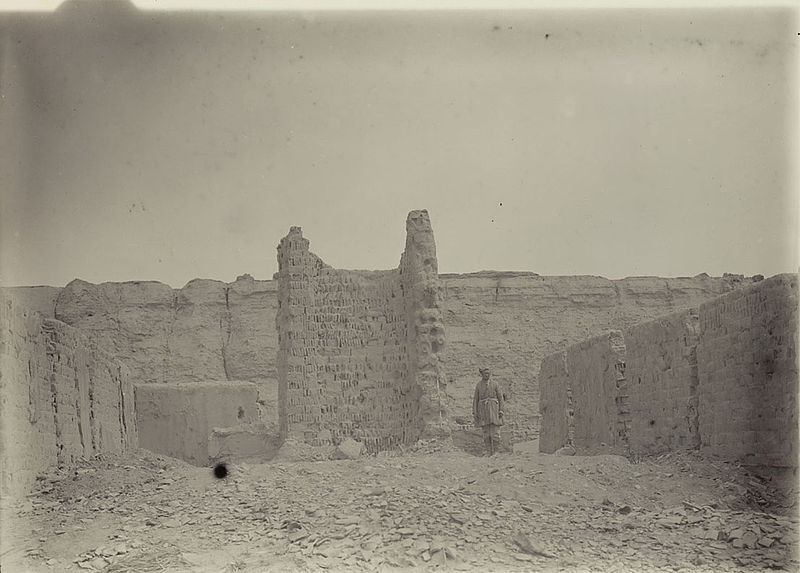
Rediscovered: Ruin At Kharakhoto from east, 30 May 1914.//Photo: Aurel Stein
So to speed things up on the outside, the Chinese went for the fortress one weak spot, the water supply. The name Gobi basically means waterless in Mongolian, and that is what they became. The city was cut off from its water supply by diverting the Ejin River that flowed right outside the city walls away from the thirsty people inside.
The inhabitants inside began desperately to dig in the ground, trying to find drops of water according to the legend, but to no avail. When Khara Bator realized that the siege was not something they could withstand he threw all the valuables of the city into the well so as not to give that up to the invaders, even though they had to give up their life.
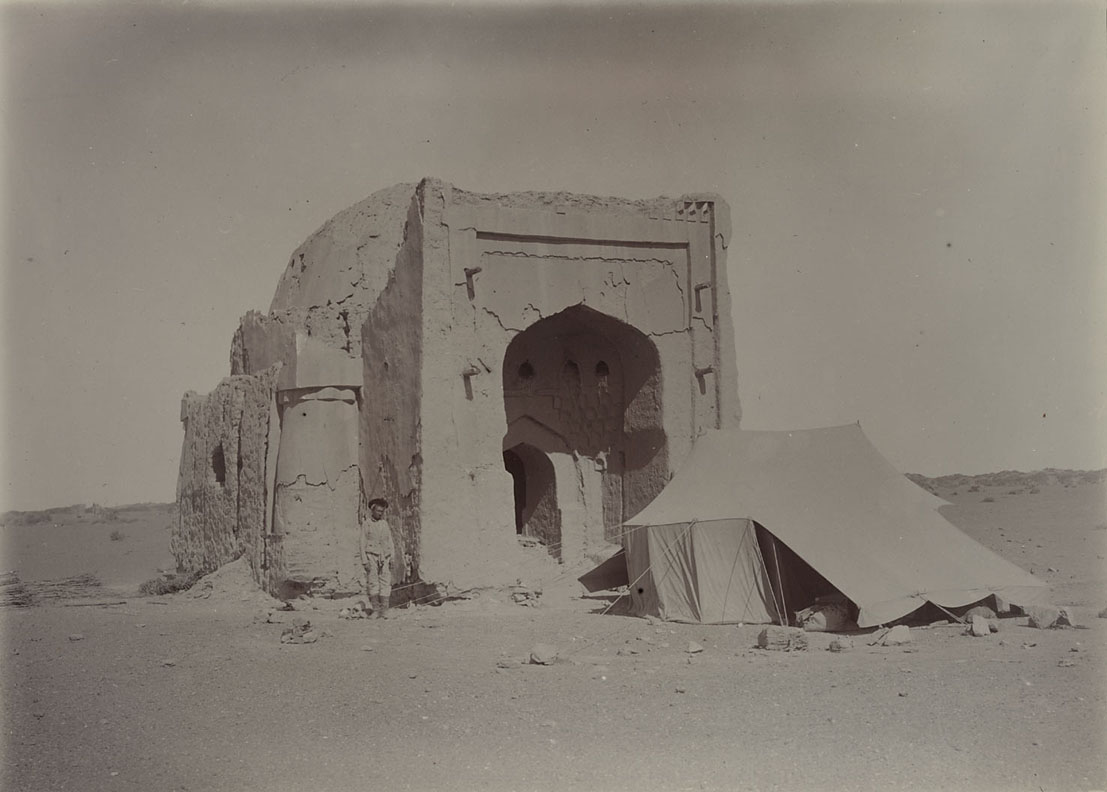
Ruins of Khar Khot: Muhammadan Tomb K.K.VI. at southeast corner of Kharakhoto, from east, 3 June 1914.//Photo: Aurel Stein
As time went on with no water with the Han Chinese army banging on their doors, Khara Bator murdered his family before taking his own life. The Mongols’ reign over Asia was slowly dwindling away.
His soldiers waited until the Ming Dynasty finally breached the walls and attacked, killing the rest of the inhabitants of the city, not burying the bodies and making them live on as the ghost they are today.
Another Version of Escaping
There are alternate versions we can find in the Ming Dynasty annals that tell a different story about Khar Khot. In this version, the leader together with his ministers actually escaped from this ancient Mongolian city.
No matter who died and who escaped, the city was abandoned after the defeat and left in ruins to be swallowed by the desert.
The Black City Today
600 years passed before people returned to the desolated city buried under the dry sand. Because of being so far from any other sign of civilization, the city was largely safe from looters and people seeking to destroy Khar Khot.
When they first started excavating they found a rich amount of manuscripts of the Tangut language along with other important cultural artifacts, untouched because of its remote location, and perhaps because of the ghosts still protecting the city?
Today, tourists can come on a day trip to see the once magnificent city in the desert that the sand has filed down, softened the edges and buried its secrets. But in the night, they go back and miss the action that goes on after the sun goes down. Reports of flames burning for hours and strange lights that lead people astray in the desert are told from the guards watching over this place.
Their ghost haunts the ruins of the garrisons, the walls and the very sand itself. In a way, giving the ghost city of Khar Khot a sort of life other than just being pieces of crumbling stone walls.
Chute de la Dame Blanche or the White Lady Waterfall is a legend of a grieving bride to be in the midst of the battle of Canada. She now haunts the waterfall still wearing her wedding dress were she ended her life, still grieving the loss of her lover.
Taller than the Niagara Falls, the Montmorency falls towers 83 m over the city of Québec. It flows downstream from the city and into St. Lawrence. It is a majestic sight, the veil gushing and all sound but the masses of water is heard when standing close to it. But next to it, another lesser known waterfall falls. From ground water it connects with the Montmorency River along the way as water does. When the waterfall hits the river below the water spreads out, like a wedding veil. This particular waterfall is called Chute de la Dame Blanche or the White Lady Waterfall.
Stories from waterfalls have always been connected with grief, love and death. At least in European folklore. Tales like the Banshee is steeped in water imagery and female ghost stories, and many waterfalls tells a sad tale of a bride to be that died too soon. And this one about the Chute de la Dame Blanche, is just that.
The Bride to Be of the Chute de la Dame Blanche Legend
But who is this woman in the waterfall that came to be known as The White Lady Waterfall more than her original name? A banshee? According to legend, it is the spirit of a young Canadienne woman. An ethnic group of French colonists who settled in Canada from the 17th century. Or as they were known back then, French.
The veil: The waterfall of Montmorency, 1900, just next to Chute de la Dame Blanche.
In a time when Québec was called Nouvelle-France, or, New-France, the state was in an unrest and in the middle of a war that was going to last for seven years against the British empire.
The story tells about Matilde Robin, living near either Côte-de-Beaupré or Île d’Orléans, close to Québec. At the end of the summer in 1759, she was meant to marry her beloved Louis Tessier. Through the summer, she tailored her own white wedding gown, in anticipation of her wedding.
But the unrest in the country was creeping in and about to disrupt the romantic notion of a happily forever after. Canada, being under French government was in a state of unrest as the British wanted a piece of the land and there were whispers about them going to attack soon.
On the night of 8th or 9 July, British forces landed on the north shore, some 1.2 km (1 mi) east of the Montmorency Falls, east of where the French west-east defense line ended, at the mouth of the Montmorency River. They met no opposition from the French for the landing, but the armed forces prepared for battle.
The Bloody Battle of Beauport
The 31th of July, at the cusp of fall, the British attacked. In what was going to be known as the Battle of Beauport or the Battle of Montmorency. The British had been mostly successful in their attacks with their aggressive battle strategy, sending 40,000 soldiers to New-France. For the campaign against Québec, General James Wolfe was given command of an army of about 7,000 men.
At war over Canada: This is a map depicting the troop arrangements at the 1759 Siege of Quebec. It was after this battle that the ghost legend of the Chute de la Dame Blanche is said to have started.
The women and children took cover from the battle in the forest to hide from the bloody battle that raged on. And according to legend, so did Mathilde. The French army, as well as soldiers was volunteers in a militia as well as around 500 natives. Louis was one of the militia men and assisted the French in the following days the battle raged on.
The attack was a fail for the British. Wet air from the falls nearby and a sudden storm ruined the English gun power. The British troops were forced to retreat and admit defeat for the time being. Wolfe recorded 210-deaths in this journal. The French leader, Louis-Joseph de Montcalm, recorded 60.
The White Lady Waterfall
It was a French victory though, and they returned to their loved ones in the forest. Mathilde also waited for her Louis in anticipation. But he was one of those that were never going to return from the battlefield. He died in the battles according to the legend. The deaths of the soldiers during this battle were mostly attributed to the fire coming from the great battery of the Montmorency camp of the British. Perhaps that’s how it also happened for Louis.
In some version of the story of the Chute de la Dame Blanche, it is Mathilde that finds his dead body, floating on the shores of the river banks after the battle. Perhaps she did, perhaps it just makes a better story.
Chute de la Dame Blanche: The White Lady Waterfall has been pictured many times in both books, stamps and postcards. This shows just how much a part of the culture and history this ghost story has become.
No matter of the manner she learned about the death of Louis, it was more than Mathilde could live with, and she ran home, grieving while the rest was celebrating French victory. In some version the houses was on fire after the battles, although it seems unlikely, given of the summer rain storm that ended the attacks.
In either case, she ran to save her one beloved item, the wedding dress. She put on her gown as well as the veil even though she knew there would be no wedding. She went to the Montmorency Falls were she and Louis used to go to be alone before the war. She threw herself from the cliff into the water, her white bridal veil becoming one with the gushing waterfall, becoming Chute de la Dame Blanche or the White Lady Waterfall.
Only a couple of months later, the French were defeated on the Plains of Abraham, and the dream of a New France died as it ended under the British crown.
Today, especially during the summer and early fall, reports of seeing the young girl in her wedding dress lives on around the Montmorency Falls. And the small sister waterfall, Chute de la Dame Blanche, is all hers.
The Truth of the Legend of the Chute de la Dame Blanche
The legend of the Chute de la Dame Blanche has definitely gone through some changes over the years. It is nevertheless a persistent one, and it even made the cut to be put on Canadian post stamps, making Chute de la Dame Blanche or the White Lady Waterfall somewhat of a national treasure.
The Bride in the Waterfall: Many waterfalls like Chute de la Dame Blanche tells a sad story about a bride dying to soon.
A female ghost in the waterfalls is a common enough myth, especially with the dramatic flare of a wedding veil, fitting the aesthetic of a waterfall and across the world there are countless of brides to be’s that are supposedly haunting the waterfalls.
But looking at the timestamp of the legend, such a white veil as the foaming waterfall is unlikely as brides didn’t wear white until after Queen Victoria’s wedding in 1840. Could it just be the details of the wedding dress that were embellished over the years, or is the whole legend just that, a classic ghost story?
One thing that actually is true, is the battles, and it is definitely true that the Battle over Beauport happened, and that young men died and that women were left, longing after their lost ones. But was a man named Louis Tessier one of them?
According to a database of the French and British army soldiers in Québec in 1759 and 1760, there were no French volunteered named Lois. According to them there are no official military documents clearly identifying Canadian Militia members. And if our Louis did exist, he probably would have been one of them. However, some combat participants have been identified using historical and genealogical research. Biographical information will be posted as it becomes available.
From the French army, on the possibility he could have been one of those, there were not many Tessier. We found a Jean Tessier, born in France and part of the French army. Only 26 years old, he was Mortally wounded in the battle of the Plains of Abraham 13 September 1759, not in the Battle of Beauport.
On the account of Louis, there were a lot of them. Most of the Louis that showed on record they died in 1759, died in the battle of Plains of Abraham or the days leading up to it. The only ones dying up to French victory of Beauport were:
Both of these particular people were French born and in the French army, not in the militia. And therefore unlikely of being the Louis marked up in the legend of the Chute de la Dame Blanche.
As for Mathilde Robin, no such name has come up in the research in and around the time of the battle. Considering there is no certain sources as to their names, we have to consider the research and their story, inconclusive.
Chute de la Dame Blanche Illuminating the Country
However the legend of the Chute de la Dame Blanche, be it true or not, the waterfall runs as it has always done. The water keeps flowing, the veil creates the mist everything can hide in, perhaps even ghosts. But it isn’t all doom and gloom around the waterfall of the Chute de la Dame Blanche, but rather, the first source of light.
In 1885 on the 29th of September at eight o’clock, a crowd is gathered on the Dufferin terrace in the city, 12 km away from the gushing waterfall. For the first time in Canada at that distance, electrical light is powered from the power of the waterfall, bringing light again to the country and bringing Canada into the modern world.
In the bunkers at one of the Norwegian Royal Family’s residents, Skaugum, there is a rumor of the place being haunted. One of the ghost that haunts the place, is the former Nazi Reichskommissar from the war, Terboven.
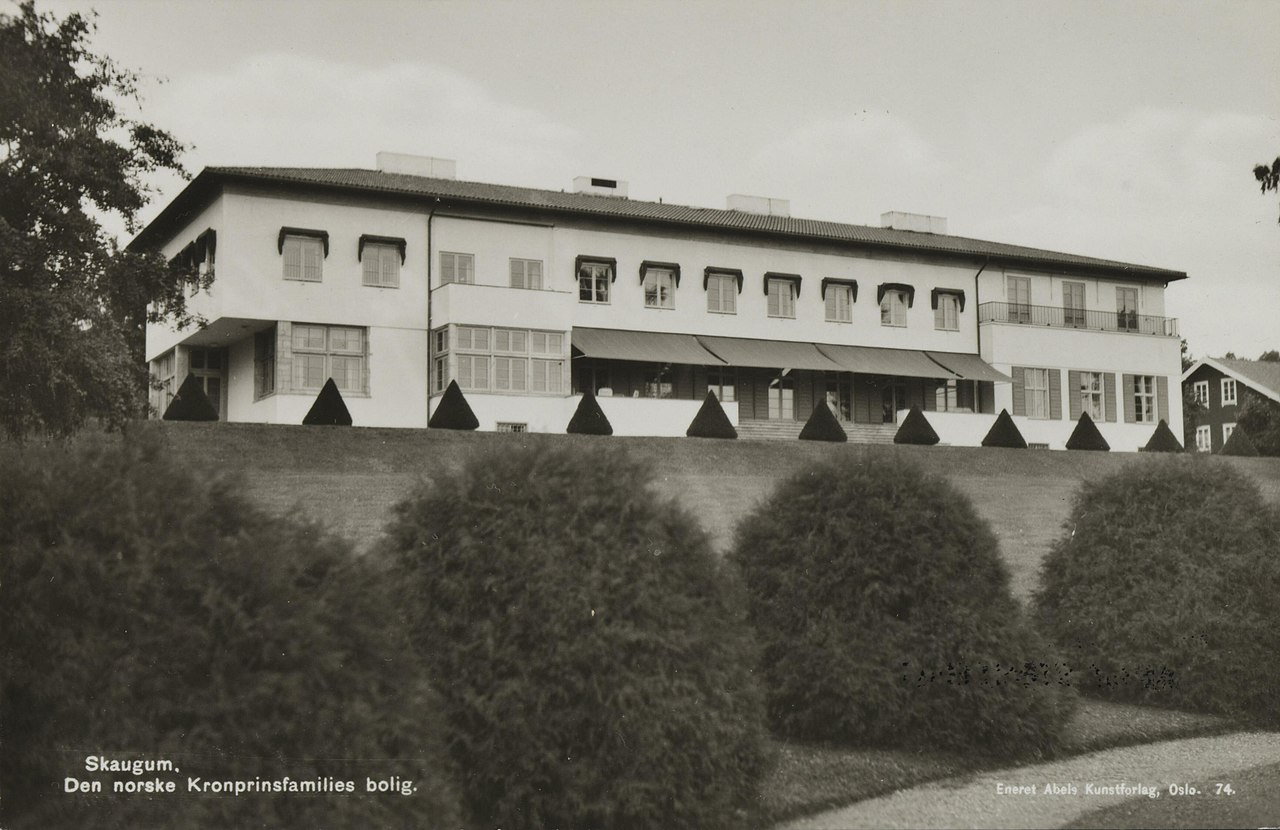
Skaugum, Asker, Norway: 1945.
No one has flagged with the Norwegian flag in a long time since the German occupation five years earlier and only the nazi flag with the black swastika on the white disk was allowed. But it is all about to change as the allies are closing in on Berlin and the second world war is coming to an end.
High Ranking Nazi’s:Terboven (seated 2nd from right) with minister president Quisling, SS boss Himmler and von Falkenhorst in 1941. Foto: Deutsches Bundesarchiv
8th of May is approaching, the liberation day and the freeing of the nation are a couple of minutes from being announced. People are gathering in the the streets, ready to celebrate and start anew in a peace.
Read Also: Check out our entire collection of ghost stories from Norway.
But there are some the freedom is nearing its end however. The German Reichskommissar for the occupied Norwegian areas, Josef Terboven have an arrest order on his name and is one of the number one nazi officials the Norwegians are after.
Read More: Check out more ghost stories from the Second World War like The Black Cat of War
Terboven knows the war is over and that it will be showed no mercy from the allied forces, not from the people he spent five years at oppressing. He decided to end his life to avoid capture, but according to the rumours, his spirit never managed to escape.
The Reichskommissar in the Bunker
As Reichskommissar, Terboven was the one giving the orders that would send the people of the nation to the working and death camps. He was responsible for the imprisonment, executions- everything.
When he took office in Norway it was he who brought death penalty back to a country that had made it unlawful. You could end up dead by leaving the country without permission, listen to illegal radio, taken with illegal newspapers and help war prisoners and refugees. He was by the end of the war, one of the most hated men in Norway.
All of this is hanging over his shoulders that day in May when people are celebrating. He sits in his bunker at Skaugum, a farm originally owned by the Royal Family outside of Oslo. He once barged in, chased the royal family away and started living there. Now, he himself is the one that is about to be chased away.
The bunker at Skaugum is only 200 meter from the main house the crown prince of Norway owns of and stays in today. There the next King and Queen of Norway lives together with their children.
On that day in 1945 Terboven realized that all hope for a German victory was out of question and hid in the bunker together with the last of the German officials left.
Wilhelm Redieß, the SS boss in the country had already killed himself by gun. “That was early, he beat me to it”, he commented on the suicide.
But Terboven would follow shortly and he had brought 50 kg of dynamite to his bunker at Skaugum and that is how he ended his days. He blew himself up to avoid being prosecuted for his crimes. At 23:30, he detonated the bomb exploded along with the body of Redieß.
The remaining crew of SS spent the rest of the dynamite the next day when Norwegian police came to burn it all down.
The Ghost in the Bunker
According to the legend, the bunker at Skaugum is also were Terboven will spend his eternity. For a long time after the war, it has been reports about activities that no one has been able to explain close to the bunker where nazi officers ended their days.
Early days of the Nazi Party:Josef Terboven rose quickly in the ranks, here with the national party: NSDAPs paramilitary street troops in 1926 in Germany. Foto: Deutsches Bundesarchiv
His Majesty The King’s Guard; the Royal Guards, a battalion of the Norwegian army are the ones guarding the Royal property and residents, including Skaugum today. And there is also from the soldiers the stories comes from.
They tell they have experience many strange things they believe to have a paranormal origin walking the empty places near the bunker at Skaugum. Strange tracks from or to the bunker is spotted for example by the forest surrounding the estate close to the fence. The soldiers have to patrol there and comes back with stories about strange sounds and apparitions, even during the day. Late at night close to the bunkers, the keep hearing the sound of voices and when they go to check it out, they find that they are alone. At least the only living thing there.
Skaugum Farm: The big farm has been the Norwegian residency for decades and even today the place is the home of the crown prince and princess. Right by the big house there is a bunker that is said to be haunted by the former Nazi officials that took over the place during the war.//Source: wikimedia
There are also placed calls from the outer guard post when no one is placed there to make them.
A common factor for all of this is that it is all happening right by the bunker Terboven blew himself up in. The royal guards working at Skaugum are of the opinion of that it is all contributed to Terboven and his ghost lingering in the bunker forever. He never got peace after his death and roams the property were the next royal heir of Norway resides.
From the ancient writings of Plutarch, we can find a greek ghost story of the ghost of a young orphaned boy named Damon haunted a bathhouse in Chaeronea in Greece. According to the legend, the ghost haunted the place for centuries, perhaps even to this day?
Many of the oldest ghost stories sounds eerily alike to those of today, showing that the concept of ghost have been fairly consistent across time and place. Although most ghost stories from the ancient world is found in mythology and fairy tales, there are those ghost stories that comes from more historical records. Like this greek ghost story about a haunted bathhouse from the writings of Plutarch.
Plutarch (AD 46–after 119), was a Greek Middle Platonist philosopher, biographer, essayist, and priest at the Temple of Apollo. He also served his last thirty years a priest in Delphi. He also was a part of The Eleusinian Mysteries for the cult of Demeter and Persephone based at Eleusis in ancient Greece. They are the “most famous of the secret religious rites of ancient Greece“. So a man of the spirits, to say the least.
Temple of Delphi: This area of Greece have always been steeped in mystery and this greek ghost story happened not far from the mystical temple of Delphi.
Plutarch is known primarily for his Parallel Lives, a series of biographies of famous men from that time. Although the writings is mostly about vices and virtues and about philosophy about moral, he managed to put in a couple of ghost stories here and there as well.
Ghosts in Ancient Greece
So how did the typical ghost in ancient Greece look like? Back then it was closely linked to Greek mythology as it was the go to for explaining the unexplainable.
In ancient Greece there was two underworld goddesses the restless spirits belonged to: Melinoe and Hecate. Both were associated by wandering at night, with a trail of ghosts behind them, striking fear in anyone who saw them and their train of restless spirits following them to the underworld as their hounds barked with them. The two goddesses were also the ones that oversaw the burial rituals, something that was very important for the Greek and their ghost stories.
The Spirits of the Underworld: This greek ghost story and most other stories was deep rooted in the Greek mythology. Here depicted in: Souls on the Banks of the Acheron by Adolf Hirémy-Hirschlin 1898.
There were three main categories of ghosts in ancient Greece that restless spirits could be divided into: the ataphoi, the aoroi and the biaiothanatoi.
The ataphoi was the spirit of those who had not had a proper burial and their mission haunting was to get the living to bury them properly so they would be able to move on. This was mostly an easy fix as long as you could find the body, and after they had a properly burial they would mostly just disappear to the afterlife.
The aoroi was ghost of those that died too young and had led an incomplete life and was a bit more tricky to deal with. This type of ghost could possible become vengeful after death because of the regret of dying before its time.
The biaiothanatos however was the ghost that died a violent death, either murdered or in war. Like the two other categories it was highly important with the proper funeral rites for the dead so they would not awake as ghosts and haunt the place and possible harm the living.
A Greek Ghost Story
One of the ghost stories we find in the biography is about Cimon (510-450 BC). The ghost story is set in Chaeronea in Boeotia in Central Greece, just east of Delphi. It was also the birth town of Plutarch and it is said this was a ghost story he personally knew off as the ghost was still about in his day and age.
This greek ghost story tells the story about Damon Peripoltas, an orphan boy, living in Chaeronea. At this time, the city was ravaged by war and poverty, making it a breeding ground for violence like this story turned out to be.
Damon was said to be a beautiful boy, more so than the rest. He was a descendant of Peripoltas, the ancient seer that led his people to Boeotia. The descendants of the seer were held in high esteem, but it all changed after Damon though.
Although he was deemed to be a beautiful boy, he was also regarded as a dangerous one. He was poor, untrained and filled with rage and had no problems with violence. Something the whole city was about to know the hard way.
The Roman Commander’s Advances
A Roman commander was wintering in Chaeronea with his unit. One day, the young Damon, just past his childhood, caught the commander’s eyes and the commander decided he wanted him. The Roman commander claimed he fell in love with the beautiful orphan boy and made a pass on him. He tried to shower Damon in presents and gifts to woo him over, but Damon refused and was offended by the grown man’s advances.
This made the commander angry and his approach towards Damon changed. He threatened the boy with violence and said he would send Damon into obscurity and poverty if he did not give into him.
Damon got afraid of the repercussions he would suffer at the hands of the Roman commander and fearing exactly this, as he had seen what poverty could do to a man, Damon plotted against the man before he was the one suffering. But he had no intention of giving into the commander.
Smeared With Soot and Drunk on Wine
Damon had grown up in the rough city on the streets and a violent end was all he knew off. He gathered sixteen of his friends to help him see the plot towards the Roman through. They smeared their face with soot one night and got drunk on wine to gather the courage to get on with it.
Just before the break of dawn they attacked the Roman commander as he was sacrificing to his gods in the marketplace. The crew of youngsters killed the Roman then and there, and together they left the city before getting caught.
A Tragic Greek Ghost Story: This story ended in blood as almost everyone in the story ended up murdered. Here a depiction of the assassination of the Roman emperor, Julius Caesar who also were murdered by a group in a public place.
According to Roman law presiding in the city, this was punished by death, and this was the sentence the counsel of Chaeronea gave them. So, as the council sat to supper in the evening, Damon and his men broke into the town-hall were they were dining and slew them all. And yet again, they flew the city.
Hunted by the Romans
An investigation was done and they asked Damon to return, noticing the city also had been wrong. Damon was ravaging and pillaging the countryside with his accomplices, having fallen to poverty as he desperately didn’t want to. He was even making threats to the city that had cast him out. They lured him back by appointing him gymnasiarch, a high honor as an official, that would lead to respect and riches. He couldn’t refuse.
But when he came, he was having a vapor bath in the bathhouse and was slain. But they would never silence him as it was said that the ghost of Damon haunted the bathhouse.
His ghost roamed the bathhouse and the phantom of him appeared in it, sighing and groaning of his life that was cut short and from the betrayal.
The Haunted Bathhouse
Because of the ruckus from the ghost in the bathhouse, the citizens walled the bathhouse shut, trying to keep him inside, trying to put a lid on the past and their deeds. And it was said that still in Plutarch’s time, neighbors could still hear him inside, trying to get out again, to flew the city once more and finally be free.
Haunted Bathhouse: The greek were famous of their advanced public bathhouses. In this greek ghost story, the locals had to close up the bathhouse as the ghost of the murdered Damon kept crying and trying to escape.
Descendants of Damon’s family still lived at that time, near Stiris in Phocis. They are called Asbolomeni, or Besooted because of how Damon smeared himself with soot before committing his crimes.
What happened with the bathhouse and this greek ghost story if the place ever got quiet is uncertain, as ghost that met a violent end had a habit of holding a grudge for a long time.
An online magazine about the paranormal, haunted and macabre. We collect the ghost stories from all around the world as well as review horror and gothic media.