Tag Archives: North America

The Chaleur Phantom – The Burning Ghost Ship in Chaleur Bay

Advertisements

Ghost light over the Chaleur Bay in Quebec has spurned many ghost stories about a burning ship that still haunts the water. From Portugues enslavers to indigenous curses, the Chaleur Phantom covers it all.

Strange is the tale that the fishermen tell:
They say that a ball of fire fell
Straight from the sky, with a crash and a roar,
Lighting the ship from shore to shore.
That was the end of the pirate crew.
But many a night a black flag flew
From the mast of a specter vessel, sailed
By a specter band that wept and wailed.

– The Phantom Light of the Baie des Chaleurs”, 1891 Arthur W.H Eaton

Right before storms in Chaleur Bay in Canada, a ghostly light can appear that no one can really explain. Those studying The Chaleur Phantom with a telescope say that there are no more details to examine, even up close and a definitive explanation of it all, still remains a mystery. 

But those watching the lights with their naked eye claim that it looks more like a ship on fire and from there, the stories about it took form. The Chaleur Bay or Baie des Chaleurs is French and means Bay of Warmth because of the high temperatures. Perhaps a fitting name as the bay is reportedly haunted by a burning ghost ship that cruises the bay between New Brunswick’s north shore and Quebec’s Gaspé. 

The Many Ghosts of the Bay

The lights are claimed by many stories around these parts. West of Caraquet, the ship is known as the Marquis de Malauze, a French ship that were sunk by the British in 1760. To the east it is known as John Craig, the name of a barque that sank outside of Shippigan Island around 1800. Only a cabin boy survived a drowning fate, but later died of exhaustion. 

Another source of the The Chaleur Phantom is the haunting of Lady Colbourne, a schooner that went down in 1838 with its valuable cargo. On her last voyage, she was loaded with gold, silver, spices and wine that not all were recovered after the wreck. The passengers were also very wealthy people that drowned in their finest clothes. When she went down, 43 people were reported to have drowned. 

Advertisements

But that is not the earliest explanation for these lights known as The Chaleur Phantom. The most told and perhaps most tragic story is of the Portuguese explorers that ended their days in the bay after enslaving the indigenous people. 

The Portuguese Captain

One summer’s evening in 1878, Mrs. Pettigrew sat on her veranda late at dusk at Heron Island. Suddenly, a man stood in front of her, asking for her help. He was badly burned and she turned away to run inside. He brushed by her and she noticed that he had no legs. But before she could find out more, he disappeared. 

On many occasions before and later this incident, the Pettigrew family noticed strange things out on the bay. They reported about a ghost ship that was most often seen on the north side of the island during the full moon. 

One of the tales that have been spun is about the Portuguese Captain in the 1500s that ravaged and pillaged the area before disappearing without a trace.

The Curse of the Burning Ship: The burning ship people of this area reports of seeing is often attributed to the disappeared ship the Portuguese explorer Gaspar Cort-Real and his brother Miguel that never returned after sailing to this area. // Photo: Destruction of the Turkish Fleet in the Bay of Chesma by Jacob Philipp Hackert.

The captain, believed to be the real Portuguese explorer, Gaspar Cort-Real, arrived at Heron Island in 1501 to kidnap the natives of the place known as Mi’Kmaq to sell them as slaves. It is reported that he captured as many as 57 indigenous people that were taken back to Portugal as slaves.  

But when he came back for his second visit, the Mi’kmaq took him first. Rembering what had happened to their people last time he came, they tortured and killed him before he could do any more damage to their people. 

A year later the Captain’s brother, Miguel came to look for him, and the locals attacked him as well. Their ship was set on fire and they jumped in the waters, promising they would haunt the bay for the next 1000 years as The Chaleur Phantom. 

It is said that the corpses of both the Portuguese as well as the Mi’kmaq washed ashore on the island and that they were buried in a low lying area at the west tip of the island called French Woods. And that their graves were shallow and their souls not yet at rest. 

The Pirate Killing

Another origin tale to the lights is told from Restigouche. According to this tale, it was a group of pirates nead Port Daniel that killed a woman there. She was a native in most stories and was kidnapped by the pirates.  With her dying breath she cursed her killers.

“For as long as the world is, may you burn on the bay.”

And according to the phantom lights in the bay, they still burn. 

Advertisements

The Murder of a Sailor

A third explanation of The Chaleur Phantom that are told is of the murder of one of the sailors that worked on a ship. They encountered bad weather that drove the crew desperate. The superstitious sailor feared that they would die and that they were followed by bad luck. They attributed this bad luck to one of the sailors and ended up murdering him to reverse the bad luck. 

Then the ship caught fire though, and it was told that it was Catholic blood way of seeking revenge.  

Other Scientific Explanations

There have been many tales to try to find the origin of the lights, scientific as well as paranormal. There have been several research papers that have tested and concluded different explanations that don’t involve evil Captains from Europe, cursed pirates and catholic blood. 

There are also very few pictures of the phenomenon of The Chaleur Phantom to test and further examine it with as well as some factual inaccuracies in the stories told to give credit to the ghost stories.  

Other more natural causes that can explain this strange phenomenon could be something as trivial as rotten vegetation and a sort of marsh gas that has drifted over water, or an undersea release of natural gas or St. Elmo’s Fire. 

St. Elmo’s Fire: This weather phenomenon is typically seen during thunderstorms when the ground below the storm is electrically charged, and there is high voltage in the air between the cloud and the ground. // Source

Although many scientists reject that this phenomenon can be St. Elmos Fire, which is electricity slowly discharged from the atmosphere to the earth—ordinarily shows itself as a tip of light on a pointed object, such as a church steeple or a mast. In addition, it is accompanied by a crackling noise. 

No matter the real reason behind its light of The Chaleur Phantom, the existence of them is something that can’t be denied. What also can’t be denied is the victims to the bay and the harrowing stories that can be retold as countless ghost stories. 

Advertisements

More like this

Newest Posts

References

THE FIERY PHANTOM THAT SAILS BAY CHALEUR | Maclean’s | JUNE 15 1951

New Brunswick Sea Stories: Phantom Ships and Pirate’s Gold, Shipwrecks and … by Dorothy Dearborn

The Ghost Ship SS Valencia

Advertisements

Rowing in the lifeboats of the wrecked ship SS Valencia, the skeleton remains of the passengers that died are doomed to row the sea for eternity. 

The Valencia was headed out from San Francisco towards Seattle with clear weather with both seasoned crewmembers as well as passengers not necessarily used to the sea. The iron hulled passenger steamer was not a well liked ship to sail with along the Pacific Coast as it was too small and also, too open to the elements that made her difficult to handle in the winter. 

This was in January and the weather was cold. And soon it was going to become another tragedy in the area that is known as ‘The Graveyard of the Pacific’ where almost 70 ships have wrecked in these parts. 

The Wreckage of SS Valencia

When they reached Cape Mendocino outside of San Francisco on the 22. January in 1906, they encountered dense fog and had to slow the speed and sound the whistle as they battled against the fog with the danger of a wind that had turned on them. The ship got off course because of the wind, the current and the fog. Then they ran into rocks right before midnight on the 22 January and the disaster unfolded. 

Advertisements

The passengers of the ship panicked and rushed to the lifeboats that were so ill handled in all the chaos that few made it to the water and even fewer made it safely. Some of the lifeboats were smashed to the side of the ship, some were lowered too soon, or too late. Several of the lifeboats were never seen again.

They were so close to land, only around 50 meters from the shore, but they couldn’t reach it at all. Stranded at the railing on deck were hundred people with the captain and the remaining crew. 

“Screams of women and children mingled in an awful chorus with the shrieking of the wind, the dash of rain, and the roar of the breakers. As the passengers rushed on deck they were carried away in bunches by the huge waves that seemed as high as the ship’s mastheads. The ship began to break up almost at once and the women and children were lashed to the rigging above the reach of the sea. It was a pitiful sight to see frail women, wearing only night dresses, with bare feet on the freezing ratlines, trying to shield children in their arms from the icy wind and rain.”

– Survivor Chief Freight Clerk Frank Lehn
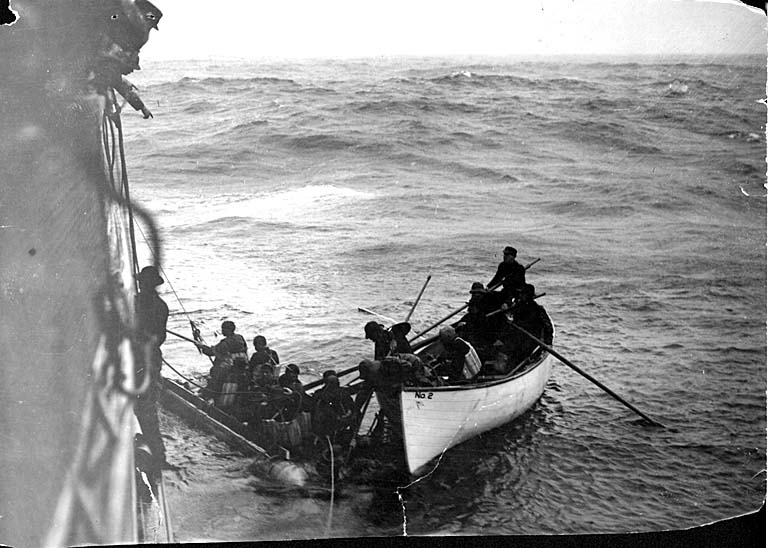
The Tragedy: Wreck of the en:SS Valencia, seen from one of the rescuing ships on January 23, 1906. So close were they to salvation, both to shore and to the rescue ships, but they never made it home again. // Source: BC Archives

No Hope for Rescue

The remaining people hoped to get rescued, but when the rescue fleet finally arrived, they realized that it was too dangerous to get close to the impaled ship on the rocks with water flooding in the strong current and wind. 

The rest of the night, the ships Salvador, Queen and Topeka could only watch as the ship went down together with the rest of the people onboard. They all either drowned, were killed by getting hit by something on the ship or dying of hypothermia when they landed in the water. 

The Lifeboats: Not many were picked up from the waters that day. Since then, lifeboat manned by skeletons have been reported on from this area. Here are a pictures of the survivors from the SS Valencia being picked up by the SS City of Topeka on January 24, 1906.//Source: University of Washington Digital Collections

Of all the passengers and crew on board, only 37 men survived this tragedy with every woman and child onboard dying. The complete death toll varies, but at least 117 up to 181 people died and it is known to be one of the more tragic wreckage in maritim history. 

The Rowing Skeletons

The remains of the ship was never recovered, but left to its own devices. Some of the remains drifted to shore, finally, and the remains have been left mostly untouched. Outside of the Pachena Beach you can still see it, clinging to the coastline. Not long after the tragedy of the ship, the rumors, the tales and stories started to come from the wreckage. 

The Ghost Ship: Not only the lifeboats, but also the entire ship has been reported on being spotted, years after it sunk to the bottom of the sea. Here are SS Valencia, circa 1905. // Source: BC Archives

When they were transporting the few survivors they found from the wreckage to Seattle, the crew of the ship City of Topeka spotted something unexplained. They stopped to pass the news of Valencia to a passing vessel that came towards them. When it passed them by, they saw that it was in fact the Valencia, the ship that had just sunk to the bottom of the sea. 

The people that observed this, told that the crew were all skeletons and were heading towards the rocks as the Valencia had already hit and sunk on. When passing the City of Topeka, the Valencia signaled to it like it would have if they really met. After this, the Topeka continued back to Seattle without further incidents, but it was not the last one that were reported on. 

Six months after the sinking of the ship, a local Nuu-chah-nulth fisherman named Clanewah Tom spotted a lifeboat together with his wife in a nearby sea cane in Pachena Bay  at the southern end of Vancouver Island in British Columbia, Canada. But there was something deeply wrong with the lifeboat. In it sat not eight people, but eight skeletons. Although having survived the initial wreckage, it looked like they had starved to death. There was no way of recovering the lifeboat however and it was a mystery of even how it got into the cave. 

Since then local fishermen reported of lifeboats with skeletons rowing in the area. In 1910, the Seattle Times reported that sailors claimed to have seen the ship that looked eerily like the Valencia, near Pachena Point. What looked like human figures held onto the ship like it was about life or death as the waves washed over the ship. 

In 1933 they found one of the lifeboats drifting in Barkley Sound. The boat was in excellent condition and the paint looked almost fresh. No skeletons onboard this time, and perhaps never again?

Advertisements

More like this

Newest Posts

References

The San Francisco call. [volume] (San Francisco [Calif.]) 1895-1913, August 23, 1906, Page 5, Image 5 « Chronicling America « Library of Congress

https://web.archive.org/web/20051205210100/http://collections.ic.gc.ca/folklore/ocean/img_oc/valenlif.jpg

Ghosts of Canyon Hill Cemetery

Advertisements

The haunted rumors of the haunted cemetery in Caldwell, Idaho includes everything from a female jogger to an old lady. So much so that it even draws paranormal investigators inside the gates of Canyon Hill Cemetery. 

The cemetery is located at 2024 North Illinois Avenue in Caldwell in Idaho. Canyon Hill Cemetery is an old cemetery that dates back to the early 1800s and houses many souls as their final resting place. But some will have it that not all of the spirits resting there, are at peace. 

Read more: Check out all of our ghost stories from USA

People have thought the cemetery haunted for a long time. Those claiming Canyon Hill Cemetery to be haunted say they can feel the temperature change suddenly, becoming colder the second you enter the cemetery. There are also rumors about a strong smell no one can explain or figure out as well as the feeling of someone following you. 

Haunted Cemeteries

Haunted cemeteries have long been the subject of chilling folklore and spine-tingling tales. These resting places of the departed are believed to be inhabited by restless spirits, giving life to stories of ghostly apparitions, eerie sounds, and inexplicable phenomena. In the moonlit hours, legends tell of tombstones that come to life, shadowy figures that wander among the graves, and mournful whispers carried on the wind. Whether fueled by superstition or genuine encounters, haunted cemeteries capture our imaginations, inviting us to ponder the mysteries of the afterlife and the ethereal connections that bind the living and the dead.

Read More: Check out all of our ghost stories from Haunted Cemeteries

Several paranormal investigators have taken the trip to the Caldwell Idaho Cemetery themselves to have a look. There are especially two ghosts that most people tell of. 

The Old Lady at the Bench at Canyon Hill Cemetery

Apparently there are rumors about an old lady who only sits on the bench late at night at Canyon Hill Cemetery, not saying anything to those passing the graveyard. According to those who have claimed  to see here they looked away for just a second just to find her gone when looking back. 

Who she is, who she is watching over no one knows. She is however not the only one said to haunt the cemetery.

The Lady on the Bench: Who is the ghost of the old lady just sitting on the bench. Some sort of a watcher of the graves? Perhaps she herself is six feet under the earth of one of the tombs in the Caldwell, Idaho Cemetery

The Midnight Jogger at Caldwell, Idaho Cemetery

The Midnight Jogger is a ghost story that is told to haunt Canyon Hill Cemetery in addition to the old lady on the bench. Apparently the ghost of the jogging female appears when you park between the trees that are overlooking the cemetery just ahead. According to the stories she appears as you drive past her, but are gone as soon as you turn to have another look.  

Read Also:

The Running Lady of Beeford

A ghost haunts the roads of small English village. She is known as the Running Lady and according to legend, known for causing accidents.

Some reports that she doesn’t have any legs to carry her and just floats above the ground around the Caldwell Idaho Cemetery. Some even go so far to claim she comes over to knock on the window of the car, although her intentions are unclear.

Ghosts of Canyon Hill Cemetery

As the rumors of hauntings continue to circulate around Canyon Hill Cemetery in Caldwell, Idaho, the curiosity of paranormal investigators and daring locals alike grows stronger. Despite the chilling tales of the old lady on the bench and the ghostly midnight jogger, the true nature of these apparitions remains shrouded in mystery.

Whether fueled by superstition or genuine encounters, haunted cemeteries like Canyon Hill Cemetery carry with them an undeniable allure. So, if you ever find yourself passing through the gates of Canyon Hill Cemetery in Caldwell, Idaho, take a moment to feel the shift in the temperature, listen closely for whispers carried by the wind, and keep an open mind. Who knows what spectral secrets await those who dare to explore the haunted grounds of this ancient cemetery?

More like this

Newest Posts

References

Haunting at Canyon Hill Cemetery in Caldwell

The Ghost of La Faraona Haunting the Agua Caliente Hotel

Advertisements

Haunting the iconic Agua Caliente Casino and Hotel in Tijuana, the performer known as La Faraona remains like a ghost from the Golden Age of the Sin City.

During prohibition times in the US in the 1920s, people flocked to the borders to have a drink and a good time. The border towns also become a hot spot for smuggling activity and flourishing establishments that would quench peoples thirst. 

Tijuana was one of these border towns that saw a golden age and growth during this time. People came from the whole world to get a drink while gambling at their casino and watch horse racing and bullfighting. For the conservatives, Tijuana became known as a Sin City or was even called Satan’s Playground. 

Advertisements

The demand for a good time was profitable however and attracted many people south of the border, and many resorts were established for this particular need. One of these places was Agua Caliente Casino and Hotel that opened in 1928. It was like the American Monte Carlo and Deauville that attracted American celebrities, Mexican politicians, diplomats, gangsters and gamblers alike during the 30s. This is the time that is remembered as Tijuana’s golden age. 

The hotel in Tijuana in Mexico in Baja California is said to be haunted now however, and the glamor it once held, is now under the layer of dust and only a footnote in history. It is now a high school and many of the reports of the haunting come from the students themselves. There are many stories, and especially about a woman walking past the student, whose feet don’t even touch the ground. The legend of this ghost has been called La Faraona.

The Dancing Ghost La Faraona

Agua Caliente is a place where performers had the chance of being discovered and making it big. Rita Hayworth was one of those while she was playing a show at the hotel. She went on to be a famous Hollywood star and a cultural icon. But there was not every performer that managed to get out of Tijuana. 

Satan’s Playground: The Agua Caliente was a famous tourist spot for a weekend away. It was also a place were many performers were employed and made famous. On the other end it was a place were many illegal activities took place. // Photo: Guy Sensor Landscape Photo, courtesy of San Diego History Center Photo Archive.

It is said that a female performer haunts the former hotel that was built atop of a natural hot spring. In many versions she worked as a singer, but in the most detailed stories, she was a dancer in one of the more popular shows. A flamenco dancer from Spain. The stories told at the school call her La Faraona, apparently her stage name as the star in one of the many shows at the casino at the Agua Caliente. 

She was supposedly also known as being somewhat of a good luck charm to keep at your side by the gambling tables at the casino. By her many admirers, she gained a lot of wealth in the form of diamonds and jewelry and there are rumors that she hid her treasures by the minaret which is the place her ghost has been spotted many times.

Crime of Passion

La Faraona: According to the legend, La Faraona laced her lovers drink with poison and they both ended up dead.

She was in a relationship with a man at the resort. Some call him Mr. Patrick, a British gentleman and a dealer that had made money on the alcohol smuggling business. In some accounts, he was even in Al Capone’s mafia. In all accounts however, it ended in tragedy when La Faraona killed him.

Why she did it differs from one version to the next, but it is usually by poison. In some accounts, she only poisons him, but in many versions, she does it to both of them. She supposedly poisoned her lover after stealing his money or after she realized he wasn’t intending to bring her back with him to England. In some versions it was because she saw him with another woman.

Apparently she laughed in his face when she poisoned him and even told him there was an antidote for it that she wouldn’t give him. He ran after her to get the antidote from her but didn’t get it. He then shot and killed her. 

This also meant that he would never find the antidote to the poison as well and he too died. Or they both died by the poison she laced their drinks with. Now they both haunt the former hotel where they ended their days. 

A Real Murder at the Hotel

When we look at the historical facts, there are only one murder registered at the Agua Caliente, although who knows how many that never made it to the public really happenend, we will never know. 

But a dancer working for the past four months at the Agua Caliente was found on 26. March in 1934. Named Esperanza López was found murdered in one of the bungalows at the premise that were kept for the artists at the casino. She had been shot by her husband who also worked at the hotel named Rodrigo Prieto. 

The hotel closed down in 1938 when the prohibitions were lifted in the states, and Mexico forbade gambling. Then the building was turned into a private school named Lázaro Cárdenas High School where the stories about the hauntings mostly came from.

And the students at the school keep insisting on seeing her ghost roaming about the place as she is never leaving the Agua Caliente.  

Advertisements

More like this

Newest Posts

References

Encyclopedia of Haunted Places, Revised Edition: Ghostly Locales From Around the world Av Jeff Belanger

Tijuana Was Once “Satan’s Playground” | KPBS Public Media

In Tijuana, searching for Al Capone – The Washington Post

La bailarina del Aguacaliente | Noticias de Tijuana | EL IMPARCIAL

Myrtles Plantation and the Ghosts that Remains

Advertisements

Now a quaint Bed and Breakfast, the old Myrtles plantation manor houses more ghosts than living guests. 

The old splendor of a plantation in Louisiana, not so far from Baton Rouge, is still quite clear when looking at the Myrtles Plantation. The antebellum mansion was first built in 1796 and is decorated with hand-painted stained glass featuring a French cross to allegedly ward off evil, the walls filled with Aubusson tapestry and from the ceiling, Baccarat crystal chandeliers hang. 

But among the Carrara marble mantels and French furnishing there is something more sinister, more primitive than any riches, gold and luxury can cover over — The blood stained history and the legend of ghosts still haunting the place. 

The old plantation was handed down from many people and in 1950, the house was sold to Marjorie Munson. It was she who started noticing strange things happening around the Myrtles Plantation and started talking about ghosts, that we still talk about today. 

And the tales that are told are many — supposedly, the old plantation is one of the more haunted places in America with reports of at least 12 ghosts inside this Creole cottage style manos sitting on a hill. Although it is only historical records about the murder of William Winter, the number of murders in the house is allegedly 10. 

The Legend of Chloe

The most famous ghost on Myrtles Plantation is without a doubt Chloe, or in some records, Cloe. She was supposedly a slave owned by Clark and Sara Woodruff, who took over the plantationin 1817 after Saras father, General David Bradford, who first built the plantation. 

Advertisements

In 1992 a picture surfaced after the plantation took some photos of the property to send to the insurance company. When looking closer at the picture, something that looks like a girl can be seen. This is believed to be the ghost of Chloe, who still haunts the Myrtles Plantation with her green turban. 

According to the stories, Chloe was one of the slaves that worked in the house rather than out in the field, which was a much more straining work than inside doing the cleaning and cooking. But perhaps it came with other dangers than grueling labor. According to the stories, she was forced by Clark Woodruff to become his mistress.  

In some accounts though, Woodruff started having an affair with another girl and Chloe feared she would have to start working in the fields instead of in the house. And she started listening in on conversations to find out her faith or pick up on something that she could use against them. 

In any case she was caught listening by the doors and punished by her slave owners. One of her ears was cut off and she wore a green turban to conceal it. 

The Revenge

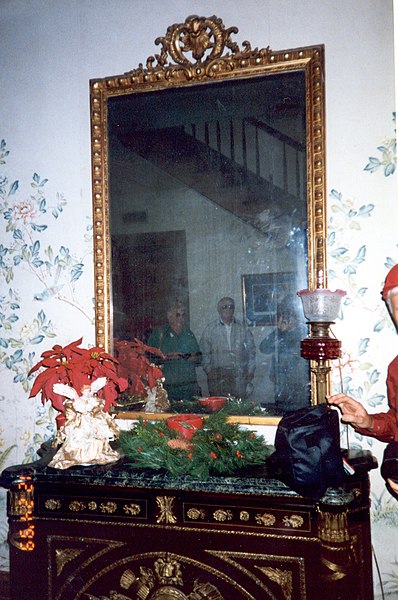
The Haunted Mirror: Where the spirit of Woodruff and her children lingers.
Photo: Chris Light/1999

But it wasn’t the end at all, as Chloe planned her revenge on her slave masters. She baked a cake that she had poisoned with oleander leaves, which is extremely poisonous. Even the question of why she poisoned the cake is up for discussion. 

Most accounts claim she did it for revenge after cutting off her ear. Another variant saying she was trying to gain favor with the family again as she was planning to cure the family for the poison and come out as a hero instead. 

But according to the story, the plan backfired and only Sara Woodruff and the two daughters ate the cake and died from the poison. Chloe was then hanged by the other slaves and thrown in the Mississippi river, as a sort of final punishment for her or to not be punished themselves by Clark Woodruff for harbouring her. 

A mirror in the house is supposedly holding the spirit of Sara Woodruff and her children. According to custom at that time, the mirrors were covered by a cloth so the spirit would not disappear into them. But after the poisoning, this particular mirror was forgotten and the ghosts of the victims can be seen in the mirrors and there are reports of handprints being left in the mirror, as their spirits are now trapped in the mirror. 

The story about Chloe as a ghost is also told by the previous owner, Frances Kermeen, who also wrote a book on all the strange hauntings that she herself reported about experiencing on her second night in the house: 

 “I looked up and standing over me was a black lady. Her head was wrapped in a green turban,” I could see her [holding an] old-fashioned tin with the loop in it [through] the candlelight and I lost it. I started screaming…I reached my hand out to touch her, I could tell she was a ghost because she was see-through, but as my hand passed through her, she faded away.”

Frances Kermeen told the podcast Mysterious Universe in 2015.

The Uneven Facts

Advertisements

Do historical records support this though? There is currently not found any records of the Woodruffs owning a slave named either Chloe or Cloe. The legends say that Chloe killed both the wife and the daughters, but one of the daughters, Mary Octavia, survived and grew up to become an adult. And it is said that Sara and the other daughter, Cornelia, were not killed by poison, but by yellow fever in 1823 and 1824. 

Either way, despite the historical records refuting the story, the legend about a woman wearing a green turban haunts Myrtles Plantation. Perhaps trying to tell a story that no historical records can?

The Other Ghosts

There are several pictures you can find on the postcards found in the souvenir shop at the plantation, the Chloe postcard being one of them. Another picture that stirred up quite some stories was the picture of a young girl dressed up in classic antebellum clothing that seems to look out from a window. She is now referred to as “The Ghost Girl” on the plantation. 

Burial Ground

But the legend of Chloe is not the only claim of ghost sightings at the plantation among the Spanish Moss hanging from the giant oak trees. There is the classic tale that the house itself is built on an Native American burial ground, a trope of American ghost story tales that rarely can be substantiated. But even so, the ghost of a young Natice American woman has been reported. 

In this case, the burial ground would be of Tunican tribes in the Mississippi River Valley, and the truth is that the land the manor now stands on used to belong to the Natives before being seized by the Spanish. 

Civil War Soldiers

Advertisements

Another legend is about the Civil War and about how the houses were ransacked by union soldiers, and three people were killed. But exactly who was killed? The soldiers or the people living in the mansion? At the time, it was then Ruffin Gray Stirling and his wife Catherine Cobb that lived on the plantation with their slaves. It is true that they were robbed of their fine furniture and luxury items. 

According to some of the  variations of the legend though, it was the Union soldiers that were shot dead on the premises by the Confederates. 

But something that is more up for debate is the supposed blood stain in the doorway, around the size of a human body remains that never will be completley clean after the supposed murders that happened then, no matter how well you scrub it. 

The Voodoo Practitioner

The plantation is also the home of the ghost of a young girl that died in 1868, sometimes thought to be the girl in antebellum clothes from the picture. She was treated by a local voodoo practitioner in one of the 22 rooms in the manor, but died. She appears now in the room she died in and has been reported to practice voodoo on people sleeping in the room. 

William Drew Winter

One of the other ghosts haunting this place is someone that either staggers or crawls up the stairs. He always stops on the 17th step. This is rumoured to be the ghost of William Drew Winter, the verified murder victim in the house. He was shot on the front porch of the house by a stranger. To get away, he crawled up the stairs but only reached the 17th step before he collapsed and died. 

Several guests staying at the now B&B have claimed to hear the crawling coming from the stairs, and believing it could be other guests have gone to check. But when reaching the stairs, they find that no one is there, or worse, the apparition of his ghost, begging for help. 

Although here, we have discrepancies in the story as a local newspaper reported that Winter died of a single shot that killed him instantly, and he had no possible way of crawling the stairs after the shot. But did he manage to in his afterlife?

The Plantation

No matter the fact we can now verify, the stories found of plantations from way back cast long shadows. All from the first contact between the natives and Spanish, throughout slavery and a bloody war. The darkest chapters of this plantation, is most likely the stories that we don’t know about. 

Advertisements

More like this

Newest Posts

References

Featured image: Bogdan Oporowski

The Myrtles Plantation

Legend of Chloe And Ghosts | Myrtles Plantation

The South’s Most Haunted Plantation – Myrtles Plantation Louisiana

The Westerfeld House — The House of The Occult

Advertisements

All that jazz and rock’n roll with witchcraft and satanic rituals clearly took its toll on the Victorian house known as the Westerfeld House. But is it still a hint of paranormal presence lingering there? Or has the restoration brought it back to its original sweet glory?

In the beautiful city of San Francisco there is a house that catches the eye of those passing by. Gothic, beautiful, bold and old as many of the surrounding houses are. But perhaps none other than this house has acted like a magnet for its peculiar tenants over the years. 

Old House: 1198 Fulton Street has a history of occult and strange tenants almost since it was first built in 1889.
Photo: Carol M. Highsmith/wikimedia

The William Westerfeld House, or simply the Westerfeld house is an historic building right by Alamo Square. The picturesque Victorian Italian styled villa at 1198 Fulton Street is today steeped in history, some more haunting than others, as well as some are more true than others.

The origin of the house however is a sweet tale as the building was built for the German confectioner William Westerfeld in 1889. By this time he had already established a chain of bakeries and built this 28 room mansion. Business was good for Westerfeld, however, he died only a few years after the house was built in 1895 and since then, sweet turned darker to pitch black. 

It was bought by John Mahoney and the building’s cultural reputation started to take place where strange occurrences happened. He loved to entertain his guests with spectacular shows, and among others, Harry Houdini himself tried to send telepathic messages to his wife across the Bay. So the experimental and spiritual part of the house started early on. However, no one could have guessed just how dark it would get. 

Czarist Night Club And All That Jazz

Advertisements

After the Westerfeld House had served as a home to Mahoney, it fell into the hands of many different people with different purposes. A group of Czarist Russians turned it into a nightclub called Dark Eyes in the roaring 20s. It was informally known as the Russian embassy because of all the meetings taking place on the upper floor. 

After the second world war the home was converted into apartment buildings, mostly rented out to African-American jazz musicians playing in the nearby jazz clubs during the Beat area. This house jazz area lasted until the 60s, when jazz was replaced with rock and the political and philosophical beatnik area morphed into the wild and spiritual 60s. 

The Occultists In the Westerfeld House

In the 60s the Westerfeld House was used as different types of collectives, and one of those who set a mark on the house as well as recorded it, was occult filmmaker, Kenneth Anger who lived there from 1966 to 1967. During those times it was a rather rough area in the city and the people frequenting there, darker and rougher than many.  

It is here the story of the Westerfeld House turns from strange to occult. At best, the time Anger and his peculiar guests spent in the house was a terrible nuisance to all the neighbors with all the acid being taken and satanic rituals being held. At worst, they stirred up the rumours of paranormal activity to the house as well as opened the gate to hell. 

Satanic Rituals: Church of Satan founder Anton LaVey started frequenting the house, holding black masses in the Westerfeld house. Here from the movie, ‘Invocation of my demon brother’, made by Kenneth Anger.
Photo: Invocation of my demon brother/IMDB

“Up at Fulton and Scott is a great shambling old Gothic house, a freaking decayed giant, known as The Russian Embassy.”

This is how the writer Tom Wolfe talks about the Westerfeld House when he introduces it in his book: ‘The Electric Kool-Aid Acid Test’, chronologizing his time spent there with a group of hippies.

Anger himself was an occultist and drew much of his elements in his films from Thelema, a pagan oriented religion founded by perhaps the most well known occultist, Aleister Crowley.

Another notorious person that stayed under the roof was Manson family member Bobby Beausoleil lived here for a while before he joined the cult of the Manson called, the Family. Beausoleil was chosen by Anger to inhabit the role of Lucifer in a movie he was working on. Together they spent their nights in the tower, trying to look for UFOs. And according to Anger, he did indeed have a “a couple of very good flying saucer sightings.” Here it is important to note just how important taking acid was to Anger. 

Allegedly, Beausoleil stole reels of Angers film: Lucifer Rising and took off with them being on bad terms. Manson himself made frequent visits to this house, and according to caretaker, Kelly Edwards, it was here that Beausoleil were drawn into the cult that eventually was behind the Helter Skelter murders. 

Black Masses of the Church of Satan

Church of Satan founder Anton LaVey also spent time in this very tower as shown when Anger shot the movie ‘Invocation of my demon brother’ where we in this psychedelic experimental movie can see LaVey, aka, ‘The Black Pope’ himself holding a black mass. According to Anger, the film was assembled from scraps of the first version of Lucifer Rising. It includes clips of the cast smoking out of a skull, and the publicly filmed Satanic funeral ceremony for a pet cat.

But he did not look after UFO’s as Anger did on his acid trips. Instead, he spent his time practicing witchcraft, as well as worshipping Satan with around 500 candles in this wooden building. This tower used to have a large pentagram etched into the floorboards to keep the wiccan and satanic rituals more permanent. He also owned a lion cub as he used to be a lion tamer before starting the Church of Satan. You can see proof of that very lion because of the scratches in the wooden paneling, even to this day.  

As well as spending time in the tower, he also performed satanic rituals in the ballroom on the ground level of the house. 

Rock n Roll

Advertisements

After Angers departure from the Westerfeld House, the occult was turned into rock’n roll as the likes of Mick Jagger, Janis Joplin, Tom Wolfe and Jerry Garcia among many others passed through the halls, either as tenants, or holding concerts at the Avalon Ballroom. It continued to be used as an underground rock scene until the 70s, when the first attempts to rehabilitate the much used building began. 

And although the owner that took over in 1986 had no occult interest, he also wanted to be on the safe side when initiating the old house with a particularly rocky history. The new owner of the Westerfeld House, Jimmy Siegel told hoodline that: 

“I was always attracted to the architecture of the building,” he told us. “The occult happenings in the house were of little interest to me but to be on the safe side I had the monks from the Hartford Street Zen Center do a cleansing and a blessing for the house when I bought it in 1986. I have never experienced any darkness or paranormal activity in the house.”

The Addams Family House

Siegel bought the Westerfeld House because it looked like something the Addams family could have lived in and he had always loved the architecture and design from the Addams family. And under a LSD trip in his teens, his dreams of owning this particular house started to take hold. 

Siegel turned his drug induced dream and turned it into his life mission. He spent his time restoring the Westerfeld House that had long been neglected. And with it, he also preserved the history of it. 

Today the rooms in the Westerfeld House are rented out to various people and as movie sets. According to reports, none of them have complained of any malevolent activity or remains of satanic activity. But they have reported about ‘overwhelming emotions’ as well as a physical presence in their home, with nightmares being a common trait of the tenants. Paranormal activity of psychological manifestation of knowing the house history?

Even Siegel himself mentioned he had what he called a paranormal experience in the house to SFGATE:

“I was in bed watching TV and my bed violently shook. I assumed we were having an earthquake, only nothing else was moving. Then I felt someone get into bed with me even though I was alone. It was quite unnerving.”

So what is it Siegel? Was the Westerfeld House haunted or not?

Advertisements

More like this

Newest Posts

References

National Register #89000197: Westerfeld House in San Francisco, California

William Westerfeld House

The Spooky History Of The Westerfeld House

Invocation of my Demon Brother & Lucifer Rising – Kenneth Anger

This Alamo Square Victorian holds 100 years of SF counterculture history 

Visiting the Westerfeld House and Its Haunted Past. — Eric J. Kuhns 

Westerfeld House – [2021 

The Westerfeld House: San Francisco’s most storied Victorian

Halloween Traditions Across the World

Advertisements

In this wide world we have countless customs, holidays and traditions. But the tradition of honoring, and at times, fearing the dead around the dark autumn time, seems to be something we do in all corners of the earth.

Through the modern media we have all grown accustomed to this specific type of Halloween traditions. Carving pumpkins, go trick or treating and dressing up is now a global phenomenon. But the concept of celebrating the dead, souls and spirits during the harvest season has always been something people have done, and probably will continue to do for a while. But although the American style Halloween have monopolised a lot of the celebration, there are still both old and local variation of celebrating this kind of festivity. Here are some of them:

Samhain — Britain

Samhain: Bonfires, offerings to fairies and feasts for the dead was a tradition in the old Samhain celebrations.

The Samhain celebration is probably were the modern Halloween traditions has borrowed most customs and ideas from. It is a Gaelic festival marking the end of harvest season and the beginning of winter. it was usually celebrated from 31. October to 1. November. It was celebrated all throughout Ireland, Scotland and the Isle of Man, with many similar festivals held around the same time around the rest of the Celtic Islands.

According to tradition, bonfires were lit as they were seen to have protective and cleansing power. Offerings to the Aois Sí, the spirits and fairies was made to give them a good harvest and making them last through the winter. There was also held feasts where they made place for the dead at the table, as it was believed that the souls of the dead would visit.

The festival was held because the time was seen as a liminal time, were the boundary between the living and dead were minimal and the crossing between this world and the otherworld were more easily done. A part of the festival also included people dressing up in costume to recite verses for food, called mummers play, or mumming.

Advertisements

All Saints Day — Catholic Church

All Saints Day: This Christian holiday is celebrated many places were there is a Roman catholic or Anglican church.

Within the Catholic Church the celebration of All Saints’ Day or All Souls’ Day is marked November the first and second. It is also called Commemoration of All the Faithful Departed and Day of the Dead. The All Saints Day is a day for celebrating all Saints and Martyrs in the Christian Church. The All Souls Day is mostly for the people still in purgatory to atone for their sins before entering heaven.

This together with Samhain turned into what we now call the modern Halloween with its traditions. Most often, the All Saints’ Day is celebrated within the western christianity, while in the eastern christianity they have celebrated somewhat the same in Saturday of Souls celebrations. It is mostly celebrated by Roman Catholics and Anglicans.

The feast itself is celebrated on November 1. and is mostly a day of prayer and remembering the souls of the dead. On the day there are many ways the practitioners remember the dead, and the traditions vary from church to church, but it generally include lighting candles and praying.

Advertisements

Allantide — Wales

Allan Apples: Apples are important for Allantide as they are a token of good luck.

A Cornish version of Halloween traditions is the Allantide, or Kalan Gwaw, meaning the first day of winter. In the sixth century, Cornwall had a bishop named St Allan, and therefore it is also known as Allan Night and Allan Day. Traditionally it was celebrated on the night of October 31 and the day after.

A lot of common traits with Hollantide celebration in Wales and Isle of Man as well as Halloween itself. To celebrate they rung the church bell to comfort Christian souls on their journey to heaven. They made Jack’o lanterns from turnips. But the most important fruit this feast was red apples. Large, glossy Allan apples were polished and given to friends and family as gift for good luck.

Divination game to read the future was also a part of the festivities. They ere for example throwing walnuts in the fire to predict the fidelity of their partners, or poring molten lead in cold water to find out the job of their future husband. Also some parts of Cornwal, they lit ‘Tindle’ fires to the Coel Coth of Wales.

Advertisements

Day of the Dead — Mexico

Día de Muertos: This day is often recognized for the costumes and makeup.

The Day of the Dead or Día de Muertos in Spanish is a Mexican holiday, well known for their distinctive costumes and face paint. Before the Spanish colonization in the 16th century, the celebration was in the beginning of the summer in Mexico. But it became intertwined with the Christian church and European Halloween traditions and moved to the end of October and beginning of November.

It is a holiday, stretching over several days gathers families and friends to pray for their lost ones and help their way to heaven. According to the Mexican culture, the death is viewed as a naturally part of the human cycle and should therefor not be seen as a day of sadness, but a day of celebrations.

Advertisements

Pchum Ben — Cambodia

Preparing to open the gates of hell: Monks praying and people gifting food and flowers to the ancestors.
Prayers during Pchum Ben. Credit: Maharaja45

The holiday is a fifteen day celebration on the 15th day of the tenth month in the Khmer calendar, at the end of the Buddhist Lent, Vassa. And would in the Gregorian calendar, mostly be in September and October. The translation of Pchum Ben is Ancestor Day, and its a time were many Cambodians pay their respect to the dead family and relatives up to seven generations.

Monks chant the sutta in Pali language without sleeping overnight to prepare the gates of hell opening. This occurs once a year and is a time were manes (spirits) of the ancestors come back. Therefore they put out food offerings that can help them end their time in purgatory.

People give foods like sweet sticky rice and beans wrapped in banana leaves, and visit temples to offer up baskets of flowers as a way to pay respect to their deceased ancestors. It’s also a time for people to celebrate the elderly.

Advertisements

Pangangaluluwa — Philippines

After sundown: In Philippines they light candles and camp out in the cemeteries to honour the ancestors.
Photo by Alexandr Chukashev on Pexels.com

The name of the holiday is from the word kaluluwa, meaning soul or spirit. It is an event that lasts three days at the cemetery with food stands and pop-up stores around the cemetery as the people celebrating the festivities, camp out.

On the first of November people gather in cemetaries to light candles and put flowers on the grave to respect the ancestors. some places in the north they have this old tradition of lighting pinewood next to the graves. In the cemetery there is a priest walking through it to bless all the tombs.

Outside of the emetaries, there are carollers singing through the night, all draped in white blankets. The same tradition is for children as they go door to door and singing hymns to get money.

Today, the local tradition is slowly fading out, merging more and more with the modern Halloween traditions, but out in the provinces, mostly, the old practices is still upheld for now.

Advertisements

Saint Andrew’s Day — Romania

Night of the Wolf: During this night wolves have special powers and can speak.
Photo by David Selbert on Pexels.com

This day is today connected to the Christian saint, but it also have some pagan origins with the Roman celebration of Saturn. In the Dacian Ney Year was an interval when time started up again. On the turn of the night, wolves were allowed to eat the animals they wanted and it was also believed that they spoke as well, although, if you heard it, it meant an early death.

Early on the day, the mothers went into the garden to get branches, especially from apple, pear, cherry trees and rose bush branches. They made a bunch of these branches for each family member, and if a branch bloomed by New Years day, it meant they would be lucky and healthy the following year.

There was also a tradition of girls hiding sweet basil under their pillow to have dreams about their wedding. It was also customary for girls to put 41 grains of wheat under their pillow, and if they dreamt someone stole them, it meant they were going to be wed the next year. This premonition was also done by bringing a candle to a fountain at midnight and ask Saint Andrew himself if he could give them a glimpse of their future husband.

This day was especially good for revealing the future husband by magic, a superstitious belief that was also in Ukraine, Germany, Austria, Slovakia, Poland, Russia as well as in Romania. This was also the day were vampiric activity was at large, all until Saint George’s Eve on the 22. of April.

Advertisements

Dziady — Poland

Dziady: Cemetery on dziady night by Stanisław Bagieński from 1904.

The Dziady is a slavic feast to remember the ancestor long passed. It is sometimes translated to Forefathers Eve. It used to be celebrated both in the spring and in the autumn, but today, it is usually held in the end of October like .

In the feast they eat ritual meals to celebrate the living and the souls. It was either held at the house or at cemeteries, were poring directly on the grave was and still is a thing. In some areas the ancestors also had to bathe, and saunas was prepared for them. They also lit up candles and lights to guide the souls so they wouldn’t get lost and wander off.

There was also a special kind of begger, a beggars-dziady, people thought to be connected to the other words. They were given food and sometimes cash to make them pray for their loved lost ones.

Advertisements

More like this

Newest Posts

The Hauntings of the Chute de la Dame Blanche

Advertisements

Chute de la Dame Blanche or the White Lady Waterfall is a legend of a grieving bride to be in the midst of the battle of Canada. She now haunts the waterfall still wearing her wedding dress were she ended her life, still grieving the loss of her lover.

Taller than the Niagara Falls, the Montmorency falls towers 83 m over the city of Québec. It flows downstream from the city and into St. Lawrence. It is a majestic sight, the veil gushing and all sound but the masses of water is heard when standing close to it. But next to it, another lesser known waterfall falls. From ground water it connects with the Montmorency River along the way as water does. When the waterfall hits the river below the water spreads out, like a wedding veil. This particular waterfall is called Chute de la Dame Blanche or the White Lady Waterfall.

Stories from waterfalls have always been connected with grief, love and death. At least in European folklore. Tales like the Banshee is steeped in water imagery and female ghost stories, and many waterfalls tells a sad tale of a bride to be that died too soon. And this one about the Chute de la Dame Blanche, is just that.

The Bride to Be of the Chute de la Dame Blanche Legend

But who is this woman in the waterfall that came to be known as The White Lady Waterfall more than her original name? A banshee? According to legend, it is the spirit of a young Canadienne woman. An ethnic group of French colonists who settled in Canada from the 17th century. Or as they were known back then, French.

The veil: The waterfall of Montmorency, 1900, just next to Chute de la Dame Blanche.

In a time when Québec was called Nouvelle-France, or, New-France, the state was in an unrest and in the middle of a war that was going to last for seven years against the British empire.

The story tells about Matilde Robin, living near either Côte-de-Beaupré or Île d’Orléans, close to Québec. At the end of the summer in 1759, she was meant to marry her beloved Louis Tessier. Through the summer, she tailored her own white wedding gown, in anticipation of her wedding.

Read more: Check out more ghost stories of brides like The Bride Missing her Ring Finger in Venice, The Ghost Bride at the Devil’s Curve and The Mistletoe Bough – The Bride in the Chest.

But the unrest in the country was creeping in and about to disrupt the romantic notion of a happily forever after. Canada, being under French government was in a state of unrest as the British wanted a piece of the land and there were whispers about them going to attack soon.

On the night of 8th or 9 July, British forces landed on the north shore, some 1.2 km (1 mi) east of the Montmorency Falls, east of where the French west-east defense line ended, at the mouth of the Montmorency River. They met no opposition from the French for the landing, but the armed forces prepared for battle.

The Bloody Battle of Beauport

The 31th of July, at the cusp of fall, the British attacked. In what was going to be known as the Battle of Beauport or the Battle of Montmorency. The British had been mostly successful in their attacks with their aggressive battle strategy, sending 40,000 soldiers to New-France. For the campaign against Québec, General James Wolfe was given command of an army of about 7,000 men.

At war over Canada: This is a map depicting the troop arrangements at the 1759 Siege of Quebec. It was after this battle that the ghost legend of the Chute de la Dame Blanche is said to have started.

The women and children took cover from the battle in the forest to hide from the bloody battle that raged on. And according to legend, so did Mathilde. The French army, as well as soldiers was volunteers in a militia as well as around 500 natives. Louis was one of the militia men and assisted the French in the following days the battle raged on.

The attack was a fail for the British. Wet air from the falls nearby and a sudden storm ruined the English gun power. The British troops were forced to retreat and admit defeat for the time being. Wolfe recorded 210-deaths in this journal. The French leader, Louis-Joseph de Montcalm, recorded 60.

The White Lady Waterfall

It was a French victory though, and they returned to their loved ones in the forest. Mathilde also waited for her Louis in anticipation. But he was one of those that were never going to return from the battlefield. He died in the battles according to the legend. The deaths of the soldiers during this battle were mostly attributed to the fire coming from the great battery of the Montmorency camp of the British. Perhaps that’s how it also happened for Louis.

In some version of the story of the Chute de la Dame Blanche, it is Mathilde that finds his dead body, floating on the shores of the river banks after the battle. Perhaps she did, perhaps it just makes a better story.

Chute de la Dame Blanche: The White Lady Waterfall has been pictured many times in both books, stamps and postcards. This shows just how much a part of the culture and history this ghost story has become.

No matter of the manner she learned about the death of Louis, it was more than Mathilde could live with, and she ran home, grieving while the rest was celebrating French victory. In some version the houses was on fire after the battles, although it seems unlikely, given of the summer rain storm that ended the attacks.

In either case, she ran to save her one beloved item, the wedding dress. She put on her gown as well as the veil even though she knew there would be no wedding. She went to the Montmorency Falls were she and Louis used to go to be alone before the war. She threw herself from the cliff into the water, her white bridal veil becoming one with the gushing waterfall, becoming Chute de la Dame Blanche or the White Lady Waterfall.

Only a couple of months later, the French were defeated on the Plains of Abraham, and the dream of a New France died as it ended under the British crown.

Today, especially during the summer and early fall, reports of seeing the young girl in her wedding dress lives on around the Montmorency Falls. And the small sister waterfall, Chute de la Dame Blanche, is all hers.

The Truth of the Legend of the Chute de la Dame Blanche

The legend of the Chute de la Dame Blanche has definitely gone through some changes over the years. It is nevertheless a persistent one, and it even made the cut to be put on Canadian post stamps, making Chute de la Dame Blanche or the White Lady Waterfall somewhat of a national treasure.

The Bride in the Waterfall: Many waterfalls like Chute de la Dame Blanche tells a sad story about a bride dying to soon.

A female ghost in the waterfalls is a common enough myth, especially with the dramatic flare of a wedding veil, fitting the aesthetic of a waterfall and across the world there are countless of brides to be’s that are supposedly haunting the waterfalls.

But looking at the timestamp of the legend, such a white veil as the foaming waterfall is unlikely as brides didn’t wear white until after Queen Victoria’s wedding in 1840. Could it just be the details of the wedding dress that were embellished over the years, or is the whole legend just that, a classic ghost story?

One thing that actually is true, is the battles, and it is definitely true that the Battle over Beauport happened, and that young men died and that women were left, longing after their lost ones. But was a man named Louis Tessier one of them?

According to a database of the French and British army soldiers in Québec in 1759 and 1760, there were no French volunteered named Lois. According to them there are no official military documents clearly identifying Canadian Militia members. And if our Louis did exist, he probably would have been one of them. However, some combat participants have been identified using historical and genealogical research. Biographical information will be posted as it becomes available.

From the French army, on the possibility he could have been one of those, there were not many Tessier. We found a Jean Tessier, born in France and part of the French army. Only 26 years old, he was Mortally wounded in the battle of the Plains of Abraham 13 September 1759, not in the Battle of Beauport.

On the account of Louis, there were a lot of them. Most of the Louis that showed on record they died in 1759, died in the battle of Plains of Abraham or the days leading up to it. The only ones dying up to French victory of Beauport were:

Louis Saint-Jean Date : 1759-07-26

Louis Billaut Date : 1759-07-22

Both of these particular people were French born and in the French army, not in the militia. And therefore unlikely of being the Louis marked up in the legend of the Chute de la Dame Blanche.

As for Mathilde Robin, no such name has come up in the research in and around the time of the battle. Considering there is no certain sources as to their names, we have to consider the research and their story, inconclusive.

Chute de la Dame Blanche Illuminating the Country

However the legend of the Chute de la Dame Blanche, be it true or not, the waterfall runs as it has always done. The water keeps flowing, the veil creates the mist everything can hide in, perhaps even ghosts. But it isn’t all doom and gloom around the waterfall of the Chute de la Dame Blanche, but rather, the first source of light.

In 1885 on the 29th of September at eight o’clock, a crowd is gathered on the Dufferin terrace in the city, 12 km away from the gushing waterfall. For the first time in Canada at that distance, electrical light is powered from the power of the waterfall, bringing light again to the country and bringing Canada into the modern world.

More like this

Newest Posts

References:

La Dame blanche | TV5MONDE Culture

La Dame blanche – La chute Montmorency et les environs

Légende de la Dame Blanche – Voyage à travers le Québec

La Dame blanche de la chute Montmorency Marie Tison La Presse (Québec) On tro…

The Legend of Quebec’s “La Dame Blanche” (Lady in White)

Chute de la Dame blanche

Dame Blanche Falls

Home | The National Battlefields Commision

Lady of the Lake in Durand Eastman Park in Rochester

Advertisements

The legend of the Lady of the Lake in Rochester has been around the Durand Eastman Park in the state of New York for centuries, haunting the lakes and park, in search for her daughter – and possible revenge.

Between the cities of Rochester and Irondequoit in the state of New York, the Durand Eastman Park has been a place for a nice park and a cozy picnic since the turn of the century. According to the legend though, the park is not always sunny sundays as the Durand Eastman Park is allegedly haunted by the ghost of a woman named The Woman of the Lake.

This type of ghosts takes on numerous names: The Lady in White, The White Lady, Lady of the Lake. She becomes a different entity with those names, one of many, a ghostly transparent figure of folklore. She loses her humanity and such, gains her legacy that lasts longer than a human lifetime. But who were this lady down by the lake when she was alive? Does she have a name?

Read Also: Check out the rest of our ghost stories from the USA

According The Rochester Candlelight ghost walk, the legend of the Lady of the Lake in Rochester have been told as far back as when the Durand Eastman Park was used as a vacation destination. And when a Boy Scout Camp was set up in the park, the legend grew around the campfire when they started to whisper about who the one in the deep lake could be and what she was after.

The Legend of Lady of the Lake in Rochester

Before the 1900’s, the area surrounding the Durand Eastman Park was a swampy place and not the nice and curated park we see today. It was farmland and small farms was around the lake with a few families living in the area. The lady that has been roaming the place since the early 1800’s is said to have been the wife of one of those farmers, farming this swampy land.

A walk in the park: During the day, the Durand Eastman Park is a pleasant place for a walk. But at night though remember there is a ghost story about Lady of the Lake in Rochester// Photo: DanielPenfield

Lady of the Lake in Rochester’s name, according to written accounts and oral storytelling, her name was Eelissa. She appeared in different shapes and forms. Sometimes she was told to be an old and ugly woman. In other variants of the legend, she is a youthful spirit of the lake, almost more like the mythical fairy from the stories than a real woman.

Through the generations the story has been passed down through the locals, the story about this Lady in White or Lady of the Lake that has been haunting the park since the early 1800s has taken some different roads along the way. But the main overview remains the same.

Read Also: The Enchanted Forest of Brocéliande for more about the myths about the Lady of the Lake from the Arthurian Legends.

In one of the variations of this ghost story, Eelissa had an abusive husband that left her for another woman when he got tired from her. In her jealous rage, she killed them both when she realised she would be alone. It is said that this is why she is haunting the Durand Eastman Park, mistaking young couples for her husband and mistress.

Legend has it that she is a dangerous ghosts, still blinding by rage and keeps slaying them, again and again for revenge. This variant of the legend about the scorned woman turned deadly is a classic take on a ghost story to tell around the campfire, but it is certainly not the most famous take on this legend.

The variation retold the most about the Lady of the Lake in Rochester, is that the Lady of the Lake is a grieving mother more than a scorned woman. The ghost of her is seen around the beach of the park, looking for her daughter she lost. In some variation, the daughter ran away with a lover and away from her overprotective mother to live their life in peace. Left all alone she haunts the place waiting for the return of her daughter.

In other versions the daughter was brutally raped and murdered close to the lake. The mother was unable to go on after this when the culprits got away without punishment. The grieving mother looks for remains of her daughter to this day, as well as those who did her harm. In some variations of the story, she is accompanied by two ghost dogs, helping her in the search.

Read Also: Lady of the Lake at Gotts Point in Lake Lowell

No matter how the story is told, one thing is a binding link: She still have an enormous mistrust in men, even in the afterlife. Perhaps because of the abusive husband, perhaps because of the man stealing her daughter away or because of the rapist and murderers that took the life of her daughter. Who knows really, perhaps it could be all of them?

She is therefore rumored to attack men that in some ways are: ‘hindering’ her mission and interrupting her search. So if you are a man taking a stroll in the Durand Eastman Park, beware so to not be hindering anyone.

The Castle Housing the Lady of the Lake in Durand Eastman Park

In the Durand Eastman Park, the ruins of a stone wall is hidden among the trees. It is called, the castle. The Castle is a common place to gather for parties and retelling of the legend of Lady of the Lake in Rochester. It has over the years also become a part of it. Whispers that it is actually a part of the Lady of the Lake’s house when she was alive, or that it used to be an insane asylum or even a cannon wall.

Read Also: Check out all of our ghost stories about Haunted Castles.

But in reality the castle is just the remains of a dining hall that used to be there. Before the Great Depression this was a place people in the Durand Eastman Park could get some refreshments while strolling among the trees after it was built in 1911. But over the years after vandalism, even arson and the passing of time, this wall is all there remains of the building.

The Castle in the Park: In Durand eastman park, there is something that look like a castle that has become a part of the woman in white in Rochester.

Investigation The Lady of the Lake in Rochester

The blogger for The Rochester Subway, spoke to a Jenni Lynn that owns the Rochester Candlelight Ghost Walks that includes the ghost story about the Lady of the Lake in Rochester. She told that they had teamed up with local physic, Shelly Phillips to investigate the Lady of the Lake in Rochester once to get to the bottom of the matter. Could they possible find out anything about the ghost supposedly haunting Durand Eastman Park?

They had used several different equipment, including divining rods, EMF-detectors, temperature readers as well as noise monitors. According to Lynn, Phillips was able to stand behind the legend that Eelissa’s daughter ran away together with a local farm boy and that this was the true origin story of the legend.

Lynn also says she spoke with the local police, The Irondequoit Police Department to try to get some hard facts that could perhaps shed some light on the matter. According to her, there have been many reports to the police regarding the Lady of the Lake in Rochester and that people claimed to have seen her. These reports is maybe including even the police officers themselves when they have been patrolling the Durand Eastman Park.

Lady of the Lake: In Durand Eastman Park there are rumours about the ghost of a lady in white walking around the lake in search of her lost daughter.

It is worth noting though, the police department themselves have not confirmed this, and the stories about the Lady of the Lake in Rochester is for now just that, stories.

But then, there must be some historical records of this, right? Eelissa is such an uncommon name, and the place is well documented. But according to town historian Patricia Wayne, there are no such records, documents or proof that can verify the story. Even so, every year, reports of sightings every year comes in of people claiming to have seen the Lady of the Lake in Rochester.

The Lady in the Tree in Rochester

Telling of these ghost stories varies throughout the time, and sometimes there’s things that happens that gives new life into old stories. One thing that literary blew some new life into the story of The Lady of the Lake in Rochester though, happened in 2017. A forceful wind was storming around the Rochester area, awakening the ghost once more.

Read Also: The Haunting in Pasir Ris Park 

According to Democrat and Chronicle this storm seems to be the first that broke the story online when the wind ripped apart a chunk of wood from a tree in the Durand Eastman Park. It left in splintered in the form of a skull like female, that many believed to be the ghost of the Lady of the Lake in Rochester, centuries after the legend was born, reminding everyone that she was still here.

More like this

Newest Posts

References:

RochesterSubway.com : Durand Eastman Park and the Lady In White

Lady In White – Rochester Wiki 

Ghost sighting: White Lady emerges from tree

Rochester Candlelight Ghost Walks – Legend of the Lady in White

The Anson Lights Highway Ghost

Advertisements

In the quiet Texan town of Anson, a local legend has taken form after small lights no one could explain appeared. Is it the lantern of a ghost or is the Anson lights simply the lights from the cars on the highway?

There is something about the highway, especially along those monotone dusty roads that goes on for hours. The highway can make the mind wander, it takes you down a road, not only geographically, but something happens with the mind as well on long stretches of nothingness. Time passes differently when you are behind the wheel. Perhaps that is what happens along the highway in Anson? Where does the ghostly lights come from then?

Near Abilene, Texas is the quaint town of Anson, that may or may not have been the inspiration for the movie Footloose as they too had an actual no dancing law in the 80s. And although living in that movie sounds cool, living in the real town before Kevin Bacon, does not.

The Anson Lights: According to the local legend, If you drive by the cemetery and flick your light, supposedly the Anson lights will flick back. Is it a ghost? Is the strange light phenomenon because it’s a haunted place? Photo: Paul Cameron on Pexels.com

The landscape around this ghost town by the highway is flat and dusty. Nothing in the horizon except blue sky, red if the dust swirls in the air. The few growing things there is sparse, revealing everything in a spartanic landscape.

Read Also: Check out all of our ghost stories from USA

They don’t really like the fuzz down there, and they certainly don’t like the fuzz the legend the highway ghost had provided them with. “For a long time people were embarrassed by the Anson light,” then mayor (2000) Tom Isbell said in a great article in the Texas Monthly. “Anson has stories to tell, but for some reason we just don’t tell them.”

And for the time being, the town of Anson, is known for the Anson lights.

Where to See the Anson Lights?

The Anson lights have attracted many curious spectators, paranormal investigators and mediums to this town. But perhaps mostly, it is high school students with nothing to do in this no dance town on a Saturday evening. It can be a pretty scary sight in the dead of night, with only nearby coyotes howling and screaming.

Read also: Check out The Palatine Light and the Ghost Ship Behind it for another ghost story behind a strange light phenomenon.

To see the Anson lights, you must drive by the local cemetery, Mount Hope, just outside of the town. Then you follow a dirt road along the graveyard until you reach a crossroad. There you turn, facing the road again and stop your car and flash your lights at the end of the road. If you are lucky, you will see them, something will shine a light back. From the other side at an distance a flickering light can be seen.

The Lantern of a Grieving Mother

But what really is the Anson lights? Surely they are there as numerous Youtube videos and pictures have showed us them, so we do know the phenomenon is a real one, but is it a paranormal one as well? One of the most appealing explanation is of course the supernatural ones. Because a ghost town has its ghost stories as well.

The Haunted Lantern: Many of the ghost stories claim that the Anson Lights are actually the light of a ghost carrying a lantern.

One of the local legend behind the strange lights is the story of a grieving mother looking for her son on winter night. According to the story the mother went out looking for her son with a small lantern in her hand. It was a cold night in the snowy Texas winter and the wind was howling, the night grew darker. She never found him. Or… she hasn’t found him, yet.

It is said that even after her death, she kept on looking for her long lost son who disappeared that one cold fateful night.

This is what is told in The Big Book of Texas Ghost Stories by Alan Brown and in this book there is more than one legend of just who is flickering the lights back by the graveyard.

Read Also: Check out all of our stories about Haunted Cemeteries

In another version of the legend, the mother told her two sons to run to the store to pick up a few things. The mother gave them a lantern that they would flash three times with, if they got into trouble. And they did.

According to this story, the two little boys were killed by an oncoming train on their way home. They are now roaming the nearby area as ghosts, still flashing their light, trying to signal their mother for help.

Debunking the Legend of the Haunted Anson Lights

Who is to say that this ghost story didn’t happen? Perhaps no historic records in any case that we have found. And with every unconfirmed record, there is this voice saying, well… doesn’t really prove it didn’t happen though. What is proven though, is that there is a more logical than paranormal explanation to it.

At Abilene Christian University, a professor brought along his students to prove that the lights were actually coming from traffic lights from a nearby highway than from a ghostly mother with a lantern. With GPS trackers and binoculars, his students were able to document that the light were just lights from cars going south on a nearby road. A thing the Southwestern Ghost Hunters Association had already claimed a long time ago as they didn’t find anything paranormal about the Anson lights either.

Read Also: Another ghost story that got debunked was the hauntings in The Haunted H House

So, everyone happy then? Perhaps not the kids of Anson. The professor issued an apology for the reveal and to the locals of the town felt this was the story they could have fun with. What now? What now for fun?

The Anson lights is the approaching car lights from southbound traffic on US-277. Perhaps that is the true haunting, the cars going away. As the little town of Anson is closing up, boarding up their shops and the cars are streaming passed our out of the town, perhaps that is the true ghost of Anson.

More like this

Latest Posts