Tag Archives: article

The Hauntings of Eastern State Penitentiary

Advertisements

If there is one place a haunting is taking place, it is prisons. So much regret, vengeance and the hunt for justice and despair is echoing through the walls. And the ghost of Eastern State Penitentiary is said to haunt the place, even after it closed down as a prison.

The Eastern State Penitentiary is a massive building. All stone, rising from the ground like an old fortress in Philadelphia, built to keep people inside.

The Eastern State Penitentiary has housed some of the most scary criminals, like Al Capone for example. Hard boiled criminals shut away for a long time. The people outside these walls will never know. Perhaps they are happy about it. As long as they are locked away, they say. They deserve it all, they say.

Read Also: Check out all of our ghost stories from Haunted Prisons from all over the world.

In the court system it is said that the punishment is suppose to fit the crime. One can wonder if the criminals got a punishment worse than the crime itself. This is Eastern State Penitentiary, Philadelphia.

The Eastern State Penitentiary is reportedly a haunted prison and the location has made an appearance of many of the paranormal ghost hunting shows like Ghost Hunters, Ghost Adventures and BuzzFeed Unsolved.

Haunted Isolation in the Early Days of Eastern State Penitentiary

When the Eastern State Penitentiary was built it was the most expensive building in the USA. opened in 1829 they brought isolation to new heights. Not only were they to be separated from people from the outside. In this prison, the idea was that they would be separated from everything.

The Prison of Isolation: the Eastern State Penitentiary practice isolation for the prisoners because they thought it would help reform them and help them spiritually.

The prisoners that were sent there, really did everything in isolation. They lived alone, worked out alone and ate alone. Even when they were transported from place to place they were doing it all alone.

When a prisoner left his cell, an accompanying guard would wrap a hood over his head to prevent him from being recognized by other prisoners. Everything was done in isolation.

Read Also: Another haunted prison known for its horrible conditions is the The Ghosts From Security Prison 21 in Tuol Sleng Genocide Museum

It was all done it good faith at the start as the though of reformation instead of punishment was strong in the initial prison design. The idea was that silent contemplation was meant to be helpful in the prisoners rehabilitation and road to a crime free life. Instead, it ended up as a particular form of torture. The cells were made of concrete with a single glass skylight, representing the “Eye of God”, suggesting to the prisoners that God was always watching them.

But this was a long time ago, right? It was to people in a different time. They wouldn’t do this to people today, right? Well, the prison didn’t close its doors until the seventies. They had to do something with the isolation because of overpopulation from 1913. Too many prisoners to keep them separate. But is wasn’t necessarily to the better and the prison operated all uptil 1971.

Eastern State Penitentiary Famous Inmates

Although it in the earlier days of the prison, it housed mainly petty criminals incarcerated for various robbery and theft charges like muggers and purse-snatchers. first-time offenders often served two years.

But as the prison operated for a long time, the Eastern State Penitentiary housed many of the well known prisoners that had done serious crimes and served long sentences like the bank robber Willie Sutton that served 11 years in the prison and was one of the prisoners that tried to escape after digging an underground tunnel in 1945. or the American gangster Al Capone, also known as Scarface who was known for being Public Enemy No. 1 in his time. They served her after the isolation concept of the prison stopped.

Read Also: Check out perhaps the most famous haunted prison with the most famous ghost prisoners: Unveiling the Dark History of the Tower of London and its Ghosts 

In Al Capone’s case, it can seem like the prison was a haunting experience for him as well. He spent 8 months in the prison from 1929 and had many benefits and even his cell was decorated with luxury of fine furniture, oriental rugs and a personal radio, making it a cozy room almost. Even with all of his privileges, he had trouble sleeping and was heard at night, screaming that the ghost of someone named Jimmy had to leave him alone. The guards also claimed to her him have full conversation with this Jimmy as well.

Scarface in Eastern State Penitentiary: Alphonse “Scarface” Capone got his first taste of prison life in Philadelphia. When he was arrested outside a movie theater for carrying a concealed, unlicensed .38 caliber revolver. Capone’s arrest came at a time of escalating mob violence in Chicago, and he was often accused of hiding in prison intentionally.

Even after he got out from prison he saw this Jimmy and even hired a medium to get rid of it, but according to the story and the rest of his story, it didn’t look like it worked.

It is believed that the Jimmy, Al Capone though he was haunted by was Jimmy Clark, one of the people that Al Capone had killed during the Valentine’s Day Massacre.

In the end he was even committed to a mental hospital because of his visions and mental health. Whether it was because he was really haunted, or rather because of his syphilis is hard to tell.

Place of Torture at Eastern State Penitentiary

One should think that when you get your judgement, that is it. This is your punishment. But no, once inside the prison walls, the punishment for minor offences can get you in a lot of problems, and in a lot of pain. One example of the punishments that were around was to chain the tongue of a prisoners to his wrist.

As well as their habit of isolating the prisoners, a form of torture in itself, the prisoners were also subject of being subdued in freezing water, being strapped to a chair for days and and putting the worst behaved prisoners into a pit called “The Hole”, an underground cellblock dug under cellblock 14 where they would have no light, no human contact, and little food for as long as two weeks.

Torture in the Prison: Although the initial thought of the punishments was to help the prisoners reform and grow spiritually, the fact was that many of the prisoners serving time for petty theft were subjected to harsh torture.

All of these past history and ways of life have helped to form the narrative that some of the former prisoners must surely haunt the place that put them through all of this.

Haunted Places in the Eastern State Penitentiary

There are many location inside of the prison who is said to be more haunted than others and the people that used to serve time there as prisoners or worked there as prisoners have all stories to tell. Even those working there now as staff or visitors claim to have experienced paranormal activity, everything from hearing footsteps, whispers, seeing visions or even hearing wailing from the painful past of the prison. .

On Cellblock 12 it is reported on echoing voices and cackling coming from the walls. Another common story heard from the Eastern State Penitentiary is like the ones from Cellblock 6, a place that is known for reports of people seeing the apparition of shadowy figures that flutters across the halls.

The Hauntings of Eastern State Penitentiary: Many of the locations of the prison is haunted according to old as well as new staff, visitors and prisoners alike. They talk about seeing strange apparitions in the halls and the cells and hearing strange voices and noises coming from places were no one is.

Cellblock 4 has a reputation of being haunted by the apparition of ghostly faces appearing. The most famous story about this haunting comes from the maintenance man, Gary Johnson who worked there in the 1990s. He had just opened an old lock in the block when he felt some sort of force took hold of him, making him unable to move. A horrible negative energy filled the cell and the visions of these tormented ghost faces appeared on the cell walls.

As well as the cell blocks were there were held countless of prisoners over the years, there are also reports of what look like former guards haunting the place. In the towers there have been reports about people have seen something that look like the ghost of a guard. What is strange about seeing a figure here however is that there are no physical way of getting up to those towers for a living person.

On the second floor there used to be a cellblock for women when the prison was in operation. Today there is a sighting of a woman wearing white sitting in the last cell that have been seen so often that she has gotten the name: The Soap Lady.

Eastern State Penitentiary’s History in the Museum of Ghosts

Today it’s more like a museum, were we can walk over the faith of these people on ghost trips to a few coins, capitalism at its best. The museum now also caters to the paranormal atmosphere of Eastern State Penitentiary and offers a haunted house attraction during halloween season. And although many of the prisons like Eastern State Penitentiary have started to rethink prison tourism, this is the sort that sells the tickets.

Read Also: Another haunted prison you can visit is Ghost Stories of The Haunted Prison Alcatraz.

The hauntings however, is said to be there for free as well as Hollywood made and what is an actor and what is an actual ghost is said to have hazy line.

Al Capone’s Cell: Not every prisoners got to have a luxurious cell as the one Al Capone had when he stayed in Eastern State Penitentiary. According to legend though, there was something that seemed to haunt Al Capone when he stayed in his cell at night.

The most normal things we can hear at the Eastern State Penitentiary when the darkness falls is the laughter of some that isn’t there, shadowy figures sneaking over the walls. You can also hear the footsteps that never reaches you. Because even in death, the prisoners in kept in isolation. They are not to see, and not to be seen, ever again.

More like this

Newest Posts

References:

Al Capone – Wikipedia

Eastern State Penitentiary – Wikipedia 

History behind the walls: How Philadelphia’s most famous haunted house began

https://omgfacts.com/article/1202

The Haunted Eastern State Penitentiary 

Dracula and Ghost Nuns in Whitby Abbey

Advertisements

The gothic haunting of the small town of Whitby is said to be by the old Whitby Abbey were the ghost of a nun is haunting the ruins. Whitby was also a place Bram Stoker used for a setting for Dracula’s arrival to England.

Whitby is cute little English town on the Yorkshire Coast, like taken out from any period drama movie. By the sea on nice days, the people are out in the streets, walking up the piers, sitting in the small cute boat and walking past the picturesque houses. But that is until the weather turns and the clouds are gathering in the sky, making the once blue sea foam. And the weather always turns for the worse in these seaside towns facing the North Sea.

Steeped in history, one need only to spin around to touch ruins, memories and ghosts of the past. And Whitby town is indeed haunted, at least if you believe Bram Stoker, the father of modern horror.

The Legends of Whitby Abbey

But before talking about Dracula, let’s have a look at some of the older legends the place is haunted by.

Much of the settlements back in the day was attributed to Whitby Abbey that was built in the mid 600 and founded by Hilda of Whitby, the abbess of several monasteries and an important figure in the Christianisation of Anglo-Saxon England. At that time the Whitby Abbey was a center for the medieval Northumbrian kingdom.

Hilda of Whitby was renowned for her wisdom and counseled Kings, princes and nuns alike. Whitby Abbey was known as Streoneshalh, and she remained there for the rest of her years as an abbess. Hilda of Whitby was was also the one inspiring one of the first British poets, Cædmon, to start out in his endeavor.

Saint Hilda of Whitby: The Abbess of Whitby Abbey was a well known woman and known for her wisdom and good counselling. She is also one of the ghost reported to haunt the ruins of the abbey.//Source: Detail from St. Hilda at Hartlepool by James Clark James (artist) (oil painting)

The last seven years of her life was a struggle for Hilda as she suffered from a fever. But nevertheless she continued her work until her death on 17th of November in 680 AD. She was then 66 years old, and that was pretty impressive in those days. According to a nun who lived there called Begu, she saw Hilda’s soul being carried to heaven by angels and she became a Saint.

The Ghost of Hilda of Whitby

Many strange legends arose after her death, like how a local legend says that when sea birds fly over the abbey they dip their wings in honour of Saint Hilda.

Read Also: The Haunting of The House of Hohenzollern, a ghost story about the hauntings by a nun.

And it was not the last time someone would claim to see her after her death. On dark nights in Whitby there have been reports of Hilda in the highest window on the northern side of Whitby Abbey when the winds comes blowing in from the sea. She is only seen for a few moments, looking out the window before she again disappears.

According to lore there are also two faiths that can befall you if you look into the well at the abbey at midnight. Those with a pure heart will see Hilda of Whitby, those without a pure will be taken by the devil. So perhaps seeing a ghost here is just a good omen?

Read More: Have a look at all of our ghost stories from churches and monasteries: Haunted Monasteries and Churches

We know little of what happened to Whitby Abbey after the death of Hilda, as Danish Vikings invaded it in 867, leaving it desolate for more than 200 years. It was first then the name Whitby was being used, meaning White City in old Norse.

The Picturesque Scenery: The ruins of Whitby Abbey in the sunset. There have been many legends about this abbey being haunted by the founding abbess, seen in the dark nights in one of the windows, the bells that used to hang in the abbey are sometimes heard ringing under the water where they sank./Wikimedia

After the invaders of the Norman, they made the Whitby Abbey to a Benedictine house for men that lasted to the Dissolution of Monasteries in 1539. A process that was often painted with the blood of the Catholics and where they stripped the churches, abbeys and other holy catholic places for its riches. In any case they stole the bells in Whitby Abbey and tried to take them to London, but on the way there, the ship sank together with the bells.

It is said that the ghost of St Hilda of Whitby appears in the ruins sometime as the bells can be heard ringing under the water were they sank. Now the ruins of the abbey stands at the top of East Cliff, looking out to the sea, missing its bells, its walls and its roof that are now only a story.

The Ghost of the Walled up Nun Haunting Whitby Abbey

But Hilda isn’t alone in the ruins of Whitby Abbey according to the local legend. The legend tells of another nun, a Constance De Beverley, who is haunting the walls of the ruined abbey.

Constance De Beverley was a young girl, but had already taken her vow to become a nun and devote herself to God and take no man for the rest of her life. But she broke them when she fell in love with a young knight and thereby breaking her celibacy. She was found out and the sisters in Whitby Abbey walled her inside the walls when she was still alive in the dungeon.

Haunted by the Ghost of its Nuns: Ruins of Whitby Abbey filled of history, myths and secrets. One of them is the story about the nun who according to legend became walled up inside the walls of the abbey because of her sins. Photo by Pixabay on Pexels.com

Could it be St. Hilda of Whitby who did it? A confirmed Saint that could have done something like burying one of her sisters inside of the walls? These were, as they’re called: The Dark Ages. The abbey had many abbesses over the years though, and who and when it was suppose to happen, is a bit unclear.

It is said that according to legend, if you walk around the ruins one can perhaps hear the screams of a woman in the wind and a plea for forgiveness and mercy. Perhaps it is coming from the walls? There has also reported a fleeting image of the ghost of a young girl, fleeing the abbey, trying to free herself for her eternal tomb in the walls.

Whether the story is true or not, it has certainly left an impression on those who heard it. The story of Constance De Beverley being condemned to be walled up in the abbey might have been the inspiration of Sir Walter Scott’s poem ‘Marmion‘ . It is about a nun of the same name that meets the same fate. Or perhaps the poem gave birth to a legend? Who’s to say?

Read More: This is not the only ghost story about people being buried inside of the walls. Also check out: The Finnish Maiden of Olavinlinna Castle, The Evil Bishop Against the Maiden in Love – A Ghost Story and O-shizu, Hitobashira — The Human Sacrifice of Maruoka Castle

Dracula Arrives In Demeter at Whitby

But perhaps today, Whitby is more known for its fiction than for its history. Today, every summer there is a performance of the story of Dracula at Whitby Abbey. Wonder what Hilda thinks of that.

But many things found in Dracula is drawn on the experience of the Whitby history, even the legend about a nun haunting hte abbey. In the book, Mina writes in her diary:

“Right over the town is the ruin of Whitby Abbey, which was sacked by the Danes … It is a most noble ruin, of immense size, and full of beautiful and romantic bits; there is a legend that a white lady is seen in one of the windows.”

Read Also: 5 Works With Vampires Before Dracula and An Introduction to the Horror Classics

In the book, Dracula arrives with a ship that beaches on the shores of Whitby. This actually happened with the Russian ship Dmitri: “The sequel to the strange arrival of the derelict in the storm last night is almost more startling than the thing itself. It turns out that the schooner is a Russian from Varna, and is called the Demeter. She is almost entirely in ballast of silver sand . . . “ (Bram Stoker, Dracula, 1897). Even the name, Dracula, Stoker found in the old library there.

Dracula in Whitby Town: The arrival of Dracula arriving on the ship Demeter has become a pretty iconic part of the lore. Bram Stoker became inspired to write his story when he visited Whitby Town and and saw the gothic ruins of Whitby Abbey and the grey shores on the English countryside.
Bram Stoker arrived and stayed at Mrs Vewazey’s Guesthouse in the summer of 1890. He was supposed to work on a new story, set in Styria, Austria with a character called Count Wampyr (thank you old public library of Whitby for giving the character another name than that). The Gothic literature drew on landscapes like this, and maybe not surprisingly, the ruins of Whitby Abbey, the desolated shores and the ghostly tales by the locals made it a perfect setting for what would become Dracula’s first encounter with England.

The Last Voyage of the Demeter

The interest for Dracula related movies and books continues to this day, and is based on the single chapter, the Captain’s Log, from Bram Stoker’s classic 1897 novel Dracula, the story is set aboard the Russian schooner Demeter and what happens before they arrive at Whitby Harbour.

The Last Voyage of the Demeter is scheduled to be released theatrically in the United States on August 11, 2023 and will help keep the legends of the Whitby haunting alive as well as creating its own vampiric lore there.

More like this

Newest Posts

References:

Whitby Abbey, An Essential Guide To Its Hauntings | Spooky Isles

Spooky Sunday; the ghost of Constance de Beverley | Whitby Uncovered

The Ghost Girl in the Pond at the Manor House in Larvik

Advertisements

There is more than one ghost at the old manor house in Norway. In addition to a classical Lady in Grey, there are stories about an orphan girl is forever confined to a strange country without her family, trying to lure other children to the same pond she died in at the Manor House in Larvik.

Far back in 1671, a ship came over from Denmark across the Nordic sea. In a time when Norway didn’t have its own king, the Lord High Steward of Norway, Gyldenløve, ruled the country in the danish crown service. He was also the founder of the city this story takes place in, Larvik, still a city today. And with it, he built the Manor House in Larvik that is today rumored to be haunted by more than one ghost.

Read More: Check out all of our ghost stories from Norway

The late 1600s was a time of living large. The wigs were tall, the makeup overdone and the dresses were huge. The french fashion was the only fashion and the kings and nobility had never been stronger.

The Haunted Mansion: The Manor House in Larvik was built to be finished to Gyldenløve’s third wedding in 1677. The Baroque mansion is today rumored to be haunted.

This lifestyle was however only reserved for the rich, like the people owning The Manor House in Larvik. But it was also a more modest soul crossing the ocean to work for these people.

The Young Seamstress with Half of a Medallion

When Gyldenløve came to Norway to found the Countship of Larvik and build the Manor House in Larvik he brought his Danish tailor as well. A young girl followed the tailor because of her skills as a seamstress to work for the High Steward of Norway. The young Danish girl was an orphan and the only relative was a brother, working as a blacksmith in Denmark and had no way of following her.

Before the two orphan’s mother died, she had given her daughter a medallion split in two. The children got each one of the half. They promised they would reunite the medallion when they met again after working. All alone she traveled to work at the Manor House in Larvik, hoping she would one time be back with her brother and see her country again.

Read also: Banchō Sarayashiki — the Ghost of Okiku or The Mantelgeist of the Fortress about the ghosts of servants haunting the mansions they used to work in like the ghosts of the Manor House in Larvik.

It had only been a few years since she got to Norway and the year was 1677. It was just after Gyldenløves wedding with his third wife, 17 year old Antoinette Augusta Komtesse Aldenburg. The city of Larvik was still in a wedding frenzy as it wasn’t everyday the Count himself got married.

For the young girl however, the festive wedding days got an abrupt end and she died at the Manor House of Larvik. She never would see the white beaches of Denmark again, never the open flat fields. The last she would see was the bottom of a carp pond.

The Ghost of the Girl from the Koi Pond

The girl was found dead, floating in the koi pond in the garden at the Manor House in Larvik. She liked to sit there, feeding the carps, watching them swim under the surface. What happened that fateful day only she and the depth of the pond knows. People figured it was an accident as she didn’t know how to swim. Most think that the girl fell into the koi pond when she was feeding the fishes and no one heard her cries of help.

Read Also: The Child Coffin in the Venetian Lagoon, another ghost story about a child that drowned.

The 1600s and 1700s was a restless one for the ghost of the little girl. The locals in Larvik reported on observing her, haunting the mansion in this strange country she had found herself in and named her Piken fra Karpedammen (Girl from the Koi Pond). Young children seemed to see the ghost of her the most. Her ghost lingered for years, trying to lure children down to the pond. For what reason is uncertain. To help her in some way? Something more ominous like make them suffer the same faith she did?

The Girl from the Koi Pond: The Manor House of Larvik was said to be haunted by the ghost of a young girl that used to work in the mansion. She was said to appear close to the koi pond were she was found drowned.

In any case, the legend has it one can only make her find rest with reuniting her medallions she and her brother shared and thereby giving them peace in the afterlife. The fact that people have reported about seeing her ghost less and less in the later years, gives hope that she somehow found peace.

This is what is told in the legend of Comtesse Juliane Sophie, the daughter of the Count a hundred years later. The young Comtesse came from Denmark when she was 9 years old in 1766. She was said to have seen the ghost of the girl and somehow reunited the medallion the girl was rumored to carry and therefore giving the siblings spirits the rest and peace they were looking for.

The Grey Lady of the Manor House in Larvik

But the ghost of the girl in the koi pond isn’t the only one walking the Manor House in Larvik after her death. There is also suppose to be a grey lady haunting inside the mansion that have been called the Grey Lady in Larvik, or Den Grå Damen i Larvik as she is known as in Norwegian.

The Grey Lady of Larvik: The Manor House in Larvik is also haunted by a woman wearing grey that moves around the furnitures in the mansion.

Old castles and mansions have often legends about women haunting the place wearing a particular color. Most often we talk about women wearing white, like in the legends of La Llorona in Mexico or The Korean Virgin Ghost for example. In Norway together with the other Nordic countries they are often described as the Grey Lady like The Grey Lady of Stavern at Hotel Wassilioff or the Woman in Grey like in Hvítárnes — The Haunted Hut on Iceland.

But of her ghost and who she is, we know less of. We know the Grey Lady in Larvik is supposedly the woman in a painting hanging in the hall called the knight hall. It is the only picture were the people isn’t identified hanging in the Manor House in Larvik.

Read Also: Check out Cursed and Haunted Paintings and The Friendly Ghost Octavia at Den Nationale Scene for more haunted paintings.

People that have visited the Manor House in Larvik claim that the picture itself is creepy and perhaps the thing that ties the ghost to the house. When visitors walk around the room it hangs in, they claim the woman in the painting watches and her eyes are following them.

In the addition of the eerie painting and appearing in the corner of the eyes for the staff and visitors, the Grey Lady of Larvik also reported to be somewhat of a classical poltergeist according to the legends. It is said that her ghost is moving around the chairs and other furniture in the mansion.

According to people that have visited the mansion, the ghost of the Grey Lady seems to be active even to this day. Unlike the ghost of the girl in the koi pond, it seems that this ghost still has some unfinished business and haunts the halls of the Manor House in Larvik until further notice.

More like this

Newest Posts

References:

Den grå dame i Larvik – Wikipedia

Her møter du spøkelser – Underholdning 

Piken i dammen – Skyggeverdenen 

Piken fra karpedammen – Wikipedia 

Dead Men Walking in Old Provost in Grahamstown

Advertisements

In Grahamstown, South Africa there is a ghost story about a convict haunting the place where he was hanged by the Old Provost. His ghost can forever seen walking the last walk he ever did on the way to the gallows, still bitter about receiving the death penalty.

Today Grahamstown or Makhanda wich it is now officially known as in South-Africa is a city with a well known university town, housing Rhodes University, one of South Africa’s oldest as being a popular place for backpackers. The town on the Eastern Cape also have a big Art festival, the biggest one in the country, and is otherwise for those people that wish to live a quiet life.

The Town Under Military Law

But this wasn’t always the case however as it was founded as a frontier military outpost built after the Fourth Xhosa War in 1812. and has an old prison known as the Old Provost. A long time ago Grahamstown was better known as a place under militant law, public punishments and public hangings, watched by a lot of people. The legend is that the ghost of one of these hanged people are still haunting the place next to the botanical gardens.

Read Also: More ghost stories from Africa like Madam Koi Koi and The School Hauntings in Nigeria

Built in Grahamstown in 1838, the Old Gaol or Old Provost was a military prison when martial law ruled in the old town during colonial times. The fortress was designed as a Panopticon prison, meaning a design that allowed for constant surveillance of the prisoners.

Grahamstown: The Town, officially renamed to Makhanda in 2018 was built as a military frontier, and is today a university city. The town has many haunted ghost stories, like the ghost of the dead man walking from the military prison old provost. Pictured is the view of the city from an old fort.// Source: Wikimedia

During this time the town was seen as rather uncivilized and it was said of it in 1833:  “two or three English merchants of considerable wealth, but scarcely any society in the ordinary sense of the word. The Public Library is a wretched affair”

A few decades after this was said about the town however, Grahamstown was the second biggest town after Cape Town in the English colony.

The Haunted University in Grahamstown

The Old Provost is not the only ghost haunting the university town, as most of the faculty buildings have some sort of history and its local ghosts roaming around on the campus.

There are according to campus rumours, witnessed a young boy and girl in the journalism department haunting the halls. There is also whispers of ghosts that used to live in the small cottages the Institute of Biodiversity is now built on top over.

Read Also: Have a look at our ghost stories from the most Haunted Schools in the world like The Kong Kong Ghost

Even the botanical garden close to Old Provost has a ghost wandering in the green garden, smelling like perfume and feeling like a cold wind passing by. This is the ghost of Lady Jana Maria de los Dolores de Leon Smith.

But who was this ghost from the Old Provost, and why is he still haunting the place?

Dead Men Walking by Old Provost

The Old Provost prison was built for military offenders, and although a small building, ruthless punishments were put in place. Those who were convicted and served their time were put in these cells completely designed that you would never have a private moment inside the walls.

Those even more unfortunate and convicted to death were chained on their feet and hands, humiliated as they were lead from the fortress of the Old Provost to the plaza they were going to be punished in front of the entire population of Grahamstown. “Dead men walking”, as they were called.

The last person we know of that was publicly hung was in these parts were Henry Nicholls and is also known as the ghost that walks this final walk forever as a ghost. He pleaded guilty and was convicted for a rape happening in 1862.

The Old Provost: The military prison in Grahamstown was design for constant surveillance and is now a place were ghosts roams according to local legends.

He had already confessed to the crime, but didn’t really think it was a crime he had to pay with his life. Nicholls spent four months in the Old Provost, hoping to get of with his life as rape was not a capital punishment under English law but only prison time.

Read More: Have a look at all our ghost stories from Haunted Prisons like Ghost Stories of The Haunted Prison Alcatraz or The Ghosts From Security Prison 21 in Tuol Sleng Genocide Museum

But since he was a military man, he was under military law. And according to that, the punishment for his crime was death by hanging.

The Last Hanging on the Eastern Cape

Watching a hanging like this was great entertainment for the people of Grahamstown and the rest of the surrounding areas. According to the stories, people rode for as long as seven days to behold the execution of Henry Nicholls by Old Provost. This hanging was the last execution in the Eastern Cape.

On 19 February 1862 was the last day for the convict and it was also his last walk. He was led out from the Old Provost and had to walk past the gathering crowd towards the gallows. He never got a chance for last words or prayers. He was simply strung up and hanged to his death in front of a blood thirsty crowd.

Read More: The ghost of Henry Nicholls is not the only ghosts haunting after being executed. Have a look at The Wizard of West Bow and His House of Horrors or The Pirate Haunting Burgh Island

But why is he still haunting the place? It’s perhaps difficult to answer for a ghost, but one of the theories was that Nicholls was unhappy and bitter about receiving a death punishment some only served prison time for.

The Bitter Ghost Haunting

Rape rarely got the death sentence, even back in that time and you mostly got sent away or served prison time, although being actually convicted for it was a lot harder than today.

A lot retelling the story of the ghost wandering from the Old Provos think that because of this, Nicholls meant that the punishment he received was too hard and the humiliating Nicholls ended his life, his soul can never be free.

Instead of going forward in his afterlife he is convicted of a life sentence, lasting for eternity, and must wander in all the remaining days between the Old Provost, now turned into a cute cafe, and the gallow, passing through the entrance to the now so modern university.

More like this

Newest Posts

References:

https://www.grocotts.co.za/2010/05/13/walking-the-dead-mans-walk/

Fengdu Ghost City

Advertisements

The Fengdu Ghost City in China is steeped with the paranormal and cultural afterlife as well as being a big tourist attraction. Check out how the afterlife could end up after your death for the cost of a ticked.

In the Chongqing region in China, at the lean for the Tibetan Plateau and along the Yangtze river. Far from the sea, at the heart of the country, the city for the dead is built: Fengdu Ghost City 丰都鬼城, is a sort of Chinese type of Necropolis and its said this is the place where the devil lives according to local folklore. This city dedicated to its demons and ghosts also works as an amusement park for curious tourist wanting a trip to commercialized hell as well.

Read More: Check out all our collection of ghost stories from China

The strange and peculiar nature of Fengdu Ghost City really leaves the question of: How do you really combine the experience of the eternal afterlife at the price of a ticket? Is it more of a philosophical learning experience or more like a warning of what could happen if you don’t lead your mortal life right?

The King of the Underworld: This statue leading into Fengdu Ghost City is in the Guinness world records for being the largest sculpture carved into a mountain, depicting the King of the Underworld and welcomes those visiting the city./source

People in China follows a lot of different religion, even though religion is officially banned in the country. To Chinese folk religion, Confucianism Taoism and Buddhism, the place is steeped in religious practices and perhaps this is why the way to the afterlife is so important.

Read More: Another haunted town in China is The Ghost of Khar Khot, The Black City in the Gobi Desert

The Gates of Hell to Fengdu Ghost City

On the north bank of the Yangtze river, shrouded in smog and clouds, the Ming Mountain peaks out on clear days. At the Ming Mountain, shrines, monasteries and temples have been built in honor of the underworld over centuries with cute names like “Last Glance at Home Tower,” “Nothing-to-be-Done Bridge,” “Ghost Torturing Pass”.

The place were the Fengdu Ghost city is built on today used to be an ancient burial site with its shrines and temples and an ancient town. It had to be rebuilt further and further uphill in the mountains as the water from the Three Gorges Lake kept rising. So what is this place in all its honesty?

Fengdu Ghost City is the Gate of the Hell in traditional Chinese literature and culture. The city itself is mention in the great folk tales of Chinese tradition such as in Journey to the West, Apotheosis of Heroes and Strange Tales of a Lonely Studio, all three works is a big part of Chinese literature and cultural heritage and have a direct reference to the place.

Read More: Take a look at all our ghost stories on Haunted Towns and Cities

To call the Fengdu Ghost city a proper city is perhaps a bit misleading as it mainly function as an amusement park and there is no one living there anymore. Well, except from the ghosts and the demons it is built for of course. When you are entering the city, you are passing statues of the Heibai Wuchang (黑白无常), which are two Chinese mythological deities in charge of escorting the dead to the underworld. Then you are at the mercy of the demons that exists in the underworld and your own effort on getting out of there.

To get into the city you have to get a ticket at the counter ahead and it tended to be around a 100 RMB per ticket. They used to have customers put money into a water-filled basket as they believed that the paper money would float if they were human and sink if they were ghosts.

How Old is the Fengdu Ghost City

To be called a ghost city, the place, the statues and the temples must be pretty old, right? Well, according to legend the location where the city is built certainly has an old story. Today, some of the building have been rebuilt or added on in modern times, and some of the oldest have been there since previous dynasties.

The story of Fengdu Ghost City goes back for nearly 2000 years according to the legend. It is said that the city got its reputation as a place for dead people and the king of hell during the Tang Dynasty (618-907 AD).

The Fengdu Ghost City got it name in the Eastern Han Dynasty period  (206 BC to 220 BC), when two men came to the Ming Mountain to practice Taoism and to live as recluses away from the big society. The two men, Yin Changsheng and Wang Fangping ran away because they were bored of the political life and lived their life practicing taoism at their own accord in the alleged haunted mountains. According to legend they became immortal and the legend of the strange things happening there kept piling up.

Temples of the Ghost City of Fengdu: A classical Chinese building you will find at most historic sites, here are they all built in honor of the dead though. Many of the temples and shrines are built and dedicated to deities, demons and lords of the underworld and afterlife. They are open to visitors and tourists every day.//Source: Flickr

Word soon spread of this no small feat that two men had reach the stage of immortality and people came to seek what they had found. Their two names, Wang and Yin combined means King of hell or King of the Underworld. And this was the beginning of the focus of the underworld, and the building of Fengdu Ghost City started and continues to grow today.

Read More: Another alleged haunted mountain is the story of The Accursed Mountains of Albania

The city we can see and visit today though wasn’t really built into the mountain before the Three Gorges Dam project was started in the early 1900s and built slowly over the course of the century. Because of this massive project they had to build Fengdu Ghost city higher up because of the flooding the dam caused to the area around.

The Ghosts and Demon of Fengdu Ghost City

So what do you do in a city built for ghosts? This particular place could perhaps work for just its vibrant green scenery. Perhaps the main purpose of the park is helping people learn of the old belief system of what comes next after death. One thing at the park at least is testing your living self of the trials the dead spirits can come face to face with in hell.

Ghost Statues: Examples of the ghosts statues one can see in the Fengdu Ghost City. This is the statue of the “wreath-eating ghost” (食蔓鬼). In legend, this ghost was a girl who adorned herself with flower wreaths she stole from statues of the Buddha. After she died, as punishment, she was not allowed to feast on food offerings from living people and could only feed on flower wreaths/source

Walking in the Fengdu Ghost City there are all reference to the afterlife in terms of architecture and decorations in the city. The statues all depicts ghosts and devils, representing what happens to people not leading good lives, and how Chinese people saw, and at times, still picture the afterlife. It also showcases what is considered a good moral.

Women being thrown in boiling cauldrons for their sins, children being spanked after being naughty and people being poked, stabbed, tortured and judged for their crimes is some of the attractions you can observe when visiting. Perhaps you will even be condemned yourself. In many ways, just as fun as Disney World, bring the whole family.

Pictures of punishments are big in this city, and the way the Gods tortures the wicked. The pictures hang side by side of paintings of scary demons and bureaucrats passing judgement over the sinners. The eerie pictures fills the walls, the roofs and the gardens across the whole city of ghosts.

Read More: Check out the story about the Chinese hungry ghost in the story of Ghost of Tu-Po — The Hungry Ghost

Side by side with these ancient traditions and buildings is a rather tacky theme park of a standard haunted house with people in masks, just doing their best to entertain their guests. Can it be something more in this day and age were the idea of the afterlife has become rather vague and in the long unforeseeable future? Because it didn’t start out as an amusement park. It started out as a cultural exploration of what hell is and what the afterlife will look like. In many ways, it still is.

The Three Tests to an Afterlife

In Chinese traditions Diyu is some sort of purgatory that punishes and renews spirits to prepare them for reincarnation to a new life. A similar thing is Naraka, a Buddhist concept of hell similar to Diyu. All dead must pass three tests before crossing over to the next life. And at Fengdu Ghost City you can put yourself to the test of how you would do ass you can reach Youdu from here, which is the capital of the underworld.

The first test the visitors have to overcome is crossing the “Bridge of Helplessness”. The object is a stone bridge testing good and evil people. There are demons blocking the passage, letting only the worthy pass. Those who fail are pushed to the water below. The object of the test is to cross the test in fewest steps, and of course, not to fall into the water below. In the Fengdu Ghost City it is now a fun test to do, but it actually stems from an old taoist practice to have a good fortune. This particular bridge was actually built in the Ming Dynasty between the 1300s and 1600s.

After the “Bridge of Helplessness” the dead must continue to the Ghost-Torturing Pass were they meet Yama or Yanluo Wang who is the King of Hell. He is the one passing judgement. In this area there are a lot of sculptures with demons.

The third and final test takes place at Tianzi Palace on top of the mountain where the dead stands on a special stone on one foot for three minutes. Only virtuous people will manage this while evil people will fail and go to hell. Tianzi Palace is the largest and oldest building and it is about 300 years old.

Tourists in Hell and the Ghost City Sinking

In recent years the Fengdu Ghost City has become a big tourist attraction with boats carrying tourists up the river and taken to the mountain where they can walk among the statutes relating to Diyu and Naraka that symbolizes the underworld or Hell in Chinese mythology and Buddhism. It attracts many tourist, curious foreigners as well as Chinese visitors wanting to learn about ghost culture and the afterlife.

Read More: For more Chinese culture concerning ghost and the paranormal, check out the story of Ghost Marriage — The Chinese Way to Marry the Dead

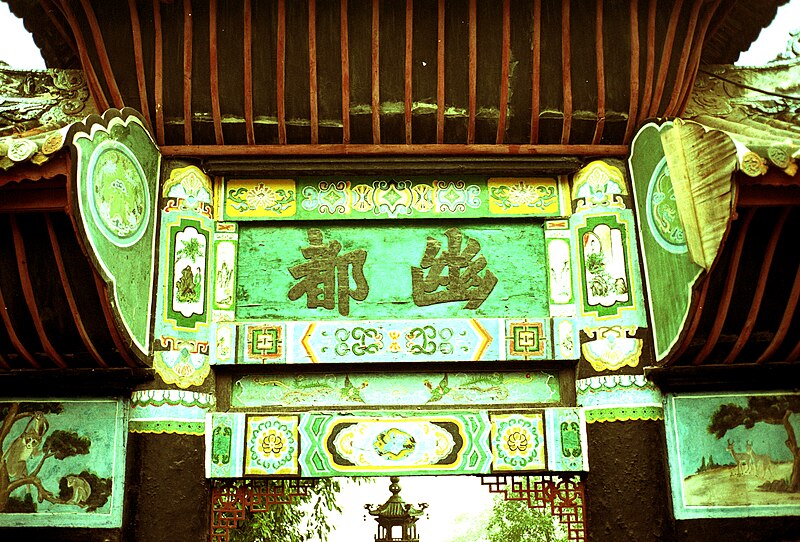
The Capital of Hell: The gate to the capital of the underworld, Youdu (right to left: 幽都). The whole underworld is called Diyu that is displayed in Fengdu Ghost City./source

After the building of Three Gorges Dam is built the Fengdu Ghost City will be an Island of itself, but parts of the city will be submerged in the water. They have also made some recent addition to the city.

In 1985 they built the Last Glance Home Tower, and according to legend, this is where the dead can have one last look back at their home and families before crossing over. Maybe one day, the Fengdu Ghost City itself will be something more of a legend than an actual place.

More like this

Newest Posts

https://www.atlasobscura.com/places/fengdhu-ghost-city

The Lingering Presence of a Nazi Ghost at Skaugum

Advertisements

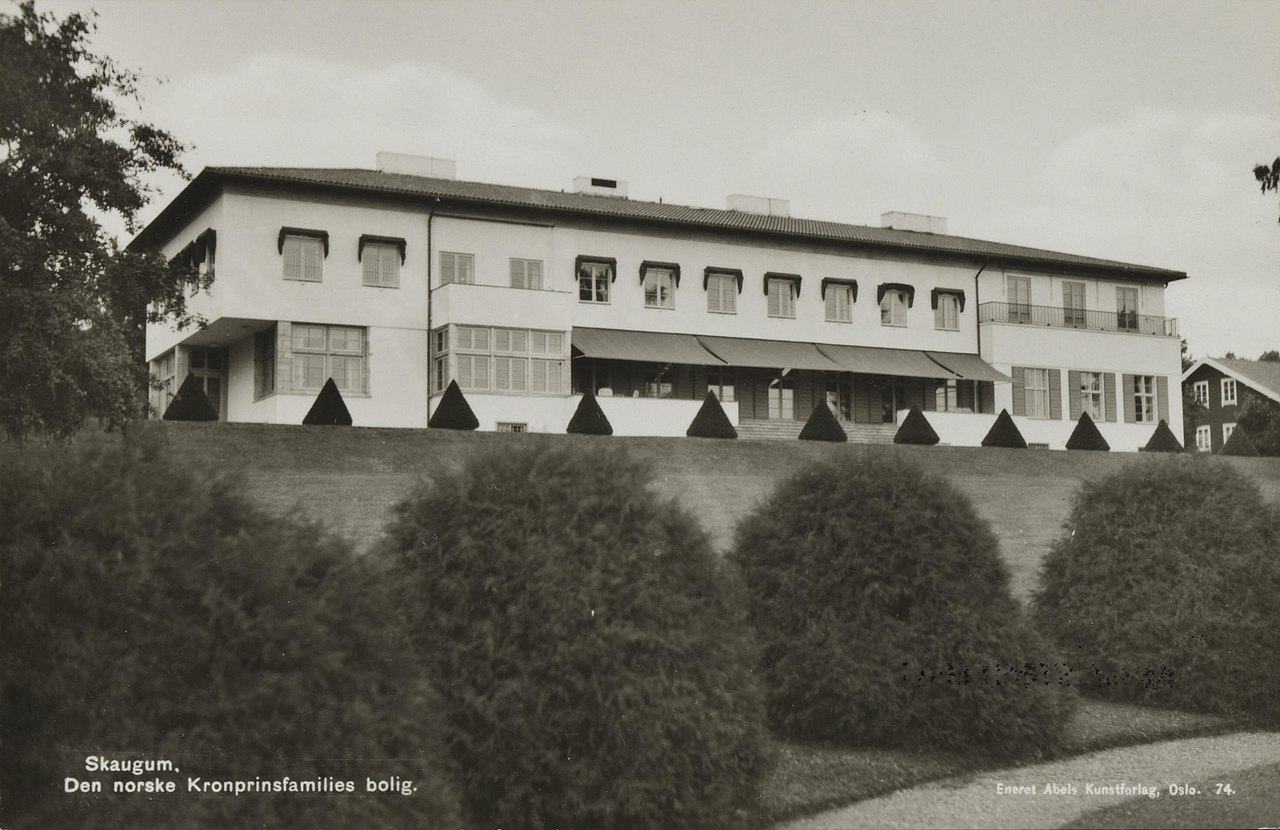
In the bunkers at one of the Norwegian Royal Family’s residents, Skaugum, there is a rumor of the place being haunted. One of the ghost that haunts the place, is the former Nazi Reichskommissar from the war, Terboven.

Skaugum, Asker, Norway: 1945.

No one has flagged with the Norwegian flag in a long time since the German occupation five years earlier and only the nazi flag with the black swastika on the white disk was allowed. But it is all about to change as the allies are closing in on Berlin and the second world war is coming to an end.

High Ranking Nazi’s: Terboven (seated 2nd from right) with minister president Quisling, SS boss Himmler and von Falkenhorst in 1941. Foto: Deutsches Bundesarchiv

8th of May is approaching, the liberation day and the freeing of the nation are a couple of minutes from being announced. People are gathering in the the streets, ready to celebrate and start anew in a peace.

Read Also: Check out our entire collection of ghost stories from Norway.

But there are some the freedom is nearing its end however. The German Reichskommissar for the occupied Norwegian areas, Josef Terboven have an arrest order on his name and is one of the number one nazi officials the Norwegians are after.

Read More: Check out more ghost stories from the Second World War like The Black Cat of War

Terboven knows the war is over and that it will be showed no mercy from the allied forces, not from the people he spent five years at oppressing. He decided to end his life to avoid capture, but according to the rumours, his spirit never managed to escape.

The Reichskommissar in the Bunker

As Reichskommissar, Terboven was the one giving the orders that would send the people of the nation to the working and death camps. He was responsible for the imprisonment, executions- everything.

The Reichskommissar: Josef Terboven. Source: Riksarkivet (National Archives of Norway) @ Flickr Commons

When he took office in Norway it was he who brought death penalty back to a country that had made it unlawful. You could end up dead by leaving the country without permission, listen to illegal radio, taken with illegal newspapers and help war prisoners and refugees. He was by the end of the war, one of the most hated men in Norway.

Read Also: Check out more ghost stories involving nazis like Conn Barracks Ghosts of Nazi Soldiers and Bloody Nurses

All of this is hanging over his shoulders that day in May when people are celebrating. He sits in his bunker at Skaugum, a farm originally owned by the Royal Family outside of Oslo. He once barged in, chased the royal family away and started living there. Now, he himself is the one that is about to be chased away.

The bunker at Skaugum is only 200 meter from the main house the crown prince of Norway owns of and stays in today. There the next King and Queen of Norway lives together with their children.

On that day in 1945 Terboven realized that all hope for a German victory was out of question and hid in the bunker together with the last of the German officials left.

Wilhelm Redieß, the SS boss in the country had already killed himself by gun. “That was early, he beat me to it”, he commented on the suicide.

But Terboven would follow shortly and he had brought 50 kg of dynamite to his bunker at Skaugum and that is how he ended his days. He blew himself up to avoid being prosecuted for his crimes. At 23:30, he detonated the bomb exploded along with the body of Redieß.

The remaining crew of SS spent the rest of the dynamite the next day when Norwegian police came to burn it all down.

The Ghost in the Bunker

According to the legend, the bunker at Skaugum is also were Terboven will spend his eternity. For a long time after the war, it has been reports about activities that no one has been able to explain close to the bunker where nazi officers ended their days.

Early days of the Nazi Party: Josef Terboven rose quickly in the ranks, here with the national party: NSDAPs paramilitary street troops in 1926 in Germany. Foto: Deutsches Bundesarchiv

His Majesty The King’s Guard; the Royal Guards, a battalion of the Norwegian army are the ones guarding the Royal property and residents, including Skaugum today. And there is also from the soldiers the stories comes from.

They tell they have experience many strange things they believe to have a paranormal origin walking the empty places near the bunker at Skaugum. Strange tracks from or to the bunker is spotted for example by the forest surrounding the estate close to the fence. The soldiers have to patrol there and comes back with stories about strange sounds and apparitions, even during the day. Late at night close to the bunkers, the keep hearing the sound of voices and when they go to check it out, they find that they are alone. At least the only living thing there.

Skaugum Farm: The big farm has been the Norwegian residency for decades and even today the place is the home of the crown prince and princess. Right by the big house there is a bunker that is said to be haunted by the former Nazi officials that took over the place during the war.//Source: wikimedia

There are also placed calls from the outer guard post when no one is placed there to make them.

A common factor for all of this is that it is all happening right by the bunker Terboven blew himself up in. The royal guards working at Skaugum are of the opinion of that it is all contributed to Terboven and his ghost lingering in the bunker forever. He never got peace after his death and roams the property were the next royal heir of Norway resides.

More like this

Newest Posts

The Red Barn Murder and the Ghost in the Dreams

Advertisements

The murder of Maria Marten, a case called The Red Barn Murder got a lot of media coverage in England because of the strange circumstances. The murder was allegedly solved by the appearance of the ghost of the victim, haunting people’s dreams.

‘”If you’ll meet me at the Red Barn as sure as I have life
I will take you to Ipswich Town and there make you my wife.”
This lad went home and fetched his gun, his pick-axe and his spade.
He went unto the Red Barn and there he dug her grave.With her heart so light she thought no harm, to meet her love did go
He murdered her all in the barn and he laid her body low
– The Folksong The Murder of Maria Marten

The year of 2004. The Place? at the Royal College of Surgeons of England. A skeleton, reassembled so many times and exhibited, used as a teaching aid in the West Suffolk Hospital. It is almost possible to forget that the people hanging there, next to the teacher, used to be a living human. What cruel fate it is, to always be on display. But then we can wonder, why? Why do you hang there? Is this your punishment? Did you do something? And who hangs beside you? The question is always asked.

“Who is that skeleton?”

Beside you is someone infamous. Jonathan Wild, the notorious gang leader in Britain, known as the great corrupter. The students might know his name, his crime. But who are you? Does anyone remember your name?

The Skeleton of the Murderer William Corder

The skeleton sitting in the classroom actually belongs to William Corder, a man that would end up in the infamous case of The Red Barn Murder.

Read Also: Another infamous murder trial involving ghosts is The Infamous Haunted Lizzie Borden House 

He was a boy like any other, born in 1804 to a prosperous tenant farmer in Suffolk, England. He was nicknamed Foxey at school and was a bright kid. He had his whole life in front of him and he had some dreams of becoming a journalist or a teacher as he had some talent for writing. But there was a darkness in Corder that eventually would devour him.

Corder’s father liked his brothers much better according to the rumours around town, and he was sent to London to find work, not wanting to fund his sons dreams. He was said to be a liar and a cheater, thereof the name Foxey most likely. He was also known for petty theft, like when he sold his father’s pig. Yes, his father’s pig.

In London, he fell into bad company and spent all of the money his father gave him. He was a well known ladies man and all around an untrusty fellow. But Corder’s biggest crime was the Red Barn Murder and being found out by the ghost of Maria Marten, the woman he murdered.

Maria Martens Life and Death

After a while, William was called back to the farm from his wild time in London. There he met Maria, daughter of a mole catcher in the same small village, two years older than him and the likes of William Corder didn’t immediately catch her interest.

Maria Marten: The young girl ended up being the victim in the Red Barn Murder/Wikimedia

Maria Marten was 17 years old with a taste for finer things with a curse on her head and would end up as the victim in The Red Barn Murder. There is the story about her that a fortune teller once said that she wouldn’t reach old age, but would have many lovers and riches.

Before getting involved with William Corder she was actually seeing Williams older brother, Thomas. He was the oldest and also the fathers favorite and the two got into a relationship that was doomed from the start.

Thomas Corder wanted to keep the relationship secret as she wasn’t regarded of the same status as himself, being poorer and of a family with a “low” status. The Corders were after all, prosperous farmers.

That didn’t stop him from getting involved with her though and Maria Marten fell pregnant with Thomas child. Thomas left her when she told him about her pregnancy, perhaps hoping it would convince him to go for her after all.

It did not, and she gave birth to his child alone, but the child died a couple of weeks later. Maria then got into a relationship with a Peter Mathews, a middle age man who also dropped her after giving him a son called, Thomas Henry in 1824.

Indeed she had some lovers, perhaps some riches. And indeed she wouldn’t be alive for long.

William Corder and Maria Marten’s Relationship

When William Corder came home from London, bad luck struck his family. His father died and his brothers got very ill, leaving him to manage the farm together with his mother. And this is were he got to know Maria and they got involved in a relationship. But it wasn’t a happy match from either of their families stands. She on her side was already left with a ruined reputation by a Corder. And from the Corder’s perspective, she was a fallen woman and not from a prosperous family like theirs.

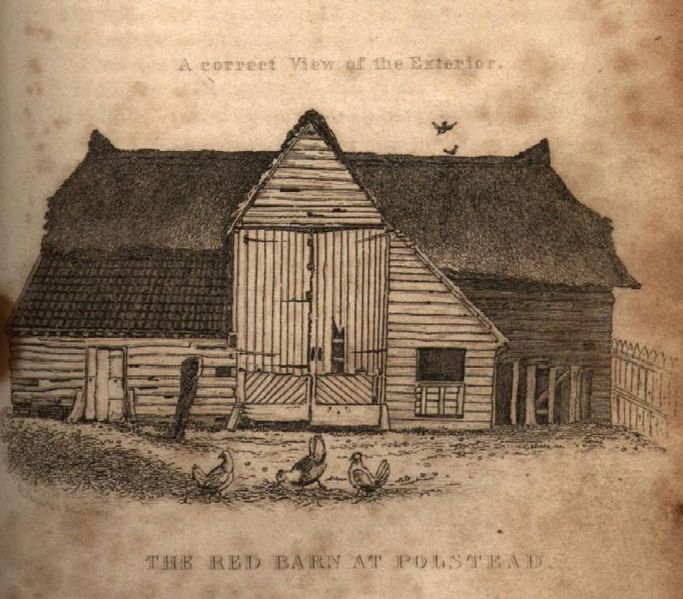
The Red Barn Murder: The old barn close to their houses was the scene of the Red Barn Murder and later a tourist attraction. It is now burned down./Wikimedia

This didn’t stop them meeting, although they met in secret. Often at a red barn right by Marias house. It was called that because of the red tiles on the roof and would later be a tourist place as the location of where The Red Barn Murder happened. But the secret of their relationship was not to last for long, as Maria became pregnant again. Maria wanted William to marry her, and according to him, he said yes.

At the same time that winter, William’s brother and Maria’s ex-lover, Thomas was walking over a frozen lake. The ice cracked and Thomas went under, drowning. William was now the owner of the farm as the only son.

Between Maria being pregnant, the farm being in financial troubles and his brother dying, it seems that it put a toll on him. He put Maria in a lodging at Sudbury, a couple of miles away from home to have their baby. But this too should not live and died soon after. William buried the child in a field and there have been speculations that this was not a natural death and that he might have killed their love child as well. And these day, who could really tell?

The Red Barn Murder

Maria and William started to argue about some money that may have been stolen, they argued about the burial of the child and how it looked like William would not marrying Maria after all. At one point the pair made a plan, when William said they should elope to Ipswich. She would come dressed as a boy and they would meet in the Red Barn were they had met countless of times before.

Read Also: Maria Marten got killed by a partner, we have multiple stories telling the same. How about checking out The Ghost of La Faraona Haunting the Agua Caliente Hotel or The Prisoner of Château de Puymartin

Why would William Corder elope now? Now that he didn’t have a father or older brother to interfere? One of the problems the couple had was with Maria and her crimes. It wasn’t necessarily unlikely or weird that they would like to run away, as Maria had several charges on her for bearing illegitimate children. Criminal at that point in time.

The days before their plan was set into motion was the last time Maria Marten was seen alive. William began acting odd and a lot of questions were asked about her. Where was Maria? Wasn’t he going to Ipswich with her?

He told the people asking she had gone ahead to Ipswich, but then he changed the story, and told she had gone to Great Yarmouth and wouldn’t be able to return yet. Then he changed the story again, and he said he was meeting Maria and that they were going to marry. He said he felt unwell and traveled to Isle of Wight, writing back home that they were married and happy there. He said he was sorry that Maria couldn’t write herself as she had hurt her hand and wondered why some of her letters hadn’t made its way back home.

The Ghost of Maria Marten Haunting the Dreams

This vague and strange story didn’t sit well with her family though. The Marten family did not believe William and his excuses as to why they hadn’t seen or heard from her. But in a strange twist of fate, she would find other means to contact her family.

Maria had a young stepmother back in Polstead, Ann Marten. She was troubled by strange and scary dreams about her stepdaughter. Twice Ann Marten had woken from a terrible dream that she herself knew to be true. When she shared them with her husband they looked for Maria in their town and found her.

Read Also: Another ghost story about a ghost that allegedly help solve her own murder case, read about The Greenbrier ghost in The Ghost that Went to Court

The dreams to her stepmother told that Maria had been murdered in the Red Barn buried under the floor and not gone to Isle of Wight at all. Her husband, Maria’s father was sent to the barn and looked for his daughter, prodding the ground with a mole-spike. There he discovered the remains of his daughter, brutally murdered and discarded under the floor for a long time.

Maria was shot as well as stabbed multiple times to death. They brought her to The Cock Inn and, decomposed as she was, her sister Nancy identified her from the clothes, the hair and a gap in her teeth. Around Maria’s neck they found a green handkerchief. According to the witnesses it belonged to William Corder. Was she also strangled? Was she even dead before he buried her in the grain storage bin her father found her in?

The Trial of The Red Barn Murder

Back in Ealing were William had fled, he knew nothing of the mysterious dreams and the discovery of Maria under the barn. Time went by and William needed a wife. He put an ad in The Times and asked for a wife. He picked Mary Moore and they set up a young ladies school in Ealing, West London. He was moving forward in his life. But Maria wasn’t forgotten yet.

Boiling some eggs at home the police came knocking at his door and apprehended him. First he denied that he knew of this Maria Marten, but the evidence was there and he was brought back to Suffolk.

And the press was on this, coming from all across the country to behold the spectacle of his trial and the strange circumstances around it. The case of The Red Barn Murder even got a play on stage before Corder even came to trial, which they actually sold tickets to.

The Red Barn Murder Frenzie: The execution of William Corder, the Red Barn Murderer was a popular event and thousands of people attended/Wikimedia

Forensic pathology was not as advanced yet and it was impossible to determined what of the things that killed Maria. That is why he was charged with nine different murder charges, where shooting, strangling, stabbing and burying alive was a couple of them.

“By that powerful engine of the press,” he said, “I have been described…as the most depraved of human monsters,” he said of the media coverage.

Corder’s defense was articulate, but improbable, claiming Maria herself had taken her own life, but he was found guilty on the circumstantial and medical evidence, and sentenced to hang.

It was the Chief Baron Alexander that was the judged, and he added that his dead body was to be dissected and anatomized, almost like a second punishment.

The Execution of William Corder

The execution was a great play and melodrama itself, and several thousands of spectators had tickets to the show of William Corder’s last moments. During his last days the prison chaplain had tried to get a confession from William who had denied all of the charges against him. Finally, William Cordery admitted to killing MAria by accident during one of their many quarrels. What he denied was stabbing her. Perhaps it was the mole-spike her father looked for her with that made those wounds?

Hanged: The Execution of The Red Barn Murder/Wellcome Library no. 43542i

In any case, he took the punishment for all of her injuries. His last words were:  “I am guilty; my sentence is just; I deserve my fate; and, may God have mercy on my soul.” He was left hanging for an hour, most likely in agony before he died.

After his death he was transported to Shire Hall were he was left for science as the sentence was. But many of the things done to his body after death was highly unscientific. For one,his skin was removed, tanned and used as a book cover that described his crimes and live. Like the most bizarre biography.

What happened that day? Was Maria’s mother psychic? She was only around a year older than Maria, and had not exhibited similar dreams before. Perhaps it’s a bit odd that her dreams started just after news of Williams marriage to Mary Moore. And there were also some rumors that linked her as a lover with William.

What happened skeleton hanging in the lecture hall? Truth be told, it isn’t even William. At least, not all of it. After his hanging, he was chopped up, his body dissected in front of anatomy students, perhaps even used as an experiment with galvanism.

The Red Barn Murder Frenzie

Perhaps the most gruesome thing was that none of the people involved were left in peace after their death, as the story about the Red Barn Murder was a sensational tale and people flocked to the location as well as tried to get a hold of some sort of suveniers from the case.

After the execution, William Corden’s ear was sold, his skull was taken by Dr John Kilner who collected The Red Barn Murder memorabilia. Even pieces of the rope he was hanged in was cut up and sold for a guinea. Perhaps the disturbance of the dead came back to haunt the living that looked at their death as some sort of amusing spectacle?

After many strange and tragic events that happened after The Red Barn Murder enthusiast Dr John Kilner took the skull for himself to his collection, he believed that the skull was cursed and gave it to ta friend. But bad fortune kept plaguing the two men and in the end they decided to pay for a Christian burial to lift the curse of the skull of the murderer William Corder.

Maria also kept being disturbed after The Red Barn Murder. A lock of her hair was sold at two guineas and Polstead with her cottage, the Red Barn and her grave became a tourist attraction and people started chipping away at it so it completely disappeared. The grave as well as the Barn, planks, roof tiles and all sold as macabre souvenirs.

After 2004, the skeleton of William Corder, or at leas what was left of him was removed from the classroom and finally put to rest six feet under.

But the rumors still lingers about the ghost of Maria haunting her stepmother’s dreams, about what really happened that night of The Red Barn Murder. But maybe it is time William got some peace, having served over 200 years for his crimes.

More like this

Newest Posts

References

What really happened with the notorious murder at the Red Barn in Polstead? | Great British Life

Murder in the Red Barn—Maria Marten’s Tragic Love Story – Owlcation
William Corder, the Red Barn Killer – HeadStuff
The Red Barn Murder Revisited! – Norfolk Tales, Myths & More!

The Obon Celebration – The Ghost Festival

Advertisements

Light your lanterns, put on your Yukata and get ready for The Ghost festival in Japan called The Obon Celebration. The festival, also known as Bon festival is a three day long festival each year in the late and hot summer to honor the dead.

Why is every Japanese ghost story set during the hot and humid summer nights? It’s not really, but a staggering amount is and there is a reason for it!

Beautiful lanterns: Bon-odori festval at Higashiyama Onsen (Fukushima) 17 August 2009. Photo by: Yoichiro Akiyama/source

In mid July you can hear the sound of wind chimes and there is shaved ice on every corner in the summer heat with people wearing their traditional Yukata. Perhaps coming from or going to one of the big parades? The cicadas sings and the Japanese takes the time to tell their many ghost stories in the hot summer nights.

Fun fact, some says that telling a chilling ghost story in the hot humid summers in Japan, will help cool you down, because of the goose bumps you get from being scared. And because of that, a trend in the Edo period started with telling ghost stories in the theaters in the summer times, called Kaidan.

Read Also: Some of the most famous Kaidan ghost stories is: The Myth of Oiwa — The Paper Lantern Ghost, Botan Dōrō – Tales of the Peony Lantern and Banchō Sarayashiki — the Ghost of Okiku. Check out the full story here.

The Obon Celebration is not only an ancestral celebration from the old days they keep alive. Horror movies takes over the cinema, Kabuki theaters put on their traditional ghost plays and teenagers dares each other to visit the cemeteries at night, making the whole festival seem very similar to the modern Halloween celebration in the west.

The paranormal hunters are also about, visiting well known haunted locations around the country and the belief in spirits reach an all time high. But there are also less sinister traditions that comes with the festival.

The Buddhist Obon Celebration

So what really is the The Obon Celebration other than watching horror movies, telling ghost stories and ghost hunting? Obon (お盆) or just Bon (盆) is a Japanese Buddhist custom to honor the spirits of one’s ancestors that incorporated the Japanese native folk religion Shinto, differentiating it a bit from the other Buddhist Ghost Festivals from other countries.

The Obon Celebration originated from the Indian and Chinese Ghost Festival during ghost month. There are many variant of this ghost festivals across the Asian continent coming from the same buddhist story.

Read Also: Interested in more haunted Japanese tales? Have a look at all our ghost stories from Japan

The Obon Celebration is one of the few events on the Japanese calendar that focuses on the importance of family and is there to give the families in Japan time together. It is not a public holiday, but customary to be given leave to travel to your hometown, back to your family. Both the living, as well as the dead.

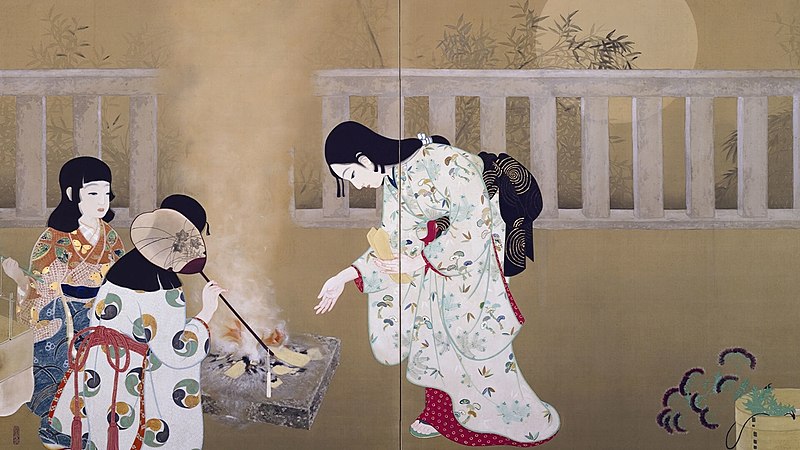
Welcoming the Dead: “Bonfire for the Spirits of the Dead (Okuribi)”, two-panel screen, Color painting on silk from 1916. Showing how the Japanese light fires to welcome the spirits of the dead during Obon in a ritual known as Mukaebi.

When is Obon Celebrated?

The Obon Celebration has been going on every summer for over 500 years. The exact dates changes according to where you live though because the lunar calendar was changed in favor to the Gregorian calendar instead. During these days the employers often grant their workers and the trains, planes and busses are filled with people out in the countryside to celebrate it with their family or into the cities to join the big parades and happenings throughout all big cities.

Read Also: More articles on Paranormal Festivals and Happenings found in the MoonMausoleum.

In eastern Japan, it is held 15th of July, but in the western part it’s held on August 15. However, in Okinawa and the Amami Islands it’s different again and follow the Chinese way to celebrate on the 15th day of the 7th lunar month like their ghost festival. In common though, the festival lasts for three days and the official Obon holiday is from 13-15 July.

Visiting the Grave: A huge part of The Obon Celebration is going home and visiting the graves of your ancestors, clean them and make offerings to them throughout the festival before sending them back to the afterlife.

It is believed that during these three days the ancestors spirits return to the world to visit their relatives. In this time the veil between the spirit world and the world of the living is at its thinnest and therefore the spirit can pass through.

How do the Japanese Celebrate Obon?

To prepare for the return of the ancestors during the The Obon Celebration, the Japanese clean the grave sites in a ritual called Haka Mari. From the newly cleaned graves it gives a path to them back to the house in a ritual called mukae-bon. A spirit altar is put up back at the home and offerings like fruit, flowers and incense is given.

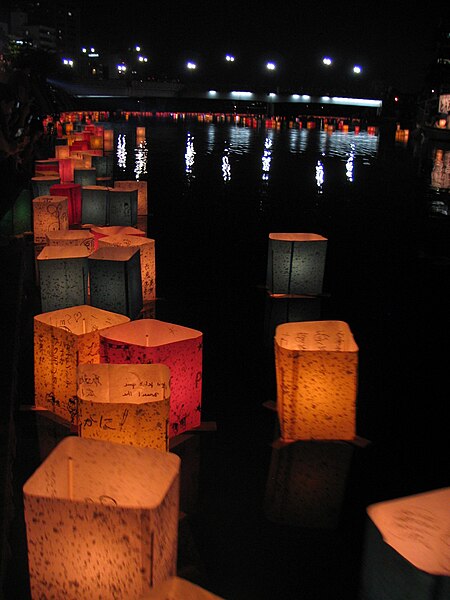
Floating lanterns: Tōrō nagashi float in the river in Hiroshima, as part of the Hiroshima Peace Memorial Ceremony in 2009. Photo: 藤谷良秀(Yoshihide Fujitani) /source

The Obon Celebration begins with Mukaebi, which is a ritual of lightning fires to guide spirits home for the duration of the festival. Often in the form of lanterns hung in front of the houses.

In this way the Obon Celebration reminds much of the western All Saints Days or Halloween celebration as it is believed the veil separating the living and the dead world is thinner and it’s a time for hauntings and ghost roaming the world.

Read Also: Halloween Traditions Across the World

The lanterns most often used is the traditional paper chochin lanterns, but how you use these lanterns and were is very different from region to region.

In some regions of Japan they light up huge fires outside the houses instead of lanterns. Like they do in The Daimonji Festival in Kyoto were they light up series of , 200m-long, character-shaped bonfires built on mountainsides.

When the Obon Celebration ends, the chochin lanterns is often used to guide them back to the spirit world, a ritual called okuri-bon.

On the final evening of the Obon festival it is thought that placing floating lanterns down the rivers will help guide the spirits back to the spirit world if you live close to a river or some sort of water. This tradition has gained a lot of popularity in modern time.

This ceremony is called Tōrō nagashi 灯籠流し, but the custom of sending floating lanterns during the Obon Celebration differs from place to place. The largest floating lanterns event though is in Hiroshima and Nagasaki to commemorate the victims of the atomic bombs during the second world war.

Welcoming and Feeding the Hungry Ghosts

One of the things The Obon Celebration is for, is to ease the suffering of spirits. To do this they have to perform the ritual of segaki 施餓鬼, meaning feeding the hungry ghosts, otherwise known as a vengeful spirit, or in the western tradition: a poltergeist. It is a ritual of Japanese Buddhist tradition.

Read Also: Interested in more ghost stories about the Hungry ghosts? How about reading about the chinese ghost story of: The Story of Tu-Po – The Hungry Ghost or about the Japanese vengeful ghost: Onryo – The Japanese Vengeful Spirit

During the festival, the ritual is performed at Buddhist temples and more offerings are given to the hungry ghosts: Rice and water. This is for the muenbotoke, or the ghosts with no living relatives that have no one to welcome them.

The food served is often vegetarian and a thing eaten much of is sticky rice balls called ohagi and odango.

Another significant ritual people do during the Obon festival is to craft a cucumber horse and eggplant cow, known as shōryō uma (精霊馬, “spirit horse”) or ushi uma (牛馬, “cow horse”). This type of carved food works almost as a vessel for the ancestors to come back home when the festival starts and return when it’s over.

Food Offerings at the Alter: Cucumber and Eggplant crafted as a vessel so the spirits can come and go during the Obon Festival //Source: Wikimedia

The Buddhist Dance from the Spirit Realm Bon Odori

But exactly why do the Buddhists and buddhism influenced places celebrate the dead during this time? It is best seen through one of the ways the Japanese celebrate.

The Bon Dori Dance 盆踊りis a dancing style performed during The Obon Celebration. It comes from the story of Maha Maudgalyayana, or simply Mokuren which was the incident that made people celebrate the ghost festival in the first place. He was a disciple of Buddha and used his powers to look into the spirit realm. There he saw his mother, and saw she had become a hungry ghost.

He asked Buddha what to do and Buddha said to give offerings to the monks that completed their summer retreat on the 15th day of the 7th month. Mokuren did it and it worked. His mother was freed from the suffering of being a hungry ghost. He burst out dancing from pure joy.

Bon Odori Dance: This is a scene from one of the dance festival at the Hanazono Shrine, Shinjuku, Tokyo city. They are celebrating The Obon Celebration. Yukata-clad people dance in circles around the yagura as the music plays just as Maha Maudgalyayana did when he saved his mother from the afterlife as a hungry ghost.

The dance has so many variations and each region perform their local dance with their own music, however, the Japanese taiko drum is often used to the melodies of old folk songs.

There are several big parades showcasing the Bon Odori dance during the Obon Celebrations. The Tokushima Awa Festival (阿波踊り) is perhaps the most well known bon odori dance that draws millions of visitors to Tokushima to watch and join the huge parades in the city. There are the also Gujo Odori Festival in Gifu (郡上おどり) and the Akita Bon Odori Nishimonai Festival (西馬音内盆踊り). These are all well known for their Bon Dori during the ghost festival, but it is held smaller Bon Odori dances as well everywhere.

Since the celebration and all its customs is so different from region to region, the dance will look so different as well. But very often it is people lining up in a circle around a wooden scaffold made for the festival called Yagura. The dance can also include the history of the region as well. Like mimicking fishing in fishing areas, dance moves reminding of digging in coal mining areas and the likes. What they have in common though is their intent is to honor their ancestors and those that came before us.

Things to Watch out for During the Ghost Festival

Although mostly a family holiday and a time to spend with your family and religious days of remembrance and folk festivities, there are also several superstition that are said to be remembered during the days.

The first rule during Obon to beware of is to not take pictures during the night so not to capture a ghost. Perhaps a bit difficult because of all the festivities people take a photo of to remember.

It is also said not to swim as it is more likely to be drowned by a ghost. Do not steal the food offering to the hungry ghost of obvious reasons. Do not hang your clothes out to dry in the night as iit believed that the dead will wear them and don’t put the slipper heals towards your bed. Ghost will find your bed and climb into it, causing sleep paralysis.

All in all, do not do anything but being respectful to the dead during the Obon Celebration.

More like this

Newest Posts

References:

https://www.newworldencyclopedia.org/entry/Bon_Festival
https://www.jrailpass.com/blog/obon-festival-in-japan
https://www.tokyocreative.com/articles/18387-chilling-tales-for-hot-nights-ghosts-in-japan
Season of Ghosts: The Japanese Tradition of Scary Summer Stories | Work in Japan for engineers
What is Obon? Japan’s festival for the dead.

The Grey Lady of Stavern at Hotel Wassilioff

Advertisements

On the fortess island outside of Stavern in Norway as well as one of the rooms at the historic Hotel Wassilioff, it is said that the ghost of The Grey Lady of Stavern is haunting, calling the name of her former lover that left her.

 “Peter!

……..Peeeeter!”

The wailing screams echoes through the corridors of hotel Wassilioff in Stavern, Norway in the dead of night. But when people peek their head out to look, there is no one there. The same can be heard at the coastal fortress on the Citadell island were a shadowy figure has been spotted. The same echo of a voice calling after the same person. Peter.

Stavern is a quaint and picturesque summer town in east of Norway by the coast. Several make it their vacation place during the summer times with the cute medieval architecture and history and the white beaches. But during the night, the old and not so pretty side of the seaside town start to appear through the cracks.

The Quiet Seaside City: Stavern is a popular summer destination as it is right by the beautiful coast of Eastern Norway. View on Skagerrak from Stavern, Norway//Source: wikimedia

The old seaside city is filled with ghost stories about drowned sailors and lost shipwrecks next to happy summer days by the shore, picking seashells and taking a swim.The most famous ghost story is the tragic tale of the Grey Lady of Stavern or Den Grå Damen in Norwegian.

The haunting allegedly happens at the historic Hotel Wassilioff right by the seaside just around the corner from the stature of Tordenskiold. The hotel today was founded in 1844, around a century after this tragic event is said to have happened. If it used to operate as a hotel before this though, is unclear.

Read More: All of the ghost stories from Haunted Hotels across the world

But who was the Grey Lady of Stavern when she was alive, and who was this Peter, that she keeps calling for, even in the afterlife?

The Maid Elise and Tordenskiold the National Hero

The Grey Lady of Stavern was supposedly a maid named Elise fell in love with the sea hero Peter Wessel (1690-1720), he is better known in Scandinavian circles as Tordenskiold, a very well known figure in Norwegian history, although the myths about him sometimes overshadowed the truth.

Tordenskiold: A Norwegian war hero at sea, it is believed that the ghost is calling out his name after he left the Grey Lady of Stavern.

A true patriot and a war hero that fought many battles for Denmark-Norway against Sweden. Tordenskiold is even mentioned in the national anthem they still sing today and his monument is standing in Stavern. However this is not the whole story as he was grealy showed in a much better light than reality. For one, he had economic interests in the slave trade and worked on a slave ship when he was a teenager. He was also a notorious womanizer that left many women in a deep predicament.

Elise on the other hand was only eighteen years old when she met Tordenskiold and fell for his charm. When people started calling her Elise is unclear though, as there is no last name and there are many variations to the legend. In some version of the story she was already engaged with a lieutenant named Heber, making her relationship with Tordenskiold even more dramatic.

As the story of the Grey Lady of Stavern goes, he seduced the young maid and brought her to room 216 on the coastal hotel, now called Hotel Wassilioff, or at least whatever establishment there was there at the time in the early 1700s.

Tordenskiold didn’t really come from Stavern, but lived there for a period when he worked for the navy. They were stationed in a commander’s building that are still standing today, and the ships used in the sea battles often passed by the Stavern and the fortress there was an important base.

Their romance was however short lived and superficial. When Elise became pregnant, he abandoned her in Stavern and sailed his way to glory. He died however shortly after, only 30 years old in a duel.

The Well at Citadell Island

As said, the Hotel Wassilioff didn’t open until 1844, long after this story takes place, and the narrative that they spent any time there is slim, as what the building was used to before that is unclear. But the original legend about the Grey Lady of Stavern doesn’t even mention the hotel, but it does mention the fortress on the small island just outside of the city.

Read Also: Does the concept of haunted islands seem intriguing to you? Read our ghost stories set on Haunted Islands from all over the world.

Right across the harbour of Stavern city there is a military fort built to protect from the Swedes during the Scanian War. You can see it from the windows of Hotel Wassilioff. It leads over to the small island, connected to the mainland. Today it’s only a tourist attraction, as well as Elise’s final resting place.

Citadell Island: The place Elise is said to have gone to drown herself and haunts, roaming the old fortress.//Photo credit: Jørn Tore Røed / visitvestfold.com/flickr

According to the legend, Elise was desperate, despaired and abandoned and went out to this island. Full of grief and with no hope she was driven to suicide and drowned herself out on Citadell island in a well there and rose from the dead as Grey Lady of Stavern.

Elise probably did what she did to escape the place she was trapped in. But perhaps she didn’t intend to be roaming along the fortress and in the hotel corridors, looking for the man leaving her for the rest of eternity.

Read Also: Banchō Sarayashiki — the Ghost of Okiku who also was drowned in a well.

Whether this was true is unclear, but the drowning in the well is also connected to Heber, who had many tragic legends around himself, even outside the legend of Grey Lady of Stavern. One was that he killed his fiance because he suspected a relationship with Tordenskiold another about his widow who drowned herself in the well because she had too many kids and no pension on October 11th in 1746.

The Grey Lady of Stavern at the Haunted Hotel

Back to Hotel Wassilioff, the place most people claim to have seen the Grey Lady of Stavern, even though the historic reasoning for this is weak. How do they know that it is the Grey Lady of Stavern haunting the rooms and corridors of the hotel?

Guests at the hotel can wake up to nightly callings from the maid, screaming the name of the lover who left her in a situation so dire she couldn’t live with it. As mention, it is especially outside or inside the room 216 her desperate wailing has been heard.

In addition to the nightly terror of a woman screaming there are reports of something moving over the floor inside of the room, like there is furniture that being moved around even if there is no one checked into it.

When the hotel management were asked about the alleged haunting, they confirmed that there was something going on and had this to say about it:

“One guest asked in the end to be given another room, that is how creepy it was with all the sounds,” hotel management tells to a national newspaper when they interviewed about the legend of the Grey Lady of Stavern.

The Woman in Grey in the Realm of Fables

The legend of the Grey Lady of Stavern has today many variants and it is difficult to differentiate the original legend from the many plays and writings about it. Perhaps the best known version of it from a summer play Klar til å Vende (Ready to Turn) by Herman Wildenvey from 1938. He explained the ghost haunting the place like this:

“She still lives in the realms of fables, sometimes seen by the naked eye here, a woman clad in grey.”

Read Also: There are many stories about ghost dressed in grey. Some of the ghost stories featuring these Ladies in Grey are: Hvítárnes — The Haunted Hut on Iceland, Janet Douglas in Edinburgh Castle Ghosts and Legends or the Lady in Grey at The Haunted Vicarage — Sweden’s most ghostly crowded house.

If her name really was Elise, if she really were jilted by the war hero or drowned herself, the ghost story about the Grey Lady of Stavern continues to cast a shadow on the bright summer nights. Gliding along the fortress on the island, calling out and looking for the one who tricked her, tourist thinking they will enjoy the blue sea can observe Grey Lady of Stavern as a slim grey figure that never found rest. A weeping woman in a grey dress.

More like this

Newest Posts

References:

Historien | Hotel Wassilioff

Den grå dame i Stavern – Wikipedia 

Citadellet

Jakten på Den grå dame – VG 

The Ghost of Leirubakki – An Icelandic Ghost Story

Advertisements

The Ghost of Leirubakki is an Icelandic ghost story about the ghosts of some shipwrecked sailors from Denmark haunting the coast of Iceland.

Nothing darker than the depth of the sea, nothing more cold than the north. The northern shores, the coldest, the darkest. This coldness is something so many ships, so many sailors must have experienced as the bottom of the ocean is now littered with the remains of the drowned ones. There is always the fear, even today of the depth of the ocean, especially on these treacherous waters.

Read More: Ghost stories from Haunted Ships

The story begins with a sinking ship near the coast of Iceland, but the haunting travelled with the unfortunate people that disturbed their graves. While the legend of the ghosts and the supernatural are treated just like that, a legend, a myth, the events surrounding it all true.

The Shipwreck on the Shore

A Danish ship named Gothenborg, sank in the 1700s. Luckily all the 170 people from the shipwreck survived and was rescued by the local people of Iceland. Remember that at this time, Iceland was a colony of Denmark, and there was often bad blood between the people.

And sadly, the problems of the survivors were far from done. Their ship was sunk and their supplies gone. The survivors had no possible way of getting home anytime soon as a whole cold ocean parted them from their home country. They had to rely on the kindness of the local farmers that lived there to keep them alive until they found a way to get back.

However, there was not enough food for them all as the country is weathered and not always so kind to its people. Some of the shipwrecked sailors ended with dying of starvation, among them the cook of the ship. A suffering that takes time.

The Ghosts Travels to Leirubakki

Here the legend mixes with the factual events. Almost a century later, two men came over the grave to the cook. Something must have happened, because the story goes, they rose him from the dead. The men ran over the cemetery, followed by the ghost. He started to haunt the one man and did so until his death. Even then the man moved to the place called Leirubakki the ghost wouldn’t leave him alone, further in to the country, further from his home, away from the coast. That is why today the ghost is called The Ghost of Leirubakki.

Read More: All our ghost stories from Iceland

It wasn’t as the ghost hurt the man or his family. But it stalked them wherever they went. This wasn’t a friendly ghost either as he acted out with some poltergeist activity as well. Some of the stories tells that the ghost ripped the roof of a barn one time. It is well known that he scared the horses all the time and claims of the ghost roaming the bare hills of Iceland still stands.

One thing is sure, the ghost never saw his home in Denmark ever again.

More like this

Newest Posts