The haunted rumors of the haunted cemetery in Caldwell, Idaho includes everything from a female jogger to an old lady. So much so that it even draws paranormal investigators inside the gates of Canyon Hill Cemetery.
The cemetery is located at 2024 North Illinois Avenue in Caldwell in Idaho. Canyon Hill Cemetery is an old cemetery that dates back to the early 1800s and houses many souls as their final resting place. But some will have it that not all of the spirits resting there, are at peace.
Read more: Check out all of our ghost stories from USA
People have thought the cemetery haunted for a long time. Those claiming Canyon Hill Cemetery to be haunted say they can feel the temperature change suddenly, becoming colder the second you enter the cemetery. There are also rumors about a strong smell no one can explain or figure out as well as the feeling of someone following you.
Haunted Cemeteries
Haunted cemeteries have long been the subject of chilling folklore and spine-tingling tales. These resting places of the departed are believed to be inhabited by restless spirits, giving life to stories of ghostly apparitions, eerie sounds, and inexplicable phenomena. In the moonlit hours, legends tell of tombstones that come to life, shadowy figures that wander among the graves, and mournful whispers carried on the wind. Whether fueled by superstition or genuine encounters, haunted cemeteries capture our imaginations, inviting us to ponder the mysteries of the afterlife and the ethereal connections that bind the living and the dead.
Several paranormal investigators have taken the trip to the Caldwell Idaho Cemetery themselves to have a look. There are especially two ghosts that most people tell of.
The Old Lady at the Bench at Canyon Hill Cemetery
Apparently there are rumors about an old lady who only sits on the bench late at night at Canyon Hill Cemetery, not saying anything to those passing the graveyard. According to those who have claimed to see here they looked away for just a second just to find her gone when looking back.
Who she is, who she is watching over no one knows. She is however not the only one said to haunt the cemetery.
The Lady on the Bench: Who is the ghost of the old lady just sitting on the bench. Some sort of a watcher of the graves? Perhaps she herself is six feet under the earth of one of the tombs in the Caldwell, Idaho Cemetery
The Midnight Jogger at Caldwell, Idaho Cemetery
The Midnight Jogger is a ghost story that is told to haunt Canyon Hill Cemetery in addition to the old lady on the bench. Apparently the ghost of the jogging female appears when you park between the trees that are overlooking the cemetery just ahead. According to the stories she appears as you drive past her, but are gone as soon as you turn to have another look.
A ghost haunts the roads of small English village. She is known as the Running Lady and according to legend, known for causing accidents.
Some reports that she doesn’t have any legs to carry her and just floats above the ground around the Caldwell Idaho Cemetery. Some even go so far to claim she comes over to knock on the window of the car, although her intentions are unclear.
Ghosts of Canyon Hill Cemetery
As the rumors of hauntings continue to circulate around Canyon Hill Cemetery in Caldwell, Idaho, the curiosity of paranormal investigators and daring locals alike grows stronger. Despite the chilling tales of the old lady on the bench and the ghostly midnight jogger, the true nature of these apparitions remains shrouded in mystery.
Whether fueled by superstition or genuine encounters, haunted cemeteries like Canyon Hill Cemetery carry with them an undeniable allure. So, if you ever find yourself passing through the gates of Canyon Hill Cemetery in Caldwell, Idaho, take a moment to feel the shift in the temperature, listen closely for whispers carried by the wind, and keep an open mind. Who knows what spectral secrets await those who dare to explore the haunted grounds of this ancient cemetery?
Through the power of spiritualism, the bereaved father built a castle designed by the ghost of his dead daughter. And today, the Iulia Hasdeu Castle still stands as a mysterious and haunted place.
Iulia was the beloved daughter of Bogdan Petriceicu Hasdeu (1838-1907) in Romania. He was a Romanian scholar of both history, philology and a great writer. Iulia was somewhat of a prodigy child as well and read by the age of two. Like her father, she was fluent in many languages and spoke French, English and German fluently by the time she was eight. At only 16, she got her degree in philosophy with plans to continue her studies in Latin and Greek Languages at the prestigious University of Sorbonne.
Advertisements
But then on the 29th of September 1888, just a month before her 19th birthday, she tragically died of tuberculosis, a tragic but common way to die in this time. She left behind her many poems, manuscripts and plays to her father who couldn’t move on with his life. That is when he turned to less common ways to keep in contact with his dead daughter.
The Seances to Get in Touch with her Spirit
He was deeply in grief and turned to spiritualism to get in contact with his beloved and missed daughter. There are recordings of over a hundred summaries of these sessions, saying something about his obsession with it.
The Ghost: Portrait of the young prodigy Iulia Hasdeu.
And after he moved to Câmpina which is a bit further north from Bucharest , he spent the time at seances together with the metropolitan bishop, three generals and a processor. All in hope to get a glimpse of his daughter.
He also built an altar for her in their family vault at the Bellu Cemetery in Bucharest that looks more like a Greek temple to pay tribute to her. But this altar was not enough for him to keep as a memento and after six months of trying to reach her in the spirit world, he made contact, and she gave him instructions to build a castle that would later be known as Iulia Hasdeu Castle.
Together with his wife, they went to a mansion in Câmpina they decorated as almost a temple to their dead daughter to sort of keep a part of her with them in this world after it was built. He named it Second of July after his two Iulias as his belated daughter was named after his beloved wife.
Then the plans of the castle started to take form. Hasdeu claimed that he had received messages about the building plans for it through the spiritualism seances he took part in.
The Building Designs of Iulia Hasdeu Castle from Beyond
Work on the Castle began in 1893 and took a lot of Hasdeus’ time, energy as well as wealth. It is more of a folly house than a full fledged castle. She would advise him to use the numbers three and seven, something she considered to be magical numbers. That is why these numbers repeat themselves throughout the building with three underground rooms, three towers and seven steps to every staircase.
The building was completed in 1896 and has since seen its fair share of tragedy befall it. It required a lot of reparation, even when Hasdeu was alive. During the first world war as well as the second world war, the earthquake in 1977 where it suffered many damages. But the castle fought back. There even is a legend to this that during the second world war, the Germans tried to loot the place, but failed as they were ‘struck by some mysterious force.’
Spiritualism: During the turn of the century, seances and spiritualism was a big thing. This is a Seance scene in the classic German silent film Dr Mabuse (1922). People would get together with a medium in hope to make contact with a spirit beyond the grave.
Today the Iulia Hasdeu Castle is still a sort of altar in Iulias memory. With her personal belongings as well as transcripts of the seances that her father attended. The castle itself is described to have a spooky vibe over it, perhaps because there are entire rooms designed specifically for spiritualists rituals, with seats made for the attending ghosts. A shrine like this was bound to get more sinister rumors about it, and it was claimed that Hasdeu used it to worship Satan rather than memorializing Iuelia.
The Ghost of Iulia
The Iulia Hasdeu Castle is not the only place she is reported of haunting. Also back at the cemetery in Bucharest, the ghost has been spotted, dressed in all white while walking through the cemetery in Bucharest holding daisies.
Back In Câmpina at the castle they have also felt her presence. In the night there is the sound of piano playing with the applause and cheering from an old man. So many rumors that the museum itself had troubles finding someone to take the nightshift at the museum.
‘Koi Koi’ goes the sound of high heels in the hallways. And this sound is terrifying for students at the haunted boarding schools in Nigeria. Because Madam Koi Koi is after them in this terrifying urban legend about a dead teacher out for revenge.
The myth of Madam koi koi and her high heels is an urban legend about a ghost of a female teacher in Nigeria that has spread throughout many African countries and is today a well known legends among students. The ghost of Madam Koi Koi is said to have been haunting boarding schools in Nigeria for decades and there is no way of telling where the now urban legend surfaced. Many sources attribute the legend to the surface in the 90s. However, on the internet, she first appeared in the forums as Madam Koi Koi in 2011.
As the fear of Madam Koi Koi grew, it spread to more countries as well and the ghost of the former teacher goes by many names. In Ghana for instance, she is known as Madam Moke, Ghanian for high heels. She is also known as Miss Konkoko in Tanzania and Pinky Pinky in South Africa.
The Urban Legend of Madam Koi Koi
With such a popular and saturated story, there are bound to appear variations of the legend of Madam Koi Koi as all good urban legends do. But the most popular goes something like this:
Madame Koi Koi was said to be a beautiful and fashionable teacher in a federal government secondary school. She was known for her beauty as well as her red high heels that would make a sound every time she walked the hallways of the boarding school where she worked. Thereby the name: Koi Koi as it mimics the sound of clicking heels.
Madam Koi Koi: The ghost of Madam Koi Koi is described as the ghost of a mean teacher that used to wear red high heels that you could hear clicking when she came down the hallways of the school she worked at.
Although beautiful, she was not known for being a kind woman and was also said that she was a very strict teacher and mean to the students. She was a brutal and violent woman that would beat the students up for no reason and enjoyed punishing them. This is also why she was deeply despised by them.
Madam Koi Koi was eventually fired after another violent incident where she took it too far and hit a female student. The slap she gave the young student was so hard that Madam Koi Koi injured the little girl’s ear. On her way home that day, Madam Koi Koi got into an accident and died. But before dying, she swore revenge on both the school as well as the students for firing her.
From the Netflix Adaptation: In 2023 Netflix made a mini series about the urban legend from the 90s called The Origin: Madam Koi-Koi .
After her death, the students at the boarding school said they could hear the clicking of her heels during the night throughout their dormitories. Even today the story persists and it is told between frightened students that Madam Koi Koi comes out in the night to haunt the students that wander out of their beds in the night.
The Different Versions of Madam Koi Koi
Another version of her ending was when the students took matters into their own hands after they couldn’t take anymore beatings from her. In this version of the legend, the students captured and gagged her and beat her to death. To conceal their crime they threw her body over the school fence after realizing what they had done and hoped they would blame someone else.
But although they had their reasons, she came back for revenge. One by one, the students that killed her started to disappear from the school and ended up dead. After the last person involved with it died the school was shut down forever as they had no way of knowing how to stop the wrath of the former teacher. The students that were transferred started new schools and spread the urban legend about the teacher that haunts boarding schools.
Popular Urban Legend: In Nigerian schools, especially in boarding schools, they tell the story about Madam Koi Koi to each other and is known as some of the most famous haunted stories in Nigeria. //Photo: Emmanuel Ikwuegbu
Sometimes the legend is retold that she loses one of the shoes, and she comes back to haunt the premise for her other one. Or sometimes, as in the Ghanaian version, it is specified that she was given the rude and bad students and that they one time locked her in a closet where she died and she was more of a victim than a perpetrator.
Read More: For more ghost stories from schools around the world, check out the The Kong Kong Ghost
In the South African one where she goes by the name Pinky Pinky and is a very different version than the Nigerian one. Here she is only part human, animal, male and female and prays in children’s school toilets to rape the girls if they wear pink underwear. The boys can’t see her, but feel the presence through a slap or scratch on the cheek.
No matter the version is told, she is always after the students. You can always hear her before you see her. She walks the corridors, opening doors, singing and whistling while her shoes click on the floor. And if you are caught by her ghost in the hallways or in the toilets, she may become violent.
Netflix Series About the Legend of Madam Koi Koi
In 2023, Netflix released a two part series about the urban legend called, The Origin: Madam Koi-Koi that are based on the story of the former teacher haunting the schools.
The series focuses on a young student named Amanda that are sent to an isolated boarding school called St Augustine Catholic College in the 1990s. The school is plagued with a history of sexual violence that seemingly has gone unpunished because of the powerful parents to the perpetrators.
At the new school, Amanda has troubles to fit in and starts having nightmares about something dark that are lurking in the forest outside of her school. Meanwhile, inside of the school she has to deal with the sexual harassment for the male students and the urban legend about revenge starts to unfold.
The Legend about Madam Koi Koi
In conclusion, the legend of Madam Koi Koi continues to captivate and intrigue students and Madam Koi Koi legacy has left an indelible mark on the haunted boarding schools across the African continent. And for every year that the new students arrives at the schools, the legend about Madam Koi Koi evolves.
So the next time you find yourself near the haunted boarding school, take a moment to reflect on the tales of Madam Koi Koi. Listen closely, and you might just catch the faint echo of a haunting laughter or the distant sound of high heels.
In the 70s, a deadly fire broke out at the Joelma Building in São Paulo, Brasil, killing many people. Later, the building is reported haunted, and the ghosts of the victims are crying for help from beyond the grave.
In downtown São Paulo in the southeast region in Brazil, a building stands that were the site of one of the most horrific fires that the world ever saw. Today the building has been renamed and is called Edifício Praça da Bandeira, but it is probably most known by its former name, the Joelma Building.
The 25-story Joelma Building is famous because of a fire that started in the building in 1974 that took the life of at least 179 people, and is the world’s worst skyscraper fire in history besides the World Trade Center fire by death toll.
The Death Fire of the Joelma Building
On a Friday the 1. February at Avenida 9 de Julho, 225, an air conditioning overheated on the twelfth floor in the morning. The building was used as an office building so at this particular time, the working day had started. The banking company Banco Crefisul S/A that worked in the building had 756 employees present.
The Fire: Although the Joelma Buildingdidn’t collapse, the whole building was swallowed by the flames.
The Joelma Building was a brand new building and completed in 1971 and it shouldn’t have any old or rusty things that would malfunction like this. The reason why the air conditioning overheated was that it used the wrong plug that it needed. Also, the materials that had been used to build the interior of wood, the fabrics and such were very flammable, and in no less than 20 minutes, the entire building was engulfed in flames that trapped the people inside.
There were no emergency lights, fire exits or fire sprinkler systems that would help the people trapped by the fire and smoke inside, and after the tragedy, it put a new focus of how important standard things like this was in a building. But for those trapped inside of the fiery hell, it was all too late.
There was a chain of events that led to the big catastrophe the death fire turned out to be. The firefighters came only 20 minutes after the fire started, but didn’t have proper equipment with them to put out the flames in the tall building. The ladders they had could only reach up to 14 floors of the building with 25 floors, and those above were left to their own devices.
The fire in the Joelma Building turned into a battle of survival. They tried to rescue the people on the upper floors by helicopter as well, but didn’t manage to get close enough to get them safely out.
By the time the fire was extinguished, over 300 people were injured, and they estimate that between 179 to 189 people had lost their lives.
The 13 Souls in the Elevator
40 people tried to jump out of the Joelma Building when they realized they wouldn’t manage to get down on the lower floors. Of these jumper there were none survivors because of the height of the building. The only way to escape was by getting down to the lower floors, but with no emergency exits, the people inside found themselves trapped.
13 people tried to escape by using the elevators of the building that was at the time still working. Although not recommended to use under fire, they were desperate enough to try to escape. The plan didn’t work though and the elevator stopped on its way down and trapped them inside where they died of suffocation as the flames were closing in on them.
The bodies were badly hurt by the fire and it even took time to make the carnage of huddled corpses into 13 individuals. They never managed to identify the 13 souls and today they are buried in anonymous graves at the Vila Alpina Cemetery.
Haunting the Cemetery
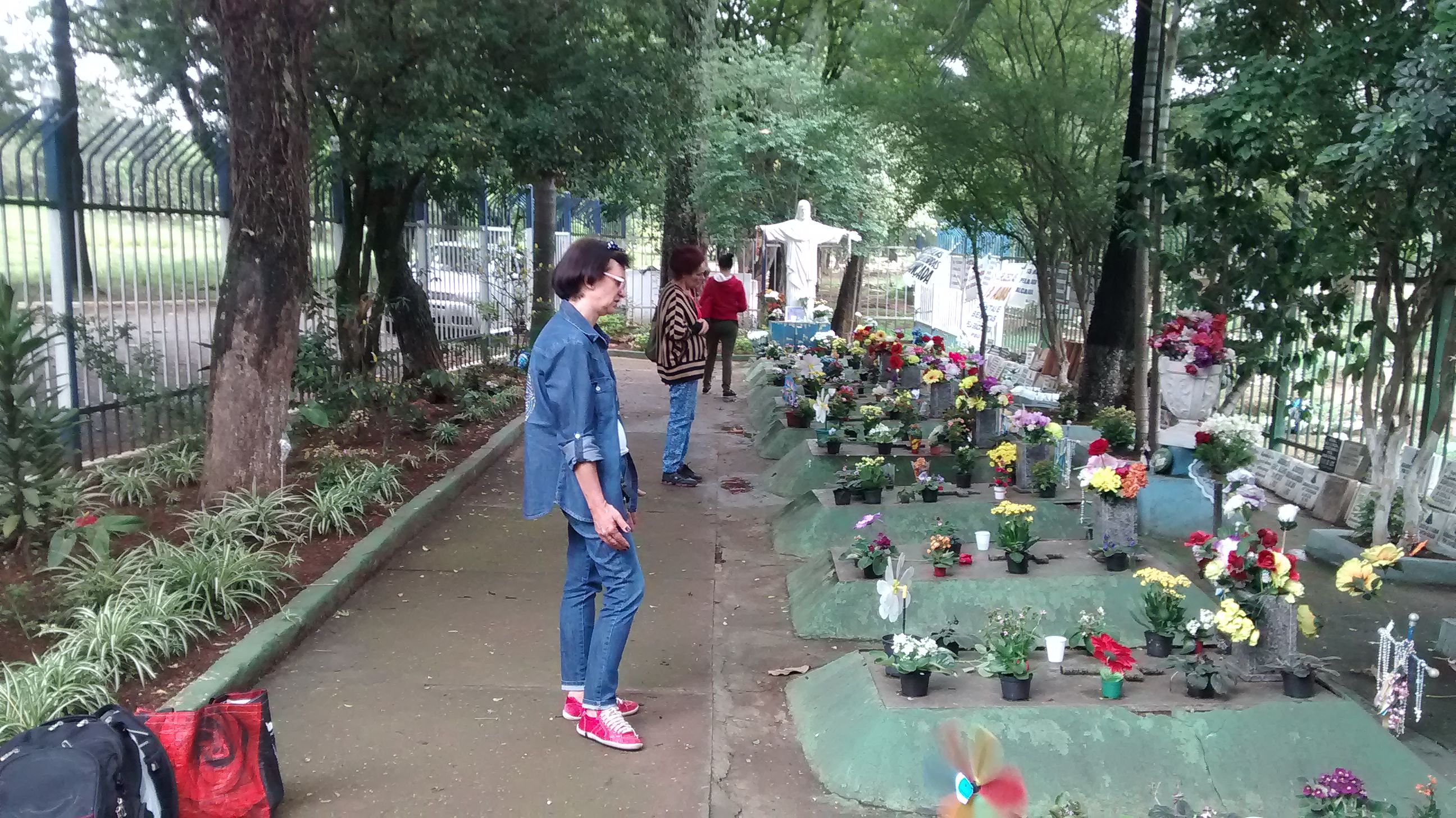
These 13 souls have since been suspected of still lingering in this world as ghosts. At the site of the mass grave of the 13 unidentified bodies there were reports of moaning and cries for help for those that in their dying moment, never got rescued.
The Thirteen Unknown Graves: The graves of the 13 souls that were never identified in the Joelma Building fire. Visitors comes and puts glasses of water for them. // Photo: Wikimedia
The cemetery caretaker at the time, Luiz Nunez was so bothered by this and became desperate to stop the noise of their cries and poured water over the graves. This act of extinguishing an eternal fire he meant helped to quiet them, at least for one day.
From that day, visitors started leaving a glass of water on the grave instead of the usual flowers.
The Haunting at the Joelma Building
Back at the building where this tragedy happened, the reports of the paranormal continue to this day as well. People experienced strange phenomena where the cars in the parking lot outside of the Joelma Building would suddenly start blinking with their lights without anyone turning them on, and the inside of the building was also haunted.
It is said that every floor above the 15th floor is haunted, where the firefighters ladders didn’t reach. People keep seeing shadows in the stairways and experience malfunctioning elevators. Fire alarms going off with no fire is also some of the activity that is apparently going on there.
Curiously enough It is not the only tragedy that happened on the site of where the building stands either. And the place where the building was built has been called cursed land because of its history.
Cursed Land
In 1948, a chemistry professor named Paulo Camargo lived in a house at the same place where the Joelma Building would be built with his mother and two sisters. They had a lot of illness in their family that took a lot of energy for Camargo that had to take care of them by himself. It didn’t get better when Camargo found a girlfriend named Isaltina dos Amaros that his mother didn’t approve of.
It all ended with Camargo killing his entire family by shooting them and throwing them down a well. They never really found a clear motive as to why he ended up doing what he did. And they never got a chance to dig further either. When the police came and discovered the well, Camargo killed himself with the very gun he had used on his family.
When they built the Joelma building it is said they changed the entrance so the address wouldn’t be the same as the murderers. But the place was still the same and some even called it cursed land because of the place.
Even before the gruesome murders in 1948, the place was believed to be a ‘pelourinho’, a public place were they would take slaves and criminals. They would tie them up and torture them, and at times, also kill them for the public up to the abolition of slavery in 1888.
Purified by a Buddhist Monk
Today the Joelma Building is once again renamed and something stands on the top of a past buried tragedy. After the fire the Joelma Building closed for 4 years for reconstruction. It was renamed Edifício Praça da Bandeira after it opened again to rid itself of its past. But there are some things you just can’t bury.
In 2004, they were doing work on the building, but the owners was met with hesitant workers, not wanting to be there at all because of its haunted history. Many wouldn’t step into the new building until it was blessed by a Buddhist monk. The monk that did the blessing said in interviews that she had purified the place and deemed it safe for the living. The Buddhist monk also said that she could do nothing about the ghosts on the upper floors, and that they still lingered.
But is it enough to ward off another tragedy to have a monk purify the place? Is the supposedly cursed land clean and cured? Or was it just a coincidence that they happened on the same land as the past atrocities?
Chosen as Hitobashira, a human sacrifice to ensure the construction of Maruoka Castle, O-shizu were promised a bright future for her children. But when the promise were not honoured, her ghost came back to haunt the castle grounds.
The Maruoka Castle (丸岡城) is sometimes called the Mist Castle (霞ヶ城), because according to legend, there will be a protective mist around the castle whenever an enemy is close to hide it. It stands on the top of a hill protected ramparts as well as a pentagonal-shaped moat and perhaps it is the spirit of the human sacrifice entombed in the castle’s foundation that keeps it hidden in the mist?
The Maruoka Castle is one of the oldest castles in Japan, sometimes called one of the twelve original castles and is located in the Fukui Prefecture and built at the end of the Sengoku period around 1576 by Shibata Katsutoyo. According to the legend, it was built with a human sacrifice to ensure its endurance.
Hitobashira — Human Sacrifices Entombed in Buildings
The act of a human sacrifice to be a pillar of a building can be seen throughout the world. In Asia, it was especially done to appease the deities and for protection. In Japan, the practice is known as Hitobashira (人柱), meaning human pillar and has been used since the 500 AD at least.
As well as the spiritual belief it was believed that large constructions like castles, dams and bridges would destroy the feng shui of the land because of the moving of the soil. Because of this, the buildings would then be in danger of all sorts of disasters, both natural as well as man made disasters. The cultural practice of Hitobashira was done then to protect against evil spirits, natural disasters and to make the buildings strong.
It wasn’t necessarily people that were forced to become the human pillars. Some actually chose this path for various reasons. The word Hitobashira can actually be linked to becoming a God as well. Hito is related to the word, kami, which means God in the Shinto tradition. Bashira can be a term used when being enshrined in an important way. So that the sacrifice would actually be more connected to the gods.
But then again, there were also more earthly reasons to choose to become a Hitobashira. Poverty for one, as is the case with the Hitobashira that are under the grounds of the Maruoka Castle.
The Human Pillars of Maruoka Castle
When they were building the Maruoka Castle, they kept running into problems that they couldn’t seem to find a solution to. The stone walls kept collapsing no matter how many times they tried to set it up and they were running out of ideas. Then a vassal suggested that they should have a hitobashira, a human sacrifice.
The choice fell on O-shizu, a one-eyed woman with two children to feed. O-shizu agreed to be the sacrifice on one condition, that one of her children would be made a samurai. She was a poor woman and this way she could ensure a safer future for her children.
O-shizu was then buried under the pillars of the Maruoka Castle, one stone on top of the other as she was slowly being crushed to death. It is said she was stoically standing there as the builders slowly killed her, fully knowing her children would be better off. After the sacrifice were done, the walls didn’t budge and the building of the rest of the castle continued without further problems.
But Shibata Katsutoyo, the one building the castle didn’t follow through on his promise of making her son into a samurai, she came back to haunt Maruoka Castle. Her spirit became resentful and she was the cause of the moat overflowing every spring by the rain. They called the rain that overflowed the moats the ‘Tears of O-shizu’.
To appease the spirit they erected a tomb to sooth her spirit and we today have a handed down poem about her haunting:
“The rain which falls when the season of cutting algae comes Is the rain reminiscent of the tears of the poor O-shizu’s sorrow”
The Maruoka Castle Today
Today we probably would say that the Maruoka Castle had a problem in its design, not because of the deities. And had it had a more stable way of construction, a hitobashira would probably not have been needed. But again, the castle is still standing to this day, so who is to say, really?
Cherry Blossom Festival: Today the Maruoka Castleis known for being a good place to watch the cherry blossoms every spring more than one of the hitobashira buildings.
Today when the mist is clearing and the castle is visible, there are cherry blossoms blooming in the spring. The castle grounds is a part of Kasumigajo Park and is well known for its 400 cherry blossom trees. There is an annual cherry blossom festival during the first three weeks of April. And in the evenings, there are over 3000 paper lanterns lit up in the dark.
Perhaps this is appeasing the ghost of O-shizu enough to not overflow the moat with her tears anymore?
What would you have wanted as an offering after your death? According to this Singaporean legend, this young girl wanted a Barbie doll to appease her spirit in her afterlife. This is the story of the haunted Barbie doll in the shrine on Pulau ubin island.
On Pulau Ubin, a boomerang shaped island in northwest Singapore, a peculiar yellow shrine still stands. Hidden away in the forest as one of the last remaining places in Singapore free from urban development, concrete buildings and paved roads, people come to give offerings and pray for their good luck in gambling to the deity of a young German girl that died and remained on the island with only a haunted Barbie doll as comfort.
Read about: More Haunted Ghost Stories from Singapore
Pulau Ubin used to be a bigger population here, bustling with different businesses like plantations and granite mining. The very word Pulau Ubin means ‘Granite Island’ in Malay. Today, the granite quarries are empty or at least, abandoned. Reclaimed by vegetation or filled up with water.
Pulau Ubin: The idyllic island is now a well known place to hike the trails and enjoy the nature in Singapore. Photo: Zairon
The island used to have a few thousand settlers, but today, there are not even forty people left after the work in the quarries dried up. However, the one that still remains, is the spirit of the German girl that to this day, name is unknown. Several attempts have been made to trace the family of the girl back to Germany, but lack of public records of the family has still not been found.
Now considered a taoist deity, the temple on Pulau Ubin is full of taoist offerings as well as more unique offerings. Most notably a haunted Barbie doll sits between the incense and the food offerings. People still pay tribute to the shrine and the haunted Barbie doll, in the form of make-up, nail polish, mirrors and small feminine things. This to appease the girl who asked for the doll beyond the veil.
Background For The Haunted Barbie Doll
At the start of the 1900s, uneasiness spread throughout Europe and a full fledged war rippled through the rest of the world as well. Although WWI didn’t quite reach south east Asia in full force as other places, the effects were still real for many of the European settlers in the colonies.
Singapore, being a part of the British Crown, was not very German friendly. During the 1910s, the island was home to two German families, the Brandts and the Muhlingans that ran coffee plantations according to the legend, although the proper sources for this are missing.
In July 1914, the British started detaining Germans for security reasons as they were considered enemies to the crown. A military force was sent to Pulau Ubin to detain the two German families residing there. The Germans were, according to the story, sent to a detention barracks on mainland Singapore, mainly in the Tanglin Barracks.
But the detaining would not go without a dramatic turn. A young daughter of one of the families became frightened and fled from the British forces into the wooded area and disappeared into the dark, never to be seen again.
The Deity of the German Girl
Days went by without finding her body. And when she finally was discovered by Boyanese plantation workers, she was covered in ants. They concluded that she had died by falling down a cliff near one of the quarries that sustained the community on the island. The workers covered her body with sand and laid flowers on it. When they walked by the place, they said a prayer and lit incense for the girl.
This was her resting place at Pulau Ubin until Chinese workers recovered the remains of the body and buried the girl on a hill above the quarry. Being a roman catholic, they placed her Jiangsu urn with a crucifix and a number of coins as well as a few strands of her hair.
What happened to the family is still a mystery, but during the war, all German property was confiscated and their business halted. Today only the ruins and foundation of the plantation can be seen. In some versions of the legend, it tells that the family returned to Pulau Ubin after the war, searching for the remains of her daughter, but could’t find her tombstone due to language barriers. Little did they know her remains were kept in the Chinese Taoist temple in an urn on the hill.
Bitter and sad about it, they left Pulau Ubin and Singapore, never to return. Which is an odd addition to the legend as the family supposedly managed a business on the island before the war, and it’s weird that there suddenly were a language problem when they returned, supposedly to the same people that lived there before they were detained.
She has since been addressed as Na Du Gu Niang, meaning Datuk Maiden. Sightings of her ghost by the local villagers at Pulau Ubin have kept the legend of the nameless girl alive as well as the peculiar offerings to the shrine that eventually were erected in her honour.
The Yellow Shrine on Pulau Ubin Island
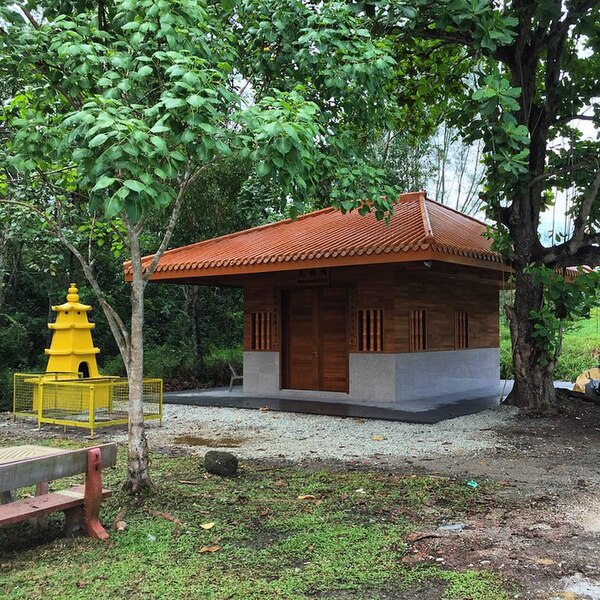
The Shrine: The home of the deity and the haunted Barbie doll has gone through many changes. Here as it was in 2015. Photo: Pascal Vuylsteker
While the granite business was still alive on Pulau Ubin, a quarry company built a more permanent shrine in 1974, which is the small yellow chinese temple that still stands today. It is named Berlin Heiligtum, meaning Berlin Sanctuary.
They transferred the lock of hair and iron cross to the new temple. But when the man who helped to place the remains in the new vase in 1974 checked in 1990, it was already gone, at least that is one of the tales this particular man told over the many years.
When the shrine was constructed over the grave, it became associated with good luck, especially for gambling as rumours told about people winning the lottery after praying to the shrine. Therefore gamblers from Singapore as well as Malaysia came to the shrine to make offerings, in hope that the German girl would bless them with good luck.
And today the offerings are perhaps more to a young girl’s taste with nail polish, makeup, perfume and the now famous haunted Barbie doll.
The Haunted Barbie Doll in the Shrine
Today a haunted Barbie doll is placed as an important object in the shrine to the German girl in an enclosed box. Although not haunted as many other objects are rumoured to be, as in being possessed by the soul or a ghost, the origin of the doll is quite haunting. According to legend, and this is a more recent one, the legend will have it that the haunted Barbie doll was requested by the girl herself beyond the grave.
Pink offerings at the altar: The German girl still gets many presents, many things are of what people think would suit a young girl. Like the now very well known haunted Barbie doll//Photo: Source unknown/via Tineye
An unnamed islander from Pulau Ubin who had moved to Australia kept having these strange dreams back in 2007. He dreamt of a European looking girl for three nights in a row that led him to a specific store with a specific Barbie doll. She asked for it to be placed at her altar back in Singapore. So when he found the same store and doll as he had dreamt of for so many nights, he bought the now haunted Barbie doll and brought it to the shrine.
And over the years, the haunted Barbie doll itself has gained its own mysteries and haunted stories, giving new life to the story about the girl still not having crossed over from the mortal world entirely.
For more stories about haunted dolls lole Okiku, Ruby or Letta:
This porcelain doll named Ruby will give the people playing with her an instant sorrow and sense of sickness, just by holding her. Family legend has it that the doll is haunted by a little girl that died with Ruby in her arms.
So who was the girl? Was there ever a girl? There is today no human remains in the grave as a definitive proof of the legend. Still, many people take the legend at face value today. But that is overlooking all the different tales that have been told throughout the years. Dr William L. Gibson, is one of the people that really took a deep dive into the legend and by just comparing the sources, found many discrepancies to the story told today in his excellent and detailed research you can read here.
Many sources point to one man, named Chia Yeng Keng, a local on Pulau Ubin. The same man that claimed to be there when they transferred the lock of hair and the cross to the new temple. He has changed his testimony about the girl several times over the years. From claiming that the girls parents were Dutch for example. But seeing that Dutch citizens were not interned as Netherland was neutral during WWI, the story changed to German instead. Could it have just been a glip of details? Or a more elaborate story? As late as 2004, he claimed to not know anything about her at all.
Although proof that a German family ran a coffee plantation on Pulau Ubin once, it is not proven that they ran it until being detained because of the war. According to The Singapore and Straits Directory, the only plantation on the island in 1914, was run by an Anglo-Irish, with no women recorded as living there.
The first mention of the grave on Pulau Ubin was actually in 1985, in a Malayan newspaper that told the story of a princess from Java that fled to the island and died there. She was said to haunt the hill as a hantu puteri, meaning a ghost princess, seducing the many quarry workers to meet a terrible fate. The article included a picture of the shrine today known as the German girl shrine. But also this article as well as the story itself lacks proper sourcers.
So for now, the haunted Barbie doll on Pulau Ubin belongs to a young girl that may or may not rest here. Better safe than sorry.
This haunted forest known to be the Bermuda Triangle of Romania with its eerily coiled trees and whispers of local legends reminds us all that Transylvania is not only haunted by the legend of Dracula and vampires. Take a walk in the Hoia Baciu Forest and hopefully you will get out as well.
Romania has a rich history of the unexplained and lores and legends that will creep into the bones of those listening. This forest is clouded in mystery and is no exception. Strange orbs of lights are said coming from inside the treeline, and rumors of it being a possible gateway to another dimension draws desperate people to try for themselves. The stories of the haunted forest has reached an international reputation now and is on most lists of “most haunted places in the world“.
Read More: Have a look at all our stories about haunted forests: Here
The forest has always had a paranormal undertone whispering in the wind from old legends, but modern lore of the forest being a hotspot for UFOs, missing time and has started to take hold as well. All of these legends are what has given it the nickname the Bermuda Triangle of Romania. The mysterious forest of Hoia Baciu, or Pădurea Hoia as it is in Romanian, has many haunted legends lingering among the trees.
Hoia Baciu Forest: The Transylvanian forest is shrouded in mystery and intrigue, largely due to its peculiar trees, a dense thicket of gnarled, contorted trees with twisted branches that seem to reach out like spectral fingers. Local legends claim that the trees are imbued with supernatural energy, and many believe that they are gateways to other dimensions or portals to the spirit world.//Source: Wikimedia
The Haunted Forest for Ufology
It’s not only those living close to the Hoia Baciu forest, superstitious people or those seeking ghosts that claim there is something going on in between the trees. Even in academic circles there are those who were intrigued by the strange place and the subject has been dealt with by both national research as well as overseas.
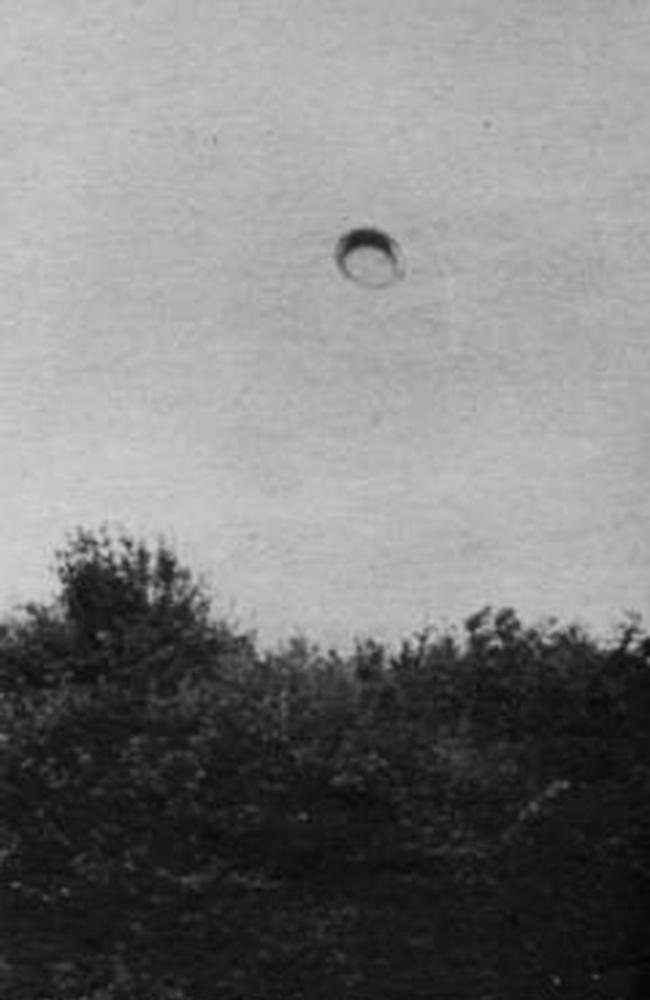
UFOOver the Treetops: This picture is one of the pictures Emil Barnea took of the sky above the forest, now believed to be of more strange origin.
Even some selected professors at the university in the city claim this particular forest is a place where paranormal activity happens, and in the modern world filled with strange disappearance legends, tales of aliens and UFO’s has started becoming a part of the lore of the haunted Hoia Baciu Forest.
In the late 60’s a biologist named Alexandru Sift came back with pictures from the forest that he claimed were flying UFO’s in the sky over the twisted trees. Sift wandered into the forest to have a closer look at the strange vegetation that can be found in there as part of his research.
These pictures of the alleged UFO’s were published by his chemist friend of Sift, side by side with theories about the paranormal stuff happening in the old forest right outside the city. And what he found and reported off got more people interested in both the paranormal legends that had seemingly always followed Hoia Baciu.
The same claim about seeing a UFO inside of Hoia Baciu came from a military technician named Emil Barnea as well. In 1968 he took some pictures in the western part of the forest while he was camping in the forest. Barnea took a huge hit by publishing the pictures as the communist government at the time looked at tales like ghosts and aliens like madness and superstition. He even lost his job because of the publishing of the pictures.
But what was the truth behind the pictures? What flew in the sky that made people think it had to be aliens? Both of these cases, with what seemingly looked like picture evidence, helped to give the forest a sense of notoriety more than a local place filled with local legends.
When first delving into the local lore since the first trees started growing there, strange occurrences had been reported long before the 60’s and people started talking about UFOs.
The Bermuda Triangle of Romania
Hoia Baciu Forest is located near the Cluj-Napoca city in the northwestern part of Romania, an old forest still stands only half an hour away from the city by car. The forest is in notorious Transylvania, and for many it is expected that a haunted forest should be placed right here. Although the city close to the forest is free from the Dracula tales of Bran Castle and the tourist attractions one might find in a lot of towns capitalizing on the vampiric lore of the country. But there is a certain eeriness to the trees bending in twisted ways with skeleton-like branches reaching out for the hikers.
We are away from the bustling modern everyday life from the city and here in Hoia Baciu Forest and the only thing to hear is the falling leaves, whispering as they reach the ground, and the sounds of deer, walking among the trees. Some might say Hoia Baciu is much more scary than Dracula himself.
Strange Lights of Hoia Baciu: Another one of the pictures taken by Barnea in the 60’s showcasing strange lights that has been told legends about in Hoia Baciu throughout the years. What the lights and figures over the forest really was has never been found out, but has been the source of much speculation within the ufology community.
When saying the forest is an old one, it truly is. As in 55 000 year old. With such old places like the mysterious Hoia Baciu, there are old stories that no one really knows when they started or came from. Farmers in the valley claim the forest is haunted to this day, and especially stories about strange disappearances there are plenty of. The story about the strange disappearances are also why the Hoia Baciu forest is also sometimes referred to as: “The Bermuda Triangle of Romania.”
The Disappeared Shepherd
One of these disappearance stories from Hoia Baciu tells of a shepherd that went into the Hoia Baciu and vanished with more than 200 of his sheep without a trace, never to return. Perhaps a man could simply vanish in a forest by himself, but 200 sheep? The stories about many people disappearing are odd considering the forest is not that big compared to other places an covers an area of about 3 square kilometers.
In some sources it is after the disappeared shepherd that the forest is named Hoia Baciu. The locals are at times afraid to enter the forest because of tales like this that have been handed down for generations. The once brave enough to venture in have also complained about feeling nauseous, itching as well as getting migraines when they are brave enough to enter.
The Girl Who Vanished
Perhaps the most famous tale from this forest is of the 5 year old girl that wandered into the forest one day and got lost and disappeared from the face of the earth, at least for the rest of the world. Years passed and after five years of being missing she came back out from Hoia Baciu, supposedly in the same clothes she wore on the day of her disappearance, not looking a day older.
When asked where she had been and what had happened, she had no answers. She reappeared in the forest with no memories of where she had been and what happened to her, at least, she didn’t want to share it. For her it had apparently only been a little while, not many years.
Many accounts claim there are many, perhaps as many as thousands of people that have disappeared in this Bermuda Triangle of Romania over the years. But of course, no hard evidence is found of these occurrences. Because they never happened, or merely because they happened so long ago that evidence of this is long gone?
Ghosts Haunting the Forest
There are not only strange legends about people being whisked away for years or forever or pseudo science of UFO and aliens that are told going on inside of the forest. A part of the local legends of the forest also deals with ghosts haunting the trees.
One of the ghost stories tells of the ghosts of Romanian peasants that were murdered in the forest and is believed to still be trapped in the forest, unable to move on.
They are sometimes seen wandering among the trees in Hoia Baciu, observing the people entering their final resting place. Other tales of shadow figures, something looking like ectoplasms as well as hearing strange voices are also told by joggers and hikers. One of the ghosts are supposedly also wearing something that looks like the northern Romanian traditional clothing.
The Poiana Rotunda Inside Hoia Baciu
The Poiana Rotunda: The clearing in the forest were most of the strange happenings is taking place giving the nickname Bermuda Triangle of Romania// Photo: Lajsikonik
Most of the paranormal reporting has now started centering around a supposed vegetative dead zone found inside of Hoia Baciu. This place is called Poiana Rotunda, or ‘Round Meadow’ found west in the forest.
The Poiana Rotunda is a one kilometer area of grassland inside the thick forest and is a close to perfect circle on the ground where no trees grow from the soil, apparently without an explanation.
People claim that they feel nauseous or dizzy when coming close to this place, and most of the strange things that are told about the forest are said to have started or happened around this dead zone.
What happened here has been up for much speculation. Could it be from a UFO landing at this place, could it be a sign of the gateway to the parallel dimension that seems to have spirited away many people throughout the years?
The more earthly and natural reasoning for this mysterious meadow in the middle of the forest could also be caused by natural causes or illegal deforestation the forest is suffering from. Soil samples have been taken from the place, but as of now, we don’t really have a definite explanation for this phenomenon.
A Walk Inside of the most Haunted Forest in the World
No matter what really lies inside the forest, of it really is haunted or some sort of Bermuda Triangle of Romania, it certainly pulls the strangest and darkest things out from people visiting. It is a perfect setting to put on a tv-show, sell books claiming all sorts of stuff.
Maple groves, gatherings of beech, ash and elm wrap around themselves, contorting to strange shapes that perhaps help the feeling of uneasiness and gives the forest an overall creep factor. Blocking out the sun, leaving us in a sort of eternal shadow below the trees, anything seems possible in Hoia Baciu.
Hidden by sand in the Gobi desert for centuries, the abandoned city of Khar Khot is still haunted by the ghosts of the inhabitants that didn’t manage to escape.
Secluded in the Gobi desert, hidden by sand and stands the test of time, the abandoned city of Khar Khot houses no dwellers except for sandstorms, deadwood and ghosts.
Khar Khot or Khara-Khoto (ᠬᠠᠷᠠ ᠬᠣᠲᠠ) is Mongolian and means, Black City. It is located in Inner Mongolia, a region in China bordering with Mongolia. The Chinese name for it, Hēichéng (黑城) also means Black City and it certainly marks a dark spot in history considering all the bloodshed that ended the once important trading city.
Read More: Check out all our collection of ghost stories from China
There are also the legends about the city being haunted by demons and spirits. And when explorers from all over the world came to have a look at the legend of the abandoned city, the locals refused to go near it because of the ghosts still roaming the area around Khar Khot.
The City at the Silk Road
The city was founded in 1032 and used to be a busy and important trading place in the 11th century as a part of The Western Xia, also known as the Tangut Empire. In 1226, the city was taken over by Genghis Khan and many blame the Mongolian ruler that the city is now destroyed. That is not true as the city under Kublai Khan’s time, the city expanded three times and flourished.
The city was important as a trading hub along the Silk Road and even Marco Polo wrote about it in his travels along the silk road in The Travels of Marco Polo, where he called Khar Khot for Etzina.
When you leave the city of Campichu you ride for twelve days, and then reach a city called Etzina, which is towards the north on the verge of the Sandy Desert; it belongs to the Province of Tangut. The people are Idolaters, and possess plenty of camels and cattle, and the country produces a number of good falcons, both Sakers and Lanners. The inhabitants live by their cultivation and their cattle, for they have no trade. At this city you must needs lay in victuals for forty days, because when you quit Etzina, you enter on a desert which extends forty days’ journey to the north, and on which you meet with no habitation nor baiting-place.
— Marco Polo, The Travels of Marco Polo, translated by Henry Yule, 1920
The Fall of Khar Khot
In 1372, Khar Khot was under charge of the Mongol general Khara Bator when the army of the Ming Dynasty attacked.The city was surrounded and under siege for a long time, but the city was more of a fortress, built to withstand any attacking army, and the soldiers outside needed to think of a way to breach the walls.
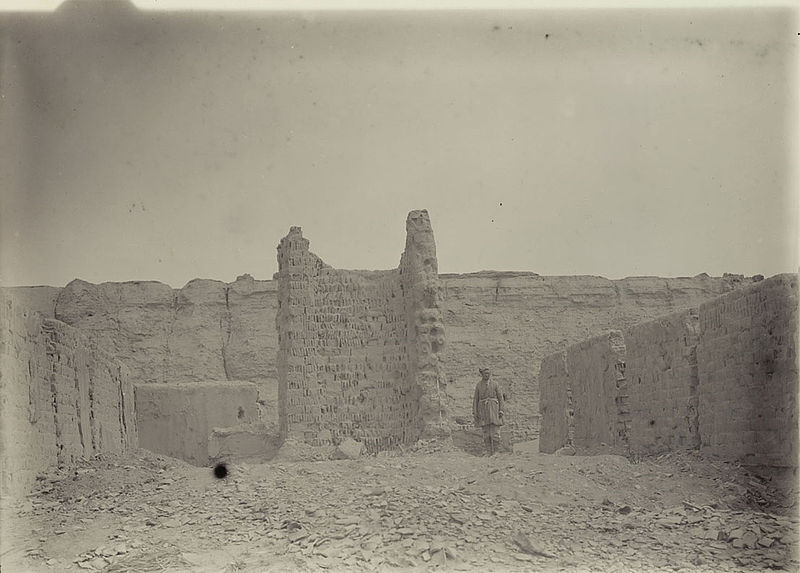
Rediscovered: Ruin At Kharakhoto from east, 30 May 1914.//Photo: Aurel Stein
So to speed things up on the outside, the Chinese went for the fortress one weak spot, the water supply. The name Gobi basically means waterless in Mongolian, and that is what they became. The city was cut off from its water supply by diverting the Ejin River that flowed right outside the city walls away from the thirsty people inside.
The inhabitants inside began desperately to dig in the ground, trying to find drops of water according to the legend, but to no avail. When Khara Bator realized that the siege was not something they could withstand he threw all the valuables of the city into the well so as not to give that up to the invaders, even though they had to give up their life.
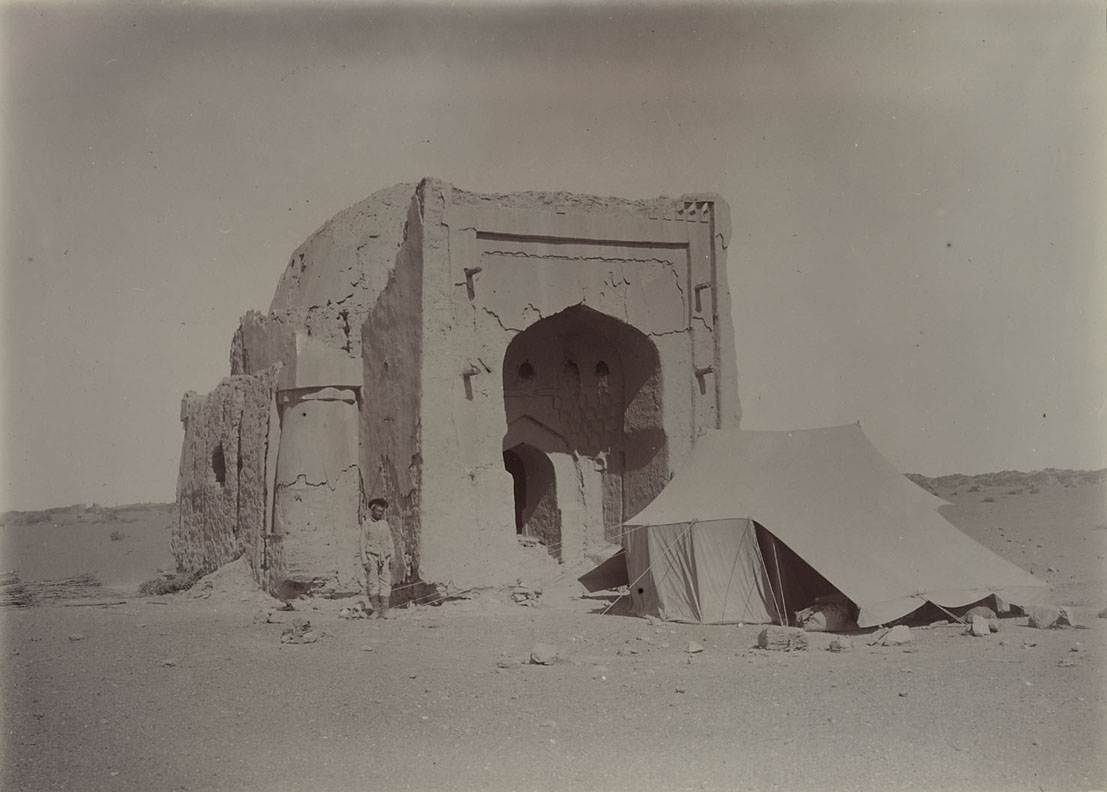
Ruins of Khar Khot: Muhammadan Tomb K.K.VI. at southeast corner of Kharakhoto, from east, 3 June 1914.//Photo: Aurel Stein
As time went on with no water with the Han Chinese army banging on their doors, Khara Bator murdered his family before taking his own life. The Mongols’ reign over Asia was slowly dwindling away.
His soldiers waited until the Ming Dynasty finally breached the walls and attacked, killing the rest of the inhabitants of the city, not burying the bodies and making them live on as the ghost they are today.
Another Version of Escaping
There are alternate versions we can find in the Ming Dynasty annals that tell a different story about Khar Khot. In this version, the leader together with his ministers actually escaped from this ancient Mongolian city.
No matter who died and who escaped, the city was abandoned after the defeat and left in ruins to be swallowed by the desert.
The Black City Today
600 years passed before people returned to the desolated city buried under the dry sand. Because of being so far from any other sign of civilization, the city was largely safe from looters and people seeking to destroy Khar Khot.
When they first started excavating they found a rich amount of manuscripts of the Tangut language along with other important cultural artifacts, untouched because of its remote location, and perhaps because of the ghosts still protecting the city?
Today, tourists can come on a day trip to see the once magnificent city in the desert that the sand has filed down, softened the edges and buried its secrets. But in the night, they go back and miss the action that goes on after the sun goes down. Reports of flames burning for hours and strange lights that lead people astray in the desert are told from the guards watching over this place.
Their ghost haunts the ruins of the garrisons, the walls and the very sand itself. In a way, giving the ghost city of Khar Khot a sort of life other than just being pieces of crumbling stone walls.
In the 90s, rural parts of Bangalore in India were haunted by a fear of a ghost walking from door to door. To protect themselves from death, they used to write Nale Ba – come tomorrow.
The sound of a knock on the door can be one of the more terrifying things when you are not expecting someone. In lores and legends, opening the doors for strangers are the biggest mistakes you can make, as you have no control once the door is open.
But what if the voice on the other side sounds familiar, like that of a friend or a family member. What do you do then? Before the big urbanization of Bangalore in more recent times, there used to be some pretty rural parts where a particular urban legend struck fear in those who lived there.
Nale Ba or Come Tomorrow
Haunting the streets: The movie Stree’s take on the legend showed the ghost of the Nale Ba legend as a ghostly woman in red sari.
The story of Nale Ba is a popular folk legend that is told primarily in Karnataka, in the south western region of India that truly blew up in the 1990s, making it perhaps more of an urban legend than folklore as it was centered around the more developed areas.
During the crazy times in the 1990’s there were around 5 million people living in Bangalore and city experienced a rapid urbanization that turned the place to one of India’s most populated cities.
But this was then and many of those living there lived in fear of Nale Ba. Villagers wrote the words Nale Ba on the walls and doors for many years to protect themselves, giving the name to both the legend and the creature haunting them. Nale Ba or sometimes spelled Naale Baa (ನಾಳೆ ಬಾ) is a Kannada phrase that means come tomorrow in English.
They wrote this exact phrase to protect their home from an evil spirit that tries to break in. What type of entity Nale Ba was supposed to be, was unclear. She was often referred to a so called Bridal Spirit as she was out to get a man to stay with her for eternity. She is also sometimes also referred to as a witch more than a ghost.
What her intentions were varied, but in some of the earlier versions she wore ragged clothes, had messy hair and asked for alms like a classic ‘do not open the doors to strangers’ legend.
But one of the more popular and retold stories is that she is roaming the streets hunting down the men to claim for herself.
The Manhunt of the Bridal Ghost
In some variations of the Nale Ba legend it is a bridal ghost that is looking for a husband among the villagers, and she will stop at nothing to get him. Although the legend will probably never be as infamous as it’s peak in the 1990s, the urban legend have a habit of popping up from time to time.
What is also curious is that it is very similar to the widow ghost legend in Thailand where there also is a female entity hunting down the men:
The bridal spirit will usually go for the only son or the man of the house who is the only member of the family earning money, and therefore bringing bad luck not only to the poor man that is taken away, but to the entire family as they are left in ruin.
Nale Ba: According to this legend there is a bridal ghost that goes from door to door in Bangalore in search of a man she can take with her to the afterlife.
She goes from door to door in the night and knocks on the doors, trying to get in. When she speaks through the door she speaks in the voice of your kin or familiar person, calling you by the name, so that you will open the door for her. But if you open it, you will most likely die according to the Nale Ba legend.
This is why the villagers came up with the idea of writing Nale Ba on their doors and walls of their homes to protect themselves. The idea is that the bridal ghost or witch will read the words and come back another time. And the cycle will only continue and you will be protected.
Leaving Nale Ba in the Past
The legend of Nale Ba, the haunting bridal ghost roaming the streets of rural Bangalore, continues to captivate the imaginations of locals and visitors alike. While the fear it once instilled may have subsided, the tale remains an intriguing part of the city’s folklore.
Over time, as Bangalore underwent urbanization and transformation into a bustling metropolis, the legend of Nale Ba gradually faded into the background. The growth and development of the city brought about new stories and urban myths, yet every now and then, a whisper of the infamous bridal ghost resurfaces.
In today’s modern era, the streets of Bangalore are abuzz with the sounds of progress and innovation, leaving behind the ghostly echoes of its past. Yet, hidden beneath the surface, the essence of these legends lingers, shaping a city that embraces its rich heritage while moving fearlessly towards the future.
So, next time you hear a knock on your door late at night, remember the spirit of Nale Ba and the importance of remaining vigilant. And should you ever encounter the whispers of an ancient legend, embrace it as a testament to the vibrant history and enduring spirit of the city of Bangalore.
The Okiku Doll, is a legend of a haunted doll that grows hair in Japan and is preserved in a temple looked after by monks. Allegedly it is haunted by the ghost of a girl that once received it as a gift.
There is something about dolls that makes us fall into a confusion about what is and isn’t real and we both love them and hate them in equal measure. The haunted doll trope is one of the most famous and creepiest. There is something about the almost lifelike object that takes us through the uncanny valley and makes us believe that maybe, just maybe, there might be something more behind those glass eyes.
This is the case with the Okiku Doll (お菊人形), a type of Ichimatsu doll (市松人形) which is a type of traditionally dress up dolls in Japan, often clad in nice kimonos with dark glass eyes. The chubby cheek dolls are as cute as they are creepy, and perhaps the creepiest that has been named Okiku lives now in a monastery, well looked after by the monks. This haunted doll must not be confused by the ghost story of Okiku, the maid:
The tale of Banchō Sarayashiki (番町皿屋敷, The Dish Mansion at Banchō) is a well known Japanese ghost story (kaidan). It was popularized in the kabuki theater tradition, and lives on in popular culture and folklore alike.
At first glance, Okiku just looks like an old doll, weathered by time with frayed hair and old clothes like so many dolls forgotten by their children. But there is a legend surrounding this particular haunted doll, and the legend keeps growing, apparently, just like the doll’s hair.
The Two Girls
The Okiku Doll: This Ichimatsu doll is called Miss Shimane and is a Japanese friendship ambassador doll. Photo:Daniel Schwen
There are some variations of this legend, as there often is when they happened a long time ago. The most told version of it, though, starts In Hokkaido, north in Japan, in 1918 at the Taishi Expo in August, bustling with life, people and stuff to buy, including dolls.
A teenager named Eikichi Suzuki bought a doll for his younger sister in the shopping street of Tanukikoji in the city. Often, the girl is given the same name as the doll, but in most Japanese sources, they were not named the same, but the girls name was either Kikuko or Kiyoko. The seventeen year old brother was visiting Sapporo for a marine exhibition and the doll almost called for him to be bought for his dearest little sister.
The two or three year old sister grew very fond of the doll that was a gift from her brother and they became inseparable. The porcelain doll had an okappa hair style which was common for traditional dolls with cropped hair around the jawline and a short fringe over the forehead. It was around 40 cm tall and dressed in a traditional kimono.
She carried it everywhere and slept with it every night the following year, but the child-like play would come to an abrupt end. The little sister died however after falling ill the following year after some complications of a severe fever. Very likely to be Yellow Fever or the Spanish flu as it was ravaging across the globe during this time period of time. Or in some cases, Pneumonia is also mentioned as the cause of death.
The Haunted Doll at the Family Altar
The family initially wanted to place the doll together with their daughter in the grave but wasn’t allowed, or in some sources, simply forgot to put the doll in the coffin. The family mourned the loss of the daughter and placed the doll on the family kamidana altar instead, a practice common in some Japanese households to remember and honor the dead. There Okiku could look out at the mourning family that paid her tribute as if Okiku was their own daughter.
They prayed every day by the altar and started to notice strange things about Okiku. According to them, they found out that the hair of the doll was growing just like human hair. And the short okappa haircut grew longer, just like the hair grows of a 3-year-old child would have grown.
The haunted doll at the altar: The Okiku doll who once was a little girl’s favorite toy, is now placed in an altar to appease the spirit inside. She is know known as the doll that grows hair in Japan.// Photo: Picture first found source/via TinEye
At night they dreamt about Okiku and when they woke in the morning, sometimes they would find the haunted doll sitting by their side without having put her there. The strange occurrences started to get more intense and scarier with light flickering, banging in the house and strange voices and noises. The scary manifestations were usually around certain dates, like their dead daughters birthday and the day she died.
This led them to believe that the soul of their daughter was not at peace yet, and had entered the doll. They had shamans come to the house and meet Okiku and confirm it and believed they had to appease the spirit through the doll.
Offered and Displayed in Mannen-Ji Temple
They kept Okiku on their family altar until 1938 when the family decided it was time for them to move away from Hokkaido. In some sources they moved even further north to Sakhalin, an island between Japan and Russia. They felt that the best for the spirit of Okiku would be to remain on the island where she had been born and spent her few years alive.
It was then the family decided to offer the doll to Mannen-ji Temple located in Iwamizawa. The monks promised to care for the haunted doll and pay it the respect it had received at the family altar. The Okiku doll was given a special wooden box like at the home altar and placed at the altar with the monks looking after and taking care of her every need.
The monks at the temple noticed too that the hair of the haunted doll kept growing. When it was around 25 cm, they decided to cut it for the first time, and the doll’s hair was cut many more times over the years as the hair just continued to grow. Apparently, some of the monks at the temple had a dream that the doll wished for the hair to be trimmed regularly.
And after the war, when many Japanese were deported from Sakhalin, the brother who bought the doll came back and saw for himself how the doll had changed over the years. When he saw what the doll had become, he asked that the haunted doll had to stay at the temple permanently.
The Science of the Hair?
Dolls have always had some sort of an unfair reputation as haunted across the globe, and in Japan, this type of doll is no stranger to having supernatural and haunted rumors surrounding them. But this one is by far the most famous example in the country and of its kind.
Some sources try to claim that the doll has been examined by scientific tests that the monks have sent out to have tested, showing that the haunted doll’s hair really is of a human toddler, and growing just like one, although no one can explain just how this is happening. The place of the supposed test was sent to Hokkaido University School of Medicine according to some sources.
There are of course non paranormal theories as to why the hair seemingly grows from the haunted doll. The use of human hair on dolls is a well known phenomenon, especially before synthesized hair became the norm. One way they did it was to fold a long human hair, making it seem like strands of hair on the doll. Over time the strand of hair can glide out of place and look like it has grown. But then again, it is supposed to stop at one point in time, not just continue to grow indefinitely. So what is happening at the temple where the doll is still displayed?
Visiting the Haunted Doll
You can still visit the Mannen-Ji temple in Japan to see the haunted doll whose hair is reaching its knee, but you are not allowed to photograph it as the doll apparently has told you that it doesn’t like it at all. We must simply just take the monk’s words for the strange doll. The legend of the doll is continuing to grow, and has been the base of many movies and horror tales as well as the traditional kabuki plays.
According to the legend, the power of the haunted doll is only growing, bit by bit, just like the hair grows. and another rumor surrounding the doll nowadays is that if you get close enough to the haunted doll, you can also now see the growing of human teeth.
An online magazine about the paranormal, haunted and macabre. We collect the ghost stories from all around the world as well as review horror and gothic media.