Tag Archives: Switzerland

The Ghosts of the Patron Saints of Zurich: Felix, Regula and Exuperantis, Carrying their Heads under their Arms

Advertisements

There is a ghost legend from Roman times in Zurich. The story of the martyrs and saints Felix, Regula and Exuperantis who rose from their deaths and walked with their heads under their arms, is still an important story for the city. 

Before it became the iconic Swizz city it is today, it once was a Roman outpost as well. Becoming the image of Zurich city, the ghostly tale of Felix, Regula and Exuperantis helped shape the city to become what it is today.

Read More: Check out all ghost stories from Switzerland

One of the earliest ghost stories Zurich has to offer is the story of the three patron saints and what happened after their execution when they rose from the ground where they had been executed. 

The Legendary Theban Legion and The Saints of Zurich

Felix, Regula and Exuperantis fled to Zurich in the third century. Felix and Regula were siblings and members of the Theban legion based in Egypt. It is said they came from Egyptian nobility. Exuperantis was their servant. The legion, also known as the Martyrs of Agaunum, were stationed in the Roman outpost, Agaunum in the Valais in Switzerland. The legion consisting of 6666 med were all Christians led by the holy Mauritius, dying as a martyr around 287. 

The Ten Thousand Martyrs

They were going over the alps to put down a Gallian rebellion on the command from emperor Diokletians. When the legion refused to sacrifice to the Emperor Maximian of the Roman empire, they fled as they started executing every ten men.

They went through Valesia, preaching the gospel. They stayed in a cave in the wilderness for a while as well. The coptic Christians reached Zurich, which then was called Turicum in 286 and stayed with a Christian family. 

They were discovered by a man called Decius who was ordered to hunt the heathens down. First he tortured them, beating them and putting them in boiling oil to turn them. Still, they refused to worship the Roman gods. Then they were beheaded on the location where the Wasserkirche now is. 

The Saints of Zurich: Detail from the former altarpiece of the Chapel of the Twelve Apostles in the Grossmünster in Zurich : Martyrdom of the Zurich city saints Felix and Regula and their servant Exuperantius (right). In the background, the Lindenhof and Uetliberg can be seen from the panorama of the medieval city of Zurich. Condition after restoration and uncovering of the figures in 1937.

Their story was not done however, and after dying, their corpses stood up and picked up their heads on the ground before walking off. A trail of blood followed behind them. They walked around forty paces uphill, all the way to a hill where they prayed before laying down, thinking that this was a better place to be buried. 

Martyrs: The Zurich city saints Felix, Regula, and Exuperantius, as head bearers, offer their severed heads to Christ and are led by him into heaven. Banner: venide benedicti patris mey percibide rengnum 1506

The Truth Behind the Legend of Felix, Regula and Exuperantis’ Death

So what really happened in Roman times? Is this one of the ancient ghost stories? Some experts would even question the foundation of the story at all. 

The story of how they fled and carried their heads to the hill actually came to the monk, Florentius in a dream in the 8th century. In the 9th century there was a small monastery there and the holiness of the place grew over time.. The site where their supposed graves now are is Zurich’s most well known landmark, Grossmünster church that was built from around 1100. The Wasserkirch was built at the site of their execution. 

They have since the 13th century been saints and important for the people in Zurich. But at the dissolution of the monasteries in 1524, their graves were opened. Some claimed that they were already empty except for a few bone fragments. Some say that an Uri man stole the bones to Andermatt where the skulls of Felix and Regula can be seen today. The rest of the remains were sent back to Zurich today in the church dedicated to the saints. 

The Crypt: Crypt of the Wasserkirche in Zurich: Martyr’s Stone on which, according to legend, the city’s saints Felix and Regula and their servant Exuperantius were beheaded; a natural boulder deposited hereby the Linth glacier during the Würm glaciation. //Source: Roland zh/ Wikimedia

The skulls in question have been carbon dated, where one dates to the Middle Ages. The other skull is actually fragments of two different ones. One from the middle ages, and the other could be from Roman times. 

Were they even there? Some say that the Theban legion is fictitious, although some historians still claim that evidence places the legion in Switzerland at that time in history. Still, their feast day is 11th of September in the Gregorian calendar, and the story is still told, that they rose from their death, head in hand. 

Newest Posts

References:

Ghosts haunt Zurich streets – SWI swissinfo.ch

Felix and Regula – Wikipedia

The Gray Ghost of Claraplatz: Kleinbasel’s Neighborhood Spirit

Advertisements

Said to haunt several houses around Kleinbasel district in Basel, Switzerland, the terrifying ghost known as The Gray One was roaming the street. Especially in a now demolished house on Claraplatz, two little girls had to endure his persistent haunting. 

At the main square of Kleinbasel, today’s bustling Claraplatz hums with the familiar rhythm of city life. The Clara Quarter is Basel’s smallest district. It is named after the Clara Church and the Claraplatz in front of it, which were part of the former St. Clara Convent.Shoppers, commuters, and café patrons pass by without giving a second thought to what once stood on this very ground that is the long-forgotten Abbess’ Court (Äbtissinnenhof), a stately residence rich in history and mystery, whose stones held secrets and whose shadows moved with a life of their own.

Read More: Check out all ghost stories from Switzerland

Long before it was demolished in 1951, the Abbess’ Court was known for the unsettling presence said to linger within its walls. The house had a ghost, one so persistent and distinct that it earned a name whispered in townhouses and taverns alike: “Der Graue”, The Gray One.

Abbess Court: Image taken in 1934. In 1938, “progressive circles” attempted to sacrifice the impressive Abbess’ Court, to create jobs. Monument preservation and heritage protection agencies were able to temporarily avert the plan for a time. In the spring of 1951, the Abbess’ Court, one of Kleinbasel’s last particularly valuable architectural monuments, was demolished and redeveloped.

A Spirit in Franconian Garb

The most documented hauntings occurred during the 19th century, when the Schetty family took residence within the halls of the Abbess’ Court. The fire engine commander, Joseph Schetty from a wealthy silk-dyer family, moved into the house with his family. And not long after, the Gray One appeared.

The ghost appeared as a somber figure dressed in traditional Franconian costume with a tricorn hat. His most unsettling feature was the braided wig he wore upon his head, a strange, almost theatrical accessory that made his silent materializations all the more unnerving. His elegant buckled shoes moved ghostly around the house, rattling with chains, his voice only miserable moans echoing through the house and the surrounding neighborhood. 

It’s not certain of who this ghost of a man used to be. However, apparently, this house spirit had its roots in the time when Samuel Werenfels gave the Abbess’s Court its baroque appearance in 1748. It also seems that the haunting started way before the Schetty family moved into the house as well. 

The Gray One was a creature of habit and, it seems, of unsettling intent. His favorite haunt was the bedroom of the two young Schetty daughters, where he would appear without warning, standing silently in the dim light, a spectral observer from another age. 

When he appeared to them in their room, staring at them from the corners, the younger sister would try to hide under the covers, as the oldest screamed pious refrains at the ghost, seemingly offending the ghost who would vanish into thin air when he heard it. 

It seemed that the fear he held over the girls slowly subsided. One evening, one of the daughters was sitting in the living room sewing, when a hand was suddenly laid on her shoulder and she said in a stern voice: “Who’s that messing around behind me?”

She knew well that it was the Grey Man. But her fear had turned to anger, and she simply stared at him. This made him disappear, at least for a while.

Rumbles in the Attic from the Gray One

When foul moods overtook him, whether stirred by the behavior of the living or by some ancient grievance now lost to time, The Gray One would retreat to the attic of the house. There, in the dead of night, he made his displeasure known by loud, relentless rumbling that echoed through the house, keeping the Schetty family awake with its strange, otherworldly clatter of chains or moving the furniture around. 

These disturbances became so notorious that even Basel’s typically skeptical townsfolk began to murmur about the restless house spirit on Claraplatz.In the end it was decided that they needed to do something to keep him away. According to the legend, they decided to paint a pentagram on the threshold of the house. But did this truly keep him away?

A Legacy of Hauntings

The legend took an even stranger turn after the death of Joseph Schetty, the patriarch of the household that tried to banish the haunting of his daughters when he was alive. It was said that he, too, became bound to the ancient residence after death. 

According to one enduring tale, a cleaning maid worked in the house some years later after his death. She claimed to have seen Joseph’s ghost seated solemnly in his old study. The room was empty, and yet there he sat as an unquiet shade amid the flickering lamplight.

She continued cleaning the room, not bothering about his ghost, perhaps thinking it was just a visitor in the study. But when she tried to pull the fur out from under his feet to brush it, he threw it at her with an angry look. Evidently, he wanted to be left alone.

The Spirits Beneath Claraplatz

The Haunted Streets: View from Claraplatz into the lower Rebgasse, on the left the junction with Greifengasse, corner house Greifengasse 1 [Biri restaurant], then houses nos. 3 – 17, in the foreground house Claraplatz 1, factory chimneys in Rappoltshof, on the right Aebtische Hof [no. 3]. Many of them are said to have been haunted by The Gray One.

Though the Abbess’ Court was demolished in 1951, the legends did not entirely vanish with its stones. Locals claimed that, for years after the building’s demise, strange phenomena continued to occur in the vicinity: phantom footsteps, inexplicable knocking, and fleeting glimpses of a gray figure moving in reflections or corner shadows, particularly near the old foundations.

Abbess Court Today

Today, Claraplatz bears little resemblance to its ghostly past as the haunted house was demolished and replaced by a modern residential and commercial building. Modern shops and trams now cover the old ground. But for those attuned to such things, the sense of something lingering, a presence beyond reason and time, occasionally seems to cling to the night air.

Newest Posts

References:

Happy Halloween! 🎃 Ein Streifzug durch Basels grusligste Orte — Bajour

Spuk und Geister im alten Basel

Äbtischer Hof am Claraplatz – Basel

Ghosts of Uetliberg Hill and The Three Beeches by the Manegg Castle Ruins

Advertisements

A woman scorned by the Manesse family from the ruins of the old Manegg Castle on the hills of Uetliberg in Zurich, she is said to haunt the place she was seduced and ended her life, appearing to passersby on stormy nights. 

From a Swizz perspective, the Uetliberg Hill is perhaps not much of a peak, but it  is Zurich’s very own “mountain”. From the top, visitors can enjoy beautiful views of the city and lake – and perhaps even a glimpse of the Alps. The Uetliberg is particularly popular in November, as its summit is often above the blanket of fog that can cover the city at this time of year. In the winter, the hiking trails to the summit are converted into sledding runs.

Read More: Check out all ghost stories from Switzerland

It is also the location of a ghost story that has haunted these hills for centuries. The story of the ghost of a peasant girl who hanged herself on the Uetliberg hill after being betrayed by the cruel and lustful Duke of Manegg

Manegg Castle and The Manesse Family

Today, the Manegg Castle is just ruins, and even the ruins are starting to disappear. Not much is known about who built the castle, but the first documentation we have of it is from 1303. The Manegg castle square used to be a much visited place with a great view over the town, lake and mountain. 

Manegg Castle: The ancestral seat of the now extinct Manesse Family was Manegg Castle in the middle of the Albisberg, on the foothills towards Lake Zurich: It was burned by some mischievous noblemen. According to legend, this happened on Ash Wednesday, when a carnival party staged a playful siege. After the fire, large remnants of the walls survived until the 17th century. Today, only a few foundations are visible.

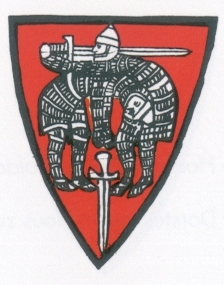
It was the ancestral seat for the Manesse knightley dynasty. The Manesse family is known primarily through the Manesse Manuscript, a collection of Middle High German songs. Their coat of arms depicts two fighting white knights on a red background, one of whom is victorious. It is a telling coat of arms ; the name comes from Manesser , meaning “man-killer.”

The Manesse family coat of arms: The Manesse Song Manuscript contains poetic works in Middle High German . Its core was produced around 1300 in Zurich , probably in connection with the collecting activities of the Zurich patrician Manesse family . Several additions were made up to around 1340. The text was written by 10–12 different writers, perhaps from the circle of the Grossmünster in Zurich.

The Manesse family were originally merchants and rose to knighthood through their wealth and reached their peak of power between 1250 and 1310. As vassals of the Fraumünster Abbey , the Einsiedeln Monastery , and the German Empire, they were an important family in the city of Zurich before becoming “extinct” around 1415..

In 1393, the castle was sold by Ital Maness to the “Jew Visli or Vifli” at a public auction, but already before this, it seems the castle didn’t have anyone living there anymore. 

Have a look at the panorama of the old castle ruins

The Three Beeches on Uetliberg

The girl was a beautiful and young girl from a nearby farmhouse, this more reclaimed by nature than the castle ruins. She often encountered the castle lord when he was out hunting, or walking into town. They started talking and he would soon seduce her by three beech trees on the hills. He told her he would marry her and she finally gave in. 

After this, he cast her away and treated her coldly with her losing her honor and innocence. To make him change his mind, she sat outside the castle gate, hoping he would take notice and pity her. Instead, he just laughed and sent the dogs after her, who ran out into the forest on the hill, and back to the three beeches. 

There she cursed his name before taking her own life. It is said she was buried close to three beeches on the hill as well as she wouldn’t be able to be buried as a consecrated ground. The trees were supposedly standing up to a few decades ago. 

The Manesse Family: The Manesse family was continuously represented in the Zurich City Council from the 13th to the 15th century. They twice provided the mayor and actively promoted the city’s cultural life. They belonged to the city’s patriciate . Rüdiger von Manesse, son of Ulrich M. Manegg and Adelheid von Breitenlandenberg. Married to Clarita von Hertenberg. Engraving by Johannes Meyer from 1696

The Ghost of Uetliberg Haunting Stormy Nights

Tales started to be told that someone was haunting the area around the three beeches were she was buried. When storms were coming in over the city and thunder roared a fire sprung up from under the trees, even when it was raining. 

As the lightning flashed, illuminating the night, travellers passing by would see a white figure, her long hair loose, beating her chest and wringing her hands, always looking at the old Manegg Castle where the lord who betrayed her came from. 

Now his castle has burned down, crumbled and his name mostly forgotten. 

Newest Posts

References:

Die drei Buchen am Uetliberg | Märchenstiftung 

Manesse – Wikipedia

The Restless Spirits of Kleines Klingental: Basel’s Haunted Nunnery

Advertisements

A house of God turned into the sinful playground of the rich and powerful nuns, the former Dominican Cloister, Kleines Klingental in Basel is said to be haunted by the ghostly nuns, still to this day praying to be released from their sins. 

In the cityscape of Basel, few would suspect that beneath its serene facades and picturesque medieval streets, lurk tales of scandal, sin, and spectral unrest. One of the city’s most persistent and unsettling legends clings to the site of Kleines Klingental, a former nunnery turned barracks, museum, and, by some accounts, one of Basel’s most active haunted sites.

Read more: Check out all ghost stories from Switzerland

Today it goes under the name of The Kleines Klingental Museum and showcases statues from the Cathedral. It is here, in what was once a house of prayer and seclusion, that shadows from centuries past still move in the dark corners. And if the legends are to be believed, the ghosts that roam these halls were once no ordinary nuns.

Museum Klingental Basel: The old nunnery is said to be haunted by the sinful nuns that used to live there, centuries ago. // Source: Mikatu/Wikimedia

A Cloister of Contradictions

Founded in the 13th century, the Klingental Monastery was established in Kleinbasel, just across the Rhine from Basel’s bustling old town. It dates back to at least 1274 when twelve Dominican nuns settled in Kleinbasel, having come to Basel from Alsace via the Black Forest.

Officially a place of pious retreat for noblewomen, it soon became something altogether different. The Klingental Monastery, which at its peak was home to 52 nuns, was the richest and most distinguished monastery in Basel. The women who sought sanctuary here were largely from wealthy, aristocratic families, bringing with them not only their dowries and fine possessions but also their personal attendants and, as rumor has it, a disdain for the strictures of monastic life.

Nuns in Medieval Europe: There were few career options for a woman except marriage or cloister. Many nuns excelled as illustrators, tapestry-makers, musicians, gardeners and cooks. Some wrote diaries and texts that survive today and provide interesting insights into the way in which they lived and thought.

Among the nuns spending time in the cloister were two representatives of the Eptingen family, the cousins ​​Sophie and Elisabeth, appear. Susanna, a daughter of Georg von Hattstatt and Elisabeth von Tierstein, is also documented as a nun in 1334. Clara, the daughter of the Basel mayor Henmann II von Ramstein, was also a nun at St. Clara.

There were cases of women being sent to the convent against their will, like Anna von Ramstein. She was the cousin of Susanna von Ramstein, whose father was mayor of Basel in the 15th century. She was said to have been rebellious at the Steinen monastery and, after a failed escape attempt, was brought to St. Clara that she successfully escaped from in 1462.

The nun Katharina, mentioned in 1357, was the stepdaughter of Claus Berner the Younger and the records curiously says she was “taken from the Jews.” In a pogrom before the plague in 1349, the Jewish inhabitants of Basel were expelled from the city or killed. Many of their children were forcibly taken from their families to convert them to the Christian faith, and this nun was most likely one of them.

The four nuns Agnes, Ennelin, Gredlin, and Katharina von Hachberg were of roya blood being the daughters of Margrave Rudolf III of Hachberg-Sausenberg (1343-1428) and Röteln and his wife Anna von Neuenburg (1374-1427).

So how then, did this seemingly pious and respected community of women get the reputation of evil and sinful nuns?

Position of Power: In the 13th century, the abbess of the Fraumünster abbey in Zurich was the chief office-holder of the city. She appointed mayors and judges, had voting rights and the right to sit in the Imperial Diet of the assembly of Princes of the Holy Roman Empire.

From Sacred to Profane at Kleines Klingental

By the late Middle Ages, the Dominican cloister’s reputation was in tatters. Cloistered walls became veils for intrigue. Lovers came and went under the cover of night, and luxuries forbidden by monastic vows flowed freely behind thick stone walls. Chroniclers of the era spoke darkly of secret births and whispered of infants drowned in the cold, rushing waters of the Rhine to preserve the illusion of chastity. 

Attempts by church authorities to restore order and penitence to the monastery met with clever defiance and the noble-born nuns using their rank and influence to evade the scrutiny of even the most zealous inquisitors.

Now, how true were these rumors? Did they really do all of the things their legend accuse them of? Or is this just yet another example of the male dominated church looking down on the female community, perhaps the most powerful women could be at that time? Or was it when the male dominated military moved in that the ghostly legends started? 

The Old Haunted Nunnery: Detail from Matthäus Merian’s 1642 bird’s eye view of the city of Basel in his work Topographia Helvetiae, Rhaetiae et Valesiae . The area of ​​the Klingental Monastery can be seen in the center.

The Military Takes Over

With the arrival of the Reformation in the 16th century, the monastery was secularized, and much of its land was repurposed. By the 19th century, the site had become a barracks. But the soldiers stationed at Kleines Klingental soon discovered they shared their quarters with more than just their fellow men.

Nights in the old nunnery became restless affairs. Strange wailing echoed through the empty corridors. Disembodied footsteps padded softly across stone floors. Soldiers reported encountering ghostly figures clad in flowing black habits, faces hidden in shadow, clutching rosaries or silently weeping. It was whispered that these were the unquiet souls of the sinful nuns, cursed to wander the halls where they had once schemed, sinned, and sought fleeting pleasures.

Some claimed that the phantoms prayed aloud at midnight, their voices mournful, seeking forgiveness too long denied. Others spoke of ghostly processions in the dead of night — pale women gliding past candlelit walls, vanishing into darkness. Apparitions of a mother cradling a child before disappearing into the old well, rumored to have once been used to dispose of unwanted infants, chilled even the most hardened soldier’s blood.

Even the soldiers quartered there left a deadly imprint on the barracks. As they were renovating the place, 29 skeletons of the soldiers, most likely dying in an outbreak of the Spanish flu and buried on the grounds, were found. 

The Ghostly Legacy Lives On in Kleines Klingental Museum

The soldiers left in 1966. Today, the Kleines Klingental Museum occupies part of the historic site. While much of the monastery was lost to time and urban development, several original monastic cells and the old cloister remain intact. And with them, so too, it seems, do the phantoms.

Artists in the art studios in the right wing of the barracks and caretakers who have spent long evenings within the ancient walls speak of unexplained chills, flickering lights, and strange nocturnal sounds. Some report seeing figures in habits lingering in shadowed doorways or passing by in mirrors, only to vanish when pursued. The local legend insists that the unrepentant souls of Kleines Klingental still walk, their sins too great to allow them peace centuries after their death. 

Newest Posts

References:

Basler Phänomene: Spuk, Phantome, Poltergeister | barfi.ch

Happy Halloween! 🎃 Ein Streifzug durch Basels grusligste Orte — Bajour

Huhuuuh! – Sieben Spukhäuser in der Region | TagesWoche

Museum Kleines Klingental – Wikipedia

St.Clara und das Clarissenkloster in Basel 

The Knocking Ghost of Utengasse 47: Basel’s Poltergeist Case

Advertisements

In a small apartment at Utengasse 47 in Basel, a poltergeist was said to torment the family living there. It got so bad and they found no solution that the family had to vacate the place instead. 

In the old working-class neighborhoods of Basel’s Kleinbasel district, Utengasse is today an unassuming street, its tidy rows of homes giving little hint of the dark history that once unfolded there. But in 1929, one of the most unsettling and inexplicable hauntings in Swiss urban folklore made its mark at Utengasse 47 where a poltergeist was said to be haunting.

Read More: Check out all ghost stories from Switzerland

Unfolding like a classical poltergeist case of eerie knocks, invisible hands, and a terrified child caught in the grip of something unseen.

A Home with a Terrible Secret

In 1929, there was a woman living there together with her three children in a small apartment at Utengasse 47. The haunting began as a series of strange and persistent knocking sounds inside the home’s second-floor apartment, particularly from a thin wall separating the living room from the children’s bedroom. 

These sounds weren’t the casual creaks and groans of an old building settling into itself, but deliberate, insistent taps and raps like some unseen presence were methodically announcing itself from within the very bones of the house.

The true focus of this unseen terror appeared to be 10-year-old Marcel, a boy whose innocent curiosity seemed to draw the spirit’s attention. Every time Marcel neared the partition wall, he was seized by an inexplicable, ice-cold dread and panicked. His limbs trembled uncontrollably, and he was overwhelmed by a suffocating sense of fear that no one could explain.

A Town’s Whispered Panic

As word spread of the disturbances at Utengasse 47, curious neighbors gathered outside. The phenomena worsened at night with loud knocking sounds echoing from the walls, disembodied tapping in the dead hours, and a general air of suffocating unease. The events quickly came to the attention of both the authorities and the local press and the police were said to have made several visits to check the apartment, searching it from top to bottom. Nothing was found. 

They watched the boy as well, pinning him down when he got his panic attacks. Even with his arms and legs restrained, the strange poltergeist knocking sound was heard. Doctors and physicists also stopped by, unable to find something scientific they could pin the strange phenomena on. 

In an era when spiritualism was still a subject of hushed parlor conversations and séances were as much entertainment as superstition, the case drew the interest of spiritualist investigators as well when they couldn’t find any logical explanation of it all.. They scoured the apartment, attempting to contact whatever entity might be responsible. Yet no convincing explanation or natural cause could be found.

A Decision from the City

The situation reached such a fever pitch that even the Basel Department of Buildings intervened. Though many officials suspected the episode to be a hoax or hysteria, they could find no perpetrator and no rational origin for the relentless sounds. Ultimately, faced with mounting public concern and the palpable distress of the tenants, the city made a rare and decisive move: the haunted apartment was ordered vacated.

In a time when housing shortages were severe due to Basel’s post-war growth, this was an extraordinary step. The apartment remained empty for three months, an unheard-of vacancy for a modest dwelling in a crowded, working-class district. No one ever complained about these types of noises again. 

We don’t really know what happened to Marcel, or what he thought of the frightening phenomena he was experiencing back then. The building still stands today with its outward appearance giving no hint of the strange disturbances that once gripped its walls.

Newest Posts

References:

Tour Description «Walk of legends» Place 1: Claraplatz and Rebgasse

Huhuuuh! – Sieben Spukhäuser in der Region | TagesWoche

The Ghostly Clergyman of Bubendorf: A Restless Spirit at the Rectory

Advertisements

The spirit of a former priest was said to haunt his rectory in Bubendorf, outside of Basel in Switzerland. Question remaining, is his spirit still lingering inside of the centuries old walls?

In the Basel countryside, nestled between rolling hills and quiet woods, lies the village of Bubendorf, a picturesque place where time seems to slow. It is also said to be a haunted place. It has been in this village for over 500 years and doesn’t seem to be going anywhere. 

Read more: Check out all ghost stories from Switzerland

But behind the tranquil façades of this historic community lurks one of the most notorious and best-documented ghost stories in the region — that of the haunted rectory at Hauptstrasse 62 and its unsettling resident: the spirit of Pastor Wilhelm Strübin.

Haunted Rectory: Evangelisch-reformiertes Pfarrhaus in Bubendorf.

The Pastor Who Loved His Fields More Than His Flock

Wilhelm Strübin, who passed away in 1795, served as the local clergyman in Bubendorf for many years. However, he was not remembered fondly by his congregation. By all accounts, Strübin had a greater passion for his fields and agricultural affairs than for the spiritual well-being of his parishioners. Complaints mounted over his growing neglect and indifference, eventually leading the church authorities to appoint an assistant to share his duties — a quiet but public humiliation for the wayward priest.

His worldly attachments, so tightly clung to in life, would apparently prevent him from finding rest in death. It’s said of one of the Strübins that he was so stingy during his lifetime that he paid more attention to his horse than to his flock. He even brought his horse to his deathbed. Legend has it that you can now hear him leading it up the stairs as a ghost.

A Rectory Besieged by Restless Spirits

After Strübin’s passing, the once quiet rectory gained a grim reputation. Strange disturbances plagued the house, and the ominous activity only seemed to intensify over time. The most unsettling and well-documented reports come from the Schölly family, who resided in the rectory from 1884 to 1926.

The wife of the parish priest, Clara Schölly-Werdenberg, kept a diary that would become a chilling record of nightly torments. She described with unsettling precision the strange phenomena that disrupted their home:

“Often at night, we would hear footsteps on the stairs, then the sound of an object rolling down the stairs. Then we were often awakened by knocking on our bedroom door, often several times in one night.”

It is said that she often laid in bed when she heard the ghosts rumbling around in their house. She prayed with them until they went away. Her daughter also supposedly saw the ghosts haunting their home. One day she was taking the laundry outside, her daughter said: “Look, someone is helping!” No one else was with them at the time.

On one particularly unnerving evening, Clara recounts lighting a nightlight to calm her nerves. But the spirit would not be deterred.

“The first night, I was awakened by a bump, and lo and behold, the nightlight was extinguished and a box of matches was ablaze next to my pillow.”

The implication was clear: something — or someone — did not appreciate the attempt to pierce the darkness.

The Tithe Books and the Waning of the Haunting

As the disturbances wore on, the family sought answers. Eventually, during renovations and a thorough cleaning of the aging building, a secret compartment was discovered within the rectory walls. Inside lay Pastor Strübin’s old tithe books — meticulously kept records of agricultural dues and parish contributions, a lasting testament to the man’s material obsessions.

These dusty ledgers, so long hidden away, were removed from the house. And with their removal, so too did the worst of the haunting reportedly begin to subside.

Whether it was the spirit of Strübin, unwilling to part with his earthly possessions, or a more symbolic unburdening of the house’s troubled past, locals to this day believe that the discovery of those tithe books marked a turning point in the rectory’s haunted history.

The Restless Past Still Echoes

Those who have lived in the alleged haunted house like Josef Handschin and Christoph Monsch had said that they never experienced something spooky. Although the people living before Monsch, claimed that it was. The Pastor Rolf Schlatter who has office in the old rectory also claim to have heard strange noises around midnight. 

Bubendorf. // Source: Roland Zumbuehl/Wikimedia

Though quieter now, the Bubendorf rectory remains a place of whispered unease. The haunted story is remembered particularly through Fanny Moser’s book: Ghosts: False Belief or True Belief from 1950 with a foreword by Jung. Visitors have claimed to hear faint footsteps on the old staircases, and locals swear that on certain mist-shrouded nights, a shadowy figure can be glimpsed standing by the house, gazing longingly out over the fields.

Newest Posts

References:

Von Geistern, die durch Fluchen verschwinden | Basler Zeitung

Huhuuuh! – Sieben Spukhäuser in der Region | TagesWoche

The Headless Ghost Woman of Bern

Advertisements

Number 54 in Junkerngasse, Bern in Switzerland might be hiding more than just old history and dust. The legends of this long abandoned house just won’t let go with the tale of the Headless Ghost Woman.

Taking a stroll down the eye catching Junkerngasse is like taking a stroll through time. The old architecture of old Bern, Switzerland is all around as the best preserved street in the city. The street was once called Edle Gasse (Noble Lane), and it gives a hint of who used to live here.

Read Also: Check out all of our ghost stories about Haunted Houses

Stately houses with Baroque façades and big garden terraces still give off these noble vibes as you walk along the old street, feeling the fresh air of the Swizz cities in your lungs as well as the old history of the city on your shoulders.  

The Haunted Street: Junkerngasse street in the old part of Bern in Switzerland and was once a place were the rich lived. Today many of the old houses still remains, including the abandoned ones.//Photo by: Tony Badwy/wikimedia

The Haunted House on Junkerngasse

Along the noble houses there are prominent families and old money that can be smelled just as well as the wild gardens and decaying houses fight amongst themselves to be noticed. Inside Junkerngasse 54 though, it is said even the old ghosts of a headless ghost woman of the house who still lingers and suddenly makes an appearance.

Read Also: Check out all of the ghost stories from Switzerland

Junkerngasse 54 is an abandoned house and has been unoccupied for decades and therefore the legends and rumours of the house are old and plentiful like how it goes with many of the abandoned buildings. Most likely it was always used as a stable for nearby houses like the Von-Wattenwyl-House, but from the outside it looks like a normal residential building. Check out the picture from inside here.

Read Also: Check out ghost stories from abandoned places like Yongma Land Abandoned Theme Park, Minxiong Ghost Mansion and Monts d’Arree Nuclear Reactor and the Gate to Hell

The Headless Ghost Woman

Who started the story of the headless ghost woman originally is still a mystery as the house was built in the middle ages but left empty since the 1800s. Therefore names and faces, facts and dates are muddled.

Headless: The headless ghost woman seems to still lingers in the old parts of Bern.

According to the story however, around twelve and one in the morning the windows of the house opens and the ghost of a headless woman appears, laughing, creeping out anyone that catches a glimpse of her and is walking past.

Read Also: Unveiling the Dark History of the Tower of London and its Ghosts , Edinburgh Castle Ghosts and Legends and A Royal Haunting at Christmas for more ghost stories about headless ghosts.

There are also tales of a woman in black that seems to be walking through the rooms of the house. If this is suppose to be the same ghost as the headless ghost woman, or another additional ghost is unsure.

Das Gespensterhaus The Movie

Das Gespensterhaus (The Haunted House) is a film directed by Franz Schnyder . The horror comedy was filmed in Bern and Zurich in the spring of 1942 and premiered in Bern on August 28. One of the location of filming the movie was in Junkerngasse 54. It was based on Uli Wichelegger’s novel The Ghost House: A Story from the City of Bern.

The movie was set in the old town of Bern there is an abandoned house that is said to be haunted by deceased residents. The new journalist Rico Häberli receives the order from the editor Oppliger to scout out the house. He spends a night in the building and discovers a ghost. Together with the young owner of the house, he tries to get to the bottom of the matter.

Watch the entire movie on Youtube.

Could this have inspired the legend of the headless ghost woman in Junkerngasse 54? Or perhaps it was the legend that inspired the literature?

More like this

Newest Posts

References

Das Gespensterhaus – Wikipedia

Junkerngasse – Wikipedia 

List of reportedly haunted locations

The spookiest places in Switzerland – The LocalJunkerngasse