An online magazine about the paranormal, haunted and macabre. We collect the ghost stories from all around the world as well as review horror and gothic media.
A woman scorned by the Manesse family from the ruins of the old Manegg Castle on the hills of Uetliberg in Zurich, she is said to haunt the place she was seduced and ended her life, appearing to passersby on stormy nights.
A woman scorned by the Manesse family from the ruins of the old Manegg Castle on the hills of Uetliberg in Zurich, she is said to haunt the place she was seduced and ended her life, appearing to passersby on stormy nights.
From a Swizz perspective, the Uetliberg Hill is perhaps not much of a peak, but it is Zurich’s very own “mountain”. From the top, visitors can enjoy beautiful views of the city and lake – and perhaps even a glimpse of the Alps. The Uetliberg is particularly popular in November, as its summit is often above the blanket of fog that can cover the city at this time of year. In the winter, the hiking trails to the summit are converted into sledding runs.
Read More: Check out all ghost stories from Switzerland
It is also the location of a ghost story that has haunted these hills for centuries. The story of the ghost of a peasant girl who hanged herself on the Uetliberg hill after being betrayed by the cruel and lustful Duke of Manegg
Manegg Castle and The Manesse Family
Today, the Manegg Castle is just ruins, and even the ruins are starting to disappear. Not much is known about who built the castle, but the first documentation we have of it is from 1303. The Manegg castle square used to be a much visited place with a great view over the town, lake and mountain.
Manegg Castle: The ancestral seat of the now extinct Manesse Family was Manegg Castle in the middle of the Albisberg, on the foothills towards Lake Zurich: It was burned by some mischievous noblemen. According to legend, this happened on Ash Wednesday, when a carnival party staged a playful siege. After the fire, large remnants of the walls survived until the 17th century. Today, only a few foundations are visible.
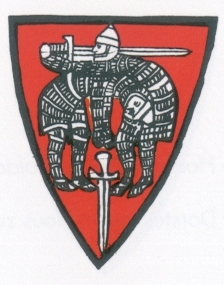
It was the ancestral seat for the Manesse knightley dynasty. The Manesse family is known primarily through the Manesse Manuscript, a collection of Middle High German songs. Their coat of arms depicts two fighting white knights on a red background, one of whom is victorious. It is a telling coat of arms ; the name comes from Manesser , meaning “man-killer.”
The Manesse family coat of arms: The Manesse Song Manuscript contains poetic works in Middle High German . Its core was produced around 1300 in Zurich , probably in connection with the collecting activities of the Zurich patrician Manesse family . Several additions were made up to around 1340. The text was written by 10–12 different writers, perhaps from the circle of the Grossmünster in Zurich.
The Manesse family were originally merchants and rose to knighthood through their wealth and reached their peak of power between 1250 and 1310. As vassals of the Fraumünster Abbey , the Einsiedeln Monastery , and the German Empire, they were an important family in the city of Zurich before becoming “extinct” around 1415..
In 1393, the castle was sold by Ital Maness to the “Jew Visli or Vifli” at a public auction, but already before this, it seems the castle didn’t have anyone living there anymore.
The girl was a beautiful and young girl from a nearby farmhouse, this more reclaimed by nature than the castle ruins. She often encountered the castle lord when he was out hunting, or walking into town. They started talking and he would soon seduce her by three beech trees on the hills. He told her he would marry her and she finally gave in.
After this, he cast her away and treated her coldly with her losing her honor and innocence. To make him change his mind, she sat outside the castle gate, hoping he would take notice and pity her. Instead, he just laughed and sent the dogs after her, who ran out into the forest on the hill, and back to the three beeches.
There she cursed his name before taking her own life. It is said she was buried close to three beeches on the hill as well as she wouldn’t be able to be buried as a consecrated ground. The trees were supposedly standing up to a few decades ago.
The Manesse Family: The Manesse family was continuously represented in the Zurich City Council from the 13th to the 15th century. They twice provided the mayor and actively promoted the city’s cultural life. They belonged to the city’s patriciate . Rüdiger von Manesse, son of Ulrich M. Manegg and Adelheid von Breitenlandenberg. Married to Clarita von Hertenberg. Engraving by Johannes Meyer from 1696
The Ghost of Uetliberg Haunting Stormy Nights
Tales started to be told that someone was haunting the area around the three beeches were she was buried. When storms were coming in over the city and thunder roared a fire sprung up from under the trees, even when it was raining.
As the lightning flashed, illuminating the night, travellers passing by would see a white figure, her long hair loose, beating her chest and wringing her hands, always looking at the old Manegg Castle where the lord who betrayed her came from.
Now his castle has burned down, crumbled and his name mostly forgotten.
Next to the Glasnevin Cemetery in Dublin, there is a pub called John Kavanagh’s ‘The Gravediggers’, where they went to have a pint after working at the cemetery. Rumor has it that the pub is haunted by those buried next door.
Said to be a protector of the Valleys in Armenia, the Dakhanavar vampire hides in the caves in the mountains, waiting for intruders to quench his thirst.
Could the Connolly Station in Dublin be haunted? Some claim that the ghosts of the victims from the Dublin Bombing in world war two could still be lingering near the tracks.
Once a place for executions, the place the Ruffinihaus in Munich, Germany is built upon is said to be haunted. It is said that in the dead of night, the undead rises from their graves, still carrying their heads the executioners took.
Where the former country estate Campagne Mon Repos in Bern once was, the ghostly council of the military leader from General Robert Scipio von Lentulus was given in times of unrest. Is he still haunting the Könizwald woods, even after his estate is gone?
One of the old cemeteries in Munich said to be haunted is the Alter Südfriedhof, or the old south cemetery. According to lore, the ghostly voices of the so-called Eskimo Tragedy are still heard at night.
In the darkness of night and under the foliage cover of the forest, the demonic spirit of Uhaml is said to roam. The only way to escape it is getting out of the forest faster.
In the shadows between ghost, creature and witch, the Welsh Gwarch y Rhibyn has been given many names. Like a Banshee she has been said to be a deadly omen, often called The Hag of the Mist because of her presence in wet areas, or the Hag of the Dribble because of the versions where her mouth is dripping with blood.
Unhappy with the lack of beer in heaven, the Bavarian angel never returned when sent on a mission back on earth. To this day, he sits at The Hofbräuhaus bar in Munich, enjoying his brew.
Sometimes called the Devil’s Stone, the ruins of the former Mödling Castle is said to be haunted by a demonic bird-like entity, screeching at night as an omen of death and disaster.
Could a beer festival be haunted? Many have spoken about the ghost of an old brewer at Nockherberg haunting the beer festival, creating havoc to retaliate to what his descendants did to his brew.
After her public death in the tower of the Munich Frauenkirche, many have claimed to have seen the ghost of Fanny appearing at her death anniversary wearing white.




1 Comment »