Tag Archives: obon

Minxiong Ghost Mansion

Advertisements

Minxiong haunted house, otherwise known as the Liu Mansion is located In the Taiwanese countryside and the old baroque mansion left abandoned and decayed by weather and time. And after being abandoned by the owners, rumours of ghosts started to be told and the mansion is one of the well known haunted places around.

On the serene countryside of Taiwan, amidst rice fields and forest, a mansion is left abandoned between the Banyan trees that have soon claimed the mansion as its own. The majestic red brick building must have been beautiful when first built, but now, it only holds the mysterious charm that old ruins have with its secrets and signs of the passing of time. 

The Baroque styled house, also known as the old Lui Family Mansion (劉家古宅民雄鬼屋) is located in Chiayi, southwestern Taiwan. It’s a hot and humid climate, but the story surrounding this house is a chilling one. The Minxiong Mansion is an eerie place, so forlorn, but famous as it is considered Taiwan’s most famous haunted place. A fact especially seen during ghost month were visitors flock to the site to catch a glimt of something paranormal going on in the quiet countryside.

Read More: Check out the rest of our ghost stories in haunted houses and mansions here.

The Haunted Minxiong Mansion

So what is it about the house that make people claim it is haunted one? A lot of factors have contributed to its rumour of Minxiong Mansion being haunted. Firstly, It’s located along a road with a graveyard close on either side. This has made drivers vary about driving pass for a long time.

The house is also today in a constant state of decay as no one is really paying any attention to it, and the old and dangerous ruins of the house turns out to be a perfect setting one. Then finally, there is the local legend about the house being haunted and cursed from the start. According to this one legend, the one who built it placed some sort of a charm or spell in the house in secret, making everyone living there hear strange noises, footsteps and unexplainable sounds.  Who built it though and why it was cursed never really makes it into this particular legend though.

Read Also: Check out more haunted abandoned places like Yongma Land Abandoned Theme Park and Hauntingly Beelitz-Heilstätten Hospital

So who used to live there when it was first built? The three storey house was built in 1929 by Liu Rongyu (劉溶裕), a local businessman and landowner. The baroque architecture the house was built in was very in style with the wealthy merchants in Taiwan at that time.

Liu Rongyu had seven children and wanted somewhere peaceful and quiet to enjoy the countryside and the grandchildren that would follow. But not long after the building was complete, the mansion was completely abandoned, and the owners never came back in the 1950s. And so, the legends about it being haunted started creeping into the once beautiful family mansion.

The Maid in the Haunted Well

Local legends have a lot to say about the reasons the family left Minxiong haunted house. Was it just because of the remote location? The building was so far from everything and an inconvenient place to commute back and forth from work that maybe the family would rather relocate to the city? Or is it something about the story that has been told about the maid? 

The Haunted Well: The allegedly haunted well that can still be found on the property of Minxiong haunted house. It reminds a lot of the ghost story of Okiku who was also a maid that drowned herself in the well on the estate.// Photo: Koala0090, source.

One of the legends about the place, we find a more disturbing reason for the abrupt escape from the mansion. In the surrounding garden from the house there is an old well sealed shut that no longer is filled with water. And from this particular well, the legends of this house seeps through the cracks of the dried up well.

It is said one of the maids of the house had an affair with the man of the Minxiong Mansion. When the story came out, she ended up jumping to her death in the well that can be found outside.

Some versions of the story tell that the wife found out about the affair and tormented the maid, both mentally and in some accounts even physically, until she couldn’t take it anymore and ended her life by drowning herself in the well. But the story didn’t end with the tragic death of the young maid though, and the maid came back for revenge against the masters of the house. As a spirit she returned to torment the family who had tormented her. Every night her ghost terrorized the family until they packed up their things and left to never return. 

In the following years the visitors coming at night to the abandoned building were also haunted. And so many have been rumoured to be struck by bad luck or even illness, taking their life as the vengeful ghost still haunts the grounds. Especially the soldiers of more than one army have been allegedly chased away by the ghost. 

For more ghosts haunting the wells, check out some of our other stories in the MoonMausoleum:

You may also like:

Banchō Sarayashiki — the Ghost of Okiku

The tale of Banchō Sarayashiki (番町皿屋敷, The Dish Mansion at Banchō) is a well known Japanese ghost story (kaidan). It was popularized in the kabuki theater tradition, and lives on in popular culture and folklore alike.

Keep reading

The Japanese Army Massacre in Minxiong

The story of the maid has been said to be nothing but gossip and false lies several times, and the Liu family themselves are tired to hear about the strange stories surrounding their old family home. But the following strange happenings after the family left the Minxiong Mansion helps keep the story of the alleged curse of the house. 

During the time the Minxiong haunted house was built and the family lived there, the island of Taiwan was under Japanese rule (1895-1945) that could factor into the story. During this time business flourished after the Japanese built up the city of Chiayi after a devastating earthquake in 1906. At the time, this was the fourth biggest city in all of Taiwan. Perhaps that was not the case after the Japanese left and could that be some of the reasons that the Liu family eventually left the Chiayi countryside?

The more rational explanation would perhaps be that the Liu family simply relocated themselves for business reasons by moving downtown in Chiayi City, something that the family itself have expressed on multiple occasions although it doesn’t fit well with the rumours of the Minxiong Mansion being haunted.  

There also has been stories about the Japanese army opening gunfire around Minxiong haunted house for no apparent reason when the Japanese army temporarily stayed there, ending in killing innocent soldiers in the crossfires. Who or what did they think they saw in the dark and remote old mansion? The story about the killed soldiers in the mansion have not been verified as a historical fact, and is more told as an anecdote. Verified or not, several holes in the walls from what appears to be from gunfire can be seen still to this day, making one wonder who and why they were fired. 

The Strange Deaths of KMT Soldiers

A few years later after the Japanese army also left the mansion was occupied by the KMT (Kuomintang of China) the Chinese nationalist party of Taiwan, which in fact is officially known as Republic of China (ROC) came into power in 1949. By this time, parts of the Minxiong haunted house had already been damaged during bomb raids by the American army during the second world war and the interior of the house had been stripped away to build the nearby schools. You could say that the place already looked a little haunted.

Some soldiers from the KMT were stationed at the house in 1949. At this time there was no electricity and the Minxiong Mansion and the grounds around were completely left in darkness during night time, something the soldiers themselves refused to endure. There were several complaints from the KMT soldiers about seeing a ghost floating outside their window, demanding they had to put up electricity to fight the darkness they thought surrounded them in the house. 

Minxiong Haunted Mansion: Entrance to the Old Liu Family Mansion still have visitors, although no one have lived there for ages. Now, it seems to belong to nature and the wild. It is now mainly visitors that are in search for the paranormal and to try to spook each other that visits.// Source/Flickr

Here, a string of deaths started to give fire to the haunted house rumours. According to the rumours of the deaths it was either that the KMT soldiers residing there got sick and died or on other accounts, thought to be suicides. All of this made the mansion get a reputation as haunted.

But also here, we have some counter intelligence that tells another story and although not haunted it is a tragic one. According to the other version many of the soldiers stationed there suffered badly from homesickness to their mainland China that in turn drove them to kill themselves on this foreign land so far from home. 

Minxiong Haunted House Movie From 2022

In 2022, it was even made a movie about the place and based on the urban legends surrounding the mansion called Minxiong Haunted House (民雄鬼屋). It didn’t really do so well in the box office, but it certainly renewed the interest for the old haunted ghost mansion.

The story is set to the Minxiong Mansion where a mother goes looking for her daughter who goes missing inside the old mansion. They go there during the Qingming Festival to visits the tomb at Chiayi Minxiong Cemetery when her daughter disappears. And on her search for her daughter, she ends up encountering the ghosts within the mansion and has to deal with a haunting past as well.

Minxiong Haunted House: Poster from the 2022 movie called Minxiong Haunted House about the Liu Mansion. The movie is based on the many legends and myths that the ghost mansion has acquired over the years it has been left abandoned. Photo: Disney+

Hauntings During Ghost Month

The story of the Minxiong Mansion continues to inspire and attract visitors, especially during ghost month when people flock to try to see a ghost or two at the old Lui Family Mansion that never seems to rid itself of its haunted reputation.

Read more: The Obon Celebration – The Ghost Festival is around the same time and is also based on the traditions during ghost month.

Ghost Month: Traditionally, that ghosts haunt the island of Taiwan for the entire seventh lunar month, known as Ghost Month. The first day is marked by opening the gate of a temple, symbolizing the gates of hell. On the twelfth day, lamps on the main altar are lit. On the thirteenth day, a procession of lanterns is held. On the fourteenth day, a parade is held for releasing water lanterns. Incense, food and spirit paper money are offered to the spirits to deter them from visiting homes. During the month, people avoid surgery, buying cars, swimming, moving house, marrying, whistling and going out or taking pictures after dark. It is also important that addresses are not revealed to the ghosts.//Photo: mahe haroutinian on Pexels.com

Every year, especially in the seventh month of the lunar calendar, or Ghost Month, the Minxiong haunted house gets plenty of visitors. The floors of the house have long collapsed, and the red bricked walls has started to crumble, soon it will perhaps disappear completely.

Any plans to restore the haunted and decaying house have long been rejected by the Liu family as they want nothing to do with it anymore. The Minxiong Mansion will soon be taken by the forest and swallowed whole, unable to reveal the truth of what actually happened at the manor.

More like this

Newest Posts

References

18 Creepy Haunted House Stories – True Ghost Stories 

Abandoned Taiwan: The Old Liu Family Mansion at Minxiong 

Liu mansion in Chiayi voted top haunted house 

Minxiong Haunted House | A Thrill Seeking Adventure

興中村 

Minxiong Haunted House 民雄鬼屋

民雄鬼屋 

【古蹟探索】台灣四大鬼屋之首–民雄鬼屋名列亞洲十大鬼屋的民雄劉家古宅追追追| 貓大爺| 鳴人堂

Botan Dōrō – Tales of the Peony Lantern

Advertisements

The Botan Dōrō or Tales of the Peony Lantern is a ghost story told since the Ming dynasty in China to today. Most popular through the Kaidan theater plays, it is now one of Japan’s most well known ghost stories.

Another dark, yet poetic love story of a ghost. The Botan Dōrō (牡丹燈籠), or, the peony lantern was a story that became popular in Japan during the 17th century in the Edo era.

The Stone Lantern: The Title refers to the type of stone lantern often found in Japan.

It was really a Chinese tale called Jiandeng Xinhua (剪燈新話,) or New Tales Under the Lamplight from 1378 by the Chinese writer Qu You. This was a collection of moralic tales and Buddhist lessons on Karma.

Japan was at the time almost entirely closed off as a country and got little to no input from the outside world. The Japanese adapted it as their own with the writer Asai Ryoi and the demand for Kaidan stories, ghost stories, especially for the parlour game Hyakumonogatari Kaidankai.

Read Also: Games to Play in the Dark – including Hyakumonogatari Kaidankai

The story of Botan Dōrō is set during Obon, a three day festival of the dead in the late summer in Nezu district in Tokyo. Kaidan (ghost stories) was immensely popular during this era, especially during Obon.

Read Also: The Obon Celebration – The Ghost Festival

Botan Dōrō is considered to be one of Nihon san dai kaidan — Japan’s Big Three Ghost Stories. It is arguably the most famous Japanese ghost story of all time and has spurned a couple of local legends of its own. The other two famous Kaidan’s is: Banchō Sarayashiki — the Ghost of Okiku and The Myth of Oiwa — The Paper Lantern Ghost.

The Story of the Botan Dōrō

A long time ago in the Nezu district of Tokyo, the first night of Obon was upon them. This is when the spirits are welcomed back into our world and guided home after three days. A man named Ogiwara was out walking. In some versions he is a young student with his whole life in front of him while in others, he is an elder widowed samurai that carries a lot of regret and grief.

Botan Dōrō Kaidan: The stage production of Botan Dōrō had many adaptations of the story. Here is an illustration of The character of Otsuyu and the titular peony lantern.

On the first day of Obon he noticed a beautiful woman with a maid carrying a peony lantern by his house and they started talking.

Her name was Otsuyu and charmed her way into Ogiwara’s heart. Over the festival the two fell more and more in love in the light by the lantern. And every night she came back to him.

A neighbor however was growing worried for the young man after having seen them meet the first day. That very night he visited the boy, peeping through the window to make sure of his suspicion. There he saw the man in the arms, not of a young and beautiful woman, but a skeleton.

Almost fainting of shook, the nosy neighbour got on his way, running to get a Buddhist priest to get help for the man. When the buddhist priest and the neighbor came the following day, they told the man about this and decided to throw a protective spell over the house. Not really believing until he saw it with his own eyes, he waited to the following night to see for himself.

When Otsuyu together with her servant came to the door she was unable to pass the protection charms the buddhist priest had put up. When she understood what was happening she was crying, banging on the door, and the man understood that it was all true. She was indeed dead and he had fallen in love with a ghost. She reminded him again and again for their love for each other, not leaving the house.

Read Also: Another ghost story where the husband finds out his wife was already dead is The Lady Nak of Phra Khanong — Thailand’s Famous Ghost Mae Nak

The man’s health grew worse and worse during the day and he only felt sorrow and a longing for the thing they had together, even though he knew about her. One night he couldn’t resist his longing anymore. He lifted the protection charm on the last day of Obon and let them in.

When the neighbor once again came to check on him, there was not only one dead person in the room, but two. His soul taken away at the end of the Obon festival as the spirits were supposed to, back to the spirit world.

Is Botan Dōrō Another Haunted Play?

Later the story has gotten many variations, on stage as well as on the screen. The story changes with the times from the closed off Edo period to the opening of western influence of the Meiji period up until modern times.

Read More: Check out all of our ghost stories from Japan

The English translation was done by Lafcadio Hearn in 1899 for his book: In Ghostly Japan. He titled his adaptation A Passional Karma, and based it on the kabuki version of the story. Read the full one Here

But just as in the Kaidan theater play of Yotsuya Kaidan, there is said to be a curse on the ones playing the parts of the ghosts. This is from an events in 1919 when the play was set up in the Imperial Theater. The actresses playing Otsuyu and her maid both became sick and died within a week of each other. They were some of the more promising actresses in Tokyo at the time, and their death were sudden and gave rise to many rumours.

It was said that before they died they had been seen nightly with pale-face and their hair worn long and dishevelled. The actress playing the maid held the lantern in hand, moving behind the willow tree following the other one.

So who is to say? Can a made up story turn into something cursed? Or was it something else than a good story that made it linger in the cultural minds of the Japanese as a ghost?

More like this

Newest Posts

The Obon Celebration – The Ghost Festival

Advertisements

Light your lanterns, put on your Yukata and get ready for The Ghost festival in Japan called The Obon Celebration. The festival, also known as Bon festival is a three day long festival each year in the late and hot summer to honor the dead.

Why is every Japanese ghost story set during the hot and humid summer nights? It’s not really, but a staggering amount is and there is a reason for it!

Beautiful lanterns: Bon-odori festval at Higashiyama Onsen (Fukushima) 17 August 2009. Photo by: Yoichiro Akiyama/source

In mid July you can hear the sound of wind chimes and there is shaved ice on every corner in the summer heat with people wearing their traditional Yukata. Perhaps coming from or going to one of the big parades? The cicadas sings and the Japanese takes the time to tell their many ghost stories in the hot summer nights.

Fun fact, some says that telling a chilling ghost story in the hot humid summers in Japan, will help cool you down, because of the goose bumps you get from being scared. And because of that, a trend in the Edo period started with telling ghost stories in the theaters in the summer times, called Kaidan.

Read Also: Some of the most famous Kaidan ghost stories is: The Myth of Oiwa — The Paper Lantern Ghost, Botan Dōrō – Tales of the Peony Lantern and Banchō Sarayashiki — the Ghost of Okiku. Check out the full story here.

The Obon Celebration is not only an ancestral celebration from the old days they keep alive. Horror movies takes over the cinema, Kabuki theaters put on their traditional ghost plays and teenagers dares each other to visit the cemeteries at night, making the whole festival seem very similar to the modern Halloween celebration in the west.

The paranormal hunters are also about, visiting well known haunted locations around the country and the belief in spirits reach an all time high. But there are also less sinister traditions that comes with the festival.

The Buddhist Obon Celebration

So what really is the The Obon Celebration other than watching horror movies, telling ghost stories and ghost hunting? Obon (お盆) or just Bon (盆) is a Japanese Buddhist custom to honor the spirits of one’s ancestors that incorporated the Japanese native folk religion Shinto, differentiating it a bit from the other Buddhist Ghost Festivals from other countries.

The Obon Celebration originated from the Indian and Chinese Ghost Festival during ghost month. There are many variant of this ghost festivals across the Asian continent coming from the same buddhist story.

Read Also: Interested in more haunted Japanese tales? Have a look at all our ghost stories from Japan

The Obon Celebration is one of the few events on the Japanese calendar that focuses on the importance of family and is there to give the families in Japan time together. It is not a public holiday, but customary to be given leave to travel to your hometown, back to your family. Both the living, as well as the dead.

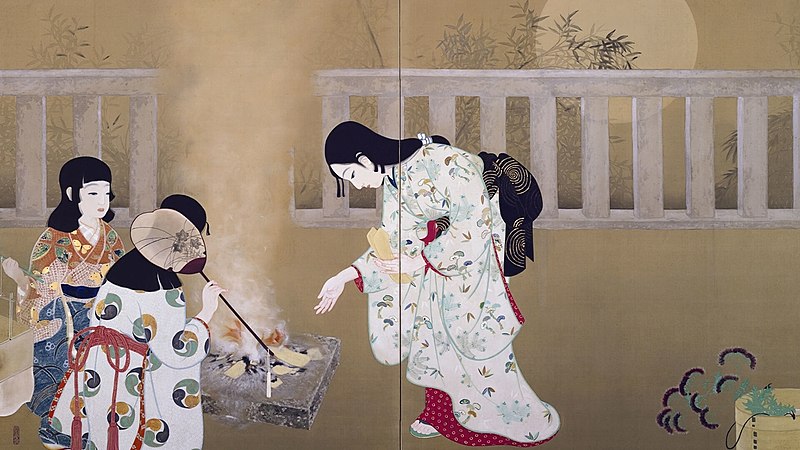
Welcoming the Dead: “Bonfire for the Spirits of the Dead (Okuribi)”, two-panel screen, Color painting on silk from 1916. Showing how the Japanese light fires to welcome the spirits of the dead during Obon in a ritual known as Mukaebi.

When is Obon Celebrated?

The Obon Celebration has been going on every summer for over 500 years. The exact dates changes according to where you live though because the lunar calendar was changed in favor to the Gregorian calendar instead. During these days the employers often grant their workers and the trains, planes and busses are filled with people out in the countryside to celebrate it with their family or into the cities to join the big parades and happenings throughout all big cities.

Read Also: More articles on Paranormal Festivals and Happenings found in the MoonMausoleum.

In eastern Japan, it is held 15th of July, but in the western part it’s held on August 15. However, in Okinawa and the Amami Islands it’s different again and follow the Chinese way to celebrate on the 15th day of the 7th lunar month like their ghost festival. In common though, the festival lasts for three days and the official Obon holiday is from 13-15 July.

Visiting the Grave: A huge part of The Obon Celebration is going home and visiting the graves of your ancestors, clean them and make offerings to them throughout the festival before sending them back to the afterlife.

It is believed that during these three days the ancestors spirits return to the world to visit their relatives. In this time the veil between the spirit world and the world of the living is at its thinnest and therefore the spirit can pass through.

How do the Japanese Celebrate Obon?

To prepare for the return of the ancestors during the The Obon Celebration, the Japanese clean the grave sites in a ritual called Haka Mari. From the newly cleaned graves it gives a path to them back to the house in a ritual called mukae-bon. A spirit altar is put up back at the home and offerings like fruit, flowers and incense is given.

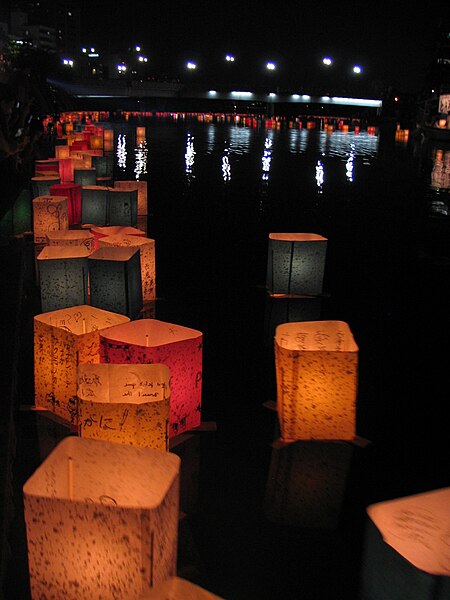
Floating lanterns: Tōrō nagashi float in the river in Hiroshima, as part of the Hiroshima Peace Memorial Ceremony in 2009. Photo: 藤谷良秀(Yoshihide Fujitani) /source

The Obon Celebration begins with Mukaebi, which is a ritual of lightning fires to guide spirits home for the duration of the festival. Often in the form of lanterns hung in front of the houses.

In this way the Obon Celebration reminds much of the western All Saints Days or Halloween celebration as it is believed the veil separating the living and the dead world is thinner and it’s a time for hauntings and ghost roaming the world.

Read Also: Halloween Traditions Across the World

The lanterns most often used is the traditional paper chochin lanterns, but how you use these lanterns and were is very different from region to region.

In some regions of Japan they light up huge fires outside the houses instead of lanterns. Like they do in The Daimonji Festival in Kyoto were they light up series of , 200m-long, character-shaped bonfires built on mountainsides.

When the Obon Celebration ends, the chochin lanterns is often used to guide them back to the spirit world, a ritual called okuri-bon.

On the final evening of the Obon festival it is thought that placing floating lanterns down the rivers will help guide the spirits back to the spirit world if you live close to a river or some sort of water. This tradition has gained a lot of popularity in modern time.

This ceremony is called Tōrō nagashi 灯籠流し, but the custom of sending floating lanterns during the Obon Celebration differs from place to place. The largest floating lanterns event though is in Hiroshima and Nagasaki to commemorate the victims of the atomic bombs during the second world war.

Welcoming and Feeding the Hungry Ghosts

One of the things The Obon Celebration is for, is to ease the suffering of spirits. To do this they have to perform the ritual of segaki 施餓鬼, meaning feeding the hungry ghosts, otherwise known as a vengeful spirit, or in the western tradition: a poltergeist. It is a ritual of Japanese Buddhist tradition.

Read Also: Interested in more ghost stories about the Hungry ghosts? How about reading about the chinese ghost story of: The Story of Tu-Po – The Hungry Ghost or about the Japanese vengeful ghost: Onryo – The Japanese Vengeful Spirit

During the festival, the ritual is performed at Buddhist temples and more offerings are given to the hungry ghosts: Rice and water. This is for the muenbotoke, or the ghosts with no living relatives that have no one to welcome them.

The food served is often vegetarian and a thing eaten much of is sticky rice balls called ohagi and odango.

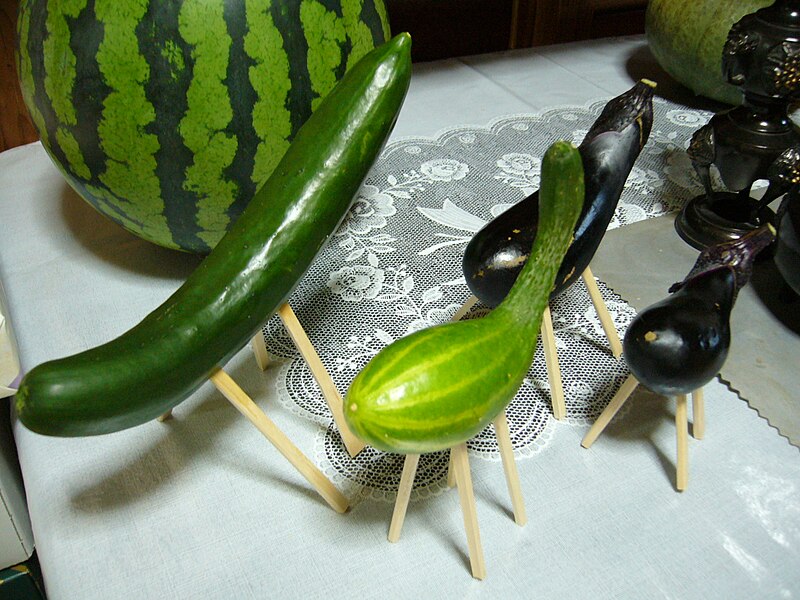
Another significant ritual people do during the Obon festival is to craft a cucumber horse and eggplant cow, known as shōryō uma (精霊馬, “spirit horse”) or ushi uma (牛馬, “cow horse”). This type of carved food works almost as a vessel for the ancestors to come back home when the festival starts and return when it’s over.

Food Offerings at the Alter: Cucumber and Eggplant crafted as a vessel so the spirits can come and go during the Obon Festival //Source: Wikimedia

The Buddhist Dance from the Spirit Realm Bon Odori

But exactly why do the Buddhists and buddhism influenced places celebrate the dead during this time? It is best seen through one of the ways the Japanese celebrate.

The Bon Dori Dance 盆踊りis a dancing style performed during The Obon Celebration. It comes from the story of Maha Maudgalyayana, or simply Mokuren which was the incident that made people celebrate the ghost festival in the first place. He was a disciple of Buddha and used his powers to look into the spirit realm. There he saw his mother, and saw she had become a hungry ghost.

He asked Buddha what to do and Buddha said to give offerings to the monks that completed their summer retreat on the 15th day of the 7th month. Mokuren did it and it worked. His mother was freed from the suffering of being a hungry ghost. He burst out dancing from pure joy.

Bon Odori Dance: This is a scene from one of the dance festival at the Hanazono Shrine, Shinjuku, Tokyo city. They are celebrating The Obon Celebration. Yukata-clad people dance in circles around the yagura as the music plays just as Maha Maudgalyayana did when he saved his mother from the afterlife as a hungry ghost.

The dance has so many variations and each region perform their local dance with their own music, however, the Japanese taiko drum is often used to the melodies of old folk songs.

There are several big parades showcasing the Bon Odori dance during the Obon Celebrations. The Tokushima Awa Festival (阿波踊り) is perhaps the most well known bon odori dance that draws millions of visitors to Tokushima to watch and join the huge parades in the city. There are the also Gujo Odori Festival in Gifu (郡上おどり) and the Akita Bon Odori Nishimonai Festival (西馬音内盆踊り). These are all well known for their Bon Dori during the ghost festival, but it is held smaller Bon Odori dances as well everywhere.

Since the celebration and all its customs is so different from region to region, the dance will look so different as well. But very often it is people lining up in a circle around a wooden scaffold made for the festival called Yagura. The dance can also include the history of the region as well. Like mimicking fishing in fishing areas, dance moves reminding of digging in coal mining areas and the likes. What they have in common though is their intent is to honor their ancestors and those that came before us.

Things to Watch out for During the Ghost Festival

Although mostly a family holiday and a time to spend with your family and religious days of remembrance and folk festivities, there are also several superstition that are said to be remembered during the days.

The first rule during Obon to beware of is to not take pictures during the night so not to capture a ghost. Perhaps a bit difficult because of all the festivities people take a photo of to remember.

It is also said not to swim as it is more likely to be drowned by a ghost. Do not steal the food offering to the hungry ghost of obvious reasons. Do not hang your clothes out to dry in the night as iit believed that the dead will wear them and don’t put the slipper heals towards your bed. Ghost will find your bed and climb into it, causing sleep paralysis.

All in all, do not do anything but being respectful to the dead during the Obon Celebration.

More like this

Newest Posts

References:

https://www.newworldencyclopedia.org/entry/Bon_Festival
https://www.jrailpass.com/blog/obon-festival-in-japan
https://www.tokyocreative.com/articles/18387-chilling-tales-for-hot-nights-ghosts-in-japan
Season of Ghosts: The Japanese Tradition of Scary Summer Stories | Work in Japan for engineers
What is Obon? Japan’s festival for the dead.