Tag Archives: Ghost

Hoia Baciu — The Haunted Forest of Transylvania

Advertisements

This haunted forest known to be the Bermuda Triangle of Romania with its eerily coiled trees and whispers of local legends reminds us all that Transylvania is not only haunted by the legend of Dracula and vampires. Take a walk in the Hoia Baciu Forest and hopefully you will get out as well.

Romania has a rich history of the unexplained and lores and legends that will creep into the bones of those listening. This forest is clouded in mystery and is no exception. Strange orbs of lights are said coming from inside the treeline, and rumors of it being a possible gateway to another dimension draws desperate people to try for themselves. The stories of the haunted forest has reached an international reputation now and is on most lists of “most haunted places in the world“.

Read More: Have a look at all our stories about haunted forests: Here

The forest has always had a paranormal undertone whispering in the wind from old legends, but modern lore of the forest being a hotspot for UFOs, missing time and has started to take hold as well. All of these legends are what has given it the nickname the Bermuda Triangle of Romania. The mysterious forest of Hoia Baciu, or Pădurea Hoia as it is in Romanian, has many haunted legends lingering among the trees. 

Hoia Baciu Forest: The Transylvanian forest is shrouded in mystery and intrigue, largely due to its peculiar trees, a dense thicket of gnarled, contorted trees with twisted branches that seem to reach out like spectral fingers. Local legends claim that the trees are imbued with supernatural energy, and many believe that they are gateways to other dimensions or portals to the spirit world.//Source: Wikimedia

The Haunted Forest for Ufology

It’s not only those living close to the Hoia Baciu forest, superstitious people or those seeking ghosts that claim there is something going on in between the trees. Even in academic circles there are those who were intrigued by the strange place and the subject has been dealt with by both national research as well as overseas.  

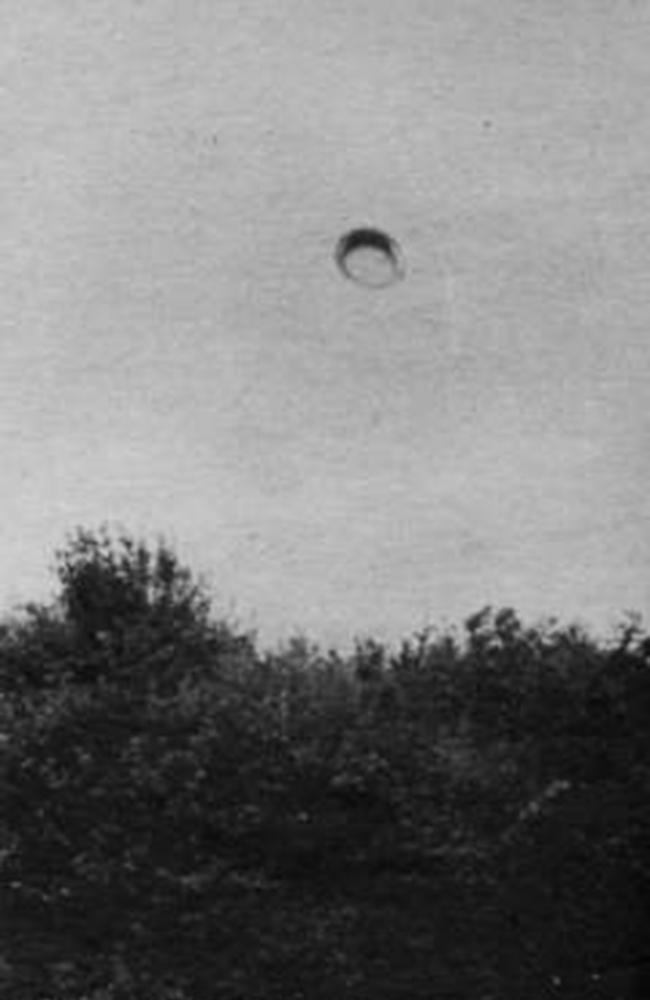
UFO Over the Treetops: This picture is one of the pictures Emil Barnea took of the sky above the forest, now believed to be of more strange origin.

Even some selected professors at the university in the city claim this particular forest is a place where paranormal activity happens, and in the modern world filled with strange disappearance legends, tales of aliens and UFO’s has started becoming a part of the lore of the haunted Hoia Baciu Forest. 

In the late 60’s a biologist named Alexandru Sift came back with pictures from the forest that he claimed were flying UFO’s in the sky over the twisted trees. Sift wandered into the forest to have a closer look at the strange vegetation that can be found in there as part of his research.

These pictures of the alleged UFO’s were published by his chemist friend of Sift, side by side with theories about the paranormal stuff happening in the old forest right outside the city. And what he found and reported off got more people interested in both the paranormal legends that had seemingly always followed Hoia Baciu.

The same claim about seeing a UFO inside of Hoia Baciu came from a military technician named Emil Barnea as well. In 1968 he took some pictures in the western part of the forest while he was camping in the forest. Barnea took a huge hit by publishing the pictures as the communist government at the time looked at tales like ghosts and aliens like madness and superstition. He even lost his job because of the publishing of the pictures.

But what was the truth behind the pictures? What flew in the sky that made people think it had to be aliens? Both of these cases, with what seemingly looked like picture evidence, helped to give the forest a sense of notoriety more than a local place filled with local legends.

When first delving into the local lore since the first trees started growing there, strange occurrences had been reported long before the 60’s and people started talking about UFOs. 

The Bermuda Triangle of Romania

Hoia Baciu Forest is located near the Cluj-Napoca city in the northwestern part of Romania, an old forest still stands only half an hour away from the city by car. The forest is in notorious Transylvania, and for many it is expected that a haunted forest should be placed right here. Although the city close to the forest is free from the Dracula tales of Bran Castle and the tourist attractions one might find in a lot of towns capitalizing on the vampiric lore of the country. But there is a certain eeriness to the trees bending in twisted ways with skeleton-like branches reaching out for the hikers. 

We are away from the bustling modern everyday life from the city and here in Hoia Baciu Forest and the only thing to hear is the falling leaves, whispering as they reach the ground, and the sounds of deer, walking among the trees. Some might say Hoia Baciu is much more scary than Dracula himself.

Strange Lights of Hoia Baciu: Another one of the pictures taken by Barnea in the 60’s showcasing strange lights that has been told legends about in Hoia Baciu throughout the years. What the lights and figures over the forest really was has never been found out, but has been the source of much speculation within the ufology community.

When saying the forest is an old one, it truly is. As in 55 000 year old. With such old places like the mysterious Hoia Baciu, there are old stories that no one really knows when they started or came from. Farmers in the valley claim the forest is haunted to this day, and especially stories about strange disappearances there are plenty of. The story about the strange disappearances are also why the Hoia Baciu forest is also sometimes referred to as: “The Bermuda Triangle of Romania.

The Disappeared Shepherd

One of these disappearance stories from Hoia Baciu tells of a shepherd that went into the Hoia Baciu and vanished with more than 200 of his sheep without a trace, never to return. Perhaps a man could simply vanish in a forest by himself, but 200 sheep? The stories about many people disappearing are odd considering the forest is not that big compared to other places an covers an area of about 3 square kilometers.

Read More: Another forest where people seems to just disappear, check out: Spirited Away in the Forbidden Yawata no Yabushirazu

In some sources it is after the disappeared shepherd that the forest is named Hoia Baciu. The locals are at times afraid to enter the forest because of tales like this that have been handed down for generations. The once brave enough to venture in have also complained about feeling nauseous, itching as well as getting migraines when they are brave enough to enter. 

The Girl Who Vanished

Perhaps the most famous tale from this forest is of the 5 year old girl that wandered into the forest one day and got lost and disappeared from the face of the earth, at least for the rest of the world. Years passed and after five years of being missing she came back out from Hoia Baciu, supposedly in the same clothes she wore on the day of her disappearance, not looking a day older.

When asked where she had been and what had happened, she had no answers. She reappeared in the forest with no memories of where she had been and what happened to her, at least, she didn’t want to share it. For her it had apparently only been a little while, not many years.

Many accounts claim there are many, perhaps as many as thousands of people that have disappeared in this Bermuda Triangle of Romania over the years. But of course, no hard evidence is found of these occurrences. Because they never happened, or merely because they happened so long ago that evidence of this is long gone?

Ghosts Haunting the Forest

There are not only strange legends about people being whisked away for years or forever or pseudo science of UFO and aliens that are told going on inside of the forest. A part of the local legends of the forest also deals with ghosts haunting the trees.

One of the ghost stories tells of the ghosts of Romanian peasants that were murdered in the forest and is believed to still be trapped in the forest, unable to move on.

They are sometimes seen wandering among the trees in Hoia Baciu, observing the people entering their final resting place. Other tales of shadow figures, something looking like ectoplasms as well as hearing strange voices are also told by joggers and hikers. One of the ghosts are supposedly also wearing something that looks like the northern Romanian traditional clothing.

The Poiana Rotunda Inside Hoia Baciu
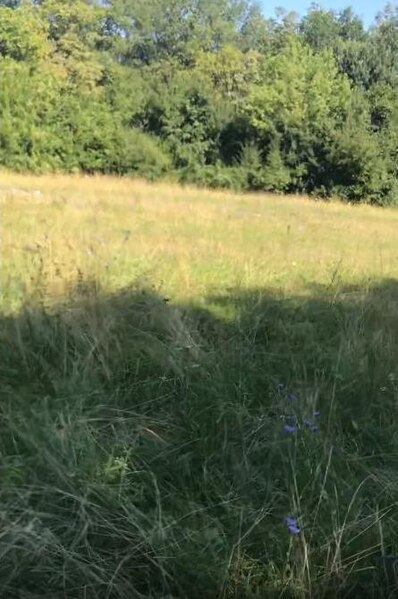
The Poiana Rotunda: The clearing in the forest were most of the strange happenings is taking place giving the nickname Bermuda Triangle of Romania// Photo: Lajsikonik

Most of the paranormal reporting has now started centering around a supposed vegetative dead zone found inside of Hoia Baciu. This place is called Poiana Rotunda, or ‘Round Meadow’ found west in the forest.

The Poiana Rotunda is a one kilometer area of grassland inside the thick forest and is a close to perfect circle on the ground where no trees grow from the soil, apparently without an explanation.

People claim that they feel nauseous or dizzy when coming close to this place, and most of the strange things that are told about the forest are said to have started or happened around this dead zone.

What happened here has been up for much speculation. Could it be from a UFO landing at this place, could it be a sign of the gateway to the parallel dimension that seems to have spirited away many people throughout the years?

The more earthly and natural reasoning for this mysterious meadow in the middle of the forest could also be caused by natural causes or illegal deforestation the forest is suffering from. Soil samples have been taken from the place, but as of now, we don’t really have a definite explanation for this phenomenon.

A Walk Inside of the most Haunted Forest in the World

No matter what really lies inside the forest, of it really is haunted or some sort of Bermuda Triangle of Romania, it certainly pulls the strangest and darkest things out from people visiting. It is a perfect setting to put on a tv-show, sell books claiming all sorts of stuff. 

Maple groves, gatherings of beech, ash and elm wrap around themselves, contorting to strange shapes that perhaps help the feeling of uneasiness and gives the forest an overall creep factor. Blocking out the sun, leaving us in a sort of eternal shadow below the trees, anything seems possible in Hoia Baciu.

More like this

Newest Posts

References:

Frights and sights in Transylvania: exploring haunted Hoia Baciu | Romania holidays | The Guardian

Haunted Forest – Hoia Baciu Forest

Pădurea Hoia Baciu, de la legendă, la adevăr. De ce copacii au forme atât de ciudate?

Haunted forest Hoia-Baciu – Cluj-Napoca

Solving the Haunted Hoia-Baciu Forest

Hoia Baciu travel guide: Inside the creepiest forest in Transylvania | The Independent 

The Ghosts From Security Prison 21 in Tuol Sleng Genocide Museum

Advertisements

Cambodia is a land with a lot of hauntings. One of them being in the old prison known as Tuol Sleng or Security Prison 21 where almost 20 000 people were tortured and killed during the Cambodian Genocide. And even today, the building is known for its ghosts. 

In Tuol Sleng Genocide Museum that used to be a prison, some of the prisoners were never really freed. Even in their deaths, their souls lingers in what used to be their own prison cells. However, they have now people taking care of them. 

The people working in the former prison now turned into a museum are well aware of the past and try their best to honor the building’s gruesome history. There are many occurrences that are being reported on that the museum’s staff cannot explain. Objects are being thrown hard to the floor and high pitched screaming has been heard.

Advertisements

The staff working there also leave out food for the ghosts when they go on lunch break as they can’t enjoy their own lunch because of the loud noises the ghosts will make when they don’t leave an offering. 

The Cambodian Genocide

To understand the hauntings of this museum, we must first understand a little bit of Cambodia’s dark past and how so many could die in a place like Tuol Sleng. 

After years of devastating civil war, Cambodia had already seen its fair share of bloodshed. But the worst was still ahead of them and from 1975 to 1979, Cambodia went through a systematic killing, later known as the Cambodian Genocide which killed nearly a quarter of Cambodia’s population at the time. The exact death toll is uncertain, but it ranges from everything from 1.5 to 2 million people. 

The genocide was done by the Khmer Rouge, a popular name given to the communist party called Communist Party of Kampuchea (CPK), led by Pol Pot who wanted to ‘cleanse’ the population in order to establish a pure, self-sufficient communist state. 

Tuol Sleng Genocide Museum: Known as Security Prison 21 or S-21 during its time of torture and killings where thousands of Cambodians died. Here is one of the buildings of Tuol Sleng in 2013 // Photo: Dudva/Wikimedia

The Story of the Prison Turned Museum

Tuol Sleng Genocide Museum (សារមន្ទីរឧក្រិដ្ឋកម្មប្រល័យពូជសាសន៍ទួលស្លែង) literally means, ‘Hill of the Poisonous Trees’. It used to be a secondary school in the capital Phnom Penh until the Khmer Rouge regime took over and used it as a prison during the genocide. 

Prison Cells: The former school turned the classrooms into prison cells the museum has kept intact to this day.// Photo: Gerd Eichmann/Wikimedia

Known as Security Prison 21(មន្ទីរស-២១) or S-21, it converted the classrooms to prison cells and torture chambers in 1976. It is estimated that over 18 000 were killed in the S-21, including children. Of course, this is an estimate since the real numbers are uncertain and could also be much higher. Only 12 former inmates survived from the prison. 

When the prisoners arrived at S-21 they were photographed, forced to undress and had their personal belongings confiscated. Many of the prisoners didn’t even know why they were taken. There would often be nonsensical reasons like wearing glasses or speaking multiple languages, a sign of being an intellectual that could potentially speak against the communist regime.

Also religious, ethnic and political reasons were why you were being singled out as a potential threat to the regime. Often whole families would be taken at the same time so that no one would be able to seek revenge for them. Pol Pot said himself: “if you want to kill the grass, you also have to kill the roots”

After a grueling questioning to make them give up information, they were taken to their cells. Some were shackled to the floor in small prison cells, others were shackled together with others in large rooms. One of the common hauntings people report on is the sound of shackles rattling from the cells. The prisoners were forbidden to talk to each other and had to follow the rest of the rules. Any action, just sitting up or turning over had to be approved by the Khmer Rouge guards, and they would be severely punished if they broke the rules. 

The goal was to get the prisoners to confess before executing them. Either that they themselves were betraying the party and the revolution, or give up names of those that did. They got the prisoners to confess to anything by the use of torture and submersion in water, electric shock or being hanged from the gallows by their hand until unconscious were some of the methods. Once they got a signed confession, they had to face their execution. 

The Killing Fields

The prisoners were killed on site at first, but then they also started to execute at what would be known as the killing field outside of the city known as Choeung Ek. The prisoners often had to dig their own graves before being killed. 

These fields have numerous stories of being haunted themselves. In the field in Choeung Ek, a site with mass graves where many graves are visible above the ground. During rainfalls, bones and clothes surface from the shallow graves.

This relentless killing and torture lasted for many years. The prison closed down in 1979 when the Vietnamese army invaded and ended the rule for the Khmer Rouge. And ever since then, Cambodia has tried to rebuild the country, piece by piece.

Advertisements

Security Prison 21 never returned to being a school for children. It was instead turned into a memorial and a museum that would remember and showcase the atrocities that the people suffered during those years.   

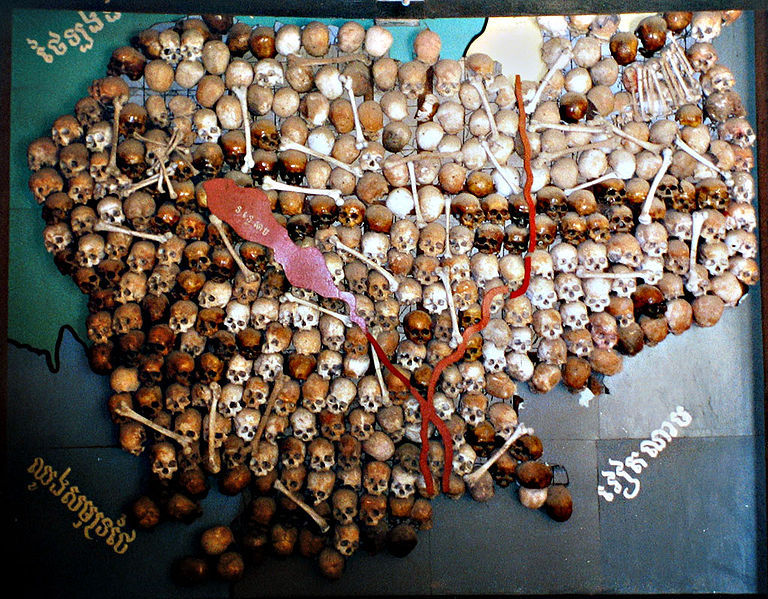
From 1979 until 2002, they displayed a huge map of Cambodia made up of 300 skulls of victims to the regime. It was displayed to show the brutality of the regime until it was dismantled to give the skulls a proper burial at last. 

But did it also bury the rumors of the prison being haunted?

The Haunting at the Museum Today

From the outside rumors about a haunting of ghosts started spreading. Neighbors claimed to hear the rattling of shackles and terrified screams from inside the former prison. Also from within the museum, countless reports of something paranormal going on started to spread. Many of the staff at the museum claim to have witnessed the hauntings, both cleaners, guides and the security guards, especially those working the night shifts. 

Map of Skulls: This is the infamous skull map that was on display in the former S-21 prison camp at Tuol Sleng in January 1997 // Photo

“There was one night that I woke up to go to the bathroom when I saw a black figure bending towards me, and that made my hair stand on end. I was very frightened; I climbed back into my bed and waited until the morning to tell my colleagues,” Nong Saveoun, a security guard who both worked and lived at the genocide museum said to the Phnom Penh Post back in 2016.

There is also a story about a security guard that heard the shower start running after he saw a dark figure opening the toilet door. When he went to investigate, there was no one there. 

Three times a year they hold blessing ceremonies at the Tuol Sleng museum where they invite both government officials and monks to give a prayer to the victims on the Khmer new year, the Pchum Ben festival and on Visak Bochea Day. Perhaps that is the way to appease the soul and finally free the ghostly prisoners from their cells and their shackles to this world. 

Advertisements

More like this

Newest Posts

References

Featured Image: Pete Stewart/Wikimedia

Tuol Sleng Genocide Museum – Wikipedia

History of the Museum

The 10 Most Haunted Places on Earth – Days to Come

NST Region: Five most haunted places in Cambodia

Land prices undaunted by genocide museums’ history and hauntings | Phnom Penh Post

https://www.wired.com/2002/03/skull-map-dismantled/

A Haunting in Malaysia — Kinarut Mansion

Advertisements

Malayan ghost lore is deep and it is ancient. And something leaves more questions than answers. Such is the case of the mysterious Kinarut mansion in Sabah and what became of it. 

The ruins of a former manor house sits on a hill surrounded by woods. It looks over the Kawang River near Kinarut in Malaysia. Today, the ruins of the manor house is considered to be the Malaysian state, Sabah’s, main attraction. And it is apparently not only the living it attracts.

The Mansion in the Jungle

Once this area of Malaysia used to be called North Borneo, a British protectorate where Europeans came to get their hands on natural resources of the land, like rubber. And in 1910, a German manager of a rubber plantation called Kinarut Rubber Estate built a manor in Graeco-Roman style, pretty unique as the one of the very few stone houses in North Borneo. 

Advertisements

It was an Indian architect that stood for the design, and the construction was massiv. Around 200-300 workers from Java and maybe even Hong Kong worked on the house for four years to complete it with 152 windows, 45 doors and no less than 42 huge chandeliers. 

Asimont died only a decade after the building was done and the manor itself was destroyed in 1923 by a British company. The question of why though, is still unanswered. What happened to the house? Or based on the stories that have been told ever since, what happened in the house to leave such a legend?

The Fall of The Kinarut Mansion

In its prime, there seemed to have been a bustling life with a full community, jobs and even cultural events like sports competitions. The mansion was well maintained and the rubber plantation seemed to be thriving until the Great Depression. But that hit the global market first after the mansion was supposedly demolished. So again, what happened?

In the Jungle: There is according to legend, something in the trees surrounding the mansion.
Photo: CEphoto, Uwe Aranas

A house such as this is simply not complete without the haunted backstory. Locals living near the mansion reports that the area is haunted by a “Hantu Tinggi”, a type of Malayan ghost, usually disguised as a tree in a forest. It literally means tall ghost as stories of it often tell about a body so tall the waist up is hidden by clouds. and only exists in Western and Eastern regions of Malaysia. 

The Rediscovery of the Haunted Mansion

Years went by without anybody paying the ruins any mind. The locals had only tales of demons and ghosts from this place. The rubber trade had dried up and North Borneo was now the modern Malaysia on the map of today. But the house would not be forgotten by history, not just yet. 

The rediscovering of the house was made in 1990 when the Sabah Forestry Development Authority led an exploration of where to plant trees. Throughout the years it had been forgotten and rarely does people wander in this area. Why is that?

People passing by claim that they have seen something fast moving and voices in the night. This is mostly attributed to a pontianak, a Malayan female ghost that prays on human flesh. So perhaps this wasn’t the greatest place to erect a mansion at all. All that is left of the enormous building are ruins. The steps of white stone leading nowhere as the questions asked about the truth about the Kinarut Mansion.  

Advertisements

More like this

Newest Posts

References

Feature Image: CEphoto, Uwe Aranas

 Rumah ‘hantu tinggi’ bongkar sejarah industri getah Sabah

https://upload.wikimedia.org/wikipedia/commons/3/30/Kinarut_Sabah_TheKinarutMansion-12.jpg

Myrtles Plantation and the Ghosts that Remains

Advertisements

Now a quaint Bed and Breakfast, the old Myrtles plantation manor houses more ghosts than living guests. 

The old splendor of a plantation in Louisiana, not so far from Baton Rouge, is still quite clear when looking at the Myrtles Plantation. The antebellum mansion was first built in 1796 and is decorated with hand-painted stained glass featuring a French cross to allegedly ward off evil, the walls filled with Aubusson tapestry and from the ceiling, Baccarat crystal chandeliers hang. 

But among the Carrara marble mantels and French furnishing there is something more sinister, more primitive than any riches, gold and luxury can cover over — The blood stained history and the legend of ghosts still haunting the place. 

The old plantation was handed down from many people and in 1950, the house was sold to Marjorie Munson. It was she who started noticing strange things happening around the Myrtles Plantation and started talking about ghosts, that we still talk about today. 

And the tales that are told are many — supposedly, the old plantation is one of the more haunted places in America with reports of at least 12 ghosts inside this Creole cottage style manos sitting on a hill. Although it is only historical records about the murder of William Winter, the number of murders in the house is allegedly 10. 

The Legend of Chloe

The most famous ghost on Myrtles Plantation is without a doubt Chloe, or in some records, Cloe. She was supposedly a slave owned by Clark and Sara Woodruff, who took over the plantationin 1817 after Saras father, General David Bradford, who first built the plantation. 

Advertisements

In 1992 a picture surfaced after the plantation took some photos of the property to send to the insurance company. When looking closer at the picture, something that looks like a girl can be seen. This is believed to be the ghost of Chloe, who still haunts the Myrtles Plantation with her green turban. 

According to the stories, Chloe was one of the slaves that worked in the house rather than out in the field, which was a much more straining work than inside doing the cleaning and cooking. But perhaps it came with other dangers than grueling labor. According to the stories, she was forced by Clark Woodruff to become his mistress.  

In some accounts though, Woodruff started having an affair with another girl and Chloe feared she would have to start working in the fields instead of in the house. And she started listening in on conversations to find out her faith or pick up on something that she could use against them. 

In any case she was caught listening by the doors and punished by her slave owners. One of her ears was cut off and she wore a green turban to conceal it. 

The Revenge

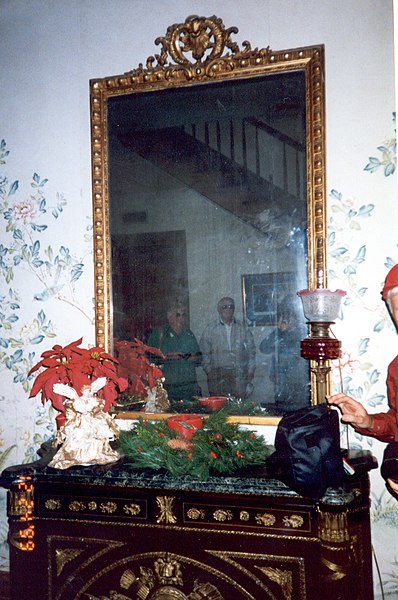
The Haunted Mirror: Where the spirit of Woodruff and her children lingers.
Photo: Chris Light/1999

But it wasn’t the end at all, as Chloe planned her revenge on her slave masters. She baked a cake that she had poisoned with oleander leaves, which is extremely poisonous. Even the question of why she poisoned the cake is up for discussion. 

Most accounts claim she did it for revenge after cutting off her ear. Another variant saying she was trying to gain favor with the family again as she was planning to cure the family for the poison and come out as a hero instead. 

But according to the story, the plan backfired and only Sara Woodruff and the two daughters ate the cake and died from the poison. Chloe was then hanged by the other slaves and thrown in the Mississippi river, as a sort of final punishment for her or to not be punished themselves by Clark Woodruff for harbouring her. 

A mirror in the house is supposedly holding the spirit of Sara Woodruff and her children. According to custom at that time, the mirrors were covered by a cloth so the spirit would not disappear into them. But after the poisoning, this particular mirror was forgotten and the ghosts of the victims can be seen in the mirrors and there are reports of handprints being left in the mirror, as their spirits are now trapped in the mirror. 

The story about Chloe as a ghost is also told by the previous owner, Frances Kermeen, who also wrote a book on all the strange hauntings that she herself reported about experiencing on her second night in the house: 

 “I looked up and standing over me was a black lady. Her head was wrapped in a green turban,” I could see her [holding an] old-fashioned tin with the loop in it [through] the candlelight and I lost it. I started screaming…I reached my hand out to touch her, I could tell she was a ghost because she was see-through, but as my hand passed through her, she faded away.”

Frances Kermeen told the podcast Mysterious Universe in 2015.

The Uneven Facts

Advertisements

Do historical records support this though? There is currently not found any records of the Woodruffs owning a slave named either Chloe or Cloe. The legends say that Chloe killed both the wife and the daughters, but one of the daughters, Mary Octavia, survived and grew up to become an adult. And it is said that Sara and the other daughter, Cornelia, were not killed by poison, but by yellow fever in 1823 and 1824. 

Either way, despite the historical records refuting the story, the legend about a woman wearing a green turban haunts Myrtles Plantation. Perhaps trying to tell a story that no historical records can?

The Other Ghosts

There are several pictures you can find on the postcards found in the souvenir shop at the plantation, the Chloe postcard being one of them. Another picture that stirred up quite some stories was the picture of a young girl dressed up in classic antebellum clothing that seems to look out from a window. She is now referred to as “The Ghost Girl” on the plantation. 

Burial Ground

But the legend of Chloe is not the only claim of ghost sightings at the plantation among the Spanish Moss hanging from the giant oak trees. There is the classic tale that the house itself is built on an Native American burial ground, a trope of American ghost story tales that rarely can be substantiated. But even so, the ghost of a young Natice American woman has been reported. 

In this case, the burial ground would be of Tunican tribes in the Mississippi River Valley, and the truth is that the land the manor now stands on used to belong to the Natives before being seized by the Spanish. 

Civil War Soldiers

Advertisements

Another legend is about the Civil War and about how the houses were ransacked by union soldiers, and three people were killed. But exactly who was killed? The soldiers or the people living in the mansion? At the time, it was then Ruffin Gray Stirling and his wife Catherine Cobb that lived on the plantation with their slaves. It is true that they were robbed of their fine furniture and luxury items. 

According to some of the  variations of the legend though, it was the Union soldiers that were shot dead on the premises by the Confederates. 

But something that is more up for debate is the supposed blood stain in the doorway, around the size of a human body remains that never will be completley clean after the supposed murders that happened then, no matter how well you scrub it. 

The Voodoo Practitioner

The plantation is also the home of the ghost of a young girl that died in 1868, sometimes thought to be the girl in antebellum clothes from the picture. She was treated by a local voodoo practitioner in one of the 22 rooms in the manor, but died. She appears now in the room she died in and has been reported to practice voodoo on people sleeping in the room. 

William Drew Winter

One of the other ghosts haunting this place is someone that either staggers or crawls up the stairs. He always stops on the 17th step. This is rumoured to be the ghost of William Drew Winter, the verified murder victim in the house. He was shot on the front porch of the house by a stranger. To get away, he crawled up the stairs but only reached the 17th step before he collapsed and died. 

Several guests staying at the now B&B have claimed to hear the crawling coming from the stairs, and believing it could be other guests have gone to check. But when reaching the stairs, they find that no one is there, or worse, the apparition of his ghost, begging for help. 

Although here, we have discrepancies in the story as a local newspaper reported that Winter died of a single shot that killed him instantly, and he had no possible way of crawling the stairs after the shot. But did he manage to in his afterlife?

The Plantation

No matter the fact we can now verify, the stories found of plantations from way back cast long shadows. All from the first contact between the natives and Spanish, throughout slavery and a bloody war. The darkest chapters of this plantation, is most likely the stories that we don’t know about. 

Advertisements

More like this

Newest Posts

References

Featured image: Bogdan Oporowski

The Myrtles Plantation

Legend of Chloe And Ghosts | Myrtles Plantation

The South’s Most Haunted Plantation – Myrtles Plantation Louisiana

Nale Ba – The Bridal Ghost of Bangalore

Advertisements

In the 90s, rural parts of Bangalore in India were haunted by a fear of a ghost walking from door to door. To protect themselves from death, they used to write Nale Ba – come tomorrow. 

The sound of a knock on the door can be one of the more terrifying things when you are not expecting someone. In lores and legends, opening the doors for strangers are the biggest mistakes you can make, as you have no control once the door is open.

But what if the voice on the other side sounds familiar, like that of a friend or a family member. What do you do then? Before the big urbanization of Bangalore in more recent times, there used to be some pretty rural parts where a particular urban legend struck fear in those who lived there. 

Nale Ba or Come Tomorrow

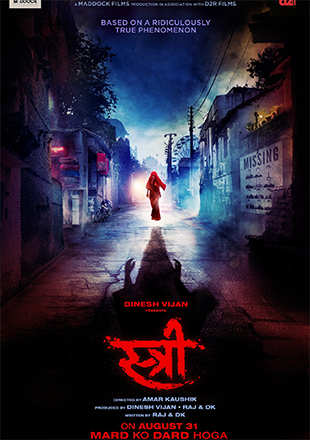
Haunting the streets: The movie Stree’s take on the legend showed the ghost of the Nale Ba legend as a ghostly woman in red sari.

The story of Nale Ba is a popular folk legend that is told primarily in Karnataka, in the south western region of India that truly blew up in the 1990s, making it perhaps more of an urban legend than folklore as it was centered around the more developed areas.

During the crazy times in the 1990’s there were around 5 million people living in Bangalore and city experienced a rapid urbanization that turned the place to one of India’s most populated cities.

But this was then and many of those living there lived in fear of Nale Ba. Villagers wrote the words Nale Ba on the walls and doors for many years to protect themselves, giving the name to both the legend and the creature haunting them. Nale Ba or sometimes spelled Naale Baa (ನಾಳೆ ಬಾ) is a Kannada phrase that means come tomorrow in English. 

They wrote this exact phrase to protect their home from an evil spirit that tries to break in. What type of entity Nale Ba was supposed to be, was unclear. She was often referred to a so called Bridal Spirit as she was out to get a man to stay with her for eternity. She is also sometimes also referred to as a witch more than a ghost.

What her intentions were varied, but in some of the earlier versions she wore ragged clothes, had messy hair and asked for alms like a classic ‘do not open the doors to strangers’ legend.

But one of the more popular and retold stories is that she is roaming the streets hunting down the men to claim for herself. 

The Manhunt of the Bridal Ghost

In some variations of the Nale Ba legend it is a bridal ghost that is looking for a husband among the villagers, and she will stop at nothing to get him. Although the legend will probably never be as infamous as it’s peak in the 1990s, the urban legend have a habit of popping up from time to time.

What is also curious is that it is very similar to the widow ghost legend in Thailand where there also is a female entity hunting down the men:

The bridal spirit will usually go for the only son or the man of the house who is the only member of the family earning money, and therefore bringing bad luck not only to the poor man that is taken away, but to the entire family as they are left in ruin. 

Nale Ba: According to this legend there is a bridal ghost that goes from door to door in Bangalore in search of a man she can take with her to the afterlife.

She goes from door to door in the night and knocks on the doors, trying to get in. When she speaks through the door she speaks in the voice of your kin or familiar person, calling you by the name, so that you will open the door for her. But if you open it, you will most likely die according to the Nale Ba legend. 

This is why the villagers came up with the idea of writing Nale Ba on their doors and walls of their homes to protect themselves. The idea is that the bridal ghost or witch will read the words and come back another time. And the cycle will only continue and you will be protected. 

Leaving Nale Ba in the Past

The legend of Nale Ba, the haunting bridal ghost roaming the streets of rural Bangalore, continues to captivate the imaginations of locals and visitors alike. While the fear it once instilled may have subsided, the tale remains an intriguing part of the city’s folklore.

Over time, as Bangalore underwent urbanization and transformation into a bustling metropolis, the legend of Nale Ba gradually faded into the background. The growth and development of the city brought about new stories and urban myths, yet every now and then, a whisper of the infamous bridal ghost resurfaces.

In today’s modern era, the streets of Bangalore are abuzz with the sounds of progress and innovation, leaving behind the ghostly echoes of its past. Yet, hidden beneath the surface, the essence of these legends lingers, shaping a city that embraces its rich heritage while moving fearlessly towards the future.

So, next time you hear a knock on your door late at night, remember the spirit of Nale Ba and the importance of remaining vigilant. And should you ever encounter the whispers of an ancient legend, embrace it as a testament to the vibrant history and enduring spirit of the city of Bangalore.

More like this

Newest Posts

References

Ghosts are important

A real horror show

Okiku — The Haunted Doll of Hokkaido

Advertisements

The Okiku Doll, is a legend of a haunted doll that grows hair in Japan and is preserved in a temple looked after by monks. Allegedly it is haunted by the ghost of a girl that once received it as a gift.  

There is something about dolls that makes us fall into a confusion about what is and isn’t real and we both love them and hate them in equal measure. The haunted doll trope is one of the most famous and creepiest. There is something about the almost lifelike object that takes us through the uncanny valley and makes us believe that maybe, just maybe, there might be something more behind those glass eyes. 

This is the case with the Okiku Doll (お菊人形), a type of Ichimatsu doll (市松人形) which is a type of traditionally dress up dolls in Japan, often clad in nice kimonos with dark glass eyes. The chubby cheek dolls are as cute as they are creepy, and perhaps the creepiest that has been named Okiku lives now in a monastery, well looked after by the monks. This haunted doll must not be confused by the ghost story of Okiku, the maid:

Read the full story:

Banchō Sarayashiki — the Ghost of Okiku

The tale of Banchō Sarayashiki (番町皿屋敷, The Dish Mansion at Banchō) is a well known Japanese ghost story (kaidan). It was popularized in the kabuki theater tradition, and lives on in popular culture and folklore alike.

Keep reading

At first glance, Okiku just looks like an old doll, weathered by time with frayed hair and old clothes like so many dolls forgotten by their children. But there is a legend surrounding this particular haunted doll, and the legend keeps growing, apparently, just like the doll’s hair. 

The Two Girls

The Okiku Doll: This Ichimatsu doll is called Miss Shimane and is a Japanese friendship ambassador doll.
Photo: Daniel Schwen

There are some variations of this legend, as there often is when they happened a long time ago. The most told version of it, though, starts In Hokkaido, north in Japan, in 1918 at the Taishi Expo in August, bustling with life, people and stuff to buy, including dolls. 

A teenager named Eikichi Suzuki bought a doll for his younger sister in the shopping street of Tanukikoji in the city. Often, the girl is given the same name as the doll, but in most Japanese sources, they were not named the same, but the girls name was either Kikuko or Kiyoko. The seventeen year old brother was visiting Sapporo for a marine exhibition and the doll almost called for him to be bought for his dearest little sister. 

The two or three year old sister grew very fond of the doll that was a gift from her brother and they became inseparable. The porcelain doll had an okappa hair style which was common for traditional dolls with cropped hair around the jawline and a short fringe over the forehead. It was around 40 cm tall and dressed in a traditional kimono.  

She carried it everywhere and slept with it every night the following year, but the child-like play would come to an abrupt end. The little sister died however after falling ill the following year after some complications of a severe fever. Very likely to be Yellow Fever or the Spanish flu as it was ravaging across the globe during this time period of time. Or in some cases, Pneumonia is also mentioned as the cause of death.

The Haunted Doll at the Family Altar

The family initially wanted to place the doll together with their daughter in the grave but wasn’t allowed, or in some sources, simply forgot to put the doll in the coffin. The family mourned the loss of the daughter and placed the doll on the family kamidana altar instead, a practice common in some Japanese households to remember and honor the dead. There Okiku could look out at the mourning family that paid her tribute as if Okiku was their own daughter. 

They prayed every day by the altar and started to notice strange things about Okiku. According to them, they found out that the hair of the doll was growing just like human hair. And the short okappa haircut grew longer, just like the hair grows of a 3-year-old child would have grown.

The haunted doll at the altar: The Okiku doll who once was a little girl’s favorite toy, is now placed in an altar to appease the spirit inside. She is know known as the doll that grows hair in Japan.// Photo: Picture first found source/via TinEye

At night they dreamt about Okiku and when they woke in the morning, sometimes they would find the haunted doll sitting by their side without having put her there. The strange occurrences started to get more intense and scarier with light flickering, banging in the house and strange voices and noises. The scary manifestations were usually around certain dates, like their dead daughters birthday and the day she died. 

This led them to believe that the soul of their daughter was not at peace yet, and had entered the doll. They had shamans come to the house and meet Okiku and confirm it and believed they had to appease the spirit through the doll. 

Offered and Displayed in Mannen-Ji Temple

They kept Okiku on their family altar until 1938 when the family decided it was time for them to move away from Hokkaido. In some sources they moved even further north to Sakhalin, an island between Japan and Russia. They felt that the best for the spirit of Okiku would be to remain on the island where she had been born and spent her few years alive. 

It was then the family decided to offer the doll to Mannen-ji Temple located in Iwamizawa. The monks promised to care for the haunted doll and pay it the respect it had received at the family altar. The Okiku doll was given a special wooden box like at the home altar and placed at the altar with the monks looking after and taking care of her every need.

The monks at the temple noticed too that the hair of the haunted doll kept growing. When it was around 25 cm, they decided to cut it for the first time, and the doll’s hair was cut many more times over the years as the hair just continued to grow. Apparently, some of the monks at the temple had a dream that the doll wished for the hair to be trimmed regularly. 

And after the war, when many Japanese were deported from Sakhalin, the brother who bought the doll came back and saw for himself how the doll had changed over the years. When he saw what the doll had become, he asked that the haunted doll had to stay at the temple permanently.  

The Science of the Hair?

Dolls have always had some sort of an unfair reputation as haunted across the globe, and in Japan, this type of doll is no stranger to having supernatural and haunted rumors surrounding them. But this one is by far the most famous example in the country and of its kind. 

Some sources try to claim that the doll has been examined by scientific tests that the monks have sent out to have tested, showing that the haunted doll’s hair really is of a human toddler, and growing just like one, although no one can explain just how this is happening. The place of the supposed test was sent to Hokkaido University School of Medicine according to some sources. 

There are of course non paranormal theories as to why the hair seemingly grows from the haunted doll. The use of human hair on dolls is a well known phenomenon, especially before synthesized hair became the norm. One way they did it was to fold a long human hair, making it seem like strands of hair on the doll. Over time the strand of hair can glide out of place and look like it has grown. But then again, it is supposed to stop at one point in time, not just continue to grow indefinitely. So what is happening at the temple where the doll is still displayed? 

Visiting the Haunted Doll

You can still visit the Mannen-Ji temple in Japan to see the haunted doll whose hair is reaching its knee, but you are not allowed to photograph it as the doll apparently has told you that it doesn’t like it at all. We must simply just take the monk’s words for the strange doll. The legend of the doll is continuing to grow, and has been the base of many movies and horror tales as well as the traditional kabuki plays.

According to the legend, the power of the haunted doll is only growing, bit by bit, just like the hair grows. and another rumor surrounding the doll nowadays is that if you get close enough to the haunted doll, you can also now see the growing of human teeth. 

More like this

Newest Posts

References

Feature image: Ellie

Japan’s Doll Legends – Culture

Okiku – Hair kept growing out of this haunted doll! | MRU MEDIA

Okiku: The Haunted Japanese Doll That Grows Human Hair

Okiku: The Haunted Doll Worse Than Chucky

萬念寺 お菊人形

お菊人形 【昭和の心霊事件】 : 合気道月光流道場長・チョコ助と伊東健治の公式ブログ 「骸(むくろ)をつけていま一戦(ひといくさ)せん!!」

髪が伸びる恐怖「お菊人形」 – 心霊現象

Agnes Keith and the Ghost in her House

Advertisements

From a house that has seen it all, this American author wrote about the ghost that lived with them. 

“I don’t believe in ghosts. But every day, I see a tall gaunt woman telling her husband goodbye, taking her baby, and walking down the path alone, standing at the bottom of the path and looking back,”

White Man Returns, Agnes Keith
Advertisements

This is a quote from American author and journalist Agnes Keith’s novel, “White Man Returns” from 1951, a novel she wrote about returning to her beloved house after being imprisoned by Japanese during the war. 

Among the detailing of her everyday life in Malaysia and in that house, snippets of a darker corner of the house take shape. And often, the ghost that resides in the Newlands House is what remains to this day. Especially when the museum itself wants to focus on the dark tourism aspect of it all. 

The Land Below The Wind

Agnes Keith was living with her husband and her son in Sandakan in what we now know as Malaysia. She came to this place in 1934 and found a new place to call home. Being under the British Crown at the time, they lived in the colonial-styled architectured house with their servant. She was writing books like “Land Below The Wind” in 1939 about their life in the then called British North Borneo, which is was then called, with her husband working as a Conservator of Forest. 

The house: Newlands, the home of Agnes Newton Keith in Sandakan, Borneo from 2007.
Photo: Warren Apel

She loved their house and their home and was said to be very well liked by those around them. The house on the hill had a grand view of Sandakan Bay in the front and the Sulu sea from the back. But then the war came and it would be a long time until she would live in the house again. 

The Scar of the War

Like many Europeans on the island Agnes Keith and her family were put in internment camps when the Japanese invaded Borneo. The whole family survived though, and it is said that one of the Japanese camp commandants had read Agnes’s work and made sure to treat the family well. They stayed in the camp until the end of the war in 1945, but she was never the same again. 

“The story of war is always the story of hate; it makes no difference with whom one fights. The hate destroys you.”

Three Came Home, Agnes Keith
Advertisements

When they returned to Sandakan in 1947, they found their beloved house destroyed. They decided to rebuild nearby, and named the house for Newlands, although it is more known as Agnes Keith House today. But the haunting memories from the war seemed to also manifest in the house as well. Through her writing, she notes about the paranormal activity going on around her. 

They left North Borneo for good in 1952 when she moved to Canada and the house passed to someone else. But the legends about the hauntings didn’t stop with the highly imaginative writer.

The Woman by the bed

G.L Carlson took over the husband’s position as a forest conservator after the Keiths left for Canada. His wife, Rosemary also told stories about apparitions in the bedroom when her husband was away. She woke at dawn and heard the door to the room open and close several times. When she opened her eyes, there was someone there, staring at her. 

“There was a figure standing, leaning over, and looking down at me. The figure appeared to be a female with a white bandage around her head. She was pale faced. She was dressed in what looked like a white, short-sleeved T-shirt or blouse with a wide-shoulder-strapped, dark-coloured pinafore dress. (…) She was quite a short person of normal build, and I could not see the lower part of her body. At this stage, I must have passed out. When I came to, it was already dawn and I was alone.”  

– Rosemary Carlson

The Ghost Resident

Maids, visitors and security guards can tell the same story about a woman shoving up in the stairs or in the corner of the rooms in the house. Places where she doesn’t belong. Or perhaps she belongs there more than anyone else at this point? 

By now the Agnes Keith house has fallen into the hands of the Sabah Museum Department and restored to become a public museum, to keep the house intact as well as the lingering residents that may still be there. 


Advertisements

More like this

Newest Posts

References

Agnes Keith: the American author who loved Sabah | Free Malaysia Today (FMT)

Spooktacular Sabah: Agnes Keith House first stop in state’s haunt jaunt push | Malaysia | The Vibes

https://web.archive.org/web/20190614110302/https://www.thepatriots.asia/misteri-kisah-seram-rumah-agam-agnes-keith-sandakan/

The Westerfeld House — The House of The Occult

Advertisements

All that jazz and rock’n roll with witchcraft and satanic rituals clearly took its toll on the Victorian house known as the Westerfeld House. But is it still a hint of paranormal presence lingering there? Or has the restoration brought it back to its original sweet glory?

In the beautiful city of San Francisco there is a house that catches the eye of those passing by. Gothic, beautiful, bold and old as many of the surrounding houses are. But perhaps none other than this house has acted like a magnet for its peculiar tenants over the years. 

Old House: 1198 Fulton Street has a history of occult and strange tenants almost since it was first built in 1889.
Photo: Carol M. Highsmith/wikimedia

The William Westerfeld House, or simply the Westerfeld house is an historic building right by Alamo Square. The picturesque Victorian Italian styled villa at 1198 Fulton Street is today steeped in history, some more haunting than others, as well as some are more true than others.

The origin of the house however is a sweet tale as the building was built for the German confectioner William Westerfeld in 1889. By this time he had already established a chain of bakeries and built this 28 room mansion. Business was good for Westerfeld, however, he died only a few years after the house was built in 1895 and since then, sweet turned darker to pitch black. 

It was bought by John Mahoney and the building’s cultural reputation started to take place where strange occurrences happened. He loved to entertain his guests with spectacular shows, and among others, Harry Houdini himself tried to send telepathic messages to his wife across the Bay. So the experimental and spiritual part of the house started early on. However, no one could have guessed just how dark it would get. 

Czarist Night Club And All That Jazz

Advertisements

After the Westerfeld House had served as a home to Mahoney, it fell into the hands of many different people with different purposes. A group of Czarist Russians turned it into a nightclub called Dark Eyes in the roaring 20s. It was informally known as the Russian embassy because of all the meetings taking place on the upper floor. 

After the second world war the home was converted into apartment buildings, mostly rented out to African-American jazz musicians playing in the nearby jazz clubs during the Beat area. This house jazz area lasted until the 60s, when jazz was replaced with rock and the political and philosophical beatnik area morphed into the wild and spiritual 60s. 

The Occultists In the Westerfeld House

In the 60s the Westerfeld House was used as different types of collectives, and one of those who set a mark on the house as well as recorded it, was occult filmmaker, Kenneth Anger who lived there from 1966 to 1967. During those times it was a rather rough area in the city and the people frequenting there, darker and rougher than many.  

It is here the story of the Westerfeld House turns from strange to occult. At best, the time Anger and his peculiar guests spent in the house was a terrible nuisance to all the neighbors with all the acid being taken and satanic rituals being held. At worst, they stirred up the rumours of paranormal activity to the house as well as opened the gate to hell. 

Satanic Rituals: Church of Satan founder Anton LaVey started frequenting the house, holding black masses in the Westerfeld house. Here from the movie, ‘Invocation of my demon brother’, made by Kenneth Anger.
Photo: Invocation of my demon brother/IMDB

“Up at Fulton and Scott is a great shambling old Gothic house, a freaking decayed giant, known as The Russian Embassy.”

This is how the writer Tom Wolfe talks about the Westerfeld House when he introduces it in his book: ‘The Electric Kool-Aid Acid Test’, chronologizing his time spent there with a group of hippies.

Anger himself was an occultist and drew much of his elements in his films from Thelema, a pagan oriented religion founded by perhaps the most well known occultist, Aleister Crowley.

Another notorious person that stayed under the roof was Manson family member Bobby Beausoleil lived here for a while before he joined the cult of the Manson called, the Family. Beausoleil was chosen by Anger to inhabit the role of Lucifer in a movie he was working on. Together they spent their nights in the tower, trying to look for UFOs. And according to Anger, he did indeed have a “a couple of very good flying saucer sightings.” Here it is important to note just how important taking acid was to Anger. 

Allegedly, Beausoleil stole reels of Angers film: Lucifer Rising and took off with them being on bad terms. Manson himself made frequent visits to this house, and according to caretaker, Kelly Edwards, it was here that Beausoleil were drawn into the cult that eventually was behind the Helter Skelter murders. 

Black Masses of the Church of Satan

Church of Satan founder Anton LaVey also spent time in this very tower as shown when Anger shot the movie ‘Invocation of my demon brother’ where we in this psychedelic experimental movie can see LaVey, aka, ‘The Black Pope’ himself holding a black mass. According to Anger, the film was assembled from scraps of the first version of Lucifer Rising. It includes clips of the cast smoking out of a skull, and the publicly filmed Satanic funeral ceremony for a pet cat.

But he did not look after UFO’s as Anger did on his acid trips. Instead, he spent his time practicing witchcraft, as well as worshipping Satan with around 500 candles in this wooden building. This tower used to have a large pentagram etched into the floorboards to keep the wiccan and satanic rituals more permanent. He also owned a lion cub as he used to be a lion tamer before starting the Church of Satan. You can see proof of that very lion because of the scratches in the wooden paneling, even to this day.  

As well as spending time in the tower, he also performed satanic rituals in the ballroom on the ground level of the house. 

Rock n Roll

Advertisements

After Angers departure from the Westerfeld House, the occult was turned into rock’n roll as the likes of Mick Jagger, Janis Joplin, Tom Wolfe and Jerry Garcia among many others passed through the halls, either as tenants, or holding concerts at the Avalon Ballroom. It continued to be used as an underground rock scene until the 70s, when the first attempts to rehabilitate the much used building began. 

And although the owner that took over in 1986 had no occult interest, he also wanted to be on the safe side when initiating the old house with a particularly rocky history. The new owner of the Westerfeld House, Jimmy Siegel told hoodline that: 

“I was always attracted to the architecture of the building,” he told us. “The occult happenings in the house were of little interest to me but to be on the safe side I had the monks from the Hartford Street Zen Center do a cleansing and a blessing for the house when I bought it in 1986. I have never experienced any darkness or paranormal activity in the house.”

The Addams Family House

Siegel bought the Westerfeld House because it looked like something the Addams family could have lived in and he had always loved the architecture and design from the Addams family. And under a LSD trip in his teens, his dreams of owning this particular house started to take hold. 

Siegel turned his drug induced dream and turned it into his life mission. He spent his time restoring the Westerfeld House that had long been neglected. And with it, he also preserved the history of it. 

Today the rooms in the Westerfeld House are rented out to various people and as movie sets. According to reports, none of them have complained of any malevolent activity or remains of satanic activity. But they have reported about ‘overwhelming emotions’ as well as a physical presence in their home, with nightmares being a common trait of the tenants. Paranormal activity of psychological manifestation of knowing the house history?

Even Siegel himself mentioned he had what he called a paranormal experience in the house to SFGATE:

“I was in bed watching TV and my bed violently shook. I assumed we were having an earthquake, only nothing else was moving. Then I felt someone get into bed with me even though I was alone. It was quite unnerving.”

So what is it Siegel? Was the Westerfeld House haunted or not?

Advertisements

More like this

Newest Posts

References

National Register #89000197: Westerfeld House in San Francisco, California

William Westerfeld House

The Spooky History Of The Westerfeld House

Invocation of my Demon Brother & Lucifer Rising – Kenneth Anger

This Alamo Square Victorian holds 100 years of SF counterculture history 

Visiting the Westerfeld House and Its Haunted Past. — Eric J. Kuhns 

Westerfeld House – [2021 

The Westerfeld House: San Francisco’s most storied Victorian

Gonjiam Psychiatric Hospital

Advertisements

Arguably the most famous haunted place in South Korea is the Gonjiam Psychiatric Hospital. When it was still standing it attracted a lot of ghost hunters, curious tourists and urban explorers. What was it behind the place that drew all these people?

One of the allegedly most haunted places in South-Korea was the Gonjiam Psychiatric Hospital (곤지암 남양신경정신병원). It was closed down in the 90s and the owner left the country after not documenting for the public the reason why it closed down according to myth. And the legends, rumours and tales started spinning, everything from murderous patients, mad doctors and so on.

So spooky did the world find this place that even foreign TV-station CNN called it one of the world’s most freakiest places in 2012, really making it an international destination for thrillseekers. Today however the empty building been torn down. But before that it managed to become one of the biggest hotspots for ghost seekers in Korea.

Let’s see how the abandoned hospital became known as one of the most haunted places in the country and unravel some of the legends it became known for before being demolished with nothing left but its legend.

The Asylum: This is how the abandoned hospital looked before being demolished in 2018, hidden away between trees at the foot of a mountain..

Abandoned Asylum in the Mountains

Gonjiam Psychiatric Hospital was a building near the small city of Gwangju outside of Seoul in a residential area at the foot of a mountain. The old ruins of the abandoned hospital was just remote enough to be considered a spooky and haunted asylum tucked away in the mountains, and close enough to visit from big places like Seoul to spread the word of ghosts and mad doctors. Much to the locals’ nuisance as they have hated the rumours about the place that have drawn people from all over the world to trespass to have a look for themselves.

According to those who tried to find their way there, the locals around the place are not so forthcoming with giving directions to the site. This of course has fueled the excitement for the urban explorers and paranormal researchers alike, and every year thousands of people broke through the barriers to get a glimpse of the allegedly haunted asylum. 

The Mad Doctor at Gonjiam Psychiatric Hospital

So what really went down inside Gonjiam Psychiatric Hospital before closing? Let’s have a look at what the legend claims happened inside of the supposed haunted asylum.

The Gonjiam Psychiatric Hospital first opened its doors in 1961 and was a full functioning one all the way up to July 1996. Nurses took care of the patients on the three floor hospital and the doctors made their rounds, just as expected. But over the course of the last decade the hospital was in operation, mysterious things kept happening according to the legends the place left. 

Read About More Haunted Hospitals Around the World in the MoonMausoleum

The story goes that the patients started dying mysteriously without a good explanation. In addition to dying patients, there were also some of the staff that went missing and turned up dead in the rooms inside of the hospital. From a medical standpoint it was first believed that it could be an infection seeing as it also afflicted some of the patients family members as well, but no, it turned out to be something much more sinister. 

Apparently it was the owner of the asylum who went insane himself and kept many of the patients prisoners and killing them one by one until he was stopped. It wasn’t until the government came to investigate because of the missing staff that he was caught and fled to America, causing the hospital to shut down. 

There were also rumours about the director of the hospital took his own life after being found out to be behind the dead patients and missing staff, becoming one of the souls haunting the place.

But even after the mad doctor was caught, the souls of the victims could never be at peace, long after the hospital closed down and became forgotten for a long time as time ate away at the building.

According to the locals, screams had been heard coming from the abandoned building along with mysterious figures lurking around the dark hospital, believing it to be the haunted souls of the asylum. Poor victims that turned to vengeful spirits, haunting the premise and seeking revenge on those who wronged them.

The people that dared to visit the haunted asylum to check out the stories told of scary encounters they could only explain as paranormal. There were reports of dropping temperatures when it suddenly turned cold on a hot summer’s day, opening and closing of the heavy doors without a draft and they kept hearing voices of people that weren’t there.

The Legend of the Haunted Hospital Grows

Although Gonjiam Psychiatric Hospital was such a well known place, the facts of the asylum’s history is hazy, especially after it has been mixed in with unverified legends and blockbuster movies. In 2008 a ghost hunter show showcased the hospital where they brought on shamans and reported that there indeed was something going on in the place.

It was not the only “documentary” that were made of the former hospital and helped to make it a well known building in the entire country and beyond.

The Documentary of the Ghost of Gonjiam: The ghost hunter “documentary” series Ghostspot aired an episode in 2008 about the legends of Gonjiam Psychiatric Hospital. This definitely helped further the legends of the place and made the whole nation aware of its existence.

The culmination and peak of the legend must have been when the movies like commercial successful Gonjiam: Haunted Asylum (Korean: 곤지암) from 2018 didn’t help to quench the rumours about the asylum being haunted by ghosts. Although the movie itself was primarily filmed at Busan National Maritime High School, a supposed haunted place in itself, it capitalized on the legend behind Gonjiam.

It was kind of a big controversy when Gonjiam: Haunted Asylum came out in theaters as the owner of the building tried to stop the movie as he feared it would affect the property value.

But he lost and the movie was aired, making it a paranormal hot spot to visit once again, despite of the owner trying to keep people out. Barbed wire, cameras and warning signs have tried to keep visitors out since it closed down, to no avail. And the legend would not stop until the whole building disappeared. 

Unraveling the Legends Behind Gonjiam

So why did Gonjiam Psychiatric Hospital close down then if not for a mad doctor, missing nurses and murdered patients? More mundane reasons like financial difficulties, unsanitary conditions and big problems with the sewage systems according to the owners of the building was most likely the case. And with the water pipes not up to modern standard, they had no choice to pay up or shut down.

The director that was rumoured to have taken his own life had really just started to work at another hospital after Gonjiam Psychiatric Hospital closed down. The children of the director inherited the hospital, but the costs of operating the hospital was too big and they decided to let it fall into ruin, perhaps not realising the stories an abandoned building can create.

In regards to the missing staff and murdered patients at the hospital, there are no evidence for it at all. According to a journalist making a piece on the Gonjiam Psychiatric Hospital, they found out there had been no suspicious reports about the hospital over the years about missing people and dead patients.

The source to this article delving into the truth behind the claims was among others a policeman in the local police district. In fact, the patients that resided in Gonjiam Psychiatric Hospital were supposedly transferred to Yongin mental hospital after the hospital closed down.

Gonjiam Psychiatric Hospital Movie: The movie based on the legend from 2018 was a box office success. Screenshot from that iconic scene. //Photo: Source: IMDB

So, although alive in legend, the former hospital and legendary haunted building is no longer there for those curious about the legend to see for yourself and we have to make due with movies, picture and old footage. In 2018 Gonjiam Psychiatric Hospital was demolished, the same year that the movie made the legend last forever on film.

There are plans that it may be a new apartment building at the place, further erasing the history and creating a new one at the foot of the mountain. So perhaps now the legend of Gonjiam Psychiatric Hospital will die out as an actual place and story, as the building can no longer attract the curious people looking for a thrilling legend? Or maybe the spirits of the place now just lost their home?

Advertisements

More like this

Newest Posts

References

Gonjiam Psychiatric Hospital – Gwangju-si, South Korea

Gonjiam: Haunted Asylum

Best time for Gonjiam Psychiatric Hospital in South Korea 2021

A Creepy Afternoon Alone in an Abandoned Hospital- Gonjiam Psychiatric Hospitalgonjiam-psychiatric-hospital-patients-started-dying-mysteriously-know-the-horror-behind-it

[ESC] 공포영화 ‘곤지암’ 실화냐? 정신병원 괴담의 실체

귀신 나온다는 ‘한국 3대 흉가’는 조작됐다

The Lost City of Dode

Advertisements

In the heart of the British countryside, the past of the plague, death and history haunts the desecrated church. But amid the mystery of the paranormal and pagan ley lines, the once cursed site has found back to being sacred. 

There are a lot of magical and mysterious things surrounding the church that stands in solitude in the countryside in Kent. The original building on top of the hill was built around 1100 during William the second rule. But the man made ground it was built on has perhaps been used as a holy place to gather long before Christianity reached the British shores. 

Around this church there also used to be a village, alive and thriving. But together with the black death the villagers were swept away, and with them, the village of Dode died as well. 

Ley Lines and Ghosts

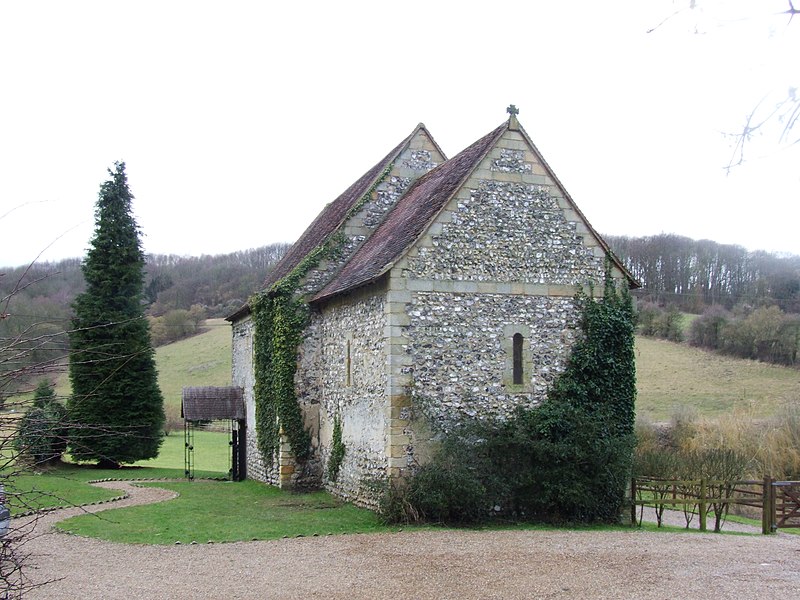
Haunted church: Dode church was left abandoned for centuries with rumours of being haunted and used for black magic rituals.
Source: Chris Whippet

All left from the lost village of Dode is the old Norman church that is said to be haunted by a little girl. This is not the only paranormal and mystical rumours surrounding this place, this particular church. The old ruins are built on not only one, but eight ley lines, mystical lines that allegedly connect several holy buildings, monuments and places around the world according to modern paganism.

The place is filled with history as archeologists have found evidence of it being inhabited since the roman empire, perhaps even much further back in time. 

The church was eventually not used as a place of worship and they changed the name of the land it was built on. Because of the rumours about it being cursed, the name Holy Hill was changed to Holly Hill as no one felt the presence of anything holy there anymore, as rumours and legends of it being cursed grew.

The Dodechild

But who was this ghost said to haunt the abandoned church? Legend has it it was the last survivor of Dode village. After the Black Death in the 14th century, the village of Dode was abandoned. Nature claimed back the signs of living, leaving only the church as proof humans once lived there.

Advertisements

However, there was still one of the villagers left. A seven year old girl was one of the last survivors in the village, seeing how everyone was being taken by the plague. She took refuge inside the church, eventually dying herself, but never really leaving. And according to local legends, she would appear on the first Sunday morning of every month, haunting the grounds of were her and her entire village perished in the plague that killed millions of people across Europe. 

Since the time of the plague, the village was abandoned, the church forgotten and time, weather tore down the roof, the stones taken to build a medieval church nearby. It was only known as the haunted and lost place to the locals. It was believed the place was a cursed one, and that it was used for black magic rituals. Thus the Holy Hill was renamed Holly Hill and the church boarded up, taken apart and left for centuries until someone would find the place sacred once more. 

A Sacred Place for All

Wedding: The church is now used as a wedding venue for all types of ceremonies.

The church was rebuilt in the 90s after being abandoned for centuries, with the vision of bringing the holiness back to it and the work to get it back to how it would have looked originally began. With the restoration, life also came back into the hidden valley. Although this time, not a strictly catholic religious house as it used to be, but more of a sacred place for all, both for Catholics, members of the Church of England and pagans alike. 

Since then it has been a venue for weddings, making it a place for eternal love declarations, bringing the serenity back over the once holy hills. Other events such as baby namings, memorials and other cultural events also takes place in it, as long it is more of a spiritual than religous event.

And with the new life that has been breathed into the valley and nearby woodland, the ghost of the little girl also has been seen less and less.

Advertisements

More like this

Newest Posts

References

One man’s revival of ancient English rites

‘Ghost village’ 72 mins from London that was destroyed by the Black Death 

Ley line