Djákninn á Myrká meaning the Deacon of Dark River is an Icelandic folk tale that have been passed down for generations now. It tells the story of the ghost of a man trying to make his girlfriend join him in death.
Once upon a time in Horgardalur not far from Akureyri in Iceland a deacon lived on a farm called Myrká. He was riding his trusted horse called Faxi to meet up with the woman he loved named Guðrún. It was the day before Christmas, a stormy and cold winter night.
It was a long ride to her farm called Bægisá. On the way to her he had to cross the river Hörgá, but he fell into it. He ended up drowning and only his horse survived the night. He was found the next morning by a farmer and laid to rest, but Guðrún didn’t get the message and she waited for her loved one to come and pick her up.
So when she got a visitor in the darkness she believed it was him and went with him. He was behaving strangely though and kept calling her Garún. In Icelandic folklore, ghosts are unable to utter the word for God, which Guðrún is compiled of.
It wasn’t before the raging wind blows off the large hat on the visitor she realizes it isn’t her boyfriend alive, but a skeleton. She also saw an open grave in the graveyard the skeleton tried to pull her towards.
The ghost skeleton of her boyfriend keeps pestering her and he wants her to join him in death so they can be together. Guðrún finally breaks free from the ghost and gets the help of a sorcerer. The sorcerer traps the ghost on unholy ground outside the graveyard belonging to the church at Myrka.
He places a large and cursed stone on it that still holds the ghost of the priest’s apprentice. You can still see it today on the unholy ground, still waiting for his girlfriend to be together forever.
In the once glorious palace Ca’Mocenigo in Venice, strange hauntings related to water have been happening since the middle ages. Some claim it is the ghost of Giordano Bruno, a former philosopher that used to reside in the palace.
Giordano Bruno wasn’t the usual heretic. He was actually a 16th century Dominican friar as well as a philosopher, mathematician, poet and most dangerously for him, a cosmological theorist. He was one of the forward thinkers and questioned the geocentric doctrine of the Catholic Church. Something he had to pay greatly for.
For this and other things he was arrested by the Venetian Inquisition on 22nd of May 1592. It was the local patrician Giovanni Mocenigo that once invited Giordano Bruno to Venice in 1592 for eight months to teach Giovanni Mocenigo about the secrets of memory, and also, most likely some alchemy and magic as well.
Giordano Bruno had already fled Rome for being a suspected heretic, still, he continued his teachings. Together, they stayed in Giovanni Mocenigo own palace in Campo San Samuele Ca’Mocenigo. However, only two months into his stay, they had a fallout.
Convicted as a Heretic and Burnt at the Stake
On May 23, Mocenigo himself gave Giordano Bruno’s name to the inquisitors and they denuncieted him and put him in prison as a heretic. Why the sudden fallout? There are several theories, one being that Giordano Bruno was about to leave Venice. There are also those saying Mocenigo did this because he didn’t like the philosopher as a person as well as he didn’t like the then controversial teachings he did.
Giordano was extradited to Rome where he for seven years was imprisoned and tried. In Roma he refused to take back what he had been teaching about the world. He considered it science, the church saw it as blasphemy. They eventually burned him at the stake in 1600 in Campo de Fiori in Rome for his crimes.
The Haunting of Ca’Mocenigo by Giordano Bruno
But this wasn’t the end of the dispute between Giordano and his former host, Giovanni. He came back in his afterlife, just to haunt his palace called Ca’Mocenigo of his old master and patron.
Every year on the death anniversary on February 17th, strange things started to happen that related to water in the palace Ca’Mocenigo. Pipes would burst and flood the rooms for example, but there would be no known cause to just why it happened.
One very specific legend is that the face of Giordano Bruno can be seen in the upper right window of the palace Ca’Mocenigo, engulfed in flames as his burning on the stake. However, according to this legend it can only be spotted by ladies over 85 years old.
The Rosenkrantz Tower in Bergen Norway is one of the oldest buildings still standing and was once the house for kings. Today it is used as a museum and perhaps they also have some of the oldest ghosts still lingering in the dungeon.
On the old dock in Bergen city you mostly find old buildings dating all the way back to the middle ages when Bergen was the capital in Norway throughout the city’s time as a Hanseatic trading city. Today the fortress the Rosenkrantz Tower is a part of a museum and is considered one of the most important renaissance monuments in Norway.
One of the old buildings is Rosenkrantz Tower, which still is one of the taller buildings in the city and was once known as “The Castle by the Sea” as it used to be a residence for kings when Bergen was the capital in Norway.
The Kings Tower
Rosenkrantz Tower was originally built for the king Magnus Lawmender in 1270 and a lot of the original building can still be seen today. King Magnus Lawmender got his nickname after working extensively on the laws in his country, and much of today’s Norwegian constitution comes from his work.
After the capital in Norway was moved to Oslo and Norway became a part of the Danish kingdom, the keep the tower is part of lost its importance as a royal seat, but was still used as a military keep.
Although the cannons in Rosenkrantz Tower have only been fired one day during war in 1665, the tower has seen its fair share of war. In 1944 during world war two the Rosenkrantz Tower was heavily damaged when a cargo ship with explosives exploded right outside. The upper floors collapsed, but the foundations of the tower still remained, like the dungeon in the tower. And deep down in the darkness of the dungeon in the tower, some former prisoners are said to still linger.
The Haunted Dungeon
The dungeon in Rosenkrantz Tower was added on to the tower around 1500 and the final tower as we see it today was finalized in the 1560s by Erik Rosenkrantz who was a governor of Bergen Castle during a time when Norway was under Danish reign. He was at the time one of the wealthiest men in Denmark-Norway and work on the tower was done by Scottish builders, explaining the Scottish look from the time.
The
The dungeon served as a prison where they kept the prisoners who were considered to be very violent and often some of the poorest. These are the prisoners that are rumored to be still haunting the dungeon.
An architect named Peter Blix reported in 1884 that old people living at the time still remembered the last prisoner in the cell in Rosenkrantz Tower. So perhaps the dungeon was used in the early 19th century?
You can walk inside of the tower and follow the hollowed and wobbly stairs down to the basement where you can barely stand up straight. The cells are small and the only light is from the cracks in the walls. Still to this day you can see claw marks from the prisoners that were confined into the dark small cells when it was used from the 16th to the 19th century.
The irony of it all is that so many of the prisoners were convicted by the laws that the original builder, King Magnus Lawmender, made during his reign just a couple of floors above the dungeon they are forever kept.
Following her husband Marco Polo back to Venice from the Mongolian court, the princess never felt at home in this strange land. And today it is said the Mongolian Princess is still haunting the place, wishing for home.
Many of the places in Venice have rememberancing to their hero and legend, the merchant Marco Polo. He is most known for his travels to the silk route to the east where he released the book ‘The Travels of Marco Polo’. There he spent time at court at the powerful Kublai-Khan of Mongolia and Northern China in the late 1200s.
After several decades on his travels, he finally returned home to Venice where he was from. However, he didn’t return alone. One of the houses in Corte del Milion used to belong to him and he lived there with his wife he brought back from the east.
The Mongolian Princess Wife
According to the legend, Marco Polo married the daughter of Kublai-Khan’s and she followed her husband back to Venice, but never felt that the Venetians embraced her as their own.
Marco Polo’s wife was alone in a foreign country with a foreign customs and language. And then her husband disappeared as well when he was imprisoned.
The Mongolian Princess: Did Marco Polo marry one of the Khan’s daughters? According to the legend she followed him back to Venice, although she suffered a tragic fate and is supposedly haunting their former mansion.
In 1298, Marco Polo was imprisoned in Genoa for a period of time. He returned to Venice in 1295 with his wealth converted into gemstones. Venice was at war with the Republic of Genoa at that time. Marco Polo joined the war by equipping a galley with a trebuchet.
He spent several months in prison dictating his travels to a fellow inmate named Rustichello da Pisa. The detailed account, which included tales from China, was spread throughout Europe in manuscript form and became known as “The Travels of Marco Polo”. Marco Polo was released from captivity in August 1299 and returned to Venice, where his family had purchased a large palace.
According to this legend, the Mongolian Princess sister in law was jealous of her and lied to the princess and told that Marco Polo had died in prison. This was the last straw for Marco Polo’s wife as she was both alone and homesick and she ended up committing suicide. Some say she set her clothes on fire and jumped into the canal.
They say that she was a good singer, and to this day, you can sometimes hear a soft and sweet song, singing in her native language. If you pass through the Milion courtyard where Polo’s houses stood you may even spot a ghostly figure holding a small candle, looking back to her homeland in the east she never returned to.
Marco Polo’s Real Venetian Wife
If the legend is true or not is difficult to say, as little of his life is known or how much of his writings were actually true, and we know even less about his supposed Mongolian Princess wife from the east. Did she even exist?
We actually have documented that Marco Polo married a Venetian lady named Donata Badoer. They married after he got out from prison in 1300 and together they had three daughters together and were married for 24 years.
The Real Princess Kököchin Khatun
So where did the rumor about the Mongolian princess come from then? It is true that Marco Polo’s father and uncle were given a last mission before returning to Venice to escort the 17-year old Mongolian princess called Kököchin Khatun (阔阔真). They were chosen as escorts for her to her wedding where the Mongolian Princess was marrying a Persian ruler in the Mongol Empire.
In some version of the story, she had died when they arrived, and from there rumors about Marco Polo marrying her started. Did she even die though? They did set out from what is today Beijing in 1291, and started travelling. Most accounts tell about the Polo’s leaving her at the wedding in 1293 before continuing on their way back to Venice. In the meantime her would be husband had died though, and she married his son instead and died herself in 1296.
The Ghost of the Mongolian Princess in Venice
As the sun set over the picturesque canals of Venice, a soft breeze rustled through the ancient alleyways. In the heart of the city, the ghostly figure of the Mongolian Princess still roamed, her luminous presence illuminating the darkness. And so, as the Venetians ventured through the Milion courtyard, they would occasionally catch a glimpse of the spectral figure.
A huge theater was built on top of the old family house and is today known as Malibran Theatre. There has been excavation done that uncovered pieces of information about the time Marco Polo and his family lived there. If that included something relating to an Mongolian princess is unclear though.
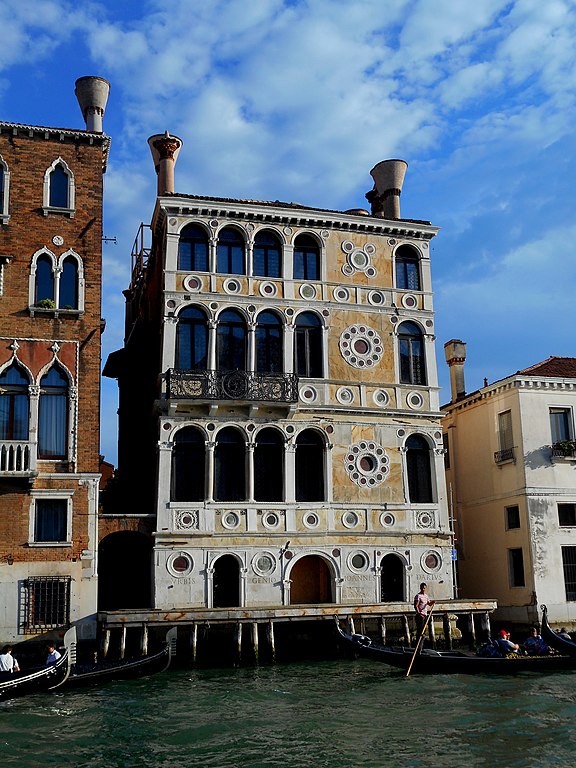
Along the Grand Canal in Venice there is this gothic palace called Palazzo Ca’Dario. For centuries the owners have met an unfortunate end and today it is most known as the most cursed palace in Venice.
Taking a walk in Venice’s narrow streets or from a boat on the shallow canals, there are many spectacular buildings towering over the shallow canals. Each with its long and sometimes dark history.
One of these wonderful buildings is the small, but exquizit palace in Venetian gothic style named Ca’Dario on the Canal Grande. It has a marvelous facade of Istrian stone and is decorated with marbles and medallions.
Read More: Check out all of the ghost stories from Italy
Palazzo Ca’Dario is often for sale, it is said though, as the owners don’t seem to linger for too long in this place, something that doesn’t happen very often in Venice. But for this particular palace, there is a very particular reason for its vacancy. According to local venetians, the place is cursed and has been for centuries.
The Palazzo Ca’Dario is often called the house that kills and is today, perhaps one of the most famous cursed houses to this day. The owner that takes up residence in the palace will soon after meet a violent death or at least live to be ruined.
The Dario Family
For evidence for this legend, or perhaps more accurately, the reason for this legend behind Palazzo Ca’Dario, is the track record of owners that died in horrific ways or lost all of their fortune, tracing back to the 16th century to modern day.
According to legend, it all started with the daughter of Giovanni Dario. Giovanni Dario was the Secretary of the Senate of the Republic of Venice and built Palazzo Ca’Dario in the 15th century. On the facade of the palace there is an inscription that reads Urbis Genio Joannes Darius, meaning Giovanni Dario to the Genius of the City.
His daughter Marietta Dario was the first person to have died in a horrible way. After her husband Vincenzo went bankrupt and in some variation of the story, stabbed to death, she fell into a darkness she didn’t manage to climb out from. She committed suicide it that very palace her father built. Not long after their son followed after being murdered in Crete by assassins.
The Curse Continues to this Day
Since then there have been over 10 dramatic deaths connected to the owners of Palazzo Ca’Dario, and even people like Woody Allen, who considered buying the house, refused after he heard about the curse of the house. The owners don’t necessarily have to live in the palace to be struck by the curse, they simply have to buy it.
The Barbaro family was one of the families that lost all of their fortune shortly after they bought the place.
In 1842, an Englishman named Radon Brown lost all of his money as well and committed suicide together with his male lover after their romantic relationship were revealed. A very similar fate fell upon the American Charles Briggs who were accused of being gay living their. Together with his lover, they fled to Mexico, but his lover died by suicide.
The Cursed Palace: Palazzo Ca’Dario as it is today along the Grand Canal in Venice. For so many centuries it has been considered to be one of the most cursed places in the entire city of Venice as the owners have often met an unfortunate end.
The French poet Henri de Régnier lived there until he was so seriously ill he had to return back to France. The manager of The Who, Christopher Lambert was also one of the owners that seemed to get ill after purchasing the house in the early 1970s.
In 1979, Fillippo Giordano delle Lanze, a count from Turin was killed by his lover inside the palace. His lover, a Croatian sailor fled to London were he in turn was murdered.
In the 1980’s a financier named Raul Gardini bought the place. He was later found guiltu of being implicated in the Tangentopoli government corruption scandal and committed suicide in 1993.
The Reason Behind the Curse of Palazzo Ca’Dario
Why is Palazzo Ca’Dario so cursed you asked? There are several legends to it. Some claim it is from the original death of the daughter of Dario that is still echoing as a curse in the building, some say it is a building built on top of an old Templar cemetery or built on a crossroad.
Perhaps, there is more to say about who can afford to live in a palace in the first place, and how far they fall when they lose everything.
There is noted however by people that the inscription on the facade praising the builder of Palazzo Ca’Dario to mean something completely different as an anagram. Sub ruina insidiosa genero, meaning I bring treacherous ruins to those who live under this roof.
The Palazzo Ca’Dario on the Canal
As the sun sets over the shimmering waters of the Grand Canal, a sense of foreboding surrounds Palazzo Ca’Dario. The legacy of tragedy and misfortune that has plagued its owners for centuries continues to cast its dark shadow upon the palace. The curse, intertwined with the very fabric of the building, has become an indelible part of Venice’s history.
Despite the tales of doom and the cautionary whispers of locals, there are always those who are drawn to the enigmatic allure of Palazzo Ca’Dario. Through the years, the curse has claimed its victims with ruthless precision. Lives lost, fortunes squandered, and dreams shattered. The hallways echo with the silent cries of the past, a testament to the insidious nature of the curse that has plagued this cursed palace.
Legends and theories abound, attempting to unravel the origins of the curse. Is it the tortured spirit of Marietta Dario, unable to find peace after her tragic demise? Or does the curse stem from a darker force, buried deep within the ancient foundations, waiting to consume those who dare to call it home?
Perhaps one day, the curse will be broken, the darkness lifted from this ill-fated palace. But until then, Palazzo Ca’Dario remains a testament to the fragility of human existence, a haunting reminder that some places are best left to the whispers of legends and the pages of history.
At St. Mark’s Square in Venice there are two columns placed. And if you believe old folklore you can’t pass between them, or you’ll be cursed.
The two columns at St. Marco Square, or locally known as: Colonna di San Todaro, is wonderful to look at and one of the main places tourists visit as they wander around in the city between the majestic Doge Palace and the famous bell tower.
However, the origin of these columns is not a happy one as they are a reminder of what war nation Venice once was. They were transported to Venice in the 1100s after the Venetians sacked the city of Constantinople.
There were originally 3 of them, but the last one sank into the sea on the voyage. They even hired a special sea master to look for the third one for almost 20 years, but the column was forever swallowed somewhere in the Venetian lagoon.
The 2 remaining ones were put on the square by a man named Niccolo Barattieri. For a long time this was the only place where you were allowed to gamble in the city, which was strictly forbidden, because that was what Barattieri wanted as thanks for putting up the two remaining columns safely.
It was then later used as a place for executions. Between the two columns the thieves, enemies of the Republic, murderers, heretics and others were parade before being executed as a spectacle for the entire city.
Because of this the columns are considered cursed because of all of the people that died between them. And according to legend, you can be too if you pass between them.
Walking on a dark and lonely road at night, you encounter a person turned away. When the person turns, they reveal that they have no face. This is the faceless ghost from Japan out to scare their victims known as Noppera-bō.
Noppera-bō (野箆坊) are a type of yūrei, or Japanese ghost. Noppera-bō have been around in folklore and legends for centuries and have been depicted in many different ways, from the scary to the cute.
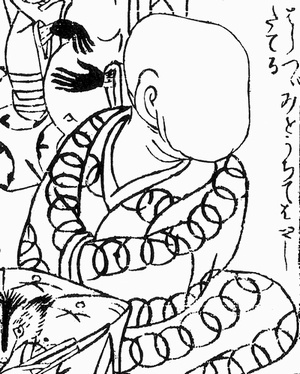
They appear as ordinary humans, except they have no face, and where the features were supposed to be, there is just a blank slate instead of a face. They are called faceless ghosts but actually, they are shapeshifters that take on the appearance of humans. Therefore they are considered more like a Yokai (Japanese monster/demon) rather than a classical Yurei (Ghost).
They will mostly be seen with their back to lure the human closer to them, often in disguise as a young woman. But when she turns she reveals that she has no face, and is just a blank canvas. No eyes, no mouth and no nose.
The Mythology Behind the Noppera-bō
In most cases, the Noppera-bō is not really a ghost, but a shapeshifter like Kitsune that looks like a fox or the Mujina that looks like a badger. They are mostly encountered on a lonely road, late at night where no one is there to help you. But are they dangerous? In most stories they work more as a prankster than something that would cause you actual harm.
They also have a habit of wearing a face they suddenly wipe away right in front of the humans they encounter. They also often work in teams to double scare their victims. Why do they do this? According to most legends, it is just to scare them for no reason. Or is there one?
Famous Legends of the Noppera-bō
There have been several encounters with the Noppera-bō passed down in legends and folklore, creating stories that were eventually written down.
The most famous story of a noppera-bō is “Mujina” in Lafcadio Hearn’s book Kwaidan: Stories and Studies of Strange Things. Hearn usually just used the animals in the stories he wrote down and is one of the reasons why there are so many that mistake the Mujina for the Noppera-bō.
There are other tales about Noppera-bō, from one about a young woman rescued from bandits by a mounted samurai whose face disappears, to the story of a noble heading out for a tryst with a courtesan, only to discover that she is being impersonated by a Noppera-bō .
The Noppera-bō and the Koi Pond
One day a lazy fisherman decides to fish in the imperial koi pond near the Heian-kyō palace, even though he was warned by his wife. She said that the pound was sacred, near a graveyard and therefore haunted.
The fisherman ignored her warnings and went to the pound. On the way he encounters another fisherman that also warns him about fishing at that exact spot. He ignores the warnings again and eventually reaches the pound, There he sees a beautiful young woman standing by the pound.
She also pleads with him, begging him not to fish at this place. When he ignores her however, she turns right in front of him. She wipes her face off, revealing nothing but a blank canvas.
He runs back home and is confronted by his wife. She tells him that he should have listened before she wipes her face off as well.
The Mujina of the Akasaka Road
A man is traveling alone through Akasaka on his way to Edo. There he encounters a young woman near Kunizaka hill. It is a remote place and she is crying with her head in her hands, all by herself. He tries to comfort the woman and asks if there is anything he can do for her.
When she turns to face him, she has no face.
The man runs away, terrified and comes across a man selling soba noodles. Relieved to see another human he stops to relax and calm down. As he tells his story to the soba vendor though, he strokes his face, and with it, his features. He was a Noppera-bō.
Modern Sightings of the Noppera-bō
Today the tales of the Noppera-bō are mostly just read about in old legends. But there are some reports that are from the more recent centuries as well.
Noppera-bō: faceless ghost) from the Bakemono Shiuchi Hyōbanki (妖怪仕内評判記) Date 1777.
Interestingly enough, there have been reports of sightings of this no face ghost. In modern time there is also sighted outside of Japan. Especially in Hawaii there have been cases were some have claimed to see the Noppera-bō. This is perhaps explained by the big population of Japanese that immigrated to Hawaii.
In May 19, 1959, a daily newspaper called Honolulu Advertiser published a rather strange report about a Noppera-bō. Reporter Bob Krauss wrote about a sighting of a mujina at the Waialae Drive-In Theater in Kahala.
According to the news article, a woman was seen combing her hair in the women’s restroom. When the witness came close enough, the mujina turned, revealing her blank face with no features. The witness was reported to have been admitted to the hospital for a nervous breakdown.
A Hawaiian historian, folklorist, and author named Glen Grant, dismissed this whole encounter in a radio interview he did 1981. After the interview though, someone called in claiming to be the witness, who gave more details on the event, including the previously unreported detail that the mujina in question had red hair.
The Gashadokuro means Starving Skeleton and is found in Japanese Folklore. It is a huge skeleton from the spirit of those who did not get a proper burial and are haunting the areas around their unholy graves. If you are unfortunate enough to meet one, beware, they are after your blood and life.
The Gashadokuro (“がしゃどくろ”) is a type of skeleton spirit from Japanese folklore. The Gashadokuro is a type of yokai, a spirit or monster. This type of skeleton is created from the souls of those who died in great numbers, usually during a famine or plague.
Gashadokuro is a huge skeleton that emerges from the ground and reaches for the sky and literally means Starving Skeleton. The Gashadokuro are often portrayed as being about 15 meters tall and wearing tattered clothes. They wander the earth at night looking for living people to kill and drag back to the land of the dead with them.
The Gashadokuro are spirits that haunt battlefields or near mass graves. There are legends about these spirits, and they are said to be created from the ghosts of the people who died in battle and were not cremated or buried.
The Gashadokuro is a spirit that haunts the living because of their rage about how they died and is compiled of the many vengeful spirits into one monster skeleton.
The Gashadokuro can only be seen at night time and one of the ways to survive an attack is to hide until daylight. You can hear them by the ringing sound caused by the rattling of their bones and teeth. They dwell in the darkness and feast on the blood of those who stray from their company.
The Story of the First Gashadokuro
Stories of the Gashadokuro can be traced back all the way to the 10th century. The story of the first Gashadokuro was made by a powerful sorceress to avenge her father after a bloody uprising he died in.
During this time in the Heian period in Japan, there lived a samurai warrior named Taira No Masakado (平将門) from Kanto. He led the uprising known as Tengyō no Ran against the leader in Kyoto, Ōya no Mitsukuni.
The government in Kyoto responded to his uprising by putting a bounty on his head. In 939 he was defeated and decapitated by his cousin and took his head to the capital for the reward.
But he had his daughter to carry on his rebellion after his death. His daughter Takiyasha continued to live in the ruined manor known as shōen in the countryside and plotted her revenge on Ōya no Mitsukuni and Kyoto.
Princess Takiyasha was famous for being a powerful witch. She conjured up the first Gashadokuro with the bones of those dead in the battle where Masakado died. To take revenge, Takiyasha Hime unleashed the Gashadokuro on Kyoto. It ravaged the city until Masakado’s head was moved to Shibasaki, a fishing village that eventually became Tokyo. According to some legends, the giant skeleton is still haunting the region.
The head became a sort of demigod there, with a grave still standing today near the Tokyo Imperial Palace.
The urban legend of Inunaki Village in Japan is about a forgotten village of villagers refusing to conform to the Japanese constitution. They would do everything to protect themselves from the outside world, even killing the ones that trespasses.
In 1999, Nippon TV, one of Japan’s biggest TV channels, received a letter from an anonymous person about Inunaki Village in the Fukuoka Prefecture all the way south in Japan. The anonymous letter was titled “The Village in Japan That Isn’t Part of Japan” and urged the TV channel to visit the place. In the letter it told about the legend about a couple that once went there, but never came back.
Read More: Check out all of our ghost stories from Japan
The Inunaki Village (犬鳴村) means the Howling village and is an urban legend that dates back to the 1990s. The Legend of Inunaki Village, as we know the legend today, likely first appeared online in 1999. An anonymous person sent a letter to the TV station, NTV with the title “The Village in Japan That Isn’t Part of Japan.” It describes the legend as we know it today.
Inunaki Village: The place is said to be an almost abandoned village in the mountains, separated from Japan as they recognize themselves as outsiders. Even killing trespassers to keep outsiders out.
The Inunaki Village is supposedly a forgotten village in Fukuoka Prefecture by the Mount Inunaki mountain pass and is easily missed as the path to the village is along a narrow path. And according to the mysterious letter to Nippon TV, the legend goes like this:
Sometimes in the early 1970s, a young couple was making their way to Hisayama on the other side of the mountain when the car engine broke down. They left their car and headed up to the forest to see if they found someone that could help. They passed a handwritten sign on the way that read “The Japanese constitution is not in effect past here.”
Eventually they reached a village, but when they walked through it it seemed abandoned. But as they walked among the abandoned village with the dark windows they saw a man and approached them. Something that they really shouldn’t have. In what is explained as being a “crazy old man” he came to them and welcomed them to Inunaki village before he murdered them with a sickle.
Now, only their old black Sedan car they left is the proof they were ever there.
The Urban Legend of Inunaki Village
What is it about this village? Supposedly it is a village that consists of residents that refuse to follow the rules of the Japanese Constitution. This is a statement from the village from all the way back to the Edo period when mistreated peasant chose to cut of the world and live in exile. There are also theories about that the village was taken by a horrible sickness and they closed down the village to people coming and going. Even to the point of murder.
The very name Inunaki is said to be of a haunted origin. According to the legend, a man killed his dog because it wouldn’t stop barking. But then the man and his whole family was murdered and the dog was just trying to warn his master about the approaching danger.
Another story related to the village is that of the telephone booth near the Inunaki bridge. Allegedly it gets a call from the Inunaki Village every night. If you are the unfortunate soul that answers the phone call you are cursed and transported to the village.
The Haunted Village through the Tunnel: The Urban Legend about the Inunaki Village have inspired several Movies and Animes that keeps the legend alive, and gives it more legs to stand on for every adaptation that are made. // From the 2019 movie Howling Village.
There used to be an actual real village called Inunaki Village from 1691 to 1889, but it has no connection to the legend that started in the 1990s. Or does it?
The Haunted Inunaki Tunnel
The whole area around these parts have been considered to be haunted for a very long time by now. Like the area around the Old Inunaki Tunnel for example which have been according to rumours ‘haunted’ long before the 90’s. The tunnel is located near the Inunaki reservoir.
According to legends many people died building the tunnel that opened in 1949. At night you can hear the screams from children coming from within the tunnel and mysterious finger and handprints on the windshield of your car after passing through the Inunaki tunnel.
After a new tunnel opened in 1975 nearby, the old one became abandoned, eventually falling into disrepair until it was sealed off. Although it had many stories of vengeful ghosts residing inside the story before the murder, it really sealed the place as a place of violence and death as we know from the Inunaki legends.
The Inunaki Tunnel: The old Inunaki Tunnel in Miyawaka, Fukuoka Prefecture is now sealed off. It is believed to be haunted because of a murder that happened there years ago and the entrance to the Inunaki Village. // Source: Wikimedia
The Inunaki Tunnel Murders
The stories of the Inunaki tunnel is believed to be haunted because of the murder cases that have occured around the area for many years. It is already a pass with harsh weather wich causes many accidents every year. On top of this is the murders. Like when on 6th of December in 1988 found a factory worker named Koichi Umeyama burned to death inside the tunnel, long before the legend about the lost Inunaki Village went viral.
That night, five boys aged 16 to 19 years old from the Takawa district tried to steal a car from a man working as an engineer without success when they met him randomly at a gas station. They ended up abducting and tortured him for a long time, contemplating about throwing him off the bridge, drowning him or burning him in the tunell. They decieded on the latter, and even though their victim nearly escaped several times, he never got out of it alive.
The perpetrators burned him to death after pouring gasoline over him to destroy as much evidence as possible. They were quickly rounded up and got life imprisonment for it.
In 2000, a dead body was also found in a nearby dam were the original Inunaki Village is said to be submerged in.
The Movie about the Howling Village
A movie was released in 2019 called Howling Village. It was directed by Takashi Shimizu who is best known for being the creator of the Ju-On franchise, and directing four of its films, internationally, in both Japan and the U.S. This movie blew new life into the old legend and led to an increase in trespassing and vandalism in the area, especially in the tunnel.
The movie follows a young woman and psychologist. After her brother goes missing, she visits an infamous haunted and cursed location known as ‘Howling Village’ to investigate his disappearance and uncover her family’s dark history.
The movie also had a sequel named Jukai Mura, or the Suicide Forest Village in 2021, also rather inspired by urban legends about the abandoned outside of Japan.s wilderness. Rumors exist about the Aokigahara forest on Mount Fuji that is a real place and also have a lot of haunted rumours surrounding it. The rumors say things like nobody leaves Aokigahara alive.
The Enduring Legend of Inunaki Village
Inunaki Village, with its chilling urban legend and haunted reputation, continues to captivate the imagination of those who seek tales of the supernatural. Whether rooted in historical events or born from the collective fears of a secluded community, the enduring mystery surrounding the village and its infamous tunnel persists. As the legends of Inunaki Village seep into popular culture through movies, anime, and ghost stories, it serves as a reminder of the enduring power of urban legends to both frighten and fascinate us.
But the question remains, who was the anonymous writer of the letter to the broadcasting channel back then, and was there any truth to the haunted rumors that already surrounder the place around Mt. Inunaki back then?
By the Venetian lagoon there is a house so cursed not even fishermen will fish near it. Many dark legends surround the Casino degli Spiriti, or The House of Souls, from black magic to the ghost of a heartbroken painter.
Right by the water there is a decaying of a once grand palace that is haunted by its own legends. The house of Casino degli Spiriti or the House of Souls was once a very beautiful building in Fondamenta Gasparo Contarini, overlooking the famous Murano island just across the lagoon.
The house of souls is actually part of the Palazzo Contarini dal Zaffo, and the house is an annex which are more commonly known for its legends of ghosts, murder and spiritism. Today, there are so many versions of the legend as to just why it is so cursed.
The Ghost of Pietro Luzzo da Feltre
One of the most famous legends of Casino degli Spiriti is that of Pietro Luzzo da Feltre, a painter who lived in the 16th century, together with famous artists like Titan. This is at least the painter most associated with the legend, although we have proof that he actually died in war, not over unrequited love as this legend would have it as.
Casino degli Spiriti: The house, overlooking the Venetian Lagoon.
Anyway, this was at the height of the Renaissance and Italy was a culture center. The Palazzo Contarini dal Zaffo was back then known for a meeting place for Venetian philosophers, artists and learned men.
Not a lot is known about Pietro Luzzo da Feltre’s life and not many of his works are preserved to this day. We do now know a couple of curious facts about him though. For one, one of his many nicknames was Morto da Feltre, where Morto means ‘dead’ or ‘dead one’. There are a couple of reasons why this was his nickname. It could be because of his joyless temperament, the fact that he looked ghostly or his peculiar hobby of exploring crypts and burial grounds.
Pietro Luzzo da Feltre’s legacy though is his demise because of an unrequited love rather than his art. The woman was known as La Bella Cecilia and it was said she had a cherub face and was also a singer. She however was Giorgione’s lover and model, another painter during that time and rejected Pietro Luzzo da Feltre when he fell for her.
According to some variations of the legend, he simply disappeared one day. It is believed that he killed himself in the annex he lived in that would be known as Casino degli Spiriti, unable to go on.
It is said that once, his artist friends saw him through the window a few days after his disappearance, and they hurried over to talk with him. But when they entered the room they thought they saw him in, it was empty.
Strange noises were heard at night after the place was abandoned. Could it be the ghost of Luzzo? Or perhaps it was religious cults gathering to invoke demons and do magic. According to legend his ghost is still in that house, still pining for the woman he could never have.
The Murder House
Later, after the artist of the Renaissance had left and the grandieu of the place started decaying overtime, it was used for various purposes. Casino degli Spiriti was the place venetian died from the plague as the house was used as a hospital. It was also used as an anatomical theater where they did autopsies. So a lot of souls came and left in this building.
In 1929, four people were found dead in the house: a priest, two brothers and a gondolier. There was no explanation of this random gathering of people or what had happened. They were apparently all missing their heads and their right hands, but they never got the ones that did it.
In recent years, the house is still not rid of its ghosts and gruesome history. Linda Civetta lived in Belluno and managed her family’s bar. She went to Venice in 1947 to resell cigarettes on the black market which was big business after the second world war. She was never able to return home. She was killed, cut up and thrown into the lagoon in a trunk. She was found right in front of this cursed building two weeks after her murder by a local fisherman.
Apparently she was carrying large amount of money and this was the motive behind her murder. The murderer was Bartolomeo Toma, a gambler and a gondolier named Luigi Sardi.
Even to this day, the local Venetian fishermen don’t go near that place to fish.
An online magazine about the paranormal, haunted and macabre. We collect the ghost stories from all around the world as well as review horror and gothic media.