If you are a part of the horror community, Halloween is definitely the time of the year. Sometimes it can be a bit tricky to think that it actually is mainly focused on children, and well… I say MAINLY. But if you are a child, there is nothing more exiting than Halloween, but it can also be a bit scary. And if you are an adult into hardcore horror suddenly in charge of a child’s experience and in need for some child-friendly Halloween content, look no further than to this list right here. It is also for the adult with a bit of Halloween nostalgia.
Harry Potter
By J.K Rowling
Yes, the Harry Potter series is on the list. But have you ever thought of how perfect it is to read it out loud to children at Halloween? If just for a quick revisit, how about reading the part of the troll at Halloween in the first one, being in the Mystery Chamber in the second or how about when they have the tri-wizard tournament trial in the maze form the forth one? Perfection!
Synopsis: Escape to Hogwarts with the unmissable series that has sparked a lifelong reading journey for children and families all over the world. The magic starts here. Harry Potter has never even heard of Hogwarts when the letters start dropping on the doormat at number four, Privet Drive. Addressed in green ink on yellowish parchment with a purple seal, they are swiftly confiscated by his grisly aunt and uncle. Then, on Harry’s eleventh birthday, a great beetle-eyed giant of a man called Rubeus Hagrid bursts in with some astonishing news: Harry Potter is a wizard, and he has a place at Hogwarts School of Witchcraft and Wizardry. The magic starts here!
Before Harry Potter, there was the Worst Witch. And equally fun. For some reason though I always watched the TV-series in Easter, and don’t now why. But anyway, it works year round for my part.
Synopsis: ‘Mildred Hubble was in her first year at the school. She was one of those people who always seemed be in trouble.’
Hold on to your broomstick for magical mayhem with Jill Murphy’s much-loved classic The Worst Witch- the original story of life at a magical boarding school.
Mildred Hubble is a trainee at Miss Cackle’s Academy for Witches, but she’s making an awful mess of it.
She keeps getting her spells wrong and crashing her broomstick. And when she turns Ethel, the teacher’s pet into her worst enemy, chaos ensues…
Yeah, nope! This is just. I know it’s for kids, I just…. Well, I suppose I am still recovering for the sleep I lost when I first read this book. Not again. I need my sleep. But anyway. Everything from Roald Dahl will work on Halloween.
Synopsis: Grandmamma loves to tell about witches. Real witches are the most dangerous of all living creatures on earth. There’s nothing they hate so much as children, and they work all kinds of terrifying spells to get rid of them. Her grandson listens closely to Grandmamma’s stories–but nothing can prepare him for the day he comes face-to-face with The Grand High Witch herself!
This is sort of a long one, but for the particular Halloween parts, I find that the first book were Narnia was created is a good Halloween story. It is sort of creepy and we get some origin for the witch as well as some Victorian England. I also think the Island parts in The Voyage of the Dawn Treader were they visit the different islands are good Halloween content.
Synopsis: Epic battles between good and evil, fantastic creatures, betrayals, heroic deeds, and friendships won and lost all come together in this unforgettable world, which has been enchanting readers of all ages for over sixty years.
You might have watched the anime movie, but have you read the book from the 80s? A glorious nostalgia clash with wondrous witchy vibes.
Synopsis: Nostalgic fans of the Hiyao Miyazaki film and newcomers alike–soar into the modern classic about a young witch and her clever cat that started it all! Half-witch Kiki never runs from a challenge. So when her thirteenth birthday arrives, she’s eager to follow a witch’s tradition: choose a new town to call home for one year. Brimming with confidence, Kiki flies to the seaside village of Koriko and expects that her powers will easily bring happiness to the townspeople. But gaining the trust of the locals is trickier than she expected. With her faithful, wise-cracking black cat, Jiji, by her side, Kiki forges new friendships and builds her inner strength, ultimately realizing that magic can be found in even the most ordinary places. Blending fantasy with the charm of everyday life, this enchanting new translation will inspire both new readers and dedicated fans.
Some of them uses him more of a muse of exploring the dark sides of humanity. Some use him just for financially gain, like Jack Black himself said when saying: “Satan sells tickets.” Some have gone even further, dabbling in the occult or being straight believing in Satan and worshiping. This is mostly harmless, but then again, churches have definitely burnt down in the name of Satan.
Satan was something of a multi-instrumentalist himself, because as well as playing the fiddle, Ezekiel 28:13 states that he had his own instruments built into his very being. So perhaps not that strange that many musicians find him alluring as a character.
The Deamon Lover
This is a famous Scottish ballad about a man (usually the Devil) returns to his former lover after a very long absence, and finds her with a husband and a baby. He entices her to leave both behind and come with him, luring her with many ships laden with treasure. It can be traced back to the 1700.
Lyrics
Well met, well met, my own true love Well met, well met, cried he I’ve just returned from the salt, salt sea And it’s all for the sake of thee
I’ve come for the vows that you promised me To be my partner in life She said my vows you must forgive For now I’m a wedded wife
Yes I have married a house carpenter To him I’ve born two fine sons For it’s seven long years since you sailed to the west And I took you for dead and gone
If I was to leave my husband dear And my two babies also Just what have you to take me to If with you I should now go
I have seven ships out upon the sea And the eighth one that brought me to land With four and twenty bold mariners And music on every hand
It was then she went to her two little babes She kissed them on cheek and on chin Saying fare thee well my sweet little ones I’ll never see you again
They had not sailed much more than a week I know that it was not three When altered grew his countinence And a raging came over the sea
When they reached the shore again On the far side of the sea It was there she spied his cloven hoof And wept most bitterly
Advertisements
Me and the Devil Blues
One of the most famous Made-A-Pact-With-The-Devil stories must be Robert Johnson, that made a deal for some crazy guitar skills. In the crossroad of highway 61 and 49 intersect a legend was born. In 1930 it is alleged he went out to make a Faustian pact with the devil to be the greatest guitar player. In any case, talent he got. When he died he was only 27 and it is said he was poisoned by the devil. The legend goes he heard the howling of the hell hounds, coming for him when the devil claimed him as his own.
Lyrics
Early this mornin’ When you knocked upon my door Early this mornin’, ooh When you knocked upon my door And I said, “Hello, Satan,” I believe it’s time to go.”
Me and the Devil Was walkin’ side by side Me and the Devil, ooh Was walkin’ side by side And I’m goin’ to beat my woman Until I get satisfied
She say you don’t see why That you will dog me ’round
Now, babe, you know you ain’t doin’ me right, don’cha
She say you don’t see why, ooh That you will dog me ’round It must-a be that old evil spirit So deep down in the ground
You may bury my body Down by the highway side
Baby, I don’t care where you bury my body when I’m dead and gone
You may bury my body, ooh Down by the highway side So my old evil spirit Can catch a Greyhound bus and ride
Advertisements
Sympathy For The Devil
The Rolling’s stones is perhaps not remembered as a satanic rock band, but once upon the time, they kind of were. Mostly Mick Jagger was the one interested in occult books like Taoist Secret Of The Golden Flower. And in 1969 sympathy for the devil came out. There were also claims that the Church Of Satan used the song as an anthem. Hey, it was the late 60s!
Lyrics
Lyrics: Please allow me to introduce myself I’m a man of wealth and taste I’ve been around for a long, long year Stole many a man’s soul and faith
I was ’round when Jesus Christ Had his moment of doubt and pain Made damn sure that Pilate Washed his hands and sealed his fate
Pleased to meet you Hope you guess my name But what’s puzzling you Is the nature of my game
I stuck around St. Petersberg When I saw it was a time for a change Killed the Czar and his ministers Anastasia screamed in vain I rode a tank Held a general’s rank When the blitzkrieg raged And the bodies stank
Pleased to meet you Hope you guess my name, oh yeah What’s puzzling you is the nature of my game, oh yeah
I watched with glee as your kings and queens Fought for ten decades For the Gods they made I shouted out “Who killed the Kennedys?” When after all It was you and me
Let me please introduce myself I’m a man of wealth and taste And I lay traps for troubadours Who get killed before they reach Bombay
Pleased to meet you Hope you guessed my name, oh yeah But what’s puzzling you is the nature of my game, oh yeah Well, get down, hit it
Pleased to meet you Hope you guess my name, oh yeah But what’s confusin’ you is just the nature of my game
Just as every cop is a criminal And all the sinners saints As heads is tails just call me Lucifer ‘Cause I’m in need of some restraint
So if you meet me Have some courtesy Have some sympathy, and some taste Use all your well-learned politesse Or I’ll lay your soul to waste, mmm yeah Pleased to meet you Hope you guess my name, mmm yeah But what’s puzzling you is the nature of my game
The Devil Went Down to Georgia
Released in 1979, the song was the most successful one for the band Charlie Daniels Band. It is a pretty upbeat song, but with a more sinister lyric. Inspired by a poem the song deals with the deal with the devil motif. The song begins as a disappointed Devil arrives in Georgia, apparently “way behind” on stealing souls, when he comes upon a fiddle-playing young man named Johnny.
Lyrics
The devil went down to Georgia He was lookin’ for a soul to steal He was in a bind ‘Cause he was way behind And he was willin’ to make a deal When he came across this young man Sawin’ on a fiddle and playin’ it hot And the devil jumped up on a hickory stump And said, “boy, let me tell you what” “I guess you didn’t know it But I’m a fiddle player too And if you’d care to take a dare, I’ll make a bet with you Now you play a pretty good fiddle, boy But give the devil his due I’ll bet a fiddle of gold Against your soul ‘Cause I think I’m better than you.” The boy said, “my name’s Johnny And it
The devil went down to Georgia He was lookin’ for a soul to steal He was in a bind ‘Cause he was way behind And he was willin’ to make a dealWhen he came across this young man Sawin’ on a fiddle and playin’ it hot And the devil jumped up on a hickory stump And said, “boy, let me tell you what””I guess you didn’t know it But I’m a fiddle player too And if you’d care to take a dare, I’ll make a bet with youNow you play a pretty good fiddle, boy But give the devil his due I’ll bet a fiddle of gold Against your soul ‘Cause I think I’m better than you.”The boy said, “my name’s Johnny And it might be a sin But I’ll take your bet, you’re gonna regret ‘Cause I’m the best there’s ever been.”Johnny, rosin up your bow and play your fiddle hard ‘Cause Hell’s broke loose in Georgia, and the devil deals the cards And if you win, you get this shiny fiddle made of gold But if you lose, the devil gets your soulThe devil opened up his case And he said, “I’ll start this show.” And fire flew from his fingertips As he rosined up his bowAnd he pulled the bow across the strings And it made an evil hiss Then a band of demons joined in And it sounded something like thisWhen the devil finished Johnny said, “well, you’re pretty good, ol’ son But sit down in that chair right there And let me show you how it’s done.””Fire on the Mountain” run boys, run The devil’s in the House of the Rising Sun Chicken in a bread pan pickin’ out dough Granny, does your dog bite? No, child, noThe devil bowed his head Because he knew that he’d been beat And he laid that golden fiddle On the ground at Johnny’s feetJohnny said, “Devil, just come on back If you ever wanna try again I done told you once you son of a bitch I’m the best that’s ever been.”He played “Fire on the Mountain” run boys, run The devil’s in the House of the Rising Sun The chicken in a bread pan pickin’ out dough Granny, will your dog bite? No child, no
Advertisements
Houses Of The Holy
Songs like this made people talk aboud Led Zeppelin being a Satanic Band. Jimmy Page himself was extremly occupied of exploring the occult, attending séances, collected occult artefacts. He also bought a house in Loch Ness. Page once said that mixing in Satanic influences was like an “alchemical process”.
Lyrics
Let me take you to the movies Can I take you to the show Let me be yours ever truly Can I make your garden grow
From the houses of the holy, we can watch the white doves go From the door comes satan’s daughter, and it only goes to show, you know
There’s an angel on my shoulder, in my hand a sword of gold Let me wander in your garden and the seeds of love I’ll sow you know
So the world is spinning faster are you dizzy when you’re stoned Let the music be your master will you heed the master’s call Oh Satan and man
Said there ain’t no use in crying ’cause it will only, only drive you mad Does it hurt to hear them lying? Was this the only world you had? oh oh
So let me take you, take you to the movie Can I take you, baby, to the show Why don’t you let me be yours ever truly Can I make your garden grow, you know
SIR HUGH OCKRAM smiled as he sat by the open window of his study, in the late August afternoon. A curiously yellow cloud obscured the low sun, and the clear summer light turned lurid, as if it had been suddenly poisoned and polluted by the foul vapours of a plague. Sir Hugh’s face seemed, at best, to be made of fine parchment drawn skin- tight over a wooden mask, in which two sunken eyes peered from far within. The eyes peered from under wrinkled lids, alive and watchful like toads in their holes, side by side and exactly alike. But as the light changed, a little yellow glare flashed in each. He smiled, stretching pale lips across discoloured teeth in an expression of profound self-satisfaction, blended with the most unforgiving hatred and contempt for the human doll.
Nurse Macdonald, who was a hundred years old, said that when Sir Hugh smiled he saw the faces of two women in hell–two dead women he had betrayed. The smile widened.
The hideous disease of which Sir Hugh was dying had touched his brain. His son stood beside him, tall, white and delicate as an angel in a primitive picture. And though there was deep distress in his violet eyes as he looked at his father’s face, he felt the shadow of that sickening smile stealing across his own lips, parting and drawing them against his will. It was like a bad dream, for he tried not to smile and smiled the more.
Beside him–strangely like him in her wan, angelic beauty, with the same shadowy golden hair, the same sad violet eyes, the same luminously pale face–Evelyn Warburton rested one hand upon his arm. As she looked into her uncle’s eyes, she could not turn her own away and she too knew that the deathly smile was hovering on her own red lips, drawing them tightly across her little teeth, while two bright tears ran down her cheeks to her mouth, and dropped from the upper to the lower lip. The smile was like the shadow of death and the seal of damnation upon her pure, young face.
“Of course,” said Sir Hugh very slowly, still looking out at the trees, “if you have made your mind up to be married, I cannot hinder you, and I don’t suppose you attach the smallest importance to my consent–”
“Father!” exclaimed Gabriel reproachfully.
“No. I do not deceive myself,” continued the old man, smiling terribly. “You will marry when I am dead, though there is a very good reason why you had better not–why you had better not,” he repeated very emphatically, and he slowly turned his toad eyes upon the lovers.
“What reason?” asked Evelyn in a frightened voice.
“Never mind the reason, my dear. You will marry just as if it did not exist.” There was a long pause. “Two gone,” he said, his voice lowering strangely, “and two more will be four all together forever and ever, burning, burning, burning bright.”
At the last words his head sank slowly back, and the little glare of his toad eyes disappeared under the swollen lids. Sir Hugh had fallen asleep, as he often did in his illness, even while speaking.
Gabriel Ockram drew Evelyn away, and from the study they went out into the dim hall. Softly closing the door behind them, each audibly drew a breath, as though some sudden danger had been passed. As they laid their hands each in the other’s, their strangely-like eyes met in a long look in which love and perfect understanding were darkened by the secret terror of an unknown thing. Their pale faces reflected each other’s fear.
Advertisements
“It is his secret,” said Evelyn at last. “He will never tell us what it is.”
“If he dies with it,” answered Gabriel, “let it be on his own head!”
“On his head!” echoed the dim hall. It was a strange echo. Some were frightened by it, for they said that if it were a real echo it should repeat everything and not give back a phrase here and there–now speaking, now silent. Nurse Macdonald said that the great hall would never echo a prayer when an Ockram was to die, though it would give back curses ten for one.
“On his head!” it repeated quite softly, and Evelyn started and looked round.
“It is only the echo,” said Gabriel, leading her away.
They went out into the late afternoon light, and sat upon a stone seat behind the chapel, which had been built across the end of the east wing. It was very still. Not a breath stirred, and there was no sound near them. Only far off in the park a song-bird was whistling the high prelude to the evening chorus.
“It is very lonely here,” said Evelyn, taking Gabriel’s hand nervously and speaking as if she dreaded to disturb the silence. “If it were dark, I should be afraid.”
“Of what? Of me?” Gabriel’s sad eyes turned to her.
“Oh no! Never of you! But of the old Ockrams. They say they are just under our feet here in the north vault outside the chapel, all in their shrouds, with no coffins, as they used to bury them.”
“As they always will. As they will bury my father, and me. They say an Ockram will not lie in a coffin.”
“But it cannot be true. These are fairy tales, ghost stories!” Evelyn nestled nearer to her companion, grasping his hand more tightly as the sun began to go down.
“Of course. But there is the story of old Sir Vernon, who was beheaded for treason under James II. The family brought his body back from the scaffold in an iron coffin with heavy locks and put it in the north vault. But ever afterwards, whenever the vault was opened to bury another of the family, they found the coffin wide open, the body standing upright against the wall, and the head rolled away in a corner smiling at it.”
“As Uncle Hugh smiles?” Evelyn shivered.
“Yes, I suppose so,” answered Gabriel, thoughtfully. “Of course I never saw it, and the vault has not been opened for thirty years. None of us have died since then.”
“And if…if Uncle Hugh dies, shall you…?” Evelyn stopped. Her beautiful thin face was quite white.
“Yes. I shall see him laid there too, with his secret, whatever it is.” Gabriel sighed and pressed the girl’s little hand.
“I do not like to think of it,” she said unsteadily. “O Gabriel, what can the secret be? He said we had better not marry. Not that he forbade it, but he said it so strangely, and he smiled. Ugh!” Her small white teeth chattered with fear, and she looked over her shoulder while drawing still closer to Gabriel. “And, somehow, I felt it in my own face.”
“So did I,” answered Gabriel in a low, nervous voice. “Nurse Macdonald…” He stopped abruptly.
Advertisements
“What? What did she –
“Oh, nothing. She has told me things…. They would frighten you, dear. Come, it is growing chilly.” He rose, but Evelyn held his hand in both of hers, still sitting and looking up into his face.
“But we shall be married just the same—Gabriel! Say that we shall!”
“Of course, darling, of course. But while my father is so very ill, it is impossible–”
“O Gabriel, Gabriel, dear! I wish we were married now!” Evelyn cried in sudden distress. “I know that something will prevent it and keep us apart.”
“Nothing shall!”
“Nothing?”
“Nothing human,” said Gabriel Ockram, as she drew him down to her.
And their faces, that were so strangely alike, met and touched. Gabriel knew that the kiss had a marvelous savor of evil. Evelyn’s lips were like the cool breath of a sweet and mortal fear that neither of them understood, for they were innocent and young. Yet she drew him to her by her lightest touch, as a sensitive plant shivers, waves its thin leaves, and bends and closes softly upon what it wants. He let himself be drawn to her willingly–as he would even if her touch had been deadly and poisonous–for he strangely loved that half voluptuous breath of fear, and he passionately desired the nameless evil something that lurked in her maiden lips.
“It is as if we loved in a strange dream,” she said.
“I fear the waking,” he murmured.
“We shall not wake, dear. When the dream is over it will have already turned into death, so softly that we shall not know it. But until then…”
She paused, her eyes seeking his, as their faces slowly came nearer. It was as if each had thoughts in their lips that foresaw and foreknew the other.
“Until then,” she said again, very low, her mouth near to his.
“Dream–till then,” he murmured.
Chapter 2
NURSE MACDONALD slept sitting all bent together in a great old leather arm chair with wings–many warm blankets wrapped about her, even in summer. She would rest her feet in a bag footstool lined with sheepskin while beside her, on a wooden table, there was a little lamp that burned at night, and an old silver cup, in which there was always something to drink.
Her face was very wrinkled, but the wrinkles were so small and fine and close together that they made shadows instead of lines. Two thin locks of hair, that were turning from white to a smoky yellow, fell over her temples from under her starched white cap. Every now and then she would wake from her slumber, her eyelids drawn up in tiny folds like little pink silk curtains, and her queer blue eyes would look straight ahead through doors and walls and worlds to a far place beyond. Then she’d sleep again with her hands one upon the other on the edge of the blanket, her thumbs grown longer than the fingers with age.
It was nearly one o’clock in the night, and the summer breeze was blowing the ivy branch against the panes of the window with a hushing caress. In the small room beyond, with the door ajar, the young maid who took care of Nurse Macdonald was fast asleep. All was very quiet. The old woman breathed regularly, and her drawn lips trembled each time the breath went out.
Advertisements
But outside the closed window there was a face. Violet eyes were looking steadily at the ancient sleeper. Strange, as there were eighty feet from the sill of the window to the foot of the tower. It was like the face of Evelyn Warburton, yet the cheeks were thinner than Evelyn’s and as white as a gleam. The eyes stared and the lips were red with life. They were dead lips painted with new blood.
Slowly Nurse Macdonald’s wrinkled eyelids folded back, and she looked straight at the face at the window.
“Is it time?” she asked in her little old, faraway voice.
While she looked the face at the window changed, the eyes opened wider and wider till the white glared all round the bright violet and the bloody lips opened over gleaming teeth. The shadowy golden hair surrounding the face rose and streamed against the window in the night breeze and in answer to Nurse Macdonald’s question came a sound that froze the living flesh.
It was a low-moaning voice, one that rose suddenly, like the scream of storm. Then it went from a moan to a wail, from a wail to a howl, and from a howl to the shriek of the tortured dead. He who has heard it before knows, and he can bear witness that the cry of the banshee is an evil cry to hear alone in the deep night.
When it was over and the face was gone, Nurse Macdonald shook a little in her great chair. She looked at the black square of the window, but there was nothing more there, nothing but the night and the whispering ivy branch. She turned her head to the door that was ajar, and there stood the young maid in her white gown, her teeth chattering with fright.
“It is time, child,” said Nurse Macdonald. “I must go to him, for it is the end.”
She rose slowly, leaning her withered hands upon the arms of the chair as the girl brought her a woollen gown, a great mantle and her crutch- stick. But very often the girl looked at the window and was unjointed with fear, and often Nurse Macdonald shook her head and said words which the maid could not understand.
“It was like the face of Miss Evelyn,” said the girl, trembling.
But the ancient woman looked up sharply and angrily. Her queer blue eyes glared. She held herself up by the arm of the great chair with her left hand, and lifted up her crutch–stick to strike the maid with all her might. But she did not.
“You are a good girl,” she said, “but you are a fool. Pray for wit, child. Pray for wit–or else find service in a house other than Ockram Hall. Now bring the lamp and help me up.”
Each step Nurse Macdonald took was a labour in itself, and as she moved, the maid’s slippers clappered alongside. By the clacking noise the other servants knew that she was coming, very long before they saw her.
No one was sleeping now, and there were lights, and whisperings, and pale faces in the corridors near Sir Hugh’s bedroom. Often someone would go in, and someone would come out, but every one made way for Nurse Macdonald, who had nursed Sir Hugh’s father more than eighty years ago.
The light was soft and clear in the room. Gabriel Ockram stood by his father’s bedside, and there knelt Evelyn Warburton–her hair lying like a golden shadow down her shoulder, and her hands clasped nervously together. Opposite Gabriel, a nurse was trying to make Sir Hugh drink, but he would not. His lips parted, but his teeth were set. He was very, very thin now, and as his eyes caught the light sideways, they were as yellow coals.
“Do not torment him,” said Nurse Macdonald to the woman who held the cup.
“Let me speak to him, for his hour is come.” “Let her speak to him,” said Gabriel in a dull voice.
The ancient nurse leaned to the pillow and laid the feather-weight of her withered hand–that was like a grown moth–upon Sir Hugh’s yellow fingers. Then she spoke to him earnestly, while only Gabriel and Evelyn were left in the room to hear.
“Hugh Ockram,” she said, “this is the end of your life; and as I saw you born, and saw your father born before you, I come to see you die. Hugh Ockram, will you tell me the truth?”
The dying man recognized the little faraway voice he had known all his life and he very slowly turned his yellow face to Nurse Macdonald, but he said nothing. Then she spoke again.
Advertisements
“Hugh Ockram, you will never see the daylight again. Will you tell the truth?”
His toad like eyes were not yet dull. They fastened themselves on her face.
“What do you want of me?” he asked, each word sounding more hollow than the last. “I have no secrets. I have lived a good life.”
Nurse Macdonald laughed–a tiny, cracked laugh that made her old head bob and tremble a little, as if her neck were on a steel spring. But Sir Hugh’s eyes grew red, and his pale lips began to twist.
“Let me die in peace,” he said slowly. But Nurse Macdonald shook her head, and her brown, mothlike hand left his and fluttered to his forehead.
“By the mother that bore you and died of grief for the sins you did, tell me the truth!”
Sir Hugh’s lips tightened on his discoloured teeth.
“Not on earth,” he answered slowly. “By the wife who bore your son and died heartbroken, tell me the truth!”
“Neither to you in life, nor to her in eternal death.” His lips writhed, as if the words were coals between them, and a great drop of sweat rolled across the parchment of his forehead. Gabriel Ockram bit his hand as he watched his father die. But Nurse Macdonald spoke a third time.
“By the woman whom you betrayed, and who waits for you this night, Hugh Ockram, tell me the truth!”
“It is too late. Let me die in peace.”
His writhing lips began to smile across his yellow teeth, and his toadlike eyes glowed like evil jewels in his head.
“There is time,” said the ancient woman. “Tell me the name of Evelyn Warburton’s father. Then I will let you die in peace.”
Evelyn started. She stared at Nurse Macdonald, and then at her uncle.
“The name of Evelyn’s father?” he repeated slowly, while the awful smile spread upon his dying face.
The light was growing strangely dim in the great room. As Evelyn looked on, Nurse Macdonald’s crooked shadow on the wall grew gigantic. Sir Hugh’s breath was becoming thick, rattling in his throat, as death crept in like a snake and choked it back. Evelyn prayed aloud, high and clear.
Advertisements
Then something rapped at the window, and she felt her hair rise upon her head. She looked around in spite of herself. And when she saw her own white face looking in at the window, her own eyes staring at her through the glass–wide and fearful–her own hair streaming against the pane, and her own lips dashed with blood, she rose slowly from the floor and stood rigid for one moment before she screamed once and fell straight back into Gabriel’s arms. But the shriek that answered hers was the fear-shriek of a tormented corpse out of which the soul cannot pass for shame of deadly sins.
Sir Hugh Ockram sat upright in his deathbed, and saw and cried aloud:
“Evelyn!” His harsh voice broke and rattled in his chest as he sank down. But still Nurse Macdonald tortured him, for there was a little life left in him still.
“You have seen the mother as she waits for you, Hugh Ockram. Who was this girl Evelyn’s father? What was his name?”
For the last time the dreadful smile came upon the twisted lips, very slowly, very surely now. The toad eyes glared red and the parchment face glowed a little in the flickering light; for the last time words came.
“They know it in hell.”
Then the glowing eyes went out quickly. The yellow face turned waxen pale, and a great shiver ran through the thin body as Hugh Ockram died.
But in death he still smiled, for he knew his secret and kept it still. He would take it with him to the other side, to lie with him forever in the north vault of the chapel where the Ockrams lie uncoffined in their shrouds–all but one. Though he was dead, he smiled, for he had kept his treasure of evil truth to the end. There was none left to tell the name he had spoken, but there was all the evil he had not undone left to bear fruit.
As they watched–Nurse Macdonald and Gabriel, who held the still unconscious Evelyn in his arms while he looked at the father–they felt the dead smile crawling along their own lips. Then they shivered a little as they both looked at Evelyn as she lay with her head on Gabriel’s shoulder, for though she was very beautiful, the same sickening smile was twisting her young mouth too, and it was like the foreshadowing of a great evil that they could not understand.
By and by they carried Evelyn out, and when she opened her eyes the smile was gone. From far away in the great house the sound of weeping and crooning came up the stairs and echoed along the dismal corridors as the women had begun to mourn the dead master in the Irish fashion. The hall had echoes of its own all that night, like the far-off wail of the banshee among forest trees.
Advertisements
When the time was come they took Sir Hugh in his winding-sheet on a trestle bier and bore him to the chapel, through the iron door and down the long descent to the north vault lit with tapers, to lay him by his father. The two men went in first to prepare the place, and came back staggering like drunken men, their faces white.
But Gabriel Ockram was not afraid, for he knew. When he went in, alone, he saw the body of Sir Vernon Ockram leaning upright against the stone wall. Its head lay on the ground nearby with the face turned up. The dried leather lips smiled horribly at the dried-up corpse, while the iron coffin, lined with black velvet, stood open on the floor.
Gabriel took the body in his hands–for it was very light, being quite dried by the air of the vault—and those who peeped in the door saw him lay it in the coffin again. They heard it rustle a little, as it touched the sides and the bottom, like a bundle of reeds. He also placed the head upon the shoulders and shut down the lid, which fell to with the snap of its rusty spring.
After that they laid Sir Hugh beside his father, on the trestle bier on which they had brought him, and they went back to the chapel. But when they looked into one another’s faces, master and men, they were all smiling with the dead smile of the corpse they had left in the vault. They could not bear to look at one another again until it had faded away.
Chapter 3
GABRIEL OCKRAM became Sir Gabriel, inheriting the baronetcy with the half-ruined fortune left by his father, and Evelyn Warburton continued to lived at Ockram Hall, in the south room that had been hers ever. since she could remember. She could not go away, for there were no relatives to whom she could have gone, and besides, there seemed to be no reason why she should not stay. The world would never trouble itself to care what the Ockrams did on their Irish estates. It was long since the Ockrams had asked anything of the world.
So Sir Gabriel took his father’s place at the dark old table in the dining room, and Evelyn sat opposite to him—until such time as their mourning should be over–and they might be married at last. Meanwhile, their lives went on as before–since Sir Hugh had been a hopeless invalid during the last year of his life, and they had seen him but once a day for a little while–spending most of their time together in a strangely perfect companionship.
Though the late summer saddened into autumn, and autumn darkened into winter, and storm followed storm, and rain poured on rain through the short days and the long nights, Ockram Hall seemed less gloomy since Sir Hugh had been laid in the north vault beside his father.
At Christmastide Evelyn decked the great hall with holly and green boughs. Huge fires blazed on every hearth. The tenants were all bid to come to a New Year’s dinner at which they ate and drank well, while Sir Gabriel sat at the head of the table. Evelyn came in when the port wine was brought and the most respected of the tenants made a speech to her health.
When the speechmaker said it had been a long time since there had been a Lady Ockram, Sir Gabriel shaded his eyes with his hand and looked down at the table; a faint color came into Evelyn’s transparent cheeks. And, said the gray-haired farmer, it was longer still since there had been a Lady Ockram so fair as the next was to be, and he drank to the health of Evelyn Warburton.
Then the tenants all stood up and shouted for her. Sir Gabriel stood up likewise, beside Evelyn. But when the men gave the last and loudest cheer of all, there was a voice not theirs, above them all, higher, fiercer, louder—an unearthly scream-shrieking for the bride of Ockram Hall. It was so loud that the holly and the green boughs over the great chimney shook and waved as if a cool breeze were blowing over them.
The men turned very pale. Many of them set down their glasses, but others let them fall upon the floor. Looking into one another’s faces, they saw that they were all smiling strangely–a dead smile–like dead Sir Hugh’s.
The fear of death was suddenly upon them all, so that they fled in a panic, falling over one another like wild beasts in the burning forest when the thick smoke runs along before the flame. Tables were overturned, drinking glasses and bottles were broken in heaps, and dark red wine crawled like blood upon the polished floor.
Sir Gabriel and Evelyn were left standing alone at the head of the table before the wreck of their feast, not daring to turn to look at one another, for each knew that the other smiled. But Gabriel’s right arm held her and his left hand clasped her tight as they stared before them. But for the shadows of her hair, one might not have told their two faces apart.
Advertisements
They listened long, but the cry came not again, and eventually the dead smile faded from their lips as each remembered that Sir Hugh Ockram lay in the north vault smiling in his winding sheet, in the dark, because he had died with his secret.
So ended the tenants’ New Year’s dinner. But from that time on, Sir Gabriel grew more and more silent and his face grew even paler and thinner than before. Often, without warning and without words, he would rise from his seat as if something moved him against his will. He would go out into the rain or the sunshine to the north side of the chapel, sit on the stone bench and stare at the ground as if he could see through it, through the vault below, and through the white winding sheet in the dark, to the dead smile that would not die.
Always when he went out in that way Evelyn would come out presently and sit beside him. Once, as in the past, their beautiful faces came suddenly near; their lids drooped, and their red lips were almost joined together. But as their eyes met, they grew wide and wild, so that the white showed in a ring all round the deep violet. Their teeth chattered and their hands were like the hands of corpses, for fear of what was under their feet, and of what they knew but could not see.
Once, Evelyn found Sir Gabriel in the chapel alone, standing before the iron door that led down to the place of death with the key to the door in his hand, but he had not put it into the lock. Evelyn drew him away, shivering, for she had also been driven–in waking dreams–to see that terrible thing again, and to find out whether it had changed since it had been laid there.
“I’m going mad,” said Sir Gabriel, covering his eyes with his hand as he went with her. “I see it in my sleep. I see it when I am awake. It draws me to it, day and night and unless I see it I shall die!”
“I know,” answered Evelyn, “I know. It is as if threads were spun from it like a spider’s, drawing us down to it.” She was silent for a moment and then she started violently and grasped his arm with a man’s strength, and almost screamed the words she spoke. “But we must not go there!” she cried. “We must not go!”
Sir Gabriel’s eyes were half shut, and he was not moved by the agony of her face.
“I shall die, unless I see it again,” he said, in a quiet voice not like his own. And all that day and that evening he scarcely spoke, thinking of it, always thinking, while Evelyn Warburton quivered from head to foot with a terror she had never known.
One grey winter morning, she went alone to Nurse Macdonald’s room in the tower, and sat down beside the great leather easy chair, laying her thin white hand upon the withered fingers.
“Nurse,” she said, “what was it that Uncle Hugh should have told you, that night before he died? It must have been an awful secret–and yet, though you asked him, I feel somehow that you know it, and that you know why he used to smile so dreadfully.”
Advertisements
The old woman’s head moved slowly from side to side.
“I only guess…. I shall never know,” she answered slowly in her cracked little voice.
“But what do you guess? Who am I? Why did you ask who my father was? You know I am Colonel Warburton’s daughter, and my mother was Lady Ockram’s sister, so that Gabriel and I are cousins. My father was killed in Afghanistan. What secret can there be?”
“I do not know. I can only guess.”
“Guess what?” asked Evelyn imploringly, pressing the soft withered hands, as she leaned forward. But Nurse Macdonald’s wrinkled lids dropped suddenly over her queer blue eyes, and her lips shook a little with her breath, as if she were asleep.
Evelyn waited. By the fire the Irish maid was knitting fast. Her needles clicked like three or four clocks ticking against each other. But the real clock on the wall solemnly ticked alone, checking off the seconds of the woman who was a hundred years old, and had not many days left. Outside the ivy branch beat the window in the wintry blast, as it had beaten against the glass a hundred years ago.
Then as Evelyn sat there she felt again the waking of a horrible desire–the sickening wish to go down, down to the thing in the north vault, and to open the winding-sheet, and see whether it had changed; and she held Nurse Macdonald’s hands as if to keep herself in her place and fight against the appalling attraction of the evil dead.
But the old cat that kept Nurse Macdonald’s feet warm, lying always on the footstool, got up and stretched itself, and looked up into Evelyn’s eyes, while its back arched, and its tail thickened and bristled, and its ugly pink lips drew back in a devilish grin, showing its sharp teeth. Evelyn stared at it, half fascinated by its ugliness. Then the creature suddenly put out one paw with all its claws spread, and spat at the girl. All at once the grinning cat was like the smiling corpse far down below. Evelyn shivered down to her small feet, and covered her face with her free hand, lest Nurse Macdonald should wake and see the dead smile there, for she could feel it.
The old woman had already opened her eyes again, and she touched her cat with the end of her crutch-stick, whereupon its back went down and its tail shrunk, and it sidled back to its place on the footstool. But its yellow eyes looked up sideways at Evelyn, between the slits of its lids.
“What is it that you guess, nurse?” asked the young girl again.
“A bad thing, a wicked thing. But I dare not tell you, lest it might not be true, and the very thought should blast your life. For if I guess right, he meant that you should not know, and that you two should marry and pay for his old sin with your souls.”
“He used to tell us that we ought not to marry.”
Advertisements
“Yes–he told you that, perhaps. But it was as if a man put poisoned meat before a starving beast, and said ‘do not eat,’ but never raised his hand to take the meat away. And if he told you that you should not marry, it was because he hoped you would; for of all men living or dead, Hugh Ockram was the falsest man that ever told a cowardly lie, and the crudest that ever hurt a weak woman, and the worst that ever loved a sin.”
“But Gabriel and I love each other,” said Evelyn very sadly.
Nurse Macdonald’s old eyes looked far away, at sights seen long ago, and that rose in the grey winter air amid the mists of an ancient youth.
“If you love, you can die together,” she said, very slowly. “Why should you live, if it is true? I am a hundred years old. What has life given me? The beginning is fire; the end is a heap of ashes; and between the end and the beginning lies all the pain of the world. Let me sleep, since I cannot die.”
Then the old woman’s eyes closed again, and her head sank a little lower upon her breast.
So Evelyn went away and left her asleep, with the cat asleep on the footstool. The young girl tried to forget Nurse Macdonald’s words, but she could not, for she heard them over and over again in the wind, and behind her on the stairs. And as she grew sick with fear of the frightful unknown evil to which her soul was bound, she felt a bodily something pressing her, pushing her, forcing her on from the other side. She felt threads that drew her mysteriously, and when she shut her eyes, she saw in the chapel behind the altar, the low iron door through which she must pass to go to the thing.
As she lay awake at night, she drew the sheet over her face, lest she should see shadows on the wall beckoning to her. The sound of her own warm breath made whisperings in her ears, while she held the mattress with her hands, to keep from getting up and going to the chapel. It would have been easier if there had not been a way thither through the library, by a door which was never locked. It would be fearfully easy to take her candle and go softly through the sleeping house. The key of the vault lay under the altar behind a stone that turned. She knew that little secret. She could go alone and see.
But when she thought of it, she felt her hair rise on her head. She shivered so that the bed shook, then the horror went through her in a cold thrill that was agony again, like a myriad of icy needles boring into her nerves.
Chapter 4
THE OLD CLOCK in Nurse Macdonald’s tower struck midnight. From her room she could hear the creaking chains, and weights in their box in the corner of the staircase, and the jarring of the rusty lever that lifted the hammer. She had heard it all her life. It struck eleven strokes clearly, and then came the twelfth with a dull half stroke, as though the hammer were too weary to go on and had fallen asleep against the bell.
The old cat got up from the footstool and stretched itself. Nurse Macdonald opened her ancient eyes and looked slowly round the room by the dim light of the night lamp. She touched the cat with her crutch- stick, and it lay down upon her feet. She drank a few drops from her cup and went to sleep again.
But downstairs Sir Gabriel sat straight up as the clock struck, for he had dreamed a fearful dream of horror, and his heart stood still. He awoke at its stopping and it beat again furiously with his breath, like a wild thing set free. No Ockram had ever known fear waking, but sometimes it came to Sir Gabriel in his sleep.
He pressed his hands to his temples as he sat up in bed. His hands were icy cold, but his head was hot. The dream faded far and in its place there came the master thought that racked his life. With the thought also came the sick twisting of his lips in the dark that would have been a smile. Far off, Evelyn Warburton dreamed that the dead smile was on her mouth, and awoke–starting with a little moan–her face in her hands, shivering.
But Sir Gabriel struck a light and got up and began to walk up and down his great room. It was midnight and he had barely slept an hour, and in the north of Ireland the winter nights are long.
Advertisements
“I shall go mad,” he said to himself, holding his forehead. He knew that it was true. For weeks and months the possession of the thing had grown upon him like a disease, till he could think of nothing without thinking first of that. And now all at once it outgrew his strength, and he knew that he must be its instrument or lose his mind. He knew that he must do the deed he hated and feared, if he could fear anything, or that something would snap in his brain and divide him from life while he was yet alive. He took the candlestick in his hand, the old-fashioned heavy candlestick that had always been used by the head of the house. He did not think of dressing, but went as he was— in his silk night clothes and his slippers–and opened the door.
Everything was very still in the great old house. He shut the door behind him and walked noiselessly on the carpet through the long corridor. A cool breeze blew over his shoulder and blew the flame of his candle straight out. Instinctively he stopped and looked round, but all was still, and the upright flame burned steadily. He walked on, and instantly a strong draught was behind him, almost extinguishing the light. It seemed to blow him on his way, ceasing whenever he turned, coming again when he went on–invisible, icy.
Down the great staircase to the echoing hall he went, seeing nothing but the flaring flame of the candle standing away from him over the guttering wax. The cold wind blew over his shoulder and through his hair. On he passed through the open door into the library dark with old books and carved bookcases. On he went through the door with shelves and the imitated backs of books painted on it, which shut itself after him with a soft click.
He entered the low-arched passage, and though the door was shut behind him and fitted tightly in its frame, still the cold breeze blew the flame forward as he walked. He was not afraid; but his face was very pale and his eyes were wide and bright, seeing already in the dark air the picture of the thing beyond. But in the chapel he stood still, his hand on the little turning stone tablet in the back of the stone altar. On the tablet were engraved the words:
XxxPRE Clavis sepulchri Clarissimorum Dominorum De Ockram
(“the key to the vault of the most illustrious lords of Ockram”).
Sir Gabriel paused and listened. He fancied that he heard a sound far off in the great house where all had been so still, but it did not come again. Yet he waited at the last, and looked at the low iron door. Beyond it, down the long descent, lay his father uncoffined, six months dead, corrupt, terrible in his clinging shroud. The strangely preserving air of the vault could not yet have done its work completely. But on the thing’s ghastly features, with their half- dried, open eyes, there would still be the frightful smile with which the man had died–the smile that haunted.
As the thought crossed Sir Gabriel’s mind, he felt his lips writhing, and he struck his own mouth in wrath with the back of his hand so fiercely that a drop of blood ran down his chin, and another, and more, falling back in the gloom upon the chapel pavement. But still his bruised lips twisted themselves. He turned the tablet by the simple secret. It needed no safer fastening, for had each Ockram been coffined in pure gold, and had the door been open wide, there was not a man in Tyrone brave enough to go down to that place, save Gabriel Ockram himself, with his angel’s face, his thin, white hands, and his sad unflinching eyes. He took the great old key and set it into the lock of the iron door. The heavy, rattling noise echoed down the descent beyond like footsteps, as if a watcher had stood behind the iron and were running away within, with heavy dead feet. And though he was standing still, the cool wind was from behind him, and blew the flame of the candle against the iron panel. He turned the key.
Sir Gabriel saw that his candle was short. There were new ones on the altar, with long candlesticks, so he lit one and left his own burning on the floor. As he set it down on the pavement his lip began to bleed again, and another drop fell upon the stones.
He drew the iron door open and pushed it back against the chapel wall, so that it should not shut of itself, while he was within; and the horrible draught of the sepulchre came up out of the depths in his face, foul and dark. He went in, but though the fetid air met him, yet the flame of the tall candle was blown straight from him against the wind while he walked down the easy incline with steady steps, his loose slippers slapping the pavement as he trod.
He shaded the candle with his hand, and his fingers seemed to be made of wax and blood as the light shone through them. And in spite of him the unearthly draught forced the flame forward, till it was blue over the black wick, and it seemed as if it must go out. But he went straight on, with shining eyes.
Advertisements
The downward passage was wide, and he could not always see the walls by the struggling light, but he knew when he was in the place of death by the larger, drearier echo of his steps in the greater space, and by the sensation of a distant blank wall. He stood still, almost enclosing the flame of the candle in the hollow of his hand. He could see a little, for his eyes were growing used to the gloom. Shadowy forms were outlined in the dimness, where the biers of the Ockrams stood crowded together, side by side, each with its straight, shrouded corpse, strangely preserved by the dry air, like the empty shell that the locust sheds in summer. And a few steps before him he saw clearly the dark shape of headless Sir Vernon’s iron coffin, and he knew that nearest to it lay the thing he sought.
He was as brave as any of those dead men had been. They were his fathers, and he knew that sooner or later he should lie there himself, beside Sir Hugh, slowly drying to a parchment shell. But as yet, he was still alive. He closed his eyes a moment as three great drops stood on his forehead.
Then he looked again, and by the whiteness of the winding sheet he knew his father’s corpse, for all the others were brown with age; and, moreover, the flame of the candle was blown toward it. He made four steps till he reached it, and suddenly the light burned straight and high, shedding a dazzling yellow glare upon the fine linen that was all white, save over the face, and where the joined hands were laid on the breast. And at those places ugly stains had spread, darkened with outlines of the features and of the tight clasped fingers. There was a frightful stench of drying death.
As Sir Gabriel looked down, something stirred behind him, softly at first, then more noisily, and something fell to the stone floor with a dull thud and rolled up to his feet. He started back and saw a withered head lying almost face upward on the pavement, grinning at him. He felt the cold sweat standing on his face, and his heart beat painfully.
For the first time in all his life that evil thing which men call fear was getting hold of him, checking his heart-strings as a cruel driver checks a quivering horse, clawing at his backbone with icy hands, lifting his hair with freezing breath, climbing up and gathering in his midriff with leaden weight.
Yet he bit his lip and bent down, holding the candle in one hand, to lift the shroud back from the head of the corpse with the other. Slowly he lifted it. It clove to the half-dried skin of the face, and his hand shook as if someone had struck him on the elbow, but half in fear and half in anger at himself, he pulled it, so that it came away with a little ripping sound. He caught his breath as he held it, not yet throwing it back, and not yet looking. The horror was working in him and he felt that old Vernon Ockram was standing up in his iron coffin, headless, yet watching him with the stump of his severed neck.
While he held his breath he felt the dead smile twisting his lips. In sudden wrath at his own misery, he tossed the death-stained linen backward, and looked at last. He ground his teeth lest he should shriek aloud. There it was, the thing that haunted him, that haunted Evelyn Warburton, that was like a blight on all that came near him.
The dead face was blotched with dark stains, and the thin, grey hair was matted about the discoloured forehead. The sunken lids were half open, and the candlelight gleamed on something foul where the toad eyes had lived.
But yet the dead thing smiled, as it had smiled in life. The ghastly lips were parted and drawn wide and tight upon the wolfish teeth, cursing still, and still defying hell to do its worst–defying, cursing, and always and forever smiling alone in the dark.
Sir Gabriel opened the sheet where the hands were. The blackened, withered fingers were closed upon something stained and mottled. Shivering from head to foot, but fighting like a man in agony for his life, he tried to take the package from the dead man’s hold. But as he pulled at it the clawlike fingers seemed to close more tightly. When he pulled harder the shrunken hands and arms rose from the corpse with a horrible look of life following his motion–then as he wrenched the sealed packet loose at last, the hands fell back into their place still folded.
He set down the candle on the edge of the bier to break the seals from the stout paper. Kneeling on one knee, to get a better light, he read what was within, written long ago in Sir Hugh’s queer hand. He was no longer afraid.
He read how Sir Hugh had written it all down that it might perchance be a witness of evil and of his hatred. He had written how he had loved Evelyn Warburton, his wife’s sister; and how his wife had died of a broken heart with his curse upon her. He wrote how Warburton and he had fought side by side in Afghanistan, and Warburton had fallen; but Ockram had brought his comrade’s wife back a full year later, and little Evelyn, her child, had been born in Ockram Hall. And he wrote how he had wearied of the mother, and she had died like her sister with his curse on her; and how Evelyn had been brought up as his niece, and how he had trusted that his son Gabriel and his daughter, innocent and unknowing, might love and marry, and the souls of the women he had betrayed might suffer yet another anguish before eternity was out. And, last of all, he hoped that some day, when nothing could be undone, the two might find his writing and live on, as man and wife, not daring to tell the truth for their children’s sake and the world’s word.
This he read, kneeling beside the corpse in the north vault, by the light of the altar candle. He had read it all and then he thanked God aloud that he had found the secret in time. When he finally rose to his feet and looked down at the dead face it had changed. The smile was gone from it. The jaw had fallen a little and the tired, dead lips were relaxed. And then there was a breath behind him and close to him, not cold like that which had blown the flame of the candle as he came, but warm and human. He turned suddenly.
There she stood, all in white, with her shadowy golden hair. She had risen from her bed and had followed him noiselessly. When she found him reading, she read over his shoulder.
He started violently when he saw her, for his nerves were unstrung. Then he cried out her name in that still place of death:
“Evelyn!”
“My brother!” she answered softly and tenderly, putting out both hands to meet his.
Source: The Gutenberg project Images: Edvard Munch
Sometimes you just need a bite size story to get your filling of dread and horror, and therefore these horror anime in anthology format is just perfect for that. Here are some of them. Some are listed as stand alone episode with nothing connecting the episodes together but the genre, and some have more of a red thread, but still have that episodic feel to it. Here are some of the anime horror stories in anthology series.
Yamishibai: Japanese Ghost Stories | 闇芝居
Aired: 2013-2019 Episodes: Nine seasons with 13 episodes each.
This long running anime horror story anthology series covered a lot. Every week at 5 p.m. an old man in a yellow mask shows up at a children’s playground and tells them ghost stories based on myths and urban legends of Japanese origin. The man tells the stories on the back of his bicycle using a traditional kamishibai (Paper Drama) method and features a new tale each week.
A series of short horror stories, Yami Shibai begins with a bachelor who, after moving into a new apartment, immediately starts sensing a malevolent glare being pressed into him. A single talisman rests on his ceiling, but he has no way of knowing it is one of the few safeguards that separate him from a bottomless pit of suffering. Each story is more terrifying, more appalling, and more sickening than the last as the Storyteller’s audience find themselves being sucked into the vicious world of his words.
Advertisements
Kousetsu Hyaku Monogatari: Requiem from the Darkness | 京極夏彦 巷説百物語
Aired: 2003 Episodes: 13
One of the anime horror story anthology series that goes a little meta is the Requiem From The Darkness series. It is about Yamaoka Momosuke, a writer that usually writes riddles for children. However, he’s tired of it and want something with a bit more action to it. He wants to write an anthology series called Hyakumonogatari (“One Hundred Tales”) of scary and macabre stories. When he goes into the world to gather these stories he encounters a strange trio that are called: the Ongyou. They are also chasing the same stories and legends, but not to write about them, but to bring justice. This is the set up for Momosuke who must face horrible truths and fight with and against his own morals each time he meets the trio of detectives.
Advertisements
Junji Ito Collection | 伊藤潤二「コレクション」
Aired: 2018 Episodes: 12
A collection of animated horror stories based on the works of Japanese artist Junji Ito. And although his fans rather preferred his manga work, this is a quick way to digest his work like Tomie, an immortal girl. And don’t worry, if this adaptation is not to your liking, his work has been adapted to live action and anime series several times.
In the light of day and in the dead of night, mysterious horrors await in the darkest shadows of every corner. They are unexplainable, inescapable, and undefeatable. Be prepared, or you may become their next victim.
Sit back in terror as traumatizing tales of unparalleled terror unfold. Tales, such as that of a cursed jade carving that opens holes all over its victims’ bodies; deep nightmares that span decades; an attractive spirit at a misty crossroad that grants cursed advice; and a slug that grows inside a girl’s mouth.
Advertisements
Hell Girl | 地獄少女
Aired: 2005-2006 Episodes: 26
This anime horror story series continued with four additional seasons, but the beginning is perhaps the ones with the more episodic feels. When someone wants revenge, they post about it on a special website at midnight. Then Hell Girl appears to do their bidding. Those with a powerful grudge may only access this mysterious website at midnight, allowing them to enter anyone’s name and have that person be ferried straight to hell.
Ai Enma, the Hell Girl, will not judge whether or not the chosen target deserves punishment; she will merely exact revenge on them for you. Not much is known about this young girl other than that she swiftly carries out her tasks with the help of three straw dolls. There is just one catch, however—as payment for carrying out such a request, the user must condemn themselves to an afterlife in hell.
Advertisements
Mushi-shi | 蟲師
Aired: 2005-2006 Episodes: 26
This anime horror story series started out as a manga from the mangaka Yuki Urushibara. This is the adaption of the award winning manga with 26 episodes based on the chapters of the manga. The episodes of the anime aired differently than what order they were published in the manga, wich says some about how episodic it all is. One episode sequel Mushishi: Hihamukage and a ten episode series called Mushishi Zoku Shou in 2014.
Ginko is a so called Mushishi, those who research the thing called Mushi. It is a mysterious entity of ‘beings’. They are removed from good and evil, but inhabits the earth by manifesting in things like plants, animals and diseases to just mention a few things they appear as. Ginko wonders about the reason behind their existence, and in doing so, perhaps finding the reason for life itself.
Advertisements
When They Cry: Higurashi | ひぐらしのなく頃に
Aired: 2006 Episodes:
This anime horror story was originally a game with several storyline and outcomes, the anime solved it by resetting the timeline again and again, it also have countless sequels, sidequels, specials, OVA’s and so on. So for this reason, let’s call it an anthology.
Keiichi Maebara has just moved to the quiet little village of Hinamizawa in the summer of 1983, and quickly becomes inseparable friends with schoolmates Rena Ryuuguu, Mion Sonozaki, Satoko Houjou, and Rika Furude. However, darkness lurks underneath the seemingly idyllic life they lead.
As the village prepares for its annual festival, Keiichi learns about the local legends surrounding it. To his horror, he discovers that there have been several murders and disappearances in the village in the recent years, and that they all seem to be connected to the festival and the village’s patron god, Oyashiro. Keiichi tries to ask his new friends about these incidents, but they are suspiciously silent and refuse to give him the answers he needs. As more and more bizarre events occur, he wonders just what else his friends might be keeping from him, and if he can even trust them at all.
Advertisements
xxxHOLiC | ホリック
Aired: 2006 Episodes: 24
This one season anime horror story series centers around Kimihiro Watanuki, a boy that can see spirits and other supernatural creatures. One day he encounters a woman named Yuuko he finds in a house he can’t help but enter. She is a woman claiming to be able to help him stop seeing spirits, which is something he hates. But to help him he must work for her in her shop that grants peoples wishes, and horror ensues.
Advertisements
Petshop of Horrors (ペットショップ・オブ・ホラーズ)
Aired: 1999 Episodes: 4
This short, but scary anime horror story series centers around Count D, not to be confused with Dracula. He is a pet shot owner in Chinatown that sells rare, but special pets. They come with a strict contract that the owners must follow. If they do, they’ll be fine, and if they break the rules of the contract… well, the pet shop cannot be held responsible for anything that happens. In this anime horror series The episodes leads a homicide detective called Leon Orcot, to the shop. He is following a string of strange deaths and they all seems to point to Count D and his shop.
Advertisements
Ayakashi: Samurai Horror Tales | 怪
Aired: 11 Episodes: 2006
In this anime horror anthology series we find a fine selection of three classic Japanese horror stories: “Yotsuya Kaidan“, the story of a wife betrayed by her husband who seeks vengeance even in death. “Tenshu Monogatari”, the story of forbidden love between a goddess and a human, and “Bakeneko”, the story of a mysterious cat monster with a vendetta against a certain family.
Mononoke | モノノ怪
Aired: 2007 Episodes: 12
This anime horror story is a sequel to the Ayakashi: Japanese Classic Horror anthology series, were we meet Kusuriuri in the Bakano episode. He is a traveller called The Medicine Seller, a master of the occult in search of evil spirits called Mononoke to kill. But one day he encounters a spirit he cannot kill. His journey to find a way to defeat the monster, he meets Shino, a pregnant woman in an inn. There she encounters the Zashiki Warashi, the monster he is hunting down. And so the hunt begins.
In the quiet Texan town of Anson, a local legend has taken form after small lights no one could explain appeared. Is it the lantern of a ghost or is the Anson lights simply the lights from the cars on the highway?
There is something about the highway, especially along those monotone dusty roads that goes on for hours. The highway can make the mind wander, it takes you down a road, not only geographically, but something happens with the mind as well on long stretches of nothingness. Time passes differently when you are behind the wheel. Perhaps that is what happens along the highway in Anson? Where does the ghostly lights come from then?
Near Abilene, Texas is the quaint town of Anson, that may or may not have been the inspiration for the movie Footloose as they too had an actual no dancing law in the 80s. And although living in that movie sounds cool, living in the real town before Kevin Bacon, does not.
The Anson Lights: According to the local legend, If you drive by the cemetery and flick your light, supposedly the Anson lights will flick back. Is it a ghost? Is the strange light phenomenon because it’s a haunted place? Photo: Paul Cameron on Pexels.com
The landscape around this ghost town by the highway is flat and dusty. Nothing in the horizon except blue sky, red if the dust swirls in the air. The few growing things there is sparse, revealing everything in a spartanic landscape.
Read Also: Check out all of our ghost stories from USA
They don’t really like the fuzz down there, and they certainly don’t like the fuzz the legend the highway ghost had provided them with. “For a long time people were embarrassed by the Anson light,” then mayor (2000) Tom Isbell said in a great article in the Texas Monthly. “Anson has stories to tell, but for some reason we just don’t tell them.”
And for the time being, the town of Anson, is known for the Anson lights.
Where to See the Anson Lights?
The Anson lights have attracted many curious spectators, paranormal investigators and mediums to this town. But perhaps mostly, it is high school students with nothing to do in this no dance town on a Saturday evening. It can be a pretty scary sight in the dead of night, with only nearby coyotes howling and screaming.
To see the Anson lights, you must drive by the local cemetery, Mount Hope, just outside of the town. Then you follow a dirt road along the graveyard until you reach a crossroad. There you turn, facing the road again and stop your car and flash your lights at the end of the road. If you are lucky, you will see them, something will shine a light back. From the other side at an distance a flickering light can be seen.
The Lantern of a Grieving Mother
But what really is the Anson lights? Surely they are there as numerous Youtube videos and pictures have showed us them, so we do know the phenomenon is a real one, but is it a paranormal one as well? One of the most appealing explanation is of course the supernatural ones. Because a ghost town has its ghost stories as well.
The Haunted Lantern: Many of the ghost stories claim that the Anson Lights are actually the light of a ghost carrying a lantern.
One of the local legend behind the strange lights is the story of a grieving mother looking for her son on winter night. According to the story the mother went out looking for her son with a small lantern in her hand. It was a cold night in the snowy Texas winter and the wind was howling, the night grew darker. She never found him. Or… she hasn’t found him, yet.
It is said that even after her death, she kept on looking for her long lost son who disappeared that one cold fateful night.
This is what is told in The Big Book of Texas Ghost Stories by Alan Brown and in this book there is more than one legend of just who is flickering the lights back by the graveyard.
In another version of the legend, the mother told her two sons to run to the store to pick up a few things. The mother gave them a lantern that they would flash three times with, if they got into trouble. And they did.
According to this story, the two little boys were killed by an oncoming train on their way home. They are now roaming the nearby area as ghosts, still flashing their light, trying to signal their mother for help.
Debunking the Legend of the Haunted Anson Lights
Who is to say that this ghost story didn’t happen? Perhaps no historic records in any case that we have found. And with every unconfirmed record, there is this voice saying, well… doesn’t really prove it didn’t happen though. What is proven though, is that there is a more logical than paranormal explanation to it.
At Abilene Christian University, a professor brought along his students to prove that the lights were actually coming from traffic lights from a nearby highway than from a ghostly mother with a lantern. With GPS trackers and binoculars, his students were able to document that the light were just lights from cars going south on a nearby road. A thing the Southwestern Ghost Hunters Association had already claimed a long time ago as they didn’t find anything paranormal about the Anson lights either.
Read Also: Another ghost story that got debunked was the hauntings in The Haunted H House
So, everyone happy then? Perhaps not the kids of Anson. The professor issued an apology for the reveal and to the locals of the town felt this was the story they could have fun with. What now? What now for fun?
The Anson lights is the approaching car lights from southbound traffic on US-277. Perhaps that is the true haunting, the cars going away. As the little town of Anson is closing up, boarding up their shops and the cars are streaming passed our out of the town, perhaps that is the true ghost of Anson.
What is art is perhaps just as difficult as explaining what is a haunting. And haunted art? How can that be? Several paintings have strange occurrences, history and tragedy attached to them and many people that some of them is haunted paintings. From people dying to people feeling a certain way when looking at the paintings, these are some work of art that are claimed to be haunted paintings.
The Crying Boy by Giovanni Bragolin
In 1985, there were reports in the papers in England that the firefighter claimed they kept finding undamaged paintings in burnt down ruins. The paintings were all of the crying boy series, a mass produced scenario from the 1950s and onwards.
The original idea of the paintings was from the Italian painter Giovanni Bragolin that sold over 60 of them to tourists. So many rumours surrounded the painter. Like that he painted the crying boys at an orphanage after fleeing to Spain after the war. The orphanage burnt down.
After the reports from the firefighters printed in the news by tabloid newspaper, the Sun, they organized bonfires to burn the haunted paintings.
Advertisements
The Hands Resist Him by Bill Stoneham
In February in 2000, a new listing on ebay appeared of a strange haunted painting. An elderly couple in California tried to get rid of a painting from their brewery. But the painting had a disclaimer on it. It was said it carried some sort of curse or was haunted.
The characters in the paintings apparently had a habit of moving during the night. And occasionally, they completely left the picture as well, crossing the frame. It sold for so much more than what it was listed for.
The haunted picture was purchased by the Perception gallery that tracked down the artist, Bill Stoneham that painted the picture in 1972. It was originally purchased by John Marley, most known for his role in The Godfather. And the strange travels of the painting and the mystery surrounding it, still lingers, even so many decades after the paint dried.
Advertisements
Man Proposes, God Disposes by Edwin Landseer
At Royal Holloway University, there hangs a haunted painting. The picture must be covered every year. Or else…
It is an 1864 oil-on-canvas painting by Edwin Landseer. The haunted painting was inspired by the search for Franklin’s lost expedition which disappeared in the Arctic after 1845.
According to an urban myth a student in the 1920 or 30s. He was taking his exam when he suddendly stabbed a pencil into his eye, writing “The polar bears made me do it” on to their exam paper. He then killed himself. From this alleged incident, another legend sprung out in the 60s, claiming that anyone sitting in front of the painting during an exam would fail.
That is why everytime an exam is on, there is a college tradition of covering the haunted painting with a Union Jack flag after a student refused to take the exam until the painting was covered.
Advertisements
The Rain Woman by Svetlana Telets
Ukrainian artist, Svetlana Telets painted this haunted picture in 1996, the same year she graduated from Odessa Art University. For six months after graduating art school, she always had this feeling of someone watching her.
When Svetlana Telets one day suddenly had the image of The Rain Woman in her head, she started to paint almost without thinking. She herself claimed that something or someone took over her, like drawing through her. The haunted painting was done in five hours, and the result, well… It was this strange and surreal looking woman.
The painting was bought, then returned, then sold, then resold again. The buyers didn’t want it in their homes. They complained that the painting was causing them to experience insomnia and anxiety. And there was always a feeling of being watched. One even rang to Svetlana Telets and complained to her about The Rain Woman:
“Please pick her up. I can not sleep. It seems that there is someone in the apartment besides me. I even took it off the wall and hid it behind the closet. ”
The Rain Woman used to hang in a furniture salon in Vinnitsa trying to sell it. Customers of the shop claim to be dreaming about the woman in the picture and claim to sort of know her, but are unable to place her.
Read More: Read the full story about the The Rain Woman in MoonMausoleum.
Advertisements
The Dead Mother by Edvard Munch
Edvard Munch was an artist known for his inner demons, something we can see in a lot of his paintings like Scream, The Vampire and all off his paintings depicting sickness. This is the case of The Dead Mother, depicting a little child in front of her dead mother, hands up in anguish much like in Scream.
The haunted painting that he painted is probably based on his own mother’s death. Edvard Munch’s mother died of tuberculosis when he was only 5 years old and this trauma lingered with him for all off his life together with the death of his sister as well.
The haunted painting is said to be cursed, or even haunted by some that have seen it. There are several version of the painting though, but the legend never specifies which version of the motief is the cursed one. Perhaps all of them.
The eyes of the little girl is said to follow you wherever you go, and some even go as far as to claim that she sometimes disappear from the frame altogether. There are also those that claim you can hear the sheet in the mother’s bed rustling, as if someone is moving it.
Advertisements
Untitled by Laura P.
This haunted painting was based on a photograph by James Kidd from 1994. A picture believed to have a headless figure some claiming to be a ghost. According to Laura P, she started painting the painting, not knowing why she did so, as if being under some possession.
After the painting was done, she herself told of things surrounding the painting that were, strange. Incidents happening to the artist, possessions missing, and objects falling and breaking are just some of them. This has led to some people claiming the painting is haunted by the spirit from the original photo.
Witches have been around as long as women have been around. At times, they have been cursed, at times, praised. Depending on the time, it is always about power though, and how to use it among the rest of the human population.
Even if they are after you we are still fascinated by witches, the power within seemingly normal people. And perhaps that is one of the things we are drawn to. Because if people posses this great power within, why not you as well?.
This is a reading list of some of the books containing witches that we love.
Witch Child
By Celia Rees (2009)
This book was one of the books that got this writer into books about witches. More than an adventure of the witch myth and legend it is an exploration about the consequences of it. It is also dealing with a lot of issues just from one story, with women, religion and Native Americans. I also loved the next book, Sorceress
Synopsis: Welcome to the world of young Mary Newbury, a world where simply being different can cost a person her life. Hidden until now in the pages of her diary, Mary’s startling story begins in 1659, the year her beloved grandmother is hanged in the public square as a witch. Mary narrowly escapes a similar fate, only to face intolerance and new danger among the Puritans in the New World. How long can she hide her true identity? Will she ever find a place where her healing powers will not be feared?
This first book of the Winternight Trilogy, was recommended to me by my creative writing lecturer. And, yes, thank you for that. This is sort of fantasy that is rare and witches that claimed their way to the throne so fast.
Synopsis: Beware the evil in the woods. . . In a village at the edge of the wilderness of northern Russia, where the winds blow cold and the snow falls many months of the year, an elderly servant tells stories of sorcery, folklore and the Winter King to the children of the family, tales of old magic frowned upon by the church. But for the young, wild Vasya these are far more than just stories. She alone can see the house spirits that guard her home, and sense the growing forces of dark magic in the woods. . .
She changed the world’s view on vampires, and she didn’t shy away from writing about the witches either. In the series Lives of the Mayfair witches. It centers on a family of witches whose fortunes have been guided for generations by a spirit named Lasher. The series began in 1990 with The Witching Hour, which was followed by the sequels Lasher (1993) and Taltos (1994). All three novels debuted at No. 2 on The New York Times Best Seller list. Cool fun fact: Even some of her character cross over to the Vampire universe of hers.
Synopsis: It begins in our time with a rescue at sea. Rowan Mayfair, a beautiful woman, a brilliant practitioner of neurosurgery—aware that she has special powers but unaware that she comes from an ancient line of witches—finds the drowned body of a man off the coast of California and brings him to life.
As these two, fiercely drawn to each other, fall in love and—in passionate alliance—set out to solve the mystery of her past and his unwelcome gift, the novel moves backward and forward in time from today’s New Orleans and San Francisco to long-ago Amsterdam and a château in the France of Louis XIV. An intricate tale of evil unfolds—an evil unleashed in seventeenth-century Scotland, where the first “witch,” Suzanne of the Mayfair, conjures up the spirit she names Lasher… a creation that spells her own destruction and torments each of her descendants in turn.
A classic one. it more suggest and hint at the supernatural to highlight the drama that enfolds, but nonetheless creates the same atmosphere many horror and supernatural writers strive all their life for.
Synopsis: This enduring novel of crime and retribution vividly reflects the social and moral values of New England in the 1840s. Nathaniel Hawthorne’s gripping psychological drama concerns the Pyncheon family, a dynasty founded on pious theft, who live for generations under a dead man’s curse until their house is finally exorcised by love. Hawthorne, by birth and education, was instilled with the Puritan belief in America’s limitless promise. Yet – in part because of blemishes on his own family history – he also saw the darker side of the young nation. Like his twentieth-century heirs William Faulkner and F. Scott Fitzgerald, Hawthorne peered behind propriety’s facade and exposed the true human condition.
A Paulo Coelho book is always filled with heart, thoughts and love. But do be careful of reading his work. There is always a danger of becoming “deep”.
Synopsis: How do we find the courage to always be true to ourselves-even if we are unsure of who we are?That is the central question of international bestselling author Paulo Coelho’s profound new work, The Witch of Portobello. It is the story of a mysterious woman named Athena, told by the many who knew her well-or hardly at all. Like The Alchemist, The Witch of Portobello is the kind of story that will transform the way readers think about love, passion, joy, and sacrifice.
Before the internet became a mix of streaming platform, influencer’s paradise, music streamer, podcast heaven, news broadcaster, gossip channel and a gold mine for those wanting to live of doing crazy stunts or cry into the camera – before all this, it was this weird place of the worlds weirdest home videos and the place were urban legends were in making. This is some of them.
Sonee – The Scariest Picture on the Internet
When it hit Youtube in 2006, it was already a thriving legend in China. It told the story of Sonee, the artist of this picture which she uploaded before killing herself. Now, the picture is haunted, altering if you stare at it long enough to see the changes. This was an excellent way to spend five minutes, just sitting, staring into the screen for five minutes, waiting for something to happen. The story never really died though, as it kept popping up as creepypastas, chain mails, forum threads, and even on the New York Times as well.
In reality the picture is another example of how art is stolen, never credited, but still popular. It was originally made by Robert Chang, an artist, and the name of the character was princess Ruu, an original character of his story Tellurian Sky. And according to a blog, the fact that someone stole his character like that, kind of bugs him a lot.
Advertisements
Dining Room or There is Nothing
In 2006, a great year for weird videos, this trip of a movie hit the page. Surreal art was perhaps not that well known for being on Youtube at the time and the viewers didn’t really know how to place it. Of course, this clip had to be curse. Since then, the video has topped so many lists of creepy videos.
The video is actually made by David Earle, and on his web page he explains the bizarre concept. “When looped, there is no actual beginning or end, and no real sense of where the beginning and end actually are. This piece was inspired by a personal paradoxical desire for empirical proof that there is nothing on the ‘other’ side of life. I wanted to blur the distinction between the two states, and to state the paradox by showing someone who is coming back from life (or death), and denies its existence, thereby fulfilling the paradox.”
Advertisements
A Curva – Teresa Fidalgo
This one still pops up from time to time, either as a clip, a screenshot on Snapchat, a chain mail (which actually still goes around i suppose.) Still, no one has managed to actually debunk this found footage clip, as the first search results of Teresa Fidalgo is stuff like: Is it true that Teresa Fidalgo will sleep by your side?, How did Teresa Fidalgo Die?
In reality the idea was conceived by Portuguese film maker David Rebordão when he went around promoting another movie. Today, the world is perhaps a bit too saturated with the found footage clip, but back in the day, this was the bomb.
Advertisements
Ghost Girl
Still popping up on videos compiling: ‘unexplained videos’, the clip is up and thriving. The simple shot of an amateur shot of a silhouette of a girl in a dark hallway, is more effective than the most expensive movie set could give. It is still something that flashes before many peoples eyes every time they open a door to a dark hallway.
The user that uploaded this years ago, had some other clips along the lines of: ‘crazy ghost video’ style, but even more strangely, there has never been a big reveal like with the other videos. Nothing of the likes of: ‘this was a great prank by me and my daughter’ or anything. Makes it… Well. Scary.
Advertisements
The Swedish Rhapsody
A weird sound, a cute ice cream car music and a German girl counting. Creepy as hell. And this was found when browsing the radio. And when it hit the digital world, it became a case study of all kinds of conspiracies. A polish radio haunted by the ghost of a German girl from the war, you name it.
However, perhaps this is the one video, were the truth could be seen as more sinister or scary than a ghost haunting a radio station ever could. Because the thing with number stations, is that they are completely real, and most likely, used by intelligence agencies. The sounds are codes or messages trying to reach spies, warning them, or keeping them up to date.
The vampire genre is one that has been intertwined in our storytelling, perhaps the longest. From folklore, mythology, classic tales and modern ones. High cultured to the lowest, the vampire walks among them all. So how to keep it fresh? Is there really such a thing as ‘a generic vampire movie’? Or is it all about choosing the one fitting our personal taste?
A list of works about vampires that were published before Dracula.
This is a list of five vampire movie, telling all very different parts about the human experience and the life and desires we have.
Only Lovers Left Alive – The Deep One
2013
Director: Jim Jarmusch Starring: Tilda Swinton, Tom Hiddleston, Mia Wasikowska
Premise: A depressed musician reunites with his lover. Though their romance, which has already endured several centuries, is disrupted by the arrival of her uncontrollable younger sister.
What Kind of Vampire Story: This is one of these moody movies capturing the brooding boredom of vampiric lore and were the vampires are an instrument of showing the human spirit throughout the ages. The instruments are vintage, the music and literature talked about are classics, the clothes are mouth eaten. More than a scary action story that are common for the modern vampire, it is more a discussion about the very human questions. What keeps us going on? What is the point of it all? For more philosophical discussions from Shakespearean theater actors, this is the Vampire movie for you.
Advertisements
Bram Stoker’s Dracula – The Classic
1992
Director: Francis Ford Coppola
Stars: Gary Oldman, Winona Ryder, Anthony Hopkins, Keanu Reeves
Premise: This movie version is one of those Dracula adaptations that are following the plot of the original novel pretty close. A young man travels to eastern Europe and are captured by the vampire Dracula. He goes to London after seeing a picture of the man’s betrothed, Mina Murray. From there on, the streets of London are victim to the reign of horror caused by the undead.
What Kind of Vampire Story: A love it or hate it movie, this is one that divide vampire fans all over. The over the top costumes, the stiff acting, the cliche dialogue, it is certainly an acquired taste. But even though it can get to cute for some, no one can deny this movie was a game changer for vampires in movies. It stripped away the black cloak, introduced us to retractable fangs among other things. It is a movie for those that love the campy and gothic feeling of flowing dresses with long hair and in all seriousness loves the used and tested gothic horror tropes.
Premise: Viago, Deacon and Vladislav are vampires who are finding that modern life has them struggling with the mundane – like paying rent, keeping up with the chore wheel, trying to get into nightclubs and overcoming flatmate conflicts.
What Kind of Vampire Story: Now a household name in Hollywood, the world was perhaps introduced to Taika Waititi though this low budget mockumentary. It was what the vampire lore needed. Something fun, something that didn’t need to take itself so serious and some dark humor to laugh at. At that time, a great fresh breath of air combining both the vampire genre as well as the found footage horror genre, it is still today used to satire and honor the vampire lore. With an american TV-series adaptation from the original New Zealand movie, this is the movie for those that want to have a laugh, but still uphold the gothic horror aesthetic.
Advertisements
Thirst – The Uncomfortable One
2009
Director: Chan-wook Park (as Park Chan-wook)
Stars: Kang-ho Song, Ok-bin Kim, Hee-jin Choi
Premise: Through a failed medical experiment, a priest is stricken with vampirism and is forced to abandon his ascetic ways.
What Kind of Vampire Story: It is a very dark look at life and the human nature, inspired by the very bleak naturalist novel, Thérèse Raquin. By making the main character a catholic priest in celibate, the contrast the flesh thirsty for intimacy and warm blood makes an eerie watch. Also, did we mention it is loosely based on the bleakest novel of all time?
Advertisements
Let the Right One In – The Endearing One
2008
Director: Tomas Alfredson
Stars: Kåre Hedebrant, Lina Leandersson, Per Ragnar
Premise: Oskar, an overlooked and bullied boy, finds love and revenge through Eli, a beautiful but peculiar girl.
What Kind of Vampire Story: This takes the outsider perspective to the max, showcasing a very humane story about being an outcast, both in the broader society as well as in the more social settings. The cold and sterile Scandinavian pessimistic social democratic onlook on vampires contrasts the steamy and sensual stereotype.
There was thunder in the air on the night I went to the deserted mansion atop Tempest Mountain to find the lurking fear. I was not alone, for foolhardiness was not then mixed with that love of the grotesque and the terrible which has made my career a series of quests for strange horrors in literature and in life. With me were two faithful and muscular men for whom I had sent when the time came; men long associated with me in my ghastly explorations because of their peculiar fitness.
We had started quietly from the village because of the reporters who still lingered about after the eldritch panic of a month before—the nightmare creeping death. Later, I thought, they might aid me; but I did not want them then. Would to God I had let them share the search, that I might not have had to bear the secret alone so long; to bear it alone for fear the world would call me mad or go mad itself at the demon implications of the thing. Now that I am telling it anyway, lest the brooding make me a maniac, I wish I had never concealed it. For I, and I only, know what manner of fear lurked on that spectral and desolate mountain.
In a small motor-car we covered the miles of primeval forest and hill until the wooded ascent checked it. The country bore an aspect more than usually sinister as we viewed it by night and without the accustomed crowds of investigators, so that we were often tempted to use the acetylene headlight despite the attention it might attract. It was not a wholesome landscape after dark, and I believe I would have noticed its morbidity even had I been ignorant of the terror that stalked there. Of wild creatures there were none—they are wise when death leers close. The ancient lightning-scarred trees seemed unnaturally large and twisted, and the other vegetation unnaturally thick and feverish, while curious mounds and hummocks in the weedy, fulgurite-pitted earth reminded me of snakes and dead men’s skulls swelled to gigantic proportions.
Fear had lurked on Tempest Mountain for more than a century. This I learned at once from newspaper accounts of the catastrophe which first brought the region to the world’s notice. The place is a remote, lonely elevation in that part of the Catskills where Dutch civilization once feebly and transiently penetrated, leaving behind as it receded only a few mined mansions and a degenerate squatter population inhabiting pitiful hamlets on isolated slopes. Normal beings seldom visited the locality till the state police were formed, and even now only infrequent troopers patrol it. The fear, however, is an old tradition throughout the neighboring villages; since it is a prime topic in the simple discourse of the poor mongrels who sometimes leave their valleys to trade handwoven baskets for such primitive necessities as they cannot shoot, raise, or make.
Advertisements
The lurking fear dwelt in the shunned and deserted Martense mansion, which crowned the high but gradual eminence whose liability to frequent thunderstorms gave it the name of Tempest Mountain. For over a hundred years the antique, grove-circled stone house had been the subject of stories incredibly wild and monstrously hideous; stories of a silent colossal creeping death which stalked abroad in summer. With whimpering insistence the squatters told tales of a demon which seized lone wayfarers after dark, either carrying them off or leaving them in a frightful state of gnawed dismemberment; while sometimes they whispered of blood trails toward the distant mansion. Some said the thunder called the lurking fear out of its habitation, while others said the thunder was its voice.
No one outside the backwoods had believed these varying and conflicting stories, with their incoherent, extravagant descriptions of the half-glimpsed fiend; yet not a farmer or villager doubted that the Martense mansion was ghoulishly haunted. Local history forbade such a doubt, although no ghostly evidence was ever found by such investigators as had visited the building after some especially vivid tale of the squatters. Grandmothers told strange myths of the Martense spectre; myths concerning the Martense family itself, its queer hereditary dissimilarity of eyes, its long, unnatural annals, and the murder which had cursed it.
The terror which brought me to the scene was a sudden and portentous confirmation of the mountaineers’ wildest legends. One summer night, after a thunderstorm of unprecedented violence, the countryside was aroused by a squatter stampede which no mere delusion could create. The pitiful throngs of natives shrieked and whined of the unnamable horror which had descended upon them, and they were not doubted. They had not seen it, but had heard such cries from one of their hamlets that they knew a creeping death had come.
In the morning citizens and state troopers followed the shuddering mountaineers to the place where they said the death had come. Death was indeed there. The ground under one of the squatter’s villages had caved in after a lightning stroke, destroying several of the malodorous shanties; but upon this property damage was superimposed an organic devastation which paled it to insignificance. Of a possible seventy-five natives who had inhabited this spot, not one living specimen was visible. The disordered earth was covered with blood and human debris bespeaking too vividly the ravages of demon teeth and talons; yet no visible trail led away from the carnage. That some hideous animal must be the cause, everyone quickly agreed; nor did any tongue now revive the charge that such cryptic deaths formed merely the sordid murders common in decadent communities. That charge was revived only when about twenty-five of the estimated population were found missing from the dead; and even then it was hard to explain the murder of fifty by half that number. But the fact remained that on a summer night a bolt had come out of the heavens and left a dead village whose corpses were horribly mangled, chewed, and clawed.
Advertisements
The excited countryside immediately connected the horror with the haunted Martense mansion, though the localities were over three miles apart. The troopers were more skeptical; including the mansion only casually in their investigations, and dropping it altogether when they found it thoroughly deserted. Country and village people, however, canvassed the place with infinite care; overturning everything in the house, sounding ponds and brooks, beating down bushes, and ransacking the nearby forests. All was in vain; the death that had come had left no trace save destruction itself.
By the second day of the search the affair was fully treated by the newspapers, whose reporters overran Tempest Mountain. They described it in much detail, and with many interviews to elucidate the horror’s history as told by local grandams. I followed the accounts languidly at first, for I am a connoisseur in horrors; but after a week I detected an atmosphere which stirred me oddly, so that on August 5th, 1921, I registered among the reporters who crowded the hotel at Lefferts Corners, nearest village to Tempest Mountain and acknowledged headquarters of the searchers. Three weeks more, and the dispersal of the reporters left me free to begin a terrible exploration based on the minute inquiries and surveying with which I had meanwhile busied myself.
So on this summer night, while distant thunder rumbled, I left a silent motor-car and tramped with two armed companions up the last mound-covered reaches of Tempest Mountain, casting the beams of an electric torch on the spectral grey walls that began to appear through giant oaks ahead. In this morbid night solitude and feeble shifting illumination, the vast boxlike pile displayed obscure hints of terror which day could not uncover; yet I did not hesitate, since I had come with fierce resolution to test an idea. I believed that the thunder called the death-demon out of some fearsome secret place; and be that demon solid entity or vaporous pestilence, I meant to see it.
I had thoroughly searched the ruin before, hence knew my plan well; choosing as the seat of my vigil the old room of Jan Martense, whose murder looms so great in the rural legends. I felt subtly that the apartment of this ancient victim was best for my purposes. The chamber, measuring about twenty feet square, contained like the other rooms some rubbish which had once been furniture. It lay on the second story, on the southeast corner of the house, and had an immense east window and narrow south window, both devoid of panes or shutters. Opposite the large window was an enormous Dutch fireplace with scriptural tiles representing the prodigal son, and opposite the narrow window was a spacious bed built into the wall.
As the tree-muffled thunder grew louder, I arranged my plan’s details. First I fastened side by side to the ledge of the large window three rope ladders which I had brought with me. I knew they reached a suitable spot on the grass outside, for I had tested them. Then the three of us dragged from another room a wide four-poster bedstead, crowding it laterally against the window. Having strewn it with fir boughs, all now rested on it with drawn automatics, two relaxing while the third watched. From whatever direction the demon might come, our potential escape was provided. If it came from within the house, we had the window ladders; if from outside the door and the stairs. We did not think, judging from precedent, that it would pursue us far even at worst.
Advertisements
I watched from midnight to one o’clock, when in spite of the sinister house, the unprotected window, and the approaching thunder and lightning, I felt singularly drowsy. I was between my two companions, George Bennett being toward the window and William Tobey toward the fireplace. Bennett was asleep, having apparently felt the same anomalous drowsiness which affected me, so I designated Tobey for the next watch although even he was nodding. It is curious how intently I had been watching the fireplace.
The increasing thunder must have affected my dreams, for in the brief time I slept there came to me apocalyptic visions. Once I partly awaked, probably because the sleeper toward the window had restlessly flung an arm across my chest. I was not sufficiently awake to see whether Tobey was attending to his duties as sentinel, but felt a distinct anxiety on that score. Never before had the presence of evil so poignantly oppressed me. Later I must have dropped asleep again, for it was out of a phantasmal chaos that my mind leaped when the night grew hideous with shrieks beyond anything in my former experience or imagination.
In that shrieking the inmost soul of human fear and agony clawed hopelessly and insanely at the ebony gates of oblivion. I awoke to red madness and the mockery of diabolism, as farther and farther down inconceivable vistas that phobic and crystalline anguish retreated and reverberated. There was no light, but I knew from the empty space at my right that Tobey was gone, God alone knew whither. Across my chest still lay the heavy arm of the sleeper at my left.
Then came the devastating stroke of lightning which shook the whole mountain, lit the darkest crypts of the hoary grove, and splintered the patriarch of the twisted trees. In the demon flash of a monstrous fireball the sleeper started up suddenly while the glare from beyond the window threw his shadow vividly upon the chimney above the fireplace from which my eyes had never strayed. That I am still alive and sane, is a marvel I cannot fathom. I cannot fathom it, for the shadow on that chimney was not that of George Bennett or of any other human creature, but a blasphemous abnormality from hell’s nethermost craters; a nameless, shapeless abomination which no mind could fully grasp and no pen even partly describe. In another second I was alone in the accursed mansion, shivering and gibbering. George Bennett and William Tobey had left no trace, not even of a struggle. They were never heard of again.
II. A Passer In The Storm
For days after that hideous experience in the forest-swathed mansion I lay nervously exhausted in my hotel room at Lefferts Corners. I do not remember exactly how I managed to reach the motor-car, start it, and slip unobserved back to the village; for I retain no distinct impression save of wild-armed titan trees, demoniac mutterings of thunder, and Charonian shadows athwart the low mounds that dotted and streaked the region.
As I shivered and brooded on the casting of that brain-blasting shadow, I knew that I had at last pried out one of earth’s supreme horrors—one of those nameless blights of outer voids whose faint demon scratchings we sometimes hear on the farthest rim of space, yet from which our own finite vision has given us a merciful immunity. The shadow I had seen, I hardly dared to analyse or identify. Something had lain between me and the window that night, but I shuddered whenever I could not cast off the instinct to classify it. If it had only snarled, or bayed, or laughed titteringly—even that would have relieved the abysmal hideousness. But it was so silent. It had rested a heavy arm or foreleg on my chest . . .
Obviously it was organic, or had once been organic . . . Jan Martense, whose room I had invaded, was buried in the grave-yard near the mansion . . . I must find Bennett and Tobey, if they lived . . . why had it picked them, and left me for the last? . . . Drowsiness is so stifling, and dreams are so horrible . . .
In a short time I realised that I must tell my story to someone or break down completely. I had already decided not to abandon the quest for the lurking fear, for in my rash ignorance it seemed to me that uncertainty was worse than enlightenment, however terrible the latter might prove to be. Accordingly I resolved in my mind the best course to pursue; whom to select for my confidences, and how to track down the thing which had obliterated two men and cast a nightmare shadow.
My chief acquaintances at Lefferts Corners had been the affable reporters, of whom several had still remained to collect final echoes of the tragedy. It was from these that I determined to choose a colleague, and the more I reflected the more my preference inclined toward one Arthur Munroe, a dark, lean man of about thirty-five, whose education, taste, intelligence, and temperament all seemed to mark him as one not bound to conventional ideas and experiences.
Advertisements
On an afternoon in early September, Arthur Munroe listened to my story. I saw from the beginning that he was both interested and sympathetic, and when I had finished he analysed and discussed the thing with the greatest shrewdness and judgement. His advice, moreover, was eminently practical; for he recommended a postponement of operations at the Martense mansion until we might become fortified with more detailed historical and geographical data. On his initiative we combed the countryside for information regarding the terrible Martense family, and discovered a man who possessed a marvelously illuminating ancestral diary. We also talked at length with such of the mountain mongrels as had not fled from the terror and confusion to remoter slopes, and slope again scanned for dens and caves, but all without result. And yet, as I have said, vague new fears hovered menacingly over us; as if giant bat-winged gryphons looked on transcosmic gulfs.
As the afternoon advanced, it became increasingly difficult to see; and we heard the rumble of a thunderstorm gathering over Tempest Mountain. This sound in such a locality naturally stirred us, though less than it would have done at night. As it was, we hoped desperately that the storm would last until well after dark; and with that hope turned from our aimless hillside searching toward the nearest inhabited hamlet to gather a body of squatters as helpers in the investigation. Timid as they were, a few of the younger men were sufficiently inspired by our protective leadership to promise such help.
We had hardly more than turned, however, when there descended such a blinding sheet of torrential rain that shelter became imperative. The extreme, almost nocturnal darkness of the sky caused us to stumble badly, but guided by the frequent flashes of lightning and by our minute knowledge of the hamlet we soon reached the least porous cabin of the lot; an heterogeneous combination of logs and boards whose still existing door and single tiny window both faced Maple Hill. Barring the door after us against the fury of the wind and rain, we put in place the crude window shutter which our frequent searches had taught us where to find. It was dismal sitting there on rickety boxes in the pitchy darkness, but we smoked pipes and occasionally flashed our pocket lamps about. Now and then we could see the lightning through cracks in the wall; the afternoon was so incredibly dark that each flash was extremely vivid.
The stormy vigil reminded me shudderingly of my ghastly night on Tempest Mountain. My mind turned to that odd question which had kept recurring ever since the nightmare thing had happened; and again I wondered why the demon, approaching the three watchers either from the window or the interior, had begun with the men on each side and left the middle man till the last, when the titan fireball had scared it away. Why had it not taken its victims in natural order, with myself second, from whichever direction it had approached? With what manner of far-reaching tentacles did it prey? Or did it know that I was the leader, and saved me for a fate worse than that of my companions?
Advertisements
In the midst of these reflections, as if dramatically arranged to intensify them, there fell nearby a terrific bolt of lightning followed by the sound of sliding earth. At the same time the wolfish wind rose to demoniac crescendos of ululation. We were sure that the one tree on Maple Hill had been struck again, and Munroe rose from his box and went to the tiny window to ascertain the damage. When he took down the shutter the wind, and rain howled deafeningly in, so that I could not hear what he said; but I waited while he leaned out and tried to fathom Nature’s pandemonium.
Gradually a calming of the wind and dispersal of the unusual darkness told of the storm’s passing. I had hoped it would last into the night to help our quest, but a furtive sunbeam from a knothole behind me removed the likelihood of such a thing. Suggesting to Munroe that we had better get some light even if more showers came, I unbarred and opened the crude door. The ground outside was a singular mass of mud and pools, with fresh heaps of earth from the slight landslide; but I saw nothing to justify the interest which kept my companion silently leaning out the window. Crossing to where he leaned, I touched his shoulder; but he did not move. Then, as I playfully shook him and turned him around, I felt the strangling tendrils of a cancerous horror whose roots reached into illimitable pasts and fathomless abysms of the night that broods beyond time.
For Arthur Munroe was dead. And on what remained of his chewed and gouged head there was no longer a face.
III. What The Red Glare Meant
On the tempest-racked night of November 8, 1921, with a lantern which cast charnel shadows, I stood digging alone and idiotically in the grave of Jan Martense. I had begun to dig in the afternoon, because a thunderstorm was brewing, and now that it was dark and the storm had burst above the maniacally thick foliage I was glad.
I believe that my mind was partly unhinged by events since August 5th; the demon shadow in the mansion, the general strain and disappointment, and the thing that occurred at the hamlet in an October storm. After that thing I had dug a grave for one whose death I could not understand. I knew that others could not understand either, so let them think Arthur Munroe had wandered away. They searched, but found nothing. The squatters might have understood, but I dared not frighten them more. I myself seemed strangely callous. That shock at the mansion had done something to my brain, and I could think only of the quest for a horror now grown to cataclysmic stature in my imagination; a quest which the fate of Arthur Munroe made me vow to keep silent and solitary.
The scene of my excavations would alone have been enough to unnerve any ordinary man. Baleful primal trees of unholy size, age, and grotesqueness leered above me like the pillars of some hellish Druidic temple; muffling the thunder, hushing the clawing wind, and admitting but little rain. Beyond the scarred trunks in the background, illumined by faint flashes of filtered lightning, rose the damp ivied stones of the deserted mansion, while somewhat nearer was the abandoned Dutch garden whose walks and beds were polluted by a white, fungous, foetid, over-nourished vegetation that never saw full daylight. And nearest of all was the graveyard, where deformed trees tossed insane branches as their roots displaced unhallowed slabs and sucked venom from what lay below. Now and then, beneath the brown pall of leaves that rotted and festered in the antediluvian forest darkness, I could trace the sinister outlines of some of those low mounds which characterized the lightning-pierced region.
History had led me to this archaic grave. History, indeed, was all I had after everything else ended in mocking Satanism. I now believed that the lurking fear was no material being, but a wolf-fanged ghost that rode the midnight lightning. And I believed, because of the masses of local tradition I had unearthed in search with Arthur Munroe, that the ghost was that of Jan Martense, who died in 1762. This is why I was digging idiotically in his grave.
Advertisements
The Martense mansion was built in 1670 by Gerrit Martense, a wealthy New-Amsterdam merchant who disliked the changing order under British rule, and had constructed this magnificent domicile on a remote woodland summit whose untrodden solitude and unusual scenery pleased him. The only substantial disappointment encountered in this site was that which concerned the prevalence of violent thunderstorms in summer. When selecting the hill and building his mansion, Mynheer Martense had laid these frequent natural outbursts to some peculiarity of the year; but in time he perceived that the locality was especially liable to such phenomena. At length, having found these storms injurious to his head, he fitted up a cellar into which he could retreat from their wildest pandemonium.
Of Gerrit Martense’s descendants less is known than of himself; since they were all reared in hatred of the English civilisation, and trained to shun such of the colonists as accepted it. Their life was exceedingly secluded, and people declared that their isolation had made them heavy of speech and comprehension. In appearance all were marked by a peculiar inherited dissimilarity of eyes; one generally being blue and the other brown. Their social contacts grew fewer and fewer, till at last they took to intermarrying with the numerous menial class about the estate. Many of the crowded family degenerated, moved across the valley, and merged with the mongrel population which was later to produce the pitiful squatters. The rest had stuck sullenly to their ancestral mansion, becoming more and more clannish and taciturn, yet developing a nervous responsiveness to the frequent thunderstorms.
Most of this information reached the outside world through young Jan Martense, who from some kind of restlessness joined the colonial army when news of the Albany Convention reached Tempest Mountain. He was the first of Gerrit’s descendants to see much of the world; and when he returned in 1760 after six years of campaigning, he was hated as an outsider by his father, uncles, and brothers, in spite of his dissimilar Martense eyes. No longer could he share the peculiarities and prejudices of the Martenses, while the very mountain thunderstorms failed to intoxicate him as they had before. Instead, his surroundings depressed him; and he frequently wrote to a friend in Albany of plans to leave the paternal roof.
In the spring of 1763 Jonathan Gifford, the Albany friend of Jan Martense, became worried by his correspondent’s silence; especially in view of the conditions and quarrels at the Martense mansion. Determined to visit Jan in person, he went into the mountains on horseback. His diary states that he reached Tempest Mountain on September 20, finding the mansion in great decrepitude. The sullen, odd-eyed Martenses, whose unclean animal aspect shocked him, told him in broken gutterals that Jan was dead. He had, they insisted, been struck by lightning the autumn before; and now lay buried behind the neglected sunken gardens. They showed the visitor the grave, barren and devoid of markers. Something in the Martenses’ manner gave Gifford a feeling of repulsion and suspicion, and a week later he returned with spade and mattock to explore the sepulchral spot. He found what he expected—a skull crushed cruelly as if by savage blows—so returning to Albany he openly charged the Martenses with the murder of their kinsman.
Advertisements
Legal evidence was lacking, but the story spread rapidly round the countryside; and from that time the Martenses were ostracised by the world. No one would deal with them, and their distant manor was shunned as an accursed place. Somehow they managed to live on independently by the product of their estate, for occasional lights glimpsed from far-away hills attested their continued presence. These lights were seen as late as 1810, but toward the last they became very infrequent.
Meanwhile there grew up about the mansion and the mountain a body of diabolic legendry. The place was avoided with doubled assiduousness, and invested with every whispered myth tradition could supply. It remained unvisited till 1816, when the continued absence of lights was noticed by the squatters. At that time a party made investigations, finding the house deserted and partly in ruins.
There were no skeletons about, so that departure rather than death was inferred. The clan seemed to have left several years before, and improvised penthouses showed how numerous it had grown prior to its migration. Its cultural level had fallen very low, as proved by decaying furniture and scattered silverware which must have been long abandoned when its owners left. But though the dreaded Martenses were gone, the fear of the haunted house continued; and grew very acute when new and strange stories arose among the mountain decadents. There it stood; deserted, feared, and linked with the vengeful ghost of Jan Martense. There it still stood on the night I dug in Jan Martense’s grave.
I have described my protracted digging as idiotic, and such it indeed was in object and method. The coffin of Jan Martense had soon been unearthed—it now held only dust and nitre—but in my fury to exhume his ghost I delved irrationally and clumsily down beneath where he had lain. God knows what I expected to find—I only felt that I was digging in the grave of a man whose ghost stalked by night.
It is impossible to say what monstrous depth I had attained when my spade, and soon my feet, broke through the ground beneath. The event, under the circumstances, was tremendous; for in the existence of a subterranean space here, my mad theories had terrible confirmation. My slight fall had extinguished the lantern, but I produced an electric pocket lamp and viewed the small horizontal tunnel which led away indefinitely in both directions. It was amply large enough for a man to wriggle through; and though no sane person would have tried at that time, I forgot danger, reason, and cleanliness in my single-minded fever to unearth the lurking fear. Choosing the direction toward the house, I scrambled recklessly into the narrow burrow; squirming ahead blindly and rapidly, and flashing but seldom the lamp I kept before me.
Advertisements
What language can describe the spectacle of a man lost in infinitely abysmal earth; pawing, twisting, wheezing; scrambling madly through sunken—convolutions of immemorial blackness without an idea of time, safety, direction, or definite object? There is something hideous in it, but that is what I did. I did it for so long that life faded to a far memory, and I became one with the moles and grubs of nighted depths. Indeed, it was only by accident that after interminable writhings I jarred my forgotten electric lamp alight, so that it shone eerily along the burrow of caked loam that stretched and curved ahead.
I had been scrambling in this way for some time, so that my battery had burned very low, when the passage suddenly inclined sharply upward, altering my mode of progress. And as I raised my glance it was without preparation that I saw glistening in the distance two demoniac reflections of my expiring lamp; two reflections glowing with a baneful and unmistakable effulgence, and provoking maddeningly nebulous memories. I stopped automatically, though lacking the brain to retreat. The eyes approached, yet of the thing that bore them I could distinguish only a claw. But what a claw! Then far overhead I heard a faint crashing which I recognized. It was the wild thunder of the mountain, raised to hysteric fury—I must have been crawling upward for some time, so that the surface was now quite near. And as the muffled thunder clattered, those eyes still stared with vacuous viciousness.
Thank God I did not then know what it was, else I should have died. But I was saved by the very thunder that had summoned it, for after a hideous wait there burst from the unseen outside sky one of those frequent mountainward bolts whose aftermath I had noticed here and there as gashes of disturbed earth and fulgurites of various sizes. With Cyclopean rage it tore through the soil above that damnable pit, blinding and deafening me, yet not wholly reducing me to a coma. In the chaos of sliding, shifting earth I clawed and floundered helplessly till the rain on my head steadied me and I saw that I had come to the surface in a familiar spot; a steep unforested place on the southwest slope of the mountain. Recurrent sheet lightnings illumed the tumbled ground and the remains of the curious low hummock which had stretched down from the wooded higher slope, but there was nothing in the chaos to show my place of egress from the lethal catacomb. My brain was as great a chaos as the earth, and as a distant red glare burst on the landscape from the south I hardly realised the horror I had been through.
But when two days later the squatters told me what the red glare meant, I felt more horror than that which the mould-burrow and the claw and eyes had given; more horror because of the overwhelming implications. In a hamlet twenty miles away an orgy of fear had followed the bolt which brought me above ground, and a nameless thing had dropped from an overhanging tree into a weak-roofed cabin. It had done a deed, but the squatters had fired the cabin in frenzy before it could escape. It had been doing that deed at the very moment the earth caved in on the thing with the claw and eyes.
IV. The Horror In The Eyes
There can be nothing normal in the mind of one who, knowing what I knew of the horrors of Tempest Mountain, would seek alone for the fear that lurked there. That at least two of the fear’s embodiments were destroyed, formed but a slight guarantee of mental and physical safety in this Acheron of multiform diabolism; yet I continued my quest with even greater zeal as events and revelations became more monstrous. When, two days after my frightful crawl through that crypt of the eyes and claw, I learned that a thing had malignly hovered twenty miles away at the same instant the eyes were glaring at me, I experienced virtual convulsions of fright. But that fright was so mixed with wonder and alluring grotesqueness, that it was almost a pleasant sensation. Sometimes, in the throes of a nightmare when unseen powers whirl one over the roofs of strange dead cities toward the grinning chasm of Nis, it is a relief and even a delight to shriek wildly and throw oneself voluntarily along with the hideous vortex of dream-doom into whatever bottomless gulf may yawn. And so it was with the walking nightmare of Tempest Mountain; the discovery that two monsters had haunted the spot gave me ultimately a mad craving to plunge into the very earth of the accursed region, and with bare hands dig out the death that leered from every inch of the poisonous soil.
As soon as possible I visited the grave of Jan Martense and dug vainly where I had dug before. Some extensive cave-in had obliterated all trace of the underground passage, while the rain had washed so much earth back into the excavation that I could not tell how deeply I had dug that other day. I likewise made a difficult trip to the distant hamlet where the death-creature had been burnt, and was little repaid for my trouble. In the ashes of the fateful cabin I found several bones, but apparently none of the monster’s. The squatters said the thing had had only one victim; but in this I judged them inaccurate, since besides the complete skull of a human being, there was another bony fragment which seemed certainly to have belonged to a human skull at some time. Though the rapid drop of the monster had been seen, no one could say just what the creature was like; those who had glimpsed it called it simply a devil. Examining the great tree where it had lurked, I could discern no distinctive marks. I tried to find some trail into the black forest, but on this occasion could not stand the sight of those morbidly large boles, or of those vast serpent-like roots that twisted so malevolently before they sank into the earth.
My next step was to reexamine with microscopic care the deserted hamlet where death had come most abundantly, and where Arthur Munroe had seen something he never lived to describe. Though my vain previous searches had been exceedingly minute, I now had new data to test; for my horrible grave-crawl convinced me that at least one of the phases of the monstrosity had been an underground creature. This time, on the 14th of November, my quest concerned itself mostly with the slopes of Cone Mountain and Maple Hill where they overlook the unfortunate hamlet, and I gave particular attention to the loose earth of the landslide region on the latter eminence.
Advertisements
The afternoon of my search brought nothing to light, and dusk came as I stood on Maple Hill looking down at the hamlet and across the valley to Tempest Mountain. There had been a gorgeous sunset, and now the moon came up, nearly full and shedding a silver flood over the plain, the distant mountainside, and the curious low mounds that rose here and there. It was a peaceful Arcadian scene, but knowing what it hid I hated it. I hated the mocking moon, the hypocritical plain, the festering mountain, and those sinister mounds. Everything seemed to me tainted with a loathsome contagion, and inspired by a noxious alliance with distorted hidden powers.
Presently, as I gazed abstractedly at the moonlit panorama, my eye became attracted by something singular in the nature and arrangement of a certain topographical element. Without having any exact knowledge of geology, I had from the first been interested in the odd mounds and hummocks of the region. I had noticed that they were pretty widely distributed around Tempest Mountain, though less numerous on the plain than near the hilltop itself, where prehistoric glaciation had doubtless found feebler opposition to its striking and fantastic caprices. Now, in the light of that low moon which cast long weird shadows, it struck me forcibly that the various points and lines of the mound system had a peculiar relation to the summit of Tempest Mountain. That summit was undeniably a centre from which the lines or rows of points radiated indefinitely and irregularly, as if the unwholesome Martense mansion had thrown visible tentacles of terror. The idea of such tentacles gave me an unexplained thrill, and I stopped to analyse my reason for believing these mounds glacial phenomena.
The more I analysed the less I believed, and against my newly opened mind there began to beat grotesque and horrible analogies based on superficial aspects and upon my experience beneath the earth. Before I knew it I was uttering frenzied and disjointed words to myself; “My God! . . . Molehills . . . the damned place must be honeycombed . . . how many . . . that night at the mansion . . . they took Bennett and Tobey first . . . on each side of us . . .” Then I was digging frantically into the mound which had stretched nearest me; digging desperately, shiveringly, but almost jubilantly; digging and at last shrieking aloud with some unplaced emotion as I came upon a tunnel or burrow just like the one through which I had crawled on the other demoniac night.
After that I recall running, spade in hand; a hideous run across moon-litten, mound-marked meadows and through diseased, precipitous abysses of haunted hillside forest; leaping screaming, panting, bounding toward the terrible Martense mansion. I recall digging unreasonably in all parts of the brier-choked cellar; digging to find the core and centre of that malignant universe of mounds. And then I recall how I laughed when I stumbled on the passageway; the hole at the base of the old chimney, where the thick weeds grew and cast queer shadows in the light of the lone candle I had happened to have with me. What still remained down in that hell-hive, lurking and waiting for the thunder to arouse it, I did not know. Two had been killed; perhaps that had finished it. But still there remained that burning determination to reach the innermost secret of the fear, which I had once more come to deem definite, material, and organic.
Advertisements
My indecisive speculation whether to explore the passage alone and immediately with my pocket-light or to try to assemble a band of squatters for the quest, was interrupted after a time by a sudden rush of wind from the outside which blew out the candle and left me in stark blackness. The moon no longer shone through the chinks and apertures above me, and with a sense of fateful alarm I heard the sinister and significant rumble of approaching thunder. A confusion of associated ideas possessed my brain, leading me to grope back toward the farthest corner of the cellar. My eyes, however, never turned away from the horrible opening at the base of the chimney; and I began to get glimpses of the crumbling bricks and unhealthy weeds as faint glows of lightning penetrated the weeds outside and illumined the chinks in the upper wall. Every second I was consumed with a mixture of fear and curiosity. What would the storm call forth—or was there anything left for it to call? Guided by a lightning flash I settled myself down behind a dense clump of vegetation, through which I could see the opening without being seen.
If heaven is merciful, it will some day efface from my consciousness the sight that I saw, and let me live my last years in peace. I cannot sleep at night now, and have to take opiates when it thunders. The thing came abruptly and unannounced; a demon, ratlike scurrying from pits remote and unimaginable, a hellish panting and stifled grunting, and then from that opening beneath the chimney a burst of multitudinous and leprous life—a loathsome night-spawned flood of organic corruption more devastatingly hideous than the blackest conjurations of mortal madness and morbidity. Seething, stewing, surging, bubbling like serpents’ slime it rolled up and out of that yawning hole, spreading like a septic contagion and streaming from the cellar at every point of egress—streaming out to scatter through the accursed midnight forests and strew fear, madness, and death.
God knows how many there were—there must have been thousands. To see the stream of them in that faint intermittent lightning was shocking. When they had thinned out enough to be glimpsed as separate organisms, I saw that they were dwarfed, deformed hairy devils or apes—monstrous and diabolic caricatures of the monkey tribe. They were so hideously silent; there was hardly a squeal when one of the last stragglers turned with the skill of long practice to make a meal in accustomed fashion on a weaker companion. Others snapped up what it left and ate with slavering relish. Then, in spite of my daze of fright and disgust, my morbid curiosity triumphed; and as the last of the monstrosities oozed up alone from that nether world of unknown nightmare, I drew my automatic pistol and shot it under cover of the thunder.
Advertisements
Shrieking, slithering, torrential shadows of red viscous madness chasing one another through endless, ensanguined corridors of purple fulgurous sky . . . formless phantasms and kaleidoscopic mutations of a ghoulish, remembered scene; forests of monstrous over-nourished oaks with serpent roots twisting and sucking unnamable juices from an earth verminous with millions of cannibal devils; mound-like tentacles groping from underground nuclei of polypous perversion . . . insane lightning over malignant ivied walls and demon arcades choked with fungous vegetation . . . Heaven be thanked for the instinct which led me unconscious to places where men dwell; to the peaceful village that slept under the calm stars of clearing skies.
I had recovered enough in a week to send to Albany for a gang of men to blow up the Martense mansion and the entire top of Tempest Mountain with dynamite, stop up all the discoverable mound-burrows, and destroy certain over-nourished trees whose very existence seemed an insult to sanity. I could sleep a little after they had done this, but true rest will never come as long as I remember that nameless secret of the lurking fear. The thing will haunt me, for who can say the extermination is complete, and that analogous phenomena do not exist all over the world? Who can, with my knowledge, think of the earth’s unknown caverns without a nightmare dread of future possibilities? I cannot see a well or a subway entrance without shuddering . . . why cannot the doctors give me something to make me sleep, or truly calm my brain when it thunders?
What I saw in the glow of flashlight after I shot the unspeakable straggling object was so simple that almost a minute elapsed before I understood and went delirious. The object was nauseous; a filthy whitish gorilla thing with sharp yellow fangs and matted fur. It was the ultimate product of mammalian degeneration; the frightful outcome of isolated spawning, multiplication, and cannibal nutrition above and below the ground; the embodiment of all the snarling and chaos and grinning fear that lurk behind life. It had looked at me as it died, and its eyes had the same odd quality that marked those other eyes which had stared at me underground and excited cloudy recollections. One eye was blue, the other brown. They were the dissimilar Martense eyes of the old legends, and I knew in one inundating cataclysm of voiceless horror what had become of that vanished family; the terrible and thunder-crazed house of Martense.
An online magazine about the paranormal, haunted and macabre. We collect the ghost stories from all around the world as well as review horror and gothic media.


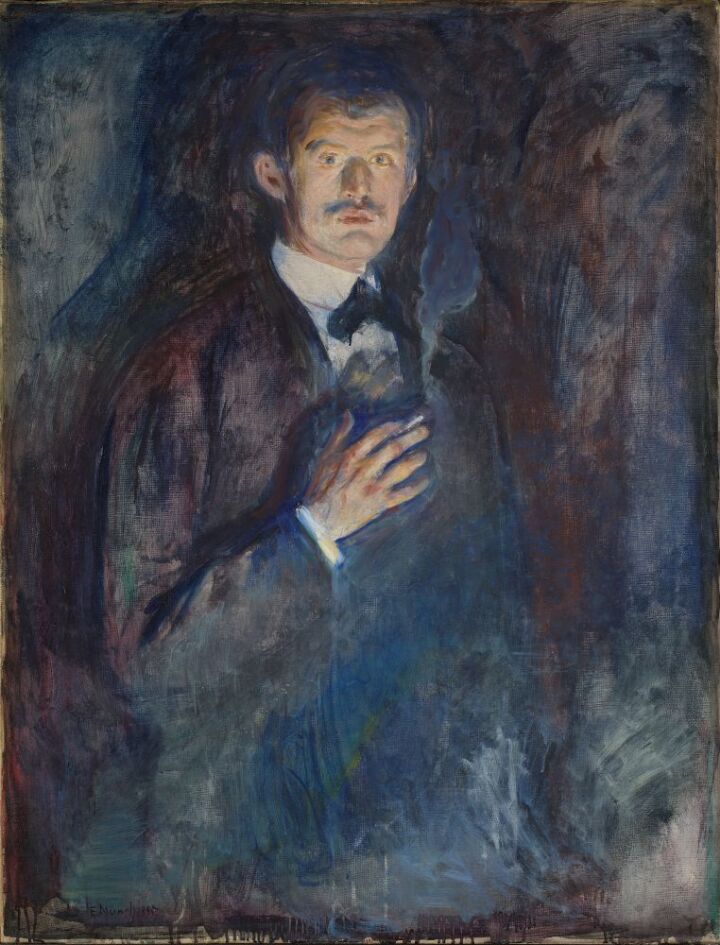




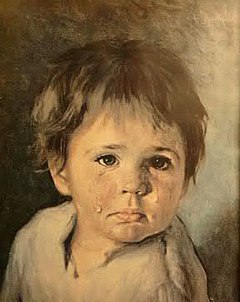


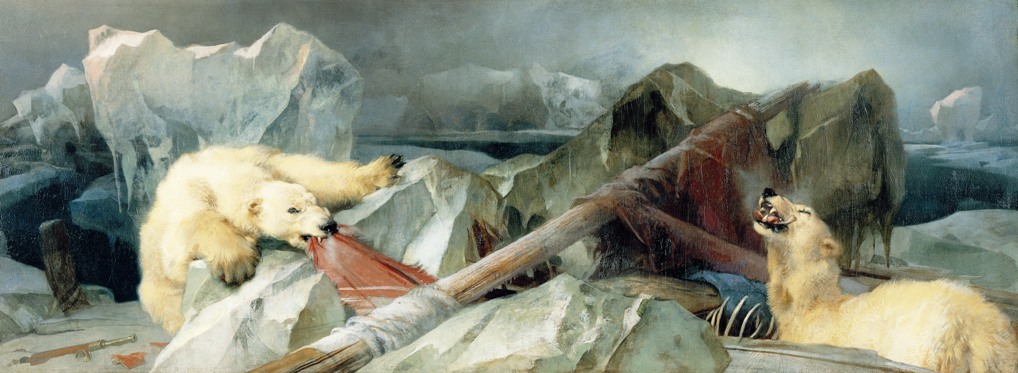


![Thirst [2009]: Fairy tale of Love and Bloodlust - High On Films](data:image/svg+xml,%3Csvg%20xmlns='http://www.w3.org/2000/svg'%20viewBox='0%200%20324%20146'%3E%3C/svg%3E)
![Thirst [2009]: Fairy tale of Love and Bloodlust - High On Films](https://i0.wp.com/www.highonfilms.com/wp-content/uploads/2017/03/Thirst-Films-2009.jpg?resize=324%2C146&ssl=1)


