The Haunting Santuario de la Virgen de Balma in the Mountain Rocks

Advertisements

Up in the mountain there is a sanctuary carved out from the rocks. The Santuario de la Virgen de Balma or Sanctuary of the Virgin of Balma has had strange legends from the start, from a place where the Virgin Mary showed herself, a place for exorcisms and a strange witch cult. 

Step back in time and immerse yourself in the captivating history of the Sanctuary of the Virgin of Balma. Nestled amidst the picturesque landscapes of Catalonia, this hidden gem of religious significance has stood the test of time, captivating visitors with its enchanting beauty and rich historical heritage. 

Read more: Check out all of our ghost stories from Spain

Dating back to the 13th century, the sanctuary holds a special place in the hearts of locals and pilgrims alike, serving as a sacred haven of peace and spirituality. From the moment you set foot on its hallowed grounds, you will be transported to a bygone era, where tales of miracles and divine intervention intertwine. 

Historical Significance of the Sanctuary

The Sanctuary of the Virgin of Balma holds immense historical significance, playing a vital role in the religious and cultural fabric of the place and is an important pilgrimage center for the nearest towns. This is a small sanctuary carved out in the rocks near Zorita del Maestrazgo village in the Province of Castellon in Spain. 

Read more: Check out all of our stories from Haunted Monasteries and Churches from all around the world.

Santuario de la Virgen de Balma origins date back to the 13th century when it was built as a place of worship for the local community. Over the centuries, it has become a place of pilgrimage, drawing people from far and wide. The sanctuary witnessed various historical events and has been a witness to the changing times. It has survived wars, political unrest, and natural disasters, making it a symbol of resilience and faith.

The Strange Place where it is Built

Balma is a Celtic name that refers to a cave underground and this is exactly what this is. Santuario de la Virgen de Balma is embedded into the very rock of the mountain and you have to walk through the cave to get there. It is almost half a building, the rest of the half is a natural shelter of caves. 

Carved into the Mountain: Santuario de la Virgen de Balma is carved into the rocks of the mountains in Catalonia, Spain.Source//Millars/Wikimedia

To reach the place you have to trek up a steep slope until you reach a little chapel of the Virgen de la Balma next to a river. Then you begin the climb up the sacred mountain until you reach the sanctuary.

Religious Importance of Santuario de la Virgen de Balma

The role of the Sanctuary in local religious practices is of great importance. Santuario de la Virgen de Balma has been a place of worship and pilgrimage for centuries, attracting believers seeking solace, healing, and spiritual guidance. The sanctuary holds regular religious services, attracting both locals and visitors alike. It serves as a place of reflection and introspection, where individuals can connect with their faith and find inner peace. The serene ambiance and breathtaking beauty of the surroundings make it a perfect setting for prayer and contemplation.

Santuario de la Virgen de Balma used to be the ultimate destination for those possessed by the Devil and people would come to the sanctuary in search of divine healing and holy treatments. 

Many of these possessions today have a name, like epilepsy, and many exorcisms were performed on those visiting. 

Legend of the Virgin Mary in the Caves

The Sanctuary of the Virgin of Balma is not just a place of historical and religious significance; it is also steeped in legends and myths that have been passed down through generations. But what was the origin story behind this so-called sacred place?
One such legend tells the story of a poor shepherd who witnessed the apparition of the Virgin Mary at the site where the sanctuary now stands in the 14th century. The Virgin Mary said to the shepherd that she was going to become a protector of this region and she wanted a temple in her name at this place. 

The Virgin Mary in the Cave: The Santuario de la Virgen de Balma is said to have been placed in these caves after a shepherd met the Virgin Mary that told him to build a temple for her in this place. Source//Wikimedia

According to the legend, she performed a miracle to prove who she was. She cured his arms. In some versions his arm was paralyzed in other it was amputated. In any case, she cured him of his affliction and he decided to make her temple happen. 
He also found a sculpture of the Virgin and went back to town to tell the local priest all about it. Together they went back to the cave and found the sculpture. They brought it back to their local church, but it wouldn’t stay. The next morning it had disappeared and was back in its original spot in the cave. So the Santuario de la Virgen de Balma was built there instead. 

According to the legend, the shepherd was guided by a bright light to a cave, where he saw the Virgin Mary, who spoke to him and performed miracles. This event marked the beginning of the sanctuary’s spiritual journey, and the shepherd became a devout follower, spreading the word of the miracles he had witnessed.

The Witch Cult of Women

Another fascinating aspect of the sanctuary’s history is its association with a strange 18th-century sect of women that started to take more place than the usual pilgrim. These women believed that they were possessed by the Devil, so called Endemoniadas and sought refuge and exorcism at the Santuario de la Virgen de Balma. The sanctuary became a destination for those possessed, and many exorcisms were performed on those visiting. These events added to the mystical aura surrounding the sanctuary and its reputation as a place of divine intervention.

In truth, a lot of these Els Malignes, or conditions were epilepsy or other mental illnesses. According to the stories though, it started with being controlled by the parish priest, but somewhere along the lines, it shifted.  It is said that it then was a council of three witches from the Aragonese town of Caspe, called the Caspolinas, that oversaw the exorcisms at Santuario de la Virgen de Balma.

The Witch Cult: The people that were said to have done the exorcisms of those coming to Santuario de la Virgen de Balma were described as a coven of witches.

It was said that witches, spiritists and others that wanted to make money from exorcism took over the place. The so-called healings took three days and the sick were placed in the caves where they were tied with ribbons. The ribbons on their fingers and toes would make the demon leave their body. Ribbons on their eyes, ears and mouth made the demon blind, deaf and mute. Together the group chanted psalms and the demon supposedly left their body. 

This cult in Santuario de la Virgen de Balma existed all up to the 20th century and in 1929 a visiting journalist called Alardo Prats y Beltran wrote down his experience in the sanctuary. 

The Sanctuary of the Virgin of Balma Today

There are perhaps no more cults, demonic possessions and strange rituals in the Santuario de la Virgen de Balma anymore. But it is still a pilgrimage now with a restaurant and cafe and a museum dedicated to its story for those visiting. 

In conclusion, the Sanctuary of the Virgin of Balma is a treasure trove of history, faith, and miracles. Its enchanting beauty, rich architectural heritage, and captivating legends make it a must-visit destination for history enthusiasts and spiritual seekers alike. 
Whether you’re seeking solace, exploring the wonders of medieval architecture, or simply immersing yourself in the serene surroundings, the sanctuary promises an unforgettable journey back in time.

More like this

Newest Posts

References:

Featured Image: Millars/Wikimedia

El Santuario de la Balma y sus endemoniados

Subterranea of Spain: Santuario de la Virgen de la Balma

Mysterious and Haunted Places in Spain

Santuario de la Virgen de la Balma – Wikipedia, la enciclopedia libre

The Haunted Liuyin Street in Beijing

Advertisements

There is not only one ghost story haunting the old Liuyin Street in Beijing. Everything from ghosts in the old imperial mansions along the street, a mysterious force in the toilets, the ghost of a hero soldier and a mysterious girl dressed in red are said to haunt this street. 

Some streets are more haunted than others. Some only have one ghost that is well known, others have countless. The Liuyin Street in Xicheng (柳荫街) district in Beijing is one of those streets that have more than one ghost story attached to it. 

Read More: Check out all of our ghost stories from China

The place was known for military generals that lived there and also went under the name of Marshal Street. Today it has some of the old Beijing courtyards preserved. 

The Ghost of Prince Go’s Mansion

Firstly, it is the place you will find the Haunted Prince Go’s Mansion that is adjacent to the street in the east. Inside of the mansion it is said that a woman wearing white has been seen in the courtyard, still mourning her son. 

The mansion is known as one of the more haunted places in the country, but also out on the street there are more than one ghost still roaming about. 

The Little Girl in the Red Dress

One of the stories is that a little girl is haunting the street and the area of the city. According to the legend, she is wearing a full-length red dress. 

The story has evolved into more of an urban legend, and it is said that if you see her, you must just walk past her. She is said to not move at all, only turn as you walk past her 180 degrees. 

The Girl in the Red Dress: The story of a little girl haunting the The Liuyin Street in Xicheng (柳荫街) district in Beijing. The story of a little ghost girl wearing red is not an unknown one, especially in Taiwan.

It is said that the woman who first saw this ghost was so disturbed by the sight that she collapsed and was sent to an institution when she woke up. 

Where this legend comes from is unclear as it is only mentioned in a couple of online English sources with no further source work. The image of a little ghost girl in red is not completely unfamiliar though. There are urban legends from Taiwan especially that deal with the trope of “The Little Girl in Red”.

The Heroic Ghost of Yuan Mantun

The Heroic Ghost of Yuan Mantun: A bust is erected in his honor after sacrificing his life. Source

Down the road of Liuyin Street you’ll find a white bust memorial to a heroic soldier named Yuan Mantun that served in the People’s Liberation Army. According to the legends of the street, he is one of the ghosts said to haunt it.

The young soldier sacrificed his own life by diving into a freezing cold lake to rescue two workers who fell into the water in 1982 when he was on duty.

On February 24th in 1982, he jumped into the water twice to rescue two people and was in the water for over 40 minutes, battling the ice cold temperature as he managed to get both of the people safely to land.

When he finally got help and was rescued up from the icy waters himself, he was already unconscious. He died of hypothermia after his rescue, only 21 years old.  

Today his ghost is said to wander nearby but it’s also said that he’s a friendly sort and not out to scare those passing through. As he himself is said to have written in his diary:

“Only those who bring happiness to most people are the happiest people themselves.”

The Toilet Ghost in No. 2 on Liuyin Street

The last haunted rumor in the streets are from the old toilets in No. 2 in Liuyin Street. The story has made its way around the forum and is supposedly told from a former resident who grew up there in the 90s. 

In the old courtyard there was a toilet the residents all used, with poor sanitary conditions and was a place no one wanted to spend more time in than needed. The grandmother of the original poster said that an old woman went to the toilet and saw something of a specter that looked like something with half-male and half-female face  on the wall of the toilet and a burst of energy hit her. She was so afraid that she didn’t even have time to put on her pants and ran home. A couple of days later the old lady became ill and died in a matter of days. 

According to the poster’s grandmother, this was something that had also happened in the 70s, when a young man passed away after seeing something sinister after using the bathroom. 

Today the toilets on Liuyin Street are locked up and no longer in use. 

A Walk Down the Haunted Street

In conclusion, the old Liuyin Street in Beijing holds a fascinating array of ghost stories that continue to captivate locals and visitors alike. Although these ghostly encounters may send shivers down your spine, there is also a sense of intrigue and wonder that lingers in the air. The rich history and cultural significance of Liuyin Street add an extra layer of fascination to these supernatural tales.

As you wander through the winding streets and ancient courtyards of Liuyin Street, be prepared for the possibility of encountering the unexpected. Whether it’s a glimpse of a grieving mother in the Haunted Prince Go’s Mansion, a girl dressed in red who turns as you pass by, or the friendly presence of Yuan Mantun, the heroic ghost who continues to watch over the street.

More like this

Newest Posts

References:

The Toilet Ghost: 柳荫街2号发生过怎样的灵异事件?

The Girl in the Red Dress: Supernatural Events in Beijing, Ghosts and Hauntings Places in Beijing 

Yuan Mantun’s Memorial: 袁满囤_百度百科 

The Ghost in the Bride’s Pool

Advertisements

Inside of the lush green forest there is a small Waterfall Pool leading to what is called Bride’s Pool. Hikers have reported about seeing the ghost of the bride that drowned in the Waterfall Pool on the way to her wedding. 

What is it about beautiful waterfalls that conjure up ghost stories about drowned brides? Is it the wispy water that spreads out like a white braid veil? Even if the white veil bride isn’t really that common in old times, the drowned bride is seemingly always lurking behind the gushing waters.

Read Also: The Hauntings of the Chute de la Dame Blanche

Inside the Plover Cove Country Park in the New Territories in Hong Kong, there is a shallow natural Waterfall Pool of water that comes from an idyllic waterfall. The pool the waterfall fills up looks peaceful and is called the Bride’s Pool (新娘潭). The legend behind the Brides pool is not as idyllic as it looks though. 

Not only are a string if deaths, both murders, suicides and drownings connected to the area surrounding the Bride’s Pool, also the road that goes above it has seen its fair share of accidents and has been dubbed The Deadly Curve.

It is also said that underneath the trees, there have been seen left spirit tables and the remains of cremated people in the pool itself.

The legends are many surrounding the Bride’s Pool and it is said that the very place is evil and no one should go there at night in fear of being taken by the spirits. What is the origin behind the name of this rock pool and what are some of the haunted legends coming from the Bride’s Pool ?

The Drowned Bride in the Haunted Bride’s Pool

The story goes that there was a bride once being carried in a traditional sedan chair in stormy weather past the Bride’s Pool. They were going to the nearby village where her betrothed were waiting for her to hold the wedding and they would finally be married. 

Read More: Check out all of the ghost stories from China

One of the porters carrying her slipped in the rain that was pouring that day and he slipped so the sedan chair tipped over and she fell into the water in the Bride’s Pool. Because of her heavy wedding clothes she sank and drowned in the pool of water. In some variations of the legend, her body was never found and she never reached her destination wedding. 

After this is said to have happened, people claim that the Bride’s Pool is haunted. Those who hike through the area said to have seen a woman wearing the red cheongsam as she is brushing her hair close to the waterfalls, still getting ready for her wedding. 

More like this

Newest Posts

References:

Top 10 spooky stories in Hong Kong

Bride’s Pool – Wikipedia 

Bride’s Pool: a tragic tale | Plus Ultra

The Devil’s Monastery in Carmona

Advertisements

The ruins of Huerta de San José Monastery in Carmona, Seville were once thought to be haunted by demons and the devil himself. After a horrible tragedy that ended in the death of all the monks, the place has been known as The Devil’s Monastery or the Monastery from Hell. 

Spain is famous for its haunted history and tales of angels and demons. With its rich history and diverse culture, there are many places that are said to be haunted. In Carmona in Seville, Spain there is the ruins of a monastery that is said to be cursed by the devil himself. 

Read more: Check out all of our ghost stories from Spain

The church known as The Devil’s Monastery is known for the mysterious and spooky presence of a ghost, who is rumored to have been lingering there for centuries. The stories surrounding this The Devil’s Monastery are fascinating and are sure to give you chills down your spine. In this blog post, we will explore the history of the haunted church in Spain and the ghost that haunts it.

The Monastery from Hell

Huerta de San José Monastery, belonged to the religious order of the Carmelites of Saint Joseph. The cloister dates back to the 17th century but was never completed. The building close to the small and sleepy village was only used for a couple of decades before a horrible tragedy befell the monastery. 

Read more: Check out all of our stories from Haunted Monasteries and Churches from all around the world.

A group of Franciscan-Dominican friars came to the hilltop to build their monastery to both be a convent as well as a boarding school for the locals. Here they would serve the words of their lord in peace. But the fact was that their dream about Huerta de San José Monastery would never be true and the convent would never be remembered as the place of god, but The Devil’s Monastery.

In 1680, Don Jaime Malvidas joined the convent as a new monk. According to the documents that were made from the case about the Huerta de San José Monastery at the time, Maldives woke up in the morning and found out his door was bolted from the outside.

The fact that the door was locked wasn’t an unusual thing, as the Dominican monks had a habit of locking themselves in after Vespers before opening the doors in the morning. But this time, there was no one there to open it. 

He tried to meditate as he waited for morning, but the sound of steps outside made him curious. They stopped right outside and the door was opened with a bang. But when he looked outside, he found no one. 

He thought maybe he was late for mass and hurried toward the chapel they were building. But there was no one. The only thing he heard was a wailing he almost thought came from himself. He started to investigate and went down into the basement. There he found all of the friars hanging from hooks, all dead. 

And according to his testimony he also said this:  I, gentlemen, upon seeing that infernal and bloody setting, began to see some small beings, who crowded around the dead bodies, ate their meat.

A fire broke out in now The Devil’s Monastery, and the monk ran out screaming that Satan was here. Some say that the monk really did meet the devil in the basement and left him alive to tell the world about his arrival. No one believed him and he was arrested after reporting it all to the authorities.

Satan Appearing in Huerta de San José Monastery

The next day the locals approached the burnt The Devil’s Monastery with crosses and bibles burying the dead monks. As they did it was as the sky darkened and what seemed like the face of Satan himself appeared between two columns of Huerta de San José Monastery.

Carmona City: The entire city had to live with the after effects of the cursed monastery. For years the city tried to repent for what happened that night in the convent.

They entered the building with their protection, but it was all for nothing as Satan was watching from the bell tower. He threw them around “like dolls” according to the documents. but an earthquake forced them out and further damaged the building. 
Huerta de San José Monastery was purged with salt and the whole city had two years of masses to absolve them from the evil they had encountered those days. 

Read more: Have a look at the story about Haunting in Hardtkapelle Wielenbach where the devil also is said to have appeared. 

In the ruins of what is left of the The Devil’s Monastery, it is said the souls of the murdered monks are still trapped inside and haunt the place, all the documents signed by the Archbishop of Jerez. 

The Ghost of The Devil’s Monastery

People that have visited the ruins of The Devil’s Monastery claim to have heard whispers and ghostly silhouettes of the monks. Gregorian voices and chants have been heard as well as strange lights floating around the place. 

Today the ruins of Huerta de San José Monastery is abandoned except for those wandering in the outskirts of the nearby village or the nightly ghost tours they have to try to catch a glimpse of the murdered monks trapped forever where they died. 

More like this

Newest Posts

References:

El misterio del ‘Monasterio del Diablo’

Monasterio Huerta de San José – Carmona

Huerta de San José monastery, Carmona, Spain, December 2017 | Derelict Places – Urban Exploring Forum

Abandoned Devil’s Monastery, Seville, Spain

Ten paranormal places that you can actually visit in Spain

The Japanese Faceless Ghost Noppera-bō

Advertisements

Walking on a dark and lonely road at night, you encounter a person turned away. When the person turns, they reveal that they have no face. This is the faceless ghost from Japan out to scare their victims known as Noppera-bō.

Noppera-bō (野箆坊) are a type of yūrei, or Japanese ghost. Noppera-bō have been around in folklore and legends for centuries and have been depicted in many different ways, from the scary to the cute.

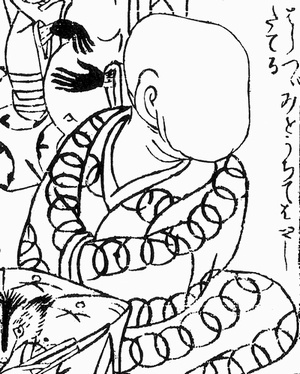
They appear as ordinary humans, except they have no face, and where the features were supposed to be, there is just a blank slate instead of a face. They are called faceless ghosts but actually, they are shapeshifters that take on the appearance of humans. Therefore they are considered more like a Yokai (Japanese monster/demon) rather than a classical Yurei (Ghost).

They will mostly be seen with their back to lure the human closer to them, often in disguise as a young woman. But when she turns she reveals that she has no face, and is just a blank canvas. No eyes, no mouth and no nose.

The Mythology Behind the Noppera-bō

In most cases, the Noppera-bō is not really a ghost, but a shapeshifter like Kitsune that looks like a fox or the Mujina that looks like a badger. They are mostly encountered on a lonely road, late at night where no one is there to help you. But are they dangerous? In most stories they work more as a prankster than something that would cause you actual harm.

They also have a habit of wearing a face they suddenly wipe away right in front of the humans they encounter. They also often work in teams to double scare their victims. Why do they do this? According to most legends, it is just to scare them for no reason. Or is there one?

Famous Legends of the Noppera-bō

There have been several encounters with the Noppera-bō passed down in legends and folklore, creating stories that were eventually written down.

The most famous story of a noppera-bō is “Mujina” in Lafcadio Hearn’s book Kwaidan: Stories and Studies of Strange Things. Hearn usually just used the animals in the stories he wrote down and is one of the reasons why there are so many that mistake the Mujina for the Noppera-bō.

There are other tales about Noppera-bō, from one about a young woman rescued from bandits by a mounted samurai whose face disappears, to the story of a noble heading out for a tryst with a courtesan, only to discover that she is being impersonated by a Noppera-bō .

The Noppera-bō and the Koi Pond

One day a lazy fisherman decides to fish in the imperial koi pond near the Heian-kyō palace, even though he was warned by his wife. She said that the pound was sacred, near a graveyard and therefore haunted.

The fisherman ignored her warnings and went to the pound. On the way he encounters another fisherman that also warns him about fishing at that exact spot. He ignores the warnings again and eventually reaches the pound, There he sees a beautiful young woman standing by the pound.

She also pleads with him, begging him not to fish at this place. When he ignores her however, she turns right in front of him. She wipes her face off, revealing nothing but a blank canvas.

He runs back home and is confronted by his wife. She tells him that he should have listened before she wipes her face off as well.

The Mujina of the Akasaka Road

A man is traveling alone through Akasaka on his way to Edo. There he encounters a young woman near Kunizaka hill. It is a remote place and she is crying with her head in her hands, all by herself. He tries to comfort the woman and asks if there is anything he can do for her.

When she turns to face him, she has no face.

The man runs away, terrified and comes across a man selling soba noodles. Relieved to see another human he stops to relax and calm down. As he tells his story to the soba vendor though, he strokes his face, and with it, his features. He was a Noppera-bō.

Modern Sightings of the Noppera-bō

Today the tales of the Noppera-bō are mostly just read about in old legends. But there are some reports that are from the more recent centuries as well.

Noppera-bō: faceless ghost) from the Bakemono Shiuchi Hyōbanki (妖怪仕内評判記) Date 1777.

Interestingly enough, there have been reports of sightings of this no face ghost. In modern time there is also sighted outside of Japan. Especially in Hawaii there have been cases were some have claimed to see the Noppera-bō. This is perhaps explained by the big population of Japanese that immigrated to Hawaii.

In May 19, 1959, a daily newspaper called Honolulu Advertiser published a rather strange report about a Noppera-bō. Reporter Bob Krauss wrote about a sighting of a mujina at the Waialae Drive-In Theater in Kahala.

According to the news article, a woman was seen combing her hair in the women’s restroom. When the witness came close enough, the mujina turned, revealing her blank face with no features. The witness was reported to have been admitted to the hospital for a nervous breakdown.

A Hawaiian historian, folklorist, and author named Glen Grant, dismissed this whole encounter in a radio interview he did 1981. After the interview though, someone called in claiming to be the witness, who gave more details on the event, including the previously unreported detail that the mujina in question had red hair. 

More like this

Newest Posts

References

The Chanting Monks Haunting La Boquería Market

Advertisements

Every year it is said that a procession of ghost monks are haunting La Boquería market in Barcelona. They are still mad about how the monks that lived in the monastery that were there behaved, and the story is that it ended bloody. 

The thought of a haunted place is enough to make many people shiver. Some people love nothing more than to explore the creepy corners of spooky locations, while others run the other way. But what happens when a church is haunted? In Spain, there is a former monastery that has been the subject of many spine-chilling stories. The haunted church is known for the ghost that is said to be lingering there. Are these stories true or just a legend?

Read more: Check out all of our ghost stories from Spain

Right by the bustling La Rambla in Barcelona there is a famous food market called La Boquería or The Mercat de Sant Josep de la Boqueria. Fresh vegetables, traditional food, al within the enclosed marked that has become a staple of Barcelona landmarks now. But there used to be a time were it was a place of worship, and ended with a visit from the devil himself.

La Boquería Marked: Today the place is a bustling marked for food and no one really pays any attention to the haunted legends about this place. But it is said that every year a procession of ghost monks wanders and chants after the devil himself made an appearance in the monastery that used to be there.

The first mention of the La Boquería is from 1217 when a few tables were put up by the old city gate to sell meat. Until the 1800s the market wasn’t officially recognized and not enclosed as it is today. It was simply growing and spreading until the city decided to make a roof over the stalls and recognize it as a proper marked. 

La Boquería market was built on top of an old monastery built by the Carmelites Descalços in 1586. There was a time in Barcelona filled with riots towards the monesteries and churches and it is from this place the ghost story takes place. 

The Broken Traditions in the Monastery

The haunting incident happened in 1835 and according to the stories the monks had become too relaxed in their ways of worship. Their whole tradition was built on prayer and celebrating their patrons and weren’t even praying on the date of their patron saint Our Lady of Carmen. 

Read more: Check out all of our stories from Haunted Monasteries and Churches from all around the world.

There was only one monk who cared about their lacking ways and spoke up about it to the higher ups. But the convent prior didn’t care about the young monks’ warnings and the monks relaxed ways continued until the warnings came back to haunt them. 

According to legend the place became haunted when a group of dead friars suddenly appeared to the brothers of the convents, singing to them, perhaps cursing them, perhaps warning them about their oncoming demise?

The Chanting Skeleton Monks

One night the monks in the convent woke up by the chanting and went to the church where the sound came from. They found a choir of skeletal monks singing a sinister psalm, one more sinister than the other to the monks of the monastery. The skeleton monks chanting to them were all dead brothers of the order that used to live in the convent.

The living monks waited in terrified silence until the singing was over before they lit up the candles and led the ghosts back to their tombs in the convent cemetery. The tombs of the skeleton monks were already open and didn’t close before the chanting skeleton monks returned from their nightly choir session.

The Murder of the Monks

Why did the ghost monks appear to them? What did they want, chanting sinister psalms to their living brothers? There are several stories about what happened, and they all ended in fire and blood.  

One version of the legend is that the monks returned to where the choir had been singing and found the young monk that had complained about the lack of prayer dead. Why he died and by what means was never found out. There is also a version that tells that he was the only survivor of his brothers. Because what happened next was a bloodbath.

The Chanting Monks: Only one monk is said to have spoken up about not honoring their traditions and responsibilities as monks. The monks were all murdered in a riot after he warned them in the place were the La Boquería market today is.

Because, ten days after the apparition of the ghostly friars chanting their ghost songs, the monastery was attacked and burnt to the ground in the riots and the monks that lived there were all killed. It was because of riots that happened against religious buildings at the time and the day was remembered as Burning of the Convent

There is a really complex and long history of why the convents were attacked. Barcelona was in a state of unrest, and a riot were culminating under the lid, only waiting for a chance to blow up.

The riots started after an especially bad bullfight in El Torrin which was a bullring in Barcelona not too far from La Boquería market. The angry people watching the bullfight turned into a mob and started rioting, dragging decapitated heads of the bulls around the city and set fire to churches. And the convent were La Boquería is now standing was dragged into the mess.  

The Chanting Annual Ghosts at La Boquería

After the destruction of the convent the city of Barcelona decided to expand on the La Boquería market to fill the empty void the convent left. The blood bath was soon forgotten, and people returned to discuss meat and vegetable prices across the stalls, not vague talk about ghost monks and the devil appearing… at least for most of the year. 

According to legend the monks come back every year to haunt the La Boquería marked on the place were the monastery was. On the day the monastery was burned, July 25th, you can still hear the ghostly voices of the monks singing through the whole market. 

There are also those that say that the singing on La Boquería market happens on July the 15th on Our Lady of Carmen’s Eve. 

More like this

Newest Posts

References:

The Gothic Arch of Sant Adrià: Gateway to Barcelona

History of the Boqueria | Market of the Ramblas of Barcelona

La Boqueria – Wikipedia

13 Barcelona Haunted Houses & Places that will creep you out

Haunted and Mysterious Places in Barcelona | 19 Local Legends

Halloween: Spain’s most haunted places – The Local

Visiting Spain’s Most Haunted Locations | Right Casa Estates

The Courtesan Haunting the Songpo Library

Advertisements

A beautiful courtesan became mixed up in the politics that ended and started a dynasty in China. Today it is said she is haunting the Songpo Library in Beijing where she took her own life.

In that time when the emperor abandoned the human world,
Wu crushed the enemy and captured the capital, bearing down from Jade Pass.
The six armies, wailing and grieving, were uniformly clad in the white of mourning,
One wave of headgear-lifting anger propelled him, all for the sake of the fair-faced one.
The fair-faced one, drifting, and fallen, was not what I longed for.
The offending bandits, smote by heaven, wallowed in wanton pleasures.
Lightning swept the Yellow Turbans, the Black Mountain troops were quelled.
Having wailed for ruler and kin, I met her again.

Wu Weiye, excerpt from Song of Yuanyuan

Once upon a time, a girl followed the love of her life to be with him, but it ended in tragedy. He gave up his country to save her, but also gave up on her in the end. A tale as old as time of a love turned cold and sour and the perfect setup for a ghost story in the former Songpo Library

Read More: Check out all our collection of ghost stories from China

In the former library known as Songpo Library in the Xicheng district in Beijing, China, it is said that a woman haunted the book aisles in the old Hutong. And according to reports, perhaps she is not the only ghost that are haunting the place. 

The General’s Mistress

Wu Sangui: (吳三桂). 8 June 1612 – 2 October 1678), a  Ming dynasty military officer who played a key role in the fall of the Ming dynasty and the founding of the Qing dynasty in China and thought to be haunting the former Songpo Library..

The story in Songpo Library starts out with a famous general known as Wu Sangui (吳三桂) that lived from 1612-1678. He was originally a Ming Dynasty military officer that played a key part in bringing the Dynasty down and giving rise to the Qing Dynasty. In contemporary China, Wu Sangui has often been regarded as a traitor and an opportunist, due to his betrayal of both the Ming and Qing dynasties. Wu’s name is synonymous with betrayal.

When the great general Wu made this place his home he brought his lover with him, a courtesan named Chen Yuanyuan. Different accounts gives different tales about if Chen Yuanyuan really did live in this place, as it is also said it was to Kunming General Wu brought her, not Beijing. 

General Wu Sangui is today known as a big traitor and is said to have betrayed the Ming Dynasty by allowing the Manchu army through the Great Wall he was put to guard, for a position in the Qing Dynasty.

It is also said that he betrayed the country for the love of his life, Chen Yuanyuan. Wu’s romance with and love for his concubine, Chen Yuanyuan, remains one of the classic love stories in Chinese history. A story tells that the Bandit King Li Zicheng kidnapped Chen Yuanyuan and for her freedom, General Wu had to betray his country.

The Eight Beauties of Qinhuai : (秦淮八艳), also called the Eight Beauties of Jinling were eight famous Yiji or Geji during the Ming-Qing transition period who resided along the Qinhuai River in Nankin. As well as possessing great beauty, they were all skilled in literature, poetry, fine arts, dancing and music.

Love Turned Sour in the Songpo Library

Perhaps the demands of the court Chen Yuanyuan (陳圓圓) suddenly became a part of were too much or perhaps the price of their love turned too heavy. Perhaps it even was as simple as he got tired of her, but their love soon started to dwindle. 

Chen Yuanyuan (陳圓圓) was born to a peasant family in Jiangsu province, and on the death of her father, she became a Yiji. Chen became a leading figure in the Suzhou opera scene and thought to be haunting the former Songpo Library.

It is also said that Chen Yuanyuan had troubles with General Wu’s other wives, especially the one named Lady Zheng who was jealous of her. Terrible rumors tells that Chen Yuanyuan was raped and killed in the fall of Beijing. What happened to her is up for debate, many say that they lived in Kunming and she ran off to become a nun in a temple there. Another side of the story gave rise to the haunted rumors. 

 In 1642, she became the lover of the scholar and poet Mao Xiang. Subsequently, Chen was bought by the family of Tian Hongyu, father of one of the Chongzhen Emperor’s concubines. She was then either purchased for Wu Sangui by his father, or given to Wu as a gift by Tian.

In April 1644, the rebel army of Li Zicheng captured the Ming capital of Beijing, and the Chongzhen Emperor committed suicide. Knowing that Wu Sangui’s formidable army at Ningyuan posed a serious threat, Li immediately made overtures to gain Wu’s allegiance. Li sent two letters to Wu, including one in the name of Wu’s father, then held captive in Beijing. Before Wu Sangui could respond, he received word that his entire household had been slaughtered. Wu then wrote to the Qing regent, Dorgon, indicating his willingness to combine forces to oust the rebels from Beijing, thus setting the stage for the Qing conquest of China.

She is said to have hanged herself in shame and because of her misfortune of being his concubine and not his wife. This is according to popular legend though. The heartbreak of losing her love caused her to take her life by hanging in their home. It is said that the girl still haunts the Songpo Library in the Shihu Hutong, where Wu once resided.

The Haunting of the Hutong

Today the Songpo Library grounds are open to tourists but the building no longer functions as a library. Observers swear they can feel her presence as she moves among the aisles of books today. Local residents have also reported hearing sounds of music and the unmistakable sound of a woman chanting. Could it be the ghost of Chen Yuanyuan, chanting scripture or something she sang on stage once upon a time? 

Songpo Library: An old photo of Songpo Library.[Photo/Cri.cn]

There is also a story about a rickshaw driver that once brought a group of passengers to the  Songpo Library on Shihu Hutong, or the Stone Tiger Hutong in the Western City. They paid their driver and suddenly vanished, leaving only a single peacock feather floating in the air. Like those that Qing officials wore in their hats. And the money he had gotten was not the Yuan Shikai coin, but an old copper coin with the name of the Shunzhi Emperor from the 17th century.

Perhaps it’s not only the ghost of Chen Yuanyuan that haunts the former Songpo Library, but the General himself as well? Late Ming dynasty historians left behind records describing Wu Sangui as a valiant and handsome general of medium height, with pale skin, a straight nose, and big ears. However, there was an obvious scar on his nose. He was neither muscular nor particularly strong-looking. However, he demonstrated great courage and physical strength from an early age and possessed excellent skills in horse-riding and archery.

Is this a person you have seen roaming the former Songpo Library lately? Perhaps it is a ghost?

More like this

Newest Posts

References:

Haunted Beijing: Songpo Library

Wu Sangui – Wikipedia 

Haunted Beijing: Songpo Library 

Dead Fengmen Village

Advertisements

In an abandoned village deep in the Chinese mountains, there are legends that people never leave the Fengmen Village, not even after death. Because of the bad Feng Shui and strange customs it has become the country’s number one ghost village, some would even say cursed.  

Deep in the forested Taihang Mountains outside of Qingyang city in the Henan Province,  there is a mysterious village now abandoned Fengmen Village. Dead Fengmen Village in most English sources. With its strange customs, people that have visited it, have come back with stories about something strange, and perhaps even evil. Some have not made it back from the village at all. 

Read More: Check out all of our ghost stories from China

Why is the place abandoned? Legend says it was abandoned overnight and that the inhabitants were taken away by ghosts. Legend says a lot of things, but what really happened when the village became a ghost village?

The Strange Customs of a Secluded Place

The entrance to the Fengmen Village is difficult to find and when entering it a feeling of dread comes to you because of the anti Feng Shui of the place. The place is filled with a heavy sense of Yin and this is what many claim makes this place so haunted. 

In Chinese lore, ghosts have a hard time getting out of places with a heavy Yin, and many claim this is why this village is said to be so haunted. In addition, the village is built like a maze, and the ghosts are trapped, unable to wander out from it and move on. 

Strange customs are what seems to be worshiping mysterious two figures. Two statues that are no Gods like Buddha or the like, but rather seem to be of two normal people are found in the nearby temple. Who these two idol statues were they haven’t been able to figure out. There is a theory that it is actually that of ghosts and that the famed ghost village actually worshiped these ghosts. 

There are also strange burial customs that completely differ from the surrounding area and Han people. The corpses in Fengmen Village are buried with masks and it was said that people would not leave the village, even after death as the dead would be buried close to the home of the deceased. It is said that is why the people in Fengmen Village wore masks, as it was meant to suppress ghosts. 

Haunting Tales of Dead Fengmen Village from Hikers

Over the years as the Fengmen Village population dwindled and hiking became more popular, many hikers decided to make their destination this strange and remote village. Some hikers have claimed to have called out their names into the dark night as they were camped outside the now abandoned village, and to their surprise, something called their names back. 

Travelers faint or feverish when they step into the village and wake up with scratches all over their body they have no idea where it came from. 

People that choose to travel to this far away place come back and tell of unusual noises and shouts can be heard and there is no phone reception to call for help when needing it. 

The Haunted Taishi Chair

Fengmen Village has over a hundred houses of Ming and Qing styled architecture, and are today mostly empty, covered only by cobweb and dust. There is one house however that became more talked about than others because of the mysterious chair that was placed there, said to be clean, as if someone sits on it regularly. 

The chair is a Qing Dynasty Taishi chair placed in the living room in one of the houses facing north-south as the Feng Shui tradition would have it. The legend is that people that have sat in it, have died under strange circumstances or encountered something supernatural. 

According to legend the grand master chair is not for the living to sit on, but for ghosts. It is also said that if a living man sits on it, he will be unable to find a wife, and if its a woman, she will not be able to have children. 

The Legend of the Pillow Ghost

One of the more well known legends of the place comes from the story of three young men who visited the Fengmen Village in 1963. It is worth noting that this story started circulating on various internet forums after the village became deserted and has yet to be confirmed. 

In 1963, three young people from Zhengzhou came to Fengmen Village to paint. Before entering the village they saw a pillow in the middle of the road and they kicked it aside. They were just in time for the funeral held in the village where a family of three had died of a high fever .

The three men were placed in the deceased family’s house to sleep. And although they found it a bit creepy, they didn’t want to offend the village or admit to being scared. After they moved in, strange things happened again and again. They often heard children calling out for their mom in the middle of the night, but when they went out to see, there was no one around the house. 

The three med also had the same nightmare of a ghost climbing into bed in the middle of the night. One day, one of them opened the closet to look for clothes during the day, and suddenly screamed and passed out. After waking up, he said that he saw a face hidden behind the clothes in the closet, which was exactly the same as the face in his dream.  When they searched the closet, they found nothing suspicious, but the following night, the one who had seen it developed a high fever. 

The next day one of them dreamed of the ghost face again. When he woke up, he heard the sound of splashing water in the yard outside, so he looked out the window. Under the moonlight, he saw the back of a woman standing naked in the well in the yard. Suddenly the woman turned her head, gave him a strange smile, and jumped into the well. 

When they searched the well with flashlights, the water in the well was calm with no ripples and the stone platform by the well was dry. After this, the man often dreamed of the woman who jumped into the water and also developed a high fever.

The third young man was very anxious about his friends developing high fevers, but it was far from a doctor. One night he also started dreaming about the ghost face and he could not breathe. When he woke up, he found that one of his friends was on top of him, strangling him. Fortunately, the third man came to rescue. After that, the three people finally realized the evil nature of living in this house, and hurried to find the elders in the village. The elder in the village asked the three if they had done anything against the village customs. 

The young man said that he had been respectful since entering the village, not even thinking about the pillow they had kicked out of the way before entering it. The elder slaughtered a chicken and prayed in front of the enshrined stone statue and the grave of the family of three that originally had owned the house. After that, their fever gradually subsided, and the nightmare gradually disappeared.

So why was the house haunted? Many claim it was because of the burial customs, where the family were buried by the house, and therefore bound by it, returning home each night unable to find their way out from the village. 

The True Story Behind Fengmen Village

Stories about the supposedly haunted ghost village of Fengmen Village have gone around the internet the last decade, and made it into the list of some of the more haunted places in China. It has been made into more than one horror movie, especially the movie from 2014 garnered much attention, further fueling the haunted rumors of the abandoned mountain village. 

It is now known as the number one ghost village in the country, but what are the legends coming from this place, and how much of it is true?

What Does Fengmen Village mean?

The name Fengmen Village has been written in Chinese like 封門村, meaning Closed Door, leading to more legends than the correct spelling 風門村, meaning Wind Door. Even on military maps from 1972 it is written with the wrong spelling. 

The true origin of the name of wind door was often given to places with a rather dangerous geographical location and from a military standpoint, easy to defend, but rather difficult to attack. 

The name of the village when the incorrect spelling gave people association of something sealed, secretive and started speculating about something evil concealed inside of the deserted mountain village. 

The Strange Worshiping of Ghosts

As for the strange idols the Fengmen Village seems to have worshiped it is unclear just what it was, but more than likely there could have been some form of ancestral worship rather than straight up a ghost as the legends would have it. The clothing of the statues seems to be of a woman and man from the Ming Dynasty though. It could also be modeled after some real people that did something significant for the village. Today it is unclear. 

The Bad Feng Shui

Some of the suspicion and eeriness to the village is their complete disregard for the Feng Shui of the buildings. According to legends, most of the houses face east-west, the complete opposite of Feng Shui, leading some people to think this is the reason why the place is so off and strange stuff is happening here. 

When actually looking at the almost 200 houses though, not all are facing the wrong way according to Feng Shui. Being built in the steep mountains, they had to use the natural layout of the landscape to build the houses compared to flatter terrain with more room for Feng Shui rules. 

Why did People Abandon Fengmen Village?

So why is the Fengmen Village now abandoned? In contrast to the legend where the people just disappeared overnight, the abandonment from the village happened gradually. From 1981, the state arranged a collective relocation of villages like Fengmen Village and people started leaving the village and moving to the bigger cities, and by 2007, there was no one living in the old village anymore. Why? 

Could it be because of the haunted rumors and the legends of bad Feng Shui? Perhaps it was due to more logical causes, like the dwindling water resources from the mountain, the inaccessible roads to schools and the rest of society. 

The village had relied on traditional farm life, and with the dwindling water resources, they were no longer able to sustain their crops and had to search elsewhere for other sources of income. 

During the many wars the territory faced, the accessibility of the place was seen as paradise, but it turned to its curse in modern times because of how hard it was to reach the remote place as it is a two hour hike through the mountain. 

The Remains of the Ghost Village

After the village became abandoned for life, people started coming there to see the ghost town and have a look for themselves if the rumors were really true. And in the following years, live streams in the ghost village, explorers and new legends started spreading on the internet. 

Today the ghost Fengmen Village is slowly receding back to nature, as the trash hikers leave behind is piling up, covering the last remains of the secluded town that used to do things in its own way. 

More like this

Newest Posts

References:

風門村_百度百科

https://zh.wikipedia.org/zh-hant/%E5%B0%81%E9%97%A8%E6%9D%91

河南封门村为何会人称为“中国第一鬼村”?它有多神秘? 

https://new.qq.com/rain/a/20201103a07ux500

行政區劃中的封門村位於河南省焦作市沁陽市王屋山鄉 

How mysterious is China’s first ghost village “Fengmen Village”?The anchor runs into the ghost village at night, and calls the police for help late at night 

The Warrior Countess Ghost of Eltz Castle

Advertisements

Few castles capture the European medieval feeling as Eltz Castle does. The long lasting Eltz family has always watched over the place, and even in death, there is an ax wielding countess in full armor, haunting the place. 

Steeped in history and mystery, Germany’s old castles are some of the most fascinating pieces of architecture in existence. These majestic fortresses are stories in themselves, filled with centuries-old legends and ghost stories. From dark fairy tales about princesses and knights to hidden passages and hidden rooms – these castles have something to captivate even the most jaded spirit! Every stone tells a tale of intrigue, from ancient battles to wicked plots. Without a doubt, a tour through Germany’s haunted old castles will leave you with an experience unlike any other.

The Eltz castle is definitely on that type of list and is a medieval castle on the top above the Moselle river in the Rhineland, west in Germany. The castle has belonged to the House of Eltz who have lived there since the 1100s and is one of the few castles that have never been destroyed and rebuilt. 

The armory and treasury in the Eltz Castle is considered to be one of the most important collections of its kind in Europe, and holds so much history. The castle is also said to hold more than one ghost, but the most well known of them is that of Countess Agnes of Eltz. 

The Countess Agnes

Agnes was the daughter of the 15th count of the Eltz Castle at the time. She was said to have been a beautiful girl and was promised to be the wife to the knight of Braunsberg. They had been engaged since they were children, and the time for a proper wedding and marriage were approaching. However, the Countess didn’t like her betrothed at all as he was a ruthless and mean man and far from a chivalry knight as they are often painted to be in fairytales. 

On the day of their engagement, they held an engagement party for the two families to come together. The knight of Braunsberg turned out to be even more despicable now as the marriage was more than just a distant future and Agnes refused to kiss him when he went for it as she was known to have a will of her own and out of a fight if she had to. 

According to some testaments, she usually hung out with her warrior brother more than her female companions. In some reports, it is said she only refused his advances, in others, she outright slapped him back when he forced himself onto her. This threw him into a rage and he declared a war on the entire family to repay for him being embarrassed in that manner. 

The Revenge of the Eltz

A few months passed, some say a whole year as the knight of Braunsberg waited, planned and came back for his revenge. And he returned to Eltz Castle with an army. He managed to lure the count and his knights out of the castle into an open battle, and some say he waited until the Count of Eltz went out hunting. 

Agnes remained in the castle together with only some servants, just as the knight of Braunsberg had planned. Alone in the castle the single Countess would be an easy target for the knight and his men. 

As he advanced with his soldiers to the Eltz Castle, he was one step closer to Agnes. The knight of Braunsberg had planned to take Agnes back with force, but had never anticipated that she would fight back the way she did. Just as she had done at the engagement party, she chose to hold her ground, but this time with an battle ax.  

She put on her brother’s armor and picked up weapons together with her servants. Together they fought side by side against the attackers. She is said to have had a battle-axe she wielded against her enemies. 

An arrow from the knight hit her and she died from the wound almost immediately. The servants who had loyally fought by her side were enraged and defeated the knight, killing him and ending the attack. 

The Ghost of the Countess

The bravery and steadfastness of the Countess is said to represent the Eltz family and their 800 years of history in the Eltz Castle. The ghost of Agnes is said to still linger inside of the castle. In her former room , the breastplate still hangs on the wall, with the hole from the arrow still visible. Her battle-axe also remained, protecting herself from the horrible knight to this day. 

She can be seen by the entrance of the Eltz Castle to this day, still wearing her suit of armor. It is also said that a phantom horseman is also riding outside of the gates, and the knight of Braunsberg is still seeking forgiveness for what he did. 

More like this

Newest Posts

References

Eltz Castle: A Fairy Tale in Stone – Discover Germany

The Closed Door of the Ghost Town of Ochate

Advertisements

There is something strange going on in the ghost town of Ochate. Tucked away in the Basque countryside, the abandoned town has been the center of murder mysteries, unexplained disappearances and strange lights, sounds and sightings were there isn’t supposed to be any. 

This town in Burgos, Spain has been abandoned since the mid 19th century and the Basque city is said to be a cursed place, haunted with a couple of paranormal mysteries attached to it. 

Read more: Check out all of our ghost stories from Spain

Today the route and road to the town is nothing more than a hiking route for those wanting fresh air, but when you reach the entry to the village, you will find the remains of an entire society that nature and time is now trying to reclaim. 

The Abandoned Town of Ochate

Not much is left of the village except crumbling ruins, grass covered streets that fades for every season that passes. The town of Ochate actually dated back as a settlement as far back as the Bronze age. The town has in fact been abandoned more than one time. The first one being at the end of the 13th century before it was revived again in the mid 1500s. 

Before 1860 Ochate was a growing and busy town settled with cattle farmers and people lived on what they grew. Ochate, or Otxate as it is written in Basque. In some dialects this translates as “Secret Door” and for many, this name fits well with the many legends and rumors about the place. 

The Cursed Epidemics Haunting the Town

What happened in the village is still not absolutely clear, but we do know the Spanish Flu hit hard here that globally took the life of between 25-50 millions. 

Not only one but three different epidemics during the course of a decade wiped out the population and no one wanted to settle there in the 1920s. People then started to leave the old village in search for a place without the sickness that had taken their entire village. 

The Deadly Epidemics: The Spanish flu was a virus that spread easily and infected people throughout the world. Because the virus was new, very few people, if any, had some immunity to the disease. From 1918 to 1919, the Spanish flu infected an estimated 500 million people globally.

What was strange about the epidemics was how it looked; it only affected Ochate town and there was not much spreading to the nearby villages at the time. It was a town quite far from the next one, but still, why did it seem to hit this particular town so far from everything else in the first place? This is what seems to have started the rumors about Ochate being a cursed town. 

The Murders of the Shepherd

Because of heavy rain and hail it destroyed the crops the villagers depended on.There were also many years of bad harvests that forced many people to look elsewhere for work and a life.  

In 1930 there were only two families left in the village, and because of an unstable pastor that started to threaten everyone, they decided to move to another village. The last man in the village decided to follow them soon after. 

In 1936 there wasn’t anyone living there, but some shepherds were herding sheeps in the nearby areas. One of them ended up brutally murdering another shepherd in one of the abandoned houses in the village and it put the nail in the coffin for good. The town was now truly a ghost town. 

The Old Ghost Town in Modern Times

The old abandoned village was often forgotten and nature started to take it back, little by little and no one really paid it any attention for the next decades. 

In 1973 the town got talked about again when a person from the village next to Ochate disappeared under mysterious circumstances while he was plowing his field, and the rumors about Ochate being a place where people went to disappear started growing. 

 In 1980 there was a new interest for the village as rumors about something strange going on there spread. Paranormal researchers had started to investigate the town and claimed to have voices and ghostly sightings on tape. 

In 1981, someone claimed that a UFO was seen. People that were looking out to the universe, believing in aliens thought they saw strange lights and UFO’s. 

Strange lights from the village came from the night, and many have claimed it to be ghosts, and the rest claim it’s from the stone sarcophagi burundi in the ground around the village. 

But mostly there were the legends of the people that disappeared from the nearby area under mysterious circumstances without a trace that never came back.

The Articles about the Mysteries in Ochate

The mystic events in Ochate were written about by a local man, Prudencio Muguruza in his article Luces en la puerta secreta from 1982 and really started to get the haunted rumors about the ghost town moving. 

In the article he claimed to have seen these mysterious lights as well as held up the claim that the villagers were wiped out by epidemics. 

After the publication of the article the place got noticed by more people and theories about what happened there and what people saw. But what really came first, his article or the haunted rumors?

Alberto Fernandez and hit Paranormal Research

In 1987 a paranormal researcher named Alberto Fernandez brought a team to record these strange voices that people had been talking about for years. 

According to them, the mission was a success and they came back with two recordings of what they claimed was something paranormal. Further questioning from Fernandez was sadly not possible as he took his own life on one of his trips to Ochate. 

The Woman and the Little Girl

People that visited the place and explored the ruins claimed to have heard the voices of a woman and a young girl saying something that can sound like “Kanpora”, which is a Basque word meaning “get out”  in English. 

There was also the voice of a woman heard speaking in Spanish: “¿Que hace aún la puerta cerrada?”. This means something like “Why is the door still closed?”

Have a look at the pictures from the town and listen to the tapes. Can you hear it?

Was the Legend of Ochate True?

So what really happened in the abandoned village of Ochate? Did the villagers really die because of a horrible epidemic that killed all of them? Did people really vanish into thin air when staying too close to the place?

Read more: Check out all of our ghost stories from Haunted Towns and Cities all around the world.

Because of the strange connection to the word door, many have started to speculate that the village has some sort of door between this world and the next. 

In 2017 there was a book published about it by Julio Corral and Antonio Arroyo. They claimed that there was no proof of an epidemic at all, and that the villagers simply left because the Royal Road or the Camino Real changed the course away from the village, and left Ochate roadless in the middle of nowhere. 

Perhaps one day, like it did once before, someone will once come and open the door and revive the Ochate town again. 

More like this

Newest Posts

References:

Mysterious and Haunted Places in Spain

The 10 most famous haunted houses in Spain — idealista

Ten paranormal places that you can actually visit in Spain

Ochate: Abandoned Door to Another World? – Caryn Larrinaga

Ochate – A Spanish Ghost Town

Ochate – Wikipedia

An online magazine about the paranormal, haunted and macabre. We collect the ghost stories from all around the world as well as review horror and gothic media.

Exit mobile version
%%footer%%