The terrible leprosy disease destroyed many lives throughout the ages. And in the city of Loja, The Hangman’s Tunnel in Loja, Ecuador is the place for one of the city’s tragic ghost stories.
The city of Loja in Ecuador was a place that people set out from to look for the mystical town of El Dorado in search of gold. Today it is more known as a place of culture, art and song. But even this bright singing city has its dark stories and legends.
A long time ago there was a leprosy colony at the asylum known as San Juan de Dios Hospital in Loja in Ecuador. Back in the day it used to be an incurable disease and the people suffering from it were put away far from other people fearing to catch the disease.
It is a horrible disease that causes severe disfiguring skin sores as well as nerve damage. It had a huge social stigma and those suffering from it were placed in these Leprocomio, or leper colonies across the world.
This was the place where Ana María grew up, as her unwed mother, Luz Marina had to take a job at the colony to support her daughter after she was kicked out of her family. Ana María grew up and received an education as a nurse as well, working closely with those affected by the disease.
She fell in love with a young law student named Luis Felipe. Over two years they met at their regular meeting place on the road leading to the hospital by a huge cliff known then and especially after as The Hangman’s Path.
After her mother died, Ana María hoped to marry, but found that she had been infected by the disease and had to be quarantined with the other infected away from everyone.
Unable to meet her fate, she decided to hang herself in a guabo tree near their regular meeting place. When Luis Felipe saw her hanging from the tree, he too chose to hang himself together with her.
Today, the hospital is known as Hospital Isidro Ayora. In 2007, they built a tunnel at The Hangman’s Path, now known as the Hansman’s Tunnel. It is a popular place for the locals to gather when playing with Ouija boards and claiming that they have seen the ghost of the two lovers, hanging from the tunnel.
On the highway in El Salvador, be vary of who you stop for along the way. Especially beautiful women that asks for a ride to a nearby place. It might very well be the vengeful spirit of La Descarnada.
On the long stretch of highway from Santa Ana to Chalchuapa in El Salvador, an old legend is just refusing to die. The legend of La Descarnada, meaning the fleshless in English. She is a vengeful spirit in female form that lures and seduces men that she meets on her way. At first she looks beautiful, young and healthy, but when she has the man in her claws she shows herself in her true form: a rotten living skeleton.
The tale of La Descarnada is a typical ghost legend that are told all across South America and share many similarities with the legends of La Sayona in Venezuela and La Llorona in Mexico for instance. Often her origin story is rooted in being a scorned woman that goes after any man as she wasn’t able to get revenge on the one that mattered. The legend of La Descarnada has also evolved from an old folklore legend to be more similar to the urban legends like The Vanishing Hitchhiker.
The Vanishing Hitchhiker is a well known urban legend throughout the world. Here is a Moonmausoleum original writings based on the Urban Legend – The Vanishing Hitchhiker
La Siguanaba of Central America
The Legend of La Descarnada also has a lot in common with the legend of La Siguanaba. Also known as Cihuanahual, Caballona, Chuca, Sucia, Bandolera, Macihuatli, Matlacihua, Tisigua, and more, is a legendary figure from Central American folklore. Her name, derived from the Quiché language, means “spectral sister of the abyss.”
The Siguanaba is known for her eerie encounters with men who cross her path. As the legend goes, she appears to men, but her face remains hidden. It’s only after she has ensnared a man’s attention that she reveals her true visage, which is often described as a horse or a skull in different versions of the story. This shocking revelation can lead to illness, madness, or even death. The origin of this myth is complex, with roots in both pre-Hispanic Mesoamerican cultures and European folklore. Over time, these beliefs have intertwined, creating a unique and haunting legend that has persisted through generations.
The Hitchhiking Ghost
Late at night on the highway she signals the passing cars to stop. If it is a man travelling alone, she asks for a ride. When he asks her where she is going, she mentions somewhere nearby on his way and it is too easy for him to say he will drop her off there.
Inside the car, she starts her seduction, looking at him provocatively and luring him in. The man doesn’t resist and gives in, starting to caress her. Then the transformation starts, and her beautiful silky skin starts to peel off, little by little and muscles and bones starts to appear under the man’s caresses.
When the man notices it, he freezes, but it is already to late. She continues to decompose right in front of him until she is left as a living skeleton. And those who live to tell the tale have no way of explaining just what happened to them. Although, according to legend they are the lucky ones, as La Descarnada is a folktale that usually ends in the men’s death.
The Legend of La Descarnada
As the legend of La Descarnada continues to send chills down the spines of those who hear it, there is no denying the cautionary tale it holds. The dark tale serves as a reminder to be wary of strange encounters and to trust one’s instincts, especially when traveling alone on long stretches of highway.
For those who have the misfortune of encountering La Descarnada, the outcome is often fatal. The men who fall into her trap are left scarred by the terrifying transformation they witness, unable to comprehend the supernatural force that just took place before their eyes. Their stories, if they’re lucky enough to survive, become cautionary tales whispered among friends and family, spreading awareness of the dangers that lurk on the roads of El Salvador.
And so, the tale of La Descarnada remains ingrained in the consciousness of those who traverse the highways of El Salvador. Her vengeful spirit forever entwined with the folklore of the land, serving as a reminder to heed the warnings of the past and to navigate the roads with caution and wisdom.
On the Venezuelan plains, the vengeful ghost of La Sayona hunts down cheating men that don’t get from it alive. She is cursed to make her revenge on them after she murdered her whole family.
La Sayona is a Venezuelan ghost story about the vengeful spirit of a woman haunting the roads, the jungle as well as the Venezuelan plains. She is after cheating men and appears mostly on the roads, asking men for a ride on the vast Venezuelan plains known as Los Llanos.
Read all of the ghost stories at haunted roads here:
When the man she has chosen as her victim is looking more closely at her, her face is just a skull with terrible teeth. Her name La Sayona is referring to the type of clothes the ghost is supposedly wearing and is a long white dress, and referred to a medieval undergarment. It basically means something along the lines of ‘Sackclothed Woman’.
La Sayona: The ghost has been described as a woman in white haunting the roads in Venezuela. She is like a crossover between the vanishing hitchhiker and the woman in white. But this version is a very dangerous and deadly one.
This is an old legend in Venezuela, similar to many women in white ghost stories from Europe with a hint of The Vanishing Hitchhiker urban legend mixed in with it today. She is also somewhat similar to other vengeful ghosts from across the globe, like the Japanese Onryo or the Korean Virgin Ghost.
Most similar though, will she be of other South American legends about vengeful women on a mission in their afterlife and the story of La Sayona is often mixed with the famous La llorona legend from Mexico. Especially because in these legends, the woman was the violent one. She is also a part of Colombian folklore that has its own spin to it that we will come back to later.
Along the rivers in Mexico a wailing woman wearing white can be see and heard as she comes up drenched from the waters. She is desperately looking for her children she herself drowned. And according to the legends of La Llorona or the wailing woman, you are next.
In the legend of La Sayona there supposedly was a woman named Casilda that lived on the Venezuelan plains in a small town were life was peaceful and without much to worry about. She was the prettiest girl in town and married to a loving husband. Together they had a son and it seemed like she had a perfect life together with her family. But that was all surfaced level though as she had one fault, she was violently jealous.
Once, Casilda was swimming in a river near the village naked where a man from the village spotted her. She told him to get lost and leave her alone, but the man didn’t listen. He would start to follow her and watch her bathing in the river. He then told her that he was there to warn her and said her husband was having an affair with her mother. It was nothing more than a rumor from a random man watching her bathe, but the rumor filled her with an immense rage so she couldn’t think clearly.
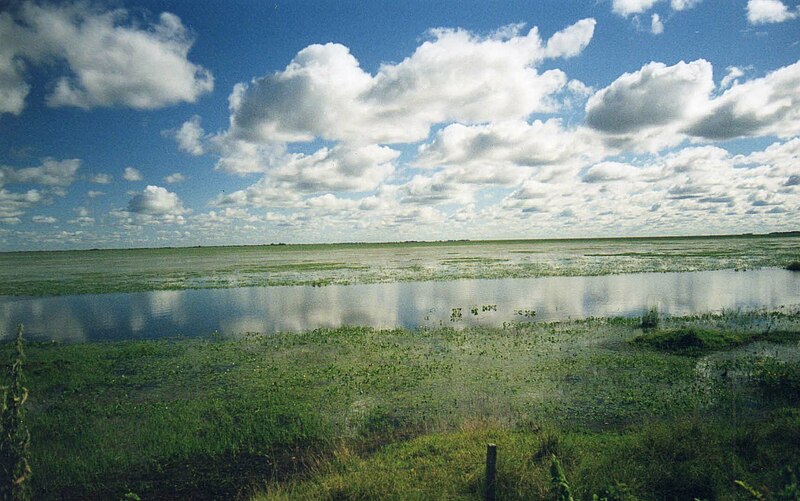
Wet Season: La Sayona is known to roam on the Venezuelan plains in search for cheating men she can punish as part of her eternal curse. // Photo: Haroldarmitage
Casilda then ran home to her husband and found him inside the house with their son sleeping in his arms. She was blinded by rage and set the house on fire without asking him for the truth. The villagers heard their screams as both the husband and the son burned to death inside the house.
Meanwhile, Casilda was on her way to her mother’s house that sat on her patio. She would not get the chance to explain either as Casilda attacked her own mother with a machete and stabbed her to death in the stomach.
The mother bled slowly to death, but not before she managed to curse her daughter. She told Casilda that from then on she would avenge all of the women with cheating husbands. And whether her mother and husband really had an affair, she would never get an answer to, driving her mad.
She was from then on known as La Sayona that hunts cheating men by conquering them and then killing them.
The Different Variations of the Legend
There are many variations to this tale today in Venezuela as well as the rest of South America. She sometimes shapeshifts to animals or even monsters or sends out a scream almost like a Banshee that can be heard from a long distance. The variations of the legends have all in common that it is the men who has to pay the ultimate price of her wreath.
The legend of La Sayona is also grouped together with several ghost stories about female spirits haunting the roads and highways after men to take their anger out on. Much like in the case with the story of La Descarnada of the Highway.
On the highway in El Salvador, be vary of who you stop for along the way. Especially beautiful women that asks for a ride to a nearby place. It might very well be the vengeful spirit of La Descarnada.
In some versions of the legend, La Sayona comes out from the jungle where men are working. She comes when the men are talking about sex or about women they left behind. When she appears she either takes form as a beautiful woman or a loved one and manages to lure them into the forest were she has her revenge. There she devours them in an animal-like shape or mangles them, and leaves their body for the rest of them to see as a warning.
In the Colombian version from the plains, they tell that La Sayona was a beautiful woman named Sarona that turned into a monster. In this legend she was not really a violent woman, but a cursed one nonetheless.
She lived as a normal person until she ruined the holy clothes of a priest and was punished for her sin. God condemned her to live an eternity of great hunger because of this. She turned from a beautiful woman to a monster with big teeth and eyes and with an appetite for human flesh.
Sarona’s punishment was something she couldn’t control and she was consumed by it. In her hunger she then devoured her own brother before escaping out on the lonely plains in Columbia where she lives more like beast than man. She comes at dawn and takes drunk men wandering alone she devours.
Outside the shores of Chile, there a tales of a ghost ship that will take you away if it gets you to make you one of their crew. Could you join to sail the sea forever with The Caleuche?
Outside of the Chiloé Archipelago,the group of islands outside of mainland Chile, rich folklore and mystical myths of the sea that surrounds the islands thrives. Here they believe in the great battle of the two serpents of earth and sea that created the area.
Fishing and sailing were the main thing the locals did for a living, and the mythology of the place reflects it. And when the fog comes creeping up to the shores of the canals, bright lights and the sound of jolly music can be heard from the sea. Just a fishing boat passing playing loud music? Or can it be The Caleuche, a ghost ship that collects the drowned and enslaves people to work on the ship forever?
Background of the Mythology
The Caleuche is a ghost ship from Chiloé mythology in southern Chile that has a pretty distinct mythology different from the rest of Chile as a mixture of the indigenous people and the Spanish settlers. It in particular reflects just how important the sea is in the life of Chilotes.
Advertisements
The word Caleuche comes from the Mapuche word Kalewtun, meaning to transform or to change and che, meaning people. It is also called The Enchanted Ship, Barcoiche or The Warlock Ship and has many different variations to the legend.
It has many similarities to the Flying Dutchman in the sense of being a ghost ship you can sail with for an eternity.
According to Chiloé mythology, it is Millalobo that is both the creator and owner of the ship, the second most important being of the sea after Caicai, God of water.
Ghost Ship of Never Ending Partying
The Caleuche is a ghost ship of music and light that sails along Chiloé canals. It has an extraordinary speed. You can not always see the ship, but in certain weather, like on a foggy day, you can both sense as well as see the ship.
People have always had a fear of being captured by The Caleuche and there are particular trees that you can hide behind that will give protection of being spotted, such as the Chilean wineberry and the olivillo. The reason being that in some versions of the legend, you can be enslaved and cursed to work on the ship forever.
The Caleuche: From the fog light can be seen and the sound of music can be hears. According to Chiloé mythology and folklore it is the ghost ship The Caleuche, filled with enslaved sailors, drowned bodies or evil sorcerers depending on what version you hear.
One of the things the ship is known for is the music and sound of partying. In some legends, it is to lure the people to them so that they can be forced to work as a crewmember for eternity.
It is not always for a sinister reason that the party music is so loud from the ship however. In many of the versions it is a ship that recovers the dead bodies from those who drowned at sea, and offers them a place as a crewmate on the ship. They will then be able to spend the rest of eternity partying and celebrating.
Making Pacts with Sorcerers
Another version of the tale is that it is in fact a ship that transports the sorcerers. It is said that they make a voyage every 3 months to gain more power. It is from this legend the idea of merchants trading with these sources to gain wealth quickly, and explaining when a person in Chiloé becomes rich quickly, they have made a pact with the crew on The Caleuche.
It is not a very old myth that never gets told anymore. In the 1960 Valdivia earthquake, or the Great Chilean earthquake, there were many fires, landslides, tsunamis and floods in the area after the initial shock of the quake. Many houses were left untouched by the natural disasters and rumors and talks about a pact having been made with The Caleuche were told.
In the same decade stories about the sound of an anchor being dropped outside of the houses of many prosperous and rich merchants in the area. According to the legends they would lend out their houses to The Caleuche for a party location and other dark purposes. Although many could probably put the blame and the reason for getting rich on normal and mortal smugglers.
In the secluded and mountainous streets in La Paz, Bolivia, the ghosts of the past are still roaming the streets. Both dangerous widows and Bolivian freedom fighters.
The street in La Paz has rumors of ghosts roaming. And it is not an anonymous ghost we are talking about. The ghost that supposedly roams these streets is the Bolivian folk hero, Pedro Domingo Murillo, who played a key role in Bolivia’s independence.
Calle Jaen is one of the old streets in La Paz and it looks like a ghost of colonial times with the architecture. This is the place where Murillo used to live. The streets are also known for the ghostly apparitions that are seen both by the locals and the tourists visiting.
Advertisements
The Ghost of Bolivia’s Freedom Fighter Murillo
He is reported mostly appearing to both locals and tourists by the museum during sunset where he tries to communicate with the people seeing him. They even put up a green cross at the end of the museum to ward off spirits that don’t belong in this world anymore.
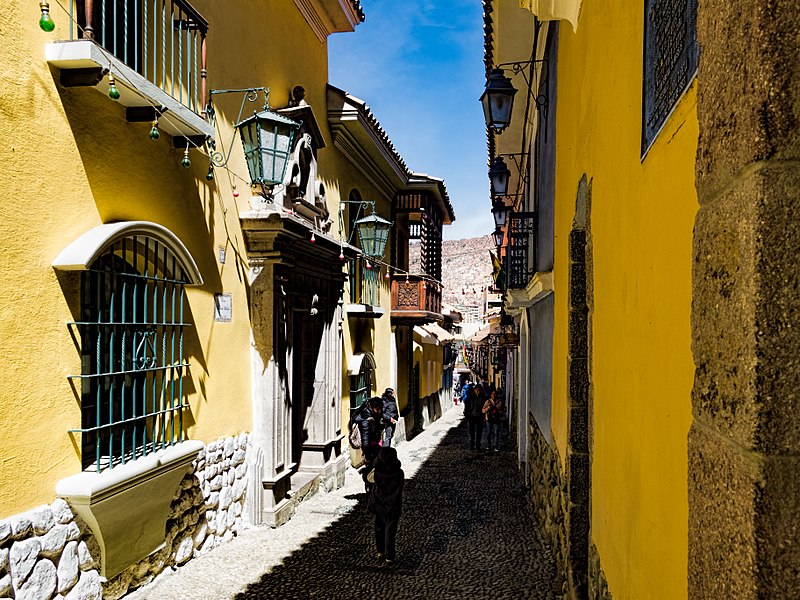
Haunted Street: Jaen Street, named after the revolutionary Apollinar Jaén, is the best-preserved colonial street in La Paz with its cobbled streets and Spanish architecture. The houses date from the 18th century. One of the homes was owned by Pedro Domingo Murillo.// Photo: Dan Lundberg/wikimedia
Murillo is known for leading a rebellion against the Spanish crown. He was eventually captured and hanged in 1810. He had this to say:
“Compatriots, I die, but tyrants won’t be able to extinguish the torch I ignited. Long live freedom!”
Many see him as a spark that ignited the battle to free South America from Spain, and each year, there is a parade through central La Paz with lit torches in his honor.
The Black Widow of Calle Jaen
He is not the only ghost of this street though. The ghost of a widow crying for her dead husband begs for help in her black mourning clothes. She looks innocent and manages to lure kind people, especially men. When they try to help her, they will disappear forever.
The staff working at the bars in the streets are serving Ajenjo: a Bolivian variety of absinthe. They claim that the hallucigen from the drink has caused people to see both ghosts and spirits after a few sips, especially the ghost of Pedro Domingo Murillo.
In the 70s, a deadly fire broke out at the Joelma Building in São Paulo, Brasil, killing many people. Later, the building is reported haunted, and the ghosts of the victims are crying for help from beyond the grave.
In downtown São Paulo in the southeast region in Brazil, a building stands that were the site of one of the most horrific fires that the world ever saw. Today the building has been renamed and is called Edifício Praça da Bandeira, but it is probably most known by its former name, the Joelma Building.
The 25-story Joelma Building is famous because of a fire that started in the building in 1974 that took the life of at least 179 people, and is the world’s worst skyscraper fire in history besides the World Trade Center fire by death toll.
The Death Fire of the Joelma Building
On a Friday the 1. February at Avenida 9 de Julho, 225, an air conditioning overheated on the twelfth floor in the morning. The building was used as an office building so at this particular time, the working day had started. The banking company Banco Crefisul S/A that worked in the building had 756 employees present.
The Fire: Although the Joelma Buildingdidn’t collapse, the whole building was swallowed by the flames.
The Joelma Building was a brand new building and completed in 1971 and it shouldn’t have any old or rusty things that would malfunction like this. The reason why the air conditioning overheated was that it used the wrong plug that it needed. Also, the materials that had been used to build the interior of wood, the fabrics and such were very flammable, and in no less than 20 minutes, the entire building was engulfed in flames that trapped the people inside.
There were no emergency lights, fire exits or fire sprinkler systems that would help the people trapped by the fire and smoke inside, and after the tragedy, it put a new focus of how important standard things like this was in a building. But for those trapped inside of the fiery hell, it was all too late.
There was a chain of events that led to the big catastrophe the death fire turned out to be. The firefighters came only 20 minutes after the fire started, but didn’t have proper equipment with them to put out the flames in the tall building. The ladders they had could only reach up to 14 floors of the building with 25 floors, and those above were left to their own devices.
The fire in the Joelma Building turned into a battle of survival. They tried to rescue the people on the upper floors by helicopter as well, but didn’t manage to get close enough to get them safely out.
By the time the fire was extinguished, over 300 people were injured, and they estimate that between 179 to 189 people had lost their lives.
The 13 Souls in the Elevator
40 people tried to jump out of the Joelma Building when they realized they wouldn’t manage to get down on the lower floors. Of these jumper there were none survivors because of the height of the building. The only way to escape was by getting down to the lower floors, but with no emergency exits, the people inside found themselves trapped.
13 people tried to escape by using the elevators of the building that was at the time still working. Although not recommended to use under fire, they were desperate enough to try to escape. The plan didn’t work though and the elevator stopped on its way down and trapped them inside where they died of suffocation as the flames were closing in on them.
The bodies were badly hurt by the fire and it even took time to make the carnage of huddled corpses into 13 individuals. They never managed to identify the 13 souls and today they are buried in anonymous graves at the Vila Alpina Cemetery.
Haunting the Cemetery
These 13 souls have since been suspected of still lingering in this world as ghosts. At the site of the mass grave of the 13 unidentified bodies there were reports of moaning and cries for help for those that in their dying moment, never got rescued.
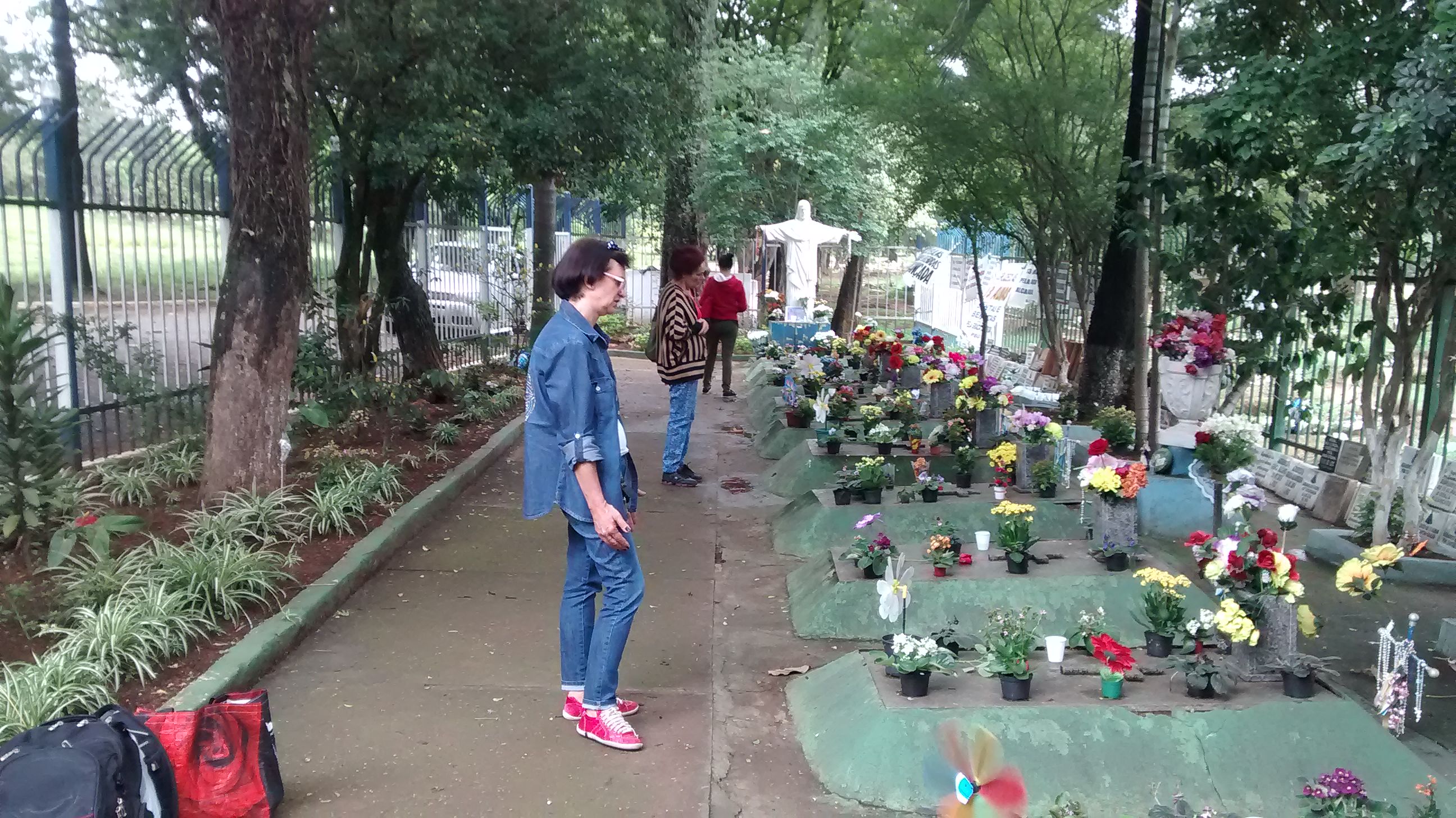
The Thirteen Unknown Graves: The graves of the 13 souls that were never identified in the Joelma Building fire. Visitors comes and puts glasses of water for them. // Photo: Wikimedia
The cemetery caretaker at the time, Luiz Nunez was so bothered by this and became desperate to stop the noise of their cries and poured water over the graves. This act of extinguishing an eternal fire he meant helped to quiet them, at least for one day.
From that day, visitors started leaving a glass of water on the grave instead of the usual flowers.
The Haunting at the Joelma Building
Back at the building where this tragedy happened, the reports of the paranormal continue to this day as well. People experienced strange phenomena where the cars in the parking lot outside of the Joelma Building would suddenly start blinking with their lights without anyone turning them on, and the inside of the building was also haunted.
It is said that every floor above the 15th floor is haunted, where the firefighters ladders didn’t reach. People keep seeing shadows in the stairways and experience malfunctioning elevators. Fire alarms going off with no fire is also some of the activity that is apparently going on there.
Curiously enough It is not the only tragedy that happened on the site of where the building stands either. And the place where the building was built has been called cursed land because of its history.
Cursed Land
In 1948, a chemistry professor named Paulo Camargo lived in a house at the same place where the Joelma Building would be built with his mother and two sisters. They had a lot of illness in their family that took a lot of energy for Camargo that had to take care of them by himself. It didn’t get better when Camargo found a girlfriend named Isaltina dos Amaros that his mother didn’t approve of.
It all ended with Camargo killing his entire family by shooting them and throwing them down a well. They never really found a clear motive as to why he ended up doing what he did. And they never got a chance to dig further either. When the police came and discovered the well, Camargo killed himself with the very gun he had used on his family.
When they built the Joelma building it is said they changed the entrance so the address wouldn’t be the same as the murderers. But the place was still the same and some even called it cursed land because of the place.
Even before the gruesome murders in 1948, the place was believed to be a ‘pelourinho’, a public place were they would take slaves and criminals. They would tie them up and torture them, and at times, also kill them for the public up to the abolition of slavery in 1888.
Purified by a Buddhist Monk
Today the Joelma Building is once again renamed and something stands on the top of a past buried tragedy. After the fire the Joelma Building closed for 4 years for reconstruction. It was renamed Edifício Praça da Bandeira after it opened again to rid itself of its past. But there are some things you just can’t bury.
In 2004, they were doing work on the building, but the owners was met with hesitant workers, not wanting to be there at all because of its haunted history. Many wouldn’t step into the new building until it was blessed by a Buddhist monk. The monk that did the blessing said in interviews that she had purified the place and deemed it safe for the living. The Buddhist monk also said that she could do nothing about the ghosts on the upper floors, and that they still lingered.
But is it enough to ward off another tragedy to have a monk purify the place? Is the supposedly cursed land clean and cured? Or was it just a coincidence that they happened on the same land as the past atrocities?
Marble mausoleums, famous people and haunted graves with excellent architecture. The city of Buenos Aires got more to offer than tango and good food. And in the old Recoleta Cemetery there are stories that those buried there is haunting the place. One of them is the grave of Rufina Cambacérès who were buried alive.
In the wonderful cemetery of Recoleta Cemetery in Buenos Aires, the most prominent of Argentina’s dead is laid to rest. Graves of famous people like Eva Peron, Nobel Prize winners, grandchildren of Naloleón Bonaparte and those who served as presidents have graves you can visit.
Walking through Recoleta Cemetery is an architectural wandering among the marble mausoleums with art-deco, neo-classical and neo-gothic architecture in the tombs to enjoy looking at and wondering the story of those inside.
The Recoleta Cemetery is more like a city of graves with narrow streets and cobbled ground, almost like the most quiet neighbourhood in Buenos Aires. Although the inhabitants of this city is no longer alive and the only ones roaming here are their ghosts.
Read Also: Check out all of our ghost stories around haunted cemeteries from around the world.
There are also those graves found in the Recoleta Cemetery that people got to know of the person resting there, only after the death.
Rufina Cambacérès: The Girl who Died Twice
Buried Alive: Portrait of Rufina Cambacérès that is now buried in the Recoleta Cemetery in Buenos Aires. Photo: Source
This is the case of Rufina Cambacérès, a girl that barely reached the age of nineteen before she tragically died, twice. Although she was a well known socialite in Buenos Aires at the turn of the 1900s when she was alive, it is her death she is remembered for today and is one of the buried in The Recoleta Cemetery. Although her burial was anything but peaceful.
Rufina Cambacérès’ family rose to the upper class of society in Buenos Aires from the money they made from cattle farming in Argentina. Her father, Eugenio Cambacérès was originally from France and a sort of famous writer in the country at the time.
Her father died of tuberculosis however when Rufina was only four, giving a precedent of premature deaths in the family, like the one Rufina herself would soon suffer from.
A Temporary Death
In 1902 Rufina died for the first time in her life. Her death happened on her birthday no less. On her 19th birthday to be exact on May 31st. Her mother threw a party at their lavish house in Buenos Aires and they were all supposed to go to Teatro Colón to see a show or the opera.
Rufina Cambacérès retreated to her bedroom before they went out. She was getting ready in her bedroom for the night when something felt off. Perhaps she didn’t even get a chance to realize what was happening. She suddenly collapsed on the floor and was deemed to be dead for everyone around, even her doctors.
The reason of death the doctors gave was by catalepsy, a classical diagnosis that they have given those who were buried alive in history, especially the dramatic temporarily deaths from literature. This is the same death that Juliet was given temporarily by the poison, and in Edgar Allen Poe’s writing: ‘A Premature Burial’, also beginning with a false death that ends in a true death in the coffin.
Catalepsy: Is a strange disorder from from Ancient Greek meaning “seizing, grasping”. It really is a nervous condition characterized by muscular rigidity and fixity of posture regardless of external stimuli, as well as decreased sensitivity to pain. It has been today linked to epilepsy, parkinson or drug related.
Being declared dead before your time was not unheard of during those time at all and there are many examples of it throughout time. Sadly, Rufina became a part of this tragic statistic and before anyone could prove any different, she was buried, and first after her burial, she died.
No less than three doctors pronounced her dead before she was put in a coffin and preparation for her birthday changed into preparing for her funeral. She was placed in her extravagant final resting place in the mausoleum already the next day in la Recoleta Cemetery. This seems extremely quick as there usually is held a wake to prevent people from being buried alive, and they really should have kept to the old customs before rushing her funeral.
According to legend, she woke up in the coffin, dark and she was all alone far from her bedroom she was getting ready to go party. No one could hear her screams from outside the huge mausoleum that now was her prison. She tried to break free from her tomb she suddenly found herself in, trying to scratch herself out with her bare hands. The luxurious and sturdy coffin was sealed shut though and she had no chance of breaking free from it with her bear hands.
She was stuck inside as the air was slowly fading away. She must have lasted for a couple of days perhaps before eventually suffocating to death. For real this time.
Recoleta Cemetery: a massive cemetery that houses many famous people like Eva Peron. The supposed haunted cemetery in Buenos Aires has also been hailed as the best cemetery by BBC in 2011, whatever that entails. It is known for looking almost like a little city within the city with streets and doors to the many mausoleums.
A cemetery worker allegedly noticed the lid of her casket was broken a few days later when he was around checking the many graves. The fact her grave was disturbed could also be attributed to robbers, since she was very likely to have been buried with her expensive jewelry because of her high status and riches.
But not according to those subscribing to the more macabre version, it was worse, it was the signs of her trying to escape from the coffin when she awoke from her shallow death and took one last shot at living.
The Final Death of Rufina Cambacérès
Another legend tells that Rufina even managed to get out of the casket and ran through the cemetery at night. She managed to get to the gates, but there she died of a heart attack from the fright and had to be put back inside the coffin.
More rumors about why she collapsed in the first place have been told throughout the years, creating more drama leading up to her collapsing. Among other things, her friend supposedly told her a secret so gruesome that it knocked her out so hard that they thought she was dead. According to her friend, the boyfriend Rufina was seeing was also together with Rufinas mother, or even worse, his own. A true scandal for a Tela Novela and would certainly send everyone into a shock.
No matter the origin of the story and what really happened that day before going to the opera, the statue outside the mausoleum is solemn enough to create a number of haunted rumours as the statue really looks like she is trying to escape.
The Haunted Mausoleum: The mausoleum of the young girl Rufina Cambacérès, completed with a statue, representing her, with her hand on the door, her eyes looking, almost with a longing look, away from her tomb in Recoleta Cemetery. Photo: Source: Tim Adams
Her family spared no expense on her mausoleum and Rufina Cambacérès final resting place is the only mausoleum made of marble from Milan and is decorated with beautiful ornaments. The young girl, supposed to be the young girl with one of her hands on the door, almost escaping, never able to see her 20th birthday or the exit of la Recoleta Cemetery.
According to some, the ghost of Rufina Cambacérès can still be seen roaming in the Recoleta Cemetery, still trying to get out of her shallow death.
So many legends surround the cemetery to this day like we find in Recoleta Cemetery. Among some of the ghosts supposed to haunt the place, is a cemetery worker, destined to linger in this place forever, as well as a woman in white, roaming the place. Perhaps trying to get out?
Along the rivers in Mexico a wailing woman wearing white can be seen and heard as she comes up drenched from the waters. She is desperately looking for her children she herself drowned. And according to the legends of La Llorona or the wailing woman, you are next.
“The scariest part was not that La Llorona was a monster, or that she came when you called her name three times in the dark, or that she could come into your room at night and take you from your bed like she’d done with her own babies. It was that once she’d been a person, a woman, a mother. And then a moment, an instant, a split second later, she was a monster. – Jaquira Díaz’s 2019 memoir, Ordinary Girls
This Mexican legend is one of the more well known, international as well now, as the movie came out a while back. But she has been around for centuries, a legend so well known it is now more or less an important part of the Mexican heritage and culture as well as in the Chicano Mexican community of the US.
Read Also: Check out all of our ghost stories from Mexico
La Llorona is Spanish meaning the weeping woman, or the wailer. She is perhaps a bit older than most think as well. The origin of the legend can have roots as far back in the Aztec legends and being one of ten omens foretelling the Conquest of Mexico and has also been linked to Aztec goddesses like Cihuacōātl.
Cihuacōātl was one of a number of motherhood and fertility goddesses. She was also the mother of the hunting God Mixcoatl, whom she abandoned at a crossroads. Tradition says that she often returns there to weep for her lost son, only to find a sacrificial knife. This story can help us understand why sometimes the story of La Llorona sometimes is set on a crossroad, not a long a river or some form of water.
The most common lore about La Llorona is about how she was being an Indigenous woman who murdered her own children, which she bore from a wealthy Spaniard. The villainous qualities of La Llorona have also been connected to the stories about Doña Marina, also known as La Malinche, or Maltinzin. She has been portrayed as a scheming woman who betrayed her people when she assisted the conquistadors and bore their children.
The Dangerous Wailing Woman in White
As well as finding similarities to the old Aztec mythology as well as working as an allegory about “betraying her own people”, the legend of La LLorona is something we can find similarities to all across the world. The story has also the ring of ‘White Woman’ often found in European legends as well as Greek mythology stories like with Jason and Medea, a scorned woman, killing her children when her man betrays her.
The weeping woman: A wooden cutout in the shape of La llorona. She has a white veil over her and is placed on the island la llorona in the channels of Xochimilco in Mexico.
The difference between the European trope of the Woman in White ghost is that La Llorona are often described as being more dangerous to those encountering her than her European counterpart. This makes her more like the vengeful spirits we often read about in Asian ghost stories as with the Japanese Onryo or the Korean Virgin Ghost for instance.
The story of La Llorona takes many turns and has today many variations. The ghost of La Llorona, the wailing ghost woman appears in crossroads, by lakes or rivers, on the road and has many variations. Even if she is most well known as a Mexican folktales there are other variation of the stoghost story in other South American countries as well like in Guatemala and Venezuela.
And as the history of Mexico, with its changes and social unrest, the story of La Llorona has followed closely behind, reshaped to fit the narrative of the time. Therefore, we will relate one of these variations and one of the common one told in the modern era.
The Story of La Llorona
The most told version of the story of La Llorona is set in a small village in Mexico, were a young woman lived. As mentioned she is often portrayed as an indigenous woman. Her name was Maria and came from a poor family. She was known in the village for her beauty, but will be remembered as La Llorona, the weeping woman. A tragic club to be in.
The Curse of La Llorona: The Tragic tale of the woman who drowns her children because her man abandoned her has been made into a movie many times. Here from the 2019 movie, the Curse of La Llorona//Source IMDB
One day, a very wealthy man came passing through town. DEpending to when the story is set, he was a Spanish conquistador or a wealthy rancher. He stopped when he saw the beautiful Maria and approached her. She was charmed by the wealthy man and when he proposed, she accepted at once. Maria’s family was overjoyed that their daughter would marry into a rich family and have a chance at a better life. But the father of this wealthy man however, was deeply disappointed at his sons choice of bride and didn’t approve of their marriage.
They chose to ignore the disapproving father and Maria and her now husband built a house in her town to get away from his judgmental father. Time went by and Maria gave birth to two twin boys. A seemingly happy marriage and life from the outside.
But not everything was rosy colored as it seemed. Her husband was always travelling and almost never spent any time with the family. When he was home, he only spent time with the boys, and Maria knew he no longer loved her and she started to fear that he would leave them.
One day the husband went away and never returned. Many years went by but they didn’t hear from him and they didn’t even know if he were living or dead. Still, there seemed to linger a faint hope in Maria, that he someday would return to them and they would once again be a happy family.
Maria and her boys was out walking along a river one day when the faint hope she had been carrying came crashing down. A carriage was pulled by and to her greatest shock she saw her once husband sitting in it. By his side a much younger and beautiful woman sat and it was clear that he had abandoned them for good.
Maria was furious and desperate as her world fell apart and she could no longer fool herself. Without thinking she picked up her two boys and threw them in the river, drowning them in a fit of rage, of desperation and perhaps even a horrible psychosis. Only after she saw the floating bodies of her now dead sons she realized what she had done. She jumped out after them to die with them. Now she spends rest of eternity on the hunt after her children along that river.
The Haunted Rivers and Dangers of her Ghost
Doomed to linger in purgatory for her sins, she haunts the place were she committed her crime. Exactly where this place is differs as the legend about her ghost now has gone into the cultural sphere and is more like an entity in itself than just a singular ghost.
It is said that is you hear the crying of La Llorona close to rivers or other forms of water, you must run the opposite way as she is known for being a dangerous ghost to encounter, still mad and filled with rage that will harm you.
In some variation of the legend the children were illegitimate children, and she murdered them so that they wouldn’t get taken away from her and be brought up by another woman the father was legally wed to. In any versions though, the legend about La Llorona invokes pity for her fate as well as fear for her actions.
The Danger of La Llorona: The story of La Llorona tells about a woman who murdered her children when her husband abandoned her. Now she haunts the rivers and are a danger to those encountering her.
According to the legends, she still calls after her children “ay, mis hijos” and is said to be on a hunt for her children like she doesn’t remember what happened to them, still unable to accept what she did. It can bring bad luck, even death if you hear her cries.
If you are pregnant, you must be extra careful of her because La Llorona is attracted to children and wants them to join her. Therefore children should not walk alone along rivers and she has become some sort of cautionary tale to keep them away from the dangerous waters.
It is said that in some versions of the story, she kidnaps kids that are reminding her of her own and asks for their forgiveness. Then she murders them to take the place of her own.
La Llorona in Popular Culture
Although the legend about La Llorona is an old one, it is still an iconic figure to feature in books, movies and songs. There she differs from being a misunderstood female ghost to a full on evil spirit that are out to harm people.
In movies there have been made stories about her since the 1930s, mostly horror movies, and it even got its own spin off in James Wan’s The Conjuring Universe in 2019.
The popular folk song called La Llorona that were popularised in 1941, was also included in the Pixar movie Coco in 2017. So it’s safe to say that the legend about the wailing woman still lingers in the Mexican and US cultural sphere and fears of her ghost doesn’t seem to fade away anytime soon.
Perhaps this is not the greatest summer to travel, but as the borders are opening up, so do we as well move over greater distances than we have. Perhaps some of these places are even closer to you than you think? Here we have gathered some of the most haunted attractions around the world you can visit for a ticket.
Winchester Mystery House San Jose, California
The Mystery House: Front view of the Winchester Mystery House/Ben Franske
This strange house, built upon the money, wealth and grief of the family fortune, the gun trade, this house is something else. Wind winding staircases going nowhere, doors leading to unknown destination and who know how much else secrets and hauntings the house holds.
The fortress was built in medieval times, withstanding plague, starvation from the cold winters and as a last stand during wars. It is also the location of several ghost the fortress has claimed as its own over the years. Smacked in the middle of the modern city of Oslo, it stands as a stark contrast of old and new, living and dead.
Advertisements
Island of the Dolls, (La Isla de las Muñecas) Mexico City, Mexico
If not for the ghost, go for the creepy decor. Allegedly a man found a dead girl and her doll. He started collecting dolls to appease the girls spirit. Now the island is full of them, hanging from trees, looking at all the tourists taking their holiday at this peculiar place. For around 200 pesos you can get a boat to take you there. On the island, there is also a bar. So, hey, holiday!
The Catacombs Paris, France
Bones: Wall made of skulls, catacombs of Paris/Djtox/wikicommons
A final resting place for some, not so restful for others. The catacombs were created in 1786 and are 500 miles of an underground maze, built of bones of the dead. And for a ticket, you can walk them. It has been held several scary paranormal claims, and it will only probably be more of them.
Yes, the tower, how many ghosts do you have captured? The fortress smacked in the busy streets of Londong have been a infamous spot for death and misery for over 900 years. It also holds some royal ghosts that never found peace, among them Anne Boleyn and Mary, Queen of Scots.
An online magazine about the paranormal, haunted and macabre. We collect the ghost stories from all around the world as well as review horror and gothic media.