Tag Archives: Italy

The Dark Side of Christmas: La Befana – Italy’s Christmas Witch

Advertisements

On an eternal path to greet the baby Jesus, the Italian Christmas Witch, La Befana leaves candy for the children and a question to the grown ups: Who was she really, and could her origins be older than her own tradition perhaps?

The Befana comes by night
With her shoes all tattered and torn
She comes dressed in the Roman way
Long live the Befana!

Italy, with its rich tapestry of folklore and traditions, adds a unique twist to the festive season with the legend of La Befana. This Christmas witch, who predates Santa Claus in Italian tradition, is a figure shrouded in mystery, magic, and a touch of spookiness.

La Befana: a custom in January in Rome”, Italian illustration from 1821 showing children and women at a market stall with a Befana figure.

The Legend of La Befana

La Befana is an old woman, often depicted as a witch with a broomstick, who visits children on the night of January 5th, the eve of the Feast of the Epiphany. According to Italian folklore, she flies through the night sky, delivering gifts to children much like Santa Claus does on Christmas Eve. However, La Befana’s tale is much older and imbued with a darker, more mystical aura.

The origins of La Befana’s legend are diverse and multifaceted, drawing from ancient Roman, pagan, and Christian traditions, sources going back as far as the eighth century. Some say it evolved from the Sabine/Roman goddess named Strenia who symbolizes the new year and the seasonal cycles linked to agriculture, or relating to the harvest of the past year, now ready to be reborn as new.

The Goddess Strenua: a Sabine deity associated with the new year, purification, and health, was often depicted with a snake like the Roman God of medicine, Aesculapius. Her cult was introduced by the Sabine King Titus Tatius, and on new year’s day in ancient Rome, her image and branches of bay laurel from her sacred grove were carried in procession from her shrine to the Arx on the Capitoline Hill. The Romans included Strenua in the annual auspices, seeking her blessings for the coming year, and the ceremonies evolved to include the custom of exchanging gifts on the first day of the New Year, often laurel twigs symbolizing good health that were then burned as incense for Strenua.

Some believe that Strenua is the origin of “Befana”. In Italian folklore Befana is an old witch that flies around Italy on a broomstick and comes down chimneys on Epiphany Eve (the night of January 5) to deliver gifts.On the twelfth night after the winter solstice, the death and rebirth of nature was celebrated through Mother Nature . The Romans believed that in these twelve nights, female figures flew over the cultivated fields, to propitiate the fertility of future crops, hence the myth of the “flying” figure. According to some, this female figure was first identified in Diana , the lunar goddess not only linked to game, but also to vegetation, while according to others she was associated with a minor divinity called Sàtia (goddess of satiety), or Aboundia (goddess of abundance ). Another hypothesis would connect the Befana with an ancient Roman festival, which always took place in winter, in honor of Janus and Strenia (from which the term “strenna” also derives) and during which gifts were exchanged [9] .

One popular version of the story recounts that La Befana was approached by the Three Wise Men during their journey to find the newborn Jesus after the Betlehem appeared in the sky. They asked for directions, but La Befana, busy with her housework, initially refused to help. Later, feeling remorseful, she tried to find the Wise Men and the baby Jesus, bringing gifts for the child. Unable to find them, she continues to search for Jesus every year, leaving gifts for children in the hope that one of them might be the Christ child.

The Spooky Aspect of La Befana

While La Befana is generally seen as a benevolent figure, her appearance and certain aspects of her legend lend her a spooky, witch-like quality. Dressed in tattered clothes, with a soot-covered face from climbing down chimneys, La Befana’s witch-like appearance contrasts sharply with the jolly figure of Santa Claus.

Her annual visit is not without a touch of fear. Italian children believe that La Befana will leave a lump of coal or dark candy if they have been naughty, rather than the sweets and small gifts she bestows upon the well-behaved. The thought of a witch visiting their home in the dead of night can be as thrilling as it is terrifying for young children.

Read More: Check out all haunted legends from the Christmas Season

Moreover, the image of an old witch flying through the night sky, broomstick in hand, evokes classic Halloween imagery, adding a layer of spookiness to the festive season. The idea that she continues her eternal search for the Christ child, year after year, wandering the dark winter skies, gives her story a haunting, almost ghostly dimension.

La Befana’s Rituals and Traditions

In Italy, the arrival of La Befana is celebrated with various customs and traditions. On the night of January 5th, children hang stockings by the fireplace and leave out food and wine for La Befana, hoping to appease the witch and receive her blessings. The next morning, they eagerly check their stockings for gifts or coal, depending on their behavior over the past year.

Throughout Italy, especially in the regions of Rome and the surrounding Lazio area, towns and cities host Epiphany fairs and parades. Dolls are made of her and effigies are burnt and bonfires are often lit.  One of the most famous celebrations takes place in Urbania, where thousands gather to celebrate La Befana with a grand festival featuring street performers, music, and, of course, the arrival of the Christmas witch herself.

La Befana in Modern Culture

Despite her spooky undertones, La Befana remains a beloved figure in Italian culture. She represents the blending of ancient traditions with modern festivities, embodying the spirit of both giving and penance. There is even a Viva la Befana in Roma at St. Peter’s Square in the mornings.

In recent years, La Befana has also become a symbol of female empowerment and independence, reflecting the strength and resilience of the old woman who braves the winter night alone. La Befana’s tale is a fascinating blend of whimsy, mystery, and a hint of spookiness. As Italy’s Christmas witch, she adds a unique and eerie charm to the festive season, reminding us that the magic of Christmas is not just about joy and light, but also about the mysteries that lurk in the shadows Her story continues to captivate and enchant, ensuring that the Christmas witch will remain an enduring part of Italy’s rich cultural heritage.

More like this

Newest Posts

References:

La Befana: an Epiphany tradition in Italy – Wanted in Rome 

Screw Santa Claus and Celebrate Befana, Italy’s Kidnapping Christmas Witch 

La Befana brings holiday treats 12 days after Christmas – The Washington Post 

The Ghost of the Mongolian Princess in Venice

Advertisements

Following her husband Marco Polo back to Venice from the Mongolian court, the princess never felt at home in this strange land. And today it is said the Mongolian Princess is still haunting the place, wishing for home.

Many of the places in Venice have rememberancing to their hero and legend, the merchant Marco Polo. He is most known for his travels to the silk route to the east where he released the book ‘The Travels of Marco Polo’. There he spent time at court at the powerful Kublai-Khan of Mongolia and Northern China in the late 1200s. 

After several decades on his travels, he finally returned home to Venice where he was from. However, he didn’t return alone. One of the houses in Corte del Milion used to belong to him and he lived there with his wife he brought back from the east. 

The Mongolian Princess Wife

According to the legend, Marco Polo married the daughter of Kublai-Khan’s and she followed her husband back to Venice, but never felt that the Venetians embraced her as their own.

Marco Polo’s wife was alone in a foreign country with a foreign customs and language. And then her husband disappeared as well when he was imprisoned. 

The Mongolian Princess: Did Marco Polo marry one of the Khan’s daughters? According to the legend she followed him back to Venice, although she suffered a tragic fate and is supposedly haunting their former mansion.

In 1298, Marco Polo was imprisoned in Genoa for a period of time. He returned to Venice in 1295 with his wealth converted into gemstones. Venice was at war with the Republic of Genoa at that time. Marco Polo joined the war by equipping a galley with a trebuchet.

Read More: Check out all ghost stories from Italy

He spent several months in prison dictating his travels to a fellow inmate named Rustichello da Pisa. The detailed account, which included tales from China, was spread throughout Europe in manuscript form and became known as “The Travels of Marco Polo”. Marco Polo was released from captivity in August 1299 and returned to Venice, where his family had purchased a large palace.

According to this legend, the Mongolian Princess sister in law was jealous of her and lied to the princess and told that Marco Polo had died in prison. This was the last straw for Marco Polo’s wife as she was both alone and homesick and she ended up committing suicide. Some say she set her clothes on fire and jumped into the canal.

They say that she was a good singer, and to this day, you can sometimes hear a soft and sweet song, singing in her native language. If you pass through the Milion courtyard where Polo’s houses stood you may even spot a ghostly figure holding a small candle, looking back to her homeland in the east she never returned to. 

Marco Polo’s Real Venetian Wife

If the legend is true or not is difficult to say, as little of his life is known or how much of his writings were actually true, and we know even less about his supposed Mongolian Princess wife from the east. Did she even exist?

We actually have documented that Marco Polo married a Venetian lady named Donata Badoer. They married after he got out from prison in 1300 and together they had three daughters together and were married for 24 years. 

The Real Princess Kököchin Khatun

So where did the rumor about the Mongolian princess come from then? It is true that Marco Polo’s father and uncle were given a last mission before returning to Venice to escort the 17-year old Mongolian princess called Kököchin Khatun (阔阔真). They were chosen as escorts for her to her wedding where the Mongolian Princess was marrying a Persian ruler in the Mongol Empire.

In some version of the story, she had died when they arrived, and from there rumors about Marco Polo marrying her started. Did she even die though? They did set out from what is today Beijing in 1291, and started travelling. Most accounts tell about the Polo’s leaving her at the wedding in 1293 before continuing on their way back to Venice. In the meantime her would be husband had died though, and she married his son instead and died herself in 1296.

The Ghost of the Mongolian Princess in Venice

As the sun set over the picturesque canals of Venice, a soft breeze rustled through the ancient alleyways. In the heart of the city, the ghostly figure of the Mongolian Princess still roamed, her luminous presence illuminating the darkness. And so, as the Venetians ventured through the Milion courtyard, they would occasionally catch a glimpse of the spectral figure.

A huge theater was built on top of the old family house and is today known as Malibran Theatre. There has been excavation done that uncovered pieces of information about the time Marco Polo and his family lived there. If that included something relating to an Mongolian princess is unclear though. 

More like this

Newest Posts

References

Featured Image: Erik Törner/Flickr

Legend Marco Polo Chinese Wife in Venice | Milion courtyard

19 Facts About Marco Polo’s Wife That Are Surprising! | Kidadl

Kököchin – Wikipedia 

Palazzo Ca’Dario – The Cursed Palace in Venice

Advertisements

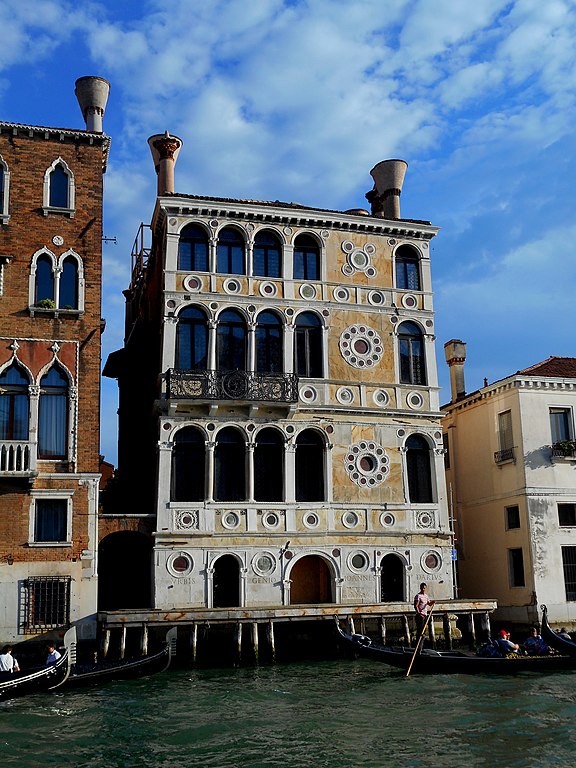
Along the Grand Canal in Venice there is this gothic palace called Palazzo Ca’Dario. For centuries the owners have met an unfortunate end and today it is most known as the most cursed palace in Venice.

Taking a walk in Venice’s narrow streets or from a boat on the shallow canals, there are many spectacular buildings towering over the shallow canals. Each with its long and sometimes dark history. 

One of these wonderful buildings is the small, but exquizit palace in Venetian gothic style named Ca’Dario on the Canal Grande. It has a marvelous facade of Istrian stone and is decorated with marbles and medallions. 

Read More: Check out all of the ghost stories from Italy

Palazzo Ca’Dario is often for sale, it is said though, as the owners don’t seem to linger for too long in this place, something that doesn’t happen very often in Venice. But for this particular palace, there is a very particular reason for its vacancy. According to local venetians, the place is cursed and has been for centuries. 

The Palazzo Ca’Dario is often called the house that kills and is today, perhaps one of the most famous cursed houses to this day. The owner that takes up residence in the palace will soon after meet a violent death or at least live to be ruined. 

The Dario Family

For evidence for this legend, or perhaps more accurately, the reason for this legend behind Palazzo Ca’Dario, is the track record of owners that died in horrific ways or lost all of their fortune, tracing back to the 16th century to modern day. 

According to legend, it all started with the daughter of Giovanni Dario. Giovanni Dario was the Secretary of the Senate of the Republic of Venice and built Palazzo Ca’Dario in the 15th century. On the facade of the palace there is an inscription that reads Urbis Genio Joannes Darius, meaning Giovanni Dario to the Genius of the City. 

His daughter Marietta Dario was the first person to have died in a horrible way. After her husband Vincenzo went bankrupt and in some variation of the story, stabbed to death, she fell into a darkness she didn’t manage to climb out from. She committed suicide it that very palace her father built. Not long after their son followed after being murdered in Crete by assassins. 

The Curse Continues to this Day

Since then there have been over 10 dramatic deaths connected to the owners of Palazzo Ca’Dario, and even people like Woody Allen, who considered buying the house, refused after he heard about the curse of the house. The owners don’t necessarily have to live in the palace to be struck by the curse, they simply have to buy it. 

The Barbaro family was one of the families that lost all of their fortune shortly after they bought the place. 

In 1842, an Englishman named Radon Brown lost all of his money as well and committed suicide together with his male lover after their romantic relationship were revealed. A very similar fate fell upon the American Charles Briggs who were accused of being gay living their. Together with his lover, they fled to Mexico, but his lover died by suicide. 

The Cursed Palace: Palazzo Ca’Dario as it is today along the Grand Canal in Venice. For so many centuries it has been considered to be one of the most cursed places in the entire city of Venice as the owners have often met an unfortunate end.

The French poet Henri de Régnier lived there until he was so seriously ill he had to return back to France. The manager of The Who, Christopher Lambert was also one of the owners that seemed to get ill after purchasing the house in the early 1970s. 

In 1979, Fillippo Giordano delle Lanze, a count from Turin was killed by his lover inside the palace. His lover, a Croatian sailor fled to London were he in turn was murdered. 

In the 1980’s a financier named Raul Gardini bought the place. He was later found guiltu of being implicated in the Tangentopoli government corruption scandal and committed suicide in 1993. 

The Reason Behind the Curse of Palazzo Ca’Dario

Why is Palazzo Ca’Dario so cursed you asked? There are several legends to it. Some claim it is from the original death of the daughter of Dario that is still echoing as a curse in the building, some say it is a building built on top of an old Templar cemetery or built on a crossroad. 

Perhaps, there is more to say about who can afford to live in a palace in the first place, and how far they fall when they lose everything. 

There is noted however by people that the inscription on the facade praising the builder of Palazzo Ca’Dario to mean something completely different as an anagram. Sub ruina insidiosa genero, meaning I bring treacherous ruins to those who live under this roof

The Palazzo Ca’Dario on the Canal

As the sun sets over the shimmering waters of the Grand Canal, a sense of foreboding surrounds Palazzo Ca’Dario. The legacy of tragedy and misfortune that has plagued its owners for centuries continues to cast its dark shadow upon the palace. The curse, intertwined with the very fabric of the building, has become an indelible part of Venice’s history.

Despite the tales of doom and the cautionary whispers of locals, there are always those who are drawn to the enigmatic allure of Palazzo Ca’Dario. Through the years, the curse has claimed its victims with ruthless precision. Lives lost, fortunes squandered, and dreams shattered. The hallways echo with the silent cries of the past, a testament to the insidious nature of the curse that has plagued this cursed palace.

Legends and theories abound, attempting to unravel the origins of the curse. Is it the tortured spirit of Marietta Dario, unable to find peace after her tragic demise? Or does the curse stem from a darker force, buried deep within the ancient foundations, waiting to consume those who dare to call it home?

Perhaps one day, the curse will be broken, the darkness lifted from this ill-fated palace. But until then, Palazzo Ca’Dario remains a testament to the fragility of human existence, a haunting reminder that some places are best left to the whispers of legends and the pages of history.

More like this

Newest Posts

References

Venice Legends and Ghosts

https://www.atlasobscura.com/places/palazzo-dario

The Cursed Columns at St. Mark’s Square

Advertisements

At St. Mark’s Square in Venice there are two columns placed. And if you believe old folklore you can’t pass between them, or you’ll be cursed. 

The two columns at St. Marco Square, or locally known as: Colonna di San Todaro, is wonderful to look at and one of the main places tourists visit as they wander around in the city between the majestic Doge Palace and the famous bell tower.

However, the origin of these columns is not a happy one as they are a reminder of what war nation Venice once was. They were transported to Venice in the 1100s after the Venetians sacked the city of Constantinople. 

There were originally 3 of them, but the last one sank into the sea on the voyage. They even hired a special sea master to look for the third one for almost 20 years, but the column was forever swallowed somewhere in the Venetian lagoon. 

The 2 remaining ones were put on the square by a man named Niccolo Barattieri. For a long time this was the only place where you were allowed to gamble in the city, which was strictly forbidden, because that was what Barattieri wanted as thanks for putting up the two remaining columns safely. 

It was then later used as a place for executions. Between the two columns the thieves, enemies of the Republic, murderers, heretics and others were parade before being executed as a spectacle for the entire city. 

Because of this the columns are considered cursed because of all of the people that died between them. And according to legend, you can be too if you pass between them. 

Advertisements

More like this

Newest Posts

References

Casino degli Spiriti — The House of Souls

Advertisements

By the Venetian lagoon there is a house so cursed not even fishermen will fish near it. Many dark legends surround the Casino degli Spiriti, or The House of Souls, from black magic to the ghost of a heartbroken painter.  

Right by the water there is a decaying of a once grand palace that is haunted by its own legends. The house of Casino degli Spiriti or the House of Souls was once a very beautiful building in Fondamenta Gasparo Contarini, overlooking the famous Murano island just across the lagoon. 

The house of souls is actually part of the Palazzo Contarini dal Zaffo, and the house is an annex which are more commonly known for its legends of ghosts, murder and spiritism. Today, there are so many versions of the legend as to just why it is so cursed. 

The Ghost of Pietro Luzzo da Feltre

One of the most famous legends of Casino degli Spiriti is that of Pietro Luzzo da Feltre, a painter who lived in the 16th century, together with famous artists like Titan. This is at least the painter most associated with the legend, although we have proof that he actually died in war, not over unrequited love as this legend would have it as.  

Casino degli Spiriti: The house, overlooking the Venetian Lagoon.

Anyway, this was at the height of the Renaissance and Italy was a culture center. The Palazzo Contarini dal Zaffo was back then known for a meeting place for Venetian philosophers, artists and learned men. 

Not a lot is known about Pietro Luzzo da Feltre’s life and not many of his works are preserved to this day. We do now know a couple of curious facts about him though. For one, one of his many nicknames was Morto da Feltre, where Morto means ‘dead’ or ‘dead one’. There are a couple of reasons why this was his nickname. It could be because of his joyless temperament, the fact that he looked ghostly or his peculiar hobby of exploring crypts and burial grounds. 

Pietro Luzzo da Feltre’s legacy though is his demise because of an unrequited love rather than his art. The woman was known as La Bella Cecilia and it was said she had a cherub face and was also a singer. She however was Giorgione’s lover and model, another painter during that time and rejected Pietro Luzzo da Feltre when he fell for her.

According to some variations of the legend, he simply disappeared one day. It is believed that he killed himself in the annex he lived in that would be known as Casino degli Spiriti, unable to go on. 

It is said that once, his artist friends saw him through the window a few days after his disappearance, and they hurried over to talk with him. But when they entered the room they thought they saw him in, it was empty. 

Strange noises were heard at night after the place was abandoned. Could it be the ghost of Luzzo? Or perhaps it was religious cults gathering to invoke demons and do magic. According to legend his ghost is still in that house, still pining for the woman he could never have.  

The Murder House

Later, after the artist of the Renaissance had left and the grandieu of the place started decaying overtime, it was used for various purposes. Casino degli Spiriti was the place venetian died from the plague as the house was used as a hospital. It was also used as an anatomical theater where they did autopsies. So a lot of souls came and left in this building. 

In 1929, four people were found dead in the house: a priest, two brothers and a gondolier. There was no explanation of this random gathering of people or what had happened. They were apparently all missing their heads and their right hands, but they never got the ones that did it. 

In recent years, the house is still not rid of its ghosts and gruesome history. Linda Civetta lived in Belluno and managed her family’s bar. She went to Venice in 1947 to resell cigarettes on the black market which was big business after the second world war.  She was never able to return home. She was killed, cut up and thrown into the lagoon in a trunk. She was found right in front of this cursed building two weeks after her murder by a local fisherman. 

Apparently she was carrying large amount of money and this was the motive behind her murder. The murderer was Bartolomeo Toma, a gambler and a gondolier named Luigi Sardi. 

Even to this day, the local Venetian fishermen don’t go near that place to fish. 

Advertisements

More like this

Newest Posts

References

Haunted Venice – Legends, Mysteries and Stories

The Casino of the Spirits — ArtCurious 

The Bell-Ringer At St. Mark’s Square

Advertisements

At the famous Bell Tower at St. Mark’s Square in Venice, the ghost of a former Bell-Ringer is haunting the place, trying to sound the bells one more time. 

Walking the narrow streets and alleys of Venice, there are tales of a skeleton still walking among us, rattling his bones and asking for alms. This is said to be along Bressana Court at SS. Giovanni and Paolo. 

It is said it is the skeleton of one of the last The Bell-Ringer at St Mark, or Campanile di San Marco, one of the more popular tourist spots in Venice. The Bell-Ringer was said to be a very tall man, ringing the bell of the St. Mark’s Campanile, a huge bell-tower on St. Mark’s square. The bell tower is one of the standing symbols of the republic and the highest point in the city.

Read More: Check out every ghost story from Italy

From here, Galileo Galilei sat in 1609 and demonstrated his telescope and from here Goethe saw the sea for the first time in 1786. Although the tower has been destroyed many times, the Venetians have always rebuilt it just as it was. 

When the almost 100 meter high tower was changed into a bell tower in the 1100s, it wasn’t just to ring bells. It worked as a watch tower and lighthouse before being turned into just the belltower. This was where The Bell-Ringer was working, ringing the five bells every day at the right time.  

The Bell-Ringer was not a content man though and according to the legend, he was easily led. He allegedly sold his bones out of greed to a scientist. The Bell-Ringer agreed to it and accepted the advanced payment, and started to go out every night drinking himself to an early death.  

After his death, it is believed that The Bell-Ringer regretted taking the offer of giving his skeleton away to a scientist. Because of this he was condemned to wander at night in his skeleton form until he had enough money to buy himself free from the curse he brought on himself. 

To this day you can see the actual skeleton of the bell-ringer in the Venice’s Natural History Museum. According to the legend however, the skeleton leaves the museum at night, trying to do his job, ringing the twelve bells of the St. Mark’s Campanile. 

More like this

Newest Posts

References

Haunted Venice – Legends, Mysteries and Stories

Venice Legends and Ghosts

The Redshirt Soldier in Biennale Gardens

Advertisements

A ghost in a red shirt used to haunt the Biennale Gardens in Venice. The former soldier had to uphold his promise to protect his hero, Garibaldi, even in death. 

In the Castello district in Venice, in the Giardini della Biennale there is a statue of a soldier of Garibaldi, a hero of the Italian Unification. If you look closely though, there is another statue to see. Right behind Garibaldi’s statue there is a bronze statue of a lesser known soldier that is still standing guard, right behind Garibaldi’s back in the garden. 

Garibaldi himself was an Italian general, patriot, revolutionary and republican. He is remembered as a big contributor to the Italian unification and the creation of the Kingdom of Italy in the 19th century. 

The statue of the soldier was once a man named Giuseppe Zolli. He was a local and studied at the University of Padua before joining Italy’s independence war in 1859. He joined what became known as the Camice Rosse, or the Redshirts. These were volunteering men that followed Garibaldi and fought against the Austrian Empire, The kingdom of Two Sicilies and the Papal States among others and were very famous at the time. 

RedShirts: A typical redshirt worn by Garibaldi’s men

The young soldier, Giuseppe Zolli was so dedicated to this man that he swore an oath to always guard him, even in his death. Because he did die in service during the Mille Expedition or the Expedition of the Thousand, a mission to take back Southern Italy from Bourbon rule. 

After he died he was buried on the island of San Michele, which is the cemetery of Venice. 

The statue of Zolli wasn’t placed there until 1921, when people started to notice strange things happening around the war heroes monument. People reported of a ghostly soldier all dressed in a red shirt tripping and tugging at people passing by the monument. An elderly man living close by recognized the soldier as Zolli and told them all about his promise. The city then decided to erect a statue in his honor. 

However, if you are looking for the ghostly soldier, he is probably nowhere to be found. After they placed the statue of the soldier, there were apparently no more sightings of the ghost, as he would be able to always stand guard of his hero, just as he promised. 

Advertisements

More like this

Newest Posts

References

The Bride Missing her Ring Finger in Venice

Advertisements

Killed because of love, the would be bride now walks in the Castello district of Venice, missing her ring finger and her loved one. 

In Campo St. Piero in Castello area of Venice, there is a young woman dressed as a bride walking up and down the streets. It is nothing novel about a bride in Venice as it is quite the romantic place, but for this particular bride you need to take a closer look at something other than her beautiful dress. 

The bride walking the streets in Campo St. Piero is missing a finger, which according to legend was cut off before the wedding. This bride is known as Tosca, once a beautiful but poor girl from Treviso. She was engaged to marry a very wealthy nobleman who was much older than her. It wasn’t love, it was safety. 

She fell in love though, but not with her betrothed. It was with a young hunter and together they escaped to Venice to live out their love. But the love they had, would not last, as the nobleman followed them there and ended it all. 

Toscas betrhothed killed her lover and cut off her finger, swearing that if he couldn’t have her, then no one could. But he could never have her either as she died shortly after. 

On the 22nd of September in 1379 in Campo St. Piero, she took her own life to escape her loveless marriage. But she would never leave Venice, as she came back as a ghost to haunt the place were she tought she would be free to live with her lover. 

Coincidentally, it was her ring finger as well and she is looking for her ring finger, still dressed, walking up and down the Castello district as a bride she never got the chance to become.

Advertisements

More like this

Newest Posts

References

Venice Legends and Ghosts

The Ghost of Fosco Loredan

Advertisements

At the day of his wife, Elena Grimani’s death anniversary, a the ghost of noble man called Fosco Loredan can be seen carrying his dead wife’s head . The very same head he himself decapitated out of jealousy and had to carry to Rome.

Once upon a time in 16th century Venice, a nobleman called Fosco Loredan fell in love with a woman. Her name was Elena Grimani and was the Doge’s niece and in a very powerful position. They married, but it wasn’t happily ever after. 

Not much is known of Loredan’s life except that he was a very well known man. It was also known that he was a horrendously jealous man and kept accusing his wife of cheating on him. He would also regularly spy on his much younger wife as she was always getting much attention because of her beauty. Elena Grimani denied having an affair, but he wouldn’t believe a single word she said. 

One night in 1598, Loredan went to Campiello del Remér in the Cannaregio district of Venice to look for his wife. He was sure that she was betraying him with another man. In a fit of rage he chased her from their marital home with a sword in his hand. 

The chase ended with Loredan beheading Elena Griman in front of everyone at Campiello del Remér, including the Doge himself, who was the leader of Venice.

According to the legend, the Doge Marino heard the desperate cries of his niece, Elena Grimani and went to her rescue. He placed himself between her and her husband, to no avail. The angry man managed to distract the Doge enough to get past him and behead his wife to everyone’s shock. 

Loredan tried immediately to ask the Doge’s forgiveness as it was his right as a husband to punish a cheating wife. The Doge refused though. 

Loredan’s punishment for his crime was to carry the body of his dead wife he had decapitated to the pope in Rome to ask forgiveness and mercy. But when he finally arrived there after his long journey, still with his clothes stained with his dead wife’s blood, Pope Clement VIII refused to see him and he wasn’t granted the forgiveness he seeked. 

An arrest order was put on him Instead and he had to fight off the guards to escape them and Rome. Loredan walked back to Venice, still holding the decaying body of the woman he murdered in his hands. 

It didn’t go well for Loredan after his crime and he didn’t see a way out. He returned to the scene of his crima in Campiello del Remér and in despair he threw himself into the lagoon and drowned. 

Today, the local legend says that on the anniversary of Elena’s killing and even on full moon nights, on those night when the northern wind blows, you can still see his ghost along the Grand Canal by Campiello Del Remer, coming out of the water, still carrying his wife’s head. 

Advertisements

More like this

Newest Posts

References

The Child Coffin in the Venetian Lagoon

Advertisements

The bright blue water in the Venetian Lagoon turns gray in the night. In the fog you can hardly see anything. But beware, look out for a small child coffin with four little candles lit on it. It is the hauntings of the young girl who drowned and trying to warn people that she is still there. 

Fog crept over the lagoon in Venice. Just off St. Michele Island on the 29th of November in 1904, nighttime and the fog made it dark to be on the water. 

All of the transportation in Venice happened and still happens to be on the water and a water bus known as a vaporetto and a gondola was passing. Francesco Quintavalle was the captain on the vaporetto, or water bus called ‘Pellestrina’, and knew he couldn’t see much. Still, he had his passengers from the Fondamenta Nove he had to transport to the island of Burano, known for its colorful houses across the lagoon. The colorful houses were all gray tonight. 

When passing the cemetery of St. Michele, the captain gave orders to change course. But a gondola was right behind them and had no chance of stopping in time before crashing with the vaporetto. The gondola was wrecked, but some of the passengers managed to cling onto the gondola. However,  five passengers ended up in the dark water and never came up alive. 

All night they searched for the rest of the passengers that disappeared into the lagoon. They were all women. Thosa Mary Bull was the first to be found, dead of hypothermia and it wasn’t looking good for the rest.. In the morning hours the bodies of Lei, Thoso of Borelli and Amalia Padovan Vistosi were found as well. But two of the girls, Teresa Sandon and Giuseppina Gabriel Carmelo were not found for a while. 

It wasn’t until the sister of Teresa Sandon had a dream of her sister in September 1905 another of the bodies were uncovered. The ghost of the drowned woman asked her to pray for her and free her soul. Ten days later two fishermen found the body of Sandon. 

But Giuseppina Gabriel Carmelo, just a little girl, wasn’t as lucky, and she was never found.

Now to this day, just off St Michele, which is one of the big cemeteries in Venice, you can sometimes see a small floating coffin with four burning candles lit on the lid on foggy nights. This is the spirit of Giuseppina, signaling that she is there and to stop other ferrymen and people on boats to never collide with her again. 

Advertisements

More like this

Newest Posts

References

Venice Legends and Ghosts 

Mysterious Venice | FernFlower Group