Deep in the jungle of Côn Đảo in Vietnam, there is an unfinished bridged called Ma Thiên Lãnh Bridge also called The Ghost Bridge, both because of its dark origin as well as the lingering presence still seen.
The bridge was built by 300 prisoners from the Côn Đảo Prison during the French colonization of Vietnam. The Côn Đảo Prison was a prison that the French colonists used to imprison those thought to be especially dangerous to the colonial government. The prison was used from the 1800s until the end of the Vietnam war. A number of stories of torture and abuse comes from that prison, located on an island. And some of these unfortunate prisoners were made to build this Ghost Bridge in the middle of the jungle.
Death on the Bridge
The Ghost Bridge: Several reports about paranormal happenings and ghosts comes from this bridge that were built on the labour of prisoners. Source: vetaucondao.vn
To build infrastructure on the island with the prison, they needed material. In 1930, French colonialists made the prisoners carry rocks to the Núi Chúa mountain to build this bridge. The purpose of the bridge was to make transportation of materials to Ong Dung Beach to be used as building the infrastructure of the Côn Đảo island. It is said that around 356 of the prisoners forced to build this bridge lost their life, either starving to death, poisonous drinking water, horrible abuse from the French or even the climate or the rugged terrain became too much for them.
However, in spite of how much effort that was made to build the bridge, it would never be completed. In August 1945 after the revolution, the work on the bridge was left as the French left Vietnam and only parts of the bridge were complete and stands today, now only standing as a reminder of the bloody labour the prisoners were forced to.
The Lingering Ghosts
Many encounters from the locals have been told of the paranormal kind. One villager that was drinking with his friend told about a man with long hair, white shirt and black trousers, watching him from a distance before suddenly disappearing.
A female villager saw a woman in a white dress at dawn, standing on the bridge at dawn, and as the villager told, she recognized the woman as a hungry ghost. Another female villager met the ghosts of two boys, none of them were wearing a shirt as they forced her to give them dessert.
The blinking paper lantern hides a vengeful ghost in one of the most famous Japanese ghost stories. From a local legend about a real woman to the stage, the myth of the ghost of Oiwacontinues to inspire horror.
Many of the more well known stories of ghost and horror from Japan is about the Onryō, meaning a vengeful spirit. A ghost so full of regret and rage, they are posing a threat to living humans. And sometimes, they can come in the form as a Japanese Paper Lantern Ghost. This is the case of the ghost of Oiwa.
In many cultures, ghosts are put in different categories. Such is the case with Onryō (怨霊 onryō,) It basically means “vengeful spirit” or “wrathful spirit” in Japanese and is a mythological spirit of vengeance from Japanese folklore. They also have ghosts, called yurei, but these differ in the will of the ghost. As opposed to…
There are many movies, books and popular culture that feeds on the old legend of the vengeful spirit. Today in modern time we have The Ring and The Grudge series that makes use of this old legend, and in many instances, they are both also inspired by the most iconic Onryō throughout time, the ghost of Oiwa.
Yotsuya Kaidan — The Tale of Oiwa and Tamiya Iemon
The ghost of Oiwa is a vengeful spirit that we first learned of through the kabuki play called Yotsuya Kaidan (四谷怪談) or Ghost Story of Yotsuya from 1825. It was written by the writer Tsuruya Namboku IV, known for his plays with supernatural themes and macabre and grotesque characters.
She is an easy recognisable character on stage with her droopy eye and hair falling out or as the iconic Paper Lantern Ghost. She is also often seen as a Japanese ghost lantern in art.
Read Also: Check out all of the ghost stories from Japan
Kabuki Theatre
The Kabuki theatre is a traditional Japanese style plays originating in the Edo period. It is well known for its characteristics wigs, costumes, makeup and masks. It is exclusively theatre troops of men playing all roles. The distinct styled stage performances is the origin of many iconic looks in modern pop culture, like the distinct style of the Onryō with the white dress, white makeup and long black hair.
Yotsuya Kaidan is not the first and original written account of the legend, but certainly the most famous one. The first written manuscript about the ghost of Oiwa is dated to 1727 called Yotsuya zōtan 四谷雑談. It was an underground publication, most likely of the scandalous rumour of the true rumours of a noble family and lady that acted as an Onryō after her death.
Yotsuya Kaidan tells the story of Oiwa and Tamiya Iemon and in this play it tells the story of a woman scorned by her man and coming back from the dead for revenge. Throughout the years, there have been many adaptation and versions of the story and it was a popular story to tell as a part of a samurai parlor game.
It is considered to be one of Nihon san dai kaidan — Japan’s Big Three Ghost Stories. It is arguably the most famous Japanese ghost story of all time and has spurned a couple of local legends of its own.
Read about the Nihon san dai kaidan—Japan’s Big Three Ghost Stories:
The Botan Dōrō or Tales of the Peony Lantern is a ghost story told since the Ming dynasty in China to today. Most popular through the Kaidan theater plays, it is now one of Japan’s most well known ghost stories.
The tale of Banchō Sarayashiki (番町皿屋敷, The Dish Mansion at Banchō) is a well known Japanese ghost story (kaidan). It was popularized in the kabuki theater tradition, and lives on in popular culture and folklore alike.
Yotsuya Kaidan starts out as a classical romantic tale. Oiwa was said to be a loving and devoted wife that risked everything for her husband, Tamiya Iemon. They married in secret, without her father’s consent. Tamiya Iemon was a wandering samurai, a poor rōnin and not suited to marry his daughter according to the father.
The ghost of Oiwa From the ”Thirty-six Ghosts” series by Tsukioka Yoshitoshi, ”The Yotsuya Ghost Story”, 1892.
Oiwa’s father whoever, was not as pleased with her marrying this man without honor and no money. When he found out the rōnin’s misdeeds, he confronted him. After a heated argument, the father was killed by the son in law when he threatened to make them stay apart from each other, and he did not bless their marriage.
After his death, Oiwa mourned her father. Iemon comforted Oiwa, claiming they would find her father’s killer.
To earn money he had to take up work as an umbrella maker to care for his pregnant wife. The old samurai grew bored doing the tedious work and turned resentful towards his wife, Oiwa. A woman he once loved and done horrible things to stay with. But in the end, there was no love left.
Next door they had a neighbor with a granddaughter that loved Iemon. The neighbor himself wanted his granddaughter and Iemon to get married. They were wealthy neighbors, and Iemon wanted to be that as well. So they planned how to get rid of Oiwa together.
Unbeknownst to Oiwa they sent her either an ointment or face cream laced with poison. But the poison didn’t kill her and only left her disfigured with one eye drooping and her hair falling off as she tried to brush through it, making Iemon so disgusted by her, he came up with a plan to rid himself of her. He hired one of his friends to rape her so that he would have grounds for a divorce.
His friend however is unable to go through with the plan and shows her a mirror instead. When she sees herself she understands what has happen and how she has been deceived. She takes a sword and accidently kills herself with it, and on her last breath, she curses Iemons name. In some versions there is actually Iemon that kills her.
Iemon threw her in the river to rot and went on to plan the wedding to the neighbors granddaughter. That night, the night before his wedding, he had terrible night terrors, and he saw his dead wife manifesting. In a burning paper lantern she comes out as a ghost, frightening him as a warning of the hauntings that are about to come.
The Chōchin obake
In Japanese legends, they have this concept of Tsukumogami (付喪神, “Kami of tool). This is the belief that inanimate objects, when they ‘serve’ their owners for a hundred years, they are granted life and a soul. When the Japanese lantern, or Chōchin reaches this age, it can become Chōchin obake, a Japanese lantern ghost, a mostly harmless ghost that laughs and lightly scares humans. But they could also be inhabited by a powerful onryō.
The Lantern: The print depicts a Kamiya Iantern haunted by the ghost of Oiwa as the Paper Lantern Ghost in Yotsuya Kaidan Kuniyoshi Utagawa, ”The Ghost in the Lantern”, 1852.
But he is not frightened enough as he still goes on with the wedding the next day. When he lifted the veil of his bride though, it was the ghost of Oiwas disfigured face staring back at him. He beheaded her, and therefore, his new bride as well. There is all in all a lot of killing going on.
He was then pursued by the ghost of Oiwa, not wanting him to escape. She was turned into a vengeful ghost, pursuing him into madness, making him suffer. He dies in the end, after suffering horrible.
It changes in the different adaptations of Yotsuya Kaidan how he dies though. Sometimes he is killed by Oiwa’s brother, or brother in law and in other versions it’s the haunting of the ghost of Oiwa that drives him out of his mind and into death. Sometimes it’s Oiwa herself, that pulls him down from the height with her. Either way her revenge is complete.
Advertisements
The Deaths Behind The Play of the Paper Lantern Ghost
The success of the Yotsuya Kaidan play was so big that they had to reschedule more performances to meet the demands. It was mostly believed that the popularity of the play was because it tapped into the zeitgeist of the society at the time.
Oiwa as the lantern: The ghost of Oiwa manifesting herself as a Japanese Paper Lantern Ghost. From the series One Hundred Tales (Hyaku monogatari). Print by Katsushika Hokusai. 1830
The theme of repressed women was something that reflected the Bunsei era that was also a time of great unrest. And the story of the victim taking her revenge of her oppressor was something the audience revelled in.
But where did the story come from? Was it just from the imagination to Nanboku when he wrote the play?
In most blogs it is said the legend created the play. But was it actually the play that created the legend? Yes, it is based on the terrifying vengeful ghost, something older than the kabuki play. But were did Nanboku really get his story from?
According to some sources Nanboku’s play was based of an actual murder of the wife of a samurai that went insane after her husband got another woman pregnant. She wandered off from her home, never to be seen again.
It is also claimed that Nanboku based his play from to separate murders. One of the murders was that of two servants who had murdered their masters. They were caught and executed on the same day. The second murder that inspired the play was a samurai that nailed his wife and her lover to a wooden board and threw them into the Kanda River for being faithless.
In any case what source the play was created from, the play itself became something that created more legend. It has adapted for film over 30 times, and continues to be an influence on Japanese horror today.
The Real Oiwa and her Rocks
But who was the real Oiwa behind the manuscript? Both the play and the written account from 1727 from the underground publication that claimed a dead wife had turned into an onryo. Wether this account really refers to this Oiwa, is a bit uncertaint though.
We can find an Oiwa Tamiya in the real life that had something mysterious happening to her. Living in the 17th century, she was born into a powerful family, but she and her husband had financial difficulties.
One day Oiwa came over two very large rocks she felt was something special and put them both in her garden. She prayed to these rocks for good luck and prosperity for her family to overcome their financial difficulties.
And over time, the things she prayed for to the rocks really happened for the family and everyone believed it was because of the magic rocks that she had prayed to. The rocks became famous, and was called Oiwa Inari or Yotsuya Inary. In the end, a shrine was built for it, and this is the shrine people flock to pray to.
Even the Tokyo Metropolitan Board of Education found it necessary to distinguish the real life Oiwa and the play and they have put this message:
Tamiya Inari Shrine, commonly known as Oiwa Inari, used to be i the premises of Tamiya family of Osakitegumi doshin (military officer in the Edo period). An old story is passed down that Oiwa (died in 1636), a daughter of Tamiya Matazaemon, worshipped at the shrine and restored her family with Iemon, her husband. Therefore, the shrine was gradually worshipped as ‘Oiwa Inari* by people. There was yet another story to attract further worshippers, the ghost story ‘Tokaido Yotsuya Kaidan’, written by Tsuruya Nanbuko and was staged in 1825 and was very popular.
However, it was written after 200 years of time when Oiwa and Iemon actually lived. Unlike the famous ghost story, their marriage in reality was enjoyable. After Inari shrine was lost by a fire in 1879, it moved to Shinkawa in Chuo Ward. The present shrine was rebuilt here at Yotsuya in 1952.
— Tokyo Metropolitan Board of Education
Although not like in the play, there were rumours about Oiwa being a vengeful ghost, long before the Kabuki actors entered the stage for the first time. Something we can read about in the manuscript from 1727 that also hinted to this fate for her.
A more sinister legend of this lady though is the curse she apparently set on three houses had been disrupted, rumour saying it was the grudge of Tamiya’s wife, Oiwa that killed them. They were both victims of the reforming rule of the eight Tokugawa Shōgun, Yoshimune Kō. In some accounts she disappeared, in others she commited suicide, vowing to revenge those who wronged her. In all she was blamed for the deaths of at least fifteen people.
The Shrine in Oiwa’s Honor
Already in 1717, there was a shrine erected in her honor, something they sometimes did to appease the wrath of an Onryō, long before the publication that were written ten years after. This is a list of some of the shrines that were built to restore her honor and protect from the harmful ghost, or at least connected to the Oiwa legend:
They say that when visiting her grave, there is a statue of Oiwa inside the main building in some of her shrines, although not accessible to visitors. you can wish upon it as it is said she grants the wishes of her worshippers. This is also the rumours about her grave.
The Curse of Oiwa’s Grave and The Curse on the Play
The revenge of Oiwa: The ghost of Oiwacoming out from the Japanese lantern in Yotsuya Kaidan as a ghost with her son in her arms. Artist:Kuniyoshi
It is said her body is buried at Myogo-ji temple in Sugamo, Tokyo. Her death is listed in February 22. 1636 and the grave has been rumoured to have been haunted for ages.
After the play started, there have been reports of accidents, injuries and deaths around the production of the play or even TV or movie adaptions of the story. This has been blamed on the ghost of Oiwa and her wish for revenge. Therefore it has become a tradition to visit and pay respect for the people involved in a production of Yotsuya Kaidan just to be safe.
I you go straight through the graveyard, there is suppose to be a red torii (a Shinto shrine archway) by a tree. Under the tree, her grave is supposed to be. But don’t run off to check it out just because you are curious and nothing more. According to legend, if you visit the grave just because of curiosity, your right eye will swell up, just like hers did with the poison.
It is said to be a curse over it all. And very much like the Macbeth curse, the people involved in productions of the legend of Yotsuya Kaidan, still honors it. Before retelling the story there is a tradition to go to her grave, to ask her permission, asking for her blessing to tell her story again. So… will you?
Light your lanterns, put on your Yukata and get ready for The Ghost festival in Japan called The Obon Celebration. The festival, also known as Bon festival is a three day long festival each year in the late and hot summer to honor the dead.
Why is every Japanese ghost story set during the hot and humid summer nights? It’s not really, but a staggering amount is and there is a reason for it!
Beautiful lanterns: Bon-odori festval at Higashiyama Onsen (Fukushima) 17 August 2009. Photo by: Yoichiro Akiyama/source
In mid July you can hear the sound of wind chimes and there is shaved ice on every corner in the summer heat with people wearing their traditional Yukata. Perhaps coming from or going to one of the big parades? The cicadas sings and the Japanese takes the time to tell their many ghost stories in the hot summer nights.
Fun fact, some says that telling a chilling ghost story in the hot humid summers in Japan, will help cool you down, because of the goose bumps you get from being scared. And because of that, a trend in the Edo period started with telling ghost stories in the theaters in the summer times, called Kaidan.
The Obon Celebration is not only an ancestral celebration from the old days they keep alive. Horror movies takes over the cinema, Kabuki theaters put on their traditional ghost plays and teenagers dares each other to visit the cemeteries at night, making the whole festival seem very similar to the modern Halloween celebration in the west.
The paranormal hunters are also about, visiting well known haunted locations around the country and the belief in spirits reach an all time high. But there are also less sinister traditions that comes with the festival.
The Buddhist Obon Celebration
So what really is the The Obon Celebration other than watching horror movies, telling ghost stories and ghost hunting? Obon (お盆) or just Bon (盆) is a Japanese Buddhist custom to honor the spirits of one’s ancestors that incorporated the Japanese native folk religion Shinto, differentiating it a bit from the other Buddhist Ghost Festivals from other countries.
The Obon Celebration originated from the Indian and Chinese Ghost Festival during ghost month. There are many variant of this ghost festivals across the Asian continent coming from the same buddhist story.
Read Also: Interested in more haunted Japanese tales? Have a look at all our ghost stories from Japan
The Obon Celebration is one of the few events on the Japanese calendar that focuses on the importance of family and is there to give the families in Japan time together. It is not a public holiday, but customary to be given leave to travel to your hometown, back to your family. Both the living, as well as the dead.
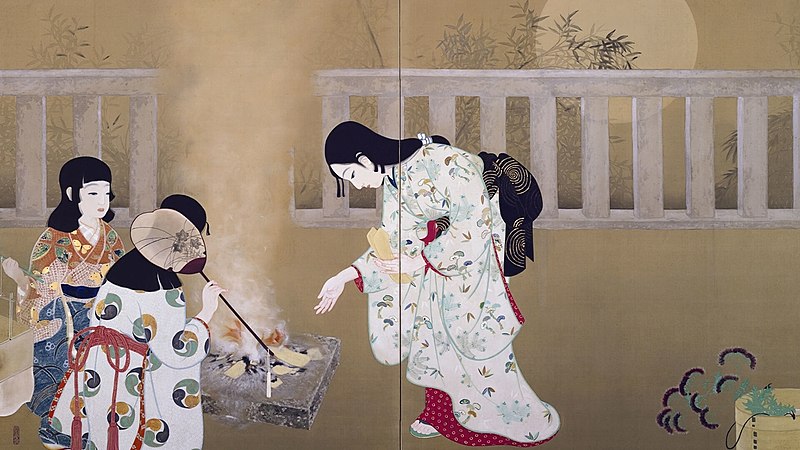
Welcoming the Dead: “Bonfire for the Spirits of the Dead (Okuribi)”, two-panel screen, Color painting on silk from 1916. Showing how the Japanese light fires to welcome the spirits of the dead during Obon in a ritual known as Mukaebi.
When is Obon Celebrated?
The Obon Celebration has been going on every summer for over 500 years. The exact dates changes according to where you live though because the lunar calendar was changed in favor to the Gregorian calendar instead. During these days the employers often grant their workers and the trains, planes and busses are filled with people out in the countryside to celebrate it with their family or into the cities to join the big parades and happenings throughout all big cities.
In eastern Japan, it is held 15th of July, but in the western part it’s held on August 15. However, in Okinawa and the Amami Islands it’s different again and follow the Chinese way to celebrate on the 15th day of the 7th lunar month like their ghost festival. In common though, the festival lasts for three days and the official Obon holiday is from 13-15 July.
Visiting the Grave: A huge part of The Obon Celebration is going home and visiting the graves of your ancestors, clean them and make offerings to them throughout the festival before sending them back to the afterlife.
It is believed that during these three days the ancestors spirits return to the world to visit their relatives. In this time the veil between the spirit world and the world of the living is at its thinnest and therefore the spirit can pass through.
How do the Japanese Celebrate Obon?
To prepare for the return of the ancestors during the The Obon Celebration, the Japanese clean the grave sites in a ritual called Haka Mari. From the newly cleaned graves it gives a path to them back to the house in a ritual called mukae-bon. A spirit altar is put up back at the home and offerings like fruit, flowers and incense is given.
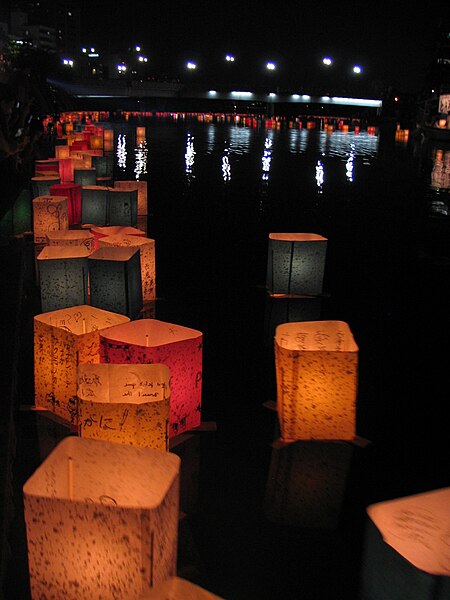
Floating lanterns: Tōrō nagashi float in the river in Hiroshima, as part of the Hiroshima Peace Memorial Ceremony in 2009. Photo: 藤谷良秀(Yoshihide Fujitani) /source
The Obon Celebration begins with Mukaebi, which is a ritual of lightning fires to guide spirits home for the duration of the festival. Often in the form of lanterns hung in front of the houses.
In this way the Obon Celebration reminds much of the western All Saints Days or Halloween celebration as it is believed the veil separating the living and the dead world is thinner and it’s a time for hauntings and ghost roaming the world.
The lanterns most often used is the traditional paper chochin lanterns, but how you use these lanterns and were is very different from region to region.
In some regions of Japan they light up huge fires outside the houses instead of lanterns. Like they do in The Daimonji Festival in Kyoto were they light up series of , 200m-long, character-shaped bonfires built on mountainsides.
When the Obon Celebration ends, the chochin lanterns is often used to guide them back to the spirit world, a ritual called okuri-bon.
On the final evening of the Obon festival it is thought that placing floating lanterns down the rivers will help guide the spirits back to the spirit world if you live close to a river or some sort of water. This tradition has gained a lot of popularity in modern time.
This ceremony is called Tōrō nagashi 灯籠流し, but the custom of sending floating lanterns during the Obon Celebration differs from place to place. The largest floating lanterns event though is in Hiroshima and Nagasaki to commemorate the victims of the atomic bombs during the second world war.
Welcoming and Feeding the Hungry Ghosts
One of the things The Obon Celebration is for, is to ease the suffering of spirits. To do this they have to perform the ritual of segaki 施餓鬼, meaning feeding the hungry ghosts, otherwise known as a vengeful spirit, or in the western tradition: a poltergeist. It is a ritual of Japanese Buddhist tradition.
During the festival, the ritual is performed at Buddhist temples and more offerings are given to the hungry ghosts: Rice and water. This is for the muenbotoke, or the ghosts with no living relatives that have no one to welcome them.
The food served is often vegetarian and a thing eaten much of is sticky rice balls called ohagi and odango.
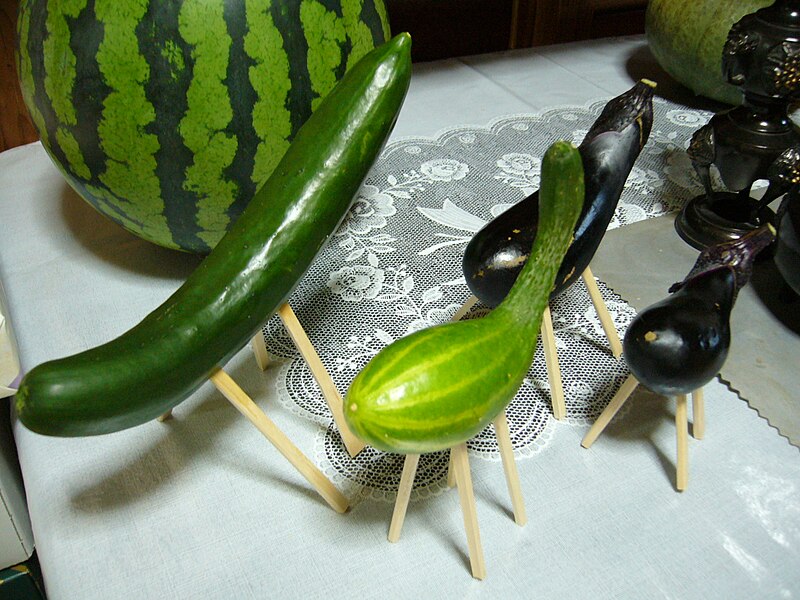
Another significant ritual people do during the Obon festival is to craft a cucumber horse and eggplant cow, known as shōryō uma (精霊馬, “spirit horse”) or ushi uma (牛馬, “cow horse”). This type of carved food works almost as a vessel for the ancestors to come back home when the festival starts and return when it’s over.
Food Offerings at the Alter: Cucumber and Eggplant crafted as a vessel so the spirits can come and go during the Obon Festival //Source: Wikimedia
The Buddhist Dance from the Spirit Realm Bon Odori
But exactly why do the Buddhists and buddhism influenced places celebrate the dead during this time? It is best seen through one of the ways the Japanese celebrate.
The Bon Dori Dance 盆踊りis a dancing style performed during The Obon Celebration. It comes from the story of Maha Maudgalyayana, or simply Mokuren which was the incident that made people celebrate the ghost festival in the first place. He was a disciple of Buddha and used his powers to look into the spirit realm. There he saw his mother, and saw she had become a hungry ghost.
He asked Buddha what to do and Buddha said to give offerings to the monks that completed their summer retreat on the 15th day of the 7th month. Mokuren did it and it worked. His mother was freed from the suffering of being a hungry ghost. He burst out dancing from pure joy.
Bon Odori Dance: This is a scene from one of the dance festival at the Hanazono Shrine, Shinjuku, Tokyo city. They are celebrating The Obon Celebration. Yukata-clad people dance in circles around the yagura as the music plays just as Maha Maudgalyayana did when he saved his mother from the afterlife as a hungry ghost.
The dance has so many variations and each region perform their local dance with their own music, however, the Japanese taiko drum is often used to the melodies of old folk songs.
There are several big parades showcasing the Bon Odori dance during the Obon Celebrations. The Tokushima Awa Festival (阿波踊り) is perhaps the most well known bon odori dance that draws millions of visitors to Tokushima to watch and join the huge parades in the city. There are the also Gujo Odori Festival in Gifu (郡上おどり) and the Akita Bon Odori Nishimonai Festival (西馬音内盆踊り). These are all well known for their Bon Dori during the ghost festival, but it is held smaller Bon Odori dances as well everywhere.
Since the celebration and all its customs is so different from region to region, the dance will look so different as well. But very often it is people lining up in a circle around a wooden scaffold made for the festival called Yagura. The dance can also include the history of the region as well. Like mimicking fishing in fishing areas, dance moves reminding of digging in coal mining areas and the likes. What they have in common though is their intent is to honor their ancestors and those that came before us.
Things to Watch out for During the Ghost Festival
Although mostly a family holiday and a time to spend with your family and religious days of remembrance and folk festivities, there are also several superstition that are said to be remembered during the days.
The first rule during Obon to beware of is to not take pictures during the night so not to capture a ghost. Perhaps a bit difficult because of all the festivities people take a photo of to remember.
It is also said not to swim as it is more likely to be drowned by a ghost. Do not steal the food offering to the hungry ghost of obvious reasons. Do not hang your clothes out to dry in the night as iit believed that the dead will wear them and don’t put the slipper heals towards your bed. Ghost will find your bed and climb into it, causing sleep paralysis.
All in all, do not do anything but being respectful to the dead during the Obon Celebration.
One of the more well known ghost stories in Japan is of the poor servant Okiku in the ghost story Banchō Sarayashikihas become the very image of a Japanese ghost story.The girl that died in the well and comes back, forever counting the plates of her master, hoping that one time, she won’t be missing any.
Okiku Well: by Katsushika Hokusai, most known for making the The Great Wave off Kanagawa, painting. From the one hundred ghost tales series. depicting the Banchō Sarayashiki
The tale of Banchō Sarayashiki (番町皿屋敷, The Dish Mansion at Banchō) is a well known Japanese ghost story (kaidan). It was popularized in the kabuki theater tradition, and lives on in popular culture and folklore alike.
Banchō Sarayashiki is a tale of dying unjustly and the haunting of righting a wrong. The story always revolves around Okiku, a servant, who was killed by her master. Not to be confused with Okiku, the haunted doll which is equally terrifying, but a different tale altogether.
It has had many adaptations and different variations of the legends exists. Here in this article, we are trying to focus mostly on the folktale the stage plays and books are based on.
This old Japanese ghost stories called Kaidan (怪談,) meaning “strange, mysterious, rare, or bewitching apparition” and “talk” or “recited narrative“. In its broadest sense, kaidan refers to any ghost story or horror story, but it has an old-fashioned ring to it that carries the connotation of Edo period Japanese folktales.
The type of storytelling was especially popular in the Edo period with parlor games like Hyakumonogatari Kaidankai that focused in telling ghost stories.
The Banchō Sarayashiki tale is one of Japan’s three most famous ghost stories, known as Nihon san dai kaidan. The other two being:
Okiku and the Nine Plates
So what happened to the poor Okiku in the story of Banchō Sarayashiki that was so tragic and terrifying that it is still talked about today?
Banchō Sarayashiki:The print depicts the ghost of Okiku appearing by the well in which her master, Aoyama Tessan, murdered her. From the Thirty-six Ghosts series by Tsukioka Yoshitoshi 1890.
There once was a servant Okiku working for a samurai named Aoyama Tessan in his mansion in Japan. Okiku was a beautiful girl and Aoyama, her master fell in love in her, and told her he wanted to marry her. However she did not feel the same and had to refuse his advances again and again. Her master started to grow tired and angry at her refusals. To make her follow his will he made a plan to trick her.
The family had at that time, ten precious Delft plates, a type of glazed porcelain. Very valuable and pretty. Losing one of them would be a crime punished by death. As a servant, Okiku was in charge of taking care of these plates and she knew very well the consequences if she messed up.
The master of the house knew this as well and used this and he tricked her, thinking she had lost one of them by hiding it.
Okiku counted, and recounted the nine plates, over and over again. But it was never enough. She could’t find the tenth plate and she went to her master, pleading for forgiveness. He said he would overlook the mistake she thought she had done, if she only became his lover. But to his surprise she refused, again. And Aoyama couldn’t take no for an answer.
Enraged, he threw her down a well were she died. In some version, she threw herself down the well to escape the torment from her master. In either cases, she died in that well. Perhaps quickly, hitting the stone walls, perhaps slowly, drowning in the dark water.
It is said she became an onryō, a vengeful spirit, back for revenge of those who wronged her. The ghost of Okiku tormented her murderer, every night, rising from the well and coming up to the mansion again, making him go insane in the end. Okiku was still counting the nine plates, one by one. Only reaching nine everytime, then making a terrible shriek when she again missed the tenth plate.
According to legends, an onryō is very difficult to get rid of. In this case, no one built a shrine in her honor to appease the spirit, however, some say that a Buddhist monk or a neighbor appeased the ghost by shouting ten to her, making her believe all of the plates were finally there, but then again— Some says she still haunts the castle she used to work in, unable to ever move on.
In many cultures, ghosts are put in different categories. Such is the case with Onryō (怨霊 onryō,) It basically means “vengeful spirit” or “wrathful spirit” in Japanese and is a mythological spirit of vengeance from Japanese folklore. They also have ghosts, called yurei, but these differ in the will of the ghost. As opposed to…
Banchō Sarayashiki Stage Play Adaptation
In some versions of the tale it is the mistress of the manor that breaks one of the dishes making Okiku commits suicide because of the mistress torment because she is jealous of Okiku. Similar to the other versions, Okiku is heard counting the nine plates, but in this version it is the mistress who goes insane and dies.
The Banchō Sarayashiki story was first seen as a bunraku, a type of puppet show, way back in 1741, based on the legend of the Manor of the Dishes and the poor servant. It was then turned into a kabuki play. But perhaps the most popular adaption of the legend is a play written in 1916 by Okamoto Kido, a modern version were the horror elements of the tale was turned into a psychological drama between the two characters.
Today the most famous adaption of this legend though is The Ring franchise with the vengeful spirit Sadako climbing out from the well to haunt the living and get her revenge.
The Okiku Insect Haunting the Wells in Japan
The haunting of Okiku’s ghost told in the Banchō Sarayashiki story, have been widely reported on for centuries, so exactly when it started to circulate as a ghost story before getting on the stage is unclear. Today the image of the young girl haunting and ascending from a well is such an iconic image.
But her haunting the wells in Japan was a well known motief long before the rise of J-Horror, and much of it was actually because of actual events in the 1700s.
A thing about these types of vengeful spirits like the onryō in Asia is their supposed forces to affect more than the ones who hurt them.
Vengeful ghosts often got blamed when there were peculiar natural disasters, accidents or even illnesses that could be linked to the ghost stories in some way. This was the case with the haunting of Okiku in the Banchō Sarayashiki.
All back in 1795 the old wells in Japan got a larvae infestation that were blamed on the ghost of Okiku. It was later known as the “Okiku insect” (お菊虫, okiku mushi).
This larva that was actually a type of butterfly larva called Chinese Windmill, covered with thin threads making it look as though it had been bound, was widely believed to be a reincarnation of Okiku when it covered the old wells and became a part of the legend of the Banchō Sarayashiki.
People in Japan that had heard and believed in the ghost story thought for a long time that the infestation was a reincarnation of Okiku and the cause of the infestation.
Haunting The Himeji Castle
Most of the legends claim that the hauntings of the Banchō Sarayashiki legend are in Edo (Tokyo). But there is a claim that the location of where it happened, is at the beautiful Himeji Castle, one of the biggest sightseeing places in Japan. It is claimed as the location in the Banchō Sarayashiki retelling in Ningyo Joruri’s version of the play. According to the legends, she is not th only ghost that are supposed to haunt the place.
The location: One of the stage adaption places the legend of Banchō Sarayashiki isat the wonderful Himeji Castle and the well on the castle ground known as Okiku Well attracts tourists as well as the beautiful white castle and cherry blossoms does. Photo by Nien Tran Dinh on Pexels.com
One the spots to see at Himeji Castle is the Okiku-Ido, or the Okiku Well were her ghost still lingers. There is also a well in the garden of the Canadian embassy in Tokyo, supposedly built on land bought from the Aoyama family, that claims this is the well she died in. In both versions though, the story is the same:
At night, Okiku comes out from the well to count the nine plates. One plate, two plate …’ ‘Nine plate, … one is missing …’ she goes. According to the some variations to the ghost story, you will die if you stay to the end with her reaching the tenth plate. If you manage to flee before her reaching the seventh, you may live, although you may lose your mind.
What is even more creepy is that this exact well fount at Himeji Castle to this day has bars all over it as some type of security measurement. Keeping the tourist out. Or.. perhaps keeping something in?
From a classical folklore motif to the black haired lady dressed in white in Kabuki Theatre and Japanese horror movies, this ghost called Onryō is still haunting Japan. Clad in her distinct white kimono and long black hair, she will stop at nothing to get her revenge.
In many cultures, ghosts are put in different categories such as the case with Onryō (怨霊), basically means “vengeful spirit” or “wrathful spirit” in Japanese. It is a mythological spirit of vengeance from Japanese folklore. The Onryō is a type of yūrei, meaning ghosts. But these are ghosts with a purpose and as opposed to the yūrei, these ghosts doesn’t just get over their revenge thoughts.
Even though the modern world reject things like ghosts i most cases, Japanese reverence for onryō spirits endures, notably illustrated by the case of Taira no Masakado’s head mound, Masakado-zuka. Even though urban redevelopment projects relocated it several times, each move resulted in accidents and a construction worker’s death. The mound, situated amidst Tokyo’s skyscrapers, remains intact while surrounding buildings have undergone frequent reconstruction. It continues to be meticulously maintained in respect for onryō spirits.
Let us have a closer look to the famous ghost that has a long and varied history from being the main antagonist in movies to women with a tragic fate.
The Origins Of The Onryō
The origins of the Onryō is a bit unclear but can be traced back in written records since the 7th or 8th century in Japan in the late Yamato period when Buddhism were introduced to Japan and the vengeful spirit of an Onryō reminds quite a bit about the hungry ghosts from Buddhism or Preta as it was known as in Sanskrit.
The Ghost: The Onryō has long roots in Japanese ghost mythology. // Photo: Sawaki Suushi (佐脇嵩之,)
The vengeful spirit manifests when someone is either killed or driven to their death. The person died so filled of rage over the ones that either killed or betrayed them in some way, they will stop at nothing to avenge themselves.
Mostly, the spirit never starts out as evil, and wasn’t an evil person when alive. But the circumstances around their life and particularly around their death made them bit by bit as time went on and anger built up. This type of vengeful spirit are sometimes created from the basis of love, but the jealousy perverted the love so much, it turned to hatred. In both cases, their soul are unable to pass on to be reborn and lingers in the realm of between the living and dead.
In traditional beliefs and literature in Japan and similar spirits across Asia, they causes harm to the living, killing its enemies or in some cases, been blamed for causing natural disaster to get revenge. It feels it was wronged in life and now they have a change to correct that in their afterlife.
Usually it was a victim when alive, but in death, it doesn’t discriminate passing judgment to others, making them their victims.
It is said that the Onryō don’t know how to differentiate between the guilty and the innocent victims, making them dangerous for the living. They also have a tendency to make their victims suffer for as long as possible before murdering them as the torture itself seems to be the goal.
The Female Onryō and the Male Goryō
The term Onryō is almost exclusively a title that refers to a female ghost today although some of the first example of this type of vengeful spirits were male. There are also cases of the male Onryō told today, but they mainly focus on the topic of restoring their honor after death than the revenge the female spirit often are after.
The term Onryō overlaps somewhat with Goryō (御霊), another type of yūrei, except that goryō is not necessarily a wrathful spirit and is often an upper-class nobleman. The Kanji 御 (go) actually means honorable while 霊 (ryō) means some sort of soul or spirit.
In broad strokes we can generalize the female spirit is an Onryō in most ghost stories and literature, and is after revenge because of a betrayal, while the male spirit, the Goryō, is after revenge because of his honor and he wants to restore it.
Similar Spirits Around the World
As mentioned, the Onryō is similar to many vengeful spirits, especially from Buddhism, but this type of ghost is filtered through Japan’s indigenous nature religion, Shinto. It is not only in Asia we can find ghost stories about a woman dressed in white that comes back after death to haunt the place she died or the people that wronged her.
This type of vengeful ghost is also similar to the Poltergeist in the English and Germanic language that are highly dangerous and can cause physical harm to the living people according to some ghost stories. It is also somewhat similar to the Lady in White we can hear stories from all across Europe and also South America (See La Llorona).
In Asia as a whole the vengeful spirit like the Japanese Onryō is found in many lores, both Chinese, Korean and Thai for example. Most notably perhaps is the Asian Hungry Ghost particular from Chinese folklore and the Korean Virgin Ghost that over the years seems to be merging more and more towards the Onryō.
After the Chinese nobleman Tu Po was betrayed by his own king and fellow nobles, he became a vengeful ghost, or Hungry Ghost as it is known as in Buddhism. Even in his afterlife he sought revenge on those who betrayed him and fought to restore his honor.
The Korean virgin ghost may be based on the ideals that all a woman needs is a husband, but the anger of these spirits tells of a woman with another purpose. And that is mostly vengeance.
When unexplained deaths of seemingly healthy and young men occur around the same time and same place there are many Thai people who believe it is the Widow Ghost who is after their men, and they have their own way of holding the seemingly paranormal death at bay.
The Onryō is not only dangerous to individuals, but are also believed to be capable of causing extreme havoc. Many plagues, earthquakes, famins, fires, storms and the likes have been connected to the vengeful ghosts. This type of revenge with natural forces are called tatari (祟り) Something that we see in the story of Nagaya’s curse.
Nagaya was a prince that died wrongfully. A ghost most called a Goryō, because of his stature and gender. He died in 729, and is one of the earliest records of this type of vengeful spirit.
This was also the earliest case were a cult was formed to show respect and reverence to the dead and to help appease the vengeful spirits. And also, perhaps a bit out of fear that they would feel the wrath of the vengeful spirit. There are several instances were cults for the Onryō were made.
This is not to be confused with the ghosts that comes after a big natural disaster though, as with the case of the Ghosts of the Tsunami for instance, where the ghosts are mostly just trying to get home.
You also have the case of Okiku that died in the well on the property and was said to haunt it and her vengeful spirit was the cause of some natural disasters that affected the wells.
The haunting of Okiku’s ghost told in the Banchō Sarayashiki story, have been widely reported on for centuries. All back in 1795 the old wells in Japan got a larvae infestation that were blamed on the ghost of Okiku.
The larvae infestation on the wells was later known as the “Okiku insect” (お菊虫, okiku mushi). They long thought that the infestation was a reincarnation of Okiku and the cause of the infestation. It is not uncommon that disasters and accidents were the works of vengeful ghosts throughout Asia.
The Kabuki Onryō from the Japanese Theatre
Many of the Japanese ghost stories are built upon the legend of the onryō. From the early ghost stories to pop culture movies and books. What most people today think of when thinking of the Onryō is the scorned woman, much like the Lady in White type of ghost in western lore. This is very prominent in the Myth of Oiwa, who was left by her husband or in the case with Banchō Sarayashiki — the Ghost of Okiku who were wronged by her master she was working for.
Today, the image of the onryō is a quite specific one, clad in all white with loose black hair. This image came with the rise of the dance theater Kabuki in the Edo period in the 1600s, and a specific costume was developed for the onryō to make it recognizable on the stage. Before this time, the ghosts had no particular look. After however, it is a well known sight:
A white burial kimono known as shiroshōzoku (白装束),
Long, loose and messy hair.
Powdered white face with dark eyes
The Onryō look: The Kabuki theatre formed the visual we know today with the long black hair and the long white dress. Here from the movie The Ring that shows the iconic Onryō Sadako from The Ring (リング) (1998), that reinvented the vengeful ghost on TV for the modern audience.
The Modern J-Horror Onryō
Today the Onryō is mostly known from the modern Japanese horror films as a next step from the Kabuki theatre from the edo period. Perhaps in today’s society the Onryō is mostly known for its appearance in Japanese horror films and books that built upon the lore that was already there.
Most known is the Onryō spirit of Sadako and Kayako from the Ring and The Grudge franchises. So populare are they in fact that they even have their Hollywood remakes from the source material. This goes to show that the story of the scorned woman dressed in white works globally.
And although based on centuries old legends, the fear of this special vengeful spirit still goes on. And with the visuals from the Kabuki make-up department, they also incorporated the specific jarring movement of the crawling out from the TV and twisting inside the cracks of a house.
Ringu Japanese Horror Movie: One of the more famous Onryō today is found in iconic horror movies like in Ringu from 1998.
How To Exorcise an Onryō
So how do you get rid of an Onryō when one is created according to traditional belief? After all, not all ghost stories can end with the ghost just lingering in the living world forever.
Many theories about how you get rid of a vengeful ghost exists. Since it is such a prominent figure in the Shinto religion, the native spiritual religion of Japan, much of the rituals comes from there. Unlike Buddhism’s thoughts that deceased will be reincarnated within 49 days, the Japanese mix of both Buddhism and Shinto, is slightly different. Often certain measures is needed to get rid of an Onryō.
Can you get rid of an Onryō: According to legend it is very difficult to appease the vengeful spirit and most ghost stories need some religious intervention to get rid of the spirit. //Source: Anela/flickr
They are said to be very hard to get rid of though. While most yūrei only haunt a person or place until they are exorcised or placated, an Onryō’s grudge-curse continues to infect a location long after the ghost itself is gone. So can one ever get rid of them according to folklore?
Mostly though the trick is just about to find a way to please the spirit. Such was the case with Sugawara no Michizane. He was a vengeful spirit that didn’t leave the capital alone before they built a shrine in his honor. But like the case with Okiku, most measurements are taken to just get out of the Onryōs way alive rather than get rid of the ghost for good.
The Vengeful Spirit of the Onryō
The Onryō continues to haunt Japan’s folklore, literature, and pop culture, captivating audiences with its vengeful spirit and chilling presence. From its mysterious origins in ancient Japanese records to its portrayal in Kabuki theater and modern J-horror films, the Onryō has become an iconic figure in the realm of ghosts.
Although categorized as a specific type of yūrei, the Onryō stands out due to its relentless pursuit of revenge. Born from a tragic fate and consumed by rage, these spirits stop at nothing to avenge themselves against those who wronged them in life. Their vengeful nature transcends boundaries, making them dangerous to both the guilty and the innocent.
The Onryō’s legacy continues to fascinate and frighten, serving as a reminder of the power and intensity of human emotions and the lingering impact they can have beyond the grave. As long as there are tales to be told and fear to be felt, the Onryō will forever haunt the imagination of those who dare to delve into the realm of the vengeful spirits.
So, tread carefully in the darkness, for you never know when the vengeful spirit of the Onryō might appear, driven by an insatiable thirst for revenge that transcends time and space.
Articles on Moon Mausoleum about the Onryō and some similar ghosts:
Explore the supernatural stories of Japan’s Magnificent Haunted Himeji Fortress and find out why this iconic castle is said to be haunted by both monsters and tragic ghosts.
In the dimly lit alleys in urban Japan, a woman wearing a mask is terrorizing the children walking home from late school. When she reveals her carved up mouth, it’s over. Kuchisake-onna, or The Slit-Mouthed Woman will get her revenge.
On the foundation of old land with a lot of history, a new park was built called Pasir Ris Park. But the legends surrounding the mangrove forest followed into the modern day busy Singapore.
The new Netflix TV-series Ju-On: Origins gives a new spin on the franchise. From going from classical jump-scares to an actual social commentary installment.
In Japan, the ghosts are called Yūrei (幽霊). The word means faint or dim and soul or spirit. And as well as language and cultures divides different types of ghost in different categories, so does the Japanese. Here are some of the ghosts of Japan.
After the Chinese nobleman Tu Po was betrayed by his own king and fellow nobles, he became a vengeful ghost, or Hungry Ghost as it is known as in Buddhism. Even in his afterlife he sought revenge on those who betrayed him and fought to restore his honor.
The concept of a ghost with unfinished business is found around the globe. In the eastern part of the world they are often known as Hungry Ghosts and they are deadly.
China has such a varied an long history, diverse culture, with different regions, religions and traditions as most ancient countries has. The tales and beliefs changes according to the ebb and flow of time and the legends of the hungry ghosts are many and varied.
Before delving into the legend about Tu Po and how he was betrayed by his own king, let us have a closer look at exactly what a Hungry Ghost is.
As much of Chinese folklore and mythology comes from Buddhism, there are many similarities to other Buddhist countries. In any case it has been believed that every living person will become a ghost when we die known as a guǐ 鬼. It will then weaken, and fade away, dying again for a second time.
As mentioned earlier, the Hungry Ghost is not only a Chinese phenomenon, but a Buddhist as well as Asian one. Ghost stories of vengeful ghost can be found also in Japan with the Onryo or Korea with the Virgin Ghost for example.
This concept of the spirit of the deceased weakening before disappearing is seen as only natural and how it is supposed to be. The ancestors are honored, given sacrifices and held in esteem, thinking they have a part in the world as much as the living. Ancestral worship is the original basic of Chinese religions, and it is a core belief there is an existence after death. A deceased person’s soul is made up of yin and yang parts called hun and po. They are not immortal, and need offerings before going to the underworld for eternal rest.
When Revenge is more Important than Peace
The trouble with ghosts however is when that spirit is driven by anger and malice rather than a peaceful afterlife. This is called a Hungry Ghost (餓鬼 èguǐ and quỷ đói) and only happens on rare occasions as most spirits only wants to be at peace.
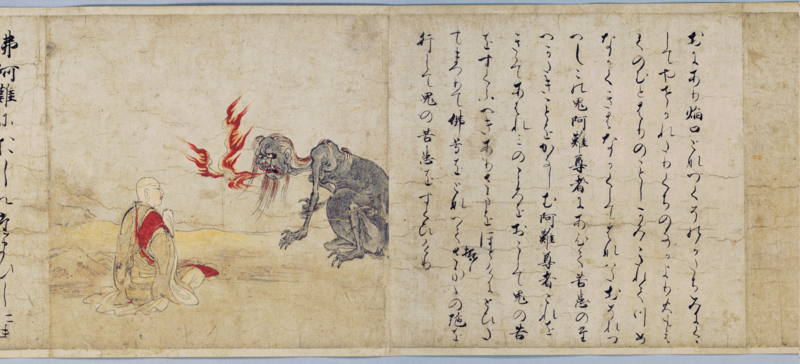
The Hungry Ghost: The concept of hungry ghost is found throughout Buddhist traditions. This is from the Sixth section of the Japanese Hungry Ghosts Scroll located at the Kyoto National Museum. The scroll depicts the world of the hungry ghosts, one of the six realms of Buddhism and contains tales of salvation of the hungry ghosts. This particular section shows Ananda, a disciple of Shakyamuni, teaching an incantation to achieve salvation to a hungry ghost who continuously belches flames from his mouth.
The creation of a Hungry Ghost happens when a person’s death has been exceptionally violent or unhappy. The ghosts are often given quite animalistic traits in the ghost stories and records. Although there are different categories and types of hungry ghosts, one common trait among them are that they are seeking a type of revenge of those who wronged them, or simply those who got in the way.
Although most accounts of Tu Po doesn’t give him animalistic traits like a monster, he definitely sought his revenge on those who wronged him like most vengeful ghosts are looking for, and therefore given the title of a Hungry Ghost.
Before becoming a Ghost – Tu-Po the Emperor’s Minister
Before becoming an ancient ghost, Tu Po used to be an important man in ancient China. The nobleman Tu Po 杜伯 is sometimes translated as Du Bo and he was the Duke of Tangdu. This was a Dukedom situated west of State of Yi Lin around were the Shaanxi province in northwest of China is today.
According to legend, the Tangdu people were descendants of the people living in the State of Tang, a Dukedom destroyed by Zhou Gong Dan that now ruled the empire. They were allowed to form a new State of Du, and became known as Tangdu or Du shi (杜氏).
Tu-Po was not always remembered as a hungry ghost, but was a prominent minister to King Xuan of Zhou (also known as Emperor Hsuan) who reigned from 827-783 B.C. Emperor Hsuan was the eleventh king of the Chinese Zhou Dynasty in a time were the kings words were the law and his minister Tu Po had to pay the ultimate price.
The empire:Map over the Jin (Tang) state during the late Spring and Autumn period as it was called, around the time of Tu-Po’s death and after. This is were he, and his ancestors resided and ruled.//Photo: Hugo Lopez – Wikimedia Commons user: Yug
The king is mostly remembered for fighting the ‘Western Barbarians‘, most probably Xianyun, an ancient nomadic tribe that invaded the Zhou empire on the Huai River. He also meddled in debacles of successions in States of Lu, Wey an Qi and was, according to history, not a popular one. Sima Qian, considered father of Chinese historiography, said: “From this time on, the many lords mostly rebelled against royal commands.” And the way the king ended his reign, is rumoured to be the work of the hungry ghost of Tu Po.
So Tu Po was from a stately and very powerful family and not afraid to speak up for what he believed in, even to the most powerful man in the dynasty. And this would cost him his life and make him a hungry ghost, haunting the earth and seeking revenge.
The Fall From Grace and Becoming a Vengeful Ghost
There are not very many sources detailing what happened before the haunting of Tu Po’s hauntings started. But according to one account, this is what happened.
The King:King Xuan of Zhou (827-783 B.C). Formerly known as Emperor Hsuan or King Suan.
On the ninth year as King, King Xuan of Zhou called all the lords of his empire into a meeting that would seal the fate of Tu Po to discuss an oncoming attack.
A rumor was out that a woman was about to become a danger of the town of Jiangshan for some reason, and the King ordered a mass execution of women. Exactly how this one woman could be considered a danger to an entire town is not really explained.
No matter what the reason behind this mass execution of women, it was seen as a truly horrible act that Tu Po disagreed with. Tu-Po publicly opposed to the order he was given and he spoke against his king in a time when the kings word was the law and anything else considered treason.
This final act of opposition would cost him his life as King Xuan ordered his execution for this as he saw this act of opposition as treason.
Before Tu Po was executed however, King Xuan of Zhou was warned that Tu Po’s ghost would stay in this world even in his afterlife to haunt him as Tu-Po himself said:
“If my majesty kills me without reason, the dead may not know, well that’s it. However, on the other hand, I will avenge myself on him, within three years.”
But despise the warnings, King Xuan went through the execution. Even though he was considered innocent of treason by most, Tu-Po was executed around 786 B.C. But this would not be the last time he was seen.
The Revenge of the Hungry Ghost
Weather Tu Po’s final words were taken seriously, is not mentioned. Three years after the execution however, the King brought his dukes to hunt on his own hunting grounds. There were hundreds of chariots, thousands of escorts following them as well as a ghost that promised he would return for revenge.
Ghost festival: Lotus-shaped lanterns are lit and set afloat in rivers and out onto seas to symbolically guide the lost souls to the afterlife.
At noon, Tu-Po appeared as a ghost, riding a white horse and a cart, wearing a red coat with a red bow and arrow in hand. He took up the chase of King Xuan and shot the king in the heart and broke the king’s spine. At the time, it is reported that no one saw the killing and no one heard it. No matter what the real situation was like, The king fell and Tu Po got his revenge.
If King Xuan really died of an arrow is today a bit unclear. In some accounts it is said that King Xuan died of something else after dreaming that Tu Po shot him to death with an arrow.
In both cases, the innocent and wronged minister got his revenge and King Xuan’s son, was the last of the western Zhou to lead.
The story has gone down in traditional legends, ever since. The Chinese philosopher, Mo Zi (470-391 B.C), said this about ghosts and about Tu-Po’s revenge:
“If from antiquity to the present, and since the beginning of man, there are men who have seen the bodies of ghosts and spirits and heard their voices, how can we say that they do not exist?
If none have heard them and none have seen them, then how can we say they do? But those who deny the existence of the spirits say: “Many in the world have heard and seen something of ghosts and spirits. Since they vary in testimony, who are to be accepted as really having heard and seen them?”
As we are to rely on what many have jointly seen and what many have jointly heard, the case of Tu Po is to be accepted.”
An online magazine about the paranormal, haunted and macabre. We collect the ghost stories from all around the world as well as review horror and gothic media.