Tag Archives: haunted castle

The Ghosts Haunting the Ruins of Dunstanburgh Castle

Advertisements

Around the ruins of the once grand Dunstanburgh Castle in Northumberland, England, the ghost stories are covered by a thick veil of sea mist. From legends of a gallant knight to the Queen from the War of Roses, the abandoned fortress is not quite empty.

High upon the storm-battered cliffs of Northumberland, along the bleak, windswept edge of the North Sea, the desolate ruins of Dunstanburgh Castle loom against the sea misty horizon. It used to once be the largest castle in Northumberland and a garrison against Scotland, but only fragments remain of its grand past. 

Today, the 14th century castle’s skeletal remains offer a hauntingly beautiful backdrop for coastal walks — but for those who linger too long after dusk, this crumbling fortress whispers tales of bloodshed, betrayal, and restless spirits.

The Grim Legacy of Thomas Plantagenet

Thomas, 2nd Earl of Lancaster: (c. 1278 – 22 March 1322) was one of the leaders of the baronial opposition to his first cousin, King Edward II. Soon after Thomas’s death, miracles were reported at his tomb at Pontefract, and he became venerated as a martyr and saint.

Dunstanburgh Castle was born of ambition and rebellion. Built in 1313 by Thomas Plantagenet, the Second Earl of Lancaster, it was intended as both a symbol of defiance and a personal refuge against his increasingly hostile cousin, King Edward II.

But Plantagenet’s rebellion would ultimately prove fatal. Captured and tried for treason, his fate was sealed on a cold March day in 1322. Because of their kinship and Lancaster’s royal blood, the king commuted the sentence to beheading, as opposed to being hanged, drawn and beheaded,[5] and Lancaster was executed on 22 March near Pontefract Castle.

Read More: Check out the story of The Haunting of the Scarborough Castle Ruins and the Foggy South Bay Beach were the ghost of Piers Gavenston is said to haunt, one of his enemies at court and who Plantagenet was one of the judges to have Gavenston executed. 

Yet even death offered no dignity. Legend holds that it took an inept executioner a gruesome eleven strokes to sever Thomas’s head and that eleven strokes were needed for his decapitation. Locals say the Earl’s anguished spirit has never left Dunstanburgh.

Visitors have reported seeing a headless figure wandering the Dunstanburgh Castle grounds, his severed, mangled head cradled beneath one arm. Witnesses claim his face still bears the contorted agony of those final, harrowing moments before death.

The Wars of the Roses and the Queen’s Ghost on the Beach

Dunstanburgh didn’t die with Thomas Plantagenet. In the bloody turmoil of the Wars of the Roses, Dunstanburgh Castle changed hands from the fighting Lancastrian and Yorkists factions no fewer than five times, each siege leaving it further battered from cannon fire. Amidst the wreckage of those violent decades, another spirit lingers.

Right below the castle there is Queen Margaret’s Cove. It is said that Margaret of Anjou escaped to France here, lowered over the side of the cliff in a basket to a boat waiting below in 1460. 

Margaret of Anjou: (23 March 1430 – 25 August 1482) was Queen of England by marriage to King Henry VI from 1445 to 1461 and again from 1470 to 1471. Through marriage, she was also nominally Queen of France from 1445 to 1453. Born in the Duchy of Lorraine into the House of Valois-Anjou, Margaret was the second eldest daughter of René of Anjou King of Naples, and Isabella, Duchess of Lorraine.

Margaret of Anjou, wife of King Henry VI, is said to roam the crumbling battlements and desolate beaches below. Desperate to defend her son’s claim to the throne, Margaret’s final days in the north were marked by betrayal and defeat. Her specter, clad in royal robes now faded by centuries, is often glimpsed at twilight, gazing mournfully out to sea.

Although the keepers of Dunstanburgh Castle tended to favour the Lancastrians and Queen Margaret, it has led to the castle being associated with her, most of them historically improbable and we don’t really know if she ever went there. She is also said to be haunting Owlpen Manor in Dursley, Gloucestershire.

Locals claim that during stormy nights, her sorrowful figure walks the shoreline, her ghostly form sometimes accompanied by the distant echo of battle cries and the ghostly glow of lanterns flickering within the empty towers.

The Ghost of Sir Guy the Seeker

One of the more obscure ghost stories said to haunt Dunstanburgh Castle comes the gallant knight, Sir Guy the Seeker from the 16th century. He was riding along the coast  and was caught in a terrible storm. He found the ruins of Dunstanburgh Castle and went there for shelter beneath the shattered turrets of the gatehouse. He stayed the night, and the storm raged and the wind howled. 

Suddenly, a terrible figure appeared in white, urging him to follow as he would be rewarded with beauty bright.The night fearing nothing, followed the figure up a staircase to a room of hundred sleeping knights and their horses slept. There was also a beautiful woman sleeping in a crystal casket in the center of the chamber. Images and carvings of serpents were guarding each side of the casket. On one side was a sword, on the other a horn. The figure said the knight could save her by using either the sword or the horn, but could only choose once. He took the horn and blew it. The sleeping knight got up and attacked him. The figure in white kept taunting him as Sir Guy fainted. 

When he woke up, he was back at the gatehouse. He became obsessed with the sleeping maiden he tried to find again. He searched every stone in the ruins, but found nothing. He died a lonely and broken man. But on stormy days it is said you can still hear his ghost with the thundering waves against the walls, wandering the ruins seeking the beauty bright. 

Local Haunted Legends

Where did the story come from? Although there are slight variations of the legend, it has been told at least as early as the 19th century. Similar stories, possibly inspired by Arthurian legends, have existed as well close to Hexham and Eildon Hills. 

Read More: Check out all ghost stories from haunted castles

There have also been said that there are tunnels under Dunstanburgh Castle, stretching and winding from Craston Tower, over to Embleton and nearby Proctor Steads. 

Even in daylight, Dunstanburgh Castle carries an eerie quiet. The ruined gatehouse, shattered walls, and isolated cliffs exude a sense of melancholy, as though the land itself remembers every act of bloodshed committed upon it.

Newest Posts

  • The Haunting of Münchenstein’s Rectory Marini House
    Right outside Basel in Switzerland, the haunted former Rectory in Münchenstein is said to be haunted by one of its former priests.
  • The Ghost Procession of Basel and the Dance of Death
    Mirroring the famous Dance Macabre mural that used to hang on the walls near the Predigerkirche in Basel, it is said that plague victims were buried in the patch of grass outside of the church. Legend has it that when the city needs it, the dead will rise from it in a macabre procession, as a warning of an oncoming disaster.
  • The Haunted Halls of the Bern City Hall (Rathaus)
    Where history whispers and shadows reign, the Rathaus in Bern is said to be haunted by a myriad of ghosts. Who are the ghosts lingering in the City Hall after dark?
  • The Restless Dead Buried Inside of Basel’s Double Cloister
    The two adjoining cloisters by Basel Cathedral are said to be haunted by a couple of spectres entombed within the building. In the darkness of Basel’s Double Cloister, it is said you can hear the moaning of a man slowly suffocating and feel the unsuspected slap from a man, as mean in death as he was in life.
  • The Portobello Bar: Spirits on the Canal
    A lock keeper from the adjacent lock next The Portobello Bar in Dublin is said to be haunting it. Ever since his mistake cost the lives of someone crossing, he is said to be lingering in the area.
  • Val Sinestra Hotel and the Ghost of Hermann Haunting the Lower Engadine
    In an old sanatorium in Switzerland the ghost of Hermann is said to have been haunting for ages. But who was he when he was alive, and what was his true name before he died in the remote fortress up in the mountains? And is he still haunting the old halls where he never made his recovery?
  • Glasnevin Cemetery and the Faithful Ghost Dog still Waiting for his Master
    After his master died at sea, the faithful dog was by his master’s grave, day in and day out. After dying of hunger and grief it is said that the Newfoundland dog is still seen, slipping between the graves at Glasnevin Cemetery in Dublin.
  • The Ghosts of the Sinful Nuns Haunting Bern
    Once, the city of Bern was filled with nuns working and living inside of the city walls. According to ghost stories though, some of them remained, even after the Reformation that closed their convents down. And those stories tell about them being guilty of terrible things with terrible ends.
  • A Vampire in Ohio: The Strange and Grim Superstition of the Salladay Family
    Seeking new land and a new life, the Salladay family went to Ohio, but brought a silent killer with them: Consumption. Falling into odd superstitions, they believed the only way to stop the disease was to stop the undead from rising from their graves.
  • Cell Number 11: Whispers in the Attic of the Norwegian Justice Museum in Trondheim
    Is Cell Number 11 in the former prison for the criminally insane haunted? The attic of the Norwegian Justice Museum in Trondheim, Norway has had many who come out, claiming so.
  • The Haunted Legends of Carl Beck House in Ontario, Canada
    Now a place you can rent and stay at, the Beck House in Canada is said to be one of the more haunted places. Those who have stayed the night come back with stories of strange encounters, believed to be the ghost of the Beck family members.
  • The Burgträppe-Balzli Haunting: The Ghost of Nydegg Castle
    Where the Nydegg Church is today, there once used to be a castle. Tales about ghosts lingering around the old Nydegg Castle and the stairs leading up to it still roams. And one of the more infamous and feared ghosts of Bern is the Burgträppe-Balzli.

References:

Ghosts of Dunstanburgh Castle

Northumberland Folktales: Dunstanburgh Castle and the Ghost of Sir Guy the Seeker | Under the influence!

The Vampire of Alnwick Castle: Northumberland’s Restless Dead

Advertisements

In the castle often dubbed the Windsor of the North, the Alnwick castle also houses some dark legends. One of them being that there once was a vampire demon lurking in the dark corners of the castle. 

Alnwick Castle in Northumberland, England has been called  the Windsor of the North and has been the home for the Percy family since 1309, including the current 12th Duke of Northumberland. It has played a crucial role in the history of England, as a stronghold in the border wars with Scotland as well as the power battle in the Wars of Roses.

Long before Alnwick Castle gained modern renown as a filming location for Harry Potter’s Hogwarts or Downton Abbey, it was home to far darker, bloodier folklore. In the 12th century, this formidable Northumbrian stronghold was at the center of one of Britain’s most unnerving medieval vampire tales — chronicled by the historian William of Newburgh.

The Tale as Told by William of Newburgh

William, writing around 1196, recounted the terrifying legend in his Historia Rerum Anglicarum, documenting the story of a long-deceased servant to the Lord de Vesci of Alnwick in the 11th century who refused to stay buried. It was said he came from Yorkshire to escape the law. Or was it the master of the castle himself who stayed underneath his castle after his death? According to local accounts, after his death this malevolent soul rose nightly from his grave to prowl the surrounding village.

William of Newburgh: Many of the tales about the British vampires comes from the 12th century historian, William of Newburgh. William’s major work was Historia rerum Anglicarum or Historia de rebus anglicis (“History of English Affairs”), a history of England from 1066 to 1198, written in Latin. It is written in an engaging fashion and still readable to this day, containing many fascinating stories and glimpses into 12th-century life. He is a major source for stories of medieval revenants, animated corpses that returned from their graves, with close parallels to vampire beliefs.

He was said to be a horrid man, although his misdeeds aren’t always specified. He was also a very jealous man and suspected his wife had taken a lover and wanted to caught her in the act. He told her he was going out on a journey for many days, but in secret snuck back after dark. He went to spy on her and climbed to the roof of his house to look in her window. Some say that he was hiding on a beam overhanging her room. 

Whether his wife cheated or not is debated. Some say that a man really did enter her room, causing him to lose his balance and fall down. He fell through the roof or off the beam and crashed to the floor and injured himself badly. As he lay dying on her floor, he refused to repent his sins, and died with the cursing words of his wife looming over him. 

The creature, often referred to simply as the Alnwick Vampire, brought with it a pestilent air of death. Villagers spoke of a sickening stench and oppressive atmosphere whenever the restless corpse stalked the streets. It is also said that a pack of hounds howling was following him. In the original source, it’s not often mentioned they feared for their blood to be sucked out of them, but being “beaten black and blue by this vagrant monster.”

Howling Hounds: Often in William Newburghs tales of the undead, there is a pack of dogs following as the dog motif has been connected with death for ages in European mythology. The black dog is a supernatural, spectral, or demonic hellhound. It is usually unnaturally large with glowing red or yellow eyes, is often connected with the Devil, and is sometimes an omen of death.

The villagers were so afraid they started to lock themselves inside of their homes at night. It is also said that the castle was close to being abandoned and that people started to move away. Soon after the nightly disturbances began, a dreadful plague outbreak swept through the village, and the suffering townsfolk laid blame squarely at the feet of the wandering revenant.

A Grim Solution: Dismemberment and Burning

Local priests and terrified townsfolk, desperate to end the curse, gathered on Palm Sunday at two brothers who had lost their father to the plague and wanted to stop it before it consumed them as well. and decided upon a grim but time-honored medieval remedy: they would exhume the vampire’s corpse and destroy it.

A band of brave men dug up the grave. He was not found six feet under as he had been buried the first time, but right under the surface with just a bit of soil barely covering him. 

His body was naturally preserved and bloated. It was said it had swollen to almost twice its size and his flesh was more pink than deadly white. Although the stench of flesh was overwhelming. 

To put an end to the horrors, they dragged the body from the earth, hacked it to pieces as gallons of fresh hot blood poured out of him, pure evidence of him being a bloodsucking monster. The body pieces were taken outside of the town and burned the remains to ash.

William of Newburgh recorded the event in chilling detail, remarking on how the decay and pestilence lifted almost immediately after the body’s destruction.

Vampire or Revenant? A Medieval Fear

This account from Alnwick is one of the earliest written vampire legends in England. Even to this day, William de Newburgh is claimed to have been a serious historian who relied on good and trustworthy sources. 

In the story though, he does call the castle Anantis, and it has since then been affiliated with the Alnwick Castle. This sort of became canon lore after Montague Summers published The Vampire in Europe in 1929 where he called the legend the Alnwick Vampire

There have been some that have speculated that the castle from the story was actually Annan Castle of the Bruce family in South West Scotland. However, the structure of the story does remind quite a lot of an Irish vampire story about an evil lord jealous of his wife and dies when spying on her and her suspected lover.

Read More: The Legend of Ireland’s Vampire King Abhartach and the Haunted Giant’s Grave

It is also said that William heard the story from an old monk who lived when the story happened, meaning it must have been sometime in the late 11th, early 12th century like most of his vampire stories. It wasn’t called vampire though, but some sort of bloodsucker or sanguine, the latin word for it. 

Revenant: The term vampire or the undead was not used in medieval time, but several of the stories about the Revenant, Sanguisa or the bloodsuckers of folklore bear resemblance to what the modern world would classify as a vampire legend. In folklore, a revenant is a spirit or animated corpse that is believed to have been revived from death to haunt the living and was in medieval times used interchangeably with ghosts. They come from various cultures like the Celtic and Norse, some reminding more about a classic ghost story, some more of a vampire legend. Although today a mixed version of the western and eastern European mythologies of the undead.

In the medieval mind, such revenants were often considered a cross between a ghost and a vampire who were physical corpses that left their tombs to infect the living, causing plagues, death, and despair. The cause of their resurrection was often attributed to sin, improper burial rites, or a cursed nature in life.

Other Ghosts at Alnwick Castle

In addition to a legend of a bloodsucking undead, it is also said that the ghost of a Grey Lady is haunting the castle grounds. It is said that a young teenage girl was working as a maid in the castle in the Victorian time. One day she was working in one of the kitchens. She fell down a chute to the tunnels below the castle. The dumb waiter used to raise and lower food between the castle floors and broke and fell on top of her. It crushed her to death. 

It is said that she is walking in the tunnels and dark corridors deep below the castle. 

Today, Alnwick Castle embraces its eerie history, and there is even a gin inspired by the legend. Ghost tours and local folklore evenings recount not only the vampire of the 12th century but also tales of spectral knights, weeping women, and shadowy figures that stalk the castle halls and grounds after dark.

And though centuries have passed since the old master’s body was consigned to the flames, some claim that on misty nights, a strange stench lingers in the old graveyard, and figures are glimpsed where no one should be.

Newest Posts

  • The Haunting of Münchenstein’s Rectory Marini House
    Right outside Basel in Switzerland, the haunted former Rectory in Münchenstein is said to be haunted by one of its former priests.
  • The Ghost Procession of Basel and the Dance of Death
    Mirroring the famous Dance Macabre mural that used to hang on the walls near the Predigerkirche in Basel, it is said that plague victims were buried in the patch of grass outside of the church. Legend has it that when the city needs it, the dead will rise from it in a macabre procession, as a warning of an oncoming disaster.
  • The Haunted Halls of the Bern City Hall (Rathaus)
    Where history whispers and shadows reign, the Rathaus in Bern is said to be haunted by a myriad of ghosts. Who are the ghosts lingering in the City Hall after dark?
  • The Restless Dead Buried Inside of Basel’s Double Cloister
    The two adjoining cloisters by Basel Cathedral are said to be haunted by a couple of spectres entombed within the building. In the darkness of Basel’s Double Cloister, it is said you can hear the moaning of a man slowly suffocating and feel the unsuspected slap from a man, as mean in death as he was in life.
  • The Portobello Bar: Spirits on the Canal
    A lock keeper from the adjacent lock next The Portobello Bar in Dublin is said to be haunting it. Ever since his mistake cost the lives of someone crossing, he is said to be lingering in the area.
  • Val Sinestra Hotel and the Ghost of Hermann Haunting the Lower Engadine
    In an old sanatorium in Switzerland the ghost of Hermann is said to have been haunting for ages. But who was he when he was alive, and what was his true name before he died in the remote fortress up in the mountains? And is he still haunting the old halls where he never made his recovery?
  • Glasnevin Cemetery and the Faithful Ghost Dog still Waiting for his Master
    After his master died at sea, the faithful dog was by his master’s grave, day in and day out. After dying of hunger and grief it is said that the Newfoundland dog is still seen, slipping between the graves at Glasnevin Cemetery in Dublin.
  • The Ghosts of the Sinful Nuns Haunting Bern
    Once, the city of Bern was filled with nuns working and living inside of the city walls. According to ghost stories though, some of them remained, even after the Reformation that closed their convents down. And those stories tell about them being guilty of terrible things with terrible ends.
  • A Vampire in Ohio: The Strange and Grim Superstition of the Salladay Family
    Seeking new land and a new life, the Salladay family went to Ohio, but brought a silent killer with them: Consumption. Falling into odd superstitions, they believed the only way to stop the disease was to stop the undead from rising from their graves.
  • Cell Number 11: Whispers in the Attic of the Norwegian Justice Museum in Trondheim
    Is Cell Number 11 in the former prison for the criminally insane haunted? The attic of the Norwegian Justice Museum in Trondheim, Norway has had many who come out, claiming so.
  • The Haunted Legends of Carl Beck House in Ontario, Canada
    Now a place you can rent and stay at, the Beck House in Canada is said to be one of the more haunted places. Those who have stayed the night come back with stories of strange encounters, believed to be the ghost of the Beck family members.
  • The Burgträppe-Balzli Haunting: The Ghost of Nydegg Castle
    Where the Nydegg Church is today, there once used to be a castle. Tales about ghosts lingering around the old Nydegg Castle and the stairs leading up to it still roams. And one of the more infamous and feared ghosts of Bern is the Burgträppe-Balzli.

References:

The Alnwick vampire

Vampire and Ghost of Alnwick Castle

The Secrets of Alnwick Castle’s Haunting Past

1196 (ca.): Vampire of Anantis | Anomalies: the Strange & Unexplained

The Ghosts of Château de Chillon: Echoes from the Dungeons of Lake Geneva

Advertisements

From the Swiss Riviera, the Ghosts of Château de Chillon is said to haunt the place. Deep in the dungeons, jewish prisoners accused of spreading the plague, those accused of witchcraft and the political enemies of The House of Savoy are still lingering. 

There are seven pillars of Gothic mould,
In Chillon’s dungeons deep and old,
There are seven columns, massy and grey,
Dim with a dull imprisoned ray,
A sunbeam which hath lost its way,
The Prisoner of Chillon, Lord Byron

On a rocky islet along the pristine shores of Lake Geneva, the Château de Chillon is one of Switzerland’s most iconic medieval fortresses and one of the most visited historical buildings in Switzerland. Especially as it was this castle Lord Byron visited in the dark summer of 1816 with his friends, and where the birth of Frankenstein and The Vampyre came after him and his literary friends visited. Its postcard-perfect setting near Montreux, framed by mist-clad mountains and shimmering waters in the Swiss Riviera, belies the darker currents of history and folklore that swirl within its ancient walls. 

Read More: Check out all ghost stories from Switzerland

For centuries, Château de Chillon has been a site of power, imprisonment, and bloodshed and was never captured during a siege. Chillon’s doomed inmates entered the castle dungeon through a thick wooden trap door set into the stone castle floor, descended a rough wooden ladder, and found themselves in a small cave with prisoners chained to the pillars. And it is said that not all who entered its gates ever truly left.

Château de Chillon: Painters such as Courbet, Delacroix, Brooke and Turner painted Bonnivard or the castle over and over again. It has inspired poets and writers and if we are to believe the rumours, also ghosts to linger in eternity.

A Fortress of Shadows

Though Château de Chillon’s earliest recorded mention dates to 1150, under the House of Savoy, archaeological evidence suggests a fortified structure stood on this small outcrop as early as Roman times as it was a strategic way through the Alps. In 1224, Thomas I of Savoy ordered the castle to be strengthened and decorated as he wished to make it his main residence. The castle’s strategic location along a key trade route made it both a prized stronghold and a place of grim authority. This century was also when they built a prison in the underground, previously used as food storage and weaponry. 

In 1342, the Black Death began to claim victims in the area and, wishing to find somebody to blame for the outbreak, Christians accused the Jews who lived there of poisoning water supplies and thus causing the plague. Since 1284, there had lived a group of Jews in the town called Villeneuve and in September in 1348, the Jews were sent to the dungeons for torture. At that time the Château de Chillon was under the rule of Amédée VI of Savoy.

The persecution of Jews: During the Black Death there was a series of violent mass attacks and massacres on Jewish communities, blamed for outbreaks. From 1348-1351, acts of violence were committed in Toulon, Barcelona, Erfurt, Basel, Frankfurt, Strasbourg and elsewhere. The persecutions led to a large migration of Jews to Jagiellonian Poland and the Grand Duchy of Lithuania. Image of a massacre of the Jews in 1349 Antiquitates Flandriae (Royal Library of Belgium manuscript, 1376/77)

These unfortunate souls were arrested and taken before the Count of Savoy at Château de Chillon. Local Christians who had been friendly with the Jews were also treated in the same way and it is said that the prisoners were burned on the sides of the lake after a forced confession after torture. 

The Château’s reputation for cruelty is largely due to its forbidding dungeons — cold, vaulted chambers hewn directly into the bedrock. It is also said that the chancellor of Savoy in 1455 was drowned in the lake after being questioned in Chillon. These prisons, with their damp walls and crude restraints, have witnessed centuries of torment, rebellion, and death. And according to enduring legend, many of those wrongfully punished still linger in spectral form.

Dungeons: Chillon Castle interior Bonivards Prison Geneva Lake Switzerland from around 1890/1900.

The Restless Spirit of François Bonivard

The castle’s most famous ghost is said to be François Bonivard, a Genevan monk, historian, and political dissenter of the 16th century. Back then, the Savoy district was a separate country ruled by the dukes and counts, looking at Geneva as theirs. Bonivard, a libertine and revolutionary, thought otherwise and fought back. Bonivard was imprisoned in Chillon’s dungeons in 1530 for opposing the Bishop of Genova and the Duke of Savoy’s oppressive rule over Geneva. For six years, he was captured at Chillon, where it his treatment gradually worsened. It is said for two years he stayed in a room in the castle before being thrown in the dungeon where he endured brutal captivity, shackled to a stone pillar that still stands in the castle’s underground vault for six years. 

While Bonivard was eventually liberated when Bernese forces seized the castle in 1536, legend holds that his spirit, embittered and vengeful, remains. He died in Geneva after a life of extravagant lifestyle and perpetual debt in 1570. 

Visitors and staff have long reported unnerving sensations in the dungeons like sudden drops in temperature, fleeting shadows, and the unmistakable clank of unseen chains in the oppressive gloom. Some claim to have glimpsed a robed figure silently pacing between the columns, his face obscured but his presence undeniable.

Lord Byron’s 1816 poem, “The Prisoner of Chillon,” immortalized Bonivard’s ordeal and helped enshrine the castle’s eerie reputation. Byron himself carved his name into one of the dungeon’s pillars — a mark still visible today — and reportedly felt a chill pass over him in the exact spot where Bonivard was held.

The Tragic Story if Erdelinde and the Breaker

One of the most tragic stories in the history of Château de Chillon occurred in 1382. Sir Raoul de Monthenard, a cruel tyrant nicknamed “The Breaker,” then master of the castle, wished to marry the daughter of his first cousin, a beautiful girl called Erdelinde. But she was in love with a young man, named Mainfroi de Luceus, whose father was the sworn enemy of Sir Raoul. Afraid of his anger, Erdelinde and Mainfroi married secretly and later Erdelinde had a baby.

When Erdelinde’s father died, Sir Raoul seized her by force and took her to Chillon, where he arranged for a priest to marry them in the castle chapel. The priest who was to perform the ceremony was the same one who had already married Erdelinde in secret and, as soon as he saw her, he refused to perform the ceremony, enraging Sir Raoul..

Meanwhile, Erdelinde had arranged for her baby to be brought to the chapel to prove to Sir Raoul that marriage to him was impossible. When he saw the child, the master of Chillon, in a terrible fury, seized the baby and hurled it through the chapel window into the lake below. Erdelinde immediately leaped after it, and both mother and child drowned.

Grief-stricken, the true husband of Erdelinde, Mainfroi de Luceus, challenged Sir Raoul to a duel in which he received severe wounds from which he died.

People have later claimed to have seen her ghost walking along the lake, looking for her baby as her anguished screams pierce the night. Sir Raoul de Monthenard is also said to haunt the hallways of his castle, roaming around with a maniacal look and evil smile on his face. 

Other Hauntings and Dark Whispers at Château de Chillon

He died—and they unlocked his chain,
And scooped for him a shallow grave
The Prisoner of Chillon, Lord Byron

While Bonivard’s ghost commands the most attention at Château de Chillon, other strange occurrences haunt the castle grounds. In the upper halls, guests have described hearing footsteps in empty corridors, doors that creak open of their own volition, and unexplained cold spots in rooms warmed by roaring fires. Visitors have come back with stories about being pushed against the wall by an unseen force. 

There was another terrible time at Chillon when, between June 9 and September 26, 1613, twenty-seven people accused of witchcraft were executed there. In 1613, the Bernese convicted 27 people as witches and burned them in Chillon’s courtyards. The spirits of these as well is said to linger within the halls. 

Another ghost said to haunt Château de Chillon is simply called The Man in Rags. This story comes from a tour guide who claims this raggedly clothed man came through the walls, saliva dripping from his open mouth, blood dripping from his body. One of the former prisoners of the castle. The tour guide claims this specter was also seen by a maintenance worker who quit the same day. 

A Place of Uneasy Beauty

Today, the Château de Chillon is one of Switzerland’s most visited historic landmarks, drawing travelers eager to marvel at its medieval architecture and panoramic lake views. But beneath the idyllic surface lingers the weight of history — and the restless spirits born from centuries of confinement and cruelty.

As dusk falls over Lake Geneva, and mist creeps once again around the castle’s stone foundations, those who linger may find themselves catching an icy draft where none should exist, or hearing the mournful clink of ancient chains in the deep, shadowed vaults below.

The Château de Chillon stands not just as a monument to medieval splendor, but as a sentinel of the lingering dead — a place where history and legend bleed inseparably together.

Newest Posts

  • The Haunting of Münchenstein’s Rectory Marini House
    Right outside Basel in Switzerland, the haunted former Rectory in Münchenstein is said to be haunted by one of its former priests.
  • The Ghost Procession of Basel and the Dance of Death
    Mirroring the famous Dance Macabre mural that used to hang on the walls near the Predigerkirche in Basel, it is said that plague victims were buried in the patch of grass outside of the church. Legend has it that when the city needs it, the dead will rise from it in a macabre procession, as a warning of an oncoming disaster.
  • The Haunted Halls of the Bern City Hall (Rathaus)
    Where history whispers and shadows reign, the Rathaus in Bern is said to be haunted by a myriad of ghosts. Who are the ghosts lingering in the City Hall after dark?
  • The Restless Dead Buried Inside of Basel’s Double Cloister
    The two adjoining cloisters by Basel Cathedral are said to be haunted by a couple of spectres entombed within the building. In the darkness of Basel’s Double Cloister, it is said you can hear the moaning of a man slowly suffocating and feel the unsuspected slap from a man, as mean in death as he was in life.
  • The Portobello Bar: Spirits on the Canal
    A lock keeper from the adjacent lock next The Portobello Bar in Dublin is said to be haunting it. Ever since his mistake cost the lives of someone crossing, he is said to be lingering in the area.
  • Val Sinestra Hotel and the Ghost of Hermann Haunting the Lower Engadine
    In an old sanatorium in Switzerland the ghost of Hermann is said to have been haunting for ages. But who was he when he was alive, and what was his true name before he died in the remote fortress up in the mountains? And is he still haunting the old halls where he never made his recovery?
  • Glasnevin Cemetery and the Faithful Ghost Dog still Waiting for his Master
    After his master died at sea, the faithful dog was by his master’s grave, day in and day out. After dying of hunger and grief it is said that the Newfoundland dog is still seen, slipping between the graves at Glasnevin Cemetery in Dublin.
  • The Ghosts of the Sinful Nuns Haunting Bern
    Once, the city of Bern was filled with nuns working and living inside of the city walls. According to ghost stories though, some of them remained, even after the Reformation that closed their convents down. And those stories tell about them being guilty of terrible things with terrible ends.
  • A Vampire in Ohio: The Strange and Grim Superstition of the Salladay Family
    Seeking new land and a new life, the Salladay family went to Ohio, but brought a silent killer with them: Consumption. Falling into odd superstitions, they believed the only way to stop the disease was to stop the undead from rising from their graves.
  • Cell Number 11: Whispers in the Attic of the Norwegian Justice Museum in Trondheim
    Is Cell Number 11 in the former prison for the criminally insane haunted? The attic of the Norwegian Justice Museum in Trondheim, Norway has had many who come out, claiming so.
  • The Haunted Legends of Carl Beck House in Ontario, Canada
    Now a place you can rent and stay at, the Beck House in Canada is said to be one of the more haunted places. Those who have stayed the night come back with stories of strange encounters, believed to be the ghost of the Beck family members.
  • The Burgträppe-Balzli Haunting: The Ghost of Nydegg Castle
    Where the Nydegg Church is today, there once used to be a castle. Tales about ghosts lingering around the old Nydegg Castle and the stairs leading up to it still roams. And one of the more infamous and feared ghosts of Bern is the Burgträppe-Balzli.

References:

The Chateau de Chillon enchanted and haunted the imagination of Lord Byron – Historical articles and illustrations

The dark side of Chillon’s castle – Vivamost!

Haunted Chateau de Chillon – Switzerland – The Demon Warrior Speaks – Unexplained Mysteries Discussion Forums

The Works of Lord Byron (ed. Coleridge, Prothero)/Poetry/Volume 4/The Prisoner of Chillon – Wikisource, the free online library

The Curse of the Robber Knight Junker Kuoni: Neu-Bechburg’s Restless Spirit

Advertisements

Hidden in the valleys of Switzerland, the Neu-Bechburg Castle is said to be haunted by the Robber Knight, Junker Kuoni who was walled up inside a secret chamber in the castle.

High above the town of Oensingen in Switzerland’s canton of Solothurn, the brooding ruins of Neu-Bechburg Castle watch over the valley like a silent sentinel for centuries. It has been the home of knights and Barons, the seat of the Bishop of Basel before falling from grace, becoming a poor house and an inn among other things. 

Read More: Check out all ghost stories from Switzerland

Oensingen is in the Swiss Plateau at the foot of the Jura Mountains with green forests as far as the eye can see. Yet Neu-Bechburg Castle’s ancient stones carry more than just the weight of history over the Roggen River — they harbor a dark legend that has plagued the castle for centuries: the curse of the robber knight Kuoni.

Neu-Bechburg Castle: The haunting ruins of Neu-Bechburg Castle in Switzerland, where the legend of the Robber Knight Kuoni endures.

The Bandit Knight Junker Kuoni of Neu-Bechburg Castle

Neu-Bechburg Castle was built in 1250 by the Lord of Bechburg before changing hands several times. It went to the Counts of Frohburg, Nidau, Thierstein, Kyburg and Buchegg. It used to be the most important place in Switzerland in Roman times. In 1415, the castle and lordship were sold to Bern and Solothurn. In 1463, the castle became the full property of Solothurn and a bailiff’s seat was established.

Swiss jura: Scenic view of the lush Swiss landscape surrounding the Neu-Bechburg Castle, where the legend of the Robber Knight Kuoni unfolds.

In the 14th century, Neu-Bechburg was home to Junker Kuoni, an infamous knight-turned-bandit who ruled the surrounding lands through violence and fear. Tales of his cruelty spread swiftly — of caravans ambushed on mountain roads, travelers vanishing into the forests, and innocent villagers stripped of their meager belongings. His crimes grew so terrible that even his fellow nobles could no longer tolerate his presence.

According to legend, Kuoni’s reign of terror ended in a fittingly grim fashion. Betrayed by his own men and captured by the local townsfolk, the robber knight was bricked up alive within the castle walls, left to die slowly in suffocating darkness. 

There is also a much more detailed version of the story, telling that the knight was actually taken by the plague. It came to the village and the locals feared for it spreading. Some say they confined him in a small house on the south side of the fortified tower, in what was the tower guard’s house. Some sources said he was fed through a narrow slit, getting more and more sick and he eventually died. And after he died, this slit was also walled up. 

Read Also: Check out The Headless Ghost of Reichenstein Castle and The Lost Castle of Hollerwiese for more mysterious castle’s where an evil robber is said to haunt.

When or where in the castle has various sources telling different things. It is said that it was in the east or south tower and it happened in 1408. Maybe. Did he die because the people around him wanted to put an end to his cruel ways, or was it actually a deadly disease he succumbed to?

Since that day, Neu-Bechburg has never truly been at rest.

The Haunting of Neu-Bechburg Castle

The Neu-Bechburg Castle changed owners several times and, in 1635, it temporarily became the seat of the Bishop of Basel. It fell into ruins when the French invaded and the place lost its place and importance, before being restored again. In 1835 it was acquired by Johannes Riggenbach. His son Friedrich restored the castle from 1880 onwards now owned by the Neu-Bechburg Castle Foundation.

Visitors to the crumbling fortress speak of chilling drafts in sealed rooms, disembodied whispers in the dead of night, and an oppressive presence that clings to certain corridors. Electrical equipment fails and photographs turn black. He also occasionally plays small pranks, locks doors, and otherwise mostly wanders through the castle.

Castle caretaker, Patrick Jakop has said of his own experiences when he heard footstep above him: 

“I went up the stairs as fast as I could. I was upstairs for a few seconds, but there was no one there. I searched every cupboard, but there was simply no one,”

During a Brazilian wedding being celebrated at the Bechburg, the water pipe to the well was blocked. A voodoo priestess was among the guests. She told Jacob that an unhappy soul was lurking in the pipe. “I called out to the spirit in the well: If you don’t like it here, then just go away,” the castle warden continues. And lo and behold: “There was a gurgling, a bang, and a sudden rush of water. The pipe was clear again.”

Neu-Bechburg Castle: illuminated at night, a haunting sentinel over the valleys of Switzerland, tied to the legend of the Robber Knight, Junker Kuoni.

Several mediums and ghost hunters have tried to get to the bottom of it. Even in modern times, technology seems to falter in the castle’s shadow. In 2002, a Swiss television crew set out to film a historical documentary at Neu-Bechburg. When they brought X-ray equipment to scan what was believed to be Kuoni’s burial niche, the machinery inexplicably failed — screens flickered to black, batteries drained without cause, and strange, muffled knocks came from the walls.

Read More: Check out all ghost stories from haunted castles around the world

The tale of the robber knight is not the only thing said to haunt the castle and not the only horrible death if we are to believe the rumours. There was a dungeon in the east tower, and the so-called witch’s cage in the west tower. The stories vary from children claiming to have seen a ghost to visitors reporting a weeping woman in the castle fountain.

The Truth of the Robber Knight

What are the facts we’re dealing with when talking about Kuoni? There is no historical evidence of him having existed, and there is no physical evidence that he is in fact walled up inside a wall of the castle. And when we talk about the bubonic plague, we often talk about it hitting Switzerland in 1349 when the plague reached Bern, Zürich, Basel and Saint Gallen.

To this day, locals claim the spirit of Kuoni stalks the ruins, restless and bitter. He’s blamed for sudden gusts that snuff out lanterns, the sharp, metallic scent of blood in the air on misty nights, and eerie, unexplained noises when the castle is supposedly empty. The legend endures — a whispered warning to those who dare trespass in Neu-Bechburg’s shadow.

For in these ancient stones, it seems, Kuoni’s curse lives on.

Newest Posts

  • The Haunting of Münchenstein’s Rectory Marini House
    Right outside Basel in Switzerland, the haunted former Rectory in Münchenstein is said to be haunted by one of its former priests.
  • The Ghost Procession of Basel and the Dance of Death
    Mirroring the famous Dance Macabre mural that used to hang on the walls near the Predigerkirche in Basel, it is said that plague victims were buried in the patch of grass outside of the church. Legend has it that when the city needs it, the dead will rise from it in a macabre procession, as a warning of an oncoming disaster.
  • The Haunted Halls of the Bern City Hall (Rathaus)
    Where history whispers and shadows reign, the Rathaus in Bern is said to be haunted by a myriad of ghosts. Who are the ghosts lingering in the City Hall after dark?
  • The Restless Dead Buried Inside of Basel’s Double Cloister
    The two adjoining cloisters by Basel Cathedral are said to be haunted by a couple of spectres entombed within the building. In the darkness of Basel’s Double Cloister, it is said you can hear the moaning of a man slowly suffocating and feel the unsuspected slap from a man, as mean in death as he was in life.
  • The Portobello Bar: Spirits on the Canal
    A lock keeper from the adjacent lock next The Portobello Bar in Dublin is said to be haunting it. Ever since his mistake cost the lives of someone crossing, he is said to be lingering in the area.
  • Val Sinestra Hotel and the Ghost of Hermann Haunting the Lower Engadine
    In an old sanatorium in Switzerland the ghost of Hermann is said to have been haunting for ages. But who was he when he was alive, and what was his true name before he died in the remote fortress up in the mountains? And is he still haunting the old halls where he never made his recovery?
  • Glasnevin Cemetery and the Faithful Ghost Dog still Waiting for his Master
    After his master died at sea, the faithful dog was by his master’s grave, day in and day out. After dying of hunger and grief it is said that the Newfoundland dog is still seen, slipping between the graves at Glasnevin Cemetery in Dublin.
  • The Ghosts of the Sinful Nuns Haunting Bern
    Once, the city of Bern was filled with nuns working and living inside of the city walls. According to ghost stories though, some of them remained, even after the Reformation that closed their convents down. And those stories tell about them being guilty of terrible things with terrible ends.
  • A Vampire in Ohio: The Strange and Grim Superstition of the Salladay Family
    Seeking new land and a new life, the Salladay family went to Ohio, but brought a silent killer with them: Consumption. Falling into odd superstitions, they believed the only way to stop the disease was to stop the undead from rising from their graves.
  • Cell Number 11: Whispers in the Attic of the Norwegian Justice Museum in Trondheim
    Is Cell Number 11 in the former prison for the criminally insane haunted? The attic of the Norwegian Justice Museum in Trondheim, Norway has had many who come out, claiming so.
  • The Haunted Legends of Carl Beck House in Ontario, Canada
    Now a place you can rent and stay at, the Beck House in Canada is said to be one of the more haunted places. Those who have stayed the night come back with stories of strange encounters, believed to be the ghost of the Beck family members.
  • The Burgträppe-Balzli Haunting: The Ghost of Nydegg Castle
    Where the Nydegg Church is today, there once used to be a castle. Tales about ghosts lingering around the old Nydegg Castle and the stairs leading up to it still roams. And one of the more infamous and feared ghosts of Bern is the Burgträppe-Balzli.

References:

Mysteriöses Gemäuer – Das Spukschloss ob Oensingen – Schweiz aktuell – SRF

Kuoni, der Geist von Schloss Neu-Bechburg – 20 Minuten

Schloss Neu-Bechburg in Oensingen SO: Patrick Jakob ist hier Hauswart

Lenzburg Castle: The Haunting Legends of a Swiss Hilltop Fortress

Advertisements

One of the oldest castles in Switzerland is the hilltop fortress Lenzburg Castle. Said to be built on top of an old dragon lair from ancient times, it is also said to be haunting with a bell ringing for no one and the ghost of a maid by the well in the midst of the night.

High above the medieval town of Lenzburg in the Swiss canton of Aargau, Lenzburg Castle is one of the oldest and most storied hilltop fortresses in the country. Many would also consider it one of the most important castles in the country. Its thousand-year history is steeped in bloodshed, intrigue, and mystery.

Read More: Check out all ghost stories from Switzerland

From dragons and cursed maidens to bells that toll for no living hand, the haunted history of Lenzburg Castle offers a chilling glimpse into Switzerland’s darker folklore.

A Fortress Raised from Dragon’s Blood

Even before the 11th century castle was built, someone had been living there. In 1959 they found a Neolithic gravesite at the carpark as well as Roman and Alemannic traces. As with many ancient sites, the origins of Lenzburg Castle are rooted in myth. Long before it became the residence of counts and Bernese bailiffs, the hill on which it stands was said to be home to a fearsome dragon. The beast, hiding in a dark, yawning cave within the hillside, terrorized the surrounding countryside, until two courageous knights — Wolfram and Guntram — confronted and slew the creature. 

Grateful for their bravery, the people of Lenzburg awarded the knights by naming them Counts of Lenzburg and granting them the hill to build their stronghold. After the family became extinct through the male family line in 1173, the lands were shared between the houses of Kyburg, Zähringen and Hohenstaufen before the Habsburg took over the territory.

The Bell That Rings for No One

Among the castle’s most eerie features is its 12th-century bell in the courtyard of the bailiff’s office in the castle. After the Habsburgs occupied the castle in the 13th and 14th centuries, it was then used as the seat of government by the Bernese bailiffs until the 18th century.

Local legend holds that on nights of the full moon, the great bell sometimes rings out, even though no one is in the tower, and no hand is seen to pull the rope. The ghostly toll reverberates through the ancient walls and across the shadowed courtyard, waking uneasy dreams among those staying nearby.

No satisfactory explanation has ever been found for these phantom peals, though some believe they are a call from the other side, or a lament from the countless souls who once called the castle home.

Some say it comes from a legend that happened not too far from Lenzburg. A man was once said to have been found murdered on the street, but they were unable to find his killer. To catch him, they decided to break a bone from the corpse and hang it on the pull of the Lenzburg Castle bell. 

Anyone seeking justice or alms from the bailiff had to ring it. For many years, the bone had been tied like this to no avail, until one full moon night, a begging old man rang the bell and was suddenly splashed with blood, a sure sign of his guilt. He was arrested and confessed to having attacked and murdered the man in his youth.

The Sod Maid Ghost of Lenzburg Castle Haunting the Well

Among Lenzburg’s spectral inhabitants you will find the ghost of a maid haunting the castle. Today she is mostly referred to as the Sod Maid. She is said to appear each year on Corpus Christi Eve that falls at the end of May or in June. Dressed in a trailing gown and clutching a small, pale child to her breast, the sorrowful ghost wanders through the castle gardens under cover of night.

Her path is always the same: she moves toward the ancient sod well, a type of dug shaft well, now-sealed pit within the grounds, rocking and soothing the child in her arms. As the church bell strikes midnight, the woman lets out a grief-stricken cry and drops the child into the dark, watery depths. A sickening, heavy thud follows. It is said this tragic act was born of forbidden love, and that the maid, unable to bear the shame of her secret, drowned her child to keep her secret safe.

The legend claims she can only be redeemed if a pure, virgin maiden can catch her tears in a jug before they touch the ground. But when one brave girl once attempted it, the tears proved impossibly heavy, and the jug slipped from her grasp. Since then, the Sod Maid still wanders the grounds, weeping for the child she lost and the salvation forever out of reach.

A Castle Steeped in History and Shadows

Though today Lenzburg Castle offers family-friendly exhibitions and meticulously restored rooms showcasing medieval domestic life, the weight of its history lingers. The echoes of lost souls cling to its ancient stones, and visitors often report unsettling feelings in certain parts of the castle, particularly near the old well and bell tower.

It remains a place where history, myth, and ghost story intertwine — a castle raised from a dragon’s grave and watched over by a mother’s eternal sorrow. Lenzburg Castle is not just a relic of the past, but a living, breathing testament to Switzerland’s darker folklore, its legends as enduring as the mountains themselves.

Newest Posts

  • The Haunting of Münchenstein’s Rectory Marini House
    Right outside Basel in Switzerland, the haunted former Rectory in Münchenstein is said to be haunted by one of its former priests.
  • The Ghost Procession of Basel and the Dance of Death
    Mirroring the famous Dance Macabre mural that used to hang on the walls near the Predigerkirche in Basel, it is said that plague victims were buried in the patch of grass outside of the church. Legend has it that when the city needs it, the dead will rise from it in a macabre procession, as a warning of an oncoming disaster.
  • The Haunted Halls of the Bern City Hall (Rathaus)
    Where history whispers and shadows reign, the Rathaus in Bern is said to be haunted by a myriad of ghosts. Who are the ghosts lingering in the City Hall after dark?
  • The Restless Dead Buried Inside of Basel’s Double Cloister
    The two adjoining cloisters by Basel Cathedral are said to be haunted by a couple of spectres entombed within the building. In the darkness of Basel’s Double Cloister, it is said you can hear the moaning of a man slowly suffocating and feel the unsuspected slap from a man, as mean in death as he was in life.
  • The Portobello Bar: Spirits on the Canal
    A lock keeper from the adjacent lock next The Portobello Bar in Dublin is said to be haunting it. Ever since his mistake cost the lives of someone crossing, he is said to be lingering in the area.
  • Val Sinestra Hotel and the Ghost of Hermann Haunting the Lower Engadine
    In an old sanatorium in Switzerland the ghost of Hermann is said to have been haunting for ages. But who was he when he was alive, and what was his true name before he died in the remote fortress up in the mountains? And is he still haunting the old halls where he never made his recovery?
  • Glasnevin Cemetery and the Faithful Ghost Dog still Waiting for his Master
    After his master died at sea, the faithful dog was by his master’s grave, day in and day out. After dying of hunger and grief it is said that the Newfoundland dog is still seen, slipping between the graves at Glasnevin Cemetery in Dublin.
  • The Ghosts of the Sinful Nuns Haunting Bern
    Once, the city of Bern was filled with nuns working and living inside of the city walls. According to ghost stories though, some of them remained, even after the Reformation that closed their convents down. And those stories tell about them being guilty of terrible things with terrible ends.
  • A Vampire in Ohio: The Strange and Grim Superstition of the Salladay Family
    Seeking new land and a new life, the Salladay family went to Ohio, but brought a silent killer with them: Consumption. Falling into odd superstitions, they believed the only way to stop the disease was to stop the undead from rising from their graves.
  • Cell Number 11: Whispers in the Attic of the Norwegian Justice Museum in Trondheim
    Is Cell Number 11 in the former prison for the criminally insane haunted? The attic of the Norwegian Justice Museum in Trondheim, Norway has had many who come out, claiming so.
  • The Haunted Legends of Carl Beck House in Ontario, Canada
    Now a place you can rent and stay at, the Beck House in Canada is said to be one of the more haunted places. Those who have stayed the night come back with stories of strange encounters, believed to be the ghost of the Beck family members.
  • The Burgträppe-Balzli Haunting: The Ghost of Nydegg Castle
    Where the Nydegg Church is today, there once used to be a castle. Tales about ghosts lingering around the old Nydegg Castle and the stairs leading up to it still roams. And one of the more infamous and feared ghosts of Bern is the Burgträppe-Balzli.

References:

6 scariest ghost stories from Switzerland

Around the Lenzburg

Lenzburg Castle – Wikipedia

Radio SRF 1 – Beat Schlatter auf Geisterjagd im Belchentunnel

Die Sage der Sodjungfer von Schloss Lenzburg – Museum Aargau 

Ghosts of Uetliberg Hill and The Three Beeches by the Manegg Castle Ruins

Advertisements

A woman scorned by the Manesse family from the ruins of the old Manegg Castle on the hills of Uetliberg in Zurich, she is said to haunt the place she was seduced and ended her life, appearing to passersby on stormy nights. 

From a Swizz perspective, the Uetliberg Hill is perhaps not much of a peak, but it  is Zurich’s very own “mountain”. From the top, visitors can enjoy beautiful views of the city and lake – and perhaps even a glimpse of the Alps. The Uetliberg is particularly popular in November, as its summit is often above the blanket of fog that can cover the city at this time of year. In the winter, the hiking trails to the summit are converted into sledding runs.

Read More: Check out all ghost stories from Switzerland

It is also the location of a ghost story that has haunted these hills for centuries. The story of the ghost of a peasant girl who hanged herself on the Uetliberg hill after being betrayed by the cruel and lustful Duke of Manegg

Manegg Castle and The Manesse Family

Today, the Manegg Castle is just ruins, and even the ruins are starting to disappear. Not much is known about who built the castle, but the first documentation we have of it is from 1303. The Manegg castle square used to be a much visited place with a great view over the town, lake and mountain. 

Manegg Castle: The ancestral seat of the now extinct Manesse Family was Manegg Castle in the middle of the Albisberg, on the foothills towards Lake Zurich: It was burned by some mischievous noblemen. According to legend, this happened on Ash Wednesday, when a carnival party staged a playful siege. After the fire, large remnants of the walls survived until the 17th century. Today, only a few foundations are visible.

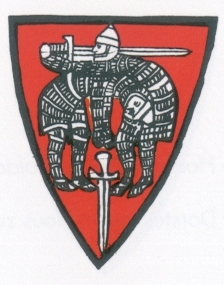
It was the ancestral seat for the Manesse knightley dynasty. The Manesse family is known primarily through the Manesse Manuscript, a collection of Middle High German songs. Their coat of arms depicts two fighting white knights on a red background, one of whom is victorious. It is a telling coat of arms ; the name comes from Manesser , meaning “man-killer.”

The Manesse family coat of arms: The Manesse Song Manuscript contains poetic works in Middle High German . Its core was produced around 1300 in Zurich , probably in connection with the collecting activities of the Zurich patrician Manesse family . Several additions were made up to around 1340. The text was written by 10–12 different writers, perhaps from the circle of the Grossmünster in Zurich.

The Manesse family were originally merchants and rose to knighthood through their wealth and reached their peak of power between 1250 and 1310. As vassals of the Fraumünster Abbey , the Einsiedeln Monastery , and the German Empire, they were an important family in the city of Zurich before becoming “extinct” around 1415..

In 1393, the castle was sold by Ital Maness to the “Jew Visli or Vifli” at a public auction, but already before this, it seems the castle didn’t have anyone living there anymore. 

Have a look at the panorama of the old castle ruins

The Three Beeches on Uetliberg

The girl was a beautiful and young girl from a nearby farmhouse, this more reclaimed by nature than the castle ruins. She often encountered the castle lord when he was out hunting, or walking into town. They started talking and he would soon seduce her by three beech trees on the hills. He told her he would marry her and she finally gave in. 

After this, he cast her away and treated her coldly with her losing her honor and innocence. To make him change his mind, she sat outside the castle gate, hoping he would take notice and pity her. Instead, he just laughed and sent the dogs after her, who ran out into the forest on the hill, and back to the three beeches. 

There she cursed his name before taking her own life. It is said she was buried close to three beeches on the hill as well as she wouldn’t be able to be buried as a consecrated ground. The trees were supposedly standing up to a few decades ago. 

The Manesse Family: The Manesse family was continuously represented in the Zurich City Council from the 13th to the 15th century. They twice provided the mayor and actively promoted the city’s cultural life. They belonged to the city’s patriciate . Rüdiger von Manesse, son of Ulrich M. Manegg and Adelheid von Breitenlandenberg. Married to Clarita von Hertenberg. Engraving by Johannes Meyer from 1696

The Ghost of Uetliberg Haunting Stormy Nights

Tales started to be told that someone was haunting the area around the three beeches were she was buried. When storms were coming in over the city and thunder roared a fire sprung up from under the trees, even when it was raining. 

As the lightning flashed, illuminating the night, travellers passing by would see a white figure, her long hair loose, beating her chest and wringing her hands, always looking at the old Manegg Castle where the lord who betrayed her came from. 

Now his castle has burned down, crumbled and his name mostly forgotten. 

Newest Posts

  • The Haunting of Münchenstein’s Rectory Marini House
    Right outside Basel in Switzerland, the haunted former Rectory in Münchenstein is said to be haunted by one of its former priests.
  • The Ghost Procession of Basel and the Dance of Death
    Mirroring the famous Dance Macabre mural that used to hang on the walls near the Predigerkirche in Basel, it is said that plague victims were buried in the patch of grass outside of the church. Legend has it that when the city needs it, the dead will rise from it in a macabre procession, as a warning of an oncoming disaster.
  • The Haunted Halls of the Bern City Hall (Rathaus)
    Where history whispers and shadows reign, the Rathaus in Bern is said to be haunted by a myriad of ghosts. Who are the ghosts lingering in the City Hall after dark?
  • The Restless Dead Buried Inside of Basel’s Double Cloister
    The two adjoining cloisters by Basel Cathedral are said to be haunted by a couple of spectres entombed within the building. In the darkness of Basel’s Double Cloister, it is said you can hear the moaning of a man slowly suffocating and feel the unsuspected slap from a man, as mean in death as he was in life.
  • The Portobello Bar: Spirits on the Canal
    A lock keeper from the adjacent lock next The Portobello Bar in Dublin is said to be haunting it. Ever since his mistake cost the lives of someone crossing, he is said to be lingering in the area.
  • Val Sinestra Hotel and the Ghost of Hermann Haunting the Lower Engadine
    In an old sanatorium in Switzerland the ghost of Hermann is said to have been haunting for ages. But who was he when he was alive, and what was his true name before he died in the remote fortress up in the mountains? And is he still haunting the old halls where he never made his recovery?
  • Glasnevin Cemetery and the Faithful Ghost Dog still Waiting for his Master
    After his master died at sea, the faithful dog was by his master’s grave, day in and day out. After dying of hunger and grief it is said that the Newfoundland dog is still seen, slipping between the graves at Glasnevin Cemetery in Dublin.
  • The Ghosts of the Sinful Nuns Haunting Bern
    Once, the city of Bern was filled with nuns working and living inside of the city walls. According to ghost stories though, some of them remained, even after the Reformation that closed their convents down. And those stories tell about them being guilty of terrible things with terrible ends.
  • A Vampire in Ohio: The Strange and Grim Superstition of the Salladay Family
    Seeking new land and a new life, the Salladay family went to Ohio, but brought a silent killer with them: Consumption. Falling into odd superstitions, they believed the only way to stop the disease was to stop the undead from rising from their graves.
  • Cell Number 11: Whispers in the Attic of the Norwegian Justice Museum in Trondheim
    Is Cell Number 11 in the former prison for the criminally insane haunted? The attic of the Norwegian Justice Museum in Trondheim, Norway has had many who come out, claiming so.
  • The Haunted Legends of Carl Beck House in Ontario, Canada
    Now a place you can rent and stay at, the Beck House in Canada is said to be one of the more haunted places. Those who have stayed the night come back with stories of strange encounters, believed to be the ghost of the Beck family members.
  • The Burgträppe-Balzli Haunting: The Ghost of Nydegg Castle
    Where the Nydegg Church is today, there once used to be a castle. Tales about ghosts lingering around the old Nydegg Castle and the stairs leading up to it still roams. And one of the more infamous and feared ghosts of Bern is the Burgträppe-Balzli.

References:

Die drei Buchen am Uetliberg | Märchenstiftung 

Manesse – Wikipedia

The Haunting of the Scarborough Castle Ruins and the Foggy South Bay Beach

Advertisements

Covered in fog, the Scarborough Castle looms over the South Bay Beach in the English seaside town. Countless ghosts like the beheaded Earl, weeping women and prisoners of war are said to be drawn to these sandy beaches in the cover of darkness. 

Scarborough Beach, with its golden sands and the rhythmic lull of the North Sea, is a cherished destination for many in North Yorkshire, England.Scarborough is a place where history is not confined to books but lives on through stories whispered on the wind. Writers like Susann Hill grew up here and she spoke a lot about how the town influenced her eerie stories like The Woman in Black. After the horror movie St. Maud came out, it was also put on a list of a horror movie road trip through England together with Culzean Castle from The Wicker Man and Westminster Bridge from 28 Days Later. 

But if we are to believe the legends, the Scarborough South Bay Beach and the rest of the town are actually haunted. From the haunted halls of the Grand Hotel to the ancient stones of St. Mary’s Church, shipwrecked ships in the bay and the ruins of the old castle, the town is filled with tales of the supernatural.

The Woman in Pink and the Murder of Lydia Bell

Among the most enduring legends is that of the Woman in Pink haunting the beach and various other locations in the city. There are many variations. One of them speaks of a veiled figure, draped in a pink nightgown-like dress, seen wandering the shoreline during foggy nights. She is seen wandering the beach, clutching a baby in her arms. The child is said to be covered with a white shail.

Who was this woman? Some locals said that it is the ghost of a woman who threw her child to its death. 

Another famous legend of the Pink Lady connects her to the murder of Lydia Bell in 1804. Although, her name was actually Eleanor, named from her paternal grandmother. She was a teenager and daughter of a York confectioner, Joseph. In the evening she slipped out from her room and went to meet up with a soldier stationed there. In some versions of the tale it was her married lover. Witnesses saw her walking away with someone, but a positive identification was never made.

What really happened that night has been retold mostly in legends. They say she tried to scream out into the foggy night, but it was drowned by the sound of a foghorn. After she died she was thrown off a cliff. She wasn’t discovered until the next morning when some fishermen happened upon her. She was found a few miles down the coast with severe trauma and attempted rape was assumed. Her murderer was never caught, although a soldier was arrested and later acquitted. According to the ghost stories he didn’t confess his crimes until years later on his deathbed, but that is only in the stories. 

Now she is haunting the beach and various other places in the town, like the house she was staying in when she was in town, said to be Bell Mansion or the Georgian House on St. Nicholas Street, which it is also known as. She is often said to appear in a pink, sometimes a red dress, looking like just another person among the crowd, running down the beach towards the Spa before vanishing into thin air. Some say that you can still hear her faint screams between the humming of the foghorns on foggy nights. 

How true was this story about Lydia Bell though? Or was it Elanor? With several names and dates, there are not many actual crimes to cross check with and easy to get mixed up. The earliest appearance as a ghost story seems to be in Jack Hallam’s book Ghost of the North from 1976, although the story is said to have been known a long time before this. 

The Woman in Black

Now, although the legend of The Woman in Pink is one of the most well known stories for the locals, the world probably knows Scarborough as the haunting ground for The Woman in Black. And although it’s not just like the book, there are certainly legends of a darkly clad ghost wandering the beach as well as other places in the town. 

Some say that there is the ghost of a woman in a black veil haunting the area. It is said that her name was Helen Hywater and was waiting for her sailor lover. He was to return to Scarborough within 300 days to marry her. When he never came, she took her life on day 300 and has been haunting the place on foggy nights since then. 

This legend doesn’t have many sources though and one of the online sources comes from ghosthunter Anne Roehampton. This story is also connected to the Grand Hotel, where some claim that she took her life in one of the rooms and that her spirit roams the corridors still. Some think that this story partly influenced Susann Hill when crafting the Woman in Black. 

The Woman in Black: The 1983 Gothic horror novel by English writer Susan Hill, is about a mysterious spectre that haunts a small English town. A television film based on it, also called The Woman in Black, was produced in 1989, with a screenplay by Nigel Kneale. In 2012, another film adaption was released starring Daniel Radcliffe. The story has definitely shaped the ghost stories told in Scarborough today.

There are also said to be a witch without a name haunting the area. The most famous witch accusations was that of Anne Hunnam or Marchant, although no records says that she was actually sentenced to death for it. She is said to be haunting a footpath, wearing a dishevelled dark and hooded cloak. Her sinister cackling following the people trespassing her domain. 

Ghostly Soldiers: Echoes of Ancient Battles

Scarborough’s history is steeped in conflict, from Viking invasions to civil wars. It’s said that the spirits of long-dead soldiers still patrol the beach, their forms glimpsed through the fog, clad in antiquated armor. These apparitions are silent, their faces obscured, marching eternally along the sands they once defended.

After the English Civil War the castle was used as a prison and military barracks until the end of World War 1. Many perished behind its walls, but haunt the premise in their afterlife. Near the remnants of a Roman signal station by the castle, visitors have reported sightings of a solitary Roman soldier, standing guard as he did centuries ago.

Scarborough Castle: A Fortress of Phantoms

Overlooking the beach stands Scarborough Castle, a sentinel of stone with a history as turbulent as the seas below. Today, most of the 3500 years old castle lies in ruins, and many believe the haunting feeling of the beach it was built nearby comes from the ruins. 

Read More: Check out all haunted castles

The castle is reputedly haunted by several spirits and those spirits seem to wander freely from the castle walls down to the beach. 

Piers Gaveston was the son of a Gascon knight and is said to haunt the castle as well as the beach of Scarborough. Through his friendship with King Edward II, he became a favorite and the Earl of Cornwall. This favouritism made him deeply unpopular with the royal court, and when he was appointed regent in the king’s absence, it was enough for them. Gaveston met a grisly end in 1312 when he was sent to the castle for his safety by the king. But it was in vain and he was taken prisoner from here by the Earls of Lancaster, Hereford and Arunde and later beheaded in Blacklow Hill.

His headless ghost is said to roam the castle grounds, a restless soul seeking justice. He is also said to lure people to the edge and try to push visitors off the castle walls. 

Another tale exclusively from the castle tells of a woman who, in a fit of despair, threw something over the castle wall before leaping to her death because her soldier she was seeing left her for someone else. Her spirit, consumed by grief, is believed to haunt the ruins, her cries echoing through the night, among with all the other ghosts looming in the foggy bay. 

Newest Posts

  • The Haunting of Münchenstein’s Rectory Marini House
    Right outside Basel in Switzerland, the haunted former Rectory in Münchenstein is said to be haunted by one of its former priests.
  • The Ghost Procession of Basel and the Dance of Death
    Mirroring the famous Dance Macabre mural that used to hang on the walls near the Predigerkirche in Basel, it is said that plague victims were buried in the patch of grass outside of the church. Legend has it that when the city needs it, the dead will rise from it in a macabre procession, as a warning of an oncoming disaster.
  • The Haunted Halls of the Bern City Hall (Rathaus)
    Where history whispers and shadows reign, the Rathaus in Bern is said to be haunted by a myriad of ghosts. Who are the ghosts lingering in the City Hall after dark?
  • The Restless Dead Buried Inside of Basel’s Double Cloister
    The two adjoining cloisters by Basel Cathedral are said to be haunted by a couple of spectres entombed within the building. In the darkness of Basel’s Double Cloister, it is said you can hear the moaning of a man slowly suffocating and feel the unsuspected slap from a man, as mean in death as he was in life.
  • The Portobello Bar: Spirits on the Canal
    A lock keeper from the adjacent lock next The Portobello Bar in Dublin is said to be haunting it. Ever since his mistake cost the lives of someone crossing, he is said to be lingering in the area.
  • Val Sinestra Hotel and the Ghost of Hermann Haunting the Lower Engadine
    In an old sanatorium in Switzerland the ghost of Hermann is said to have been haunting for ages. But who was he when he was alive, and what was his true name before he died in the remote fortress up in the mountains? And is he still haunting the old halls where he never made his recovery?
  • Glasnevin Cemetery and the Faithful Ghost Dog still Waiting for his Master
    After his master died at sea, the faithful dog was by his master’s grave, day in and day out. After dying of hunger and grief it is said that the Newfoundland dog is still seen, slipping between the graves at Glasnevin Cemetery in Dublin.
  • The Ghosts of the Sinful Nuns Haunting Bern
    Once, the city of Bern was filled with nuns working and living inside of the city walls. According to ghost stories though, some of them remained, even after the Reformation that closed their convents down. And those stories tell about them being guilty of terrible things with terrible ends.
  • A Vampire in Ohio: The Strange and Grim Superstition of the Salladay Family
    Seeking new land and a new life, the Salladay family went to Ohio, but brought a silent killer with them: Consumption. Falling into odd superstitions, they believed the only way to stop the disease was to stop the undead from rising from their graves.
  • Cell Number 11: Whispers in the Attic of the Norwegian Justice Museum in Trondheim
    Is Cell Number 11 in the former prison for the criminally insane haunted? The attic of the Norwegian Justice Museum in Trondheim, Norway has had many who come out, claiming so.
  • The Haunted Legends of Carl Beck House in Ontario, Canada
    Now a place you can rent and stay at, the Beck House in Canada is said to be one of the more haunted places. Those who have stayed the night come back with stories of strange encounters, believed to be the ghost of the Beck family members.
  • The Burgträppe-Balzli Haunting: The Ghost of Nydegg Castle
    Where the Nydegg Church is today, there once used to be a castle. Tales about ghosts lingering around the old Nydegg Castle and the stairs leading up to it still roams. And one of the more infamous and feared ghosts of Bern is the Burgträppe-Balzli.

References:

The ‘haunted’ Yorkshire beach that was used in a horror movie – YorkshireLive

Is Scarborough Haunted? Haunted places and ghost stories.

We live on the UK’s most ‘HAUNTED’ beach with ‘unruly ghosts roaming the shore’ – but it’s hiding a secret | The Sun

The ‘haunted’ Yorkshire beach that’s worth a spooky Halloween drive from Manchester

Ghost-hunting in Scarborough

Scarborough’s haunted history: Share your ghost stories and spooky sightings around the town for our ‘Coastbusters’ series this Halloween

Scarborough’s haunted history: Share your ghost stories and spooky sightings around the town for our ‘Coastbusters’ series this Halloween 

The Black Widow – Dark Tales Around Scarborough | The Abroad Guide

Scarborough Ghost Trail

The Pink Lady Of Scarborough | The Forteana Forums

The 100 Ghost Stories in Dragsholm Castle in Denmark

Advertisements

Said to house over a hundred ghosts, Dragsholm Castle in Denmark is said to be one of the most haunted in the country. A prison for both traitors of country and heart, there are many lingering in the now modern hotel rooms. 

Dragsholm Castle is a stunning 800-year-old fortress that has played host to royalty, nobility, and even prisoners in the picturesque Danish countryside of Zealand. But beneath its grandeur and beauty lies a dark and chilling secret. For centuries, the castle has been haunted by ghosts and spirits, with tales of mysterious apparitions and unexplained occurrences leaving visitors trembling with fear. 

From the headless ghost of a former nobleman to the restless spirits of prisoners who died in the castle’s dungeons, Dragsholm Castle is a fascinating yet terrifying place that has captured the imagination of many. 

Dragsholm Castle: An 800-year-old fortress in Denmark, surrounded by lush greenery and a serene waterway, known for its haunting history.

The Bloody History of Dragsholm Castle

Dragsholm Castle has a long and fascinating history, dating back to 1215 when it was first built as a fortification. The name Drag, comes from draugh and is the narrow strip of land  Over the years, it has been modified and expanded to become the magnificent castle that we see today. Originally, the castle was owned by the powerful Bishop of Roskilde, but it was later taken over by noble families who used it as their residence. It was actually the oldest secular building in Denmark.

Read more: Check out all ghost stories from haunted castles around the world

During a war known as The Count’s Feud in the 1530’s, it was the only castle in Zealand to remain standing. It also lived through all of the wars between Sweden and Denmark

View of the Danish Countryside: A scenic view of the lush landscape surrounding Dragsholm Castle, showcasing the tranquility of the Danish countryside. // Source: Wiki

During the 16th and 17th centuries, Dragsholm Castle was used as a prison for nobility who had fallen out of favor with the Danish monarchy. Many of these prisoners were held in the castle’s dungeons, where they were subjected to horrific conditions and died from disease, starvation, and torture.

Ghost Stories From Dragsholm Castle

It is no surprise that a castle with such a dark history is believed to be haunted. There have been countless reports of ghostly sightings and unexplained phenomena at Dragsholm Castle over the years, making it one of Denmark’s most famous haunted locations.

Dragsholm Castle has turned into a hotel and restaurant today, and many of their guests experience strange things. Water taps turn on in the night, mirrors and pictures on the walls starts swinging. The castle is said to be home to over 100 ghosts, each with their own terrifying story.

The Bishop Ghost in the Tower

It is said that one of the last Bishop of Roskilde haunts one of Dragsholm Castle’s towers. According to the stories Joachim Rønnow was imprisoned in these when the castle was seized by the Danish king in the reformation. Today, they have turned into hotel rooms. 

Guests staying at the tower claim to have heard the moaning of the bishop as well as wailing sounds from the hallways on the second floor. Still haunting the place he once owned. 

Joachim Rønnow: 1500-1542 was a Danish Bishop, last of the Catholics Bishops in Roskilde. He was captured with other bishops and he died in prison. Although the legend says he died in Dragsholm Slot, it was also said he died in Københavns Castle, May 1, 1542. history claim that his first year of imprisonment was at Dragsholm, then at Københavns castle, Kronborg and in the end, Visby. In 1533, the Danish theologian Hans Tausen was convicted of blasphemy, and this caused an oproar in the Protestant city of Copenhagen. The scene shows Tausen defending Joachim Rønnow, bishop of Zealand, against the mob.

The Ghost of the Mad Squire Ejer Brockenhuus

One of the King’s confidants when alive, Brockenhuus was set for a comfortable life. In the end he blew it with the kind and ended up in prison because of his incestuous affairs. He enjoyed blowing up dynamite by setting pipes on fire and abused his servants, raped and killed his sister. He may or may not have also impregnated her and had an affair with his brother in law’s widow. In church he invited people to his funeral before he jumped out from the coffin in front of the horrified spectators.

The Noble Broockenhuus Family Crest

He is known as the Mad Squire because he went mad as time went by in the prison. In the end he was only able to cry out bitter and hurtful words and held his own council and dialog no one could follow. Still to this day it is said you can hear him rambling in the corridors close to where his cell used to be. 

The Mummified Ghost of the Earl of Bothwell

Another ghost said to haunt the castle is James Hepburn, also known as the 4th Earl of Bothwell and perhaps best known as the third husband of Mary, Queen of Scots. 

In his lifetime, he was engaged to a Danish-Norwegian woman called Anne Rustung. When he went back to Scotland though, he was planning to marry Mary, Queen of Scots, but brought Anne’s dowry with him. He was accused of murdering Lord Darnley, the second husband of the Scottish Queen and captured in Bergen port in Norway, then a Danish territory. The humiliation was big for Anne and her father tracked the Earl down and punished him by imprisoning him. He was chained to a pillar and left to die and died at 44 years old. 

His mummified body is kept close by at Faarevejle Church and is believed to haunt the castle. He is also seen entering the castle in a horse drawn carriage through the courtyard, although there hasn’t been horses on the site in years. 

The White Lady of Dragsholm Castle

One of the most famous ghosts at Dragsholm Castle is the White Lady and no European castle is complete without its own version. Legend has it that she was a beautiful noblewoman who fell in love with a commoner who worked at the castle, although she was betrothed to another noble family. Most English sources would have you think her name was Celina Bolves for some reason, but there are no Bolves nobles in Denmark.

Her name was actually Celestine Mariann de Bayonne Gyldenstierne, daughter of Mogens Gyldenstierne. She had fell in love with a man working in the stables and fell pregnant around 1550. She was already promised to another noble family and her father was furious when he found out. He told her to go to Slesvig to have the child in secret and threw her a going away party. This was the last time anyone saw her.

She never went to Slesvig. Her father drugged her wine with opium and locked her away in one of the castle’s towers. She was never seen again, and it is believed that she died of starvation and despair as it is said they built a wall around her and chained to the wall, she was left to starve. 

But is the story true? Mogens Gyldenstierne was certainly a real man, and is said to have around 20 kids, although this daughter is not really mentioned anywhere, and neither is it said she entombed someone either.

Can the lady in white then be Magurite Dåe as some sources claim? She was a noble woman in the 1600 and fell in love with Count Maurice Lejonhuvud who was weak of syphilis. Her father forbade her to marry him. Defiant, she threw herself into a dance at a ball at Dragsholm Castle they attended in 1641. The dance was so intense, her tuberculosis lungs couldn’t handle and she fell dead on the floor. Now she is said to seek out young men that look like her count.

This story became popular in 1912 when the plumbing of the castle got an upgrade. They were adding a toilet in the room and removed some of the bricks. Behind the wall a skeleton was discovered. No matter who the Lady in White is said to be, there truly was a skeleton of a real human hidden in the castle walls.

Her ghosts are said to wander the castle’s halls, wearing a white dress and carrying a candle. Many visitors claim to have seen her ghostly figure, and some have even reported feeling a cold breeze or hearing her soft footsteps. When the castle turned into a hotel, many men woke up in their room to find the ghost of the lady in white looking at them at the end of their bed.

The Grey Lady of Dragsholm Castle

Another famous ghost at Dragsholm Castle is the Grey Lady. There are some conflicting stories about who she was, especially when looking at English sources and Danish sources. Many English sources tell that she was a former maid said to be very beautiful who worked at the castle during the 19th century. According to legend, had a toothache and got help from the master of the castle. He did relieve her pain for a while, but the infection caused her death. When she died a little later, she came back as the castle’s protector and is seen at night, guarding the castle, still cheerful as she was in life. 

However when looking at the Danish sources, they tell a different story. Here she gets a name, Louise Katrine Jensdatter. She was from a poor family and started as a maid at the castle. She was caught stealing silver and thought she would be punished. The Housekeeper took pity on the poor girl and gave her a new chance and responsibility. Louise rose to the occasion and worked hard at the castle for many years.

She was working as the Housekeeper at the castle when the Swedish attacked in 1659. She had to watch the Swedish soldier kill her little children and husband in the courtyard after raping her. She is said to have died soon after, either from fright or in the fire that consumed the castle after the attack.

People working in the castle can still feel her presence, especially when something goes wrong and she is there to remind the staff the proper way to take care of the castle.

Paranormal Activity at Dragsholm Castle

Despite its age and the many ghost stories associated with it, Dragsholm Castle remains a popular tourist destination. It is to this day the Bøtteger family who owns it and uses it as a luxury hotel. 

Source: Wiki

Visitors come from all over the world to experience the castle’s haunting atmosphere and to try and catch a glimpse of its ghostly inhabitants. Over the years, there have been many reports of paranormal activity at the castle, including strange noises, unexplained movements of objects, and even sightings of ghostly figures. Many paranormal investigators have visited the castle to try and capture evidence of these ghostly occurrences, and some believe that the castle is one of the most haunted locations in Europe.

Read More: Check out all haunted hotels around the world

Dragsholm Castle is a fascinating and terrifying place that has captured the imagination of many. Its haunting beauty and dark history make it one of Denmark’s most famous landmarks, and its ghostly legends continue to intrigue and terrify visitors to this day. Whether you believe in ghosts or not, there is no denying the eerie atmosphere that permeates the castle’s walls.

Newest Posts

  • The Haunting of Münchenstein’s Rectory Marini House
    Right outside Basel in Switzerland, the haunted former Rectory in Münchenstein is said to be haunted by one of its former priests.
  • The Ghost Procession of Basel and the Dance of Death
    Mirroring the famous Dance Macabre mural that used to hang on the walls near the Predigerkirche in Basel, it is said that plague victims were buried in the patch of grass outside of the church. Legend has it that when the city needs it, the dead will rise from it in a macabre procession, as a warning of an oncoming disaster.
  • The Haunted Halls of the Bern City Hall (Rathaus)
    Where history whispers and shadows reign, the Rathaus in Bern is said to be haunted by a myriad of ghosts. Who are the ghosts lingering in the City Hall after dark?
  • The Restless Dead Buried Inside of Basel’s Double Cloister
    The two adjoining cloisters by Basel Cathedral are said to be haunted by a couple of spectres entombed within the building. In the darkness of Basel’s Double Cloister, it is said you can hear the moaning of a man slowly suffocating and feel the unsuspected slap from a man, as mean in death as he was in life.
  • The Portobello Bar: Spirits on the Canal
    A lock keeper from the adjacent lock next The Portobello Bar in Dublin is said to be haunting it. Ever since his mistake cost the lives of someone crossing, he is said to be lingering in the area.
  • Val Sinestra Hotel and the Ghost of Hermann Haunting the Lower Engadine
    In an old sanatorium in Switzerland the ghost of Hermann is said to have been haunting for ages. But who was he when he was alive, and what was his true name before he died in the remote fortress up in the mountains? And is he still haunting the old halls where he never made his recovery?
  • Glasnevin Cemetery and the Faithful Ghost Dog still Waiting for his Master
    After his master died at sea, the faithful dog was by his master’s grave, day in and day out. After dying of hunger and grief it is said that the Newfoundland dog is still seen, slipping between the graves at Glasnevin Cemetery in Dublin.
  • The Ghosts of the Sinful Nuns Haunting Bern
    Once, the city of Bern was filled with nuns working and living inside of the city walls. According to ghost stories though, some of them remained, even after the Reformation that closed their convents down. And those stories tell about them being guilty of terrible things with terrible ends.
  • A Vampire in Ohio: The Strange and Grim Superstition of the Salladay Family
    Seeking new land and a new life, the Salladay family went to Ohio, but brought a silent killer with them: Consumption. Falling into odd superstitions, they believed the only way to stop the disease was to stop the undead from rising from their graves.
  • Cell Number 11: Whispers in the Attic of the Norwegian Justice Museum in Trondheim
    Is Cell Number 11 in the former prison for the criminally insane haunted? The attic of the Norwegian Justice Museum in Trondheim, Norway has had many who come out, claiming so.
  • The Haunted Legends of Carl Beck House in Ontario, Canada
    Now a place you can rent and stay at, the Beck House in Canada is said to be one of the more haunted places. Those who have stayed the night come back with stories of strange encounters, believed to be the ghost of the Beck family members.
  • The Burgträppe-Balzli Haunting: The Ghost of Nydegg Castle
    Where the Nydegg Church is today, there once used to be a castle. Tales about ghosts lingering around the old Nydegg Castle and the stairs leading up to it still roams. And one of the more infamous and feared ghosts of Bern is the Burgträppe-Balzli.

References:

Norske slott er fulle av spøkelser | historienet.no

I seng med spøkelser

Mogens Gyldenstierne – Wikipedia, den frie encyklopædihttps://nyheder.tv2.dk/samfund/2014-12-01-dragsholms-dramatiske-historie-hjemsoegt-besat-og-braendt

The Haunted Corvin Castle: A Journey Through Romania’s Dark History

Advertisements

Is Corvin Castle in Romania haunted by something? Perhaps the ghost of Vlad the Impaler? As one of the biggest castles in Europe it also houses a whole load of ghost stories. Who is hiding in the shadows?

Are you ready to embark on a spine-chilling journey through Romania’s dark history? Join me as we explore the haunted Corvin Castle, a place that has been the subject of countless legends, myths, and tales of horror. Built in the 15th century and considered as one of the Seven Wonders of Romania, this Gothic fortress has witnessed centuries of bloodshed, torture, and tragedy. 

Read More: Check out all ghost stories from Romania

But the ghosts of the past still linger within its walls and as one of Europe’s biggest and old castles overlooking the Ziasti River, it’s bound to have a ghost story or two. 

Corvin Castle: The majestic Corvin Castle, a Gothic fortress steeped in history and legends, located in Hunedoara, Romania. Holding back the Ottoman army for years, it is filled with ghosts and the castle is believed to be some of the most haunted places in Romania. And that is saying something.

History of Corvin Castle

Corvin Castle, also known as Hunyadi Castle, is a Gothic-Renaissance fortress located in the town of Hunedoara, Romania. It was built on top of an old Roman camp in 1446 by John Hunyadi, a Hungarian military leader, and served as a strategic stronghold against the Ottoman Empire. He was a Voivode of Transylvania, the highest ranking official during the 12th and 16th century. Back then, it was a part of the Kingdom of Hungary, a monarchy that existed for nearly a millennium. Over the centuries, the castle has been expanded and renovated by various owners, including the Corvin family, who gave it its current name.

Read More: Check out all haunted castles in the world

Despite its impressive architecture and historical significance, the castle is best known for its dark and twisted past. It has been the site of numerous battles, sieges, and executions, and has been home to some of the most infamous figures in history. 

On 13 April 1854, Corvin Castle was struck by lightning, severely damaged and abandoned until 1869.

The Legend of the Raven: Some historians think John Hunyadi was the illegitimate son of King Sigimund of Luxemburg and an Elizabeth. To protect everyone, this was kept secret. Sigimund gave Elizabeth a gold ring for their son. When John grew up, Elizabeth gave him the ring. One day at lunch, John took off the ring, and a raven tried to steal it. John killed the raven with a bow and arrow and got the ring back. Later, he told the king (possibly his father) this story. Impressed, the king chose a raven with a gold ring for the Hunyadi family crest. The family liked this symbol, which stood for wisdom and longevity, and adopted the name Corvin, from the Latin word “Corvus” meaning Raven. It’s also said that Elizabeth used a raven to send a letter to Matthias when he and his brother were imprisoned, which is why the raven was the symbol of the Hungarian postal service for over a hundred years. The family also had a property called Raven’s Rock.

Dark Tales and Legends of Corvin Castle

The legends surrounding Corvin Castle are as numerous as they are chilling. One of the most famous tales involves Vlad the Impaler, who was imprisoned in the castle’s dungeon for seven years by John Hunyadi. According to legend, Vlad was kept in a small, dark cell and tortured mercilessly by his captors. This is what inspired him to impale his enemies, as it was what he did to the rats he ate alive in his cell. Some say that his ghost still haunts the castle’s halls to this day, seeking revenge against those who wronged him.

Vlad the Impaler: A historical depiction of Vlad the Impaler’s brutal methods of torture and execution, reflecting the dark history of Corvin Castle. Woodcut from the title page of a 1499 pamphlet published by Markus Ayrer in Nuremberg. It depicts Vlad III “the Impaler” (identified as Dracole wayde = Draculea voivode) dining among the impaled corpses of his victims.

If he really was is uncertain and most likely it’s a tall tale, but many of the tour guides of the castle show his holding cell they say he stayed in. Many say that he was imprisoned in 1462, but seeing that John Hunyadi was already dead by then, it carves a dent in the truth of the story. What has been said though, is that Bram Stoker was inspired by the castle, although he apparently had no idea about the Vlad the Impaler connection when he wrote Dracula. 

Haunted sightings and experiences at in the Capistrano Tower

Over the years, there have been numerous reports of paranormal activity at Corvin Castle. Visitors have reported seeing ghostly apparitions, hearing strange noises, and feeling cold spots throughout the castle. Some have even claimed to have been physically touched or pushed by unseen forces.

One such legend talks about a monk haunting the Capistrano Tower. The Capistrano Tower, one of the most significant parts of the construction, was a circular tower and this was used as a prison like many of the other towers of Corvin castle, named of the Franciscan monk, John of Capistrano.

The Towers of Corvin Castle: The towers of the castle was known to be used as prison cells. This is also what fuels the haunted rumors about something not being quite right in one of them. Could the ghost of a monk be haunting one of the towers?

He was said to have been sentenced to death because he was spying on a nobleman in the council room. As punishment he was entombed alive in the brick wall of the tower and slowly died of starvation. To this day it is said his ghost is there, spying on those venturing into his tower. 

Exploring the castle’s architecture and hidden rooms

Despite its dark history, Corvin Castle is a marvel of Gothic architecture and design. From its towering walls and turrets to its ornate carvings and frescoes, the castle is a testament to the skill and craftsmanship of its builders.

One of the most interesting features of the castle is its hidden rooms and secret passages. These were often used by the castle’s inhabitants to escape during times of siege or to hide valuable treasures. Some of the most famous hidden rooms include the Knight’s Hall, which was used to store weapons and armor, and the secret room of John Hunyadi, which was used as a private study and meditation space.

One time though, some tourists got locked in the Corbin Castle after it closed for the day. Some say that they bribed the security guard to let them stay overnight. When the castle opened the next day, they were found, bruised, beaten and terrified. They were unable to explain what had happened to them, but claimed that some unseen force had tortured them throughout the night. 

The torture chamber and its gruesome history

One of the most chilling places in Corvin Castle is the torture chamber, where prisoners were subjected to horrific acts of violence and torture. The chamber is located in the castle’s basement and features a variety of torture devices, including the rack designed to tear a victim in half, the iron maiden that was a spiked iron chamber the prisoner had to sit in, and the Spanish Donkey were the victim was places on a triangle with pointed edges between the legs where the prisoner eventually split in half.

There was also a bear pit that prisoners were thrown into alive to be eaten by the creatures residing there. No wonder that the castle is filled with ghosts. 

The Bottomless Well

Another famous tale involves the castle’s well, which is said to be bottomless and connected to the underworld. Legend has it that the well was dug by three Turkish prisoners who were promised their freedom if they could complete the task of digging after water. However, once they finished digging after ten to fifteen hard labored years, they were thrown into the well and left to die. 

The Well: What will you find at the bottom of the well? The gateway to hell or the skulls of some Turkish prisoners? Source: Stanisław Ludwiński/Flickr

Some say that he held them there, laughed in their face and kept them in the basement until they died. Some think that it was Hunyadi who promised them their freedom, but died while they were working. The one telling them to get back into their cell was his wife, Elizabeth. One of the prisoners allegedly wrote on the wall: You now have water, but no soul/heart. With this, he cursed the castle forever. 

Some say that they were beheaded and hteir skulls thrown into the well, still there to this day. It’s said that their ghosts can still be heard crying out for help from the depths of the well.

Is Corvin Castle really haunted?

While there’s no scientific proof that Corvin Castle is haunted, there’s no denying the countless reports of paranormal activity and ghostly sightings that have been recorded over the years. Whether you believe in ghosts or not, there’s no denying the eerie feeling that permeates the castle’s walls.

Newest Posts

  • The Haunting of Münchenstein’s Rectory Marini House
    Right outside Basel in Switzerland, the haunted former Rectory in Münchenstein is said to be haunted by one of its former priests.
  • The Ghost Procession of Basel and the Dance of Death
    Mirroring the famous Dance Macabre mural that used to hang on the walls near the Predigerkirche in Basel, it is said that plague victims were buried in the patch of grass outside of the church. Legend has it that when the city needs it, the dead will rise from it in a macabre procession, as a warning of an oncoming disaster.
  • The Haunted Halls of the Bern City Hall (Rathaus)
    Where history whispers and shadows reign, the Rathaus in Bern is said to be haunted by a myriad of ghosts. Who are the ghosts lingering in the City Hall after dark?
  • The Restless Dead Buried Inside of Basel’s Double Cloister
    The two adjoining cloisters by Basel Cathedral are said to be haunted by a couple of spectres entombed within the building. In the darkness of Basel’s Double Cloister, it is said you can hear the moaning of a man slowly suffocating and feel the unsuspected slap from a man, as mean in death as he was in life.
  • The Portobello Bar: Spirits on the Canal
    A lock keeper from the adjacent lock next The Portobello Bar in Dublin is said to be haunting it. Ever since his mistake cost the lives of someone crossing, he is said to be lingering in the area.
  • Val Sinestra Hotel and the Ghost of Hermann Haunting the Lower Engadine
    In an old sanatorium in Switzerland the ghost of Hermann is said to have been haunting for ages. But who was he when he was alive, and what was his true name before he died in the remote fortress up in the mountains? And is he still haunting the old halls where he never made his recovery?
  • Glasnevin Cemetery and the Faithful Ghost Dog still Waiting for his Master
    After his master died at sea, the faithful dog was by his master’s grave, day in and day out. After dying of hunger and grief it is said that the Newfoundland dog is still seen, slipping between the graves at Glasnevin Cemetery in Dublin.
  • The Ghosts of the Sinful Nuns Haunting Bern
    Once, the city of Bern was filled with nuns working and living inside of the city walls. According to ghost stories though, some of them remained, even after the Reformation that closed their convents down. And those stories tell about them being guilty of terrible things with terrible ends.
  • A Vampire in Ohio: The Strange and Grim Superstition of the Salladay Family
    Seeking new land and a new life, the Salladay family went to Ohio, but brought a silent killer with them: Consumption. Falling into odd superstitions, they believed the only way to stop the disease was to stop the undead from rising from their graves.
  • Cell Number 11: Whispers in the Attic of the Norwegian Justice Museum in Trondheim
    Is Cell Number 11 in the former prison for the criminally insane haunted? The attic of the Norwegian Justice Museum in Trondheim, Norway has had many who come out, claiming so.
  • The Haunted Legends of Carl Beck House in Ontario, Canada
    Now a place you can rent and stay at, the Beck House in Canada is said to be one of the more haunted places. Those who have stayed the night come back with stories of strange encounters, believed to be the ghost of the Beck family members.
  • The Burgträppe-Balzli Haunting: The Ghost of Nydegg Castle
    Where the Nydegg Church is today, there once used to be a castle. Tales about ghosts lingering around the old Nydegg Castle and the stairs leading up to it still roams. And one of the more infamous and feared ghosts of Bern is the Burgträppe-Balzli.

References:

Kinnitty Castle and the Christian and Druid Hauntings

Advertisements

Built in a magical place both for the Christians as well as the druids that once owned the land, the Kinnitty Castle in Ireland houses ghosts that might be older than the castle itself. 

North of the Irish Slieve Bloom Mountains lies Kinnitty Castle, a place where centuries of history have intertwined with tales of ghostly apparitions and supernatural phenomena. This gothic revival castle from the 19th century is steeped in history and mystery that the locals deem as haunted.

Read More: Check out all of the ghost stories from Ireland

Even the village of Kinnitty, or Cionn Eitigh as it is in Irish, is steeped in legend. The name is from an old story about the head of a princess buried underneath it. A nearby pyramid was built by the Bernard family who resided in the castle, also giving the place a curious feel.

A History Engraved in Time

Kinnitty Castle’s history dates back to ancient times when the O’Carroll clan first erected a castle at Glinsk around 350 AD. Simultaneously, on the same site, an abbey was founded by St. Finian, a disciple of St. Brendan of Clonfert. These early structures bore witness to centuries of tumultuous events.

In 1209, the original castle fell victim to destruction at the hands of Murtagh O’Brien, only to be rebuilt by the Normans in 1213. Ely O’Carroll later reclaimed it, holding the territory until the arrival of Cromwell and the turbulent times that followed.

Read More: Check out all of the Haunted Castles from around the world

The present Kinnitty Castle took shape in 1630 when William O’Carroll constructed it on the site of the former abbey. Subsequently, during the plantation of Offaly, English forces confiscated the castle in 1641. In 1663, Colonel Thomas Winter was granted these lands by King Charles II in recognition of his military service. The Winter family eventually sold the property to the Bernards of County Carlow in 1764.

Kinnitty Castle: The haunted castle that is standing today is built from the 1600s. But there have been stories about it being haunted for much longer than that.// Source: Larry Goodwin/Flickr

In 1811, Lady Catherine Hutchinson, wife of Colonel Thomas Bernard, enlisted the renowned Pan Brothers to transform the building into a castellated mansion. However, the castle faced a devastating setback in 1922 when it was burned by Republican forces. 

For nearly four decades, the castle served as a Forestry Training Centre until its purchase in 1994, after which it was transformed into a luxurious 37-bedroom hotel, welcoming guests from near and far.

The Hauntings of Kinnitty Castle

Kinnitty Castle is not only a repository of history but also a haven of ghostly legends. Situated in ‘The Haunted Triangle’ of Ireland, which also includes Leap Castle and Charleville Castle. Like the other Irish castles with its haunted legends, Kinnitty Castle has earned a reputation for its spectral residents.

Read More: Check out all of the Haunted Hotels around the world

Many staff and guests are claiming to have heard or seen something paranormal in the castle. Even their Tripadvisor is filled with guests commenting about the strange things that happened during their stay. Guests can hear breathing in their room, shadows are dancing in the corner of their eyes and the TV is changing channels by itself. There is not only one ghost said to haunt the castle, and here is an intro to some of the more talked about.

The Guest of Monk Hugh

One tale that lingers within its walls is that of Monk Hugh or sometimes only referred to as the monk of Kinnitty. During the Norman era, an Augustinian Abbey was established near the castle, and remnants of the abbey still grace the estate, including the famous High Cross and Abbey wall.

Legend has it that Monk Hugh’s spirit roams the castle and the ruins of the Abbey to ensure the preservation of this historical era and safeguard the abbey and castle to this day. Who this ghost was when he was alive is unknown and many different legends have been told. Some say that he took his own life, something unthinkable for a monk seeking salvation.

He has also been seen wandering in the banquet hall and in the Dungeon Bar. People claim his appearance is a tall man dressed in a black robe with a face without any features. He has even said to have been talking to the staff and guests. 

The Ghost of the Little Girl in the Geraldine Room

Also in the attic it is said that a ghost is haunting the castle and there is even a hotel room named after her ghost. Guests staying have talked about hearing little footsteps over the floor and have even seen something that looks like a little girl. She is also talked about looking like a red mist hovering above peoples beds at night.

Sometimes she is laughing, sometimes she is crying. She is often seen with the ghostly woman in white, and people speculate that she may have been a child out of wedlock when the staff and guests start to speculate. 

The Lady in White

No European castle is complete without a Lady in White. Guests and staff have seen her in the same room as the little girl as well as the rooms on the first and second floor. They believe she must be the ghost of Lady Catherine Hutchinson who was behind most of the castle renovations. 

The Circle of Stones

There are also strange stones around 650 acres from the castle. People that have passed claim to have seen strange shadows and little lights they can’t pinpoint were coming from around them. 

A Druid Haunting: Circle of Stones Behind Kinnitty Castle

The stone is perhaps a druid altar from pagan time, and one can only start to speculate about the forces that made the druid build one there. 

This is also one of the things that make Kinnitty Castle a part of the Haunted Triangle of this place, the other two points being Leap Castle and Charleville. These grounds once belonged to the druids and perhaps some of them still linger. 

Whether these tales are rooted in fact or woven from the fabric of folklore, Kinnitty Castle’s haunted reputation adds an air of mystery to its already captivating history. Visitors are invited to explore its storied past and perhaps encounter the echoes of another time, lingering in the corridors of this enchanting Irish castle.

In the end, Kinnitty Castle stands as a testament to Ireland’s rich and complex history, where each stone has witnessed centuries of events, both earthly and otherworldly.

More like this

Newest Posts

References:

Kinnitty Castle’s History 

What it’s like to spend a night at one of Ireland’s most haunted castle hotels 

We Spent a Night In a Haunted Castle. Here’s What Happened. | Cool Material 

Kinnitty Castle Hotel: Ireland’s Druids, Demise And Hauntings | Spooky Isles 

Kinnitty Castle – Wikipedia