Tag Archives: haunted castle

Onryō — the Vengeful Japanese Spirit

Advertisements

From a classical folklore motif to the black haired lady dressed in white in Kabuki Theatre and Japanese horror movies, this ghost called Onryō is still haunting Japan. Clad in her distinct white kimono and long black hair, she will stop at nothing to get her revenge.

In many cultures, ghosts are put in different categories such as the case with Onryō (怨霊), basically means “vengeful spirit” or “wrathful spirit” in Japanese. It is a mythological spirit of vengeance from Japanese folklore. The Onryō is a type of yūrei, meaning ghosts. But these are ghosts with a purpose and as opposed to the yūrei, these ghosts doesn’t just get over their revenge thoughts.

Read More: The Ghosts of Japan

Even though the modern world reject things like ghosts i most cases, Japanese reverence for onryō spirits endures, notably illustrated by the case of Taira no Masakado’s head mound, Masakado-zuka. Even though urban redevelopment projects relocated it several times, each move resulted in accidents and a construction worker’s death. The mound, situated amidst Tokyo’s skyscrapers, remains intact while surrounding buildings have undergone frequent reconstruction. It continues to be meticulously maintained in respect for onryō spirits.

Let us have a closer look to the famous ghost that has a long and varied history from being the main antagonist in movies to women with a tragic fate.

The Origins Of The Onryō

The origins of the Onryō is a bit unclear but can be traced back in written records since the 7th or 8th century in Japan in the late Yamato period when Buddhism were introduced to Japan and the vengeful spirit of an Onryō reminds quite a bit about the hungry ghosts from Buddhism or Preta as it was known as in Sanskrit.

The Ghost: The Onryō has long roots in Japanese ghost mythology. // Photo: Sawaki Suushi (佐脇嵩之,)

The vengeful spirit manifests when someone is either killed or driven to their death. The person died so filled of rage over the ones that either killed or betrayed them in some way, they will stop at nothing to avenge themselves.

Read also: More ghost stories from Japan

Mostly, the spirit never starts out as evil, and wasn’t an evil person when alive. But the circumstances around their life and particularly around their death made them bit by bit as time went on and anger built up. This type of vengeful spirit are sometimes created from the basis of love, but the jealousy perverted the love so much, it turned to hatred. In both cases, their soul are unable to pass on to be reborn and lingers in the realm of between the living and dead.

In traditional beliefs and literature in Japan and similar spirits across Asia, they causes harm to the living, killing its enemies or in some cases, been blamed for causing natural disaster to get revenge. It feels it was wronged in life and now they have a change to correct that in their afterlife.

Usually it was a victim when alive, but in death, it doesn’t discriminate passing judgment to others, making them their victims.

It is said that the Onryō don’t know how to differentiate between the guilty and the innocent victims, making them dangerous for the living. They also have a tendency to make their victims suffer for as long as possible before murdering them as the torture itself seems to be the goal.

The Female Onryō and the Male Goryō

The term Onryō is almost exclusively a title that refers to a female ghost today although some of the first example of this type of vengeful spirits were male. There are also cases of the male Onryō told today, but they mainly focus on the topic of restoring their honor after death than the revenge the female spirit often are after.

The term Onryō overlaps somewhat with Goryō (御霊), another type of yūrei, except that goryō is not necessarily a wrathful spirit and is often an upper-class nobleman. The Kanji 御 (go) actually means honorable while 霊 (ryō) means some sort of soul or spirit.

In broad strokes we can generalize the female spirit is an Onryō in most ghost stories and literature, and is after revenge because of a betrayal, while the male spirit, the Goryō, is after revenge because of his honor and he wants to restore it.

Similar Spirits Around the World

As mentioned, the Onryō is similar to many vengeful spirits, especially from Buddhism, but this type of ghost is filtered through Japan’s indigenous nature religion, Shinto. It is not only in Asia we can find ghost stories about a woman dressed in white that comes back after death to haunt the place she died or the people that wronged her.

This type of vengeful ghost is also similar to the Poltergeist in the English and Germanic language that are highly dangerous and can cause physical harm to the living people according to some ghost stories. It is also somewhat similar to the Lady in White we can hear stories from all across Europe and also South America (See La Llorona).

In Asia as a whole the vengeful spirit like the Japanese Onryō is found in many lores, both Chinese, Korean and Thai for example. Most notably perhaps is the Asian Hungry Ghost particular from Chinese folklore and the Korean Virgin Ghost that over the years seems to be merging more and more towards the Onryō.

Read more about vengeful ghosts in Asia:

Ghost of Tu-Po — The Hungry Ghost

After the Chinese nobleman Tu Po was betrayed by his own king and fellow nobles, he became a vengeful ghost, or Hungry Ghost as it is known as in Buddhism. Even in his afterlife he sought revenge on those who betrayed him and fought to restore his honor.

Keep reading

The Korean Virgin Ghost

The Korean virgin ghost may be based on the ideals that all a woman needs is a husband, but the anger of these spirits tells of a woman with another purpose. And that is mostly vengeance. 

Keep reading

Hungry Ghosts Causing Disasters

The Onryō is not only dangerous to individuals, but are also believed to be capable of causing extreme havoc. Many plagues, earthquakes, famins, fires, storms and the likes have been connected to the vengeful ghosts. This type of revenge with natural forces are called tatari (祟り) Something that we see in the story of Nagaya’s curse.

The Well of Okiku: Did an Onryō put a curse on the wells? Here an illustration from the play Banchō Sarayashiki — the Ghost of Okiku

Nagaya was a prince that died wrongfully. A ghost most called a Goryō, because of his stature and gender. He died in 729, and is one of the earliest records of this type of vengeful spirit.

This was also the earliest case were a cult was formed to show respect and reverence to the dead and to help appease the vengeful spirits. And also, perhaps a bit out of fear that they would feel the wrath of the vengeful spirit. There are several instances were cults for the Onryō were made.

This is not to be confused with the ghosts that comes after a big natural disaster though, as with the case of the Ghosts of the Tsunami for instance, where the ghosts are mostly just trying to get home.

You also have the case of Okiku that died in the well on the property and was said to haunt it and her vengeful spirit was the cause of some natural disasters that affected the wells.

The haunting of Okiku’s ghost told in the Banchō Sarayashiki story, have been widely reported on for centuries. All back in 1795 the old wells in Japan got a larvae infestation that were blamed on the ghost of Okiku.

The larvae infestation on the wells was later known as the “Okiku insect” (お菊虫, okiku mushi). They long thought that the infestation was a reincarnation of Okiku and the cause of the infestation. It is not uncommon that disasters and accidents were the works of vengeful ghosts throughout Asia.

The Kabuki Onryō from the Japanese Theatre

Many of the Japanese ghost stories are built upon the legend of the onryō. From the early ghost stories to pop culture movies and books. What most people today think of when thinking of the Onryō is the scorned woman, much like the Lady in White type of ghost in western lore. This is very prominent in the Myth of Oiwa, who was left by her husband or in the case with Banchō Sarayashiki — the Ghost of Okiku who were wronged by her master she was working for.

Today, the image of the onryō is a quite specific one, clad in all white with loose black hair. This image came with the rise of the dance theater Kabuki in the Edo period in the 1600s, and a specific costume was developed for the onryō to make it recognizable on the stage. Before this time, the ghosts had no particular look. After however, it is a well known sight:

  • A white burial kimono known as shiroshōzoku (白装束),
  • Long, loose and messy hair.
  • Powdered white face with dark eyes
The Onryō look: The Kabuki theatre formed the visual we know today with the long black hair and the long white dress. Here from the movie The Ring that shows the iconic Onryō Sadako from The Ring (リング) (1998), that reinvented the vengeful ghost on TV for the modern audience.

The Modern J-Horror Onryō

Today the Onryō is mostly known from the modern Japanese horror films as a next step from the Kabuki theatre from the edo period. Perhaps in today’s society the Onryō is mostly known for its appearance in Japanese horror films and books that built upon the lore that was already there.

Most known is the Onryō spirit of Sadako and Kayako from the Ring and The Grudge franchises. So populare are they in fact that they even have their Hollywood remakes from the source material. This goes to show that the story of the scorned woman dressed in white works globally.

And although based on centuries old legends, the fear of this special vengeful spirit still goes on. And with the visuals from the Kabuki make-up department, they also incorporated the specific jarring movement of the crawling out from the TV and twisting inside the cracks of a house.

Ringu Japanese Horror Movie: One of the more famous Onryō today is found in iconic horror movies like in Ringu from 1998.

How To Exorcise an Onryō

So how do you get rid of an Onryō when one is created according to traditional belief? After all, not all ghost stories can end with the ghost just lingering in the living world forever.

Many theories about how you get rid of a vengeful ghost exists. Since it is such a prominent figure in the Shinto religion, the native spiritual religion of Japan, much of the rituals comes from there. Unlike Buddhism’s thoughts that deceased will be reincarnated within 49 days, the Japanese mix of both Buddhism and Shinto, is slightly different. Often certain measures is needed to get rid of an Onryō.

Can you get rid of an Onryō: According to legend it is very difficult to appease the vengeful spirit and most ghost stories need some religious intervention to get rid of the spirit. //Source: Anela/flickr

They are said to be very hard to get rid of though. While most yūrei only haunt a person or place until they are exorcised or placated, an Onryō’s grudge-curse continues to infect a location long after the ghost itself is gone. So can one ever get rid of them according to folklore?

Mostly though the trick is just about to find a way to please the spirit. Such was the case with Sugawara no Michizane. He was a vengeful spirit that didn’t leave the capital alone before they built a shrine in his honor. But like the case with Okiku, most measurements are taken to just get out of the Onryōs way alive rather than get rid of the ghost for good.

The Vengeful Spirit of the Onryō

The Onryō continues to haunt Japan’s folklore, literature, and pop culture, captivating audiences with its vengeful spirit and chilling presence. From its mysterious origins in ancient Japanese records to its portrayal in Kabuki theater and modern J-horror films, the Onryō has become an iconic figure in the realm of ghosts.

Although categorized as a specific type of yūrei, the Onryō stands out due to its relentless pursuit of revenge. Born from a tragic fate and consumed by rage, these spirits stop at nothing to avenge themselves against those who wronged them in life. Their vengeful nature transcends boundaries, making them dangerous to both the guilty and the innocent.

The Onryō’s legacy continues to fascinate and frighten, serving as a reminder of the power and intensity of human emotions and the lingering impact they can have beyond the grave. As long as there are tales to be told and fear to be felt, the Onryō will forever haunt the imagination of those who dare to delve into the realm of the vengeful spirits.

So, tread carefully in the darkness, for you never know when the vengeful spirit of the Onryō might appear, driven by an insatiable thirst for revenge that transcends time and space.

Articles on Moon Mausoleum about the Onryō and some similar ghosts:

The Haunting in Pasir Ris Park

On the foundation of old land with a lot of history, a new park was built called Pasir Ris Park. But the legends surrounding the mangrove forest followed into the modern day busy Singapore. 

Keep reading

The Ghosts of Japan

In Japan, the ghosts are called Yūrei (幽霊). The word means faint or dim and soul or spirit. And as well as language and cultures divides different types of ghost in different categories, so does the Japanese. Here are some of the ghosts of Japan.

Keep reading

Banchō Sarayashiki — the Ghost of Okiku

The tale of Banchō Sarayashiki (番町皿屋敷, The Dish Mansion at Banchō) is a well known Japanese ghost story (kaidan). It was popularized in the kabuki theater tradition, and lives on in popular culture and folklore alike.

Keep reading

Onryō — the Vengeful Japanese Spirit

In many cultures, ghosts are put in different categories. Such is the case with Onryō (怨霊 onryō,) It basically means “vengeful spirit” or “wrathful spirit” in Japanese and is a mythological spirit of vengeance from Japanese folklore. They also have ghosts, called yurei, but these differ in the will of the ghost. As opposed to…

Keep reading

More like this

Newest Posts

References:

www.yokai.com/onryou/

Onryō | Yokai Wiki | Fandom

Onryō – Japanese Ghost of Vengeance

Japan’s Onryō Spirits Inhabit a Purgatory of Revenge and Cosmic Rage

Onryo (Revengeful Ghost)

Iwasaka, Michiko and Toelken, BarreGhosts and the Japanese: Cultural Experiences in Japanese Death LegendsUtah State University Press, 1994. ISBN 0-87421-179-4

The Brown Lady of Raynham Hall

Advertisements

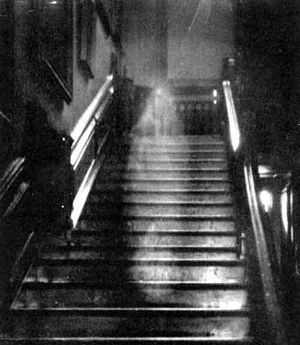
The Brown Lady of Raynham Hall is probably one of the most iconic ghost pictures out there. But what is the story behind it? And who is that ghostly figure?

Is it real? Was it just a double exposure? The picture of The Brown Lady of Raynham Hall has been viral since 1936. A photographer that year took the infamous picture, forever putting it in the mystery box for people to wonder about ever since.

It was just another day in the upper class England, with their old and haunted mansions and stories. Up in Norfolk lays the old Raynham Hall, that were about to become one of the most famous hauntings in Great Britain.

Brown Lady of Raynham Hall: This is the picture taken in the staircase that is now perhaps one of the most famous ghost photos.

Captain Hubert C. Provand, was a working in London as an photographer for the Country Life magazine. On September 19th, 1936, he and his assistant, Indre Shira were taking photographs of the Raynham Hall for an article.

Inside the 300 year old mansion, they were setting up the cameras to take another of the old Hall’s main staircase. Suddenly, Shira saw a ” vapoury form gradually assuming the appearance of a woman” The figure was “moving down the stairs towards them.” Shira directed Provand to take the cap of the lens while Shira pressed the trigger to take the picture.

After the negative was developed for the article, they saw more clear what they had gotten on camera that day. And the famous legendary photo of the Brown Lady of Raynham Hall was born. And after the photo, so was the legend.

Read More: This is not the only ghost picture that caused a stir: The Haunting in Pasir Ris Park 

Who was the Brown Lady of Raynham Hall

So who was this lady? According to legend, the Brown Lady of Raynham Hall is the lost ghost of Dorothy Walpole. She was born in 1686 and according to gossip, the prettiest sister of Robert Walpole, seen as the first prime minister of Great Britain.

Walpole was neighbour with Charles Townshend, 2nd Viscount Townsend in Norfolk. And it just so happened that his sister Dorothy married Townshend in 1713. Although they were good neighbours, and even brother-in-laws, there was bad blood between the men. Especially in politics and when Walpole built his own mansion, Houghton Hall. Did this affect poor Dorothy at all?

What we know is that it wasn’t a particularly happy marriage. Dorothy was Charles second wife. He looked upon the Hall as his pride, as a Lord Hervey said: “Lord Townshend looked upon his own seat at Raynham as the metropolis of Norfolk, and considered every stone that augmented the splendor of Houghton, as a diminution of the grandeur of Raynham.”

Lady Dorothy Walpole: The Brown Lady of Raynham Hall is believed to be the ghost of Lady Dorothy Walpole who died in 1726.

Charles was also well known for his violent temper. Dorothy Walpole was rumored to have been a mistress of a Lord Wharton, a well known womanizer, and that no woman could be twenty four hours under his roof and walk out with her reputation intact.

When Charles discovered his wife and her affair with Lord Wharton, the story says he punished her by locking her in her rooms in the family, Raynham Hall. To make matters worse, there are still rumours that she was in fact entrapped by the Countess of Warton, inviting Dorothy to stay a few days, knowing full well, her husband wouldn’t let her walk out with her reputation intact.

Read More: This is not the only ghost story involving a husband imprisoning his wife in her own home: The Prisoner of Château de Puymartin

After this, Dorothy Walpole remained at Raynham Hall until her death in 1726. She died of smallpox. But did she really leave the Halls? Is she still roaming the place, still locked up, still trying to get out and are forever trapped as The Brown Lady of Raynham Hall?

Sightings of the Brown Lady at Raynham Hall

Raynham Hall was thought to have been haunted long before the picture was taken. People that stayed in the mansion, experienced visitation and paranormal activity that most believed to be the ghost of The Brown Lady of Raynham Hall.

1835

Whatever the truth is, the legend was there to stay. And the first recorded sighting of the The Brown Lady of Raynham Hall was in 1835. One Christmas the new Lord Charles Townshend invited some guest to the Hall for celebrations. Among the guest were Colonel Loftus and another guest named Hawkins. One night night as they approached their bedrooms, they saw the Brown Lady, noticing the dated and brown dress she wore.

The following night, Loftus claimed he saw The Brown Lady of Raynham Hall again. he said he was drawn to the spectre’s empty eye-sockets, dark in the glowing face, the once so pretty Dorothy Walpole. After Loftus reported what he saw it ended with some of the staff permanently left Raynham Hall. It was all recorded by another guest, Lucia C. Stone.

Read More: Ghost Stories of Christmas Hauntings

1863

Just a year after, the The Brown Lady of Raynham Hall was seen again. This time it was Captain Frederick Marryat, a friend of Charles Dickens. He originally wanted to prove a theory of his that the hauntings was caused by local smugglers. According to him, the smugglers spread the story to keep people away from the area. That night hi requested that he spent the night in the haunted room at Raynham Hall.

Marryat’s daughter, Florence wrote about her father’s experience in 1891:

…he took possession of the room in which the portrait of the apparition hung, and in which she had been often seen, and slept each night with a loaded revolver under his pillow. For two days, however, he saw nothing, and the third was to be the limit of his stay. On the third night, however, two young men (nephews of the baronet), knocked at his door as he was undressing to go to bed, and asked him to step over to their room (which was at the other end of the corridor), and give them his opinion on a new gun just arrived from London. My father was in his shirt and trousers, but as the hour was late, and everybody had retired to rest except themselves, he prepared to accompany them as he was. As they were leaving the room, he caught up his revolver, “in case you meet the Brown Lady,” he said, laughing. When the inspection of the gun was over, the young men in the same spirit declared they would accompany my father back again, “in case you meet the Brown Lady,” they repeated, laughing also. The three gentlemen therefore returned in company.

The corridor was long and dark, for the lights had been extinguished, but as they reached the middle of it, they saw the glimmer of a lamp coming towards them from the other end. “One of the ladies going to visit the nurseries,” whispered the young Townshends to my father. Now the bedroom doors in that corridor faced each other, and each room had a double door with a space between, as is the case in many old-fashioned houses. My father, as I have said, was in shirt and trousers only, and his native modesty made him feel uncomfortable, so he slipped within one of the outer doors (his friends following his example), in order to conceal himself until the lady should have passed by.

I have heard him describe how he watched her approaching nearer and nearer, through the chink of the door, until, as she was close enough for him to distinguish the colors and style of her costume, he recognised the figure as the facsimile of the portrait of “The Brown Lady”. He had his finger on the trigger of his revolver, and was about to demand it to stop and give the reason for its presence there, when the figure halted of its own accord before the door behind which he stood, and holding the lighted lamp she carried to her features, grinned in a malicious and diabolical manner at him. This act so infuriated my father, who was anything but lamb-like in disposition, that he sprang into the corridor with a bound, and discharged the revolver right in her face. The figure instantly disappeared – the figure at which for several minutes three men had been looking together – and the bullet passed through the outer door of the room on the opposite side of the corridor, and lodged in the panel of the inner one. My father never attempted again to interfere with “The Brown Lady of Raynham”.

1926

When the son of Lady Townshend and his friend saw the ghost next, they knew who The Brown Lady of Raynham Hall was. They saw her on the staircase, and identified the ghost with the portrait, hanging on the wall in the haunted room. Of course, the portrait of Lady Dorothy Walpole.

Raynham Hall: The haunted hall is a country house in Norfolk and was for 400 years the seat of the Townshend family. The hall is reported to be haunted, providing the scene for possibly the most famous ghost photo of all time, The Brown Lady of Raynham Hall descending the staircase.//Source: Wikimedia

What is the truth?

After Provand and Shira took the picture of The Brown Lady of Raynham Hall, they published their experience in Country life magazine, December 26th, 1936. They were published again in Life magazine on January 4th, 1937. So all in all, they did profit on this. But could it be that they just took a picture?

After the picture was taken, a paranormal investigator, Harry Price interviewed both Provand and Shira. He said: “I will say at once I was impressed. I was told a perfectly simple story: Mr. Indre Shira saw the apparition descending the stairs at the precise moment when Captain Provand’s head was under the black cloth. A shout – and the cap was off and the flashbulb fired, with the results which we now see. I could not shake their story, and I had no right to disbelieve them. Only collusion between the two men would account for the ghost if it is a fake. The negative is entirely innocent of any faking.”

But there have been numerous attempts of debunking the picture of The Brown Lady of Raynham Hall and its status of “proof”. Some claim Shira faked the image by putting grease or something in the lense in shape of a lady, maybe moved down the stairs himself during an exposure? Or maybe it is as simple as an accidental double exposure or light somehow got in the camera. Some even claim that the figure looks eerily like the Virgin Mary statue, and that the image is of her in the staircase, the statue that is, not the Virgin Mary.

Among the examiners trying to debunk the validity of the picture of The Brown Lady of Raynham Hall is Joe Nickell’s detailed writings that the photograph is nothing more than double exposure. And the magician John Booth wrote that the photograph could be easily made. Booth had the magician Ron Wilson cover himself in a bed sheet and walk down the staircase at the Magic Castle in Hollywood. It apparently turned out very similar to the photograph.

More like this

Newest Posts