An old fortress of protection turned into a prison of a mistress who died and started haunting Zitadelle Spandau where she met her end. And the ghost of the mistress Anna Sydow are said to haunt both the place and the family who caused her death.
One of the best preserved Renaissance military structures in Europe is the citadel in today’s Berlin, in German called Zitadelle Spandau. It was built in 1559 on top of another fort and designed to protect the Spandau town which is now a part of modern day Berlin.
Many castles in Germany have stories about a certain Lady in White haunting it, and in Spandau Citadel there is the ghost of Anna Sydow.
Anna Sydow was the mistress of the Brandenburg Elector Joachim II. Joachim II was a part of the Hohenzollern who has been rumored to be plagued by the ghosts of a Lady in White. Anna Sydow is just one of the many rumored to be at least one of them.
Read more about the curse of the House of Hohenzollern: Here
Anna Sydow: Portrait of the mistress Anna Sydow who are believed to be the Lady in White that haunts Zitadelle Spandau after she was imprisoned by the son of her lover.
In 1549, the wife of Elector Joachim II suffered an accident which left her walking on crutches. She fell down the floor and impaled herself on a couple of antlers that hung in the room below. Something that the elector thought ruined the marriage and the enjoyment of hunting. He chose then to take a mistress and he chose Anna Sydow.
During her life as his mistress, Anna Sydow bore him two children and lived in the Grunewald Hunting Lodge for two decades and is also said to haunt the grounds of that place. This was also the place where the wife of Joachim II got impaled and ended up on crutches.
Imprisoned in Zitadelle Spandau
Johann Georg was the heir and son to Joachim II, and had explicitly promised his father on numerous occasions that he would spare and protect Anna Sydow after he died. But when the elector died in 1571, she was imprisoned in the Zitadelle Spandau until her death in 1575.
The Zitadelle Spandau was often used to house prisoners of the state for a long time, and Anna Sydow was one of the first. She was arrested under false pretenses though and saw no trial. Although the arrest was unjust, she at least didn’t end up being executed like many others of his fathers old court did. Or according to some of the legends, she was actually murdered.
In any case, Johann Georg felt haunted by her after her death. On January 1st in 1598, Johann Georg saw the specter of a Lady in White that he thought had to be Anna Sydow and died eight days later.
In 1709, there was a skeleton of a woman found buried inside of the Zitadelle Spandau during renovation, and everyone thought it had to belong to the Lady in White that was plaguing the fortress as well as the Hohenzollern family. They gave her a proper burial in hopes of ending the hauntings, but according to reports, there is still something haunting within the Zitadelle Spandau walls.
Immured in the Hunting Lodge
There is also this rumor that it wasn’t in the fortress Anna Sydow met her end but in the Grunewald Hunting Lodge. So she is thought to haunt both places as well as members of the Hohenzollern family.
It is a legend that she was immured alive in the small spiral staircase in the western corner wing. Since then she has been haunting the castle around midnight.
Witches, dragons and ghosts, Edinburgh Castle are said to have it all. The sound of bagpipe and drummers can be heard without anyone playing, and those accused for witchcraft as well as prisoners of wars are said to haunt the old castle.
Although the castle as we know it today wasn’t built until the 12th century, the Castle Rock has been lived on for more than 2000 years. It is built on top of an extinct volcano formed 350 million years ago. The castle itself has been built and rebuilt over the years but you can still find traces of the castle that are over 900 years old.
It is also the place in Britain that has been attacked most times with a record of 23 attempts to take over the castle. It has a story filled with wars, bloody battles and tortured, and is said by many to be a haunted landmark that watches over the old town.
Edinburgh Castle: There are so many alleged ghost stories coming from Edinburgh Castle perched on Castle Rock. Among them is the Grey Lady, the missing Piper and little drummer boy. There are also ton of older legends about dragons, black hounds and ties to ancient romans and Arthurian legends. How much of it is really true?
History of Edinburgh Castle
Nine Maidens: Morgan le Fey is said to be one of the Nine Maidens in Arthurian legend. By Anthony Frederick Sandys from 1864.
The castle holds many legends to its name. According to the origin story, the first castle that was built on the hill was named The Castle of the Maidens, built as a shrine to the Nine Maidens, a mysterious and old cult of religion that can be found throughout many countries in Europe. One of these supposed Nine Maidens in Scotland are often attributed to being Morgan le Fay, a mythical figure in Arthurian legend that are said to hold magical abilities.
Even if there are no real substance to her being a real figure, the legends of fantastical magical things keeps being told around the castle grounds. Another legend from older times is the dragon. As far back as 1558 there were several reports about a dragon that was supposedly seen on one of the biggest towers at the time.
Even if there are no more reports about dragon sightings, there are still many urban legends about the castle that lives on to this day. There is also an urban legend that if students pass through the castle gates, they will never pass their exams. Many students are following this rule, and never visit the castle during their stay here, just in case.
Ghosts of the Castle and Haunted Legends
As well as fantastical rumors about dragons and mythical sorceresses, there are legends of ghosts and hauntings. Among the many haunted rumors of the castle, there are reports of the strange sound of drums and music. You can also hear the vague knocking sound you can never be sure to be the wind or something more ominous.
People report of A sensation of being touched, pushed as well as a feeling of dread and despair can follow you when walking along the stony walls. There are also reported sightings of curious lights and flaky figures in the shadows. It is said a black dog is haunting in connection to the pet cemetery on the castle grounds as well as a man in an apron. But there are some ghostly legends more told than others:
Ghosts from the Witches Burned at the Stake on Castle Ground
One thing the castle was in the lead for was for burning more witches during the 16th century than the rest of the country. Over 300 women were tortured before being burned at the stake at Castle Hill, everything from simple peasants to noble women.
Among them, Dame Euphane MacCalzean, accused of witchcraft in the North Berwick witch trials. She was found guilty and burnt alive on 25 June 1591 on the southern slope of the Castle Hill below Edinburgh Castle.
The North Berwick Witch Trials: Dame Euphane MacCalzean was a notable figure in the North Berwick witch trials of 1590-1591, one of Scotland’s most infamous witch hunts. A well-educated woman of noble birth, she was accused of conspiring with witches to raise storms against King James VI’s ship during his return from Denmark.
Some believe the spirits of these women linger still, their pain echoing across time. if we are to believe the haunted legends, there are perhaps one or two of the accused witches that are haunting the castle.
Red More: Check out Agnes Sampson — The Wise Wife of Keith to read about another haunt from one of the victims who were convicted and killed in the North Berwick Witch Trials.
The Lone Piper Boy Playing Under the Royal Mile
Walking in the historical city of Edinburgh, the sound of bagpipes is heard on every occasion. On a random street corner, from the tourist shops, during a parade or as a part of the historical landmarks. Bagpipes are the thing, perhaps even from the ghosts of the city.
The Piper: The Bagpiper by Johann Christoph Erhard.
The most famous ghost that is said to haunt the castle is the piper that was sent down to explore some tunnels they found ran under the castle towards Holyrood Palace a couple of hundred years ago. A young and small boy that would get through the network of tunnels.
According to the legend, the regimental piper played his pipe as he ascended down the Royal Mile, stretching through the old town from the castle. Halfway down the mile to Tron Kirk the music suddenly stopped.
A search party was sent down to investigate after the music stopped, but the piper was never found again, and they sealed the tunnel’s shut so no would could get in… or out… According to legends though, he was certainly heard. He is said to walk the royal mile to this day and the unmistakable sound of bagpipes can be heard from underground.
So perhaps walking down the Royal Mile, the sound of the bagpipes echoing throughout the whole city might as well be from the ghost piper?
The Headless Drummer Boy
Another ghost that has been sighted on several occasions is that of a little drummer boy without a head. He was first seen in the central courtyard of the castle in 1659, a year after Charles I was beheaded. He was walking in circles, drumming his drum playing an Old Scottish war tune. When the castle servants looked closer, they saw that he didn’t have a head. It is said that he drummed all through that night and continued until the morning.
Although he has not been seen again, he is considered a bad omen if he ever appears again. The same year he showed himself, Oliver Cromwell invaded Scotland and laid siege to the castle. Is this enough to give credit to the legend?
Even though no one has seen him since that fateful night, the servants working at the castle have throughout the years claimed to have heard his drumming in the quiet hallways of the castle from time to time. Who knows… Perhaps the next time someone sees the drummer boy, the castle will once again come under attack?
The Grey Lady Haunting the Halls of Edinburgh Castle
A mysterious lady has been reported staying in the older parts of the castle. Sometimes she is just seen wandering around in her 16th century dress and sometimes she is reported to weep.
Janet Douglas: Lady Glamis was a noblewoman accused of witchcraft, who was executed by burning during the reign of James V of Scotland.
There are several real nobles she is thought to be: The first one is Janet Douglas or Lady Glamis. She was accused of witchcraft and burned to the stake outside the castle on July 17th in 1537 with her son watching it all. It is said that even back then, they knew that the accusations were wrong, but King James V held a grudge towards her brother and took it out on her.
Janet also haunts Glamis Castle as The Grey Lady of Glamis, wandering through the family chapel and clock tower.
Others think that the Grey Lady haunting Edinburgh Castle could be the French Marie de Guise, mother of Mary Queen of Scots. She died a catholic and the Protestant nobles held her body inside the castle for nine months before returning her to France, wrapped in a cloth inside a lead coffin. She was then secretly taken to France for a proper burial in the Convent of Saint-Pierre in Reim.
The Prisoners in the Dungeon and Towers
There are also the castle dungeons where they housed criminals for centuries that are supposedly haunted. There were many wars that the castle dungeon saw: the Seven Years War, The American War of Independence and the Napoleonic Wars just to mention a few.
According to legend, from one of these wars, the ghost of a prisoner is said to haunt the castle to this day. In 2003, construction crew members restoring the Queen Anne Tower claimed ghosts of prisoners from the Napoleonic Wars harassed them and refused to work there. Who knows what they really saw, but there are certainly rumors. The hazy blue orbs mentioned earlier are said to appear more frequent in this tower than in the rest of the castle.
But who was this prisoner? The legend tells of a prisoner who tried to escape in a wheelbarrow filled with dung that were taken out of the castle. The cart was dumped over the high castle walls and the prisoner broke his neck when he hit the rocky ground below. He now haunts the place and tries to push visitors down Castle Rock. What gives him away is the lingering smell of dung in the air.
The Legends Living on in Edinburgh Castle
That was some of the ghosts that are said to be haunting the castle. Old places like these will have its history, and through all the bloodshed and Even today, myths surround Edinburgh Castle. Students avoid crossing its gates, fearing it may curse their exams still to this day.
But it’s the ghostly activity that chills the hearts of visitors. Phantom touches, flickering lights, and shadowy figures have been reported. The sounds of drums, faint knocking, and whispers stir something restless in the castle—perhaps spirits that will never truly leave. legends surrounding the place since the first people arrived on the rock, the place will hold its stories.
Buried alive inside the castle walls, the Finnish Maiden immured still haunts this medieval building of Olavinlinna Castle.
This is the castle built in the northernmost place in the world in the 15th century. In the heart of the Finnish lake region in the south east, it used to be on the frontline of the unstable border of Sweden and Russia. The Olavinlinna castle is built on a small island overlooking the dark waters surrounding it.
The Castle of Knights and War
Since it was built in 1475, the Olavinlinna castle was in the frontline of the territorial dispute between Sweden and Russia as Finland for many years was fought over. It was placed strategically to protect the important Savo region and saw many sieges, battles and wars over the years. It held up the defenses for a long time, all up until 1714 when the Russians took over the castle at last and held it until 1917.
A castle designed for war, it was named after St Olaf, the Norwegian king and saint for all knights. And throughout the years, the castle saw enough bloodshed and death for eternity.
High on a rock, whose castled shade Darken’d the lake below, In ancient strength majestic stood The towers of Arlinkow.
Donica – A Ballad Poem by Robert Southey (were Olavinlinna castle was the inspiration)
The stories of the castle are plentiful with legends of Finnish water spirits Vetehinen living in the black water surrounding the castle. Although not malicious by nature, dangerous as they are said to drown people when bored. There are also tales of the ghost of a black ram that escaped being dinner at a feast roams the castle. But most famously, there is the story of the Finnish Maiden that was immured inside the Olavinlinna castle walls.
The Finnish Maiden
The Finnish Maiden is not only a local legend from the castle. The image of the Finnish Maiden is also used as a personification of the country itself. Often a barefoot young woman in her mid twenties with braided blonde hair, blue eyes and wearing a white or blue national costume. And in paintings she is either depicted as victorious with her fist raised, or as in the painting Attack, where she is attacked by an Russian eagle. And this image is quite fitting for this local legend.
The Finnish Maiden: In the painting, the Russian doubleheaded eagle is attacking the maiden symbolizing Finland, tearing a law book. Immediately after the painting was finalized, it became the symbol of protest against russification, spreading throughout Finland in thousands of prints. (Painted around 1899) Photo: Edvard Isto (1856-1905)
Buried Alive Inside the Walls
The most famous story about the Olavinlinna castle is the tragic story about the Finnish maiden that is said to be buried inside the castle walls. She was, according to legend, the daughter of the Lord of the castle at a time when the threat from Russia was ever present and the castle was at the line of defense from the Russian forces.
Advertisements
Amidst all of this, she had fallen in love with a Russian soldier and trusted that he would do her no harm. But she should never have done so, as she was betrayed. When opening the castle gate for him, he brought more soldiers with him to attack the castle from the inside. They managed to beat the Russian soldiers and the treacherous lover was killed in the attack. But the tragedy didn’t end there. The maiden was also punished for her foolishness.
She was condemned to death for treason and buried alive in a wall in the courtyard. Immurement or live entombment was a form of capital punishment, especially in legends and folklore. When used as a method of execution, the condemned dies from starvation or dehydration and it is often a slow and excruciating process.
The Rowan Tree
Soon after, a Rowan tree sprung in the yard with white flowers blooming from the branches, a symbol of the maiden’s innocence. The tree also had red berries growing from it, red as her blood.
There is no longer a tree in the Olavinlinna courtyard,and its existence is no way to prove. Neither is the story. What is true is the story of the maiden is not so deeply engraved in the local folklore and the Olavinlinna castle legend it has become one.
On the night of the solstice, the sound of a little girl is echoes through the old castle. A little girl with blue hair.
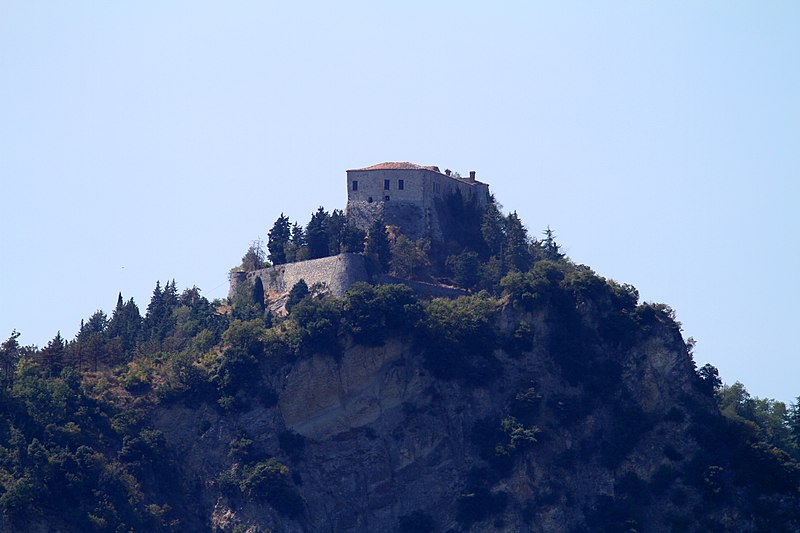
Castle on a Hill: The ghost of Azzurina of Romagna is supposedly haunting the castle Montebello di Torriana. Attribution: Carlo Pelagalli
The sun lingered for a long time over the mountain area where the castle of Montebello di Torriana was. The castle stands in what was known as Romagna, a historical part of northern Italy that no longer exists. It was a stormy June day, in 1375 with thunder going on all around the castle grounds. Towering 400 meters above the ocean, the castle looks out over the valleys of Marecchia and Uso when it was still under the Papal rule. The earliest name of this castle was Mons Belli, or War Mountain in English.
That day was the day of the solstice. The lord of the house’s daughter, Azzurina was playing with a ball, being watched over by her bodyguards Domenico and Ruggero. She was around five years old and running around in the castle with her ball made out of rags. They were distracted for just a moment, and when they turned around, the child was gone. A scream was heard from the castle icehouse and the bodyguards rushed over. Perhaps she had chased the ball and fell? But no trace was left and they were never able to find the child — at least not alive.
The Blue Haired Girl
Centuries later, around 1600 a priest put the legend to paper for the first time as we know of, although the writing itself is lost. The title of the story was Mons Belli ed Deline, hinting that the name was Deline or Adelina, but to most people hearing the legend, her name was Guendalina.
Advertisements
Guendalina was a normal girl wanting to play around the castle grounds. But to the people in the castle, she was more of a secret. She was born as albino, which at the time was connected to persons of a diabolical nature. Her mother tried again and again to color her hair darker with pigments from plants. But the black color wouldn’t stay, and the color faded, leaving only a blue tint of it. This is where her nickname, Azzurrina, meaning blue comes from. So instead she was hidden away from the public eye. This is also why her father ordered her two bodyguards to always watch over her every move as he was worried about the superstitions and rumours surrounding his daughter’s affliction.
The Mystery of the Solstice
Solstice: When the sun is on the sky the longest is the summer solstice. A lot of paranormal rumours surrounds this day, and this is the supposed day the little girl went missing.
What happened to the girl is still debated to this day. Perhaps only a tragic accident? The most gruesome theory is that of her father, Ugolinonuccio, that he himself ordered the death of his daughter because of her being an albino and therefore a problem for him, his reputation and his career. At the time he was supposed to be far away fighting in a war. Even her mere existence is debated as the records of the past are far and few between.
Now, every five year, or to be more exact, on every summer solstice ,strange occurrences have been reported from the castle. Paranormal researchers flock to the place then, to hear “the sound”.
Since the museum opened in the 90s, visitors have heard stories about a child crying or laughing. She is sometimes seen, looking a bit different than the others, running around and disappears in the castle like smoke.
The Claim of the Supernatural
The sound of a child is what the paranormal researchers find over and over again together with strange images. Shame about the manuscript from the priest that could have given more details, which by the way is more of a claim of existence than a trace of it. However, the first real recording we have of the legend actually dates back to 1989, so quite recent, and very in line with the commercial museum that opened up the next year.
But as they say on their web site, they welcome all to have a listen for themselves. Have a look and open your ears. Maybe you as well are able to hear the sound of a faint child’s laughter through the old halls of the castle’s basement?
Through the power of spiritualism, the bereaved father built a castle designed by the ghost of his dead daughter. And today, the Iulia Hasdeu Castle still stands as a mysterious and haunted place.
Iulia was the beloved daughter of Bogdan Petriceicu Hasdeu (1838-1907) in Romania. He was a Romanian scholar of both history, philology and a great writer. Iulia was somewhat of a prodigy child as well and read by the age of two. Like her father, she was fluent in many languages and spoke French, English and German fluently by the time she was eight. At only 16, she got her degree in philosophy with plans to continue her studies in Latin and Greek Languages at the prestigious University of Sorbonne.
Advertisements
But then on the 29th of September 1888, just a month before her 19th birthday, she tragically died of tuberculosis, a tragic but common way to die in this time. She left behind her many poems, manuscripts and plays to her father who couldn’t move on with his life. That is when he turned to less common ways to keep in contact with his dead daughter.
The Seances to Get in Touch with her Spirit
He was deeply in grief and turned to spiritualism to get in contact with his beloved and missed daughter. There are recordings of over a hundred summaries of these sessions, saying something about his obsession with it.
The Ghost: Portrait of the young prodigy Iulia Hasdeu.
And after he moved to Câmpina which is a bit further north from Bucharest , he spent the time at seances together with the metropolitan bishop, three generals and a processor. All in hope to get a glimpse of his daughter.
He also built an altar for her in their family vault at the Bellu Cemetery in Bucharest that looks more like a Greek temple to pay tribute to her. But this altar was not enough for him to keep as a memento and after six months of trying to reach her in the spirit world, he made contact, and she gave him instructions to build a castle that would later be known as Iulia Hasdeu Castle.
Together with his wife, they went to a mansion in Câmpina they decorated as almost a temple to their dead daughter to sort of keep a part of her with them in this world after it was built. He named it Second of July after his two Iulias as his belated daughter was named after his beloved wife.
Then the plans of the castle started to take form. Hasdeu claimed that he had received messages about the building plans for it through the spiritualism seances he took part in.
The Building Designs of Iulia Hasdeu Castle from Beyond
Work on the Castle began in 1893 and took a lot of Hasdeus’ time, energy as well as wealth. It is more of a folly house than a full fledged castle. She would advise him to use the numbers three and seven, something she considered to be magical numbers. That is why these numbers repeat themselves throughout the building with three underground rooms, three towers and seven steps to every staircase.
The building was completed in 1896 and has since seen its fair share of tragedy befall it. It required a lot of reparation, even when Hasdeu was alive. During the first world war as well as the second world war, the earthquake in 1977 where it suffered many damages. But the castle fought back. There even is a legend to this that during the second world war, the Germans tried to loot the place, but failed as they were ‘struck by some mysterious force.’
Spiritualism: During the turn of the century, seances and spiritualism was a big thing. This is a Seance scene in the classic German silent film Dr Mabuse (1922). People would get together with a medium in hope to make contact with a spirit beyond the grave.
Today the Iulia Hasdeu Castle is still a sort of altar in Iulias memory. With her personal belongings as well as transcripts of the seances that her father attended. The castle itself is described to have a spooky vibe over it, perhaps because there are entire rooms designed specifically for spiritualists rituals, with seats made for the attending ghosts. A shrine like this was bound to get more sinister rumors about it, and it was claimed that Hasdeu used it to worship Satan rather than memorializing Iuelia.
The Ghost of Iulia
The Iulia Hasdeu Castle is not the only place she is reported of haunting. Also back at the cemetery in Bucharest, the ghost has been spotted, dressed in all white while walking through the cemetery in Bucharest holding daisies.
Back In Câmpina at the castle they have also felt her presence. In the night there is the sound of piano playing with the applause and cheering from an old man. So many rumors that the museum itself had troubles finding someone to take the nightshift at the museum.
Chosen as Hitobashira, a human sacrifice to ensure the construction of Maruoka Castle, O-shizu were promised a bright future for her children. But when the promise were not honoured, her ghost came back to haunt the castle grounds.
The Maruoka Castle (丸岡城) is sometimes called the Mist Castle (霞ヶ城), because according to legend, there will be a protective mist around the castle whenever an enemy is close to hide it. It stands on the top of a hill protected ramparts as well as a pentagonal-shaped moat and perhaps it is the spirit of the human sacrifice entombed in the castle’s foundation that keeps it hidden in the mist?
The Maruoka Castle is one of the oldest castles in Japan, sometimes called one of the twelve original castles and is located in the Fukui Prefecture and built at the end of the Sengoku period around 1576 by Shibata Katsutoyo. According to the legend, it was built with a human sacrifice to ensure its endurance.
Hitobashira — Human Sacrifices Entombed in Buildings
The act of a human sacrifice to be a pillar of a building can be seen throughout the world. In Asia, it was especially done to appease the deities and for protection. In Japan, the practice is known as Hitobashira (人柱), meaning human pillar and has been used since the 500 AD at least.
As well as the spiritual belief it was believed that large constructions like castles, dams and bridges would destroy the feng shui of the land because of the moving of the soil. Because of this, the buildings would then be in danger of all sorts of disasters, both natural as well as man made disasters. The cultural practice of Hitobashira was done then to protect against evil spirits, natural disasters and to make the buildings strong.
It wasn’t necessarily people that were forced to become the human pillars. Some actually chose this path for various reasons. The word Hitobashira can actually be linked to becoming a God as well. Hito is related to the word, kami, which means God in the Shinto tradition. Bashira can be a term used when being enshrined in an important way. So that the sacrifice would actually be more connected to the gods.
But then again, there were also more earthly reasons to choose to become a Hitobashira. Poverty for one, as is the case with the Hitobashira that are under the grounds of the Maruoka Castle.
The Human Pillars of Maruoka Castle
When they were building the Maruoka Castle, they kept running into problems that they couldn’t seem to find a solution to. The stone walls kept collapsing no matter how many times they tried to set it up and they were running out of ideas. Then a vassal suggested that they should have a hitobashira, a human sacrifice.
The choice fell on O-shizu, a one-eyed woman with two children to feed. O-shizu agreed to be the sacrifice on one condition, that one of her children would be made a samurai. She was a poor woman and this way she could ensure a safer future for her children.
O-shizu was then buried under the pillars of the Maruoka Castle, one stone on top of the other as she was slowly being crushed to death. It is said she was stoically standing there as the builders slowly killed her, fully knowing her children would be better off. After the sacrifice were done, the walls didn’t budge and the building of the rest of the castle continued without further problems.
But Shibata Katsutoyo, the one building the castle didn’t follow through on his promise of making her son into a samurai, she came back to haunt Maruoka Castle. Her spirit became resentful and she was the cause of the moat overflowing every spring by the rain. They called the rain that overflowed the moats the ‘Tears of O-shizu’.
To appease the spirit they erected a tomb to sooth her spirit and we today have a handed down poem about her haunting:
“The rain which falls when the season of cutting algae comes Is the rain reminiscent of the tears of the poor O-shizu’s sorrow”
The Maruoka Castle Today
Today we probably would say that the Maruoka Castle had a problem in its design, not because of the deities. And had it had a more stable way of construction, a hitobashira would probably not have been needed. But again, the castle is still standing to this day, so who is to say, really?
Cherry Blossom Festival: Today the Maruoka Castleis known for being a good place to watch the cherry blossoms every spring more than one of the hitobashira buildings.
Today when the mist is clearing and the castle is visible, there are cherry blossoms blooming in the spring. The castle grounds is a part of Kasumigajo Park and is well known for its 400 cherry blossom trees. There is an annual cherry blossom festival during the first three weeks of April. And in the evenings, there are over 3000 paper lanterns lit up in the dark.
Perhaps this is appeasing the ghost of O-shizu enough to not overflow the moat with her tears anymore?
The Legend of the Mistletoe Bough or the Mistletoe Bride is a ghost tale that many big houses claim as their own. Bramshill House is one of them, and the story of the dead bride trapped in the chest haunts the already haunted place.
Buried Alive: On Christmas Day the tale of the Mistletoe Bride that gets trapped in a chest and dies is told and retold throughout England.
A girl will always remember her wedding day, and making the wedding be held on Christmas day will surely make it easier to remember the wedding anniversary. But more people will remember it, if the bride turns into a ghost.
This is the case of the bride of Bramshill House in Hampshire, one of Britain’s most crowded paranormal places. And although many big houses tries to claim the ghost of the bride in the oak chest as their own, Bramshill could be one of the choices with no less than 14 ghosts they claim wander there.
Deadly Hide and Seek
In the early 17th century a girl named Anne Cope was to be married in this house. Anne is the name in some accounts, Genevre Orsini in others. English in some accounts while she was believed to be Italian in others. What remains the same is that it was Christmas Day and everyone was in a festive mood. She and her husband, Sir Hugh Bethell celebrated after having taken their vows, and as the old custom went, she was to be escorted to the marital bed.
Advertisements
But before the party was over, the bride wanted to play a round of hide and seek, where the target to be found was her. And after a five minute start the search began, but to no avail.
Searching the whole house, the guest came back empty with no sign of the bride. Perhaps it was a trick from the bride? Could she just be exceptionally good at this game? But as time went on, the innocent prank she could have played on the guest turned into a dangerous one.
Many believed the bride had fled from her marriage. Her husband Hugh on the other side, spent decades searching for his bride that was lost. It was only after fifty years the mystery surrounding her disappearance came into light, and then her haunting had already began.
It is not the only ghost story from England that starts at a wedding during Christmas.
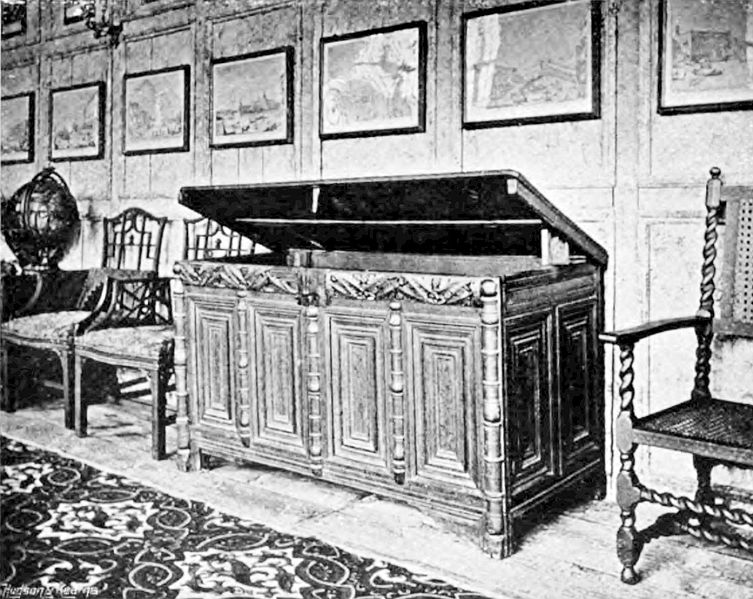
Hugh, now an old man, was in the attic, still searching. Having been through the mansion so many times, one should have thought there could be no more things to be found. But then, when knocking on some oak panelling, a secret door he didn’t know about suddenly opened. Inside the door was a room with a wooden chest. It was locked. Inside the chest when he finally got it open, the remains of the bride he had hoped to spend his life with, still in her wedding dress, holding her bouquet of wilted flowers, she had been by his side all this time.
In the lid of the chest the bride had been trapped in, there were signs of nails scraping in her dying efforts to escape, to get out, but she never would.
The Bride in the Oak Chest
The Chest: Although the original chest was removed in 1812, there is always a chest in the houses claiming the ghost. Photo: Country Life page 435 by Edward Hudson (1854–1936
So many accounts of the white lady has been reported at Bramshill House. Even Michael the first of Romania asked to move room after the white lady kept passing his room during his stay there. And you can sense her arrival by scent, lily of the valley, which was Anne’s favorite.
Not so many remember her wedding, her death, all in one. She is remembered as much, although her real name is disputable, the name Mistletoe Bride remains. Poems, movies, books and folklore retells about the young bride in the oak chest.
The same story was retold by Susan E Wallace in 1887 as ‘The Old Oak Chest’ and by Henry James as ‘The Romance of Certain old Clothes’ in 1868. The old tale also made it onto the silver screen in 1904 when Percy Stow made the short film ‘The Mistletoe Bough.’
And every Christmas, her death is retold again and again, without her ever being found alive. “Oh sad was her fate! In sportive jest, She hid from her Lord, in an old oak chest. It closed with a spring and her Bridal bloom, Lay withering there in that living tomb.”
Every Christmas, the royal ghost of Anne Boleyn is said to visit her childhood home as a spirit.
One of the more famous ghosts that know how to travel, is the ghost of the infamous Anne Boleyn. Most known for the wedge between the State of England and the Catholic Church in the time of the Tudors. The peoples perception of her at the time was awful, and it would be understandable if she felt some sort of resentment or sorrow for how her life ended, even in the afterlife.
A Well Travelled Ghost
Anne Boleyn: The ghost of the former queen has been spotted many places in the UK after her death.
As ghost sightings go, perhaps the Tower of London is a more well known place for ghost sightings of her, as this was the place she was held imprisoned and executed. But it is far from the only place paranormal sightings of the former Queen have been spotted in the UK. She has also been spotted in Windsor Castle, Hampton Court and Rochford Hall to just name a few. But in the spirit of Christmas, we are going to have a look at where the royal ghost spends her Christmases in the afterlife.
Every Christmas she is said to make an appearance at Hever Castle, at least it is now expected. Christmas was supposedly her favourite time and Hever Castle was her childhood home with good memories. And contrary to how her ghost is seen at other locations, headless and darkly dressed for instance, it is said she is seen as more happy and content when spotted here.
Christmas at Hever Castle
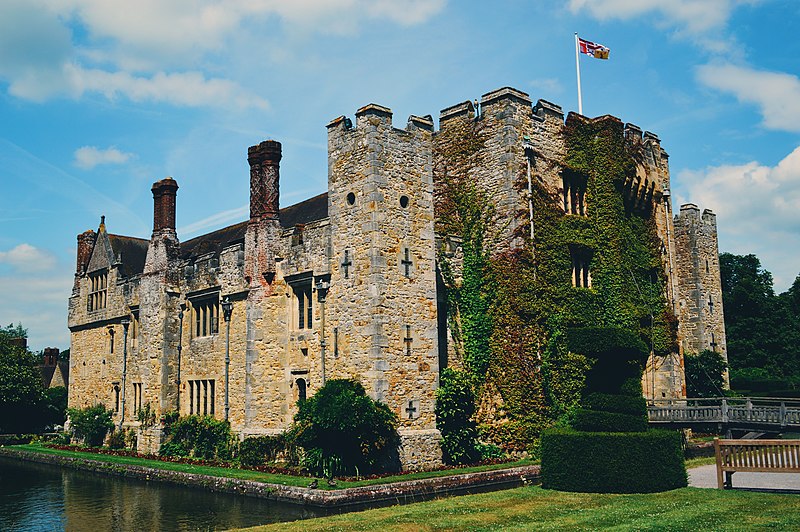
The castle was built in 1270 in the rural part of Kent, and although relatively small compared to many other castles we can see in England, it came to play a big part in England’s’ history as it was the seat of the Boleyn family. This is also the place where Anne and Henry first met, when he was still married to Queen Catherine of Aragon, and had an affair with her younger sister, Mary.
Advertisements
She is often reported to be seen under a big oak tree that stands on the castle ground. This is the place Anne and Henry spent a lot of time courting. Although the ending for the couple was one of the most dramatic break ups in British history, the courting seems to have been genuine. Henry is said to have written her at least seventeen letters, begging her to be his, and the length he went to marry her, spoke to how much he wanted her in his life.
The Tragic Ending
Hever Castle: This is the childhood home of Anne Boleyn and were she is seen every Christmas. It is now open to public. Photo: Hever Castle, Kent/ijclark
Although they did get together in the end, their match was a very unpopular one. In order to divorce the queen, he had to part with the Catholic Church, and Anne was in the public eye a witch, a heretic and a seducer that was a danger to the empire and papal law. They never had a son, but their child Elizabeth the first turned out to be one of England’s longest reigning queens.
But after several miscarriages, never ending gossiping and pressure from all sides, their love turned sour and in the end, Henry found another one and decided to get rid of Anne, in a most dramatic way. On the charges of treasury and adultery and incest with her brother, she was sent to the Tower of London and sentenced to death. On May 19th in 1536, she was executed by beheading at the Tower.
Popular Sightings
With a such an accessible place with such a famous ghost, the reports about sightings has been plentiful. Like in 2015, when a tourist at the castle captured something on camera he was certain had to be the former queen by the fireplace.
The Ghost: Liam Archer captured this photo in 2015, convinced it was the ghost of the queen. Photo: Liam Archer/Daily Mail
‘I believe there is something important historically inside the fireplace she wants me to recover.’, Mr Archer that took the picture told the papers at the time.
Who is to say for what reason Anne has to haunt her childhood home, let alone England as a whole? In any case, her imprints on the course of the history, religion and the royal line, was irrevocably shaken by her life and work.
It has also been said she has been seen walking across the beautiful bridge on the premise that crosses River Eden, perhaps on her way home to the place of her happy and innocent childhood.
Because of the cold winter with no food, people starved to death, even inside the castle walls. And ever since then, the ghost of the queens chambermaid still haunts the castle, known as the Mantelgeist.
The Queen: Left alone in the castle begging for food, Queen Margrete I of Norway was left.
It was a hard winter in medieval times in Oslo in Norway, a place known for its cold and harsh winters. So far north, the cold was biting, sparing no one. The plague had returned to the country again, and the King’s coffins were empty.
There was nothing to buy food with and people fell dead were they were standing either by starvation or the cold. Not only by the deadly plague that killed every one it touched, but the hunger as well was a silent killer.
Norway was a much different country than today, yes it was in the middle ages, but even by medieval standard, the country was poor, uneducated, and ravaged by hunger, weather and wars. Even the royals didn’t escape the plagues clutch.
A hard winter in the 1370s, there was not much food at the Akershus fort, were the queen resided. King Håkon IV Magnusson was king, and the queen was Margrete I, the one that were going to rule all of Scandinavia. But before that, she would go through her hardest winter.
The Cold Winters in the North
There were only decades since the Black Death had put the country in ruins. No another plague was at it and even behind the heavy doors at the fortress the repercussion of the killing plague hit them.
Advertisements
The queen sat alone at the fortress as her husband was away. Pregnant, hungry and desperate. In a letter, she detailed that she and her servants no longer could sustain themselves on the food available. She asked a prayer, begging the King her husband make sure she got credit at a tradesman so that she could manage through the winter with the rest of the court. The nation was in her hands, that’s how bad it was.
The Starved Chambermaid
Queen Margrete made it through alive. As the queen she was, she got the food. Not everyone was that lucky. One of her chambermaids are supposed to have died of starvation that winter. A servant that was much closer to the queen than many, that dressed her and took care of her every need. No she will never leave the fortress.
It is said that she still wanders through the fortress, through the Margrete hall in particular, were she ended her days that cold winter with no food. Her ghostly figure enters in a long robe, thereby the name Mantel, meaning robe or cloak. When she turns to those in the room, she has no face, only a blank surface stares back.
We have no name to the poor girl at the fortress. She is only called the Maiden at the fortress or the Mantelgeist. And that is how she will spend the remaining years, nameless and faceless.
After a husband caught his cheating wife, the punishment for her lasted into the afterlife. After she was discovered, the husband imprisoned her in the tower of Château de Puymartin, and according to legends, the wife is still haunting this French Château as a Dame Blanche, or the Lady in White.
The honey colored towers of this elegant castle in France called Château de Puymartin is like taken out of a fairytale romance. But the tales about this castle in Southwestern France, is by no means fairytale-like, but more of a horror story without a nice ending.
The Château de Puymartin was constructed in the early 1200s and the castle went through a lot of hands throughout history. In 1357, the castle was taken by the british before being bought back by the council of Sarlat. They didn’t stay though and the castle was left abandoned.
Read also: Check out all of our ghost stories from France
The castle was abandoned for a while and it wasn’t until the 1450s Radulphe de Saint-Clar rebuilt the Château de Puymartin and making it bigger that people started living in it. But can anyone really say they lived peacefully in it?
The Prison in the castle: The castle that used to be the Lady in White’s home at Château de Puymartin turned into her prison were she lived her remaining years in the tower and the rest of eternity walled up in the walls of her former prison. Photo: Manfred Heydesource
Dame Blanches in French Folklore
All French Château’s must have its own legend of a Dame Blanche or the ghost of a Lady in White roaming around the castle halls at night. The Château de Puymartin is no exception from this and has it’s own twisted tale of the Lady in White. But really what is this types of ghosts that we always hear of wandering the castle halls?
One of the most pervasive supernatural mythologies associated with haunted castles and Château’s is the Dames blanches, or White Ladies. These mysterious figures are said to wander through fields and forests near the city, bringing with them both luck and misfortune to those who encounter them.
They are known way back from myths and folklore as well and quite well spread in European ghost stories. Tales of these enigmatic creatures have been told for centuries, inspiring many artistic interpretations and offering a glimpse into a fantastic world beyond our own.
There’s also a long-standing local legend involving the castle’s ‘Dames Blanches’, or ‘White Ladies’. According to folklore, these female ghosts are said to inhabit the castle and torment its inhabitants with misfortune, calamity, and sometimes even death in many stories in French folklore.
Lady in White Ghost: The most common ghost you hear about is the ghost of a lady, often described as wearing white. The legends is different from every culture, often described as a sorrowful ghost in European ghost stories and taking a more vengeful spirit take in Asian ghost stories. What they all have in common though is they experienced something unfair in their life and in their death they can’t see past in their afterlife.
What used to be vague figures from old mythology and legends, now tells the tragic ghost stories about real women who died in horrible ways and have unfinished business in their afterlife. Such is the tale of the Dame Blance in Château de Puymartin.
The Legend of the Dame Blanche in the Castle
The legend of la Dame Blanche, or the woman in white that is said to reside inside of Château de Puymartin is said to be the spirit of a woman called Thérèse de Saint-Clar. She was married to Jean de Saint-Clar, the man of the Château de Puymartin in the 1500s. Her name is not set in stone, as the legends most often specify her name at all.
The husband could also have been Raymond de Saint-Clar who fought in the French Wars of Religion, a war between the Catholics and Protestants. He is well known to be the one who managed to get rid of the Huguenots from Sarlat. The timeline with the names in this legend can get a bit messy as we can neither confirm or deny all of the details.
But either way, the story goes that the man of Château de Puymartin was away at war and while he was away, the wife stayed home and took a lover.
But the affair would not stay secret for long at the Château de Puymartin. After distinguishing himself in the battles, the husband was allowed to return home to his home and wife for what he thought would be a happy reunion and he would be recieved by his wife as a war hero.
The homecoming was anything but thought and when he went to her, his wife was found in her lover’s arm.
The husband went mad and ended up killing her lover out of jealousy in a fit of rage. His wife was also punished but in a much slower and torturous death. He ended up imprisoning his cheating wife in a tower in their Château as he no longer could trust her on her own and their marriage was in all sense of the matter over.
Imprisoned at the Tower of Château de Puymartin
For years the wife was trapped in the northern tower of Château de Puymartin, never allowed to leave or go outside, not even after her death. One could almost argue that she is still not allowed out in her afterlife.
Immured: Throughout the years, there have been plenty of stories about women sealed inside of walls for punishments or for religious purposes. Who knows just how many old walls are hiding a secret?
The wife lived trapped inside of the tower until she died in what was called a ‘fifteen long years of repentance’. 15 whole years she stayed in the same little room never allowed to leave.
The door leading into her tower was supposedly walled up to keep her from escaping, only leaving a small trap door for the servants to bring her food while she was alive. She was stripped away from the fine living she was used to being the mistress of this grand castle and they only left a bad mattress for her to sleep on in a corner.
The only view she had was to look out from the window through the barrs they put up for her to prevent her from escaping. There she could see just how close freedom was, past the garden, over the hill and into the forests. This almost seems more cruel than shutting the window off completely.
It doesn’t say if she had any visitors, but over the years it looks like the husband never pitied her and let go of her anger. And if she spent 15 years inside the tower without anyone to talk to, she most likely went mad after the first few years.
According to legend her body was sealed inside the walls of the room when she died, trapping her there, even in her afterlife and she never got a proper burial in the ground, and was laid on the cold stones of the castle walls. Since then, she comes back to haunt the castle at night. At least now she can move outside the tower. She wanders the stairs, her room and on the pathways around the grounds.
Today you can visit the Château de Puymartin for a fee to try to get a glimpse of the sorrowful ghost that have been spotted by its owners and visitors over the centuries.
The Château de Puymartin have in its later years embraced their Dame Blanche legend and it’s a part of the experience when visiting the castle. They have even made the story into an escape room play during Halloween season. Would you like to play?
An online magazine about the paranormal, haunted and macabre. We collect the ghost stories from all around the world as well as review horror and gothic media.