Tag Archives: asia

The Kong Kong Ghost Haunting Korean Schools

Advertisements

One of the urban legends from the Korean classroom is the legend of The Kong Kong Ghost haunting the schools. It is a legend of the dangers if you reach for the number one spot without really deserving it, and the consequences of your actions. 

The Kong Kong Ghost (콩콩콩 귀신) is an Korean urban legend about the student of a ghost haunting the school. There are many ghost stories tied to the school premise because of the long hours kids spend there and the means for stories to travel between the students. 

Read More: Check out all ghost stories from Korea

This particular legend about The Kong Kong Ghost became told in the hallways, in the bathrooms and locker rooms throughout Korea’s schools in the 1990s. Still to this day, and at least back then, it wasn’t uncommon for students to stay until late in the evening to self study, and the schools were open until 10 and 11 in the evenings. 

The legend of The Kong Kong Ghost that is about the best student in school speaks to the fear of not being number one, and the ultimate defeat of being number two, no matter how you handle the situation. 

In many of the reimaginings of the urban legend of the Kong Kong ghost haunting the Korean schools, art and other, it is often about two girls competing for the number one spot, but not always. They are usually in high school age as there is high stakes of what type of university they get accepted into on the line.

The Legend of the Second Best

The story of The Kong Kong Ghost follows the second best student in school. It is better than most, but it still isn’t enough for some. For the students’ future there is only one option, and that is becoming the number one. Because of the pressure from the school, the teachers, parents and even from the student herself. 

To get into the college this particular student wants, she needs to prove that she was number one in something, but she is constantly beaten by her classmate that always score as the top of the class. Being the second best is simply not good enough. Because of this, the student turns her anger at her enemy and starts to hate her for being better. 

One day the number one and number two student stands at the rooftop of the school together, perhaps taking some fresh air in between the intense study sessions. The anger that has been building in the second best student is reaching its building point and number two pushes number one off the roof, killing her as she hits head first into the ground when landing. 

The murder is looked at as a tragic suicide of the pressure of constant being number one and no one really suspects that the good student, now the best one could have anything to do with it. For a while it looks like the new number one got away with it, but her horrible actions comes back to haunt her. 

Read More: Check out stories like The Ghost in Red at Ping Shan Tat Tak School or Madam Koi Koi and The School Hauntings in Nigeria for more ghost stories from haunted schools.

Strange sounds are heard throughout the school, at least the new number one student hears it constantly. A mysterious thumping sound Kong Kong it goes. It is the sound of the murdered student walking the hallways, jumping on her head to move forward because of the horrible way she died. It is said that the horrible disfigured ghost of the student is looking for her killer. 

According to the legend, the Kong Kong Ghost finally got her revenge. The new number one student sat to the late hours in the classroom to study one night when she heard it: Kong… Kong… it sounded from the hallways and a door to another classroom opened further down the hall. Perhaps just someone looking for the right classroom?

Not here!

A voice could be heard in the distance, and it sounded eerily familiar to the new number one that is starting to realise something isn’t right. This is not the sound of a student getting lost in the hallways. More knocking sound of something heavy is heard down the hall before another door opened, closer this time. 

Not here!

The student is now panicking and afraid because she now recognized the voice of her former nemesis. She hides under her desk in hopes that the thumping sound will just pass her classroom and leave her alone. Kong… Kong… and the door opens slowly and something is staring in, looking for someone in particular. 

Not here!

The door closes and the relieved student crawls out from under the desk, ready to pack up her things and get out from the haunted school. But when she stands up she is faced with her former classmate she pushed to her death and took the place of. Upside down she hangs from the ceiling, bloodless white face with eyes filled with hate. 

Here!

The Kong Kong Ghost: Reimagined in Goeadam, the Netflix series about Korean urban legends and ghost stories, including a retelling of the urban legend about The Kong Kong ghost..

Of course, the student that thought she could get away with murder and take first place, was brutally murdered. Perhaps the ghost story of the Kong Kong ghost show us just how fierce the competition of school rankings in Korean schools can be, and to the extent it can drive certain people to madness.

More like this

Newest Posts

References

Featured Image: Deviantart/ iCephei

https://namu.wiki/w/%EC%BD%A9%EC%BD%A9%EC%BD%A9%20%EA%B7%80%EC%8B%A0

The Jayuro Road Ghost

Advertisements

On a big and foggy highway north of Seoul, there is an urban legend of a ghost known as the Jayuro Ghost along the road, looking like she has a pair of sunglasses on in the dark. 

The Jayu Motorway, or simply Freedom Road is a big highway in South Korea connecting Seoul to Gyeonggi Province. In some parts you can even see all the way to North Korea from the motorway. The Jayuro Road has a high rate of car accidents because of frequent foggy weather and being badly lit along some parts. 

Check out all of our ghost stories about haunted roads in the Moon Mausoleum.

But there is something else in the misty road to be wary of, according to many passing drivers, that claims to have encountered something that has been known as the Jayuro Ghost. 

The Jayuro Road Ghost (自由路鬼神) is a very famous korean urban legend that appeared in the early 2004 or 2005 and follows in with the many local variations of the global Vanishing Hitchhiker trope we have many stories about. 

Read the Urban Legend of the Vanishing Hitchhiker

The Vanishing Hitchhiker

The Vanishing Hitchhiker is a well known urban legend throughout the world. Here is a Moonmausoleum original writings based on the Urban Legend – The Vanishing Hitchhiker

Keep reading

The urban legend grew large because of several celebrities that claimed to have witnessed the Jayuro Ghost along the highway. And although the popularity of the legend ebbs and flows since the early 2000s, there are still those who speak about seeing the Jayuro Ghost when driving in the dark.  

The Legend of the Woman in Sunglasses

Since it’s such a well known urban legend, there are now countless of variations of it as well. But most of them follow the same pattern.

If you drive along Jayuro Road in the middle of the night, there is supposedly a young woman in her 20s, waving to you while trying to hitchhike. It looks like the woman is wearing a long coat with large black sunglasses, and many realise who they met after they drive past her. 

Urban Legend: There have been multiple things inspired by the urban legend. Here from Goedam, an anthology horror series.

To just get a glimpse and not noticing anything strange of a lonely woman by a highway is perhaps the best. Because if you look closer, you notice that she is not alive at all. When you get closer to inspect, you can clearly see it’s not sunglasses, but rather a big black hole where her eyes were supposed to be. 

The Hitchhiker

One of the reports comes from a man that actually claims to have picked the Jayuro Ghost up when she tried to hitchhike. 

He was driving back from a dinner party and looked away from the road for a second. When he looked up, he saw the woman standing along the highway and he nearly ran her over. It looked like she had just escaped from an accident herself. She asked him if he could give her a ride home. The man accepted and put the address in the navigation system to follow. 

But before they reached the destination, the Jayuro Ghost disappeared. When he found out where the destination was, he realized that it was a cemetery. 

Who was this Woman?

Can you really trace back a specific person to an urban legend? It is not for lack of trying at least. When they aired a piece on the story on a TVN show in 2007, Kim Sehwan tried to contact the ghost through a medium. 

According to that story, the Jayuro Ghost was a woman in her 20s that was killed on the road in 2002 by strangulation, not far from where she is spotted. It was because of decay that she looked like she did with her dark gouged out eyes. 

According to the medium relaying the story, the culprit behind her murder was arrested in 2005. Although they never really followed up with a police report on this though. 

No matter who she is supposed to have been, a name has never come up. Although, stories of her along the foggy highway often does.

More like this

Newest Posts

References

자유로 귀신 – 위키백과, 우리 모두의 백과사전

The Legend of Arang

Advertisements

One of the most famous ghost stories in Korea is about the unfortunate Arang. Until she got revenge on her murderer, she kept haunting the entire town in search of the one who could help her find the truth. 

Look at me, look at me, look at me
As you look at a flower in the middle of winter, please look at me
Although my sweetheart has arrived I cannot say a word of welcome
Just opening my mouth without a word, stuffed my mouth with flap of my skirt
Sound of flute played by a bachelor at the next door by the fence
Sighing of a virgin at the well as she pumps water
Are you better than others? Am I better than you? Who is better than whom?
The best one is “gu-ri-bak-tong ji-jun” (one with power and money)
— Variation of Miryang Arirang folk song

Arang (아랑) and her tragic story is one of the most well known ghost stories in Korea. She was the daughter of a magistrate (busa) working for the government in Miryang, southeast in Korea.

The legend of Arang is one of the more important stories about wongwi  ( 원귀 ), spirits seeking justice by revenge. This story is from the Joseon Dynasty, sometime between 1400 to 1900 and it is said she lived in the mid 1500s.  

The Death of Arang

According to the legend Arangs real name was Yun Dong-ok ( 윤동옥 /尹東玉) and had lost her mother when she was very young and basically brought up by a nanny. But her nanny was mean and hated her and wanted her punished. The nanny colluded with the servant Baekga to take her at night and rape her. But Arang resisted and he ended up stabbing her to death. Her body was taken into the woods and buried for no one to know. 

In some versions, Arang is said to have gone out to have looked at the moon when a man approached her which she turned down, leading to him killing her. There are also the versions where a low ranking officer bribed her nanny to bring her to him. 

Her father, the magistrate, was distraught as they all thought that she had eloped and ran off with a stranger. In shame he resigned from his position and the whole family took a backseat. 

The Legend of Arang: One of the more famous ghost stories is the story about Arang and her murder. She came back from beyond to uncover the truth of what really happened the night she died.

The Revenge

But this wasn’t the last they heard of her. Whenever a new magistrate was appointed in Miryang, the spirit of Arang appeared before him and asked for his help to restore her honor and avenge her. 

Read more: Another korean ghost story about a wrongfully shamed woman getting help from a government official is the story about A Ghost Tale Of Two Sisters — The Legend of Janghwa and Hongryeon

Problem was that the appointed magistrates were so afraid of her that they all resigned and in the end, no one wanted to take the position out of fear for the ghost haunting the place. In some versions of the legend, they died after not helping her. But that all changed when the man named Yi Sang-sa was appointed to the position. 

He saw past the scary ghost and promised the spirit of Arang to avenge her so she could have justice. In some version she just tells the name of the killer, in some version, she comes back as a butterfly to mark the murderer. 

In any case the murderer is found out and the young magistrate arrested Baekga and had him executed. After this, her spirit was able to move on and she no longer haunted the town. 

The Aranggak Shrine

To this day there is a shrine in honor of Arang’s spirit where she is venerated and is called the Aranggak Shrine. Even the popular folk song Arirang has its own local version which is said to may or may not be about the legend of Arang. 

The Shrine of Arang: In Miryang they have built a shrine to venerate her spirit. Source/Koreabyme

There are also movies and TV series inspired by the legend, like the 2006 movie, Arang and the 2012 drama series Arang and the Magistrate.

“Arang and the Magistrate” is a Korean drama that combines elements of historical romance, supernatural intrigue, and mystery. Set in the Joseon period, the story revolves around the ghostly character of Arang, who is determined to uncover the truth behind her own death. She teams up with the righteous and pragmatic Magistrate Eun Oh, who can see spirits, creating an unusual partnership. As they delve into the mysteries of Arang’s past and the corruption within the government, the drama weaves a compelling narrative filled with suspense, romance, and supernatural elements.

No matter what the meaning behind the words of the song is, her shrine is solely dedicated to her and standing on a cliff in Miryang on the Yeongnamnu pavilion, one of the important cultural treasures of Miryang, facing the Miryang River. 

The Legend of Arang

In the end, the tale of Arang serves as a reminder of the power of justice and the perseverance of the human spirit, even beyond death. Through her haunting, Arang sought the truth and found an ally in the courageous magistrate, Yi Sang-sa, who helped her reveal the identity of her murderer and bring him to justice. With her revenge fulfilled, Arang’s spirit was able to find peace and move on.

As the wind whispers through the trees surrounding the Aranggak Shrine, it carries the echoes of Arang’s tale, reminding us of the importance of seeking truth, fighting for justice, and never forgetting the stories of those who went before us.

More like this

Newest Posts

References

milyang arirang | sejong prize 

Arang (koreanische Erzählung) – Wikipedia

https://terms.naver.com/entry.naver?docId=2120767&cid=50223&categoryId=51051

Arang Shrine – Headword – Korean Folk Literature

The Haunted Yongin Folk Village

Advertisements

In a town made up of old houses or replicas of homes from the Joseon Dynasty, Yongin Folk Village has today status as one of the more haunted places in South-Korea. 

Nestled right amid the modern city in Seoul, where high risers, public transportation and life are all from the 21st century, a small place where the traditional ways are allowed to remain in peace. 

The place of Yongin Folk Village perhaps looks a bit familiar to those interested in Korean period dramas, and famous TV series like Kingdom, 100 Days My Prince and The Moon Embracing the Sun for instance. But for many it has also been known in the later years as one of Korea’s most haunted places. 

Read also: Top Korean Horror TV-Series

Top Korean Horror TV-Series

The last few years, K-dramas has certainly taken over much of the media the world consume today. And although it is largely remembered from the overly romantic dramas with umbrellas in the rain and watching over people with a cold like they are on their deathbed, some more darker series has caught on. In fact…

Keep reading

The Traditional Folk Town

Though the town Yongin Folk Village (한국 민속촌)  itself looks real enough it was first opened in 1973 as a response of the rapid westernization as well as the industrialisation of Korea at the time. 

Read More: Check out all of our ghost stories from Korea

This first open air museum in the country was supposed to work as a living museum and a destination to experience Korean culture, not only for foreigners to learn, but for Koreans to remember. 

Traditional houses: Traditional thatched roofed houses from the late Joseon Dynasty are all around the Yongin Folk Village.

Yongin Folk Village is found in the Gyeonggi province right by the capital, and the over 260 houses were relocated from across the country and put together to be a replica of a village and how it would have worked and looked from the late Joseon period. So although the museum is a fairly new and modern thing, the things inside it are old, very old. And believing the many legends about the place, also very haunted. 

The staff working in the folk village are all dressed up in costumes as well, representing characters from the Joseon Dynasty, contributing to the special atmosphere of the place. You can also attend workshops, watch performances or even host a traditional wedding ceremony there.  

Ghost Month of Summer

So where do the tales of the Yongin Folk Village being haunted come from? With the old and mysterious atmosphere there are no wonders legends about the place started to come. The events that are held by the village have perhaps also been a contributing factor to the ghost rumors. 

During the summer months the folk village hosts ghost events to highlight the ghost season which in Asia for most parts is in the late summer months. But also in later years Halloween later in the fall has become much more popular as well, and there are more than one ghost and haunted related events in the village. 

But there are those who claim that the folk village is not only haunted by ghosts or gwisin during ghost month or Halloween, but all year. 

Read also: The Obon Celebration

The Korean Virgin Ghost

Because there are those claiming to have seen actual ghosts around the village and in the supposed haunted old houses. Mainly tales of the Korean Virgin Ghost have been spotted with her dark long hair and wearing traditional burial clothes. 

Performance: Dancers holding a traditional Korean dance performance for the visitors in Yongin Folk Village.

According to legend, virgin ghosts were women that died before being married, and very often held a grudge and power to avenge herself in the afterlife. 

Read also: The Korean Virgin Ghost

The Korean Virgin Ghost

The Korean virgin ghost may be based on the ideals that all a woman needs is a husband, but the anger of these spirits tells of a woman with another purpose. And that is mostly vengeance. 

Keep reading

Question is, could it be nothing more than an actor wearing a costume and being too good at their job in the haunted house section of the village, or could it actually be something supernatural afoot?

The wildest claim though is the rumor that this is the place where the legends of the Virgin Ghost started. Especially since most written notices about ghosts being spotted in the village are vague or connected to the haunted house events.  

But when we look at the history of the Korean Virgin ghost, the legends about them trace back longer than the village itself. Although, perhaps the legend is as old as some of the houses that were relocated?

More like this

Newest Posts

References

Kuchisake-onna – The Urban Legend of the Slit-Mouthed Woman

Advertisements

In the dimly lit alleys in urban Japan, a woman wearing a mask is terrorizing the children walking home from late school. When she reveals her carved up mouth, it’s over. Kuchisake-onna, or The Slit-Mouthed Woman will get her revenge.

In Japan, the concept of cram school has been a thing for many decades now. Children stay out until late in the evening in these cram schools before going home in the dark. Is it really so safe? Not according to the urban legend that has been around for decades now. 

When going home in these urban and suburban areas, there is this woman that walks up to children walking alone in the evening. She is wearing a mask over her face and looks beautiful with her long black hair and pale skin. 

Kuchisake-onna: An old urban legend in Japan were a woman with her mouth carved up approaches children and asks them if they find her beautiful.

When she closes in on the children she asks them “Am I beautiful?”. Polite children will most likely say yes. It is then the true horror begins as she removes her mask, revealing her scars. Her mouth is carved up. She repeats the question:

“Am I beautiful even now?”

There is really no way of answering her right when you encounter the Slit-Mouthed Woman. If you say no, she will kill you with her knife she is carrying. If you say yes, she will slit your mouth so that they look like her. 

Who was the Kuchisake-onna ?

Kuchisake-onna (口裂け女, “Slit-Mouthed Woman”) is a malevolent figure in Japanese urban legends and folklore. The Slit-Mouthed Woman has been described as a contemporary yōkai as well as a classic example of an Onryō or a vengeful spirit.

Read about the Onryō here:

Onryō — the Vengeful Japanese Spirit

In many cultures, ghosts are put in different categories. Such is the case with Onryō (怨霊 onryō,) It basically means “vengeful spirit” or “wrathful spirit” in Japanese and is a mythological spirit of vengeance from Japanese folklore. They also have ghosts, called yurei, but these differ in the will of the ghost. As opposed to…

Keep reading

There are many variations as to who Kuchisake-onna was. Was she a crazy person running around with a knife? Was she really a ghost as the urban legend suggests?

Her origin story points to more than one thing. In many variations she is a ghost, possibly from the Heian period (794 -1185). According to this version of the legend she was a wife of a samurai, but was cheating on him with another man. When her husband found out, he mutilated her and slit her mouth as punishment.

Read More: Check out all of our urban legends and ghost stories from Japan

In the 90s with the rise of medical procedures and online urban legend, the legend about the cheating wife changed to be a botched plastic surgery with the woman seeking perfection, or done by a jealous woman that mutilated her because of her beauty. 

The Manic Panic in the 70s

The story of a woman with her mouth slit can be traced back to the Edo period (1603-1867), perhaps even further. But the modern version of the legend started with a rumor from an old woman allegedly that claimed she had seen her.

Urbanization: Post War Japan saw a rapid change of urbanization. This was a perfect place for new urban legend like the one of Kuchisake-onna to be born.

The lady in question was from a farming family in the town of Yaotsu in Gifu Prefecture in Japan. According to this rumor, she once saw a woman standing in the corner of her garden. This woman had a slit mouth. 

The local newspaper printed an article about the story and the legend spread. It especially resonated with the children in the area. Six months later the legend was now a national phenomenon. When the children went to or home from cram school, they told the story about the mouth slithed woman and the legend spread. 

Children were terrified to go out alone at night and it wasn’t only the children that were worried about the legend of the Slit-Mouthed Woman. Teachers and parents arranged for patrols for their children’s safety, and in Ibaraki Prefecture, children were actually warned to stay away from people wearing masks. 

In Fukushima and Kanagawa Prefectures they took a step further with police cars being out on patrol to appease the hysteria. In June that year a 25-year old woman in Himeji City got arrested for dressing up as her as a joke, but with a kitchen knife in her hand to scare people. 

Although the hysteria around the urban legend died down the following year by the summer, possibly because the children started their summer holiday and didn’t talk about the legend on their way home from school anymore.

But the legend of the mouth slit woman had just started to snowball and in the age of the internet, the story spread not only between children at cram schools, and is today one of Japan’s most well known urban legends. 

How to survive the Encounter with the Slit-Mouth Woman

An individual can survive an encounter with Kuchisake-onna by using one of several methods. In some versions of the legend, Kuchisake-onna will leave you alone if you answer “yes” to both of her questions. However, in other versions, she will haunt you down in your home later that night and murder you in your sleep. 

There are ways of distracting her by giving or throwing money or hard candies (particularly the kind of candy known as bekko ame, made of caramelized sugar) in her direction, as Kuchisake-onna will stop to pick them up. or by saying the word “pomade” three times.

More like this

Newest Posts

References

Japanese Urban Legends from the “Slit-Mouthed Woman” to “Kisaragi Station” | Nippon.com

Pandemonium and Parade: Japanese Monsters and the Culture of Yokai by Michael Dylan Foster:Pandemonium and Parade: Japanese Monsters and the Culture of Yokai – Michael Dylan Foster – Google Bøker

The Spirits and Ghosts of Yeonpyeong Island

Advertisements

Closer to North Korea than to Seoul, the Yeonpyeong Island has experienced many times the horrors of the war, even in the later years. Legends of the island being hunted are spreading through the locals and visitors alike of the people that have lost their life to it. 

Korea has seen warfare throughout its time and the last one, The Korean War is technically not even over yet since it started in 1950 between the two Korean countries that started in a civil war and ended up as two fighting nations. 

Near the border of the two Koreas, north and south, on the 38th parallel, there is an island called Yeonpyeong Island that is to this day disputed between the two parties. Although claimed by both, it is considered as part of and inhabited by South Koreans, but the island itself is so close to the North Korean border that you can almost see it. This has made the island exposed for North Korean retaliation and its bombs.  

Advertisements

Only a two hour ferry ride from Incheon, Seoul where the ongoing Korean war can seem like a strange fever dream, you can experience how close some of the residents of the island are to the war and how it still affects the people living there. And also catch a glimpse of the ghosts of those who succumbed to it as well?

The Bombardment of Yeonpyeong Island

This island has also taken its share of bombings, and military attacks since the war started in 1950. The last big attack happened on November 23th in 2010 and led to the islanders having to flee their home island temporarily and got a lot of international attention as the world condemned the action of North Korea.

The Bombardment of Yeonpyeong Island: Yeonpyeong-do on fire cause by the brutal attack of North Korea’s shelling, November 23.//Source//대한민국 국군 Republic of Korea Armed Forces

The North Korean military bombarded the island where the disputed land was guarded by South Korean forces, ending up hitting civilians as well as military people, killing 4 and injuring 19 people. This incident is one of the things that are said to have escalated the tension on the Korean Peninsula in the later years.

After this, many chose to never return and would rather stay on the South Korean mainland after the attacks for a long time, creating a sort of ghost town feeling to the once bustling fishing community. And although by now most have returned, there are still those who never looked back to their original home. 

The Hauntings of Yeonpyeong Island

The island is believed to be a place of spirits of both lost and vengeful ones according to the locals that are haunting the island.

The island tops many of the lists of articles like: Most Haunted in Korea and the likes. Although this claim is mostly found on websites in English, not so much on the Korean ones. 

Advertisements

More like this

Newest Posts

References

8 Haunted Places In South Korea You Didn’t Know Existed

Haunted by Attack, Few Return to Island 

Pagbag — The Filipino Way to Shake Off a Ghost

Advertisements

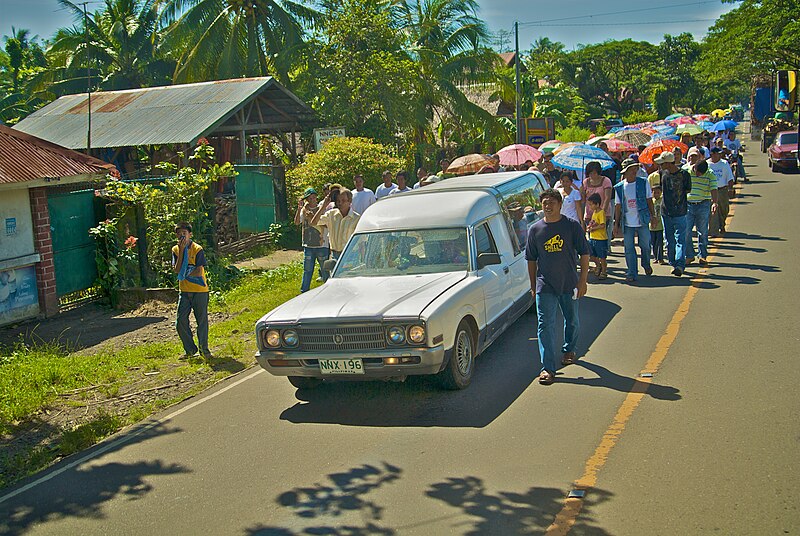
If you have been to a wake or a funeral in The Philippines, you may not go straight home after so you don’t bring the ghost with you. 

Around the world there are all kinds of different customs to funerals and wakes, everything from what you wear, eat and behave. And in The Philippines, there is a specific custom to not draw the spirits or ghosts with you home. 

Funeral: Philippines Funeral Procession. // Photo: moyerphotos

There is a superstition that you are not supposed to go straight home after a wake or a funeral. Pagbag is a tagalog term that means ‘to shake off dust or dirt’, and it is believed that you should not welcome ghosts and spirits into your home. It should not be confused with the term that is also used to talk about leftover food, scavenged and collected outside of supermarkets and restaurants.  

So instead of going directly home after a wake or a funeral, you are supposed to wander around after to help shake off the ghost and spirit so as not to bring them home. After an event like that, you supposedly carry too much bad energy you must get rid of. 

Perhaps today not everyone believes that they would drag a ghost with them on their way home, but still do it because of tradition. People usually go to places like a cafe, a park, a shopping mall or something before heading home, just in case. 

There are several superstitions surrounding the Filipino wake, ranging from the belief that you shouldn’t bring home food from the wake as a guest or to look into a mirror when you are in the presence of the dead.  

Advertisements

More like this

Newest Posts

References

http://folklore.usc.edu/pagpag/

‘Pagpag:’ Stylish superstition

Gyeongsan Abandoned Cobalt Mine

Advertisements

What kind of tragedy can be so horrible that it is mostly silenced and forgotten by the world? The massacre of thousands of people that were found in the Gyeongsan Abandoned Cobalt Mine is one of them. But although often ignored and not talked about in the later years, the haunting rumors of ghosts from the past still has a firm clasp of the place. 

There used to be an abandoned cobalt mine in Gyeongsan in South Korea in full operation and a little easier to access than it is today.

The Cobalt Mine was used during the Japanese occupation where the Japanese used Korean labor to mine gold, silver and then eventually, cobalt, but abandoned it when the mine was emptied. 

During the Korean war, many people, civilians as well as convicts were accused of conspiring with the communists and North Korea. Many of them were brutally massacred in the area and their bodies were thrown into the mines to be forgotten in this so-called Red Hunt from July to September in 1950. 

Advertisements

The Massacre in the Gyeongsan Abandoned Cobalt Mine

It is believed that many of the victims were political prisoners that were supposed to be moved from Daegu Prison to Busan Prison and it is estimated that around 2000 to 3 500 people were murdered and tossed into the mines. 

Gyeongsan Abandoned Cobalt Mine: A massacre is hiding inside the Gyeongsan Abandoned Cobalt Mine.

There is to this day not spoken a lot about the war crimes that happened and a lot of it has been silenced by both parties. Even by the families that were affected by the massacre as they even to this fear can feel fear of the guilt by association that many of the victims of the massacre was. 

The families affected by this have still not gotten their apology and answers for what happened to their family members as most of the skeletons found have never really been examined and the entrance to the mines simply sealed off.

And most likely, what really happened probably never will see the light of day. 

The Hauntings of Gyeongsan Abandoned Cobalt Mine

But their ghosts created legends of their own as sites of huge atrocities and tragedies have occurred. 

Many legends surround the last owners of the mine that brutally died as well as factory owners of factories that were built close to the mine. One of the last companies to be in operation around the same parts as the mine was a glasses manufacturer. 

The owner of said factury is said to have poured petroleum over himself as well as his sleeping employees before setting them all on fire. They all burned to death. However not really confirmed by any hard evidence. 

Although sealed off and left to be forgotten, the locals are said to avoid the site of the abandoned mines, even to this day. 

Advertisements

More like this

Newest Posts

References

Top 12 Most Haunted Places In South Korea!

Creatrip: Korea’s Most Haunted Places

경산 코발트광산 학살사건 – 위키백과, 우리 모두의 백과사전

Yongma Land Abandoned Theme Park

Advertisements

The look of the Yongma Land Abandoned Theme Park in South-Korea has made it a popular place for a photoshoot during the day. But an abandoned place like this also comes with haunting rumors about a little girl that tragically died on one of the rides and that haunts the empty place as a ghost to this day. 

Abandoned amusement parks are one of the most beautiful haunted places to exist. Yongma Land (용마랜드) opened in 1980 as a family friendly amusement park and was a popular destination for the local families the first decade after it opened in Seoul in South Korea. 

But then, bigger and brighter amusement parks like Lotte World opened in 1989 and people turned to that instead and they closed down in 2011. But was it only because of poor business that the park decided to shut down the rides, or was it because of a tragic death that the legend will have it as? 

The Ghost in Yongma Land

The hauntings of the place are not only the close down rides and eerie mood that surrounds the place after dark according to popular rumors and legends. Reports of the voice of a little girl is something more than one visitor has heard among the silent amusement rides and 80s nostalgia. This is supposedly the voice of a little girl that allegedly died on a ride back in 2011. 

This is the very incident that is said to have been the reason that the park closed down back in 2011, though no evidence of this incident to have ever occured has been provided and is most likely the rumor the atmosphere creates. And the official statement is that Yongma Land closed down due to poor business.

Even so, a handful of people still claim that the voice of a girl like this is exactly what they heard in the supposedly abandoned amusement park.

K-Pop and Showbiz

This reportedly haunted place is not only for the paranormal interested either and the main attraction is not for paranormal seekers but rather people looking for a good location for a photoshoot. 

This abandoned theme park has in the later years been the site of music videos of iconic K-pop groups like Twice’s ‘Like OOH-AHH’ and Crayon Pop’s ‘Bar Bar Bar’ used this place to shoot. 

It has also been featured in numrous of K-Dramas and famous idols photoshoots and therefore tourists visits not only for the ghosts, but also for their favorite idols music videos sites and to relive scenes from their drama series. 

It has a certain rustic charm to it in daylight for a beautiful backdrop in photos and videos. Even today you can walk around in the 80 nostalgia of Sailor Moon statues and vintage looking posters and rides. 

But when the darkness befalls the silent joy rides and the rest of the park, the mood changes to a slightly more haunted one, even when the caretaker of the place turns on the lights for your night shoots.

Although a closed down park, the place still has its entrance fees at around 10 000 KRW for an adult to behold the wonderful magic of decay and nostalgia all in one, and perhaps take a moment to listen for the sound of a little girl among the silent and closed down rides. 

More like this

Newest Posts

References

8 Haunted Places In South Korea You Didn’t Know Existed

 Top 12 Most Haunted Places In South Korea!

Yongma Land – Wikipedia

The Haunting on Jeju Island

Advertisements

After terrible tragedies, stories of ghosts often linger hauntingly at the same place. This is the case of Jeju Island, a place that experienced a horrible massacre the place is still recovering from. 

In Korea, the self-governing Jeju island is probably most known to be a great vacation place with its beautiful coastline and lush green scenery. It also houses the biggest mountain in South Korea, Hallasan. 

But the light and lush place has its dark and horrible past. The Jeju massacre from 1948 to 1949, is one of the horrible memories the island holds when in an anti communist campaign the Korean army massacred a tenth of the Islands population. 

The Jeju Uprising

The Korean peninsula was in an uproar during the Korean war and loyalty to the different regimes were in black and white. The Jeju Uprising was also later known as April 3. Incident (제주 4·3 사건)

Advertisements

A separatist movement of the communists broke out on the island and the South Korean army struck hard on it right before the outbreak of the Korean War. The government ordered a massacre and although not a definite number has been provided the massacre itself resulted in around 30 000 people dying. That is around 10 % of the Jeju population that were slaughtered in fear of them being for the communists. 

However, the guilt by association sentiment was strong in the Korean army and both innocent and children were killed and harmed during this massacre. And in the aftermath of the massacre several people died by their wounds, starvation or exposure seeing that entire villages were burned to the ground. 

The Haunting Aftermath of the Jeju Massacre

After this horrible tragedy, the islanders claim that the place is haunted by the people that were massacred as they never got peace, justice or even recovered the bodies in some cases. 

Go Wan-soon was one of the survivors of the massacre at just nine years old. Even she remembers the stories of ghosts that the survivors allegedly encountered after the massacre: 

“People said they saw a white skirt, a white top – there were ghosts,” she said. “I could not go to some places, I was so scared.” She told Asian Times in 2018.

Caves and popular hiking spots are said to be places where the ghosts still roam those who were killed. 

Jeju Uprising: Jeju citizens awaiting execution in May 1948.//Source.

Why especially are these places claimed to be haunted? Perhaps the mass grave next to Jeju’s airport can hold the answer as 388 bodies were uncovered in this grave far from everything else as recent as in 2008. 

Secluded places where mass graves of the killed people sometimes come to light even in the later years, showing just how raw and huge the collective trauma of the massacre still are to the locals.

Places like the Saebyeol Oreum Circus are said to be haunted, although perhaps because of its abandoned eeri aura or perhaps because of the massacre itself. 

When tragedy and atrocities such as the Jeju massacre happens, the aftermath of it is often explained through paranormal phenomena. The same can be said of the Gyeongsan Abandoned Cobalt Mine massacre from the same time that also suffers from legends of ghosts and hauntings in its later years. 

One can wonder if it is the dead or the survivors that are not able to move on from the tragedy. 

Advertisements

More like this

Newest Posts

References

8 Haunted Places In South Korea You Didn’t Know Existed

Top 12 Most Haunted Places In South Korea!

Jeju’s Most Chilling Ghost Stories

On Jeju, Korea’s island of ghosts, the dead finally find a voice – Asia Times