At the day of his wife, Elena Grimani’s death anniversary, a the ghost of noble man called Fosco Loredan can be seen carrying his dead wife’s head . The very same head he himself decapitated out of jealousy and had to carry to Rome.
Once upon a time in 16th century Venice, a nobleman called Fosco Loredan fell in love with a woman. Her name was Elena Grimani and was the Doge’s niece and in a very powerful position. They married, but it wasn’t happily ever after.
Not much is known of Loredan’s life except that he was a very well known man. It was also known that he was a horrendously jealous man and kept accusing his wife of cheating on him. He would also regularly spy on his much younger wife as she was always getting much attention because of her beauty. Elena Grimani denied having an affair, but he wouldn’t believe a single word she said.
One night in 1598, Loredan went to Campiello del Remér in the Cannaregio district of Venice to look for his wife. He was sure that she was betraying him with another man. In a fit of rage he chased her from their marital home with a sword in his hand.
The chase ended with Loredan beheading Elena Griman in front of everyone at Campiello del Remér, including the Doge himself, who was the leader of Venice.
According to the legend, the Doge Marino heard the desperate cries of his niece, Elena Grimani and went to her rescue. He placed himself between her and her husband, to no avail. The angry man managed to distract the Doge enough to get past him and behead his wife to everyone’s shock.
Loredan tried immediately to ask the Doge’s forgiveness as it was his right as a husband to punish a cheating wife. The Doge refused though.
Loredan’s punishment for his crime was to carry the body of his dead wife he had decapitated to the pope in Rome to ask forgiveness and mercy. But when he finally arrived there after his long journey, still with his clothes stained with his dead wife’s blood, Pope Clement VIII refused to see him and he wasn’t granted the forgiveness he seeked.
An arrest order was put on him Instead and he had to fight off the guards to escape them and Rome. Loredan walked back to Venice, still holding the decaying body of the woman he murdered in his hands.
It didn’t go well for Loredan after his crime and he didn’t see a way out. He returned to the scene of his crima in Campiello del Remér and in despair he threw himself into the lagoon and drowned.
Today, the local legend says that on the anniversary of Elena’s killing and even on full moon nights, on those night when the northern wind blows, you can still see his ghost along the Grand Canal by Campiello Del Remer, coming out of the water, still carrying his wife’s head.
One of the most famous ghost stories in Korea is about the unfortunate Arang. Until she got revenge on her murderer, she kept haunting the entire town in search of the one who could help her find the truth.
Look at me, look at me, look at me As you look at a flower in the middle of winter, please look at me Although my sweetheart has arrived I cannot say a word of welcome Just opening my mouth without a word, stuffed my mouth with flap of my skirt Sound of flute played by a bachelor at the next door by the fence Sighing of a virgin at the well as she pumps water Are you better than others? Am I better than you? Who is better than whom? The best one is “gu-ri-bak-tong ji-jun” (one with power and money) — Variation of Miryang Arirang folk song
Arang (아랑) and her tragic story is one of the most well known ghost stories in Korea. She was the daughter of a magistrate (busa) working for the government in Miryang, southeast in Korea.
The legend of Arang is one of the more important stories about wongwi ( 원귀 ), spirits seeking justice by revenge. This story is from the Joseon Dynasty, sometime between 1400 to 1900 and it is said she lived in the mid 1500s.
The Death of Arang
According to the legend Arangs real name was Yun Dong-ok ( 윤동옥 /尹東玉) and had lost her mother when she was very young and basically brought up by a nanny. But her nanny was mean and hated her and wanted her punished. The nanny colluded with the servant Baekga to take her at night and rape her. But Arang resisted and he ended up stabbing her to death. Her body was taken into the woods and buried for no one to know.
In some versions, Arang is said to have gone out to have looked at the moon when a man approached her which she turned down, leading to him killing her. There are also the versions where a low ranking officer bribed her nanny to bring her to him.
Her father, the magistrate, was distraught as they all thought that she had eloped and ran off with a stranger. In shame he resigned from his position and the whole family took a backseat.
The Legend of Arang: One of the more famous ghost stories is the story about Arang and her murder. She came back from beyond to uncover the truth of what really happened the night she died.
The Revenge
But this wasn’t the last they heard of her. Whenever a new magistrate was appointed in Miryang, the spirit of Arang appeared before him and asked for his help to restore her honor and avenge her.
Problem was that the appointed magistrates were so afraid of her that they all resigned and in the end, no one wanted to take the position out of fear for the ghost haunting the place. In some versions of the legend, they died after not helping her. But that all changed when the man named Yi Sang-sa was appointed to the position.
He saw past the scary ghost and promised the spirit of Arang to avenge her so she could have justice. In some version she just tells the name of the killer, in some version, she comes back as a butterfly to mark the murderer.
In any case the murderer is found out and the young magistrate arrested Baekga and had him executed. After this, her spirit was able to move on and she no longer haunted the town.
The Aranggak Shrine
To this day there is a shrine in honor of Arang’s spirit where she is venerated and is called the Aranggak Shrine. Even the popular folk song Arirang has its own local version which is said to may or may not be about the legend of Arang.
The Shrine of Arang: In Miryang they have built a shrine to venerate her spirit. Source/Koreabyme
There are also movies and TV series inspired by the legend, like the 2006 movie, Arang and the 2012 drama series Arang and the Magistrate.
“Arang and the Magistrate” is a Korean drama that combines elements of historical romance, supernatural intrigue, and mystery. Set in the Joseon period, the story revolves around the ghostly character of Arang, who is determined to uncover the truth behind her own death. She teams up with the righteous and pragmatic Magistrate Eun Oh, who can see spirits, creating an unusual partnership. As they delve into the mysteries of Arang’s past and the corruption within the government, the drama weaves a compelling narrative filled with suspense, romance, and supernatural elements.
No matter what the meaning behind the words of the song is, her shrine is solely dedicated to her and standing on a cliff in Miryang on the Yeongnamnu pavilion, one of the important cultural treasures of Miryang, facing the Miryang River.
The Legend of Arang
In the end, the tale of Arang serves as a reminder of the power of justice and the perseverance of the human spirit, even beyond death. Through her haunting, Arang sought the truth and found an ally in the courageous magistrate, Yi Sang-sa, who helped her reveal the identity of her murderer and bring him to justice. With her revenge fulfilled, Arang’s spirit was able to find peace and move on.
As the wind whispers through the trees surrounding the Aranggak Shrine, it carries the echoes of Arang’s tale, reminding us of the importance of seeking truth, fighting for justice, and never forgetting the stories of those who went before us.
An old fortress of protection turned into a prison of a mistress who died and started haunting Zitadelle Spandau where she met her end. And the ghost of the mistress Anna Sydow are said to haunt both the place and the family who caused her death.
One of the best preserved Renaissance military structures in Europe is the citadel in today’s Berlin, in German called Zitadelle Spandau. It was built in 1559 on top of another fort and designed to protect the Spandau town which is now a part of modern day Berlin.
Many castles in Germany have stories about a certain Lady in White haunting it, and in Spandau Citadel there is the ghost of Anna Sydow.
Anna Sydow was the mistress of the Brandenburg Elector Joachim II. Joachim II was a part of the Hohenzollern who has been rumored to be plagued by the ghosts of a Lady in White. Anna Sydow is just one of the many rumored to be at least one of them.
Read more about the curse of the House of Hohenzollern: Here
Anna Sydow: Portrait of the mistress Anna Sydow who are believed to be the Lady in White that haunts Zitadelle Spandau after she was imprisoned by the son of her lover.
In 1549, the wife of Elector Joachim II suffered an accident which left her walking on crutches. She fell down the floor and impaled herself on a couple of antlers that hung in the room below. Something that the elector thought ruined the marriage and the enjoyment of hunting. He chose then to take a mistress and he chose Anna Sydow.
During her life as his mistress, Anna Sydow bore him two children and lived in the Grunewald Hunting Lodge for two decades and is also said to haunt the grounds of that place. This was also the place where the wife of Joachim II got impaled and ended up on crutches.
Imprisoned in Zitadelle Spandau
Johann Georg was the heir and son to Joachim II, and had explicitly promised his father on numerous occasions that he would spare and protect Anna Sydow after he died. But when the elector died in 1571, she was imprisoned in the Zitadelle Spandau until her death in 1575.
The Zitadelle Spandau was often used to house prisoners of the state for a long time, and Anna Sydow was one of the first. She was arrested under false pretenses though and saw no trial. Although the arrest was unjust, she at least didn’t end up being executed like many others of his fathers old court did. Or according to some of the legends, she was actually murdered.
In any case, Johann Georg felt haunted by her after her death. On January 1st in 1598, Johann Georg saw the specter of a Lady in White that he thought had to be Anna Sydow and died eight days later.
In 1709, there was a skeleton of a woman found buried inside of the Zitadelle Spandau during renovation, and everyone thought it had to belong to the Lady in White that was plaguing the fortress as well as the Hohenzollern family. They gave her a proper burial in hopes of ending the hauntings, but according to reports, there is still something haunting within the Zitadelle Spandau walls.
Immured in the Hunting Lodge
There is also this rumor that it wasn’t in the fortress Anna Sydow met her end but in the Grunewald Hunting Lodge. So she is thought to haunt both places as well as members of the Hohenzollern family.
It is a legend that she was immured alive in the small spiral staircase in the western corner wing. Since then she has been haunting the castle around midnight.
Witches, dragons and ghosts, Edinburgh Castle are said to have it all. The sound of bagpipe and drummers can be heard without anyone playing, and those accused for witchcraft as well as prisoners of wars are said to haunt the old castle.
Although the castle as we know it today wasn’t built until the 12th century, the Castle Rock has been lived on for more than 2000 years. It is built on top of an extinct volcano formed 350 million years ago. The castle itself has been built and rebuilt over the years but you can still find traces of the castle that are over 900 years old.
It is also the place in Britain that has been attacked most times with a record of 23 attempts to take over the castle. It has a story filled with wars, bloody battles and tortured, and is said by many to be a haunted landmark that watches over the old town.
Edinburgh Castle: There are so many alleged ghost stories coming from Edinburgh Castle perched on Castle Rock. Among them is the Grey Lady, the missing Piper and little drummer boy. There are also ton of older legends about dragons, black hounds and ties to ancient romans and Arthurian legends. How much of it is really true?
History of Edinburgh Castle
Nine Maidens: Morgan le Fey is said to be one of the Nine Maidens in Arthurian legend. By Anthony Frederick Sandys from 1864.
The castle holds many legends to its name. According to the origin story, the first castle that was built on the hill was named The Castle of the Maidens, built as a shrine to the Nine Maidens, a mysterious and old cult of religion that can be found throughout many countries in Europe. One of these supposed Nine Maidens in Scotland are often attributed to being Morgan le Fay, a mythical figure in Arthurian legend that are said to hold magical abilities.
Even if there are no real substance to her being a real figure, the legends of fantastical magical things keeps being told around the castle grounds. Another legend from older times is the dragon. As far back as 1558 there were several reports about a dragon that was supposedly seen on one of the biggest towers at the time.
Even if there are no more reports about dragon sightings, there are still many urban legends about the castle that lives on to this day. There is also an urban legend that if students pass through the castle gates, they will never pass their exams. Many students are following this rule, and never visit the castle during their stay here, just in case.
Ghosts of the Castle and Haunted Legends
As well as fantastical rumors about dragons and mythical sorceresses, there are legends of ghosts and hauntings. Among the many haunted rumors of the castle, there are reports of the strange sound of drums and music. You can also hear the vague knocking sound you can never be sure to be the wind or something more ominous.
People report of A sensation of being touched, pushed as well as a feeling of dread and despair can follow you when walking along the stony walls. There are also reported sightings of curious lights and flaky figures in the shadows. It is said a black dog is haunting in connection to the pet cemetery on the castle grounds as well as a man in an apron. But there are some ghostly legends more told than others:
Ghosts from the Witches Burned at the Stake on Castle Ground
One thing the castle was in the lead for was for burning more witches during the 16th century than the rest of the country. Over 300 women were tortured before being burned at the stake at Castle Hill, everything from simple peasants to noble women.
Among them, Dame Euphane MacCalzean, accused of witchcraft in the North Berwick witch trials. She was found guilty and burnt alive on 25 June 1591 on the southern slope of the Castle Hill below Edinburgh Castle.
The North Berwick Witch Trials: Dame Euphane MacCalzean was a notable figure in the North Berwick witch trials of 1590-1591, one of Scotland’s most infamous witch hunts. A well-educated woman of noble birth, she was accused of conspiring with witches to raise storms against King James VI’s ship during his return from Denmark.
Some believe the spirits of these women linger still, their pain echoing across time. if we are to believe the haunted legends, there are perhaps one or two of the accused witches that are haunting the castle.
Red More: Check out Agnes Sampson — The Wise Wife of Keith to read about another haunt from one of the victims who were convicted and killed in the North Berwick Witch Trials.
The Lone Piper Boy Playing Under the Royal Mile
Walking in the historical city of Edinburgh, the sound of bagpipes is heard on every occasion. On a random street corner, from the tourist shops, during a parade or as a part of the historical landmarks. Bagpipes are the thing, perhaps even from the ghosts of the city.
The Piper: The Bagpiper by Johann Christoph Erhard.
The most famous ghost that is said to haunt the castle is the piper that was sent down to explore some tunnels they found ran under the castle towards Holyrood Palace a couple of hundred years ago. A young and small boy that would get through the network of tunnels.
According to the legend, the regimental piper played his pipe as he ascended down the Royal Mile, stretching through the old town from the castle. Halfway down the mile to Tron Kirk the music suddenly stopped.
A search party was sent down to investigate after the music stopped, but the piper was never found again, and they sealed the tunnel’s shut so no would could get in… or out… According to legends though, he was certainly heard. He is said to walk the royal mile to this day and the unmistakable sound of bagpipes can be heard from underground.
So perhaps walking down the Royal Mile, the sound of the bagpipes echoing throughout the whole city might as well be from the ghost piper?
The Headless Drummer Boy
Another ghost that has been sighted on several occasions is that of a little drummer boy without a head. He was first seen in the central courtyard of the castle in 1659, a year after Charles I was beheaded. He was walking in circles, drumming his drum playing an Old Scottish war tune. When the castle servants looked closer, they saw that he didn’t have a head. It is said that he drummed all through that night and continued until the morning.
Although he has not been seen again, he is considered a bad omen if he ever appears again. The same year he showed himself, Oliver Cromwell invaded Scotland and laid siege to the castle. Is this enough to give credit to the legend?
Even though no one has seen him since that fateful night, the servants working at the castle have throughout the years claimed to have heard his drumming in the quiet hallways of the castle from time to time. Who knows… Perhaps the next time someone sees the drummer boy, the castle will once again come under attack?
The Grey Lady Haunting the Halls of Edinburgh Castle
A mysterious lady has been reported staying in the older parts of the castle. Sometimes she is just seen wandering around in her 16th century dress and sometimes she is reported to weep.
Janet Douglas: Lady Glamis was a noblewoman accused of witchcraft, who was executed by burning during the reign of James V of Scotland.
There are several real nobles she is thought to be: The first one is Janet Douglas or Lady Glamis. She was accused of witchcraft and burned to the stake outside the castle on July 17th in 1537 with her son watching it all. It is said that even back then, they knew that the accusations were wrong, but King James V held a grudge towards her brother and took it out on her.
Janet also haunts Glamis Castle as The Grey Lady of Glamis, wandering through the family chapel and clock tower.
Others think that the Grey Lady haunting Edinburgh Castle could be the French Marie de Guise, mother of Mary Queen of Scots. She died a catholic and the Protestant nobles held her body inside the castle for nine months before returning her to France, wrapped in a cloth inside a lead coffin. She was then secretly taken to France for a proper burial in the Convent of Saint-Pierre in Reim.
The Prisoners in the Dungeon and Towers
There are also the castle dungeons where they housed criminals for centuries that are supposedly haunted. There were many wars that the castle dungeon saw: the Seven Years War, The American War of Independence and the Napoleonic Wars just to mention a few.
According to legend, from one of these wars, the ghost of a prisoner is said to haunt the castle to this day. In 2003, construction crew members restoring the Queen Anne Tower claimed ghosts of prisoners from the Napoleonic Wars harassed them and refused to work there. Who knows what they really saw, but there are certainly rumors. The hazy blue orbs mentioned earlier are said to appear more frequent in this tower than in the rest of the castle.
But who was this prisoner? The legend tells of a prisoner who tried to escape in a wheelbarrow filled with dung that were taken out of the castle. The cart was dumped over the high castle walls and the prisoner broke his neck when he hit the rocky ground below. He now haunts the place and tries to push visitors down Castle Rock. What gives him away is the lingering smell of dung in the air.
The Legends Living on in Edinburgh Castle
That was some of the ghosts that are said to be haunting the castle. Old places like these will have its history, and through all the bloodshed and Even today, myths surround Edinburgh Castle. Students avoid crossing its gates, fearing it may curse their exams still to this day.
But it’s the ghostly activity that chills the hearts of visitors. Phantom touches, flickering lights, and shadowy figures have been reported. The sounds of drums, faint knocking, and whispers stir something restless in the castle—perhaps spirits that will never truly leave. legends surrounding the place since the first people arrived on the rock, the place will hold its stories.
The metal bar called the Banshee Labyrinth is located in parts of the haunted underground vaults of Edinburgh. And today the place has some haunted stories to tell as well. Everything from ghost children, accused witches, irish folklore creatures and an annoying ghost in the ladies toilet, this pub houses them all.
What can be a more haunted place than a rock and metal bar located in the haunted old town of Edinburgh? Today it is a family run pub that promises a good drink and music all week.
The Banshee Labyrinth bar is located on Niddry Street it is close to the Royal Mile as well as the haunted underground of Edinburgh.
They are also catering to the more macabre with movie nights mostly showing horror movies. But are we to believe legends about this pub you can also expect a couple of ghostly guests as well.
Advertisements
The Haunted Underground Vaults
It is located near The South Bridge Vaults where several businesses, workplace and taverns were located. However, it was built on a low budget and never waterproofed. The place eventually flooded and only the poorest people stayed there, making cheap brothels and pubs flourish instead and crime and murders were not uncommon.
It was allegedly also here the infamous serial killers Burke and Hare haunted victims to sell to the medical schools. The underground vaults have become notorious as a haunted place.
The Wailing Banshee
Part of The Banshee Labyrinth is in one of these vaults and the name the pub has comes from the legend of a banshee haunting the place. Banshee are female spirits and creatures that are an omen of death with their terrifying screams.
The Banshee: It is a female spirit in Irish folklore who heralds the death of a family member
Once when the pub was having some restoration work done, the workmen experienced something strange. The story is that a group of workmen heard this wailing scream of death and right after. According to some sources he also saw a woman in a gray dress who cried into her hands before lifting her head to show off her pale face with rotted teeth and no eyes.
After this they were terrified, but it didn’t stop there. Right after the incident, one of the workers got a call about the death of one of their family members just moments later.
There is also Molly, a six year old girl that are said to haunt the place. She is named Molly after they found a child shoe with the name written on it in one of the old bricked-up chimneys. She apparently disappeared in 1814 according to some sources.
People also report on the ghost they have named Ole Jock, who is said to haunt the ladies toilet. He keeps slamming the doors and is even said to be the one turning the hand driers on and off.
Advertisements
The Witch Hunter
Since its heyday as a part of the criminal hotspot of the city, the people who once walked the vaults are said to have been of the more unsavory characters, and perhaps the ghosts can be seen as the same.
Witches: More than 3000 Scottish people who were accused of witchcraft between the 16th and 17th century. Many of them were burned at the stake in Edinburgh.
One of the neighbors of the building of The Banshee Labyrinth for instance once upon the time belonged to a man named Lord Nicol Edwards. He was a lord Provost and known to be a cruel man, especially to his wife. He is also said to have had a personal dungeon under his house he used to torture accused witches before their trial.
Many pub goers to The Banshee Labyrinth have claimed to have spotted one of these tortured women, and the story of the banshee is often linked together with these women.
There are also stories about inside the pub with some strange things happening. Classical haunted pub things like drinks flying off the tables and crashing in the walls. So bottoms up, The Banshee Labyrinth have spirits for all, both the drinkable and haunted type.
Ghost light over the Chaleur Bay in Quebec has spurned many ghost stories about a burning ship that still haunts the water. From Portugues enslavers to indigenous curses, the Chaleur Phantom covers it all.
Strange is the tale that the fishermen tell: They say that a ball of fire fell Straight from the sky, with a crash and a roar, Lighting the ship from shore to shore. That was the end of the pirate crew. But many a night a black flag flew From the mast of a specter vessel, sailed By a specter band that wept and wailed.
– The Phantom Light of the Baie des Chaleurs”, 1891 Arthur W.H Eaton
Right before storms in Chaleur Bay in Canada, a ghostly light can appear that no one can really explain. Those studying The Chaleur Phantom with a telescope say that there are no more details to examine, even up close and a definitive explanation of it all, still remains a mystery.
But those watching the lights with their naked eye claim that it looks more like a ship on fire and from there, the stories about it took form. The Chaleur Bay or Baie des Chaleurs is French and means Bay of Warmth because of the high temperatures. Perhaps a fitting name as the bay is reportedly haunted by a burning ghost ship that cruises the bay between New Brunswick’s north shore and Quebec’s Gaspé.
The Many Ghosts of the Bay
The lights are claimed by many stories around these parts. West of Caraquet, the ship is known as the Marquis de Malauze, a French ship that were sunk by the British in 1760. To the east it is known as John Craig, the name of a barque that sank outside of Shippigan Island around 1800. Only a cabin boy survived a drowning fate, but later died of exhaustion.
Another source of the The Chaleur Phantom is the haunting of Lady Colbourne, a schooner that went down in 1838 with its valuable cargo. On her last voyage, she was loaded with gold, silver, spices and wine that not all were recovered after the wreck. The passengers were also very wealthy people that drowned in their finest clothes. When she went down, 43 people were reported to have drowned.
Advertisements
But that is not the earliest explanation for these lights known as The Chaleur Phantom. The most told and perhaps most tragic story is of the Portuguese explorers that ended their days in the bay after enslaving the indigenous people.
The Portuguese Captain
One summer’s evening in 1878, Mrs. Pettigrew sat on her veranda late at dusk at Heron Island. Suddenly, a man stood in front of her, asking for her help. He was badly burned and she turned away to run inside. He brushed by her and she noticed that he had no legs. But before she could find out more, he disappeared.
On many occasions before and later this incident, the Pettigrew family noticed strange things out on the bay. They reported about a ghost ship that was most often seen on the north side of the island during the full moon.
One of the tales that have been spun is about the Portuguese Captain in the 1500s that ravaged and pillaged the area before disappearing without a trace.
The Curse of the Burning Ship: The burning ship people of this area reports of seeing is often attributed to the disappeared ship the Portuguese explorer Gaspar Cort-Real and his brother Miguel that never returned after sailing to this area. // Photo: Destruction of the Turkish Fleet in the Bay of Chesma by Jacob Philipp Hackert.
The captain, believed to be the real Portuguese explorer, Gaspar Cort-Real, arrived at Heron Island in 1501 to kidnap the natives of the place known as Mi’Kmaq to sell them as slaves. It is reported that he captured as many as 57 indigenous people that were taken back to Portugal as slaves.
But when he came back for his second visit, the Mi’kmaq took him first. Rembering what had happened to their people last time he came, they tortured and killed him before he could do any more damage to their people.
A year later the Captain’s brother, Miguel came to look for him, and the locals attacked him as well. Their ship was set on fire and they jumped in the waters, promising they would haunt the bay for the next 1000 years as The Chaleur Phantom.
It is said that the corpses of both the Portuguese as well as the Mi’kmaq washed ashore on the island and that they were buried in a low lying area at the west tip of the island called French Woods. And that their graves were shallow and their souls not yet at rest.
The Pirate Killing
Another origin tale to the lights is told from Restigouche. According to this tale, it was a group of pirates nead Port Daniel that killed a woman there. She was a native in most stories and was kidnapped by the pirates. With her dying breath she cursed her killers.
“For as long as the world is, may you burn on the bay.”
And according to the phantom lights in the bay, they still burn.
Advertisements
The Murder of a Sailor
A third explanation of The Chaleur Phantom that are told is of the murder of one of the sailors that worked on a ship. They encountered bad weather that drove the crew desperate. The superstitious sailor feared that they would die and that they were followed by bad luck. They attributed this bad luck to one of the sailors and ended up murdering him to reverse the bad luck.
Then the ship caught fire though, and it was told that it was Catholic blood way of seeking revenge.
Other Scientific Explanations
There have been many tales to try to find the origin of the lights, scientific as well as paranormal. There have been several research papers that have tested and concluded different explanations that don’t involve evil Captains from Europe, cursed pirates and catholic blood.
There are also very few pictures of the phenomenon of The Chaleur Phantom to test and further examine it with as well as some factual inaccuracies in the stories told to give credit to the ghost stories.
Other more natural causes that can explain this strange phenomenon could be something as trivial as rotten vegetation and a sort of marsh gas that has drifted over water, or an undersea release of natural gas or St. Elmo’s Fire.
St. Elmo’s Fire: This weather phenomenon is typically seen during thunderstorms when the ground below the storm is electrically charged, and there is high voltage in the air between the cloud and the ground. // Source
Although many scientists reject that this phenomenon can be St. Elmos Fire, which is electricity slowly discharged from the atmosphere to the earth—ordinarily shows itself as a tip of light on a pointed object, such as a church steeple or a mast. In addition, it is accompanied by a crackling noise.
No matter the real reason behind its light of The Chaleur Phantom, the existence of them is something that can’t be denied. What also can’t be denied is the victims to the bay and the harrowing stories that can be retold as countless ghost stories.
Every Christmas, the royal ghost of Anne Boleyn is said to visit her childhood home as a spirit.
One of the more famous ghosts that know how to travel, is the ghost of the infamous Anne Boleyn. Most known for the wedge between the State of England and the Catholic Church in the time of the Tudors. The peoples perception of her at the time was awful, and it would be understandable if she felt some sort of resentment or sorrow for how her life ended, even in the afterlife.
A Well Travelled Ghost
Anne Boleyn: The ghost of the former queen has been spotted many places in the UK after her death.
As ghost sightings go, perhaps the Tower of London is a more well known place for ghost sightings of her, as this was the place she was held imprisoned and executed. But it is far from the only place paranormal sightings of the former Queen have been spotted in the UK. She has also been spotted in Windsor Castle, Hampton Court and Rochford Hall to just name a few. But in the spirit of Christmas, we are going to have a look at where the royal ghost spends her Christmases in the afterlife.
Every Christmas she is said to make an appearance at Hever Castle, at least it is now expected. Christmas was supposedly her favourite time and Hever Castle was her childhood home with good memories. And contrary to how her ghost is seen at other locations, headless and darkly dressed for instance, it is said she is seen as more happy and content when spotted here.
Christmas at Hever Castle
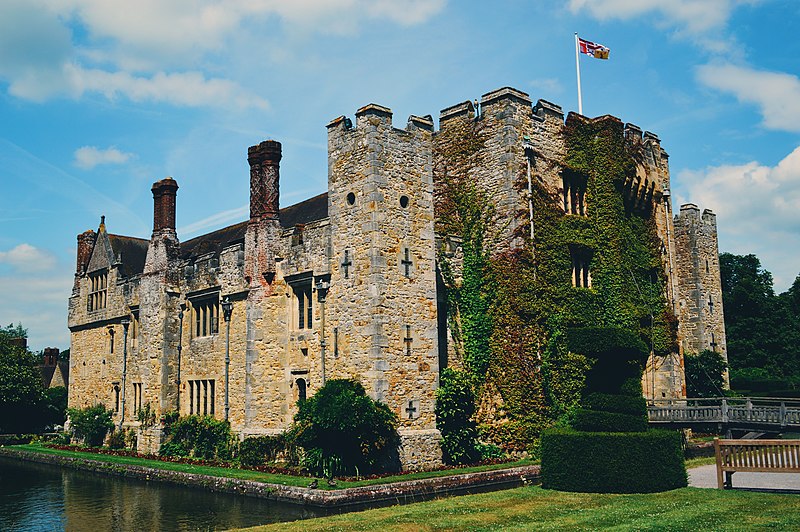
The castle was built in 1270 in the rural part of Kent, and although relatively small compared to many other castles we can see in England, it came to play a big part in England’s’ history as it was the seat of the Boleyn family. This is also the place where Anne and Henry first met, when he was still married to Queen Catherine of Aragon, and had an affair with her younger sister, Mary.
Advertisements
She is often reported to be seen under a big oak tree that stands on the castle ground. This is the place Anne and Henry spent a lot of time courting. Although the ending for the couple was one of the most dramatic break ups in British history, the courting seems to have been genuine. Henry is said to have written her at least seventeen letters, begging her to be his, and the length he went to marry her, spoke to how much he wanted her in his life.
The Tragic Ending
Hever Castle: This is the childhood home of Anne Boleyn and were she is seen every Christmas. It is now open to public. Photo: Hever Castle, Kent/ijclark
Although they did get together in the end, their match was a very unpopular one. In order to divorce the queen, he had to part with the Catholic Church, and Anne was in the public eye a witch, a heretic and a seducer that was a danger to the empire and papal law. They never had a son, but their child Elizabeth the first turned out to be one of England’s longest reigning queens.
But after several miscarriages, never ending gossiping and pressure from all sides, their love turned sour and in the end, Henry found another one and decided to get rid of Anne, in a most dramatic way. On the charges of treasury and adultery and incest with her brother, she was sent to the Tower of London and sentenced to death. On May 19th in 1536, she was executed by beheading at the Tower.
Popular Sightings
With a such an accessible place with such a famous ghost, the reports about sightings has been plentiful. Like in 2015, when a tourist at the castle captured something on camera he was certain had to be the former queen by the fireplace.
The Ghost: Liam Archer captured this photo in 2015, convinced it was the ghost of the queen. Photo: Liam Archer/Daily Mail
‘I believe there is something important historically inside the fireplace she wants me to recover.’, Mr Archer that took the picture told the papers at the time.
Who is to say for what reason Anne has to haunt her childhood home, let alone England as a whole? In any case, her imprints on the course of the history, religion and the royal line, was irrevocably shaken by her life and work.
It has also been said she has been seen walking across the beautiful bridge on the premise that crosses River Eden, perhaps on her way home to the place of her happy and innocent childhood.
After a husband caught his cheating wife, the punishment for her lasted into the afterlife. After she was discovered, the husband imprisoned her in the tower of Château de Puymartin, and according to legends, the wife is still haunting this French Château as a Dame Blanche, or the Lady in White.
The honey colored towers of this elegant castle in France called Château de Puymartin is like taken out of a fairytale romance. But the tales about this castle in Southwestern France, is by no means fairytale-like, but more of a horror story without a nice ending.
The Château de Puymartin was constructed in the early 1200s and the castle went through a lot of hands throughout history. In 1357, the castle was taken by the british before being bought back by the council of Sarlat. They didn’t stay though and the castle was left abandoned.
Read also: Check out all of our ghost stories from France
The castle was abandoned for a while and it wasn’t until the 1450s Radulphe de Saint-Clar rebuilt the Château de Puymartin and making it bigger that people started living in it. But can anyone really say they lived peacefully in it?
The Prison in the castle: The castle that used to be the Lady in White’s home at Château de Puymartin turned into her prison were she lived her remaining years in the tower and the rest of eternity walled up in the walls of her former prison. Photo: Manfred Heydesource
Dame Blanches in French Folklore
All French Château’s must have its own legend of a Dame Blanche or the ghost of a Lady in White roaming around the castle halls at night. The Château de Puymartin is no exception from this and has it’s own twisted tale of the Lady in White. But really what is this types of ghosts that we always hear of wandering the castle halls?
One of the most pervasive supernatural mythologies associated with haunted castles and Château’s is the Dames blanches, or White Ladies. These mysterious figures are said to wander through fields and forests near the city, bringing with them both luck and misfortune to those who encounter them.
They are known way back from myths and folklore as well and quite well spread in European ghost stories. Tales of these enigmatic creatures have been told for centuries, inspiring many artistic interpretations and offering a glimpse into a fantastic world beyond our own.
There’s also a long-standing local legend involving the castle’s ‘Dames Blanches’, or ‘White Ladies’. According to folklore, these female ghosts are said to inhabit the castle and torment its inhabitants with misfortune, calamity, and sometimes even death in many stories in French folklore.
Lady in White Ghost: The most common ghost you hear about is the ghost of a lady, often described as wearing white. The legends is different from every culture, often described as a sorrowful ghost in European ghost stories and taking a more vengeful spirit take in Asian ghost stories. What they all have in common though is they experienced something unfair in their life and in their death they can’t see past in their afterlife.
What used to be vague figures from old mythology and legends, now tells the tragic ghost stories about real women who died in horrible ways and have unfinished business in their afterlife. Such is the tale of the Dame Blance in Château de Puymartin.
The Legend of the Dame Blanche in the Castle
The legend of la Dame Blanche, or the woman in white that is said to reside inside of Château de Puymartin is said to be the spirit of a woman called Thérèse de Saint-Clar. She was married to Jean de Saint-Clar, the man of the Château de Puymartin in the 1500s. Her name is not set in stone, as the legends most often specify her name at all.
The husband could also have been Raymond de Saint-Clar who fought in the French Wars of Religion, a war between the Catholics and Protestants. He is well known to be the one who managed to get rid of the Huguenots from Sarlat. The timeline with the names in this legend can get a bit messy as we can neither confirm or deny all of the details.
But either way, the story goes that the man of Château de Puymartin was away at war and while he was away, the wife stayed home and took a lover.
But the affair would not stay secret for long at the Château de Puymartin. After distinguishing himself in the battles, the husband was allowed to return home to his home and wife for what he thought would be a happy reunion and he would be recieved by his wife as a war hero.
The homecoming was anything but thought and when he went to her, his wife was found in her lover’s arm.
The husband went mad and ended up killing her lover out of jealousy in a fit of rage. His wife was also punished but in a much slower and torturous death. He ended up imprisoning his cheating wife in a tower in their Château as he no longer could trust her on her own and their marriage was in all sense of the matter over.
Imprisoned at the Tower of Château de Puymartin
For years the wife was trapped in the northern tower of Château de Puymartin, never allowed to leave or go outside, not even after her death. One could almost argue that she is still not allowed out in her afterlife.
Immured: Throughout the years, there have been plenty of stories about women sealed inside of walls for punishments or for religious purposes. Who knows just how many old walls are hiding a secret?
The wife lived trapped inside of the tower until she died in what was called a ‘fifteen long years of repentance’. 15 whole years she stayed in the same little room never allowed to leave.
The door leading into her tower was supposedly walled up to keep her from escaping, only leaving a small trap door for the servants to bring her food while she was alive. She was stripped away from the fine living she was used to being the mistress of this grand castle and they only left a bad mattress for her to sleep on in a corner.
The only view she had was to look out from the window through the barrs they put up for her to prevent her from escaping. There she could see just how close freedom was, past the garden, over the hill and into the forests. This almost seems more cruel than shutting the window off completely.
It doesn’t say if she had any visitors, but over the years it looks like the husband never pitied her and let go of her anger. And if she spent 15 years inside the tower without anyone to talk to, she most likely went mad after the first few years.
According to legend her body was sealed inside the walls of the room when she died, trapping her there, even in her afterlife and she never got a proper burial in the ground, and was laid on the cold stones of the castle walls. Since then, she comes back to haunt the castle at night. At least now she can move outside the tower. She wanders the stairs, her room and on the pathways around the grounds.
Today you can visit the Château de Puymartin for a fee to try to get a glimpse of the sorrowful ghost that have been spotted by its owners and visitors over the centuries.
The Château de Puymartin have in its later years embraced their Dame Blanche legend and it’s a part of the experience when visiting the castle. They have even made the story into an escape room play during Halloween season. Would you like to play?
An online magazine about the paranormal, haunted and macabre. We collect the ghost stories from all around the world as well as review horror and gothic media.