Tag Archives: Switzerland

The Sinful Monk Haunting the Former Monastery House on Junkerngasse

Advertisements

Could Junkerngasse be the most haunted street in Bern? From a former monastery that used to be here, locals complained for a long time about the haunting of a monk who committed a sin so grave that neither his body, nor his soul ever left. 

Beneath the elegant façades of Bern’s Junkerngasse and its parallel Gerechtigkeitsgasse, now known for its stately houses, flagstone walks, and commanding views of the Aare, lies a buried past of devotion, downfall, and damnation.

Read More: Check out all ghost stories from Switzerland

In medieval times, this street, then called Kirchgasse or Church Lane, was the sacred artery of Bern’s religious life. It wound past chapels, cloisters, and courtyards belonging to powerful abbeys. Among these was a quiet but significant property: the Frienisberghaus, the urban residence of the Cistercian monks of Frienisberg Abbey, who came to the city on church business or for rest.

But for centuries after the Reformation, the house was shunned, whispered about, and eventually torn down. It was said to be haunted by a monk, one who carried a sin so grave that death could not bring him rest.

Junkerngasse: Known as one of the most haunted streets in Bern perhaps. A street with a long history, with a new street built on top of what used to be there. Here you se number 57, 55, 53, 51, 49. // Source: Tilman2007/Wikimedia

The Monastery in the City

The Cistercian Order was one of deep discipline and purity, founded on silence, labor, and a vow of chastity. The monks of Frienisberg Abbey, located in the Seeland region northwest of Bern, were among the many religious orders who held property within the city walls. As early as 1285, they owned a house in Bern. In the 14th century, their holdings expanded when the city filled in the old moat of the Nydegg fortress, granting the monks their monastery courtyard next to the Interlakenhaus, the biggest monastery courtyard in the city, a stone’s throw from the Nydeggkirche and what would later become the Nydegg Bridge.

Old Bern: Map of Berne, wooden cut by Hans Rudolf Manuel, 1549. Earliest topographically accurate depiction of Berne.

This was not a grand abbey, but rather a quiet urban refuge, a place to shelter monks traveling from Frienisberg. And yet, in this serene setting, something terrible happened.

Sin in the Cloister

One monk, whose name has been lost to history, committed the unthinkable: he violated a nun, a crime so heinous in the Cistercian world that it still lingers. The details remain vague, but the sin of lust, in a setting that demanded purity, sealed the monk’s eternal punishment.

After the Reformation swept through Bern in the 1520s, the monasteries and their property were dissolved or repurposed. The Frienisberghaus became a state building used for charitable causes, but its halls were never peaceful again.

Image: André Corboz from 1983, Source

For years afterward, locals reported that a ghostly monk would wander the courtyard at midnight, his hood drawn low, his feet never touching the ground. He climbed the stairs slowly, mournfully, only to descend again moments later, as if condemned to walk in infinite, unfulfilled penance. His form was pale and nearly transparent, a whisper of cloth and shadow.

Read Also: Junkerngasse is known as Bern’s most haunted street, mostly because of the story of The Headless Ghost Woman of Bern

Later still, as the house aged and became derelict, the haunting intensified. Groans, sighs, and scraping sounds echoed from the attic. Tools rusted without cause, and workers who tried to repair the building reported a sense of dread they couldn’t shake. During the building’s eventual demolition, something even more sinister was uncovered: a skeleton, walled up in a sealed niche, curled in on itself in a final pose of suffering. His blackened robes and rotted rosary still clung to bone.

It was confirmation of the old fears. Whether buried in secret as punishment or hidden to avoid scandal, this monk had been walled up alive, and his soul had never left.

Newest Posts

References:

P. Keckeis & M. Waibel, Legends of Switzerland. Bern, Zurich 1986

Frienisberghaus – Bern City Archive

The Dream of the Basel Rhine Bridge about the Buried Treasure

Advertisements

A legend goes that a simple farmer from the Emmental in the Swizz alps had a dream about finding gold at the bridge in Basel. Visited by a ghostly shadow, he was guided around the country to find it. 

Basel’s Mittlere Brücke, the ancient bridge crossing the Rhine, has long been the setting for legends, mysteries, and ghost stories. One of the most curious tales comes not from the city itself, but from the remote Alp Rafrüti in the Emmental, where a poor laborer once lived with his family in hardship.

Read More: Check out all ghost stories from Switzerland

One night, this man was visited by a dream so vivid it unsettled his sleep as he slept in his bed in Emmental. In it, a voice told him that his fortune awaited him on the Rhine Bridge in Basel, over 80 kilometers away. He awoke, dismissing it as nonsense. But when the same dream came a second night, and a third, he grew restless. With no other prospects and an urgent need to provide for his family, he set off for Basel.

The Emmental: is a valley in west-central Switzerland, forming part of the canton of Bern, mostly made up by farmers and known for its cheese and pottery. Rafrüti is mostly known for being the place where the first and second latest meteorite was found in Switzerland.

The Search For Treasure at The Mittlere Brücke

The Mittlere Brücke, or the middle bridge is one of the oldest bridges across the Rhine, dating back to 1223, and has become the very symbol of Basel today, connecting Grossbasel (Greater Basel) and Kleinbasel (Lesser Basel).

When he arrived, the laborer walked slowly across the bridge, eyes scanning the stones and riverbanks, hoping for some sign. But there was nothing unusual to be seen. He spent the entire day pacing the length of the bridge. The next day, he did the same, and again on the third. The old bridge was well-worn by the passing feet of merchants, boatmen, and townsfolk, but none seemed to notice the weary man from the Emmental.

Basel’s Mittlere Brücke: The bridge around 1760. Copperplate engraving by David Herrliberger after a model by Emanuel Büchel.

A city policeman, however, had observed him all this time. Puzzled by the stranger’s constant wandering and troubled look, the officer finally approached him. “What are you doing here?” he asked. “You’ve been walking this bridge for days now. What are you looking for?”

The laborer, exhausted and disheartened, confessed his dream and his fruitless search. The policeman chuckled and shook his head. “Ah, don’t believe in such foolish dreams,” he said. “Last night, I dreamt there was a treasure buried under a kitchen in a place called Rafrüti. But who knows where that is?”

The Treasure at Home

The laborer’s eyes widened. He said nothing, but turned on his heel and hurried all the way back to his humble Alpine hut. Without delay, he began digging a hole in the middle of his kitchen floor. The soil was cold and hard, but he dug deeper and deeper until a dark figure appeared beside him, a silent, black shape that picked up a spade and began to dig as well.

At last, their tools struck metal. Together, they unearthed a large, heavy pot filled to the brim with gold coins. The black figure then separated the treasure into three equal piles and spoke in a voice like the wind through ancient trees:

“Choose, laborer! One pile is for the poor, one for me, and one for you. But choose wisely, or you’ll regret it!”

The man hesitated, fear clutching at his heart. Then, he thought: Why should a creature of shadow need gold? And why should I decide who deserves this wealth? So instead of choosing, he swept all three piles together into a single heap and declared:

“I’ll take this one  and share it as I see fit.”

In that instant, the black figure vanished without a sound. From that day forward, the laborer and his family lived comfortably, freed from want and fear. The Basel Rhine Bridge had indeed brought him fortune.

Newest Posts

References:

Tour Description «Walk of legends» Place 1: Claraplatz and Rebgasse

The Haunting of the Antoniterkirche: Where the Monks Never Left

Advertisements

The transition from Catholicism to Protestantism sometimes got bloody. This was also the case in Bern where the Antonite monks of Antoniterkirche had been residing for centuries. Cast out, their former churches and chapels were left desecrated, but did they truly leave the city?

In the twisted veins of Bern’s Old Town, where cobblestones whisper and centuries sleep behind shuttered windows, stands a building most passersby ignore. They shouldn’t. Tucked behind Postgasse 62 is the Antoniterkirche, now a shell of holy ground that once echoed with prayers and plague, now just as likely to echo with ghostly footsteps and the whispers of dead monks.

Read More: Check out all ghost stories from Switzerland

The Bern Disputation was a debate over the theology of the Swiss Reformation that occurred in Bern from 6 to 26 January 1528 that ended in Bern becoming the second Swiss canton to officially become Protestant. After this, the monks were expelled from the city, but according to some ghost stories, some never left. 

The Church: Painting by Michael Neher (1798–1876), The former Antoniter Church as a fire-fighting equipment house (1870)

The Antonites and their History in Bern

The Antonites, a medieval order of monks known for their care of the sick and their infamous symbol of the Tau cross, settled here in Bern before 1283 as servants of St. Anthony the Great. They were healers, yes—but also collectors of bone relics and donations, said to tend to the ill with both herbs and dark rituals. As their presence grew, so did the unease around them. Something about the way they looked at you, it was said. Something about the smell that clung to their robes.

The Monks: They were known across Europe for caring for the sick—particularly those suffering from “holy fire,” or ergotism, a disease that twisted limbs and seared flesh with a burning agony. Clad in black habits emblazoned with the blue tau cross, the brothers brought with them piety, relics, and rituals.

Their grand church, rebuilt in 1444 and again in the 1490s, stood proud for just a few short decades. By the 15th century, they had rebuilt their chapel into a grand Gothic church, welcomed the Shoemakers’ Guild and the Society of Rebleuten to worship at its altars, and staffed their hospital with six brothers and several lay nurses.

Then came the Reformation—a righteous blaze that burned through Bern and cast the Antonites into shadow. In 1528, the last friar was expelled. Mobs ransacked the sanctuary. Altars were shattered. Candles snuffed. Statues dragged and burned in the streets. 

Hatred had also accumulated against the Antonite brothers, as against all monks, in the years before the Reformation. People complained about their shameless begging, the decline in morals, and their unexemplary lifestyle. This hatred now erupted. Lynchings of monks were not uncommon. But did the monks ever truly leave?

The Haunting of The Antoniterkirche

After its secularization, the church served many purposes: a granary, a saddlery, a fire station. The pews were torn out, the partitions fell, and the prayers ceased. But not the presence. In every incarnation, workers reported strange noises. Moaning. Shuffling. Cold hands where there should be none. Rats, people claimed. But rats don’t whisper in Latin. Rats don’t sigh from behind the walls.

Antonierkirche before 1930

And then there’s the woodcutter’s tale that was written down in a collection of ghost stories from Bern. He was working alone in a partitioned room when a cold wind passed through the boarded walls. Something moved behind him. He turned, expecting vermin. Instead, there stood a tall figure in the black robes of a monk, cowl drawn, eyes large and sorrowful. The monk raised his hands slowly. No sound, no breath, just that chilling gaze. The woodcutter dropped his saw. “It was the prior,” he said later, trembling. “The last one. The one who never left.”

The Haunted Former Church

Source

The building today is shared by the Evangelical Lutheran Church of Bern, and the Russian Orthodox chapel hides quietly in the basement. The altar is long gone, the pews removed, but those who enter the chapel still speak of feeling watched. Of cold drafts that move against the grain of the wind. Of whispered invocations they didn’t speak.

The faithful come and go. But beneath the floorboards, something still lingers. In the coldest months, neighbors speak of low chanting beneath the stone. Of muffled crying. Of ghostly figures moving along the old monastic paths.

The Antoniterkirche was meant to be a place of healing. But after centuries of misuse, desecration, and silence—it seems the wounds here go too deep. And in Bern’s dark heart, the dead do not always rest easy.

Newest Posts

References:

Die Geschichte der Antonierkirche | Evangelisch-Lutherische Kirche Bern

https://www.maerchenstiftung.ch/maerchendatenbank/11839/im-antonierkloster

Antoniterkirche (Bern) – Wikipedia

The Restless Gatekeeper of the Rhine Gate in Basel

Advertisements

After the gatekeeper’s young daughter died in the Rhine, his only wish was to be buried next to her in the cemetery. As they all believed his own death was a suicide he was denied a burial in a consecrated ground. Now, he is forced to linger in the shadows, his only way to visit her grave. 

Basel’s old city once bristled with gates and towers and its guardians of the bridges, streets, and walls that kept the medieval town secure. None was more important than the Rhine Gate on the Grossbasel side, the fortified passage controlling access to the ancient Rhine Bridge, the vital link between Gross- and Kleinbasel. The gate itself was torn down in 1839, but one of its most tragic stories clings to the city like mist over the river.

Read more: Check out all ghost stories from Switzerland

The Mittlere Brücke, or the middle bridge is one of the oldest bridges across the Rhine, dating back to 1223, and has become the very symbol of Basel today, connecting Grossbasel (Greater Basel) and Kleinbasel (Lesser Basel).

Legend has it that there once was a silver bell hanging from the Minster towers in Basel. After the earthquake in 1356, the towers collapsed and the bell sank into the Rhine, only now calling the river spirits to midnight prayer at full moon. It is said that the bell can only be raised when the Minster becomes a Catholic church again. If you look and listen closely from the banks or the bridge, it is said you can see the silver glimmer and hear the faint ringing sound. 

The Legend of the Ghostly Gatekeeper

In the 17th century, a drunken gatekeeper served at the Rhine Gate on the Grossbasel side of the river. A man with a weakness for drink, his reputation in the city was poor, and yet there was one bright, innocent light in his otherwise dim existence that was his beloved four-year-old daughter.

The tragedy happened one afternoon as the little girl played near the bridge’s edge, close enough for her father to see, but far enough for danger. He was, as too often, deep in his cups. And though he was clear in the head enough to see the horror unfolding in front of him, he was too drunk to save her when she fell in. 

It was the boatmen of the guildhouse at the bridge who reacted first, leaping into their boats and chasing the swiftly moving current. They managed to pull the girl from the water near St. John’s, but it was too late. The child was gone.

The Phantom at St. Martin’s

She was buried in St- Martin’s Church, or Martinskirche, the oldest parish church in the city on Cathedral Hill or the Münsterhügel.

The gatekeeper was crushed and filled with immense guilt. At the girl’s burial in St. Martin’s churchyard, he stood motionless at the grave long after the others had left. He carried his guilt heavily, a man haunted in life.

Die Martinskirche in Basel// Source: Andreas Faessler/Wikimedia

Weeks later, his body was found floating near the Klingental corner tower on the Rhine. Whether from despair or drink, he had slipped into the water. And because suicide was suspected, he was denied burial beside his daughter in consecrated ground. Instead, his remains were laid to rest in the old lay cemetery at Klingental, where plague victims, beggars, and outcasts were consigned.

Yet, his soul found no peace. Even decades, or perhaps even centuries later depending on when this actually happened he was still haunting the churchyard. During the time of Pastor Theodor Falkeysen (1725–1815), people whispered of a spectral figure seen standing in the churchyard of St. Martin’s on moonlit nights. Described as rigid and bent, dressed in the tattered clothes of a gatekeeper, his hollow eyes fixed forever on his child’s grave.

Newest Posts

References:

Spuk und Geister im alten Basel

Mittlere Brücke (Basel) – Everything you need to know in 2025 

Glaubet nid an Gaischter? Von wegen. Basel ist voll davon. | barfi.ch

Tour Description «Walk of legends» Place 1: Claraplatz and Rebgasse

The Slave Trader of Ebenrain: A Tormented Spirit in the Shadows of Sissach

Advertisements

Meant to be a peaceful summer residence in Sissach, outside of Basel in Switzerland, the Ebenrain Castle turned into a haunted one after one of its former inhabitants is still haunting it. 

In the peaceful town of Sissach, nestled amid the soft hills and dense forests of Baselland, stands the elegant yet somber Ebenrain Castle. Built as a summer residence for the rich and wealthy from Basel city in 1774–1776, it is considered the most significant late baroque residence in northwestern Switzerland. 

Today it serves as a venue for art exhibitions, concerts, and cultural events, but behind its grand Baroque façade lingers a chilling story — one of guilt, scandal, and restless spirits.

Read more: Check out all ghost stories from Switzerland

The ghost said to haunt this stately estate is none other than Johann Rudolf Ryhiner-Streckeisen, a wealthy Basel merchant whose checkered past and tragic end cast a long, eerie shadow over Ebenrain.

Haunted Castle: Ebenrain Castle in Sissach, Basel-Land canton, Switzerland. It is said to be haunted by the ghost of a potential slave trader. // Source: Ikiwaner/ Wikimedia

A Man of Wealth and Sullied Reputation

Martin Bachofen (1727-1814), Basel silk ribbon manufacturer, builder of Ebenrain Castle

The story of Ebenrain begins with Martin Bachofen (1727–1814), a prosperous Basel silk manufacturer who built the castle as his country residence. But it was in the hands of Johann Rudolf Ryhiner-Streckeisen that the estate’s most notorious chapter was written.

Ryhiner was a man of considerable means, but also of questionable morals. Whispers surrounded him — not only for his extravagant lifestyle and tangled personal affairs, but for his alleged ties to the transatlantic slave trade, a grim and unspoken stain on Basel’s mercantile history. These rumors would cling to his name, long after his death.

Faced with accusations of bigamy — a scandal that threatened to unravel both his public and private life — Ryhiner’s world crumbled. On July 29, 1824, he took his own life with a pistol shot in one of the castle’s stately rooms, leaving behind a legacy of shame and whispered curses. Two years later, his widow sold the castle to Ludwig Vest, a businessman from Liestal. 

A Restless Presence in the Dusk

But death did not silence Ryhiner. According to local legend, the merchant’s spirit returned to Ebenrain, condemned by his crimes and cowardice to linger in the place of his demise.

At dusk, when the mist gathers low along the castle’s lawns and the evening air turns chill, a tall gentleman has been seen strolling through the park. He swings a walking stick, his posture stiff and his gaze vacant. Some witnesses even claim he is accompanied by another indistinct, shadowy figure — perhaps a former accomplice, or one of the countless lives entangled in his dark dealings.

Those who have wandered the castle grounds after dark speak of sudden cold drafts, of unseen hands brushing their skin, and of a bloodstain in the west room — the very chamber where Ryhiner ended his life — that no servant or owner has ever been able to scrub away. Even after renovations, it is said to bleed through fresh plaster and paint, a grim, unyielding mark of guilt.

The Weight of an Unquiet Past

While Ebenrain Castle today stands as a proud cultural landmark, its ghostly past endures in local memory. The story of Johann Rudolf Ryhiner-Streckeisen is a reminder of the unspoken histories that linger in beautiful places. His restless spirit is said to prowl not for revenge, but tormented by a lifetime of sin and silence — a phantom burdened by the weight of lives lost and wrongs unrighted.

Schloss Ebenrain, Sissach, Schweiz. // EinDao/Wikimedia

So should you find yourself in the gardens of Ebenrain as the sun sinks behind the Jura hills, watch the tree-shrouded paths carefully. You might just glimpse a figure in 19th-century dress, cane in hand, forever pacing through the estate he could neither truly possess in life nor leave in death.

Newest Posts

References:

Huhuuuh! – Sieben Spukhäuser in der Region | TagesWoche

Schloss Ebenrain – Wikipedia

The Ghostly Monk of Spittelsprung (Münsterberg) in Basel

Advertisements

Back at a time when the hills of Münsterberg were called Spittelsprung in the really old parts of Basel in Switzerland, it was also said a monk was haunting the streets. Gliding in and out of the houses frightening the children, he took no notice of the world of the living, always deep in his prayers. The question is, prayer for what?

In the tangled web of Basel’s medieval streets, history lies thick as mist, and nowhere more so than on the Münsterberg, the quiet hill crowned by the grand sandstone edifice of Basel Münster. The old town rises and falls with small hills, each carrying the weight of centuries. 

The Münsterberg is the most storied of them, its cobbled alleys flanked by 18th-century palaces, austere official buildings, and the venerable Naturhistorisches Museum. Yet long before these elegant façades graced the streets, this hill bore another name: Spittelsprung.

Read More: Check out all ghost stories from Switzerland

In the days when death came swiftly and often, a hospital and almshouse once stood here. A place where the sick and dying clung to what comfort the Church could offer, and where sins were whispered to unseen ears in dimly lit corners.

And it is from this time that one of Basel’s most quietly unnerving hauntings is said to have begun.

A Monastic Shadow Along the Streets of Münsterberg

According to accounts passed down through generations, a spectral monk used to make his mournful rounds upon the Münsterberg back when it was called Spittelsburg. It is told that on certain nights, when the wind sighs low through the narrow alleys and the bell of the cathedral tolls its midnight note, he appears without warning in one of the houses along the hill.

It was said that the pale glow of a flickering lamp or hearth reveals his dark robes and tonsured head as he silently crosses the living room floor, eyes never lifting from the pages of his ancient breviary. His lips move in soundless prayer, and the room fills with a sense of something ancient and sorrowful.

Read More: The Chanting Monks Haunting La Boquería Market, The Devil’s Monastery in Carmona and The Ghost Monks at Lyseklosteret

Children, watching from behind chairs or half-open doors, would scream at the sight of him, but the ghostly monk didn’t seem to even notice them, never pausing in his devotions or lifting his head from his books. It was only when an adult stepped forward to confront him, hand outstretched or voice raised in command, that the figure would vanish like smoke caught in a draft, leaving nothing but the lingering scent of old candle wax and dust.

The Forgotten Sins of Spittelsprung

Why this monk’s restless soul should remain is lost to time. Was he a healer who succumbed to one of the plagues that ravaged Basel? A sinner seeking penance? Or perhaps a witness to unspoken horrors within the hospital walls?

He was certainly not the only monk that used to haunt the city of Basel. On Herbergsgasse there used to be a poorhouse that used to be haunted by one as well. At least back in 1626 where fire crackling in the stove could be heard when there was no fire seen. A  monk in a dark robe appeared with a small dog in his arms in the rooms several times and the farmers who stayed overnight at the inn to pay their rent to the landlords were said to have been paralyzed when they laid in their beds, watching the monk glide through their rooms.

The street, now called Münsterberg, seems tranquil in daylight, its medieval square echoing with little but the footsteps of museum-goers and students. But come nightfall, when the ancient stones remember their past, the air can turn heavy. Locals whisper that in certain houses, a shape still moves by lamplight, and prayers too old for memory still pass through unseen lips.

Newest Posts

References:

Spuk und Geister im alten Basel

Knightly Ghosts Haunting St. Johanns-Vorstadt by the Rhine River

Advertisements

Before a modern apartment complex was built in its place, the area around St Johann district used to belong to the crusader order of St. John. Tales of knights prancing in armor, the anguished screams of children cries coming from the wells as well as ghostly apparitions in the old Ritterhaus have haunted the place for ages.  

Tucked within the twisting streets of old Basel, where ancient walls pressed close against the restless Rhine, and a ghost story around every corner. This is especially true for the St. Johanns district, a former working class neighborhood where people have lived since the Celts founded a settlement here that would become Basel city. 

Read More: Check out all ghost stories from Switzerland

Among other things to see is the historical St. Johanns-Tor, one of the three remaining entrances to the old medieval city and now the landmark of St. Johann Quarter. Among the quaint streets filled with shops and cafes, there are much older things said to haunt the streets still. 

Old Basel: Map of Basel in the olden days. The location of the Johanniterkommende and Church on a map of the city of Basel from around 1650.

The Armored Rider at Johanniterkommende Basel

Before falling apart, the whole area used to belong to The Order of St. John, which was founded after the conquest of Jerusalem by the army of the First Crusade in 1099.

The Knights Hospitaller’s branch first documented in Basel in 1206, a so-called commandery. The order dedicated itself to the care and support of pilgrims, the sick, and the needy. The whole district is now named after this order. When it was founded, the walled complex, comprising the church, churchyard, and commandery, stood approximately 300 meters northwest of the walled old town of Basel on the Rhine.

Equally talked about was the specter of a knight in full armor, his visor down and sword raised high, who was said to ride through the courtyard at the dead of night, the hooves of his phantom steed leaving no mark on the stone. 

This would be from The Commandery of the Knights of St. Johns that used to be where St. Johanns-Vorstadt 84 to 88 is now. Especially around the Ritterhaus right by the river was said to be haunted by the armed knights riding through the courtyard. 

The Haunted Buildings: The Order of St. John’s settlement around 1640. The B is where the Knight’s House was that were demolished 1929.

Today the Ritterhaus, or Knight’s House is gone as it was demolished in 1929. A modern apartment building has been built in its place. Did the ghost go away with the building? We know little about the commandery as their archives were mostly gone by the 19th century. 

The Child in the Sod Well

For centuries, passersby reported hearing the unmistakable sound of a child’s desperate, echoing scream rising from the depths of one of the old sod wells in the district, a type of covered well that used to be plentiful around the city. The source of the cry was never uncovered, though macabre rumors swirled and the legend of the crying child ghost persisted. 

The well was said to have been close to the old Ritterhaus as well, although the exact location is unknown. There aren’t many of the old sod wells left in the city anymore however, and the question is, did the ghost of the crying child also disappear?

The Pale-Faced Man and the Lady in Black

Inside the shadowed rooms of the Ritterhaus, other apparitions made their mournful rounds as well as outside. A small white dog, eyes luminous in the dark, would scamper through the halls, vanishing through walls as though chasing after some long-departed master.

But it was the appearance of a man with a deathly, hollow face, his features waxen and drained of all life, that filled residents and visitors alike with a primal dread. He would appear without sound, his dead gaze locking onto the living, before melting away into nothingness.

More unsettling still was the lady in a black cloak, a theatrical figure said to glide soundlessly through the rooms, her face hidden in deep shadow.

Though the Commandery of St. John is long gone, its stones scattered and repurposed, the legends have clung stubbornly to the place like fog. Is it still something left haunting the place? 

Newest Posts

References:

Glaubet nid an Gaischter? Von wegen. Basel ist voll davon. | barfi.ch

Spuk und Geister im alten Basel

Geschichte des Johanniterordens – Wikipedia

Johanniterkommende Basel – Wikipedia

The Dragons of Mount Pilatus: Serpents and Ghosts in the Mist of Lucerne

Advertisements

Is there a dragon nesting in Mount Pilatus by Lake Lucerne in Switzerland? For centuries the mountain has brought fear and fantastical tales from the locals living at the foot of the raging mountain. It was even forbidden to visit, as they believed disturbing the spirits would cause storms and flooding.  

Above the shimmering waters of Lake Lucerne, shrouded in thick clouds and an aura of ancient mystery, Mount Pilatus looms over the Swiss landscape like a sentinel from another world. Feared for bringing bad weather, stories about ghosts and mythological creatures are said to reside there.

Read more: Check out all haunted stories from Switzerland

While today it is a beloved destination for hikers, skiers, and tourists, this formidable massif has long been known by a darker name: Dragon Mountain. With jagged peaks, hidden caves, and a history that weaves folklore into the very rock, Pilatus has earned its reputation as a place where legend and reality blur.

Mount Pilatus: Known as Dragon Mountain, towers majestically above Lake Lucerne, shrouded in mystery and steeped in folklore. Thought to be haunted as well as the location of a dragon’s lair.

A Mountain of Monsters and Dragons

The legend of dragons dwelling on Mount Pilatus dates back centuries, with tales so vivid and widespread that they were chronicled in early medieval records. Locals believed the dragons were no mere beasts but intelligent and mystical creatures, protectors of ancient knowledge, and wielders of supernatural power. Their winged forms were said to disappear into the cliffs, their cries echoing down into the valleys during violent storms.

A particularly famous account comes from the summer of 1421. According to the chronicle, a great dragon was seen flying through the skies from Rigi to Pilatus before it plummeted down near the base of the mountain. A nearby farmer named Stempflin from Neuenkirch witnessed the crash and fainted from the shock. 

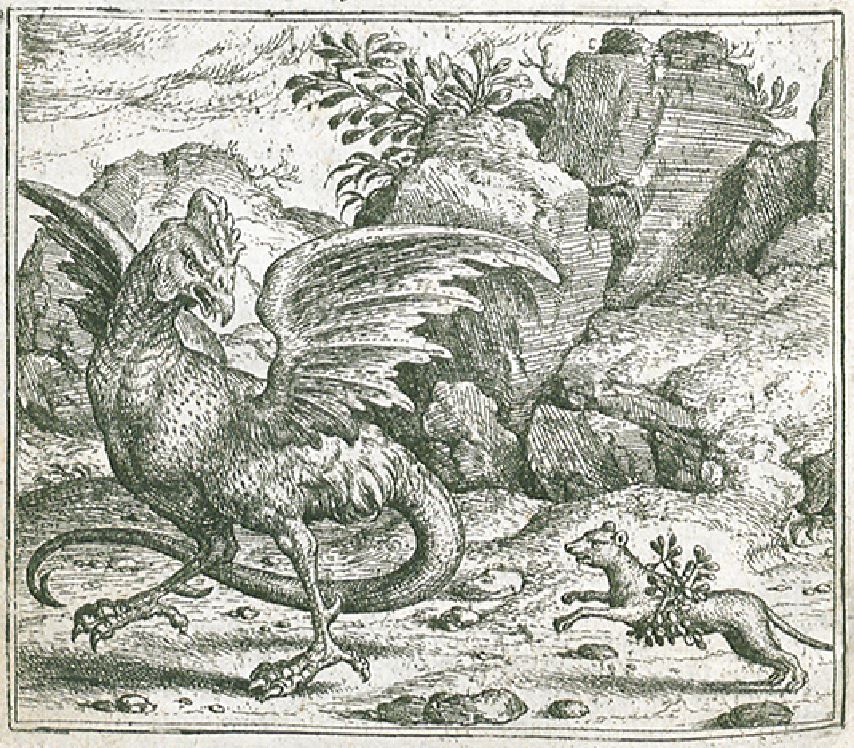
European Dragon; A dragon in a landscape, which, according to the Italian inscription, lived in the swamps outside Rome on December 1, 1691. On the left a bridge over a river.

When he awoke, the dragon had vanished, leaving behind a scorched earth, a thick pool of blood — and something strange: a smooth, shimmering object soon named the Drachenstein (Dragon Stone). Locals attributed healing properties to this strange relic, and for many years it was kept in a Lucerne church as a miraculous artifact. The surgeon Martin Schriber acquired the object from a descendant of Stämpfli and in 1523 had its miraculous powers confirmed in a document by the mayor and council of the city of Lucerne.

Dragon Mountain: An illustration depicting a dragon soaring through the sky, embodying the mythical tales surrounding Mount Pilatus. Discovery of the Lucerne Dragon Stone by the farmer Stämpfli. One of four illustrations from: Description of the famous Lucerne or 4th Waldstaetten Lake by Johann Leopold Cysat. Chapter 25: Of Dragons and Lindtwürms and of the Dragon Stone found in the city of Lucerne.

It was for a long time well documented over the years. after Schriber’s death in 1527, it came into the possession of Dorothea Moser , and in 1564 of the town clerk Johannes Kraft , then of the mayor Ludwig Schürf , then into the possession of the Cloos family, from whom it went to the Fleckenstein family and finally to the Meier von Schauenstein family.  In 1929, the Canton of Lucerne acquired the stone from the latter for 400 francs. Since then, it has been state property and was displayed in the Natural History Museum in Lucerne.

When the stone was loaned in 1954 to the Pharmacy History Museum in Basel, the documentation was lacking. After some deaths, it was forgotten about and considered lost in Lucerne for years until a curator in 1960 happened upon it in a museum in Basel. 

By 1978, it was back when the Natural History Museum in Lucerne reopened. For a long time, people assumed the stone was a meteorite. However, in 2006, they did some tests on it, showing it was burnt clay, although the origin and the cause of the stone and dragon legend remains a mystery. 

Dragon on Pilatus: Illustrations from the 1661 book: Description of the famous Lucerne or 4. Waldstaetten Lake by Johann Leopold Cysat. Chapter 25: Of dragons and lindworms and of the dragon stone found in the city of Lucerne.

The Dragon in the Reuss River

The story about the farmer and the healing dragon stone is not the only dragon sighting from the 1400s. In 1499, a dragon was reportedly washed ashore in the Reuss River running through Luzern, at the foot of the Mount Pilatus mountain. 

River Reuss: The iconic wooden Chapel Bridge at night, reflecting over Lake Lucerne, near the legendary Mount Pilatus.

Still to this day, reports about seeing something swim under the Reuss bridge, whether be a dragon sighting or something similar to the Loch Ness monster is still happening. 

A Portal Between Worlds

Other tales claim that a secret cave system beneath the peak known as the Flue served as a nesting ground for the dragons, and that travelers who dared venture too close would be cursed or spirited away. In one version from a 1619 chronicle, a man witnessed dragons gliding between the great rock formations of Pilatus and vanishing into the very walls of the mountain. These were no mindless beasts but powerful guardians, perhaps even shape-shifters, tied to the elements.

There are also stories about people falling off the snowy mountain in the winter, but awaking warm inside of the dragon’s cave, with the dragon nursing them back until spring. This story about nice dragons nursing someone through winter, This story happened the same year as the Dragon Stone appeared, and that the young man was fed on moon milk from the cave walls and flown back to Lucerne by the two dragons living there after the winter was over. 

The Ghost of Pontius Pilate

Because of these dark and unexplainable occurrences, the mountain was also considered cursed. In the Middle Ages, the city council of Lucerne forbade anyone from climbing Pilatus for fear of awakening the spirits and demons said to be imprisoned within. All farmers had to swear by God that they would never visit the lake either. In 1387, six priests were jailed for it. In 1564, two men made it to the lake without meeting a spirit, so they threw stones in the lake instead. This was said to cause a thunderstorm and they too were put in jail. 

Before being called Mt Piilatus, it was called Fractus Mons or Fräkmünt until 1460. The ghost of Pontius Pilate, from whom the mountain may derive its name, was also rumored to be buried in the now dried up Pilatus lake closeby, his soul haunting the region in eternal unrest.

Pontius Pilatus: He was the fifth governor of the Roman province of Judaea, serving under Emperor Tiberius from 26/27 to 36/37 AD and most known for being the official who presided over the trial of Jesus and ordered his crucifixion. He was ordered to Rome by the Syrian legate to face Emperor Tiberius, but Tiberius died before Pilate arrived, and his fate thereafter remains unknown. The only sure outcome of Pilate’s return to Rome is that he was not reinstated as governor of Judaea, either because the hearing went badly, or because Pilate did not wish to return. Some say he retired, some say he committed suicide. // Image: Mihály Munkácsy: Christ before Pilate.

In the text Mors Pilati (perhaps originally 6th century, but recorded c. 1300 AD), Pilate was said to have been forced to commit suicide and his body thrown in the Tiber. However, the body is surrounded by demons and storms, so that it is removed from the Tiber and instead cast into the Rhone, where the same thing happens. Finally, the corpse is taken to Lausanne in modern Switzerland and buried in an isolated lake (perhaps Lake Lucerne), where demonic visitations continue to occur. according to another, Pilate took refuge in a mountain (now called Mount Pilatus) in modern Switzerland, before eventually committing suicide in a lake on its summit.

A remorseful Pilate prepares to kill himself. Engraving by G. Mochetti after B. Pinelli.

It was said that if he was disturbed, storms and bad weather would break loose from the mountain. The ghostly figure that is said to have appeared with gray hair and dressed in purple annually on Good Friday by the lake. 

In 1585, the priest Johann Muller got together with the authorities to prove this was all superstition. He brought them out to the lake and threw rocks at the water, and no bad weather came. They were still not completely convinced and decided to drain the lake forever in 1594 when they abolished the no visitation policy, just to be sure. 

How true is it that Pilatus died here though? There are several mountains claiming the same actually. Some say that the name was actually from the word Pila, meaning pilgrim. 

Myth Meets Modernity

The many dragon stories are told in the canton of Luzern and many of them believe that dragon still roars in the sky. Athanasius Kircher relates: “When I was looking at the bright sky at night in 1649, I saw a shining dragon flying past from a hole in a very large rock cliff on Mount Pilatus. Its wings were moving rapidly, and as it flew it threw off sparks like glowing iron when it is being forged.

Though scientific understanding has long since overtaken belief in dragons, the legend of Mount Pilatus remains one of the most enduring pieces of Swiss folklore. Even today, Pilatus is affectionately referred to as Drachenberg — Dragon Mountain — and symbols of dragons can be found carved into signs, trail markers, and souvenir shops throughout the region.

Lake Lucerne: Mount Pilatus towers majestically over Lake Lucerne, embodying Swiss folklore with its snow-capped peaks and mysterious aura.

The Dragon Stone itself reportedly vanished during one of Lucerne’s many church restorations, though some say it was hidden away to protect its powers. Others believe the dragons are simply dormant, waiting beneath the rock for the right time to rise again.

Visitors hiking the slopes on misty days often report strange gusts of wind, echoing screeches, or fleeting shadows soaring across the mountain face. Whether these are tricks of the imagination or something far older and more powerful, one thing remains certain: Mount Pilatus will never stop watching — or hiding its secrets.

Newest Posts

References:

https://de.m.wikipedia.org/wiki/Luzerner_Drachenstein

Alpine Dragons

Pontius Pilate – Wikipedia

Die Mythen des Pilatus

Datei:Pilatus-Drachen 1661 – Luzerner Drachenstein.jpg – Wikipedia

Legends of Mount Pilatus

The Ghosts Haunting the Mattentreppe, Ringing the New Year In

Advertisements

The old stairs around the old town in Bern are most definitely haunted. Ascending from the Cathedral on Münsterplattform towards the Aare River, ghosts of the past are said to be the ones behind the creaks on the stairs. 

The Mattentreppe may appear as a simple stone stairway leading from the dignified heights of Bern’s center to the working-class roots of the Matte district, known in centuries past for its bathhouses, its brothels, and even a visit from Casanova himself. This steep flight of steps, carved into the hillside and shadowed by the cathedral’s towering silhouette, is more than a picturesque shortcut. It is one of the city’s most haunted places, a corridor of shame, sorrow, and long-held secrets.

Read More: Check out all ghost stories from Switzerland

As the bells of the Bern Minster chime twelve on New Year’s Eve, and fireworks erupt over the Aare, there are those who claim they see more than celebration unfolding in the ancient quarter. Ghosts rise with the fog. Footsteps echo with no source. 

The Nobleman and the Cripple haunting the Mattetreppe

The Mattentreppe is not only said to have been haunted by the ghosts appearing on New Years. It is also said to be haunted by the ghost of a nobleman from the olden times. He fell in love, or at least had an affair with a maid. When she became pregnant with his child, scandal loomed. The nobleman, unable to bear the disgrace and unwilling to face the consequences of his actions, hurled himself down the Mattentreppe in despair.

To this day, people have reported seeing the pale figure of a well-dressed man, pacing or rushing down the stairs, as if in torment. His cloak flutters even on windless nights.

Source

In earlier years, a terribly crippled man was often seen on the matted steps where they had a landing. Hunched and crippled, he was sitting with two heavy baskets balancing impossibly from each finger. Passersby, moved by his suffering, would offer help. But whenever someone reached for a basket, the man would vanish in a puff of smoke, leaving only a mocking “Hahahaha!” echoing off the stone walls.

New Years Haunting of the Stairs

The eeriest of all tales tied to the Mattentreppe comes with the tolling of the New Year’s bell. When the bells in the cathedral begin to ring at the turn of the year, a poor soul rises from her grave: a young woman in a long, flowing gown, her face shaded beneath a wide-brimmed hat tied neatly with ribbons. 

During the 20th century, the terrace by the Cathedral was changed from a graveyard to an open plaza by the Münsterplattform. We don’t know when she was buried as the location was built as a churchyard in 1334 and 1919 as this is when the ghost story was first published in print. 

Source

She ascends the stairs going from the cathedral down towards the river. She is aiming at one of the houses in the Schifflaube street between the cathedral and the Aare Riverbanks, where she lived and is now haunting. The Schifflaube/Schiffländte was a place for reloading the boats that were going up and down the river. It’s an old street with old buildings, although which number or if it’s still there is uncertain. 

On the attic floor, she stands thoughtfully in the same spot, always silent. And when the last toll of the bell has faded away, she departs again, as silently as she came. She carefully closes the doors behind her. Without looking back, she walks past the houses, up the path toward the gardens, only to suddenly vanish like a mist.

In the place she keeps returning to, she once murdered her child, secretly, without anyone ever finding out.

Newest Posts

References:

Märchenstiftung – Die Unglückliche Mutter (The Unhappy Mother)

Märchenstiftung – Auf der Mattentreppe (On the Mattentreppe)

Wikipedia – Mattequartier

Berner Zeitung – Die Gruseltreppen von Bern (The Haunted Stairs of Bern)

The Bailiff of Brunegg: A Ghostly Hunt Through Swiss Snow and Sin

Advertisements

After taking his regime of terror too far on a stormy winter night, the Bailiff of Brunegg committed a sin so huge on a hunt that would send him into a haunted afterlife. 

High in the canton of Aargau, where the shadow of Brunegg Castle falls across the land, a legend as cold as the alpine wind lingers through generations. The castle was built on a hill at the edge of the Jura mountains in the 13th century, probably as part of the Habsburg border defences.

When dark clouds gather and the holy season approaches, those living near the castle in Brunegg village at the foot of Chäschtebärg mountain swear they hear a distant thundering, like hooves pounding across frozen earth, echoing from above. This is no storm. It is the Bailiff of Brunegg, rising once again for his eternal, damned hunt.

Read more: Check out all ghost stories from Switzerland

This grim tale, recorded in the 19th century by folklorist Ernst L. Rochholz in Swiss Legends from Aargau, paints a chilling portrait of cruelty, hubris, and supernatural justice. And even today, locals will tell you: when winter bites and silence settles heavy over the land, listen for the call of “Hop-Hop!” may come riding down the slopes.

The Tyrant of Brunegg Castle

The story begins in Brunegg Castle, an imposing stronghold nestled in the rural Swiss countryside. The castle, though quiet now, once housed a bailiff, or Landvogt as it is in German. During the medieval period in Switzerland, a bailiff, known in German as a “Vogt,” played a significant administrative and judicial role. The bailiff was typically a nobleman appointed by a higher authority, such as a king, duke, or lord.

Read More: Check out all haunted castles around the world

He was a man of power, authority, and, according to legend, unrepentant cruelty. One fateful winter, as snow blanketed the land and bitter cold pierced even the stone walls of his keep, the bailiff resolved to go hunting.

Schloss Brunegg: The Brunegg Castle on the hill overlooking the village below. This is where the ghost hunt is said to start on stormy winter nights. // Source

With a black horse, a pack of snarling hounds, and a retinue of servants, he charged into the deepening snowdrifts. The cold was so fierce, the breath of man and beast froze in the air. As the storm worsened, their feet froze, their limbs stiffening with frostbite.

But the bailiff, obsessed with his hunt and blinded by ego, would not turn back.

Murder for Warmth

As his followers collapsed around him, the bailiff stumbled upon a lone woodcutter working in the forest, perhaps hoping to survive the winter with what little firewood he could gather. Rather than ask for aid or offer mercy, the bailiff murdered the man outright, slicing him open and warming his frozen feet in the steaming belly of the corpse.

This gruesome act was the last straw.

As if in divine retribution, the sky darkened and a furious snowstorm erupted over Brunegg. Blinding winds swept through the forest and fields. The bailiff, his dogs, and his remaining attendants were never seen again. All were buried in snow, swallowed whole by the wrath of the mountain. The castle, high on its hill, stood silent. 

Each winter, the people at the foot of Brunegg Castle claim they hear phantom hooves galloping above. The hounds bark. The bailiff’s voice rings out with a sinister “Hop-Hop!” — urging his invisible dogs onward. But always, at the spot where the woodcutter died, the sound ceases.

It is said that the bailiff’s ghost is cursed to hunt eternally, never able to pass that spot, doomed to repeat the sins of his final ride through blizzard and blood.

A Tyrant Reborn: Gessler or Ghost?

Interestingly, well-read Swiss citizens have long drawn parallels between the Bailiff of Brunegg and another infamous tyrant of legend, Albrecht Gessler, the ruthless official from the tale of William Tell, the hero of Swiss independence. Albrecht Gessler, also known as Hermann, was a legendary 14th-century Habsburg bailiff at Altdorf, whose brutal rule led to the William Tell rebellion and the eventual independence of the Old Swiss Confederacy.

Gessler is the man who famously forced Tell to shoot an apple off his own son’s head — a story of oppression, defiance, and eventual retribution.

No sources that predate the earliest references to the Tell legend of the late 15th century refer to a bailiff Gessler in central Switzerland, and it is presumed that no such person existed. Some believe the Bailiff of Brunegg is Gessler, or at least a folkloric echo is another example of how abuse of power and cruelty earn not only rebellion but eternal punishment in Swiss legend. 

Newest Posts

References:

Brunegg Castle – Wikipedia

The Bailiff of Brunnegg: A Swiss Legend

Albrecht Gessler – Wikipedia