Tag Archives: ruins

The Ghost of Marshalsea Barracks: The Prison That Never Slept

Advertisements

After falling to his death trying to escape the debtor’s prison, The Marshalsea Barracks in Dublin, it is said the ghost of Pat Doyle is haunting the remaining walls of the ruins.

Hidden away in Dublin’s Liberties once stood a place where desperation and ruin hung thick in the air. The Marshalsea Barracks, or the Four Courts Marshalsea, was no ordinary prison. It was a debtor’s gaol, a place where men and women were locked away not for crimes of violence or betrayal, but for the simple misfortune of owing more than they could pay. And before it was knocked down, it was also known as a haunted place.

Read More: Check out all ghost stories from Ireland

Within its cold, narrow walls, families lived out their shame and poverty together, caught between freedom and despair. Though the building has long since vanished, the memory of its misery lingers in the air, and some say the dead have never truly left.

The Prison of Desperate Souls

The Dublin Marshalsea was established as a refuge of sorts for debtors, though few would call it merciful. The idea was that those imprisoned could bring their families with them, living inside the walls to avoid arrest and harassment from creditors. 

The one said to haunt the area was a man named Pat Doyle. Not much is known about his life, but it is said he was one of many who had fallen victim to the relentless grip of debt. Confined within the Marshalsea, he dreamed of escape, of reclaiming the freedom that poverty had stolen from him. One stormy evening, his chance came. Clambering onto the roof under cover of darkness, Doyle tried to make his way across the slippery tiles to freedom. But fate was unkind. He lost his footing, plunging into the courtyard below. His body was found the next morning, lifeless and broken on the cobblestones.

The Ghost on the Wall

From that night onward, whispers began to spread among the inmates. They spoke of footsteps echoing above when no one was there, of faint tapping on the windowpanes as though someone were testing their strength. They said it was Pat Doyle, forever reliving his final, desperate moments.

Years after Doyle’s death, the sightings continued. People passing by the prison after sundown reported glimpsing a shadowy figure pacing along the wall.

Even when the Marshalsea Barracks were finally closed in 1874, the ghost refused to leave. The building remained for another century, its walls crumbling but its legend alive. When the structure was finally demolished in the 1970s, some believed that Pat Doyle’s spirit was set free. Others are not so sure.

Image: Elinor Wiltshire/1969

The Restless Debt of the Dead

Today, little remains of the Marshalsea Barracks except the stories that survive in Dublin’s oral folklore. The building was largely demolished during various Dublin Inner Tangent road widening preparations in 1975, and what remains is a large walled enclosure.

But those who pass through the Liberties at night say that the place where it once stood still feels uneasy. Streetlights flicker without cause, and on quiet evenings a cold breeze carries the faint echo of footsteps high above the ground.

Newest Posts

References:

Dublin Ghosts, Folklore and Forteana

About Marshalsea Barracks

Four Courts Marshalsea – Wikipedia

The Haunted Legends of Pennard Castle

Advertisements

Said to have been conjured up by a sorcerer or even the fairy folk themselves, Pennard Castles history is both mysterious and haunted by the sound of the howling witch left in the sandy ruins of the abandoned castle in Wales.

Rising above the windswept coastline of the Gower Peninsula, the crumbling remains of Pennard Castle sit watchfully on their cliff, surrounded by shifting sands and centuries of uncanny legends where only ghosts remain. 

What stands today is little more than weathered stone and silent arches, yet the castle has inspired some of the most unsettling stories in Welsh folklore. Its desolation is not simply the work of time. Locals whisper that Pennard’s downfall began with curses, fairy vengeance, and the dark attentions of a supernatural hag.

Source

A Castle Built in a Night

There is little recorded about the castle and throughout centuries more myths and legends than facts have etched themselves into the mind of the locals. 

Folklore claims Pennard Castle was slowly built with mortar and sweat like its neighbors. Instead, it appeared in a single moonlit night. The fair folk, who were said to haunt the nearby woods and hollows, are sometimes credited with its construction. Sometimes it is said it was a sorcerer who conjured the castle one night to save himself from death by the Normans.

Read More: Check out all ghost stories from haunted castles around the world

The ruins of Pennard Castle overlay an earlier Norman earth timber ringwork fortification. The cliffs on the north and west side offered strategic defences, and a stone castle was built in the 1300s. The castle changed hands from the Broase clan to the Mowbray, Despenser, and Beauchamp families.

Exceptionally stormy weather in the 13th and 14th centuries blew large amounts of sand into and around it. The sandy storms damaged the castle structure so much the ones living in it abandoned it. By the 1650s, the historical records talk about the desolate ruins of the castle buried in sand. 

The Curse of the Fair Folk over Pennard Castle

So who were these fair folk said to be the ones building the castle? Along the Parkmill route in the area, you will also find an abundance of Buckthorn, the favourite of the Welsh Faeries, or Lunantisidhe from Irish folklore. Some also say this is a sign of the Welsh version of them and their presence around the castle. 

One of Pennard’s most enduring legends tells of a wedding feast held by the lord of the castle. As he and his guests celebrated, music drifted into the hall from the courtyard. There, the fair folk, or Verry folk, “verry-folks”, the fairies of Gower, were dancing beneath the moon. 

The Verry-Folks: The Gower Peninsula is a region rich in folklore and a particular one because of the present population being by ancestry of English and Flemish as well as Cornish and Welsh. One of its more endearing legends is that of the Gower Verry Volk – fairy folk. Local mythology describes these little people as capricious, lively, and fond of music, dancing and general merriment. // Source

Instead of welcoming them or offering hospitality, the lord reacted with anger and drove them out. Insulted and furious, the fairies cursed the fortress and its master. That same night, winds howled across the coast and a tide of sand rose like a living force. By dawn, the castle was half buried. Within a few short years, so much sand had piled against the walls that Pennard became uninhabitable. Some tales claim that while Pennard was choked by sand, the beaches of Ireland were stripped bare, the grains carried across the sea as part of the curse.

The Hag of Pennard Castle

The legends of Pennard do not end with the fair folk. The castle is also tied to a terrifying spirit known as a Gwrach y Rhibyn, a witch or hag of death whose screeches and cries echo across the cliffs. Like the banshee of Irish folklore, she appears before a death in certain old families, often in the form of a crow-like creature hunched in the shadows. 

Some say that it was the sorcerer who conjured up the castle who invoked her to protect him from the Normans and that she would not let any mortal spend the night in the castle. 

If that were not frightening enough, she is said to physically attack anyone foolish enough to sleep among the ruins. Some versions of the tale say she leaps upon any living soul who beds down inside the castle walls. Others claim she only assaults those from the ancient local lineages she has shadowed for generations. The outcome is seldom good. Those who dared to sleep in Pennard Castle were said to awaken mad, die before morning, or in stranger cases rise as poets, cursed with visions they could never fully express.

Source

Legend has it that one Carmarthen man, daring to spend the night in the ruined castle, was attacked by the Gwrach. The ghostly figure swooped down upon him, leaving him bruised and bloodied. Though he survived, he was cursed to live the rest of his life as a madman.

The Weeping Woman in the Ruins

Visitors sometimes report the sound of a woman crying among the broken walls when the wind dies and the dunes lie still. Some believe she is a tragic bride, forever mourning a lost love. A maiden reputedly threw herself off nearby Penrice Hill after avenging the death of her lover.

Others insist the weeping maiden is none other than the gwrach herself, changing form as suits her purpose. Whether a spirit of sorrow or a harbinger of death, her presence lingers in the night air, carried over the sands like a lament for the castle and the lives it claimed.

A Place Where Time Does Not Rest

Pennard Castle has long since fallen to ruin, its halls open to the sky and its gates claimed by sand. the rare county flower of Glamorgan extensively on the castle site.

Source

Yet the stories remain. The curses of the fair folk, the deathly hag, the unseen bride, and the chilling fate of those who sleep within its walls all cling to the site as stubbornly as the dunes that smothered it.

Newest Posts

References:

Myths of Pennard Castle, Gower – History Points

Pennard Castle

Pennard Castle | Visitor Information

The Haunting of Nes Church Ruins in Norway

Advertisements

The mysterious Nes Church Ruins in Norway has attracted ghost hunters and legends for centuries by now. But what is really lurking among the old stones after dark?

Where the rivers Vorma and Glomma meet in Nes, west in Norway, there are the ruins of a church that are said to be haunted. Some claim that these ruins could possibly be the most haunted place in the country. 

Read More: Check out all ghost stories from Norway

By daylight, the ancient church ruins of Nes are a peaceful historical site. Stone walls softened by moss, the wind threading through broken archways, and birds nested in the quiet masonry. Yet when night settles, the place transforms. Ghost hunters and thrill seekers come armed with flashlights and recording devices, hoping to capture the strange energy that locals insist has lingered here for centuries.

Source: Tommy Gildseth/Wikimedia

A Thousand Years of History

These crumbling walls date back to the eleventh century, making them among the oldest standing church structures in the region. Even before it was a christian church, it was most likely a pagan place of worship. 

Throughout the years it was expanded and torn down, and in 1567 it was burned down in the Nordic Seven Years War. In 1854 the church burned down after it was struck by lightning and wasn’t rebuilt because they feared mudslides. The ruins are now a popular place for weddings, worship and concerts with grass as the floor and the sky as the roof and the graves surrounding the gothic ruins makes it a sort of park. 

Stories circulate of electronics malfunctioning the moment investigators step onto the grounds. Phones that suddenly power down, camera screens flickering into blackness, lights strobing without any cause. Visitors report the sense that someone, or perhaps several someones, does not appreciate the intrusion. The ruins, heavy with memory, seem to breathe and watch.

The Tragic Priest Said to Haunt the Church Ruins in Nes

Weathered but still imposing, they mark where generations lived, worshipped, and were buried. And beside them stands a solitary grave: the resting place of Priest Jacob Christian Finckenhagen who was buried here in 1837.

Finckenhagen served here in the early nineteenth century from 1800 to his death, remembered in local folklore as a deeply troubled man. Some say he took his own life inside the church, unable to bear the weight of his despair. Others insist that even death did not bring him peace.

Many visitors claim to have seen a figure in the black priest’s robes walking the path toward his gravestone. He is silent, moving with a slow and deliberate step, as if still patrolling the grounds of his parish. Those who have witnessed him say he follows at a distance, never closing in, never turning away.

Children Behind the Walls

The darkest story tied to Nes is whispered with lowered voices. According to local legend, Finckenhagen’s children were sealed within the church itself. 

He married his wife, Charlotta Amalia Hassing and had three children together as well as Charlotta’s daughter from her first marriage. No records confirm it, but many swear the land remembers that they were in fact entombed inside of the ruins. People walking the perimeter after sunset report faint cries echoing through the stonework. High, distant, and pleading. Some turn back immediately. Others keep walking until the darkness grows too heavy.

The Truth Behind the Haunted Rumors

But how much is true about the ghostly priest said to linger? Records show that Priest Jacob Christian Finckenhagen actually died of a sudden stroke, and that he was 81 years old when it happened. His iron cross is still there, and at his funeral, one of Norway’s most famous writers, Henrik Wergeland had written a poem in his honor. 

So what of his children? There are absolutely no records about them being interred in the walls of the ruins. His son Søren even did as his father had done and grew up to become a priest. 

So when did the stories start to form? Although people have been talking about strange things happening by the ruins for ages, the story of Finckenhagen was told from the early 1900 at least. And what was told about the strange ruins before this is perhaps lost to history.

Haunted By the Past

Whether the priest is a restless soul, a lingering echo, or a remnant of old fears and superstition, the legends are impossible to ignore. The Nes ruins are more than a historical site. They are a place where something remains, something that refuses to sleep.

What is true though, is that it has definitely drawn people to it though. It got so bad that they had to put on cameras as people vandalized the ruins by driving on the grass, digging illegally and spray painting on the ancient walls. Perhaps the biggest haunting of the church ruins today is from the living.

Newest Posts

References:

Nes kirkeruin

Rev Jacob Christian Finckenhagen (1756-1837) – Find a Grave Memorial 

Kirkeruinene omtalt i Forbes Magazine: – Er jo litt skummelt 

NYHETER | «Hjemsøkt» sommerperle

Kirkeruinene får kameraovervåkning: – Vi ser dessverre ingen annen løsning 

The White Lady of Rouelbeau Castle Ruins Appearing for Christmas

Advertisements

In the ruins of the former castle of Rouelbeau in Switzerland, the ghost of a Lady in White is said to appear during Christmas times. As one of the Weiße Frau from Germanic folklore, she is believed to have been the mistress of the castle until she was cast away for not bearing a son. 

In the marshlands and forests of western Switzerland, the crumbling ruins of Rouelbeau Castle stand as a lonely reminder of medieval ambition and restless spirits. The name Rouelbeau, which is commonly used today, may consist partly of the French verb roiller , which means “to rain heavily” and is translated as “to strike” in the old local dialect. And partly of bot, which means “frog”. One explanation for the meaning of Rouelbeau built on the marchy plain near the Seymaz river, is that the lords of the castle could not sleep at night because of the loud croaking of frogs and therefore had their servants strike the water.

Read More: Check out all ghost stories from Switzerland

While few stones of the fortress remain, it is not the broken walls that draw uneasy glances from passersby, but the enduring legend of La Dame Blanche, or in German called Weiße Frau, the White Lady — a sorrowful ghost whose presence is still feared along the winding path known as the Chemin de la Dame Blanche and around the ruins of the castle.

Rouelbeau Castle Ruins: Oil painting of the ruins of Rouelbeau Castle in Meinier in what is now the Swiss Canton of Geneva, by an unknown artist. An inscription on the backside uses the alternative spelling “Roilbot” and feature a number which may be read as the year “1808” From a private collection.

The Tragic Tale of Rouelbeau’s White Lady

Stories about the spirits of the Lady in White have been told in Europe since pre-christian times, and has been a part of folklore for ages. There are now hundreds of so-called Ladies in White, haunting decaying European castles, ancient forests and deep waters. 

The origins of this particular legend of the Lady in White of Château de Rouelbeau, trace back to 1318, when Knight Humbert de Choulex ordered the construction of Rouelbeau Castle in what is now the municipality of Meinier, in the canton of Geneva. He was a vassal of the Faucigny-Baron. While intended as a defensive stronghold against rival factions and the restless borders of medieval Switzerland, the castle’s history quickly turned dark.

According to oral tradition, Humbert’s first wife was cast aside, cruelly divorced after failing to provide him a male heir. Her name is now lost and what became of the discarded woman remains a mystery. Some say she died of grief, others that she was locked away, or met a violent, unrecorded end. It is her anguished spirit, so the legend tells, that took the form of La Dame Blanche, forever bound to the castle grounds.

For generations, travelers and villagers alike have reported sightings of a pale woman dressed in flowing white, a shimmering diadem crowning her head, gliding silently through the misty fields surrounding the castle ruins. Most eerily, her appearances are said to coincide with tragic or unexplained deaths in the area.

The Haunted Castle Ruins: The south-western tower and the southern wall of the Rouelbeau Castle. // Source

A Haunting Presence in the Christmas Night

Local accounts vary as to when the White Lady is most active. Some say she emerges under the cover of a new moon’s darkness, while others claim she walks under the ethereal glow of a full moon. But one certainty endures: Christmas Eve remains the most sacred and sinister night in the legend of La Dame Blanche.

It is on this night, according to stories passed down since the 19th century, that the entire castle is said to rise again from its ruins, bathed in ghostly light, with spectral inhabitants returning to reenact scenes from long-forgotten feasts and torments. The Lady herself appears resplendent, her otherworldly beauty made all the more chilling by her silent, sorrowful gaze.

There is even a curious twist to the tale. In one solitary account from the early 1800s, a destitute orphan, lost and starving in the winter woods, encountered La Dame Blanche on Christmas Eve. Instead of vanishing in terror, the child accepted the ghost’s beckoning hand and was led to a hidden cache of gold and silver, a reward for his pure heart and desperate plight. The treasure, it is said, lifted the boy from poverty — but he was forbidden from ever revealing the source, save to the dying.

The following year punished one of his greedy relatives by locking him in the castle vault to his death.

The Chemin de la Dame Blanche: Path of Shadows

Even today, the path running alongside the ruins bears the ominous name Chemin de la Dame Blanche, and locals approach it with quiet caution, especially during the cold months. Strange lights have reportedly flickered in the trees, and unexplained cold drafts creep through the marsh even on still summer nights.

Christmas Haunting: Oil painting by Alfred Dumont from a private collection: «Ice skating at Pallanterie in front of the ruins of Rouelbeau Castle» from around 1870.

Hikers and amateur ghost hunters claim to have heard faint weeping near the site, or seen a pale figure moving just beyond reach in the gloom. Some modern investigators suggest the damp, misty conditions of the marshland might explain these apparitions — but those familiar with Rouelbeau’s legend know better than to tempt the unseen.

Source

The Legend of the Black Cat

A second legend surrounding the castle ruins is about a black cat, le chat noir, with glowing eyes. It is said to roam the grounds, especially on foggy days at nightfall, suddenly attacking its victims with razor-sharp claws, tearing them to pieces. It is said to be the devil himself, who can only be repelled with a firm blow from a club. If the cat successfully defends itself, it should not be given a coup de grâce, as otherwise it would regain all its strength and abduct its victim into the underworld .

The story is partly linked to an incident in 1567: At that time, the brothers Claude and Jenon Dexert, who lived on the edge of the swamp, were accused of witchcraft and executed after a confession extracted under torture. According to tradition, the cat is their avenging angel.

Whether a cautionary fable or a true haunting, those who tread the path beside Rouelbeau’s ruins on a winter’s night would do well to keep their distance should a lady in white appear from the mist — for her intentions, like the history of the castle itself, remain forever shadowed in sorrow and mystery.

Newest Posts

References:

Weiße Frau – Wikipedia

Ruine Rouelbeau – Wikipedia

Ghosts of Uetliberg Hill and The Three Beeches by the Manegg Castle Ruins

Advertisements

A woman scorned by the Manesse family from the ruins of the old Manegg Castle on the hills of Uetliberg in Zurich, she is said to haunt the place she was seduced and ended her life, appearing to passersby on stormy nights. 

From a Swizz perspective, the Uetliberg Hill is perhaps not much of a peak, but it  is Zurich’s very own “mountain”. From the top, visitors can enjoy beautiful views of the city and lake – and perhaps even a glimpse of the Alps. The Uetliberg is particularly popular in November, as its summit is often above the blanket of fog that can cover the city at this time of year. In the winter, the hiking trails to the summit are converted into sledding runs.

Read More: Check out all ghost stories from Switzerland

It is also the location of a ghost story that has haunted these hills for centuries. The story of the ghost of a peasant girl who hanged herself on the Uetliberg hill after being betrayed by the cruel and lustful Duke of Manegg

Manegg Castle and The Manesse Family

Today, the Manegg Castle is just ruins, and even the ruins are starting to disappear. Not much is known about who built the castle, but the first documentation we have of it is from 1303. The Manegg castle square used to be a much visited place with a great view over the town, lake and mountain. 

Manegg Castle: The ancestral seat of the now extinct Manesse Family was Manegg Castle in the middle of the Albisberg, on the foothills towards Lake Zurich: It was burned by some mischievous noblemen. According to legend, this happened on Ash Wednesday, when a carnival party staged a playful siege. After the fire, large remnants of the walls survived until the 17th century. Today, only a few foundations are visible.

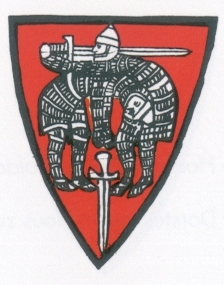
It was the ancestral seat for the Manesse knightley dynasty. The Manesse family is known primarily through the Manesse Manuscript, a collection of Middle High German songs. Their coat of arms depicts two fighting white knights on a red background, one of whom is victorious. It is a telling coat of arms ; the name comes from Manesser , meaning “man-killer.”

The Manesse family coat of arms: The Manesse Song Manuscript contains poetic works in Middle High German . Its core was produced around 1300 in Zurich , probably in connection with the collecting activities of the Zurich patrician Manesse family . Several additions were made up to around 1340. The text was written by 10–12 different writers, perhaps from the circle of the Grossmünster in Zurich.

The Manesse family were originally merchants and rose to knighthood through their wealth and reached their peak of power between 1250 and 1310. As vassals of the Fraumünster Abbey , the Einsiedeln Monastery , and the German Empire, they were an important family in the city of Zurich before becoming “extinct” around 1415..

In 1393, the castle was sold by Ital Maness to the “Jew Visli or Vifli” at a public auction, but already before this, it seems the castle didn’t have anyone living there anymore. 

Have a look at the panorama of the old castle ruins

The Three Beeches on Uetliberg

The girl was a beautiful and young girl from a nearby farmhouse, this more reclaimed by nature than the castle ruins. She often encountered the castle lord when he was out hunting, or walking into town. They started talking and he would soon seduce her by three beech trees on the hills. He told her he would marry her and she finally gave in. 

After this, he cast her away and treated her coldly with her losing her honor and innocence. To make him change his mind, she sat outside the castle gate, hoping he would take notice and pity her. Instead, he just laughed and sent the dogs after her, who ran out into the forest on the hill, and back to the three beeches. 

There she cursed his name before taking her own life. It is said she was buried close to three beeches on the hill as well as she wouldn’t be able to be buried as a consecrated ground. The trees were supposedly standing up to a few decades ago. 

The Manesse Family: The Manesse family was continuously represented in the Zurich City Council from the 13th to the 15th century. They twice provided the mayor and actively promoted the city’s cultural life. They belonged to the city’s patriciate . Rüdiger von Manesse, son of Ulrich M. Manegg and Adelheid von Breitenlandenberg. Married to Clarita von Hertenberg. Engraving by Johannes Meyer from 1696

The Ghost of Uetliberg Haunting Stormy Nights

Tales started to be told that someone was haunting the area around the three beeches were she was buried. When storms were coming in over the city and thunder roared a fire sprung up from under the trees, even when it was raining. 

As the lightning flashed, illuminating the night, travellers passing by would see a white figure, her long hair loose, beating her chest and wringing her hands, always looking at the old Manegg Castle where the lord who betrayed her came from. 

Now his castle has burned down, crumbled and his name mostly forgotten. 

Newest Posts

References:

Die drei Buchen am Uetliberg | Märchenstiftung 

Manesse – Wikipedia

The Mayan Ruins of Xunantunich in Belize and the Stone Maiden Haunting it

Advertisements

Named after the terrifying sighting of the ghost of a woman in the ruins, the Mayan ruins of the lost city of Xunantunich in Belize is said to still be haunted by her presence. 

Bordering Guatemala all the way west in Belize lies an ancient Mayan ruin shrouded in mystery and ghostly legends. Xunantunich, which means “Stone Woman” in the Mayan language, is a hauntingly beautiful site that has fascinated historians and archaeologists for decades. 

But it’s not just the impressive architecture and intricate carvings that draw visitors to this ancient city. Many believe that Xunantunich is haunted by the spirits of the Mayan people who once called it home. From ghostly apparitions to strange sounds and eerie sightings, there have been countless reports of paranormal activity at this ancient site. 

Xunantunich and El Castillo: The majestic El Castillo pyramid at Xunantunich, an ancient Mayan ruin in Belize, surrounded by lush greenery.

The History and significance of Xunantunich

Xunantunich was a major Mayan city that flourished from the 7th to the 10th century AD. At its peak nearly 200 000 people lived in the Belize Valley and it served as a Maya civic ceremonial center. The site is located on a ridge overlooking the Mopan River, and it was an important center of trade and commerce for the Mayan people.

The city was home to a number of impressive structures, including a large pyramid known as El Castillo. The pyramid is over 130 feet tall and is decorated with intricate carvings and sculptures. Other notable structures at the site include the Ball Court, which was used for a game played throughout Mesoamerica, and the Palace, which was likely the residence of the ruling elite.

Xunantunich was abandoned by the Mayan people in the 10th century, likely due to a combination of factors including drought, overpopulation, and warfare. Some say that a sudden earthquake made the people leave forever in a hurry around 700 AD. The site was rediscovered by Europeans in the 19th century, and it has since been extensively studied by archaeologists.

The Legend of the Ghostly Maiden

But what about the ghost said to haunt the place? Actually, Xunantunich is a modern name, and its original name is lost to history. Xunantunich’s name means “Maiden of the Rock” in the Maya languages Mopan and Yucatec, combining “Xunaan” (noble lady) and “Tuunich” (stone for sculpture). The name today, refers to the ghost legend that has plagued the archeological site. 

According to the legend, a beautiful young woman dressed in white appears to visitors at the site. Her first sighting was in 1892 or 93 when the Europeans ‘rediscovered’ it when the British colonial administration sent Thomas Gann to investigate the area. He was a terrible archaeologist though, using dynamite to dig and destroy many artifacts and buildings. 

Rediscovering the Mayan City: Thomas Gann and laborers atop a burial-mound at Xuanantunich ruins in Belize. Gann removed a stone altar of the god of death at the site which is now hidden from view in a British Museum storeroom. This is when the sighting of the Stone Maiden started. Was it because the holiness of her city was disturbed she came back as a spirit? (credit: Thomas Gann)

She was seen ascending the stone stairs of El Castillo before she disappeared into a stone wall. She is said to be dressed in all white and when she turned back for a moment, the people who saw her claimed she had fire-red and glowing eyes.

When they came back to their senses and the shock left them, they tried to retrace her steps, but she was nowhere to be found. She is said to still make appearances now and again. She was seen so frequently and made such a big impression that they named the city after her. 

Human Sacrifice: Ascending down the stairs as it was some sort of ritual, it has been speculated that the Stone Maiden was picked as a human sacrifice to the Mayan Gods: Source: Thomas Shahan/Wikimedia

But who was this Stone Lady? She is said to be the spirit of a Mayan princess who was sacrificed on the steps of the temple by her father, a powerful ruler, in order to appease the gods. Now she is reliving her final moment again and again, walking to her own death. A similar story has been told about Cahal Pech.

Many visitors have reported seeing the ghostly maiden, and some have even claimed to have had conversations with her. She is said to be a peaceful and benevolent spirit, but her presence can be unsettling and eerie nonetheless. Some visitors have even reported feeling a cold breeze or a hand on their shoulder when they encounter her.

The Mayan beliefs about death and the afterlife

To understand the ghostly legends and paranormal activity associated with Xunantunich, it is important to understand the Mayan beliefs about death and the afterlife. The Mayans believed that death was not the end of life, but rather a transition to a new state of being. They believed that the afterlife was a continuation of the earthly life, and that the spirits of the dead could interact with the living.

The Crystal Maiden: Actun Tunichil Muknal (the Cave of the Crystal Sepulchre), also known locally as ATM, is a cave in Belize, near San Ignacio, Cayo District. There are several areas with skeletal remains in the main chamber. The best known is “The Crystal Maiden”, the skeleton of what is believed to be a 17-year-old boy, possibly a sacrifice victim, whose bones have been calcified to a sparkling, crystallized appearance. The ceramics at the site are significant partly because they are marked with “kill holes” (holes created to release spirits lurking within), which indicate that they were used for ceremonial purposes. Was this the fate to the Stone Maiden?

The Mayans also believed in a complex system of gods and goddesses who controlled various aspects of the natural world. The gods were often associated with specific animals, plants, and celestial bodies, and they were believed to play a role in determining the fate of the dead.

These beliefs about death and the afterlife likely contributed to the development of ghost stories and legends at sites like Xunantunich. The spirits of the dead were believed to have the power to interact with the living, and many Mayans likely believed that the spirits of their ancestors were watching over them.

The mystery and allure of Xunantunich’s haunted history

Xunantunich is a truly unique and fascinating site that offers a glimpse into the history and culture of the Mayan people. While the ghostly legends and paranormal activity associated with the site may be unproven, they add to the intrigue and mystery of Xunantunich and make it a must-visit destination for history buffs, supernatural enthusiasts, and adventure-seekers alike.

The Mayan Mystery: Xunantunich and Cahal Pech 2-20. In Xunantunich are the remnants of the courts for a Maya ball game where the losers were sacrificed to the gods. Allegedly at least. //Source: Flickr

Whether you’re exploring the impressive ruins, learning about Mayan history and culture, or hoping to experience something paranormal, Xunantunich is a destination that is sure to leave a lasting impression. So if you’re planning a trip to Belize, be sure to add Xunantunich to your itinerary and uncover the ghostly secrets of this ancient Mayan ruin.

Newest Posts

References:

Xunantunich – Wikipedia

Fascinating Facts About the Lost City of Xunantunich

Xunantunich

St. Katherine’s Abbey and Hauntings of the Black Hag

Advertisements

In the ruins of an old Abbey in Ireland, the locals claim they can still hear the dying screams of a woman that was buried alive, as well as feel the dark forces from the Black Hag that were practicing dark magic in the St. Katherine’s Abbey.

In the picturesque landscapes of County Limerick, Ireland, amidst the serene countryside, lies a silent witness to centuries of history, both sacred and macabre — St. Katherine’s Abbey as it is officially consecrated as. 

The ruins of the once Augustinian abbey are known under many names though like Monasternagalliaghduff or Mainistir na gCailleach Dubh. It is also called the Abbey of St Catherine de O’Conyl or simply Old Abbey.

Read More: Check out all of the ghost stories from Ireland

There are several legends from this place and it is said to be haunted to this day as the dark magic that once were cast still lingers.

The Timeless Convent of Monasternagalliaghduff

Dating back to the 13th century, the Abbey of the Black Hag is a weathered and abandoned convent that has witnessed the passage of time, preserving within its ancient stones the stories of the faithful, the echoes of prayer, and the secrets of its enigmatic past.

Read More: Check out more of haunted abbey’s like the Wessobrunn Abbey’s Ghosts, The History and Legends of the Haunted Abbaye De Mortemer, Dracula and Ghost Nuns in Whitby Abbey

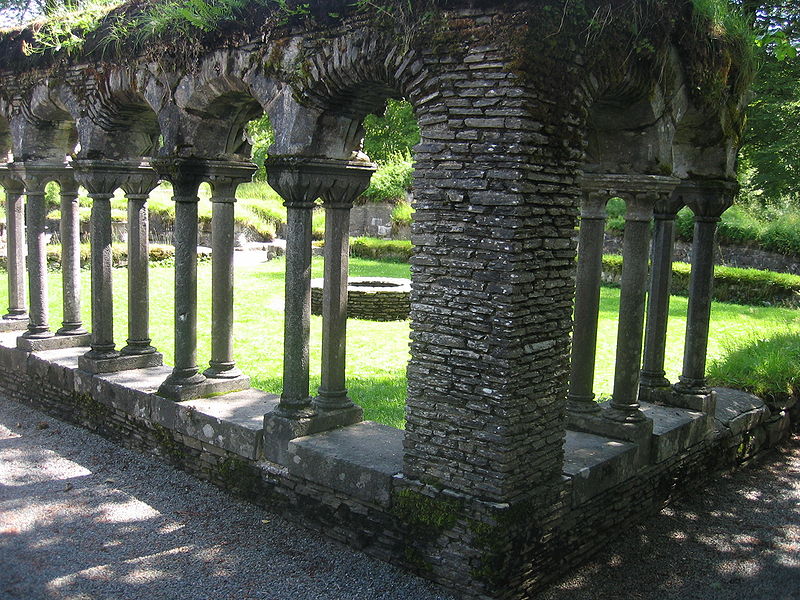
St. Katherine’s Abbey is one of the earliest recorded nunneries in Ireland and was probably in operation until the 1500s until the Dissolution of the Monasteries during the Reformation in Ireland, or perhaps before this.

Monasternagalliaghduff: Only the few ruins are left fro the old abbey in the open field, now covered in grass. Many legends are tied to this place, and some claim St. Katherine’s Abbey is still haunted by them. //Source: JohnArmagh/wikimedia

The Countess Buried Alive in St. Katherine’s Abbey

But it is not the passage of time or the hallowed echoes of devotion that have etched St. Katherine’s Abbey into the annals of Irish folklore. Instead, it is the eerie legends and ghosts said to haunt the abbey, casting an ominous shadow over the abbey’s ruins no matter how much the sun is shining.

One of the legends comes from Countess Fitzgerald. She was the wife of The Earl of Desmond that had a bloody feud against the Butler family that was the Earls of Ormond during the 15th century. 

The Fitzgeral were attacked and the Earl was going to get his wife to safety. She was shot in the thigh by an arrow and throughout the night, she lost so much blood and the Earl thought she had died when they reached the abbey. 

She was buried underneath the altar of the abbey before he quickly rode on. But the nuns started to hear terrible screams coming from the grave during the night. In the end they chose to open the grave, but it was too late and they found the Countess dead, but with broken fingers and torn out nails. She had been buried alive and she had tried to claw her way out. 

Read Also: The Buried Alive Ghosts of Château de Trécesson in the Enchanted Forest, The Mausoleum of Rufina Cambacérès at Recoleta Cemetery — Buried Alive or The Mistletoe Bough – The Bride in the Chest

It is believed that she never found peace through and that she is still waiting for her husband to save her, still trying to claw her way out from her grave. 

The Tale of the Black Hag St. Katherine’s Abbey

As local lore has it, the last head nun or abbess of St. Katherine’s Abbey possessed knowledge of the dark arts and wielded them with terrifying skill. The Black Hag or the Black Nun as she was known as was actually a witch and Satanist according to the legends. 

Her mastery of these forbidden arts cast a long shadow of fear over the locals. Whispers of her malevolent practices spread like wildfire, shrouding the abbey in a sinister reputation.

Read More: Check out all of the stories about Witches at the MoonMausoleum.

According to the legends, the Black Nun wanted power, and to get it she sold her soul to get it. She was said to look gaunt with a skeletal figure wearing her all black robes. Even her face was said to darken, either from ashes or her dark magic. 

The Black Hag’s Cell

In the present day, the room within the abbey’s south end that once served as the abbess’s quarters has become infamous as the Black Hag’s Cell. It is in this chamber that the alleged witch’s spirit is said to linger, her spectral presence a chilling reminder of the darker chapters of the abbey’s history.

The Black Hag: Was she a witch? Did she practice dark arts? Or perhaps she was just the victim of terrible rumours? Was she real at all? One of the enduring legends from the former abbey is that of the Black Nun, or Black Hag, that were said to be the abbess of the abbey and a practitioner of the black arts.

It was in this cell that she performed Black Magic and worshiped Satan. Other nuns fled from the abbey according to legend when they found out what their abbess was up to, and she was left in the darkness. What happened to this supposed witch is uncertain.

The darkest rumor about the Black Nun is that she also sacrificed children during her dark rituals, taken from the nearby villagers, and there actually have been found bones of children on the grounds.

A Wicked End of the Black Hag

Where these legends come from though is uncertain. There certainly came some stories to justify the dissolutions of the nunneries in Ireland when the old Catholicism was seen as something filled with superstition and possible dark magic. 

Also, tales about single women living secluded have always had a trail of witch rumors following them. Because what in the world are unmarried single women up to if not worshiping Satan?

Haunting Echoes coming from the Old Abbey Ruins

Locals who live in the vicinity of St. Katherine’s Abbey speak in hushed tones of nights disturbed by blood-curdling screams that pierce the darkness. These ghostly wails, they claim, are the anguished cries of the Black Hag herself, echoing through the lonely hours of the night.

Or perhaps it is from the ghost of Countess Fitzgerald, who is still trying to let people know that she is alive, replaying her final hours trapped in the coffin. 

The Ruins of St. Katherine’s Abbey

As the moon cast an ethereal glow upon the ancient ruins of St. Katherine’s Abbey, the whispers of the past faded into the night. The haunting echoes of the Black Hag’s chilling cries and the anguished screams of Countess Fitzgerald began to dissipate, carried away by the gentle breeze.

And the Black Hag, a figure shrouded in mystery and fear, gradually faded into the realm of folklore. Her malevolence became a distant memory, forever entwined with the legends of the abbey.

The ruins of St. Katherine’s Abbey, now bathed in the light of a new day visitors wandered through the weathered stones, admiring the beauty of the landscape and contemplating the rich history that had unfolded within those crumbling walls.

As the sun set on St. Katherine’s Abbey, casting a golden hue over the landscape, a sense of tranquility and closure settled upon the abbey grounds. The tales of the Black Hag and the buried Countess became mere echoes, floating in the winds of time. Or do they?

More like this

Newest Posts

References:

IN THE ABBEY OF THE BLACK HAG – DARK EMERALD TALES 

Monasternagalliaghduff – Wikipedia 

Coolbawn House and the Lighting Ghost

Advertisements

Once a servant at Coolbawn House in Ireland was struck by lightning when she was standing by one of the windows and died from it. Ever since, she has been haunting the old mansion that today is only decaying ruins. 

In the quiet beauty of County Wexford, Ireland, Coolbawn House stands as a solemn testament to a bygone era—a haunting reminder of a dark and eerie history that continues to captivate the imaginations of those who dare to venture near. Amidst the crumbling walls and faded grandeur, Coolbawn House harbors a sinister story that has earned it a reputation as one of Ireland’s most haunted places.

The two-story building had a basement and a distinctive T-shaped layout. The house has been vacant since 1883 and saw occasional use in 1911. Unfortunately, it was sold in 1917 and later suffered a fire in 1923, which has left it in ruins.

Read More: Check out all of the ghost stories from Ireland

The roof is missing, and there are granite chimney stacks with octagonal shapes. The exterior walls are partially covered in ivy or creeper and have pinnacle-topped piers at the corners. The main entrance features a square-headed door opening with a granite doorcase.

Inside the house, much of it is in ruins, but you can still see remnants of the original structure, including a staircase. The house is surrounded by overgrown grounds, and there are wrought iron railings around the perimeter.

This house is historically significant, designed by Frederick Darley Junior, and represents the early 19th-century architecture of County Wexford. Despite its ruined state, it still holds architectural value.

Beneath its crumbling façade of Coolbawn House lies a history that unfolds like a chilling Gothic tale of a house that was abandoned in 1883.

The Ghost in the Lightning

Before this though, Coolbawn House was a thriving residence. It was during this prosperous era that tragedy struck in a manner both mysterious and ominous. As the story goes, a servant girl was tragically struck by lightning one fateful evening, while she stood near a window that framed the house’s grandeur.

This horrifying incident would forever mark the house and its surroundings with an eerie aura, etching the servant girl’s presence into the very fabric of Coolbawn House. Witnesses have recounted sightings of her apparition, standing by that very window—a spectral figure forever gazing out at the world beyond. 

Still as only ruins, the legend of the ghost of the servant is said to haunt the shell of the window where she once met her end. 

Coolbawn House Today

Today, Coolbawn House’s ruins bear witness to a past filled with both grandeur and darkness as it burnt down in 1923 and now only the shell of it remains, overlooking the Blackstairs Mountains. Like so many stately homes owned by the British it was burned down by the IRA during the Civil War. 

The green is now taking over the stone, reclaiming it to the green with. As the wind whispers through its crumbling chambers and the shadows play tricks on the imagination, the house continues to beckon those who seek to uncover its ghostly mysteries.

More like this

Newest Posts

References:

Featured Image: Mike Searle / Coolbawn House (2) / CC BY-SA 2.0 /Wikimedia

Coolbawn House, COOLBAWN DEMESNE, WEXFORD – Buildings of Ireland 

Coolbawn Castle – Cow House Studios 

Coolbawn House | Haunted Wexford, Ireland | Spirited Isle

The Murder Monk in Franziskaner-Klosterkirche

Advertisements

In the ruins of the Franziskaner-Klosterkirche in Berlin, there is a legend of a murderous monk haunting the place, after he ended up murdering his own son. 

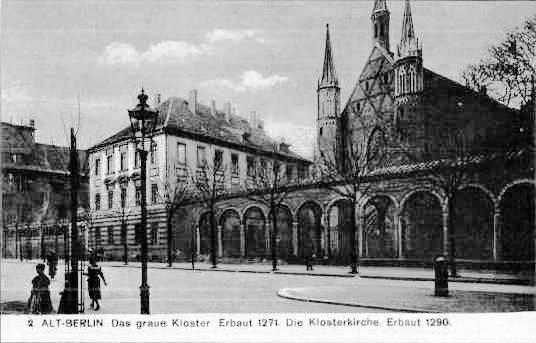
The old ruins of the once great Franziskaner-Klosterkirche was a Franciscan monastery since the 1200s and was before its destruction the most important medieval building in Berlin. 

Read More: Check out all of our ghost stories from Germany

Franziskaner-Klosterkirche was bombed to ruins by the allies during the last day of the second world war in 1945. It was probably one of the oldest buildings in the city. Still today it is a part of the city landscape though, just by the Alexanderplatz in the city center of Berlin. 

The Runaway Knight Roderich

But the monks of Franziskaner-Klosterkirche have been gone for years and the only ones living there now are ghosts. The most famous ghost in the ruins of the monastery was once a knight named Roderich. He became a monk when he was running away from the father of his one night stand. The father was enraged as he had dishonored his daughter and was after him. 

Franziskaner-Klosterkirche: The monastery was also called Graues Kloster (The Gray Monastery) and was in use even after the reformation and used as a school. This is from a postcard around 1910.

On the run, the knight turned monk broke his leg and kept walking with a limp. From then on everyone called Roderich the limping monk, and he was not a popular one. 

Because of his injury and his unfortunate circumstances isolated in the monastery, Roderich grew bitter over the long years. He didn’t get along with the other monks either and paid two criminals to murder one of the other monks in the monastery. He blamed the murder on some Knights Templar who ended up being executed for it. 

The Murderous Monk in Franziskaner-Klosterkirche

Another monk was sent to the Franziskaner-Klosterkirche called Bernhard. He entered because of the grief he had of his miserable love that turned out badly. He loved and wanted to marry a woman, but as the cruel fate would have it, it turned out she was his sister, and he was unable to go on outside of the monastery. 

Read More: Check out all of the ghost stories from Haunted Monasteries

Bernhard was a skeptical person though and had his own theory of the murder of the monk Roderich had killed in Franziskaner-Klosterkirche. When Bernard met Roderich he told him that he didn’t believe that the Knights Templar was behind the murder of their fellow monk brother. 

This was the nail in the coffin for Bernhard and Roderich locked him up in a dark cellar of the monastery to cover his crime when he was found out, ending up killing him so he wouldn’t spill his secret. 

The Ultimate Sin

While this is going on, the two criminals Roderich hired came clean and confessed to what really happened when they murdered the monk and it was in fact Roderich that was behind it all. The anger and rage against Roderich grew and an angry mob stormed the monastery, searching for Roderich to put things right. 

The angry mob found him kneeling in the cellar next to the dead body of Bernhard. After he had killed Bernhard, Roderich went through Bernhards stuff and found a letter from Bernard’s mother. This was a woman who Roderich knew intimately and it was Roderich’s former lover telling him that Roderich in fact was the father of Bernhard. 

Overcome with grief and regret he confessed at once and was killed on the spot without a trial. 

Since then, Roderich has been haunting the Franziskaner-Klosterkirche, even after it all turned to ruins. He can be heard wailing in the night from the outside of the monastery, unable to atone for his sins of killing his own son in cold blood to cover his own tracks. 

More like this

Newest Posts

References

Franziskanerkloster in Berlin: Ruine ist Schauplatz einer düsteren Legende

The Ghost Monks at Lyseklosteret

Advertisements

In the ruins of Lyse Abbey there are rumors about the ghost monks haunting the ruins as well as a white lady roaming the roads around it. 

Lyse Abbey or Lyseklosteret is a former cistercian monastery that was built in Os, right outside of Bergen in Norway. There are only ruins of it today, as many of the monasteries were destroyed during the reformation from catholicism to protestantism in 1536. 

In 1578 stones were removed from the monastery and shipped to Denmark and used in Kronborg Castle, as Norway at the time was a colony in Denmark. The stones were also used to build the Rosenkrantz tower in Bergen.  

Ghost Monks

The monastery called  Coenobium Vallis Lucidae ( The Monastery in the Valley of Light) in Latin and named after the fjord, Lysefjorden (The Light Fjord) was founded by English monks in  From Fountain Abbey in North Yorkshire 1146 and the building was built over the next hundreds of years. They also brought fruits like apples to Hardanger, a place now renowned for its tasty apples. 

Lyse Abbey: The ruins of the old monastary is said to be haunted by ghost monks// source

It is said that the monks that first built the monastery never left and haunts the location even to this day. Many have reported about seeing cloaked silhouettes walking about as if they are working on the building. 

There have also been heard moans from the ruins of the once great monastery, especially on foggy nights, making people believe that the old ruins are haunted by Ghost Monks. 

Lyse Abbey is not the only place supposedly haunted by a monk in Norway. Read also about the ghost monk haunting Nidarosdommen. 

The White Lady In the Ruins

The ghost monks are however not the only ones that are rumored to haunt the place. Apparently there are stories about a “white lady” that walks around in the ruins of the monastery at night time and in the evening. According to legend there was a terrible accident involving a tractor in 1960 when she was bicycling along the road nearby and a tractor ran her over. 

It is unclear if it actually was an accident since it was her neighbor driving the tractor. Anyway, since then, there have been multiple reports about a woman in white around the weeks leading up to Christmas, often described as a white morning robe, wandering restless around the monastery, just looking straight ahead. 

More like this

Newest Posts

References

Her finner du spøkelser i Bergen – Let’s get lost

Lysekloster – Wikipedia

Kven er den skumle dama som skremmer vatnet av folk ved Lysekloster-ruinane?