Tag Archives: haunted fortress

The Scorched Ghosts of Rana Kumbha Palace and the Chittorgarh Fort

Advertisements

A queen is said to haunt the Rana Kumbha Palace and the Chittorgarh Fort in Rajasthan, India. Legend tells she jumped into the fire to escape invaders visitors talk about seeing a ghost with a burned face. 

Within the formidable Chittorgarh Fort by the banks on the Berach River south in Rajasthan, the Chittorgarh Fort and the Rana Kumbha Palace stands as a haunting testament to Rajasthan’s turbulent history.

Read more: Check out all of the ghost stories from India

The foundations of the first signs of a fort were built by the Mauryan ruler, Chitrangada Mori in the 8th century and have been built and rebuilt, burned and torn down to be rebuilt again. Through many wars, sieges and inside of the fort there are several temples, palaces and towers thought to be haunted. 

Chittorgarh Fort: The fort was the capital of Mewar and is located in the present-day city of Chittorgarh. The city is located in the southern part of the state of Rajasthan, from Ajmer, midway between Delhi and Mumbai

The Legend of Queen Padmini

One of the most poignant stories associated with Rana Kumbha Palace is that of Queen Padmini. Rani Padmavati was a princess from Sri Lanka who moved to Chittor after Rawal Rattan Singh won her in marriage. 

She was known for her beauty and many kings wanted her. The king of Kumbhalner Devapal for example is said to have dueled her husband for her hand, where both died. This caused Alauddin Khilji, the Sultan of Delhi to lay siege on the fort in 1303 for eight months to have her instead.  

Although most historians reject this legend, it is the most retold. Some also claim that the husband died during the siege, some say he surrendered and was pardoned. But what about Padmini, which legend claim was the reason for the siege?

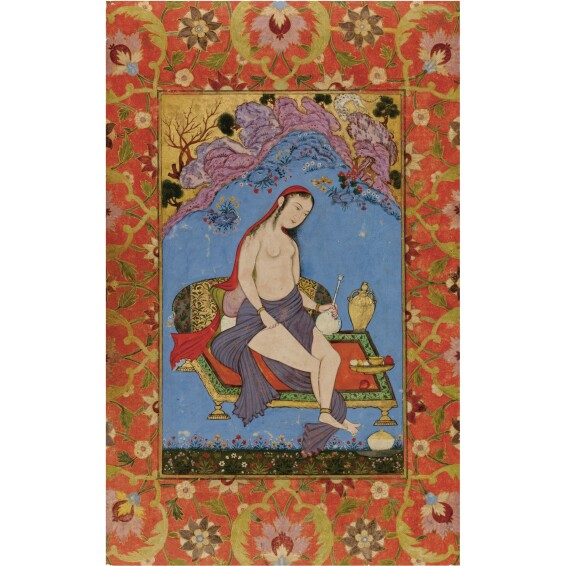
Queen Padmini: An 18th-century painting of Padmini. So many stories have been told about her throughout the years that many claim that she was a historical figure. But what she really, or was she just someone from a story?

To protect their honor from the invading Sultan, Queen Padmini, along with all the other women of the palace, perhaps as many as over a thousand of them, performed Jauhar, a ritual of self-immolation. This means jumping into a big fire instead of facing the shame of being abducted and taken.

They did this when under a threat of the muslim Mughals, as the dead bodies of the women, kafir women in their mind, would be raped and desecrated even after being dead. To burn themselves would at least spare them for this and all women’s bodies would be gone. 

When the Rajputs women and children were pressed into a corner in a fight, they committed Jauhar. Rajput women would wear their wedding dresses in the night and would bring their children to throw them into the sandalwood flames. At the fort there would be three Jauhar throughout the times. 

In 13013 some sources state that 1600 women sacrificed themselves, in 1534 there were 13 000 women doing the same when Bahadur Shah defeated Chittor and in 1568, Phool Kanwarn Rathore did a Jauhar with 7000 women during the reign of Akbar. 

How much of the legend is through though, historians disagree on. The siege itself is a historic event, but if the Hindu Queen Padmini died to escape the massacre of 30 000 Hindus by the Muslim invaders as the legend goes is more uncertain. 

The Ghost of Queen Padmini

The story of this act of ultimate sacrifice has left a spectral mark on the palace. It is believed that the spirits of Queen Padmini and the women who performed Jauhar still haunt the palace grounds, their presence felt in the form of inexplicable phenomena.

According to stories, her ghost is said to have manifested as well and a tale getting passed around online claim to have seen her. A few years ago it is said that a group of friends decided to test their nerves and spend the night at the palace. They say while exploring the big area, one of them clearly heard a woman’s voice begging for help. When they turned, a figure appeared—a woman in royal clothes, her face horribly burned.

Even after all these years, an annual fair known as Jauhar Mela is celebrated every year to honor their sacrifices. It is said that she did it in what is now known as the Rana Kumbha Palace, and according to legend, she is not the only one haunting it. 

The Ghost of Queen Padmini: It is said that when a group of friends went exploring and claimed to have seen the burned ghost of the former queen who threw herself into the flames instead of being captured.

The King Haunting his Castle

The now ruined Rana Kumbha Palace is found at the entrance gate near the Vijaya Stamba, built in plastered stone. A lot of the big events are said to have happened here, and this is the place many referring to being haunted. 

The tragic legend of Queen Padmini is not the only ghost story linked to this palace though, as it is also said that the Maharana of Mewar, Rana Kumbha is haunting it. 

Read more: Check out all of the Haunted Castles around the world

He ruled at the start of the 1500s and transformed the Kingdom of Mewar into a mighty kingdom reaching far and wide, becoming the most powerful state in northern India.

In the war against the Mughals he promised he would not return to Chittor until he had defeated Babur of the Mughal Empire and conquered Dehli. But he never did and was poisoned by his own nobles who didn’t want another war, possibly by his own son, Prince Udaysimha who wanted the throne. 

It is said that ever since, his spirit has been lingering in his palace and visitors claim to have seen the shadowy figure of him passing through the halls.

Visitors to Rana Kumbha Palace often report a variety of paranormal experiences within the walls of the palace’s dilapidated state, with its crumbling walls and remnants of a bygone era. Strange sounds, whispers, and apparitions are commonly cited by those who dare to explore its dark corridors and rooms. 

More like this

Newest Posts

References:

Chittor Fort – Wikipedia 

Siege of Chittorgarh (1303) – Wikipedia 

Rani Padmini – Wikipedia 

RANA KUMBHA PLACE – India most haunted place

7 Haunted Places to Visit in Rajasthan: Complete Information 

8 Most Haunted Places in Rajasthan, India – Exemplore 

The haunting tales of Chittorgarh | Sanskriti – Hinduism and Indian Culture Website 

Best Haunted Places in Rajasthan – You Must Visit 

The Haunting of Nahargarh Fort and the Ghost of Past and Present

Advertisements

Exactly who is haunting the Nahargarh Fort in Jaipur, India? Could it be a spirit that was said to haunt the area even before the fort on the hill was built? And could it have something to do with the tragic death that happened in recent times?

Perched on the rugged edge of the Aravalli hills, Nahargarh Fort stands as a silent sentinel overlooking the Pink City of Jaipur. Its towering walls, designed to seclude the royals from the world, enclose not only a rich historical legacy but also a chilling reputation as one of Rajasthan’s most haunted places. Despite its architectural grandeur, the fort’s eerie atmosphere and ghostly tales continue to captivate and terrify visitors.

Read more: Check out all of the ghost stories from India

Built in 1734 by Maharaja Sawai Jai Singh II, Nahargarh Fort was part of a triad of fortresses, including Amer Fort and Jaigarh Fort, constructed to bolster the defense of Jaipur, although it never really came under attack in the end. 

The Nahargarh Fort: Overlooking Jaipur from its surronding hills. There are many haunted stories about this place, even from the time it was built. // Source: Photo by Mayur Sable on Pexels.com

The Ghost of Nahar Singh Bhomia

The Nahargarh Fort, originally named Sudarshangarh, was later renamed Nahargarh, meaning ‘abode of tigers.’ Legend has it that the fort was named after a spirit named Nahar Singh Bhomia, a Rathore prince, or perhaps a guardian of the place, whose restless soul was appeased by dedicating the fort in his name and building a temple in his honor.

The Rathore dynasty, or Rathor, was an Indian dynasty belonging to the Rathore clan of Rajputs that has historically ruled over parts of Rajasthan, Gujarat and Madhya Pradesh.

It is said that when they built the fort, the workers would come in the mornings and find their work damaged, walls knocked over in the night when no one was there. They believed it had to be the work of a ghost, not pleased about the building of the fort. This was said to have happened for many days until they took action. 

Ponderik Ji was a royal Brahmin, the highest caste and hindu priest, and tried to appease the ghost by performing Tantric rites and promising to build a temple on the Amagarh hill, one of the oldest mountain ranges in the world, of the unhappy prince that had his former territory taken over by someone else. You can still see and visit the temple in Ghat Ki Guni. In addition they also built a temple in the fort itself, just to be safe.

The Ghost of Maharaja Sawai Jai Singh II

However, the most enduring ghostly presence associated with Nahargarh Fort is that of Maharaja Sawai Jai Singh II (3 November 1688 – 21 September 1743) himself. He was the 29th ruler of the Kingdom of Amber and moved his kingdom’s capital from the town of Amber to the newly established walled city of Jaipur in 1727.

Read more: Check out all of the Haunted Castles around the world

His passion for this fort, built as a retreat much used by him and his 12 wives, was so profound that it is said his spirit still lingers within its walls after he died after never recovering from the Battle of Gangwana. 

Despite the passage of centuries, the ghostly presence of the Maharaja continues to cast a shadow over the fort, entwining his legacy with tales of the supernatural.

The Many Ghosts of the Fort: Exactly who is said to haunt the Nahargarh Fort today? Many believe it is the king who built it, possibly the original ghost that was haunted as it was built. Or could it be some of the other tragic legends that are left on the fort?// Source: Photo by Kenneth Christopher on Pexels.com

The Imprisoned Dancer at the Nahargarh Fort

One of the legends of the Nahargarh Fort is that one of the dancers of the Jaipur court, Ras Kapoor, was imprisoned here. She is said to have been at the court during the reign of Sawai Jagat Singh (1786-1818 AD). 

Her mother was a court dancer and she was born as one and learned dancing under Paro begum, the department for skills, arts and talents. He was in love with the dancer and wanted to marry her and gave her half the empire and wealth. Although at the time he already had 21 queens and 24 concubines. 

This gave her the right to sit in the court right beside the king on the throne and immense power. She used her power as well and started to govern. He became disinterested in local affairs and the story about why and who the dancer was spread among the locals. The court and the public didn’t like it one bit and some of the feudal lords opposed Ras Kapoor publicly. 

Fearing the court and public opinions, Sawai Jagat Singh felt he had no other choice but imprison her in the fort. Or was it the court that imprisoned her there while her Maharaja was fighting the Pindaris? 

How it ended varies. Was she killed there by the court ministers or queens? Thrown out of the window of her room? Did the king then die from a broken heart the year after? Some say that when the king died, Ras Kapoor was alive, but she fled from her prison and threw herself into the pyre at his burial. 

Did it happen though? Some claim that it was not in Nahargarh Fort it all went down, but that she was imprisoned in Jaigarh. Some also say that this legend has a contribution to the haunted legends that are said to go on in the fort. Could it be that some of the victims of the court and society rules of the time here are still haunting it?

The Mysterious Murder or Suicide

One of the newer rumors about the Nahargarh Fort though, is how the ghost of whoever is haunting it came back when restoring it at some non-specific time. It is said that the work angered the ghost so much that they had something to do with the sudden death of the leader of the restoration work who were found dead in his home.

But what really happened here, and how did it affect the legend of the haunted fort?

One of the incidents that got the murmuring haunting a bigger voice again was when a 40 year old man was found hanging from one of the bastions of the fort inside one of the rooms that caused a stir and reminded everyone about the haunted tales. The man was a local gem polisher named Chetan Kumar Saini and he was found on November 24th in 2017.

A strange charcoal scribble with a mysterious writing “We don’t just hang effigies, Padmavati.” was the only message close by. Perhaps directed to the protests over Sanjay Leela Bhansali’s Padmavati. People in Rajasthan had protested against the portrayal of Padmini’s character in a movie about it, causing muslim’s and hindu’s to clash. There were other writings, like “Each infidel will meet this fate,” “ we are Allah’s men, we are powerful”.

Strange Writings: On the stones around the body, there were strange messages left. This mysterious case started people talking about The Nahargarh Fort haunted rumors again.

The death was suspicious and the police never concluded if it was a murder or a suicide. The family of the man claimed that it was actually a murder. The police found anti-morti injuries on his body that suggested suicide. It also showed he owed a huge amount of money that was due. 

Whatever really happened that tragic day is uncertain, and the mysteries remain. It did however remind people about the other mysteries about the fort that have been there before it was even built. 

Tales from the Dark

Stories of ghostly apparitions and unexplained phenomena are common among those who have spent time within the Nahargarh Fort’s imposing walls. Some claim to have seen the specter of the Maharaja himself, wandering the corridors and ramparts as if still overseeing the fort. Others report hearing disembodied voices, footsteps echoing in empty halls, and doors that open and close on their own.

As the sun sets over the Aravalli hills and the shadows lengthen, Nahargarh Fort transforms from a monument of historical splendor to a place of eerie mystery. The tales of restless spirits, mysterious deaths, and supernatural occurrences ensure that Nahargarh Fort remains a haunting presence, its walls whispering secrets of a bygone era to those who dare to listen.

More like this

Newest Posts

References:

Sawai Jai Singh – Wikipedia 

Nahargarh Fort – Wikipedia 

Haunted Places in Jaipur & Nearby Region – Get Your Spook On 

Nahargarh Fort Jaipur | The Insider’s Guide | JaipurThruMyLens 

A love story that brought upheaval- Raskapur & Swai Maharaja Jagat Singh. – My expressions

The Courtesan Ghost of Golconda Fort

Advertisements

The Golconda Fort, known for its diamonds and wealth, is also thought to be haunted. It is said that you can still hear the sound of rattling ghunghroos from the ghost of a beautiful dancer and courtesan.

Perched majestically on a hill overlooking Hyderabad, the ancient Golconda Fort, a fortified cited with its ruined city stands as a testament to the grandeur and power of the Qutb Shahi dynasty, reigning from 1518 to 1687. 

Read more: Check out all of the ghost stories from India

However, beneath its historical allure where diamonds like Koh-i-Nor and the Hope diamonds have been stored, lies a darker, more eerie reputation. Golconda Fort is reportedly haunted, with chilling tales of restless spirits, including those of long-dead soldiers and the ghostly specter of Taramati, a famous courtesan of the Qutb Shahi era.

The Start of Golconda Fort: The Kakatiya dynasty was an Indian dynasty that ruled most of eastern Deccan region in present-day India between 12th and 14th centuries. //Source: Photo by Sharath G.

A Fortress Steeped in History

This sprawling citadel built originally as a mud fort in the 11th or 13th century by the Kakatiyas, once the capital of the medieval sultanate ruling Andhra Pradesh, is renowned for its remarkable architecture, intricate gateways, and sprawling courtyards. 

Golconda Fort’s formidable walls have witnessed centuries of history, from royal intrigue and epic battles to the opulence of the Qutb Shahi rulers. The fort had vast diamond mines and in the end the very word Golconda became synonyms with wealth. 

Read more: Check out all of the Haunted Castles around the world

This fortress-city, with its ingeniously designed acoustics and labyrinthine passages, was once a thriving hub of power and culture. The fort’s grandeur, however, is juxtaposed with a haunting presence that pervades its ancient stones.

Ghosts of Fallen Soldiers at Golconda Fort

Among the many legends that haunt Golconda Fort, one of the most enduring is the tale of the ghostly soldiers from the many years the place was used as a fort. These spectral warriors are believed to be the spirits of soldiers who perished during the many battles that took place within and around the fort. Visitors and locals alike have reported seeing shadowy figures patrolling the ramparts, their ghostly forms clad in ancient armor, seemingly guarding the fort even in death.

The eerie silence of the fort at night is often broken by the faint sounds of clashing swords and battle cries, echoing through the empty corridors. Some have even claimed to hear the soft, mournful murmurs of soldiers recounting their last moments. These spine-chilling experiences have cemented Golconda Fort’s reputation as one of the most haunted places in India.

Diamonds: Golconda is renowned for the diamonds found on the south-east at Kollur Mine. At that time, India had the only known diamond mines in the world. Golconda was the market city of the diamond trade. The fortress-city within the walls was famous for diamond trade. // Source: Photo by Pankaj Mishra

The Tragic Tale of Taramati

Perhaps the most poignant and famous ghost story associated with Golconda Fort though is that of Taramati Mandir, one of the most celebrated courtesans of the Qutb Shahi dynasty. She served under the seventh ruler of the kingdom who ruled from 1626 to 1672. 

Courtesan: Portrait of a courtesan, India, Deccan, Golconda from around 1630-50.

Taramati was not only known for her beauty but also for her exceptional talent in Kuchipudi dance and music. She was a beloved figure in the royal court, and her performances were legendary.

Together with her sister Premamati Nritya Mandir they used to perform on a platform called Kala Mandir a kilometer away and in the Baradari for the travelers at the serai, a roadside inn, as the King enjoyed the dance and song from his durbar sitting on top of the fort. 

According to legend, the seventh Sultan Abdullah Qutb Shah, the ruler of Golconda was deeply in love with Taramati. He was a lover of poetry and music and fell in love with her as he heard her sing. 

Their love story, however, was doomed by the turbulent times and political upheaval and his ruling time was full of sorrows and trouble. We don’t really know much about Taramati’s feelings of this, but it does look like she was highly treasured.

The Tomb of Qutb Shahi

It is also said that the tomb of Qutb Shahi is where they buried Taramati and her sister together with her master as well as his queen around a kilometer away from the fort. They are among the few tombs that are not of royalty.

The southern entrance of the tomb complex was walled in fear of ghosts and goblins. Question is, to keep them out or to keep something in?

The Ghost of Taramati Baradari

Some versions of the tale suggest that Taramati met a tragic end, while others believe that she continued to live a life of sorrow after being separated from her beloved King. Details of her life is sparse, and mostly connected to the romantic fables about her being the love her Kings life.

Today, visitors to Golconda Fort often report hearing the unmistakable sound of ghunghroos (traditional anklet bells worn by dancers) echoing through the night after the fort is closed. This is said to happen around the baradari where she used to dance and sing especially.

These spectral sounds are believed to be the ghostly remnants of Taramati’s performances, a haunting reminder of a love and life that were lost to history.

Paranormal Encounters and Haunting Experiences

Over the years, numerous accounts of paranormal encounters at Golconda Fort have emerged. Tourists, night guards, and paranormal enthusiasts have all reported strange occurrences. 

Some staying at the fort after closing time claim to have seen the paintings on the walls turn upside down by themselves. 

Perhaps the worst is how people have reported about utensils being thrown at them and up against the walls in the Kabootarkhana or a feeling of a sharp pain coming out of nowhere.

More like this

Newest Posts

References:

Taramati Baradari – Wikipedia 

Golconda – Wikipedia 

Ghosts, goblins, gateways and Golconda – The Hindu 

Haunted Places In Hyderabad | Hyderabad Tales The Most Haunted Places Of The City | Times of India Travel 

10 Haunted Places In Hyderabad With Real Ghost Stories For Spooky Trips In 2024 

Haunted India: Golconda Fort, Hyderabad

Abdullah Qutb Shah – Wikipedia 

Taramati Baradari – A Symbol of Musical Love – Savaari Car Rentals Blog 

Haunting Tales from Fort Laramie National Historic Site

Advertisements

Several ghosts are said to linger at Fort Laramie in what was the beacon of civilization when Wyoming was a prairie in the wilderness. Soldiers that ended their days in the many wars from this time to a Lady in Green seen riding on her black horse every seven years, the historical site has more than old buildings to offer. 

In southeast Wyoming in Goshen County, Fort Laramie National Historic Site stands as a spectral testament to the bygone era from 1834 when it started as a trading post and diplomatic enclave. The originally known as Fort William was an important trading post in the 19th century originally meant to oversee the fur trade.

Read More: Check out all ghost stories from the USA

It was then bought by the American Army and was also often used as a stopping place for migrants on the Oregon Trail on their way west for a new home, people going the California Trail for the Gold Rush, The Mormon Trail, armies stationed there for a time or fur traders coming and going. It was not necessarily a place you were meant to stay on for, but it looks like that some of the souls passing through are still lingering here.  

Fort Laramie: In 1815 or 1816, Jacques La Ramee and a small group of fellow trappers settled in the area where Fort Laramie would later be located. He went out alone to trap in 1819 or 1820 and was never seen again. Arapahoe Indians were accused of killing La Ramee and burying his body in a beaver dam. The river was named “Laramie” in his honor, and later settlers used this name for the Laramie Mountains, the fort, and the towns of Laramie, Wyoming and Fort Laramie, Wyoming.

Old Bedlam and it History

Old Bedlam, with its timeworn walls and creaking floorboards, has become a focal point for visitors seeking a glimpse into the spectral mysteries of Fort Laramie. Old Bedlam is Wyoming’s oldest documented buildings from 1849.

Why this building was called Bedlam though is uncertain. In England at this time, Bedlam was a word for insane asylum. This was not an asylum though, but first and foremost office quarters for the bachelors. Although it was really far from everything else and quite isolated. 

The furnishing was sparse and meant to be practical for communal living. Native American artifacts from trading and the oncoming wars were hugely popular though and were often used to decorate with. 

Old Bedlam: Built in 1849, Old Bedlam is the oldest standing building in Wyoming. It got its name from the days when it was home to boisterous bachelor soldiers at the fort. It is also said to be one of the more haunted places on the historic site.

The Haunting of Old Bedlam

Numerous reports have surfaced of encounters with an apparition clad in the regalia of a cavalry officer, who silently roams throughout the building. Companies of Cavalry has been stationed at Old Bedlam since its time as a Frontier Army Post from 1849 and fought in the Civil War, the Bozeman War and the Great Sioux War. The last soldiers left Fort Laramie in 1890.

Did one of these officers stay behind in his afterlife? Witnesses describe a commanding presence that, despite its ethereal nature, seems to assert authority over the living. The whispered admonishments to “be quiet” echo through the corridors of Old Bedlam, as if the phantom officer is enforcing a long-forgotten order. 

George in The Old Captain’s Quarters Building

Old Bedlam is not the only haunted building though. The old Captain’s Quarters Building from 1870 is also said to be haunted by a ghost. This haunting has reportedly gone on for years, all the way back to when the Fort was in use as a military presence and has been reported on by many former military men.

Strange things like doors opening or the sound of footsteps when no one is coming are said to happen there. There have also been lights inside of the facility, even without electricity. By the staff working there, the spirit has been nicknamed George. 

Other Ghosts Haunting the Fort

The Cavalry Barracks from 1874 that housed hundreds of soldiers at once is also said to be haunted. Early in the morning, when it would have been time for the soldiers to answer the reveille to have been played, you could hear the sound of heavy boots over the boardwalk.

There is also said to be a young man in a raincoat looking to talk to someone even there is no one there. Although not much is known about him, he is considered a ghost. 

Something looking like a surgeon in a blood stained uniform from the U.S Army looks irritated around the area where there once was an old hospital. There is not much left of the hospital but a shell, but it is said that many men died and their bones are still around there.  

A small creek known as Deer Creek is behind the Old Bedlam and jail. It is said to have the ghost of a man throwing rocks into the creek in the early hours. He is said to be unfriendly and should be avoided as well as it is said he is headless. 

Another ghost left alone is the Civil War ghost acting erratically southeast of the fort in a place called Bovee Draw past the visitors center that comes out at midnight. If he was a union or confederate is unknown. 

By the Detention Dam there is a man with a bloody sword said to be standing still, staring into the water around midnight. 

According to reports and staff there are also those that claim to have seen the ghost of Portugee Phillips riding on horseback across the fields. This was a famous rider who brought the news of the Fetterman Attack to Fort Laramie in 1866.

The Lady in Green

There is not only one ghost haunting this historic site. Perhaps more known is the story of the Lady in Green haunting Fort Laramie. This story is from the time when the place was known as Fort John and was a trading post for fur in the 1830s. 

The man in charge was an agen sent out from a fur trading company to live there. He had a beautiful and sophisticated daughter that he brought with him into the wilderness. She was known to be a good rider and liked it out in the wild with the horses. Although she was only meant to stay for a little while in some versions, she begged to stay on in the Wyoming wilderness she grew to like. 

In some versions though, she was the daughter of the owner of Fort Laramie’s Sutler’s Store, a licensed person allowed to sell supplies to the military. 

Although her father feared for her safety because of robbers on the trail, conflicts with the native tribes and a young woman being so far from “civilized” society, he gave in to his strong willed daughter, promising him that she would never leave the compound without an escort and gave many men the task of protecting her as he wasn’t always around. 

The Lady in Green: Said to be one of the more famous ghost stories from Fort Laramie, the Lady in Green is said to haunt the fort and is said to return every seventh year.

One day he was away from his posts, his daughter slipped away and ran from the trading post on a big black horse. Two men tried to reach her, but she was faster and road through the prairie and never returned. 

When the father returned he sought for her everywhere with a search party, but she was never found and what happened to her remained a mystery. Did she have an accident, was she killed or something else? We will never know except that she never stopped riding.

Although she didn’t return back to the trading post alive, she was still sometimes spotted on the prairie close to it seven years after her death allegedly. It is said that her ghost shows herself east of the Fort Laramie and on the Oregon Trail every seven years. 

The next being in 2025 as she was once spotted in 2011, and perhaps also in 2018? In 1976 the Cheyenne Westerners even held a midnight event at the fort as she was supposed to appear that year. They decided to prank their audience by having a man draped in a blanket riding over the grounds. 

When he got off, he told his friends that he would never ever do that again as he claimed he had heard phantom hooves following him. Could it have been the Lady in Green?

She is alone still riding her stallion. She is wearing a long green riding dress and a veiled hat with feathers on. Her dark hair is tucked up under it, holding a jeweled riding whip. 

The Haunted Fort Laramie

For those who dare to step into this historic enclave, the ghostly encounters serve as a poignant reminder that the past, with its tales of triumphs and tragedies, may not always remain confined to the annals of history. In the moonlit shadows of Fort Laramie National Historic Site, the strange things like smelling rosewater and tobacco and the sound of a rider in the night, continue to puzzle those that visits.

More like this

Newest Posts

References:

old bedlam – FORT LARAMIE

Haunted Fort Laramie, Wyoming – Legends of America 

Fort Laramie National Historic Site – Wikipedia

Haunted 307: Fort Laramie National Historic Site near Guernsey   

Fort Laramie Ghost Story 

 Ghosts of Fort Laramie Haunt Wyoming Historic Site

Historically Haunted – Paranormal Housewife 

Haunted Fort Laramie and Legend of the Lady in Green 

The Ghostly Screams from Pune’s Shaniwar Wada Fort

Advertisements

Every full moon it is said that the dying screams of the young Peshwa Prince that was brutally murdered echoes through Shaniwar Wada Fort. The murder was so horrible that it is said to have opened for every spirit that died in the old fort. 

Pune, the cultural capital of Maharashtra, is a city steeped in history and mystery. The Maratha Empire was an early modern India that controlled large portions in the 18th century, at its peak in 1758 from the south to the Sutlej River in the north until its fall in 1818. 

And when it comes to mysterious tales, the Shaniwar Wada Fort stands out as one of the most intriguing and haunting structures in the city. 

Shaniwar Wada Fort: The Delhi Darwaza is the main gate of the complex, facing north towards Delhi. The gatehouse is strongly built with massive doors, large enough for elephants with seating canopies. The Shaniwar Wada Fort was built by a contractor from Rajasthan known as ‘Kumawat’ after completing construction. The gate is used for ceremonial purposes and military campaigns depart and arrive here with religious ceremonies.

Built in the 1730 century and was the seat of the Peshwas until 1818 when they lost it to the East India Company. The Peshwa was the second highest rank in the Maratha Empire, serving as a prime minister and de facto ruler when it became hereditary position in 1749. 

Read more: Check out all of the ghost stories from India

The Shaniwar Wada Fort was witness to several historical events, including political intrigues, battles, and even a tragic supernatural incident. The fort’s eerie atmosphere and the unsolved mysteries surrounding it have fascinated locals and visitors alike for generations. 

From the mysterious footsteps that echo through its corridors at night to the blood-curdling screams that can be heard on full-moon nights, the Shaniwar Wada Fort has been the subject of many chilling tales. 

The Ghosts of the Peshwa’s at Shaniwar Wada Fort

The Peshwa Balaji Baji Rao was the 8th Peshwa from 1740 until his death in 1761. He was also known under the name, Nana Saheb and had three sons – Madhav, Vishwas and Narayan Rao. Under Peshwa Nana Saheb’s reign the empire reached its peak and golden era, but it went downhill for his family from then on. His eldest son, Vishwas Rao died in battle and the 8th Peshwa got depressed after his first son died and died in 1761. 

The burden was too heavy on the second son Madhav Rao who was appointed the 9th Peshwa after his father and brothers death at the age of 16 with his uncle Raghunath Rao acting as his regent for a long time. But their relationship turned sour however and the uncle was put under house arrest. 

The young prince got tuberculosis though and the sickness killed him slowly until his death in 1772 and his death was seen as the start of the end of the Maratha Confederacy.  

Because Madhac Rao died slowly, he also had the time to appoint the next heir, and he chose his younger brother, Narayan Rao, although his performance didn’t really impress anyone. 

The Tragic Life of Narayan Rao

Narayan Rao (नारायणराव पेशवे) was a young man of only 16 or 18 when it was announced. The fact that he was to inherit the title and seat was not taken well by his relatives. His uncle Raghunath Rao and his wife Anandi Bai were ambitious and willing to go far to get the power. Even though they were in house arrest, the uncle tried to escape several times and the scheming continued.

It is said that they hired a tribe of hunters known as Gardis by letter. The Gardi soldiers were employed by the Peshwa for police duty around the palace and in Pune. They had no personal attachment to their employer and were soldiers from North India, Ethiopia, Arabs and so on. During Madhav Rao’s reign he had emptied the treasury and owed them many years of payments. It is also said that they used the Kalbelia tribe, which are a snake charming tribe from the desert in Rajasthan. 

The letter from the uncle was supposed to say:  Narayan Rao la dhara”, which means “Hold Narayan Rao” as his plan was to kidnap him and hold him in a house arrest. However, his wife got hold of the letter and changed it to “Narayan Rao la mara” which means “Kill Narayan Rao”

The assassination happened during the Ganesh Chathurhu Festival in August with over 500 men storming the Shaniwar Wada Fort. 

They got him from his chambers and they chopped his body into small pieces and threw them in a nearby river to rid themselves of evidence. It is also said that his remains were gathered in a bundle to be cremated. But did he? There is a rumor that because of his murder and because he didn’t even get a cremation he returned as a ghost. 

The Ghostly Sightings at Shaniwar Wada Fort

Legend has it that his ghost still haunts the Shaniwar Wada Fort, and on full-moon nights, his blood-curdling screams can be heard echoing through the corridors of the fort. “Kaka Mala Vacchva“ he screams which means “Please save me uncle”. Visitors to the fort have reported feeling an eerie presence and hearing strange noises, making it a prime location for ghost hunters and paranormal enthusiasts.

The Shaniwar Wada Fort has been the site of several ghostly sightings over the years and people are discouraged to enter it after 6:30 in the evening. Visitors have reported seeing the ghost of a young prince roaming the corridors of the fort and heard his screams on full moon nights

It is even said that the 13th and the last Peswha, Baji Rao II believed in the presence of the ghost. To satisfy and appease the ghost he planted thousands of mango trees around Pune city as well as donating  to Brahmins and religious institutions. 

Other Ghosts Haunting the Fort

But it is not only the young prince that is said to be haunting the Shaniwar Wada Fort as the murder was so heinous and awful and said to have opened a portal to the underworld for the other people that died inside of the fort. 

Read more: Check out all of the Haunted Castles around the world

Others have reported seeing the ghost of a lady in white, who is said to have been a courtesan in the Peshwa court once upon a time. These ghostly sightings only add to the overall mystery and intrigue of the fort.

The Mysteries of Shaniwar Wada Fort Remain Unsolved

Another strange thing that happened was the fire. Pune fortress broke out in 1828 when the British controlled it. The fire lasted for 7 days and destroyed everything but the stone part of the building. No one has found out what really happened and how it started. 

The Shaniwar Wada Fort is an iconic structure that has stood the test of time. Its haunting legend, mysterious architecture, and supernatural occurrences have fascinated visitors for generations. While some of the fort’s mysteries have been solved, many still remain unsolved.

More like this

Newest Posts

References:

https://en.wikipedia.org/wiki/Assassination_of_Narayan_Rao

Tales of Love & Deceit – the Shaniwar Wada haunted story – Thrilling Travel 

Know why you should avoid visiting Pune’s Shaniwarwada Fort on full moon nights | Times of India Travel 

Is Pune’s Shaniwar Wada really haunted? | Times of India Travel 

The Dark History and Mysterious Hauntings of Bhangarh Fort

Advertisements

If you’re a fan of ghost stories and haunted places, you might have heard the supernatural tales of Bhangarh Fort. Often deemed to be the most well known haunted place in India, the fort and surrounding village is said to have been cursed to doom. 

Bhangarh Fort in the Alwar district in Rajasthan, India is known as one of the most haunted places in the world and there are even government signs warning people to stay away from the place after dark.

Read more: Check out all of the ghost stories from India

Bhangarh Fort, or भानगढ़ दुर्ग as it is in Hindi was built in 1573 century by Raja Bhagwant Das, a ruler of the Kachwaha Rajput dynasty when the surrounding town also was established and is today well preserved and frequented by tourists. 

Legend of the Hermit Curse

According to the legend, the fort has been cursed for a long time. A hermit or sadhu named Guru Balu Nath used this place for meditation and had a house there. King Raja Bhagwant Das pleaded with the sage and wanted to build the fort there. The guru agreed on one condition: the shadow of the fort would not reach him and no house should be taller than his own. 

Although King Raja Bhagwant Das agreed to this term, it wasn’t upheld and the meditation spot for the sage fell into shadow when the columns that were added later of the fort were built too high. 

Royal Palace Bhangarh: A fortress wit an entire city and palace inside although most of it is in ruins today, the Bhangarh Fort is thought to be one of India’s most haunted places in the country. //Source: Chainwit /WIkimedia

So the hermit cursed the fort and the entire Bhangarh village ended up being destroyed as seen by how there are no roofs. Before 1720 there used to live over 10 000 people in the village until the population started to dwindle and today the village is just a ghost town.

Legend of the Black Magician

This is not the only legend, and not even the only curse that is said to linger at the Bhangarh Fort. Legend has it that a sorcerer and necromancer named Singhia fell in love with the princess of Bhangarh, Ratnavati much later. 

She is often said to have been the daughter of Chatr Singh, who was the grandson of Raja Bhagwant Das. She was said to be quite beautiful and Singhia fell in love with her. He tried to use black magic to make her fall in love with him by using sorcery on the oil she used for massages. Often it is said that they met in the market place and he tried to sell it to her. But Princess Ratnavati discovered his plan and threw the oil onto a huge stone that cracked, revealing its magical powers. 

Read more: Check out all of the Haunted Castles around the world

The stone rolled on top and crushed the magician to death. Before he died, Singhia cursed the fort and all who lived there, saying that the city would be destroyed and no one would be able to live within its walls. 

The curse came true when the fort was attacked and destroyed by the Mughal army as it was annexed by force in 1720, and it has remained close to abandoned ever since compared to its former glory.

How it turned out for the princess is uncertain, but it is said that she is haunting the Bhangarh Fort, and at night you can hear her together with the people of Bhangarh, cursed to forever be trapped in limbo as one of the spirits that comes out after sundown. 

The Supernatural Experiences Reported by Visitors and Locals

Visitors and locals alike have reported a variety of supernatural experiences at Bhangarh Fort. Some have claimed to see ghostly apparitions, while others have reported hearing strange noises and feeling a sense of unease or fear and paranoia when taking a trip around the fort. 

There have also been reports of people feeling as though they were being touched or pushed by an unseen force on the ground of the fort. 

The Archeological Survey of India has put up signs everywhere around Bhangarh Fort of not coming here after dark and before sunrise. Despite the ban on visiting the fort after dark, some still venture there in search of a supernatural thrill. According to the legends, those who do, will never return.

Although the fort is supposedly haunted, it can also be dangerous because of the dark. Something that three friends experienced when they stayed after sundown and one of them fell into a well. Although rescued from the well on the way to the hospital, they got into a road accident and died. 

The Explanation Behind the Roofless Village

There are some things that legends claim that a more natural explanation tries to debunk. When talking about the roofless village, it is said by the locals that the way they are structured, are not meant to have roofs, and if built, it would collapse. They also claim that many have died because of this. It used to be a flourishing village, but today it is deserted.

The Abandoned Ghost City: Ruins of the Royal Palace in Bhangarh Fort, Rajasthan. //Radha Joshi/Wikimedia

As for why it is close to deserted today with only 1250 people remaining in 2001 in a village outside the old city limits, is a bit uncertain. After the death of Chatr Singh in 1630, it is said that it was the start of Bhangar’s slow decline. 

The deserting of the village and the fort might have something to do with the famine in 1783 that pretty quickly either drove the inhabitants away, or killed them off. 

The Current State of Bhangarh Fort

Despite its reputation as one of the most haunted places in India, Bhangarh Fort has become a popular tourist destination in recent years. The government has invested in the preservation and restoration of the fort, and visitors can now explore the ruins and learn about its history through guided tours. 

Although if you are a foreigner, you need a special permit to get into the Bhangarh Fort, a step the government took because of their disregard for the rules in the area. But do you really want to visit?

More like this

Newest Posts

References:

Bhangarh Fort – Wikipedia 

5 mysterious facts about Bhangarh that will scare you to bits | Times of India Travel 

12 Things to Know About Bhangarh Fort, The Most Haunted Place in India 

The White Lady of Kinsale Haunting Charles Fort

Advertisements

Haunting the battlements of the historic Charles Fort in Ireland, a ghost after a tragic killing is said to haunt the ground. The White Lady of Kinsale is a ghost that remained after her father killed her husband on their wedding night. 

On the misty coast of Ireland lies a place steeped in mystery and tales of the supernatural. Charles Fort, or Dún Chathail in Irish, is a historic fortification south in the country that has gained notoriety as one of Ireland’s most haunted locations. 

Read More: Check out all of the ghost stories from Ireland

Legend has it that Charles Fort is home to a number of ghostly apparitions, from the Lady in White who wanders the ramparts to the phantom soldiers who still march within its walls, the fort is said to be teeming with otherworldly activity.

The History of Charles Fort

Built in the late 17th century, Charles Fort played a crucial role in defending the coastline against invasions. It was strategically positioned at the entrance to Kinsale Harbour, making it an important stronghold for the British Army. Its star-shaped design, a common feature in military architecture at the time, allowed for increased protection and better sightlines.

Charles Fort: Dún Chathail is a bastion fort with one section of the outer wall built in star fashion. It is located on the water’s edge, at the southern end of the village of Summer Cove, on Kinsale harbour, County Cork, Ireland.//Source: Jonjobaker/Wikimedia

The fort was named after King Charles II of England, who commissioned its construction. Over the years, Charles Fort witnessed numerous conflicts and sieges, including the Williamite War in the late 17th century and the Irish War of Independence in the early 20th century. 

Read More: Check out all of the Haunted Fortresses and Castles around the world

The Legend of the White Lady of Kinsale

The White Lady of Kinsale is said to stalk the battlements of Charles Fort, where her father, commander Colonel Warrender, killed her husband on their wedding night. The White Lady’s haunting origins can be traced back to the 17th century. Wilful Warrander fell in love with an officer named Sir Trevor Ashurt and decided to get married. 

The Star Shaped Fort: Charles Fort was built on the site of the ruins of an earlier stronghold known as Barry Óg Castle, at Rincurran. The Ringcurran defences had featured prominently during the Siege of Kinsale in 1601. Now the fort is in ruins and only ghost story remains. //Source: Dieglop/Wikimedia

According to the story, Wilful saw some flowers she liked on the battlement and Sir Trevor wanted to climb down to pick some for her. A guard on duty volunteered to go in his place, and Sir Trevor stepped in as a guard and waited, but fell asleep. 

Her father did a nightly inspection and saw a guard asleep on his job. He was known for enforcing a strict military code and shot the guard through the heart, only realizing afterwards that it was his son-in-law he had shot. 

Wilful was so full of grief and threw herself from the ramparts and into the ice cold water. It is said that when her father lost his daughter he was filled with despair and shot himself the very same night. 

Haunting in her Wedding Dress

Legend has it that she now seeks revenge on any unsuspecting souls who cross her path. Since then, witnesses have reported seeing a ghostly woman in a wedding dress wreaking havoc around the fortress.

Soldiers stationed at the fort have even claimed to have seen her walking through walls, her ethereal figure disappearing into thin air. Parents stationed at Charles Fort have also shared chilling accounts of the White Lady watching their children as they slept, her presence filling the room with an eerie sense of unease.

The Lady in White: The Ghost of the White Lady haunting Charles Fort in Ireland, is seen still wearing her wedding dress. She is also said to have been dangerous on some occasions.

She is also said to be haunting the streets of Kinsale where she grew up and in a hotel called The White Lady, her ghost appears a couple of times a month. 

The Danger of the Lady in White

One of the most terrifying accounts of the White Lady’s wrath dates back to 1922. A medical officer stationed at Charles Fort was staying in one of the rooms when he was suddenly awoken by a chilling presence.

Photo: Wikimedia

Before he realized what was happening he found himself being dragged from his room and thrown down a flight of stairs by a young robed woman. 

The officer sustained injuries from the fall, but what shook him to his core was the knowledge that he had come face to face with the vengeful spirit of the White Lady herself.

Read More: For more ghost stories about women in white, check out The Lady in White in Zitadelle Spandau, La Llorona the Mexican Weeping Woman Ghost, The Hauntings of the Chute de la Dame Blanche or The Haunted History of Prince Gong’s Mansion in Beijing

Visitors to Charles Fort are now warned to tread carefully and be mindful of their surroundings, for the White Lady may still roam the halls, seeking justice for her tragic fate.

Exploring the mysteries of Charles Fort

In conclusion, Charles Fort is a place where history and the supernatural intertwine. Its haunted reputation, fueled by tales of the White Lady and other ghostly apparitions, has made it a must-visit destination for thrill-seekers and history enthusiasts alike. 

More like this

Newest Posts

References:

Featured Image: Dieglop/Wikimedia

Charles Fort (Ireland) – Wikipedia

Ireland’s Ghostly White Lady of Kinsale | Authentic Vacations 

The Grey Lady of Stavern at Hotel Wassilioff

Advertisements

On the fortess island outside of Stavern in Norway as well as one of the rooms at the historic Hotel Wassilioff, it is said that the ghost of The Grey Lady of Stavern is haunting, calling the name of her former lover that left her.

 “Peter!

……..Peeeeter!”

The wailing screams echoes through the corridors of hotel Wassilioff in Stavern, Norway in the dead of night. But when people peek their head out to look, there is no one there. The same can be heard at the coastal fortress on the Citadell island were a shadowy figure has been spotted. The same echo of a voice calling after the same person. Peter.

Stavern is a quaint and picturesque summer town in east of Norway by the coast. Several make it their vacation place during the summer times with the cute medieval architecture and history and the white beaches. But during the night, the old and not so pretty side of the seaside town start to appear through the cracks.

The Quiet Seaside City: Stavern is a popular summer destination as it is right by the beautiful coast of Eastern Norway. View on Skagerrak from Stavern, Norway//Source: wikimedia

The old seaside city is filled with ghost stories about drowned sailors and lost shipwrecks next to happy summer days by the shore, picking seashells and taking a swim.The most famous ghost story is the tragic tale of the Grey Lady of Stavern or Den Grå Damen in Norwegian.

The haunting allegedly happens at the historic Hotel Wassilioff right by the seaside just around the corner from the stature of Tordenskiold. The hotel today was founded in 1844, around a century after this tragic event is said to have happened. If it used to operate as a hotel before this though, is unclear.

Read More: All of the ghost stories from Haunted Hotels across the world

But who was the Grey Lady of Stavern when she was alive, and who was this Peter, that she keeps calling for, even in the afterlife?

The Maid Elise and Tordenskiold the National Hero

The Grey Lady of Stavern was supposedly a maid named Elise fell in love with the sea hero Peter Wessel (1690-1720), he is better known in Scandinavian circles as Tordenskiold, a very well known figure in Norwegian history, although the myths about him sometimes overshadowed the truth.

Tordenskiold: A Norwegian war hero at sea, it is believed that the ghost is calling out his name after he left the Grey Lady of Stavern.

A true patriot and a war hero that fought many battles for Denmark-Norway against Sweden. Tordenskiold is even mentioned in the national anthem they still sing today and his monument is standing in Stavern. However this is not the whole story as he was grealy showed in a much better light than reality. For one, he had economic interests in the slave trade and worked on a slave ship when he was a teenager. He was also a notorious womanizer that left many women in a deep predicament.

Elise on the other hand was only eighteen years old when she met Tordenskiold and fell for his charm. When people started calling her Elise is unclear though, as there is no last name and there are many variations to the legend. In some version of the story she was already engaged with a lieutenant named Heber, making her relationship with Tordenskiold even more dramatic.

As the story of the Grey Lady of Stavern goes, he seduced the young maid and brought her to room 216 on the coastal hotel, now called Hotel Wassilioff, or at least whatever establishment there was there at the time in the early 1700s.

Tordenskiold didn’t really come from Stavern, but lived there for a period when he worked for the navy. They were stationed in a commander’s building that are still standing today, and the ships used in the sea battles often passed by the Stavern and the fortress there was an important base.

Their romance was however short lived and superficial. When Elise became pregnant, he abandoned her in Stavern and sailed his way to glory. He died however shortly after, only 30 years old in a duel.

The Well at Citadell Island

As said, the Hotel Wassilioff didn’t open until 1844, long after this story takes place, and the narrative that they spent any time there is slim, as what the building was used to before that is unclear. But the original legend about the Grey Lady of Stavern doesn’t even mention the hotel, but it does mention the fortress on the small island just outside of the city.

Read Also: Does the concept of haunted islands seem intriguing to you? Read our ghost stories set on Haunted Islands from all over the world.

Right across the harbour of Stavern city there is a military fort built to protect from the Swedes during the Scanian War. You can see it from the windows of Hotel Wassilioff. It leads over to the small island, connected to the mainland. Today it’s only a tourist attraction, as well as Elise’s final resting place.

Citadell Island: The place Elise is said to have gone to drown herself and haunts, roaming the old fortress.//Photo credit: Jørn Tore Røed / visitvestfold.com/flickr

According to the legend, Elise was desperate, despaired and abandoned and went out to this island. Full of grief and with no hope she was driven to suicide and drowned herself out on Citadell island in a well there and rose from the dead as Grey Lady of Stavern.

Elise probably did what she did to escape the place she was trapped in. But perhaps she didn’t intend to be roaming along the fortress and in the hotel corridors, looking for the man leaving her for the rest of eternity.

Read Also: Banchō Sarayashiki — the Ghost of Okiku who also was drowned in a well.

Whether this was true is unclear, but the drowning in the well is also connected to Heber, who had many tragic legends around himself, even outside the legend of Grey Lady of Stavern. One was that he killed his fiance because he suspected a relationship with Tordenskiold another about his widow who drowned herself in the well because she had too many kids and no pension on October 11th in 1746.

The Grey Lady of Stavern at the Haunted Hotel

Back to Hotel Wassilioff, the place most people claim to have seen the Grey Lady of Stavern, even though the historic reasoning for this is weak. How do they know that it is the Grey Lady of Stavern haunting the rooms and corridors of the hotel?

Guests at the hotel can wake up to nightly callings from the maid, screaming the name of the lover who left her in a situation so dire she couldn’t live with it. As mention, it is especially outside or inside the room 216 her desperate wailing has been heard.

In addition to the nightly terror of a woman screaming there are reports of something moving over the floor inside of the room, like there is furniture that being moved around even if there is no one checked into it.

When the hotel management were asked about the alleged haunting, they confirmed that there was something going on and had this to say about it:

One guest asked in the end to be given another room, that is how creepy it was with all the sounds,” hotel management tells to a national newspaper when they interviewed about the legend of the Grey Lady of Stavern.

The Woman in Grey in the Realm of Fables

The legend of the Grey Lady of Stavern has today many variants and it is difficult to differentiate the original legend from the many plays and writings about it. Perhaps the best known version of it from a summer play Klar til å Vende (Ready to Turn) by Herman Wildenvey from 1938. He explained the ghost haunting the place like this:

“She still lives in the realms of fables, sometimes seen by the naked eye here, a woman clad in grey.”

Read Also: There are many stories about ghost dressed in grey. Some of the ghost stories featuring these Ladies in Grey are: Hvítárnes — The Haunted Hut on Iceland, Janet Douglas in Edinburgh Castle Ghosts and Legends or the Lady in Grey at The Haunted Vicarage — Sweden’s most ghostly crowded house.

If her name really was Elise, if she really were jilted by the war hero or drowned herself, the ghost story about the Grey Lady of Stavern continues to cast a shadow on the bright summer nights. Gliding along the fortress on the island, calling out and looking for the one who tricked her, tourist thinking they will enjoy the blue sea can observe Grey Lady of Stavern as a slim grey figure that never found rest. A weeping woman in a grey dress.

More like this

Newest Posts

References:

Historien | Hotel Wassilioff

Den grå dame i Stavern – Wikipedia 

Citadellet

Jakten på Den grå dame – VG