Tag Archives: haunted city

The Haunted Legends of the Rose City, Petra in Jordan

Advertisements

Dubbed the rose city because of the red rocks it is carved out of, the mysterious Petra in Jordan has captivated the local Bedouins as well as the tourists across the world for centuries. But what ghosts and ghouls are haunting the place?

Petra, Jordan, is a city steeped in mystery and intrigue. Known as the Rose City, Petra is home to some of the most impressive ancient architecture in the world. But behind the stunning facade lies a dark and haunted history. From tales of curses and lost treasure to unexplained apparitions and eerie sounds, Petra is a place where the paranormal and the historical collide. 

From the ghostly whispers of ancient spirits to the curses of long-dead pharaohs, there’s no shortage of spine-tingling stories to be found in Petra, often called Rose city because of the reddish sandstone cliffs. 

Haunted Ancient City: The stunning Al-Khazneh, or the Treasury, carved into the rose-red cliffs of Petra, Jordan. A lot of strange things and legends about the place have made many think that the city is haunted.

The History of Petra

Petra is an ancient city that was once the capital of the Nabataean kingdom. The city was founded in the 6th century BC and was a major trading hub for spices, incense, and other valuable goods. Petra’s location at the intersection of several important trade routes made it a wealthy and powerful city.

The Nabataeans were skilled architects and engineers who carved their homes and temples out of the sandstone cliffs that surround Petra. The most famous of these structures is the Treasury, a magnificent temple that was carved into the rock face and served as the tomb of a Nabataean king.

There are huge Hellenistic structures carved into solid rock that served as a mausoleum for the wealthy dead. 

Petra’s glory days came to an end in the 2nd century AD when the city was conquered by the Roman Empire. There were also earthquakes that changed the trade route that contributed to the decline of Petra. Permanent residency of Petra essentially ended in the 6th century CE, when water access was diminished for the city’s 20,000 inhabitants and regional competitor Palmyra took the reins of the trade between the Persians and the Romans.

Over time, Petra was abandoned and fell into ruin. It wasn’t until the 19th century that Petra was rediscovered by Western explorers in 1812, when Swiss explorer Johann Ludwig Burckhardt made the locals bring him there, and it became a popular tourist destination. Despite its ancient origins, Petra’s history is not all sunshine and roses. The city has seen its fair share of tragedy and bloodshed over the centuries, which has given rise to some of the most chilling ghost stories in the world.

The Forgotten Treasury Al-Khazneh

One of the most famous legends associated with Petra is that of the lost treasure of the Nabataeans called Al-Khazneh, or the enchanted Treasury. According to this legend from Bedouin folklore, the Nabataeans were incredibly wealthy from spice and silk trade and amassed a vast fortune over the centuries. When the Romans invaded Petra, the Nabataeans were forced to flee, leaving their treasure behind. It is said that the treasure is still hidden somewhere in Petra, waiting to be discovered by a brave and lucky adventurer.

Al-Khazneh: The stunning Treasury of Petra, a testament to Nabataean architecture carved into the rose-red cliffs. It is thought that Al-Khazneh was built as a mausoleum and crypt at the beginning of the 1st century AD during the reign of Aretas IV Philopatris.

One legend about the treasury is that to protect the treasure, a pharaoh put a curse on the place. According to the story, an Egyptian pharaoh and some in his army escaped when the Red Sea closed when they hunted Moses. They created the treasury with magic as a safe place before they continued to hunt Moses down. And those willing to break the rules and search for the treasure, will feel the wrath of the curse. 

Some think that the treasury was more a place of worship or a burial chamber, more than a place of hiding away treasures. Many of the sculptures are of various creatures from mythology that were associated with the afterlife. 

Petra is also home to several mysterious and unexplained phenomena. Visitors to the city have reported hearing ghostly whispers and moans coming from the ancient ruins. Some have even claimed to have seen apparitions of long-dead Nabataean warriors and priestesses wandering the streets of Petra, still protecting their home.

The Haunted Stories of Petra

Visitors to Petra have reported a wide range of paranormal activities. Some have reported seeing orbs of light floating through the ancient ruins, while others have claimed to have heard disembodied voices and footsteps. Some have even reported feeling a cold breeze or a sudden drop in temperature, even on the hottest days.

The Siq: The narrow sandstone gorge leading into Petra, known as the Siq, offers a glimpse of the stunning red rock formations characteristic of the Rose City. The Siq literally ‘the Shaft’, is the main entrance. Also known as Siqit, it is a dim, narrow gorge (in some points no more than 3 metres (10 ft) wide) and winds its way approximately 1.2 kilometres (3⁄4 mi) and ends at Petra’s most elaborate ruin, Al-Khazneh.

Some say that the ghosts haunting Petra are Nabatean merchants or Roman legionnaires who died in battle. There are also those saying that the place is haunted by a group of school girls. 

In 1963, a sudden flood killed 23 Lebanese schoolgirls. According to some, their spirit is haunting the halls and you can hear their laughter turning into screams after night echoing through the red walls in the mile long gorge or Siq, leading into Petra. 

The Djinn Blocks

When you walk down the Street of Facades you will come across three enormous obelisks called Djinn Blocks. The blocks are probably from the 2nd century B.C and according to bedouin legends, they were the dwellings of the djinns, an Islamic legend about the Djinns, made from smokeless fire. 

Source: Flickr

They appear to visitors as a flash of light or as a blowing whirls of wind. Djinns are said to appear at night and are said to be behind the nightly haunting when they came from the burial chambers and dark corners of Petra.

The Monastery Ad-Deir

Getting to higher ground, you will find the Monastery, or the Ad-Deir. This monumental building was probably carved out from rock in the mid-first century AD. It is perhaps the second most known building in Petra after the Khazneh. 

The Monastery Ad-Deir: a stunning architectural marvel carved into the rock, stands majestically against the backdrop of Petra’s rugged landscape. The building is believed to be haunted by someone guarding this sacred ground.

According to stories, the ghost of a guard is haunting this location. There are also those saying they have seen someone looking like wearing ancient robes like a Nabatean monk, disappearing around behind the walls. 

Like someone is still protecting their sacred ground. 

The Mystery of Petra’s Lost City

Despite its haunted history, Petra remains a popular tourist destination. Visitors flock to the city from all over the world to explore the ancient ruins and experience the rich history and culture of the Nabataean people.

In fact, the surface of Khazneh has receded by 40 mm in less than ten years from people touching, leaning or rubbing against the walls. 

Perhaps the greatest mystery of Petra is the city itself. Despite years of archaeological research, much of Petra remains shrouded in mystery and intrigue. The city is home to several hidden tombs and underground tunnels, many of which have yet to be fully explored. Some believe that these tunnels lead to secret chambers where the lost treasure of the Nabataeans is hidden.

Newest Posts

References:

The Backstory Behind Petra, Jordan’s Ancient Ghost City

Echoes in the Rose-Red Stone: Petra’s Haunted History as Jordan’s Desert Mirage | Horror 

Block tombs, Bab as-Siq, Petra. Art Destination Jordan

The Mayan Ruins of Xunantunich in Belize and the Stone Maiden Haunting it

Advertisements

Named after the terrifying sighting of the ghost of a woman in the ruins, the Mayan ruins of the lost city of Xunantunich in Belize is said to still be haunted by her presence. 

Bordering Guatemala all the way west in Belize lies an ancient Mayan ruin shrouded in mystery and ghostly legends. Xunantunich, which means “Stone Woman” in the Mayan language, is a hauntingly beautiful site that has fascinated historians and archaeologists for decades. 

But it’s not just the impressive architecture and intricate carvings that draw visitors to this ancient city. Many believe that Xunantunich is haunted by the spirits of the Mayan people who once called it home. From ghostly apparitions to strange sounds and eerie sightings, there have been countless reports of paranormal activity at this ancient site. 

Xunantunich and El Castillo: The majestic El Castillo pyramid at Xunantunich, an ancient Mayan ruin in Belize, surrounded by lush greenery.

The History and significance of Xunantunich

Xunantunich was a major Mayan city that flourished from the 7th to the 10th century AD. At its peak nearly 200 000 people lived in the Belize Valley and it served as a Maya civic ceremonial center. The site is located on a ridge overlooking the Mopan River, and it was an important center of trade and commerce for the Mayan people.

The city was home to a number of impressive structures, including a large pyramid known as El Castillo. The pyramid is over 130 feet tall and is decorated with intricate carvings and sculptures. Other notable structures at the site include the Ball Court, which was used for a game played throughout Mesoamerica, and the Palace, which was likely the residence of the ruling elite.

Xunantunich was abandoned by the Mayan people in the 10th century, likely due to a combination of factors including drought, overpopulation, and warfare. Some say that a sudden earthquake made the people leave forever in a hurry around 700 AD. The site was rediscovered by Europeans in the 19th century, and it has since been extensively studied by archaeologists.

The Legend of the Ghostly Maiden

But what about the ghost said to haunt the place? Actually, Xunantunich is a modern name, and its original name is lost to history. Xunantunich’s name means “Maiden of the Rock” in the Maya languages Mopan and Yucatec, combining “Xunaan” (noble lady) and “Tuunich” (stone for sculpture). The name today, refers to the ghost legend that has plagued the archeological site. 

According to the legend, a beautiful young woman dressed in white appears to visitors at the site. Her first sighting was in 1892 or 93 when the Europeans ‘rediscovered’ it when the British colonial administration sent Thomas Gann to investigate the area. He was a terrible archaeologist though, using dynamite to dig and destroy many artifacts and buildings. 

Rediscovering the Mayan City: Thomas Gann and laborers atop a burial-mound at Xuanantunich ruins in Belize. Gann removed a stone altar of the god of death at the site which is now hidden from view in a British Museum storeroom. This is when the sighting of the Stone Maiden started. Was it because the holiness of her city was disturbed she came back as a spirit? (credit: Thomas Gann)

She was seen ascending the stone stairs of El Castillo before she disappeared into a stone wall. She is said to be dressed in all white and when she turned back for a moment, the people who saw her claimed she had fire-red and glowing eyes.

When they came back to their senses and the shock left them, they tried to retrace her steps, but she was nowhere to be found. She is said to still make appearances now and again. She was seen so frequently and made such a big impression that they named the city after her. 

Human Sacrifice: Ascending down the stairs as it was some sort of ritual, it has been speculated that the Stone Maiden was picked as a human sacrifice to the Mayan Gods: Source: Thomas Shahan/Wikimedia

But who was this Stone Lady? She is said to be the spirit of a Mayan princess who was sacrificed on the steps of the temple by her father, a powerful ruler, in order to appease the gods. Now she is reliving her final moment again and again, walking to her own death. A similar story has been told about Cahal Pech.

Many visitors have reported seeing the ghostly maiden, and some have even claimed to have had conversations with her. She is said to be a peaceful and benevolent spirit, but her presence can be unsettling and eerie nonetheless. Some visitors have even reported feeling a cold breeze or a hand on their shoulder when they encounter her.

The Mayan beliefs about death and the afterlife

To understand the ghostly legends and paranormal activity associated with Xunantunich, it is important to understand the Mayan beliefs about death and the afterlife. The Mayans believed that death was not the end of life, but rather a transition to a new state of being. They believed that the afterlife was a continuation of the earthly life, and that the spirits of the dead could interact with the living.

The Crystal Maiden: Actun Tunichil Muknal (the Cave of the Crystal Sepulchre), also known locally as ATM, is a cave in Belize, near San Ignacio, Cayo District. There are several areas with skeletal remains in the main chamber. The best known is “The Crystal Maiden”, the skeleton of what is believed to be a 17-year-old boy, possibly a sacrifice victim, whose bones have been calcified to a sparkling, crystallized appearance. The ceramics at the site are significant partly because they are marked with “kill holes” (holes created to release spirits lurking within), which indicate that they were used for ceremonial purposes. Was this the fate to the Stone Maiden?

The Mayans also believed in a complex system of gods and goddesses who controlled various aspects of the natural world. The gods were often associated with specific animals, plants, and celestial bodies, and they were believed to play a role in determining the fate of the dead.

These beliefs about death and the afterlife likely contributed to the development of ghost stories and legends at sites like Xunantunich. The spirits of the dead were believed to have the power to interact with the living, and many Mayans likely believed that the spirits of their ancestors were watching over them.

The mystery and allure of Xunantunich’s haunted history

Xunantunich is a truly unique and fascinating site that offers a glimpse into the history and culture of the Mayan people. While the ghostly legends and paranormal activity associated with the site may be unproven, they add to the intrigue and mystery of Xunantunich and make it a must-visit destination for history buffs, supernatural enthusiasts, and adventure-seekers alike.

The Mayan Mystery: Xunantunich and Cahal Pech 2-20. In Xunantunich are the remnants of the courts for a Maya ball game where the losers were sacrificed to the gods. Allegedly at least. //Source: Flickr

Whether you’re exploring the impressive ruins, learning about Mayan history and culture, or hoping to experience something paranormal, Xunantunich is a destination that is sure to leave a lasting impression. So if you’re planning a trip to Belize, be sure to add Xunantunich to your itinerary and uncover the ghostly secrets of this ancient Mayan ruin.

Newest Posts

References:

Xunantunich – Wikipedia

Fascinating Facts About the Lost City of Xunantunich

Xunantunich

The Secrets of the Ghost Village Kuldhara in the Desert

Advertisements

According to legend, the villagers of Kuldhara just left their homes overnight for mysterious reasons. But before they left, they supposedly left a curse upon the village, making it a deserted place forever alone in the desert. 

There is a mysterious and eerie world in Kuldhara, a deserted village located in the Thar Desert in Rajasthan, India. This northern ancient village has been abandoned for over two centuries, and it’s said to be cursed by a powerful spell that has kept it uninhabitable for generations. Many people believe that the ghostly spirits of the villagers who once lived here still haunt the deserted streets, making it one of the most haunted places in India. 

Read more: Check out all of the ghost stories from India

The stories behind Kuldhara’s abandonment are shrouded in mystery and intrigue. Some say that the villagers fled overnight, leaving behind their homes and belongings, while others believe that a powerful curse was cast upon the village by a wealthy landlord. Whatever the truth may be, one thing is for sure – Kuldhara is a place full of secrets and tales yet to be uncovered. 

Historical Significance of Kuldhara

The village was once a prosperous community of Paliwal Brahmins who were known for their business acumen and agricultural skills. There are written records of the village all the way back to the 13th century. 

The Paliwal Brahmins is a class in Hinduism that focuses on priests, teachers, physicians and even kings. The people in the village were mostly bankers, farmers and traders in agriculture. 

A Brahmin family: Bombay; photo by Taurines, c.1880. Brahmin is a hindu caste. Legends say that the Paliwal Brahmins are descendants of Maharaj Haridas, who lived around 6000 years ago. They were priests for Queen Rukmani and played a role in her love marriage with Shri Krishna. Shri Krishna was pleased with him and granted him money and land in Gujarat. Today, Paliwal Brahmins can be found scattered across India, speaking various local languages. Brahmins are often well-educated, which is why they are well-represented among overseas Indians.

They were the first to introduce the concept of underground water conservation in the region called a “khareen”, which allowed them to thrive in the arid desert environment. Water from the local Kakni river and wells supplied the village with fresh water. 

Read more: Check out all of the haunted cities around the world

Kuldhara also played an important role in the history of the region during the 18th and 19th centuries. The village was strategically located on the trade route between India and Central Asia, making it an important center for trade and commerce. 

The streets were neat, all leading to a mother goddess temple in the center. The buildings are well preserved in the dry desert climate and in some places it looks like the inhabitants just left. 

Theories Behind the Village’s Abandonment

Theories behind Kuldhara’s abandonment vary. What we do know is that in the 19th century, some pinpoint it to 1825, the people left, although the reason remains a mystery. 

Some believed in the 20th century that the villagers left due to the tyranny of Salim Singh from the Jaisalmer State called the Diwan, known for his corruption and unethical practices. He was an official or minister that demanded high taxes from the village. Some legends claim the taxes were so high that the villagers had to move as they didn’t have the money to live there anymore. 

Some say that he wanted to marry the daughter of the local chief. When he tried to make her marry him, she denied him and this was something he just couldn’t accept. He sent an ultimatum to the village that demanded that the villagers had to accept his marriage proposal, or he would destroy them. Whether he meant by extra taxes or sending soldiers on them varies according to who is telling the legend.  

Instead of adhering to any of his words, the village chose to leave and protect the daughter’s honor rather than hand her over to the vile man. As well as many of the 85 of the surrounding villages 

After it was abandoned though, strange legends started being told about the once prosperous village. It is said that as the villagers left their home, they put a curse on the land so it would remain deserted. 

People that have tried to settle in the area have left again after experiencing paranormal activity. 

Draught Drove them Away

What we do know though, is that it wasn’t an overnight thing, like the last legend would imply. in the 18th century we recon there lived around 800 people there. In 1890 only 37 and today, only the ghosts remain. 

While others believe that a severe drought and famine forced them to leave. There is evidence to show that by 1815, many of the wells had dried up and in 1850 the only wells functioning was the great stepwell in the village and two other deeper ones. 

The Ruins of the Desert City: The ruins of the village stretches far across the desert. The ruins include three cremation grounds, with several devalis that are memorial stones or cenotaphs. //Source: Pradeep717/Wikimedia

This could go well together with the taxes as well though, as they did not have the money to pay it because the return for the agricultural work dwindled together with the water. 

Some even speculate that the villagers were forced to leave due to an epidemic or an invasion by an enemy tribe. New evidence from 2017 shows that it might have been an earthquake that forced the majority of the villagers out. 

The Legend of the Gold

The legends keep piling up. Did the villagers curse their village themselves or was it the work of a group of wandering Sufi mystics?

Read also: Check out The Ghosts that Drove the Villagers of La Cornudilla out of Town, The Ghost of Khar Khot, The Black City in the Gobi Desert, Lac de Paladru and the Ancient City of Ars or The Lost City of Dode said to be haunted.

Another legend is that the village is a place where there is a buried treasure. According to this story, the villagers couldn’t carry all the gold and silver when leaving. Because of this they decided to bury it under the village. 

Attempts to Revive Kuldhara

Over the years, several attempts have been made to revive Kuldhara. In 2007, the Rajasthan government announced a plan to turn Kuldhara into a tourist destination by restoring some of the abandoned homes and buildings. They also promote the deserted ghost village as haunted in order to attract tourists. 

One could ask if the village really is a haunted one, as most stories seem to come from the visiting tourists, not the locals in the surrounding area.

How it could have been: This is a model house, constructed in the ruins of kuldhara, showing how the buildings and houses could have looked like. //Source: nevil zaveri/Flickr

The deserted streets of Kuldhara are said to be haunted by the ghosts of the villagers who once lived here. Visitors have reported hearing strange noises, footsteps, and whispers in the abandoned homes. Some have even claimed to have seen the apparitions of the villagers, dressed in traditional attire, wandering the streets at night.

The Deserted Kuldhara City in the Desert

Kuldhara is a place full of mystery and intrigue. Its haunted reputation and tragic history have made it one of the most fascinating places to visit in India. The deserted streets and abandoned homes of Kuldhara are a reminder of the tragic events that took place here, and it’s important to respect the history and culture of the village while exploring it.

While the stories of Kuldhara’s abandonment and haunting may never be fully understood, they continue to intrigue and captivate visitors from all over the world. Whether you’re a believer in the supernatural or a skeptic, a visit to Kuldhara is an experience like no other. So, pack your bags, and head to Rajasthan to uncover the ghostly secrets of Kuldhara.

More like this

Newest Posts

References:

Kuldhara Village, Jaisalmer: How To Reach, Best Time & Tips 

Abandoned For Centuries, “Haunted” Rajasthan Village Has A Tale To Tell 

Kuldhara Village Jaisalmer (History, Distance, Images & Location) 

kuldhara village near jaisalmer | Times of India Travel 

Kuldhara – Wikipedia 

Kuldhara Village | Jaisalmer, Rajasthan | Attractions – Lonely Planet 

India’s Haunted Village: Why was Kuldhara Abandoned? – Historic Mysteries 

The Spirits at Rosses Point on the Rugged Shores

Advertisements

Smugglers, Pirates, Fairies and ghosts, they all linger in the shallow water at Rosses Point. A place where the Irish writer Yeats even claimed had to be one of the most haunted places in Ireland. 

Ireland’s lush landscapes have long been intertwined with tales of the supernatural. While ancient castles and grand manors often take center stage in ghostly stories, the restless spirits of Sligo have found their haunt in the untamed beauty of Rosses Point, a coastal gem in County Sligo.

Read More: Check out all of the ghost stories from Ireland

Rosses Point is at the entrance to Sligo Harbour where many people from the sea met their end. With its rugged cliffs, windswept shores, and mesmerizing sea views, has become a favored haunt for these ethereal beings.

The Hauntings at Rosses Point

Sligo Bay has witnessed over 60 shipwrecks throughout history and many think that the victims of the wrecks are haunting the bay to this day. 

Rosses Point: The entire area is said to be haunted by the wrecked sailors that met a watery grave off the coast of Rosses Point and Sligo Bay.

Among the souls lost to the tempestuous Atlantic Ocean, many were seafarers and pirates with regrets and lost treasures. It’s no wonder that the restless spirits chose this coastal haven as their final resting place.

One of the more haunted places we know of here is the smugglers’ den, Elsinor House, that the writer Yeats used to stay in. 

Yeats’ Connection at Elsinor House

Rosses Point enjoys a poetic connection to the legendary W.B. Yeats, who claimed that nowhere else held as many spirits as this coastal haven. Yeats was himself very interested in the paranormal and ghost stories.

As a young boy, Yeats spent summers at Elsinor House, a residence that once belonged to his grandparents together with his brother. The house was built by the smuggler John Black or Black Jack. The house is still standing, but now the house has fallen into disrepair. 

Elsinor House: The old house was after stories, built as a smugglers den, but ended up being a quaint summer house, although it came with haunted rumours. Today the house has fallen into disrepair.

Here, he would have listened to the haunting tales of the souls lost to the unforgiving sea, stories that would later inspire his own poetic musings. One of the stories from the house is that it is haunted by the smugglers that once used to come to this place with their goods. 

According to the ghost stories, the ghost of the smugglers that died at sea comes at night, tapping on the windows, only shadows in the stormy night outside the windows. 

Dead Man’s Point

Among the chilling tales of Rosses Point, one stands out—the origin of its eerie name, Dead Man’s Point at the very tip of the point before it, nothing else but the Atlantic Sea. 

Legend has it that a sailor was laid to rest in a shallow grave, but doubt lingered as to whether he was truly deceased. In a macabre twist, the captain decided to leave the comrade a loaf of bread and a shovel alongside the grave, just in case the sailor awoke from his slumber in the afterlife.

As you wander along the windswept shores of Rosses Point and gaze out across the mighty Atlantic, remember that the beauty of Ireland’s coastlines is not merely skin deep. Beneath the crashing waves and whispering sea breeze lies a world where the spirits of seafarers and pirates roam freely, keeping a watchful eye on the untamed shores they once called home.

More like this

Newest Posts

References:

Rosses Point – Wikipedia 

Rosses Point History and Folklore

The Haunted Ancient City of Nan Madol Floating in the Pacific Ocean

Advertisements

The once grand seat for the chiefs of the Pohnpei in Micronesia, is now abandoned and feared. The floating city of Nan Madol is thought to be haunted by spirits and locals believe you will die if you spend the night there. 

In the heart of the vast Pacific Ocean lies the enigmatic island of Pohnpei, part of Micronesia, home to one of the most mysterious and haunting places on Earth: Nan Madol also used to be called “Reef of Heaven”. This ancient city, built upon a series of artificial islets connected by a network of canals, has long been shrouded in legends and whispered tales of the supernatural.

The place has inspired many and is even said to have been the inspiration of H.P Lovecraft’s city of R’lyeh from his Cthulhu Mythos.

The city found on Temwen  and Pohnpei Island was called the Eighth Wonder of the World when the European explorer came across it and was compared to the lost island of Atlantis and many thought it was the lost continent of Lemuria and Mu. It used to be near impossible to get to because of how remote it was, but now, people are starting to research more about this strange place. 

Nan Madol and the Haunting: The ruins of the ancient and supposed haunted city of Nan Madol in Pohnpei from 2001 with its canals by the ruins along the canal. // Source: Flickr

The Legend of its Creation

Research says that human activity can date back to the first or second century, but the megalith structures were built in the 12th and 13th. There are no written records at the Pohnpeians operated without one, so there is no recorded history that tells us exactly how the city came about.

It is uncertain how the giant stone foundation of Nan Madol came about, but the local legend is that they were flown in by the use of black magic or that it was giants that placed the rocks there. What we do know that the black rocks is around 750 000 metric tons and was more work than with the Egyptian pyramids according to some reports.

The Mystery of the Rocks: One of the enduring mysteries they haven’t quite been able to figure out how to get there. Local lore say it was giants that brought them, or that the founding fathers of the city brought the rocks back to the city on dragons. // Source: Flickr

According to local lore, Nan Madol was not constructed by mortal hands, but rather by sorcery. There once came two twins from the mythical Western Katau or Kanamwayso that came in a large canoe in search for a place to build an altar. 

The island was inhabitable, so the twin brothers, Olishipa and Olosohpa were sorcerers. They started to worship, Nahnisohn Sapw, the goddess of agriculture they wanted to build the altar in honor of. They then brought the basalt rock back to the island on the back of a flying dragon and then created the Saudeleur dynasty.

It is said that the dynasty was destroyed when Isokelekel invaded and moved in. But the lack of food and being so remote made his ancestors leave, eventually leaving the city to be reclaimed by the lagoon and its palms.

The City of Nan Madol

In the middle of nowhere, one might wonder why such a grand city was built here. Some of the walls are over 25 feet tall and 17 feet thick and the ruins are spread across 92 artificial islands. Nan Madol was the capital of the Saudeleur Dynasty until 1628, which consisted of a series of artificially constructed islets off Temwen’s southern coast. The ruins include tombs, baths, and temples and was clearly meant for the elite of Polynesia with the city itself perhaps not inhabited by more than a thousand at most.

As with most of the abandoned cities, the question remains: Why? The eventual fate of the Nan Madol civilization remains a haunting mystery for many to say for sure. Theories range from natural disasters to the island being engulfed by the encroaching sea, leaving its advanced society lost to time.

The name Nam Madol means “the space between”, something researchers remain unsure of its root. Perhaps more accurate is the translation “within the intervals” and refers to the canals the ruins are built upon. Worse perhaps is that people often also call it “ghost city” and that the local Pohnpei people refuse to get near it as it is said to be extremely haunted.

Haunted Rumors in the City

As Nan Madol rose from the ocean, so too did stories of its cursed nature. Locals whispered of strange happenings within its crumbling walls – of voices heard in the dead of night, of shadows that moved with a will of their own, and of unsuspecting travelers who vanished without a trace upon entering its labyrinthine passages.

The very foundations of the city is a type of magnetic rock, and when you bring a compass close to them, they spin and spin, losing all sense of direction. 

The locals are said to be terrified of the island because of some strange glowing orbs they claim to have seen there. According to popular superstition, if you spend the night on the island, they will die. 

Read More: Check out more stories about haunted abandoned cities like The Ghost of Khar Khot, The Black City in the Gobi Desert or Lac de Paladru and the Ancient City of Ars

Why you might ask, but there are more questions than answers of this place. The island used to be a burial site for the chiefs in the area and was also the location for important religious rituals. So the way the island is both spiritual and religious important goes way back. 

The Haunted Island and City

Many brave souls sought to unravel the mysteries of Nan Madol, only to meet a fate worse than death, like when German governor Berg opened what was believed was Isokelekels tomb on the island. He died of a sunstroke, reinforcing the local superstition about the place.

It is said that Isokelekel saw his reflection in the water and decided to kill himself as he was getting so old. According to one gory legend, he decided to tie his penis off the top of a palm tree. His penis was cut off and he bled to death. After his death it is believed he was buried in a big mortuary on the island and perhaps he himself is haunting the area. 

Even to this day, Nan Madol remains a place of mystery and dread, its secrets locked away beneath the waves, waiting for those foolish enough to seek them out. And as the winds howl through its crumbling ruins and the waters of the Pacific churn with an otherworldly energy, the whispered legends of its creation and the haunted rumors that surround it serve as a chilling reminder of the darkness that lurks within us all.

More like this

Newest Posts

References:

Featured Image: CT Snow/Flickr

Mysterious ‘haunted’ city found floating in the middle of the ocean which terrified locals call ‘Island of Ghosts’ – Mirror Online 

Nan Madol: A Mysterious Hi-tech City Built 14,000 Years Ago? 

Nan Madol – Wikipedia 

Isokelekel – Wikipedia 

The Ghost of Kathleen who Loved St. Kevin in Glendalough

Advertisements

In the Monastic City of Glendalough in Ireland, the ghost of Kathleen is still haunting the place as her love for the hermit, St. Kevin went wrong. Did he really just reject her? Or did he in fact kill her as well?

“In Glendalough, there lived an auld saint, renowned for his learning and piety, his manners were curious and quaint, and he looked upon girls with disparity.”
The Glendalough Saint

In the heart of the enchanting Glendalough in the valley between two lakes, nestled amidst the lush landscapes of County Wicklow, Ireland, lies a centuries-old legend that continues to cast its spectral spell in the place called the Monastic City. 

Glendalough is where one of the earliest monastic settlements was founded by St. Kevin in the 6th century. He was known for his hermit life and pious look at life in prayer and meditation. It is said he died when he was 120 years old and has a lot of strange and mystical legends surrounding him and his life. 

Two Tales of Love and Remorse

One of the legends is the tale of the ghost of Kathleen haunting the monastic site of Glendalough. She is said to be a woman wearing red whose ethereal presence has etched itself into the annals of Irish folklore and was also published in ‘Haunted Ireland: A Select book of famous Irish ghost stories’ by Leo Bowes in 1975.

St: Kevin

There exist two versions of Kathleen’s haunting narrative, each weaving a unique tapestry of love, desire, and redemption.

Kathleen the Seductress

In the first version, the story unfurls with a local maiden named Kathleen, captivated by the youthful and handsome St. Kevin who was living as a hermit and not looking for earthly love. Although she knew this she sought to seduce the holy man. Yet, St. Kevin, resolute in his faith, rebuffed her advances. 

When she didn’t give up her advances though, he plucked stinging nettles and stung Kathleen upon her face, arms, and feet until her senses returned. Overwhelmed by remorse and shame of what she had done, Kathleen fell to her knees, pleading for forgiveness. St. Kevin, ever the symbol of mercy, offered up prayers to help her see the error of her ways. 

His prayers found favor with the heavens, and Kathleen underwent a profound transformation, becoming a “sincere convert” to the path of righteousness and to lead a pure life from then on.

Kathleen the Witch

The second version of this beguiling legend paints a darker portrait of Kathleen, one of obsession and tragedy. In this rendition, Kathleen, possibly a practitioner of the dark arts and a witch, became so infatuated with the young St. Kevin that she followed him to his remote cave, perched high upon the side of Lugduff Mountain, now known as St. Kevin’s Bed. 

St. Kevin’s Cell: was a stone structure located on a rocky spur above the lake. Only its foundations remain today, and it may have had a stone-corbelled roof. St. Kevin’s Bed is a cave in the rock face, situated about 8 meters above the Upper Lake’s level on its southern side, near The Spinc cliffs. It was traditionally considered a retreat for St. Kevin and later for St. Laurence O’Toole. Partly created by human hands, the cave extends 2 meters into the rock.

This is a cave in the rock on the south side of the Upper Lake and was reportedly a retreat place for St. Kevin spent large parts of his life alone. 

Read More: Check out all of the stories about Witches at the MoonMausoleum.

Fueled by anger that she had forced her way into his holy place of solitude, St. Kevin pushed Kathleen over the precipice of the mountain cliff, where she met her untimely end in the waters below, drowning.

This is the version we find in the folk song about this legend as well, that were made famous when The Dubliners sang it:

Eerie Apparitions in Glendalough

Through the ages, the spectral presence of Kathleen has manifested itself to those who tread the hallowed grounds of Glendalough, leaving an indelible mark on the fabric of local history and lore.

The Wicklow People newspaper, in an article dated April 25th, 1975, documented three chilling sightings of this enigmatic ghostly figure.

Read More: Check out all of the ghost stories from Ireland

The first account speaks of a couple who visited Glendalough on All Souls’ Day in 1970. Armed with their camera, they captured the serene beauty of the landscape. Upon developing their photographs, an unexpected and unsettling sight emerged—a weathered old woman, shrouded in a shawl, standing just a few feet away from the photographer’s fiancé.

St. Kevin’s Church: It is commonly referred to as St. Kevin’s Kitchen, although it was not used for cooking. Its original purpose is unknown although it may have been used to house relics of St. Kevin.

The second sighting involves an American visitor and her daughter, who embarked on a tour of the site in November 1974. When the film from their trip was developed, their images revealed an astonishing figure—a woman draped in a long red gown and shawl, her steps quickening along a path leading to the ancient tower.

The third report comes from Dick Fuller, an American who chose to spend St. Patrick’s Day in Ireland in March 1975. During his visit to Glendalough, he bore witness to something truly extraordinary and said this of their encounter:

My wife had gone to see if the gift shop was open, while I visited the cemetery. I walked from the entrance to the Tower and went around to see if I could read the inscription on the back of the stones. I glanced around to see if my wife was joining me and, as I did so, I saw a red figure moving from the left to the right, towards a fallen down building. I thought it was another person in the cemetery. I walked towards the ruins, expecting to see a person dressed in red, but there was no one there’. He continued ‘Since there was only one entrance the person couldn’t have appeared without passing me… as far as I am concerned, I saw a ghost.

The Monk in Black Robe

The ghost of Kathleen in Red is not the only ghost said to haunt the ancient place though. More recently there have been reports about seeing someone that looks like a monk wearing a black robe. 

This comes from a camping trip in the early 2000 when a group of friends decided to set up a tent on the ancient site. They fled soon enough though when they heard footsteps and suddenly saw a group of monks standing close to them, watching them. 

Glendalough Mysterious Charm

In the Glendalough, where the mists caress the ancient stones and the wind whispers tales of old, we find the conclusion to the haunting legend of Kathleen and St. Kevin.

While the truth about Kathleen’s fate remains shrouded in mystery, the legacy of her ghostly presence lives on. In the Monastic City of Glendalough, visitors still report inexplicable sightings and eerie encounters, as if Kathleen’s spirit lingers, eternally bound to the place that holds both her love and her tragedy.

Although the stories differ, whether depicting Kathleen as a seductress seeking redemption or a witch consumed by obsession, the underlying message remains the same. Love, desire, and remorse intertwine in the tapestry of this haunting tale, reminding us of the power of our choices and the consequences they bear.

Glendalough: A glacial valley known for its Early Medieval monastic settlement, established in the 6th century by St. Kevin. The valley was the site of a galena lead mine from 1825 to 1957. Today, Glendalough serves as a recreational area, offering opportunities for picnics, hiking on well-maintained trails of various difficulty levels, and rock-climbing.

As the ghostly figure of Kathleen continues to materialize in photographs and stories, the ethereal beauty of Glendalough’s landscape becomes intertwined with her spectral presence. Her apparition, dressed in red, stands as a reminder of the longing and heartache that transcends time, leaving an indelible mark on those who encounter her.

And as the misty veil of Glendalough parts to reveal the specter of St. Kevin, a monk in a black robe, it becomes evident that the Monastic City holds more secrets than can be comprehended. The sightings of this enigmatic figure, together with Kathleen’s ghost, add to the mysterious charm that permeates the air, captivating and intriguing all who venture into this ancient place.

As the sun sets over the ancient ruins, and the shadows lengthen, the ghostly whispers of Kathleen and St. Kevin still resonate through the valley. Glendalough remains a place of intrigue and fascination, inviting all who are drawn to its enigmatic charm to experience the ethereal touch of Kathleen’s ghost, forever wandering the sacred grounds of her lost love.

More like this

Newest Posts

References:

The Ghost of Glendalough – County Wicklow Heritage 

Kevin of Glendalough – Wikipedia 

Glendalough | Haunted Wicklow, Ireland | Spirited Isle 

The Dark History and Mysterious Hauntings of Bhangarh Fort

Advertisements

If you’re a fan of ghost stories and haunted places, you might have heard the supernatural tales of Bhangarh Fort. Often deemed to be the most well known haunted place in India, the fort and surrounding village is said to have been cursed to doom. 

Bhangarh Fort in the Alwar district in Rajasthan, India is known as one of the most haunted places in the world and there are even government signs warning people to stay away from the place after dark.

Read more: Check out all of the ghost stories from India

Bhangarh Fort, or भानगढ़ दुर्ग as it is in Hindi was built in 1573 century by Raja Bhagwant Das, a ruler of the Kachwaha Rajput dynasty when the surrounding town also was established and is today well preserved and frequented by tourists. 

Legend of the Hermit Curse

According to the legend, the fort has been cursed for a long time. A hermit or sadhu named Guru Balu Nath used this place for meditation and had a house there. King Raja Bhagwant Das pleaded with the sage and wanted to build the fort there. The guru agreed on one condition: the shadow of the fort would not reach him and no house should be taller than his own. 

Although King Raja Bhagwant Das agreed to this term, it wasn’t upheld and the meditation spot for the sage fell into shadow when the columns that were added later of the fort were built too high. 

Royal Palace Bhangarh: A fortress wit an entire city and palace inside although most of it is in ruins today, the Bhangarh Fort is thought to be one of India’s most haunted places in the country. //Source: Chainwit /WIkimedia

So the hermit cursed the fort and the entire Bhangarh village ended up being destroyed as seen by how there are no roofs. Before 1720 there used to live over 10 000 people in the village until the population started to dwindle and today the village is just a ghost town.

Legend of the Black Magician

This is not the only legend, and not even the only curse that is said to linger at the Bhangarh Fort. Legend has it that a sorcerer and necromancer named Singhia fell in love with the princess of Bhangarh, Ratnavati much later. 

She is often said to have been the daughter of Chatr Singh, who was the grandson of Raja Bhagwant Das. She was said to be quite beautiful and Singhia fell in love with her. He tried to use black magic to make her fall in love with him by using sorcery on the oil she used for massages. Often it is said that they met in the market place and he tried to sell it to her. But Princess Ratnavati discovered his plan and threw the oil onto a huge stone that cracked, revealing its magical powers. 

Read more: Check out all of the Haunted Castles around the world

The stone rolled on top and crushed the magician to death. Before he died, Singhia cursed the fort and all who lived there, saying that the city would be destroyed and no one would be able to live within its walls. 

The curse came true when the fort was attacked and destroyed by the Mughal army as it was annexed by force in 1720, and it has remained close to abandoned ever since compared to its former glory.

How it turned out for the princess is uncertain, but it is said that she is haunting the Bhangarh Fort, and at night you can hear her together with the people of Bhangarh, cursed to forever be trapped in limbo as one of the spirits that comes out after sundown. 

The Supernatural Experiences Reported by Visitors and Locals

Visitors and locals alike have reported a variety of supernatural experiences at Bhangarh Fort. Some have claimed to see ghostly apparitions, while others have reported hearing strange noises and feeling a sense of unease or fear and paranoia when taking a trip around the fort. 

There have also been reports of people feeling as though they were being touched or pushed by an unseen force on the ground of the fort. 

The Archeological Survey of India has put up signs everywhere around Bhangarh Fort of not coming here after dark and before sunrise. Despite the ban on visiting the fort after dark, some still venture there in search of a supernatural thrill. According to the legends, those who do, will never return.

Although the fort is supposedly haunted, it can also be dangerous because of the dark. Something that three friends experienced when they stayed after sundown and one of them fell into a well. Although rescued from the well on the way to the hospital, they got into a road accident and died. 

The Explanation Behind the Roofless Village

There are some things that legends claim that a more natural explanation tries to debunk. When talking about the roofless village, it is said by the locals that the way they are structured, are not meant to have roofs, and if built, it would collapse. They also claim that many have died because of this. It used to be a flourishing village, but today it is deserted.

The Abandoned Ghost City: Ruins of the Royal Palace in Bhangarh Fort, Rajasthan. //Radha Joshi/Wikimedia

As for why it is close to deserted today with only 1250 people remaining in 2001 in a village outside the old city limits, is a bit uncertain. After the death of Chatr Singh in 1630, it is said that it was the start of Bhangar’s slow decline. 

The deserting of the village and the fort might have something to do with the famine in 1783 that pretty quickly either drove the inhabitants away, or killed them off. 

The Current State of Bhangarh Fort

Despite its reputation as one of the most haunted places in India, Bhangarh Fort has become a popular tourist destination in recent years. The government has invested in the preservation and restoration of the fort, and visitors can now explore the ruins and learn about its history through guided tours. 

Although if you are a foreigner, you need a special permit to get into the Bhangarh Fort, a step the government took because of their disregard for the rules in the area. But do you really want to visit?

More like this

Newest Posts

References:

Bhangarh Fort – Wikipedia 

5 mysterious facts about Bhangarh that will scare you to bits | Times of India Travel 

12 Things to Know About Bhangarh Fort, The Most Haunted Place in India 

The Haunted Inunaki Village in Japan

Advertisements

The urban legend of Inunaki Village in Japan is about a forgotten village of villagers refusing to conform to the Japanese constitution. They would do everything to protect themselves from the outside world, even killing the ones that trespasses.

In 1999, Nippon TV, one of Japan’s biggest TV channels, received a letter from an anonymous person about Inunaki Village in the Fukuoka Prefecture all the way south in Japan. The anonymous letter was titled “The Village in Japan That Isn’t Part of Japan” and urged the TV channel to visit the place. In the letter it told about the legend about a couple that once went there, but never came back. 

Read More: Check out all of our ghost stories from Japan

The Inunaki Village (犬鳴村) means the Howling village and is an urban legend that dates back to the 1990s. The Legend of Inunaki Village, as we know the legend today, likely first appeared online in 1999. An anonymous person sent a letter to the TV station, NTV with the title “The Village in Japan That Isn’t Part of Japan.” It describes the legend as we know it today.

Inunaki Village: The place is said to be an almost abandoned village in the mountains, separated from Japan as they recognize themselves as outsiders. Even killing trespassers to keep outsiders out.

The Inunaki Village is supposedly a forgotten village in Fukuoka Prefecture by the Mount Inunaki mountain pass and is easily missed as the path to the village is along a narrow path. And according to the mysterious letter to Nippon TV, the legend goes like this:

Sometimes in the early 1970s, a young couple was making their way to Hisayama on the other side of the mountain when the car engine broke down. They left their car and headed up to the forest to see if they found someone that could help. They passed a handwritten sign on the way that read “The Japanese constitution is not in effect past here.”

Eventually they reached a village, but when they walked through it it seemed abandoned. But as they walked among the abandoned village with the dark windows they saw a man and approached them. Something that they really shouldn’t have. In what is explained as being a “crazy old man” he came to them and welcomed them to Inunaki village before he murdered them with a sickle. 

Now, only their old black Sedan car they left is the proof they were ever there.

The Urban Legend of Inunaki Village

What is it about this village? Supposedly it is a village that consists of residents that refuse to follow the rules of the Japanese Constitution. This is a statement from the village from all the way back to the Edo period when mistreated peasant chose to cut of the world and live in exile. There are also theories about that the village was taken by a horrible sickness and they closed down the village to people coming and going. Even to the point of murder.

The very name Inunaki is said to be of a haunted origin. According to the legend, a man killed his dog because it wouldn’t stop barking. But then the man and his whole family was murdered and the dog was just trying to warn his master about the approaching danger.  

Another story related to the village is that of the telephone booth near the Inunaki bridge. Allegedly it gets a call from the Inunaki Village every night. If you are the unfortunate soul that answers the phone call you are cursed and transported to the village. 

The Haunted Village through the Tunnel: The Urban Legend about the Inunaki Village have inspired several Movies and Animes that keeps the legend alive, and gives it more legs to stand on for every adaptation that are made. // From the 2019 movie Howling Village.

There used to be an actual real village called Inunaki Village from 1691 to 1889, but it has no connection to the legend that started in the 1990s. Or does it?

The Haunted Inunaki Tunnel

The whole area around these parts have been considered to be haunted for a very long time by now. Like the area around the Old Inunaki Tunnel for example which have been according to rumours ‘haunted’ long before the 90’s. The tunnel is located near the Inunaki reservoir.

According to legends many people died building the tunnel that opened in 1949. At night you can hear the screams from children coming from within the tunnel and mysterious finger and handprints on the windshield of your car after passing through the Inunaki tunnel. 

After a new tunnel opened in 1975 nearby, the old one became abandoned, eventually falling into disrepair until it was sealed off. Although it had many stories of vengeful ghosts residing inside the story before the murder, it really sealed the place as a place of violence and death as we know from the Inunaki legends.

The Inunaki Tunnel: The old Inunaki Tunnel in Miyawaka, Fukuoka Prefecture is now sealed off. It is believed to be haunted because of a murder that happened there years ago and the entrance to the Inunaki Village. // Source: Wikimedia

The Inunaki Tunnel Murders

The stories of the Inunaki tunnel is believed to be haunted because of the murder cases that have occured around the area for many years. It is already a pass with harsh weather wich causes many accidents every year. On top of this is the murders. Like when on 6th of December in 1988 found a factory worker named Koichi Umeyama burned to death inside the tunnel, long before the legend about the lost Inunaki Village went viral.

That night, five boys aged 16 to 19 years old from the Takawa district tried to steal a car from a man working as an engineer without success when they met him randomly at a gas station. They ended up abducting and tortured him for a long time, contemplating about throwing him off the bridge, drowning him or burning him in the tunell. They decieded on the latter, and even though their victim nearly escaped several times, he never got out of it alive.

The perpetrators burned him to death after pouring gasoline over him to destroy as much evidence as possible. They were quickly rounded up and got life imprisonment for it.

In 2000, a dead body was also found in a nearby dam were the original Inunaki Village is said to be submerged in. 

The Movie about the Howling Village

A movie was released in 2019 called Howling Village. It was directed by Takashi Shimizu who is best known for being the creator of the Ju-On franchise, and directing four of its films, internationally, in both Japan and the U.S. This movie blew new life into the old legend and led to an increase in trespassing and vandalism in the area, especially in the tunnel.

The movie follows a young woman and psychologist. After her brother goes missing, she visits an infamous haunted and cursed location known as ‘Howling Village’ to investigate his disappearance and uncover her family’s dark history.

The movie also had a sequel named Jukai Mura, or the Suicide Forest Village in 2021, also rather inspired by urban legends about the abandoned outside of Japan.s wilderness. Rumors exist about the Aokigahara forest on Mount Fuji that is a real place and also have a lot of haunted rumours surrounding it. The rumors say things like nobody leaves Aokigahara alive.

The Enduring Legend of Inunaki Village

Inunaki Village, with its chilling urban legend and haunted reputation, continues to captivate the imagination of those who seek tales of the supernatural. Whether rooted in historical events or born from the collective fears of a secluded community, the enduring mystery surrounding the village and its infamous tunnel persists. As the legends of Inunaki Village seep into popular culture through movies, anime, and ghost stories, it serves as a reminder of the enduring power of urban legends to both frighten and fascinate us.

But the question remains, who was the anonymous writer of the letter to the broadcasting channel back then, and was there any truth to the haunted rumors that already surrounder the place around Mt. Inunaki back then?

More like this

Newest Posts

References

Inunaki Village In Fukuoka, Japan. The Evil, Lost Village.

Ghosts of Mary King’s Close

Advertisements

Scratching sounds from the chimney, plague victims left for dead and floating heads, the haunted underground of alleyways known as Mary King’s Close haunts under the city. 

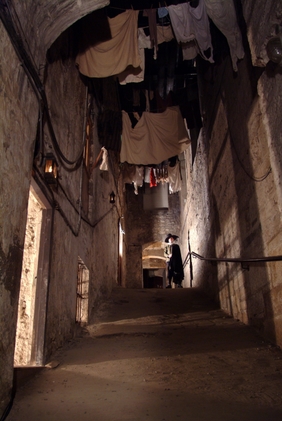
Today much of what you see of Edinburgh is an old town built on top of an even older town. Right opposite St Giles Cathedral you will find The Mary King’s Close or alleyways which are said to be haunted.

It used to be a normal street in the old town by the Royal Mile with narrow alleyways and cobbled streets. It was named after a successful business woman named Mary King working as a fabric merchant in the 1630s. 

Advertisements

So first off, what is a close? A close was a private area that got locked up at night to keep unwelcomed out. The richer lived on the top floors, away from the stench of the sewer and where most light came through the claustrophobic streets. 

The Plague

During the 1645 plague the city became overrun with rodents carrying diseases and it hit the Mary King’s Close pretty hard. They would hang out white sheets to show they were infected and in need of food and a plague doctor. Only the bravest plague doctors, one named Dr George Rae dared to venture into the close filled with plague ridden people.

Victims of the disease were quarantined and left for dead to die in the streets. One by one the residents either died or left the Close and were relocated to Burgh Muir, and they didn’t return until almost 40 years after the plague hit its peak. When they returned however, everything seemed to have changed. Since then there have been reports about strange things going on in the underground narrow streets. 

Plague Doctor: On the 13th of June 1645, Dr George Rae was appointed as Edinburgh’s second Plague Doctor. During the plague he went around to treat the plague victims. He cut open and cleaned out the puss from the swellings caused by the bubonic plague. He would then burn the wound to catheterize it. He was considered to be one of the more successful doctors during the plague.

What was it that made people see ghosts during this time? Was it the plague victims that were left behind? Or could it be the methane gas from the polluted march right by that caused everyone to see things?

Many tell the tale that it was to cover up the corpses of the plague victims that they built another street on top of it. The true story though is that they built the new street on top of the decaying old one in the 17th century to make a place where tradesmen could be. 

Advertisements

Life continued to go on underneath the surface though as not everyone wanted to leave. The last residents didn’t leave Mary King’s Close until 1902. And if we believe the legends, the last resident named Andrew Chesney never truly left as he is said to be one of the ghosts that haunts the place.

The Hauntings of The Colthearts

Back to the aftermath of the plague. Decades had passed since the plague had reached its peak and people started to return to the Mary King’s Close. But as mentioned earlier, the place had started gaining a notorious rumour of being haunted. And that was according to the residents themselves.

Claustrophobic: The narrow streets of Mary King’s close.

In 1685 a well respected lawyer named Thomas Coltheart moved into the close together with his wife. But their stay was not a happy one at all times.

The maidservant ran off claiming the house was haunted. And it was not long until Coltheart and his wife also noticed strange things. According to them when the Mrs. Coltheart sat reading her bible, she saw a head without a body float in the house, causing the wife to faint. 

First, Thomas Coltheart didn’t believe her when she tried to explain. But It returned later that night with the spirit of a child and a floating severed hand beckoning them to come towards them. They tried to pray the spirits away, but to no avail.  

Lastly they saw the spirit of a dog running after a ghost cat, creating a chaos of spectres and noises that night. And according to them, that was not the only time they were bothered by the spirits.

Apparently they claimed that the dog returned again and again, not leaving them in peace,

Surprisingly, the couple chose to never leave the Close and stayed there until their death. Needless to say, it turned them mad according to some sources. Or did the madness create the visions?

Abandoned Annie

One of the ghosts that are suppose to haunt the place is that of Abandoned Annie. She is the ghost of a little girl that is allegedly reaching out to grab your hand in the darkness.

She was named that by the Japanese psychic Aiko Gibo who visited the Mary King’s Close in 1992 and found the child ghost crying in a corner of a room. Aiko claimed that Annie was a plague victim who was abandoned by her parents. According to the psychic Annie wanted a doll to not feel so lonely. 

Today she has her little altar in what is now known as Annie’s Room with thousands of dolls, toys and money left by her visitors. They are all collected by the city council to donate to and help sick children. 

Visit the Underground

The Close was mostly forgotten after the last residents moved out and they didn’t really remember the old place until they once knocked through the walls during construction. 

The place was not opened for the public until 2003, but is now perhaps more busy than it was before they closed it up. Today you can access the underground alleyways from the Royal Mile as a tourist attraction. You can now experience the uniquely preserved cobbled streets as it would have been before the 1800s. 

Advertisements

More like this

Newest Posts

References

The Most Haunted Places in Edinburgh’s Old Town – Dickins

The Story Behind Edinburgh’s Mary King’s Close

Mary King’s Close: Underground Edinburgh’s buried street

The Ghosts of Mary King’s Close, Edinburgh | Haunted Rooms®

Mary Kings Close – Dark Hauntings

The Ghost of Khar Khot, The Black City in the Gobi Desert

Advertisements

Hidden by sand in the Gobi desert for centuries, the abandoned city of Khar Khot is still haunted by the ghosts of the inhabitants that didn’t manage to escape. 

Secluded in the Gobi desert, hidden by sand and stands the test of time, the abandoned city of Khar Khot houses no dwellers except for sandstorms, deadwood and ghosts. 

Khar Khot or Khara-Khoto (ᠬᠠᠷᠠ ᠬᠣᠲᠠ) is Mongolian and means, Black City. It is located in Inner Mongolia, a region in China bordering with Mongolia. The Chinese name for it, Hēichéng (黑城) also means Black City and it certainly marks a dark spot in history considering all the bloodshed that ended the once important trading city. 

Read More: Check out all our collection of ghost stories from China

There are also the legends about the city being haunted by demons and spirits. And when explorers from all over the world came to have a look at the legend of the abandoned city, the locals refused to go near it because of the ghosts still roaming the area around Khar Khot.

The City at the Silk Road

The city was founded in 1032 and used to be a busy and important trading place in the 11th century as a part of The Western Xia, also known as the Tangut Empire. In 1226, the city was taken over by Genghis Khan and many blame the Mongolian ruler that the city is now destroyed. That is not true as the city under Kublai Khan’s time, the city expanded three times and flourished. 

The city was important as a trading hub along the Silk Road and even Marco Polo wrote about it in his travels along the silk road in The Travels of Marco Polo, where he called Khar Khot for Etzina. 

When you leave the city of Campichu you ride for twelve days, and then reach a city called Etzina, which is towards the north on the verge of the Sandy Desert; it belongs to the Province of Tangut. The people are Idolaters, and possess plenty of camels and cattle, and the country produces a number of good falcons, both Sakers and Lanners. The inhabitants live by their cultivation and their cattle, for they have no trade. At this city you must needs lay in victuals for forty days, because when you quit Etzina, you enter on a desert which extends forty days’ journey to the north, and on which you meet with no habitation nor baiting-place.

— Marco Polo, The Travels of Marco Polo, translated by Henry Yule, 1920

The Fall of Khar Khot

In 1372, Khar Khot was under charge of the Mongol general Khara Bator when the army of the Ming Dynasty attacked.The city was surrounded and under siege for a long time, but the city was more of a fortress, built to withstand any attacking army, and the soldiers outside needed to think of a way to breach the walls.  

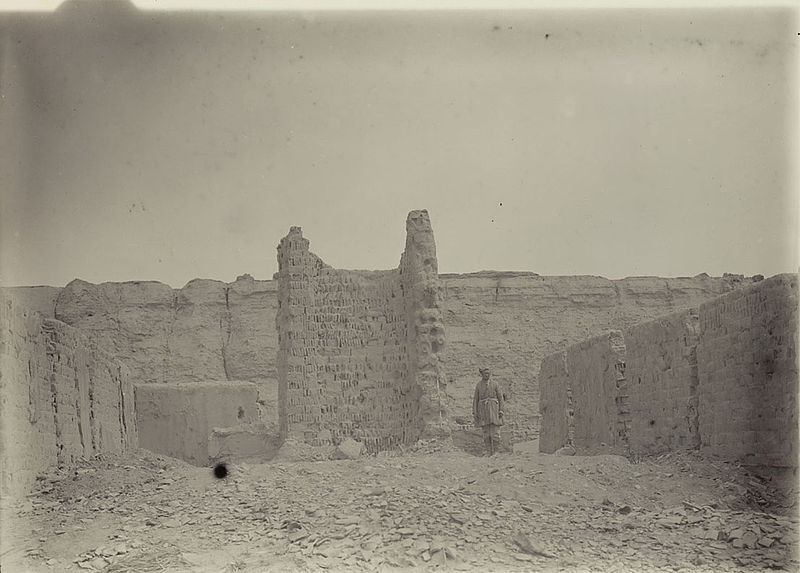
Rediscovered: Ruin At Kharakhoto from east, 30 May 1914.//Photo: Aurel Stein

So to speed things up on the outside, the Chinese went for the fortress one weak spot, the water supply. The name Gobi basically means waterless in Mongolian, and that is what they became. The city was cut off from its water supply by diverting the Ejin River that flowed right outside the city walls away from the thirsty people inside. 

The inhabitants inside began desperately to dig in the ground, trying to find drops of water according to the legend, but to no avail. When Khara Bator realized that the siege was not something they could withstand he threw all the valuables of the city into the well so as not to give that up to the invaders, even though they had to give up their life.

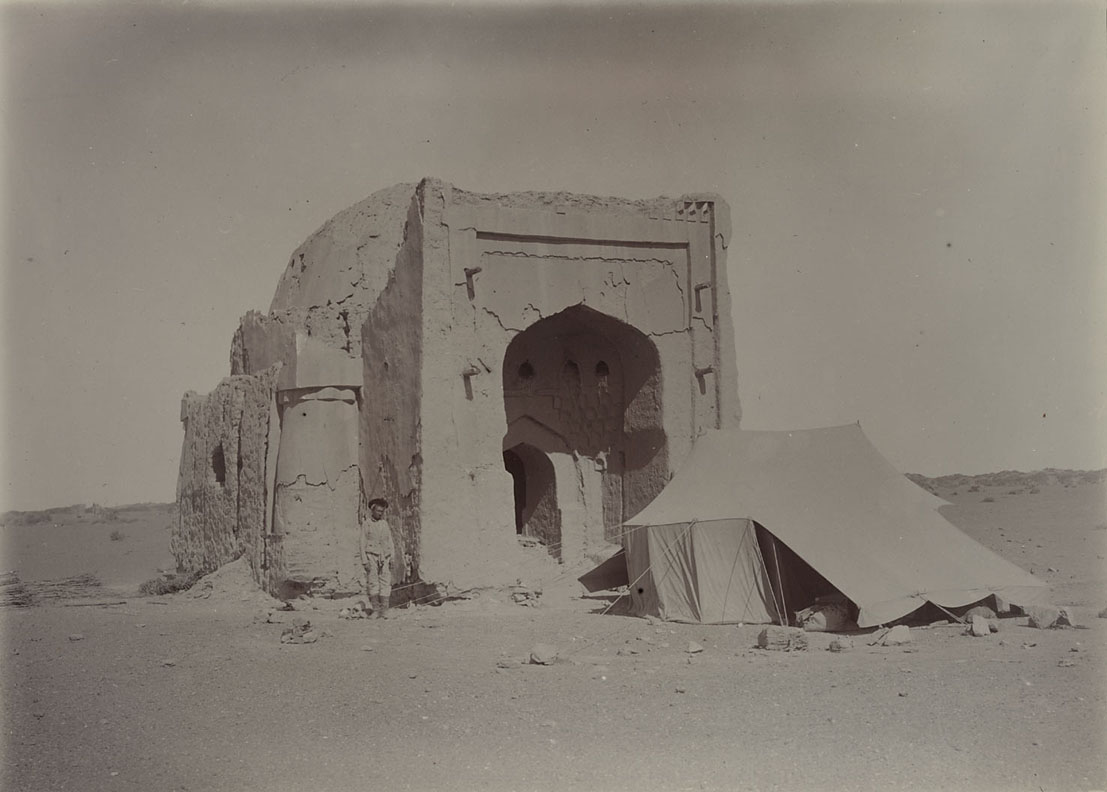
Ruins of Khar Khot: Muhammadan Tomb K.K.VI. at southeast corner of Kharakhoto, from east, 3 June 1914.//Photo: Aurel Stein

As time went on with no water with the Han Chinese army banging on their doors, Khara Bator murdered his family before taking his own life. The Mongols’ reign over Asia was slowly dwindling away. 

His soldiers waited until the Ming Dynasty finally breached the walls and attacked, killing the rest of the inhabitants of the city, not burying the bodies and making them live on as the ghost they are today. 

Another Version of Escaping

There are alternate versions we can find in the Ming Dynasty annals that tell a different story about Khar Khot. In this version, the leader together with his ministers actually escaped from this ancient Mongolian city. 

No matter who died and who escaped, the city was abandoned after the defeat and left in ruins to be swallowed by the desert. 

The Black City Today

600 years passed before people returned to the desolated city buried under the dry sand. Because of being so far from any other sign of civilization, the city was largely safe from looters and people seeking to destroy Khar Khot. 

When they first started excavating they found a rich amount of manuscripts of the Tangut language along with other important cultural artifacts, untouched because of its remote location, and perhaps because of the ghosts still protecting the city?

Today, tourists can come on a day trip to see the once magnificent city in the desert that the sand has filed down, softened the edges and buried its secrets. But in the night, they go back and miss the action that goes on after the sun goes down. Reports of flames burning for hours and strange lights that lead people astray in the desert are told from the guards watching over this place. 

Their ghost haunts the ruins of the garrisons, the walls and the very sand itself. In a way, giving the ghost city of Khar Khot a sort of life other than just being pieces of crumbling stone walls.

More like this

Newest Posts

References

Featured Image: BabelStone//Wikimedia

Khara Khoto Article, Black City Information, Alashan Plateau Facts — National Geographic

The spirit of ‘dark castle’ shines – Travel – Chinadaily.com.cn

Khara-Khoto | China & Asia Cultural Travel

https://www.ancient-origins.net/ancient-places-asia/khara-khoto-0014063