Can a house itself be a ghost? Strange tales have been sung of the sunken house at the bottom of Gardner Lake since it went through the ice so many years ago. And on quiet nights if you really listen, you can sometimes hear the piano of the house play music from underwater.
The house of Gardner Lake was supposed to be moved over the lake when it was covered in ice in the cold winters of Connecticut. Thomas LeCount was a grocer from Connecticut that wanted to move his beloved and fully furnished two-story summer house over the lake to the east side for the perfect spot back in 1895.
He thought moving the house over the ice would be more efficient than by land, but miscalculated how much the ice could take and on its travel it slipped and the ice cracked. They tried to get the house back on track, but gave up in the night to try again at first light. But they never managed to get the house over the lake and it remained stuck.
Advertisements
The Piano Playing from Underwater
But it took years to reach the bottom of the lake though and children would fish and swim around it in the summer and skate through it in the winter until it eventually disappeared forever under the dark water.
The moving of the house didn’t demand any human lifes, neither were there any rumours of the owners circulating of hauntings and ghosts. So where do the haunting rumours come from then?
By now, most of the sunken house has rotted away, but the local fishermen still tell the legend that the sound of music, og the piano of the house can still be heard on quiet nights.
The Sunken House: The house remained for years dipping in the Gardner Lake before it became fully submerged and sank to the bottom.
Horror Movie Inspired by the House
In 2021 a movie based on the story of the house at the bottom of the lake was released. Called Deep Dive the movie takes the legend further and makes it a haunting horror movie set in France.
In what is now a place of religious worship there once stood a house plagued by demonic and haunted activity. And the legend from The Wizard of West Bow and his horror house in Edinburgh.
‘It is certain that no story of witchcraft or necromancy, so many of which occurred near and in Edinburgh, made such a lasting impression on the public as that of Major Weir. – Sir Walter Scott ‘Letters on Demonology and Witchcraft’, 1830
The West Bow House of horror is one of the houses that was known as one of Edinburgh’s most haunted. For a long time everyone thought the house was demolished, but traces of it can still be found on the jolly streets in Edinburgh’s Victoria Terrace.
Advertisements
It used to be the home of Major Thomas Weir, also known as the Wizard of West Bow after his death. He lived with his unmarried sister, Jean, mostly known by Grizel, in their house in Old Town. Originally from Lanarkshire, their mother had a reputation for having The Second Sight, but they were mostly known as devoted Christians.
He used to be seen as an upstanding citizen as a Covenanter soldier with a good career in the army behind him. He was also a very strict presbyterian who would lead big groups of christians in prayer. In 1650 he was even appointed commander of the Edinburgh Town Guard. To everyone else, he was nicknamed as one of the Bowhead Saints. But look can be deceiving, and he hid some dark secret underneath the polished exterior. He has even been seen as someone that could have inspired the character of Dr. Jekyll and Mr. Hyde.
Demonic Confessions
Around 1670 people started to notice a shift in Weir’s behavior. At one of their prayer meetings, he stood up and started to speak. He was then around 70 and people noticed that he seemed ill. He didn’t pray that day though, but started confessing to heinous acts instead. This included everything from bestiality, incest, witchcraft and communicating with the dead.
House of Horror: The house of the Weir siblings at number 10 at West Bow.
In some versions however it was after Weir’s retirement after he fell sick these confessions started. And according to this version it was from the sickbed, not during a prayer meeting he confessed to his crimes.
They called a doctor, but his confessions kept coming, insisting that it was all true. Even the Lord Provost would not believe in the confessions at first as they all came as a big surprise. They wanted to dismiss it all as him being mentally disturbed instead, but he kept repeating his sins, refusing to back down.
Even his sister, Grizel, known as a quiet spinster, confirmed it all when they went to question her. Not even did she confirm what he had already said, but continued to confess more demonic activities giving testimonies of even more vile and exaggerating things.
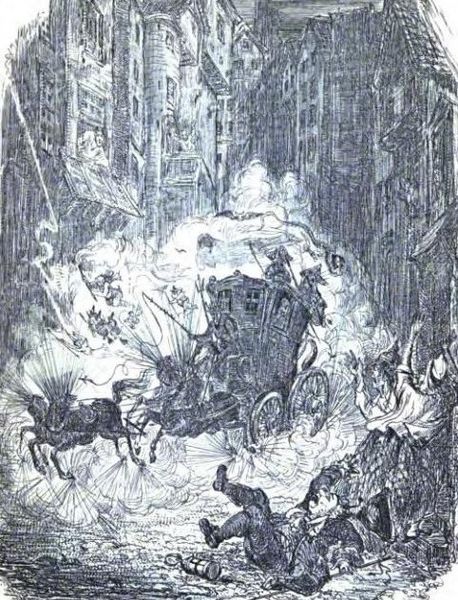
According to her he had once been taken away by a demonic stranger in a coach on fire and taken to Dalkeith, a town bordering Edinburgh. Exactly why Dalkeith would be a place a satanic coach would drive were never really explained. She even showed a mark on her forehead that looked like the shape of a horseshoe. She apparently proudly said it was a gift from the Devil himself.
There he supposedly was given supernatural intelligence in the form of a walking stick by a servant of Satan. This walking stick had a carved human head on the top and was supposedly a gift from Satan himself and was the one he usually used when leading their prayers.
Advertisements
Most cases of witches and wizards happened after someone else accused someone of sorcery. This case is a very different matter as they accused themselves. Why on earth would they further worsen the case for them, even Jean to the point of implicating herself in that manner?
They were then taken away to the Edinburgh Tolbooth by the baileys where they were interrogated and found guilty. They both received death sentences.
Executed for their crimes
Scotland was not a good place to be if you were condemned for witchcraft. Only Germany had more witch trials in Scotland during this time. Estimates reckon around 4400 witches were executed. And unlike England who hanged the witches, Scotland followed a more barbaric and continental law of burning them all.
Taken by Satan: Depiction of Thomas Weir in his fiery coach.
While they both were waiting for their execution they were held in a former leper colony below Calton Hill. Major Thomas Weir was executed in 1670 at the Gallowlee that literally means gallows field. He was garrotted and burned together with his demonic walking stick. It was said that both took an exceptionally long time to burn. He was asked for his last words, but chose to not beg for forgiveness. He reportedly said:
“Let me alone—I will not—I have lived as a beast, and I must die as a beast”
Grizel also died, but was hanged in the Grassmarket. According to reports her hanging was also dramatic and unrepentant. She supposedly tried to take off all her clothes in front of the crowd and refused to beg for mercy for her crimes.
Their bodies were buried at the base of the gallows at Shrubhill according to custom of that time. But their death apparently wasn’t enough to cleanse their house for paranormal activity.
Today we can only speculate about why he made those confessions. And even if some of them were actually true, why would he speak them out loud, and why would his sister also get implicated in it?
Was it to clear their conscience? Or perhaps a fit of madness or some sort of illness? Did it have anything to do with their mother, Lady Jean Somerville, who was a reputed clairvoyant? Or did the two actually dabble in the occult?
The Haunted House at West Bow
After their execution the house became abandoned and known as a haunted place where the locals reported seeing light in the windows although no one lived there as well as shadows moving around. There are also tales about music coming from the abandoned house. It stayed like that for over a century and legends surrounding the house continued to grow.
For example they told a story about a ghostly coach that was pulled by 6 horses spotted outside the abandoned building.
Advertisements
A couple bought and tried to move into the house in 1780 by an ex-soldier named William Patullo and his wife, but according to stories, they never stayed there for more than one night. They claimed to have seen ghostly apparition of demonic entities in the appearance of a calf staring at them in their bed.
The house as it was was demolished in 1878 and the locals thought for a long time that they were done with the hauntings from the cursed Major.
The Rediscovering of the Haunted House
However, it was discovered that a new house was built on top of it, today used as the Quaker Meeting House on Victoria Terrace. This wasn’t known before 2014. Apparently, the part of the house that still remains is now the toilet area of the Quaker Meeting House area.
Today it is one of the more colorful streets of Edinburgh, with picturesque boutiques and cafes along the cobbled street. But the haunted rumors have still not died down. One of the staff working there claims to have seen the Major walking right through the walls.
Are there haunted numbers around the world that mean bad luck? Around the world there are different numbers that are connected to bad luck, hauntings and ghosts and death. These are some of haunted and unlucky numbers around the world.
From high risers and Beijing to flight numbers to New York and car numbers in Italy, they are all influenced by people’s fear for particular numbers. Some bad numbers come from dates where something horrible happened, the sound of it being similar to something bad or it may be biblical.
And even today, in what we think is a modern world, free from old superstitions, the fear of haunted and unlucky numbers affects both the economy and how many floors there are in an elevator.
Advertisements
Number 4
Many places in the west, the number 4 is seen as a lucky number. To find a four clover means good luck, and according to superstition many places, the number 4 is seen as lucky since it is connected with so many things in nature like cardinal directions, the four seasons and the four elements.
However, in Eastern Asia countries the number is seen as an haunted and unlucky number in countries like China, Korea and Japan. Four, written 四 or 肆 said out loud sounds a lot like the word for ‘Death’ 死. Many things skip this number because of this superstition like buildings, floors, car parks and addresses.
Advertisements
Number 13
The name for the fear of number 13 is called triskaidekaphobia. Every year when Friday the 13th comes around in the U.S, the economy loses almost a billion dollars in business. As buildings in China for instance don’t have a 4th floor, many places in the U.S as well as other places in the west don’t have a 13th floor and houses often skip over the haunted and unlucky number 13.
There are a lot of theories as to why the number 13 has such a bad connection to it. Many of them connected to how many people sat around a dinner table. Like in the norse myth where the 13th guest turned up to a party with 12 Gods. One of them died and more bad luck followed. It is also connected to Judas and how he was the 13th guest at the last supper, the start of his betrayal to Jesus.
Other reasons for this number is that On Friday, 13 October 1307, King Philip IV of France ordered the arrest of the Knights Templar,and most of the knights were tortured and killed, the end of calendars and how there is more than 12 true months in a year. This created problems for those making the calendars.
Advertisements
Number 17
In Italian culture, the number 13 is actually considered as a lucky number. But the number 17 is considered unlucky and has been since Roman times. When 17 is viewed as the Roman numeral, XVII it is anagrammatically to VIXI, which in the Latin language translates to “I lived” or “My life is over.”
Due to this negative connotation, Italians avoid the number 17 in number airline seats, flights or the floors in buildings. The French carmaker Renault sold its “R17” model in Italy as “R177.” It is also for the same reason that Friday the 17th is the most unlucky day in Italy.
Advertisements
Number 666
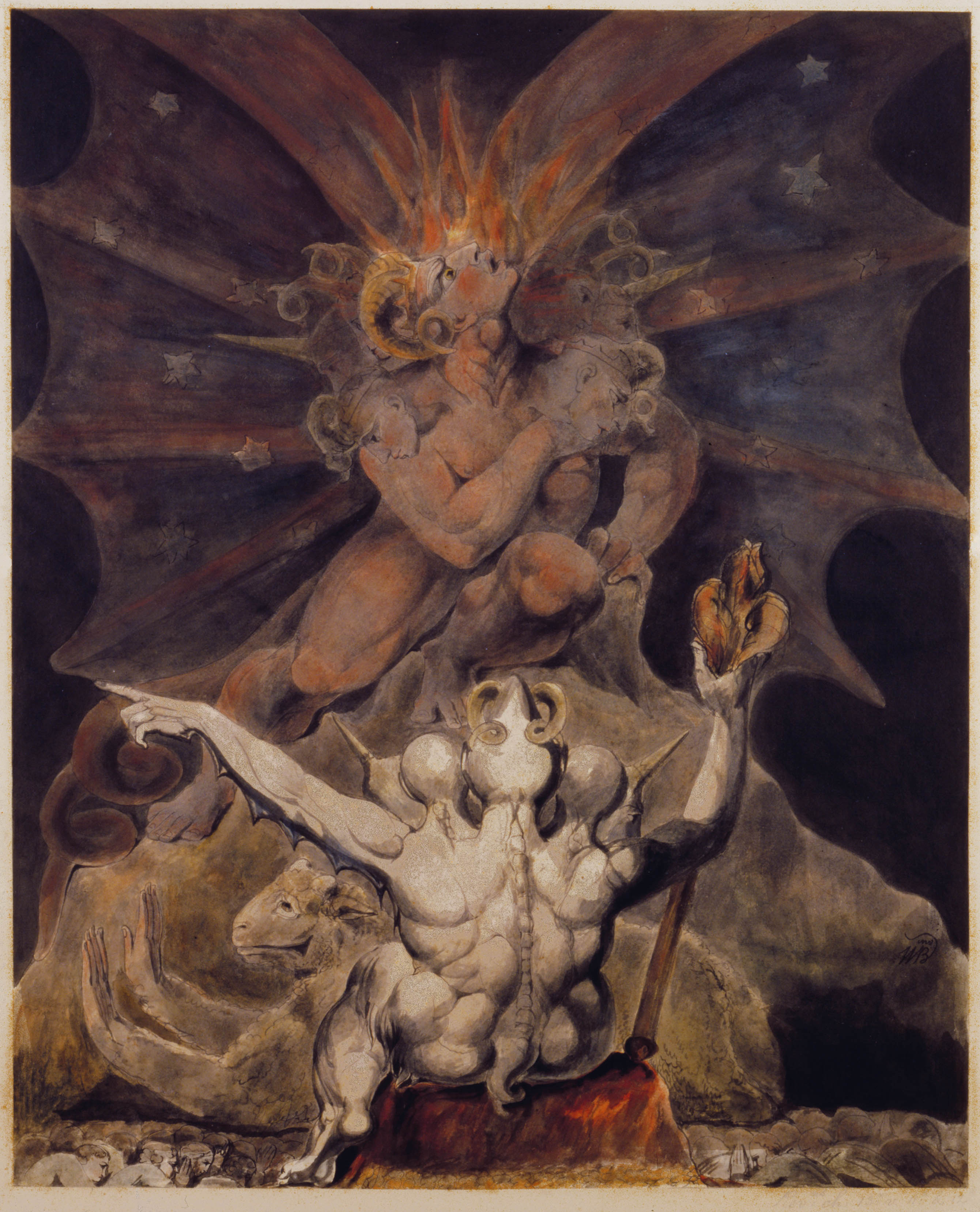
We find this demonic number in the Bible and is associated with the Beast of Revelation in chapter 13, verse 18. The haunted and unlucky numbers are known as a symbol for Antichrist himself or the devil and bear satanic powers.
The fear of the number is called hexakosioihexekontahexaphobia. There are therefore many hesitating before boarding a flight number with the mark of the beast or picking up a phone with these numbers. This is as every other number, based solely on culture though. In Chinese, the word for six sounds similar to the word for smooth or flowing and is therefore a lucky number, not a satanic one.
Christmas Christmas is supposed to be the merry season with joy and light in the darkness. But many places is haunted by ghosts and paranormal activity in during this time. In fact, many of these ghost stories are haunted especially around Christmas. Here are some of the ghost stories that are told during Christmas times.
The Legend of the Mistletoe Bough or the Mistletoe Bride is a ghost tale that many big houses claim as their own. Bramshill House is one of them. It tells the story of a girl that on her wedding day initiate a game of hide and seek on her wedding feast and is never seen again. Years goes by without a trace of her before she is found in a chest where she hid so many years ago with claw marks on the lid. The story is often set on Christmas day and it was certainly a tale they used to tell during Christmas times.
The Legend of the Mistletoe Bough or the Mistletoe Bride is a ghost tale that many big houses claim as their own. Bramshill House is one of them, and the story of the dead bride haunts the already haunted place.
A great hall during Christmas times with good food, merry guests and an unmistakable sound of a harp playing a love song. Scared yet? No? Sounds like the right vibe for a cozy Christmas time perhaps. But if the harp playing comes from nowhere, and no one is playing, scared then? This is what festive guests might hear echoing through the halls every Christmas Eve at Stubley Hall, reminiscing about the tragedy of war and love.
A temple knight returned from the holy land marries another that he promised. On Christmas Eve when the wedding was held, the left woman died and haunts him while playing the harp, luring out the man who left her were he dies. And on every Christmas after this, the sound of a harp is heard playing by no one.
A haunted town, or just a townie with the biggest hoax of all time? The legend of the Mothman reached a craze in the small town of Point Pleasant in West Virginia in the 60’s. It has everything from a classic pulp science fiction movie from that time. UFO’s, monsters in the sky, an abandoned chemical plant from the war and a Black 57′ Chevy. But what has it to do with Christmas?
On 15th of December, 1967, the Silver Bridge collapsed. It connected Point Pleasant to Ohio and was an eyebar-chain suspension bridge built in 1928. When it collapsed under the weight of rush-hour traffic, it resulted it the death of 46 people.
Sightings of the strange monster had been spotted by many in the time before the tragedy. Some saw the Mothman as a premonition of the oncoming disaster, some saw it as the cause of it. In any case, this spurred the legend that the Mothman was an Omen of Doom.
A haunted town, or just a townie with the biggest hoax of all time? The legend of the Mothman reached a craze in the small town of Point Pleasant in West Virginia in the 60’s. It has everything from a classic pulp science fiction movie from that time. UFO’s, monsters in the sky, an abandoned…
Anne Boleyn is a ghost that are spotted across England. But during Christmas times, it is reported that she is haunting her childhood home at Hever castle.
Every Christmas she is said to make an appearance at Hever Castle, at least it is now expected. Christmas was supposedly her favourite time and Hever Castle was her childhood home with good memories. And contrary to how her ghost is seen at other locations, headless and darkly dressed for instance, it is said she is seen as more happy and content when spotted here.
It has also been said she has been seen walking across the beautiful bridge on the premise that crosses River Eden, perhaps on her way home to the place of her happy and innocent childhood.
On a chilly Christmas Eve a woman and her father were riding in their carriage down the Road to Hawkhurst Kent. In the eighteenth century highwaymen were notorious and feared in the English countryside. They robbed whoever came their way, and sometimes, the robbery went more violently than necessary.
The Highwayman was trying to rob a woman in her carriage, but it went wrong and she killed him before fleeing into the woods. She was found the next day, but never recovered from the robbery as she went mad. And every Christmas Eve since, the same scene, the robbery, the murder is repeated by their ghosts.
Read the full story of the ghost of the Highwayman
Now a peaceful place for a road trip, it was once a hot spot for highwaymen and a dangerous place to travel. Sometimes, it was also dangerous for the robbers.
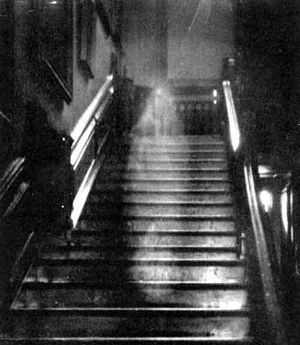
The Brown Lady of Raynham Hall is probably one of the most iconic ghost pictures out there. Is it real? Was it just a double exposure? The picture of the Brown Lady of Raynham Hall has been viral since 1936. A photographer that year took the infamous picture, forever putting it in the mystery box for people to wonder about ever since.
But what is the story behind it? And who is that ghostly figure? According to legend, the Brown Lady of Raynham Hall is the lost ghost of Dorothy Walpole and she lived a very unhappy life with her violent and bad tempered husband according to gossip. And very often, especially during Christmas times, the ghost of the Brown Lady is reported to have been spotted.
Read the full story of the ghost of The Brown Lady of Raynham Hall
The Brown Lady of Raynham Hall is probably one of the most iconic ghost pictures out there. But what is the story behind it? And who is that ghostly figure?
Closer to North Korea than to Seoul, the Yeonpyeong Island has experienced many times the horrors of the war, even in the later years. Legends of the island being hunted are spreading through the locals and visitors alike of the people that have lost their life to it.
Korea has seen warfare throughout its time and the last one, The Korean War is technically not even over yet since it started in 1950 between the two Korean countries that started in a civil war and ended up as two fighting nations.
Near the border of the two Koreas, north and south, on the 38th parallel, there is an island called Yeonpyeong Island that is to this day disputed between the two parties. Although claimed by both, it is considered as part of and inhabited by South Koreans, but the island itself is so close to the North Korean border that you can almost see it. This has made the island exposed for North Korean retaliation and its bombs.
Advertisements
Only a two hour ferry ride from Incheon, Seoul where the ongoing Korean war can seem like a strange fever dream, you can experience how close some of the residents of the island are to the war and how it still affects the people living there. And also catch a glimpse of the ghosts of those who succumbed to it as well?
The Bombardment of Yeonpyeong Island
This island has also taken its share of bombings, and military attacks since the war started in 1950. The last big attack happened on November 23th in 2010 and led to the islanders having to flee their home island temporarily and got a lot of international attention as the world condemned the action of North Korea.
The North Korean military bombarded the island where the disputed land was guarded by South Korean forces, ending up hitting civilians as well as military people, killing 4 and injuring 19 people. This incident is one of the things that are said to have escalated the tension on the Korean Peninsula in the later years.
After this, many chose to never return and would rather stay on the South Korean mainland after the attacks for a long time, creating a sort of ghost town feeling to the once bustling fishing community. And although by now most have returned, there are still those who never looked back to their original home.
The Hauntings of Yeonpyeong Island
The island is believed to be a place of spirits of both lost and vengeful ones according to the locals that are haunting the island.
The island tops many of the lists of articles like: Most Haunted in Korea and the likes. Although this claim is mostly found on websites in English, not so much on the Korean ones.
Tucked away in the Old Town of Edinburgh, the Greyfriars Kirkyard houses even the restless spirits of the locals. Even a poltergeist known as George Mackenzie.
Cold spots, white figures behind the graves and knocking noises from below the ground, the reports about Greyfriars Kirkyard being haunted are endless. A haunted cemetary is a must for an old town like Edinburgh and just at the end of George IV Bridge by the Museum of Scotland you will find Edinburgh’s one. At Greyfriars Kirkyard the visitors will leave wondering if it was just the wind or something more.
The cemetery was built in 1562 by Mary Queen of Scots, also known as Bloody Mary throughout history. It is now one of the main attractions on the many haunted bus rides you can jump on in the old town. For good reason if we believe the locals.
Advertisements
Even today there is gruesome stuff going on in the Greyfriars Kirkyard. Edinburgh was a notorious place where grave robberies of bodies happened as the demand for fresh flesh for the medical schools were in high demand. Something of the past, there are not many cases of grave robbery as this today. But as recently as 2003 two teenagers were arrested for grave robbery as they cut the head from one of the corpses and used it as a glove puppet.
Famous Graves
Many famous and notable residents of Edinburgh are buried in this place, including Hames Hutton, Robert Adam as well as perhaps the most famous local, the dog Greyfriars Bobby.
Greyfriars Bobby: Edinburgh’s most beloved dog, Bobby is laid to rest in the cemetery.
Greyfriars Bobby was a dog so loyal to his master that he never left his side, even in death as he watched over his master’s final resting place for 14 years until he died himself and is now buried beside him in the Greyfriars Kirkyard with the queen’s permission.
Even if they weren’t famous when they were alive, J.K Rowling made many famous today as she is said to have been inspired by the names on many of the tombstones.
Many ghosts have been reported on this graveyard from when it was first built, however, today the Mackenzie Poltergeist is perhaps the most famed one.
This is not the only supposed haunted graveyard we have written about. Check out these ghost stories set in cemeteries as well:
In the 70s, a deadly fire broke out at the Joelma Building in São Paulo, Brasil, killing many people. Later, the building is reported haunted, and the ghosts of the victims are crying for help from beyond the grave.
In 2000 the spiritualist Colin Grant tried to lay one of the restless spirits to rest in the cemetery. A few weeks later he died of a heart attack. After his death, many attributed this death to be caused by the poltergeist of the cemetery, Bloody Mackenzie.
Since the 19th century children believed that there was something off with this particular grave at Greyfriars Kirkyard. They used to run up to the keyhole and yell:
“Bluidy Mackenzie, come out if ye daur, Lift the Sneck and draw the bar!”
George Mackenzie was known as Bluidy (Bloody) Mackenzie when he was still living and was not remembered as a kind man. He worked as a lawyer for the King and imprisoned around 1200 protestant rebels that refused to pledge their allegiance to the catholic king.
Advertisements
The nickname comes from the horrible torture he made the prisoners he held captive in an area in Greyfriars Kirkyard known as the Covenanters Prison. It was an open area closed off by the city wall. Hundreds of people died when they went without water, food and shelter from the weather.
It is said that by 1679 there were only 48 Covenanters left alive with the rest heads on spikes along the gate.
Although Mackenzie ran away to England and died there, he was sent back after his death. After his death he was laid to rest in a mausoleum located on the same place where so many of his victims met their unfortunate end.
The Black Mausoleum
Apparently the activity around the mausoleum never seems to rest. Dead animals turns up around it without an obvious cause of death and mysterious fires are also often blamed on the strange activity that seems to happen around the Black Mausoleum in Greyfriars Kirkyard.
The Black Mausoleum: The tomb of ‘bloody’ George Mackenzie in Greyfriars Churchyard from the 1840s.
The story is that a homeless man seeking shelter from the weather broke into the Mackenzie mausoleum known as the Black Mausoleum and disturbed the spirits there, making a poltergeist angry and releasing its fury. Allegedly as soon as the homeless man placed his hand on the grave the floor opened underneath him and swallowed him whole as it dropped him into a grave of plague victims.
Another version of the story is a criminal that hid inside the mausoleum for six months. John Hayes had apparently gone mad inside the mausoleum he only left to scavenge for food occasionally. According to him, the coffins in the mausoleum moved all on their own and he could hear Mackenzie turning inside his coffin.
It was also here the teenagers aged 15 and 17 broke in and desecrated the corpse inside. Apparently they are rumored to even have drunk wine from the skull after they cut off the head. This incident was one of the things that made the cemetery and the Black Mausoleum famous
The Poltergeist of the Cemetery
Since then, reports of scratches, bruises and burns on people that have been there as well as people collapsing for no apparent reason in the cemetery. They claim that between 300 and up to 500 guests from the 90s to 2006 felt like they were attacked by this poltergeist.
In the bright summer village of Lake George you find the old Caldwell Cemetery. It holds the tombstones and the ghosts of the place’s bloody and disease ridden past.
The village of Lake George is named after the lake with the same name who is also nicknamed The Queen of American Lakes. It is a beautiful northern village today and a popular place to visit in the summer. But this summer colony has a bloody past that is said to haunt the place to this day.
One of the supposedly haunted places is at the local graveyard. The Caldwell Cemetery is an old cemetery with over 200 years the place having been used as a burial ground in Lake George in Warren County, New York.
Advertisements
It is an eerie looking graveyard even by day and the tombstones you find north of the cemetery are almost disappearing into the woods.
Smallpox Victims from Fort William Henry
It was here in Caldwell Cemetery the victims of smallpox from Fort William Henry were buried. There was a big outbreak of smallpox there and it is the Colonial soldiers that are said to haunt the place.
Haunted Cemetery: Caldwell Cemetery in Lake George is said to be haunted by more than one ghost.Source/find a grave
It is not only Caldwell Cemetery that is said to be haunted by soldiers in Lake George mind you. Now it is mostly known for being portrayed in the novel The Last of the Mohicans. But before it served as a place in the novel, Fort William Henry was also a place where many battles took place as it was on the route between the French and British colonies during the French and Indian War. The fort itself has a very haunted rumor as well as being a stop on the haunted history tour in the area.
Smallpox used to be an extremely deadly virus. In America it is estimated that it killed up to 90 percent of the indigenous population. This was something that the commanders in the British forces took advantage of as an early biological weapon. The commander in chief, Lord Jeffry Amherst handed out smallpox-infected blankets to the natives in 1763.
But also the soldiers of the British forces were not immune to it. And although the vaccine for it had already been used for a while, it was still claiming lies during the outbreak at the fort. Some sources place the outbreak in 1810, something that seems highly unlikely.
Advertisements
Historical Accuracy of the Fort William Henry
If it ever was an outbreak though among the soldiers is a bit clouded, as the Fort were said to be abandoned after the Siege of Fort William Henry in 1757, and left in ruins for over 200 years before being rebuilt in the 1950s. Meaning that the fort you can visit today is nothing more of a replica.
Under Siege: Depiction of the Siege of Fort William Henry in 1757.
Also, as the U.S got its independence from Britain in 1776, there would not have been any British colonial soldiers at the Fort in 1810 anyway.
What about the smallpox victims in Caldwell Cemetery then? Even though the years and dates from most sources date the smallpox outbreak to 1810, it could very well have been much earlier. Fort William Henry before the siege was known to be in bad condition with frequent outbreaks of smallpox.
So who is to say really, that there weren’t really any soldiers victim to the disease from Fort William Henry that are still roaming Caldwell Cemetery?
The Ghost Soldiers in Caldwell Cemetery
The haunting rumors appear to have very military details to it as it is said to be mostly the soldiers of the fort that are haunting the grounds. Those who claim to have experienced something paranormal at the place tell about smelling burnt gunpowder as well as hearing the sound of musket fire when entering the graveyard. The ghosts that are spotted are often reported to be wearing a soldier uniform.
And considering both Fort William Henry as well as the place around Lake George itself, the lingering presence of the spirits from the soldiers dying in the battles over the years makes sense.
The Grave of the Founding Father
There is however, not only soldiers from colonial times that have created paranormal rumors and ghost stories in Caldwell Cemetery. And that is where the founding father of the place comes in.
Before being renamed, Lake George was known as Caldwell, named after the founder of the place in 1810 (which might be why 1810 keeps showing up in accounts of the hauntings of the graveyard).
According to the author Lynda Lee Macken who writes books about haunted places, she tells her own story of a paranormal experience. When she was a teenager she was investigating Caldwell Cemetery with friends when one of the burial vaults started to glow orange.
The next day when she went back to further investigate she found that the tomb belonged to the founder of Lake George, James Caldwell, an Irish Presbyterian buried in a Catholic churchyard.
If you have been to a wake or a funeral in The Philippines, you may not go straight home after so you don’t bring the ghost with you.
Around the world there are all kinds of different customs to funerals and wakes, everything from what you wear, eat and behave. And in The Philippines, there is a specific custom to not draw the spirits or ghosts with you home.
There is a superstition that you are not supposed to go straight home after a wake or a funeral. Pagbag is a tagalog term that means ‘to shake off dust or dirt’, and it is believed that you should not welcome ghosts and spirits into your home. It should not be confused with the term that is also used to talk about leftover food, scavenged and collected outside of supermarkets and restaurants.
So instead of going directly home after a wake or a funeral, you are supposed to wander around after to help shake off the ghost and spirit so as not to bring them home. After an event like that, you supposedly carry too much bad energy you must get rid of.
Perhaps today not everyone believes that they would drag a ghost with them on their way home, but still do it because of tradition. People usually go to places like a cafe, a park, a shopping mall or something before heading home, just in case.
There are several superstitions surrounding the Filipino wake, ranging from the belief that you shouldn’t bring home food from the wake as a guest or to look into a mirror when you are in the presence of the dead.
Dressed impeccably in a fancy dress and high heels, this vengeful spirit known as La Taconuda haunts the roads and old haciendas of Nicaragua to get revenge on those who took her beauty.
This Nicaraguan legend tells the story of a young woman that was very beautiful, tall with thin and long hair. It is told that she was dressed fabulous in a nice dress with high heels. According to some sources, her name was Ana, but she is today remembered as La Taconuda.
She was the daughter of a Creole Spaniard named Sanches owning all the haciendas to Masaya. After her father died, she inherited everything as she was his only daughter. After this she lived alone except for her male suitors that visited and gifted her beautiful things.
One day, two men that had grown tired of her indifference to them barged into her home and smashed her mauled her face with broken glass bottles.
Ana survived the attack, continued to dress well, but cried every time she looked at herself in the mirror, feeling ugly and defeated, wishing she could get her revenge.
It is many variations as to how she became a vengeful spirit of La Taconuda after she died. Perhaps she finally felt powerful to take revenge of those who attacked her? I some variations she made a pact with the devil to restore her beauty in exchange of giving him a new soul of a man every weekend.
Today you can still spot La Taconuda, often along the road, or out in the coffee plantations, often you can hear it by the clicking of her heels. She looks fine from a distance, but if you come close enough, you will see that she is nothing but a skeleton with the means to kill you.
Some hauntings are bound to be debunked as soon as there are investigations. This is the case with The Haunted H House, but the true story could have ended so much worse than a ghost haunting.
The story of the Hauntings of H House was first published in 1921 in the American Journal of Ophthalmology by William Willmer, and was a story of one of his clients. It detailed a family that moved into a new house in 1912 and immediately started experiencing strange things.
This ghost story quickly found its scientific culprit, but then again, the details of the supposed hauntings the family thought they were under, was scary. Perhaps even scarier than harmless ghosts, as this specific scientific haunting was deadly.
The Family H and Their Hauntings
The family moved into a large house built in the 1870s somewhere in America that was described as ‘Rambling and high-studded,’ and only lit by the flimmering gas lights. In other words, a perfect location for a haunted house. The family is known only as Family H, and it is the wife of the house that tells:
“Mr. H and I had not been in the house for more than a couple of days when we felt very depressed. The house was overpoweringly quiet.”
Advertisements
The Hauntings started in the small, but got even more detailed and vivid as time went on. And the hallucinations started to get more and more terrefying.
“One morning, I heard footsteps in the room over my head. I hurried up the stairs. To my surprise, the room was empty. I passed into the next and then into all the rooms on that floor, and then to the floor above to find that I was the only person in that part of the house. Sometimes after I’ve gone to bed, the noises from the store room are tremendous, as if furniture was being piled against the door, as if china was being moved about, and occasionally a long and fearful sigh or wail.”
The Poisonous Gas: Although electricity was around during this time, many homes still used to light the house and war it up using gas. And it was a silent killer for many years in many homes.
The whole family felt it. The kids grew pale and lost their appetite, everyone suffered from headaches and they all started hearing things that weren’t there. Then the vision also started and they all started to believe they saw ghosts:
“On one occasion, in the middle of the morning, as I passed from the drawing room into the dining room, I was surprised to see at the further end of the dining room, coming towards me, a strange woman, dark haired and dressed in black. As I walked steadily on into the dining room to meet her, she disappeared, and in her place I saw a reflection of myself in the mirror, dressed in a light silk waist … On the night of January 15 we went to the opera. That night I had vague and strange dreams, which appeared to last for hours. When the morning came, I felt too tired and ill to get up. G told me that in the middle of the night he woke up, feeling as if someone had grabbed him by the throat and was trying to strangle him. He sat up in bed and had a violent fit of coughing, which lasted about five minutes … G had always slept heavily, never hearing a sound and nothing disturbed him. Now he was continually waking, answering the telephone and the doorbell, which had never rung, and looking for burglars, who never materialized.”
It was not only Mrs. H who had these visions, but her husband, her kids and her servants as well. They happened during the day as well as in the dead of night, and it wasn’t only the mind that got clouded, but their entire body felt ill. Even the plants in the house withered mysteriously.
“Sometimes as I walk along the hall I feel as if someone was following me, going to touch me. You cannot understand it if you haven’t experienced it, but it is real. Some nights after I have been in bed for a while, I have felt as if the bed clothes were jerked off me, and I have also felt as if I had been struck on the shoulder. One night I woke up and saw sitting on the foot of my bed a man and a woman. The woman was young, dark and slight and wore a large picture hat. The man was older, smooth shaven and a little balc. I was parelyzed and couldn’t move, when suddenly I felt a tap on my shoulder and I was able to sit up, and the man and the woman faded away.”
The Poisonous Gas Causing Ghost Hauntings
This torture went on for two months with vivid and detailed hallucinations. Then Mrs. H got a visit from her brother that she confided in. He urged her to seek out a doctor as the reason for the haunting could be the furnace, not ghosts.
And sure enough, when they had the house inspected, they found that the chimney pushed the carbon monoxide into their home and not out the chimney. There was also the case of the gaslights that also contributed to the problem as that type of gas at that time exhumed as much fumes as a car exhaust today.
The scentless and sightless gas of carbon monoxide can lead to hallucinations, and in the worst case scenario, unconsciousness and death as it is poisoning you by blocking the oxygen to get into your blood. People often report that they hear noises in their ears, bells ringing, rushing sounds after being exposed to it.
After the leaks were fixed, so was the haunted house. The family felt healthy and when they moved back into the house the visions stopped as well.
An online magazine about the paranormal, haunted and macabre. We collect the ghost stories from all around the world as well as review horror and gothic media.








![Robert Adamson, Greyfriars' Churchyard, the Mackenzie Tomb [Edinburgh 75] Tucked away in the Old Town of Edinburgh, the Greyfriars Kirkyard houses even the restless spirits of the locals. Even a poltergeist known as George Mackenzie.](data:image/svg+xml,%3Csvg%20xmlns='http://www.w3.org/2000/svg'%20viewBox='0%200%20265%20410'%3E%3C/svg%3E)
![Robert Adamson, Greyfriars' Churchyard, the Mackenzie Tomb [Edinburgh 75] Tucked away in the Old Town of Edinburgh, the Greyfriars Kirkyard houses even the restless spirits of the locals. Even a poltergeist known as George Mackenzie.](https://i0.wp.com/www.nationalgalleries.org/sites/default/files/styles/postcard/public/externals/117243.jpg?resize=265%2C410&ssl=1)