The story of the lost castle of Hollerwiese on Mariahilfberg Hill is still a mystery to this day. It is said that the ghosts of those living in the castle are still seen on the meadow where the castle once stood.
East of the city of Amberg in Bavarian Germany, there is a forest-covered ridge, reaching the top called Mariahilfberg Hill and has many mysterious legends surrounding it. The hilltop is crowned with a beautiful church, surrounded by a vast forest. Behind the church is a meadow known as the Hollerwiese or Hollow Meadow.
It used to be an unwooded area up until the 1800s but is now covered with trees like the rest of the hill, hiding away the name and the legend. But according to legend, the ground sounds strangely hollow when you throw stones on it.
Read Also: This is not the only mysterious forest in the world. Read about the haunted Romanian forest Hoia Baciu as well.
The Two Sisters
There is a legend that once there was a castle standing where two very wealthy sisters lived. They had also inherited the monastery in Amberg and the towns of Raigering and Neumühle from their father and had more than enough for both of them.
Their wealth was stored in huge barrels and chests in the basement of the castle of Hollerwiese. The two sisters decided to share their wealth with each other and together they promised to help each other and live in harmony.
One of the sisters was blind and the seeing sister was the one counting the money and keeping track of their fortune. In the beginning the blind sister trusted her sister without questions.
The Church on the hill: Here you see Wallfahrtskirche Maria Hilf in Amberg. The lost castle and the meadow are supposed to be right behind it. //Source: Campiana/wikimedia
The seeing sister got greedy however and started to keep more and more to herself, giving her sister less. This was something the blind sister started to suspect.
One day, the blind sister felt with her hand on the uneven stacks of gold and realized how her sister had deceived her. She cursed the castle, making it sink into the earth, still with both of them inside where none of them would have the opportunity to spend their fortune.
In some versions of the legend, the blind one got out of Hollerwiese and spent the rest of her life in Neumühle.
It is said that during holy celebrations many see the two sisters, sitting in the meadow, waving at those passing, reminding them about the barrels of gold that sits just underneath the surface.
The Robber Baron
Another version of the story of the lost castle of Hollerwiese is about the thief that supposedly lived in the castle on the mountain. He stole goods from merchants and harvests from farmers. His daughter was grieved by their fathers criminal acts and tried to undo everything he did wrong by giving back to those he robbed.
Often did she beg her father to stop, but he only laughed at her. And when she warned him about the Heavens vengeance, he only ignored her. But in the end, his greed was punished.
Under a terrible thunderstorm the entire castle was washed away with all the residents. According to legend, there can still be sound remains of it under the meadow.
Ever since that fateful night, a maiden in a white robe is seen sitting on a stone near the Hollerwiese on the evening of the solstice. Next to her is a black dog with a golden key in his mouth. This key is said to be able to open the treasure chambers of the sunken castle.
Enter into centuries-old folklore of the legendary Jersey Devil from the Pine Barrens in New Jersey. Uncover its sinister past, how it has been remembered, and why so many theories persist today.
The New Jersey Pine Barrens, also known as the Pinelands or simply the Pines, is a place in New Jersey in the USA. The place is shrouded in mystery and steeped in more than one legend, the most famous one being that of the Jersey Devil who has been a source of fascination for centuries.
Dating back to the 18th century New Jersey folktale, the Jersey Devil has inspired a multitude of theories — some plausible, and some outlandish. Learn more about this legendary creature and its continued cultural significance today.
The Origins of the Jersey Devil
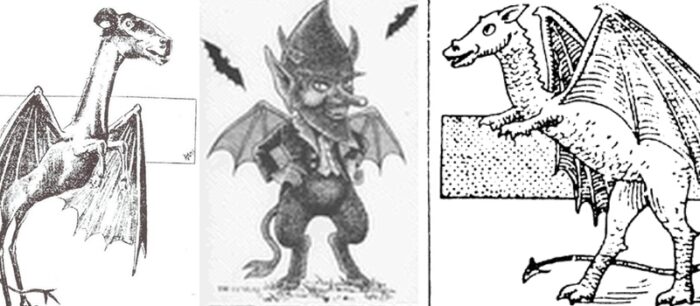
According to local legend, the Jersey Devil, sometimes known as the Leeds Devil, often described as a flying biped with hooves. The Jersey Devil was born in 1735 in Estellville, New Jersey. The story goes that a woman named Deborah Leeds, known as Mother Leeds gave birth to a child cursed with the form of a dragon or other fantastical beast.
She already had twelve children, and when she found out she was pregnant with the 13th one, she cursed the child in her womb, calling the child the devil himself. Mother Leeds gave birth on a stormy night, and the child was born as a monster.
In some variations of the legend, Mother Leeds was a witch herself and the father of the Jersey Devil was the Devil himself.
The Jersey Devil: Here are several depictions of the creature known as the Jersey Devil or the Devil of Leeds throughout the years.
The creature soon escaped and began terrorizing the locals, swooping down from the sky and stealing farm animals, destroying crops, and even reportedly attacking some people. To this day, it remains an enduring element of local folklore — as well as a source of mystery and enchantment for many.
Sightings and Reports Throughout History
Since its first sighting in 1735, the Jersey Devil has been reported to have been seen in various forms and places in and around New Jersey. Before the 1900s, it was mostly referred to as the Leeds Devil or the Devil of Leeds, either because of the family name of Leeds or because of the New Jersey town called Leeds Point.
Sightings of the legendary creature have been reported throughout the centuries, most often as a winged demonic creature that walks on two legs and is able to fly. According to these sightings, it was blamed for killing many livestocks, and even Napoleon Bonaparte was said to have seen the Jersey Devil when he was out hunting in 1820.
Reports of its presence grew after a wave of sightings occurred near Camden between 1909 and 1910, leading to widespread newspaper coverage when the Jersey Devil allegedly attacked a trolley cart as well as livestock and the police themselves supposedly opened fire at the creature.
People reported footprints in the snow looking like the Jersey Devil as far as Delaware and Maryland. According to the writer Gordon Stein in his book Encyclopedia of Hoaxes, a man came forward as the culprit behind the mysterious footprints.
Nevertheless, there were organized manhunts and in the woods and people were advised to stay in their homes. Although these reports tapered off over time, tales of its exploits continue to be told among local residents today.
The Blue Hole
But where does the Jersey Devil really live? The Pine Barrens is a large area, but there is one particular place that is talked about more than others. In the middle of a dense forest there is a lake with a very unusual color that is often connected to the Jersey Devil called the Blue Hole.
As well as being a popular party spot, it also contains countless legends. For instance it is supposedly bottomless with powerful currents. In real life the Blue Hole really has some cold spots, but the legend tells that the water is freezing cold all year-round. It is around these parts that the Jersey Devil is most active.
Modern Theories and Beliefs About the Jersey Devil.
There are various theories and beliefs about the Jersey Devil that have been held throughout history. These range from mythological explanations such as the creature being the Thirteenth Child of Mother Leeds to more scientific concepts like a rare species of mammal surviving in an area where it is not known to exist.
More down to earth explanations have also been put forward saying the Jersey Devil is nothing more than the figment of imagination that came from the fear of the isolated place the Pine Barrens was at the time. It was considered dangerous and inhospitable with highwayman, fugitives, and outcasts like poor farmers, Native Americans and runaway slaves.
Some people believe that the Jersey Devil is actually an alien or interdimensional being, while others speculate that it may be a form of cryptid capable of shape-shifting. Regardless, speculation and legends surrounding the Jersey Devil continue to this day.
Captain Kidd
One of the other legends from the Pine Barrens is that of Captain Kidd. His real name was William Kidd and was a Scottish sea captain who turned into a pirate. He was executed in London in 1701 for both murder as well as piracy.
According to legend he buried a treasure that has yet to be found. It is not only in the Pine Barrens, but also in Nova Scotia, Connecticut and Long Island that have legends and myths about there being buried treasure around those parts.
According to legend from Pine Barrens though it is around Barnegat Bay that CAptain Kidd is haunting as a ghost, often reported about being a headless ghost.
Captain Kidd is often seen in company with the Jersey Devil himself, walking along the beach.
The Black Doctor of the Pines
The ghost of the Black Doctor is said to be the spirit of a man known as James Still. Still was said to be forbidden from practicing medicine due to his race, and he went to the Pine Barrens to practice medicine in the isolated communities of the Barrens.
There he studied medicine from textbooks and according to some legends, learned herbal medicine from the Native Amercans as well.
How he died is still debated. Some say the locals in the Pine Barrens tells the story of how he was lynched when they found out he practised medicine.
Others tell the story about how he was a hero in the isolated community and died of a heart attack, which is the true story of how James Still died.
He is said to be a helping ghost and is said to still come to the aid of lost or injured travelers in the Pine Barrens woods.
The Girl With the Golden Hair
Another ghost that haunts these parts is said to be a woman dressed in white found by the seaside, staring out into the sea as she is still mourning her lover she lost out there.
Her ghost stories are often mixed with the Jersey Devil as well, as he is said to sit next to her.
The White Stag
Something less menacing than the Jersey Devil is the spirit of a white deer that is said to show up when lost travelers need aid in the Pine Barrens. It is also said that the spirit is a warning of danger ahead.
This comes after a story where a stagecoach nearly fell into the Batsto River. The coaches reached Quaker Bridge and the horses refused to move and go over it. When the driver investigated further, he saw the white stag on the road before it disappeared before his eyes.
A closer inspection showed that the bridge was destroyed and since then it is said to mean good luck if you ever spot it.
The Black Dog
Another animal spirit around these parts is that of the Black Dog. Most often, seeing a Black Dog is a bad omen in European mythology, but in this instance, it is a good luck charm. It roams on the beaches and forests from Absecon Island to Barnegat Bay and is considered a harmless spirit.
It is said to be the ghost of a dog that was on board a ship that was attacked by pirates on Absecon Island. They killed the crew on the ship and among the killed were the cabin boy as well as hin trusted black dog.
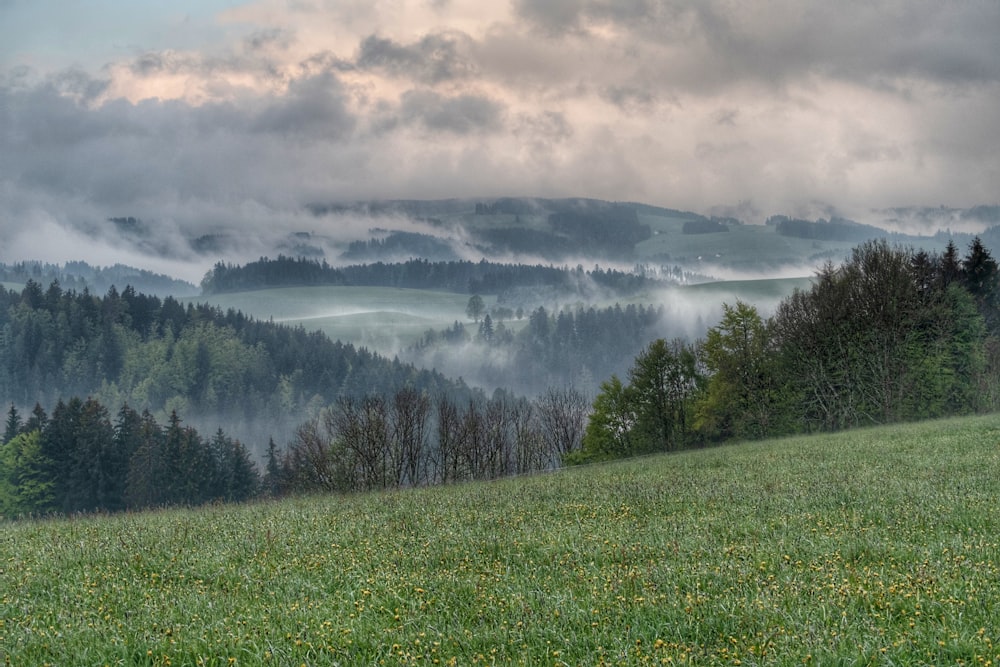
The Black Forest in Germany is known for its haunted dark fairy tales from the brothers Grimm and the magical place has more than one legend about something magical and strange happening. But how haunted is really this place?
The Black Forest in Germany is not really a single forest, but a whole forested mountain range covering a large part of the country of dark fairy tales where around 60 % of the area is covered with some form of woodland. The Black Forest or Schwarzwald in German goes from southwest in Germany, down the Rhine Valley to the west, almost reaching the border to France and Switzerland, covering over 6000 km2.
The place is mainly rural with a few large towns and many scattered little villagers around and has become a place where legends of the supernatural and fables are allowed to live between the brooding thick woodlands with miles and miles of a forestry trail.
The Most Haunted Places in the World?
The place often pops up on lists of Most Haunted Places both in Germany as well as worldwide, but what exactly makes this entire place haunted as it is known as this dark and magical place for any outsiders? Calling the entire place haunted in the strictest sense doesn’t quite cover it all as the world enchanted does, with both the good and the bad.
Read also: Check out all the haunted places around Germany: Here
The Black Forest with its ominous sounding name is said to house everything from wicked witches, hungry werewolf, beautiful nymphs and forest goblins between the dark trees. Many of the stories sound like they come from one of the Grimm brother’s fever nightmare, and a couple of the stories of the Grimm brothers actually take place in a place that looks a lot like the Schwarzwald.
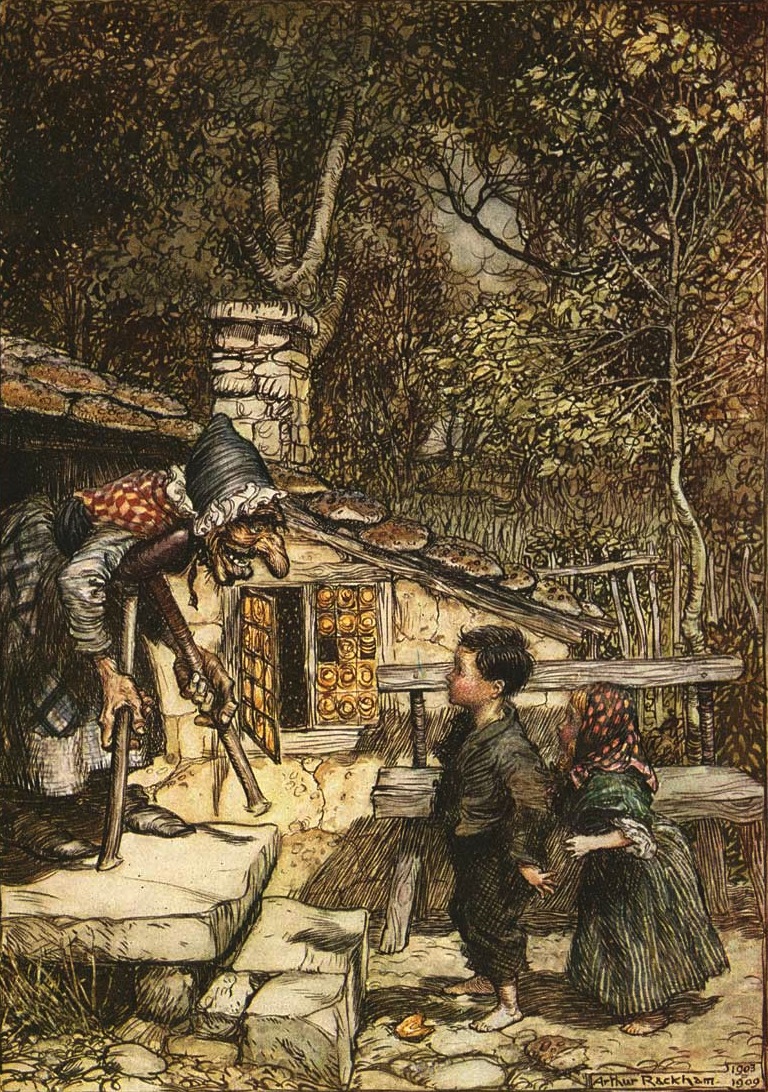
Stories like Hansel and Gretel losing their way in the forest and being captured by a witch, the menacing Pied Piper leading the children away from the urban town into the wild or the Little Red Riding Hood with the wolf knocking on the door. But do they actually take place here like the tourist guides would like you to believe? Have a bite of the Schwarzwälder Kirschtorte, and finish your glühwein, because many of these legends is like a super dark fairy tale.
Background of the Black Forest
Walking through the landscape of the Black Forest you will see the romantic part of Germany with stout timber farmhouses and remnants of Baroque fortification from the 17th century, especially on the mountain passes. The highest peak is the Feldberg at 1493 meters above sea level before drooping down with its deeply carved valleys and rivers like the Danube river starts and continues through Europe.
In ancient times, The Black Forest was known as Abnoba Mons after a Celtic deity, Abnoba. She was worshiped in the Black Forest and the surrounding areas and couldn’t encapsulate the spirit of The Black Forest better. She was of course a forest and river goddess, showing just how much of an importance the thick woodlands with its wispy waterfalls and evergreen meadows had for the people living there.
Historically the people living in this forest area were known for forestry and the mining of ore deposits. Today however it is tourism that is the primary industry.
It was the Romans that gave the mountain range the name The Black Forest because of the densely growth of the very dark green conifer trees.
Because of its long history, it is easy to believe like The Black Forest area has been this unchanged and wild place forever without any disturbances. However that is not the case and the area has been through many changes and has been thoroughly cultivated by the human hand.
It used to be a mixed forest until the 19th century, when the Black Forest was almost completely deforested by too much forestry. It was replanted, this time, mostly with spruce as the only type of tree. Then in the 90s, a series of windstorms, among them Hurricane Lothar in 1999, swept over the Black Forest and destroyed much of the replanted forest. Large areas were left to nature and have since grown into a natural mixed forest again, showing how nature always finds a way.
Myths and Legends of Schwarzwald
Deep and dark forest landscapes create mysteries and legends and Schwarzwald is no exception. Legend has it that the forest area is haunted by werewolves and witches and in some cases, the devil himself.
Read more about the haunted forests around the world: Here
There are also stories about a headless horseman riding on a great white steed, a mythical motif we see in many instances in countless ghost stories and written horror like the famous Sleepy Hollow for example.
We can also find dark fairy tales of an evil king who kidnaps women to take them to his magical underwater lair where he lives among the nymphs.
The Black Forest is not short of stories that tell about the dangers of the wild and what will happen to those that step outside from the path. And none more of them than what we can find in the Grimm brothers collected stories. But did the brothers really find some of the stories among the dark pine cone trees?
The Stories of The Brothers Grimm
This is a place where magic is everyday, the birthplace of Cuckoo Clocks ticking away on walls, fairy tale is real life and the people use tarot cards as playing cards. The Black Forest is also were most people connect the often bizarre and dark fairy tales of the Grimm brothers, and many of them can be traced back to the area.
Stories from the Black Forest: The Brother Grimm’s Fairy Tales definitely helped making the Black Forest a place of magic and wonder.
Brothers Grimm set many of their most scariest folk tales to the Black Forest as this was one of the places where they collected them throughout Germany. The brothers didn’t actually write the fairy tales themselves though. The stories themselves had been told orally for ages locally, they simply put them down to paper.
Like Hansel and Gretel’s encounter with the witch were well suited as the place had a reputation for witches and witchcraft long before any of these tales were written down. Fairy Tales like Rapunzel and Sleeping Beauty are also said to have been set inside of the Black Forest. But is this true?
How accurate it is though is hard to say, as many of the stories are also said to be from northern part of Germany, especially around Hesse. Although the fairy tales doesn’t really have a super specific location attached to them, and many are reworks of tales that have been told all over the place, locating these fairy tales to this specific mountain range is difficult.
Although the marketing of the tourism in the Black Forest will tell you another story, because many parts of the area really fits perfectly for the more darker tales.
If you are looking for a fairy tale which explicitly plays in the Black Forest is the more under the radar fairy tale called “Heart of Stone” by Wilhelm Hauff.
The Modern Myth of Der Grossmann
There is a particular creature that shows up today on many listicles online about the Black Forest being one of Germany’s most haunted places. This is the story of Der Grossmann and it looks like it originated online together with the urban legend of Slenderman, not in the forest as a fairy tale to keep children out from the dark forest.
Der Grossmann tells of a tall and ugly man, badly disfigured with bulging eyes and too many arms. He is associated with woodcuts carved in the 1700s by an unknown artist in Germany and has as of today a pretty extensive backstory. According to ‘local legend’ bad children were sent into the forest, and they had to confess their sins to der Grossman. It is said that the worst children never came out from the forest again.
This particular story looks like it didn’t originate in the depth of the Black Forest because all information about it comes from articles discussing the historical aspects of the urban legend, the slender man. And in no place does the old legends from Germany mention a creature like this.
Even though it isn’t necessarily an old folk tale, the story is a pretty good one.
Hauntingly Beautiful
Whether a modern ghost story from one of the small towns, or an ancient legend that over time turned into one of the darker fairy tales, the Black Forest holds the macabre and haunted together with the whimsical and magical.
It has and probably will continue to draw people that wish to disappear in between the trees and off the beaten path that leads into the wild.
Witches, dragons and ghosts, Edinburgh Castle are said to have it all. The sound of bagpipe and drummers can be heard without anyone playing, and those accused for witchcraft as well as prisoners of wars are said to haunt the old castle.
Although the castle as we know it today wasn’t built until the 12th century, the Castle Rock has been lived on for more than 2000 years. It is built on top of an extinct volcano formed 350 million years ago. The castle itself has been built and rebuilt over the years but you can still find traces of the castle that are over 900 years old.
It is also the place in Britain that has been attacked most times with a record of 23 attempts to take over the castle. It has a story filled with wars, bloody battles and tortured, and is said by many to be a haunted landmark that watches over the old town.
Edinburgh Castle: There are so many alleged ghost stories coming from Edinburgh Castle perched on Castle Rock. Among them is the Grey Lady, the missing Piper and little drummer boy. There are also ton of older legends about dragons, black hounds and ties to ancient romans and Arthurian legends. How much of it is really true?
History of Edinburgh Castle
Nine Maidens: Morgan le Fey is said to be one of the Nine Maidens in Arthurian legend. By Anthony Frederick Sandys from 1864.
The castle holds many legends to its name. According to the origin story, the first castle that was built on the hill was named The Castle of the Maidens, built as a shrine to the Nine Maidens, a mysterious and old cult of religion that can be found throughout many countries in Europe. One of these supposed Nine Maidens in Scotland are often attributed to being Morgan le Fay, a mythical figure in Arthurian legend that are said to hold magical abilities.
Even if there are no real substance to her being a real figure, the legends of fantastical magical things keeps being told around the castle grounds. Another legend from older times is the dragon. As far back as 1558 there were several reports about a dragon that was supposedly seen on one of the biggest towers at the time.
Even if there are no more reports about dragon sightings, there are still many urban legends about the castle that lives on to this day. There is also an urban legend that if students pass through the castle gates, they will never pass their exams. Many students are following this rule, and never visit the castle during their stay here, just in case.
Ghosts of the Castle and Haunted Legends
As well as fantastical rumors about dragons and mythical sorceresses, there are legends of ghosts and hauntings. Among the many haunted rumors of the castle, there are reports of the strange sound of drums and music. You can also hear the vague knocking sound you can never be sure to be the wind or something more ominous.
People report of A sensation of being touched, pushed as well as a feeling of dread and despair can follow you when walking along the stony walls. There are also reported sightings of curious lights and flaky figures in the shadows. It is said a black dog is haunting in connection to the pet cemetery on the castle grounds as well as a man in an apron. But there are some ghostly legends more told than others:
Ghosts from the Witches Burned at the Stake on Castle Ground
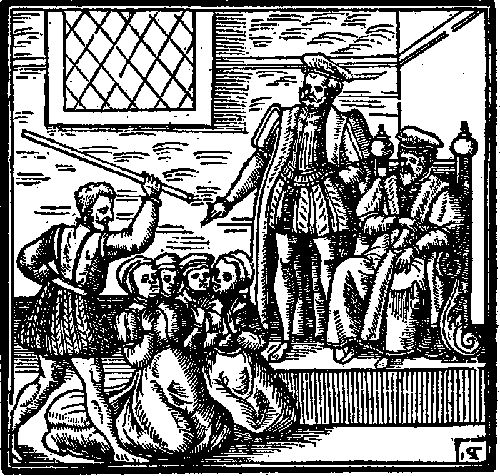
One thing the castle was in the lead for was for burning more witches during the 16th century than the rest of the country. Over 300 women were tortured before being burned at the stake at Castle Hill, everything from simple peasants to noble women.
Among them, Dame Euphane MacCalzean, accused of witchcraft in the North Berwick witch trials. She was found guilty and burnt alive on 25 June 1591 on the southern slope of the Castle Hill below Edinburgh Castle.
The North Berwick Witch Trials: Dame Euphane MacCalzean was a notable figure in the North Berwick witch trials of 1590-1591, one of Scotland’s most infamous witch hunts. A well-educated woman of noble birth, she was accused of conspiring with witches to raise storms against King James VI’s ship during his return from Denmark.
Some believe the spirits of these women linger still, their pain echoing across time. if we are to believe the haunted legends, there are perhaps one or two of the accused witches that are haunting the castle.
Red More: Check out Agnes Sampson — The Wise Wife of Keith to read about another haunt from one of the victims who were convicted and killed in the North Berwick Witch Trials.
The Lone Piper Boy Playing Under the Royal Mile
Walking in the historical city of Edinburgh, the sound of bagpipes is heard on every occasion. On a random street corner, from the tourist shops, during a parade or as a part of the historical landmarks. Bagpipes are the thing, perhaps even from the ghosts of the city.
The Piper: The Bagpiper by Johann Christoph Erhard.
The most famous ghost that is said to haunt the castle is the piper that was sent down to explore some tunnels they found ran under the castle towards Holyrood Palace a couple of hundred years ago. A young and small boy that would get through the network of tunnels.
According to the legend, the regimental piper played his pipe as he ascended down the Royal Mile, stretching through the old town from the castle. Halfway down the mile to Tron Kirk the music suddenly stopped.
A search party was sent down to investigate after the music stopped, but the piper was never found again, and they sealed the tunnel’s shut so no would could get in… or out… According to legends though, he was certainly heard. He is said to walk the royal mile to this day and the unmistakable sound of bagpipes can be heard from underground.
So perhaps walking down the Royal Mile, the sound of the bagpipes echoing throughout the whole city might as well be from the ghost piper?
The Headless Drummer Boy
Another ghost that has been sighted on several occasions is that of a little drummer boy without a head. He was first seen in the central courtyard of the castle in 1659, a year after Charles I was beheaded. He was walking in circles, drumming his drum playing an Old Scottish war tune. When the castle servants looked closer, they saw that he didn’t have a head. It is said that he drummed all through that night and continued until the morning.
Although he has not been seen again, he is considered a bad omen if he ever appears again. The same year he showed himself, Oliver Cromwell invaded Scotland and laid siege to the castle. Is this enough to give credit to the legend?
Even though no one has seen him since that fateful night, the servants working at the castle have throughout the years claimed to have heard his drumming in the quiet hallways of the castle from time to time. Who knows… Perhaps the next time someone sees the drummer boy, the castle will once again come under attack?
The Grey Lady Haunting the Halls of Edinburgh Castle
A mysterious lady has been reported staying in the older parts of the castle. Sometimes she is just seen wandering around in her 16th century dress and sometimes she is reported to weep.
Janet Douglas: Lady Glamis was a noblewoman accused of witchcraft, who was executed by burning during the reign of James V of Scotland.
There are several real nobles she is thought to be: The first one is Janet Douglas or Lady Glamis. She was accused of witchcraft and burned to the stake outside the castle on July 17th in 1537 with her son watching it all. It is said that even back then, they knew that the accusations were wrong, but King James V held a grudge towards her brother and took it out on her.
Janet also haunts Glamis Castle as The Grey Lady of Glamis, wandering through the family chapel and clock tower.
Others think that the Grey Lady haunting Edinburgh Castle could be the French Marie de Guise, mother of Mary Queen of Scots. She died a catholic and the Protestant nobles held her body inside the castle for nine months before returning her to France, wrapped in a cloth inside a lead coffin. She was then secretly taken to France for a proper burial in the Convent of Saint-Pierre in Reim.
The Prisoners in the Dungeon and Towers
There are also the castle dungeons where they housed criminals for centuries that are supposedly haunted. There were many wars that the castle dungeon saw: the Seven Years War, The American War of Independence and the Napoleonic Wars just to mention a few.
According to legend, from one of these wars, the ghost of a prisoner is said to haunt the castle to this day. In 2003, construction crew members restoring the Queen Anne Tower claimed ghosts of prisoners from the Napoleonic Wars harassed them and refused to work there. Who knows what they really saw, but there are certainly rumors. The hazy blue orbs mentioned earlier are said to appear more frequent in this tower than in the rest of the castle.
But who was this prisoner? The legend tells of a prisoner who tried to escape in a wheelbarrow filled with dung that were taken out of the castle. The cart was dumped over the high castle walls and the prisoner broke his neck when he hit the rocky ground below. He now haunts the place and tries to push visitors down Castle Rock. What gives him away is the lingering smell of dung in the air.
The Legends Living on in Edinburgh Castle
That was some of the ghosts that are said to be haunting the castle. Old places like these will have its history, and through all the bloodshed and Even today, myths surround Edinburgh Castle. Students avoid crossing its gates, fearing it may curse their exams still to this day.
But it’s the ghostly activity that chills the hearts of visitors. Phantom touches, flickering lights, and shadowy figures have been reported. The sounds of drums, faint knocking, and whispers stir something restless in the castle—perhaps spirits that will never truly leave. legends surrounding the place since the first people arrived on the rock, the place will hold its stories.
On the Venezuelan plains, the vengeful ghost of La Sayona hunts down cheating men that don’t get from it alive. She is cursed to make her revenge on them after she murdered her whole family.
La Sayona is a Venezuelan ghost story about the vengeful spirit of a woman haunting the roads, the jungle as well as the Venezuelan plains. She is after cheating men and appears mostly on the roads, asking men for a ride on the vast Venezuelan plains known as Los Llanos.
Read all of the ghost stories at haunted roads here:
When the man she has chosen as her victim is looking more closely at her, her face is just a skull with terrible teeth. Her name La Sayona is referring to the type of clothes the ghost is supposedly wearing and is a long white dress, and referred to a medieval undergarment. It basically means something along the lines of ‘Sackclothed Woman’.
La Sayona: The ghost has been described as a woman in white haunting the roads in Venezuela. She is like a crossover between the vanishing hitchhiker and the woman in white. But this version is a very dangerous and deadly one.
This is an old legend in Venezuela, similar to many women in white ghost stories from Europe with a hint of The Vanishing Hitchhiker urban legend mixed in with it today. She is also somewhat similar to other vengeful ghosts from across the globe, like the Japanese Onryo or the Korean Virgin Ghost.
Most similar though, will she be of other South American legends about vengeful women on a mission in their afterlife and the story of La Sayona is often mixed with the famous La llorona legend from Mexico. Especially because in these legends, the woman was the violent one. She is also a part of Colombian folklore that has its own spin to it that we will come back to later.
Along the rivers in Mexico a wailing woman wearing white can be see and heard as she comes up drenched from the waters. She is desperately looking for her children she herself drowned. And according to the legends of La Llorona or the wailing woman, you are next.
In the legend of La Sayona there supposedly was a woman named Casilda that lived on the Venezuelan plains in a small town were life was peaceful and without much to worry about. She was the prettiest girl in town and married to a loving husband. Together they had a son and it seemed like she had a perfect life together with her family. But that was all surfaced level though as she had one fault, she was violently jealous.
Once, Casilda was swimming in a river near the village naked where a man from the village spotted her. She told him to get lost and leave her alone, but the man didn’t listen. He would start to follow her and watch her bathing in the river. He then told her that he was there to warn her and said her husband was having an affair with her mother. It was nothing more than a rumor from a random man watching her bathe, but the rumor filled her with an immense rage so she couldn’t think clearly.
Wet Season: La Sayona is known to roam on the Venezuelan plains in search for cheating men she can punish as part of her eternal curse. // Photo: Haroldarmitage
Casilda then ran home to her husband and found him inside the house with their son sleeping in his arms. She was blinded by rage and set the house on fire without asking him for the truth. The villagers heard their screams as both the husband and the son burned to death inside the house.
Meanwhile, Casilda was on her way to her mother’s house that sat on her patio. She would not get the chance to explain either as Casilda attacked her own mother with a machete and stabbed her to death in the stomach.
The mother bled slowly to death, but not before she managed to curse her daughter. She told Casilda that from then on she would avenge all of the women with cheating husbands. And whether her mother and husband really had an affair, she would never get an answer to, driving her mad.
She was from then on known as La Sayona that hunts cheating men by conquering them and then killing them.
The Different Variations of the Legend
There are many variations to this tale today in Venezuela as well as the rest of South America. She sometimes shapeshifts to animals or even monsters or sends out a scream almost like a Banshee that can be heard from a long distance. The variations of the legends have all in common that it is the men who has to pay the ultimate price of her wreath.
The legend of La Sayona is also grouped together with several ghost stories about female spirits haunting the roads and highways after men to take their anger out on. Much like in the case with the story of La Descarnada of the Highway.
On the highway in El Salvador, be vary of who you stop for along the way. Especially beautiful women that asks for a ride to a nearby place. It might very well be the vengeful spirit of La Descarnada.
In some versions of the legend, La Sayona comes out from the jungle where men are working. She comes when the men are talking about sex or about women they left behind. When she appears she either takes form as a beautiful woman or a loved one and manages to lure them into the forest were she has her revenge. There she devours them in an animal-like shape or mangles them, and leaves their body for the rest of them to see as a warning.
In the Colombian version from the plains, they tell that La Sayona was a beautiful woman named Sarona that turned into a monster. In this legend she was not really a violent woman, but a cursed one nonetheless.
She lived as a normal person until she ruined the holy clothes of a priest and was punished for her sin. God condemned her to live an eternity of great hunger because of this. She turned from a beautiful woman to a monster with big teeth and eyes and with an appetite for human flesh.
Sarona’s punishment was something she couldn’t control and she was consumed by it. In her hunger she then devoured her own brother before escaping out on the lonely plains in Columbia where she lives more like beast than man. She comes at dawn and takes drunk men wandering alone she devours.
Outside the shores of Chile, there a tales of a ghost ship that will take you away if it gets you to make you one of their crew. Could you join to sail the sea forever with The Caleuche?
Outside of the Chiloé Archipelago,the group of islands outside of mainland Chile, rich folklore and mystical myths of the sea that surrounds the islands thrives. Here they believe in the great battle of the two serpents of earth and sea that created the area.
Fishing and sailing were the main thing the locals did for a living, and the mythology of the place reflects it. And when the fog comes creeping up to the shores of the canals, bright lights and the sound of jolly music can be heard from the sea. Just a fishing boat passing playing loud music? Or can it be The Caleuche, a ghost ship that collects the drowned and enslaves people to work on the ship forever?
Background of the Mythology
The Caleuche is a ghost ship from Chiloé mythology in southern Chile that has a pretty distinct mythology different from the rest of Chile as a mixture of the indigenous people and the Spanish settlers. It in particular reflects just how important the sea is in the life of Chilotes.
Advertisements
The word Caleuche comes from the Mapuche word Kalewtun, meaning to transform or to change and che, meaning people. It is also called The Enchanted Ship, Barcoiche or The Warlock Ship and has many different variations to the legend.
It has many similarities to the Flying Dutchman in the sense of being a ghost ship you can sail with for an eternity.
According to Chiloé mythology, it is Millalobo that is both the creator and owner of the ship, the second most important being of the sea after Caicai, God of water.
Ghost Ship of Never Ending Partying
The Caleuche is a ghost ship of music and light that sails along Chiloé canals. It has an extraordinary speed. You can not always see the ship, but in certain weather, like on a foggy day, you can both sense as well as see the ship.
People have always had a fear of being captured by The Caleuche and there are particular trees that you can hide behind that will give protection of being spotted, such as the Chilean wineberry and the olivillo. The reason being that in some versions of the legend, you can be enslaved and cursed to work on the ship forever.
The Caleuche: From the fog light can be seen and the sound of music can be hears. According to Chiloé mythology and folklore it is the ghost ship The Caleuche, filled with enslaved sailors, drowned bodies or evil sorcerers depending on what version you hear.
One of the things the ship is known for is the music and sound of partying. In some legends, it is to lure the people to them so that they can be forced to work as a crewmember for eternity.
It is not always for a sinister reason that the party music is so loud from the ship however. In many of the versions it is a ship that recovers the dead bodies from those who drowned at sea, and offers them a place as a crewmate on the ship. They will then be able to spend the rest of eternity partying and celebrating.
Making Pacts with Sorcerers
Another version of the tale is that it is in fact a ship that transports the sorcerers. It is said that they make a voyage every 3 months to gain more power. It is from this legend the idea of merchants trading with these sources to gain wealth quickly, and explaining when a person in Chiloé becomes rich quickly, they have made a pact with the crew on The Caleuche.
It is not a very old myth that never gets told anymore. In the 1960 Valdivia earthquake, or the Great Chilean earthquake, there were many fires, landslides, tsunamis and floods in the area after the initial shock of the quake. Many houses were left untouched by the natural disasters and rumors and talks about a pact having been made with The Caleuche were told.
In the same decade stories about the sound of an anchor being dropped outside of the houses of many prosperous and rich merchants in the area. According to the legends they would lend out their houses to The Caleuche for a party location and other dark purposes. Although many could probably put the blame and the reason for getting rich on normal and mortal smugglers.
The mysterious mountains in Albania is a place known for its myths and legends. Strange tales are told of this place and has been named The Accursed Mountains.
“I could not help feeling that they were evil things– mountains of madness whose farther slopes looked out over some accursed ultimate abyss.” – H. P. Lovecraft: At the Mountains of Madness
The Albanian Alps, officially called Prokletije is a breathtaking sight in the Balkans with glacial features, pointed peaks and weathered landscape, stretching from northern Albania, all the way to Kosovo and Montenegro. The lush green valleys and thick forests filled with wolves, old traditional stone villages makes you feel you really are in a fairy tale like place.
But the beauty of the accursed mountains comes with a bittersweet aftertaste when learning what the translated name of the mountain is. In English Prokletije is roughly translated to the Accursed Mountains and has a legend and myth that rests amongst the mountain peaks. And according to legends, it was the devil himself who created the mountains. As the name suggest, the legends surrounding The Accursed Mountains are more sinister than fairytale like.
It is difficult to understand why such a serene place has been dubbed a cursed one, because how could the devil create such a beautiful thing? Anyway, that is the tale, and that is the mountains origin story.
From then on, the mountain range has been cursed and synonymous with blood feuds and bandits as well as natural disasters like avalanches. From 1946 to 1992, the country was under a harrowing communist regime with closed borders to keep people out as well as in. The Accursed Mountains were used as patrolling spots with buried landmines and bunkers for wars. So it’s not only because of its legends they are known as the accursed mountains, but because of their history as well.
It is a sparsely populated place, home to Albanians as well as Serbs, Bosniaks and montenegrins. It is a secluded place that is cut off from the rest of the world for weeks during the winter months. This is a place where the shepherds take their flock during the summer rather than staying for a the whole years.
The Legend of the Brothers and the Fairy
The legend of it being the devil himself who created these mountains is not the only legend of why this mountain range is supposedly cursed. The other legend is steeped much more in Albanian folklore than Christian religion and really comes out from a fairytale.
The Fairy Myth: According to legend, the name is from that one fairy tale were the mother of hunters cursed a fairy from Albanian folklore.
A long time ago three brothers went out hunting. Up in the mountains they met a fairy. The brothers found her so beautiful and wanted her. This turned into a fight about who saw her first, who she belonged to and escalated to become quite violent. So violent that it ended in their death.
The fairy was watching from afar, but had no way of helping and couldn’t choose for them. She hoped for an agreement, but when her brothers died, she ran and hid behind the peaks of the mountain.
The Accursed Mountains
Days went by for the mother without a word from the sons. When none of the brothers returned from their hunting trip, their mother took up the search. She went up to the mountains and found all of her sons dead. She wailed as she buried her sons, her cries echoing through the mountain range.
The fairy heard her and went to her and told her what happened, that it was because of her that they had argued and died. But the mother didn’t want to hear the reason and only looked at the fairy as the cause of their death. The mother cursed both the fairy and the mountains, blaming them for her son’s deaths. And ever since then, the place has been called the Accursed Mountains and known for its mystery.
The tale of the two sisters, Janghwa and Hongryeon that turned into virgin ghosts, is a classic Korean ghost story that continues to inspire and scare those who hear it and are trying to look down upon the seemingly innocent and helpless.
The Korean Folktale and ghost legend of Janghwa Hongryeon jeon is one of Korea’s most well known ghost stories. The story means The Story of Janghwa and Hongryeon (장화홍련전) and originate in the Joseon-era, a five century lasting kingdom from the 1300s all the way to 1897 in Korea. When and who wrote the tale is unknown.
Read Also: Check out all of our ghost stories from Korea
The tale of Janghwa and Hongryeon is a classic tale of an evil stepmother like in fairy tales like Cinderella, Snow White etc. But this Korean ghost story does not ending in the two sisters becoming princesses in any way, but how they died and became ghosts. The story is also a story about wrongly accused looking to set things straight, and that karma always will get you in the end.
A Tale of Two Sisters Movie Adaptation
A lot of the reason why the ghost story is well known today, at least on a global scale is the critically acclaimed movie A Tale of Two Sisters.
Famous Story Turned Critically Acclaimed Movie: Many adaptation of the Korean ghost storyabout Janghwa and Hongryeon has been made over the years, showing that the story is an enduring and timeless one. // Screenshot from the movie, ‘A Tale of Two Sisters’.
The legend of Janghwa and Hongryeon has been remade to both k-dramas and movies many times with a new movie adaptation of the legend coming out almost once a decade. The most famous adaptation of this Korean ghost story is perhaps ‘A Tale of Two Sisters’ from 2003 by Kim Jee-Woon.
Although it is based on the legend of Janghwa Hongryeon jeon, it is a very different story and situation with a more psychological emphasis on the story than the haunting elements. This also got an American remake in 2009 by The Guard Brothers called ‘The Uninvited’.
But let us now have a look at the origin story about the two sisters from the classical folktale dating back to the Joseon area.
The Legend of Janghwa Hongryeon jeon
The Story of Janghwa and Hongryeon starts with a classical once upon a time. There once was a man named Bae Mu Ryong that lived in Chul-San-Gun in the Pyong-An province. This province is found in today’s North Korea. Bae Mu Ryong was a man of means and his business was going well. The only thorn in his side was that there were no children to pass his name onto.
Bae Mu Ryong wife, Jang, once had a dream where she was given a beautiful flower by some form of celestial being. The wind blew and the flower turned into a beautiful girl. That is why she named her first born daughter, Janghwa, meaning Rose flower. Two years later they had another daughter they named Hongryeon, meaning red Lotus. And although the parents desperately wanted a son, they loved their daughter all the same.
The mother died, however, of an illness when Hongryeon was only five years old without giving birth to a son. Their father chose to remarry to continue the family line. According to most versions, the new stepmother was both ugly and extremely mean to the two girls. She hated them, but hid her feelings away and pretended in front of the father that she loved the girls like her own children. That was until she had given birth to three sons and now had the upper hand in the household. Having sons gave her a great deal of power and she started to torment and abuse the daughters.
Joseon Family: During the Josean period, the clan structure became stricter and bloodline was very important. Family life was regulated by law and the most important possession for a Korean family was the firstborn son, or jangja (장자). It had always been the case, but neo-Confucianism strengthened the idea even further. It was so important that no man could die without having a male heir. If they were unable to produce one, they had to adopt as daughters like Janghwa and Hongryeon couldn’t inherit. Most of the wealth and land of the family was inherited by the firstborn son, with the other sons getting small portions; girls were denied any such rights.// Here a family portrait of a Korean family from ca. 1910.
Janghwa and Hongryeon never told their father about the abuse because they didn’t want him to worry, and the years went by under this torture and they constantly being in the shadows of their brothers. And like their mother, the sons followed in her evil steps and treated Janghwa and Hongryeon horribly.
The Wedding Plans and the Evil Plan
The torture of Janghwa and Hongryeon continued until Janghwa came of age and she got engaged to be married. She was told to be a great beauty, inside and out. She had fallen in love in her betrothed and she was thinking of planning the wedding soon. The stepmother was instructed to help her plan the wedding ceremony, which was something she refused to go through with. She couldn’t bear the idea that the family money that she considered her son’s future to be spent on those girls as their dowry.
That is why the stepmother made her eldest son and confidant put a skinned and bloody rat in Janghwas bed while she was asleep. The eldest son was eager to help as it was he who was to inherit the money and felt as his mother, that they were wasted on his sisters. And the less that went to his sister, the more for himself.
Strict Rules:The rights of women in the Joseon area were reduced compared to previously areas. Women had to conform to Confucian ideals of purity and obedience. They were obliged to listen to their fathers, husbands, fathers-in-law and firstborn sons and couldn’t inherit. The reason was that marrying daughters off required expensive dowry and daughters were called dodungnyeo (도둑녀), “thieves”.
The next morning the stepmother brought the father to Janghwas room and showed the bloody mess to him. Without knowing the truth, the sight could have seen like a bloody miscarriage and that Janghwa wasn’t as pure as she perhaps seemed. The stepmother accused Janghwa for becoming pregnant out of wedlock and leading a sinful life. The father believed this no matter how much Janghwa tried to explain and took the stepmothers side.
The stepmother showed the so-called fetus to the whole village so they could see what kind of woman Janghwa truly was. Without knowing what to do after being confused and humiliated, Janghwa ran out of the house to a small pond in the woods to calm down. The eldest son followed per the stepmother’s orders to push her into the pond to drown her. But as the brother was watching his little sister drown, suddenly a tiger attacked him, taking both a leg and an arm in the attack.
So the stepmother got what she wanted, the death of her stepdaughter, but at the cost of her son’s well being. So she was far from pleased and turned her anger to Hongryeon, and the abuse got worse than ever. The little sister couldn’t bear the torment, especially without her sister and drowned herself in the same pond to join her sister and escape her hell.
The Ghosts of Janghwa and Hongryeon
Strange happenings started to befall on the village after the death of Janghwa and Hongryeon. Whenever a new mayor was appointed to Chul-San-Gun to uphold justice, he was found dead soon after. Often even the following day after his arrival.
The virgin ghosts: Poster from the 1972 movie adaptation of the Korean ghost story, Janghwa Hongryeon jeon of the two sisters Janghwa and Hongryeon
These strange and mysterious deaths kept happening and although no one knew for sure about what was happening to the mayors of the town. Rumours started to spread throughout the village and most of the rumours were about Janghwa and Hongryeon that drowned in the pond and they were sure the sisters were the cause of it all.
But things were about to change when the young mayor came to the village of Chul-San-Gun. The young mayor was well aware of the deaths of Janghwa and Hongryeon that had occured, but had no fear for his own life.
Sitting in his room at night, the candle was suddenly blown out, even though there was no windows or doors open. Horrible noises and screams from nowhere filled the room and the door flung open. The air itself became damp and a smell of moss slithered in like he was in the bottom of the pond himself.
First he couldn’t see anyone in the darkness, but then the mayor saw two girls as the ghosts they were in front of him. He thought Janghwa and Hongryeon looked just like living human beings at first, but realised soon it had to be them haunting the place.
When the mayor asked them why Janghwa and Hongryeon had killed his predecessors, they started weeping, sick of people spreading false rumours about them, even after their death.
Janghwa told about the lies the stepmother had told about her and that all she wanted was the truth to be known. She had not been an unchaste woman that committed suicide out of shame, but that she had in fact been killed. The mayor asked for evidence and Janghwa told him to examine the fetus of the supposed miscarriage.
The Truth of Janghwa and Hongryeon comes out
The very next morning the new mayor did just this and followed Janghwa and Hongryeon’s advice. When examined more closely, it was revealed that the supposed human fetus was in fact a rat. Both the stepmother and the eldest son that had played a part in her evil plan was sentenced to death. The father on the other side was let go as they thought he had also been deceived. And the tale of Janghwa and Hongryeon ended with justice, even though they had to die before it happened.
Read Also: Another Korean ghost story about a woman trying to solve her murder in her after life is in The Legend of Arang
Many years later, the father of Janghwa and Hongryeon remarried again, still not giving up on family life. In a dream he had on his wedding night, he saw his two daughters and they told him that everything was alright and as it should be, that they missed him and wanted to come back to him very soon. The wife of the third wife delivered twin girls and the father named them Janghwa and Hongryeon, and according to legend of Janghwa Hongryeon jeon, they lived happily ever after.
The Korean Virgin Ghost of Janghwa Hongryeon jeon
The Tale of the two sisters Janghwa and Hongryeon is one of the most well known tales of the quintessential virgin ghost in Korean folktales. It is when unmarried women die before their wedding and the remorse of it all makes them into a vengeful ghost. Read more about them here:
The Korean virgin ghost may be based on the ideals that all a woman needs is a husband, but the anger of these spirits tells of a woman with another purpose. And that is mostly vengeance.
The ghost itself has gone through many changes throughout the ages since Janghwa Hongryeon jeon, and if anything, become more violent and bloody than in this classical Korean ghost story.
But nonetheless, the tale of the two sisters in Janghwa Hongryeon jeon keep on lingering in the back of Korean culture as an undying story with the two sister as a reminder that the truth will come out no matter what.
From the spooky alps to the cold Swedish forests, the European horror TV-series is slowly taking its space among the detectives and social realism drama series. Although the formula of a person coming back to a small village is massively prominent, it’s like the European TV community is coming back to its root, with Europe as a hella haunted and spooky continent. These are some of the more horror based TV shows (excluding the UK) that has come out from Europe.
Marianne (France)
The series was dropped in 2019 with thirteen episodes but was cancelled after one season. How much we are supposed to lean into that Marianne is the personification of the French Republic is unclear, but it is however certain that Marianne the series has been a staple series for French production on Netflix. The plot revolves around a young writer, Emma who writes horror novels. But then she realizes that her characters in her books also exists in the real world when she goes back to her hometown.
Advertisements
Curon (Italy)
This Italian series is about a woman that returns to the small village she is from in northern Italy. There is something strange going on in the lake near the village and something start to appear from it. With her she also brings her two twin children. But upon her return the hauntings that made her leave in the first place starts coming back. The series was also set in the real iconic place Curon were the submerge village in the lake is an actual thing.
Advertisements
Ares (Netherland)
In this creepy series, we follow a student in Amsterdam that joins a secret society. The society has been around since the Dutch Golden Age, but demands more than many are willing to give. And the student must decide how far she is willing to go to enter the fine society.
Advertisements
Dark (German)
Not a pure horror series, but a fine mix of sci-fi, drama, mystery, time travel and philosophical debate, this German series will take you on a trip. And unlike many other international dramas on Netflix, this series ended on its own terms with a full circle and fulfilling three season run. The premise of the series is the disappearance of children in the forest. And it all escalates when the police man’s son, Mikkel, is one of those who goes missing. And a journey through time and space begins for more than one in the small German village.
Advertisements
Jordskott (Sweden)
Seven years after her daughter’s disappearance, a detective returns home to look for clues as a current case seems similar. The daughter was believed drowned as she vanished by the lake and the body never recovered. But now, more and more children start disappearing and the cases gets more and more unexplainable. And when Nordic Noir detective drama meets old Nordic folklore, the drama unfolds getting stranger and more sinister by each episode.
Advertisements
The Returned (France)
This French series from 2012 inspired many spin offs after its released. It is actually based on a movie from 2004 which in turn have a lot of similarities from the Brazilian Novel “Incidente em Antares”, by Eric Verissimo. The series is set in a French town way up in the mountains. It’s a small place were everyone knows everyone. Suddenly the dead stars coming back like they never died, not remembering anything. And the remaining people in the town must face the consequences of their past as well as their present.
Advertisements
Black Spot (France)
Another series set in the moody mountain areas of France, this series takes a more bloody and gory turn. A police chief teams up with the eccentric prosecutor who is new to this isolated town named Villefranche, a town without any mobile reception. Together they investigate what mysteries and crimes is happening in the forest.
Advertisements
The Kingdom (Denmark)
From the mind of Lars von Trier, this Danish series is a loopy trip one can expect from a director like this. It is set in the most technologically advanced hospital in Denmark. However, strange stuff keeps happening to the staff and patients. Like the phantom ambulance that comes every night, voices in the elevator belonging to no one, and the pregnancy of a doctor that is happening way to fast. All and more is challenging the staffs belief in that there is nothing more than pure science.
Advertisements
Post Mortem: No One Dies In Skarnes (Norway)
This slow burn horror is set in the Norwegian countryside with a vampiric twist. A man is struggling to keep his funeral home business alive. It is bad business that no one seems to die in this small place. He is super happy when he gets a call that a woman finally died, but have mixed feelings when he finds out the dead woman is his sister. And everyone is confused when she comes back to life, but with a blood thirst. But can this thirst for human blood actually be the solution to save the family business?
Advertisements
Bloodride (Norway)
Another Norwegian entry on the list is the bonker anthology series from 2020. A group of passengers on a bus share their twisted and macabre story one by one. Together with their separate stories, they are heading to an unknown destination with the phantom bus in the night.
Sometimes you just need a bite size story to get your filling of dread and horror, and therefore these horror anime in anthology format is just perfect for that. Here are some of them. Some are listed as stand alone episode with nothing connecting the episodes together but the genre, and some have more of a red thread, but still have that episodic feel to it. Here are some of the anime horror stories in anthology series.
Yamishibai: Japanese Ghost Stories | 闇芝居
Aired: 2013-2019 Episodes: Nine seasons with 13 episodes each.
This long running anime horror story anthology series covered a lot. Every week at 5 p.m. an old man in a yellow mask shows up at a children’s playground and tells them ghost stories based on myths and urban legends of Japanese origin. The man tells the stories on the back of his bicycle using a traditional kamishibai (Paper Drama) method and features a new tale each week.
A series of short horror stories, Yami Shibai begins with a bachelor who, after moving into a new apartment, immediately starts sensing a malevolent glare being pressed into him. A single talisman rests on his ceiling, but he has no way of knowing it is one of the few safeguards that separate him from a bottomless pit of suffering. Each story is more terrifying, more appalling, and more sickening than the last as the Storyteller’s audience find themselves being sucked into the vicious world of his words.
Advertisements
Kousetsu Hyaku Monogatari: Requiem from the Darkness | 京極夏彦 巷説百物語
Aired: 2003 Episodes: 13
One of the anime horror story anthology series that goes a little meta is the Requiem From The Darkness series. It is about Yamaoka Momosuke, a writer that usually writes riddles for children. However, he’s tired of it and want something with a bit more action to it. He wants to write an anthology series called Hyakumonogatari (“One Hundred Tales”) of scary and macabre stories. When he goes into the world to gather these stories he encounters a strange trio that are called: the Ongyou. They are also chasing the same stories and legends, but not to write about them, but to bring justice. This is the set up for Momosuke who must face horrible truths and fight with and against his own morals each time he meets the trio of detectives.
Advertisements
Junji Ito Collection | 伊藤潤二「コレクション」
Aired: 2018 Episodes: 12
A collection of animated horror stories based on the works of Japanese artist Junji Ito. And although his fans rather preferred his manga work, this is a quick way to digest his work like Tomie, an immortal girl. And don’t worry, if this adaptation is not to your liking, his work has been adapted to live action and anime series several times.
In the light of day and in the dead of night, mysterious horrors await in the darkest shadows of every corner. They are unexplainable, inescapable, and undefeatable. Be prepared, or you may become their next victim.
Sit back in terror as traumatizing tales of unparalleled terror unfold. Tales, such as that of a cursed jade carving that opens holes all over its victims’ bodies; deep nightmares that span decades; an attractive spirit at a misty crossroad that grants cursed advice; and a slug that grows inside a girl’s mouth.
Advertisements
Hell Girl | 地獄少女
Aired: 2005-2006 Episodes: 26
This anime horror story series continued with four additional seasons, but the beginning is perhaps the ones with the more episodic feels. When someone wants revenge, they post about it on a special website at midnight. Then Hell Girl appears to do their bidding. Those with a powerful grudge may only access this mysterious website at midnight, allowing them to enter anyone’s name and have that person be ferried straight to hell.
Ai Enma, the Hell Girl, will not judge whether or not the chosen target deserves punishment; she will merely exact revenge on them for you. Not much is known about this young girl other than that she swiftly carries out her tasks with the help of three straw dolls. There is just one catch, however—as payment for carrying out such a request, the user must condemn themselves to an afterlife in hell.
Advertisements
Mushi-shi | 蟲師
Aired: 2005-2006 Episodes: 26
This anime horror story series started out as a manga from the mangaka Yuki Urushibara. This is the adaption of the award winning manga with 26 episodes based on the chapters of the manga. The episodes of the anime aired differently than what order they were published in the manga, wich says some about how episodic it all is. One episode sequel Mushishi: Hihamukage and a ten episode series called Mushishi Zoku Shou in 2014.
Ginko is a so called Mushishi, those who research the thing called Mushi. It is a mysterious entity of ‘beings’. They are removed from good and evil, but inhabits the earth by manifesting in things like plants, animals and diseases to just mention a few things they appear as. Ginko wonders about the reason behind their existence, and in doing so, perhaps finding the reason for life itself.
Advertisements
When They Cry: Higurashi | ひぐらしのなく頃に
Aired: 2006 Episodes:
This anime horror story was originally a game with several storyline and outcomes, the anime solved it by resetting the timeline again and again, it also have countless sequels, sidequels, specials, OVA’s and so on. So for this reason, let’s call it an anthology.
Keiichi Maebara has just moved to the quiet little village of Hinamizawa in the summer of 1983, and quickly becomes inseparable friends with schoolmates Rena Ryuuguu, Mion Sonozaki, Satoko Houjou, and Rika Furude. However, darkness lurks underneath the seemingly idyllic life they lead.
As the village prepares for its annual festival, Keiichi learns about the local legends surrounding it. To his horror, he discovers that there have been several murders and disappearances in the village in the recent years, and that they all seem to be connected to the festival and the village’s patron god, Oyashiro. Keiichi tries to ask his new friends about these incidents, but they are suspiciously silent and refuse to give him the answers he needs. As more and more bizarre events occur, he wonders just what else his friends might be keeping from him, and if he can even trust them at all.
Advertisements
xxxHOLiC | ホリック
Aired: 2006 Episodes: 24
This one season anime horror story series centers around Kimihiro Watanuki, a boy that can see spirits and other supernatural creatures. One day he encounters a woman named Yuuko he finds in a house he can’t help but enter. She is a woman claiming to be able to help him stop seeing spirits, which is something he hates. But to help him he must work for her in her shop that grants peoples wishes, and horror ensues.
Advertisements
Petshop of Horrors (ペットショップ・オブ・ホラーズ)
Aired: 1999 Episodes: 4
This short, but scary anime horror story series centers around Count D, not to be confused with Dracula. He is a pet shot owner in Chinatown that sells rare, but special pets. They come with a strict contract that the owners must follow. If they do, they’ll be fine, and if they break the rules of the contract… well, the pet shop cannot be held responsible for anything that happens. In this anime horror series The episodes leads a homicide detective called Leon Orcot, to the shop. He is following a string of strange deaths and they all seems to point to Count D and his shop.
Advertisements
Ayakashi: Samurai Horror Tales | 怪
Aired: 11 Episodes: 2006
In this anime horror anthology series we find a fine selection of three classic Japanese horror stories: “Yotsuya Kaidan“, the story of a wife betrayed by her husband who seeks vengeance even in death. “Tenshu Monogatari”, the story of forbidden love between a goddess and a human, and “Bakeneko”, the story of a mysterious cat monster with a vendetta against a certain family.
Mononoke | モノノ怪
Aired: 2007 Episodes: 12
This anime horror story is a sequel to the Ayakashi: Japanese Classic Horror anthology series, were we meet Kusuriuri in the Bakano episode. He is a traveller called The Medicine Seller, a master of the occult in search of evil spirits called Mononoke to kill. But one day he encounters a spirit he cannot kill. His journey to find a way to defeat the monster, he meets Shino, a pregnant woman in an inn. There she encounters the Zashiki Warashi, the monster he is hunting down. And so the hunt begins.
An online magazine about the paranormal, haunted and macabre. We collect the ghost stories from all around the world as well as review horror and gothic media.