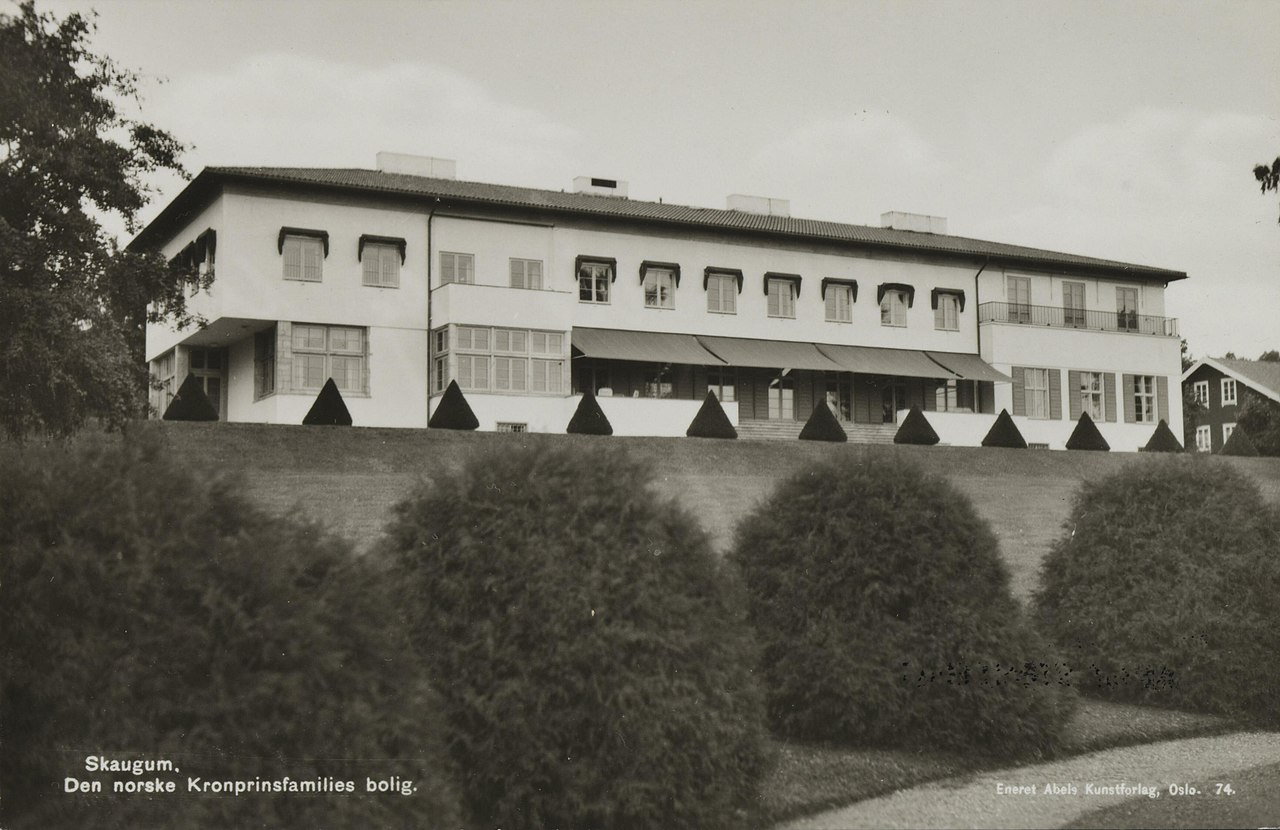
In the bunkers at one of the Norwegian Royal Family’s residents, Skaugum, there is a rumor of the place being haunted. One of the ghost that haunts the place, is the former Nazi Reichskommissar from the war, Terboven.
Skaugum, Asker, Norway: 1945.
No one has flagged with the Norwegian flag in a long time since the German occupation five years earlier and only the nazi flag with the black swastika on the white disk was allowed. But it is all about to change as the allies are closing in on Berlin and the second world war is coming to an end.
High Ranking Nazi’s:Terboven (seated 2nd from right) with minister president Quisling, SS boss Himmler and von Falkenhorst in 1941. Foto: Deutsches Bundesarchiv
8th of May is approaching, the liberation day and the freeing of the nation are a couple of minutes from being announced. People are gathering in the the streets, ready to celebrate and start anew in a peace.
Read Also: Check out our entire collection of ghost stories from Norway.
But there are some the freedom is nearing its end however. The German Reichskommissar for the occupied Norwegian areas, Josef Terboven have an arrest order on his name and is one of the number one nazi officials the Norwegians are after.
Read More: Check out more ghost stories from the Second World War like The Black Cat of War
Terboven knows the war is over and that it will be showed no mercy from the allied forces, not from the people he spent five years at oppressing. He decided to end his life to avoid capture, but according to the rumours, his spirit never managed to escape.
The Reichskommissar in the Bunker
As Reichskommissar, Terboven was the one giving the orders that would send the people of the nation to the working and death camps. He was responsible for the imprisonment, executions- everything.
When he took office in Norway it was he who brought death penalty back to a country that had made it unlawful. You could end up dead by leaving the country without permission, listen to illegal radio, taken with illegal newspapers and help war prisoners and refugees. He was by the end of the war, one of the most hated men in Norway.
All of this is hanging over his shoulders that day in May when people are celebrating. He sits in his bunker at Skaugum, a farm originally owned by the Royal Family outside of Oslo. He once barged in, chased the royal family away and started living there. Now, he himself is the one that is about to be chased away.
The bunker at Skaugum is only 200 meter from the main house the crown prince of Norway owns of and stays in today. There the next King and Queen of Norway lives together with their children.
On that day in 1945 Terboven realized that all hope for a German victory was out of question and hid in the bunker together with the last of the German officials left.
Wilhelm Redieß, the SS boss in the country had already killed himself by gun. “That was early, he beat me to it”, he commented on the suicide.
But Terboven would follow shortly and he had brought 50 kg of dynamite to his bunker at Skaugum and that is how he ended his days. He blew himself up to avoid being prosecuted for his crimes. At 23:30, he detonated the bomb exploded along with the body of Redieß.
The remaining crew of SS spent the rest of the dynamite the next day when Norwegian police came to burn it all down.
The Ghost in the Bunker
According to the legend, the bunker at Skaugum is also were Terboven will spend his eternity. For a long time after the war, it has been reports about activities that no one has been able to explain close to the bunker where nazi officers ended their days.
Early days of the Nazi Party:Josef Terboven rose quickly in the ranks, here with the national party: NSDAPs paramilitary street troops in 1926 in Germany. Foto: Deutsches Bundesarchiv
His Majesty The King’s Guard; the Royal Guards, a battalion of the Norwegian army are the ones guarding the Royal property and residents, including Skaugum today. And there is also from the soldiers the stories comes from.
They tell they have experience many strange things they believe to have a paranormal origin walking the empty places near the bunker at Skaugum. Strange tracks from or to the bunker is spotted for example by the forest surrounding the estate close to the fence. The soldiers have to patrol there and comes back with stories about strange sounds and apparitions, even during the day. Late at night close to the bunkers, the keep hearing the sound of voices and when they go to check it out, they find that they are alone. At least the only living thing there.
Skaugum Farm: The big farm has been the Norwegian residency for decades and even today the place is the home of the crown prince and princess. Right by the big house there is a bunker that is said to be haunted by the former Nazi officials that took over the place during the war.//Source: wikimedia
There are also placed calls from the outer guard post when no one is placed there to make them.
A common factor for all of this is that it is all happening right by the bunker Terboven blew himself up in. The royal guards working at Skaugum are of the opinion of that it is all contributed to Terboven and his ghost lingering in the bunker forever. He never got peace after his death and roams the property were the next royal heir of Norway resides.
The murder of Maria Marten, a case called The Red Barn Murder got a lot of media coverage in England because of the strange circumstances. The murder was allegedly solved by the appearance of the ghost of the victim, haunting people’s dreams.
‘”If you’ll meet me at the Red Barn as sure as I have life I will take you to Ipswich Town and there make you my wife.” This lad went home and fetched his gun, his pick-axe and his spade. He went unto the Red Barn and there he dug her grave.With her heart so light she thought no harm, to meet her love did go He murdered her all in the barn and he laid her body low – The Folksong The Murder of Maria Marten
The year of 2004. The Place? at the Royal College of Surgeons of England. A skeleton, reassembled so many times and exhibited, used as a teaching aid in the West Suffolk Hospital. It is almost possible to forget that the people hanging there, next to the teacher, used to be a living human. What cruel fate it is, to always be on display. But then we can wonder, why? Why do you hang there? Is this your punishment? Did you do something? And who hangs beside you? The question is always asked.
“Who is that skeleton?”
Beside you is someone infamous. Jonathan Wild, the notorious gang leader in Britain, known as the great corrupter. The students might know his name, his crime. But who are you? Does anyone remember your name?
The Skeleton of the Murderer William Corder
The skeleton sitting in the classroom actually belongs to William Corder, a man that would end up in the infamous case of The Red Barn Murder.
He was a boy like any other, born in 1804 to a prosperous tenant farmer in Suffolk, England. He was nicknamed Foxey at school and was a bright kid. He had his whole life in front of him and he had some dreams of becoming a journalist or a teacher as he had some talent for writing. But there was a darkness in Corder that eventually would devour him.
Corder’s father liked his brothers much better according to the rumours around town, and he was sent to London to find work, not wanting to fund his sons dreams. He was said to be a liar and a cheater, thereof the name Foxey most likely. He was also known for petty theft, like when he sold his father’s pig. Yes, his father’s pig.
In London, he fell into bad company and spent all of the money his father gave him. He was a well known ladies man and all around an untrusty fellow. But Corder’s biggest crime was the Red Barn Murder and being found out by the ghost of Maria Marten, the woman he murdered.
Maria Martens Life and Death
After a while, William was called back to the farm from his wild time in London. There he met Maria, daughter of a mole catcher in the same small village, two years older than him and the likes of William Corder didn’t immediately catch her interest.
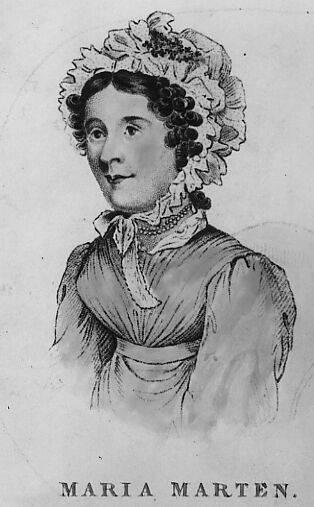
Maria Marten: The young girl ended up being the victim in the Red Barn Murder/Wikimedia
Maria Marten was 17 years old with a taste for finer things with a curse on her head and would end up as the victim in The Red Barn Murder. There is the story about her that a fortune teller once said that she wouldn’t reach old age, but would have many lovers and riches.
Before getting involved with William Corder she was actually seeing Williams older brother, Thomas. He was the oldest and also the fathers favorite and the two got into a relationship that was doomed from the start.
Thomas Corder wanted to keep the relationship secret as she wasn’t regarded of the same status as himself, being poorer and of a family with a “low” status. The Corders were after all, prosperous farmers.
That didn’t stop him from getting involved with her though and Maria Marten fell pregnant with Thomas child. Thomas left her when she told him about her pregnancy, perhaps hoping it would convince him to go for her after all.
It did not, and she gave birth to his child alone, but the child died a couple of weeks later. Maria then got into a relationship with a Peter Mathews, a middle age man who also dropped her after giving him a son called, Thomas Henry in 1824.
Indeed she had some lovers, perhaps some riches. And indeed she wouldn’t be alive for long.
William Corder and Maria Marten’s Relationship
When William Corder came home from London, bad luck struck his family. His father died and his brothers got very ill, leaving him to manage the farm together with his mother. And this is were he got to know Maria and they got involved in a relationship. But it wasn’t a happy match from either of their families stands. She on her side was already left with a ruined reputation by a Corder. And from the Corder’s perspective, she was a fallen woman and not from a prosperous family like theirs.
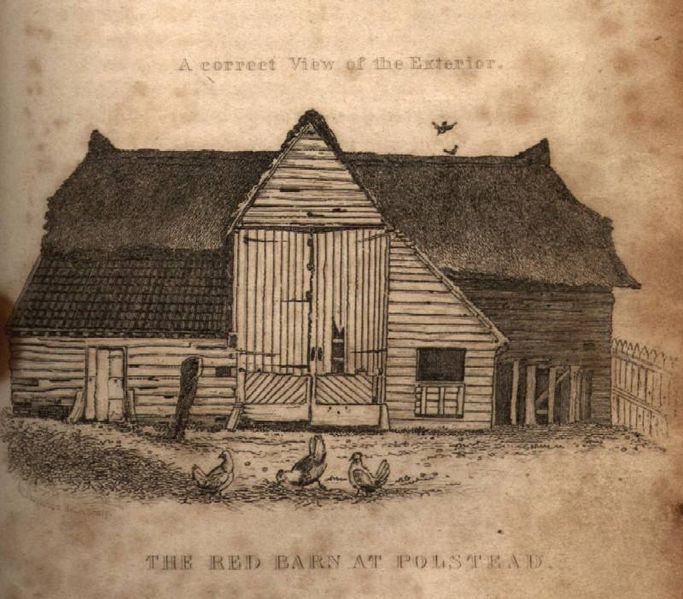
The Red BarnMurder: The old barn close to their houses was the scene of the Red Barn Murder and later a tourist attraction. It is now burned down./Wikimedia
This didn’t stop them meeting, although they met in secret. Often at a red barn right by Marias house. It was called that because of the red tiles on the roof and would later be a tourist place as the location of where The Red Barn Murder happened. But the secret of their relationship was not to last for long, as Maria became pregnant again. Maria wanted William to marry her, and according to him, he said yes.
At the same time that winter, William’s brother and Maria’s ex-lover, Thomas was walking over a frozen lake. The ice cracked and Thomas went under, drowning. William was now the owner of the farm as the only son.
Between Maria being pregnant, the farm being in financial troubles and his brother dying, it seems that it put a toll on him. He put Maria in a lodging at Sudbury, a couple of miles away from home to have their baby. But this too should not live and died soon after. William buried the child in a field and there have been speculations that this was not a natural death and that he might have killed their love child as well. And these day, who could really tell?
The Red Barn Murder
Maria and William started to argue about some money that may have been stolen, they argued about the burial of the child and how it looked like William would not marrying Maria after all. At one point the pair made a plan, when William said they should elope to Ipswich. She would come dressed as a boy and they would meet in the Red Barn were they had met countless of times before.
Why would William Corder elope now? Now that he didn’t have a father or older brother to interfere? One of the problems the couple had was with Maria and her crimes. It wasn’t necessarily unlikely or weird that they would like to run away, as Maria had several charges on her for bearing illegitimate children. Criminal at that point in time.
The days before their plan was set into motion was the last time Maria Marten was seen alive. William began acting odd and a lot of questions were asked about her. Where was Maria? Wasn’t he going to Ipswich with her?
He told the people asking she had gone ahead to Ipswich, but then he changed the story, and told she had gone to Great Yarmouth and wouldn’t be able to return yet. Then he changed the story again, and he said he was meeting Maria and that they were going to marry. He said he felt unwell and traveled to Isle of Wight, writing back home that they were married and happy there. He said he was sorry that Maria couldn’t write herself as she had hurt her hand and wondered why some of her letters hadn’t made its way back home.
The Ghost of Maria Marten Haunting the Dreams
This vague and strange story didn’t sit well with her family though. The Marten family did not believe William and his excuses as to why they hadn’t seen or heard from her. But in a strange twist of fate, she would find other means to contact her family.
Maria had a young stepmother back in Polstead, Ann Marten. She was troubled by strange and scary dreams about her stepdaughter. Twice Ann Marten had woken from a terrible dream that she herself knew to be true. When she shared them with her husband they looked for Maria in their town and found her.
Read Also: Another ghost story about a ghost that allegedly help solve her own murder case, read about The Greenbrier ghost in The Ghost that Went to Court
The dreams to her stepmother told that Maria had been murdered in the Red Barn buried under the floor and not gone to Isle of Wight at all. Her husband, Maria’s father was sent to the barn and looked for his daughter, prodding the ground with a mole-spike. There he discovered the remains of his daughter, brutally murdered and discarded under the floor for a long time.
Maria was shot as well as stabbed multiple times to death. They brought her to The Cock Inn and, decomposed as she was, her sister Nancy identified her from the clothes, the hair and a gap in her teeth. Around Maria’s neck they found a green handkerchief. According to the witnesses it belonged to William Corder. Was she also strangled? Was she even dead before he buried her in the grain storage bin her father found her in?
The Trial of The Red Barn Murder
Back in Ealing were William had fled, he knew nothing of the mysterious dreams and the discovery of Maria under the barn. Time went by and William needed a wife. He put an ad in The Times and asked for a wife. He picked Mary Moore and they set up a young ladies school in Ealing, West London. He was moving forward in his life. But Maria wasn’t forgotten yet.
Boiling some eggs at home the police came knocking at his door and apprehended him. First he denied that he knew of this Maria Marten, but the evidence was there and he was brought back to Suffolk.
And the press was on this, coming from all across the country to behold the spectacle of his trial and the strange circumstances around it. The case of The Red Barn Murder even got a play on stage before Corder even came to trial, which they actually sold tickets to.
The Red Barn Murder Frenzie: The execution of William Corder, the Red Barn Murderer was a popular event and thousands of people attended/Wikimedia
Forensic pathology was not as advanced yet and it was impossible to determined what of the things that killed Maria. That is why he was charged with nine different murder charges, where shooting, strangling, stabbing and burying alive was a couple of them.
“By that powerful engine of the press,” he said, “I have been described…as the most depraved of human monsters,” he said of the media coverage.
Corder’s defense was articulate, but improbable, claiming Maria herself had taken her own life, but he was found guilty on the circumstantial and medical evidence, and sentenced to hang.
It was the Chief Baron Alexander that was the judged, and he added that his dead body was to be dissected and anatomized, almost like a second punishment.
The Execution of William Corder
The execution was a great play and melodrama itself, and several thousands of spectators had tickets to the show of William Corder’s last moments. During his last days the prison chaplain had tried to get a confession from William who had denied all of the charges against him. Finally, William Cordery admitted to killing MAria by accident during one of their many quarrels. What he denied was stabbing her. Perhaps it was the mole-spike her father looked for her with that made those wounds?
In any case, he took the punishment for all of her injuries. His last words were: “I am guilty; my sentence is just; I deserve my fate; and, may God have mercy on my soul.” He was left hanging for an hour, most likely in agony before he died.
After his death he was transported to Shire Hall were he was left for science as the sentence was. But many of the things done to his body after death was highly unscientific. For one,his skin was removed, tanned and used as a book cover that described his crimes and live. Like the most bizarre biography.
What happened that day? Was Maria’s mother psychic? She was only around a year older than Maria, and had not exhibited similar dreams before. Perhaps it’s a bit odd that her dreams started just after news of Williams marriage to Mary Moore. And there were also some rumors that linked her as a lover with William.
What happened skeleton hanging in the lecture hall? Truth be told, it isn’t even William. At least, not all of it. After his hanging, he was chopped up, his body dissected in front of anatomy students, perhaps even used as an experiment with galvanism.
The Red Barn Murder Frenzie
Perhaps the most gruesome thing was that none of the people involved were left in peace after their death, as the story about the Red Barn Murder was a sensational tale and people flocked to the location as well as tried to get a hold of some sort of suveniers from the case.
After the execution, William Corden’s ear was sold, his skull was taken by Dr John Kilner who collected The Red Barn Murder memorabilia. Even pieces of the rope he was hanged in was cut up and sold for a guinea. Perhaps the disturbance of the dead came back to haunt the living that looked at their death as some sort of amusing spectacle?
After many strange and tragic events that happened after The Red Barn Murder enthusiast Dr John Kilner took the skull for himself to his collection, he believed that the skull was cursed and gave it to ta friend. But bad fortune kept plaguing the two men and in the end they decided to pay for a Christian burial to lift the curse of the skull of the murderer William Corder.
Maria also kept being disturbed after The Red Barn Murder. A lock of her hair was sold at two guineas and Polstead with her cottage, the Red Barn and her grave became a tourist attraction and people started chipping away at it so it completely disappeared. The grave as well as the Barn, planks, roof tiles and all sold as macabre souvenirs.
After 2004, the skeleton of William Corder, or at leas what was left of him was removed from the classroom and finally put to rest six feet under.
But the rumors still lingers about the ghost of Maria haunting her stepmother’s dreams, about what really happened that night of The Red Barn Murder. But maybe it is time William got some peace, having served over 200 years for his crimes.
The Ghost of Leirubakki is an Icelandic ghost story about the ghosts of some shipwrecked sailors from Denmark haunting the coast of Iceland.
Nothing darker than the depth of the sea, nothing more cold than the north. The northern shores, the coldest, the darkest. This coldness is something so many ships, so many sailors must have experienced as the bottom of the ocean is now littered with the remains of the drowned ones. There is always the fear, even today of the depth of the ocean, especially on these treacherous waters.
The story begins with a sinking ship near the coast of Iceland, but the haunting travelled with the unfortunate people that disturbed their graves. While the legend of the ghosts and the supernatural are treated just like that, a legend, a myth, the events surrounding it all true.
The Shipwreck on the Shore
A Danish ship named Gothenborg, sank in the 1700s. Luckily all the 170 people from the shipwreck survived and was rescued by the local people of Iceland. Remember that at this time, Iceland was a colony of Denmark, and there was often bad blood between the people.
And sadly, the problems of the survivors were far from done. Their ship was sunk and their supplies gone. The survivors had no possible way of getting home anytime soon as a whole cold ocean parted them from their home country. They had to rely on the kindness of the local farmers that lived there to keep them alive until they found a way to get back.
However, there was not enough food for them all as the country is weathered and not always so kind to its people. Some of the shipwrecked sailors ended with dying of starvation, among them the cook of the ship. A suffering that takes time.
The Ghosts Travels to Leirubakki
Here the legend mixes with the factual events. Almost a century later, two men came over the grave to the cook. Something must have happened, because the story goes, they rose him from the dead. The men ran over the cemetery, followed by the ghost. He started to haunt the one man and did so until his death. Even then the man moved to the place called Leirubakki the ghost wouldn’t leave him alone, further in to the country, further from his home, away from the coast. That is why today the ghost is called The Ghost of Leirubakki.
It wasn’t as the ghost hurt the man or his family. But it stalked them wherever they went. This wasn’t a friendly ghost either as he acted out with some poltergeist activity as well. Some of the stories tells that the ghost ripped the roof of a barn one time. It is well known that he scared the horses all the time and claims of the ghost roaming the bare hills of Iceland still stands.
One thing is sure, the ghost never saw his home in Denmark ever again.
In a former foundry village at Bærums Verk in Norway, they have experienced strange hauntings since the the founder of the place died there. Phones calls in the dead of the night and ghostly figures have been spotted for a long time.
Norway is perhaps remembered as two things. Either as the savage Vikings, plundering Europe and beyond, or they are perhaps remembered as this rich oil country of today. Most often, perhaps not remembered at all, were it sits at the edge of the world. But few people know of the dark times in between.
It was only in the 50’s and 60’s that the country grew in wealth, and before that, it was one of Europe poorest countries. So centuries with coldness, starvation and ghosts. The folk lore is still thriving and the ghosts of the past, lurking around the corners, in between the walls, and inside the houses and homes.
Bærums Verk: The little village of Bærums Verk in Norway still stands as an old foundry settlement, and is an active place, both as a place to work, and as a place to live. It is also said it’s an active place for ghost visitations./Wikimedia
On a very un-scary place like Bærums Verk, a village east in Norway, the quaint streets and not the most busy city life in Oslo not far from it, we find one of the country’s most haunted place along the river and mountains were it is built. Between the old wooden walls of the ancient houses creeks the history from the many lives that walked through this place since it was first built in the 1600s when it was found iron ore there.
The ghostly tales of the Bærums Verk are many and it’s supposedly haunted by more than one ghost. According to the stories, dogs refuse to go into certain rooms in the old buildings. There are steps and doors creaking when no one is using them. Doors that never wants to open, even when you have the key.
Read More: All our ghost stories about Haunted Towns from around the world.
The Times Were Changing
Norway is perhaps not very known for their factory and mining, but at the birth of the industrial revolution, the tall mountains were hacked into and the gushing waterfalls harvested to use as energy. The grouping of people changes from being a small farming country to taking its first steps into the modern world.
Conrad Clausen: The former owner of the foundry Bærums Verk and the one that expanded it and made it as big as it became. /Wikimedia
Going from being a country spread out on small farms and along the coast, they grouped together inland to work the land, hack into the mountains and train the water to make their bidding.
Some of these communities from the start of the industrial revolution are alive and thriving today, like at Bærums Verk were people still live and work, long after the iron foundry the settlement was founded on closed. And so does the ghosts of the past as well if we are to believe the rumors.
So who is the one said to haunt the entire place? One of the supposed ghosts said to still roam the place has been there from the very beginning.
The legend wants to tell of the former owner of Bærums Verk, Conrad Clausen haunts the street called Verksgata. At least he is one of the ghosts, and according to the workers and people living there, there are a lot of them.
But back to Conrad. He was only a young guy when the whole place fell on his shoulders. He took over the iron foundry in 1773 at 18 years old. In those time, small villages for the workers was often built around foundry like what happened at Bærums Verk, a lot of the little villages still standing to this day.
Clausen gave all of his life and his energy to the place were he lived and worked. Even if his life was going to be a very short one. Only at the age of 31 he died in his bedroom. The same bedroom now operating as a meeting room for people working there today, now that the foundry is turned into a shopping mall.
Ghosts on the Phones at Bærums Verk
Typical, isn’t it? A young man dies too soon, steps in the night, creaking of the doors and sceptical dogs to watch over his life work. But perhaps the strangest with the haunting must be the phones acting up at Bærums Verk.
It is the middle of the night, a very dark and desolate nordic night. No one is at work at Bærums Verk yet, no one is there to answer the phones. No one is up to make a call to them. But still, the phones are ringing. The people employed in the offices of the shopping mall, where Clausen lived, claims that phones calls constantly during the night. To the same time, quarter past twelve or quarter past one. Depending if it is summer- or winter saving time.
It’s rumored that if you try to take the ghostly phone call it will only answer with a strange beeping sound. Straight after the phone in the room next to will start calling. And then in the room next again. That is how it continues through the whole building during the nights.
Why haven’t the people working at Bærums Verk just called the telephone company to have it fixed? Answer is, they have, several times but no one seems to be able to figure it out. Who is making the calls and how is it possible to not trace them? The leader of the shopping mall, Gry Skådinn told the local newspaper that it was exactly what the workers at the mall tried to and they have tried to get to the bottom of this mystery for ages.
“When we get into work in the morning, the whole switchboard is blinking away.”
But when the telephone company comes to fix the whole thing and explain it all, only more questions rose.
“Before I started here, we found that the phone signals came from the lunch rooms. That was back in the day the bedroom of Conrad Clausen, and were he died,” Skådinn says as if that is the final answer to this mystery and the only explanation.
The Woman in Green at the Tavern
The ghost of Conrad Carlsen is not the only reported ghost, haunting this settlement of iron workers. On the oldest tavern in the country found at Bærums Verk, there are also been reported many cases of unusual happenings. Bærums verk has become somewhat of a cultural place to preserve olden times that used to be. That is what the people planned for at least when working at the tavern as they served recipes based on old ones and classical Norwegian food.
The Woman in Green: The imagery in filled with supernatural connotations to folklore of the huldra and Norwegian literature./wikimedia
Perhaps this nostalgic sentiment and keeping the place frozen in time is contributing keeping the ghosts alive here. The buildings at Bærums Verk are protected and will remain as part of the cultural heritage, the smell of the food coming from the tavern, perhaps similar the one the ghosts used to eat when they themselves were alive. In any case, the strange occurrences, like the with the phones to the malls is happening all over the settlement.
So many instances of these strange occurrences have happened in fact that several journalists, ghost tourists, paranormal investigators, mediums and the ghost hunter tv-show in Norway stopped by at Bærums Verk to get a glimpse of it. Most comes back with claims they did.
At the old tavern for instance at Bærums Verk, the staff as well as the owners have had trouble dealing with a green clothed woman, a very loaded imagery in Norwegian culture that keep popping up in folklore and fairy-tales.
“It’s just not practical working in the oldest tavern when a ghost in green clothes just walks around,” the owner, Ulla Laycock told the local newspaper.
Laycock and her husband found a way for this impractical haunting work for their advantage though, as they published their book on the persistent hauntings of the place.
The local history team have identified the woman in green as a woman called Anna Paulsdatter Vogt Krefting that died in 1766 after running the foundry for more than 50 years. Perhaps she as well put too much energy into the place to let it go after her death.
The Lady in Green: The ghost that have been called the woman dressed in green is said to be Anna Paulsdatter Vogt Krefting (born 23. mars 1683 in Christiania, død 25. mars 1766 i Bærum)//Source: wikimedia
According to the legend about the ghost of the woman in green though, the people working in the tavern claim that the ghost of Anna Krefting still walks among the guests of the tavern as it fits with her period clothes she’s been observed in.
Living With the Ghosts
“There is a lot in the walls in this place, and it is important to take care of,” the writer of the book, Caroline Paulsberg says about the supposed haunting at Bærums Verk.
It is however interesting how the locals and workers feel about living in the country’s most haunted place, or rather, haunted village. On their own facebook group, they claim that, yes, it is haunted, but they would like to keep them around at Bærums Verk as if they ear a sense of pride of the ghosts still lingering in the small and old buildings. Here, everything is going to be preserved, even the ghosts.
Most of people around haunted places would perhaps not feel the same way at those at Bærums Verk. But according to them, the ghosts are only nice, and they have the same right to be their as the living, having once themselves lived and worked there.
From the ancient writings of Plutarch, we can find a greek ghost story of the ghost of a young orphaned boy named Damon haunted a bathhouse in Chaeronea in Greece. According to the legend, the ghost haunted the place for centuries, perhaps even to this day?
Many of the oldest ghost stories sounds eerily alike to those of today, showing that the concept of ghost have been fairly consistent across time and place. Although most ghost stories from the ancient world is found in mythology and fairy tales, there are those ghost stories that comes from more historical records. Like this greek ghost story about a haunted bathhouse from the writings of Plutarch.
Plutarch (AD 46–after 119), was a Greek Middle Platonist philosopher, biographer, essayist, and priest at the Temple of Apollo. He also served his last thirty years a priest in Delphi. He also was a part of The Eleusinian Mysteries for the cult of Demeter and Persephone based at Eleusis in ancient Greece. They are the “most famous of the secret religious rites of ancient Greece“. So a man of the spirits, to say the least.
Temple of Delphi: This area of Greece have always been steeped in mystery and this greek ghost story happened not far from the mystical temple of Delphi.
Plutarch is known primarily for his Parallel Lives, a series of biographies of famous men from that time. Although the writings is mostly about vices and virtues and about philosophy about moral, he managed to put in a couple of ghost stories here and there as well.
Ghosts in Ancient Greece
So how did the typical ghost in ancient Greece look like? Back then it was closely linked to Greek mythology as it was the go to for explaining the unexplainable.
In ancient Greece there was two underworld goddesses the restless spirits belonged to: Melinoe and Hecate. Both were associated by wandering at night, with a trail of ghosts behind them, striking fear in anyone who saw them and their train of restless spirits following them to the underworld as their hounds barked with them. The two goddesses were also the ones that oversaw the burial rituals, something that was very important for the Greek and their ghost stories.
The Spirits of the Underworld: This greek ghost story and most other stories was deep rooted in the Greek mythology. Here depicted in: Souls on the Banks of the Acheron by Adolf Hirémy-Hirschlin 1898.
There were three main categories of ghosts in ancient Greece that restless spirits could be divided into: the ataphoi, the aoroi and the biaiothanatoi.
The ataphoi was the spirit of those who had not had a proper burial and their mission haunting was to get the living to bury them properly so they would be able to move on. This was mostly an easy fix as long as you could find the body, and after they had a properly burial they would mostly just disappear to the afterlife.
The aoroi was ghost of those that died too young and had led an incomplete life and was a bit more tricky to deal with. This type of ghost could possible become vengeful after death because of the regret of dying before its time.
The biaiothanatos however was the ghost that died a violent death, either murdered or in war. Like the two other categories it was highly important with the proper funeral rites for the dead so they would not awake as ghosts and haunt the place and possible harm the living.
A Greek Ghost Story
One of the ghost stories we find in the biography is about Cimon (510-450 BC). The ghost story is set in Chaeronea in Boeotia in Central Greece, just east of Delphi. It was also the birth town of Plutarch and it is said this was a ghost story he personally knew off as the ghost was still about in his day and age.
This greek ghost story tells the story about Damon Peripoltas, an orphan boy, living in Chaeronea. At this time, the city was ravaged by war and poverty, making it a breeding ground for violence like this story turned out to be.
Damon was said to be a beautiful boy, more so than the rest. He was a descendant of Peripoltas, the ancient seer that led his people to Boeotia. The descendants of the seer were held in high esteem, but it all changed after Damon though.
Although he was deemed to be a beautiful boy, he was also regarded as a dangerous one. He was poor, untrained and filled with rage and had no problems with violence. Something the whole city was about to know the hard way.
The Roman Commander’s Advances
A Roman commander was wintering in Chaeronea with his unit. One day, the young Damon, just past his childhood, caught the commander’s eyes and the commander decided he wanted him. The Roman commander claimed he fell in love with the beautiful orphan boy and made a pass on him. He tried to shower Damon in presents and gifts to woo him over, but Damon refused and was offended by the grown man’s advances.
This made the commander angry and his approach towards Damon changed. He threatened the boy with violence and said he would send Damon into obscurity and poverty if he did not give into him.
Damon got afraid of the repercussions he would suffer at the hands of the Roman commander and fearing exactly this, as he had seen what poverty could do to a man, Damon plotted against the man before he was the one suffering. But he had no intention of giving into the commander.
Smeared With Soot and Drunk on Wine
Damon had grown up in the rough city on the streets and a violent end was all he knew off. He gathered sixteen of his friends to help him see the plot towards the Roman through. They smeared their face with soot one night and got drunk on wine to gather the courage to get on with it.
Just before the break of dawn they attacked the Roman commander as he was sacrificing to his gods in the marketplace. The crew of youngsters killed the Roman then and there, and together they left the city before getting caught.
A Tragic Greek Ghost Story: This story ended in blood as almost everyone in the story ended up murdered. Here a depiction of the assassination of the Roman emperor, Julius Caesar who also were murdered by a group in a public place.
According to Roman law presiding in the city, this was punished by death, and this was the sentence the counsel of Chaeronea gave them. So, as the council sat to supper in the evening, Damon and his men broke into the town-hall were they were dining and slew them all. And yet again, they flew the city.
Hunted by the Romans
An investigation was done and they asked Damon to return, noticing the city also had been wrong. Damon was ravaging and pillaging the countryside with his accomplices, having fallen to poverty as he desperately didn’t want to. He was even making threats to the city that had cast him out. They lured him back by appointing him gymnasiarch, a high honor as an official, that would lead to respect and riches. He couldn’t refuse.
But when he came, he was having a vapor bath in the bathhouse and was slain. But they would never silence him as it was said that the ghost of Damon haunted the bathhouse.
His ghost roamed the bathhouse and the phantom of him appeared in it, sighing and groaning of his life that was cut short and from the betrayal.
The Haunted Bathhouse
Because of the ruckus from the ghost in the bathhouse, the citizens walled the bathhouse shut, trying to keep him inside, trying to put a lid on the past and their deeds. And it was said that still in Plutarch’s time, neighbors could still hear him inside, trying to get out again, to flew the city once more and finally be free.
Haunted Bathhouse: The greek were famous of their advanced public bathhouses. In this greek ghost story, the locals had to close up the bathhouse as the ghost of the murdered Damon kept crying and trying to escape.
Descendants of Damon’s family still lived at that time, near Stiris in Phocis. They are called Asbolomeni, or Besooted because of how Damon smeared himself with soot before committing his crimes.
What happened with the bathhouse and this greek ghost story if the place ever got quiet is uncertain, as ghost that met a violent end had a habit of holding a grudge for a long time.
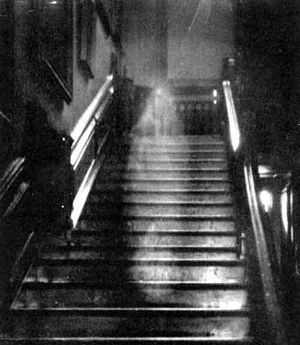
The Brown Lady of Raynham Hall is probably one of the most iconic ghost pictures out there. But what is the story behind it? And who is that ghostly figure?
Is it real? Was it just a double exposure? The picture of The Brown Lady of Raynham Hall has been viral since 1936. A photographer that year took the infamous picture, forever putting it in the mystery box for people to wonder about ever since.
It was just another day in the upper class England, with their old and haunted mansions and stories. Up in Norfolk lays the old Raynham Hall, that were about to become one of the most famous hauntings in Great Britain.
Brown Lady of Raynham Hall: This is the picture taken in the staircase that is now perhaps one of the most famous ghost photos.
Captain Hubert C. Provand, was a working in London as an photographer for the Country Life magazine. On September 19th, 1936, he and his assistant, Indre Shira were taking photographs of the Raynham Hall for an article.
Inside the 300 year old mansion, they were setting up the cameras to take another of the old Hall’s main staircase. Suddenly, Shira saw a ” vapoury form gradually assuming the appearance of a woman” The figure was “moving down the stairs towards them.” Shira directed Provand to take the cap of the lens while Shira pressed the trigger to take the picture.
After the negative was developed for the article, they saw more clear what they had gotten on camera that day. And the famous legendary photo of the Brown Lady of Raynham Hall was born. And after the photo, so was the legend.
So who was this lady? According to legend, the Brown Lady of Raynham Hall is the lost ghost of Dorothy Walpole. She was born in 1686 and according to gossip, the prettiest sister of Robert Walpole, seen as the first prime minister of Great Britain.
Walpole was neighbour with Charles Townshend, 2nd Viscount Townsend in Norfolk. And it just so happened that his sister Dorothy married Townshend in 1713. Although they were good neighbours, and even brother-in-laws, there was bad blood between the men. Especially in politics and when Walpole built his own mansion, Houghton Hall. Did this affect poor Dorothy at all?
What we know is that it wasn’t a particularly happy marriage. Dorothy was Charles second wife. He looked upon the Hall as his pride, as a Lord Hervey said: “Lord Townshend looked upon his own seat at Raynham as the metropolis of Norfolk, and considered every stone that augmented the splendor of Houghton, as a diminution of the grandeur of Raynham.”
Lady Dorothy Walpole: The Brown Lady of Raynham Hall is believed to be the ghost of Lady Dorothy Walpole who died in 1726.
Charles was also well known for his violent temper. Dorothy Walpole was rumored to have been a mistress of a Lord Wharton, a well known womanizer, and that no woman could be twenty four hours under his roof and walk out with her reputation intact.
When Charles discovered his wife and her affair with Lord Wharton, the story says he punished her by locking her in her rooms in the family, Raynham Hall. To make matters worse, there are still rumours that she was in fact entrapped by the Countess of Warton, inviting Dorothy to stay a few days, knowing full well, her husband wouldn’t let her walk out with her reputation intact.
After this, Dorothy Walpole remained at Raynham Hall until her death in 1726. She died of smallpox. But did she really leave the Halls? Is she still roaming the place, still locked up, still trying to get out and are forever trapped as The Brown Lady of Raynham Hall?
Sightings of the Brown Lady at Raynham Hall
Raynham Hall was thought to have been haunted long before the picture was taken. People that stayed in the mansion, experienced visitation and paranormal activity that most believed to be the ghost of The Brown Lady of Raynham Hall.
1835
Whatever the truth is, the legend was there to stay. And the first recorded sighting of the The Brown Lady of Raynham Hall was in 1835. One Christmas the new Lord Charles Townshend invited some guest to the Hall for celebrations. Among the guest were Colonel Loftus and another guest named Hawkins. One night night as they approached their bedrooms, they saw the Brown Lady, noticing the dated and brown dress she wore.
The following night, Loftus claimed he saw The Brown Lady of Raynham Hall again. he said he was drawn to the spectre’s empty eye-sockets, dark in the glowing face, the once so pretty Dorothy Walpole. After Loftus reported what he saw it ended with some of the staff permanently left Raynham Hall. It was all recorded by another guest, Lucia C. Stone.
Just a year after, the The Brown Lady of Raynham Hall was seen again. This time it was Captain Frederick Marryat, a friend of Charles Dickens. He originally wanted to prove a theory of his that the hauntings was caused by local smugglers. According to him, the smugglers spread the story to keep people away from the area. That night hi requested that he spent the night in the haunted room at Raynham Hall.
Marryat’s daughter, Florence wrote about her father’s experience in 1891:
…he took possession of the room in which the portrait of the apparition hung, and in which she had been often seen, and slept each night with a loaded revolver under his pillow. For two days, however, he saw nothing, and the third was to be the limit of his stay. On the third night, however, two young men (nephews of the baronet), knocked at his door as he was undressing to go to bed, and asked him to step over to their room (which was at the other end of the corridor), and give them his opinion on a new gun just arrived from London. My father was in his shirt and trousers, but as the hour was late, and everybody had retired to rest except themselves, he prepared to accompany them as he was. As they were leaving the room, he caught up his revolver, “in case you meet the Brown Lady,” he said, laughing. When the inspection of the gun was over, the young men in the same spirit declared they would accompany my father back again, “in case you meet the Brown Lady,” they repeated, laughing also. The three gentlemen therefore returned in company.
The corridor was long and dark, for the lights had been extinguished, but as they reached the middle of it, they saw the glimmer of a lamp coming towards them from the other end. “One of the ladies going to visit the nurseries,” whispered the young Townshends to my father. Now the bedroom doors in that corridor faced each other, and each room had a double door with a space between, as is the case in many old-fashioned houses. My father, as I have said, was in shirt and trousers only, and his native modesty made him feel uncomfortable, so he slipped within one of the outer doors (his friends following his example), in order to conceal himself until the lady should have passed by.
I have heard him describe how he watched her approaching nearer and nearer, through the chink of the door, until, as she was close enough for him to distinguish the colors and style of her costume, he recognised the figure as the facsimile of the portrait of “The Brown Lady”. He had his finger on the trigger of his revolver, and was about to demand it to stop and give the reason for its presence there, when the figure halted of its own accord before the door behind which he stood, and holding the lighted lamp she carried to her features, grinned in a malicious and diabolical manner at him. This act so infuriated my father, who was anything but lamb-like in disposition, that he sprang into the corridor with a bound, and discharged the revolver right in her face. The figure instantly disappeared – the figure at which for several minutes three men had been looking together – and the bullet passed through the outer door of the room on the opposite side of the corridor, and lodged in the panel of the inner one. My father never attempted again to interfere with “The Brown Lady of Raynham”.
1926
When the son of Lady Townshend and his friend saw the ghost next, they knew who The Brown Lady of Raynham Hall was. They saw her on the staircase, and identified the ghost with the portrait, hanging on the wall in the haunted room. Of course, the portrait of Lady Dorothy Walpole.
Raynham Hall: The haunted hall is a country house in Norfolk and was for 400 years the seat of the Townshend family. The hall is reported to be haunted, providing the scene for possibly the most famous ghost photo of all time, The Brown Lady of Raynham Hall descending the staircase.//Source: Wikimedia
What is the truth?
After Provand and Shira took the picture of The Brown Lady of Raynham Hall, they published their experience in Country life magazine, December 26th, 1936. They were published again in Life magazine on January 4th, 1937. So all in all, they did profit on this. But could it be that they just took a picture?
After the picture was taken, a paranormal investigator, Harry Price interviewed both Provand and Shira. He said: “I will say at once I was impressed. I was told a perfectly simple story: Mr. Indre Shira saw the apparition descending the stairs at the precise moment when Captain Provand’s head was under the black cloth. A shout – and the cap was off and the flashbulb fired, with the results which we now see. I could not shake their story, and I had no right to disbelieve them. Only collusion between the two men would account for the ghost if it is a fake. The negative is entirely innocent of any faking.”
But there have been numerous attempts of debunking the picture of The Brown Lady of Raynham Hall and its status of “proof”. Some claim Shira faked the image by putting grease or something in the lense in shape of a lady, maybe moved down the stairs himself during an exposure? Or maybe it is as simple as an accidental double exposure or light somehow got in the camera. Some even claim that the figure looks eerily like the Virgin Mary statue, and that the image is of her in the staircase, the statue that is, not the Virgin Mary.
Among the examiners trying to debunk the validity of the picture of The Brown Lady of Raynham Hall is Joe Nickell’s detailed writings that the photograph is nothing more than double exposure. And the magician John Booth wrote that the photograph could be easily made. Booth had the magician Ron Wilson cover himself in a bed sheet and walk down the staircase at the Magic Castle in Hollywood. It apparently turned out very similar to the photograph.
An online magazine about the paranormal, haunted and macabre. We collect the ghost stories from all around the world as well as review horror and gothic media.