Tag Archives: china

The Ghost of Khar Khot, The Black City in the Gobi Desert

Advertisements

Hidden by sand in the Gobi desert for centuries, the abandoned city of Khar Khot is still haunted by the ghosts of the inhabitants that didn’t manage to escape. 

Secluded in the Gobi desert, hidden by sand and stands the test of time, the abandoned city of Khar Khot houses no dwellers except for sandstorms, deadwood and ghosts. 

Khar Khot or Khara-Khoto (ᠬᠠᠷᠠ ᠬᠣᠲᠠ) is Mongolian and means, Black City. It is located in Inner Mongolia, a region in China bordering with Mongolia. The Chinese name for it, Hēichéng (黑城) also means Black City and it certainly marks a dark spot in history considering all the bloodshed that ended the once important trading city. 

Read More: Check out all our collection of ghost stories from China

There are also the legends about the city being haunted by demons and spirits. And when explorers from all over the world came to have a look at the legend of the abandoned city, the locals refused to go near it because of the ghosts still roaming the area around Khar Khot.

The City at the Silk Road

The city was founded in 1032 and used to be a busy and important trading place in the 11th century as a part of The Western Xia, also known as the Tangut Empire. In 1226, the city was taken over by Genghis Khan and many blame the Mongolian ruler that the city is now destroyed. That is not true as the city under Kublai Khan’s time, the city expanded three times and flourished. 

The city was important as a trading hub along the Silk Road and even Marco Polo wrote about it in his travels along the silk road in The Travels of Marco Polo, where he called Khar Khot for Etzina. 

When you leave the city of Campichu you ride for twelve days, and then reach a city called Etzina, which is towards the north on the verge of the Sandy Desert; it belongs to the Province of Tangut. The people are Idolaters, and possess plenty of camels and cattle, and the country produces a number of good falcons, both Sakers and Lanners. The inhabitants live by their cultivation and their cattle, for they have no trade. At this city you must needs lay in victuals for forty days, because when you quit Etzina, you enter on a desert which extends forty days’ journey to the north, and on which you meet with no habitation nor baiting-place.

— Marco Polo, The Travels of Marco Polo, translated by Henry Yule, 1920

The Fall of Khar Khot

In 1372, Khar Khot was under charge of the Mongol general Khara Bator when the army of the Ming Dynasty attacked.The city was surrounded and under siege for a long time, but the city was more of a fortress, built to withstand any attacking army, and the soldiers outside needed to think of a way to breach the walls.  

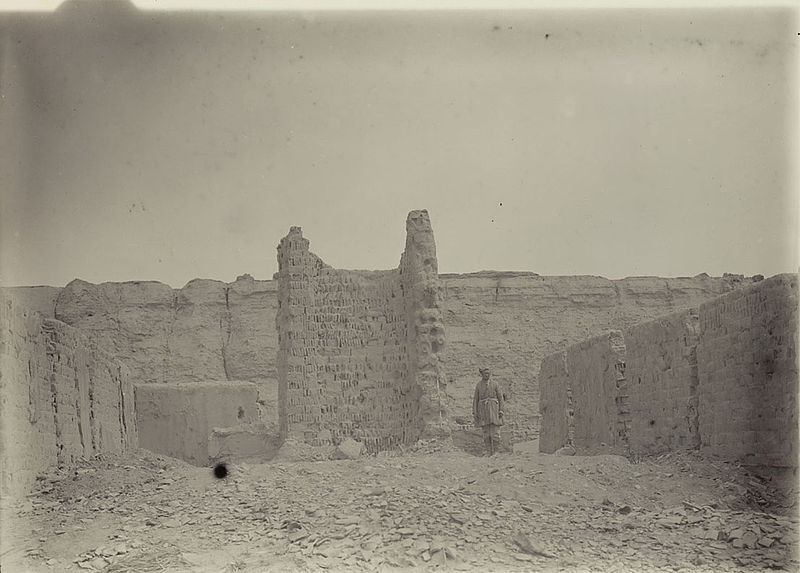
Rediscovered: Ruin At Kharakhoto from east, 30 May 1914.//Photo: Aurel Stein

So to speed things up on the outside, the Chinese went for the fortress one weak spot, the water supply. The name Gobi basically means waterless in Mongolian, and that is what they became. The city was cut off from its water supply by diverting the Ejin River that flowed right outside the city walls away from the thirsty people inside. 

The inhabitants inside began desperately to dig in the ground, trying to find drops of water according to the legend, but to no avail. When Khara Bator realized that the siege was not something they could withstand he threw all the valuables of the city into the well so as not to give that up to the invaders, even though they had to give up their life.

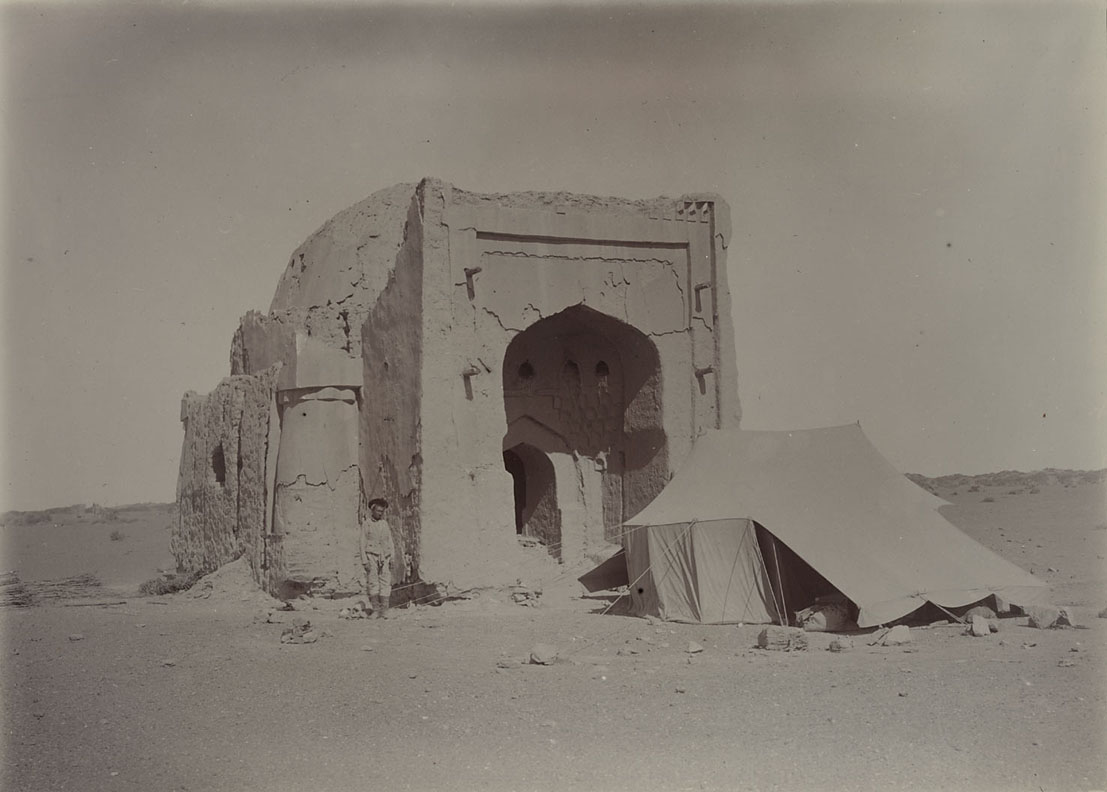
Ruins of Khar Khot: Muhammadan Tomb K.K.VI. at southeast corner of Kharakhoto, from east, 3 June 1914.//Photo: Aurel Stein

As time went on with no water with the Han Chinese army banging on their doors, Khara Bator murdered his family before taking his own life. The Mongols’ reign over Asia was slowly dwindling away. 

His soldiers waited until the Ming Dynasty finally breached the walls and attacked, killing the rest of the inhabitants of the city, not burying the bodies and making them live on as the ghost they are today. 

Another Version of Escaping

There are alternate versions we can find in the Ming Dynasty annals that tell a different story about Khar Khot. In this version, the leader together with his ministers actually escaped from this ancient Mongolian city. 

No matter who died and who escaped, the city was abandoned after the defeat and left in ruins to be swallowed by the desert. 

The Black City Today

600 years passed before people returned to the desolated city buried under the dry sand. Because of being so far from any other sign of civilization, the city was largely safe from looters and people seeking to destroy Khar Khot. 

When they first started excavating they found a rich amount of manuscripts of the Tangut language along with other important cultural artifacts, untouched because of its remote location, and perhaps because of the ghosts still protecting the city?

Today, tourists can come on a day trip to see the once magnificent city in the desert that the sand has filed down, softened the edges and buried its secrets. But in the night, they go back and miss the action that goes on after the sun goes down. Reports of flames burning for hours and strange lights that lead people astray in the desert are told from the guards watching over this place. 

Their ghost haunts the ruins of the garrisons, the walls and the very sand itself. In a way, giving the ghost city of Khar Khot a sort of life other than just being pieces of crumbling stone walls.

More like this

Newest Posts

References

Featured Image: BabelStone//Wikimedia

Khara Khoto Article, Black City Information, Alashan Plateau Facts — National Geographic

The spirit of ‘dark castle’ shines – Travel – Chinadaily.com.cn

Khara-Khoto | China & Asia Cultural Travel

https://www.ancient-origins.net/ancient-places-asia/khara-khoto-0014063

The Bell Tower Goddess of Beijing

Advertisements

The sound of the bell echoes in the city like a faint reminder of once it dictated time itself in China. And according to legend, one bell also carries the voices of the dead with the The Bell Tower Goddess of Beijing. 

Once, the great city of Beijing all followed the beat from the drums in the drum tower and the chiming of the bell in the bell tower. It told the time for centuries, telling people when it was the right time to work, to eat, to sleep, and also, it told when it was too late. It was the thing that announced when the gates of the city were to open and close, and the sound of the bell could be heard every fifteen minutes, chiming across the city.

Read More: Check out all our collection of ghost stories from China

For centuries it towered as the tallest building to be seen by everyone as a landmark of the skyline. To this day and age, even between the massive skyscrapers in the modern city landscape, it still stands the test of time, although no longer the one that tells it. 

The Bronze Bell

During the Ming dynasty around 1420, the new bell tower was erected in the northern end of the inner city. The Bell Tower first came into use during the reign of the Ming Emperor Yongle. The bell kept getting bigger and bigger. Originally it was a huge cast iron bell, but was replaced by a larger bronze bell that chimed even loader. The sound and size of the bell was important, and that is the foundation of the tragic story they still tell tourists visiting the place to have a look. 

The Bell Tower: The building that once dominated the Imperial city’s skyline.// source

According to legend it was a man named Deng, an official with the mission to create this new bronze bell. They tried so hard for over a year to get the perfect bell that sounded as clear and loud as they needed for the emperor. But no matter how much they tried, they never managed to get it perfect and the deadline for the new bell was closing in.

With the date coming up they grew more and more desperate. The whole family felt it, especially Deng’s daughter as she was afraid it would bring shame on her family, her father in particular. But no matter what they tried to do, the fire of the furnace the bell was made in, would not get hot enough. 

In a desperate last attempt, the daughter flung herself into the fire, sacrificing herself to get the heat needed to make the bell. The father tried to stop her and reached out to save her. The only thing he managed to get a hold of, was one of her embroidered slippers, the only thing left of her after being consumed in the furnace. 

The Bell Tower Goddess of the Golden Furnace

Apparently, however gruesome, this was what the project needed and the bell was ready in time and the sound as clear as ordered. The bronze bell is over 10 inches thick, seven metres tall and weighs almost 46 ton. All around the bell, it has over 230 000 words of Buddhist mantras inscribed to it. And to this day as perfect as it was when first formed. 

The Bronze Bell: Still as clear today as when it was first made.// Source

The emperor himself is said to be so moved by the daughter’s action that he gave her the title ‘Goddess of the Golden Furnace’. A temple was erected in her honor near the foundry where she had sacrificed herself. 

Read More: For more ghost stories from Bell Towers, check out The Bell-Ringer At St. Mark’s Square and The Haunted Town and Tragedy of Belchite

But the temple for her is now gone, and the goddess is mostly forgotten in the glory of the bronze bell. But listen carefully. To this day, the bell can still be heard on special occasions. The sound of the bronze bell can be heard at a great distance, at least some twenty kilometers away.

On particularly stormy nights the bell doesn’t chime as clear as it usually does, but emits a sound, sounding distinctly as the words ‘xie’, meaning shoes in Chinese. The haunted spirit of the girl who sacrificed herself still echoes through the bell. And the mothers that lived were the bell was heard would tuck their children in, telling them ‘Go to sleep, the Bell Tower is ringing, the Goddess wants her slipper back’.

More like this

Newest Posts

References

Bell And Drum Towers, Beijing Attractions, What To See In Beijing 

The Drum Tower and the Bell Tower The Goddess Who Cast The Bell

Chaonei No. 81 — Beijing Horror House

Advertisements

Shadowy figures in the window, chilling entrance during the summer, the old and haunted church in Beijing called Chaonei No. 81, keeps its secrets close to the chest. The famous haunted house is believed to be haunted by a woman said to have taken her life inside.

Chaonei No. 81 ( 朝内81号), also called Chaonei Church as it was built with that in mind, perhaps, the records aren’t clear. The French reimagined baroque architecture from the 20th century stands out amongst the modern Beijing skyscrapers and the Ming dynasty buddhist temples.

Read Also: Check out all of our ghost stories from China

Out of place it has passed from a French manager of the railway or Christian missionaries, different governmental members of the Chinese Republic as well as the Catholic Church. But one thing remains the same, the rumours about a restless spirit that lingers, no matter who lives there. 

The Mystery of the Chaonei Church Building

The story behind the supposed haunted house at Chaonei No. 81 is hard to get straight. As with a lot of buildings before the formation of the People’s Republic of China was formed, because of missing paperwork. Who built the Chaonei Church? Was it the French manager of the railway? Or it might even have been the Qing imperial family building it for the British to use as a church? However it is believed to have been built around 1910, although some claim it is even older.

Read Also: Check out the rest of MoonMausoleums Haunted Houses

Chaonei Church Building: How Chaonei No. 81 ( 朝内81号) looked from across the street in 2014, looming dark in the otherwise bright and busy street. //Photo: Daniel Case/Wikimedia.

By the neighbouring hutong, the traditional streets in Beijing, the house has always been remembered as haunted. And even during the 1970s, during the cultural revolution, the neighbours remember the Red Guard that lived in the Chaonei Church, got so frightened after staying inside of the haunted house, they had to leave after a few days. 

The Woman Hanging from the Rafters

But who frightened its inhabitants, that even the red guard couldn’t handle? According to the most commonly told legend, it is to a woman that once resided in Chaonei No. 81. Or rather, a scorned woman that used to live there, as most haunted histories start with.

The woman that used to live in the Chaonei Church is said to have been a wife or maybe a lover of an officer of the Kuomintang (KMT, or the nationalist party of China) that fought against the communist party during the Chinese civil war in the 1940s. The nationalist lost, and fled to Taiwan as the communist came into power.

The woman was allegedly left behind by her officer man who fled with the army to Taiwan, and she is said to have hung herself from the rafters of the house. 

The Ghost Inside of Chaonei No. 81: According to legend, the ghost haunting Chaonei No. 81 is the spirit of a woman left alone in the house by an officer who fled the country.

Whether the outcome of the war had anything to do with her death is debatable, as some suggest it was more that the officer was never at home, not paying her the attention she needed than the victory of the communists that led her to her decision of taking her life in the Chaonei Church.

Her existence at all is debatable as a lot of things during the civil war are lost, forgotten or even hidden away and a lot of documentation to confirm or deny the story is not there. What we can go by is the word of mouth however, and many that have stayed in Chaonei No. 81 knowing its history say there was never a KMT officer living there, and no woman hung herself in the rafters. 

The history behind Chaonei No. 81 is clouded in mystery, and there seems that no one can really agree on one account. But ghost stories have their own way of ignoring this, and sneaking their way into the mind of those around anyway. And according to the locals, this place has always been haunted. The locals persist in their own lore that she can indeed be heard, especially on those stormy nights, screaming from the empty house during thunder. 

The Vanishing Workers From the Chaonei Church

Even the construction of the house has been up for dispute with strange tales from the Chaonei Church. Like the story of a British priest who supposedly built on the property disappeared before being able to build the church. When a search party was sent, they supposedly found a secret tunnel leading all the way northeast of the premise to the Dashanzi neighborhood. 

There have also been three people, working on construction down in the basement in the building next to Chaonei No. 81 that supposedly vanished into thin air. They got drunk on the job and decided to break into the house by breaking the thin wall that separated the two houses. They were never seen again according to the reports. 

The House that Never Dies

A message to the entrance is put up, telling the visitors that there are no ghosts residing there, contrary to local beliefs, urging the paranormal seekers to stay away from the Chaonei Church.

Warning off people: Chalked notice on Chaonei No. 81 in Chinese, warning of ghosts in the house. Original text: “请勿相信谎言 无鬼” (Please do not believe lies, there are no ghosts)//Photo by Daniel Case//wikimedia

Especially after the horror movie, The House that Never Dies, inspired by the the haunted legends of Chaonei No. 81 and its story, the interest of it came back. And after its release in 2014, up to five hundred people crowded outside the house, causing the catholic church to close the gates, only letting a few in at the time.  

The same thing happened with Gonjiam Psychiatric Hospital when a movie was made about the legend and they eventually demolished the entire building because the paranormal seekers were too much and the construction of the building not safe enough.

Keeping the legend alive: The movie trailer from the 2014 movie ‘The House that Never Die’, inspired about the legends surrounding Chaonei 81.

In 2016 however, Chaonei No. 81. interior and outside was renovated and rented out. Perhaps that is what it took to get rid of the spirit and the lore seeping from the old bricks of the Chaonei Church. But there are also those claiming they have an uneasy feeling of dread when walking by the house. And even in the hot summer, with the sun scorching right at the door, the doorway of the mansion somehow always feels cooler than in the shade.

More like this

Newest Posts

References

Featured Picture by Daniel Case source:

Chaonei No. 81

The House That Never Dies  

Dilapidated Mansion Has Had Many Occupants, Maybe Even a Ghost (Published 2013)

This abandoned “Chaonei No.81” house in China is described as “Beijing’s most celebrated haunted building” …  Raising Ghosts: Five of Beijing’s Most Haunted Attractions

Botan Dōrō – Tales of the Peony Lantern

Advertisements

The Botan Dōrō or Tales of the Peony Lantern is a ghost story told since the Ming dynasty in China to today. Most popular through the Kaidan theater plays, it is now one of Japan’s most well known ghost stories.

Another dark, yet poetic love story of a ghost. The Botan Dōrō (牡丹燈籠), or, the peony lantern was a story that became popular in Japan during the 17th century in the Edo era.

The Stone Lantern: The Title refers to the type of stone lantern often found in Japan.

It was really a Chinese tale called Jiandeng Xinhua (剪燈新話,) or New Tales Under the Lamplight from 1378 by the Chinese writer Qu You. This was a collection of moralic tales and Buddhist lessons on Karma.

Japan was at the time almost entirely closed off as a country and got little to no input from the outside world. The Japanese adapted it as their own with the writer Asai Ryoi and the demand for Kaidan stories, ghost stories, especially for the parlour game Hyakumonogatari Kaidankai.

Read Also: Games to Play in the Dark – including Hyakumonogatari Kaidankai

The story of Botan Dōrō is set during Obon, a three day festival of the dead in the late summer in Nezu district in Tokyo. Kaidan (ghost stories) was immensely popular during this era, especially during Obon.

Read Also: The Obon Celebration – The Ghost Festival

Botan Dōrō is considered to be one of Nihon san dai kaidan — Japan’s Big Three Ghost Stories. It is arguably the most famous Japanese ghost story of all time and has spurned a couple of local legends of its own. The other two famous Kaidan’s is: Banchō Sarayashiki — the Ghost of Okiku and The Myth of Oiwa — The Paper Lantern Ghost.

The Story of the Botan Dōrō

A long time ago in the Nezu district of Tokyo, the first night of Obon was upon them. This is when the spirits are welcomed back into our world and guided home after three days. A man named Ogiwara was out walking. In some versions he is a young student with his whole life in front of him while in others, he is an elder widowed samurai that carries a lot of regret and grief.

Botan Dōrō Kaidan: The stage production of Botan Dōrō had many adaptations of the story. Here is an illustration of The character of Otsuyu and the titular peony lantern.

On the first day of Obon he noticed a beautiful woman with a maid carrying a peony lantern by his house and they started talking.

Her name was Otsuyu and charmed her way into Ogiwara’s heart. Over the festival the two fell more and more in love in the light by the lantern. And every night she came back to him.

A neighbor however was growing worried for the young man after having seen them meet the first day. That very night he visited the boy, peeping through the window to make sure of his suspicion. There he saw the man in the arms, not of a young and beautiful woman, but a skeleton.

Almost fainting of shook, the nosy neighbour got on his way, running to get a Buddhist priest to get help for the man. When the buddhist priest and the neighbor came the following day, they told the man about this and decided to throw a protective spell over the house. Not really believing until he saw it with his own eyes, he waited to the following night to see for himself.

When Otsuyu together with her servant came to the door she was unable to pass the protection charms the buddhist priest had put up. When she understood what was happening she was crying, banging on the door, and the man understood that it was all true. She was indeed dead and he had fallen in love with a ghost. She reminded him again and again for their love for each other, not leaving the house.

Read Also: Another ghost story where the husband finds out his wife was already dead is The Lady Nak of Phra Khanong — Thailand’s Famous Ghost Mae Nak

The man’s health grew worse and worse during the day and he only felt sorrow and a longing for the thing they had together, even though he knew about her. One night he couldn’t resist his longing anymore. He lifted the protection charm on the last day of Obon and let them in.

When the neighbor once again came to check on him, there was not only one dead person in the room, but two. His soul taken away at the end of the Obon festival as the spirits were supposed to, back to the spirit world.

Is Botan Dōrō Another Haunted Play?

Later the story has gotten many variations, on stage as well as on the screen. The story changes with the times from the closed off Edo period to the opening of western influence of the Meiji period up until modern times.

Read More: Check out all of our ghost stories from Japan

The English translation was done by Lafcadio Hearn in 1899 for his book: In Ghostly Japan. He titled his adaptation A Passional Karma, and based it on the kabuki version of the story. Read the full one Here

But just as in the Kaidan theater play of Yotsuya Kaidan, there is said to be a curse on the ones playing the parts of the ghosts. This is from an events in 1919 when the play was set up in the Imperial Theater. The actresses playing Otsuyu and her maid both became sick and died within a week of each other. They were some of the more promising actresses in Tokyo at the time, and their death were sudden and gave rise to many rumours.

It was said that before they died they had been seen nightly with pale-face and their hair worn long and dishevelled. The actress playing the maid held the lantern in hand, moving behind the willow tree following the other one.

So who is to say? Can a made up story turn into something cursed? Or was it something else than a good story that made it linger in the cultural minds of the Japanese as a ghost?

More like this

Newest Posts

Fengdu Ghost City

Advertisements

The Fengdu Ghost City in China is steeped with the paranormal and cultural afterlife as well as being a big tourist attraction. Check out how the afterlife could end up after your death for the cost of a ticked.

In the Chongqing region in China, at the lean for the Tibetan Plateau and along the Yangtze river. Far from the sea, at the heart of the country, the city for the dead is built: Fengdu Ghost City 丰都鬼城, is a sort of Chinese type of Necropolis and its said this is the place where the devil lives according to local folklore. This city dedicated to its demons and ghosts also works as an amusement park for curious tourist wanting a trip to commercialized hell as well.

Read More: Check out all our collection of ghost stories from China

The strange and peculiar nature of Fengdu Ghost City really leaves the question of: How do you really combine the experience of the eternal afterlife at the price of a ticket? Is it more of a philosophical learning experience or more like a warning of what could happen if you don’t lead your mortal life right?

The King of the Underworld: This statue leading into Fengdu Ghost City is in the Guinness world records for being the largest sculpture carved into a mountain, depicting the King of the Underworld and welcomes those visiting the city./source

People in China follows a lot of different religion, even though religion is officially banned in the country. To Chinese folk religion, Confucianism Taoism and Buddhism, the place is steeped in religious practices and perhaps this is why the way to the afterlife is so important.

Read More: Another haunted town in China is The Ghost of Khar Khot, The Black City in the Gobi Desert

The Gates of Hell to Fengdu Ghost City

On the north bank of the Yangtze river, shrouded in smog and clouds, the Ming Mountain peaks out on clear days. At the Ming Mountain, shrines, monasteries and temples have been built in honor of the underworld over centuries with cute names like “Last Glance at Home Tower,” “Nothing-to-be-Done Bridge,” “Ghost Torturing Pass”.

The place were the Fengdu Ghost city is built on today used to be an ancient burial site with its shrines and temples and an ancient town. It had to be rebuilt further and further uphill in the mountains as the water from the Three Gorges Lake kept rising. So what is this place in all its honesty?

Fengdu Ghost City is the Gate of the Hell in traditional Chinese literature and culture. The city itself is mention in the great folk tales of Chinese tradition such as in Journey to the West, Apotheosis of Heroes and Strange Tales of a Lonely Studio, all three works is a big part of Chinese literature and cultural heritage and have a direct reference to the place.

Read More: Take a look at all our ghost stories on Haunted Towns and Cities

To call the Fengdu Ghost city a proper city is perhaps a bit misleading as it mainly function as an amusement park and there is no one living there anymore. Well, except from the ghosts and the demons it is built for of course. When you are entering the city, you are passing statues of the Heibai Wuchang (黑白无常), which are two Chinese mythological deities in charge of escorting the dead to the underworld. Then you are at the mercy of the demons that exists in the underworld and your own effort on getting out of there.

To get into the city you have to get a ticket at the counter ahead and it tended to be around a 100 RMB per ticket. They used to have customers put money into a water-filled basket as they believed that the paper money would float if they were human and sink if they were ghosts.

How Old is the Fengdu Ghost City

To be called a ghost city, the place, the statues and the temples must be pretty old, right? Well, according to legend the location where the city is built certainly has an old story. Today, some of the building have been rebuilt or added on in modern times, and some of the oldest have been there since previous dynasties.

The story of Fengdu Ghost City goes back for nearly 2000 years according to the legend. It is said that the city got its reputation as a place for dead people and the king of hell during the Tang Dynasty (618-907 AD).

The Fengdu Ghost City got it name in the Eastern Han Dynasty period  (206 BC to 220 BC), when two men came to the Ming Mountain to practice Taoism and to live as recluses away from the big society. The two men, Yin Changsheng and Wang Fangping ran away because they were bored of the political life and lived their life practicing taoism at their own accord in the alleged haunted mountains. According to legend they became immortal and the legend of the strange things happening there kept piling up.

Temples of the Ghost City of Fengdu: A classical Chinese building you will find at most historic sites, here are they all built in honor of the dead though. Many of the temples and shrines are built and dedicated to deities, demons and lords of the underworld and afterlife. They are open to visitors and tourists every day.//Source: Flickr

Word soon spread of this no small feat that two men had reach the stage of immortality and people came to seek what they had found. Their two names, Wang and Yin combined means King of hell or King of the Underworld. And this was the beginning of the focus of the underworld, and the building of Fengdu Ghost City started and continues to grow today.

Read More: Another alleged haunted mountain is the story of The Accursed Mountains of Albania

The city we can see and visit today though wasn’t really built into the mountain before the Three Gorges Dam project was started in the early 1900s and built slowly over the course of the century. Because of this massive project they had to build Fengdu Ghost city higher up because of the flooding the dam caused to the area around.

The Ghosts and Demon of Fengdu Ghost City

So what do you do in a city built for ghosts? This particular place could perhaps work for just its vibrant green scenery. Perhaps the main purpose of the park is helping people learn of the old belief system of what comes next after death. One thing at the park at least is testing your living self of the trials the dead spirits can come face to face with in hell.

Ghost Statues: Examples of the ghosts statues one can see in the Fengdu Ghost City. This is the statue of the “wreath-eating ghost” (食蔓鬼). In legend, this ghost was a girl who adorned herself with flower wreaths she stole from statues of the Buddha. After she died, as punishment, she was not allowed to feast on food offerings from living people and could only feed on flower wreaths/source

Walking in the Fengdu Ghost City there are all reference to the afterlife in terms of architecture and decorations in the city. The statues all depicts ghosts and devils, representing what happens to people not leading good lives, and how Chinese people saw, and at times, still picture the afterlife. It also showcases what is considered a good moral.

Women being thrown in boiling cauldrons for their sins, children being spanked after being naughty and people being poked, stabbed, tortured and judged for their crimes is some of the attractions you can observe when visiting. Perhaps you will even be condemned yourself. In many ways, just as fun as Disney World, bring the whole family.

Pictures of punishments are big in this city, and the way the Gods tortures the wicked. The pictures hang side by side of paintings of scary demons and bureaucrats passing judgement over the sinners. The eerie pictures fills the walls, the roofs and the gardens across the whole city of ghosts.

Read More: Check out the story about the Chinese hungry ghost in the story of Ghost of Tu-Po — The Hungry Ghost

Side by side with these ancient traditions and buildings is a rather tacky theme park of a standard haunted house with people in masks, just doing their best to entertain their guests. Can it be something more in this day and age were the idea of the afterlife has become rather vague and in the long unforeseeable future? Because it didn’t start out as an amusement park. It started out as a cultural exploration of what hell is and what the afterlife will look like. In many ways, it still is.

The Three Tests to an Afterlife

In Chinese traditions Diyu is some sort of purgatory that punishes and renews spirits to prepare them for reincarnation to a new life. A similar thing is Naraka, a Buddhist concept of hell similar to Diyu. All dead must pass three tests before crossing over to the next life. And at Fengdu Ghost City you can put yourself to the test of how you would do ass you can reach Youdu from here, which is the capital of the underworld.

The first test the visitors have to overcome is crossing the “Bridge of Helplessness”. The object is a stone bridge testing good and evil people. There are demons blocking the passage, letting only the worthy pass. Those who fail are pushed to the water below. The object of the test is to cross the test in fewest steps, and of course, not to fall into the water below. In the Fengdu Ghost City it is now a fun test to do, but it actually stems from an old taoist practice to have a good fortune. This particular bridge was actually built in the Ming Dynasty between the 1300s and 1600s.

After the “Bridge of Helplessness” the dead must continue to the Ghost-Torturing Pass were they meet Yama or Yanluo Wang who is the King of Hell. He is the one passing judgement. In this area there are a lot of sculptures with demons.

The third and final test takes place at Tianzi Palace on top of the mountain where the dead stands on a special stone on one foot for three minutes. Only virtuous people will manage this while evil people will fail and go to hell. Tianzi Palace is the largest and oldest building and it is about 300 years old.

Tourists in Hell and the Ghost City Sinking

In recent years the Fengdu Ghost City has become a big tourist attraction with boats carrying tourists up the river and taken to the mountain where they can walk among the statutes relating to Diyu and Naraka that symbolizes the underworld or Hell in Chinese mythology and Buddhism. It attracts many tourist, curious foreigners as well as Chinese visitors wanting to learn about ghost culture and the afterlife.

Read More: For more Chinese culture concerning ghost and the paranormal, check out the story of Ghost Marriage — The Chinese Way to Marry the Dead

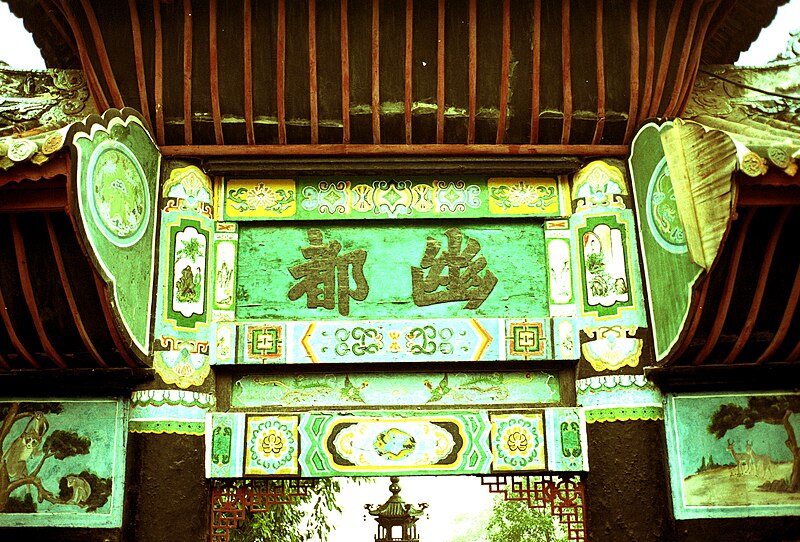
The Capital of Hell: The gate to the capital of the underworld, Youdu (right to left: 幽都). The whole underworld is called Diyu that is displayed in Fengdu Ghost City./source

After the building of Three Gorges Dam is built the Fengdu Ghost City will be an Island of itself, but parts of the city will be submerged in the water. They have also made some recent addition to the city.

In 1985 they built the Last Glance Home Tower, and according to legend, this is where the dead can have one last look back at their home and families before crossing over. Maybe one day, the Fengdu Ghost City itself will be something more of a legend than an actual place.

More like this

Newest Posts

https://www.atlasobscura.com/places/fengdhu-ghost-city

Ghost of Tu-Po — The Hungry Ghost

Advertisements

After the Chinese nobleman Tu Po was betrayed by his own king and fellow nobles, he became a vengeful ghost, or Hungry Ghost as it is known as in Buddhism. Even in his afterlife he sought revenge on those who betrayed him and fought to restore his honor.

The concept of a ghost with unfinished business is found around the globe. In the eastern part of the world they are often known as Hungry Ghosts and they are deadly.

China has such a varied an long history, diverse culture, with different regions, religions and traditions as most ancient countries has. The tales and beliefs changes according to the ebb and flow of time and the legends of the hungry ghosts are many and varied.

Read More about: Chinese Ghosts and Haunted Places

The Hungry Ghost in Chinese Mythology

Before delving into the legend about Tu Po and how he was betrayed by his own king, let us have a closer look at exactly what a Hungry Ghost is.

As much of Chinese folklore and mythology comes from Buddhism, there are many similarities to other Buddhist countries. In any case it has been believed that every living person will become a ghost when we die known as a guǐ 鬼. It will then weaken, and fade away, dying again for a second time.

As mentioned earlier, the Hungry Ghost is not only a Chinese phenomenon, but a Buddhist as well as Asian one. Ghost stories of vengeful ghost can be found also in Japan with the Onryo or Korea with the Virgin Ghost for example.

This concept of the spirit of the deceased weakening before disappearing is seen as only natural and how it is supposed to be. The ancestors are honored, given sacrifices and held in esteem, thinking they have a part in the world as much as the living. Ancestral worship is the original basic of Chinese religions, and it is a core belief there is an existence after death. A deceased person’s soul is made up of yin and yang parts called hun and po. They are not immortal, and need offerings before going to the underworld for eternal rest.

When Revenge is more Important than Peace

The trouble with ghosts however is when that spirit is driven by anger and malice rather than a peaceful afterlife. This is called a Hungry Ghost (餓鬼 èguǐ and quỷ đói) and only happens on rare occasions as most spirits only wants to be at peace.

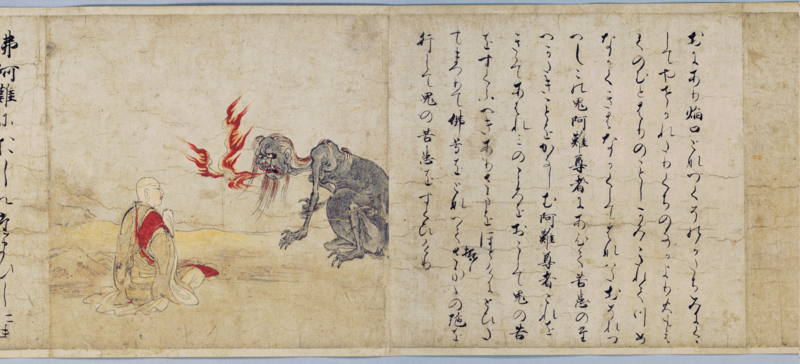
The Hungry Ghost: The concept of hungry ghost is found throughout Buddhist traditions. This is from the Sixth section of the Japanese Hungry Ghosts Scroll located at the Kyoto National Museum. The scroll depicts the world of the hungry ghosts, one of the six realms of Buddhism and contains tales of salvation of the hungry ghosts. This particular section shows Ananda, a disciple of Shakyamuni, teaching an incantation to achieve salvation to a hungry ghost who continuously belches flames from his mouth.

The creation of a Hungry Ghost happens when a person’s death has been exceptionally violent or unhappy. The ghosts are often given quite animalistic traits in the ghost stories and records. Although there are different categories and types of hungry ghosts, one common trait among them are that they are seeking a type of revenge of those who wronged them, or simply those who got in the way.

Although most accounts of Tu Po doesn’t give him animalistic traits like a monster, he definitely sought his revenge on those who wronged him like most vengeful ghosts are looking for, and therefore given the title of a Hungry Ghost.

Before becoming a Ghost – Tu-Po the Emperor’s Minister

Before becoming an ancient ghost, Tu Po used to be an important man in ancient China. The nobleman Tu Po 杜伯 is sometimes translated as Du Bo and he was the Duke of Tangdu. This was a Dukedom situated west of State of Yi Lin around were the Shaanxi province in northwest of China is today.

According to legend, the Tangdu people were descendants of the people living in the State of Tang, a Dukedom destroyed by Zhou Gong Dan that now ruled the empire. They were allowed to form a new State of Du, and became known as Tangdu or Du shi (杜氏).

Tu-Po was not always remembered as a hungry ghost, but was a prominent minister to King Xuan of Zhou (also known as Emperor Hsuan) who reigned from 827-783 B.C. Emperor Hsuan was the eleventh king of the Chinese Zhou Dynasty in a time were the kings words were the law and his minister Tu Po had to pay the ultimate price.
The empire: Map over the Jin (Tang) state during the late Spring and Autumn period as it was called, around the time of Tu-Po’s death and after. This is were he, and his ancestors resided and ruled.//Photo: Hugo Lopez – Wikimedia Commons user: Yug

The king is mostly remembered for fighting the ‘Western Barbarians‘, most probably Xianyun, an ancient nomadic tribe that invaded the Zhou empire on the Huai River. He also meddled in debacles of successions in States of Lu, Wey an Qi and was, according to history, not a popular one. Sima Qian, considered father of Chinese historiography, said: “From this time on, the many lords mostly rebelled against royal commands.” And the way the king ended his reign, is rumoured to be the work of the hungry ghost of Tu Po.

So Tu Po was from a stately and very powerful family and not afraid to speak up for what he believed in, even to the most powerful man in the dynasty. And this would cost him his life and make him a hungry ghost, haunting the earth and seeking revenge.

The Fall From Grace and Becoming a Vengeful Ghost

There are not very many sources detailing what happened before the haunting of Tu Po’s hauntings started. But according to one account, this is what happened.

The King: King Xuan of Zhou (827-783 B.C). Formerly known as Emperor Hsuan or King Suan.

On the ninth year as King, King Xuan of Zhou called all the lords of his empire into a meeting that would seal the fate of Tu Po to discuss an oncoming attack.

A rumor was out that a woman was about to become a danger of the town of Jiangshan for some reason, and the King ordered a mass execution of women. Exactly how this one woman could be considered a danger to an entire town is not really explained.

No matter what the reason behind this mass execution of women, it was seen as a truly horrible act that Tu Po disagreed with. Tu-Po publicly opposed to the order he was given and he spoke against his king in a time when the kings word was the law and anything else considered treason.

This final act of opposition would cost him his life as King Xuan ordered his execution for this as he saw this act of opposition as treason.

Before Tu Po was executed however, King Xuan of Zhou was warned that Tu Po’s ghost would stay in this world even in his afterlife to haunt him as Tu-Po himself said:

“If my majesty kills me without reason, the dead may not know, well that’s it. However, on the other hand, I will avenge myself on him, within three years.”

But despise the warnings, King Xuan went through the execution. Even though he was considered innocent of treason by most, Tu-Po was executed around 786 B.C. But this would not be the last time he was seen.

The Revenge of the Hungry Ghost

Weather Tu Po’s final words were taken seriously, is not mentioned. Three years after the execution however, the King brought his dukes to hunt on his own hunting grounds. There were hundreds of chariots, thousands of escorts following them as well as a ghost that promised he would return for revenge.

Ghost festival: Lotus-shaped lanterns are lit and set afloat in rivers and out onto seas to symbolically guide the lost souls to the afterlife.

At noon, Tu-Po appeared as a ghost, riding a white horse and a cart, wearing a red coat with a red bow and arrow in hand. He took up the chase of King Xuan and shot the king in the heart and broke the king’s spine. At the time, it is reported that no one saw the killing and no one heard it. No matter what the real situation was like, The king fell and Tu Po got his revenge.

If King Xuan really died of an arrow is today a bit unclear. In some accounts it is said that King Xuan died of something else after dreaming that Tu Po shot him to death with an arrow.

In both cases, the innocent and wronged minister got his revenge and King Xuan’s son, was the last of the western Zhou to lead.

The story has gone down in traditional legends, ever since. The Chinese philosopher, Mo Zi (470-391 B.C), said this about ghosts and about Tu-Po’s revenge:

“If from antiquity to the present, and since the beginning of man, there are men who have seen the bodies of ghosts and spirits and heard their voices, how can we say that they do not exist?

If none have heard them and none have seen them, then how can we say they do? But those who deny the existence of the spirits say: “Many in the world have heard and seen something of ghosts and spirits. Since they vary in testimony, who are to be accepted as really having heard and seen them?”

As we are to rely on what many have jointly seen and what many have jointly heard, the case of Tu Po is to be accepted.”

More Like This

Newest Posts

Ghost of Tu-Po — The Hungry Ghost