Guarding the old mining community, these ghosts of these two women have been dubbed witches by the locals, feared as well as revered in their lives. Who were The White Witches of the Black Diamond Mines?
Before the place in the San Francisco Bay area used to be a bustling mining community at the turn of the century. The coal mines was operating until 1945. Now the mines are closed and the place forgotten, but the remains can still be reached an hour away from San Francisco.
Although named the Diamond mines, there was no sparkling diamonds to be found in the mines. Instead it was coal, the black type of diamonds. It is here the legend of the white witches started to take hold of the mining community.
The Contra Costa County is ranked as the scariest place in California because of legends like the Black Diamond Mines and the White Witches that are said to be haunting the place.
The White Witch in Rose Hill Cemetery
Sara Norton worked as a midwife to the people living in the small towns across the bay area and she delivered over 600 babies in her time. She was a widow to Noah Norton that even got the town Nortonville named after himself.
She died however in 1879 at the age of 68. She was on call at her midwife duties when she was thrown from a carriage to make a delivery in Clayton and was killed in the accident.
According to the legend, Sarah was not a religious person and told her own kids that she didn’t want a church funeral. However, when she died that was exactly what they gave her and her spirit became enraged. On the day of the funeral a storm crashed their plan and they decided to go through with the funeral the next day. The next day however, another storm came crashing and ruined their plans. The townspeople took the hint and skipped the formalities and buried her in the Rosehill Cemetery.
From then on the spirit of Sarah has been spotted in the old mining towns as well as floating around the tombstones in the graveyard.
Mary the Wailing Witch in the Black Diamond Mines
Another lady that is haunting the place is Mary, who history forgot her last name. She was working as a nanny in the 1870s, but in contrast to Sarah that brought life into this world, her legacy tells that she put life out.
All of her children that she cared for died of illness and it was not soon before she was accused of witchcraft after some local townspeople allegedly found evidence of her dark rituals that resulted in the death of their children.
In some variations of the legend, she worked as a school teacher, not a nanny. And with the diseases of the times, it is not unlikely diseases went through the community, striking the kids at the same time. So was it a tragedy or witchcraft? The townspeople certainly was of the belief that it was and set out to punish her.
The legend differs from how Mary met her death. Although the evidence is lost to us, it supposedly was enough to hang her for her crimes in some versions of the story. In other version her dead body was found in the mines under strange circumstances. But it was not enough to bring her out of this world.
To this day she is spotted guarding the mines wearing all white and seeking revenge for her murder. But there is also another side to her hauntings. It is said that it is mostly children that see her, and she pushes them out from the dangerous mines that are filled with harmful gasses and unstable tunnels.
So the question remains, is she remaining in the world as a resentful witch, or as a protector of children that she wasn’t able to be alive?
The blinking paper lantern hides a vengeful ghost in one of the most famous Japanese ghost stories. From a local legend about a real woman to the stage, the myth of the ghost of Oiwacontinues to inspire horror.
Many of the more well known stories of ghost and horror from Japan is about the Onryō, meaning a vengeful spirit. A ghost so full of regret and rage, they are posing a threat to living humans. And sometimes, they can come in the form as a Japanese Paper Lantern Ghost. This is the case of the ghost of Oiwa.
In many cultures, ghosts are put in different categories. Such is the case with Onryō (怨霊 onryō,) It basically means “vengeful spirit” or “wrathful spirit” in Japanese and is a mythological spirit of vengeance from Japanese folklore. They also have ghosts, called yurei, but these differ in the will of the ghost. As opposed to…
There are many movies, books and popular culture that feeds on the old legend of the vengeful spirit. Today in modern time we have The Ring and The Grudge series that makes use of this old legend, and in many instances, they are both also inspired by the most iconic Onryō throughout time, the ghost of Oiwa.
Yotsuya Kaidan — The Tale of Oiwa and Tamiya Iemon
The ghost of Oiwa is a vengeful spirit that we first learned of through the kabuki play called Yotsuya Kaidan (四谷怪談) or Ghost Story of Yotsuya from 1825. It was written by the writer Tsuruya Namboku IV, known for his plays with supernatural themes and macabre and grotesque characters.
She is an easy recognisable character on stage with her droopy eye and hair falling out or as the iconic Paper Lantern Ghost. She is also often seen as a Japanese ghost lantern in art.
Read Also: Check out all of the ghost stories from Japan
Kabuki Theatre
The Kabuki theatre is a traditional Japanese style plays originating in the Edo period. It is well known for its characteristics wigs, costumes, makeup and masks. It is exclusively theatre troops of men playing all roles. The distinct styled stage performances is the origin of many iconic looks in modern pop culture, like the distinct style of the Onryō with the white dress, white makeup and long black hair.
Yotsuya Kaidan is not the first and original written account of the legend, but certainly the most famous one. The first written manuscript about the ghost of Oiwa is dated to 1727 called Yotsuya zōtan 四谷雑談. It was an underground publication, most likely of the scandalous rumour of the true rumours of a noble family and lady that acted as an Onryō after her death.
Yotsuya Kaidan tells the story of Oiwa and Tamiya Iemon and in this play it tells the story of a woman scorned by her man and coming back from the dead for revenge. Throughout the years, there have been many adaptation and versions of the story and it was a popular story to tell as a part of a samurai parlor game.
It is considered to be one of Nihon san dai kaidan — Japan’s Big Three Ghost Stories. It is arguably the most famous Japanese ghost story of all time and has spurned a couple of local legends of its own.
Read about the Nihon san dai kaidan—Japan’s Big Three Ghost Stories:
The Botan Dōrō or Tales of the Peony Lantern is a ghost story told since the Ming dynasty in China to today. Most popular through the Kaidan theater plays, it is now one of Japan’s most well known ghost stories.
The tale of Banchō Sarayashiki (番町皿屋敷, The Dish Mansion at Banchō) is a well known Japanese ghost story (kaidan). It was popularized in the kabuki theater tradition, and lives on in popular culture and folklore alike.
Yotsuya Kaidan starts out as a classical romantic tale. Oiwa was said to be a loving and devoted wife that risked everything for her husband, Tamiya Iemon. They married in secret, without her father’s consent. Tamiya Iemon was a wandering samurai, a poor rōnin and not suited to marry his daughter according to the father.
The ghost of Oiwa From the ”Thirty-six Ghosts” series by Tsukioka Yoshitoshi, ”The Yotsuya Ghost Story”, 1892.
Oiwa’s father whoever, was not as pleased with her marrying this man without honor and no money. When he found out the rōnin’s misdeeds, he confronted him. After a heated argument, the father was killed by the son in law when he threatened to make them stay apart from each other, and he did not bless their marriage.
After his death, Oiwa mourned her father. Iemon comforted Oiwa, claiming they would find her father’s killer.
To earn money he had to take up work as an umbrella maker to care for his pregnant wife. The old samurai grew bored doing the tedious work and turned resentful towards his wife, Oiwa. A woman he once loved and done horrible things to stay with. But in the end, there was no love left.
Next door they had a neighbor with a granddaughter that loved Iemon. The neighbor himself wanted his granddaughter and Iemon to get married. They were wealthy neighbors, and Iemon wanted to be that as well. So they planned how to get rid of Oiwa together.
Unbeknownst to Oiwa they sent her either an ointment or face cream laced with poison. But the poison didn’t kill her and only left her disfigured with one eye drooping and her hair falling off as she tried to brush through it, making Iemon so disgusted by her, he came up with a plan to rid himself of her. He hired one of his friends to rape her so that he would have grounds for a divorce.
His friend however is unable to go through with the plan and shows her a mirror instead. When she sees herself she understands what has happen and how she has been deceived. She takes a sword and accidently kills herself with it, and on her last breath, she curses Iemons name. In some versions there is actually Iemon that kills her.
Iemon threw her in the river to rot and went on to plan the wedding to the neighbors granddaughter. That night, the night before his wedding, he had terrible night terrors, and he saw his dead wife manifesting. In a burning paper lantern she comes out as a ghost, frightening him as a warning of the hauntings that are about to come.
The Chōchin obake
In Japanese legends, they have this concept of Tsukumogami (付喪神, “Kami of tool). This is the belief that inanimate objects, when they ‘serve’ their owners for a hundred years, they are granted life and a soul. When the Japanese lantern, or Chōchin reaches this age, it can become Chōchin obake, a Japanese lantern ghost, a mostly harmless ghost that laughs and lightly scares humans. But they could also be inhabited by a powerful onryō.
The Lantern: The print depicts a Kamiya Iantern haunted by the ghost of Oiwa as the Paper Lantern Ghost in Yotsuya Kaidan Kuniyoshi Utagawa, ”The Ghost in the Lantern”, 1852.
But he is not frightened enough as he still goes on with the wedding the next day. When he lifted the veil of his bride though, it was the ghost of Oiwas disfigured face staring back at him. He beheaded her, and therefore, his new bride as well. There is all in all a lot of killing going on.
He was then pursued by the ghost of Oiwa, not wanting him to escape. She was turned into a vengeful ghost, pursuing him into madness, making him suffer. He dies in the end, after suffering horrible.
It changes in the different adaptations of Yotsuya Kaidan how he dies though. Sometimes he is killed by Oiwa’s brother, or brother in law and in other versions it’s the haunting of the ghost of Oiwa that drives him out of his mind and into death. Sometimes it’s Oiwa herself, that pulls him down from the height with her. Either way her revenge is complete.
Advertisements
The Deaths Behind The Play of the Paper Lantern Ghost
The success of the Yotsuya Kaidan play was so big that they had to reschedule more performances to meet the demands. It was mostly believed that the popularity of the play was because it tapped into the zeitgeist of the society at the time.
Oiwa as the lantern: The ghost of Oiwa manifesting herself as a Japanese Paper Lantern Ghost. From the series One Hundred Tales (Hyaku monogatari). Print by Katsushika Hokusai. 1830
The theme of repressed women was something that reflected the Bunsei era that was also a time of great unrest. And the story of the victim taking her revenge of her oppressor was something the audience revelled in.
But where did the story come from? Was it just from the imagination to Nanboku when he wrote the play?
In most blogs it is said the legend created the play. But was it actually the play that created the legend? Yes, it is based on the terrifying vengeful ghost, something older than the kabuki play. But were did Nanboku really get his story from?
According to some sources Nanboku’s play was based of an actual murder of the wife of a samurai that went insane after her husband got another woman pregnant. She wandered off from her home, never to be seen again.
It is also claimed that Nanboku based his play from to separate murders. One of the murders was that of two servants who had murdered their masters. They were caught and executed on the same day. The second murder that inspired the play was a samurai that nailed his wife and her lover to a wooden board and threw them into the Kanda River for being faithless.
In any case what source the play was created from, the play itself became something that created more legend. It has adapted for film over 30 times, and continues to be an influence on Japanese horror today.
The Real Oiwa and her Rocks
But who was the real Oiwa behind the manuscript? Both the play and the written account from 1727 from the underground publication that claimed a dead wife had turned into an onryo. Wether this account really refers to this Oiwa, is a bit uncertaint though.
We can find an Oiwa Tamiya in the real life that had something mysterious happening to her. Living in the 17th century, she was born into a powerful family, but she and her husband had financial difficulties.
One day Oiwa came over two very large rocks she felt was something special and put them both in her garden. She prayed to these rocks for good luck and prosperity for her family to overcome their financial difficulties.
And over time, the things she prayed for to the rocks really happened for the family and everyone believed it was because of the magic rocks that she had prayed to. The rocks became famous, and was called Oiwa Inari or Yotsuya Inary. In the end, a shrine was built for it, and this is the shrine people flock to pray to.
Even the Tokyo Metropolitan Board of Education found it necessary to distinguish the real life Oiwa and the play and they have put this message:
Tamiya Inari Shrine, commonly known as Oiwa Inari, used to be i the premises of Tamiya family of Osakitegumi doshin (military officer in the Edo period). An old story is passed down that Oiwa (died in 1636), a daughter of Tamiya Matazaemon, worshipped at the shrine and restored her family with Iemon, her husband. Therefore, the shrine was gradually worshipped as ‘Oiwa Inari* by people. There was yet another story to attract further worshippers, the ghost story ‘Tokaido Yotsuya Kaidan’, written by Tsuruya Nanbuko and was staged in 1825 and was very popular.
However, it was written after 200 years of time when Oiwa and Iemon actually lived. Unlike the famous ghost story, their marriage in reality was enjoyable. After Inari shrine was lost by a fire in 1879, it moved to Shinkawa in Chuo Ward. The present shrine was rebuilt here at Yotsuya in 1952.
— Tokyo Metropolitan Board of Education
Although not like in the play, there were rumours about Oiwa being a vengeful ghost, long before the Kabuki actors entered the stage for the first time. Something we can read about in the manuscript from 1727 that also hinted to this fate for her.
A more sinister legend of this lady though is the curse she apparently set on three houses had been disrupted, rumour saying it was the grudge of Tamiya’s wife, Oiwa that killed them. They were both victims of the reforming rule of the eight Tokugawa Shōgun, Yoshimune Kō. In some accounts she disappeared, in others she commited suicide, vowing to revenge those who wronged her. In all she was blamed for the deaths of at least fifteen people.
The Shrine in Oiwa’s Honor
Already in 1717, there was a shrine erected in her honor, something they sometimes did to appease the wrath of an Onryō, long before the publication that were written ten years after. This is a list of some of the shrines that were built to restore her honor and protect from the harmful ghost, or at least connected to the Oiwa legend:
They say that when visiting her grave, there is a statue of Oiwa inside the main building in some of her shrines, although not accessible to visitors. you can wish upon it as it is said she grants the wishes of her worshippers. This is also the rumours about her grave.
The Curse of Oiwa’s Grave and The Curse on the Play
The revenge of Oiwa: The ghost of Oiwacoming out from the Japanese lantern in Yotsuya Kaidan as a ghost with her son in her arms. Artist:Kuniyoshi
It is said her body is buried at Myogo-ji temple in Sugamo, Tokyo. Her death is listed in February 22. 1636 and the grave has been rumoured to have been haunted for ages.
After the play started, there have been reports of accidents, injuries and deaths around the production of the play or even TV or movie adaptions of the story. This has been blamed on the ghost of Oiwa and her wish for revenge. Therefore it has become a tradition to visit and pay respect for the people involved in a production of Yotsuya Kaidan just to be safe.
I you go straight through the graveyard, there is suppose to be a red torii (a Shinto shrine archway) by a tree. Under the tree, her grave is supposed to be. But don’t run off to check it out just because you are curious and nothing more. According to legend, if you visit the grave just because of curiosity, your right eye will swell up, just like hers did with the poison.
It is said to be a curse over it all. And very much like the Macbeth curse, the people involved in productions of the legend of Yotsuya Kaidan, still honors it. Before retelling the story there is a tradition to go to her grave, to ask her permission, asking for her blessing to tell her story again. So… will you?
The haunting of Fisher’s Ghost, a farmer in Australia, is one of the countries most famous ghost stories. It is based on the true events and a murder that happened in Campbelltown in the 1800s. And allegedly, the ghost came back from the afterlife to try to help people catch his killer.
The legend of the farmer Frederick Fisher is one of the most popular ghost stories in Australia and comes from Campbelltown in New South Wales. Today it has grown into a suburb of Sydney, but back in the 1800s the place was mainly for farmers of cattle and sheep. Even to this day the town is most known for the famous ghost story of Fisher’s ghost and Fisher’s Ghost Creek runs through Campbelltown’s parks.
Read Also: Check out all our ghost stories from Australia.
Since the 1950s, there have even been a festival named after Fisher’s Ghost that are hosted every year in his honor to show good spirit and community. The Fisher’s Ghost festival includes a parade through Queen Street, Fisher’s Ghost Art Award, Fun Run, Street Fair, Carnival, Craft Exhibition, music, competitions, fireworks and the Miss Princess Quest. All in the honor of the towns greatest murder mystery were one local murdered his neighbour.
Fisher’s Ghost Bridge: Several of the places in Campbelltown in Australia is named after the ghost story of Fisher’s Ghost. Here is a photo from circa 1945.
But what really happened that day Fisher’s ghost returned from the dead to try to reveal what really happened to him the day he had disappeared?
The Disappearance of Frederick Fisher
From his staring, or wild rolling, eye. Now, stout was the heart of Falconis, and bold ; Nor weak superstition dwelt there ; And hideous that object must be to behold, That could daunt his fierce spirit, his blood curdle cold, Or stamp on his cheek palid fear. And, hideous, in sooth, was the object that scared And turned him from homeward that night; In shuddering amazement his hearers all stared, Whilst, with half-lessened terror, Falconis declared He had met with a murder’d man’s Sprite. – The Sprite of the Creek
On a calm night on June 17th in 1826, the local farmer Frederick Fisher left his house in Campbelltown and never returned. No one knew were he had gone as he was just going out on a few errands that day. Without a trace he was vanished and no one managed to find out why and how he had disappeared.
Fisher was originally from London and was sentenced to go to Australia after forging bank notes in England. His thieving days was not over for him, even after he was sentenced to 14 years in Australia, and he ended up in prison again. It was not long since he had gotten out of prison again before he disappeared. His friend and neighbour George Worrall kept saying that Fisher had just returned to his native country.
Fisher’s Suspicious Friend and Neighbour
Four months went by and with no news about Fisher and what might have happened to him other than what Worrall claimed. Before going to prison, Fisher had given Worrall power of attorney over his farm and belongings until he got out again. Worrall said that Fisher had given him his property to keep forever and said that Fisher intended to stay in England and never return to Australia.
Worrall himself had also been sent to Australia on a prison sentence because of theft. And like Fisher, it seemed like his criminal days was not over. The police arrested Worrall that September because they suspected he had something to do with his disappearance after he had started to sell Fisher’s belongings. Worrall claimed his innocent and said it was 4 other people that had something to do with it who were also arrested.
The Encounter with Fisher’s Ghost
Then, one day a local man bursted into the Campbelltown hotel called Patricks Inn. The man was pale and shook to his bone. He couldn’t believe what he had just witnessed as it was simply out of this world and would change everything.
The local man was named John Farley and he told everyone in the hotel with a shaking voice, that he had just met Frederick Fisher, the one that had been missing without a trace for many months. The problem was that, he was not alive. Not anymore. It was Fisher’s ghost and was back to get his death known to everyone.
Meeting at the Fence: What really happened that night along the country road? Fisher’s Ghost allegedly appeared and showed were his body was buried and helped solve the mystery. What really happened that summer has been up for debate ever since.
According to John Farley’s testimony, Fisher’s ghost had sat on a fence along the way were the local man had walked past on his way home. Fisher’s ghost had pointed on a paddock beyond the creek as if trying to show Farley something. Then Fisher’s ghost had vanished right before the eyes in front of the shaken man.
Fisher’s Ghost and How he Helped Catching his Murderer
First, the tale Farley told to everyone in Patricks Inn was disregarded as just a fanciful tale, but soon, rumours about the sudden disappearance of the farmer and the mystical appearance of Fisher’s ghost got people even more suspicious.
The man who had seen Fisher’s ghost was a wealthy and respected man in the local community. So the police decided they would investigate his claims after enough rumours and retellings had occurred and stirred up enough fuss. They went to the place the guy pointed out, but the officer found nothing by himself. They then got an Aboriginal tracker living in Liverpool, Australia to help them who managed to locate something when they tested the water in the area.
‘White fellow’s fat here!’, the tracker told the officers and to their big surprise, they found the body of Fisher, stashed away, out of sight, buried by the side of the creek. He had never left Australia, and had certainly never left his farm to his good friend and neighbor either.
The Murderer of Fisher was Caught
George Worrall, Fishers neighbour and his close friend was already under suspicion before the body was found as he had started selling Fishers property and told everyone Fisher had gone to England. They thought that Worrall had killed him when Fisher tried to get his farm back after getting out of prison. Worrall admitted to burying him there when the body was found and was hanged in early 1827. He never admitted to actually murdering him.
Fisher could finally rest in peace as he was finally buried in the cemetery at St. Peter’s Anglican Church in the town by his brother Henry.
Iconic Ghost Story: Ever since the murder happened, the story has been retold in poems, short stories, operas and movies. Here is an illustration by British scientist John Henry “Professor” Pepper, who in 1879 created the theatrical production “Fisher’s Ghost”.
So what was the deal with the ghost that suddenly appeared in the murder mystery? There are several theories as to why Farley talked about a ghost and knew were Fisher was buried. One is that he may have known something about where Fisher’s body was buried. Could he have been in on the murder? The details are hazy at this point and this has never been confirmed one way or the other. In fact, the whole story about Farley could be just a story made up after the murder.
Today the official police and court records don’t mention the ghost story at all and some think that the ghost part of this story first came about in the 1832 from James Riley named ‘The Sprite of the Creek’.
Fisher’s Ghost still Haunting Campbelltown
Another theory is of course that Farley did in fact walk past the creek and saw Fisher’s ghost sitting there as he pointed out exactly where he was buried and it helped to solve his murder.
Who can know for sure today exactly what happened? At least Fisher’s ghost found peace in the end after being found and buried properly, not in a shallow grave by the creek. Or did he really find peace? Some reports says Fisher’s ghost still haunts the hotel, to this day. Some even claim that the ghost never really left, and he is still haunting the town.
It is also said that Fisher’s ghost haunts Campbelltown Town Hall, which is built on land where Fred Fisher and George Worrall’s land crossed.
Thes old and noble family House of Hohenzollern in Germany seems to forever be haunted by a Lady in White. Both the ancient family homes of the family, and also the family members, however far they go away, the curse of the house will follow.
In December 1628, the Palace in Berlin can’t keep the cold out, not completely. A hereditary haunting of the ruling family of Prussia sits in the walls of their castles — a bad omen. Most often the bad omen of the curse is seen as a woman dressed in white. You can hear her sometimes, the clanking of the large keys around her waist. A young prince is next this time. She appears to a him and says: – ‘Veni, judica vivos et mortuos’ which means ‘Come, I judge the living and the dead’. The day after, he dies of an illness.
But who is it that haunts this old and noble family? Even the young princes? Years before the young person died, she was also spotted by three young pages in 1619. In one of Hohenzollern Castle halls, it doesn’t need to be the one in Berlin. As long as it is one of the ruling Hohenzollerns. The young pages thought she was a living human being, and approached her. When he asked what she was doing here she turned to him and hit him with her keys, killing him. The two pages ran away, terrified.
The House of Hohenzollerns was growing restless when they heard about the sighting of the woman. She had been spotted again, it was a bad omen. Something was about to happen. Three weeks later, John Sigismund Prince-Elector of the Margraviate of Brandenburg from the House of Hohenzollern, died.
House of Hohenzollern in Germany
The family is an old one. The House of Hohenzollern once ruled what is now known as Germany as a dynasty being princes, electors, kings and emperors. They ruled the lands of Brandenburg, Prussia, The German Empire and as far as to Romania.
Read More: Check out all of our ghost stories from Germany
They began their ruling dynasty in Swabia, in a town called Hechingen during the 11th century and took their name from their ancestral Hohenzollern Castle. The first ancestors of the House of Hohenzollerns were mentioned in 1061.
Burg Hohenzollern on the Hill: The ancestral home in Swabia, Germany, constructed in the early 11th century to the House of Hohenzollern. The haunting may have started here, but the sightings of the White Lady Haunting the family has been spotted everywhere were a member of the family has been residing.
They were the rulers of the lands, growing in power until 18 71 with the unification of the German Empire with the Hohenzollerns as hereditary German Emperors and Kings of Prussia. This title they held until Germany’s defeat in World War I in 1918 led to the German Revolution. The House of Hohenzollerns were overthrown and the Weimar Republic was established, thus bringing an end to the German monarchy.
Sure, they were powerful, and powerful families makes powerful enemies. Blue blood attracts bad blood. But who was so intent on following the family, haunting them for centuries? There have been many claims as to who exactly is the woman behind the hauntings. And this here, is one of the more famed ones.
The Noble Killer Nun Haunting the House of Hohenzollern
Kunigunde von Orlamünde is a ghostly reminder of the ancient past. She was born in 1303 as the first child of Ulrich I, Landgrave of Leuchtenberg, and part of their Bavarian dynasty in the middle-ages.
According to legend, Kunigunde von Orlamünde fell in love in a man called Albrecht the fair, the fourth son of Frederick IV, Burgrave of Nuremberg. A man of the House of Hohenzollern.
The Abbess: Tombstone of Kunigunde von Orlamünde at Himmelskron, is rumored to be behind the curse of the House of Hohenzollern.
Albrecht had expressed that he would marry Kunigunde von Orlamünde, hadn’t it been for that “four eyes did not stand in the way”. Kunigunde thought he meant her son and daughter. Therefore, she stabbed their eyes out with a needle, and they died, freeing her to marry the man she loved.
Johann Löer made a verse about this in 1559:
And thought, those small children I wanted Will certainly be the eyes that Robs me of my love! And if the woman even did That murdered her own children That misery robbed their life That stabbed them with pins Tender and soft all over
This is not what Albrecht meant though, as he was talking about his parents as they disapproved of their match. He refused to marry her after her actions. He married a woman named Sophie von Henneberg and got two daughters on his own.
Kunigunde von Orlamünde was devastated and full of regret. She had murdered her own children for a man that didn’t even want her. Therefore she started on a pilgrimage to the Vatican to get absolution for her sins from the Pope himself. He ordered her to build a monastery and become a nun. She joined the Kloster Himmelkron.
In some version she she was sentenced to life in prison for the murders, other tell of how she died on the way to the Vatican, not being able to beg of forgiveness. She is one of the origin stories of the curse over the House of Hohenzollern and she has been haunting the family ever since.
Weiße Frauen Haunting the House of Hohenzollern
Could Kunigunde von Orlamünde be the lady following the haunted House of Hohenzollern? Lurking along the walls with her keys, paying close attention on every male descendant in the family that she never got to be a part of? A family growing bigger by every generation while she cut down her own? In any case, the legend of the Lady in White is old. Perhaps so old that even not history keeps it in its records?
Basking in the sunlight, hiding in the shadows, her dress is always white. In German legends and folklore the stories of the Weiße Frauen, meaning White Women used to be a name meant to the elven-spirits and the stories of the light elves from pagan times. Many of the ghost stories seems to be based on these old folklore types of myths and legends, even to this day.
The White Lady Haunting Germany: Illustration from the opera, The White Lady. The White women or the Weiße Frauen has been a part of the German mythology for ages. It has know been a part of German ghost stories as well for centuries.
The legend of the Weiße Frauen or white woman has, as everything does, evolved from its elven origins. Now the name is also used on women dying in grief, of sorrow or with a urge of revenge. It has spread throughout Europe and is an image with strong connotations, even today.
The Family Curse Over the House of Hohenzollern
Some call her the White Lady, some call her ‘The Harbinger’. She brings bad luck to those seeing her, and reports of her sightings has been going on for centuries.
In 1667, Louise Henrietta of Orange, the wife of Elector Friedrich Wilhelm of Brandenburg, was lying ill. A few days before she passed away, she saw the White Lady, sitting by her desk almost as an omen that warned the family that death was approaching.
The family members started to learn to spot the signs, but was unable to do anything after her sightings. In 1678, the Margrave Erdmann Philip of Brandenburg saw the White Lady in his armchair as he entered his chamber in Baireuth. He left the room, shocked and terrified. The next day he rode his horse out in the court and there was something weird going on. The horse was uneasy, as if seeing something that scared it and he threw the prince off. The Prince stood up, seemingly fine and he retired to his chamber. But after two hours, he was dead.
Weiße Frauen Curse of the House of Hohenzollern: The White lady, also known as the Harbinger, has been haunting the family for centuries, acting as an omen when someone is about to day, and even as a warning. Is it really a curse, or actually someone watching over them, trying to warn them when danger is afoot?
Even the dead ones seems to warn about the White Lady that haunts the House of Hohenzollern. The White Lady was supposedly absent during Frederick the Great’s reign, but in his death, he came back to warn them about her. In 1792 in Paris, his nephew Frederick William the Second was camped outside the city with his troops, ready to attack the next day. That night his dead uncle appeared before him, warning him about the seeing the White Lady if he didn’t call off the attack. His nephew listened and left France, avoiding the harbinger and according to the legend, a certain death.
Even Napoleon tried to spend a night in one of Hohenzollern castles but left bothered by the ghost haunting the place. In 1806 he had defeated Prussia and claimed some of its land as a French province. He left the next day, never to returned, calling it le maudit chateau, ‘the cursed castle’.
But today? Were is she? Just before World War I in 1914, she was last reported. Just before the Archduke Franz Ferdinand was assassinated. After they lost the war Kaiser Wilhelm the Second was the last ruling Hohenzollern, and he later abdicated the throne.
And it is said as long as there is no Hohenzollern that rules, the White Lady will stay in the shadows, and hopefully, outside of the Hohenzollern castles.
What is the Truth Behind the Curse?
Such a dramatic story, but does it ring any truth? What is true is that Kunigunde married Otto VI, Count of Weimar-Orlamünde. Historians refute the legend as according to record, their marriage produced no children. It is true that she and her husband adopted a daughter, Podika von Schaumburg, but she grew up and married Poske Ritter von Schweritz in 1341.
There are also records of her dying in 29th of April in 1382. And if she really was born in 1303 she would have been close to 80 and most likely in a comfortable home, not on the road to Rome or in prison.
Kinigunde’s husband died in 1340, leaving her with a vast inheritance. She spent it on the monastery she herself would join as a nun. Funnily enough, sources tells he actually bought the monastery from Albrecht.
The Harbinger of Death
For a story as old as this one, there is now difficult to separate facts from fiction and the story of the curse that allegedly looms over the House of Hohenzollern seems to still be there, even if no one has reported about the White Lady for a while.
But what about The House of Hohenzollern and their sightings of the White Lady over the centuries? All of their stories? Were they just that? Stories? Or is it that some details of the past is not for us to know. Not the living.
Could it be something else than a woman with a flare for eternal vengeance? Perhaps something even older like the German myths and legends have been telling for ages?
The legend of the Lady of the Lake in Rochester has been around the Durand Eastman Park in the state of New York for centuries, haunting the lakes and park, in search for her daughter – and possible revenge.
Between the cities of Rochester and Irondequoit in the state of New York, the Durand Eastman Park has been a place for a nice park and a cozy picnic since the turn of the century. According to the legend though, the park is not always sunny sundays as the Durand Eastman Park is allegedly haunted by the ghost of a woman named The Woman of the Lake.
This type of ghosts takes on numerous names: The Lady in White, The White Lady, Lady of the Lake. She becomes a different entity with those names, one of many, a ghostly transparent figure of folklore. She loses her humanity and such, gains her legacy that lasts longer than a human lifetime. But who were this lady down by the lake when she was alive? Does she have a name?
Read Also: Check out the rest of our ghost stories from the USA
According The Rochester Candlelight ghost walk, the legend of the Lady of the Lake in Rochester have been told as far back as when the Durand Eastman Park was used as a vacation destination. And when a Boy Scout Camp was set up in the park, the legend grew around the campfire when they started to whisper about who the one in the deep lake could be and what she was after.
The Legend of Lady of the Lake in Rochester
Before the 1900’s, the area surrounding the Durand Eastman Park was a swampy place and not the nice and curated park we see today. It was farmland and small farms was around the lake with a few families living in the area. The lady that has been roaming the place since the early 1800’s is said to have been the wife of one of those farmers, farming this swampy land.
A walk in the park: During the day, the Durand Eastman Parkis a pleasant place for a walk. But at night though remember there is a ghost story about Lady of the Lake in Rochester// Photo: DanielPenfield
Lady of the Lake in Rochester’s name, according to written accounts and oral storytelling, her name was Eelissa. She appeared in different shapes and forms. Sometimes she was told to be an old and ugly woman. In other variants of the legend, she is a youthful spirit of the lake, almost more like the mythical fairy from the stories than a real woman.
Through the generations the story has been passed down through the locals, the story about this Lady in White or Lady of the Lake that has been haunting the park since the early 1800s has taken some different roads along the way. But the main overview remains the same.
In one of the variations of this ghost story, Eelissa had an abusive husband that left her for another woman when he got tired from her. In her jealous rage, she killed them both when she realised she would be alone. It is said that this is why she is haunting the Durand Eastman Park, mistaking young couples for her husband and mistress.
Legend has it that she is a dangerous ghosts, still blinding by rage and keeps slaying them, again and again for revenge. This variant of the legend about the scorned woman turned deadly is a classic take on a ghost story to tell around the campfire, but it is certainly not the most famous take on this legend.
The variation retold the most about the Lady of the Lake in Rochester, is that the Lady of the Lake is a grieving mother more than a scorned woman. The ghost of her is seen around the beach of the park, looking for her daughter she lost. In some variation, the daughter ran away with a lover and away from her overprotective mother to live their life in peace. Left all alone she haunts the place waiting for the return of her daughter.
In other versions the daughter was brutally raped and murdered close to the lake. The mother was unable to go on after this when the culprits got away without punishment. The grieving mother looks for remains of her daughter to this day, as well as those who did her harm. In some variations of the story, she is accompanied by two ghost dogs, helping her in the search.
No matter how the story is told, one thing is a binding link: She still have an enormous mistrust in men, even in the afterlife. Perhaps because of the abusive husband, perhaps because of the man stealing her daughter away or because of the rapist and murderers that took the life of her daughter. Who knows really, perhaps it could be all of them?
She is therefore rumored to attack men that in some ways are: ‘hindering’ her mission and interrupting her search. So if you are a man taking a stroll in the Durand Eastman Park, beware so to not be hindering anyone.
The Castle Housing the Lady of the Lake in Durand Eastman Park
In the Durand Eastman Park, the ruins of a stone wall is hidden among the trees. It is called, the castle. The Castle is a common place to gather for parties and retelling of the legend of Lady of the Lake in Rochester. It has over the years also become a part of it. Whispers that it is actually a part of the Lady of the Lake’s house when she was alive, or that it used to be an insane asylum or even a cannon wall.
Read Also: Check out all of our ghost stories about Haunted Castles.
But in reality the castle is just the remains of a dining hall that used to be there. Before the Great Depression this was a place people in the Durand Eastman Park could get some refreshments while strolling among the trees after it was built in 1911. But over the years after vandalism, even arson and the passing of time, this wall is all there remains of the building.
The Castle in the Park: In Durand eastman park, there is something that look like a castle that has become a part of the woman in white in Rochester.
Investigation The Lady of the Lake in Rochester
The blogger for The Rochester Subway, spoke to a Jenni Lynn that owns the Rochester Candlelight Ghost Walks that includes the ghost story about the Lady of the Lake in Rochester. She told that they had teamed up with local physic, Shelly Phillips to investigate the Lady of the Lake in Rochester once to get to the bottom of the matter. Could they possible find out anything about the ghost supposedly haunting Durand Eastman Park?
They had used several different equipment, including divining rods, EMF-detectors, temperature readers as well as noise monitors. According to Lynn, Phillips was able to stand behind the legend that Eelissa’s daughter ran away together with a local farm boy and that this was the true origin story of the legend.
Lynn also says she spoke with the local police, The Irondequoit Police Department to try to get some hard facts that could perhaps shed some light on the matter. According to her, there have been many reports to the police regarding the Lady of the Lake in Rochester and that people claimed to have seen her. These reports is maybe including even the police officers themselves when they have been patrolling the Durand Eastman Park.
Lady of the Lake: In Durand Eastman Park there are rumours about the ghost of a lady in white walking around the lake in search of her lost daughter.
It is worth noting though, the police department themselves have not confirmed this, and the stories about the Lady of the Lake in Rochester is for now just that, stories.
But then, there must be some historical records of this, right? Eelissa is such an uncommon name, and the place is well documented. But according to town historian Patricia Wayne, there are no such records, documents or proof that can verify the story. Even so, every year, reports of sightings every year comes in of people claiming to have seen the Lady of the Lake in Rochester.
The Lady in the Tree in Rochester
Telling of these ghost stories varies throughout the time, and sometimes there’s things that happens that gives new life into old stories. One thing that literary blew some new life into the story of The Lady of the Lake in Rochester though, happened in 2017. A forceful wind was storming around the Rochester area, awakening the ghost once more.
According to Democrat and Chronicle this storm seems to be the first that broke the story online when the wind ripped apart a chunk of wood from a tree in the Durand Eastman Park. It left in splintered in the form of a skull like female, that many believed to be the ghost of the Lady of the Lake in Rochester, centuries after the legend was born, reminding everyone that she was still here.
The Greenbrier Ghostthe supposed ghost of Zona that returned from the dead to testify that she was in fact killed by her husband and wanted to see him jail.
How do we explain unnatural occurrences that actually makes sense? This is a debate the people of Greenbrier dealt with in Victorian times when the story of The Greenbrier Ghost came about. There is something of a dissonance in the universe as well as in our minds when something like the appearance as a ghost, finds the truth no living people knew.
This is the case of the Greenbrier ghost, the ghost that went to court to testify to get her murderer behind bars. The woman behind The Greenbrier Ghost is now resting in a cemetery near Lewisburg in West Virginia, USA. And she is known as the only ghost that have testified in her own murder trial in the American judicial system.
Read More: Check out all of our ghost stories from USA.
Background of The Greenbrier Ghost
In the small and dull village of Livesay’s Mill in Greenbrier County, nothing much happened. Surrounded by lush green scenery of West Virginia landscape, the lives of the people living there, moved slowly along and there were not much talk about ghosts and murders.
The Greenbrier Ghost:Elva Zona Heaster was only twenty three years old when she was killed./source
Then a stranger arrived. The man was a young man, strong and muscular. The new and handsome worker at the blacksmith’s shop usually introduced himself as Edwards, but was called Trout by the rest for some reason. He was a mysterious figure in the new town, but a pretty face can hide dark secrets very well.
It was there he met a farmer’s daughter called Elva Zona Heaster, commonly known as just Zona. She was a popular girl in the Greenbriar County. Not much of her life before marriage is known, but there have been reported she had a child out of wedlock.
Normally a pretty stoic guy, Trout caught the eye of Zona and started courting her. They fell in love and married the same year as he arrived in 1896.
There marriage happened despite her mother’s disapproval. Zona’s mother really hated Trout from the get go he arrived. But from the outside, it was seemingly a happy marriage.
The Death of Zona
The marriage didn’t last long though. Three months after the wedding, it all was about to change. On that late January day in 1897, Trout was at the house of a Martha Jones for a visit. Zona was supposedly feeling sick and had stayed back home. Trout asked if Martha’s son, Anderson Jones could go and look to Zona if she needed anything.
Just a boy of 11 years, he followed his orders and went over to check on Zona. Once there, a horrific sight awaited him as he opened the door. The lifeless body of Zona was found at the foot of the stairs. Dead. She was only twenty three years old.
The local doctor and coroner was called for and when he arrived at their home, Zona was already prepared for the funeral, by Trout. He had quickly carried her upstairs and she was laid out on the bed. This was odd as according to Victorian custom it was the female family and friends who did the washing and dressing of the dead, not the husband.
Zona was dressed in a long gown with a high collar and he had wrapped a scarf around it that her husband said was her favorite, and was the reason behind her attire.
Place of the murder: The home of Zona and where she was killed and supposedly came back as The Greenbrier Ghost, near Rainelle, West Virginia/source
Dr. Knapp, as the doctor was called, did a quick post mortem exam just to have it done. He concluded the cause of death was because of ‘everlasting faint’, more known today as a heart attack. He later changed the cause of death to something completely different. Then it was said she died of childbirth, even if Zona hadn’t said to anyone that she was pregnant, although the doctor had treated her of ‘female troubles’ before her death.
No matter what the reasoning behind Dr.Knapp post mortem exam, it wasn’t a thoroughly one, and it ended up to be completely wrong.
The Grieving Husband by her side
At the wake of Zona held at their home, Trout was unconscionable, cried and cursed the world for taking his wife from him too soon. Mourners, friends and family gathered at their home to pay their respect and to send her off. But Trout didn’t want anyone near Zona’s head and watched over her, making everyone stand back. He added a veil to her and propped her up on pillows, saying he wanted her to be comfortable.
He was weeping and pacing in front of her open casket until she was buried at the cemetery before he finally calmed down. The body of Zona was brought to a hilltop near her childhood home were she was supposed to rest forever. No one that attended the wake and funeral thought it was strange of his intense display of grief, he was after all playing the part as a grieving husband that had loved his wife dearly.
Although it was a bit uncharacteristic for the stoic man the people of Greenbriar had all come to know. So no one thought it strange, except Zona’s mother, she had thoughts on her own.
The Greenbrier Ghost Appears for her Mother
Mary Jane Heaster, the mother of the deceased did not like her new son in law as mentioned before. Zona was her only daughter, and first, she had been taken away from the place she was from to move in with him all the way across the county. And now she was gone for good.
The Mother: Mary Jane Heaster never gave up on the daughter and according to her the ghost of her daughter appeared to her and told the truth about her death./source/ Wonderful West Virginia magazine
The mother knew that her daughters husband had something to do with her death and didn’t believe that she had died of the everlasting faint or that Zona had been with child. She was certain her daughter was murdered and was certain of the culprit. When she was told of the death of her daughter, she reportedly said:
“The devil has killed her!”
In desperation Mary Jane prayed for nights on end non stop, as the bible told her to find answer and guidance to what to do. She prayed that her daughter should come back to her, somehow. Either to tell things as they were, or even just to come and say goodbye.
Restless and in prayer, she stayed this way for several nights. And just as Mary Jane was going to bed one night after intense prayer, a strange light flowed into her bedroom. The light took shape into a human and just for a few moments, Zona was back as The Greenbrier Ghost. And not only did she appear before her mother, she also spoke according to her story.
For 4 nights The Greenbrier Ghost appeared again and again to explain to her mother how it all went down. According to the ghost the night before Anderson found her, she was preparing dinner for her husband.
When Trout came home he was livid. She had made apple butter, a spread and bread. But no meat. In a rage because of the lack of meat for his meal he attacked her and dislocated her neck.
Zona told this wasn’t the first time her husband had attacked and abused her. She told about a sad pattern of Trout’s terrible temper and how she was unable to reason with him when he got into these fit of anger.
On the second night The Greenbrier Ghost visited, she told her mother again how Trout had squeezed her neck and how he snapped it at the first joint and it killed her. The last night the ghost of Zona twisted her head 180 degrees to show her mother. She died, not of natural causes as Trout as well as the Doctor had claimed, she had been murdered.
Digging up the body
The towns gossip traveled about The Greenbrier Ghost. Mary Jane told the neighbors about the vision and that she was on a mission to set things straight. This was the time that the gossip about the handsome blacksmith came to light as well. Firstly it came out that he lied about his name, calling himself Edward and his shady past as a thief, and his troubling past with other women all came back to haunt him just when he thought he had gotten away with murder.
After Zona as The Greenbrier Ghost had related the tale, Mary Jane hurried to Prosecuting Attorney John Preson in Lewisburg. She told him of her paranormal visions, but he didn’t believe them, perhaps of natural reasons. But what did interest him though, was the poor post mortem exam by Dr. Knapp that didn’t make any sense. Could it be that the mother was right apart from raving about a ghost? On that grounds of the poorly exam by the doctor they exhumed her body for a second examination.
The Grave of The Greenbrier Ghost: Although they thought the mother’s visions were nonsense, they decided to dig up her body and examine the body properly. The cause of death seemed to align almost perfect with what the mother claimed that The Greenbrier Ghost had told her in her visions.
This time, Dr Knapp teamed up with Dr Rupert and McClung for a second post mortem that lasted three hours. Dr Knapp claimed it was because of the widowers distress that had made him just do a shallow examination of Zona. Also present at this post mortem was Trout, but it seemed that he had pulled himself together and he was no longer the grieving husband that he had been at the wake. He was calm a they checked her stomach for poison and her vital organs.
Then they started examining the head and neck. Perhaps as medical men they also thought the mothers talk about The Greenbrier Ghost was all nonsense. But when they saw the truth themselves, they whispered among themselves:
“Well, Shue, we have found your wife’s neck to have been broken.”
On the neck of the body of Zona, they found finger-shaped bruises and that her windpipe was crushed. And, just as the spirit of Zona herself told, the first and second vertebrae was fractured. According to their examination she had indeed been murdered and Trout was arrested.
The Greenbrier Ghost takes the Stand
Trout accepted no responsibility of his wife’s murder, and pleaded ‘not guilty’. He was nonetheless charged of the circumstantial evidence that they had found and rounded up after the exhumation. Prison didn’t sit well with Trout and the Pocahontas Times reported that:
“Trout Shue É now in jail awaiting trial for the murder of his wife, has threatened to kill himself.”
During the trial, Trout said the chargers was nonsense, nothing more than the tales of a spiteful mother in law and that he was innocent and didn’t kill his wife. During the trial, they found out that Zona wasn’t his first wife. She was his third, and the first one left him because of his beatings. Her name was Allie Estelline Cutlip.
Trout beat his wife so bad that a group dragged him out of bed one winter night and threw him in the icy water of Greenbrier River as revenge. She gave birth to a child, Girta Lucretia in 1887. She got out though on grounds of divorce four years later. But the second one was not as lucky.
In 1894, Trout married once again. Lucy Ann Tritt died eight months later. But at this death, there was no investigation, and the Pocahontas Times only stated she died ‘suddenly’. But after the death of Zona, the rumors about what really happened to Lucy Ann started circulating again.
When Mary Jane took the stand, she stood her ground, firmly believing it was the presence Zona as The Greenbrier Ghost that solved the case. She also knew stuff no one else did, like what she had been wearing and about all of her injuries. This is not the only time however the supernatural visitation has gotten a headliner in the courtroom, like with the case of the Red Barn Murder in England.
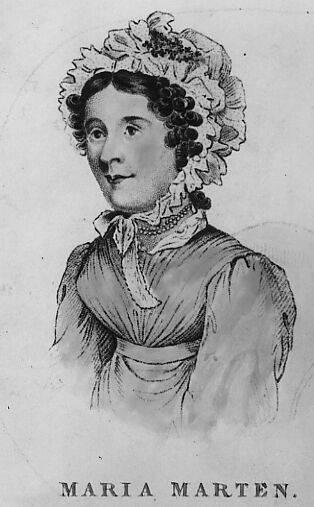
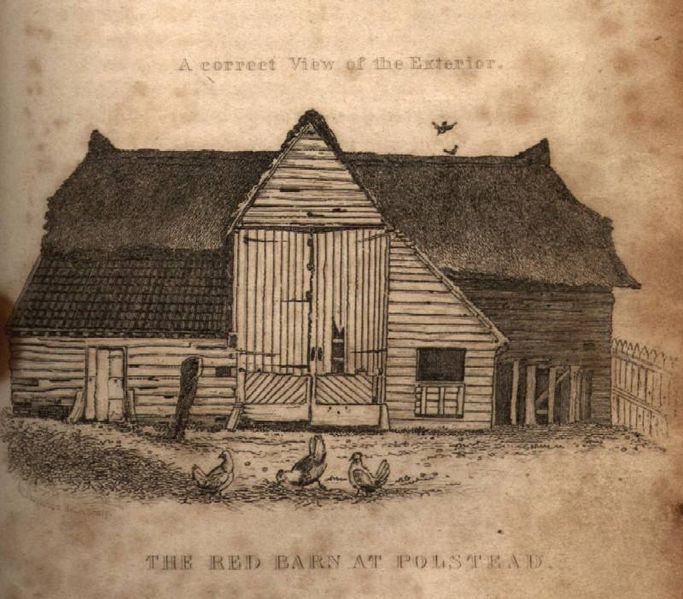
The murder of Maria Marten, a case called The Red Barn Murder got a lot of media coverage in England because of the strange circumstances. The murder was allegedly solved by the appearance of the ghost of the victim, haunting people’s dreams.
But it was on the circumstantial evidence he was convicted and he was found guilty of more than the testimony of The Greenbrier Ghost perhaps. He was sentenced to life imprisonment at the West Virginia State Penitentiary where he died a few years later at the age of 39 in 1900. He know rests in an unmarked grave.
The Greenbrier Ghost after the Trial
It wasn’t that the testimony of The Greenbrier Ghost was the thing that got Trout convicted. If anything, it was brought by the defense to discredit Mary Jane. Was she really seeing her dead daughter? Did she lie? She lived until 1916, and never recanted her original story about the visitations, but she did never appear again.
Now the state remember her as a marker along the highway to The Greenbrier Ghost. The sign reads:
“Interred in nearby cemetery is Zona Heaster Shue. Her death in 1897 was presumed natural until her spirit appeared to her mother to describe how she was killed by her husband Edward. Autopsy on the exhumed body verified the apparition’s account. Edward, found guilty of murder, was sentenced to the state prison. Only known case in which testimony from a ghost helped convict a murderer.”
G’day mates! The Bunyip in the Billabongs of the wild from Australia is a mythical creature rumored to be living in the lakes and swamps in the untamed Australian wilderness. What was the swamp creature that scared them all? Or rather, what is it?
As the white settlers started to take land in the 1840 and 1850 in Australia, they started to observe something they didn’t think they would. Particularly near the southeast colonies like Victoria, New South Wales they heard unknown cries in the night, found strange bones and started taking notes of the new surroundings. But what was this newly discovered animal? This is something modern day cryptozoologists still debates, even to this day and age.’
Read Also: Check out all of the ghost stories from Australia on the Moonmausoleum.
Most written down sightings we know of from the creature comes from 1840 and 1850, when there were a collective hysteria almost and hunt for this strange creature in this strange country. Perhaps this strange creature that the white settlers saw wasn’t as “newly discovered” as the settlers claimed it to be as there were many local stories from the native Aboriginal Australians.
Proofof the Monster: The much debated skull from the alleged Bunyip that is said to roam in the Australian swamps or Billabongs. Back in the early days of European settlement, the creature was thought of a native animal of Australia. Photo: Henry Dowling, John Murray January 1847 /wikimedia
As the European settlers found skulls they didn’t know the origin off and displayed them in museums for people to behold the strange creatures of the new world, writing sensationalist news articles about the animal and the dangers it posed for humans wandering in the wild, the native aboriginals had a different story to tell about the Bunyip that had haunted the Billabongs long before any Europeans set foot on the ground.
The Evil Spirit in Aboriginal Mythology
The creature is part of traditional Aboriginal beliefs and stories throughout Australia, while its name varies according to tribal nomenclature, it sometimes comes up in their mythology and stories.
The mere word, Bunyip, is today most often translated as devil or evil spirit in the “Down Under”. The stories of the Bunyip varies widely from region to region. The tales of this strange and mythical swamp creature was told before the white settlers came, but what happened to the mythology and folklore of the native aboriginals is an atrocity, and they got their whole culture and way of life wiped away for centuries, at some times, forever.
So who really knows the true origins of the Bunyip today? When the white settlers came they mixed their own folklore into the mix, especially of the Irish mythological monster, Púca. Still, the ones keeping the tales of the Bunyip alive today is the local legends that have been passed down for a long time.
A monster from the lakes:Drawing of the Australian Bunyip coming up from the swamps, rivers and lakes in hunt for food. The creature has been a part of the aboriginal mythology long before the European settlers arrived in the country. The illustration is from 1935/Wikimedia.
One of the origin stories of the legend claims that the monster was once a man whose name was Bunyip. He was banished by the good spirit Biami. This is what drove the man to become an evil spirit that lured his fellow tribesmen into the waters to eat them.
Other stories of the creatures think that it is the remembrance of some sort of extinct animal that used to live on the land, but now only exists in myths and legends. Perhaps it could even be seals that lost their way and ended up in the inland rivers. There are many theories today, but no one has really managed to claimed to have cracked the code.
The Roaring Screams of the Bunyip from the Billabongs
Most of the accounts describes the creature like a sea spirit, river monster or something of a dog or a seal. However, descriptions varies and it also described with feathers, or like a starfish.
What most agree on though is its amphibious traits, swimming in lakes, billabongs, rivers and other forms of inland waters. The creature it is described as highly dangerous if a human gets in its way. While most aboriginal myths claims they are a nocturnal being, feeding on crayfish, there are also so many legends, claiming it to pray on humans as well, especially small children and women.
Although sightings of the creature are said to be rare, the sound of the monster is the most told about legend and how many have claimed to recognize its existence. The Bunyip supposedly makes a booming and roaring scream from the billabongs and swamps, sending shivers to everyone that are unfortunate enough to hear it. Children was told to never go swimming so not to be taken by the Bunyip and the creature has now become a part of the cautionary tale for them.
The Case of the Burrawang Bunyip
It is not like the tales of the Bunyip disappeared as the aboriginal myths were silenced and the white settlers got a better understanding for the wild and foreign country they found themselves in. So far up to modern times, accounts of the Bunyip has been reported across the country. Even in the 1960s, there was tales about the swamp monster, lurking in the deep south murky swamps.
A Hunger for Humans: In many on the reconts of the creature, the monster can be dangerous for humans. Macfarlane, J. 1 October 1890/wikimedia
This is the case of Burrawang, a highland village south-west from Sydney in the southern highland in New South Wales. With a permanent population of around 300 today, Burrawang is truly a quaint Aussie village from an older time. A number of the cottages and churches in the area date back to colonial times and hints at how it would had been back when the European settlers first arrived.
Below the village of Burrawang there is a large swamp that is the home of many rare creatures, and locals claim they’ve heard the sounds from the Bunyip.
There are also a tale of railway workers running away from the monstrous sounds coming from the swamps when they were working there in the 1930s, breathing new life into the legend.
The Burrawang locals heard the roaring sounds from their local Bunyip, all up until they built a dam in 1974, and the sounds disappeared. Why? Did they push the wildlife away and in that, the Bunyip as well? Perhaps it was only something else making the sounds. But what? That is something the modern world perhaps is too late to figure out.
Even today, the monster enthusiast comes to Burrawang in search for the strange creature no one really know exists, but many claims to have heard, bellowing from the depths of the swamps.
The gothic haunting of the small town of Whitby is said to be by the old Whitby Abbey were the ghost of a nun is haunting the ruins. Whitby was also a place Bram Stoker used for a setting for Dracula’s arrival to England.
Whitby is cute little English town on the Yorkshire Coast, like taken out from any period drama movie. By the sea on nice days, the people are out in the streets, walking up the piers, sitting in the small cute boat and walking past the picturesque houses. But that is until the weather turns and the clouds are gathering in the sky, making the once blue sea foam. And the weather always turns for the worse in these seaside towns facing the North Sea.
Steeped in history, one need only to spin around to touch ruins, memories and ghosts of the past. And Whitby town is indeed haunted, at least if you believe Bram Stoker, the father of modern horror.
The Legends of Whitby Abbey
But before talking about Dracula, let’s have a look at some of the older legends the place is haunted by.
Much of the settlements back in the day was attributed to Whitby Abbey that was built in the mid 600 and founded by Hilda of Whitby, the abbess of several monasteries and an important figure in the Christianisation of Anglo-Saxon England. At that time the Whitby Abbey was a center for the medieval Northumbrian kingdom.
Hilda of Whitby was renowned for her wisdom and counseled Kings, princes and nuns alike. Whitby Abbey was known as Streoneshalh, and she remained there for the rest of her years as an abbess. Hilda of Whitby was was also the one inspiring one of the first British poets, Cædmon, to start out in his endeavor.
Saint Hilda of Whitby: The Abbess of Whitby Abbey was a well known woman and known for her wisdom and good counselling. She is also one of the ghost reported to haunt the ruins of the abbey.//Source: Detail from St. Hilda at Hartlepool by James Clark James (artist) (oil painting)
The last seven years of her life was a struggle for Hilda as she suffered from a fever. But nevertheless she continued her work until her death on 17th of November in 680 AD. She was then 66 years old, and that was pretty impressive in those days. According to a nun who lived there called Begu, she saw Hilda’s soul being carried to heaven by angels and she became a Saint.
The Ghost of Hilda of Whitby
Many strange legends arose after her death, like how a local legend says that when sea birds fly over the abbey they dip their wings in honour of Saint Hilda.
And it was not the last time someone would claim to see her after her death. On dark nights in Whitby there have been reports of Hilda in the highest window on the northern side of Whitby Abbey when the winds comes blowing in from the sea. She is only seen for a few moments, looking out the window before she again disappears.
According to lore there are also two faiths that can befall you if you look into the well at the abbey at midnight. Those with a pure heart will see Hilda of Whitby, those without a pure will be taken by the devil. So perhaps seeing a ghost here is just a good omen?
We know little of what happened to Whitby Abbey after the death of Hilda, as Danish Vikings invaded it in 867, leaving it desolate for more than 200 years. It was first then the name Whitby was being used, meaning White City in old Norse.
The Picturesque Scenery:The ruins of Whitby Abbeyin the sunset. There have been many legends about this abbey being haunted by the founding abbess, seen in the dark nights in one of the windows, the bells that used to hang in the abbey are sometimes heard ringing under the water where they sank./Wikimedia
After the invaders of the Norman, they made the Whitby Abbey to a Benedictine house for men that lasted to the Dissolution of Monasteries in 1539. A process that was often painted with the blood of the Catholics and where they stripped the churches, abbeys and other holy catholic places for its riches. In any case they stole the bells in Whitby Abbey and tried to take them to London, but on the way there, the ship sank together with the bells.
It is said that the ghost of St Hilda of Whitby appears in the ruins sometime as the bells can be heard ringing under the water were they sank. Now the ruins of the abbey stands at the top of East Cliff, looking out to the sea, missing its bells, its walls and its roof that are now only a story.
The Ghost of the Walled up Nun Haunting Whitby Abbey
But Hilda isn’t alone in the ruins of Whitby Abbey according to the local legend. The legend tells of another nun, a Constance De Beverley, who is haunting the walls of the ruined abbey.
Constance De Beverley was a young girl, but had already taken her vow to become a nun and devote herself to God and take no man for the rest of her life. But she broke them when she fell in love with a young knight and thereby breaking her celibacy. She was found out and the sisters in Whitby Abbey walled her inside the walls when she was still alive in the dungeon.
Haunted by the Ghost of its Nuns: Ruins of Whitby Abbey filled of history, myths and secrets. One of them is the story about the nun who according to legend became walled up inside the walls of the abbey because of her sins. Photo by Pixabay on Pexels.com
Could it be St. Hilda of Whitby who did it? A confirmed Saint that could have done something like burying one of her sisters inside of the walls? These were, as they’re called: The Dark Ages. The abbey had many abbesses over the years though, and who and when it was suppose to happen, is a bit unclear.
It is said that according to legend, if you walk around the ruins one can perhaps hear the screams of a woman in the wind and a plea for forgiveness and mercy. Perhaps it is coming from the walls? There has also reported a fleeting image of the ghost of a young girl, fleeing the abbey, trying to free herself for her eternal tomb in the walls.
Whether the story is true or not, it has certainly left an impression on those who heard it. The story of Constance De Beverley being condemned to be walled up in the abbey might have been the inspiration of Sir Walter Scott’s poem ‘Marmion‘ . It is about a nun of the same name that meets the same fate. Or perhaps the poem gave birth to a legend? Who’s to say?
But perhaps today, Whitby is more known for its fiction than for its history. Today, every summer there is a performance of the story of Dracula at Whitby Abbey. Wonder what Hilda thinks of that.
But many things found in Dracula is drawn on the experience of the Whitby history, even the legend about a nun haunting hte abbey. In the book, Mina writes in her diary:
“Right over the town is the ruin of Whitby Abbey, which was sacked by the Danes … It is a most noble ruin, of immense size, and full of beautiful and romantic bits; there is a legend that a white lady is seen in one of the windows.”
In the book, Dracula arrives with a ship that beaches on the shores of Whitby. This actually happened with the Russian ship Dmitri: “The sequel to the strange arrival of the derelict in the storm last night is almost more startling than the thing itself. It turns out that the schooner is a Russian from Varna, and is called the Demeter. She is almost entirely in ballast of silver sand . . . “ (Bram Stoker, Dracula, 1897). Even the name, Dracula, Stoker found in the old library there.
Dracula in Whitby Town: The arrival of Dracula arriving on the ship Demeter has become a pretty iconic part of the lore. Bram Stoker became inspired to write his story when he visited Whitby Town and and saw the gothic ruins of Whitby Abbey and the grey shores on the English countryside.
Bram Stoker arrived and stayed at Mrs Vewazey’s Guesthouse in the summer of 1890. He was supposed to work on a new story, set in Styria, Austria with a character called Count Wampyr (thank you old public library of Whitby for giving the character another name than that). The Gothic literature drew on landscapes like this, and maybe not surprisingly, the ruins of Whitby Abbey, the desolated shores and the ghostly tales by the locals made it a perfect setting for what would become Dracula’s first encounter with England.
The Last Voyage of the Demeter
The interest for Dracula related movies and books continues to this day, and is based on the single chapter, the Captain’s Log, from Bram Stoker’s classic 1897 novel Dracula, the story is set aboard the Russian schooner Demeter and what happens before they arrive at Whitby Harbour.
The Last Voyage of the Demeter is scheduled to be released theatrically in the United States on August 11, 2023 and will help keep the legends of the Whitby haunting alive as well as creating its own vampiric lore there.
In Grahamstown, South Africa there is a ghost story about a convict haunting the place where he was hanged by the Old Provost. His ghost can forever seen walking the last walk he ever did on the way to the gallows, still bitter about receiving the death penalty.
Today Grahamstown or Makhanda wich it is now officially known as in South-Africa is a city with a well known university town, housing Rhodes University, one of South Africa’s oldest as being a popular place for backpackers. The town on the Eastern Cape also have a big Art festival, the biggest one in the country, and is otherwise for those people that wish to live a quiet life.
The Town Under Military Law
But this wasn’t always the case however as it was founded as a frontier military outpost built after the Fourth Xhosa War in 1812. and has an old prison known as the Old Provost. A long time ago Grahamstown was better known as a place under militant law, public punishments and public hangings, watched by a lot of people. The legend is that the ghost of one of these hanged people are still haunting the place next to the botanical gardens.
Built in Grahamstown in 1838, the Old Gaol or Old Provost was a military prison when martial law ruled in the old town during colonial times. The fortress was designed as a Panopticon prison, meaning a design that allowed for constant surveillance of the prisoners.
Grahamstown: The Town, officially renamed to Makhanda in 2018 was built as a military frontier, and is today a university city. The town has many haunted ghost stories, like the ghost of the dead man walking from the military prison old provost. Pictured is the view of the city from an old fort.// Source: Wikimedia
During this time the town was seen as rather uncivilized and it was said of it in 1833: “two or three English merchants of considerable wealth, but scarcely any society in the ordinary sense of the word. The Public Library is a wretched affair”
A few decades after this was said about the town however, Grahamstown was the second biggest town after Cape Town in the English colony.
The Haunted University in Grahamstown
The Old Provost is not the only ghost haunting the university town, as most of the faculty buildings have some sort of history and its local ghosts roaming around on the campus.
There are according to campus rumours, witnessed a young boy and girl in the journalism department haunting the halls. There is also whispers of ghosts that used to live in the small cottages the Institute of Biodiversity is now built on top over.
Read Also: Have a look at our ghost stories from the most Haunted Schools in the world like The Kong Kong Ghost
Even the botanical garden close to Old Provost has a ghost wandering in the green garden, smelling like perfume and feeling like a cold wind passing by. This is the ghost of Lady Jana Maria de los Dolores de Leon Smith.
But who was this ghost from the Old Provost, and why is he still haunting the place?
Dead Men Walking by Old Provost
The Old Provost prison was built for military offenders, and although a small building, ruthless punishments were put in place. Those who were convicted and served their time were put in these cells completely designed that you would never have a private moment inside the walls.
Those even more unfortunate and convicted to death were chained on their feet and hands, humiliated as they were lead from the fortress of the Old Provost to the plaza they were going to be punished in front of the entire population of Grahamstown. “Dead men walking”, as they were called.
The last person we know of that was publicly hung was in these parts were Henry Nicholls and is also known as the ghost that walks this final walk forever as a ghost. He pleaded guilty and was convicted for a rape happening in 1862.
The Old Provost: The military prison in Grahamstown was design for constant surveillance and is now a place were ghosts roams according to local legends.
He had already confessed to the crime, but didn’t really think it was a crime he had to pay with his life. Nicholls spent four months in the Old Provost, hoping to get of with his life as rape was not a capital punishment under English law but only prison time.
But since he was a military man, he was under military law. And according to that, the punishment for his crime was death by hanging.
The Last Hanging on the Eastern Cape
Watching a hanging like this was great entertainment for the people of Grahamstown and the rest of the surrounding areas. According to the stories, people rode for as long as seven days to behold the execution of Henry Nicholls by Old Provost. This hanging was the last execution in the Eastern Cape.
On 19 February 1862 was the last day for the convict and it was also his last walk. He was led out from the Old Provost and had to walk past the gathering crowd towards the gallows. He never got a chance for last words or prayers. He was simply strung up and hanged to his death in front of a blood thirsty crowd.
But why is he still haunting the place? It’s perhaps difficult to answer for a ghost, but one of the theories was that Nicholls was unhappy and bitter about receiving a death punishment some only served prison time for.
The Bitter Ghost Haunting
Rape rarely got the death sentence, even back in that time and you mostly got sent away or served prison time, although being actually convicted for it was a lot harder than today.
A lot retelling the story of the ghost wandering from the Old Provos think that because of this, Nicholls meant that the punishment he received was too hard and the humiliating Nicholls ended his life, his soul can never be free.
Instead of going forward in his afterlife he is convicted of a life sentence, lasting for eternity, and must wander in all the remaining days between the Old Provost, now turned into a cute cafe, and the gallow, passing through the entrance to the now so modern university.
The murder of Maria Marten, a case called The Red Barn Murder got a lot of media coverage in England because of the strange circumstances. The murder was allegedly solved by the appearance of the ghost of the victim, haunting people’s dreams.
‘”If you’ll meet me at the Red Barn as sure as I have life I will take you to Ipswich Town and there make you my wife.” This lad went home and fetched his gun, his pick-axe and his spade. He went unto the Red Barn and there he dug her grave.With her heart so light she thought no harm, to meet her love did go He murdered her all in the barn and he laid her body low – The Folksong The Murder of Maria Marten
The year of 2004. The Place? at the Royal College of Surgeons of England. A skeleton, reassembled so many times and exhibited, used as a teaching aid in the West Suffolk Hospital. It is almost possible to forget that the people hanging there, next to the teacher, used to be a living human. What cruel fate it is, to always be on display. But then we can wonder, why? Why do you hang there? Is this your punishment? Did you do something? And who hangs beside you? The question is always asked.
“Who is that skeleton?”
Beside you is someone infamous. Jonathan Wild, the notorious gang leader in Britain, known as the great corrupter. The students might know his name, his crime. But who are you? Does anyone remember your name?
The Skeleton of the Murderer William Corder
The skeleton sitting in the classroom actually belongs to William Corder, a man that would end up in the infamous case of The Red Barn Murder.
He was a boy like any other, born in 1804 to a prosperous tenant farmer in Suffolk, England. He was nicknamed Foxey at school and was a bright kid. He had his whole life in front of him and he had some dreams of becoming a journalist or a teacher as he had some talent for writing. But there was a darkness in Corder that eventually would devour him.
Corder’s father liked his brothers much better according to the rumours around town, and he was sent to London to find work, not wanting to fund his sons dreams. He was said to be a liar and a cheater, thereof the name Foxey most likely. He was also known for petty theft, like when he sold his father’s pig. Yes, his father’s pig.
In London, he fell into bad company and spent all of the money his father gave him. He was a well known ladies man and all around an untrusty fellow. But Corder’s biggest crime was the Red Barn Murder and being found out by the ghost of Maria Marten, the woman he murdered.
Maria Martens Life and Death
After a while, William was called back to the farm from his wild time in London. There he met Maria, daughter of a mole catcher in the same small village, two years older than him and the likes of William Corder didn’t immediately catch her interest.
Maria Marten: The young girl ended up being the victim in the Red Barn Murder/Wikimedia
Maria Marten was 17 years old with a taste for finer things with a curse on her head and would end up as the victim in The Red Barn Murder. There is the story about her that a fortune teller once said that she wouldn’t reach old age, but would have many lovers and riches.
Before getting involved with William Corder she was actually seeing Williams older brother, Thomas. He was the oldest and also the fathers favorite and the two got into a relationship that was doomed from the start.
Thomas Corder wanted to keep the relationship secret as she wasn’t regarded of the same status as himself, being poorer and of a family with a “low” status. The Corders were after all, prosperous farmers.
That didn’t stop him from getting involved with her though and Maria Marten fell pregnant with Thomas child. Thomas left her when she told him about her pregnancy, perhaps hoping it would convince him to go for her after all.
It did not, and she gave birth to his child alone, but the child died a couple of weeks later. Maria then got into a relationship with a Peter Mathews, a middle age man who also dropped her after giving him a son called, Thomas Henry in 1824.
Indeed she had some lovers, perhaps some riches. And indeed she wouldn’t be alive for long.
William Corder and Maria Marten’s Relationship
When William Corder came home from London, bad luck struck his family. His father died and his brothers got very ill, leaving him to manage the farm together with his mother. And this is were he got to know Maria and they got involved in a relationship. But it wasn’t a happy match from either of their families stands. She on her side was already left with a ruined reputation by a Corder. And from the Corder’s perspective, she was a fallen woman and not from a prosperous family like theirs.
The Red BarnMurder: The old barn close to their houses was the scene of the Red Barn Murder and later a tourist attraction. It is now burned down./Wikimedia
This didn’t stop them meeting, although they met in secret. Often at a red barn right by Marias house. It was called that because of the red tiles on the roof and would later be a tourist place as the location of where The Red Barn Murder happened. But the secret of their relationship was not to last for long, as Maria became pregnant again. Maria wanted William to marry her, and according to him, he said yes.
At the same time that winter, William’s brother and Maria’s ex-lover, Thomas was walking over a frozen lake. The ice cracked and Thomas went under, drowning. William was now the owner of the farm as the only son.
Between Maria being pregnant, the farm being in financial troubles and his brother dying, it seems that it put a toll on him. He put Maria in a lodging at Sudbury, a couple of miles away from home to have their baby. But this too should not live and died soon after. William buried the child in a field and there have been speculations that this was not a natural death and that he might have killed their love child as well. And these day, who could really tell?
The Red Barn Murder
Maria and William started to argue about some money that may have been stolen, they argued about the burial of the child and how it looked like William would not marrying Maria after all. At one point the pair made a plan, when William said they should elope to Ipswich. She would come dressed as a boy and they would meet in the Red Barn were they had met countless of times before.
Why would William Corder elope now? Now that he didn’t have a father or older brother to interfere? One of the problems the couple had was with Maria and her crimes. It wasn’t necessarily unlikely or weird that they would like to run away, as Maria had several charges on her for bearing illegitimate children. Criminal at that point in time.
The days before their plan was set into motion was the last time Maria Marten was seen alive. William began acting odd and a lot of questions were asked about her. Where was Maria? Wasn’t he going to Ipswich with her?
He told the people asking she had gone ahead to Ipswich, but then he changed the story, and told she had gone to Great Yarmouth and wouldn’t be able to return yet. Then he changed the story again, and he said he was meeting Maria and that they were going to marry. He said he felt unwell and traveled to Isle of Wight, writing back home that they were married and happy there. He said he was sorry that Maria couldn’t write herself as she had hurt her hand and wondered why some of her letters hadn’t made its way back home.
The Ghost of Maria Marten Haunting the Dreams
This vague and strange story didn’t sit well with her family though. The Marten family did not believe William and his excuses as to why they hadn’t seen or heard from her. But in a strange twist of fate, she would find other means to contact her family.
Maria had a young stepmother back in Polstead, Ann Marten. She was troubled by strange and scary dreams about her stepdaughter. Twice Ann Marten had woken from a terrible dream that she herself knew to be true. When she shared them with her husband they looked for Maria in their town and found her.
Read Also: Another ghost story about a ghost that allegedly help solve her own murder case, read about The Greenbrier ghost in The Ghost that Went to Court
The dreams to her stepmother told that Maria had been murdered in the Red Barn buried under the floor and not gone to Isle of Wight at all. Her husband, Maria’s father was sent to the barn and looked for his daughter, prodding the ground with a mole-spike. There he discovered the remains of his daughter, brutally murdered and discarded under the floor for a long time.
Maria was shot as well as stabbed multiple times to death. They brought her to The Cock Inn and, decomposed as she was, her sister Nancy identified her from the clothes, the hair and a gap in her teeth. Around Maria’s neck they found a green handkerchief. According to the witnesses it belonged to William Corder. Was she also strangled? Was she even dead before he buried her in the grain storage bin her father found her in?
The Trial of The Red Barn Murder
Back in Ealing were William had fled, he knew nothing of the mysterious dreams and the discovery of Maria under the barn. Time went by and William needed a wife. He put an ad in The Times and asked for a wife. He picked Mary Moore and they set up a young ladies school in Ealing, West London. He was moving forward in his life. But Maria wasn’t forgotten yet.
Boiling some eggs at home the police came knocking at his door and apprehended him. First he denied that he knew of this Maria Marten, but the evidence was there and he was brought back to Suffolk.
And the press was on this, coming from all across the country to behold the spectacle of his trial and the strange circumstances around it. The case of The Red Barn Murder even got a play on stage before Corder even came to trial, which they actually sold tickets to.
The Red Barn Murder Frenzie: The execution of William Corder, the Red Barn Murderer was a popular event and thousands of people attended/Wikimedia
Forensic pathology was not as advanced yet and it was impossible to determined what of the things that killed Maria. That is why he was charged with nine different murder charges, where shooting, strangling, stabbing and burying alive was a couple of them.
“By that powerful engine of the press,” he said, “I have been described…as the most depraved of human monsters,” he said of the media coverage.
Corder’s defense was articulate, but improbable, claiming Maria herself had taken her own life, but he was found guilty on the circumstantial and medical evidence, and sentenced to hang.
It was the Chief Baron Alexander that was the judged, and he added that his dead body was to be dissected and anatomized, almost like a second punishment.
The Execution of William Corder
The execution was a great play and melodrama itself, and several thousands of spectators had tickets to the show of William Corder’s last moments. During his last days the prison chaplain had tried to get a confession from William who had denied all of the charges against him. Finally, William Cordery admitted to killing MAria by accident during one of their many quarrels. What he denied was stabbing her. Perhaps it was the mole-spike her father looked for her with that made those wounds?
In any case, he took the punishment for all of her injuries. His last words were: “I am guilty; my sentence is just; I deserve my fate; and, may God have mercy on my soul.” He was left hanging for an hour, most likely in agony before he died.
After his death he was transported to Shire Hall were he was left for science as the sentence was. But many of the things done to his body after death was highly unscientific. For one,his skin was removed, tanned and used as a book cover that described his crimes and live. Like the most bizarre biography.
What happened that day? Was Maria’s mother psychic? She was only around a year older than Maria, and had not exhibited similar dreams before. Perhaps it’s a bit odd that her dreams started just after news of Williams marriage to Mary Moore. And there were also some rumors that linked her as a lover with William.
What happened skeleton hanging in the lecture hall? Truth be told, it isn’t even William. At least, not all of it. After his hanging, he was chopped up, his body dissected in front of anatomy students, perhaps even used as an experiment with galvanism.
The Red Barn Murder Frenzie
Perhaps the most gruesome thing was that none of the people involved were left in peace after their death, as the story about the Red Barn Murder was a sensational tale and people flocked to the location as well as tried to get a hold of some sort of suveniers from the case.
After the execution, William Corden’s ear was sold, his skull was taken by Dr John Kilner who collected The Red Barn Murder memorabilia. Even pieces of the rope he was hanged in was cut up and sold for a guinea. Perhaps the disturbance of the dead came back to haunt the living that looked at their death as some sort of amusing spectacle?
After many strange and tragic events that happened after The Red Barn Murder enthusiast Dr John Kilner took the skull for himself to his collection, he believed that the skull was cursed and gave it to ta friend. But bad fortune kept plaguing the two men and in the end they decided to pay for a Christian burial to lift the curse of the skull of the murderer William Corder.
Maria also kept being disturbed after The Red Barn Murder. A lock of her hair was sold at two guineas and Polstead with her cottage, the Red Barn and her grave became a tourist attraction and people started chipping away at it so it completely disappeared. The grave as well as the Barn, planks, roof tiles and all sold as macabre souvenirs.
After 2004, the skeleton of William Corder, or at leas what was left of him was removed from the classroom and finally put to rest six feet under.
But the rumors still lingers about the ghost of Maria haunting her stepmother’s dreams, about what really happened that night of The Red Barn Murder. But maybe it is time William got some peace, having served over 200 years for his crimes.
An online magazine about the paranormal, haunted and macabre. We collect the ghost stories from all around the world as well as review horror and gothic media.