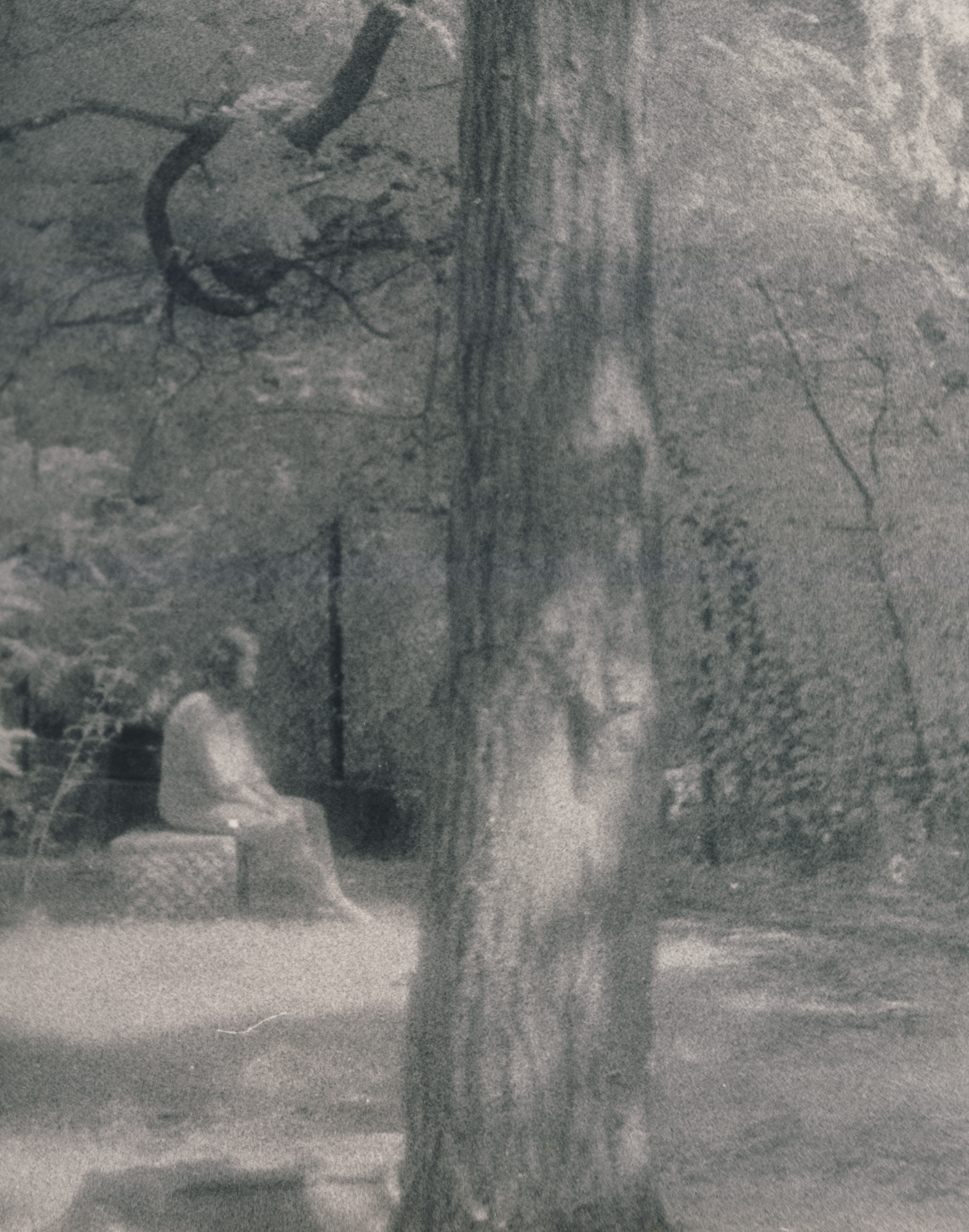
A devious and unholy monk called The Hunderprest, was said to haunt the countryside on the Scottish border as well as Melrose Abbey. Was this specter really a bloodsucking vampire?
In the Scottish Borders, the ruins of Melrose Abbey have stood since the 12th century as a brooding, atmospheric relic of medieval piety and power. Melrose is a seemingly picture perfect place, drawing people in as the best salmon and trout fishing in the country.
The Melrose Abbey is on the north east side of the town center and some of the more iconic buildings from the area. Behind its beautiful Gothic arches and solemn grave markers lies a dark legend: the tale of the Hunderprest, or the dog priest, a vampiric monk whose foul deeds and undead existence chilled even the most devout.


The Mysterious and Magical Melrose Abbey
The Abbey was founded by a colony of Cisterian monks in 1136 by the River Tweed. Once, it was said a miracle happened here, when the corn in their cellar multiplied in the time of a great famine, and the monks could feed them all. This and more miracles were said to have been performed by Abbot Waltheof, the stepson to King David I of Scotland.
Through its time of operation it was one of the wealthiest monasteries in Scotland, but through all the years of war on the Scottish border it was badly damaged by the English in 1385 and rebuilt in the late 14th century.


Today it’s a museum, although a big part of it is now lichen-covered ruins. In the Chapter House there is a burial casket of a heart, thought to belong to King Robert I, also called, The Bruce. In 1812, an old stone coffin was found close to the altar, thought to be the final resting place of Michael Scot, the mysterious Scottish wizard from the 13th century, said to have changed the River Tweed with his staff and turned the single peak of the Eildon Hills to the three we see today.
But not all miracles were as magical as these wonderful things. Some say that the magic happening around the cloister was also the work of evil, perhaps even a bloodsucking vampire.
The Hunderprest of Melrose Abbey
According to medieval chronicles, the Hunderprest was a monk of Melrose Abbey during the 12th or 13th century. The Cistercian monks who lived and worshipped there had built the Abbey, the first Cistercian Abbey in the country, at the behest of King David I. They were famous for their Melrose wool they sold to the rest of Europe.
Though little is known about his mortal life, legend says he was a man of great vice and depravity, a predator hidden behind a habit, whose sins were so grave that even in death, the earth rejected him.


Exactly what his sins were is not explicitly said always, but he was often claimed to have been a womaniser and drunkard, bringing shame upon his order. The region was a place of unlawfulness though, being controlled by independent clans called The Border Reivers that often clashed together in violence. It was both a time and place of ruthless lawlessness.
Some say that in life, he used to be a chaplain to a lady who lived nearby. He was given the name Hundeprest as his favorite thing to do was hunting on horseback as a pack of howling hounds followed him.


Some accounts claim he practiced the black arts in secret, while others allege unspeakable acts committed under the guise of spiritual authority. The locals whispered of his unnatural appetites and sinister nature — rumors that seemed confirmed after his passing.
The Undead Haunting of the Abbey
Because of his sins in life, there was no way he was getting into heaven, and his soul could not find any peace. Livestock were found drained of blood, villagers claimed to see a shadowy figure lurking near graves, and monks reported being stalked by a ghastly presence within the cloisters at night.
He tried to enter the Abbey in the night in the form of a winged bat, only driven away after vigorous prayer and rituals from the monks. Because he was unable to cross the threshold to the holy ground, he needed another place to torment.

He found the cottage to a woman who he had known when he was alive. Said to be the woman he had been the chaplain for in life. She was also rumored to have been his lover. Her neighbors reported that a vampire roamed around her house, moaning and screeching at her, scaring her. Every night he returned to torment and terrorize, lusting after her blood. Because of this, they decided to summon an elder monk from the abbey for an exorcism.
The Exorcism of a Vampire
Determined to put an end to the terror, the abbot of Melrose called upon the services of a particularly devout and courageous monk, often believed to be William of Newburgh, a respected chronicler of supernatural events. He ended up writing about a lot of monsters and ghosts in the middle ages.


According to the old accounts, a group of monks were put to task and went to the grave of the priest to investigate. As the day waned, the priest appeared like he was levitating out of his grave. They managed to shove the vampire back with a staff. Sometimes this is changed to a mighty axe the monks swung at him. The earth swallowed the Hunderprest like nothing had happened, the ground undisturbed again. This is when the elder monk knew they were dealing with a vampire and knew what to do.
They waited for daylight and dug up his grave again. They exhumed the Hunderprest’s corpse and what they found only deepened their horror: though dead for some time, the monk’s body was fresh, his face ruddy, with blood at his lips curled up to a grin, classic signs of the undead in medieval folklore.
It was also said it was through praying and fasting that they managed to defeat him. How they killed the vampire, although not named as such in the early sources, varies. Did they stake him through the heart? Probably not, but they do mention setting him on fire and burning him to ashes as most of the stories of the undead mentions. The legend of the stake came later.


After they burned him to ash, they took him to Lammermuir Hills where the wind carried him to the north along the borders.
To this day, visitors to the hauntingly beautiful ruins of Melrose Abbey claim to feel a chilling presence lingering among the weathered stones. Some report seeing a shadow moving through the broken cloisters at night, or hearing faint whispers in the darkened archways.
Newest Posts
- The Haunting of Caerphilly Castle – The Lady in Green and the Hag of Death

 A story of doomed lovers and haunted ivy leaves, the Lady in Green is said to haunt Caerphilly Castle in Wales together with the spirit of Gwrach-y-Rhibyn, wailing as an omen of death.
 - The Haunted Tunnels of Hegra Fortress
 After the battles during world war two, Hegra Fortress was a place that became known to withstand the Germans, although they too in the end had to raise the white flag. After the war, people started to believe that one of the fallen soldiers was still there, wandering the deep and damp tunnels.
 - Wolfe Tone Square: The Hanging Judge Who Could Not Rest
 In a cemetery turned into a public park, the Wolfe Tone Square is said to be haunted by John Toler, one of Ireland’s most haunted man and remembered as the Hanging Judge.
 - The Cabin Caretaker Still at the Mountain
 The old cabin high on Hardangervidda, Norway is said to be haunted by its very first caretaker. But although Krækkja DNT cabin is said to be his eternal home, it seems like the more people visiting, the more he retreats to the plateau.
 - Guajona: The Blood-Thirsty Entity of Iberian Folklore
 Preying on the blood of the young one, the vampiric Guajona from northern Spain is said to stalk the villages and valleys in Cantabria, thirsting for blood.
 - Feltrim Hill: The Hellhound and the Haunted Well
 On the hills where the last wolves in Ireland roamed, ghosts have been spotted on Feltrim Hill, always moving towards the sacred spring that were said to have healing powers.
 - The Lady of Losby Manor and other Ghosts Lingering
 A gathering place for the elite class in Norway, Losby Manor house in the countryside outside of Oslo housed kings and queens. It is also said that some of its residents are haunting the place, especially the ghost of The Lady of Losby, who dedicated her life to her home.
 - Westown House and the Ghosts Rising from the Ruins
 In the Naul outside of Dublin, the Westown House was for a long time abandoned and left to ruins. Now the work of restoring the building has started, but the question is, how about the ghosts said to linger there? Are they still haunting their ruins?
 - The Unseen Guests Haunting Lothes Mat & Vinhus
 In the Norwegian coastal city, Haugesund, Lothes Mat & Vinhus is one of those restaurants that keeps things traditional. But could it be that some of the former residents of the house are behind the strange things that have been going on for decades?
 - A Cautionary Tale of the Vampiric Guaxa from Asturia
 Stalking the northern valleys in Spain, the vampiric Guaxa witch from Asturian legends stalks the night. Although no one is safe, the starved and thirsty monster is especially after the blood of the children.
 - Rathfarnham Castle and the Lingering Ghosts Haunting itThe whole estate of Rathfarnham Castle in south Dublin is said to have its ghosts. From the antique ballroom, its icy lakes and roads leading up to it, ghosts are said to linger.
- The Ghost of the Psychic Anne Brandfjell Haunting the old Sjømannsskolen in Oslo
 Is the ghost of Anne Brandfjell, a famous fortune teller and wise wife from Norway haunting the old Maritime school in Oslo?

References:
Legend of the “Hunderprest” Vampire of Melrose Abbey
Airhouses – News – The Incredible Legends of Melrose Abbey
The Hunderprest: The Vampire Monk of Melrose.