Tag Archives: noble

The Vampire Secrets of Glamis Castle: Bloodlines and Bloodlust in Scotland’s Haunted Fortress

Advertisements

In one of the oldest inhabited castle in Scotland, Glamis Castle is said to be filled to the brick with ghost stories and legends. According to the stories though, there is seemingly something more monstrous and more blood thirsty said to be sealed inside of the bricked up secret chambers, waiting to get out. 

Standing in stoic grandeur amidst the rolling Angus countryside, Glamis Castle has long held a reputation for secrets, shadows, and spectral figures. Known as the childhood home of Queen Elizabeth, the Queen Mother, Glamis or Glammis Castle, in Forfarshire, the seat of Lord Strathmore, is steeped in royal history and ancient nobility — but its corridors also echo with stories far darker than those found in any history book.

Of its many chilling legends, two vampire tales rise above the rest, hinting at unnatural bloodlines and eternal imprisonment behind stone walls. These stories, passed down for generations, have become the cornerstone of Glamis Castle’s macabre mythology.

The Vampire Child: The Sinister Family Secret

At the heart of Glamis Castle’s vampire lore is the enduring whisper of a “vampire child” — a secret so terrible, it was said to be known only to the laird, his heir, and one trusted family retainer in each generation. According to the legend, there is a secret chamber in the castle where the vampire child was placed. There is an old story that guests staying at Glamis once hung towels from the windows of every room in a bid to find the bricked-up suite of the monster. When they looked at it from outside, several windows were apparently towel-less. Though this is more likely due to the owners removing them in order so that the guests would not find the rooms, according to several relatives of the family.

The lords of Glamis. who, according to legend, were drinking and gambling, losing their family fortune. By the mid-17th century, the castle was in ruins. It was inherited by Patrick Lyons, who rebuilt the castle and rehabilitated the family, for which he was made the earl of Strathmore.

According to lore, in the early l800s the first son of the 11th earl of Strathmore was born a hideously deformed, egg-shaped monster with no neck, tiny arms and legs, and a large, hairy torso. According to legend, the child was once born into the Bowes-Lyon family with monstrous characteristics: deformed, unnatural, and blood-hungry. This child, believed to be a vampire or some other unholy being, was hidden away in a sealed chamber within the castle — a room known only to a few and never spoken of publicly.

In fact, there was a son born, Thomas Lyon-Bowes, the first child of Thomas Lyon-Bowes, Lord Glamis, and his wife Charlotte Lyon-Bowes née Grimstead. He is however recorded born and died in October 21, 1821. The stories about the child being “a monster” allegedly started when the unnamed midwife retold it in the local village. 

The castle was given to the second son, unlawfully, and the creature, after so many years away became mad. It reportedly died in 1921 or 1941. 

Some versions of the tale go further, suggesting that the “secret of Glamis” is that in every generation, one such child is born — cursed or blessed, depending on the point of view — with vampiric traits. Another legend tells that the monster is in Loch Calder near the castle. These children, it is said, never die, but are locked away, immortal and unseen, sustained through blood or other unknowable means. Over time, the corridors of the castle have become riddled with rumors of bricked-up rooms, hollow walls, and windows that can be seen from the outside but do not exist within.

Searches for the supposed secret chamber have never revealed definitive answers — only more questions. But for those thinking that concealing a child inside a room seems to harsh about this family, just think about the tragic case of Nerissa and Katherine Bowes-Lyon, cousins of the queen, listed dead for years, but turned out to live in Earlswood Hospital for mentally disabled people in 1941, classified as: “imbeciles”. 

The Blood-Sucking Woman: The Servant Entombed Alive

A separate legend, no less disturbing, tells the story of a serving woman who was caught engaging in a grotesque act of vampirism. According to lore dating back several centuries, the woman was found leaning over the corpse of a fellow servant, her mouth stained red, drinking the blood from the lifeless body.

Horrified, the castle’s occupants did not attempt to destroy her in the traditional methods associated with vampires — no stake, no fire, no silver. Instead, they condemned her to a crueler fate: she was bricked up alive within a hidden room, left to die in solitude, possibly in the very act of waiting for another victim.

Some stories say she remains alive to this day, an immortal vampire trapped inside the walls, forever hungry and vengeful. Those who work at Glamis today have reported unexplained cold spots, sounds of scratching, and even soft crying from behind thick stone walls — perhaps signs of the entombed servant still begging for release.

The Secret Chamber

This part of a secret chamber being haunted is told by many and could have sprung out from an older legend. The origins of this story go back hundreds of years, to an age when the Lyon and Lindsay clan were engaged in a bitter, ongoing feud. 

On a cold snowy night, there was a group of Lindsays on the run from other clans and they went to Glamis to seek refuge. Some say it was the Ogilvie who was trying to escape the clutches of their enemies, the Lindsays. 

The Earl promised them his protection, but trapped them in a room where he looked inside. Some say that the Earl was working with the Lindsays and caught them and imprisoned them. He never let them out of the  16 feet thick room, and for years, there were banging from the walls, screams and noises coming from them. Even after they were dead and long gone fro hundreds of years, you could still hear their cries through the castle. 

The sitting Earl decided to put a stop to the haunting and went into a room where no one went. He opened the door with a key and he was frozen with terror. He closed the door, bricked it up and never spoke about what he saw ever again. 

A Castle of Secrets and Shadows

Glamis Castle is no stranger to the paranormal. In addition to its vampire legends, it’s also home to numerous ghost stories — from the Grey Lady thought to haunt the chapel, to the Earl Beardie, cursed to play cards with the Devil for eternity. Yet none are as unsettling — or as persistently whispered about — as the vampire tales that seem woven into the very walls of the building.

Read More: Glamis Castle is filled with ghost stories. Read more about them in Lady Janet Douglas, Ghost of Glamis Castle

Visitors often speak of a strange feeling of being watched, even in empty rooms. Some claim that doors open and close on their own, or that footsteps echo down halls long after the castle has closed for the night. Could one of those footsteps belong to the vampire child, still pacing in darkness? Or is it the blood-sucking servant, endlessly circling her unseen prison?

The castle may gleam proudly by daylight, but as night falls, the questions it refuses to answer begin to stir. And somewhere, in one of its sealed rooms, the undead may still be waiting.

Newest Posts

  • The Story of a Disappearance and an Appearance by M.R James
    One of James’s lesser-known but fascinating tales — set at Christmas, it’s presented as a series of letters about a disturbing Punch and Judy show, a mysterious disappearance, and a spectral visitation on Christmas Eve.  It first appeared in print in the June 4, 1913 issue of the magazine Cambridge Review. It was published again in 1919 as part of the anthology A Thin Ghost and Others.
  • The Ghost Soldiers of Rapperswil Ringing the Bell of St. John
    In the middle of the night, it was said that the bells of St. John Church in Rapperswil, Switzerland started to toll. When the churchwarden went to investigate, it was said that he saw the headless ghosts of the fallen soldiers from the Battle of Näfels holding midnight mass.
  • The Night of Christmas Eve by Nikolai Gogol
    Set in snowy Ukraine on Christmas Eve, this folkloric tale follows a trickster devil who wreaks havoc in a village while a young man seeks to win his beloved’s heart under supernatural influence.
  • Ghosts of the Holy Season: The Christmas Hauntings of Bern
    Each December, when the nights grow long and the spirit of Christmas fills the air, Bern’s holiday phantoms awaken. These tales from lore and legends, remind us that even amidst celebration, the spirits of bygone eras linger.
  • Jerry Bundler by W. W. Jacobs
    At a cozy inn on Christmas Eve, guests trade spooky stories—until a real, bloodstained intruder named “Jerry Bundler” appears, turning festive warmth into true fright.
  • The Haunted House of Ludington: A Christmas Ghost Story
    All year round, the residents of the House in Ludington, seem to be plagued by the ghost waking them up from their sleep and watching them from the rocking chair. Around Christmas time, the ghost is said to be the one placing the Christmas Angel on the Christmas Tree.
  • The Dead Sexton by Joseph Sheridan Le Fanu
    In this chilling tale by J. S Le Fanu, the death of a corrupt church sexton on Christmas Eve unleashes supernatural events in his churchyard—as though his spirit lingers, disrupting the holy peace. First published in 1871.
  • The Gorbals Vampire: Glasgow’s Night of Terror
    One night, the Southern Necropolis Cemetery in Glasgow is filled with children. In their mind they are not playing, they are hunting the horrible vampire that is said to have taken the life of more than one child. The absolute mania of the Gorbals Vampire ended up passing several new laws.
  • The Cursed Butcher Apprentice Haunting Rathausgasse in Bern
    Said to be cursed after torturing a calf, the butcher apprentice is now cursed to haunt the old butcher street for eternity. For centuries now, people claim to have heard the horrid sound of hooves clattering on the ground as he was transformed into the very thing he tortured for fun.
  • The Vampire Secrets of Glamis Castle: Bloodlines and Bloodlust in Scotland’s Haunted Fortress
    In one of the oldest inhabited castle in Scotland, Glamis Castle is said to be filled to the brick with ghost stories and legends. According to the stories though, there is seemingly something more monstrous and more blood thirsty said to be sealed inside of the bricked up secret chambers, waiting to get out.
  • Mayor Rudolf Brun’s Ghost Under St Peter’s Church Tower in Zurich
    After the exhumation of the graves of one of Zurich’s mayors who died under mysterious circumstances people started talking about seeing his ghost wandering around the church tower and wall of St. Peter. Could the ghost of Rudolf Brun, who ruled during volatile times in the city have returned?
  • Blood in the Soil: The Chilling Tale of the New England Vampire Panic
    Centuries after the witch panic in Salem, New England was gripped by another entity – vampires! Thought to crawl out from their graves at night and back to their remaining family to feed and consume the life of them. This has later been known as the New England Vampire Panic The only way to stop them was to dig them up and set them on fire.

References:

Monster of Glamis Fireside Companion | Vault Of Evil: Brit Horror Pulp Plus!

Glamis Castle – Simple English Wikipedia, the free encyclopedia 

Glamis Castle – Wikipedia

Nerissa and Katherine Bowes-Lyon – Wikipedia

The Ghostly Screams from Pune’s Shaniwar Wada Fort

Advertisements

Every full moon it is said that the dying screams of the young Peshwa Prince that was brutally murdered echoes through Shaniwar Wada Fort. The murder was so horrible that it is said to have opened for every spirit that died in the old fort. 

Pune, the cultural capital of Maharashtra, is a city steeped in history and mystery. The Maratha Empire was an early modern India that controlled large portions in the 18th century, at its peak in 1758 from the south to the Sutlej River in the north until its fall in 1818. 

And when it comes to mysterious tales, the Shaniwar Wada Fort stands out as one of the most intriguing and haunting structures in the city. 

Shaniwar Wada Fort: The Delhi Darwaza is the main gate of the complex, facing north towards Delhi. The gatehouse is strongly built with massive doors, large enough for elephants with seating canopies. The Shaniwar Wada Fort was built by a contractor from Rajasthan known as ‘Kumawat’ after completing construction. The gate is used for ceremonial purposes and military campaigns depart and arrive here with religious ceremonies.

Built in the 1730 century and was the seat of the Peshwas until 1818 when they lost it to the East India Company. The Peshwa was the second highest rank in the Maratha Empire, serving as a prime minister and de facto ruler when it became hereditary position in 1749. 

Read more: Check out all of the ghost stories from India

The Shaniwar Wada Fort was witness to several historical events, including political intrigues, battles, and even a tragic supernatural incident. The fort’s eerie atmosphere and the unsolved mysteries surrounding it have fascinated locals and visitors alike for generations. 

From the mysterious footsteps that echo through its corridors at night to the blood-curdling screams that can be heard on full-moon nights, the Shaniwar Wada Fort has been the subject of many chilling tales. 

The Ghosts of the Peshwa’s at Shaniwar Wada Fort

The Peshwa Balaji Baji Rao was the 8th Peshwa from 1740 until his death in 1761. He was also known under the name, Nana Saheb and had three sons – Madhav, Vishwas and Narayan Rao. Under Peshwa Nana Saheb’s reign the empire reached its peak and golden era, but it went downhill for his family from then on. His eldest son, Vishwas Rao died in battle and the 8th Peshwa got depressed after his first son died and died in 1761. 

The burden was too heavy on the second son Madhav Rao who was appointed the 9th Peshwa after his father and brothers death at the age of 16 with his uncle Raghunath Rao acting as his regent for a long time. But their relationship turned sour however and the uncle was put under house arrest. 

The young prince got tuberculosis though and the sickness killed him slowly until his death in 1772 and his death was seen as the start of the end of the Maratha Confederacy.  

Because Madhac Rao died slowly, he also had the time to appoint the next heir, and he chose his younger brother, Narayan Rao, although his performance didn’t really impress anyone. 

The Tragic Life of Narayan Rao

Narayan Rao (नारायणराव पेशवे) was a young man of only 16 or 18 when it was announced. The fact that he was to inherit the title and seat was not taken well by his relatives. His uncle Raghunath Rao and his wife Anandi Bai were ambitious and willing to go far to get the power. Even though they were in house arrest, the uncle tried to escape several times and the scheming continued.

It is said that they hired a tribe of hunters known as Gardis by letter. The Gardi soldiers were employed by the Peshwa for police duty around the palace and in Pune. They had no personal attachment to their employer and were soldiers from North India, Ethiopia, Arabs and so on. During Madhav Rao’s reign he had emptied the treasury and owed them many years of payments. It is also said that they used the Kalbelia tribe, which are a snake charming tribe from the desert in Rajasthan. 

The letter from the uncle was supposed to say:  Narayan Rao la dhara”, which means “Hold Narayan Rao” as his plan was to kidnap him and hold him in a house arrest. However, his wife got hold of the letter and changed it to “Narayan Rao la mara” which means “Kill Narayan Rao”

The assassination happened during the Ganesh Chathurhu Festival in August with over 500 men storming the Shaniwar Wada Fort. 

They got him from his chambers and they chopped his body into small pieces and threw them in a nearby river to rid themselves of evidence. It is also said that his remains were gathered in a bundle to be cremated. But did he? There is a rumor that because of his murder and because he didn’t even get a cremation he returned as a ghost. 

The Ghostly Sightings at Shaniwar Wada Fort

Legend has it that his ghost still haunts the Shaniwar Wada Fort, and on full-moon nights, his blood-curdling screams can be heard echoing through the corridors of the fort. “Kaka Mala Vacchva“ he screams which means “Please save me uncle”. Visitors to the fort have reported feeling an eerie presence and hearing strange noises, making it a prime location for ghost hunters and paranormal enthusiasts.

The Shaniwar Wada Fort has been the site of several ghostly sightings over the years and people are discouraged to enter it after 6:30 in the evening. Visitors have reported seeing the ghost of a young prince roaming the corridors of the fort and heard his screams on full moon nights

It is even said that the 13th and the last Peswha, Baji Rao II believed in the presence of the ghost. To satisfy and appease the ghost he planted thousands of mango trees around Pune city as well as donating  to Brahmins and religious institutions. 

Other Ghosts Haunting the Fort

But it is not only the young prince that is said to be haunting the Shaniwar Wada Fort as the murder was so heinous and awful and said to have opened a portal to the underworld for the other people that died inside of the fort. 

Read more: Check out all of the Haunted Castles around the world

Others have reported seeing the ghost of a lady in white, who is said to have been a courtesan in the Peshwa court once upon a time. These ghostly sightings only add to the overall mystery and intrigue of the fort.

The Mysteries of Shaniwar Wada Fort Remain Unsolved

Another strange thing that happened was the fire. Pune fortress broke out in 1828 when the British controlled it. The fire lasted for 7 days and destroyed everything but the stone part of the building. No one has found out what really happened and how it started. 

The Shaniwar Wada Fort is an iconic structure that has stood the test of time. Its haunting legend, mysterious architecture, and supernatural occurrences have fascinated visitors for generations. While some of the fort’s mysteries have been solved, many still remain unsolved.

More like this

Newest Posts

References:

https://en.wikipedia.org/wiki/Assassination_of_Narayan_Rao

Tales of Love & Deceit – the Shaniwar Wada haunted story – Thrilling Travel 

Know why you should avoid visiting Pune’s Shaniwarwada Fort on full moon nights | Times of India Travel 

Is Pune’s Shaniwar Wada really haunted? | Times of India Travel 

The Many Ghosts of The Langham Hotel in London

Advertisements

In this luxury hotel in London, there have been talks about ghosts for many decades now. From a murderous doctor, a German Prince and even Napoleon III himself, there are many guests at the hotel who never checked out from The Langham Hotel in London. 

For over 150 years, The Langham Hotel in London has been a beacon of luxury and elegance, hosting some of the world’s most famous guests. However, behind the glamorous façade lies a darker side to the hotel’s past, one that is shrouded in mystery and intrigue. 

From unexplained sightings to eerie noises and unexplained occurrences, The Langham’s reputation as a paranormal hotspot has grown over the years, attracting thrill-seekers and ghost hunters from all corners of the world. Join us as we delve into The Langham’s mysterious past and uncover the secrets that lie within its walls. 

The History of The Langham Hotel

The Langham Hotel is an iconic hotel located in the heart of London. Built in 1865, it was the largest and most luxurious hotel in the city at the time with its Florentine palace style with over 500 rooms. 

Read More: Check out all of the ghost stories from Haunted Hotels

The Langham Hotel was the first hotel to have hydraulic lifts, air conditioning, and hot and cold running water in every room. It was also the first hotel to offer a full-service restaurant, which quickly became one of the most popular dining spots in London.

The Langham Hotel: The old hotel in London houses some very famous ghosts, and especially the room 333 is said to be the most haunted and both guests and staff tries to avoid to stay in the room.//Source: Wikimedia

It used to be owned by the BBC after it was damaged after WW2 and many of the ghostly sightings were done by some of the broadcaster and company staff. 

Over the years, The Langham Hotel has hosted some of the world’s most famous guests, including royalty, celebrities, and politicians. However, behind the hotel’s grandeur lies a darker side to its history. The Langham Hotel has been the site of numerous paranormal incidents over the years, with many guests and staff members reporting unexplained sightings, eerie noises, and unexplained occurrences.

When the Cricket Team Fled the Hotel

It was so bad that in 2014 there were reports that the British National Cricket Team refused to stay in the rooms with their partners they were given at the hotel, because it was supposedly so haunted. As they told the Daily Mail:

“It was so hot in the room I just couldn’t sleep. All of a sudden the taps in the bathroom came on for no reason. I turned the lights on and the taps turned themselves off. Then when I turned the lights off again the taps came on. It was very weird.

It really freaked me out. I ended up asking to move rooms. Bealey (Broad’s girlfriend) was pretty spooked, too, and I know Moeen Ali’s other half won’t stay there because she’s so frightened of the ghosts.

Ben Stokes has had some problems sleeping as well. He’s on the third floor, which is where a lot of the issues are. I’m telling you, something weird is going on.” 

The Haunted Room – Room 333

Room 333 is one of the most famous rooms at The Langham Hotel, with many guests and staff members reporting unexplained occurrences in the room and is a place said people try to avoid. The room is said to be haunted by a Victorian doctor who murdered his wife before killing himself in the room.

Guests staying in Room 333 have reported hearing unexplained noises, feeling a cold breeze, and seeing ghostly figures throughout the night. Some guests have even reported waking up to find their belongings moved or the room rearranged.

The Langham Hotel has embraced the room’s haunted reputation and now offers ghost tours and paranormal investigations for guests who want to experience the room’s paranormal activities for themselves.

The Famous Paranormal Incidents at The Langham Hotel

One of the most famous paranormal incidents at The Langham Hotel occurred in 1973 when a BBC radio producer, James Alexander Gordon, was staying in Room 333. He reported seeing a ghostly figure of a man standing at the foot of his bed. The figure was wearing Victorian evening dress and had no face. According to Gordon, the figure disappeared as soon as he turned on the light.

Another famous incident occurred in 2014 when a guest staying in Room 333 reported seeing a ghostly figure standing at the foot of her bed. She described the figure as a man wearing a top hat and Victorian clothing. The guest also reported feeling a cold breeze and hearing unexplained noises throughout the night.

These are just two of the many paranormal incidents that have occurred at The Langham Hotel over the years, with guests and staff members reporting unexplained sightings and eerie noises throughout the hotel.

The Ghostly Sightings of Famous Guests

The Langham Hotel has hosted some of the world’s most famous guests over the years, including Oscar Wilde, Mark Twain, and Princess Diana stayed there several times.

Napoleon III: Charles-Louis Napoléon Bonaparte; 1808 – 1873 is said to haunt Room 312.

Dickens claimed in 1879 in his guide book that it was the most expensive hotel meal in London that charged 14/6d (or 72½p) for a bedroom, breakfast with coffee and cold meat, and dinner with soup and meat. But for large dinner parties, there was nowhere else to go.

Sir Arthur Conan Doyle was also one of the frequent hotel guest, and Doyle used the hotel as the setting for several Sherlock Holmes stories.

However, some of these guests have reportedly never left the hotel and are said to haunt its halls to this day.

One of the most famous ghostly sightings at The Langham Hotel is that of Emperor Napoleon III, who is said to haunt Room 312. According to legend, Napoleon III stayed at The Langham Hotel in 1870 while in exile. 

He died in 1873, but his spirit is said to have never left the hotel. Guests staying in Room 312 have reported seeing his ghostly figure standing at the foot of their bed as well as loitering down in the basement area.

The German Prince by the Window

Another high ranking ghost said to haunt the hotel is said to be of a German prince who jumped from a window on the 4th floor. 

This ghost is said to have been seen by the BBC announcer, Ray Moor. He described the ghost as a big guy with short hair and a military jacket that was buttoned up to the neck. 

This ghost is said to also be the most active ghost at Langham Hotel and is seen walking in the early morning through the doors. It is also said that he enjoys hanging out in Room 333.

The Other Ghosts Haunting

But there are not only high ranking military or royals or murderous doctors said to haunt the hotel. There are also seen a butler wandering around in the corridors wearing holey socks as well as a man with a gaping wound on his face. 

There is also said a footman in blue with a powdered wig is roaming in the halls that creates a sudden drop in temperature. 

A Stay at the Most Haunted Hotel

The Langham Hotel has been the site of numerous paranormal investigations over the years, with ghost hunters and paranormal enthusiasts flocking to the hotel to experience its haunted reputation for themselves.

The hotel has even been featured on numerous TV shows, including Most Haunted and Ghost Adventures, which have documented the hotel’s paranormal activities.

The Langham Hotel’s mysterious past and paranormal reputation add to its allure and make it one of London’s most fascinating and intriguing hotels. 

More like this

Newest Posts

References:

England cricketers seek change from their ‘haunted’ London hotel – The Hindu 

Room 333: The Most Haunted Hotel Room in London | HuffPost Life 

Our History | Luxury Hotel in West End | The Langham, London 

The November Ghost in Château de Bonaguil

Advertisements

Explore the breathtaking Château de Bonaguil in south-western France. Take a journey through history as you uncover this majestic 12th century fortified castle where a Woman in White is said to haunt the castle every November. 

Marvel at the majestic 12th-century fortress of Château de Bonaguil in Saint-Front-sur-Lémance in south-western France! Located near the Lot and Dordogne rivers, this spectacular castle is filled with tales and secrets of centuries past. 

The name comes from bonne aiguille (good needle), referring to the pointy rock it is built upon. From its impressive architecture to the stunning views of its surrounding landscape, Château de Bonaguil offers an unforgettable adventure into history and culture.

Read about more Haunted Châteaus in France.

A Brief History of the Château de Bonaguil

Château de Bonaguil was first built in the 12th century by knight Arnaud de la Tour of Fumel, who later became Lord of Bonaguil. During the Hundred Years War, the Lords of Bonaguil sided with the English and was a location that saw a lot of battle as the castle was taken and retaken by the fighting sides. 

The castle underwent renovations and reconstructions throughout its rich history – most notably, in the late 15th century by the House of Bérenger de Roquefeuil family, it was modified to become an impressive fortress with formidable defenses and it is one of the last fortified castles in France from the Middle Ages. 

Over the last century, the castle’s many towers and bastions have been restored and reinforced, giving visitors a chance to experience the castle’s fascinating heritage firsthand.

Paranormal Investigation of the Haunted Castle

The castle is old, has a bloody history as well as being riddled in centuries of ghost stories and legends. Haunted rumors were so many that a paranormal team once went to do a thorough investigation. People have reported about a burning sensation as well as pressures on their shoulders and temperature drops. 

They have also reported strange sounds around the castle grounds as well as there are photographs people mean captured the ghost on camera. Who can it be that is haunting the old castle?

Dame Blanche of Bonaguil

Château de Bonaguil is said to have its own unsettling paranormal story, in the form of the White Lady or the Dame Blanche in french. It is claimed that a ghostly figure appears both around the grounds of the castle, as well as wandering along its courts and galleries. 

The story of Dame Blanche is plentiful in French folklore and as a sight in old castles especially. In French mythology or folklore, Dames Blanches were female spirits or supernatural beings, comparable to the Weiße Frauen of both Dutch and German mythology.

November Hauntings

Legend has it that there’s a mysterious white lady haunting the Château de Bonaguil known as the Dame Blanch or Dame de Bonaguil. She is thought to be the ghost of Marguerite de Fumel who spent much time in the Château de Bonaguil to fix it up and keep it. 

Dame Blanche de Château de Bonaguil: Local scholar Max Pons has entrusted a photo of his wedding to the Chateau de Bonaguil and claims that a ghost appeared (outlined in red) at the time the photo was developed. © Photo credit: source

For unknown reasons she is said to return in the middle of the night during November month to haunt the castle. Can it be that the castle she spent so much time on were looted and robbed during the French Revolution?   

The Legend of Marguerite de Fumel

It is said that Dame Blanche once was a noble lady and daughter of Béranger de Roquefeuil, a cruel and vicious man that took great pleasure in executing people during the peasant rebellion. 

Marguerite de Fumel was sick of her tyrant father and wished to run away with her lover. But her father set her up for marriage with a wealthy and old count. The legend goes that she fled tearfully from the castle never to be seen alive again, only as the ghost haunting the grounds. 

We do know however that Marguerite de Fumel died in Paris after years of marriage in 1699. But the ghost story about the White Lady haunting the castle in November continues to persist. 

More like this

Newest Posts

References

Featured Image: Josep Renalias

Château de Bonaguil – Wikipedia 

Lot-et-Garonne. En novembre, la Dame blanche revient hanter le château de Bonaguil

Lot-et-Garonne : France 2 consacre un sujet sur les mystères du château de Bonaguil

The All Saint Day Hauntings at Château de Blandy-les-Tours

Advertisements

Step back in time and visit the historic Château de Blandy-les-Tours which is said to be one of the many haunted castles in France. It is said that the castle is especially busy on All Saint Day were the dead are walking the halls.

Nestled in the Loire Valley, France’s Château de Blandy-les-Tours is a true gem of history famous for its towers. Dating back to the 13th to 14th century, this castle is full of charm and allure, with intricate details and stunning architecture. Tour the grounds and explore its fascinating history to uncover its secrets with our guide.

The fortified Château de Blandy-les-Tours that stands today was a keep built for the Hundred Year War and was home to some of the most prominent families in France before it fell into obscurity for years. 

Merovingian Necropolis Cemetery

Before it was a castle, it used to be a cemetery for one of the most powerful rulers of Europe during their time. Which maybe can help explain why Château de Blandy-les-Tours is considered to be one of France’s most haunted places. 

The Merovingian dynasty was the ruling family of the Franks from the middle of the 5th century until 751. By 509 they had united all the Franks and northern Gaulish Romans under their rule The 7th-century Chronicle of Fredegar implies that the Merovingians were descended from a sea-beast called a quinotaur:

It is said that while Chlodio was staying at the seaside with his wife one summer, his wife went into the sea at midday to bathe, and a beast of Neptune rather like a Quinotaur found her. In the event she was made pregnant, either by the beast or by her husband, and she gave birth to a son called Merovech, from whom the kings of the Franks have subsequently been called Merovingians.

In the past, this tale was regarded as an authentic piece of Germanic mythology and was often taken as evidence that the Merovingian kingship was sacral and the royal dynasty of supernatural origin. 

Exploring the Inside of the Château de Blandy-les-Tours

Visitors to the Château de Blandy-les-Tours can explore its vast corridors, halls, and chambers that they spent years restoring from 1992 to 2007 when they opened the Château for the public again. Wander through rooms filled with centuries-old artifacts and furniture that tell stories of past inhabitants where you can enjoy open-air cinema nights, circus shows and concerts. 

Discover grand fireplaces decorating lush salons, wooden ceilings from the fifteenth century in its numerous bedrooms, as well as other hidden gems revealed by a team of archaeologists that have been working for years to restore the castle’s structure.

All Saint Day Haunting

All saints day is also known as All Hallows Day, a prelude to the modern Halloween we celebrate today. It’s a Christian day to celebrate and honor all the saints of the church and usually celebrated on November 1st. In France it is known as La Toussaint and usually flowers like chrysanthemums or wreaths are placed on tombs and graves. 

All Saint Day Haunting: November 1st is All Saint Day and is supposedly when the Château de Blandy-les-Tours is most haunted if we are to believe local lore.

One of the château’s most interesting stories is that it may be haunted on this holy day. There have been reports of strange noises, shadows, and ghostly figure sightings throughout its history. Whether you believe in ghosts or not, this castle definitely has a mysterious and fascinating past!

This Château has a peculiar haunting as it isn’t necessarily connected to one specific ghost. It is said that on All Saint Day the hallways of the Château de Blandy-les-Tours are taken over by ghosts and spirits trapped inside. You can hear them screaming and rattling their chains the entire night. 

The Murderous Ghost Lord

One ghost we have a certain amount of control over is the ghost of a feudal lord from the 10th or 11th century. He is said to walk around with a dagger wearing a bloody shroud walking from room to room in the Château de Blandy-les-Tours, perhaps looking for another victim as he was quite notorious for his crimes when he was alive? It is said that when he was alive, he used to be a murderer, and forever cursed to haunt his castle in his afterlife. 

More like this

Newest Posts

References

Featured Image: P.poschadel Wikimedia

https://www.chateau-blandy.fr/fr/history

https://en.wikipedia.org/wiki/Merovingian_dynasty

The Mysterious Ghosts Newton House by Dinefwr Castle

Advertisements

Delve deep into the mysteries of the castle of Dinefwr and discover its haunted ghosts. The castle grounds are said to be haunted by both a loyal butler as well as a murdered lady in white that tried to escape a loveless marriage.

Tucked away in the rolling Welsh countryside, Dinefwr Castle holds a dark secret—it is haunted by ghosts that have roamed its halls for centuries.

The castle, also known as Old Dynevor Castle is now in ruins as it overlooks the River Towy close to Llandeilo in Wales. 

Llandeilo Town in Wales

Dinefwr is situated in the small town of Llandeilo in Wales. This area has always had a reputation for mythical tales, with local folklore claiming that Dinefwr Castle was once inhabited by mysterious ghosts. 

The stories date back hundreds of years and each generation adds more details to the spooky tales that have become part of the culture. For example, some people believe that spirits haunt the castle grounds and are said to create flickering lights or howling noises!

The History of Dinefwr Castle

Dinefwr Castle is steeped in history and mystery and dates back to the 12th century and was the chief seat of the Dinefwr dynasty of the Kingdom of Deheubarth in south Wales. 

Built by Rhys ap Gruffydd of Deheubarth, it gained status as an important fortress as tensions among Welsh kingdoms rose. 

His reign saw a rare period of peace and stability that led to a flowering of Welsh culture, music and poetry. The Dinefwr dynasty was mostly warlord led and constantly invaded.

Sadly, it was not to last. After Rhys’s death, conflicts over succession led to turbulent years as the Welsh princes fought amongst themselves and against the English. Dinefwr eventually fell into English control in 1287 and remained there for centuries, despite Owain Glyndŵr’s attempt to wrest it back during his uprising of 1403.

Its location on a hill overlooking the Towy Valley was strategic and also held spiritual significance to local residents.  Throughout its long history, rumors of spectral residents began to take root and tales of spooky sightings have been told ever since.

The Haunting Grounds in Newton House

When talking about the hauntings around this place, many people make the mistake to think that the ghosts are roaming around the  ancient ruins of the castle, but this is not entirely true. The ghosts that are now famous are supposedly haunting the country house called Newton House on the castle grounds in Dinefwr Park that was built in 1660. 

Among the ghosts said to be haunting the grounds are Walter the Butler who worked in the house and is now haunting the servant’s basement. People have smelled his tobacco smoke in the room as well as hearing muffled voices as the lights are flickering on and off. 

Ghosts of Dinefwr Castle

But perhaps best known is the tragic story about the White Lady that supposedly haunts the grounds as well. This is also supposed to happen in the old country house. 

The White Lady of Dinefwr Castle is said to be the ghost of Lady Elinor Cavendish and her horrible end. There are even reports that people have visited and have felt as if their throats are being squeezed, the same way that she died. 

There are tales about the ghost of a young girl, now remembered as the White Lady of Dinefwr Castle and according to the rumours, people have seen the ghost of a woman disappearing into the cupboard. 

The story goes that Lady Elinor Cavendish was forced into an unwanted marriage in the 18th century and tried to run away from the loveless marriage and her brutal husband to be. But she was not allowed to slip out of his hands and her husband followed her and when he caught up to her, he strangled her to death. 

Lady Elinor Cavendish now haunts the grounds, the country house of Newton House and the ruins of DInefwr Castle, still trying to escape the life she didn’t want for herself.

More like this

Newest Posts

References:

Dinefwr Castle | Cadw

Spooky stories and legends of ghosts and more this Hallowe’en | South Wales Guardian 

Newton House, Llandeilo – Wikipedia 

Unraveling the Mysteries of the Haunted Château de Châteaubriant

Advertisements

Step into an ancient castle filled with darkness and stories that will send shivers up your spine of murder and ghosts. Inside the old Château de Châteaubriant there are tales of ghost processions on October 16.

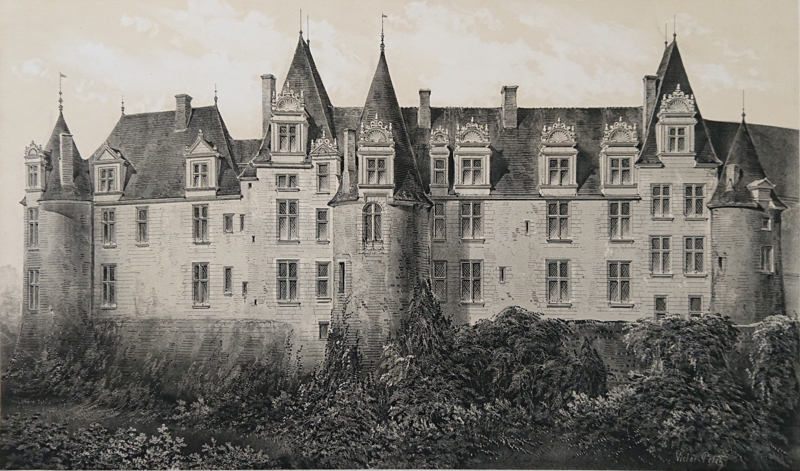
Step into the eerie and mysterious Château de Châteaubriant, a magnificent 15th century castle and one of France’s most haunted sites. Enter its dark and imposing halls originally constructed as a defense against Anjou and the Kingdom of France, laden with dark secrets, to experience an unforgettable journey through time. Learn about its chilling legends, hidden secrets, and unsettling specters that linger in the shadows.

History of the Château de Châteaubriant

The Château de Châteaubriant was first constructed in the 11th century, but was heavily modified during the Renaissance which the architecture bears marks of. 

It was taken over by the French during the Mad War after a siege. Over the centuries, it changed hands many times – from its aristocratic owners, to prisoners of war during the revolution, and back again. 

Château de Châteaubriant: drawn by artist Victor Petit in 1871. Already at this point the history of Château de Châteaubriant was old and steeped in legend . It is also said that ghost are walking the halls of the castle every year on October 16th.

Sybille the Shocked Ghost

One of the most famous legends behind the Château de Châteaubriant’s rumored hauntings is that of Sybille, wife of Geoffroy IV. 

Geoffroy IV of Châteaubriant went on crusade to the holy land in the 1250s with King Saint Louis where he was jailed in Egypt after the battle of Mansourah and the entire French army was destroyed by the plague. His death was announced to the Châteaubriant and his wife. 

Sybille, often named Sibylle de la Guerche de Candé started to mourn the death of her dead husband. He wasn’t dead however, and was released from prison and returned to his home and wife a couple of months later. When Sybille saw him again, she fell into his arms and died of the shock. 

She is said to haunt the Château de Châteaubriant at times, but the real haunting is said to be done by the infamous Françoise de Foix, the main mistress of the King of France that did not bear the same loyalty to her husband as Sybille.

The Ghost of Françoise de Foix

In addition to Sybille and other ghosts that are said to haunt Châteaubriant, many also believe in the spirit of Françoise de Foix. She was a tall and dark haired woman that spoke both Latin and Italian as well as writing her own poetry. All of her attributes made her a well sought after woman, and even the King wanted her. 

She was engaged to Jean de Laval, count of  Châteaubriant in 1505 with support of the king and queen Anne de Bretagne and Louis XII. They formally married in 1509 and lived at Château de Châteaubriant.There was a shift in the royals and the new king, Francis I, summoned Jean de Laval to court for his help in 1516. 

Françoise de Foix followed him and became the lady in waiting for Queen Claude de France as well as becoming the chief mistress to King Francis I. At official events she was placed near to the royal princesses, signifying that she was La mye du roi, or the Sweetheart of the King to the rest of the court.

Jean de Laval was sent to fight in the Italian Wars and became Governor of Brittany in 1531. He was aware of the affair but seemed unaffected by it all when his wife remained the King’s mistress for over a decade.

Françoise de Foix was rejected from court in 1525 when the young and blonde Anne de Pisseleu d’Heilly caught the King’s attention and affection. Because of this, she returned to Châteaubriant to live with her husband. 

Killed by her husband Jean de Laval

She died on 16th of October in 1537, most likely of sickness are we to believe some. There is however a different theory. It is said that her husband killed her. 

Read also: This is not the only story of a ghost haunting a French castle after a woman was killed by her husband: The Prisoner of Château de Puymartin

Jean de Laval, also known as John III of Laval-Châteaubriant was according to legend, an incredibly bloodthirsty baron who killed anyone who opposed him and ruthlessly tortured his enemies. 

It is said that he shut his wife in a dark and padded cell and had her killed because of her relationship with the king or something else entirely. Some even think that he locked her up and poisoned her or bled her to death slowly.

The Assassination of Françoise de Foix: The legend of her death are widespread and depicted in art. Here from a book from 1816 by Augustine Gottis.

Ghost Procession at Midnight

Some say they can still hear her weeping within the walls of Châteaubriant and others have even seen her standing near windows or atop towers in traditional 16th-century dress, but perhaps she is best known to appear in the ghost procession on her death anniversary.

Ever since then, there have been a ghost procession in the Château de Châteaubriant in honor of her death on October 16 of monks and knights slowly ascending the main stairs before vanishing. Her ghost is said to come back for this night as the procession begins at the stroke of midnight. 

More like this

Newest Posts

References

Featured Image: source

Françoise de Foix — Wikipédia 

Château de Châteaubriant – Wikipedia

Les fantômes sont des choses qui arrivent – chateau-chateaubriant

Le château de Châteaubriant et la légende de Sibylle

Lady Janet Douglas, Ghost of Glamis Castle

Advertisements

Lady Janet Douglas is said to haunt the Glamis Castle in Scotland after being burned at the stake after being entangled in court politics and being an enemy of the King. 

Glamis Castle is said to have inspired one of Shakespeare’s most famous plays, Macbeth, a play so haunted you are not supposed to say the title out loud inside of a theater. The old castle is located in Angus, Scotland, not far from Edinburgh and is considered one of Scotland’s most haunted castles.  

There are many mysteries surrounding this place, from the monster of Glamis, the ghost playing cards for the rest of the eternity and many more apparitions and legends. One of the ghosts residing in Glamis Castle is that of Lady Janet Douglas, also called Lady Glamis. 

Lady of the Castle

The story behind Lady Janet Douglas and her death is rooted in the bloody battle for power and revenge in 1500s Scotland. King James V was remembered as the vindictive king and of his paranoid fear of his nobility, leading to the death of many of them, Lady Glamis being one of them. 

King James V had Lady Janet Douglas accused of treason against him, although it was clear that the accusations were false. Her only crime was that she was the sister to the King’s stepfather, Archibal Douglas, Earl of Angus, which the king hated after having been imprisoned by him for years before escaping. 

Lady Janet Douglas: A portrait of the Lady Glamis as she was seen as a great beauty when she lived.

The Douglas and Stewart families had been battling for power in Scotland for generations. When King James V’s mother, Margaret Tudor became a widow, Archibald Douglas married her and took control over the kingdom as King James was just a child. 

Living as Archibald’s prisoner for years and having taken the power away from him, the hatred King James V had for the Douglases grew. His hatred for Angus extended to the whole family and he wanted them gone when he finally escaped. 

Charged for Murder and Treason

In 1528, upon the death of Lady Glamis first husband, John Lyon, 6th Lord of Glamis, Lady Janet Douglas was immediately summoned for treason, accused of supporting the civil war against the King and of poisoning Lyon who died on 17th of September 1528. 

Her being unwed left her vulnerable and a target for the King’s vengeance against her brother. Lady Glamis brother, the king’s stepfather was already exiled and King James had seized all his land and property he was once a prisoner in. Now he sought revenge on the one he could get his hands in.

Charges were eventually dropped, and Lady Glamis were free to go back to Glamis Castle. She went on to marry Archibald Campbell in 1532, having ceased all communication with her brother and the rest of the Douglas clan to prove her innocence in any plot against the King. 

Her Final Arrest

Lady Janet Douglas’ reprieve was short-lived, however, as in 1537, she was once again summoned away from Glamis Castle for treason, and this time the King was going to have her punished. There were several reasons as to why she was picked out, one of the reasons was because of her beauty. She was seen as a unique and one of a kind beauty among the nobles and when her first husband died, she had several suitors. 

One of them was William Lyon, a close friend of her first husband. His obsession for her only grew and when she married Campbell, it turned sour. He started whispering in the king’s ear about her plans to poison him, and the king, looking for any excuse to get back at the Douglases, listened intently. 

Lady Janet Douglas was imprisoned with her husband and her son John in a dungeon of Edinburgh Castle, a castle riddled with rumored ghosts as well. Her husband managed to escape from prison, but was later killed when he was found. 

This time, the charges brought against Lady Glamis included being in secret talks with the Douglas clan, attempting to poison the King. To capture Lady Janet Douglas was easy enough, but to convict her for being a witch was more difficult as Lady Glamis reputation was impeccable and a loved character.  

The Lady Burnt at the Stake

To gather enough evidence for a conviction, King James had Lady Janet Douglas family members and servants imprisoned and tortured until they gave answers that he wanted.

In later years she has been remembered as being an accused witch, but nowhere in her files does it say she was ever accused of witchcraft as well. Perhaps it would have been better for her, as those accused of witchcraft were often strangled before being burned. Traitors didn’t have that luxury. 

In the end they all talked and Lady Janet Douglas was convicted. When they led her out from the dungeon, she was nearly blind after being kept behind bars in the dark for so long. Lady Glamis was burned at the stake on 17 July 1537 by Edinburgh Castle and It is said King James forced her young son, John from her first marriage to watch her agonizing death before letting him go.

Lady Glamis’ son was also sentenced to death, but because of his young age, he was not to be executed until he reached eighteen. Luckily for John, the king died before then and was pardoned, reclaiming his property of Glamis Castle and becoming the seventh Lord Glamis.

The Haunted Glamis Castle

Not many years after Lady Glamis’ execution, reports about a gray lady started to appear around the Glamis Castle grounds and people kept seeing this ghost, believing it to be her.  The castle is not the only place her ghost is said to have been seen though. In Edinburgh Castle, were she was held captive and at last burned alive, there have been reports about a ghost reminding them about the Lady Glamis as well.

The Haunted Castle: There are many mysteries if you delve into the legends surrounding Glamis Castle, from the monster of Glamis, the ghost playing cards for the rest of the eternity and many more apparitions and legends.

Back at Glamis Castle, she has been reported around the Clock Tower as well as in the chapel of the castle. People report an atmosphere of great sadness when they have seen her kneeling at the altar. For a long time one seat in the chapel was reserved for her and no one was allowed to sit in that seat. 

Once, The James the old pretender, during the Jacobite Rising in 1716, a direct descendant of her killer saw her sitting there, still haunted by his forefathers actions. 

More like this

Newest Posts

References

Featured Image: Ian Robinson/Wikimedia

The White Lady of Burg Wolfsegg

Advertisements

In the old gothic castle of Burg Wolfsegg in Germany, there is a local castle legend about a White Lady haunting the place. The ghost is supposedly of one of the Countess living there who was murdered by her husband.  

Burg Wolfsegg is a wonderful old gothic castle in Germany, built in the 15th century and still standing today in Bavaria. It’s a piece of history and culture that is full of mystery and legends and filled with ghost stories.

This majestic building was once home to German nobility and is one of the few castles that over the years, never was destroyed and rebuilt. The walls still echo the tales of heroism, love, and tragedy, financial trouble and a possible murder. There are stories told around campfires about the haunted old castle— stories of ghosts that roam its corridors and in the underground caves beneath the castle. 

One of the ghosts said to roam around the castle to this day is that of the White Lady. There have been tales about her since the 1600s. In European ghost stories, there are often women who are restless spirits that died buried with guilt or shame about something. 

The White Lady in the Castle

At Wolfsegg however, the White Lady is said to be a woman who died in the 1400s. There are many variations to the story today, but one of them is the tale about a woman left to her own devices when her husband was away. To run the castle, she turned to the owner of a neighboring manor for his help in managing the big castle. 

When her husband and lord of the castle returned, however, he suspected his wife was having an affair with the man and was overcome with jealousy and rage. The husband ended up hiring two people to murder her. 

In another variation of the legend, the husband was even in on the plot of seducing the manager to blackmail him. When the feelings between the two turned out to be real however, he killed her with his own hands. 

The White Lady: Basking in the sunlight, hiding in the shadows, her dress is always white. In German legends and folklore the stories of the Weiße Frauen, meaning White Women used to be a name meant to the elven-spirits and the stories of the light elves from pagan times.

The Real People Behind the Legend

A legend like this will always be hard to prove, and even harder considering all the different variations of it. The real people behind this legend are thought to be that of Lord von Laaber and his wife. The couple resided in Wolfegg in the 145th and 15th centuries. 

Ulrich V. von Laaber and his wife Klara von Helfenstein was struggling with their finances at the start of the 15th century as the owners of Burg Wolfsegg. Although there is not really much evidence to it as the historical records shows that Klara von Helfenstein survived her husband by many years. But the story of the haunting of the castle is very old, and can be found in written accounts back to the start of the 1900s. 

The Castle: It is an old medieval castle from the gothic period with more than one ghost story to tell of. The most famous one in Burg Wolfsegg is that of the White Lady. Source// Wikimedia

The story is about the White Lady though, and according to the castle’s own website, the first written account they have found about the White Lady ghost is from 1952 when it gained traction through travel accounts. 

This is not the only castle with a legend about a lady in white haunting the place. Read also: The Haunting of the House of Hohenzollern

From then on the legend about the White Lady and Klara von Helfenstein sped up and the owners of the castle started putting on plays in front of the castle to further drive the legend from the dark corners of the Burg Wolfsegg and into the world. 

A Medium Visits the Burg Wolfsegg

In 1966, the legend reached its peak when a weekly magazine published an article about the legend inside of Burg Wolfsegg. The castle was visited by a parapsychologist from New York named Hans Holzer in 1968 together with a medium called Edith Riedl.

The medium was contacted by the Lady in White and she was identified as Klara von Helfenstein where she told them about the story that on October 17, 1463, a young man was murdered in one of the chambers known as the Weizkammer and that the husband had been involved with the murder. 

Other than tales from the medium aout Klara von Helfenstein and the murder, there are reports about strange light phenomena and strange noises from the underground cave are heard throughout the castle sometimes. 

So what reason did the countess have to haunt the Burg Wolfsegg after her death though? Considering Klara von Helfenstein didn’t really get murdered by her husband’s hand, was she rather full of regret about her dead lover then? Or is the White Lady a mystery still not solved of who it’s behind the white vail?

More like this

Newest Posts

References

DETAILS & RECHERCHE ZUR BURG | Burg Wolfsegg

The Warrior Countess Ghost of Eltz Castle

Advertisements

Few castles capture the European medieval feeling as Eltz Castle does. The long lasting Eltz family has always watched over the place, and even in death, there is an ax wielding countess in full armor, haunting the place. 

Steeped in history and mystery, Germany’s old castles are some of the most fascinating pieces of architecture in existence. These majestic fortresses are stories in themselves, filled with centuries-old legends and ghost stories. From dark fairy tales about princesses and knights to hidden passages and hidden rooms – these castles have something to captivate even the most jaded spirit! Every stone tells a tale of intrigue, from ancient battles to wicked plots. Without a doubt, a tour through Germany’s haunted old castles will leave you with an experience unlike any other.

The Eltz castle is definitely on that type of list and is a medieval castle on the top above the Moselle river in the Rhineland, west in Germany. The castle has belonged to the House of Eltz who have lived there since the 1100s and is one of the few castles that have never been destroyed and rebuilt. 

The armory and treasury in the Eltz Castle is considered to be one of the most important collections of its kind in Europe, and holds so much history. The castle is also said to hold more than one ghost, but the most well known of them is that of Countess Agnes of Eltz. 

The Countess Agnes

Agnes was the daughter of the 15th count of the Eltz Castle at the time. She was said to have been a beautiful girl and was promised to be the wife to the knight of Braunsberg. They had been engaged since they were children, and the time for a proper wedding and marriage were approaching. However, the Countess didn’t like her betrothed at all as he was a ruthless and mean man and far from a chivalry knight as they are often painted to be in fairytales. 

On the day of their engagement, they held an engagement party for the two families to come together. The knight of Braunsberg turned out to be even more despicable now as the marriage was more than just a distant future and Agnes refused to kiss him when he went for it as she was known to have a will of her own and out of a fight if she had to. 

According to some testaments, she usually hung out with her warrior brother more than her female companions. In some reports, it is said she only refused his advances, in others, she outright slapped him back when he forced himself onto her. This threw him into a rage and he declared a war on the entire family to repay for him being embarrassed in that manner. 

The Revenge of the Eltz

A few months passed, some say a whole year as the knight of Braunsberg waited, planned and came back for his revenge. And he returned to Eltz Castle with an army. He managed to lure the count and his knights out of the castle into an open battle, and some say he waited until the Count of Eltz went out hunting. 

Agnes remained in the castle together with only some servants, just as the knight of Braunsberg had planned. Alone in the castle the single Countess would be an easy target for the knight and his men. 

As he advanced with his soldiers to the Eltz Castle, he was one step closer to Agnes. The knight of Braunsberg had planned to take Agnes back with force, but had never anticipated that she would fight back the way she did. Just as she had done at the engagement party, she chose to hold her ground, but this time with an battle ax.  

She put on her brother’s armor and picked up weapons together with her servants. Together they fought side by side against the attackers. She is said to have had a battle-axe she wielded against her enemies. 

An arrow from the knight hit her and she died from the wound almost immediately. The servants who had loyally fought by her side were enraged and defeated the knight, killing him and ending the attack. 

The Ghost of the Countess

The bravery and steadfastness of the Countess is said to represent the Eltz family and their 800 years of history in the Eltz Castle. The ghost of Agnes is said to still linger inside of the castle. In her former room , the breastplate still hangs on the wall, with the hole from the arrow still visible. Her battle-axe also remained, protecting herself from the horrible knight to this day. 

She can be seen by the entrance of the Eltz Castle to this day, still wearing her suit of armor. It is also said that a phantom horseman is also riding outside of the gates, and the knight of Braunsberg is still seeking forgiveness for what he did. 

More like this

Newest Posts

References

Eltz Castle: A Fairy Tale in Stone – Discover Germany