Tag Archives: middle ages

The Buckinghamshire Vampire: England’s Forgotten Blood-Drinker

Advertisements

Coming day after day to torment his wife, the Buckinghamshire Vampire terrorized an entire town for days. And he wasn’t stopped until the Bishop intervened. 

Hidden among the villages and misty woodlands of Buckinghamshire in south east England, a county better known for its pastoral landscapes and historic estates, lies a strange and unsettling tale of a vampire said to have once terrorized the area. 

Unlike the famous aristocratic bloodsuckers of Gothic fiction, this legend, whispered among locals for generations, speaks of a malevolent revenant risen from its grave to prey upon the living.

A Folkloric Fragment from Rural England

This story is also one of the vampiric tales we have from the historian William of Newburgh who wrote down many of the monsters and ghost stories from medieval England and Scotland. Allegedly he got the story from Stephen de Swafeld, the archdeacon of the diocese of Buckinghamshire from 1194-1202. 

William of Newburgh: Many of the tales about the British vampires comes from the 12th century historian, William of Newburgh. William’s major work was Historia rerum Anglicarum or Historia de rebus anglicis (“History of English Affairs”), a history of England from 1066 to 1198, written in Latin. It is written in an engaging fashion and still readable to this day, containing many fascinating stories and glimpses into 12th-century life. He is a major source for stories of medieval revenants, animated corpses that returned from their graves, with close parallels to vampire beliefs.

A well respected man of Buckinghamshire died unexpectedly in 1192 and was buried by his family and his grieving widow on the eve of Ascension Day. He must have been a rich man, as he was buried in a tomb. Buckinghamshire had acquired a lot of wealth during the Anglo-Saxons, soon to be taken by William the Conqueror.  

The next night the widow was awakened at night when something laid next to her in her bed. When she opened her eyes, she saw it was her dead husband laying next to her, staring at her with dead eyes. It was said he got on top of her, pressing her down into the bed.

It is unsure and not specified what this actually means. Did he paralyze her like a night terror thing, did he force himself on her?

When the sun rose, the man went back into his tomb. But he would return the next night. Some say he did the same for a second time. But for the third, the widow was prepared. She had invited her friends and family to watch over her, in case her dead husband came back. 

He crept through her window, but when he was heading for her bed, the walking dead was attacked by her protectors who chased him off with loud noises and into the fields where the animals were grassing. Some say that he went to attack his brothers instead who were living in the same town.

Revenant: The term vampire or the undead was not used in medieval time, but several of the stories about the Revenant, Sanguisa or the bloodsuckers of folklore bear resemblance to what the modern world would classify as a vampire legend. In folklore, a revenant is a spirit or animated corpse that is believed to have been revived from death to haunt the living and was in medieval times used interchangeably with ghosts. They come from various cultures like the Celtic and Norse, some reminding more about a classic ghost story, some more of a vampire legend. Although today a mixed version of the western and eastern European mythologies of the undead.

For a long time, the vampire kept appearing in the town, attacking sleeping people as well as resting animals. Soon, every household was up all night, guarding to defend themselves from the vampire stalking them. 

It got so bad he started appearing in broad daylight, seen by big groups of people in the streets and in the fields. Often he was seen with a pack of hounds following him, something the undead in William’s writing did, as well as other British ghost and vampire stories. 

Howling Hounds: Often in William Newburghs tales of the undead, there is a pack of dogs following as the dog motif has been connected with death for ages in European mythology. The black dog is a supernatural, spectral, or demonic hellhound. It is usually unnaturally large with glowing red or yellow eyes, is often connected with the Devil, and is sometimes an omen of death.

Blessings from the Bishop

The story of the undead reached the Bishop and they decided to do an investigation. This has also been said to be the Archdeacon Stephen. He had written to St. Hugh, the bishop of Lincoln, asking for advice. It was said that they had to open his tomb and burn him to ashes, but the archdeacon didn’t want to and asked if there was another way. 

They decided to open his tomb and exhumed his body. When the tomb was opened the body was found to have not decomposed. The bishop had written an absolution that they placed on the man’s chest before the tomb was sealed up again. 

It is said that this helped and the blessing  from the bishop made so the revenant remained in his grave and he never bothered anyone ever again. . 

Newest Posts

References:

Buckinghamshire Vampire – OCCULT WORLD

William of Newburgh: Medieval Vampire Hunter? | Our Ancient History

The Vampire of Alnwick Castle: Northumberland’s Restless Dead

Advertisements

In the castle often dubbed the Windsor of the North, the Alnwick castle also houses some dark legends. One of them being that there once was a vampire demon lurking in the dark corners of the castle. 

Alnwick Castle in Northumberland, England has been called  the Windsor of the North and has been the home for the Percy family since 1309, including the current 12th Duke of Northumberland. It has played a crucial role in the history of England, as a stronghold in the border wars with Scotland as well as the power battle in the Wars of Roses.

Long before Alnwick Castle gained modern renown as a filming location for Harry Potter’s Hogwarts or Downton Abbey, it was home to far darker, bloodier folklore. In the 12th century, this formidable Northumbrian stronghold was at the center of one of Britain’s most unnerving medieval vampire tales — chronicled by the historian William of Newburgh.

The Tale as Told by William of Newburgh

William, writing around 1196, recounted the terrifying legend in his Historia Rerum Anglicarum, documenting the story of a long-deceased servant to the Lord de Vesci of Alnwick in the 11th century who refused to stay buried. It was said he came from Yorkshire to escape the law. Or was it the master of the castle himself who stayed underneath his castle after his death? According to local accounts, after his death this malevolent soul rose nightly from his grave to prowl the surrounding village.

William of Newburgh: Many of the tales about the British vampires comes from the 12th century historian, William of Newburgh. William’s major work was Historia rerum Anglicarum or Historia de rebus anglicis (“History of English Affairs”), a history of England from 1066 to 1198, written in Latin. It is written in an engaging fashion and still readable to this day, containing many fascinating stories and glimpses into 12th-century life. He is a major source for stories of medieval revenants, animated corpses that returned from their graves, with close parallels to vampire beliefs.

He was said to be a horrid man, although his misdeeds aren’t always specified. He was also a very jealous man and suspected his wife had taken a lover and wanted to caught her in the act. He told her he was going out on a journey for many days, but in secret snuck back after dark. He went to spy on her and climbed to the roof of his house to look in her window. Some say that he was hiding on a beam overhanging her room. 

Whether his wife cheated or not is debated. Some say that a man really did enter her room, causing him to lose his balance and fall down. He fell through the roof or off the beam and crashed to the floor and injured himself badly. As he lay dying on her floor, he refused to repent his sins, and died with the cursing words of his wife looming over him. 

The creature, often referred to simply as the Alnwick Vampire, brought with it a pestilent air of death. Villagers spoke of a sickening stench and oppressive atmosphere whenever the restless corpse stalked the streets. It is also said that a pack of hounds howling was following him. In the original source, it’s not often mentioned they feared for their blood to be sucked out of them, but being “beaten black and blue by this vagrant monster.”

Howling Hounds: Often in William Newburghs tales of the undead, there is a pack of dogs following as the dog motif has been connected with death for ages in European mythology. The black dog is a supernatural, spectral, or demonic hellhound. It is usually unnaturally large with glowing red or yellow eyes, is often connected with the Devil, and is sometimes an omen of death.

The villagers were so afraid they started to lock themselves inside of their homes at night. It is also said that the castle was close to being abandoned and that people started to move away. Soon after the nightly disturbances began, a dreadful plague outbreak swept through the village, and the suffering townsfolk laid blame squarely at the feet of the wandering revenant.

A Grim Solution: Dismemberment and Burning

Local priests and terrified townsfolk, desperate to end the curse, gathered on Palm Sunday at two brothers who had lost their father to the plague and wanted to stop it before it consumed them as well. and decided upon a grim but time-honored medieval remedy: they would exhume the vampire’s corpse and destroy it.

A band of brave men dug up the grave. He was not found six feet under as he had been buried the first time, but right under the surface with just a bit of soil barely covering him. 

His body was naturally preserved and bloated. It was said it had swollen to almost twice its size and his flesh was more pink than deadly white. Although the stench of flesh was overwhelming. 

To put an end to the horrors, they dragged the body from the earth, hacked it to pieces as gallons of fresh hot blood poured out of him, pure evidence of him being a bloodsucking monster. The body pieces were taken outside of the town and burned the remains to ash.

William of Newburgh recorded the event in chilling detail, remarking on how the decay and pestilence lifted almost immediately after the body’s destruction.

Vampire or Revenant? A Medieval Fear

This account from Alnwick is one of the earliest written vampire legends in England. Even to this day, William de Newburgh is claimed to have been a serious historian who relied on good and trustworthy sources. 

In the story though, he does call the castle Anantis, and it has since then been affiliated with the Alnwick Castle. This sort of became canon lore after Montague Summers published The Vampire in Europe in 1929 where he called the legend the Alnwick Vampire

There have been some that have speculated that the castle from the story was actually Annan Castle of the Bruce family in South West Scotland. However, the structure of the story does remind quite a lot of an Irish vampire story about an evil lord jealous of his wife and dies when spying on her and her suspected lover.

Read More: The Legend of Ireland’s Vampire King Abhartach and the Haunted Giant’s Grave

It is also said that William heard the story from an old monk who lived when the story happened, meaning it must have been sometime in the late 11th, early 12th century like most of his vampire stories. It wasn’t called vampire though, but some sort of bloodsucker or sanguine, the latin word for it. 

Revenant: The term vampire or the undead was not used in medieval time, but several of the stories about the Revenant, Sanguisa or the bloodsuckers of folklore bear resemblance to what the modern world would classify as a vampire legend. In folklore, a revenant is a spirit or animated corpse that is believed to have been revived from death to haunt the living and was in medieval times used interchangeably with ghosts. They come from various cultures like the Celtic and Norse, some reminding more about a classic ghost story, some more of a vampire legend. Although today a mixed version of the western and eastern European mythologies of the undead.

In the medieval mind, such revenants were often considered a cross between a ghost and a vampire who were physical corpses that left their tombs to infect the living, causing plagues, death, and despair. The cause of their resurrection was often attributed to sin, improper burial rites, or a cursed nature in life.

Other Ghosts at Alnwick Castle

In addition to a legend of a bloodsucking undead, it is also said that the ghost of a Grey Lady is haunting the castle grounds. It is said that a young teenage girl was working as a maid in the castle in the Victorian time. One day she was working in one of the kitchens. She fell down a chute to the tunnels below the castle. The dumb waiter used to raise and lower food between the castle floors and broke and fell on top of her. It crushed her to death. 

It is said that she is walking in the tunnels and dark corridors deep below the castle. 

Today, Alnwick Castle embraces its eerie history, and there is even a gin inspired by the legend. Ghost tours and local folklore evenings recount not only the vampire of the 12th century but also tales of spectral knights, weeping women, and shadowy figures that stalk the castle halls and grounds after dark.

And though centuries have passed since the old master’s body was consigned to the flames, some claim that on misty nights, a strange stench lingers in the old graveyard, and figures are glimpsed where no one should be.

Newest Posts

References:

The Alnwick vampire

Vampire and Ghost of Alnwick Castle

The Secrets of Alnwick Castle’s Haunting Past

1196 (ca.): Vampire of Anantis | Anomalies: the Strange & Unexplained

The Hunderprest: The Vampire Monk of Melrose Abbey

Advertisements

A devious and unholy monk called The Hunderprest, was said to haunt the countryside on the Scottish border as well as Melrose Abbey. Was this specter really a bloodsucking vampire?

In the Scottish Borders, the ruins of Melrose Abbey have stood since the 12th century as a brooding, atmospheric relic of medieval piety and power. Melrose is a seemingly picture perfect place, drawing people in as the best salmon and trout fishing in the country. 

The Melrose Abbey is on the north east side of the town center and some of the more iconic buildings from the area. Behind its beautiful Gothic arches and solemn grave markers lies a dark legend: the tale of the Hunderprest, or the dog priest, a vampiric monk whose foul deeds and undead existence chilled even the most devout.

The Mysterious and Magical Melrose Abbey

The Abbey was founded by a colony of Cisterian monks in 1136 by the River Tweed. Once, it was said a miracle happened here, when the corn in their cellar multiplied in the time of a great famine, and the monks could feed them all. This and more miracles were said to have been performed by Abbot Waltheof, the stepson to King David I of Scotland. 

Through its time of operation it was one of the wealthiest monasteries in Scotland, but through all the years of war on the Scottish border it was badly damaged by the English in 1385 and rebuilt in the late 14th century. 

Melrose Abbey: A view of the interior of the ruined Melrose Abbey, Scotland. Heath’s Picturesque Annual 1835 by Roger Griffith

Today it’s a museum, although a big part of it is now lichen-covered ruins. In the Chapter House there is a burial casket of a heart, thought to belong to King Robert I, also called, The Bruce. In 1812, an old stone coffin was found close to the altar, thought to be the final resting place of Michael Scot, the mysterious Scottish wizard from the 13th century, said to have changed the River Tweed with his staff and turned the single peak of the Eildon Hills to the three we see today.

But not all miracles were as magical as these wonderful things. Some say that the magic happening around the cloister was also the work of evil, perhaps even a bloodsucking vampire. 

The Hunderprest of Melrose Abbey

According to medieval chronicles, the Hunderprest was a monk of Melrose Abbey during the 12th or 13th century. The Cistercian monks who lived and worshipped there had built the Abbey, the first Cistercian Abbey in the country, at the behest of King David I. They were famous for their Melrose wool they sold to the rest of Europe. 

Though little is known about his mortal life, legend says he was a man of great vice and depravity, a predator hidden behind a habit, whose sins were so grave that even in death, the earth rejected him.

Melrose Abbey in 1800, when part of the abbey was still in use as the parish church

Exactly what his sins were is not explicitly said always, but he was often claimed to have been a womaniser and drunkard, bringing shame upon his order. The region was a place of unlawfulness though, being controlled by independent clans called The Border Reivers that often clashed together in violence. It was both a time and place of ruthless lawlessness. 

Some say that in life, he used to be a chaplain to a lady who lived nearby. He was given the name Hundeprest as his favorite thing to do was hunting on horseback as a pack of howling hounds followed him. 

Howling Hounds: Often in William Newburghs tales of the undead, there is a pack of dogs following as the dog motif has been connected with death for ages in European mythology. The black dog is a supernatural, spectral, or demonic hellhound. It is usually unnaturally large with glowing red or yellow eyes, is often connected with the Devil, and is sometimes an omen of death.

Some accounts claim he practiced the black arts in secret, while others allege unspeakable acts committed under the guise of spiritual authority. The locals whispered of his unnatural appetites and sinister nature — rumors that seemed confirmed after his passing.

The Undead Haunting of the Abbey

Because of his sins in life, there was no way he was getting into heaven, and his soul could not find any peace. Livestock were found drained of blood, villagers claimed to see a shadowy figure lurking near graves, and monks reported being stalked by a ghastly presence within the cloisters at night.

He tried to enter the Abbey in the night in the form of a winged bat, only driven away after vigorous prayer and rituals from the monks. Because he was unable to cross the threshold to the holy ground, he needed another place to torment.

He found the cottage to a woman who he had known when he was alive. Said to be the woman he had been the chaplain for in life. She was also rumored to have been his lover. Her neighbors reported that a vampire roamed around her house, moaning and screeching at her, scaring her. Every night he returned to torment and terrorize, lusting after her blood. Because of this, they decided to summon an elder monk from the abbey for an exorcism. 

The Exorcism of a Vampire

Determined to put an end to the terror, the abbot of Melrose called upon the services of a particularly devout and courageous monk, often believed to be William of Newburgh, a respected chronicler of supernatural events. He ended up writing about a lot of monsters and ghosts in the middle ages. 

William of Newburgh: Many of the tales about the British vampires comes from the 12th century historian, William of Newburgh. William’s major work was Historia rerum Anglicarum or Historia de rebus anglicis (“History of English Affairs”), a history of England from 1066 to 1198, written in Latin. It is written in an engaging fashion and still readable to this day, containing many fascinating stories and glimpses into 12th-century life. He is a major source for stories of medieval revenants, animated corpses that returned from their graves, with close parallels to vampire beliefs.

According to the old accounts, a group of monks were put to task and went to the grave of the priest to investigate. As the day waned, the priest appeared like he was levitating out of his grave. They managed to shove the vampire back with a staff. Sometimes this is changed to a mighty axe the monks swung at him. The earth swallowed the Hunderprest like nothing had happened, the ground undisturbed again. This is when the elder monk knew they were dealing with a vampire and knew what to do. 

They waited for daylight and dug up his grave again. They exhumed the Hunderprest’s corpse and what they found only deepened their horror: though dead for some time, the monk’s body was fresh, his face ruddy, with blood at his lips curled up to a grin, classic signs of the undead in medieval folklore.

It was also said it was through praying and fasting that they managed to defeat him. How they killed the vampire, although not named as such in the early sources, varies. Did they stake him through the heart? Probably not, but they do mention setting him on fire and burning him to ashes as most of the stories of the undead mentions. The legend of the stake came later. 

Revenant: The term vampire or the undead was not used in medieval time, but several of the stories about the Revenant, Sanguisa or the bloodsuckers of folklore bear resemblance to what the modern world would classify as a vampire legend. In folklore, a revenant is a spirit or animated corpse that is believed to have been revived from death to haunt the living and was in medieval times used interchangeably with ghosts. They come from various cultures like the Celtic and Norse, some reminding more about a classic ghost story, some more of a vampire legend. Although today a mixed version of the western and eastern European mythologies of the undead.

After they burned him to ash, they took him to Lammermuir Hills where the wind carried him to the north along the borders. 

To this day, visitors to the hauntingly beautiful ruins of Melrose Abbey claim to feel a chilling presence lingering among the weathered stones. Some report seeing a shadow moving through the broken cloisters at night, or hearing faint whispers in the darkened archways.

Newest Posts

References:

Legend of the “Hunderprest” Vampire of Melrose Abbey

Airhouses – News – The Incredible Legends of Melrose Abbey

The Hunderprest: The Vampire Monk of Melrose.

The Haunted Dungeon at Rosenkrantz Tower

Advertisements

The Rosenkrantz Tower in Bergen Norway is one of the oldest buildings still standing and was once the house for kings. Today it is used as a museum and perhaps they also have some of the oldest ghosts still lingering in the dungeon. 

On the old dock in Bergen city you mostly find old buildings dating all the way back to the middle ages when Bergen was the capital in Norway throughout the city’s time as a Hanseatic trading city. Today the fortress the Rosenkrantz Tower is a part of a museum and is considered one of the most important renaissance monuments in Norway. 

One of the old buildings is Rosenkrantz Tower, which still is one of the taller buildings in the city and was once known as “The Castle by the Sea” as it used to be a residence for kings when Bergen was the capital in Norway. 

The Kings Tower

Rosenkrantz Tower was originally built for the king Magnus Lawmender in 1270 and a lot of the original building can still be seen today. King Magnus Lawmender got his nickname after working extensively on the laws in his country, and much of today’s Norwegian constitution comes from his work. 

After the capital in Norway was moved to Oslo and Norway became a part of the Danish kingdom, the keep the tower is part of lost its importance as a royal seat, but was still used as a military keep.

Although the cannons in Rosenkrantz Tower have only been fired one day during war in 1665, the tower has seen its fair share of war. In 1944 during world war two the Rosenkrantz Tower was heavily damaged when a cargo ship with explosives exploded right outside. The upper floors collapsed, but the foundations of the tower still remained, like the dungeon in the tower. And deep down in the darkness of the dungeon in the tower, some former prisoners are said to still linger. 

The Haunted Dungeon

The dungeon in Rosenkrantz Tower was added on to the tower around 1500 and the final tower as we see it today was finalized in the 1560s by Erik Rosenkrantz who was a governor of Bergen Castle during a time when Norway was under Danish reign. He was at the time one of the wealthiest men in Denmark-Norway and work on the tower was done by Scottish builders, explaining the Scottish look from the time. 

The

The dungeon served as a prison where they kept the prisoners who were considered to be very violent and often some of the poorest. These are the prisoners that are rumored to be still haunting the dungeon. 

An architect named Peter Blix reported in 1884 that old people living at the time still remembered the last prisoner in the cell in Rosenkrantz Tower. So perhaps the dungeon was used in the early 19th century? 

You can walk inside of the tower and follow the hollowed and wobbly stairs down to the basement where you can barely stand up straight. The cells are small and the only light is from the cracks in the walls. Still to this day you can see claw marks from the prisoners that were confined into the dark small cells when it was used from the 16th to the 19th century. 

The irony of it all is that so many of the prisoners were convicted by the laws that the original builder, King Magnus Lawmender, made during his reign just a couple of floors above the dungeon they are forever kept. 

More like this

Newest Posts

References

Featured photo: Wikimedia/Rüdiger Stehn

The Most Haunted Places in Bergen 

Rosenkrantztårnet – Lensherrenes slott i Bergen sentrum – Bymuseet

The Bergen Map | Rosenkrantztårnet

The Haunting of Belvelly Castle

Advertisements

At Belvelly Castle in Ireland, the ghosts haunting it, all met a tragic end. It is said that the unfortunate singer is heard singing out in the night, and the ghost of the faceless woman is said to haunt the castle after she refused a man, turned mad and died. 

In the heart of the Irish countryside, near the Cork Road bridge onto Fota Island, stands a relic of another time – Belvelly Castle. Belvelly Castle’s history is woven with legend and folklore, a tapestry of stories that has endured through centuries. 

It was originally built by the Anglo-Norman Hodnett family in the 1200s to connect the Great Island to the mainland of Ireland. Over the centuries the castle was in between several feuding families, wars and by the 19th century the Belvelly Castle had fallen into ruins after being abandoned. 

Read More: Check out all of the ghost stories from Ireland

This 14th-century tower house that remains from the castle may appear serene under the daylight, but as night falls, an eerie aura descends upon it, invoking spine-tingling tales of restless spirits and unsettling apparitions.

The Spanish Bard and the Musical Duel

In the year 1209, off the Irish coast near Ballycotton Light, a Spanish galleon was in distress and ultimately wrecked. Among the survivors was a Spanish minstrel named Luccero Moreno. His haunting melodies and enchanting music won him a place in the big stone houses of Cobh, where troubadours were a rare sight.

Luccero’s presence reached the attention of Lady Hodnett that resided at the Belvelly Castle, who invited him to stay with her family. This marked the beginning of a rivalry between Luccero and Dion the Thrush, Ireland’s leading bard, who had been the Hodnetts’ entertainer for years.

To settle the rivalry, Lady Hodnett arranged a “duel with song” over three nights in Belvelly Castle’s great hall between the two musicians. Each contender would sing three songs of their choice, and the winner of two out of three songs over two out of three nights would be retained at the castle.

Read More: Check out all ghost stories from Haunted Castles around the world

Luccero won the first night, Dion the second, setting the stage for a dramatic final night. In the end though, Luccero’s performance was so moving that he was crowned the victor.

As he stood in the window, about to sing one more song, Dion, consumed by jealousy, lunged at Luccero with a dagger. In a swift and desperate move, Luccero managed to disarm Dion and fatally wound him. Before anyone could intervene, Dion died cursing Luccero.

Hodnett, infuriated by the murder of his favorite bard, imprisoned Luccero in a room beside the water gate. Eventually, a vengeful girl, who had loved Dion, poisoned Luccero’s food, leading to his agonizing death.

Luccero’s body was disposed of in the River Lee, weighted down with chains, in accordance with the customs of the time. Centuries later, fragments of a human skeleton were found in the river, believed to be Luccero’s remains.

To this day, people claim to see a ghostly figure in Belvelly Castle, a young man in black, singing strange melodies in an unknown tongue. He stands in a window overlooking the water gate, his eerie music filling listeners with unease as they gaze upon his pale, sunken eyes under the moonlight.

The Faceless Lady Margaret Hardnett

This is not the only ghost said to haunt the castle though. Lady Margaret Hodnett, who resided at Belvelly Castle in 1685 and was renowned for her beauty but also notorious for her capricious and shallow nature. She played with the affections of many suitors, including Clon Rockenby, a member of the Desmond family.

Rockenby’s infatuation with Lady Margaret endured for years, despite her tendency to reject and then recall him. In a fit of jealousy and frustration, Rockenby initiated a siege of Belvelly Castle, aiming to starve Lady Margaret and her family into submission. They blocked off the road where they would transport food, and was hoping that this would teach her.

The siege endured for three harsh winters, during which Lady Margaret’s beauty withered, and the castle’s inhabitants suffered greatly. The situation grew desperate, and Lady Margaret’s father did not intervene. Exactly why they let it continue and didn’t just give in, no one has an answer to. As the siege intensified, Lady Margaret’s reflection in a Venetian mirror began to deteriorate, mirroring her physical decline.

Upon realizing the extent of the suffering, Rockenby ordered a complete blockade of supplies. Lady Margaret was on the brink of death when the siege finally ended and they raised the white flag. She confronted Rockenby, pointing to her haggard face in the mirror and fainted.

Rockenby, horrified, destroyed the mirror, leading Lady Margaret to regain consciousness. However, a young brother of Lady Margaret, wielding a powerful bow, avenged his sister by fatally wounding Rockenby with an arrow.

As Rockenby died, he cursed Lady Margaret, wishing that she would search for mirrors but never find them. Lady Margaret survived but only partially regained her beauty. She shunned mirrors but eventually sneaked small ones into her possession. Her mind began to unravel, and she exhibited erratic behavior, including trying to dam up the River Lee and obsessively gazing into spots on the walls.

Lady Margaret died alone in Belvelly Castle, leaving behind a haunted legacy. Some witnesses claim to have seen her ghost, but her appearance remains a subject of debate. Some say she is obscured by a thick white cloth or veil, while others claim she has no face, only a sphere of pale mist where her face should be. She is said to roam the castle, rubbing the stones as if looking into invisible mirrors, leaving some stones smoother and gleaming as if glazed, reflecting blurred images of those who dare to look.

Restoration and the Haunting’s Persistence

Recent years have seen Belvelly Castle undergo a restoration process under the care of new private owners. The castle has emerged from the shadows, its ancient stone walls standing tall once more. Yet, despite the renewal, the eerie legends that have clung to it persist like the ivy on its walls.

Visitors and locals alike continue to report eerie encounters within the castle’s hallowed halls. Whispers in empty chambers, fleeting glimpses of shadowy figures, and the inexplicable sensation of being watched are all part of the ghostly tapestry woven into Belvelly’s very foundations.

The Haunted Belvelly Castle

Belvelly Castle, with its timeless beauty and tumultuous history, remains an enigmatic and haunting presence on the Irish landscape. As day turns to night, and the stars cast their pale glow upon its ancient stones, the spectral residents of this medieval tower house come to life once more. Their stories, steeped in sorrow, revenge, and lost beauty, continue to captivate the imagination of those who dare to venture into this chilling realm where legends merge with reality.

More like this

Newest Posts

References:

https://belvellycastle.com/history_haunting/the-shattered-mirror/ 
https://belvellycastle.com/history_haunting/duel-with-song/

The Haunted Restaurant Bryggen Tracteursted

Advertisements

The Medieval buildings on the old harbour in Bergen, there is a restaurant that has continued with the old tradition. And on Bryggen Tracteursted, it is said that a ghost still lingers.

Behind Bryggen in Bergen, Norway there are small restaurants and shops in the old Hanseatic wooden buildings that are an old fusion of German and Norwegian culture. Bryggen Tracteursted was one of the schøtstuene or an assembly room that people gathered to eat, originally built way back in 1708. 

Today Bryggen Tracteursted is a fancy restaurant serving traditional food in the UNESCO world heritage place as it has done since medieval times when the schøtstuene started to be a thing. But although the restaurant has been modernized, there are still some ghosts from the past still clinging to the old buildings.  

The Ghost in the Kitchen

Of course this old building filled with history is allegedly haunted, and many of the guests as well as the staff working at Bryggen Tracteursted have a story or two to tell. 

A chef was working one night while he played some music to keep him going. Suddenly, all the pans on the shelves came flying up. As the chef was all alone in the kitchen, he was sure that there had to be something supernatural afoot. 

Why was this particular place haunted? According to the legends, it is by one of the former apprentices that worked there that died. They had a rather peculiar hazing ritual for the newcomers. 

The Hazed Apprentice

On Bryggen in the 1700s they had a particular punishment towards the apprentices that misbehaved or did something wrong. They gathered a lot of trash and lit a pyre in the outhouse with a fireplace where they processed food. The apprentice was placed over the fire and had to hang there for half a day. If you lived you were considered to be a true hanseater and forgiven. 

Unfortunately not everyone survived the trials and it is said that more than one of the apprentices diede and are now haunting the place. Because the place they were hazed today is located where the kitchen of the Bryggen Tracteursted restaurant now is. 

Advertisements

More like this

Newest Posts

References

Her finner du spøkelser i Bergen – Let’s get lost 

Schøtstuene – del av hanseatenes Bryggen

The Viking Ghost at Stokksnes Beach

Advertisements

On Stokksnes Beach in Iceland you can sometimes see the ghost of a drowned viking coming up from the ocean to haunt the black beach. 

Iceland, a land of breathtaking natural beauty and stark contrasts, has seeped into its ghost stories and folklore. From ancient sagas to modern-day tales, the whispers of the past echo through the rugged terrain and hauntingly beautiful vistas.

Read more: Check out all ghost stories from Iceland

As daylight fades and the auroras dance in the night sky, the veil between the living and the dead grows thin, inviting seekers of the unknown to explore the eerie narratives woven into the very fabric of this enchanting island. Join us as we delve into the ghostly stories that haunt the land of fire and ice.

The Black Sand of Stokksnes Beach

In the southeast parts of Iceland you can find one of the most beautiful and mysterious  beaches there is. Black sand on Stokksnes Beach stretches from the cold and wild ocean water to the dark and snow covered mountains rising up from the ocean. 

The area around Stokksnes Beach was the place for the first settlers on Iceland dating back to the 9th century when the viking came from Scandinavia to find new land. Although today there is nothing more than an abandoned film set for a viking village left nearby. 

Although Stokksnes Beach is breathtakingly beautiful, the beach has also seen its fair share of horrible sights and several strange and paranormal rumors travel up and down the black beaches. Perhaps not so strange in this magical looking landscape perfect to behold the Northern Lights.  

Haunted Legends at Stokksnes Beach

According to local legend, Stokksnes Beach is the place where most shipwrecks have happened in Iceland and many dead and drowned have washed ashore on these beaches. 

For this reason the locals think Stokksnes Beach is haunted. People that have visited the beach tell of seeing stuff like wet footprints leading from the sea when there has not been a single soul to have made them. 

Voices that are carried by the wind and an ever presence of someone watching are also some of the haunted rumors that come from this beach. 

According to some there is a giant and hairy viking man that walks out of the ocean at night, dripping wet rising from his watery grave to haunt the beach.  

More like this

Newest Posts

References

Sea of Ghosts: Is This Beach in Iceland Haunted?

https://guidetoiceland.is/travel-iceland/drive/stokksnes

The Finnish Maiden of Olavinlinna Castle

Advertisements

Buried alive inside the castle walls, the Finnish Maiden immured still haunts this medieval building of Olavinlinna Castle. 

This is the castle built in the northernmost place in the world in the 15th century. In the heart of the Finnish lake region in the south east, it used to be on the frontline of the unstable border of Sweden and Russia. The Olavinlinna castle is built on a small island overlooking the dark waters surrounding it. 

The Castle of Knights and War

Since it was built in 1475, the Olavinlinna castle was in the frontline of the territorial dispute between Sweden and Russia as Finland for many years was fought over. It was placed strategically to protect the important Savo region and saw many sieges, battles and wars over the years. It held up the defenses for a long time, all up until 1714 when the Russians took over the castle at last and held it until 1917. 

A castle designed for war, it was named after St Olaf, the Norwegian king and saint for all knights. And throughout the years, the castle saw enough bloodshed and death for eternity. 

High on a rock, whose castled shade
Darken’d the lake below,
In ancient strength majestic stood
The towers of Arlinkow.

Donica – A Ballad Poem by Robert Southey (were Olavinlinna castle was the inspiration)

The stories of the castle are plentiful with legends of Finnish water spirits Vetehinen living in the black water surrounding the castle. Although not malicious by nature, dangerous as they are said to drown people when bored. There are also tales of the ghost of a black ram that escaped being dinner at a feast roams the castle. But most famously, there is the story of the Finnish Maiden that was immured inside the Olavinlinna castle walls. 

The Finnish Maiden

The Finnish Maiden is not only a local legend from the castle. The image of the Finnish Maiden is also used as a personification of the country itself. Often a barefoot young woman in her mid twenties with braided blonde hair, blue eyes and wearing a white or blue national costume. And in paintings she is either depicted as victorious with her fist raised, or as in the painting Attack, where she is attacked by an Russian eagle. And this image is quite fitting for this local legend. 

The Finnish Maiden: In the painting, the Russian doubleheaded eagle is attacking the maiden symbolizing Finland, tearing a law book. Immediately after the painting was finalized, it became the symbol of protest against russification, spreading throughout Finland in thousands of prints. (Painted around 1899)
Photo: Edvard Isto (1856-1905)

Buried Alive Inside the Walls

The most famous story about the Olavinlinna castle is the tragic story about the Finnish maiden that is said to be buried inside the castle walls. She was, according to legend, the daughter of the Lord of the castle at a time when the threat from Russia was ever present and the castle was at the line of defense from the Russian forces. 

Advertisements

Amidst all of this, she had fallen in love with a Russian soldier and trusted that he would do her no harm. But she should never have done so, as she was betrayed. When opening the castle gate for him, he brought more soldiers with him to attack the castle from the inside. They managed to beat the Russian soldiers and the treacherous lover was killed in the attack. But the tragedy didn’t end there. The maiden was also punished for her foolishness. 

She was condemned to death for treason and buried alive in a wall in the courtyard. Immurement or live entombment was a form of capital punishment, especially in legends and folklore. When used as a method of execution, the condemned dies from starvation or dehydration and it is often a slow and excruciating process.  

The Rowan Tree

Soon after, a Rowan tree sprung in the yard with white flowers blooming from the branches, a symbol of the maiden’s innocence. The tree also had red berries growing from it, red as her blood. 

There is no longer a tree in the Olavinlinna courtyard,and its existence is no way to prove. Neither is the story. What is true is the story of the maiden is not so deeply engraved in the local folklore and the Olavinlinna castle legend it has become one. 

Advertisements

More like this

Newest Posts

References

https://www.kansallismuseo.fi/en/olavinlinna/tarinoita

youtube: https://www.youtube.com/watch?v=gB2OH3gxzRU 

The Lost City of Dode

Advertisements

In the heart of the British countryside, the past of the plague, death and history haunts the desecrated church. But amid the mystery of the paranormal and pagan ley lines, the once cursed site has found back to being sacred. 

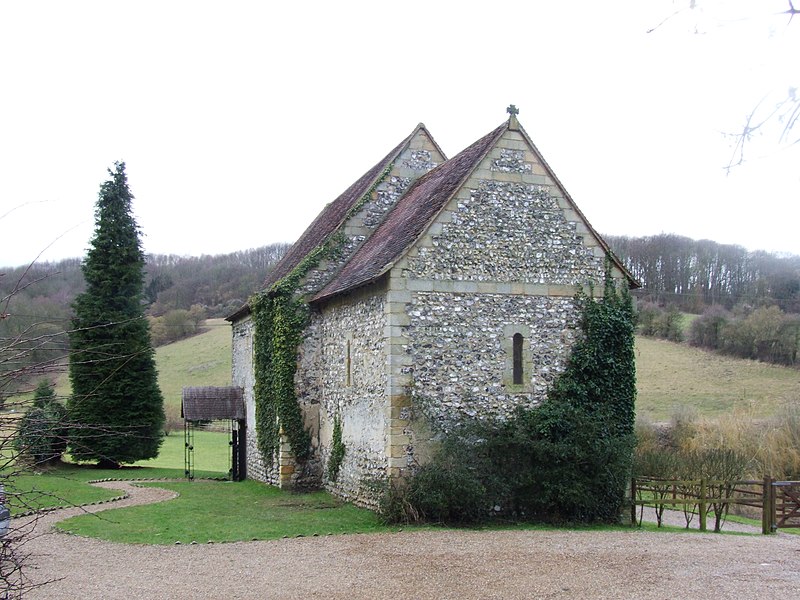
There are a lot of magical and mysterious things surrounding the church that stands in solitude in the countryside in Kent. The original building on top of the hill was built around 1100 during William the second rule. But the man made ground it was built on has perhaps been used as a holy place to gather long before Christianity reached the British shores. 

Around this church there also used to be a village, alive and thriving. But together with the black death the villagers were swept away, and with them, the village of Dode died as well. 

Ley Lines and Ghosts

Haunted church: Dode church was left abandoned for centuries with rumours of being haunted and used for black magic rituals.
Source: Chris Whippet

All left from the lost village of Dode is the old Norman church that is said to be haunted by a little girl. This is not the only paranormal and mystical rumours surrounding this place, this particular church. The old ruins are built on not only one, but eight ley lines, mystical lines that allegedly connect several holy buildings, monuments and places around the world according to modern paganism.

The place is filled with history as archeologists have found evidence of it being inhabited since the roman empire, perhaps even much further back in time. 

The church was eventually not used as a place of worship and they changed the name of the land it was built on. Because of the rumours about it being cursed, the name Holy Hill was changed to Holly Hill as no one felt the presence of anything holy there anymore, as rumours and legends of it being cursed grew.

The Dodechild

But who was this ghost said to haunt the abandoned church? Legend has it it was the last survivor of Dode village. After the Black Death in the 14th century, the village of Dode was abandoned. Nature claimed back the signs of living, leaving only the church as proof humans once lived there.

Advertisements

However, there was still one of the villagers left. A seven year old girl was one of the last survivors in the village, seeing how everyone was being taken by the plague. She took refuge inside the church, eventually dying herself, but never really leaving. And according to local legends, she would appear on the first Sunday morning of every month, haunting the grounds of were her and her entire village perished in the plague that killed millions of people across Europe. 

Since the time of the plague, the village was abandoned, the church forgotten and time, weather tore down the roof, the stones taken to build a medieval church nearby. It was only known as the haunted and lost place to the locals. It was believed the place was a cursed one, and that it was used for black magic rituals. Thus the Holy Hill was renamed Holly Hill and the church boarded up, taken apart and left for centuries until someone would find the place sacred once more. 

A Sacred Place for All

Wedding: The church is now used as a wedding venue for all types of ceremonies.

The church was rebuilt in the 90s after being abandoned for centuries, with the vision of bringing the holiness back to it and the work to get it back to how it would have looked originally began. With the restoration, life also came back into the hidden valley. Although this time, not a strictly catholic religious house as it used to be, but more of a sacred place for all, both for Catholics, members of the Church of England and pagans alike. 

Since then it has been a venue for weddings, making it a place for eternal love declarations, bringing the serenity back over the once holy hills. Other events such as baby namings, memorials and other cultural events also takes place in it, as long it is more of a spiritual than religous event.

And with the new life that has been breathed into the valley and nearby woodland, the ghost of the little girl also has been seen less and less.

Advertisements

More like this

Newest Posts

References

One man’s revival of ancient English rites

‘Ghost village’ 72 mins from London that was destroyed by the Black Death 

Ley line

Fatima’s Harp — A Christmas Haunting

Advertisements

Through the halls of Stubley Hall, a Saracen love song haunts the place with the sound of the harp.

A great hall during Christmas times with good food, merry guests and an unmistakable sound of a harp playing a love song. Scared yet? No? Sounds like the right vibe for a cozy Christmas time perhaps. But if the harp playing comes from nowhere, and no one is playing, scared then? This is what festive guests might hear echoing through the halls every Christmas Eve at Stubley Hall, reminiscing about the tragedy of war and love. 

Not far from Rochdale, Manchester in England, sits the Stubley Hall. Already in the 1600s, the hall was known for being “an ancient mansion with stables, barns, dovecotes and water mill”, so you know it is old, even by British standards. And such an old place carries many tales within the stone walls, and stories about the paranormal and sighting of ghosts has been plentiful. And one of them is the story about Fatima. 

The Crusader With the Diamond Studded Cross

The knight Ralph de Stubley lived here once upon a time, a knight who served Richard the Lionheart during the crusades in Jerusalem. At the beginning of the crusades Ralph joined in on, they saw it as a successful mission as they were able to capture Saladin, the first sultan of Egypt and Syria. But they never quite managed to seize Jerusalem, which they saw as a spiritual symbol and as the holy city. 

Advertisements

One of the more romantic, yet tragic tales from the crusade wars, was about one of Saladin’s daughters. Her name was Fatima and she fell in love with Ralph during the raging battle of the holy city.

However in 1192 the British crusaders had to pull out after the battle of Jaffa, and Ralph was forced to leave Fatima behind. But before leaving, he swore his undying love for her, promising her he would return. As a token, he gave her a diamond studded cross to keep as a reminder of him. 

The Harp of Love Songs

Photo by Jonathan Borba on Pexels.com

Three years went by and Fatima heard nothing of the knight who promised to come back for her. Growing tired of just waiting she disguised herself as a troubadour and sailed across the ocean in search of him. Just bringing her harp she played so well but hadn’t been able to play in her sorrow. But she would never reach the shores of England to return to her beloved Ralph. On the eve of Christmas, she died. The plague had travelled with them on the ship and she and the rest of the passengers and crew perished. 

The same night there was a wedding at Stubley Hall, Ralph’s wedding. He was to marry a wealthy Baron’s daughter. Maybe it was only to save the family who were in need of money, maybe he fell in love with another one. Either way, the song of his past lover came to the hall. During the celebrations he was standing by the window, not enjoying the festivities. He was maybe thinking of her, the woman he truly wanted to marry. It was then he heard it, the harp. The familiar but now so nostalgic sound of Fatima playing the harp, playing none other than the love song she had played for him, a traditional Saracen love song. He rushed into the grounds, thinking he would see her among the trees. 

The guests noticed his disappearance and went after him and found him under an oak tree, dead, clutching a diamond studded cross.

Advertisements

More like this

Newest Posts

References