The Rosenkrantz Tower in Bergen Norway is one of the oldest buildings still standing and was once the house for kings. Today it is used as a museum and perhaps they also have some of the oldest ghosts still lingering in the dungeon.
On the old dock in Bergen city you mostly find old buildings dating all the way back to the middle ages when Bergen was the capital in Norway throughout the city’s time as a Hanseatic trading city. Today the fortress the Rosenkrantz Tower is a part of a museum and is considered one of the most important renaissance monuments in Norway.
One of the old buildings is Rosenkrantz Tower, which still is one of the taller buildings in the city and was once known as “The Castle by the Sea” as it used to be a residence for kings when Bergen was the capital in Norway.
The Kings Tower
Rosenkrantz Tower was originally built for the king Magnus Lawmender in 1270 and a lot of the original building can still be seen today. King Magnus Lawmender got his nickname after working extensively on the laws in his country, and much of today’s Norwegian constitution comes from his work.
After the capital in Norway was moved to Oslo and Norway became a part of the Danish kingdom, the keep the tower is part of lost its importance as a royal seat, but was still used as a military keep.
Although the cannons in Rosenkrantz Tower have only been fired one day during war in 1665, the tower has seen its fair share of war. In 1944 during world war two the Rosenkrantz Tower was heavily damaged when a cargo ship with explosives exploded right outside. The upper floors collapsed, but the foundations of the tower still remained, like the dungeon in the tower. And deep down in the darkness of the dungeon in the tower, some former prisoners are said to still linger.
The Haunted Dungeon
The dungeon in Rosenkrantz Tower was added on to the tower around 1500 and the final tower as we see it today was finalized in the 1560s by Erik Rosenkrantz who was a governor of Bergen Castle during a time when Norway was under Danish reign. He was at the time one of the wealthiest men in Denmark-Norway and work on the tower was done by Scottish builders, explaining the Scottish look from the time.
The
The dungeon served as a prison where they kept the prisoners who were considered to be very violent and often some of the poorest. These are the prisoners that are rumored to be still haunting the dungeon.
An architect named Peter Blix reported in 1884 that old people living at the time still remembered the last prisoner in the cell in Rosenkrantz Tower. So perhaps the dungeon was used in the early 19th century?
You can walk inside of the tower and follow the hollowed and wobbly stairs down to the basement where you can barely stand up straight. The cells are small and the only light is from the cracks in the walls. Still to this day you can see claw marks from the prisoners that were confined into the dark small cells when it was used from the 16th to the 19th century.
The irony of it all is that so many of the prisoners were convicted by the laws that the original builder, King Magnus Lawmender, made during his reign just a couple of floors above the dungeon they are forever kept.
Explore the breathtaking Château de Bonaguil in south-western France. Take a journey through history as you uncover this majestic 12th century fortified castle where a Woman in White is said to haunt the castle every November.
Marvel at the majestic 12th-century fortress of Château de Bonaguil in Saint-Front-sur-Lémance in south-western France! Located near the Lot and Dordogne rivers, this spectacular castle is filled with tales and secrets of centuries past.
The name comes from bonne aiguille (good needle), referring to the pointy rock it is built upon. From its impressive architecture to the stunning views of its surrounding landscape, Château de Bonaguil offers an unforgettable adventure into history and culture.
Château de Bonaguil was first built in the 12th century by knight Arnaud de la Tour of Fumel, who later became Lord of Bonaguil. During the Hundred Years War, the Lords of Bonaguil sided with the English and was a location that saw a lot of battle as the castle was taken and retaken by the fighting sides.
The castle underwent renovations and reconstructions throughout its rich history – most notably, in the late 15th century by the House of Bérenger de Roquefeuil family, it was modified to become an impressive fortress with formidable defenses and it is one of the last fortified castles in France from the Middle Ages.
Over the last century, the castle’s many towers and bastions have been restored and reinforced, giving visitors a chance to experience the castle’s fascinating heritage firsthand.
Paranormal Investigation of the Haunted Castle
The castle is old, has a bloody history as well as being riddled in centuries of ghost stories and legends. Haunted rumors were so many that a paranormal team once went to do a thorough investigation. People have reported about a burning sensation as well as pressures on their shoulders and temperature drops.
They have also reported strange sounds around the castle grounds as well as there are photographs people mean captured the ghost on camera. Who can it be that is haunting the old castle?
Dame Blanche of Bonaguil
Château de Bonaguil is said to have its own unsettling paranormal story, in the form of the White Lady or the Dame Blanche in french. It is claimed that a ghostly figure appears both around the grounds of the castle, as well as wandering along its courts and galleries.
The story of Dame Blanche is plentiful in French folklore and as a sight in old castles especially. In French mythology or folklore, Dames Blanches were female spirits or supernatural beings, comparable to the Weiße Frauen of both Dutch and German mythology.
November Hauntings
Legend has it that there’s a mysterious white lady haunting the Château de Bonaguil known as the Dame Blanch or Dame de Bonaguil. She is thought to be the ghost of Marguerite de Fumel who spent much time in the Château de Bonaguil to fix it up and keep it.
For unknown reasons she is said to return in the middle of the night during November month to haunt the castle. Can it be that the castle she spent so much time on were looted and robbed during the French Revolution?
The Legend of Marguerite de Fumel
It is said that Dame Blanche once was a noble lady and daughter of Béranger de Roquefeuil, a cruel and vicious man that took great pleasure in executing people during the peasant rebellion.
Marguerite de Fumel was sick of her tyrant father and wished to run away with her lover. But her father set her up for marriage with a wealthy and old count. The legend goes that she fled tearfully from the castle never to be seen alive again, only as the ghost haunting the grounds.
We do know however that Marguerite de Fumel died in Paris after years of marriage in 1699. But the ghost story about the White Lady haunting the castle in November continues to persist.
Step back in time and visit the historic Château de Blandy-les-Tours which is said to be one of the many haunted castles in France. It is said that the castle is especially busy on All Saint Day were the dead are walking the halls.
Nestled in the Loire Valley, France’s Château de Blandy-les-Tours is a true gem of history famous for its towers. Dating back to the 13th to 14th century, this castle is full of charm and allure, with intricate details and stunning architecture. Tour the grounds and explore its fascinating history to uncover its secrets with our guide.
The fortified Château de Blandy-les-Tours that stands today was a keep built for the Hundred Year War and was home to some of the most prominent families in France before it fell into obscurity for years.
Merovingian Necropolis Cemetery
Before it was a castle, it used to be a cemetery for one of the most powerful rulers of Europe during their time. Which maybe can help explain why Château de Blandy-les-Tours is considered to be one of France’s most haunted places.
The Merovingian dynasty was the ruling family of the Franks from the middle of the 5th century until 751. By 509 they had united all the Franks and northern Gaulish Romans under their rule The 7th-century Chronicle of Fredegar implies that the Merovingians were descended from a sea-beast called a quinotaur:
It is said that while Chlodio was staying at the seaside with his wife one summer, his wife went into the sea at midday to bathe, and a beast of Neptune rather like a Quinotaur found her. In the event she was made pregnant, either by the beast or by her husband, and she gave birth to a son called Merovech, from whom the kings of the Franks have subsequently been called Merovingians.
In the past, this tale was regarded as an authentic piece of Germanic mythology and was often taken as evidence that the Merovingian kingship was sacral and the royal dynasty of supernatural origin.
Exploring the Inside of the Château de Blandy-les-Tours
Visitors to the Château de Blandy-les-Tours can explore its vast corridors, halls, and chambers that they spent years restoring from 1992 to 2007 when they opened the Château for the public again. Wander through rooms filled with centuries-old artifacts and furniture that tell stories of past inhabitants where you can enjoy open-air cinema nights, circus shows and concerts.
Discover grand fireplaces decorating lush salons, wooden ceilings from the fifteenth century in its numerous bedrooms, as well as other hidden gems revealed by a team of archaeologists that have been working for years to restore the castle’s structure.
All Saint Day Haunting
All saints day is also known as All Hallows Day, a prelude to the modern Halloween we celebrate today. It’s a Christian day to celebrate and honor all the saints of the church and usually celebrated on November 1st. In France it is known as La Toussaint and usually flowers like chrysanthemums or wreaths are placed on tombs and graves.
All Saint Day Haunting: November 1st is All Saint Day and is supposedly when the Château de Blandy-les-Tours is most haunted if we are to believe local lore.
One of the château’s most interesting stories is that it may be haunted on this holy day. There have been reports of strange noises, shadows, and ghostly figure sightings throughout its history. Whether you believe in ghosts or not, this castle definitely has a mysterious and fascinating past!
This Château has a peculiar haunting as it isn’t necessarily connected to one specific ghost. It is said that on All Saint Day the hallways of the Château de Blandy-les-Tours are taken over by ghosts and spirits trapped inside. You can hear them screaming and rattling their chains the entire night.
The Murderous Ghost Lord
One ghost we have a certain amount of control over is the ghost of a feudal lord from the 10th or 11th century. He is said to walk around with a dagger wearing a bloody shroud walking from room to room in the Château de Blandy-les-Tours, perhaps looking for another victim as he was quite notorious for his crimes when he was alive? It is said that when he was alive, he used to be a murderer, and forever cursed to haunt his castle in his afterlife.
After a young girl lost her life on the estate of Duckett’s Grove, her grieving mother cast a curse on the Duckett family. Now, the Banshee haunting the place can be heard shrieking in the dark, warning about tragedy and death for those that hear her.
Towering the serene Irish countryside in County Carlow, Duckett’s Grove stands as a hauntingly beautiful testament to the grand mansion that stood there, although now there are only ruins left to tell it.
However, beneath its grand façade of Duckett’s Grove lies a tale steeped in mystery and supernatural intrigue with a touch of old Irish folklore. Often touted as one of Ireland’s most haunted places, Duckett’s Grove continues to draw visitors seeking both historical insight and a brush with the paranormal.
Duckett’s Grove History
Duckett’s Grove, or Garrán Duckett in Irish, was originally constructed in the early 19th century by the Duckett family, prominent landowners in County Carlow. The family’s grand vision was brought to life by the architect Thomas A. Cobden, resulting in a Gothic Revival masterpiece. With its imposing turrets, intricate stonework, and enchanting gardens, the mansion quickly became a symbol of wealth and prestige.
Read More: Check out all of the Haunted Castles from around the world
The estate of Duckett’s Grove fell out from the Duckett family when the last Duckett living there disinherited her daughter she wasn’t on speaking terms with. It was managed by agents, local farmers and the Land Commission after this. During the War of Independence from 1919 to 1921 it was used by the local IRA.
Duckett’s Grove: The 19th-century great house and estate in County Carlow, Ireland. Once owned by the Duckett family, it was the centerpiece of a vast 12,000-acre estate and was prominent in the local landscape for over 200 years. Unfortunately, the interior of the house was ravaged by a significant fire in the 1930s, rendering it inaccessible. Today, the gardens, which include two interconnected walled gardens, are under the management of Carlow County Council and open to the public as a park.
One night, on 20th of April in 1933, Duckett’s Grove was destroyed by a fire. The cause of the fire was not determined, but locals reported about several fires that happened a week before, and they started to speculate what really happened that night.
Most of the well preserved interior is now lost and the skeleton of the house was used as a riding school until 2004. After the county took over, they refurbished the gardens and reopened it to the public in 2007 were people could come and enjoy the decaying romanticism of the abandoned estate.
The Irish Piseóg
The true allure of Duckett’s Grove, however, lies in its reputation as a paranormal hotspot and the supposed curse that looms over the grounds. Numerous reports of ghostly apparitions and eerie phenomena have shrouded the mansion in a mystique that continues to haunt visitors to this day.
Read More: Check out all of the ghost stories from Ireland
There is a story that tells of a secret lover of William Duckett who died after she fell from her horse as she was riding on the estate. Not much details are given, but something more mystical have happened because of what happened next. The girl’s mother was devastated and angry with the Duckett family and put a curse, or a Piseóg, on the family.
Piseóg is the Irish term for the supernatural and also includes spells, charms and curses. This particular Piseóg resulted in a Banshee haunting the place from then on.
The Curse of the Banshee
The Banshee is an Irish entity from folklore that takes the form of a female wailing spirit. It is said that if you hear a banshee cry you will soon suffer the death of a beloved.
According to lore she has long streaming hair and wears a gray cloak over a green dress, and her eyes are red from continual weeping. There are also those claiming the Banshee is dressed in white with red hair and a ghastly complexion.
The Banshee: People have depicted the Banshee as many things, everything from a beautiful fairy like woman to a monster. Here from the book Bunworth Banshee, Fairy Legends and Traditions of the South of Ireland by Thomas Crofton Croker, 1825
It is said you can hear the shrieks of the Banshee over Duckett’s Grove for two days and nights and those that hear it will soon experience suffering and tragedy.
There are many reports about people being affected by The Banshee. Once a garden worker of Duckett’s Grove saw the figure of a woman drop dead in the garden and heard the shriek of a banshee. The next morning he found his mother dead. Another time it was a woman passing the estate that claimed to have heard her cries. In a matter of days, the woman died.
The spirit of the young mistress and the tale of the curse of the banshee keep coming up from time to time, especially after the terrible fire that burnt the estate to the ground without a good reason, almost like the place itself was cursed.
The Paranormal Enigma
The Banshee is not the only ghost said to roam on the large estate. Duckett family members like William Duckett are also said to be one of the ghosts lurking in the shadows or riding his horse over the fields of Duckett’s Grove.
William Duckett was the one that in 1830 transformed the modest two storey house to the mansion it became. After the destructive fire it drove him from his eternal slumber, angry at the ruins of his life work.
There are also talks about strange lights coming from the ruins of Duckett’s Grove as well as unexplained noises, the sound of cutlery and servants coming from the ruins as well as a demonic dog with red eyes terrorizing the area.
The Irish Ghosts Haunting the Estate
Its picturesque ruins and gardens serve as a testament to Ireland’s architectural heritage, providing a glimpse into the lives of those who once called Duckett’s Grove home. Each stone wall and crumbling archway holds the echoes of centuries past, whispering secrets that have long been forgotten.
As visitors stroll through the enchanting gardens, they may catch a glimpse of the spirits that are said to still wander the grounds. Legends tell of ghostly apparitions, mysterious sounds, and strange occurrences that defy explanation. From the Lady in White, who is said to grace the gardens with her ethereal presence, to the restless spirits of long-departed inhabitants, the paranormal tales of Duckett’s Grove continue to captivate the imagination of all who venture within its borders.
Whether you are drawn to the ghostly tales that shroud Duckett’s Grove or simply wish to immerse yourself in its timeless beauty, a visit to this enigmatic place promises an unforgettable experience. Prepare to be transported back in time, where history and the supernatural intertwine, and the allure of Ireland’s past comes alive before your eyes.
Delve deep into the mysteries of the castle of Dinefwr and discover its haunted ghosts. The castle grounds are said to be haunted by both a loyal butler as well as a murdered lady in white that tried to escape a loveless marriage.
Tucked away in the rolling Welsh countryside, Dinefwr Castle holds a dark secret—it is haunted by ghosts that have roamed its halls for centuries.
The castle, also known as Old Dynevor Castle is now in ruins as it overlooks the River Towy close to Llandeilo in Wales.
Llandeilo Town in Wales
Dinefwr is situated in the small town of Llandeilo in Wales. This area has always had a reputation for mythical tales, with local folklore claiming that Dinefwr Castle was once inhabited by mysterious ghosts.
The stories date back hundreds of years and each generation adds more details to the spooky tales that have become part of the culture. For example, some people believe that spirits haunt the castle grounds and are said to create flickering lights or howling noises!
The History of Dinefwr Castle
Dinefwr Castle is steeped in history and mystery and dates back to the 12th century and was the chief seat of the Dinefwr dynasty of the Kingdom of Deheubarth in south Wales.
Built by Rhys ap Gruffydd of Deheubarth, it gained status as an important fortress as tensions among Welsh kingdoms rose.
His reign saw a rare period of peace and stability that led to a flowering of Welsh culture, music and poetry. The Dinefwr dynasty was mostly warlord led and constantly invaded.
Sadly, it was not to last. After Rhys’s death, conflicts over succession led to turbulent years as the Welsh princes fought amongst themselves and against the English. Dinefwr eventually fell into English control in 1287 and remained there for centuries, despite Owain Glyndŵr’s attempt to wrest it back during his uprising of 1403.
Its location on a hill overlooking the Towy Valley was strategic and also held spiritual significance to local residents. Throughout its long history, rumors of spectral residents began to take root and tales of spooky sightings have been told ever since.
The Haunting Grounds in Newton House
When talking about the hauntings around this place, many people make the mistake to think that the ghosts are roaming around the ancient ruins of the castle, but this is not entirely true. The ghosts that are now famous are supposedly haunting the country house called Newton House on the castle grounds in Dinefwr Park that was built in 1660.
Among the ghosts said to be haunting the grounds are Walter the Butler who worked in the house and is now haunting the servant’s basement. People have smelled his tobacco smoke in the room as well as hearing muffled voices as the lights are flickering on and off.
Ghosts of Dinefwr Castle
But perhaps best known is the tragic story about the White Lady that supposedly haunts the grounds as well. This is also supposed to happen in the old country house.
The White Lady of Dinefwr Castle is said to be the ghost of Lady Elinor Cavendish and her horrible end. There are even reports that people have visited and have felt as if their throats are being squeezed, the same way that she died.
There are tales about the ghost of a young girl, now remembered as the White Lady of Dinefwr Castle and according to the rumours, people have seen the ghost of a woman disappearing into the cupboard.
The story goes that Lady Elinor Cavendish was forced into an unwanted marriage in the 18th century and tried to run away from the loveless marriage and her brutal husband to be. But she was not allowed to slip out of his hands and her husband followed her and when he caught up to her, he strangled her to death.
Lady Elinor Cavendish now haunts the grounds, the country house of Newton House and the ruins of DInefwr Castle, still trying to escape the life she didn’t want for herself.
At Belvelly Castle in Ireland, the ghosts haunting it, all met a tragic end. It is said that the unfortunate singer is heard singing out in the night, and the ghost of the faceless woman is said to haunt the castle after she refused a man, turned mad and died.
In the heart of the Irish countryside, near the Cork Road bridge onto Fota Island, stands a relic of another time – Belvelly Castle. Belvelly Castle’s history is woven with legend and folklore, a tapestry of stories that has endured through centuries.
It was originally built by the Anglo-Norman Hodnett family in the 1200s to connect the Great Island to the mainland of Ireland. Over the centuries the castle was in between several feuding families, wars and by the 19th century the Belvelly Castle had fallen into ruins after being abandoned.
Read More: Check out all of the ghost stories from Ireland
This 14th-century tower house that remains from the castle may appear serene under the daylight, but as night falls, an eerie aura descends upon it, invoking spine-tingling tales of restless spirits and unsettling apparitions.
The Spanish Bard and the Musical Duel
In the year 1209, off the Irish coast near Ballycotton Light, a Spanish galleon was in distress and ultimately wrecked. Among the survivors was a Spanish minstrel named Luccero Moreno. His haunting melodies and enchanting music won him a place in the big stone houses of Cobh, where troubadours were a rare sight.
Luccero’s presence reached the attention of Lady Hodnett that resided at the Belvelly Castle, who invited him to stay with her family. This marked the beginning of a rivalry between Luccero and Dion the Thrush, Ireland’s leading bard, who had been the Hodnetts’ entertainer for years.
To settle the rivalry, Lady Hodnett arranged a “duel with song” over three nights in Belvelly Castle’s great hall between the two musicians. Each contender would sing three songs of their choice, and the winner of two out of three songs over two out of three nights would be retained at the castle.
Read More: Check out all ghost stories from Haunted Castles around the world
Luccero won the first night, Dion the second, setting the stage for a dramatic final night. In the end though, Luccero’s performance was so moving that he was crowned the victor.
As he stood in the window, about to sing one more song, Dion, consumed by jealousy, lunged at Luccero with a dagger. In a swift and desperate move, Luccero managed to disarm Dion and fatally wound him. Before anyone could intervene, Dion died cursing Luccero.
Hodnett, infuriated by the murder of his favorite bard, imprisoned Luccero in a room beside the water gate. Eventually, a vengeful girl, who had loved Dion, poisoned Luccero’s food, leading to his agonizing death.
Luccero’s body was disposed of in the River Lee, weighted down with chains, in accordance with the customs of the time. Centuries later, fragments of a human skeleton were found in the river, believed to be Luccero’s remains.
To this day, people claim to see a ghostly figure in Belvelly Castle, a young man in black, singing strange melodies in an unknown tongue. He stands in a window overlooking the water gate, his eerie music filling listeners with unease as they gaze upon his pale, sunken eyes under the moonlight.
The Faceless Lady Margaret Hardnett
This is not the only ghost said to haunt the castle though. Lady Margaret Hodnett, who resided at Belvelly Castle in 1685 and was renowned for her beauty but also notorious for her capricious and shallow nature. She played with the affections of many suitors, including Clon Rockenby, a member of the Desmond family.
Rockenby’s infatuation with Lady Margaret endured for years, despite her tendency to reject and then recall him. In a fit of jealousy and frustration, Rockenby initiated a siege of Belvelly Castle, aiming to starve Lady Margaret and her family into submission. They blocked off the road where they would transport food, and was hoping that this would teach her.
The siege endured for three harsh winters, during which Lady Margaret’s beauty withered, and the castle’s inhabitants suffered greatly. The situation grew desperate, and Lady Margaret’s father did not intervene. Exactly why they let it continue and didn’t just give in, no one has an answer to. As the siege intensified, Lady Margaret’s reflection in a Venetian mirror began to deteriorate, mirroring her physical decline.
Upon realizing the extent of the suffering, Rockenby ordered a complete blockade of supplies. Lady Margaret was on the brink of death when the siege finally ended and they raised the white flag. She confronted Rockenby, pointing to her haggard face in the mirror and fainted.
Rockenby, horrified, destroyed the mirror, leading Lady Margaret to regain consciousness. However, a young brother of Lady Margaret, wielding a powerful bow, avenged his sister by fatally wounding Rockenby with an arrow.
As Rockenby died, he cursed Lady Margaret, wishing that she would search for mirrors but never find them. Lady Margaret survived but only partially regained her beauty. She shunned mirrors but eventually sneaked small ones into her possession. Her mind began to unravel, and she exhibited erratic behavior, including trying to dam up the River Lee and obsessively gazing into spots on the walls.
Lady Margaret died alone in Belvelly Castle, leaving behind a haunted legacy. Some witnesses claim to have seen her ghost, but her appearance remains a subject of debate. Some say she is obscured by a thick white cloth or veil, while others claim she has no face, only a sphere of pale mist where her face should be. She is said to roam the castle, rubbing the stones as if looking into invisible mirrors, leaving some stones smoother and gleaming as if glazed, reflecting blurred images of those who dare to look.
Restoration and the Haunting’s Persistence
Recent years have seen Belvelly Castle undergo a restoration process under the care of new private owners. The castle has emerged from the shadows, its ancient stone walls standing tall once more. Yet, despite the renewal, the eerie legends that have clung to it persist like the ivy on its walls.
Visitors and locals alike continue to report eerie encounters within the castle’s hallowed halls. Whispers in empty chambers, fleeting glimpses of shadowy figures, and the inexplicable sensation of being watched are all part of the ghostly tapestry woven into Belvelly’s very foundations.
The Haunted Belvelly Castle
Belvelly Castle, with its timeless beauty and tumultuous history, remains an enigmatic and haunting presence on the Irish landscape. As day turns to night, and the stars cast their pale glow upon its ancient stones, the spectral residents of this medieval tower house come to life once more. Their stories, steeped in sorrow, revenge, and lost beauty, continue to captivate the imagination of those who dare to venture into this chilling realm where legends merge with reality.
The story of the ghost of Agnes Sampson, known as The Wise Wife of Keith in Scotland is a story where a simple midwife was accused of witchcraft so powerful she caused a storm trying to kill her own queen.
Agnes Sampson was a Scottish healer and a purported witch. Sampson was born in the village of Kirktoun, East Lothian in Scotland and worked as a midwife. She was believed to have healing powers long before she was accused of being a witch.
She became known as the Wise Wife of Keith and was involved in the North Berwick trials that happened during the 16th century, one of Scotland’s most notorious witchcraft trials. Agnes Sampson is also known for being one of the main accused at this trial.
There were and still are many tales about who Agnes Sampson really was. Some of them are true tales, some tall tales. She is said to have been married three times, once to William Keith with whom she had two children. She is also said to have been married to two other men and had 14 children with each man.
So how did this simple midwife become the center of a conspiracy of witches trying to sink the ships belonging to their new queen and threatening her own King? To find out we have to travel across the pond to the court in Denmark-Norway and their fear of black magic and a series of unfortunate events on the sea.
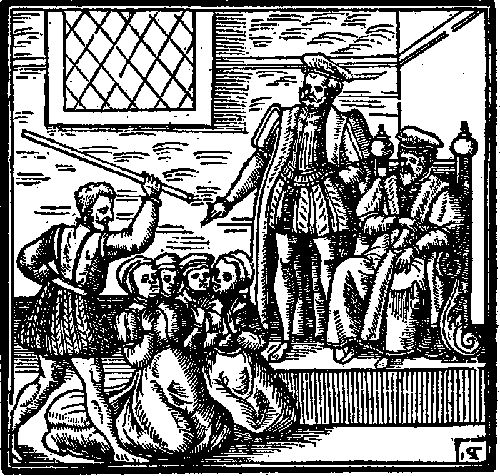
The King as the Judge: Suspected witches with Agnes Sampson kneeling before King James VI from the book Daemonologie (1597). He himself oversaw the trial and ended up sentencing many to be burnt as witches.
The Storm of Contrary Winds
By the autumn of 1590, Scotland was deep into witch hunts, and many of those sent to trial were questioned by the King himself. Today, the city of Edinburgh and the rest of the country is riddled with the memory of those who were burnt at the stake as a witch. King James VI, the son of Mary, Queen of Scots had just returned from Denmark-Norway where he had married Anne of Denmark who was only 14 at their wedding.
Witches, dragons and ghosts, Edinburgh castle are said to have it all. The sound of bagpipe and drummers can be heard without anyone playing, and those accused for witchcraft as well as prisoners of wars are said to haunt the old castle.
The Danish court at this time was extremely wary of all things black magic and witchcraft. The fear of demons and witches had tightened the European continent and it was probably a fear that the Scottish King James adapted and brought back as well after spending time there.
The King of Scotland was impatient awaiting his bride from Denmark to cross the seas after the wedding to stay by his side, but on her voyage to Scotland the fleet experienced heavy storms and ended up starting not only one, but two major witch trials that ended in several executions.
A Series of Unfortunate Events
So how did a simple midwife like Agnes Sampson get accused of something that happened all the way over in Denmark? To this we have to go through the Danish court and the witch trials that happened there before it started in Scotland.
Peder Munk of Estvadgård was a Danish navigator, politician and ambassador and in charge of carrying the fleet of 18 ships with Anne of Denmark to Scotland to bring her to her throne by her King. They set out on their voyage in 1589 from Copenhagen and were riddled with bad fortune, taking years to reach their final destination.
First they had to stop in a port in Norway to repair a leaking ship and had to stay there for a very long time, on their way to a very impatient king. When they reached The River Forth in central Scotland a ferry boat collided with one of the vessels in a storm and all of the passengers drowned. This was all attributed to witchcraft.
Back in Denmark, the navigator Peder Munk blamed it all on witchcraft, especially on a certain woman whom he had insulted and believed to be the main witch behind the storms. This became the beginning of the Copenhagen witch trials, which ended in executing 17 people by burning.
This inspired the King to hold his own trials, and it would be known as the North Berwick Witch Trials, and Agnes SAmpson was one of the main accused.
Accused of Witchcraft
More than a hundred suspects were arrested in North Berwick, several of them confessed during torture and named other people. Agnes Sampson was accused by Gillis Duncan, another one of the accused.
Duncan was really the one that linked the other accused of causing the storms that ended up sinking the Queens ships. She worked as a servant and confessed after torture that she was a witch and there were several more. The reason she was accused herself was that she was far too skilled of a healer in her master David Seton’s mind who also thought that Duncan had been sneaking out at night.
Agnes Sampson ended up being one of the more significant accused persons, as an elderly and respected woman that had healed more than one in the local area. Many attributed their good health to her good work. Now, they all turned on her because of the rumors and her unfortunate circumstances. The fact that she was a widow with children and acted as an independent woman and educated midwife was a part of the indictment against her. She had also been accused of witchcraft and investigated before.
Witches Sabbath: According to the accusers, Agnes Keith and the rest of her witch coven had met up and created a storm to keep a ship from Denmark arriving to Scotland, carrying Anne of Denmark.
The Wise Wife of Keith was imprisoned and put to torture for a long time before saying anything. She started off refusing to confess at first, but after a long time in the dark and in pain, she as the rest of the accused gave up.
In the end she was brought before King James VI himself and a council of nobles at the Palace of Holyroodhouse. Sampson denied all the charges, but they kept torturing her until she said otherwise. Her head and body hair were shaved and she was pinned to the wall of her cell with a witches bridle. This was a torture instrument with four sharp prongs pressed into the mouth, meant to humiliate as well as hurt the ones wearing them.
She was forced to stay awake with no sleep in her cell with a rope around her head, always reminded just how close to death she really was. And in the end, how freeing that prospect must have seen compared to the torture she went through.
Finally, after all that torture, Agnes Sampson confessed to whatever they asked of her in front of her own king who oversaw the trial. In all she confessed to 53 indictments against her, including attending a Sabbat she led and that she was indeed a witch with supernatural power she used to harm others with.
According to her testimony, she ended up saying she made a charm that caused a storm that ended up drowning Jane Kennedy. She sank a dead cat with parts of a dead man into the sea near Leith. The same charm she used to threaten the King and his wife on her voyage.
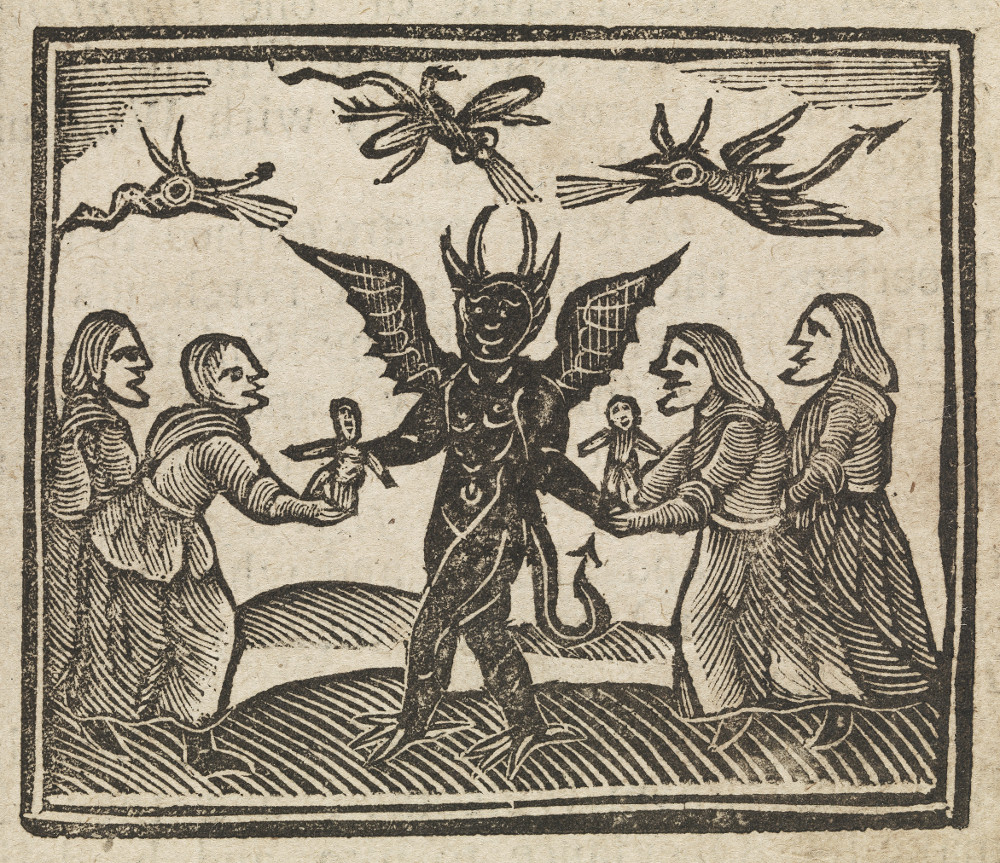
In League with the Devil: Depiction of the Devil giving magic puppets to witches, from Agnes Sampson trial and North Berwick Witch Trials where she and many others ended up being burnt as witches in 1591.
It was her last testimony that was her downfall in the King’s eyes. In it, she disclosed things he and his wife had on their wedding night in Oslo. A conversation she had no way of knowing:
“Item, the said Agnes Sampson confessed before the Kings Majesty sundry things which were so miraculous and strange, as that his Majesty said they were all extreme liars, whereat she answered, she would not wish his Majesty to suppose her words to be false, but rather to believe them, in that she would discover such matter unto him as his majesty should not any way doubt of. And thereupon taking his Majesty a little aside, she declared unto him the very words which passed between the Kings Majesty and his Queen at Oslo in Norway the first night of their marriage, with their answer each to other: whereat the Kings Majesty wondered greatly, and swore by the living God, that he believed that all the Devils in hell could not have discovered the same: acknowledging her words to be most true, and therefore gave the more credit to the rest which is before declared.”
— News from Scotland
Execution and Haunting
King James was allegedly not completely convinced of Agnes Sampson guilt until her last confession. After it however he changed his mind and sent her to be burned. On 28th of January 1591 she was taken to the scaffold on Castlehill where she was garroted before being burnt at the stake.
Although the exact numbers of the executions are hard to be certain of, it is estimated that around 1500 people were killed as witches by the state of Scotland during this time.
Agnes Sampson’s naked ghost is said to roam the castle grounds, bald headed roaming around the Palace of Holyroodhouse.
Step into an ancient castle filled with darkness and stories that will send shivers up your spine of murder and ghosts. Inside the old Château de Châteaubriant there are tales of ghost processions on October 16.
Step into the eerie and mysterious Château de Châteaubriant, a magnificent 15th century castle and one of France’s most haunted sites. Enter its dark and imposing halls originally constructed as a defense against Anjou and the Kingdom of France, laden with dark secrets, to experience an unforgettable journey through time. Learn about its chilling legends, hidden secrets, and unsettling specters that linger in the shadows.
History of the Château de Châteaubriant
The Château de Châteaubriant was first constructed in the 11th century, but was heavily modified during the Renaissance which the architecture bears marks of.
It was taken over by the French during the Mad War after a siege. Over the centuries, it changed hands many times – from its aristocratic owners, to prisoners of war during the revolution, and back again.
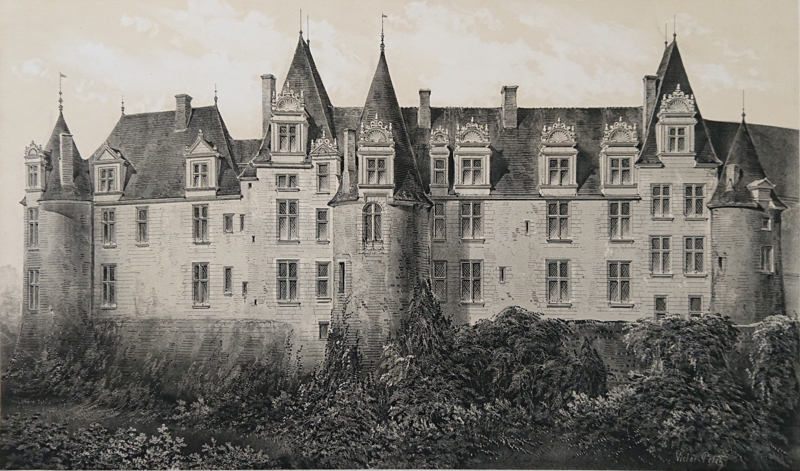
Château de Châteaubriant: drawn by artist Victor Petit in 1871. Already at this point the history of Château de Châteaubriant was old and steeped in legend . It is also said that ghost are walking the halls of the castle every year on October 16th.
Sybille the Shocked Ghost
One of the most famous legends behind the Château de Châteaubriant’s rumored hauntings is that of Sybille, wife of Geoffroy IV.
Geoffroy IV of Châteaubriant went on crusade to the holy land in the 1250s with King Saint Louis where he was jailed in Egypt after the battle of Mansourah and the entire French army was destroyed by the plague. His death was announced to the Châteaubriant and his wife.
Sybille, often named Sibylle de la Guerche de Candé started to mourn the death of her dead husband. He wasn’t dead however, and was released from prison and returned to his home and wife a couple of months later. When Sybille saw him again, she fell into his arms and died of the shock.
She is said to haunt the Château de Châteaubriant at times, but the real haunting is said to be done by the infamous Françoise de Foix, the main mistress of the King of France that did not bear the same loyalty to her husband as Sybille.
The Ghost of Françoise de Foix
In addition to Sybille and other ghosts that are said to haunt Châteaubriant, many also believe in the spirit of Françoise de Foix. She was a tall and dark haired woman that spoke both Latin and Italian as well as writing her own poetry. All of her attributes made her a well sought after woman, and even the King wanted her.
She was engaged to Jean de Laval, count of Châteaubriant in 1505 with support of the king and queen Anne de Bretagne and Louis XII. They formally married in 1509 and lived at Château de Châteaubriant.There was a shift in the royals and the new king, Francis I, summoned Jean de Laval to court for his help in 1516.
Françoise de Foix followed him and became the lady in waiting for Queen Claude de France as well as becoming the chief mistress to King Francis I. At official events she was placed near to the royal princesses, signifying that she was La mye du roi, or the Sweetheart of the King to the rest of the court.
Jean de Laval was sent to fight in the Italian Wars and became Governor of Brittany in 1531. He was aware of the affair but seemed unaffected by it all when his wife remained the King’s mistress for over a decade.
Françoise de Foix was rejected from court in 1525 when the young and blonde Anne de Pisseleu d’Heilly caught the King’s attention and affection. Because of this, she returned to Châteaubriant to live with her husband.
Killed by her husband Jean de Laval
She died on 16th of October in 1537, most likely of sickness are we to believe some. There is however a different theory. It is said that her husband killed her.
Read also: This is not the only story of a ghost haunting a French castle after a woman was killed by her husband: The Prisoner of Château de Puymartin
Jean de Laval, also known as John III of Laval-Châteaubriant was according to legend, an incredibly bloodthirsty baron who killed anyone who opposed him and ruthlessly tortured his enemies.
It is said that he shut his wife in a dark and padded cell and had her killed because of her relationship with the king or something else entirely. Some even think that he locked her up and poisoned her or bled her to death slowly.
The Assassination of Françoise de Foix: The legend of her death are widespread and depicted in art. Here from a book from 1816 by Augustine Gottis.
Ghost Procession at Midnight
Some say they can still hear her weeping within the walls of Châteaubriant and others have even seen her standing near windows or atop towers in traditional 16th-century dress, but perhaps she is best known to appear in the ghost procession on her death anniversary.
Ever since then, there have been a ghost procession in the Château de Châteaubriant in honor of her death on October 16 of monks and knights slowly ascending the main stairs before vanishing. Her ghost is said to come back for this night as the procession begins at the stroke of midnight.
Stirling Castle keeps the dramatic events of Scotland’s history as it stands firmly on the castle hill. Just beware of seeing ghosts in all colors, whether it is the Lady in Green, the Pink Ghost Lady or The Woman in Black.
Stirling Castle sits atop a dramatic hill in the heart of Scotland and has been a witness to centuries of battles and royal drama as it stands on an important crossroad through Scotland and has been attacked no less than 16 times.
The castle has also seen many kings and queens come and go and has been a place of crowning them, including Mary, Queen of Scots who held her coronation there in 1542.
Black, green, pink and white, the ghosts of Stirling Castle come in them all, each of them bearing a different story and meaning if you spot them in the old castle. Beyond tales of human history, the castle is shrouded in ghostly legends of mysterious figures that have been seen during dark nights.
The History Of Stirling Castle
Stirling Castle is an ancient royal fortress located in the city of Stirling, Central Scotland. Built within a dramatic volcanic plug commanding the route north into the Scottish Highlands, the castle was once an impenetrable stronghold of power and influence for Scotland’s monarchs.
Stirling Castle is a unique and grand castle, boasting an impressive history dating back to the 12th century. Castle Hill as it is built on has had some type of fort built on it since Roman times, perhaps settled even earlier, as far back as the 600s.
Stirling Castle: Is the old castle in Scotland really haunted? According to the rumours, it is more than one ghost said to wander the haunted castle even today.
The architecture of the castle reflects its changing history; striking evidence of its evolution can be seen in the stone walls and turrets that surround it. Visitors to the castle can explore four levels of magnificent stonework designed by Robert Adam, from a Great Hall and Chapel Royal to guard towers and residential quarters.
Is Stirling Castle Really Haunted?
Many believe that the strange apparitions and ominous sounds are signs that Stirling Castle is truly haunted and not only by one ghost, but by many. Over the years, numerous visitors have encountered mysterious sightings or felt a presence of some kind while visiting this ancient monument.
Read More: Check out more Haunted Castles from all over the world.
Whether or not these accounts can be trusted is up for debate, but there’s no denying the castle’s long and formidable history makes it a perfect place for paranormal activity.
The Green Lady at her Queen’s Service
Legends of Stirling Castle tell tales of many spooky specters haunting its walls. One of them is referred to as the Green Lady with many stories trying to name her. She is thought to be the daughter of a Commander of the fortress that threw herself from the Elphinstone Tower because her father separated her from her lover, a common soldier and shot him dead.
The most retold legend though is that the Lady in Green could be one of the servants to Mary Queen of Scots who worked there when Mary returned to Scotland in 1562 after spending two decades in France after her husband Francis died.
A Highlander girl was sent to serve her, and many claim she was gifted with the Second Sight and could foretell the future. The servant girl had seen something in her dreams and stayed with the Queen and had a bad feeling that something wasn’t right.
When the Queen was sleeping in her chambers her bed curtains went up in flames because of a candle on her bedside. This part is an actual event that happened. According to the legend though, the servant went straight for the flames and lost her life when saving the Queen.
Still Fortelling Tragic Events
There have been countless sightings of her over the years, both by visitors and staff that have stayed in the Castle. When she has appeared, she has frightened the people stiff, as not only is seeing a ghost a scary thing, but her sightings are also said to be a bad omen.
The Lady in Green: Although there are many variants to the legend, the most told one is that the ghost is that of a former servant that died in the flames while protecting her queen. It is thought that seeing her is a bad omen.
One evening the chef was preparing dinner at the garrison in the Officer’s Mess when he felt like someone was watching him. He turned around and saw a see through green shape in front of him and he fainted from fear.
Usually seeing the Green Lady is a bad omen and often she has been seen right before things like a fire or deaths on the castle has occurred, just like how she perished.
The Pink Lady in the Kirkyard
The ghost of the pink lady can be seen outside of the castle as she is walking to the church next door in her flowing pink dress. The Church of the Holy Rude at Ladie’s Rock was a place court ladies went to watch the knights in jousting tournaments.
People have speculated that the Pink Lady is actually the ghost og the only survivor after the castle became under siege in 1304 by Edward I. She escaped the siege and returned to the castle after only to find her husband who starved to death.
The Lady in Pink: Who could this mysterious woman in pink be, and why is she still haunting the castle?
It has also been speculated that it could be Mary Queen of Scots herself that is said to haunt the castle.
A third option of who this pink lady can be is the Widow Witherspoon. She was an old townswoman who died in 1823 and her corpse was robbed from her grave by the Resurrection Men to be sold to surgeons for further studies.
The Steps on the Battlements
In the 1820s there used to be castle sentries that made their rounds on the battlements around the Governor’s Block. When they were walking they reported about hearing mystic sounds and seeing unexplainable things.
One night a sentry was making his way to start his shift when he saw the guard he was replacing dead on his post. His mouth was wide open and his eyes had the look of pure fear and shock. Some say that he ended up meeting the gaze of the woman in green, something legend tells can be deadly.
Ever since then, even after the guards stopped patrolling on the battlements you could still hear footsteps from it as if the sentry was still making his rounds.
The Lady in Black on the Back Walk
The Lady in Black is a mysterious figure that is seen roaming on the Back Walk that circles the Holy Rude graveyard. She is thought to perhaps be the ghost of a nun that is looking to reunite with her secret lover, a priest as the legend goes.
Because of her mortal sin, her ghost is thought to be dangerous and said to bring death if you meet her gaze.
The Ghost in the Kilt
Can you see the man in kilt?
There have also been spotted a male ghost wearing a traditional Highland kilt. Many have mistaken him for a tour guide working at Stirling Castle and are shocked when he just turns and passes through the wall.
The ghost of the man in the kilt is often seen walking around the corner and disappearing through the wall near a dungeon of Stirling Castle. Back in the day, there used to be a door there, but today it is bricked up and just a solid wall.
The ghost has been talked about in the more modern times as it was allegedly caught in a photograph. In 1935 the Highland ghost is said to have been pictured by an architect, when he was planning for some upcoming building work of the castle.
It must be said that many of the people that owned the picture of the supposed ghost that they claimed could be seen in the picture and passed it around as a ghost picture, was known to be fond of practical jokes.
Still, the mystery and intrigue of the picture has kept the story of the lonely man in kilt alive at Stirling Castle.
Watch out for the Harbinger of Misfortune
As centuries passed and the castle stood as a symbol of Scotland’s resilience, the ghosts came to understand the importance of their presence. The Lady in Green, the Pink Ghost Lady, The Woman in Black, and the other spectral figures were not simply omens of tragedy, but reminders of the castle’s enduring spirit.
Through their ethereal presence, the ghosts sought to protect the castle from any harm that may befall it. They would appear before devastating fires, revealing themselves as a warning and allowing enough time for the flames to be extinguished. The tragic stories of their origins served as cautionary tales, ensuring that history would not be repeated.
Over time, the castle staff and visitors learned to respect and honor the ghosts, recognizing their role as custodians of Stirling Castle. Instead of fear and superstition, they felt a sense of gratitude for the protection and connection to the past that the apparitions provided.
So, if you happen to visit Stirling Castle and catch a glimpse of a ghostly figure in black, green, or pink, remember to show respect and gratitude. For they are not harbingers of misfortune, but eternally loyal guardians of Scotland’s past, ensuring that the legacy of Stirling Castle lives on for generations to come.
Along the Grand Canal in Venice there is this gothic palace called Palazzo Ca’Dario. For centuries the owners have met an unfortunate end and today it is most known as the most cursed palace in Venice.
Taking a walk in Venice’s narrow streets or from a boat on the shallow canals, there are many spectacular buildings towering over the shallow canals. Each with its long and sometimes dark history.
One of these wonderful buildings is the small, but exquizit palace in Venetian gothic style named Ca’Dario on the Canal Grande. It has a marvelous facade of Istrian stone and is decorated with marbles and medallions.
Read More: Check out all of the ghost stories from Italy
Palazzo Ca’Dario is often for sale, it is said though, as the owners don’t seem to linger for too long in this place, something that doesn’t happen very often in Venice. But for this particular palace, there is a very particular reason for its vacancy. According to local venetians, the place is cursed and has been for centuries.
The Palazzo Ca’Dario is often called the house that kills and is today, perhaps one of the most famous cursed houses to this day. The owner that takes up residence in the palace will soon after meet a violent death or at least live to be ruined.
The Dario Family
For evidence for this legend, or perhaps more accurately, the reason for this legend behind Palazzo Ca’Dario, is the track record of owners that died in horrific ways or lost all of their fortune, tracing back to the 16th century to modern day.
According to legend, it all started with the daughter of Giovanni Dario. Giovanni Dario was the Secretary of the Senate of the Republic of Venice and built Palazzo Ca’Dario in the 15th century. On the facade of the palace there is an inscription that reads Urbis Genio Joannes Darius, meaning Giovanni Dario to the Genius of the City.
His daughter Marietta Dario was the first person to have died in a horrible way. After her husband Vincenzo went bankrupt and in some variation of the story, stabbed to death, she fell into a darkness she didn’t manage to climb out from. She committed suicide it that very palace her father built. Not long after their son followed after being murdered in Crete by assassins.
The Curse Continues to this Day
Since then there have been over 10 dramatic deaths connected to the owners of Palazzo Ca’Dario, and even people like Woody Allen, who considered buying the house, refused after he heard about the curse of the house. The owners don’t necessarily have to live in the palace to be struck by the curse, they simply have to buy it.
The Barbaro family was one of the families that lost all of their fortune shortly after they bought the place.
In 1842, an Englishman named Radon Brown lost all of his money as well and committed suicide together with his male lover after their romantic relationship were revealed. A very similar fate fell upon the American Charles Briggs who were accused of being gay living their. Together with his lover, they fled to Mexico, but his lover died by suicide.
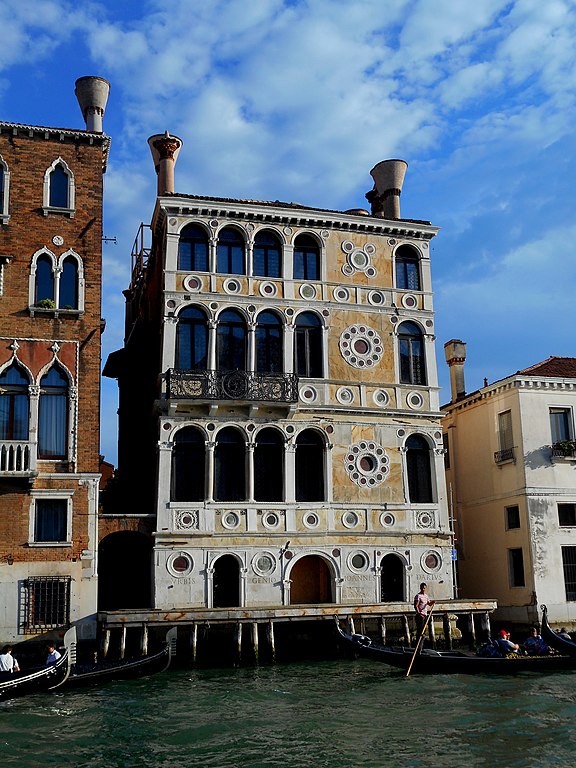
The Cursed Palace: Palazzo Ca’Dario as it is today along the Grand Canal in Venice. For so many centuries it has been considered to be one of the most cursed places in the entire city of Venice as the owners have often met an unfortunate end.
The French poet Henri de Régnier lived there until he was so seriously ill he had to return back to France. The manager of The Who, Christopher Lambert was also one of the owners that seemed to get ill after purchasing the house in the early 1970s.
In 1979, Fillippo Giordano delle Lanze, a count from Turin was killed by his lover inside the palace. His lover, a Croatian sailor fled to London were he in turn was murdered.
In the 1980’s a financier named Raul Gardini bought the place. He was later found guiltu of being implicated in the Tangentopoli government corruption scandal and committed suicide in 1993.
The Reason Behind the Curse of Palazzo Ca’Dario
Why is Palazzo Ca’Dario so cursed you asked? There are several legends to it. Some claim it is from the original death of the daughter of Dario that is still echoing as a curse in the building, some say it is a building built on top of an old Templar cemetery or built on a crossroad.
Perhaps, there is more to say about who can afford to live in a palace in the first place, and how far they fall when they lose everything.
There is noted however by people that the inscription on the facade praising the builder of Palazzo Ca’Dario to mean something completely different as an anagram. Sub ruina insidiosa genero, meaning I bring treacherous ruins to those who live under this roof.
The Palazzo Ca’Dario on the Canal
As the sun sets over the shimmering waters of the Grand Canal, a sense of foreboding surrounds Palazzo Ca’Dario. The legacy of tragedy and misfortune that has plagued its owners for centuries continues to cast its dark shadow upon the palace. The curse, intertwined with the very fabric of the building, has become an indelible part of Venice’s history.
Despite the tales of doom and the cautionary whispers of locals, there are always those who are drawn to the enigmatic allure of Palazzo Ca’Dario. Through the years, the curse has claimed its victims with ruthless precision. Lives lost, fortunes squandered, and dreams shattered. The hallways echo with the silent cries of the past, a testament to the insidious nature of the curse that has plagued this cursed palace.
Legends and theories abound, attempting to unravel the origins of the curse. Is it the tortured spirit of Marietta Dario, unable to find peace after her tragic demise? Or does the curse stem from a darker force, buried deep within the ancient foundations, waiting to consume those who dare to call it home?
Perhaps one day, the curse will be broken, the darkness lifted from this ill-fated palace. But until then, Palazzo Ca’Dario remains a testament to the fragility of human existence, a haunting reminder that some places are best left to the whispers of legends and the pages of history.
An online magazine about the paranormal, haunted and macabre. We collect the ghost stories from all around the world as well as review horror and gothic media.