Tag Archives: drown

The Haunting of Pounder’s Beach: The Lost Spirits of Hauula

Advertisements

It is said that a mother and her son are haunting Pounder’s Beach and the waters. After the ocean took their lives, you can still hear their cries coming in with the pounding waves.

Pounder’s Beach on the windward side of Oahu, is known for its stunning scenery with the white sand and turquoise water and the powerful, pounding waves that give the beach its name. Locals simply call it Pounders, although it is going to be called by their traditional names, Pahumoa Beach. 

Read More: Check out all ghost stories from the USA

Popular among bodyboarders, surfers, and skimboarders, this coastal paradise between the towns of Hauula and Laie offers excitement and beauty. However, beneath its idyllic surface lies a darker, more eerie legend that continues to haunt the area: the tale of a mother and her child, whose spirits are said to linger at the beach.

The Haunted Pounder’s Beach

On the Hauula side of Pounder’s Beach, locals and visitors alike have reported hearing the cries of a child echoing through the night on the empty beach. People have also reported on seeing a woman wandering the waters. These ghostly apparitions are believed to be the spirits of a mother and her son who met a tragic end on a stormy night. 

Pounder’s Beach: Wally Gobetz/Flickr

The shorebreak can be very strong all year round, particular during the winter months. The story goes that the mother watched in horror as her young son was pulled under by the relentless surf. Desperate, she called out to a nearby surfer for help, but her screams were drowned out by the roar of the waves. With no one able to come to her aid, she bravely dove into the turbulent waters in a futile attempt to save her child, only to be claimed by the sea herself.

The Mother and Son Haunting Pahumoa Beach

So is the beach haunted, or is it simply people’s way of warning surfers and people swimming in the ocean to be careful?

Visitors have recounted eerie experiences near the remnants of an old foundation, believed to be the remains of a former house where the family might have lived. Some have heard the faint sound of a child’s cry carried on the wind, while others have felt an unseen presence or witnessed ghostly reflections in the water. The soft sound of footsteps, seemingly without source, can often be heard nearby. Perhaps the most scary part of the legend is how it is said that the mother will take you if you look like her child. 

Newest Posts

References:

Two of Lāʻie’s Beaches Will Be Restored to Original Names | Hawai’i Public Radio 

https://tripcheats.com/25-haunted-places-oahu

Shadowlands Haunted Places Index – Hawaii 

The Witches of the Drowning Pool on Mackinac Island

Advertisements

At the height of the witch hunts, seven Mackinac Island women were taken to trial for witchcraft. During the trial by water, all of them drowned and are now haunting the water that took their life. But how much of this elaborate ghost story is really true? And what lurks in the Drowning Pool said to be haunted by them?

In the glistening waters of Lake Huron between Michigan’s Upper and Lower Peninsulas, Mackinac Island is a serene retreat known for its picturesque beauty, historic charm, and an eerie reputation for the supernatural. In fact, Mackinac Island was called the most haunted town in America in 2021, with many stories having been covered over the years. And with only a full time population of around 583 people, the ghosts perhaps even outnumber the living. 

Read More: Check out all ghost stories from the USA

With no cars allowed and transportation limited to bicycles and horse-drawn carriages, the island offers a unique step back in time. Some come to enjoy the quiet seaside and enjoy the famous fudge. The island has become a perfect summer destination for Americans, but after the tourists leave in the fall, the fog from the Straits comes rolling in, and the leaves turn color, the ghost of the island remains to haunt it. 

The Drowning Pool: Said to be haunted by witches, what is the truth beneath the tales of the haunted lagoon?

A Brief History of Mackinac Island

Mackinac Island’s history stretches back thousands of years, with indigenous peoples such as the Odawa, Ojibwe, and Huron considering it a sacred place long before European settlers arrived. The island’s name itself, derived from the Ojibwe word “Michilimackinac,” means “big turtle,” referring to the island’s shape when viewed from above.

Read more: Check out all ghost stories from Mackinac Island

The French established a fur trading post here in the 17th century, and the island later became a strategic military outpost during the Revolutionary War and the War of 1812. In the late 19th century, it became more of a summer colony and a tourist destination that it still is. 

The Drowning Pool

One of the most macabre stories comes from the island’s Drowning Pool, a small, seemingly innocuous body of water near the shore between Mission Point and downtown Mackinac with an ominous sounding name. Stories keep coming back about this water, told among people before finally reaching online, sometimes going viral on storytimes. 

There is plenty of lore around this little lagoon. Natives were known to have used this place for rites and rituals in the 18th century, a young native girl died there after her love for a British soldier went unrequited. According to legend she is still lingering by the pool, looking for her long lost love. Perhaps most telling is the legend that during the 1700s or early 1800s, seven women accused of witchcraft were drowned here. 

A lot of these legends would be hard to prove, but surely a huge witch trial like this would have been talked about more. Just how much of the legends are true, and is this little pool of water really haunted?

The Legend of the Seven Witches in the Drowning Pool

Back then, Fort Mackinac was a huge deal and there were a lot of brothels popping up around them. Seven of these women were said to entice the soldiers at the fort, the fur traders, as well as other’s husbands and luring them back to their house. 

One of the big tests they used on accused witches back then was the trial by water, or witch swimming test. They tied them up and threw them into the water to see if they floated or not. According to the saying, the water would repel any witches and make them float, as an direct intervention of God to show they were guilty. There are also those tying the connection water has with Jesus and his baptism and rejecting the witches from the water. If the accused sank, they were innocent. In both cases it could be a sure way to die. 

Indicium Aquae: Although not as often used as popular media will have you to believe, there were actual cases were the Trial by Water or indicium aquae’, was used to find witches. James I of England, stated in his writing in the Daemonologie (1597) “that God hath appointed … that the water shall refuse to receive them in her bosome, that have shaken off them the sacred Water of Baptisme, and wilfully refused the benefite thereof.” Here from: The ‘swimming’ of Mary Sutton (1615). The last time a suspected wizard being ‘swum’ by a mob, was in The Headingham witchcraft Case on March 15th 1864,

In this story, all women got rocks tied around their ankles and thrown into the lagoon. All seven women sank and drowned, proving their innocence, but taking their life. 

Read More: Check out all ghost stories about witches

Ever since then, the Drowning Pool has been cursed by the lingering souls of the witches. Some say that they see their pale faces in the water under moonlight, or strange lights dancing over the water surface. In addition to the haunting of the Drowning Pool itself, the apparition and chilling feeling is also said to happen along or nearby Dennis O. Cawthorne Shoreline Trail.

What is the Truth Behind the Witch Trials?

But what is really true? The witch hunt was already pretty much over by the 1700s and such a big case like this would probably have garnered more sources than an abridged and vague story copy and pasted around the internet. 

In regards to the brothel side to the story, there is not much evidence or documentation that there ever existed brothels on Mackinac Island, at least any official ones. Was there prostitution? Almost certainly. Were there seven women luring men back to their home for witchcraft? More unlikely. 

But could the brothel mention just have been added as an afterthought to spruce the story up, or perhaps even the allegations? After all, not every retelling has this part with it. 

Was the pond even there back then? In fact, some say the pool of water didn’t’ exist then, but is of a more modern origin. Formed in the 90s and perhaps even the 2000 when the people behind tourism and development on the island have molded the land into their liking. Like knocking down several buildings to make a golf course and bistros to cater to the tourist. This created deep ponds formed from the resort areas to the rocky shoreline of Lake Huron. 

The Haunting of the Drowning Pool

Although there were no witches drowned there, could it be something else? What really is behind the stories of the sightings of the spirits lurking just below the surface of the Drowning Pool, only leaving us with the splashing sound of the deep murky water. 

More like this

Newest Posts

References:

Shedding Light on the Spirited Stories from Mackinac Island’s Mission Point – Promote Michigan

https://www.thehorrordome.com/blogs/news/from-soldiers-to-spectral-maidens-the-haunted-chronicles-of-mackinac-island?srsltid=AfmBOootX-dmsVR6t_j1cCuR-t8coTIMxuDL1sEWlV2GRa-TcS7iN3X3

Mackinac Island’s Witch Killing Drowning Pool, Is It Real?

At the Water’s Edge: The Witches Drowing Pool — Travelers Moon

Sink or Swim: The Swimming Test in English Witchcraft 

Swimming a Witch: Evidence in 17th-century English Witchcraft Trials | In Custodia Legis

La Llorona the Mexican Weeping Woman Ghost

Advertisements

Along the rivers in Mexico a wailing woman wearing white can be seen and heard as she comes up drenched from the waters. She is desperately looking for her children she herself drowned. And according to the legends of La Llorona or the wailing woman, you are next.

“The scariest part was not that La Llorona was a monster, or that she came when you called her name three times in the dark, or that she could come into your room at night and take you from your bed like she’d done with her own babies. It was that once she’d been a person, a woman, a mother. And then a moment, an instant, a split second later, she was a monster.
– Jaquira Díaz’s 2019 memoir, Ordinary Girls

This Mexican legend is one of the more well known, international as well now, as the movie came out a while back. But she has been around for centuries, a legend so well known it is now more or less an important part of the Mexican heritage and culture as well as in the Chicano Mexican community of the US.

Read Also: Check out all of our ghost stories from Mexico

La Llorona is Spanish meaning the weeping woman, or the wailer. She is perhaps a bit older than most think as well. The origin of the legend can have roots as far back in the Aztec legends and being one of ten omens foretelling the Conquest of Mexico and has also been linked to Aztec goddesses like Cihuacōātl.

Cihuacōātl was one of a number of motherhood and fertility goddesses. She was also the mother of the hunting God Mixcoatl, whom she abandoned at a crossroads. Tradition says that she often returns there to weep for her lost son, only to find a sacrificial knife. This story can help us understand why sometimes the story of La Llorona sometimes is set on a crossroad, not a long a river or some form of water.

The most common lore about La Llorona is about how she was being an Indigenous woman who murdered her own children, which she bore from a wealthy Spaniard. The villainous qualities of La Llorona have also been connected to the stories about Doña Marina, also known as La Malinche, or Maltinzin. She has been portrayed as a scheming woman who betrayed her people when she assisted the conquistadors and bore their children.

The Dangerous Wailing Woman in White

As well as finding similarities to the old Aztec mythology as well as working as an allegory about “betraying her own people”, the legend of La LLorona is something we can find similarities to all across the world. The story has also the ring of ‘White Woman’ often found in European legends as well as Greek mythology stories like with Jason and Medea, a scorned woman, killing her children when her man betrays her.

The weeping woman: A wooden cutout in the shape of La llorona. She has a white veil over her and is placed on the island la llorona in the channels of Xochimilco in Mexico.

Read Also: The Lady in White in Zitadelle Spandau or The Haunting of The House of Hohenzollern are all ghost stories featuring the trope of the lady in white haunting a place.

The difference between the European trope of the Woman in White ghost is that La Llorona are often described as being more dangerous to those encountering her than her European counterpart. This makes her more like the vengeful spirits we often read about in Asian ghost stories as with the Japanese Onryo or the Korean Virgin Ghost for instance.

The story of La Llorona takes many turns and has today many variations. The ghost of La Llorona, the wailing ghost woman appears in crossroads, by lakes or rivers, on the road and has many variations. Even if she is most well known as a Mexican folktales there are other variation of the stoghost story in other South American countries as well like in Guatemala and Venezuela.

Read Also: The Legend of La Sayona or La Descarnada of the Highway for more stories about dangerous female ghosts found in Latin American folklore.

And as the history of Mexico, with its changes and social unrest, the story of La Llorona has followed closely behind, reshaped to fit the narrative of the time. Therefore, we will relate one of these variations and one of the common one told in the modern era.

The Story of La Llorona

The most told version of the story of La Llorona is set in a small village in Mexico, were a young woman lived. As mentioned she is often portrayed as an indigenous woman. Her name was Maria and came from a poor family. She was known in the village for her beauty, but will be remembered as La Llorona, the weeping woman. A tragic club to be in.

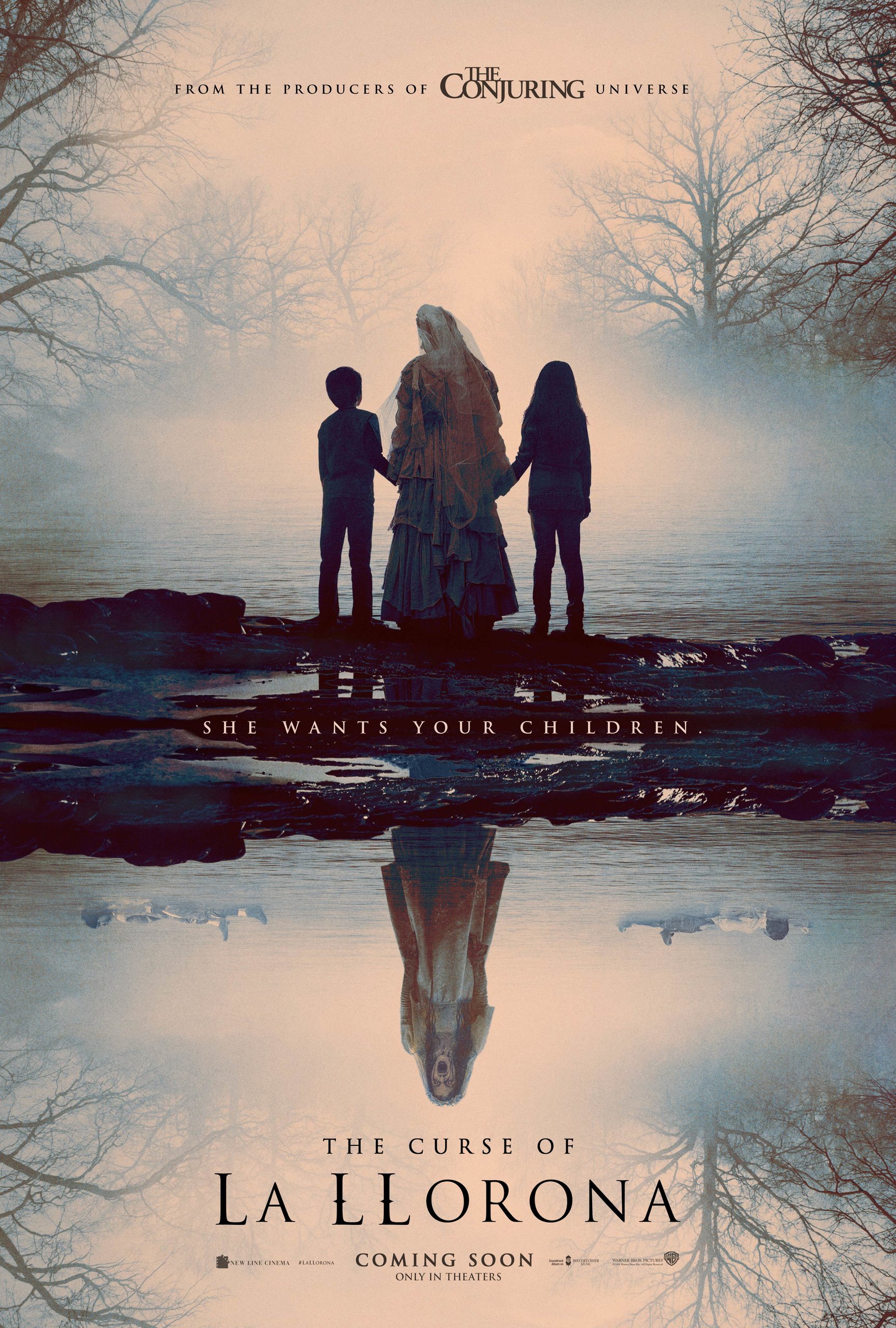
The Curse of La Llorona: The Tragic tale of the woman who drowns her children because her man abandoned her has been made into a movie many times. Here from the 2019 movie, the Curse of La Llorona//Source IMDB

One day, a very wealthy man came passing through town. DEpending to when the story is set, he was a Spanish conquistador or a wealthy rancher. He stopped when he saw the beautiful Maria and approached her. She was charmed by the wealthy man and when he proposed, she accepted at once. Maria’s family was overjoyed that their daughter would marry into a rich family and have a chance at a better life. But the father of this wealthy man however, was deeply disappointed at his sons choice of bride and didn’t approve of their marriage.

They chose to ignore the disapproving father and Maria and her now husband built a house in her town to get away from his judgmental father. Time went by and Maria gave birth to two twin boys. A seemingly happy marriage and life from the outside.

But not everything was rosy colored as it seemed. Her husband was always travelling and almost never spent any time with the family. When he was home, he only spent time with the boys, and Maria knew he no longer loved her and she started to fear that he would leave them.

Read Also: There are many ghost stories about women being left by their lover. Like The Ghost on Emily’s Bridge, The Grey Lady of Stavern at Hotel Wassilioff or the ghost of Chaonei No. 81 — Beijing Horror House

One day the husband went away and never returned. Many years went by but they didn’t hear from him and they didn’t even know if he were living or dead. Still, there seemed to linger a faint hope in Maria, that he someday would return to them and they would once again be a happy family.

Maria and her boys was out walking along a river one day when the faint hope she had been carrying came crashing down. A carriage was pulled by and to her greatest shock she saw her once husband sitting in it. By his side a much younger and beautiful woman sat and it was clear that he had abandoned them for good.

Maria was furious and desperate as her world fell apart and she could no longer fool herself. Without thinking she picked up her two boys and threw them in the river, drowning them in a fit of rage, of desperation and perhaps even a horrible psychosis. Only after she saw the floating bodies of her now dead sons she realized what she had done. She jumped out after them to die with them. Now she spends rest of eternity on the hunt after her children along that river.

The Haunted Rivers and Dangers of her Ghost

Doomed to linger in purgatory for her sins, she haunts the place were she committed her crime. Exactly where this place is differs as the legend about her ghost now has gone into the cultural sphere and is more like an entity in itself than just a singular ghost.

It is said that is you hear the crying of La Llorona close to rivers or other forms of water, you must run the opposite way as she is known for being a dangerous ghost to encounter, still mad and filled with rage that will harm you.

In some variation of the legend the children were illegitimate children, and she murdered them so that they wouldn’t get taken away from her and be brought up by another woman the father was legally wed to. In any versions though, the legend about La Llorona invokes pity for her fate as well as fear for her actions.

The Danger of La Llorona: The story of La Llorona tells about a woman who murdered her children when her husband abandoned her. Now she haunts the rivers and are a danger to those encountering her.

According to the legends, she still calls after her children “ay, mis hijos” and is said to be on a hunt for her children like she doesn’t remember what happened to them, still unable to accept what she did. It can bring bad luck, even death if you hear her cries.

If you are pregnant, you must be extra careful of her because La Llorona is attracted to children and wants them to join her. Therefore children should not walk alone along rivers and she has become some sort of cautionary tale to keep them away from the dangerous waters.

It is said that in some versions of the story, she kidnaps kids that are reminding her of her own and asks for their forgiveness. Then she murders them to take the place of her own.

La Llorona in Popular Culture

Although the legend about La Llorona is an old one, it is still an iconic figure to feature in books, movies and songs. There she differs from being a misunderstood female ghost to a full on evil spirit that are out to harm people.

In movies there have been made stories about her since the 1930s, mostly horror movies, and it even got its own spin off in James Wan’s The Conjuring Universe in 2019.

The popular folk song called La Llorona that were popularised in 1941, was also included in the Pixar movie Coco in 2017. So it’s safe to say that the legend about the wailing woman still lingers in the Mexican and US cultural sphere and fears of her ghost doesn’t seem to fade away anytime soon.

More like this

Newest Posts

References:

La Llorona – Wikipedia 

Cihuacōātl – Wikipedia

The Wailing Woman | History Today