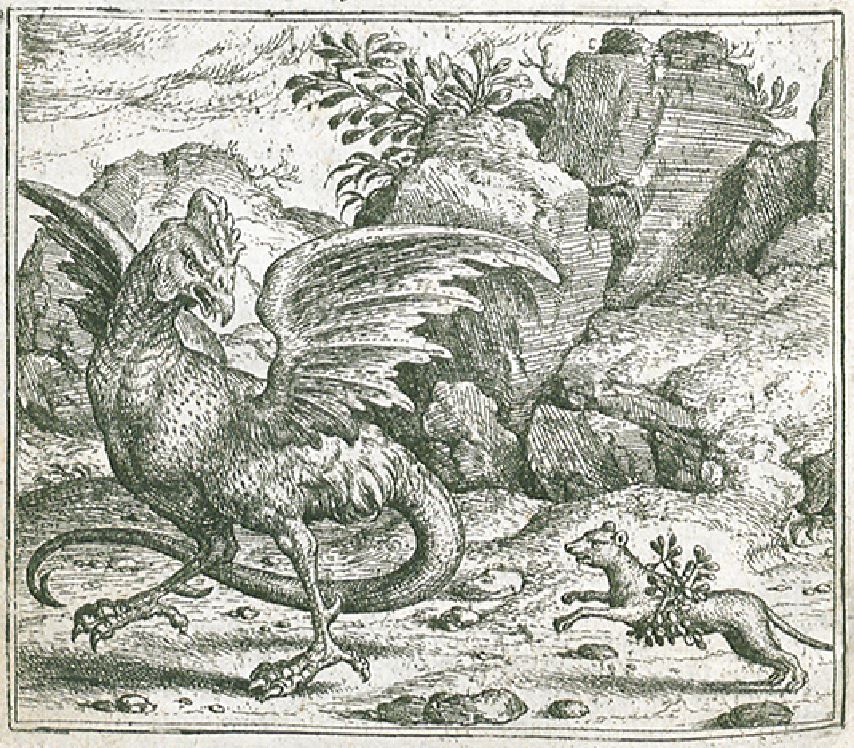
A particular violent ghost from Icelandic ghost stories was called The Hörghóll-Móri. Once a drowned man, he was raised from the dead to be sent on a revenge mission to kill a certain farmer. And legend goes, he didn’t stop until he succeeded.
A man named Jón, son of Símon, lived at Hörghóll in Vesturhóp village. He had a son named Kristján, who was a grown man when this story took place. The hill called Hörghóll can translate into “shrine hillside” and might have been a place of worship for the pagans. In any case it became the location for a violent haunting some centuries ago.
Read more: Check out all ghost stories from Iceland
One summer Jón the farmer hired a laborer from west of the glacier, named Ívar, and paid him his wages in the autumn. The laborer thought the pay was meager and poorly handled, but there was no changing it. The next winter, Jón’s son Kristján went fishing under the glacier and stayed at the same farm where Ívar was living. One winter’s day, Kristján’s mittens disappeared and could not be found despite much searching. Kristján accused Ívar of causing their disappearance and struck him hard across the face. Ívar took it seemingly calmly and said, “It will be bad for you if I neither repay that blow nor the wages.”
In spring Kristján returned home to Hörghóll and stayed with his father the following winter unaware of the plans Ívar had put in motion. Early that winter, many boats were lost under the bay by the glacier and many lost their lives. One day Ívar was walking by the sea where he found a drowned man washed ashore. Some say that the man was only half dead
He cut off one of the man’s arms and raised the dead man back as a revenant, as a Móri. He commanded him to go north to Hörghóll. “What am I to do there?” asked the revenant. “Kill the farmer’s son Kristján and give no one peace at the farm,” said Ívar. Then the ghost vanished and went to follow his new master’s command.
The Undead in Icelandic Folklore
A Móri is a male ghost in Iceland. When a male is raised from the dead for such a purpose like vengeance, he is not called a fylgja or draugr ghost, but a Móri. Often the term Fylgja ghost was used interchangeably with the Draug ghost. The female version of this vengeful ghost was called Skotta. Móri means rust brown in Icelandic and the ghosts were named so because of the color of their clothes.
Icelandic Ghosts and Ghouls: Fylgja or the draugr ghosts attached themselves to people that they haunted. They could also attach themselves to buildings or even entire towns. Many stories also talk about it being a generational haunting where the ghost decides to haunt all of the descendants of the original person it cursed. Most often the female line of the family. // An illustration to the Icelandic legend of the Skeleton in Hólar Church (Beinagrindin í Hólakirkju). From Icelandic Legends : Collected by Jón Arnason, illustrated by Jules Worms.
That evening the ghost came north to Hörghóll, where the lamps were lit. Kristján sat on a bed opposite the entrance to the living room, eating his evening meal from a wooden bowl. They heard something climbing onto the roof outside. Suddenly, Kristján hurled his bowl away and collapsed onto the floor, and all the lamps went out. They tried to relight them with tinder with a wax candle, and succeeded; this time the light held and they saw the horror before them.
A brownish boy crouched over Kristján as he lay on the floor, but he had only one arm. The ghost glared at the light with dreadful eyes and drew back when the people approached. Kristján then leapt to his feet in a frenzy. An old woman at the farm, named Vigdís, was able to stop him from going after him. Kristján now told about his quarrel with Ívar the winter before, and said Ívar must have sent this haunting against him.
The Hörghóll-Móri Haunting Kristján
At Böðvarshólar, the next farm over, lived a farmer known as a wise man, as many were in those days. Kristján was sent there to be kept safe from the ghost. While he stayed with that farmer, the ghost could not touch him for some reason.
But then the ghost began wreaking havoc back at Hörghóll, killing livestock and spoiling food. The vengeful ghost rampaged openly through the farm and grew so malicious that everyone fled except the old woman Vigdís. She said she would not bother fleeing from such “dust” and the ghost didn’t harm her. She tended the cows and they were left alone, but other farmers had to care for the sheep, and the ghost preyed upon them. This lasted until the days grew longer and the nights lighter, at which time the sheep-killing ceased.
Now the people sought advice from the priest at Breiðabólstaður about what to do. The priest advised that everyone return home at Easter; he himself would come then and hold household devotions to see how matters stood.
Fighting the The Hörghóll-Móri
On Easter Monday the people returned, and the priest came, bringing with him the farmer from Böðvarshólar. The priest began to read, but when he finished the gospel, the ghost attacked the house so furiously that the beams creaked. The priest stopped reading, and he and the farmer from Böðvarshólar went outside. They saw the ghost moving about; he avoided them and drew back.
They pursued him up to the ridge above the farm, called Kjölur. There they caught him and wrestled with him for a while. They could not subdue him entirely, but after that he was much diminished and did no harm, so that people could live at the farm again.
It is also said that the The Hörghóll-Móri weakened after his encounter with a man called Þórður the Strong at Bjarnastaðir. It is said that they fought all night and tore apart a new bridge. Þórður could not get a hold of The Hörghóll-Móri anywhere because he was most like a tangled woolen fleece. Þórður was never the same after that.
Kristján, the farmer’s son, returned home and lived there many years, married, and took over Hörghóll after his father. He could never be left alone, for the ghost always pursued him. Once he was alone on a journey and was later found dead on Vesturhópsvatn, the lake near Hörghóll.
People attributed his death to the power of the ghost. Since then, the ghost has harmed no one, though people have often thought they saw him, and those from Hörghóll have often been troubled.
Where history whispers and shadows reign, the Rathaus in Bern is said to be haunted by a myriad of ghosts. Who are the ghosts lingering in the City Hall after dark?
The two adjoining cloisters by Basel Cathedral are said to be haunted by a couple of spectres entombed within the building. In the darkness of Basel’s Double Cloister, it is said you can hear the moaning of a man slowly suffocating and feel the unsuspected slap from a man, as mean in death as he was in life.
A lock keeper from the adjacent lock next The Portobello Bar in Dublin is said to be haunting it. Ever since his mistake cost the lives of someone crossing, he is said to be lingering in the area.
In an old sanatorium in Switzerland the ghost of Hermann is said to have been haunting for ages. But who was he when he was alive, and what was his true name before he died in the remote fortress up in the mountains? And is he still haunting the old halls where he never made his recovery?
After his master died at sea, the faithful dog was by his master’s grave, day in and day out. After dying of hunger and grief it is said that the Newfoundland dog is still seen, slipping between the graves at Glasnevin Cemetery in Dublin.
Once, the city of Bern was filled with nuns working and living inside of the city walls. According to ghost stories though, some of them remained, even after the Reformation that closed their convents down. And those stories tell about them being guilty of terrible things with terrible ends.
Seeking new land and a new life, the Salladay family went to Ohio, but brought a silent killer with them: Consumption. Falling into odd superstitions, they believed the only way to stop the disease was to stop the undead from rising from their graves.
Is Cell Number 11 in the former prison for the criminally insane haunted? The attic of the Norwegian Justice Museum in Trondheim, Norway has had many who come out, claiming so.
Now a place you can rent and stay at, the Beck House in Canada is said to be one of the more haunted places. Those who have stayed the night come back with stories of strange encounters, believed to be the ghost of the Beck family members.
Where the Nydegg Church is today, there once used to be a castle. Tales about ghosts lingering around the old Nydegg Castle and the stairs leading up to it still roams. And one of the more infamous and feared ghosts of Bern is the Burgträppe-Balzli.
The Haunted Ruins of Beaupre Castle in Wales is one of the places in Wales said to have been haunted by the wailing spirit and deadly omen of the The Gwrach y Rhibyn, also known as the Hag of Mist.
It is said a cross shows up in the window of the Iveagh House in Dublin, the former home of the powerful Guinness family. Legend has it’s a haunting that happened after a maid was denied her last rites in the house.
After insulting some Dutch fishermen, a ghost was sent to torture the local women in Eyjafjörður in Iceland. For a long time, The Eyjafjörður Skotta was said to have been behind several deaths of both cattle and people.
Along the longest fjord in Iceland, all the way north, there was a ghost that got her named from the place she was roaming. Her name was Eyjafjörður-Skotta.
Read more: Check out all ghost stories fromIceland
It is said that some Dutchmen came ashore at Vöðluþing by the fjord. German, Dutch and French traders became more prominent in the mid-17th century for fishing business. The Dutchmen were, according to the stories, very bold and went after the local women. Something that the women themselves did not care for at all. One of the women then mocked them with gestures and possibly some curses, which angered them greatly and made them want revenge.
When they later returned overseas, they purchased from a sorcerer the sending of a female ghost to Iceland. According to the story this happened in the Netherlands, however, the way it went about in the stories is very quintessentially an Icelandic haunting where they raise someone from the dead to send on a revenge mission. This is where the Skotta ghost comes in.
Fylgur/Fylgja: The Old Norse Ghost
There were many different types of ghosts in Norse mythology and that the vikings believed in. One of them was the Fylgjur or Fylgja ghost, or Attending Spirits that we can find traces back in Iceland since the 12th century. These were originally a ghost of a very physical substance that interacted with the real world as if they were a part of it still.
Read Also: Check out theIrish Fetch ghost, that has a huge resemblance to the norse Fylgja.
Fylgja attached themselves to people that they haunted. They could also attach themselves to buildings or even entire towns. Many stories also talk about it being a generational haunting where the ghost decides to haunt all of the descendants of the original person it cursed. Most often the female line of the family. Perhaps because of its origin as a female spirit.
Icelandic Ghosts and Ghouls: Fylgja or the draugr ghosts attached themselves to people that they haunted. They could also attach themselves to buildings or even entire towns. Many stories also talk about it being a generational haunting where the ghost decides to haunt all of the descendants of the original person it cursed. Most often the female line of the family. // An illustration to the Icelandic legend of the Skeleton in Hólar Church (Beinagrindin í Hólakirkju). From Icelandic Legends : Collected by Jón Arnason, illustrated by Jules Worms.
In the Fylgjur stories from the middle ages, the spirits could be a beneficial one, almost like a messenger to help with the person’s path of life, some sort of totem animal or guiding spirit. But when the folklorist of Iceland started collecting old oral tales from farmers in the 17th century, the Fylgjur ghosts had drastically changed from its pagan old norse roots, throughout time, religious belief and superstition.
One thing that really changed was the Fylgjur’s purpose of haunting the living, and it was rarely to be of any help. Many stories talk about how they were wronged and it caused their death. They then came back to take revenge and were dangerous, even deadly.
Female Icelandic Ghosts
One of the popular names for the female ghosts was Skotta that really means to dangle, like hair or a tail. This comes from the traditional Icelandic headwear women wore together with the Faldbúningur dresses worn since the 17th century. Except the ghosts are said to have the headgear on backwards so it streams behind her like a tail.
The Skotta Ghost: Icelandic woman in the 18th century faldbúningur with the spaðafaldur cap that the Skotta often are described wearing.
Skotta falls under the Old Norse Mythology of a Fylgja, that were supernatural spirits that followed or latched onto people. They could be animals, they could be goddesses or come in dreams.
But the tales of the Fylga evolved and when we read about Skotta, they were not like totem animals or someone coming with your prophecy like in the old sagas. Icelandic ghosts are often described as being not like apparitions, but in real flesh that interacted with the living. And when we read about Skotta, the female version, she was highly dangerous and also deadly.
The Eyjafjörður Skotta Haunting the Fjords
The ghost the Dutchmen raised was called Eyjafjörður Skotta because of her haunting territory. She was to kill and torment all the women in Vöðluþing. It is said that she first came ashore at Sauðanesi on Upsaströnd, a stretch of coastline west of Eyjafjörður.
Today Sauðanesi is a deserted farm and has been since 1957. But in between 1597-1680 Þorvaldur the poet Rögnvaldsson lived there. He was considered a very learned man and was watching when the Skotta came ashore. Some, however, have heard that it was then Þorvaldur the old Magnússon who lived there, not very long before, and both were called poets of spells and much learned; but more people reckon it was Þorvaldur Rögnvaldsson.
Þorvaldur was down by the sea when he saw this ghost approaching, while the Dutch were fishing out at sea. She appeared as a woman in foreign dress, with a red peaked cap and bare arms up to the elbows. Þorvaldur addressed her in verse and asked who she was and what her errand might be. She said she was Flemish (others say Finnish) and that her task was to torment or else kill all the women in Eyjafjörður.
He managed to stop her from harming the women, but she was so powerfully conjured that Þorvaldur could not prevail entirely against her. He was forced to allow her to kill his best cow, and in addition to kill a cow on every third farm in Eyjafjörður, and to play other tricks upon men and livestock for a long time. She was also said to have been behind the murder of a drowned man in the Eyjafjörður River.
Where history whispers and shadows reign, the Rathaus in Bern is said to be haunted by a myriad of ghosts. Who are the ghosts lingering in the City Hall after dark?
The two adjoining cloisters by Basel Cathedral are said to be haunted by a couple of spectres entombed within the building. In the darkness of Basel’s Double Cloister, it is said you can hear the moaning of a man slowly suffocating and feel the unsuspected slap from a man, as mean in death as he was in life.
A lock keeper from the adjacent lock next The Portobello Bar in Dublin is said to be haunting it. Ever since his mistake cost the lives of someone crossing, he is said to be lingering in the area.
In an old sanatorium in Switzerland the ghost of Hermann is said to have been haunting for ages. But who was he when he was alive, and what was his true name before he died in the remote fortress up in the mountains? And is he still haunting the old halls where he never made his recovery?
After his master died at sea, the faithful dog was by his master’s grave, day in and day out. After dying of hunger and grief it is said that the Newfoundland dog is still seen, slipping between the graves at Glasnevin Cemetery in Dublin.
Once, the city of Bern was filled with nuns working and living inside of the city walls. According to ghost stories though, some of them remained, even after the Reformation that closed their convents down. And those stories tell about them being guilty of terrible things with terrible ends.
Seeking new land and a new life, the Salladay family went to Ohio, but brought a silent killer with them: Consumption. Falling into odd superstitions, they believed the only way to stop the disease was to stop the undead from rising from their graves.
Is Cell Number 11 in the former prison for the criminally insane haunted? The attic of the Norwegian Justice Museum in Trondheim, Norway has had many who come out, claiming so.
Now a place you can rent and stay at, the Beck House in Canada is said to be one of the more haunted places. Those who have stayed the night come back with stories of strange encounters, believed to be the ghost of the Beck family members.
Where the Nydegg Church is today, there once used to be a castle. Tales about ghosts lingering around the old Nydegg Castle and the stairs leading up to it still roams. And one of the more infamous and feared ghosts of Bern is the Burgträppe-Balzli.
The Haunted Ruins of Beaupre Castle in Wales is one of the places in Wales said to have been haunted by the wailing spirit and deadly omen of the The Gwrach y Rhibyn, also known as the Hag of Mist.
It is said a cross shows up in the window of the Iveagh House in Dublin, the former home of the powerful Guinness family. Legend has it’s a haunting that happened after a maid was denied her last rites in the house.
From poltergeists, ghostly monks, nuns and knights as well as a procession of skeletons, some of the most haunted places in Basel, Switzerland are said to be centuries old. Let’s have a closer look at some of them.
Beneath Basel’s charming medieval streets, vibrant culture, and picturesque riverbanks lies a darker, more unsettling layer of history—one whispered about in hushed tones and kept alive through ghost stories passed down for generations. As one of Switzerland’s oldest cities, Basel is steeped in centuries of war, plague, and religious upheaval, leaving behind more than just ruins and gravestones. From restless spirits in ancient cloisters to poltergeists in quiet apartments, this city is home to eerie legends that refuse to fade and some of the most haunted places in Basel.
The Restless Spirits of Kleines Klingental: Basel’s Haunted Nunnery
Museum Klingental Basel: The old nunnery is said to be haunted by the sinful nuns that used to live there, centuries ago and one of the most haunted places in Basel.// Source: Mikatu/Wikimedia
The former Dominican cloister of Kleines Klingental in Basel, once a house of piety, became a notorious retreat for wealthy, noble-born nuns whose lives allegedly strayed far from monastic vows. Rumors of secret lovers, drowned infants, and defiance of church authority plagued its reputation.
After the Reformation, the cloister was turned into military barracks, where soldiers reported chilling hauntings: ghostly nuns praying, wailing, and wandering the halls in sorrow, still seeking forgiveness for their sins. Today, the site houses the Kleines Klingental Museum, but tales persist of phantom nuns, flickering lights, and shadowy figures that suggest the past has yet to release its grip on this once-sacred ground.
In the heart of Basel’s Old Town, the Spießhof Building harbors the chilling legacy of David Joris, a 16th-century Dutch Anabaptist preacher who fled persecution only to meet a gruesome fate after death. Living under a false name, Joris built a secret life in Basel before his heretical beliefs were posthumously revealed. In a dramatic act of vengeance, his corpse was exhumed, beheaded, and burned—an attempt to erase him from salvation. Since then, his headless ghost, often seen with two eerie black dogs, is said to haunt his former home. Mediums and witnesses claim he won’t rest until his name is cleared, cementing his place as one of Basel’s most enduring and unsettling phantoms.
The Restless Gatekeeper of the Rhine Gate in Basel
In 17th-century Basel, a troubled gatekeeper at the Rhine Gate lost his beloved young daughter when she drowned in the river, a tragedy he witnessed but was too drunk to prevent. Consumed by grief and guilt, he later died—likely by suicide—and was denied burial in consecrated ground beside her at St. Martin’s Church. Instead, he was interred among outcasts at Klingental.
Yet his spirit found no rest; legend holds that his ghost still haunts the churchyard, silently keeping vigil by his daughter’s grave, a spectral figure glimpsed beneath the moonlight, forever bound by sorrow and denied peace.
The Ghostly Monk of Spittelsprung (Münsterberg) in Basel
Back at a time when the hills of Münsterberg were called Spittelsprung in the old parts of Basel, Switzerland, a haunting tale emerged about a spectral monk. This ghostly figure would glide silently through the streets, frightening children while immersed in silent prayers, oblivious to the living around him.
He was often seen illuminated faintly by candlelight, engrossed in his breviary, and indifferent to the fear he instilled in children watching from the shadows. Only when confronted by an adult would he vanish, leaving behind the scent of candle wax.
The reasons for the monk’s haunting remain a mystery—was he a victim of the plagues, seeking penance for sins, or perhaps a witness to grim events? The story of another haunting monk from the 1626 poorhouse adds to the intrigue, where travelers would watch in terror as he glided through their rooms.
Knightly Ghosts Haunting St. Johanns-Vorstadt by the Rhine River
In Basel’s St. Johann district—once home to the medieval Commandery of the Knights of St. John—ghostly legends linger beneath the modern apartments now standing there. Once filled with crusader knights and sod wells, the area was long haunted by the phantom of an armored rider galloping through the Ritterhaus courtyard, ghostly apparitions of a pale-faced man, a cloaked lady, and even a spectral white dog. Most chilling were the cries of a child said to echo from the depths of an old well.
Though the original knightly buildings were demolished by 1929 and archives lost, eerie sightings and stories continue to haunt the district, keeping its haunted past alive and still considered one of the most haunted places in Basel.
The Knocking Ghost of Utengasse 47: Basel’s Poltergeist Case
Utengasse 47: Considered to be one of the most haunted places in Basel
In 1929, a small apartment at Utengasse 47 in Basel’s Kleinbasel district became the center of one of Switzerland’s most infamous poltergeist cases. What began as unexplained knocking sounds soon escalated into terrifying disturbances that seemed to center around a ten-year-old boy named Marcel.
Despite multiple investigations by police, doctors, and even spiritualists, no source for the strange rapping and chilling atmosphere could be found. Marcel’s intense reactions and the persistence of the disturbances, even under observation, only deepened the mystery. As public anxiety mounted, the Basel authorities took the unusual step of ordering the apartment vacated—an extraordinary measure during a housing shortage. Though the building still stands today, no further incidents were reported, and the haunting remains an unsolved and eerie chapter in the city’s folklore.
The Restless Dead Buried Inside of Basel’s Double Cloister
The Double Cloister of Basel Minster, a serene courtyard by day, is said to transform into a haunting ground by night, echoing with the restless spirits of those entombed within its ancient walls and said to be one of the most haunted places in Basel. Among them are two infamous specters: Emanuel Büchel, a respected artist and baker believed to have been buried alive, whose ghost moans and wheezes beneath the stone floors; and Master Tailor Schnyyder Hagenbach, a cruel man in life whose malevolent spirit is said to slap unsuspecting passersby without warning.
Once a sacred site filled with altars and later a cemetery for the city’s elite, the cloister has long been steeped in death and memory. Though modern life carries on just beyond its arches, many locals still avoid the cloisters after dark, wary of the unseen hands and the whispered echoes of Basel’s darker past.
Mirroring the famous Dance Macabre mural that used to hang near the Predigerkirche in Basel, legend claims that plague victims buried in the nearby grass will rise in a ghostly procession to warn the living of impending disasters.
In Basel’s old town, a haunting memory of the plague remains, as thousands perished indiscriminately during the Black Death. The city’s dark history is marked by the rapid deaths caused by the disease and the need for mass graves, particularly around the Predigerkirche.
The Dance of Death mural, painted in the 15th century, depicted skeletal figures leading both the rich and poor alike in a dance, emphasizing that death spares no one. Though the mural was dismantled in 1805, it became a legend, claiming that the dead rise in times of danger.
Local lore states that the plague victims buried near the Predigerkirche do not rest peacefully. When Basel faces calamity, they are said to rise and march in a spectral procession through the streets, symbolizing death’s universal reach, uniting all in decay regardless of their former status.
The Dream of the Basel Rhine Bridge about the Buried Treasure
The Emmental: is a valley in west-central Switzerland, forming part of the canton of Bern, mostly made up by farmers and known for its cheese and pottery. Rafrüti is mostly known for being the place where the first and second latest meteorite was found in Switzerland.
The tale of “The Dream of the Basel Rhine Bridge” tells of a poor farmer from the Emmental who dreams of finding gold at the Mittlere Brücke in Basel were the bridge is considered one of the most haunted places in Basel. After several nights of the same dream, he decides to make the journey to Basel, where he searches for the treasure on the bridge without success. A policeman, noticing his distress, shares a dream about treasure in Rafrüti, prompting the farmer to return home. He digs in his kitchen and uncovers a pot of gold with the help of a mysterious black figure, appearing like a ghost to him.
The figure offers him three piles of gold to choose from but warns him to decide wisely. Instead of choosing, the farmer combines the piles and vows to share the wealth as he sees fit. The figure then disappears, and the farmer’s family lives in comfort thereafter, proving that the bridge indeed brought him fortune.
The Gray Ghost of Claraplatz: Kleinbasel’s Neighborhood Spirit
The Gray One, a haunting spirit, is said to linger around houses in Kleinbasel, Switzerland, especially in the now-demolished Abbess’ Court. The ghost was not confided into a single home, and was one of the more famous ghosts in the city and Abbess’ Court one of the most haunted places in Basel. This eerie ghost, dressed in traditional Franconian garb, particularly troubled the Schetty family in the 19th century, appearing in their daughters’ bedroom and causing unsettling disturbances throughout the house.
The ghost would often retreat to the attic, creating loud noises that disturbed the family. To keep the ghost away, locals painted a pentagram at the house’s threshold, but it’s unclear if this truly worked. After the death of Joseph Schetty, the family patriarch, his ghost was also reportedly seen in the house. Despite the Abbess’ Court being demolished in 1951, legends of haunting phenomena persisted in the area, with reports of phantom footsteps and sightings of a gray figure near the old foundations.
The Evil Eye of Rebgasse: Curses, Shadows, and an Exorcism in Basel
Haus Zur Alten Trotte: The haunted house on Rebgasse 38 in Basel, was said to have had an exorcism twice and considered to be one of the most haunted places in Basel. // Source: Laloom/Wikimedia
The Kleinbasel neighborhood in Basel, Switzerland, is known for its haunted history, particularly at Rebgasse 38. This house, also known as the Haus zur alten Trotte, was home to many ghostly encounters, including spirits associated with a former couple who lived there from 1888 to 1907. Two main ghosts were reported: Grethi Beck, a former maid who was believed to have the Evil Eye, and the deceased wife of Pastor Johann Jakob Übelin, who returned as a ghost after his infidelity.
Despite attempts by local clergy to suppress belief in hauntings, the presence of these spirits persisted, prompting the famous exorcist Johann Jakob von Brunn to be called upon. He successfully banished Grethi Beck’s spirit, though sightings of her continued, and the haunting by Übelin’s wife also lingered until she was expelled.
Although the hauntings ceased, the house retained its ghostly reputation, and the location of Rebgasse 38 is now a kindergarten. The tales of the hauntings continue to live on through local folklore and ghost tours, suggesting that the shadows of Kleinbasel’s past may never fully fade.
Ghosts of the New Moon: The White Death and the Restless Shadows of Basel
Markgräflerhof Palace: An engraving of the Markgräflerhof Palace from 1845 were the White Death was said to roam and being one of the most haunted places in Basel.
In Basel, the ghost known as Weisse Tod, or The White Death, haunts the area around the historic Markgräflerhof building. This terror manifests during the new moon when the veil between the worlds is said to thin, prompting the city’s restless spirits to rise. Locals believed that every new moon, The White Death would emerge from a nearby hole, peering into homes with its dark eye sockets, and those who met its gaze would soon fall ill, as if marked for death.
The Markgräflerhof, built in the early 1700s, was once tied to various rumors, including the suggestion that its haunting is linked to the building’s past as a hospital or an asylum. Compounding the legend, tuberculosis was often referred to as The White Death, possibly intertwining fears of disease with ghostly lore.
Additionally, another ghost appears at an old urban fountain near the Rhine, a man in dark garments whose presence evokes mystery and sorrow, believed to be a soul lost to the river. Each new moon, the church bells toll extra hours to ward off restless spirits, but even as modernity transforms the city, the supernatural aura persists, suggesting the new moon still belongs to the dead in Basel.
The Basilisk of Basel: The Beast Beneath Gerberberglein
Beneath the quiet street of Gerberberglein in central Basel, legend tells of a deadly basilisk—a mythical creature part serpent, part rooster, with a gaze so lethal it could kill. Said to have lived in a cave beneath the city, the beast terrified locals until a brave apprentice used a mirror to turn the creature’s power against itself. Though the cave was sealed long ago, the basilisk lives on in Basel’s identity, with its fearsome image adorning fountains and railings throughout the city.
From spectral knights riding through vanished courtyards to sorrowful moans echoing in cathedral cloisters, Basel’s haunted places are more than just eerie tales—they are echoes of a city that remembers its dead. Whether rooted in history, folklore, or something stranger still, these stories remind us that even the most beautiful places can hide unsettling secrets. So if you ever find yourself wandering Basel’s narrow alleys at dusk or standing alone on the Mittlere Brücke under a full moon, don’t be surprised if the past comes whispering. After all, in Basel, the line between the living and the dead is thinner than you think.
Where history whispers and shadows reign, the Rathaus in Bern is said to be haunted by a myriad of ghosts. Who are the ghosts lingering in the City Hall after dark?
The two adjoining cloisters by Basel Cathedral are said to be haunted by a couple of spectres entombed within the building. In the darkness of Basel’s Double Cloister, it is said you can hear the moaning of a man slowly suffocating and feel the unsuspected slap from a man, as mean in death as he was in life.
A lock keeper from the adjacent lock next The Portobello Bar in Dublin is said to be haunting it. Ever since his mistake cost the lives of someone crossing, he is said to be lingering in the area.
In an old sanatorium in Switzerland the ghost of Hermann is said to have been haunting for ages. But who was he when he was alive, and what was his true name before he died in the remote fortress up in the mountains? And is he still haunting the old halls where he never made his recovery?
After his master died at sea, the faithful dog was by his master’s grave, day in and day out. After dying of hunger and grief it is said that the Newfoundland dog is still seen, slipping between the graves at Glasnevin Cemetery in Dublin.
Once, the city of Bern was filled with nuns working and living inside of the city walls. According to ghost stories though, some of them remained, even after the Reformation that closed their convents down. And those stories tell about them being guilty of terrible things with terrible ends.
Seeking new land and a new life, the Salladay family went to Ohio, but brought a silent killer with them: Consumption. Falling into odd superstitions, they believed the only way to stop the disease was to stop the undead from rising from their graves.
Is Cell Number 11 in the former prison for the criminally insane haunted? The attic of the Norwegian Justice Museum in Trondheim, Norway has had many who come out, claiming so.
Now a place you can rent and stay at, the Beck House in Canada is said to be one of the more haunted places. Those who have stayed the night come back with stories of strange encounters, believed to be the ghost of the Beck family members.
Where the Nydegg Church is today, there once used to be a castle. Tales about ghosts lingering around the old Nydegg Castle and the stairs leading up to it still roams. And one of the more infamous and feared ghosts of Bern is the Burgträppe-Balzli.
The Haunted Ruins of Beaupre Castle in Wales is one of the places in Wales said to have been haunted by the wailing spirit and deadly omen of the The Gwrach y Rhibyn, also known as the Hag of Mist.
It is said a cross shows up in the window of the Iveagh House in Dublin, the former home of the powerful Guinness family. Legend has it’s a haunting that happened after a maid was denied her last rites in the house.
Deep in the heart of the Swiss Alps, the enchanting yet eerie Lötschental Valley harbors a chilling tradition that has captivated and terrified generations. Known as the Tschäggättä, these fearsome, fur-clad figures emerge from the shadows of snow-laden forests during the dark, cold months of winter. Combining ancient folklore with theatrical spectacle, the Tschäggättä embody the primal fears and superstitions of a bygone era.
Deep within the isolated Lötschental Valley of the Swiss Alps, amid snow-laden forests and frostbitten villages, lurks a chilling winter tradition few outside of Switzerland have heard of: the Tschäggättä. These grotesque, fur-clad figures prowl the narrow streets during the coldest, darkest months of the year — a living echo of ancient Alpine superstitions and forgotten fears.
The Origins of the Tschäggättä
Though no one can say exactly when the tradition began, written references to the Tschäggättä date back to the 19th century, with local authorities at times attempting to ban the custom due to its rowdy and unsettling nature. Way back, this used to be one of the poorest regions of Switserland. The first written record dates back to 1860, when prior Johann Baptist Gibsten banned the use of masks during carnival.
However, folklore scholars suggest the practice is far older, a survival of pre-Christian beliefs in malevolent winter spirits that roamed the mountains when the sun was weakest. The second theory links the Tschäggättä to the demonic figures that appeared in ecclesiastical Baroque theatre.
In earlier centuries, the Alpine winter was an unforgiving season of darkness, hunger, and death. Isolated valleys like Lötschental often felt cut off from the world, and stories of spirits, witches, and vengeful phantoms were common. The Tschäggättä became a way to personify these fears — and perhaps to ward them off.
Wooden Masks: The oldest Lötschental wooden mask still in existence from 1790-1810. // Source: Lötschental Museum; Deposit Swiss National Museum
The Schurten Thieves
The best-known legend of the origins of the Tschäggättä is the legend of the Schurten thieves from the middle ages. In the shady forests on the opposite side of the valley once resided the legendary Schurten thieves. They were thieves who lived on the shady side of the valley and disguised themselves to plunder farms on the sunny and richer side of the valley.
Even today, their farmsteads can still be recognised, particularly clearly visible on the Giätrich, in the “Obri Wald” forest opposite the village of Wiler.
At nightfall, they went on the prowl in wild disguise with masks on. It was said that the Schurten thieves did not accept anyone into their ranks who was not able to jump over the Lonza with a load of a hundred pounds.
The Appearance of the Tschäggättä
Each Tschäggättä is immediately recognizable by its disturbing appearance. The figures wear heavy animal furs, typically from goats or sheep, to shield them from the brutal cold. Most terrifying, however, are the wooden masks they don — hand-carved, each unique from Swiss stone pine, and featuring grotesque, distorted faces with exaggerated noses, glaring eyes, twisted mouths, and long, matted hair.
Read More: Check out all ghost stories and haunted legends from Switzerland
Some masks resemble demons or monstrous old men, while others are bestial and almost supernatural in form. The craftsmanship of these masks is a source of local pride, with some families passing them down through generations.
The Ritual and Terror of Carnival Nights
The Tschäggättä emerge during Fasnacht — the Swiss pre-Lenten Carnival season, typically in February. from Candlemas until “Gigiszischtag” (i.e. the Tuesday before Ash Wednesday) with the traditional Lötschental carnival procession in Wiler, on the Saturday after the “feisten Frontag”. As night falls, these masked beings descend from the mountains and roam the villages of Lötschental. Carrying cowbells and sticks, they chase anyone they encounter, especially the young, and revel in causing fright.
Craftsmanship: Today there are masks made for the masses, but some of them have hours and hours of time spent carving, some being passed down in the family. Tschäggättä Masks, traditionnal wooden mask from Lötschental in Switzerland. // Source: photographed by Robbie Conceptuel
Traditionally, the Tschäggättä are adult men of the valley, though the anonymity provided by the masks has allowed even women and children to join the fray. The Tschäggättä will often burst uninvited into homes, overturn furniture, scatter hearth ashes, and steal food — an ancient ritual chaos meant to purge winter’s stagnation and welcome the coming spring.
Symbolism and Folkloric Meaning
The Tschäggättä tradition is thought to serve as a way of confronting and mastering communal fears during the most perilous season. The masks might have once represented the spirits of the dead, ancestral ghosts, or demonic forces banished by light and human defiance.
The Tschäggätä: carnival figures wander through the remote Lötschental in the canton of Valais, Switzerland, for several weeks in February, scaring the population. The costumes consist of masks made of Swiss stone pine, sheep or goat skins and cowbells. // Source
Some folklorists believe the Tschäggättä also embodied social rebellion. In a culture tightly controlled by religious and communal expectations, the anonymity of the mask allowed for a brief, sanctioned breakdown of norms — a time when men could mock the authorities, frighten neighbors, and behave wildly without consequence.
The Tschäggättä Today
While modernization has softened some of its rougher edges, the Tschäggättä remain a vital part of Lötschental’s identity. Each year, the locals still carve the terrifying masks and don the heavy furs, parading through villages in eerie processions. Today, any villager can take part, but historically, the fur-clad revelers were exclusively young, unmarried men who moved alone or in small groups during the day (save Sundays) during Carnival.
Though now mingled with festive Carnival celebrations, the primal eeriness of the Tschäggättä endures — a living link to a time when long winters meant living with darkness, death, and things unseen.
Where history whispers and shadows reign, the Rathaus in Bern is said to be haunted by a myriad of ghosts. Who are the ghosts lingering in the City Hall after dark?
The two adjoining cloisters by Basel Cathedral are said to be haunted by a couple of spectres entombed within the building. In the darkness of Basel’s Double Cloister, it is said you can hear the moaning of a man slowly suffocating and feel the unsuspected slap from a man, as mean in death as he was in life.
A lock keeper from the adjacent lock next The Portobello Bar in Dublin is said to be haunting it. Ever since his mistake cost the lives of someone crossing, he is said to be lingering in the area.
In an old sanatorium in Switzerland the ghost of Hermann is said to have been haunting for ages. But who was he when he was alive, and what was his true name before he died in the remote fortress up in the mountains? And is he still haunting the old halls where he never made his recovery?
After his master died at sea, the faithful dog was by his master’s grave, day in and day out. After dying of hunger and grief it is said that the Newfoundland dog is still seen, slipping between the graves at Glasnevin Cemetery in Dublin.
Once, the city of Bern was filled with nuns working and living inside of the city walls. According to ghost stories though, some of them remained, even after the Reformation that closed their convents down. And those stories tell about them being guilty of terrible things with terrible ends.
Seeking new land and a new life, the Salladay family went to Ohio, but brought a silent killer with them: Consumption. Falling into odd superstitions, they believed the only way to stop the disease was to stop the undead from rising from their graves.
Is Cell Number 11 in the former prison for the criminally insane haunted? The attic of the Norwegian Justice Museum in Trondheim, Norway has had many who come out, claiming so.
Now a place you can rent and stay at, the Beck House in Canada is said to be one of the more haunted places. Those who have stayed the night come back with stories of strange encounters, believed to be the ghost of the Beck family members.
Where the Nydegg Church is today, there once used to be a castle. Tales about ghosts lingering around the old Nydegg Castle and the stairs leading up to it still roams. And one of the more infamous and feared ghosts of Bern is the Burgträppe-Balzli.
The Haunted Ruins of Beaupre Castle in Wales is one of the places in Wales said to have been haunted by the wailing spirit and deadly omen of the The Gwrach y Rhibyn, also known as the Hag of Mist.
It is said a cross shows up in the window of the Iveagh House in Dublin, the former home of the powerful Guinness family. Legend has it’s a haunting that happened after a maid was denied her last rites in the house.
By the fantastical waterfall Foss á Síðu, south in Iceland, there are rumours about a ghost in the form of a dog that has been haunting a family for nine generations. Although the haunting of the ghost called Hörgsland-Móri started a long time ago, there are still tales about seeing him in the area.
Foss á Síðu is а historic farm in Iceland with rich history and folklore dating back to the country’s settlement erа in the 9th century. Behind the farm there is the majestic waterfall that people travel long to see. The water flow can be so thin that Foss á Síðu becomes one of Iceland’s upside-down waterfalls on a windy day. One legend around these parts is about а ghost dog named Móri. Some locals believe thаt Móri has disappeared, while others claim thаt the ghost dog still wanders аround the farm аnd waterfall.
A Móri is a male ghost in Iceland. When a male is raised from the dead for such a purpose like vengeance, he is not called a ghost, but a Móri. Often the term Fylgja ghost was used interchangeably with the Draug ghost. The female version of this vengeful ghost was called Skotta. Móri means rust brown in Icelandic and the ghosts were named so because of the color of their clothes.
Read More: Check out all ghost stories from Iceland
The ghost in Síða in Skaftafellssýsla southeast of Iceland is called the Hörgsland-Móri or Bergs-Móri. This is not because he was originally sent to Hörgsland, nor because of Reverend Bergur, the person he ended up being linked to, but because he is thought to follow the Berg family. Reverend Bergur was the last of them at Hörgsland and the ghost is said to have followed him from there. The origin of the ghost goes back further and is therefore somewhat unclear.
The Hörgsland-Móri Cursed to Haunt a Family like a Dog
It is said that there was a priest at Arnarbæli (1676–89) named Oddur Árnason. His wife was Katrín, the daughter of Reverend Jón Daðason, who had served there before him. Oddur and Katrín had at least two children, a boy and a girl named Ingibjörg. One winter, the priest had ridden across the ice, and the boy, who was very fond of his father, ran after him, fell into a hole in the ice, and drowned.
“Reverend Oddur found no joy in being there, besides other things that displeased him,” says Dean Jón Halldórsson. Both rumor and record suggest that the “displeasure” at Arnarbæli was that his wife had previously been betrothed to another man, but had broken her promise to him and chosen another. Because of this, the man she betrayed sent her a curse: a ghost in the form of a dog named Móri, who was to haunt her and her descendants to the ninth generation.
In some versions it is actually the Reverend Oddur who sends the ghost after Katrín allegedly divorced him after their son’s death where the man was never the same. Was it actually their son they raised from the dead who came back to haunt his own family?
Reverend Oddur later received the parish of Kálfatjörn south-west in the country, where he remained until his death in 1705.
The Mori Haunting his Descendants
His daughter Ingibjörg married Jón Ísleifsson, sheriff in Skaftafellssýsla (1721–26), a well known scoundrel.
Their daughter Katrín married Reverend Jón Bergsson the elder of Kálfafell in Síða, dean of the western part of Skaftafellssýsla from 1754 to 1773. It was believed that Móri caused his death, for stories claim that Reverend Jón died suddenly at Eyrarbakki.
Icelandic Ghosts and Ghouls: Fylgja or the draugr ghosts attached themselves to people that they haunted. They could also attach themselves to buildings or even entire towns. Many stories also talk about it being a generational haunting where the ghost decides to haunt all of the descendants of the original person it cursed. Most often the female line of the family. // An illustration to the Icelandic legend of the Skeleton in Hólar Church (Beinagrindin í Hólakirkju). From Icelandic Legends : Collected by Jón Arnason, illustrated by Jules Worms.
Their only son, Bergur, was later minister at Kirkjubæjarklaustur, and he also lived at Prestbakki and Foss, but in the end he was at Hörgsland, where he died and where the ghost got his most well known name.
It was said that whenever quarrels arose between Reverend Bergur and his wife, Móri was seen at the farm, and people thought he was the cause of their disputes. After the couple’s deaths, he followed their daughters; as soon as the eldest died, the next inherited him, and she soon became half-mad. He had many daughters, and Móri followed all of them, and still follows them, according to local tales.
The Fading Ghost by Foss á Síðu
The story was first written down as the ghost reached the fifth generation of the family haunting, after attaching himself to their ancestress Katrín, their great-great-great-grandmother although there aren’t many stories told about his time then.
One of the sisters, Þorbjörg, was married to a man known as the hospital-keeper. It is said that she “portioned out” food to Móri. People claimed that at holiday feasts, when she served, she would slip whole sides of mutton down by her thigh; they were never seen again, and it was believed that Móri took them all.
Before the ghost reached the ninth generation of haunting, the people of Síða said he had grown so faded that he looks from behind like nothing more than a wisp of steam. Because of this, opinions are divided as to whether he will endure as long as was foretold. There are no remarkable stories of his doing harm outside that family, but he has sometimes been glimpsed when one of their kin was on the road. He is not accused of having killed anyone for a long time, except possibly members of the family itself, and it is widely said that he caused madness among many of them.
So the question is, did he finally reach the ninth generation, or did he simply fade away?
Where history whispers and shadows reign, the Rathaus in Bern is said to be haunted by a myriad of ghosts. Who are the ghosts lingering in the City Hall after dark?
The two adjoining cloisters by Basel Cathedral are said to be haunted by a couple of spectres entombed within the building. In the darkness of Basel’s Double Cloister, it is said you can hear the moaning of a man slowly suffocating and feel the unsuspected slap from a man, as mean in death as he was in life.
A lock keeper from the adjacent lock next The Portobello Bar in Dublin is said to be haunting it. Ever since his mistake cost the lives of someone crossing, he is said to be lingering in the area.
In an old sanatorium in Switzerland the ghost of Hermann is said to have been haunting for ages. But who was he when he was alive, and what was his true name before he died in the remote fortress up in the mountains? And is he still haunting the old halls where he never made his recovery?
After his master died at sea, the faithful dog was by his master’s grave, day in and day out. After dying of hunger and grief it is said that the Newfoundland dog is still seen, slipping between the graves at Glasnevin Cemetery in Dublin.
Once, the city of Bern was filled with nuns working and living inside of the city walls. According to ghost stories though, some of them remained, even after the Reformation that closed their convents down. And those stories tell about them being guilty of terrible things with terrible ends.
Seeking new land and a new life, the Salladay family went to Ohio, but brought a silent killer with them: Consumption. Falling into odd superstitions, they believed the only way to stop the disease was to stop the undead from rising from their graves.
Is Cell Number 11 in the former prison for the criminally insane haunted? The attic of the Norwegian Justice Museum in Trondheim, Norway has had many who come out, claiming so.
Now a place you can rent and stay at, the Beck House in Canada is said to be one of the more haunted places. Those who have stayed the night come back with stories of strange encounters, believed to be the ghost of the Beck family members.
Where the Nydegg Church is today, there once used to be a castle. Tales about ghosts lingering around the old Nydegg Castle and the stairs leading up to it still roams. And one of the more infamous and feared ghosts of Bern is the Burgträppe-Balzli.
The Haunted Ruins of Beaupre Castle in Wales is one of the places in Wales said to have been haunted by the wailing spirit and deadly omen of the The Gwrach y Rhibyn, also known as the Hag of Mist.
It is said a cross shows up in the window of the Iveagh House in Dublin, the former home of the powerful Guinness family. Legend has it’s a haunting that happened after a maid was denied her last rites in the house.
Could Junkerngasse be the most haunted street in Bern? From a former monastery that used to be here, locals complained for a long time about the haunting of a monk who committed a sin so grave that neither his body, nor his soul ever left.
Beneath the elegant façades of Bern’s Junkerngasse and its parallel Gerechtigkeitsgasse, now known for its stately houses, flagstone walks, and commanding views of the Aare, lies a buried past of devotion, downfall, and damnation.
Read More: Check out all ghost stories from Switzerland
In medieval times, this street, then called Kirchgasse or Church Lane, was the sacred artery of Bern’s religious life. It wound past chapels, cloisters, and courtyards belonging to powerful abbeys. Among these was a quiet but significant property: the Frienisberghaus, the urban residence of the Cistercian monks of Frienisberg Abbey, who came to the city on church business or for rest.
But for centuries after the Reformation, the house was shunned, whispered about, and eventually torn down. It was said to be haunted by a monk, one who carried a sin so grave that death could not bring him rest.
Junkerngasse: Known as one of the most haunted streets in Bern perhaps. A street with a long history, with a new street built on top of what used to be there. Here you se number 57, 55, 53, 51, 49. // Source: Tilman2007/Wikimedia
The Monastery in the City
The Cistercian Order was one of deep discipline and purity, founded on silence, labor, and a vow of chastity. The monks of Frienisberg Abbey, located in the Seeland region northwest of Bern, were among the many religious orders who held property within the city walls. As early as 1285, they owned a house in Bern. In the 14th century, their holdings expanded when the city filled in the old moat of the Nydegg fortress, granting the monks their monastery courtyard next to the Interlakenhaus, the biggest monastery courtyard in the city, a stone’s throw from the Nydeggkirche and what would later become the Nydegg Bridge.
Old Bern: Map of Berne, wooden cut by Hans Rudolf Manuel, 1549. Earliest topographically accurate depiction of Berne.
This was not a grand abbey, but rather a quiet urban refuge, a place to shelter monks traveling from Frienisberg. And yet, in this serene setting, something terrible happened.
Sin in the Cloister
One monk, whose name has been lost to history, committed the unthinkable: he violated a nun, a crime so heinous in the Cistercian world that it still lingers. The details remain vague, but the sin of lust, in a setting that demanded purity, sealed the monk’s eternal punishment.
After the Reformation swept through Bern in the 1520s, the monasteries and their property were dissolved or repurposed. The Frienisberghaus became a state building used for charitable causes, but its halls were never peaceful again.
For years afterward, locals reported that a ghostly monk would wander the courtyard at midnight, his hood drawn low, his feet never touching the ground. He climbed the stairs slowly, mournfully, only to descend again moments later, as if condemned to walk in infinite, unfulfilled penance. His form was pale and nearly transparent, a whisper of cloth and shadow.
Later still, as the house aged and became derelict, the haunting intensified. Groans, sighs, and scraping sounds echoed from the attic. Tools rusted without cause, and workers who tried to repair the building reported a sense of dread they couldn’t shake. During the building’s eventual demolition, something even more sinister was uncovered: a skeleton, walled up in a sealed niche, curled in on itself in a final pose of suffering. His blackened robes and rotted rosary still clung to bone.
It was confirmation of the old fears. Whether buried in secret as punishment or hidden to avoid scandal, this monk had been walled up alive, and his soul had never left.
Where history whispers and shadows reign, the Rathaus in Bern is said to be haunted by a myriad of ghosts. Who are the ghosts lingering in the City Hall after dark?
The two adjoining cloisters by Basel Cathedral are said to be haunted by a couple of spectres entombed within the building. In the darkness of Basel’s Double Cloister, it is said you can hear the moaning of a man slowly suffocating and feel the unsuspected slap from a man, as mean in death as he was in life.
A lock keeper from the adjacent lock next The Portobello Bar in Dublin is said to be haunting it. Ever since his mistake cost the lives of someone crossing, he is said to be lingering in the area.
In an old sanatorium in Switzerland the ghost of Hermann is said to have been haunting for ages. But who was he when he was alive, and what was his true name before he died in the remote fortress up in the mountains? And is he still haunting the old halls where he never made his recovery?
After his master died at sea, the faithful dog was by his master’s grave, day in and day out. After dying of hunger and grief it is said that the Newfoundland dog is still seen, slipping between the graves at Glasnevin Cemetery in Dublin.
Once, the city of Bern was filled with nuns working and living inside of the city walls. According to ghost stories though, some of them remained, even after the Reformation that closed their convents down. And those stories tell about them being guilty of terrible things with terrible ends.
Seeking new land and a new life, the Salladay family went to Ohio, but brought a silent killer with them: Consumption. Falling into odd superstitions, they believed the only way to stop the disease was to stop the undead from rising from their graves.
Is Cell Number 11 in the former prison for the criminally insane haunted? The attic of the Norwegian Justice Museum in Trondheim, Norway has had many who come out, claiming so.
Now a place you can rent and stay at, the Beck House in Canada is said to be one of the more haunted places. Those who have stayed the night come back with stories of strange encounters, believed to be the ghost of the Beck family members.
Where the Nydegg Church is today, there once used to be a castle. Tales about ghosts lingering around the old Nydegg Castle and the stairs leading up to it still roams. And one of the more infamous and feared ghosts of Bern is the Burgträppe-Balzli.
The Haunted Ruins of Beaupre Castle in Wales is one of the places in Wales said to have been haunted by the wailing spirit and deadly omen of the The Gwrach y Rhibyn, also known as the Hag of Mist.
It is said a cross shows up in the window of the Iveagh House in Dublin, the former home of the powerful Guinness family. Legend has it’s a haunting that happened after a maid was denied her last rites in the house.
References:
P. Keckeis & M. Waibel, Legends of Switzerland. Bern, Zurich 1986
In a remote area in Iceland, the Daníelspyttur is named after a boy who once took off from work and drowned in the water. Ever since, people have thought it haunted as well as the surrounding area.
Below the farm Gnúpafell in Eyjafjörður is a flat land that reaches down to the bank of the Eyjafjörður River. It is called Gnúpufellsmýri, in which there are in some places small pools or pits, some abysses. One of these pools is called Daníelspyttur and is said to be haunted by a man that once drowned in it. .
Read more: Check out all ghost stories fromIceland
A man was named Daníel and lived by the fjord. He was described as being mentally ill and sometimes had fits of rage, and then he had to be watched. One spring he was working for Ólafur Guðmundsson in Hleiðargarður. One day, a fit of rage came over him, he grabbed a large goad, or some sort of pointed rod, and started running out and down the field.
Ólafur asked Jón Jóhannesson to give chase to Daníel. He saw that there were horses on the islets. It seemed to him likely that Daníel was planning to cross the Eyjafjörður River for some reason. Jón hurried towards the horses. There were only two of them, a good gray horse and a full-grown animal. The other was a mare, who seemed lazy and weak. Jón intended to take the mare, but she turned away badly and tried to both bite and beat him. On the other hand, the horse Snarfari, who stood still and let himself be bridle without resistance, moved.
Daniel had forded the river when Jón Jóhannesson caught up to him. When he saw that he was being pursued, he began to run down the banks. He held the goad on his shoulder. He suddenly turned sideways into the swamp, where there was one of those deep pits. He took off in the air and jumped into the abyss and immediately disappeared under the surface of the water.
When Jón arrived at the bank, Daniel was shooting up at the surface for the first time, but it was too late and he drowned and his body sank and disappeared. Since then it has been called Daníelspyttur and is believed to be haunted as well as the area around Gnúpufell. They say that they sometimes see him here and there, wandering with his spear.
Others who have fallen into the water has also been seen shooting up on the surface as Daniel did, three times before they also drown, almost if something is dragging them down.
Where history whispers and shadows reign, the Rathaus in Bern is said to be haunted by a myriad of ghosts. Who are the ghosts lingering in the City Hall after dark?
The two adjoining cloisters by Basel Cathedral are said to be haunted by a couple of spectres entombed within the building. In the darkness of Basel’s Double Cloister, it is said you can hear the moaning of a man slowly suffocating and feel the unsuspected slap from a man, as mean in death as he was in life.
A lock keeper from the adjacent lock next The Portobello Bar in Dublin is said to be haunting it. Ever since his mistake cost the lives of someone crossing, he is said to be lingering in the area.
In an old sanatorium in Switzerland the ghost of Hermann is said to have been haunting for ages. But who was he when he was alive, and what was his true name before he died in the remote fortress up in the mountains? And is he still haunting the old halls where he never made his recovery?
After his master died at sea, the faithful dog was by his master’s grave, day in and day out. After dying of hunger and grief it is said that the Newfoundland dog is still seen, slipping between the graves at Glasnevin Cemetery in Dublin.
Once, the city of Bern was filled with nuns working and living inside of the city walls. According to ghost stories though, some of them remained, even after the Reformation that closed their convents down. And those stories tell about them being guilty of terrible things with terrible ends.
Seeking new land and a new life, the Salladay family went to Ohio, but brought a silent killer with them: Consumption. Falling into odd superstitions, they believed the only way to stop the disease was to stop the undead from rising from their graves.
Is Cell Number 11 in the former prison for the criminally insane haunted? The attic of the Norwegian Justice Museum in Trondheim, Norway has had many who come out, claiming so.
Now a place you can rent and stay at, the Beck House in Canada is said to be one of the more haunted places. Those who have stayed the night come back with stories of strange encounters, believed to be the ghost of the Beck family members.
Where the Nydegg Church is today, there once used to be a castle. Tales about ghosts lingering around the old Nydegg Castle and the stairs leading up to it still roams. And one of the more infamous and feared ghosts of Bern is the Burgträppe-Balzli.
The Haunted Ruins of Beaupre Castle in Wales is one of the places in Wales said to have been haunted by the wailing spirit and deadly omen of the The Gwrach y Rhibyn, also known as the Hag of Mist.
It is said a cross shows up in the window of the Iveagh House in Dublin, the former home of the powerful Guinness family. Legend has it’s a haunting that happened after a maid was denied her last rites in the house.
A legend goes that a simple farmer from the Emmental in the Swizz alps had a dream about finding gold at the bridge in Basel. Visited by a ghostly shadow, he was guided around the country to find it.
Basel’s Mittlere Brücke, the ancient bridge crossing the Rhine, has long been the setting for legends, mysteries, and ghost stories. One of the most curious tales comes not from the city itself, but from the remote Alp Rafrüti in the Emmental, where a poor laborer once lived with his family in hardship.
Read More: Check out all ghost stories from Switzerland
One night, this man was visited by a dream so vivid it unsettled his sleep as he slept in his bed in Emmental. In it, a voice told him that his fortune awaited him on the Rhine Bridge in Basel, over 80 kilometers away. He awoke, dismissing it as nonsense. But when the same dream came a second night, and a third, he grew restless. With no other prospects and an urgent need to provide for his family, he set off for Basel.
The Emmental: is a valley in west-central Switzerland, forming part of the canton of Bern, mostly made up by farmers and known for its cheese and pottery. Rafrüti is mostly known for being the place where the first and second latest meteorite was found in Switzerland.
The Search For Treasure at The Mittlere Brücke
The Mittlere Brücke, or the middle bridge is one of the oldest bridges across the Rhine, dating back to 1223, and has become the very symbol of Basel today, connecting Grossbasel (Greater Basel) and Kleinbasel (Lesser Basel).
When he arrived, the laborer walked slowly across the bridge, eyes scanning the stones and riverbanks, hoping for some sign. But there was nothing unusual to be seen. He spent the entire day pacing the length of the bridge. The next day, he did the same, and again on the third. The old bridge was well-worn by the passing feet of merchants, boatmen, and townsfolk, but none seemed to notice the weary man from the Emmental.
Basel’s Mittlere Brücke: The bridge around 1760. Copperplate engraving by David Herrliberger after a model by Emanuel Büchel.
A city policeman, however, had observed him all this time. Puzzled by the stranger’s constant wandering and troubled look, the officer finally approached him. “What are you doing here?” he asked. “You’ve been walking this bridge for days now. What are you looking for?”
The laborer, exhausted and disheartened, confessed his dream and his fruitless search. The policeman chuckled and shook his head. “Ah, don’t believe in such foolish dreams,” he said. “Last night, I dreamt there was a treasure buried under a kitchen in a place called Rafrüti. But who knows where that is?”
The Treasure at Home
The laborer’s eyes widened. He said nothing, but turned on his heel and hurried all the way back to his humble Alpine hut. Without delay, he began digging a hole in the middle of his kitchen floor. The soil was cold and hard, but he dug deeper and deeper until a dark figure appeared beside him, a silent, black shape that picked up a spade and began to dig as well.
At last, their tools struck metal. Together, they unearthed a large, heavy pot filled to the brim with gold coins. The black figure then separated the treasure into three equal piles and spoke in a voice like the wind through ancient trees:
“Choose, laborer! One pile is for the poor, one for me, and one for you. But choose wisely, or you’ll regret it!”
The man hesitated, fear clutching at his heart. Then, he thought: Why should a creature of shadow need gold? And why should I decide who deserves this wealth? So instead of choosing, he swept all three piles together into a single heap and declared:
“I’ll take this one and share it as I see fit.”
In that instant, the black figure vanished without a sound. From that day forward, the laborer and his family lived comfortably, freed from want and fear. The Basel Rhine Bridge had indeed brought him fortune.
Where history whispers and shadows reign, the Rathaus in Bern is said to be haunted by a myriad of ghosts. Who are the ghosts lingering in the City Hall after dark?
The two adjoining cloisters by Basel Cathedral are said to be haunted by a couple of spectres entombed within the building. In the darkness of Basel’s Double Cloister, it is said you can hear the moaning of a man slowly suffocating and feel the unsuspected slap from a man, as mean in death as he was in life.
A lock keeper from the adjacent lock next The Portobello Bar in Dublin is said to be haunting it. Ever since his mistake cost the lives of someone crossing, he is said to be lingering in the area.
In an old sanatorium in Switzerland the ghost of Hermann is said to have been haunting for ages. But who was he when he was alive, and what was his true name before he died in the remote fortress up in the mountains? And is he still haunting the old halls where he never made his recovery?
After his master died at sea, the faithful dog was by his master’s grave, day in and day out. After dying of hunger and grief it is said that the Newfoundland dog is still seen, slipping between the graves at Glasnevin Cemetery in Dublin.
Once, the city of Bern was filled with nuns working and living inside of the city walls. According to ghost stories though, some of them remained, even after the Reformation that closed their convents down. And those stories tell about them being guilty of terrible things with terrible ends.
Seeking new land and a new life, the Salladay family went to Ohio, but brought a silent killer with them: Consumption. Falling into odd superstitions, they believed the only way to stop the disease was to stop the undead from rising from their graves.
Is Cell Number 11 in the former prison for the criminally insane haunted? The attic of the Norwegian Justice Museum in Trondheim, Norway has had many who come out, claiming so.
Now a place you can rent and stay at, the Beck House in Canada is said to be one of the more haunted places. Those who have stayed the night come back with stories of strange encounters, believed to be the ghost of the Beck family members.
Where the Nydegg Church is today, there once used to be a castle. Tales about ghosts lingering around the old Nydegg Castle and the stairs leading up to it still roams. And one of the more infamous and feared ghosts of Bern is the Burgträppe-Balzli.
The Haunted Ruins of Beaupre Castle in Wales is one of the places in Wales said to have been haunted by the wailing spirit and deadly omen of the The Gwrach y Rhibyn, also known as the Hag of Mist.
It is said a cross shows up in the window of the Iveagh House in Dublin, the former home of the powerful Guinness family. Legend has it’s a haunting that happened after a maid was denied her last rites in the house.
In the deep fjords of Norway, the Dalen Hotel is one of the places said to be haunted by a guest who never really checked out. Who was the English Lady of Room 17?
Among Norway’s many haunted lodgings, few inspire as much unease as the grand and secluded Dalen Hotel in Telemark. Its turrets and dark timbered halls have earned it the nickname “The Fairytale Hotel,” but behind the elegance lingers a story soaked in sorrow.
Read More: Check out all ghost stories from Norway
Guests whisper of a presence that still moves through the corridors, most often felt near one room in particular: Room 17, where the English Lady is said to linger.
The Dalen Hotel: Known for its unique Norwegian dragon style architecture, is famous for its haunting stories, particularly of the English Lady in Room 17. // Source: Eirik Solheim
The Haunted Dalen Hotel
The hotel was completed in 1894 and is a striking building among the green in the Norwegian dragon style with its towers and spires that took inspirations from stave churches and the viking age.
The Haunted Hotel: The elegant interior of the haunted Dalen Hotel, showcasing its intricate wooden design and vintage decor were the ghost of a lady in grey is said to haunt. // Source Eirik Solheim
The hotel was, by the standards of the time, extremely luxurious. It even had running water and electric light not at all common around these parts. And from the very beginning it was a success and a tourist magnet, attracting princes and aristocrats from Norway and Europe.
Read More: Check out all ghost stories from haunted hotels
During the second world war, the Germans took over the hotel and removed the interior and let it fall to decay. It is said that a canal boat sailed out fully loaded with furniture and other equipment. Most of this has not been recovered. After many years of disrepair, it was restored and reopened in 1992 with 49 rooms.
When the last guests check out in October for the winter close down, one guest is said to remain within the rooms.
The Woman Who Never Checked Out
The ghost said to haunt the Dalen Hotel is known as The English Lady and although her story is known by most people working there and the locals around it, the details of the story are rather hard to find tangible evidence from.
The story goes, late in the 1800s, an Englishwoman named Miss Eliza Greenfield arrived alone at Dalen, her demeanor polite but withdrawn. Staff noticed her unusual habits and her long, solitary walks, but no one suspected the secret she carried. For months she lived quietly behind the door of Room 17. When she finally left, she offered polite farewells and vanished down the road without a backward glance.
Her departure should have been the end of her story. Instead, it was the beginning of a horror story. Soon after her room was cleaned, staff found a dead infant hidden inside. The story doesn’t often specify if the child was stillborn or if something more ominous had killed the child.
The discovery shocked the entire region. Miss Greenfield was tracked down on her ship back to England, arrested for the crime of murdering her child. However, she took her own life before the trial started. In some versions of the tale she was actually executed for her crimes.
The Woman in Grey in Room 17
How true is the story though? Although Christin Normann, manager at the hotel claimed the story was true in a hotel magazine, there are little to none traces of Miss Greenfield and her crimes.
Guests staying in Room 17 still report strange occurrences though. Soft footsteps cross the floor at night when no one is there. The sound of quiet weeping rises and fades with no apparent source. In this room today, a cradle still stands, and it is said that she has returned to her child.
The haunting hallways: leading to Room 17 at the Dalen Hotel, where the ghost of the English Lady is said to linger.// Source: Wikimedia
Some visitors claim they have awakened to see a pale woman at the foot of the bed, her figure faint, her expression hollow with regret before she dissolves into the shadows.
One of the most repeated tales is about a man who once spent a night in the room and was unaware of its tragic history. Disturbed by unexplained noises, he left not only the room but also the hotel in the middle of the night.
Staff members tell of cold pockets in the hall outside the room, or a sudden fragrance of old-fashioned perfume drifting past. A few have claimed to hear a gentle knock on the door as if someone is still trying to soothe a restless child. Those who sense her presence say there is no malice in it, only unbearable grief.
A Table Set for a Ghost at Dalen Hotel
In the hotel’s restaurant, a single table remains permanently set in her memory. Candles are lit, plates arranged, cutlery polished. It stands as a quiet acknowledgment that Miss Greenfield never truly left Dalen Hotel and that the staff take notice of this. Her story lingers in every creak of the floorboards and in every shadow that slips through the lamplit corridors.
The Table set for a Ghost: Still to this day, the staff remembers and honors their hotel ghosts by giving her a plate at her table. // Photo: Per-Åge Eriksen
Some swear they have felt her pass by them in the night. Others say they caught a glimpse of a woman dressed in Victorian clothing reflected in the old mirrors.
Where history whispers and shadows reign, the Rathaus in Bern is said to be haunted by a myriad of ghosts. Who are the ghosts lingering in the City Hall after dark?
The two adjoining cloisters by Basel Cathedral are said to be haunted by a couple of spectres entombed within the building. In the darkness of Basel’s Double Cloister, it is said you can hear the moaning of a man slowly suffocating and feel the unsuspected slap from a man, as mean in death as he was in life.
A lock keeper from the adjacent lock next The Portobello Bar in Dublin is said to be haunting it. Ever since his mistake cost the lives of someone crossing, he is said to be lingering in the area.
In an old sanatorium in Switzerland the ghost of Hermann is said to have been haunting for ages. But who was he when he was alive, and what was his true name before he died in the remote fortress up in the mountains? And is he still haunting the old halls where he never made his recovery?
After his master died at sea, the faithful dog was by his master’s grave, day in and day out. After dying of hunger and grief it is said that the Newfoundland dog is still seen, slipping between the graves at Glasnevin Cemetery in Dublin.
Once, the city of Bern was filled with nuns working and living inside of the city walls. According to ghost stories though, some of them remained, even after the Reformation that closed their convents down. And those stories tell about them being guilty of terrible things with terrible ends.
Seeking new land and a new life, the Salladay family went to Ohio, but brought a silent killer with them: Consumption. Falling into odd superstitions, they believed the only way to stop the disease was to stop the undead from rising from their graves.
Is Cell Number 11 in the former prison for the criminally insane haunted? The attic of the Norwegian Justice Museum in Trondheim, Norway has had many who come out, claiming so.
Now a place you can rent and stay at, the Beck House in Canada is said to be one of the more haunted places. Those who have stayed the night come back with stories of strange encounters, believed to be the ghost of the Beck family members.
Where the Nydegg Church is today, there once used to be a castle. Tales about ghosts lingering around the old Nydegg Castle and the stairs leading up to it still roams. And one of the more infamous and feared ghosts of Bern is the Burgträppe-Balzli.
The Haunted Ruins of Beaupre Castle in Wales is one of the places in Wales said to have been haunted by the wailing spirit and deadly omen of the The Gwrach y Rhibyn, also known as the Hag of Mist.
It is said a cross shows up in the window of the Iveagh House in Dublin, the former home of the powerful Guinness family. Legend has it’s a haunting that happened after a maid was denied her last rites in the house.
How long can a ghost linger? Some Icelandic ghost stories claim it is for 120 years. But if we are to believe the legend of Hvítárvellir-Skotta, she has been haunting a particular family for much longer. Perhaps even today?
Hvítárvellir is an old large farm and mansion in Borgarfjörður at the mouth of the Hvítá River west of Iceland. The land was considered one of the most valuable lands in the country and was, among other things, one of the largest salmon fishing grounds in Borgarfjörður.
Read More: Check out all ghost stories from Iceland
The family living there centuries ago was plagued by a ghost said to have been raised from the dead and sent as vengeance after a woman chose to marry someone else. Some say that the descendants of the family are still haunted.
Fylgur/Fylgja: The Old Norse Ghost
There were many different types of ghosts in Norse mythology and that the vikings believed in. One of them was the Fylgjur or Fylgja ghost, or Attending Spirits that we can find traces back in Iceland since the 12th century. These were originally a ghost of a very physical substance that interacted with the real world as if they were a part of it still.
Read Also: Check out the Irish Fetch ghost, that has a huge resemblance to the norse Fylgja.
In the Fylgjur stories from the middle ages, the spirits could be a beneficial one, almost like a messenger to help with the person’s path of life, some sort of totem animal or guiding spirit. But when the folklorist of Iceland started collecting old oral tales from farmers in the 17th century, the Fylgjur ghosts had drastically changed from its pagan old norse roots, throughout time, religious belief and superstition.
Icelandic Ghosts and Ghouls: Fylgja or the draugr ghosts attached themselves to people that they haunted. They could also attach themselves to buildings or even entire towns. Many stories also talk about it being a generational haunting where the ghost decides to haunt all of the descendants of the original person it cursed. Most often the female line of the family. // An illustration to the Icelandic legend of the Skeleton in Hólar Church (Beinagrindin í Hólakirkju). From Icelandic Legends : Collected by Jón Arnason, illustrated by Jules Worms.
One thing that really changed was the Fylgjur’s purpose of haunting the living, and it was rarely to be of any help. Many stories talk about how they were wronged and it caused their death. They then came back to take revenge and were dangerous, even deadly.
The Ghost Stormhöttur Haunting Hvítárvellir
At Hvítárvellir in the 18th century, Sigurður Jónson was sheriff in Borgarfjörður county (1704–1738, or perhaps rather until 1741). He had married Ólöf, daughter of Jón Magnússon the elder of Eyri in Seyðisfjörður to the west, and Ingibjörg. The wife of Dean Páll, mother of Ingibjörg, was named Helga and was the daughter of Halldór, the woman from the witchcraft persecutions in 1669.
Ólöf Jónsdóttir had grown up in the west with her parents. She was a beautiful and popular woman that many men wanted to marry. Sigurður Jónsson was the lucky one though and won her hand after her first husband died in Stórabóla of 1707, a smallpox epidemic that wiped out a quarter to a third of Iceland’s population, only days after their wedding.
It’s speculated that the rejected suitors grew hateful toward the married couple, Sigurður and Ólöf, although no names are mentioned. According to stories, they raised a ghost and sent it to her, saying that it should follow her. Many Icelandic ghost stories begin when the living raise the undead to do their bidding.
Hvítárvellir: The Farm in Borgarfjörður around the turn of the century in 1897, which WG Collingwood drew during the summer when he was traveling around the country.// Source
This ghost was male, and it was called Stormhöttur who followed Ólöf for a time and became quite famous. Sigurður hated the ghost and quickly gathered some men to deal with it. Stormhöttur was confined in the Heggstaðir ridges a short distance southeast of Hvítárvellir and never appeared again, though those ridges are always thought to be haunted.
Others tell of Stormhöttur’s fate differently, saying that Ólöf went outside the first time he came to Hvítárvellir and met him in the yard, but when she knew his errand she said to him: “Go to the devil, north to the hayfields,” and that it is the same ghost that lies on the hay there so that it does not break apart. This is also told as a completely different ghost story that had nothing to do with Ólöf, but haunted the farm and is mostly known as The Ghost of the Hay Field.
Hvítárvellir-Skotta is Sent to Haunt them
When word came west that Stormhöttur had been dealt with, those who had sent him felt themselves badly treated and sent a new spirit against Sigurður himself that would ruin him completely. They raised a woman from her grave, giving her dark powers and sent her to bring misfortune to Sigurður.
Once Sigurður was traveling with another man west of the Hvítá when they saw a reddish-brown fox running after them. The fox spoke to them and asked where Sigurður of Hvítárvellir was. The sheriff suspected what the fox really was and told her that Sheriff Sigurður was down at Álftanes. The fox then turned aside and hurried off there, while the sheriff continued homeward as quickly as he could. But when he had just come home and was taking off his coat he was violently attacked and thrown to the floor of the main room as the Skotta could not be fooled so easily.
Sigurður was a courageous man, but needed help against this ghost. When she wrestled with Sigurður she had cast off the fox-skin and was then in the form of a woman. Her clothing is described as a black cloak-frock with an old-fashioned head-dress, but the end of the head-dress hung back on her neck like a tail, from which she took her name and was called Skotta. And because she was sent to Hvítárvellir she was called the Hvítárvellir-Skotta, and that name is very common, though later she received other names which will be mentioned still.
Another story is that Skotta caught Sigurður at the ferry across the Hvítá together with one of his farmhands, who was both strong and clairvoyant. He saw and recognized Skotta trying to get onto the boat and he grabbed the sheriff’s saddle and flung it at her. Skotta took the saddle and rode astride it along the western bank of the Hvítá, though it was slow, until she came upon another man who did not see her but recognized the sheriff’s saddle and picked it up. He was then ferried across to the south and brought the saddle to Sigurður, saying it must have been left behind in the west. But Skotta used that opportunity to get across the river without being noticed by anyone in the ferry.
The Danger of a Skotta Haunting
There’s no clear account of Skotta’s malice while she followed Sheriff Sigurður, but it was often said that ill befell wherever he went. Cattle, cows, and horses were found dead or crippled, and people attributed that to Skotta; and Sigurður often had to make compensation because of her.
When Sigurður and his wife were elderly he gave up the office of sheriff. One night after Þorri (1751) the farm at Hvítárvellir burned down, and it is said that it came from the fire of a tobacco pipe. Their son Páll was able to save them from the fire, but he himself burned inside with five other men.
Some attributed that fire to the ill-will of Guðríðr Hinriksdóttir, sister of the brothers Ólafur and Sigurður Hinriksson, who had been farmhands at Hvítárvellir and died there, because Sheriff Sigurður had refused to grant her inheritance after them, having taken the farm of Hvítárvellir into his own hands. Others attributed the fire to Skotta. After the fire Sigurður went west to Setberg to his relatives.
Skotta Haunting the Decendants
The sons of Sheriff Sigurður and Ólöf were Páll, who burned at Hvítárvellir, and Jón, pastor at Hvammur in Norðurárdal (1752, †1780). He was married to Kristín Guðmundsdóttir, sister of Lady Þórunn and Eggert of Álftanes. Reverend Jón Sigurðsson and his wife Kristín had a daughter named Ragnheiður. She married Jón Jónsson the younger, pastor at Gilsbakki (1771, †1796). Their children were: Reverend Jón at Bergsstaðir (1826, †1838 or 1839), the housewives Kristín of Víðidalstunga, and Halla, first wife of Jón of Leirá. Ragnheiður Jónsdóttir lost her husband and married again, to Einar Guðbrandsson, assistant pastor at Hvammur in 1801, and they lived at Brekka in Norðurárdal. At that time the pastor at Hvammur was Þórður Þorsteinsson.
Hvítárvellir around 1900: Then used as a dairy school in what was called the Baron’s House, which is on the far left in the picture. The building was moved in 1925 to Hvítárbakki, Borgarfjörður.
There are few stories of Skotta from this period, but she did follow the couple at Gilsbakki, and people thought they saw her skipping ahead of Reverend Jón when he rode to the annex at Síðumúli. She was always in the meadow at Síðumúli when the pastor was seen on the Háafell slopes, Háafell being the outermost farm in Síðumúli parish.
After Lady Ragnheiður married Reverend Einar and they moved to Brekka she was called the Brekka-Skotta. Few deeds of hers are recorded there, though she was said to have killed a farmhand at Brekka named Gunnar. He had gone into the cowshed in the evening, either to carry water for the cowshed hand or to see how things were, but in any case he was found dead in the cowshed passage, while the cowshed hand heard, at that very moment, the sound of hide being dragged behind him along the cowshed ridge.
Once Reverend Þórður of Hvammur was riding through his parish. He had gone down into the valley on his business, and his path lay along the banks between Brekka and Hraunsnef, called Pálsengi. The pastor then saw Skotta come to him. She did nothing but sit up behind him on the horse. The pastor was a resolute man and did not let it shake him. He quickly leapt off, cut the girth, and pulled the saddle back off. Then he mounted again and rode home bareback, while Skotta was seen sitting on the saddle for a long time that day, beating the stirrup-leathers.
After the death of Lady Ragnheiður, Skotta followed her children. Her daughter Kristín married Jón Friðriksson Thorarensen, a student, in Víðidalstunga. He considered Skotta no welcome guest in his family and wanted to be rid of her. Skotta was then grown old and weak in the knees, as was to be expected, since few had been able to harm her. They met when Jón returned from a journey south and was riding north over Arnarvatnsheiði. He asked Skotta what journey she was on, and she said she intended to visit his wife. But since Skotta was sore-footed and Jón wished to be rid of her, they agreed that she should leave his family in peace if he would give her something for her feet. He then took off his strong riding-boots, iron-shod, and threw them to her, and she put them on at once and disappeared.
There are no stories of her following Jón, pastor at Bergsstaðir, but people believed that she followed his son Jónas, who was a farmer at Arnarholt in Stafholtstungur, and he is often thought to bring misfortune wherever he comes. After Jón in Víðidalstunga and Skotta parted, people say that she chiefly stayed with Halla, first wife of Jón of Leirá, and she played him many tricks, killed livestock, and such things. Jón spent the first years of his farming at Kalmanstunga in Hvítársíða. From there he moved to Leirá, and after that Skotta was called the Leirá-Skotta, which name she still bears, and she follows the children of Jón’s first wife at Leirá. There is little to be told of her deeds since, for she is very old and worn, so much so that she herself is reported to have said that she could only drag herself by crawling on her knees, and she has long surpassed the usual age of ghosts, 120 years.
Even so, the people of Leirá are always thought to bring misfortune wherever they go, and men often think they see her at Akranes, since both farmhands from Leirá row there and come on various errands, but always she seems to be noticed before them.
Where history whispers and shadows reign, the Rathaus in Bern is said to be haunted by a myriad of ghosts. Who are the ghosts lingering in the City Hall after dark?
The two adjoining cloisters by Basel Cathedral are said to be haunted by a couple of spectres entombed within the building. In the darkness of Basel’s Double Cloister, it is said you can hear the moaning of a man slowly suffocating and feel the unsuspected slap from a man, as mean in death as he was in life.
A lock keeper from the adjacent lock next The Portobello Bar in Dublin is said to be haunting it. Ever since his mistake cost the lives of someone crossing, he is said to be lingering in the area.
In an old sanatorium in Switzerland the ghost of Hermann is said to have been haunting for ages. But who was he when he was alive, and what was his true name before he died in the remote fortress up in the mountains? And is he still haunting the old halls where he never made his recovery?
After his master died at sea, the faithful dog was by his master’s grave, day in and day out. After dying of hunger and grief it is said that the Newfoundland dog is still seen, slipping between the graves at Glasnevin Cemetery in Dublin.
Once, the city of Bern was filled with nuns working and living inside of the city walls. According to ghost stories though, some of them remained, even after the Reformation that closed their convents down. And those stories tell about them being guilty of terrible things with terrible ends.
Seeking new land and a new life, the Salladay family went to Ohio, but brought a silent killer with them: Consumption. Falling into odd superstitions, they believed the only way to stop the disease was to stop the undead from rising from their graves.
Is Cell Number 11 in the former prison for the criminally insane haunted? The attic of the Norwegian Justice Museum in Trondheim, Norway has had many who come out, claiming so.
Now a place you can rent and stay at, the Beck House in Canada is said to be one of the more haunted places. Those who have stayed the night come back with stories of strange encounters, believed to be the ghost of the Beck family members.
Where the Nydegg Church is today, there once used to be a castle. Tales about ghosts lingering around the old Nydegg Castle and the stairs leading up to it still roams. And one of the more infamous and feared ghosts of Bern is the Burgträppe-Balzli.
The Haunted Ruins of Beaupre Castle in Wales is one of the places in Wales said to have been haunted by the wailing spirit and deadly omen of the The Gwrach y Rhibyn, also known as the Hag of Mist.
It is said a cross shows up in the window of the Iveagh House in Dublin, the former home of the powerful Guinness family. Legend has it’s a haunting that happened after a maid was denied her last rites in the house.
An online magazine about the paranormal, haunted and macabre. We collect the ghost stories from all around the world as well as review horror and gothic media.


 Where history whispers and shadows reign, the Rathaus in Bern is said to be haunted by a myriad of ghosts. Who are the ghosts lingering in the City Hall after dark?
 The two adjoining cloisters by Basel Cathedral are said to be haunted by a couple of spectres entombed within the building. In the darkness of Basel’s Double Cloister, it is said you can hear the moaning of a man slowly suffocating and feel the unsuspected slap from a man, as mean in death as he was in life.
 A lock keeper from the adjacent lock next The Portobello Bar in Dublin is said to be haunting it. Ever since his mistake cost the lives of someone crossing, he is said to be lingering in the area.
 In an old sanatorium in Switzerland the ghost of Hermann is said to have been haunting for ages. But who was he when he was alive, and what was his true name before he died in the remote fortress up in the mountains? And is he still haunting the old halls where he never made his recovery?
 After his master died at sea, the faithful dog was by his master’s grave, day in and day out. After dying of hunger and grief it is said that the Newfoundland dog is still seen, slipping between the graves at Glasnevin Cemetery in Dublin.
 Once, the city of Bern was filled with nuns working and living inside of the city walls. According to ghost stories though, some of them remained, even after the Reformation that closed their convents down. And those stories tell about them being guilty of terrible things with terrible ends.
 Seeking new land and a new life, the Salladay family went to Ohio, but brought a silent killer with them: Consumption. Falling into odd superstitions, they believed the only way to stop the disease was to stop the undead from rising from their graves.
 Is Cell Number 11 in the former prison for the criminally insane haunted? The attic of the Norwegian Justice Museum in Trondheim, Norway has had many who come out, claiming so.
 Now a place you can rent and stay at, the Beck House in Canada is said to be one of the more haunted places. Those who have stayed the night come back with stories of strange encounters, believed to be the ghost of the Beck family members.
 Where the Nydegg Church is today, there once used to be a castle. Tales about ghosts lingering around the old Nydegg Castle and the stairs leading up to it still roams. And one of the more infamous and feared ghosts of Bern is the Burgträppe-Balzli.
 The Haunted Ruins of Beaupre Castle in Wales is one of the places in Wales said to have been haunted by the wailing spirit and deadly omen of the The Gwrach y Rhibyn, also known as the Hag of Mist.
 It is said a cross shows up in the window of the Iveagh House in Dublin, the former home of the powerful Guinness family. Legend has it’s a haunting that happened after a maid was denied her last rites in the house.