Often called France’s Stonehenge, The Carnac Stones in Brittany have puzzled people for millennials as to why they were built. Some ancient burial rites? Perhaps it’s like the legends say and are soldiers turned into stone?
The Carnac Stones, or Steudadoù Karnag as they are called in Breton, are mysterious and imposing structures located in the small town of Carnac, Brittany in France that no one really knows the purpose of for certain.
These stone structures that are often referred to as France’s Stonehenge have stood for centuries, forming an impressive landscape that has piqued the interest of many throughout history. What were they built for? Some form of pagan worship? Astronomical device? Perhaps even an enormous earthquake detector?
Perhaps it is like in the legends, and they really were created by Merlin as he turned an entire legion of Romans into these perfectly lined stones?
The Carnac Stones – a Forest of Stones
The Carnac Stones are believed to have been created approximately 7000 years ago with the local stones from the region. These stones were erected by the pre-celtic people living in Brittany in the Neolithic period, centuries before the Romans arrived, the celts lived and before France became France.
The Carnac Stones are made up of over 3,000 prehistoric megaliths that cover an area of over 4 km in the village of Carnac. The single standing stones are called menhirs, meaning long stones in Breton language.
It is believed that these monuments were erected sometime between 4500 BC and 2000 BC, making them some of the oldest structures still standing in Europe and therefore an important historical place. Many theories have been raised as to their purpose and origin, but no one knows for sure how they came to be or why they were created.
The Mystery of the Stones
Although the exact purpose and meaning of the Carnac Stones is still a mystery today, historians have theorized that they were built for some type of spiritual or religious worship. Maybe even burial rituals as there are several dolmen which are burial chambers close to the lined up standing rocks.
Burial Chambers: Among the free standing stones known as menhirs, there are also larger cluster of stones known as dolmens. Often referred to as burial chambers and has influenced how we look at the collection of standing stones.
Until not very long ago, there was a Breton tradition to visit one of the menhir called La Vaisseau in Carnac. Young married couple met up at midnight with their parents watching as they ran naked around the stone as a fertility ritual.
However, since much of our understanding about this period remains unclear, their true role is likely to remain an enigma. Over time, various myths and legends have developed around these megaliths that add to their mystery and allure.
Legends of the Carnac Stones
Legends of the Carnac Stones span centuries, stretching all the way back to when they were originally constructed. In the middle ages they looked at the stones as the work of demons as well as sorcerers or giants that walked the earth before the flood.
They tell of goblin-like creatures called Korrigans that are said to haunt the megaliths and living in the hollow rocks and dolmens, or stone soldiers that are often said to be protecting some sort of hidden treasure or guarding a great secret.
Another modern myth is that the stones were created when pagan soldiers came after Pope Cornelius in the 200s and he turned them into stone. Some even say that the stones are that of a Roman legion marching on the grounds that were turned to stone by Merlin from the Arthurian legends.
Despite their mysterious origins, these ancient megaliths continue to fascinate millions of visitors each year.
Step into the fabled forest of Brocéliande, where tales of enchantment and eerie mystique surround you! Discover what lies deep in the shadows of this haunted forest that is said to be in the real forest of the Paimpont forest in Brittany, France.
Step into the mysterious and legendary forest of Brocéliande, a place steeped in myth and mystery. In this mythological forest lies a cursed as well as magical woodland, where fairies and powerful spirits lurk, and dark secrets await in its depths. Enter if you dare, for many strange tales have been stamped upon this fairytale land.
Background of The Forest of Brocéliande
Brocéliande is a mythical enchanted forest found in the Arthurian legends, primarily in French folklore. Many often think that ARthurian legend only exists in English mythology, but in Brittany in France there is a long tradition of ARthurian folk tales. The very idea of King Arthur is shrouded in mystery in if and where he lived.
Read More: Check out all of the ghost stories from France
So even the existence of this enchanted forest is both a legend and a myth. Or is it? It is said to be the home of the Lady of The Lake, Viviane, who taught Merlin magic and other secret knowledge of the spirit world.
The forest is also said to hide numerous magical objects like Excalibur, and even contain supernatural or enchanted creatures like werewolves. A wealth of legends and stories include this haunted forest; lending it an unnerving atmosphere that has enticed adventurers through its doors for centuries.
The Haunted Forest: This ancient forest have all of the stories, from beautiful fairy tales to haunted ghost stories.
Arthurian Legends of The Forest of Brocéliande
In literature we first heard the name of the forest in the Roman de Rou chronicle by Wace from 1160. He had heard legends about this place and even went to Brittany to see it for himself. He came back disappointed though and wrote:
“I saw the forest and the land and looked for marvels, but found none. I came back as a fool and went as a fool. I went as a fool and came back as a fool. I sought foolishness and considered myself a fool.”
It was in this forest that Merlin, King Arthur’s advisor, was said to have been taught magic by Viviane, The Lady of The Lake and where his tomb is said to be.
Furthermore, both Excalibur and The Holy Grail were supposedly hidden somewhere within the depths of this forest. Today, Brocéliande is also known as ‘The Valley of No Return’, a phrase derived from its mysterious and enchanting stories that keep people coming back time after time to explore what lies in its shadows.
The Real Paimpont Forest
But is this a real forest filled with legends, or is the forest itself just a fairytale? There have been different theories about exactly where it is supposed to be. An though many think of the Brocéliande as a purely mythological place, many points to the Paimpont Forest in Brittany as the one from the fables.
In the 15th century it was known as the Brocélien forest and is located in the northwestern French region of Brittany.
One of the more magical sights of the Brocéliande forest that we can actually find in the Paimpont forest is the Vale of no Return or Vale of False Lovers. This is a place where Morgan le Fay from the Arthurian legend felt disappointment in her love for Guimar and as revenge created the Val sans Retour where unfaithful knights would be imprisoned.
It is located in a deep valley and it is said the entrance to the Val is near the town of Tréhorenteuc among the oaks and pines surrounded by a rocky moor.
The Val sans retour: The legend attached to it is primarily recounted in the Lancelot-Grail: in it, Morgan le Fay experiences a disappointment in love with the knight Guiomar, and, in retaliation, creates the Val sans retour in the forest of Brocéliande, where any knights unfaithful in love are imprisoned.//Source:Tsaag Valren/
Vivien the Fairy – The Lady of the Lake
One of the most famous characters from Brocéliande’s fables is Vivien the Fairy Queen. She goes by many names. Nimue is another name that has been attached to him. She is perhaps best known as the Lady of the Lake that gave King Arthur the Excalibur sword.
Legend has it that her magical powers are so great that she was able to imprison Merlin in a tree and keep him there until he died. There is actually a place that are called the Tombeau de Merlin from this story.
Vivien, or the Lady of the Lake was said to have a fierce temper and is not to be trifled with – once, when two men attempted to steal the golden apple from her orchard, she cursed them both to wander the forest forever in pain.
Château de Comper and the Magical Lake
The Paimpont Forest also gives us the location of her magical lake as well in the northern part of the forest close to the Concoret village.
Her lake is said to be the Lake of Diana close to the castle Château de Comper. This is a castle that saw a lot of fighting throughout the years as one of the strongest positions of Upper Brittany as well as riots during the Revolution in 1790.
There it is a large pond where it is said she lived in a crystal palace built by Merlin that was hidden under the waters of the lake.
Fairies and Creatures of the Forest
Brocéliande is home to many creatures, both real and mythical from the Breton myths. Fairies in particular, are believed to be the main inhabitants of this forest like Vivian. There are also these little protectors and child-like creatures of the forest. They are small human-like creatures that live deep in the woods, protectors of its secrets with their mischievous behavior. Meanwhile, fairies cast illusions over travelers who pass through the forest – luring them away from safe paths into an endless spiral of treacherous obstacles and bramble thickets.
But not everything that lurks in the forest is said to be of the child-like manner and innocent. There are also tales about ghosts, revenants and the will of the wisps that will lure you away and can harm you. Were druids gather in ancient holy places and giants are said to be entombed.
The Brocéliande forest, or as we know it as today, the real Paimpont Forest is said to be a place of supernatural power and places, where those brave enough to enter can hear strange murmurs in the night, or catch glimpses of apparitions within its depths.
Witches, dragons and ghosts, Edinburgh Castle are said to have it all. The sound of bagpipe and drummers can be heard without anyone playing, and those accused for witchcraft as well as prisoners of wars are said to haunt the old castle.
Although the castle as we know it today wasn’t built until the 12th century, the Castle Rock has been lived on for more than 2000 years. It is built on top of an extinct volcano formed 350 million years ago. The castle itself has been built and rebuilt over the years but you can still find traces of the castle that are over 900 years old.
It is also the place in Britain that has been attacked most times with a record of 23 attempts to take over the castle. It has a story filled with wars, bloody battles and tortured, and is said by many to be a haunted landmark that watches over the old town.
Edinburgh Castle: There are so many alleged ghost stories coming from Edinburgh Castle perched on Castle Rock. Among them is the Grey Lady, the missing Piper and little drummer boy. There are also ton of older legends about dragons, black hounds and ties to ancient romans and Arthurian legends. How much of it is really true?
History of Edinburgh Castle
Nine Maidens: Morgan le Fey is said to be one of the Nine Maidens in Arthurian legend. By Anthony Frederick Sandys from 1864.
The castle holds many legends to its name. According to the origin story, the first castle that was built on the hill was named The Castle of the Maidens, built as a shrine to the Nine Maidens, a mysterious and old cult of religion that can be found throughout many countries in Europe. One of these supposed Nine Maidens in Scotland are often attributed to being Morgan le Fay, a mythical figure in Arthurian legend that are said to hold magical abilities.
Even if there are no real substance to her being a real figure, the legends of fantastical magical things keeps being told around the castle grounds. Another legend from older times is the dragon. As far back as 1558 there were several reports about a dragon that was supposedly seen on one of the biggest towers at the time.
Even if there are no more reports about dragon sightings, there are still many urban legends about the castle that lives on to this day. There is also an urban legend that if students pass through the castle gates, they will never pass their exams. Many students are following this rule, and never visit the castle during their stay here, just in case.
Ghosts of the Castle and Haunted Legends
As well as fantastical rumors about dragons and mythical sorceresses, there are legends of ghosts and hauntings. Among the many haunted rumors of the castle, there are reports of the strange sound of drums and music. You can also hear the vague knocking sound you can never be sure to be the wind or something more ominous.
People report of A sensation of being touched, pushed as well as a feeling of dread and despair can follow you when walking along the stony walls. There are also reported sightings of curious lights and flaky figures in the shadows. It is said a black dog is haunting in connection to the pet cemetery on the castle grounds as well as a man in an apron. But there are some ghostly legends more told than others:
Ghosts from the Witches Burned at the Stake on Castle Ground
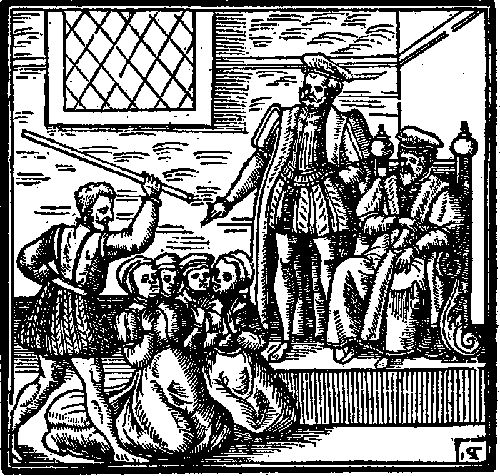
One thing the castle was in the lead for was for burning more witches during the 16th century than the rest of the country. Over 300 women were tortured before being burned at the stake at Castle Hill, everything from simple peasants to noble women.
Among them, Dame Euphane MacCalzean, accused of witchcraft in the North Berwick witch trials. She was found guilty and burnt alive on 25 June 1591 on the southern slope of the Castle Hill below Edinburgh Castle.
The North Berwick Witch Trials: Dame Euphane MacCalzean was a notable figure in the North Berwick witch trials of 1590-1591, one of Scotland’s most infamous witch hunts. A well-educated woman of noble birth, she was accused of conspiring with witches to raise storms against King James VI’s ship during his return from Denmark.
Some believe the spirits of these women linger still, their pain echoing across time. if we are to believe the haunted legends, there are perhaps one or two of the accused witches that are haunting the castle.
Red More: Check out Agnes Sampson — The Wise Wife of Keith to read about another haunt from one of the victims who were convicted and killed in the North Berwick Witch Trials.
The Lone Piper Boy Playing Under the Royal Mile
Walking in the historical city of Edinburgh, the sound of bagpipes is heard on every occasion. On a random street corner, from the tourist shops, during a parade or as a part of the historical landmarks. Bagpipes are the thing, perhaps even from the ghosts of the city.
The Piper: The Bagpiper by Johann Christoph Erhard.
The most famous ghost that is said to haunt the castle is the piper that was sent down to explore some tunnels they found ran under the castle towards Holyrood Palace a couple of hundred years ago. A young and small boy that would get through the network of tunnels.
According to the legend, the regimental piper played his pipe as he ascended down the Royal Mile, stretching through the old town from the castle. Halfway down the mile to Tron Kirk the music suddenly stopped.
A search party was sent down to investigate after the music stopped, but the piper was never found again, and they sealed the tunnel’s shut so no would could get in… or out… According to legends though, he was certainly heard. He is said to walk the royal mile to this day and the unmistakable sound of bagpipes can be heard from underground.
So perhaps walking down the Royal Mile, the sound of the bagpipes echoing throughout the whole city might as well be from the ghost piper?
The Headless Drummer Boy
Another ghost that has been sighted on several occasions is that of a little drummer boy without a head. He was first seen in the central courtyard of the castle in 1659, a year after Charles I was beheaded. He was walking in circles, drumming his drum playing an Old Scottish war tune. When the castle servants looked closer, they saw that he didn’t have a head. It is said that he drummed all through that night and continued until the morning.
Although he has not been seen again, he is considered a bad omen if he ever appears again. The same year he showed himself, Oliver Cromwell invaded Scotland and laid siege to the castle. Is this enough to give credit to the legend?
Even though no one has seen him since that fateful night, the servants working at the castle have throughout the years claimed to have heard his drumming in the quiet hallways of the castle from time to time. Who knows… Perhaps the next time someone sees the drummer boy, the castle will once again come under attack?
The Grey Lady Haunting the Halls of Edinburgh Castle
A mysterious lady has been reported staying in the older parts of the castle. Sometimes she is just seen wandering around in her 16th century dress and sometimes she is reported to weep.
Janet Douglas: Lady Glamis was a noblewoman accused of witchcraft, who was executed by burning during the reign of James V of Scotland.
There are several real nobles she is thought to be: The first one is Janet Douglas or Lady Glamis. She was accused of witchcraft and burned to the stake outside the castle on July 17th in 1537 with her son watching it all. It is said that even back then, they knew that the accusations were wrong, but King James V held a grudge towards her brother and took it out on her.
Janet also haunts Glamis Castle as The Grey Lady of Glamis, wandering through the family chapel and clock tower.
Others think that the Grey Lady haunting Edinburgh Castle could be the French Marie de Guise, mother of Mary Queen of Scots. She died a catholic and the Protestant nobles held her body inside the castle for nine months before returning her to France, wrapped in a cloth inside a lead coffin. She was then secretly taken to France for a proper burial in the Convent of Saint-Pierre in Reim.
The Prisoners in the Dungeon and Towers
There are also the castle dungeons where they housed criminals for centuries that are supposedly haunted. There were many wars that the castle dungeon saw: the Seven Years War, The American War of Independence and the Napoleonic Wars just to mention a few.
According to legend, from one of these wars, the ghost of a prisoner is said to haunt the castle to this day. In 2003, construction crew members restoring the Queen Anne Tower claimed ghosts of prisoners from the Napoleonic Wars harassed them and refused to work there. Who knows what they really saw, but there are certainly rumors. The hazy blue orbs mentioned earlier are said to appear more frequent in this tower than in the rest of the castle.
But who was this prisoner? The legend tells of a prisoner who tried to escape in a wheelbarrow filled with dung that were taken out of the castle. The cart was dumped over the high castle walls and the prisoner broke his neck when he hit the rocky ground below. He now haunts the place and tries to push visitors down Castle Rock. What gives him away is the lingering smell of dung in the air.
The Legends Living on in Edinburgh Castle
That was some of the ghosts that are said to be haunting the castle. Old places like these will have its history, and through all the bloodshed and Even today, myths surround Edinburgh Castle. Students avoid crossing its gates, fearing it may curse their exams still to this day.
But it’s the ghostly activity that chills the hearts of visitors. Phantom touches, flickering lights, and shadowy figures have been reported. The sounds of drums, faint knocking, and whispers stir something restless in the castle—perhaps spirits that will never truly leave. legends surrounding the place since the first people arrived on the rock, the place will hold its stories.
An online magazine about the paranormal, haunted and macabre. We collect the ghost stories from all around the world as well as review horror and gothic media.