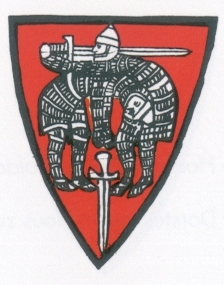
After the exhumation of the graves of one of Zurich’s mayors who died under mysterious circumstances people started talking about seeing his ghost wandering around the church tower and wall of St. Peter. Could the ghost of Rudolf Brun, who ruled during volatile times in the city have returned?
Zurich, a city renowned for its stunning landscapes and rich culture, also harbors a darker side woven into its history. Tales of ghostly encounters and restless spirits have permeated its ancient streets, attracting those intrigued by the supernatural. St. Peter’s Church in Zurich is the only baroque church in the city. The clock on the tower is the largest in Europe and the dial has a diameter of 8.7 metres. St. Peter’s parish church is the oldest church in Zurich and dates to before the year 900.
Read More: Check out all ghost stories about Switzerland
Buried just below the clock tower is Rudolf Brun, the first independent city mayor in the 14th century and leader of the Zürich guilds’ revolution of 1336. He died a terrible and mysterious death, that some attributed to poisoning.


Rudolf Brun as Zurich’s first Independent Mayor
Rudolf was the son of Jakob Brun, a member of the city council, and of Mechthild. Brun overthrew the former city council with the help of the city’s craftsmen in June 1336 to balance the power between them and the aristocracy.
In 1349, Brun led a massacre of the Jewish community of Zurich, seizing many of the spoils for himself. The incident was caused by antisemitism in the city due to the alleged murder of the son of a Zurich man, and fueled by the subsequent accusations of well poisoning. The son of Zurich man Zur Wyden from a family of shoemakers, about four years old, was murdered, and the Jews were accused of the murder. The Zurich Jewish community numbered around 400, and most of them were killed.


Mayor Rudolf Brun for example took possession of the house of a certain Moses. This event took place in the frame of the widespread persecution of Jews during the Black Death, in which the Jews were accused of spreading the bubonic plague.
On 17 of September in 1360 he died and was buried in St. Peter’s Church together with his cook. It was believed that the cook had poisoned him, but it remained a mystery for years.
Exhuming his Bone to get to the Bottom of the Murder Mystery
In 1972, Brun’s remains were examined and tested positive for arsenic according to the ghost walk tours that used to be in the city. But as the substance was often used in earlier times for medicinal and recreational purposes, the result was inconclusive. The bone and hair analysis gave no other signs for poisoning.
So what really happened, and how did Bruno, who lived through a violent time in Zurich’s history, die?
None the wiser for the truth, Brun’s bones were reburied at the clock tower. If we are to believe the rumors, it was without his skull, which had mysteriously disappeared. Could this have been the incident that caused him to rise up as a ghost?
The Haunting of Rudolf Brun
Just a few weeks after the reburial of Rudolf Brun, two boys were playing football near the gravesite when they experienced something that would give the historic man a ghostly reputation. When the ball they were kicking stopped in front of the feet of a dark figure. According to the boys, this mysterious figure before them was wearing old-fashioned clothes.
One of the boys went to get the ball, not really taking too much notice of the strange man standing at a short distance. When approaching, the figure of the man turned around and walked towards the tower wall. When reaching the wall, the figure walked right through it and disappeared.
According to the rumors, more than one person had seen this figure around the tower.
Newest Posts
- Davy Byrne’s Pub: The Ghost of James Joyce Still Raising a Glass

 Said to appear in the mirror of his favorite place for a pint in Dublin, the ghost of James Joyce is rumored to still linger in Davy Byrne’s Pub.
 - The Tragic Ghost of the Maid Haunting Visnes Hotel
 A maid who once worked at the hotel allegedly took her own life at the old Visnes Hotel, deep in the Norwegian fjords. Now it is said she is lingering in the afterlife in the old rooms she once worked in.
 - The Black Church: Where the Devil Waits in Dublin
 A church with the sinister name The Black Church in Dublin has a legend that claims if you follow the ritual, you will be able to summon the devil.
 - The Nordic Grave Dwelling Haugbúi Draugr (ᛏᚱᛅᚢᚴᛦ)
 An ancient ghost coming from the depths of graves across the nordic countries, the Haugbúi Draugr could be both dangerous and even deadly. Not merely a specter, but the rotten flesh of the dead, the ghosts are remembered as The Walking Dead of the North.
 - The Haunting of Hendrick Street: Dublin’s Most Cursed Corner
 In the dark Hendrick Street in Dublin, there once were two houses said to be some of the most haunted ones in town. Occupied by at least six ghosts, some say they still linger in their old street.
 - The Richmond Vampire and its Mausoleum in Hollywood Cemetery
 In the pre civil war Hollywood Cemetery in Richmond, Virginia, the mausoleum of W.W Pool is said to be the grave of The Richmond Vampire. A more recent urban legend is now also connected with The Church Hill Tunnel collapse.
 - The Headless Ghosts Haunting Dublin Castle
 Said to be haunted by headless prisoners who tried to capture Dublin Castle, this storied building has shadows lingering in the corners.
 - Most Haunted Places in Bern, Switzerland
 Old cities carry old ghost stories, and Bern in Switzerland is no exception. From the old buildings filled with history to the depth of the Aare river, here are some of the most haunted places in Bern.
 - Serbia’s Vampire Town Kisiljevo and the Undead Ruža Vlajna
 Centuries after the vampire panic starting with the death of Petar Blagojević, another vampire was said to haunt the Serbian village, Kisiljevo. Who was Ruža Vlajna and what happened to her?
 - The Haunted Fields of Croppie’s Acre: Dublin’s Restless Rebellion Ground
 Said to be the mass burial place for the dead Irish Independence rebels from 1798, the Croppie’s Acre in Dublin is said to be haunted by their lingering souls.
 - The Vanished Valley: The Fairies of Val Gerina
 Once a green paradise, the legend says the fairies protected the people of Val Gerina valley in the Swiss alps. Driven by greed to impress a woman however, the son meant to continue the tradition and friendship with the fairies, brought it all down.
 - Trinity College: The Ghostly Scholars Who Never Left
 Haunted by its former Fellows, Trinity College in Dublin is said to be filled with eerie spirits where even the bell tolls after dark when the shadows take over campus.

References:
Ghosts haunt Zurich streets – SWI swissinfo.ch