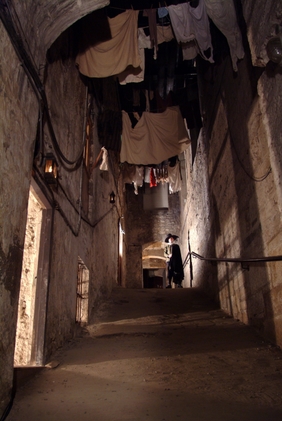
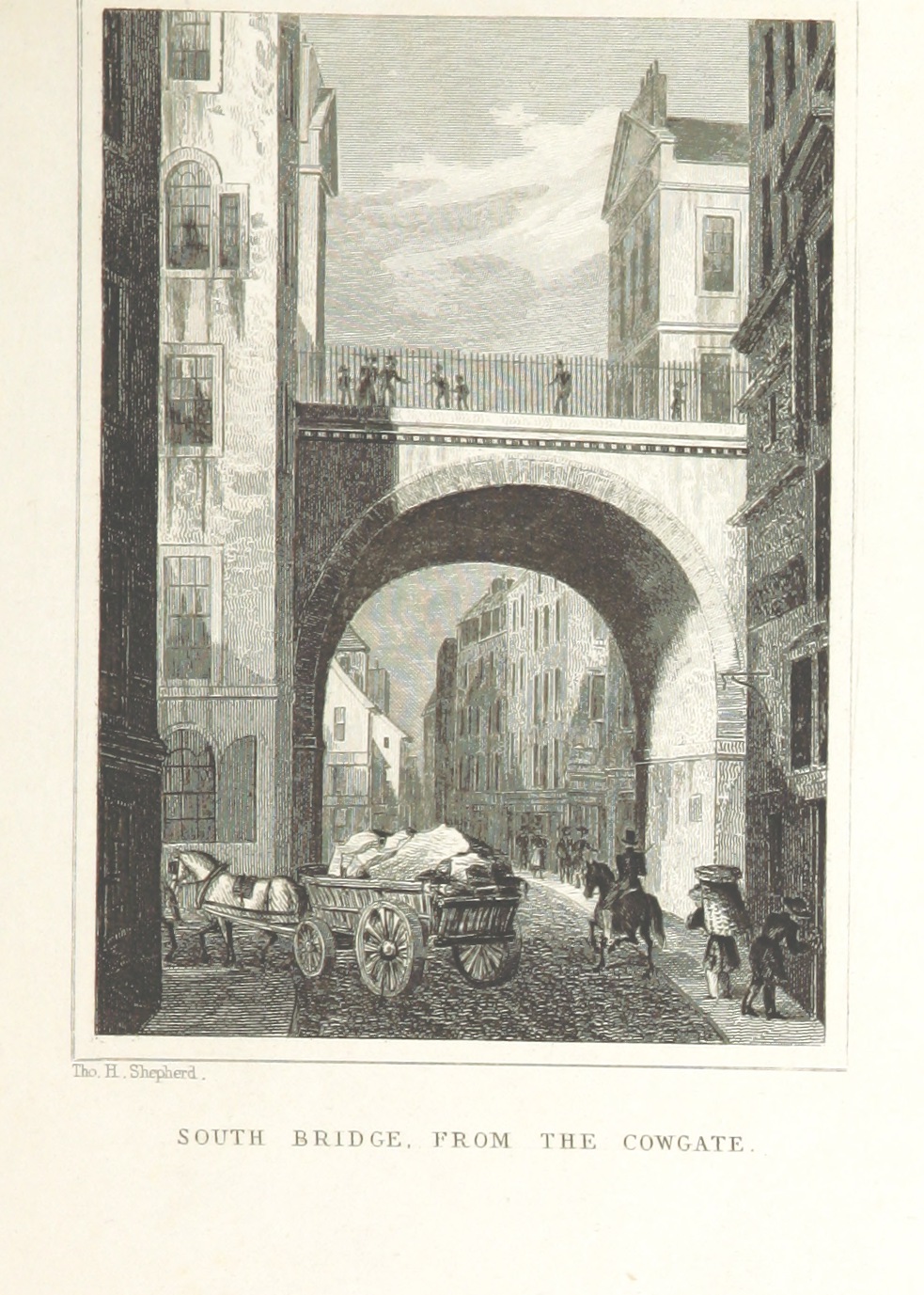
Have you ever noticed the underground world of the old town in Bern? Now fancy cafes and shops, there are also tales of secret passageways, hideouts and ghosts beneath the cobbled stoned city.
When you stroll through the winding lanes of Bern’s UNESCO-listed Old Town, it’s easy to be enchanted by the medieval charm of the sandstone arcades, glacial-blue Aare, and clock towers whispering of centuries past. But beneath this orderly beauty lies a netherworld of darkness: an ancient network of tunnels, cellars, traditional wine cellars called carnotzets, and hidden passages riddled with tales of murder, sorrow, and spectral unrest.
Read More: Check out all ghost stories from Switzerland
Most visitors to Bern barely notice these curious doors nestled flush against the cobblestones, or small hatches tucked beside storefronts on Kramgasse and Gerechtigkeitsgasse where every building has one. Today, many serve as fashionable boutiques and cozy bars. But for every shop that thrives underground, there’s another tunnel sealed shut, padlocked, or lost to memory.
In the 20th century, some of these medieval spaces were reinforced into fallout shelters, reflecting Switzerland’s Cold War-era policy of preparing bunkers for all citizens. Some bunkers, like the massive Sonnenberg facility in Lucerne, could shelter thousands. But in Bern, the older structures hid not only from bombs—but also from the eyes of the living.
And with such hidden depths come stories, and most of them ghost stories. These are some of them penned down mostly by Hedwig Correvon by her collection of ghost stories from 1919 Gespenstergeschichten aus Bern.


Ghosts of the Buried: A House That Breathes the Past
In one Bernese residence, a long-disused underground gallery once served as a macabre burial corridor. The tradition, never officially sanctioned, was whispered only among trusted neighbors: if you had a body—a murder, a shame, or a secret—you took it to that house. Although it mentions the house was in the old town, it never specifies which streets the house was in.
Over time, the dead grew restless.
Tenants have long complained of phantom footsteps above and below, even when they’re alone. Children whisper of pale faces at the windows. One boy, unable to sleep, claimed he could feel tiny hands pulling the covers from his bed.


A young woman reported being comforted by a blonde-haired girl during a bout of toothache, only to watch her melt away behind a stove. This blonde girl is said to have appeared to more than one tenant of the house over the years. Once, the ghost of this woman was said to have sat down in a chair to listen to a young girl practicing her piano.
The ghosts are said to walk the galleries and courtyards, creeping through cracks in locked doors and disturbing the peace of even the most rational guests. And when a tenant dares move out because of these hauntings, the spirits rage—doors slam for days, pots fall from shelves, and windows fog with icy breath.
Father Nägeli’s Treasure: A Crypt That Tests the Brave
Many in Bern know of the treasure hidden beneath the Münzgraben, but only a few dare pursue it. To reach it, you must descend into a tight, damp passageway lined with ancient stone underground in the city. Eventually, a faint bluish light glows ahead. That’s when he appears: a snarling, spectral dog, as large as a bear and twice as angry.
Only those who know the sacred password may pass and only the ghost of Father Nägeli is said to could give the key. He is said to haunt the Frick Stairs in the old town. Read More:


If you survive, you’ll find a gate that opens into a radiant chamber, its light casting eerie shadows over three mysterious sacks. Reach into the sacks and take a handful of earth. Then turn and leave.
But do not look back.
Read More: The Restless Spirit of Hans Franz Nägeli: The Ghost of the Fricktreppe
Those who hesitate to find their golden treasure have turned to ash. Those who follow instructions return to the surface clutching coins of pure gold—or so they say. Most who go searching for Father Nägeli’s treasure never speak of what they find… if they return at all.
The Locked Away Girls: The Ghost in the Locked Chest
Many of Bern’s old houses once had secret tunnels leading to the Aare River, useful for transporting goods from the river banks into the city, as well as smuggling or darker deeds.
One such tunnel bore witness to an unspeakable tragedy: a young servant girl seduced by her master, then lured into a hidden chest under the kitchen and dropped into the abyss. Her body was carried away by the river. He wanted to cover their affair from his parents. The only witness was the cook who hid in a cupboard, paralyzed by fear, and haunted for life. She had suspected something was going on. She didn’t tell anyone, but waited all day for the girl to return from the tunnels. She never did, and the cook waited all her life.
Ever since, the house remains tormented and the chest is still there, locked underground. At midnight, groans and moans can be heard throughout the house, like a ghostly wail and a cry for help.
The Children Who Dance in the Mist: The Kindlifresser’s Fountain
Few sights in Bern are more chilling than the Kindlifresserbrunnen—the infamous “Child-Eater Fountain.” Locals call it grotesque, comical, or bizarre. But its true history may be darker than art historians admit.
Legend says the fountain marks the site of a hidden tunnel between two medieval monasteries where one was for monks, one for nuns. Children born in shame, secrecy, or sin were said to be led into this tunnel and lost forever.


Some say their cries can still be heard in the fog of Kornhausplatz, especially when the mist wells up between the stones at midnight. And then… they emerge.
Read More: Kindlifresserbrunnen and the Ghosts of the Discarded Children Beneath Bern
Dressed in flowing white, the ghost children dance—flitting between fountains, pausing by shuttered shopfronts, or sitting silently on cellar steps. For an hour, they play and laugh, seeking one another in joy. But when the final bell tolls one, they vanish back beneath the ogre’s feet—to wait for next time.
Witnesses speak of tiny handprints on cellar windows, giggling voices in empty corridors, and chills that have nothing to do with the weather. Are they still haunting the underground though? The Kornhauskeller at Kornhausplatz 18 is Bern’s most magnificent vaulted cellar and a popular restaurant and bar.
The Françaisbad: The Aare’s Mourning Wind
High above the bends of the Aare, near the former spa and bath house called Françaisbad, the wind howls in a peculiar way. Where this Françaisbad was exactly is a bit uncertain. Those who listen say it cries out the names of men seduced, robbed, and murdered by the enigmatic Frenchwoman who once ran a decadent spa here.
The bathhouse was rumored to be a haven for crime: gambling, trysts, and betrayal flourished behind closed doors. But it ended in blood. The Frenchwoman disappeared herself in the end, her body pushed through a secret trapdoor into a tunnel that led straight to the river. Her victims, many of them noblemen, now weep in the wind, some say.
At night, shadows move across the river’s surface. Lights appear in rooms that have no electricity. And when the Aare floods, locals say it’s because the dead cannot rest.
Echoes in the Underground Stone
Bern’s tunnels and cellars may now hold boutiques, wine bars, and galleries. But their walls are thick with centuries of silence, punctuated by shame, cruelty, and sorrow.
Some stories serve as warnings. Others linger as memory. All of them remind us that beneath every step on Bern’s clean, cobbled streets, there is a shadow. Beneath every cellar arch, a whisper. As Above, so Below.
Newest Posts
- Connolly Station: The Soldier Who Waits for a Train That Never Comes
 Could the Connolly Station in Dublin be haunted? Some claim that the ghosts of the victims from the Dublin Bombing in world war two could still be lingering near the tracks.
 - The Headless Undead in the Ruffinihaus Courtyard
 Once a place for executions, the place the Ruffinihaus in Munich, Germany is built upon is said to be haunted. It is said that in the dead of night, the undead rises from their graves, still carrying their heads the executioners took.
 - The Ghost of Könizwald, Bern: The Ghost of General Robert Scipio von Lentulus
 Where the former country estate Campagne Mon Repos in Bern once was, the ghostly council of the military leader from General Robert Scipio von Lentulus was given in times of unrest. Is he still haunting the Könizwald woods, even after his estate is gone?
 - The Alter Südfriedhof Cemetery and the Ghost of the Munich Eskimo Tragedy
 One of the old cemeteries in Munich said to be haunted is the Alter Südfriedhof, or the old south cemetery. According to lore, the ghostly voices of the so-called Eskimo Tragedy are still heard at night.
 - The Uhaml Forest Spirit of Without a Face
 In the darkness of night and under the foliage cover of the forest, the demonic spirit of Uhaml is said to roam. The only way to escape it is getting out of the forest faster.
 - Gwrach y Rhibyn – The Hag of the Mist Haunting the Welsh Waters
 In the shadows between ghost, creature and witch, the Welsh Gwarch y Rhibyn has been given many names. Like a Banshee she has been said to be a deadly omen, often called The Hag of the Mist because of her presence in wet areas, or the Hag of the Dribble because of the versions where her mouth is dripping with blood.
 - The Hofbräuhaus and the Ghost of A Munich Man in Heaven
 Unhappy with the lack of beer in heaven, the Bavarian angel never returned when sent on a mission back on earth. To this day, he sits at The Hofbräuhaus bar in Munich, enjoying his brew.
 - The Demonic Omen of Disaster at Mödling Castle Hill
 Sometimes called the Devil’s Stone, the ruins of the former Mödling Castle is said to be haunted by a demonic bird-like entity, screeching at night as an omen of death and disaster.
 - The Brewer Haunting Nockherberg and the Beer Garden in Munich
 Could a beer festival be haunted? Many have spoken about the ghost of an old brewer at Nockherberg haunting the beer festival, creating havoc to retaliate to what his descendants did to his brew.
 - The Girl in the Tower of the Munich Frauenkirche
 After her public death in the tower of the Munich Frauenkirche, many have claimed to have seen the ghost of Fanny appearing at her death anniversary wearing white.
 - The Cursed Weilheim Plague Chapel
 What really happened around the Pollingsried Chapel, and its supposed plague cemetery? Is there really a curse around the area? As far as the ringing of the bells can be heard?
 - The Restless Spirit of The Utburd Child Ghost in Norway
 Searching for its name, the utburd ghost from Norwegian folklore haunts the forests, waters and houses its parents left them to die. For the most part, they remained in folk tales, but sometimes, the stories about the dead children got real life consequences.

References:
https://www.maerchenstiftung.ch/maerchendatenbank/11873/vergrabene-gespenster
https://www.maerchenstiftung.ch/maerchendatenbank/11883/der-unterirdische-schatz
https://www.maerchenstiftung.ch/maerchendatenbank/11871/von-unterirdischen-gaengen
https://www.maerchenstiftung.ch/maerchendatenbank/11866/der-kindlifresserbrunnen
https://www.maerchenstiftung.ch/maerchendatenbank/11847/vom-francaisbad