Tag Archives: the woman in black

The Haunting of the Scarborough Castle Ruins and the Foggy South Bay Beach

Advertisements

Covered in fog, the Scarborough Castle looms over the South Bay Beach in the English seaside town. Countless ghosts like the beheaded Earl, weeping women and prisoners of war are said to be drawn to these sandy beaches in the cover of darkness. 

Scarborough Beach, with its golden sands and the rhythmic lull of the North Sea, is a cherished destination for many in North Yorkshire, England.Scarborough is a place where history is not confined to books but lives on through stories whispered on the wind. Writers like Susann Hill grew up here and she spoke a lot about how the town influenced her eerie stories like The Woman in Black. After the horror movie St. Maud came out, it was also put on a list of a horror movie road trip through England together with Culzean Castle from The Wicker Man and Westminster Bridge from 28 Days Later. 

But if we are to believe the legends, the Scarborough South Bay Beach and the rest of the town are actually haunted. From the haunted halls of the Grand Hotel to the ancient stones of St. Mary’s Church, shipwrecked ships in the bay and the ruins of the old castle, the town is filled with tales of the supernatural.

The Woman in Pink and the Murder of Lydia Bell

Among the most enduring legends is that of the Woman in Pink haunting the beach and various other locations in the city. There are many variations. One of them speaks of a veiled figure, draped in a pink nightgown-like dress, seen wandering the shoreline during foggy nights. She is seen wandering the beach, clutching a baby in her arms. The child is said to be covered with a white shail.

Who was this woman? Some locals said that it is the ghost of a woman who threw her child to its death. 

Another famous legend of the Pink Lady connects her to the murder of Lydia Bell in 1804. Although, her name was actually Eleanor, named from her paternal grandmother. She was a teenager and daughter of a York confectioner, Joseph. In the evening she slipped out from her room and went to meet up with a soldier stationed there. In some versions of the tale it was her married lover. Witnesses saw her walking away with someone, but a positive identification was never made.

What really happened that night has been retold mostly in legends. They say she tried to scream out into the foggy night, but it was drowned by the sound of a foghorn. After she died she was thrown off a cliff. She wasn’t discovered until the next morning when some fishermen happened upon her. She was found a few miles down the coast with severe trauma and attempted rape was assumed. Her murderer was never caught, although a soldier was arrested and later acquitted. According to the ghost stories he didn’t confess his crimes until years later on his deathbed, but that is only in the stories. 

Now she is haunting the beach and various other places in the town, like the house she was staying in when she was in town, said to be Bell Mansion or the Georgian House on St. Nicholas Street, which it is also known as. She is often said to appear in a pink, sometimes a red dress, looking like just another person among the crowd, running down the beach towards the Spa before vanishing into thin air. Some say that you can still hear her faint screams between the humming of the foghorns on foggy nights. 

How true was this story about Lydia Bell though? Or was it Elanor? With several names and dates, there are not many actual crimes to cross check with and easy to get mixed up. The earliest appearance as a ghost story seems to be in Jack Hallam’s book Ghost of the North from 1976, although the story is said to have been known a long time before this. 

The Woman in Black

Now, although the legend of The Woman in Pink is one of the most well known stories for the locals, the world probably knows Scarborough as the haunting ground for The Woman in Black. And although it’s not just like the book, there are certainly legends of a darkly clad ghost wandering the beach as well as other places in the town. 

Some say that there is the ghost of a woman in a black veil haunting the area. It is said that her name was Helen Hywater and was waiting for her sailor lover. He was to return to Scarborough within 300 days to marry her. When he never came, she took her life on day 300 and has been haunting the place on foggy nights since then. 

This legend doesn’t have many sources though and one of the online sources comes from ghosthunter Anne Roehampton. This story is also connected to the Grand Hotel, where some claim that she took her life in one of the rooms and that her spirit roams the corridors still. Some think that this story partly influenced Susann Hill when crafting the Woman in Black. 

The Woman in Black: The 1983 Gothic horror novel by English writer Susan Hill, is about a mysterious spectre that haunts a small English town. A television film based on it, also called The Woman in Black, was produced in 1989, with a screenplay by Nigel Kneale. In 2012, another film adaption was released starring Daniel Radcliffe. The story has definitely shaped the ghost stories told in Scarborough today.

There are also said to be a witch without a name haunting the area. The most famous witch accusations was that of Anne Hunnam or Marchant, although no records says that she was actually sentenced to death for it. She is said to be haunting a footpath, wearing a dishevelled dark and hooded cloak. Her sinister cackling following the people trespassing her domain. 

Ghostly Soldiers: Echoes of Ancient Battles

Scarborough’s history is steeped in conflict, from Viking invasions to civil wars. It’s said that the spirits of long-dead soldiers still patrol the beach, their forms glimpsed through the fog, clad in antiquated armor. These apparitions are silent, their faces obscured, marching eternally along the sands they once defended.

After the English Civil War the castle was used as a prison and military barracks until the end of World War 1. Many perished behind its walls, but haunt the premise in their afterlife. Near the remnants of a Roman signal station by the castle, visitors have reported sightings of a solitary Roman soldier, standing guard as he did centuries ago.

Scarborough Castle: A Fortress of Phantoms

Overlooking the beach stands Scarborough Castle, a sentinel of stone with a history as turbulent as the seas below. Today, most of the 3500 years old castle lies in ruins, and many believe the haunting feeling of the beach it was built nearby comes from the ruins. 

Read More: Check out all haunted castles

The castle is reputedly haunted by several spirits and those spirits seem to wander freely from the castle walls down to the beach. 

Piers Gaveston was the son of a Gascon knight and is said to haunt the castle as well as the beach of Scarborough. Through his friendship with King Edward II, he became a favorite and the Earl of Cornwall. This favouritism made him deeply unpopular with the royal court, and when he was appointed regent in the king’s absence, it was enough for them. Gaveston met a grisly end in 1312 when he was sent to the castle for his safety by the king. But it was in vain and he was taken prisoner from here by the Earls of Lancaster, Hereford and Arunde and later beheaded in Blacklow Hill.

His headless ghost is said to roam the castle grounds, a restless soul seeking justice. He is also said to lure people to the edge and try to push visitors off the castle walls. 

Another tale exclusively from the castle tells of a woman who, in a fit of despair, threw something over the castle wall before leaping to her death because her soldier she was seeing left her for someone else. Her spirit, consumed by grief, is believed to haunt the ruins, her cries echoing through the night, among with all the other ghosts looming in the foggy bay. 

Newest Posts

References:

The ‘haunted’ Yorkshire beach that was used in a horror movie – YorkshireLive

Is Scarborough Haunted? Haunted places and ghost stories.

We live on the UK’s most ‘HAUNTED’ beach with ‘unruly ghosts roaming the shore’ – but it’s hiding a secret | The Sun

The ‘haunted’ Yorkshire beach that’s worth a spooky Halloween drive from Manchester

Ghost-hunting in Scarborough

Scarborough’s haunted history: Share your ghost stories and spooky sightings around the town for our ‘Coastbusters’ series this Halloween

Scarborough’s haunted history: Share your ghost stories and spooky sightings around the town for our ‘Coastbusters’ series this Halloween 

The Black Widow – Dark Tales Around Scarborough | The Abroad Guide

Scarborough Ghost Trail

The Pink Lady Of Scarborough | The Forteana Forums

Huggin Molly – The Woman in Black of Alabama

Advertisements

In the small town in Alabama, a big thing is haunting the streets and are after the town’s children. The scary apparition of the black clad Huggin Molly is still on the prowl.

Children should be home before dark, there is no telling what hides in the shadows, emerging after the sun sets. But the people of Abbeville in south Alabama, they have a pretty good idea of what darkness that lurk in the shadows, in the streets and behind the bushes and in the dark corners.

The children of Abbeville, Alabama has been warned plenty of times to stay indoors after dark. If not, they might encounter the creature known as Huggin Molly on the streets.

The Colonial Town of Abbeville

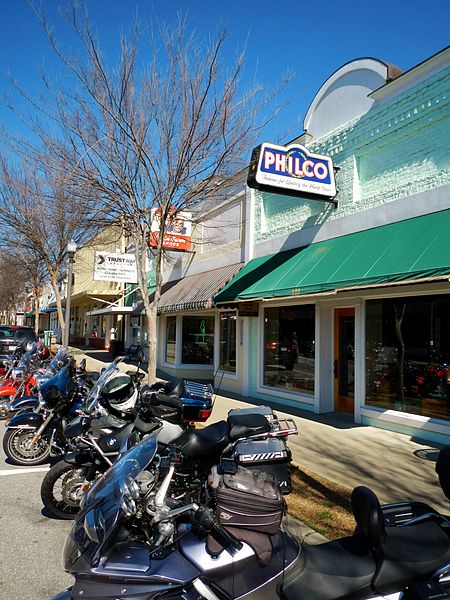
The small place of Abbeville looks like any other small colonial towns in the south with the cute brick houses with the flag waving towards the paved street and with a population around 2000.

Abbeville Alabama: Downtown Abbeville, Alabama where Huggin Molly supposedly roams in the night. // source

The climate is hot during the summer and mild during the winters. The people can shop in the small boutiques and eat at the family restaurant, a place where people know one another. It is also why when a stranger starts to roam the street, the townspeople takes notice as they watch from hammock on their porches.

Read Also: Check out the rest of our ghost stories from all across the USA.

The town of Abbeville has seen many tragedies throughout the years. Not only the hardship of the European settlers, the surrendering of the creek nation and a town in southern Alabama also made it hard for the black people all the way up to the segregation times.

There were reported lynching and sexual violence that went unpunished, making the streets more difficult for black people than the children that was warned to stay indoors after sundown.

The southern town has also experienced tragedies that left a collective trauma so hard that legend took form. One of these being after the fire. At the start of the 1900s, an arsonist burned down all of Abbeville, and this is also at the time when it looks like the legend of Huggin Molly took form. The town was also ravage by an F2 tornado that destroyed many of the old buildings, forcing the town to build on top of the old.

Huggin Molly as The Lady in Black

But these tragedies are not the things Huggin Molly is about. Rather than one of the towns collective tragedies, this is one of the towns big mysteries.

“…..On a cold, dark, rainy night…..so bitterly cold, damp, and dark…..when even street lights won’t burn, and the striking of a match refuses to yield the tiniest flame….on nights like this, Huggin’ Molly comes out of her lair and roams the streets of Abbeville to see whom she can find.”

So begins one account of the story the people of Abbeville have told each other since the early 1900s. The local legend is known as Huggin Molly, or the lady in black. Who is this woman all clad in black, and why is she after the children of Abbeville? What does she want with them?

Read More: There are many urban legends targeting children. How about checking out Kuchisake-onna – The Urban Legend of the Slit-Mouthed Woman or Madam Koi Koi and The School Hauntings in Nigeria.

The local legend of Huggin Molly has it that a tall figure, around seven feet tall, started walking the streets of Abbeville, looking for victims, mostly children. She has no name other than what the townsfolk started calling her, no face to speak of and no one knows why she is after the children. She almost has this witch like status around her, although her behaviour is anything but.

Huggin Molly is said to be dressed in all black with a wide brim hat, also black, wandering through the night in the disguise of the shadows were even the streets light won’t illuminate her identity. Once she found a victim, an innocent child wandering after darkness, she attacks, hugging the person tightly as she is screaming loudly into their ears. 

Read More: There are many stories about women in black around the world: Like some of the ghosts in Unveiling the Dark History of the Tower of London and its Ghosts .

This is it, as there are no stories of her actually hurting anyone. She simply hugs them, although terrifying enough on its own. But are there any origin story to this local legend of a hugging ghost?

The Many Legends of Huggin Molly

Who she is supposed to have been is up for debate and changes as the story itself changes throughout times. Was she a witch or the ghost of a woman that used to live in Abbeville? Is she something completely different from a human?

The Woman in Black: Grieving women wearing long black dresses is a well known motif, especially in European ghost lore. They can also be very dangerous according to many of the legends.

Read More: One of the theories was that Huggin Molly was some sort of witch. If you are interested in stories about witches, head over to our section filled of them: Here

In some accounts when the local townspeople tells the legend, Huggin Molly was a woman living in Abbeville a long time ago. She experienced a mother’s worst nightmare when lost her own child. Her grief was too much to bare and it made her mad. She started to roam the nights and went after the local children to make up for the death of child. Like it was a way of dealing with the tragedy of loosing her own.

In other accounts of the legend, she was a woman who got murdered in cold blood on the very streets she is now haunting and are trying to fulfill something. Perhaps she was killed after dark with no one to look out for her and are now in turn looking out for others?

Perhaps the real story behind the legend is the version about her being a professor at what used to be Alabama Agriculture School as some of the variations of the legend suggests. In these versions she is only trying to keep the students safe by getting them off the streets at night.

Or perhaps it wasn’t a ghost at all that haunted the street in her afterlife, but someone or something, getting dressed up specifically for this? To walk out in the dark to scare and hug children? Somehow, this comes off as almost more frightening than a ghost who only wants a hug.

A Legend with a Milkshake on the Side

In any case, who Huggin Molly was, what her motives are and if she is still roaming the streets doesn’t seem to upset most people in Abbeville. The people of Abbeville haven’t been too concerned by the legend and there are even a 50s themed restaurant named after her, making her a part of the community and town history.

Huggin Molly Legacy: The legend of Huggin Molly is more welcome than many other ghost stories in Abbeville Alabama. Head over to the local restaurant Huggin Molly’s frozen in time in the 50s ,just like the legend to hear more about the town ghost with a meal.

Even to this day the legend is part of the town and kids today are told about the lady in black on the streets. This is like what Jimmy, an Abbeville lifelong resident had to say when the Huggin Molly’s restaurant asked him to say a few words of her:

“Anybody who grew up in Abbeville grew up knowing the legend of Huggin’ Molly,” Jimmy says. “If your mother or dad didn’t want you to be out after dark, they’d tell you Huggin’ Molly would get you. And you believed it, too.”

Because this is the thing, the legend of Huggin Molly has not once been known to have harmed anyone. So many children grew up to tell tales of what they believed must have been Huggin Molly chasing them. And who knows, maybe she really did?

More like this

Newest Posts

References

11 Best Scary Ghost Stories – True Scary Stories for Halloween

The Legend of Molly | hugginmollys

The witch legend behind Alabama eatery Huggin’ Molly’s

Abbeville Ghosts « Chattahoochee Heritage

5 Works With Vampires Before Dracula

Advertisements

So we all know Dracula. That old fella, the campy movies, the bone chilling books. It was a real table turner, and has this lingering precence in todays culture. And I mean, espeacially in todays culture. Vampires are so mainstream, the mainstream feels it’s too mainstream. So let’s give it to Stoker, he made all of us goths, emos, metal heads, and whatever subculture you subscribe to. Because Dracula is about subculture and about breaking free from your past, time, history and reinvent yourself. Well… In some readings at least. Bloodsucking toxic people is another one. But there was always something that preceded it, something that inspired the Magnum Opus. And here are some examples.

Carmilla

For all the snobby lesbian goths out there, yes, you are right, Carmilla was way ahead of Dracula. And by way ahead I mean by 26 years. It turned the vampire tropes to stone, set the stage and even the cultural analysis of it, yes, Irish vs British problem, I think of you. And so did probably Stoker and Sheridan Le Fanu, the author of the work, as they were both Irish in a time, the Irishmen really needed some literary boost.

Editions

If you want an edition to read that are more academic oriented, i recommend “Carmilla : A Critical Edition” that put weights on its Irish roots.

Because of its length, it is mostly published alone, but if you are interested in the whole short story edition it was originally a part of, In a Glass Darkley, there is also that possibility. But for the cover though, I feel disappointed. It is a bit… boring. The coolest I think, is this hardcover edition by Pushkin press.

Synopsis

But even this, even this wasn’t the so called O.G vampire. Carmilla in turn was most likely inspired by this unfinished poem called Christabel.

Carmilla is the story of a young girl, Laura meeting with the mysterious Carmilla. They live deep in the woods of Styria, in today’s Austria.

Apparently Stoker was working on a new story, set in Styria, Austria with a character called Count Wampyr. So at least he moved the story further east. There is this direct link, I feel, that can’t be ignored. And it isn’t mostly. But to those snobby lesbian goths out there: You go girls, spread the word.

Buy the hardcover here

Listen to it here (Both Rose Leslie (Ygritte in GOT) and David Tennant (ALL CAPS LEGEND) is narrating, check it out)

Advertisements

The Vampyre

This is an interesting one. John William Polidori’s short story: The Vampyre has sadly been so left at the side. First, he didn’t get the credit he deserved, as it was published by mistake as Lord Byron’s work. Then he tragically ended his life too soon.

It is based on Lord Byron though. He wrote it on that infamous literary retreat with the Shelley’s, and among other works was the start of Frankenstein. Lord Byron also wrote a similar pice, called “A Fragment“. But even more of a fun fact. The whole idea, Polidori played with the idea that a scourned lover of Byron, Caroline, already had published. It is heavily influenced on her book Glenarvon, that is in essence a diss track of Byron. Damn, those friends!

Among gothic and horror fans alike, his work is well known and has its cannon in the genre, but it hasn’t quite reached the mainstream audience as Dracula and in some regards, Carmilla did.

Read it here

Listen to it here

Advertisements

Varney the Vampire; or, the Feast for Blood

This is one that I long avoided, because I thought it was a comedy, and my small gothic heart couldn’t take the irony, and I found the name Varney a bit comical. Now I BTW love the vampire comedy and What We Do In The Shadows are my life, all versions, thank you very much!

But in fact, it any just seem like a satire because it in fact, installed many of the campy tropes that comes with gothic fiction and vampire fiction. But at the time, it was a Victorian era serialized gothic horror story variously attributed to James Malcolm Rymer and Thomas Peckett Prest. It first appeared in 1845–1847 as a series of weekly cheap pamphlets of the kind then known as “penny dreadful”, and we simply loves penny dreadful, so much so, that we included it in our merch, check it out here (shameless self promotion, but hey, goths need to eat too).

The author was paid by the typeset line so when the story was published in book form in 1847, it was of epic length: the original edition ran to 876 double-columned pages and 232 chapters. Altogether it totals nearly 667,000 words, and for those of you that ever tried Nanowrimo, you know what I talk about, this is legit a lot.

Read it here

Listen to this and some other not so well known vampire stories that should be heard, read and repeated to infinity here

Advertisements

Thalaba the Destroyer

Where the main character Thalaba’s deceased beloved Oneiza turns into a vampire, although that occurrence is actually marginal to the story.

OK, but in all seriousness, I do read. Like, a lot. Might just seem like I just subscribe to a niche part of tumblr, but no, this is serious literature. Serious FORGOTTEN literature. Ah. I think I would have been more OK with it, if not the end product (read Dracula) didn’t become so influential and that they give whole subjects to at uni. Also, sorry for my informal tone in talking about these pieces of arts, as my academic is reserved for school and I love to shake that stiff old academic voice off. (my professor highly disapproves though = academic literate reject).

Thalaba the Destroyer is more of an epic-work as in ,literary epics, spanning over time, place, people. It was written by Robert Southey from the Romantic school, as in the literary Romantics. If he really was into romance, I have no way of telling. It is interesting because of the plot. The poem is a twelve-book work with irregular stanzas and lines that are not rhymed. The poem deals with Harun al-Rashid and a group of sorcerers at Domdaniel that live under the sea. It was foretold that Thalaba, a Muslim, would be God’s champion and conquer the sorcerers. Something a bit odd for a British christian guy in the early 1800s to write about, but nonetheless very interesting.

Read it here

Ninety Years Later

Why does it have to be British tough? It makes sense in the Victorian times, being so sexual represses, something we might read into modern day mormon vampire tales and deep south sexual repression?

But no, it doesn’t always have to be British. In fact, Eastern Europe is steep in vampire lore, literature and culture. Several of those books and the likes though is not translated. But they do exist. For example we have the Serbian story with the most famous Serbian vampire, Sava Savanović from a folklore-inspired novel Ninety Years Later, or as in this translation: After Ninety Years, by Milovan Glišić, first published in 1880.

Read it here

There are also German, like our emo friend Goethe that wrote the poem The bridge of Corinth. There are a lot of them. What is your favorite forgotten vampire story?

Any of this seem interesting for you? How about getting into the listening train of audio books. Now, get 50% off for the next 3 months. I’ve checked and I am now firmly sure these are the one that can offer most horror titles of the audio book platforms.

Advertisements

More like this

Newest Posts

5 Horror Movies Based on Books

Advertisements

The creepy stuff on TV is often visual or sound based. Jump scares and scary costumes. It makes me wonder how on earth one can sustain the same type of scare in a book. But then I pick up one of these and I remember. The internal images in my head is pretty messed up as well.

In that regard, let’s have a look at the books that inspired some pretty iconic movies. The links provided are from Audible, and are affiliated links. That means I make a commission from each of the purchases coming off the links. And with that disclaimer out of the way, let’s look at the books and movies.

Rosemary’s Baby by Ira Levin

The movie has now gone on to be this iconic horror movie credited to director Roman Polanski. But did you know that it was originally a book published in 67, only a year before the movie came out. The writer Ira Levin is sort of an iconic figure about writing about seemingly perfect societies. He also wrote the Stepford Wives.

Summary
Rosemary Woodhouse and her struggling-actor husband, Guy, move into the Bramford, an old New York City apartment building with an ominous reputation and only elderly residents.
Neighbours Roman and Minnie Castavet soon come nosing around to welcome them; despite Rosemary’s reservations about their eccentricity and the weird noises that she keeps hearing, her husband starts spending time with them.
Shortly after Guy lands a plum Broadway role, Rosemary becomes pregnant, and the Castavets start taking a special interest in her welfare. As the sickened Rosemary becomes increasingly isolated, she begins to suspect that the Castavets’ circle is not what it seems.

Read it here (Intro by Chuck Palanhiuk, writer of Fight Club)

Listen to it here

30 Days of Night, Vol. 1 by Steve Niles

This was one of those movies that came out in 2007 that I never thought I would like, but then did, because… well, not sure, never mind that. But anyhow. Before it was a movie, it was a comic book published in 2002 by Steve Niles. Since then it has continued to live and grow. Now Audiable have this cool thing where they get a bunch of narrators together.

Summary
The isolated town of Barrow, Alaska, is plunged into darkness for a month each year when the sun sinks below the horizon. As the last rays of light fade, the town is attacked by a bloodthirsty gang of vampires bent on an uninterrupted orgy of destruction. Only Barrow’s husband-and-wife sheriff team stand between the survivors and certain destruction. By the time the sun rises, will they pay the ultimate price – or worse?

Read the graphic novel here

Listen to it here

Advertisements

The Woman in Black by Susan Hill

For those who follows Moonmausoleum, knows our weak spot is the classic Gothic setting. The movies that have been made of this have been alright, as I am extremely biased and just love everything with that setting: a haunted house, stiff British people and scary kids in Victorian clothing. And this is what it promises, a classical ghost story. Susan Hill wrote the book back in 1983, but the story is set at the turn of the century.

Summary
As is so often the case with truly well-constructed fiction, this story contains all the exquisitely crafted detail and richness that film adaptations can struggle to encompass. Only enhanced by Paul Ansell’s thoughtful narration, this is Susan Hill at her best. Eel Marsh house stands alone, surveying the windswept salt marshes beyond Nine Lives Causeway. Once, Mrs Alice Drablow lived here as a recluse. Now, Arthur Kipps, a junior solicitor with a London firm, is summoned to attend her funeral, unaware of the tragic and terrible secrets which lie behind the house’s shuttered windows. It is not until he glimpses a young woman with a wasted face, dressed all in black, at the funeral, that a sense of profound unease begins to creep over him and take hold, a feeling deepened by the reluctance of the locals to talk about the woman in black or what happens whenever she is seen.

Read it here

Listen to it here

Let the Right One In by John Ajvide Lindqvist

Do you know when you read a lot, one tends to become somewhat of a snob. This is what happened to me and in my stupid belief I had read everything worth reading and would never find something new I liked. But then, this came out, and it tipped the vampire genre on its head. Even the most snobbish Scandinavian literary critics that hates anything supernatural loved it. And so must you! And if you rather want to watch the movie, choose the Swedish one, as that one actually is pretty good as well.

Summary
Oskar and Eli. In very different ways, they were both victims. Which is why, against the odds, they became friends. And how they came to depend on one another, for life itself.
Oskar is a 12-year-old boy living with his mother on a dreary housing estate at the city’s edge. He dreams about his absentee father, gets bullied at school, and wets himself when he’s frightened. Eli is the young girl who moves in next door. She doesn’t go to school and never leaves the flat by day. She is a 200-year-old vampire, forever frozen in childhood, and condemned to live on a diet of fresh blood.

Read it here

Listen to it here

Bird Box by Josh Malerman

Yes Netflix, we have a lot to thank you for, but the movie version of Bird Box is not one. It’s not as it is bad, it is just… meh. And perhaps because it came out just because A Quiet Place came out and they were sort of similar. And by that, I mean very similar. But the book! The book is beautiful!

Summary
Most people ignored the outrageous reports on the news. But they became too frequent, they became too real. And soon, they began happening down the street. Then the Internet died. The television and radio went silent. The phones stopped ringing. And we couldn’t look outside anymore.
Malorie raises the children the only way she can; indoors. The house is quiet. The doors are locked, the curtains are closed, mattresses are nailed over the windows. They are out there. She might let them in. The children sleep in the bedroom across the hall. Soon she will have to wake them. Soon she will have to blindfold them. Today they must leave the house. Today they will risk everything.

Read it here

Listen to it here

Any of this seem interesting for you? How about getting into the listening train of audio books. Now, get 50% off for the next 3 months. I’ve checked and I am now firmly sure these are the one that can offer most horror titles of the audio book platforms.

Advertisements

More like this

Newest Posts

5 gothic horror movies

Advertisements

This is a collection of movies that really have that nice sublime gothic feeling about it, with all the elements that makes something gothic and would make Ann Radcliff proud.

The woman in black (2012)

Stiff British people unable to communicate, an overgrown and cursed house out in the marches, creepy kids? An unpleasant village in the countryside unwelcoming to strangers? Yes, yes, yeeees.

This movie was directed by James Watkins and written by Jane Goldman. It is the second adaptation of Susan Hill‘s 1983 novel of the same name, which was previously. Susan Hill has become somewhat of an iconic author of these creepy gothic tales. The film stars Daniel RadcliffeCiarán HindsJanet McTeerSophie Stuckey, and Liz White.

The plot, set in early 20th-century England, follows a young recently widowed lawyer who travels to a remote village where he discovers that the vengeful ghost of a scorned woman is terrorizing the locals. And as the lawyer he is, he will battle this ghost with: PAPERWORK!

Advertisements

The Awakening (2011)

A tormented soul, pining for her dead boyfriend. A house too big for anyone, creepy kids and the reason why we fear to take a bath in old creepy houses. This is a twisty story that honors and mocks the time and the culture that surrounded the paranormal community at the start of the new century. Beside, Rebecca Hall is just the bonafide gothic queen. directed and co-written by Nick Murphy and starring Rebecca HallDominic WestIsaac Hempstead-Wright and Imelda Staunton.

In 1921, Florence Cathcart is a published author who works with the police to debunk supernatural hoaxes and thus to expose charlatans. It is revealed that she lost her lover in the war and that she “hunts” ghosts in an attempt to see if it is possible to bring him back. She receives a visit a teacher from a boys’ boarding school in Cumbria. There have been sightings of the ghost of a child at the school and that such a sighting might have been the cause of the recent death of a pupil. And she goes to expose the hoax.

Advertisements

Mama (2013)

This movie shows, that gothicness didn’t die in the late 1800s. Pulling with all of its tropes into the modern world, this take on the woman in white legend, will linger.

Directed and co-written by Andy Muschietti in his directorial debut and based on his 2008 Argentine short film Mamá. The film stars Jessica ChastainNikolaj Coster-WaldauMegan CharpentierIsabelle NélisseDaniel Kash, and Javier Botet as the titular character.

The film follows two young girls abandoned in a forest cabin, fostered by an unknown entity that they fondly call “Mama”, which eventually follows them to their new suburban home led by two adults after their uncle retrieves them.

Advertisements

The others (2001)

It was written, directed, and scored by Alejandro Amenábar. It stars Nicole KidmanFionnula FlanaganChristopher EcclestonElaine CassidyEric Sykes, Alakina Mann and James Bentley.

A woman who lives in her darkened old family house with her two photosensitive children becomes convinced that the home is haunted.

Talk of a remake is just the most unnecessary. This is an all time favorite. A balance of the drama and the horror is just, sublime. sublime is the word. Also it ticks all the boxes, you guessed it, big mansion too big for just three, creepy kids and sorrow, just so much painful sorrow.

Advertisements

The Orphanage (2007)

Also a modern take, but inspired by the classics. This is also set in an orphanage, so that means, creepy kids, so already points, points, points. The house is big, and the trauma runs deep. The unholy gothic trinity.

This movie was the debut feature of Spanish filmmaker J. A. Bayona. The film stars Belén Rueda as Laura, Fernando Cayo as her husband, Carlos, and Roger Príncep as their adopted son Simón. The plot centers on Laura, who returns to her childhood home, an orphanage. Laura plans to turn the house into a home for disabled children, but after an argument with Laura, Simón goes missing.

Advertisements

More like this

Newest Posts